






U.S. consumers are still shopping. But increasingly, they are asking a harder question before they spend: Is this purchase really worth it? That distinction matters for retailers.
When customers become more selective, winning demand is no longer simply about driving more traffic or offering another discount. Product information has to be clear. Promotions have to make sense. Delivery promises need to feel credible. Returns cannot become an obstacle course. And when a shopper needs help, the answer has to move the purchase, or the relationship, forward.
Deloitte’s 2026 Global Retail Industry Outlook identifies value-seeking consumers as a “lasting, foundational shift”. The report also notes that rising expectations for convenience, value, and personalization are colliding with persistent cost pressure and operational complexity.
That creates an important opportunity for U.S. retail customer experience. When shoppers scrutinize every dollar, customer service is not merely what happens after a purchase. It can help customers decide whether to buy, stay, or return to the retailer.
What This Article Covers
- Why Does U.S. Retail Customer Experience Matter More When Shoppers Become Selective?
- Customer Service Can Protect Revenue Before the Sale.
- Discounting Is Not the Only Way to Win a Value-Conscious Shopper.
- The Post-Purchase Experience Becomes More Valuable When the Next Customer Is Harder to Win.
Why Does U.S. Retail Customer Experience Matter More When Shoppers Become Selective?
Strong demand can hide operational friction. When consumers are eager to spend, some will tolerate unanswered product questions, confusing promotions, or inconvenient service experiences and complete the purchase anyway. More cautious customers are less forgiving. They have greater reason to compare alternatives, wait, switch retailers, or abandon a purchase when the decision feels uncertain. That changes the economics of retail customer experience.
A retailer does not necessarily need to make every interaction longer or more expensive. It does need to remove the forms of uncertainty that make the customer hesitate. For ecommerce brands, uncertainty might mean wondering whether a product is compatible, whether a promotion applies, when an order will arrive, or whether returning the product will be difficult. In physical and omnichannel retail, it can include inventory availability, pickup expectations, loyalty benefits, or whether the store and digital channels are providing the same answer.
The question is therefore shifting from “How quickly did we handle the contact?” to “Did the interaction make the customer’s next decision easier?”
Customer Service Can Protect Revenue Before the Sale
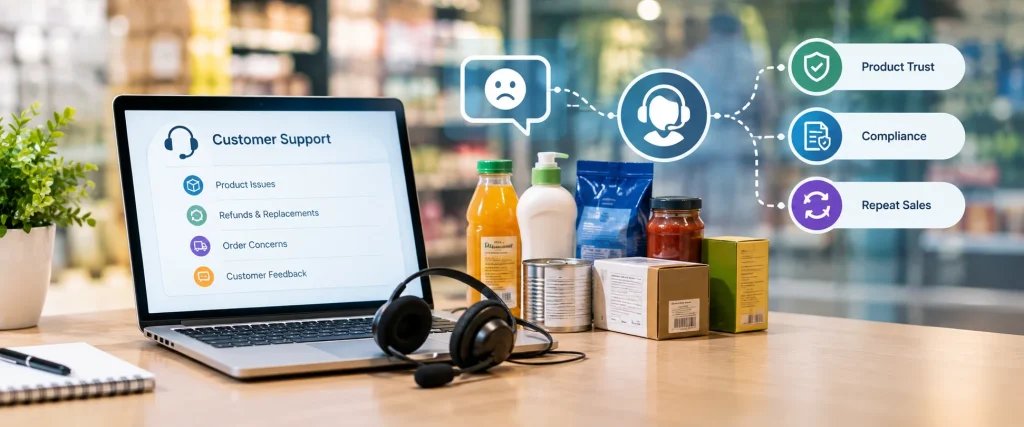
Many retailers still think of customer service predominantly as a post-purchase function. Yet a meaningful share of customer questions happen while the shopper is deciding whether to spend at all.
Consider the questions a more value-conscious shopper may ask:
- Does this product work with what I already own?
- Which size should I choose?
- Is this promotion valid for the item I want?
- Can I pick it up locally?
- Will it arrive before I need it?
- What happens if it does not fit or work?
- Is the higher-priced option actually worth the difference?
Each question represents uncertainty standing between interest and purchase. Effective retail customer service can reduce that uncertainty through accurate product information, realistic delivery expectations, clear policies, and appropriately trained sales-support conversations.
This is why pre-purchase customer support deserves closer attention in a cautious spending environment. Our analysis of how customer support influences ecommerce conversion explores the connection between timely help and purchase completion more directly.
The commercial implication is simple: customer service does not create demand out of nothing. However, it can prevent existing demand from disappearing because the customer cannot get a useful answer.
Discounting Is Not the Only Way to Win a Value-Conscious Shopper
Price matters. Promotions matter. But retailers cannot indefinitely discount their way to growth without putting pressure on margins. Customer experience can offer another kind of value: certainty.
The shopper understands what they are buying. The promotion is clear. Inventory information is reliable. The delivery expectation is realistic. The return policy is understandable. Help is available if something goes wrong.
None of those benefits requires the retailer to be the cheapest option. They make the purchase feel easier and lower-risk. This aligns closely with Deloitte’s finding that consumers evaluate value using more than price alone. For value-conscious shoppers, service, convenience, quality, and trust can contribute to whether an offer feels worthwhile.

Retailers should therefore consider whether excessive discounting is compensating for avoidable customer friction. A shopper who abandons a cart because a delivery question goes unanswered does not necessarily need another coupon. They may simply need clarity. ServeRetail’s guide to reducing shopping cart abandonment before it affects revenue examines how friction around the purchase journey can translate directly into lost conversion.
The Post-Purchase Experience Becomes More Valuable When the Next Customer Is Harder to Win
A more selective market raises another strategic question: what is an existing customer worth? If customer acquisition becomes harder or more expensive, unnecessarily losing someone who has already purchased becomes particularly costly. This is where customer retention and post-purchase support become part of revenue protection.
A delivery delay does not automatically end the relationship. Neither does receiving the wrong size, a damaged item, or a product that requires clarification. The outcome depends heavily on what happens next.
Can the customer see the order status? Does someone take ownership? Is an exchange easier than starting over with another retailer? Can a refund be resolved without repeated contacts? Connecting customer care with order management and tracking gives agents better visibility into WISMO and delivery questions. Likewise, structured returns, refunds, and claims processing can help retailers make service recovery more predictable.
That matters because a difficult recovery experience can erase the value of the original purchase. Conversely, effective problem resolution can give a shopper another reason to trust the retailer. Our guide to preventing retail customer churn through proactive engagement examines this retention opportunity in greater depth.
Customer Service Should Tell Retailers Where Value Is Breaking Down
U.S. retail customer service can also provide something executives do not always extract from operations: evidence of why customers hesitate, abandon purchases, return products, or leave. Contact reasons can reveal recurring friction such as:
- promotions customers cannot understand;.
- products generating repeated compatibility questions;.
- unclear size or fit information;.
- delivery promises that create WISMO contacts;.
- inventory discrepancies;.
- repeated refund concerns;.
- policies that customers misunderstand;.
- loyalty benefits that are difficult to use.
That information should not remain trapped inside the contact center. Merchandising may need to improve product content. Ecommerce teams may need to simplify a promotion. Operations may need to investigate recurring delivery exceptions. Product teams may need to address an issue generating avoidable returns. In that sense, retail customer support becomes a listening system for the wider business.
That is also how customer service can operate as a revenue driver: not simply by selling during interactions, but by identifying and removing the friction preventing customers from buying or returning.
What Should Retail Leaders Measure When Consumers Become More Selective?
If consumer behavior changes, the customer-service scorecard should evolve with it. Traditional operational metrics such as response time, service level, and average handling time remain useful. But they should be viewed alongside measures that show whether customer interactions protect conversions and relationships.
| Journey Stage | Useful Measures |
|---|---|
| Before purchase | Assisted conversion, pre-purchase contact reasons, cart abandonment after support interactions |
| Order and fulfillment | WISMO volume, repeat contacts, delivery-exception resolution, cancellation after contact |
| Returns and recovery | Return reason, exchange versus refund, resolution time, repeat contact, CSAT |
| Relationship | Repeat purchase, retention, loyalty engagement, win-back, customer lifetime value |
A particularly useful question is whether customers are contacting the business repeatedly about issues that should have been resolved upstream. High WISMO may reveal a communication problem rather than a staffing problem. High fit-related returns may point toward weak product information. Repeated promotion questions may indicate that the offer itself needs simplification. The best customer experience strategy therefore connects service metrics to the underlying business process.
Can Retailers Become More Efficient Without Making Customers Work Harder?
Economic caution naturally increases pressure on operating costs. Retail leaders may scrutinize staffing, contact volumes, channel mix, and automation more closely. That discipline is sensible. But there is an important distinction between eliminating waste and transferring work to the customer.
Making support harder to find may reduce contacts in a dashboard while increasing abandonment. An inflexible bot can shorten human-agent demand while frustrating customers with complex problems. Making returns deliberately difficult may lower return volume temporarily while damaging customer loyalty.
Efficiency should instead focus on routing simple interactions appropriately. This improves self-service where it genuinely solves the problem, eliminating repeat contacts, fixing upstream drivers, and ensuring skilled agents handle the conversations where human judgment creates value. That is particularly important for U.S. retail customer experience: customers increasingly expect convenience without having to understand the retailer’s internal cost structure.
When Does Retail Customer Service Outsourcing Become Part of the Efficiency Strategy?
Outsourcing becomes relevant when a retailer needs to change the economics or flexibility of its customer-service operation without weakening the experience.
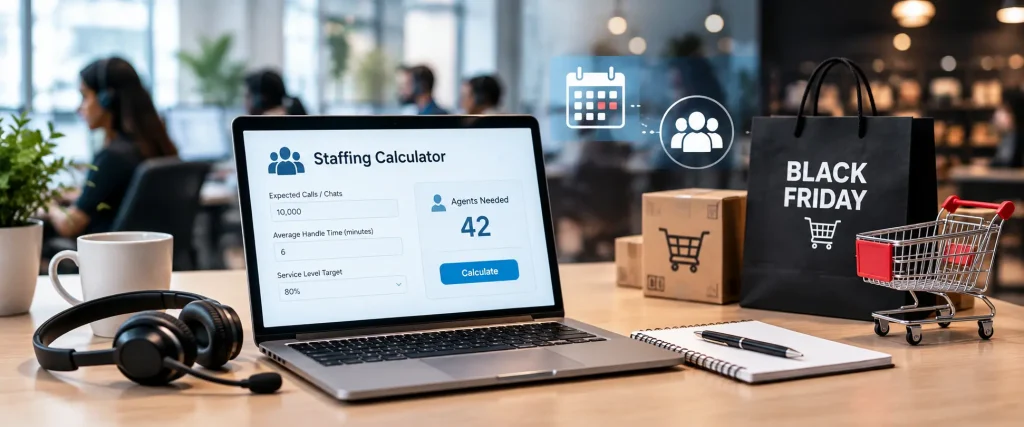
Potential triggers include seasonal fluctuations, extended-hour requirements, rapid ecommerce growth, difficult recruiting markets, high fixed staffing costs, channel expansion, or the need for specialist capabilities.
Retail customer service outsourcing should not simply move the existing queue to another location. The stronger question is which workflows should remain internal. This can be standardized, which require specialist knowledge, and where variable capacity can create a more efficient operating model. That is where retail BPO services, retail CX outsourcing services, and selective ecommerce customer service outsourcing can play different roles depending on the retailer’s needs.
For brands evaluating customer support for U.S. retail operations, delivery strategy can include U.S.-based, nearshore, offshore, or blended models depending on customer expectations, complexity, hours, language, and economics. Our U.S. retail customer service outsourcing guide provides a broader framework for determining when an external operating model makes sense.
Efficiency and Customer Experience Do Not Have to Move in Opposite Directions
One of the clearest examples comes from a U.S. office retail and ecommerce operation that needed to improve customer satisfaction while managing workforce variability across peak and lean demand. ServeRetail helped the operation improve CSAT and quality by more than 20% within three months, while structured workforce planning helped reduce both idle capacity during quieter periods and under-capacity pressure during peaks.
The significance is not that every retailer will produce the same result. Cost discipline and CX improvement do not have to be competing objectives when staffing, quality, processes, and performance management are redesigned together.
When Shoppers Become Selective, Make Every Interaction Earn Its Place
U.S. retailers cannot control consumer sentiment. They cannot eliminate price sensitivity. And they cannot rely on promotions indefinitely to create growth. They can control how easy it is to understand a product, complete a purchase, track an order, resolve a problem, make an exchange, and continue the relationship. That is where U.S. retail customer experience becomes commercially important.
For a value-conscious shopper, great service does not mean extravagance. It means fewer reasons to hesitate. Clear information. Reliable promises. Easy resolution. And confidence that the retailer will still be helpful after the payment goes through.
When every customer becomes harder to win, retailers should not ask customer service simply to handle interactions for less. They should ask it to help protect more of the demand the business has already worked hard to create.
This connects to a related piece: Why German-Speaking Shoppers Choose Brands That Deliver Localized Customer Support.
A related angle on this is covered in Retail Win-Back Campaigns: Re-Engaging Lost Customers and Rebuilding Lifetime Value.
Review your U.S. retail CX operating model with ServeRetail to identify where customer friction, staffing structure, retention gaps, or service costs may be limiting conversion and long-term customer value.