


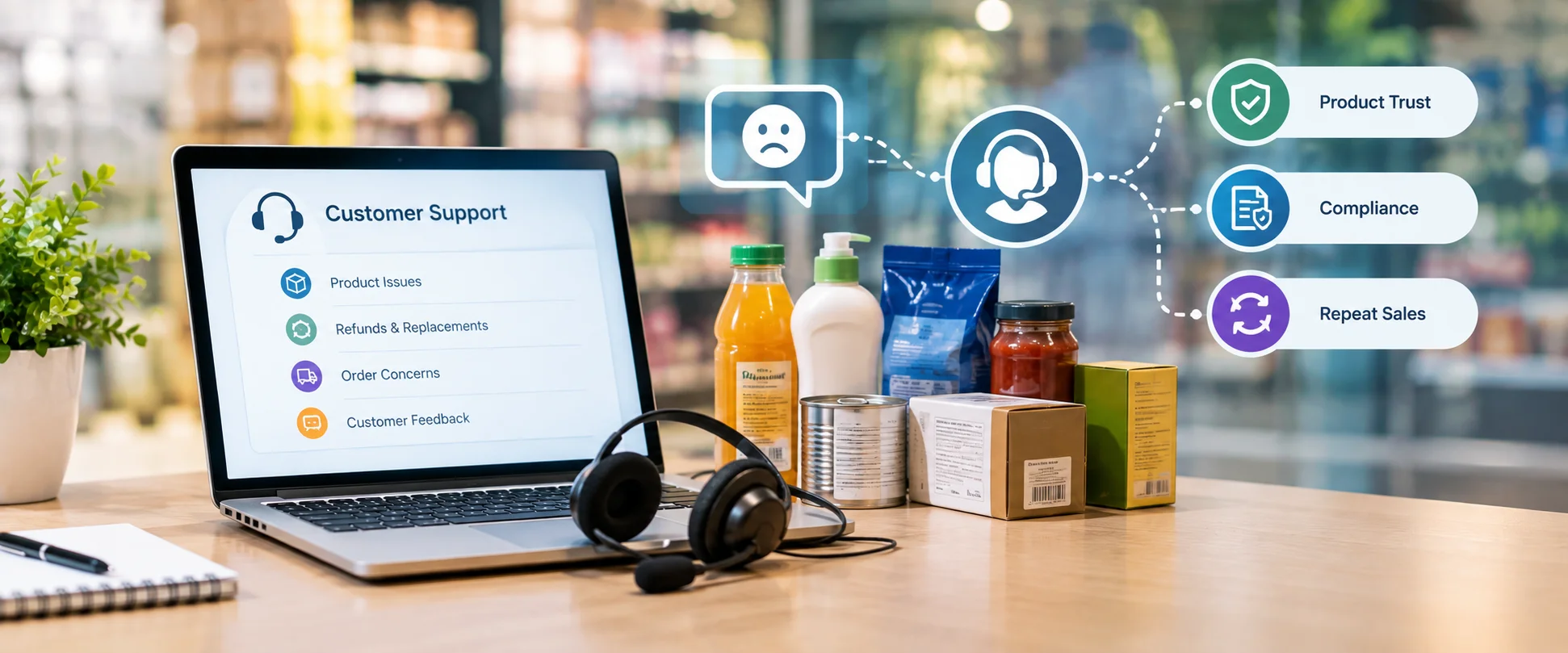

A shopper finds a sliver of plastic in her granola bar and calls the number on the wrapper. Nobody answers for eleven minutes, so she posts a photo instead. By dinner, that photo has more views than your last Super Bowl ad. That scenario explains why consumer complaint management outsourcing has moved from a cost line to a trust strategy.
After two decades inside retail and CPG contact centers, we have learned one blunt truth. Complaints rarely destroy brands, but slow, careless, or undocumented responses often do. In this piece, we unpack the data, the regulatory stakes, and a painful real-world lesson. We also show how the right partner turns an angry caller into a loyal repeat buyer.
Why CPG Customer Complaint Management Now Decides Product Trust
Consumers forgive a flawed product far faster than a flawed response. The numbers back that up with uncomfortable clarity. A Qualtrics XM Institute analysis estimates that poor experiences put nearly $3 trillion in global sales at risk. The same study found that 34% of consumers reduce spending after a negative experience, and 13% stop entirely.
For a CPG brand, that 13% hurts more than it sounds. Packaged goods live on replenishment, so one lost shopper means dozens of lost baskets every year. Isabelle Zdatny leads thought leadership at Qualtrics XM Institute, and she frames it plainly. “Leaders can’t treat delivering excellent customer experiences as a nice-to-have strategy — it’s essential to business success.”
The Real Cost of a Flawed Response
Global consumer spending impact from poor experiences
at risk
after negative experience
entirely
For CPG brands, that 13% equals dozens of lost baskets every year from a single shopper.
Meanwhile, the complaint itself has changed shape. Shoppers now report issues through retailer reviews, marketplace messages, social comments, and the old 1-800 line. Consequently, CPG customer complaint management needs one intake logic across every channel, not five disconnected inboxes.
The Hidden Cost of Keeping Product Complaint Handling In-House
Most CPG teams never planned to run a complaint operation. Instead, it grew around a brand manager, a shared inbox, and a quality lead juggling calls. That setup works fine until a viral video or a bad production lot triples volume overnight.
The real cost hides in three places. First, untrained staff miscode complaints, so quality teams chase the wrong root cause for weeks. Second, weekend and holiday gaps leave safety calls sitting in voicemail until Monday morning. Third, the people answering phones usually carry other jobs, and their product knowledge walks out with every resignation.
Dedicated product complaint handling services fix this with trained agents and documented workflows. Moreover, they turn a fixed payroll burden into a variable model that scales with seasons and launches. Our retail call center outsourcing pricing guide breaks down how those economics typically compare. Honestly, your brand manager has better things to do than decode lot numbers at 9 p.m.
How Consumer Complaint Management Outsourcing Protects Compliance
Adverse Event Triage Under FDA and CPSC Timelines
Compliance in CPG runs on clocks, and those clocks start the moment a consumer speaks. Under MoCRA, cosmetic brands must report serious adverse events to FDA within 15 business days. Dietary supplement makers face the same 15-business-day window for serious adverse event reports. The CPSC, meanwhile, expects companies to report certain product hazards within 24 hours of obtaining reportable information.
Regulatory Reporting Timelines
Trained agents recognize trigger words (“rash”, “hospital”, “choking”) and escalate the same day — so regulatory teams receive complete case files, not vague emails weeks later.
A consumer affairs call center earns its fee right here. Trained agents recognize words like “rash,” “hospital,” or “choking” and escalate them through a documented path. Therefore, your regulatory team receives a complete case file, not a vague email three weeks later.
Audit-Ready Documentation and Recall Readiness
Regulators and retail partners ask the same question during any incident: show me the record. Strong consumer affairs outsourcing captures product name, UPC, lot code, purchase location, and symptoms in structured fields. That data trail supports trend analysis, corrective action reviews, and faster recall scoping. Furthermore, a partner with ISO, SOC 2, and PCI DSS certifications keeps consumer data protected at every step.
A Real-World Lesson: When Complaint Signals Travel Too Slowly
Few cases show the stakes better than the 2022 infant formula crisis. The FDA’s investigation examined consumer complaints of infant illness linked to Abbott’s Sturgis, Michigan, facility. Those complaints started arriving in September 2021. Abbott began a voluntary recall on February 17, 2022, and the plant’s closure fueled a national formula shortage.

Later, the FDA’s own internal review flagged weak processes for triaging and escalating complaints, including a whistleblower report. That review also called for staff training on complaint escalation and even fixes to mail handling. In other words, the warning signals existed, yet the system moved them far too slowly.
We share this example carefully, because the failures spanned both industry and regulator. Still, the lesson for every CPG leader is clear. A complaint program must detect patterns, escalate fast, and document everything. Otherwise, a handful of scattered calls looks like noise until it becomes a headline.
What Best-in-Class CPG Consumer Care Services Look Like
Category-Trained Agents Who Speak Your Product’s Language
A snack brand, a baby wipe maker, and a pet food company face very different complaints. Great CPG consumer care services train agents on ingredients, allergens, usage instructions, and approved safety language. For example, agents supporting grocery and food brands need allergen fluency above everything else. By comparison, cosmetics and beauty teams need airtight adverse reaction protocols and empathetic scripting.
100% Quality Monitoring Instead of Random Sampling
Traditional QA teams review two to five percent of calls and simply hope the rest went fine. In contrast, AI-powered quality management audits every interaction and flags missed escalations the same day. Add multilingual customer support across 25+ languages, and no Spanish-speaking parent waits for a callback about safety. Agents also need live access to lot codes and product specs, which our technical and product support teams use daily.
From Complaint Signal to Repeat Purchase
Turning Consumer Affairs Outsourcing Into Repeat Sales
Here is the part most outsourcing pitches skip: a resolved complaint is a sales opportunity. Bill Gates once wrote, “Your most unhappy customers are your greatest source of learning.” We would add that they are also your cheapest source of retention. Marketing author Jay Baer said it more bluntly: “Haters are not your problem. Ignoring them is.”
When agents resolve an issue quickly, a thoughtful replacement or coupon often wins the next purchase. Connecting complaint resolution with returns, refunds, and claims processing removes friction from that moment. Likewise, pairing it with customer retention programs and loyalty and subscription management keeps the relationship warm afterward.
How to Choose the Right Consumer Complaint Management Partner
Look for retail and CPG specialization, documented escalation workflows, and real-time dashboards your quality team will actually open. Ask how the partner codes complaints, handles adverse events after hours, and absorbs recall surges. Our list of 10 questions to ask any retail BPO will sharpen that conversation quickly. Similarly, our guide on how to evaluate a BPO’s quality assurance program exposes weak vendors early. For the bigger picture, read our complete CPG BPO outsourcing guide.
Final Thought: Every Complaint Is a Vote on Your Brand’s Future
Complaints will never disappear, and frankly, you should not want them to. Each one hands you free quality data, an early regulatory warning, and a chance to earn loyalty. The winning brands treat consumer complaint management outsourcing as risk insurance and a retention engine at once. So here is our question for fellow CPG leaders: how many product signals sat unread in your inbox last week?
Ready to Protect Product Trust and Grow Repeat Sales?
ServeRetail has supported retail and consumer brands for more than 20 years across 40+ global delivery centers. Our teams handle product complaints, adverse event triage, and recall surges with a 95% average quality score. Explore our CPG customer service outsourcing capabilities to see how the model fits your categories. Then book a free consultation with our consumer affairs specialists and get a custom program plan. Let’s turn your next complaint into your next loyal, repeat customer.


