


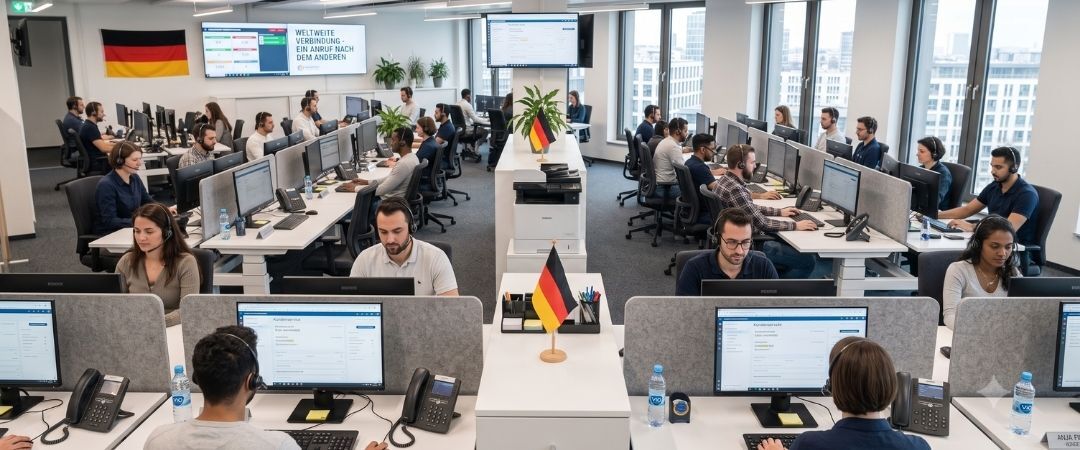

German-speaking shoppers are among the most informed and comparison-driven customers in European retail. They research product details, review delivery terms, compare return policies, evaluate seller credibility, and expect clear answers before they commit to a purchase.
For retail and ecommerce brands, this means German-speaking customer support cannot be treated as a simple translation layer. A translated FAQ may answer basic questions. However, it rarely creates the confidence needed to complete a high-value order, trust a new seller, or return for repeat purchases.
Localized customer support is different. It gives shoppers language clarity, cultural familiarity, policy transparency, and service consistency across the buying journey. That is why retail brands expanding into German-speaking markets are paying closer attention to how support is delivered, who delivers it, and whether it feels natural to the customer.
According to the International Trade Administration’s Germany ecommerce guide, Germany’s ecommerce market is expected to grow annually from 2025 to 2029 and reach a market volume of USD 142 billion by 2029. This opportunity is significant, but growth depends on more than product availability. Retailers also need service experiences that match the expectations of German-speaking customers.
What This Article Covers
- German-Speaking Customers Expect More Than Translated Support.
- Localization Builds Confidence Before the Purchase.
- Localized Customer Support Strengthens Every Retail Touchpoint.
- Why German-Speaking Customer Support Influences Retail Revenue.
German-Speaking Customers Expect More Than Translated Support
Retailers often begin localization with the visible parts of the buying experience. They translate product pages, adjust currency, update delivery information, and localize checkout flows. These steps are important, but they do not complete the customer experience.
Support interactions reveal whether a brand is truly prepared for a market. When a German-speaking shopper asks a product question, checks delivery timing, questions a return rule, or raises an issue after purchase, the response must feel precise, natural, and relevant. Generic replies can weaken confidence, even when the product itself is strong.
This is why German-speaking customer support matters. It gives retailers the ability to answer questions in the customer’s language while also reflecting local expectations around clarity, accuracy, tone, and follow-through.
ServeRetail covered the broader expansion challenge in its article on why retail brands are rethinking German customer support as they expand across Europe. This article goes one step further by looking at localization through the eyes of the shopper.
Localization Builds Confidence Before the Purchase
Many German-speaking shoppers want detailed information before they buy. In categories such as electronics, appliances, fashion, furniture, wellness, and lifestyle products, customers often compare features, compatibility, sizing, warranties, delivery options, and return conditions before making a decision.
A customer may not need persuasion. They may need reassurance. A clear answer about delivery timing, return eligibility, product specifications, or warranty coverage can be the difference between completing checkout and leaving the site.
This is where localized customer support becomes a conversion tool. When German language experts understand the brand, the product, and the customer’s concern, they can remove friction without sounding scripted. That creates a more confident purchase journey.
The impact is especially important for online retailers. In ecommerce, customers do not have a store associate nearby. Support becomes the digital equivalent of expert in-store guidance. Brands operating in ecommerce need localized help that helps shoppers move forward with confidence, not just faster response times.
Localized Customer Support Strengthens Every Retail Touchpoint
German-speaking customer support is valuable across the entire retail journey. It begins before the purchase, continues through checkout and delivery, and remains important after the order is fulfilled.
Product Discovery and Research
Customers comparing products may need help understanding differences between models, sizes, ingredients, materials, features, or compatibility. A localized support experience helps them make informed decisions without leaving the brand’s website or marketplace listing.
Checkout and Payment Questions
Payment preferences, invoice options, delivery charges, and checkout rules can vary by market. German-speaking shoppers often expect direct, clear explanations. Poorly localized support can create unnecessary hesitation at the final stage of the purchase journey.

Delivery and Order Updates
After an order is placed, customers expect accurate information. Strong order management support helps retailers explain delivery timelines, tracking updates, delays, address issues, and fulfillment questions in a way customers can trust.
Returns and Exchanges
Returns are not just a post-purchase cost. They are part of the trust equation. A customer who understands the return process is more likely to purchase confidently. Localized support helps explain policies clearly and reduces confusion when a shopper needs help after delivery.
Marketplace Support
Retailers selling through marketplaces must respond quickly and consistently to questions, disputes, delivery issues, and seller-related inquiries. German-speaking marketplace customers expect professional communication that protects both customer satisfaction and seller reputation. This is where marketplace seller support can play an important role.
Why German-Speaking Customer Support Influences Retail Revenue
Retail leaders often measure customer service through response time, ticket volume, cost per contact, or resolution rate. Those metrics matter, but they do not show the full commercial impact of localized support.
German-speaking customer support can influence conversion, cart abandonment, average order value, customer satisfaction, repeat purchase behavior, and long-term customer retention. A shopper who receives a clear answer before checkout may buy immediately. A customer who receives respectful support after a delivery issue may return for a future order.
ServeRetail’s article on how customer support impacts ecommerce conversion rates explains why support should be viewed as part of revenue performance, not only issue resolution.
The same logic applies strongly to German-speaking markets. When localized support reduces uncertainty, customers are more likely to trust the brand. When support feels impersonal or poorly adapted, shoppers may continue searching elsewhere, even if the product is competitive.
Retail Categories Where Localization Matters Most
Every retail segment benefits from clear communication, but some categories rely more heavily on customer confidence.
For apparel and fashion brands, shoppers often need help with size, fit, returns, exchange timelines, and delivery expectations. Localized support can reduce confusion and help customers feel more confident before placing an order.
For consumer electronics and appliances, German-speaking customers may ask about compatibility, warranty coverage, installation, product setup, technical specifications, or troubleshooting. A vague answer can slow the purchase or increase post-purchase dissatisfaction.
Furniture, wellness, luxury, sports, and marketplace-led retail also benefit from localized customer support because customers often need more context before buying. In these categories, the support experience can influence trust as much as the product description does.
This is also why customer experience planning should not be limited to peak seasons. ServeRetail’s article on back-to-school retail customer service shows how demand spikes can expose weaknesses in support readiness. The same is true when brands enter new language markets.
How Leading Retailers Scale Localized German Support
Retail brands do not always need to build large domestic teams inside Germany to deliver high-quality German-speaking customer support. Many are now using multilingual delivery models that combine language capability, retail process knowledge, and scalable operations.
For German support, delivery location matters because it affects cost, scalability, availability, and service coverage. ServeRetail’s multilingual operations use delivery hubs in Kosovo, Albania, and Morocco to support a German-language retail customer experience across different operating models.
Kosovo is particularly valuable for scalable German-speaking customer support because of its strong German-language talent availability and suitability for high-volume retail and ecommerce operations. Albania can support quality-focused German service teams. Meanwhile, Morocco can be useful for brands that need German alongside French, English, Arabic, Spanish, and other multilingual capabilities.
The goal is not only to reduce costs. The stronger goal is to create a delivery model that gives retailers the flexibility to serve customers consistently across channels, campaigns, seasons, and markets.
AI Can Help, but Localization Still Needs Human Judgment
AI tools can support multilingual customer service by helping with routing, knowledge retrieval, translation help, summarization, and quality monitoring. However, localized German support still requires human understanding.
A customer asking about a delayed order may need empathy. A shopper comparing two products may need context. A buyer questioning a return policy may need a clear explanation that feels fair and professional. Automation can speed up service, but German language experts help ensure the interaction feels appropriate and trustworthy.
This is especially important when support involves premium products, technical questions, complaints, loyalty issues, or sensitive account concerns. AI can help the agent, but it should not replace the judgment needed to protect the customer relationship.
ServeRetail’s article on AI-powered customer experience for wellness brands explores how AI can strengthen support operations when paired with trained customer experience teams.
Localized Support Should Feel Consistent Across Channels
German-speaking shoppers may interact with a brand through a website, marketplace, email, chat, social media, SMS, or phone. They expect the experience to feel connected across all of these channels.
That is why localization must be part of omnichannel customer service. The customer should not receive one tone through chat, a different experience through email, and another standard through marketplace messaging. Consistency matters because it shapes brand trust.
ServeRetail’s omnichannel retail customer support guide explains why connected service experiences are becoming essential for modern retail growth.
For multilingual retailers, this consistency is even more important. Customers in different markets may speak different languages, but they should still recognize the same brand promise. That is why multilingual customer support should be built on shared workflows, quality standards, reporting, and brand training.
What Retail Leaders Should Look for in German-Speaking Customer Support
Choosing a German-speaking support partner should not be based only on whether agents can speak the language. Retail leaders need to evaluate whether the partner can support the complete customer journey.
- Native-level communication: Support should sound natural, accurate, and appropriate for German-speaking customers.
- Retail process knowledge: Teams should understand orders, returns, exchanges, product inquiries, marketplace questions, and customer retention.
- Omnichannel capability: Support should work across chat, email, voice, social, marketplace, and customer portal channels.
- Quality assurance: German conversations should be reviewed for tone, accuracy, compliance with brand policy, and resolution quality.
- Scalable delivery: The model should support seasonal peaks, campaign surges, and market expansion without service disruption.
- Technology alignment: Agents should work smoothly with CRM, ecommerce, marketplace, order management, and knowledge-base systems.
The best German-speaking customer support model feels like an extension of the brand. It gives customers the confidence of localized service while giving retailers the scalability of a structured support operation.
Localized German Support Is Becoming a Retail Growth Advantage
Retail brands competing in German-speaking markets cannot rely on translation alone. Customers increasingly expect support that understands their expectations, answers questions clearly, and helps them make confident purchase decisions.
This is why localized customer support has become more than an operational detail. It is now part of how brands earn trust, improve conversion, reduce friction, and build customer loyalty.
ServeRetail has also discussed this broader multilingual opportunity in its article on multilingual retail customer support solutions, as well as in its analysis of why Spanish customer service matters for retail brands. Together, these trends show that language capability is becoming central to retail CX strategy.
German-speaking customer support gives retailers a stronger foundation for growth because it meets shoppers where they are. It respects how they research, how they ask questions, how they evaluate trust, and how they decide whether to return.
Serve German-Speaking Shoppers With Support That Feels Local
German-speaking shoppers choose brands that make the customer experience feel clear, familiar, and reliable. They do not want support that feels translated after the fact. They want service that understands the buying journey and removes friction at the right moments.
ServeRetail helps retail and ecommerce brands scale localized support through German call center services, multilingual customer support, retail customer service, ecommerce support, order management, marketplace support, and customer experience operations delivered through flexible multilingual teams.
For a closer look at what it takes for retail contact centers to meet Germany’s high service-quality bar, see Germany Sets the Bar: How Retail Contact Centers Must Operate in Mature Markets.
If your brand is expanding into German-speaking markets or improving service for existing German-speaking customers, connect with ServeRetail to explore a support model built around language quality, customer trust, and scalable retail growth.


