





A related angle on this is covered in Pet Product Recall Customer Service: How Brands Manage Sudden Support Surges.
A related angle on this is covered in Why Health & Wellness Brands Are Rebuilding Customer Support for Summer Demand Peaks.
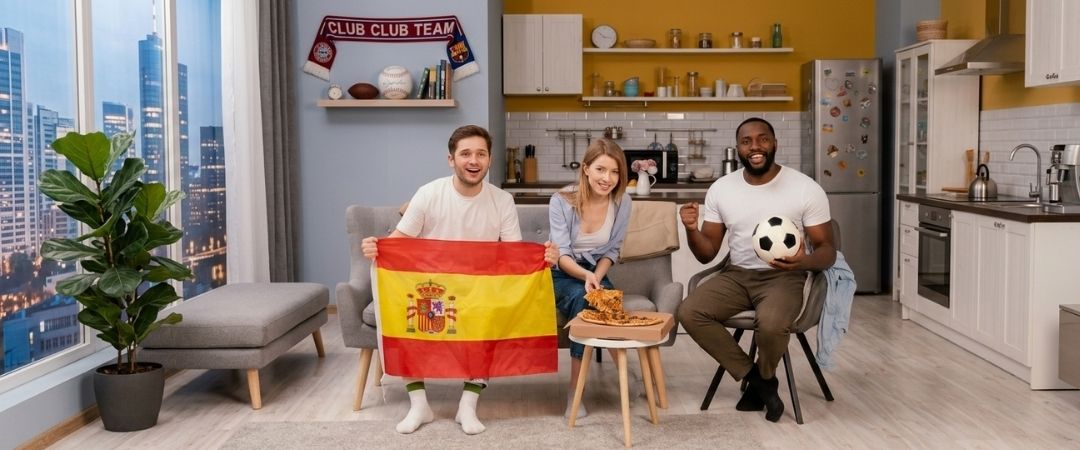
That challenge shows up elsewhere too \u2014 see How Outdoor Retail Brands Scale Support When Spring Demand Hits Hard.Spain’s World Cup victory on July 19, 2026, created an immediate global moment for football fans, sponsors, marketplaces, and merchandise retailers. Spain defeated Argentina 1–0 in extra time, securing its second men’s World Cup title.
For sports retailers, moments like this can quickly turn attention into demand. Fans search for jerseys, footwear, collectibles, licensed apparel, equipment, and limited-edition products. Online stores and marketplaces may see order volumes rise within hours. Meanwhile, customer questions increase across voice, chat, email, social media, and messaging.
This is where Spanish customer support for sports brands becomes commercially important. Retailers must help Spanish-speaking shoppers find products, confirm sizes, understand delivery timelines, correct orders, and resolve post-purchase problems without forcing them to switch languages or channels.
The challenge extends beyond one tournament or one national team. Major sporting events, athlete endorsements, championship wins, product drops, and seasonal participation trends can all create sudden retail demand. Brands that prepare multilingual service before these moments arrive are better positioned to convert interest into completed purchases and long-term customer relationships.
What This Article Covers
- Why Sports Moments Create Customer Service Surges.
- Where Spanish Customer Support for Sports Brands Adds the Most Value.
- Spanish Support Must Go Beyond Translated Responses.
- Connect Spanish Support Across Every Customer Channel.
Why Sports Moments Create Customer Service Surges
A major sporting result can change customer behavior faster than a traditional retail campaign. A planned promotion gives a retailer time to prepare inventory, content, and staffing. A championship result, record-breaking performance, or viral athlete moment may create demand almost immediately.
That sudden interest affects more than website traffic. Customers begin asking:
- Is the winning team’s jersey still available?
- When will a sold-out size return?
- Can a personalized product be changed or canceled?
- Will the order arrive before a celebration or event?
- Is the marketplace seller authorized?
- Can an international order be returned?
- Why was a payment accepted but the order not confirmed?
These questions create a sports retail demand surge across several teams at once. Customer service, fulfillment, inventory, marketplace operations, social media, and returns teams must work from the same information.
The response cannot be built after demand begins. Recruiting and training agents takes time, while a fan merchandise spike may develop in a single evening. ServeRetail’s guide to scaling sports and outdoor retail support during peak demand explains why product expertise and advanced workforce planning matter as much as more headcount.
Where Spanish Customer Support for Sports Brands Adds the Most Value
Spanish customer support for sports brands should cover the complete purchase journey. It should not exist only as a phone queue for complaints. Spanish-speaking shoppers may need help before purchase, during checkout, after fulfillment, or when returning an item. The value is in making every stage easier to understand and complete.
Product Availability, Sizing, and Purchase Questions
Sports merchandise often creates highly specific product questions. Customers may need help comparing adult and youth sizing, understanding regional size conversions, selecting footwear, confirming equipment compatibility, or identifying whether an item is officially licensed.
Limited-edition and championship products add pressure because stock can change quickly. Agents need real-time access to availability, backorder dates, product restrictions, and restocking information.
Effective Spanish retail customer service helps shoppers make decisions with confidence. Agents should understand the product category, not just read translated descriptions. This is particularly important for technical sports products. A customer buying a running shoe, fitness device, bicycle component, protective item, or piece of outdoor equipment may need guidance before completing the purchase. In these cases, sports equipment support outsourcing must combine language fluency with product knowledge and clear limits on what agents should advise.
ServeRetail supports sports and active-lifestyle brands through specialized Sports & Outdoor retail customer service, including product guidance, order help, warranty support, and seasonal scaling.

Spanish Order, Delivery, and Marketplace Support
Once demand converts into orders, the pressure moves to fulfillment. Customers want confirmation that the order was placed correctly, the payment succeeded, the address is accurate. the product will arrive when expected.
Spanish ecommerce customer service should help with:
- Order confirmations and payment questions.
- Address corrections and order changes.
- Split shipments and partial fulfillment.
- Backorders and restocking estimates.
- Carrier delays and failed delivery attempts.
- International shipping questions.
- Marketplace order policies.
- Cancellation and replacement requests.
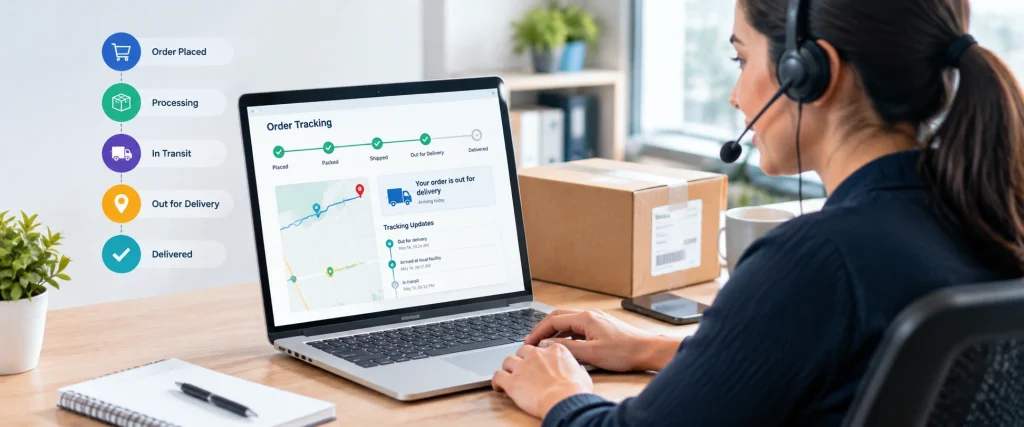
Accurate order management and tracking support becomes especially important when customers are buying merchandise for a specific celebration, match, trip, or gift. A delayed package is more frustrating when the purchase has an emotional deadline.
Marketplace purchases add another layer. Customers may be dealing with seller policies, platform rules, delivery estimates, authenticity concerns, and different refund procedures. Spanish marketplace customer support should help the shopper understand who owns the issue and what action will happen next.
Retailers selling through multiple digital channels can use ServeRetail’s ecommerce customer service playbook to connect orders, channels, staffing, returns, and peak planning into one operating model.
Returns, Exchanges, and Post-Event Care
The demand surge does not end when the product ships. Sports and fan merchandise can generate high volumes of exchanges and returns after the event. Common reasons include incorrect sizing, duplicate gifts, delayed delivery, damaged packaging, product differences, or restrictions on personalized merchandise. Customers may also struggle to understand whether marketplace, international, or limited-edition purchases qualify for return.
Spanish returns support should explain the policy in natural language. Agents need to confirm eligibility, required documentation, refund timing, exchange inventory, and any restrictions before instructing the customer. Structured returns, refunds, exchanges, and claims support can reduce repeat contacts and prevent a strong purchase moment from becoming a poor post-purchase experience.
The best sports retail customer support teams also identify patterns. A sudden rise in exchanges for one product may indicate unclear sizing, inaccurate product information, or a fulfillment problem that should be corrected at the source.
Spanish Support Must Go Beyond Translated Responses
Retailers should not treat Spanish service as an English script translated line by line. Sports, fashion, footwear, and fan culture all contain product terms, regional expressions, and emotional context that literal translation may miss.
A shopper celebrating a major victory may communicate with excitement. Another customer waiting for a delayed jersey may be frustrated because the product will not arrive before an important event. Agents need to understand both the language and the situation.
Culturally fluent Spanish support should include:
- Natural, widely understood Spanish.
- Accurate product and sports terminology.
- Clear explanations of policies and restrictions.
- Awareness of regional vocabulary differences.
- Appropriate tone across voice and written channels.
- The ability to clarify rather than assume.
Machine translation can help with simple content, but sensitive order, payment, return, and complaint interactions still need human review and judgment. Retailers building a broader language strategy can read ServeRetail’s guide to why Spanish customer service matters across the retail journey. Brands can also explore dedicated Spanish call center services for voice, chat, email, social media, and ecommerce support.
Connect Spanish Support Across Every Customer Channel
Fans do not remain within one support channel. A customer may ask about stock through social media, place the order through a website, request a delivery update in chat, and later call about an exchange.
If each channel operates separately, the customer must repeat the issue. The retailer also loses visibility into the complete journey.
Bilingual sports retail support should connect:
- Voice and interactive voice response routing.
- Live chat and website messaging.
- Email case management.
- Social media and direct messages.
- SMS or messaging applications.
- Ecommerce platform communication.
- Marketplace buyer and seller messages.
Agents need access to previous contacts, order history, delivery status, return activity, and customer preferences. They should also know when an issue has moved to another team and who owns the next action. ServeRetail’s article on building connected omnichannel retail customer support explains the difference between offering several channels and creating one continuous customer experience.
Brands requiring Spanish alongside other languages can also use multilingual retail customer support to build wider language coverage around global sporting events and cross-border ecommerce.
Connect Customer Care With Ecommerce Operations
Customer service cannot answer accurately when it is cut off from ecommerce and fulfillment systems. During a demand spike, small information gaps quickly turn into large contact volumes.
A sports ecommerce support team should have approved access to:
- Ecommerce and order-management platforms.
- Inventory and backorder information.
- Warehouse and fulfillment updates.
- Carrier tracking and exception data.
- Returns and exchange systems.
- Marketplace dashboards.
- Customer histories and loyalty accounts.
- Current product and promotion knowledge.
That connection lets agents resolve more questions on the first contact. It also helps them communicate proactively when inventory, delivery dates, or return conditions change.
Retailers using Shopify or other major ecommerce platforms should align support workflows with product catalogs, order data, payment status, delivery events, and customer profiles. The goal is not simply to answer contacts. It is to reduce avoidable contacts by giving customers accurate information before uncertainty becomes frustration.
ServeRetail provides ecommerce customer service outsourcing across voice, chat, email, social media, orders, returns, subscriptions, and marketplace journeys.
Prepare Spanish Support Before the Next Demand Spike
Sports retail demand can rise because of tournaments, championship results, athlete partnerships, limited-edition launches, seasonal participation, or viral social moments. The exact trigger may be unpredictable, but the operating model does not need to be.
Customer service outsourcing for sports brands should use a core-plus-surge structure. A trained core team preserves product knowledge and brand consistency. More cross-trained agents can then support selected channels and workflows when volume increases.
Preparation should include:
- Forecast scenarios based on events and promotions.
- Pre-approved Spanish product and policy content.
- Current size, fit, customization, and licensing guidance.
- Defined marketplace escalation procedures.
- Channel-specific staffing plans.
- Extra order and returns capacity.
- Supervisor and quality-assurance coverage.
- Post-event ramp-down planning.
The team should also conduct product briefings before major launches. Agents need to know which products are limited. This can be personalized, which items cannot be returned, and what delivery commitments the brand is prepared to make.
Recruiting after the spike begins is rarely enough. ServeRetail’s guide to onboarding a retail BPO partner before peak season explains why knowledge transfer, systems access, training, nesting, QA, and live validation all require lead time.
Measure the Full Spanish Sports Retail Experience
Contact volume alone does not show whether Spanish customer support for sports brands is working. Retailers should measure both service performance and the quality of the customer outcome.
Useful measures include:
- Response time: How quickly customers receive help across each channel.
- Service level: Whether interactions are answered within the agreed target.
- Abandonment: How many customers leave before reaching support.
- First-contact resolution: Whether the issue is resolved without repeat contact.
- Transfer rate: How often Spanish contacts move to another agent or language queue.
- Order accuracy: Whether changes, replacements, and cancellations are completed correctly.
- Return resolution: Whether exchanges and refunds are processed clearly and efficiently.
- Spanish-language CSAT: How Spanish-speaking customers evaluate the experience.
- Contact reasons: Which products, policies, or fulfillment problems create the most demand.
Retailers should review results by language and channel. A combined program average may hide long Spanish wait times, excessive transfers, or weaker written-channel performance.
Metrics should also support root-cause improvement. If many customers ask the same sizing question, the product page may need better guidance. If delivery contacts rise, the brand may need proactive updates rather than more agents.
What to Look for in a Spanish Sports Retail Support Partner
A capable Spanish BPO provider should combine language capability with retail and sports-category experience.
The provider should be able to show:
- Spanish-speaking and writing assessments.
- Experience with sports, outdoor, apparel, footwear, or equipment workflows.
- Voice, chat, email, social, and marketplace capability.
- Product and policy training processes.
- Peak workforce planning.
- Spanish-language quality assurance.
- Connected order and returns workflows.
- Secure system access and clear governance.
- Reporting by language, channel, and contact reason.
The right partner should also understand that a fan is not only buying a product. The purchase may represent identity, community, celebration, or loyalty. Service should respect that emotional context while remaining accurate and efficient.
ServeRetail provides retail customer service outsourcing across voice and digital channels, supported by category training, workforce planning, quality management, and multilingual capability.
Frequently Asked Questions
Why do sports retailers need Spanish customer support?
Spanish customer support helps sports retailers serve shoppers who prefer Spanish when comparing products, checking availability, placing orders, tracking deliveries, and managing returns. It reduces language friction across both pre-purchase and post-purchase interactions.
Which channels should Spanish sports retail support cover?
The right mix depends on customer behavior. However, most programs should consider voice, live chat, email, social media, messaging, ecommerce platform communication, and marketplace support. Customer context should remain available when shoppers move between channels.
Can Spanish support help with the tournament merchandise demand?
Yes. A trained Spanish-language team can help manage product questions, order volume, delivery inquiries, marketplace messages, and returns. However, retailers should prepare staffing, content, system access, and escalation rules before the demand spike begins.
What should Spanish order support include?
Spanish order support should cover confirmation, payment status, address changes, tracking, backorders, split shipments, delivery exceptions, cancellations, replacements, and marketplace order questions. Agents need reliable access to current order and carrier information.
How should sports brands prepare for post-event returns?
Brands should forecast exchange and return volume, clarify personalized-product restrictions, prepare Spanish policy content, maintain exchange inventory visibility, and ensure agents understand refund timing and documentation requirements.
How should retailers measure Spanish sports customer service?
Retailers should track response time, service level, abandonment, first-contact resolution, transfers, order accuracy, return resolution, repeat contacts, and Spanish-language customer satisfaction. Results should be reviewed separately by language and channel.
Build Spanish Support Around the Entire Fan Journey
A major sporting moment can create demand in an instant. The brands that benefit most are not only those with the right merchandise. They are also the brands prepared to help customers discover, purchase, receive, exchange, and enjoy those products without unnecessary friction.
Effective Spanish customer support for sports brands connects cultural fluency with product knowledge, ecommerce systems, order visibility, marketplace workflows, returns, and peak workforce planning. It also extends beyond one result or tournament. The same operating model can support seasonal sports demand, athlete launches, outdoor participation peaks, championship merchandise, and cross-border ecommerce growth.
For a closer look at how brands approach furniture and home decor, see Why Omnichannel Furniture Support Is Reshaping Customer Expectations.
ServeRetail helps sports, outdoor, and ecommerce brands build scalable Spanish sports retail customer service across voice, chat, email, social media, marketplaces, orders, returns, and post-purchase support. Talk to ServeRetail about building Spanish customer support for your sports, outdoor, or ecommerce brand.