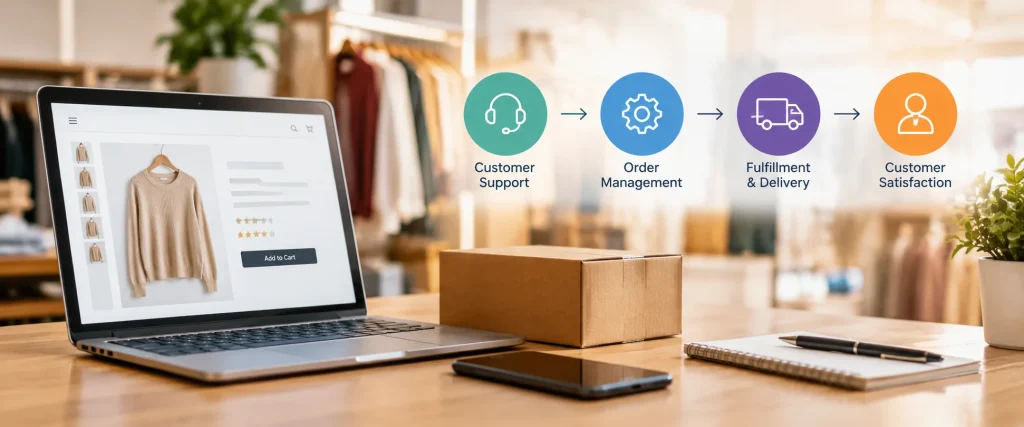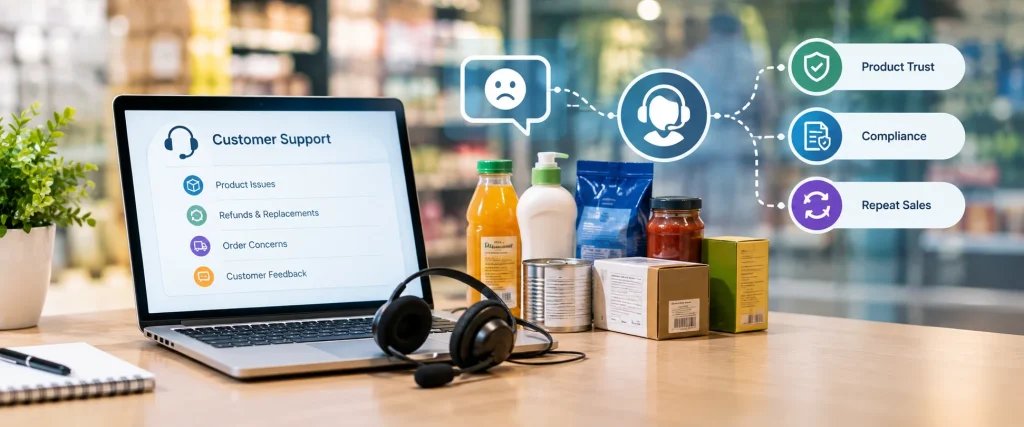







Buying furniture has always been emotional. Customers compare styles, measure rooms, imagine layouts, and make high-value purchasing decisions tied directly to their homes. But increasingly, what customers remember most is not the checkout experience. It is everything that happens after the purchase.
The modern furniture ecommerce journey now extends far beyond product discovery. Delivery coordination, order visibility, assembly guidance, damage resolution, returns management, and omnichannel communication have become defining moments in the customer experience. When those operational touchpoints break down, even premium furniture and home decor brands can lose customer trust quickly.
For furniture and home decor retailers, customer retention is becoming increasingly tied to operational consistency rather than marketing alone.
This is why furniture delivery experience is now one of the most important post-purchase priorities for modern retailers. A great product can still create a poor brand impression if the delivery process is unclear, delayed, damaged, or difficult to resolve.
Many furniture retailers are now investing in retail customer service outsourcing, structured ecommerce support operations, and scalable retail BPO services to improve delivery visibility, customer communication, and post-purchase consistency during periods of growth.
What This Article Covers
- Reliability Matters More Than Delivery Speed.
- Why Furniture Ecommerce Support Is Under More Pressure Than Ever.
- The Hidden Operational Costs of Poor Furniture Delivery Experience.
- Signs Your Furniture Support Operations Are Struggling to Scale.
Reliability Matters More Than Delivery Speed
Modern ecommerce customers are increasingly prioritizing reliable delivery windows, visibility, and predictable post-purchase experiences over ultra-fast shipping, especially for high-value categories like furniture and home decor.
Why Furniture Ecommerce Support Is Under More Pressure Than Ever
The operational demands surrounding furniture ecommerce customer support have expanded significantly. Unlike smaller retail categories, furniture and home furnishing purchases involve large-item logistics, extended delivery windows, vendor coordination, installation complexity, and emotionally sensitive customer interactions.
A single delayed shipment or damaged item can create weeks of customer frustration if support operations are not structured effectively.
At the same time, modern customers expect consistent omnichannel engagement. They may browse through a mobile app, compare products online, visit a store, place an order through ecommerce, track delivery through SMS, and then contact a furniture ecommerce call center for assembly help or delivery updates.
Customers no longer separate ecommerce from customer service. They view the experience as one connected journey.
This growing complexity is pushing more retailers toward back-office support outsourcing, retail contact center expansion, and omnichannel support for furniture brands capable of maintaining communication consistency across channels.
Large-Item Logistics Create More Customer Friction
Furniture logistics support services involve significantly more coordination than traditional ecommerce categories. Retailers must manage warehouse visibility, carrier communication, delivery scheduling, white-glove service coordination, damage claims, replacement workflows, and returns processing at the same time.
When customers lack visibility into those processes, support volume increases quickly.

This is why furniture order tracking support and ecommerce order tracking support have become important operational priorities for modern retailers. Customers want to know where their order is, when it will arrive, whether delivery requires an appointment, and what happens if something goes wrong.
Customers Expect Real-Time Delivery Communication
Modern ecommerce buyers expect accurate updates throughout the delivery lifecycle. Delayed communication creates anxiety, especially for high-value furniture purchases tied to room redesigns, relocations, renovations, or seasonal buying cycles.
For home furnishing retailers, the delivery experience often becomes the most emotionally charged part of the customer journey. A sofa, bed frame, dining table, or accent cabinet is not just another package. It may be tied to a move-in date, guest arrival, home renovation timeline, or planned room reveal.
Many retailers are therefore expanding ecommerce customer support outsourcing operations to provide proactive communication, delivery coordination, and order visibility management before customer frustration escalates.
Omnichannel Retail Expectations Continue to Rise
Furniture and home decor customers often move between digital and physical touchpoints before making purchasing decisions. They may engage through marketplaces, retail websites, mobile apps, loyalty programs, live chat, social media, design consultations, and in-store teams.
Disconnected communication environments often create inconsistent customer experiences. A customer may see one delivery estimate in an app, receive another through email, and hear something different from a support agent. That kind of inconsistency directly weakens trust.
This is why home decor customer service outsourcing and omnichannel retail support environments are becoming increasingly important for retailers seeking to improve customer retention and long-term loyalty.
The Hidden Operational Costs of Poor Furniture Delivery Experience
Poor furniture delivery experience creates far more damage than a single negative interaction. In many cases, operational breakdowns trigger long-term customer churn, lower repeat purchase behavior, negative online reviews, rising support costs, and declining brand trust.
Furniture retailers often underestimate how closely post-purchase operations are tied to profitability.
When delivery coordination fails, customer support teams often experience a sharp increase in WISMO inquiries. Refund requests begin rising. Return complexity increases. Escalations become more frequent. Meanwhile, internal teams struggle to coordinate across logistics providers, marketplaces, warehouses, vendors, and customer support systems.
Returns are especially expensive in furniture because products are bulky, fragile, costly to move, and difficult to restock. A slow or poorly handled return can turn an already frustrating delivery issue into a lasting customer retention problem.
As a result, many brands are now investing in retail BPO outsourcing and specialized retail call center outsourcing environments designed to support delivery coordination, home decor returns support, and customer communication at scale.
Furniture complaint handling outsourcing has also become increasingly important as brands attempt to reduce escalation pressure while protecting customer satisfaction during operational disruptions.
These challenges become even more difficult when retailers operate across multiple ecommerce platforms or marketplaces. Furniture marketplace support services now require centralized visibility across inventory systems, shipping providers, support teams, customer records, and communication channels.
This operational reality is pushing many furniture brands toward integrated retail customer support operations that combine ecommerce customer service, order management outsourcing, returns processing, and customer lifecycle management under one scalable operational framework.
Signs Your Furniture Support Operations Are Struggling to Scale
Furniture support problems rarely appear all at once. They usually begin as small operational signals that become larger customer experience issues over time.
- WISMO inquiries are increasing faster than order volume growth.
- Delivery coordination delays are creating higher refund pressure.
- Customer communication becomes inconsistent across support channels.
- Repeat purchase behavior begins declining after fulfillment issues.
- Support teams spend more time reacting to escalations than proactively assisting customers.
When these signals begin appearing together, the issue is rarely isolated to customer service performance alone. More often, it indicates that customer support infrastructure is no longer scaling effectively alongside ecommerce growth.
At that point, adding more agents is not always enough. Furniture retailers need stronger workflows, better backend coordination, clearer ownership, and connected visibility across the post-purchase journey.
Why Furniture Retailers Are Expanding Retail BPO and Ecommerce Support Operations
Modern furniture ecommerce operations require more than reactive support. They require connected operational ecosystems capable of maintaining customer trust throughout the entire post-purchase journey.
This is why more retailers are investing in retail BPO services, ecommerce call center operations, and retail CX outsourcing services designed specifically for large-item retail environments.
Omnichannel Customer Support is Becoming Essential
Furniture retailers now operate across ecommerce storefronts, marketplaces, mobile apps, social commerce channels, physical retail environments, and third-party delivery partners. Customers expect continuity across every interaction.
Scalable retail call center services help unify communication across these touchpoints while improving response consistency, escalation handling, and operational visibility.
For furniture and home decor retailers, omnichannel support is not just about answering customers on more channels. It is about making sure every channel has the same order data, delivery visibility, return status, and customer history.
Many retailers are also expanding support coverage through flexible delivery models, including nearshore retail support in Colombia, omnichannel retail support in the Philippines, and Belize-based retail customer service operations.
Back-Office Coordination Is Now Part of Customer Experience
Many customer frustrations originate from operational gaps that customers never directly see. Inventory mismatches, warehouse delays, vendor communication failures, refund bottlenecks, and disconnected fulfillment systems often create the delivery issues customers eventually experience.
Home and furniture
A specialty home retailer stayed holiday-ready all season long.
The staffing model behind zero holiday slowdowns.
This is why retail back office outsourcing and furniture backend support outsourcing are becoming increasingly important for operational scalability.
Retailers that align customer-facing support with backend operational coordination are often better positioned to reduce escalations, improve order visibility, and maintain customer confidence during periods of rapid growth.
This broader operational alignment is also closely connected to the growing importance of retail back office operations within modern ecommerce ecosystems.
Technical Product Support Is Becoming More Important
Furniture support no longer revolves solely around delivery coordination. Many modern retailers now manage app-connected products, smart furniture systems, AR room tools, assembly guidance, installation workflows, and digital customer experiences tied to ecommerce ecosystems.
As a result, technical customer service and product support are becoming increasingly important for retailers seeking to reduce customer frustration after delivery.
Brands that provide structured post-purchase help often experience stronger customer retention and lower return pressure over time.
Order Visibility Reduces Escalation Pressure
Order visibility is one of the most important operational levers in furniture ecommerce. When customers know what is happening, they are less likely to contact support repeatedly. When updates are vague, support teams often face repeat contacts, escalation chains, and avoidable refund pressure.
Furniture retailers can reduce this friction by aligning order management support with proactive customer communication and ecommerce order tracking workflows.
This is especially important for multi-item furniture orders, partial shipments, vendor-direct fulfillment, backorders, and replacement deliveries.
Furniture Customer Experience is Becoming an Operational Strategy
The furniture and home decor industry is entering a far more operationally demanding phase of ecommerce growth.
Customers still care about product quality, aesthetics, and pricing. But increasingly, they also evaluate how effectively brands manage delivery coordination, communication consistency, returns handling, order visibility, and post-purchase support.
That means furniture delivery experience is no longer simply a logistics function. It has become a customer retention strategy tied directly to profitability, loyalty, and long-term brand perception.
Brands that solve operational friction early are often the ones that retain customers longer, scale ecommerce operations more efficiently, and maintain stronger customer trust during periods of rapid growth.
Furniture and home decor brands also need to think beyond one-time transactions. A customer who has a smooth sofa delivery today may return later for lighting, rugs, storage, bedding, outdoor furniture, or seasonal decor. But a customer who experiences a frustrating delivery or unresolved damage claim may never come back.
That is why customer retention services, returns and refund processing, order tracking, and post-purchase support now belong inside the same strategic conversation.
Build a More Scalable Furniture Customer Support Operation
ServeRetail helps furniture and home decor brands build scalable support operations through specialized retail BPO services, ecommerce customer support outsourcing, omnichannel engagement environments, order management support, returns coordination, and customer retention operations designed for modern retail growth.
If your business is experiencing rising delivery complexity, increasing customer support pressure, growing refund volume, or inconsistent post-purchase communication, now is the time to strengthen your operational infrastructure before these issues begin to affect customer retention.
For a closer look at how brands approach furniture and home decor, see Why Omnichannel Furniture Support Is Reshaping Customer Expectations.
That connects to how brands approach furniture and home decor, something we explore further in Why Surviving the Q3-Q4 Peak Demands High-Level Furniture Customer Service.
Connect with us to build scalable furniture ecommerce customer support operations designed to improve delivery visibility, customer retention, operational consistency, and long-term ecommerce growth.