


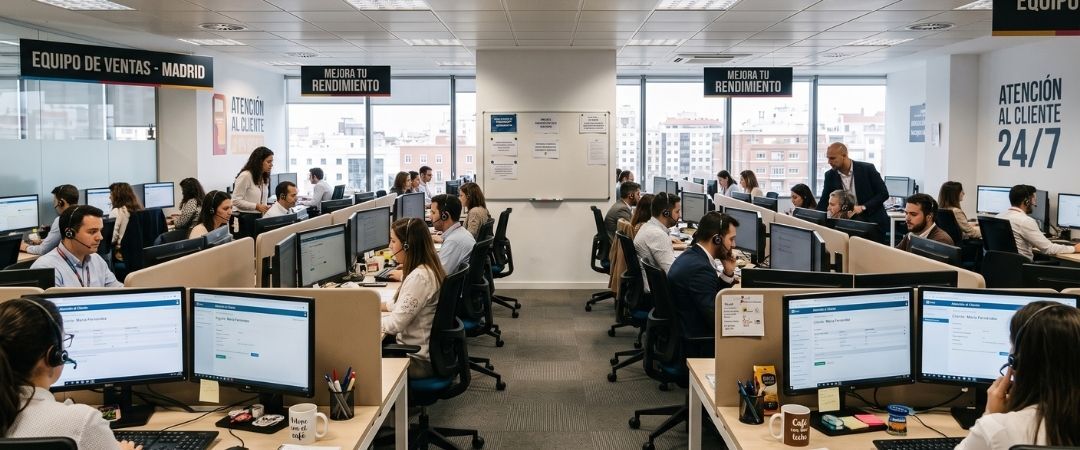

This connects to a related piece: Omnichannel Support for Appliance Buyers: Why Consistency Matters Before and After the Sale.Spanish-speaking shoppers should not receive a weaker customer experience simply because they choose to communicate in Spanish. Yet many U.S. retailers still provide uneven language coverage. A customer may receive Spanish support by phone, only to encounter English-only chat, email, return instructions, marketplace communication, or escalation.
Effective Spanish omnichannel customer support closes those gaps. It gives customers consistent access to product information, order help, delivery updates, returns, refunds, and post-purchase care across the channels they already use.
The opportunity is large. According to the U.S. Census Bureau’s 2024 American Community Survey, about 44.87 million U.S. residents aged five and older speak Spanish at home. However, this audience is not one uniform group. Spanish-speaking customers may differ in regional vocabulary, cultural backgrounds, digital behaviors, and language preferences. Some may prefer Spanish throughout the customer journey. Others may switch between English and Spanish depending on the issue or channel.
Retailers therefore need more than translated scripts. They need culturally fluent agents, synchronized knowledge, connected systems, bilingual quality assurance, and escalation paths that work equally well in both languages.
What This Article Covers
- What Is Spanish Omnichannel Customer Support?
- Why Translation Alone Does Not Create a Spanish Customer Experience.
- Cultural Fluency Should Not Become Cultural Generalization.
- Connect Spanish Support Across Every Retail Channel.
What Is Spanish Omnichannel Customer Support?
Spanish omnichannel customer support is a connected service model that allows customers to communicate in Spanish across voice, live chat, email, SMS, social media, messaging applications, ecommerce websites, and marketplaces.
The word “connected” matters. Offering several Spanish-language channels does not automatically make a program omnichannel. A retailer may provide Spanish phone support and Spanish chat. However, the experience remains fragmented when agents cannot see previous conversations, order details, or unresolved cases.
In a true omnichannel model, customer context follows the interaction. A shopper can begin a conversation through live chat, continue by phone, and receive an email confirmation without explaining the entire problem again. This continuity depends on shared customer histories, aligned workflows, and synchronized policies. ServeRetail’s guide to connecting voice, chat, email, and social support explains why adding channels is only the first step. Retailers must also connect the information, systems, and operational ownership behind them.
Why Translation Alone Does Not Create a Spanish Customer Experience
Literal translation can convey words while losing meaning, tone, or context. Retail conversations often involve uncertainty, frustration, product details, or policy exceptions. These situations require agents to understand what the customer is trying to accomplish, not simply the sentence being spoken.
For example, a customer asking about a delayed gift may need reassurance as much as a tracking update. A shopper disputing a return decision may need a clear explanation of the policy and a suitable escalation. A subscription customer considering cancellation may need help modifying an order rather than ending the relationship.
Customers do not experience a language as a translated script. They experience the clarity, confidence, empathy, and usefulness of the interaction. This is why Spanish call center services should include retail-specific training, product knowledge, conversational fluency, and clear decision-making authority. Agents must know how to explain the brand’s policies naturally while remaining accurate.
Retailers exploring this issue can also read ServeRetail’s analysis of why Spanish customer service matters for retail brands. It examines how language access affects purchase confidence, post-purchase support, loyalty, and customer effort.
Cultural Fluency Should Not Become Cultural Generalization
Spanish-speaking customers in the United States represent many countries, communities, generations, and language preferences. Retailers should not treat them as a single cultural profile.
The goal is not to create an artificial version of Spanish that removes every regional expression. The goal is to establish clear, widely understood communication while giving agents enough judgment to adapt naturally to the customer.
Culturally fluent Spanish support usually includes:
- Clear and widely understood terminology.
- Awareness of regional vocabulary differences.
- Natural explanations instead of word-for-word translations.
- A respectful tone without unnecessary formality.
- Accurate pronunciation of brands and products.
- Careful handling of payment, account, return, and warranty issues.
- The ability to recognize when clarification is needed.
Retailers should also capture each customer’s preferred language in the CRM. That preference can guide routing, outbound communication, follow-up messages, and future interactions.

A strong U.S. Hispanic customer experience is built around customer choice. It should not depend on assumptions about how a person wants to communicate.
Connect Spanish Support Across Every Retail Channel
Customers use different channels for different needs. They may call when an issue feels urgent, use chat while shopping, email documents for a return, or contact a brand through social media after a delayed response.
Spanish omnichannel customer support must account for the communication demands of each channel while preserving the same policies, information, and brand standards.
Spanish Voice Support
Voice remains important for complex, emotional, or time-sensitive interactions. Customers may call about payment failures, account access, missing packages, damaged products, installation questions, or urgent cancellations.
A Spanish inbound call center needs more than fluent speakers. Agents must listen effectively, manage interruptions, clarify details, navigate systems, and explain decisions without sounding scripted. They also need access to Spanish-speaking supervisors when an issue exceeds frontline authority.
Voice quality should be measured through accuracy, resolution, customer effort, transfers, and customer feedback. Speed matters, but a short call that creates a second contact is not necessarily successful.
Spanish Chat, Email, and Social Support
Written channels require a different skill set. Agents need strong grammar, concise writing, brand awareness. the ability to interpret messages containing informal language, abbreviations, or mixed English and Spanish.
Spanish voice, chat, and email support should not rely on one group of agents without channel-specific assessment. Someone who is natural over the phone may still need training before handling multiple live chats or writing detailed emails.
Templates can improve speed, but they must be checked for natural language and updated whenever policies change. Agents should also know when to stop using a template and respond directly to the customer’s situation.
Spanish Ecommerce and Marketplace Support
Spanish ecommerce customer service should cover the entire shopping journey. That includes product questions, promotional codes, checkout concerns, payment problems, order status, delivery exceptions, returns, exchanges, refunds, and loyalty inquiries.
Marketplace interactions add complexity, because retailers must follow platform policies as well as their own. Effective Spanish marketplace customer support helps shoppers understand seller communication, return procedures, delivery expectations, and escalation options across Amazon, Walmart, eBay, TikTok Shop, and other platforms.
Brands expanding online can use ServeRetail’s ecommerce customer service playbook to plan channel coverage, order support, returns, integrations, staffing, and seasonal scale. These foundations become even more important when support must remain consistent across English and Spanish.
Keep English and Spanish Knowledge in Sync
A bilingual program cannot remain consistent when English policies are updated immediately, and Spanish content is treated as a later translation task.
Retail promotions, product launches, shipping commitments, warranty conditions, return windows, and loyalty rules can change often. When agents in different language queues work from different information, customers receive contradictory answers.
A bilingual knowledge-management process should define:
- Who owns each policy or article.
- How English and Spanish versions are approved.
- When updates become effective.
- How agents are notified.
- Which templates and macros must change.
- How outdated content is removed.
- How agents report unclear information.
A shared bilingual knowledge base should support the words that customers and agents actually use. Product names may remain unchanged, while category descriptions, issue types, and policy explanations may vary.
This synchronization becomes especially important during peak retail periods. A promotion can generate thousands of contacts within hours. One inaccurate Spanish message may then be repeated across calls, chats, emails, and social responses before the problem is detected.
Design Bilingual Routing Around Resolution
A Spanish-language option on the opening menu is not enough. Customers need a complete resolution path in Spanish.
Routing should recognize language preference and send the interaction to an appropriately skilled agent. If the case requires a supervisor, fraud team, product specialist, returns expert, or account manager, that escalation should remain available in Spanish whenever possible.
Otherwise, the retailer creates a two-tier experience. Basic questions are handled in Spanish, while complex or high-value issues revert to English.
Strong bilingual retail support should address:
- Language identification at the first point of contact.
- Spanish-speaking frontline coverage.
- Bilingual supervisory support.
- Specialist escalation procedures.
- Spanish callbacks and follow-up emails.
- After-hours and peak-season coverage.
- Handoffs between customer service and back-office teams.
Retailers should also monitor transfer rates by language. A higher transfer rate in Spanish may indicate limited agent authority, insufficient access to specialists, or an incomplete knowledge base.
Measure Spanish Support With Bilingual Quality Assurance
Bilingual quality assurance should evaluate the complete customer outcome, not grammar alone.
A Spanish interaction can be linguistically correct and still fail because the agent provided inaccurate information, missed an escalation, showed little empathy, or failed to resolve the problem. Conversely, minor regional differences should not reduce an agent’s score when the communication is clear and appropriate.
Quality scorecards should measure:
- Policy and product accuracy.
- Clarity of communication.
- Cultural and conversational fluency.
- Correct authentication and compliance steps.
- Ownership of the issue.
- Appropriate escalation.
- Resolution quality.
- Brand tone.
- Documentation accuracy.
Retailers should compare operational results across English and Spanish without assuming both queues will have identical contact patterns. Useful measures include service level, first-contact resolution, customer satisfaction, repeat contacts, transfer rate, abandonment, retention, and complaint themes.
Regular bilingual calibration sessions are also essential. Reviewers, operations leaders, and the retailer should discuss sample interactions and agree on how standards apply in real situations.
How Bilingual Support Can Influence Retention and Revenue
Language access is often treated as a service feature. But it can also affect whether customers complete purchases, accept solutions, stay enrolled, or return to the brand.
Retention conversations require trust. Customers may be frustrated about billing, a delayed shipment, product performance, or an unwanted renewal. When they can explain the situation in their preferred language, the agent has a better opportunity to identify the real source of dissatisfaction.
In one ServeRetail engagement, a home improvement and wellness retailer delivered English and Spanish sales, customer service, and retention support while maintaining service levels above 95%. Structured retention workflows helped the client improve retention by 15%.
This result should not be treated as a universal Spanish-support benchmark. Instead, it illustrates how language capability, standardized workflows, coaching, and performance management can work together within one client program. Read how bilingual customer service supported retention and revenue performance.
Retailers examining the broader commercial role of post-purchase care can also explore how outsourcing customer retention turns first-time buyers into repeat customers.
Choose the Right Spanish Support Delivery Model
Spanish support can be delivered through dedicated, shared, U.S.-based, nearshore, or blended teams. The right model depends on interaction volume, operating hours, product complexity, required channels, and escalation needs.
| Delivery model | Where it may fit |
|---|---|
| Dedicated bilingual team | Complex products, stable Spanish volume, premium service, or programs requiring deep brand knowledge. |
| Shared Spanish queue | Lower or variable volume with standardized workflows and predictable escalation needs. |
| U.S.-based support | Sensitive interactions, complex escalations, or workflows requiring domestic delivery. |
| Nearshore Spanish support | U.S.-aligned hours, bilingual talent, collaborative management, and scalable coverage. |
| Blended delivery | Programs dividing work by language, complexity, channel, operating hour, or customer segment. |
| Core-plus-surge model | Retailers that need a stable year-round team with additional capacity for promotions and seasonal peaks. |
Nearshore operations can be useful for U.S. retailers requiring English and Spanish coverage during overlapping business hours. ServeRetail’s analysis of how bilingual nearshore retail teams support English and Spanish customers examines the staffing, collaboration, and scalability considerations behind this model.
Retailers should not pick a model on geography alone. Agent capability, quality governance, security, systems access, leadership, and workforce planning shape customer outcomes far more than the location label.
How to Evaluate a Spanish BPO Provider
A qualified Spanish BPO provider should be able to explain how language proficiency, channel readiness, retail knowledge, and quality are assessed. A general claim of bilingual capability is not enough.
Retailers evaluating Spanish CX outsourcing should ask:
- How are speaking, listening, reading, and writing skills tested?
- Which customer markets and regional language differences do agents understand?
- Can the team support voice, chat, email, social, SMS, and marketplaces?
- Are Spanish interactions reviewed by qualified bilingual quality analysts?
- Are supervisors and escalation teams available in Spanish?
- How are updates to English and Spanish knowledge synchronized?
- How are product, promotion, and policy changes communicated?
- Can reports separate English and Spanish performance?
- How does the provider prepare for seasonal peaks?
- Which security, privacy, and access controls protect customer data?
The provider should also show relevant retail experience. A team supporting apparel, home improvement, electronics, wellness, or marketplaces needs category-specific training and workflows. ServeRetail provides retail customer service outsourcing across voice, chat, email, social media, messaging, order help, returns, loyalty, and product inquiries.
Brands requiring Spanish alongside other languages can also explore ServeRetail’s broader multilingual customer service capabilities. The operating model combines language coverage with retail training, quality management, workforce planning, and reporting.
Common Mistakes in Spanish Retail Customer Service
Many bilingual programs struggle because Spanish support is added to an English operation without redesigning the workflow.
Common mistakes include:
- Translating scripts literally without reviewing tone or clarity.
- Routing Spanish-speaking customers through English support first.
- Using voice agents for chat and email without written-language testing.
- Providing Spanish frontline service without bilingual escalation.
- Updating English policies before Spanish knowledge content.
- Measuring average handle time without examining resolution.
- Assuming one regional dialect represents every customer.
- Treating Spanish as an overflow queue instead of a core service channel.
- Using machine translation without human review for sensitive interactions.
- Failing to report customer outcomes separately by language.
These gaps increase transfers, repeat contacts, customer effort, and inconsistency. They can also hide poor performance because the overall program average may look acceptable while the Spanish queue underperforms.
Frequently Asked Questions
What is Spanish omnichannel customer support?
Spanish omnichannel customer support provides connected Spanish-language service across voice, chat, email, social media, SMS, ecommerce, and marketplace channels. Customer history, order information, previous interactions, and unresolved issues remain available as the customer moves between channels.
Is Spanish customer support the same as translation?
No. Translation converts content from one language to another. Effective Spanish retail customer service also requires conversational fluency, product knowledge, cultural awareness, decision-making authority, channel skills, quality assurance, and access to bilingual escalation.
Which channels should Spanish retail support cover?
The channel mix should reflect customer behavior. Most retailers should consider voice, live chat, email, social media, SMS, ecommerce messaging, and marketplace communication. The same policies and customer context should remain available across every supported channel.
What Spanish dialect should a U.S. retailer use?
Retailers should use clear, widely understood Spanish while training agents to recognize regional vocabulary and customer preferences. The goal should be natural communication, not an artificial script that assumes every Spanish-speaking customer uses the same expressions.
How should the quality of Spanish customer service be measured?
Measure policy accuracy, resolution, customer satisfaction, repeat contacts, transfers, abandonment, retention, escalation quality, documentation, and brand tone. Language quality matters, but it should be evaluated as part of the complete customer outcome.
What should retailers look for in a Spanish BPO provider?
Review language testing, retail experience, channel capability, bilingual QA, supervisory coverage, knowledge management, reporting, security, workforce planning, scalability, and client references. The provider should show how it maintains consistency between English and Spanish operations.
Build One Customer Experience Across Two Languages
Spanish-speaking customers should receive the same access, accuracy, and ownership as English-speaking customers. Achieving that standard requires more than translated content. It requires connected channels, culturally fluent agents, synchronized knowledge, bilingual quality assurance, and complete escalation paths.
The strongest Spanish omnichannel customer support programs treat language as part of the operating model, not as an optional queue. They connect Spanish customer care with orders, returns, marketplaces, retention, product support, and the wider ecommerce journey.
For a different angle on retail CX, see Why India’s Payment Revolution Demands Retail CX.
ServeRetail helps retail and ecommerce brands build English and Spanish support operations across voice, chat, email, social media, messaging, marketplaces, and post-purchase workflows. Reach out to ServeRetail to build Spanish omnichannel support for your customers, channels, products, and growth plans.


