






Welcome to 2026, a year when AI does everything except fold laundry, customer experience (CX) expectations keep climbing, and retail leaders scramble to keep up with shoppers who demand magic on demand. What felt futuristic just a few years ago is now business as usual: predictive engines, proactive service, augmented reality (AR) shopping, and AI copilots guiding every step from purchase to refund.
Pulling from recent research by Salesforce, Gartner, McKinsey, Accenture, Shopify, and ServeRetail’s own frontline teams, here is a data-grounded, actionable look at the retail CX trends shaping the industry in 2026. Implementing these strategies will help your brand deliver the high-quality, user-focused experiences that both customers and search engines reward.
1. Predictive Personalization: AI Knows You Better Than Your Spouse
Personalization has evolved from a “nice-to-have” feature to a “personalize or disappear” imperative. Shoppers now expect brands to anticipate their needs, making 2026 the year predictive personalization becomes a true growth engine. While the creepiness factor can be high, customer satisfaction can be high when executed correctly.
AI reads patterns like a seasoned detective, forecasting preferences based on weather, lifestyle shifts, and micro-behaviors.
- Salesforce finds 76% of consumers expect companies to understand their unique needs and expectations.
- Retailers like Walmart are pairing IoT sensors with predictive inventory to cut stockouts before they even happen.
ServeRetail trains CX teams to handle these highly personalized journeys quickly, empathetically, and with AI amplification.
2. Proactive CX: Fixing Problems Before Customers Notice
If reactive CX was yesterday’s model, proactive CX is today’s competitive superpower. Customers no longer want to tell you something is wrong; they expect you to catch it and fix it quietly. In 2026, this capability is table stakes.
- Done well, proactive support can meaningfully reduce inbound tickets, heading off contacts before they ever start.
- Proactive service recovery—resolving an issue before the customer complains—is one of the strongest loyalty levers in retail today.
CX author Shep Hyken, in his 2026 CX predictions, emphasizes that the best experiences quietly fix problems before customers even notice them. ServeRetail deploys predictive issue-detection and human escalation so brands can act before a customer ever hits “Contact Support.”
3. Human + AI Team-Ups: Retail’s New Power Couple
The debate is officially over. AI alone cannot handle the nuances of retail CX, and humans alone cannot scale it. The future belongs to human and AI hybrid teams, each doing what they do best. Think Batman and Robin, if Robin had advanced machine learning.
AI handles data, pattern recognition, and automation. Humans handle emotion, nuance, and complex, honest conversations.
- Gartner reports that 85% of customer service leaders will explore or pilot customer-facing conversational GenAI, signaling how fast copilots are arriving.
- Adoption remains uneven: many consumers note AI has not yet improved their experience, which is exactly where trained human agents matter most.
The takeaway most CX leaders now share is clear: AI will not replace agents, but agents who use AI effectively will outpace those who do not. ServeRetail specializes in AI-augmented workflows that make human agents faster, more accurate, and more effective.
4. Omnichannel Experience: One Brand, One Story, Every Touchpoint
Customers do not think in “channels”; they think in “answers.” Whether via app, Instagram DM, physical store, or phone, they expect one continuous experience. Anything less feels outdated. In 2026, omnichannel is an operational requirement, not a marketing buzzword.
- Disconnected experiences are costly: most customers will switch brands after a broken omnichannel journey.
- Blended shopping is now the norm; a majority of shoppers have used buy-online-pickup-in-store (BOPIS) recently.
McKinsey’s research consistently finds omnichannel shoppers are significantly more valuable than single-channel ones. ServeRetail unifies voice, chat, social, SMS, email, and marketplace support into one seamless thread, ensuring customers never have to repeat themselves like a broken voicemail.
5. Ethical AI & Radical Transparency: Trust Is the New Currency
Consumers in 2026 are tech-savvy, privacy-conscious, and deeply skeptical of brands that misuse data. Ethical AI is no longer just good PR; it is a necessary component for business survival. Transparency now shapes brand loyalty just as much as price or convenience.
Brands must show customers exactly how their data is used and give them intuitive control over their privacy settings.
- A large and growing share of consumers actively demand more transparency about how their personal data is collected and utilized.
- Transparency pays dividends: clear, honest data practices tend to strengthen long-term loyalty rather than weaken it.
Industry analysts broadly agree that digital trust is becoming a primary brand differentiator. ServeRetail builds ethical workflows, secure processes, and clear communication protocols so brands earn trust rather than fear regulatory backlash.

6. Immersive AR/VR Retail: Shopping, But Make It Cinematic
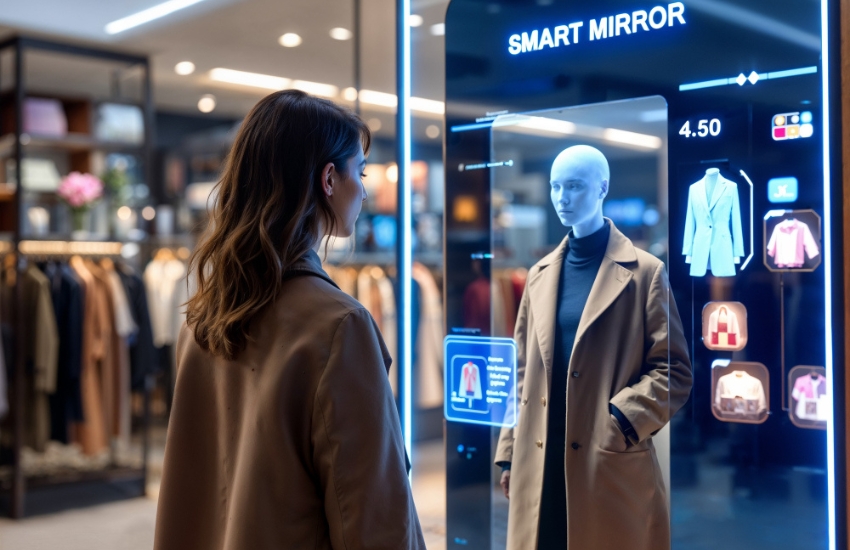
Shopping used to be purely functional. Now, it is immersive, interactive, and sometimes more entertaining than actual life. Augmented Reality (AR) and Virtual Reality (VR) are transforming how shoppers explore products, try on items, and visualize purchases. In 2026, this is as normal as scrolling through Instagram.
- Shopify reports that AR-powered shopping meaningfully lifts engagement and conversion rates versus static product pages.
- Virtual try-on technology has already reshaped the beauty industry: brands like L’Oreal have made it a core, expected part of the digital experience.
7. Value-Led Loyalty: Because Discounts Don’t Buy Love Anymore
Loyalty programs used to be purely transactional: points, coupons, and birthday discounts. However, 2026 consumers crave emotional loyalty. They want comfort, relevance, community, and authentic brand interactions. Value still matters, but genuine connection matters more.
- Shoppers now weigh value, convenience, and overall experience together; no single lever wins loyalty on its own anymore.
- Accenture’s research finds that a brand’s values and purpose increasingly influence loyalty alongside competitive pricing.
ServeRetail builds loyalty through fast support, proactive care, contextual personalization, and warm human interactions that genuinely strengthen brand relationships.
8. Agent Empowerment: The Happier the Agent, the Happier the Customer
While AI steals the headlines, frontline agents still make or break the customer experience. In 2026, retailers are finally realizing what ServeRetail has known all along: empowered, well-supported agents deliver dramatically better CX.
Better tools + better training + better AI = better customer experiences.
- AI-assisted coaching measurably lifts agent performance, resulting in faster ramp-up times, more consistent quality, and significantly less burnout.
- The internal employee experience directly shows up in the external customer experience; agents who feel supported deliver vastly superior interactions.
ServeRetail uses AI-powered coaching, intelligent workflows, and gamified training to create high-performing, motivated teams that consistently deliver standout CX.
Final Take: 2026 Belongs to Retailers Who Blend Tech + Humanity
AI is accelerating, expectations are rising, and customer patience is shrinking. The brands that win in 2026 will be fast, transparent, omnichannel, predictive, immersive, and deeply human at their core.
ServeRetail is helping forward-thinking retailers lead this transformation. Whether your focus is scaling support, adopting AI, improving omnichannel cohesion, or delivering world-class personalization, ServeRetail brings the infrastructure, global talent, and AI-powered solutions to help you stay ahead.
2026 is wild, but with the right CX strategy, it is wildly profitable.