





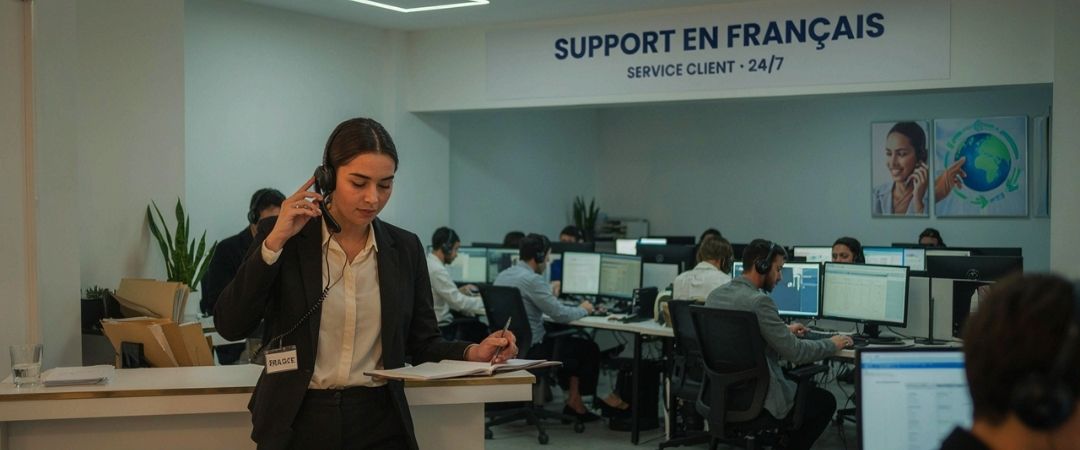

Retail customers rarely think in regions, languages, or support queues. They think in needs. A shopper may ask a product question in French, follow up about delivery in Arabic, and expect an English-speaking escalation team to understand the issue without starting over.
That is why Morocco-based retail customer service can be valuable for brands serving Europe, North Africa, and cross-border ecommerce markets. Many teams still associate Morocco with French support, but for retail CX, the stronger advantage is multilingual delivery that can combine French, Arabic, English, cultural awareness, and operational discipline.
For beauty, luxury, lifestyle, travel goods, and ecommerce brands, the question is not simply whether a location can provide agents who speak a language. The better question is whether the support model can help customers move through orders, returns, product questions, delivery issues, warranties, and escalations with clarity.
Morocco’s Retail CX Advantage Is Broader Than Language
Language coverage opens the door, but customer experience depends on what happens after the conversation begins. A customer asking about a delayed order needs more than a translated response. They need accurate status, clear next steps, and an agent who understands the brand’s service expectations.
That is where Morocco can fit well for retail brands. A Morocco-based operation can support multilingual customer interactions while staying close to customer expectations across French-speaking Europe, North Africa, and broader EMEA markets.
For buyers evaluating a Morocco retail customer service model, the goal should be practical. Can the team support real retail workflows? Can agents handle product questions, delivery problems, return policies, loyalty issues, and escalations with the right tone? Can quality teams review performance across languages, not just by channel?
The Language Mix Retail Brands Actually Need
Many brands start with Morocco because they need French support. That makes sense. French-speaking customers often need help with orders, returns, delivery questions, product availability, refunds, and post-purchase support. However, Morocco’s value becomes stronger when brands treat French as one part of a broader language strategy. Cross-border retail often needs more than one language path.
French for European Ecommerce and Premium Retail
French support is essential for brands serving customers in France, Belgium, parts of Switzerland, and other French-speaking markets. The work may include order updates, product questions, payment issues, returns, exchanges, loyalty inquiries, and customer-care follow-ups.
Arabic for North African and Middle Eastern Customers
Arabic support can help brands serve customers across North Africa and selected Middle Eastern markets. The program should define whether it needs Modern Standard Arabic, regional Arabic, or a specific customer-service style by market. Clear language planning avoids routing mistakes and improves customer comfort.
English for Cross-Border Coordination
Brands may need English for global ecommerce customers, internal coordination, escalation handling, reporting, and communication with brand teams. For multi-market operations, English can also act as a bridge between customer-facing queues and central support leadership.
This is why Morocco multilingual contact center planning should begin with customer journeys, not a basic language list.
Where Morocco-Based Retail Support Creates the Most Value
Morocco can be a strong fit when brands need language capability and a high level of service sensitivity. Some retail categories carry more emotional, practical, or brand-sensitive questions than others.
Beauty and cosmetics customers may ask about product availability, substitutions, delivery, returns, or brand-approved product guidance. Luxury and lifestyle shoppers may expect a more polished service tone and faster ownership of issues. Travel goods customers may need help with warranties, replacements, international shipping, damaged items, and return policies.
In these categories, multilingual support is not only a service function. It protects the brand experience. Customers may not know where the support team is located, but they will notice whether the answer feels accurate, respectful, and aligned with the brand.
Retail Workflows That Fit a Morocco Multilingual Program
A good Morocco-based retail customer service program should center on the work customers actually bring to support. That usually includes both pre-purchase and post-purchase needs.

| Retail Workflow | Why It Matters | How Morocco Can Support It |
|---|---|---|
| Order management | Customers want accurate updates on order status, delivery timelines, and next steps. | French, Arabic, and English support teams can help manage order questions across regional markets. |
| Returns and refunds | Returns can create frustration when policies are unclear or refund timelines vary. | Agents can explain eligibility, process steps, and refund status in the customer’s preferred language. |
| Product inquiries | Customers often need help before buying or after receiving an item. | Retail-trained agents can answer approved product questions and escalate sensitive issues. |
| Premium customer care | Beauty, luxury, and lifestyle customers often expect a more careful tone. | Teams can train agents on brand voice, customer sensitivity, and service recovery. |
| Cross-border ecommerce | Customers may buy from one market and need support from another. | Shared workflows can reduce friction between Europe, North Africa, and broader EMEA support needs. |
This workflow view is important because buyers should not judge Morocco-based retail customer service only by headcount or language availability. The real test is whether the provider can manage the customer moments that affect trust.
Why Regional Awareness Matters in Europe and Africa
A French-speaking customer in France may not expect the same service style as a French-speaking customer in North Africa. Arabic-speaking customers may also have different expectations depending on market, channel, and product category.
That does not mean a brand needs a separate team for every market. It means the operating model should recognize regional differences. Scripts, knowledge bases, escalation paths, and QA examples should reflect the markets being served.
Morocco can support Europe and Africa customer service models when training strengthens language capability. Agents should understand the brand’s policies, tone, product category, and market-specific rules before they begin handling customers.
Quality Assurance Should Measure More Than Language Accuracy
Multilingual programs can fail when QA only checks whether the agent used the right language. That is not enough. A customer can receive a grammatically correct answer that still fails to resolve the issue.
For a Morocco-based retail program, QA should review the full experience. Did the agent understand the issue? Did the agent explain the policy clearly? Did the customer receive the right next step? Was the tone appropriate for the market and brand?
A strong QA framework should assess:
- language clarity and accuracy;
- brand voice by market;
- policy explanation for orders, returns, refunds, and warranties;
- quality of documentation;
- escalation accuracy;
- response consistency across voice, email, chat, and social channels;
- resolution quality and customer sentiment.
This is especially important for ecommerce customer service outsourcing, where customers may contact support after a failed delivery, refund delay, incorrect item, or unclear return policy. These moments often decide whether the customer returns to the brand.
What Retail Buyers Should Ask Before Choosing Morocco
Retail leaders should evaluate Morocco as part of a full service design, not as a standalone location choice. The right questions can reveal whether a provider can support multilingual retail complexity at scale.
Useful questions include:
- Which French, Arabic, and English support levels can the team provide?
- How does the provider train agents on retail workflows such as orders, returns, refunds, product questions, and loyalty support?
- Can the provider support voice, email, chat, social, and back-office workflows?
- How does QA differ by language, channel, and market?
- What reporting is available by language, queue, issue type, and channel?
- How does the team handle escalations for premium customers or sensitive cases?
- What data security, access control, and governance processes are in place?
- How quickly can the team scale without weakening quality?
These questions help buyers move beyond generic retail BPO services and focus on what the customer experience will actually feel like.
A Relevant ServeRetail Example: Multilingual Support at Scale
ServeRetail’s work with a premium travel goods brand shows why multilingual and multi-market support structure matters. The engagement sustained 92% quality performance while expanding customer support nearly four times across a complex operating environment.
This case matters because travel goods customers often need help with orders, warranties, replacements, returns, and international service expectations. Those same needs appear in beauty, luxury, lifestyle, and cross-border ecommerce programs where language and service consistency must work together.
Read the full case study: premium travel goods brand sustained 92% quality performance through nearly 4x customer support expansion.
How ServeRetail Helps Brands Build Morocco-Based Support
ServeRetail helps retail and ecommerce brands design customer-service programs that combine language capability, retail workflow knowledge, quality assurance, reporting, and scalable operations.
For brands evaluating French call center services, Morocco can be a strong regional option. For brands that also need Arabic call center services, Morocco can become even more useful because teams can plan French, Arabic, and English support within one broader operating model.
ServeRetail can support workflows such as customer service, order management, returns and refunds, product support, loyalty support, ecommerce inquiries, and escalation handling. The goal is not only to answer customers in the right language. It is to deliver support that fits the brand, the market, and the reason the customer reached out.
Build Multilingual Support Around the Customer, Not the Queue
Morocco’s value for retail CX goes beyond French-language support. Its stronger opportunity lies in multilingual customer service that connects French, Arabic, English, regional awareness, and retail process control.
For European, North African, beauty, luxury, travel, and ecommerce brands, Morocco-based retail customer service can help create a more connected support model across markets. The key is to design the program around the customer journey, not around language labels alone.
For a closer look at this, see Retail BPO in Morocco: Why European Ecommerce Brands Choose French-Language Customer Support.
If your brand is expanding multilingual support across Europe and Africa, Morocco may deserve a place in your delivery strategy. Assess Morocco Multilingual Support
Frequently Asked Questions
What is Morocco-based retail customer service?
Morocco-based retail customer service is a delivery model where agents in Morocco support retail and ecommerce customers across channels such as voice, email, chat, social, and back-office workflows. Brands often use it for French, Arabic, English, and cross-border customer-service programs.
Why is Morocco useful for multilingual retail support?
Morocco can support retailers that need French, Arabic, and English capability across Europe, North Africa, and broader EMEA markets. Its value increases when brands need both language coverage and retail-specific workflow support.
Which retail brands should consider Morocco for customer service?
Beauty, luxury, lifestyle, travel goods, ecommerce, and cross-border retail brands may consider Morocco when they need multilingual customer service, high-touch support, product inquiries, order management, returns, and market-aware escalation.
Is Morocco only useful for French customer support?
No. French support is important, but Morocco can also support Arabic and English customer-service needs depending on program design, workforce capability, training, and provider experience.
What should buyers evaluate in a Morocco retail BPO partner?
Buyers should evaluate language capability, retail workflow experience, QA processes, channel coverage, reporting, data security, escalation design, staffing flexibility, and whether the partner can support the specific customer journeys the brand needs to manage.