


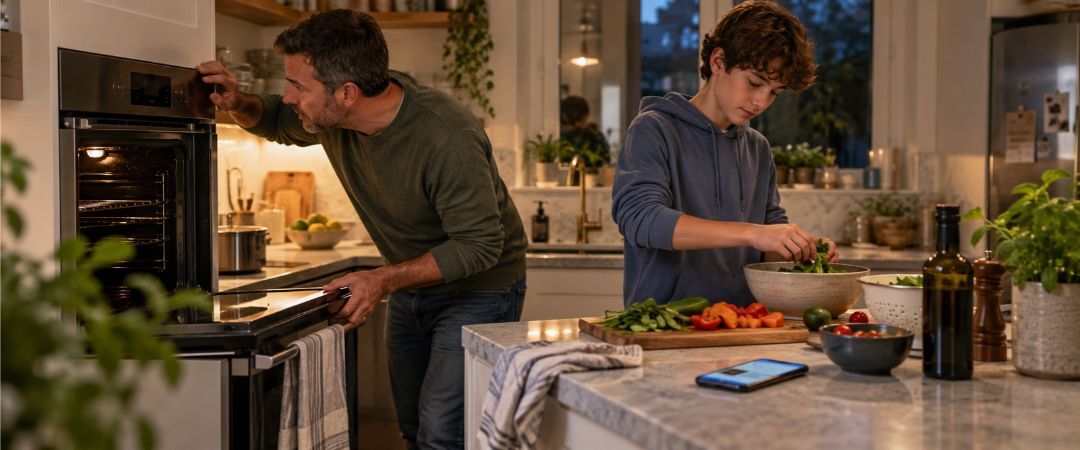

Until one stops working.
Then the problem is rarely just a heating element, motor, control board, or error code. A failed appliance can rearrange meals, mornings, childcare, work schedules, and the small routines that keep a household running.
For appliance brands, that changes the role of appliance customer support. The job is not simply to close the case. It is to help the customer understand what went wrong, what happens next, and how quickly everyday life can return to normal.
This is why the post-purchase appliance journey matters as much as the purchase itself. The first days and weeks of ownership can determine whether customers become confident users or frustrated returners. That is the difference between ticket resolution and routine restoration.
What Is the Customer Really Asking for When an Appliance Fails?
The spoken question may be, “Why isn’t my oven heating?”
The underlying question is often, “How am I going to make dinner tonight?”
A dishwasher problem may sound technical to the support team but operational to the household. A coffee maker failure can derail a morning routine. A refrigerator problem can create urgency around food, cost, and timing.
That does not mean agents need to dramatize every failure. It means home appliance customer service should understand the context in which the product is being used.
A customer who feels that context has been understood is much more prepared to move into troubleshooting, documentation, and resolution.
The first job of support is therefore not simply to acknowledge frustration. It is to establish what the failure has interrupted and then create the clearest route back to normal.
When an Appliance Fails, What Actually Breaks?
The support ticket describes the machine. The customer experiences the disruption around it.
| Appliance | What the Brand Sees | What the Customer Experiences | What Great Support Restores |
|---|---|---|---|
| Coffee maker | Product not brewing | Morning routine disrupted | Fast troubleshooting or a clear replacement path |
| Refrigerator | Cooling issue | Food, cost, and urgency | Priority triage and clear service ownership |
| Oven | Heating failure | Dinner plans and family routines disrupted | Diagnosis and a clear repair or service path |
| Dishwasher | Cycle or drainage issue | Household chores pile up | Troubleshooting and next-step clarity |
| Blender or small appliance | Motor or power issue | Meal, fitness or daily-use routine interrupted | Quick diagnosis, replacement or another workable resolution |
The support ticket describes the machine. The customer describes what the machine made possible. Great appliance support has to understand both.

Why Appliance Customer Support Cannot Stop at Empathy
Empathy matters, but empathy without operational competence quickly becomes frustrating. A warm apology does little if the customer still does not know whether to reset the appliance, submit a warranty claim, schedule a technician, send a photograph, wait for a replacement part, or return the product. The better model combines emotional awareness with resolution ownership.
That matters even more as appliance technology becomes more complex. J.D. Power’s 2025 U.S. Appliance Satisfaction Study, based on 15,884 customer evaluations, found that overall appliance satisfaction declined 11 points year over year. The research also reported lower satisfaction with ease of use and highlighted increased customer confusion as appliances become more connected.
For brands, the implication is important: as products become more sophisticated, post-purchase appliance support has to become easier for the customer to navigate. Complex products should not create a complex support experience.
From Ticket Closure to Routine Restoration
Traditional support operations often optimize what happens inside the contact center. A routine-restoring model optimizes what happens in the customer’s home.
| Ticket mindset | Routine-restoring mindset |
|---|---|
| Collect the serial number as quickly as possible | Understand the disruption, then collect the information needed to act |
| Minimize handle time | Minimize the customer’s total effort |
| Give the next department’s phone number | Maintain clear ownership of the next step |
| Close the ticket after escalation | Track the case until the customer has a workable resolution path |
| Measure individual contacts | Measure the complete support journey |
| Send a generic survey | Learn whether the solution actually restored normal use |
This does not mean longer calls or unlimited agent discretion. It means designing appliance customer experience around the outcome the customer cares about rather than the internal status of the ticket.
What Does a Routine-Restoring Support Model Look Like?
A strong appliance-support journey generally needs several connected capabilities.
Understand the Impact
Agents should quickly establish both the technical problem and the practical consequence. The difference matters. A cosmetic issue on a countertop appliance and a refrigerator that has stopped cooling may require very different levels of urgency.
Troubleshoot Within Clear Boundaries
Agents need structured troubleshooting guidance, access to the right product knowledge, and clear escalation points. Strong appliance troubleshooting support helps resolve simple issues without unnecessary service visits while preventing agents from improvising beyond approved procedures. Our guide to structured technical troubleshooting shows how support teams can move beyond simply reading manuals to guided diagnostic logic with clearer escalation paths.
For brands with more complex products, this can also connect directly to specialized technical and product support.
Create One Clear Resolution Path
Customers should know what happens after troubleshooting fails. Does the case move to warranty review? Technician scheduling? Parts fulfillment? Replacement? Returns? A specialist queue? The support team should make that path visible.
Coordinate the Handoffs
A case can feel broken even when every department technically completes its own task. If the customer has to repeatedly explain the same issue to support, warranty, service, and logistics teams, the brand has transferred its internal complexity to the customer.
This is also where omnichannel support for appliance buyers becomes important. Customers do not distinguish between ecommerce, warranty, delivery, and support teams; they experience one brand. Good service coordination prevents that fragmentation.
Follow Through
Resolution is not always the moment a case changes status. For some situations, a short follow-up after a repair, replacement, or troubleshooting intervention can verify that the appliance is working and identify lingering problems before the customer contacts the brand again.
Troubleshoot, Repair, Replace or Escalate: Give the Customer a Clear Path
One of the biggest sources of customer effort is uncertainty about what happens next. Appliance brands should therefore define resolution pathways by problem type.
A support team might resolve some cases through guided troubleshooting. Others may require technical product support, warranty validation, service scheduling, replacement parts, returns, or escalation.
When troubleshooting confirms that the issue falls outside a simple fix, the journey may move into electronics warranty management, repair, replacement, or another formal resolution path. For appliance brands managing exchanges, formal claims, or replacement workflows, that process can also connect naturally with structured returns, replacements, and claims processing.
The customer does not need to understand the organization’s entire operating structure. They need one answer:
What happens next with my appliance?
That makes resolution ownership one of the most important capabilities in modern appliance support.
The agent may not personally perform every next step, but the support model should make ownership clear enough that the customer never has to restart the journey.
Installation and Setup Are Part of the Same Customer Experience
Not every support problem begins with a defective product. Complex installation, setup mistakes, connectivity issues, and unclear first-use instructions can all make a working appliance feel broken to the customer.
That is why home appliance setup and installation support belongs inside the wider post-purchase experience. A brand that can resolve setup friction early may prevent unnecessary service visits, returns, and repeat contacts later.
Which Metrics Show Whether Appliance Support Is Actually Working?
Average handle time still has operational value, but it should not define success by itself. Brands trying to improve appliance customer experience should also examine first contact resolution, repeat contact rate, escalation rate, troubleshooting success, technician or service handoff completion, warranty or replacement turnaround, customer effort, CSAT by contact reason, and reopen rate. The strongest metric set connects efficiency with outcome.
For example, a five-minute interaction is not efficient if the customer calls back three times because the resolution path was unclear. Likewise, a technically successful repair journey may still create a poor customer experience if scheduling, status updates, and handoffs require excessive effort.
The Routine Restoration Scorecard
Can your appliance support operation answer “yes” to these five questions?
- Can an agent see the customer’s previous contacts without asking them to start again?
- Can the agent determine whether the next path is troubleshooting, repair, warranty, replacement or return?
- Does someone retain ownership when the case moves between teams?
- Can you measure repeat contacts and reopened cases, not just handle time?
- Can product and quality teams see recurring support reasons and patterns?
4–5 yes: Your support model is likely organized around resolution.
2–3 yes: Handoffs or visibility may be adding avoidable customer effort.
0–1 yes: Your operation may still be optimized around tickets rather than customer outcomes.
Support Contacts Can Improve More Than Customer Service
Appliance-support teams hear problems before dashboards always reveal them.
Repeated questions about the same feature can identify confusing product design or setup instructions. A growing cluster of troubleshooting calls can expose an emerging defect pattern. Repeated complaints about technician scheduling may point to a service-network problem rather than a contact-center issue. That makes appliance customer support an important source of operational intelligence.
Product, engineering, quality, warranty, and customer-experience teams should be able to see patterns in contact reasons, troubleshooting failures, repeat defects, parts issues, installation problems, escalation drivers, and recurring customer confusion.
The support organization then becomes more than a cost center. It becomes a feedback system for the entire post-purchase experience.
When Does Specialized or Outsourced Appliance Support Make Sense?
Not every appliance company needs an external support model. The question becomes more relevant when product complexity, contact volume or service coordination begins to exceed what the internal team can manage consistently.
A specialist or outsourced appliance support model may be worth evaluating when demand varies significantly across launches or seasons, technical questions require dedicated training, customers need evening or weekend coverage, multiple product lines create knowledge-management complexity, service scheduling and warranty workflows operate separately, or permanent internal staffing cannot flex economically with demand. At that point, the decision should not be framed simply as “in-house versus outsourced.”
The better question is:
Which parts of the customer journey require brand ownership, and which can a specialist partner operate more effectively at scale?
ServeRetail’s consumer electronics and appliance customer support capabilities are built around post-purchase service, troubleshooting, warranty-related interactions, and scalable customer-care operations.
Scale can expose the limits of a fragmented support model. In one ServeRetail engagement, a kitchen and home-appliance brand expanded its CX workforce fourfold while moving toward a more scalable remote-support model. The case is relevant because it shows how technical support and operating capacity can evolve together as customer demand grows.
What Should Appliance Brands Look for in a Support Partner?
A provider should understand the product journey, not just contact-center mechanics. For a kitchen or home-appliance brand, that means being able to explain how agents will learn product lines, access knowledge, perform approved troubleshooting, handle warranty boundaries, coordinate service, manage escalations, and preserve brand tone. The operating model should also define how quality gets measured.
A short call is not automatically a good call. Quality reviews should examine whether the agent identified the issue correctly, followed the troubleshooting process, explained the next step, documented the case, and established clear ownership. Buyers evaluating consumer electronics customer service outsourcing should therefore look beyond labor cost.
The stronger questions are about training, knowledge management, QA, technical escalation, integration, service coordination, and the partner’s ability to turn customer contacts into useful operational data. Those capabilities should sit within a broader customer service operating model that is designed around the full customer journey rather than isolated tickets.
Customer Service Is Part of the Product Experience
When an appliance fails, the customer does not experience the product failure and the support interaction as two separate things. They experience one brand. The product stopped working. Then the brand either made the situation easier or harder.
That is why the best appliance customer support does more than acknowledge inconvenience. It understands the household routine that has been interrupted, creates a clear resolution path, coordinates the necessary handoffs, and stays focused on getting the customer back to normal. The kitchen may be the heart of the home. For an appliance brand, customer service is part of what keeps that heart running.
Is Your Appliance Support Restoring the Customer’s Routine?
ServeRetail helps appliance and consumer-electronics brands manage post-purchase customer care, technical support, service coordination, warranty-related interactions, and scalable customer-support operations.
If customers are navigating too many handoffs, contacting your team repeatedly or struggling to understand what happens after a product fails, the support journey may need redesigning.


