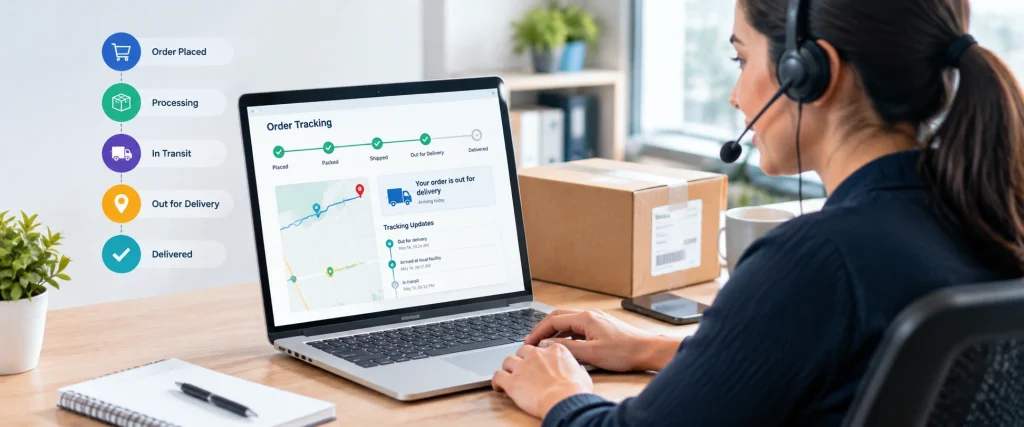




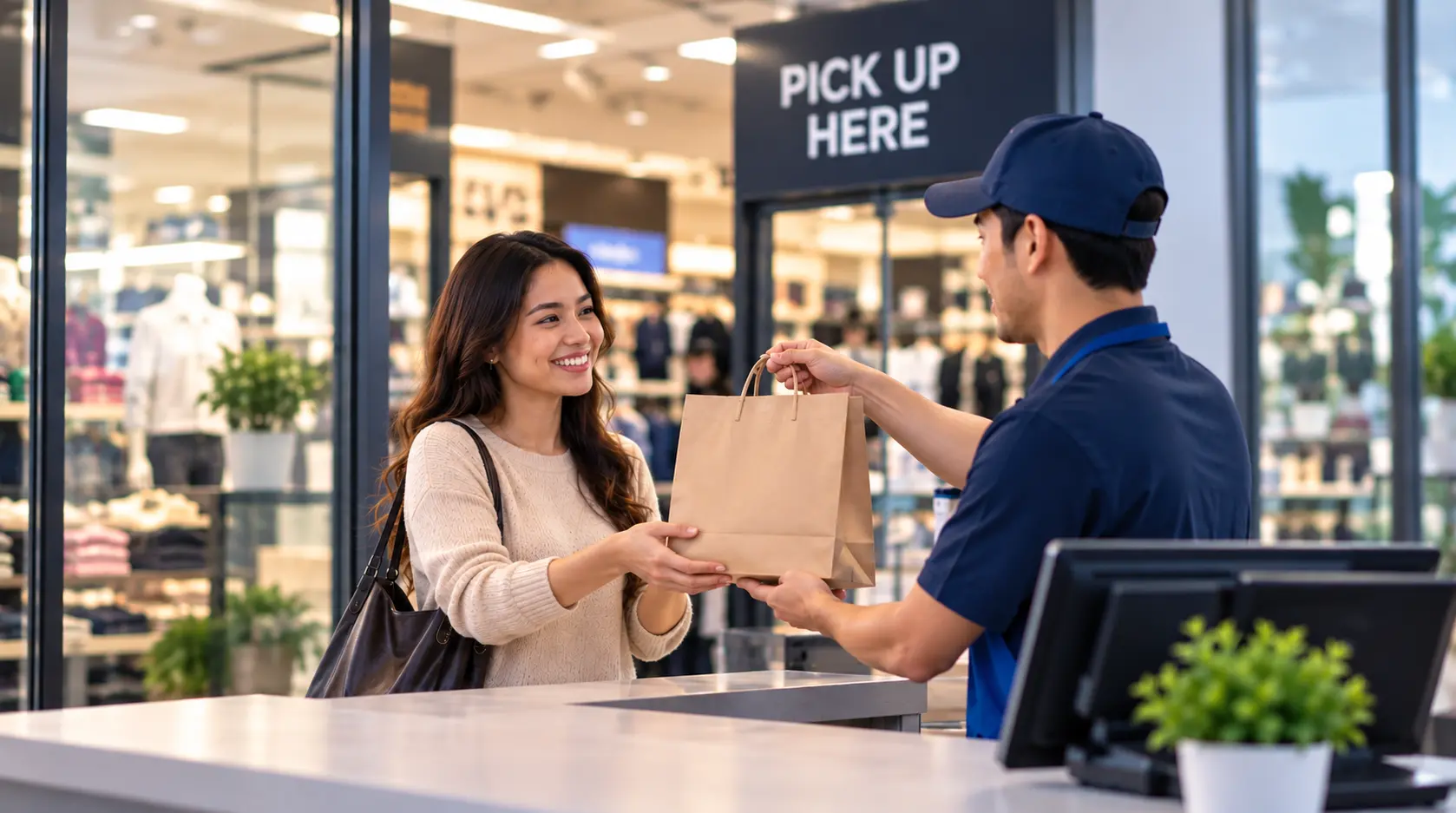

A shopper orders a jacket online at 9 a.m. and expects it ready by noon. The confirmation text says “ready for pickup.” The shelf is empty. That single mismatch is the modern BOPIS customer service problem in miniature.
Buy online, pickup in store has stopped being a checkout option shoppers tolerate and become one they expect by default. But most support teams were built around shipping delays, not counter-side confusion — and the gap between “order placed” and “order actually ready” has quietly turned into a revenue leak. Here’s why that gap exists, what the data actually shows, and what closes it.
What BOPIS Customer Service Covers, and Why It Matters Now
BOPIS customer service spans every interaction from the moment a shopper picks “pick up in store” over “ship to home”: order confirmation, inventory accuracy, pickup coordination, and recovery when something goes wrong.
The category keeps growing. The global BOPIS market is projected to reach $18.26 billion in 2026 and climb to $39.97 billion by 2035, according to Business Research Insights. In the U.S. specifically, click-and-collect sales are on track to hit roughly $177.9 billion in 2026, up more than 15% year over year, per Capital One Shopping’s research, which draws on U.S. Census Bureau data. BOPIS support has moved from a nice-to-have into a core piece of omnichannel retail CX — and retailers treating it as an afterthought are gambling with real revenue.
The Support Gap Nobody Talks About
BOPIS was designed by merchandising and logistics teams, but customer service inherited the fallout. Inventory systems say an item is in stock; a walk-in customer already bought it. Meanwhile, front-line staff juggle pickup duties alongside register lines, gift wrapping, and restocking. The result is a support model stretched thin exactly when patience runs thinnest.
A shopper standing at a pickup counter, toddler in tow, doesn’t want an apology script. They want their order, fast, and a clear answer if it’s missing. Slow-moving email-ticket playbooks weren’t built for that kind of real-time, in-person pressure.
Where Curbside Pickup Breaks Down
Curbside adds another layer, since the customer never enters the building. In Ipsos’s benchmark mystery-shopping study of major U.S. retailers, 27% of pickup locations were poorly marked or hard to find, and 9% of orders came back inaccurate — a small percentage that still translates into thousands of frustrated calls during peak weeks. “Use of BOPIS and curbside pickup has increased for 78% of shoppers since COVID-19 began,” said Carlos Aragon, Ipsos’s Vice President of U.S. Channel Performance, adding that 69% expected to keep using it going forward. That shift has only hardened since: shoppers who once tolerated a five-minute wait now expect near-instant service, and retailers who can’t meet that bar risk losing repeat business.
Omnichannel CX Needs More Than a Pickup Counter
Solving BOPIS support in isolation misses the bigger picture. Shoppers move between app, website, chat, and in-store touchpoints and expect every channel to know what the last one knew. Yet offering click-and-collect and supporting it well are two different achievements.
A Signifyd survey cited in a Coresight Research report found that logistics and inventory tracking is the top BOPIS challenge for roughly 46% of retailers, with staff training and management a distant second at about 22%. The technology to launch BOPIS is widely available. The operational muscle to support it consistently is not — and that muscle is what real omnichannel retail CX runs on: unified data, trained agents, and urgency around pickup issues specifically.
The Cost of a Broken Promise
The upside of getting this right is well documented. Invesp research finds that 75% of BOPIS shoppers say they’re likely to buy something extra during pickup, and 49% report making an unplanned purchase while in the store. That upside disappears the moment a pickup experience turns sour — a mishandled pickup doesn’t just lose one transaction, it erodes the entire business case for offering BOPIS at all.
How Target Rebuilt Its Curbside Experience
Target is a genuinely instructive case study. During Q2 2020, its Drive Up curbside service grew more than 700% year over year, while in-store Order Pickup grew over 60%, according to the company’s earnings results reported by CNBC. Crucially, Target backed that growth with real operational investment rather than just a checkout button: in the Ipsos audit, it had orders ready when promised at 98% of grocery locations visited, alongside clear pickup signage. Quick-service chains with tight curbside timing set the bar retailers are increasingly measured against — proof that BOPIS success is an operations problem first and a technology problem second.

Why BOPIS Order Issues Outsourcing Makes Sense
Building an always-available, in-house BOPIS support function demands serious headcount and training — and seasonal demand spikes make that planning painfully hard. That’s why BOPIS order issues outsourcing has become attractive to retail leadership. A specialist retail BPO already understands WISMO-style pickup questions and inventory mismatches, and has handled refund escalations across other retail clients. An outsourced order management and tracking partner runs that playbook already, freeing internal teams to focus on merchandising and growth instead of firefighting counter complaints every seasonal surge.
What a Retail-Trained BPO Actually Solves
A retail-focused partner brings more than extra hands. Multilingual agents can handle pickup questions across 25-plus languages — useful for brands serving diverse metro markets. AI-assisted tools, including a dedicated AI Voice Agent, can field simple “is my order ready” queries instantly, escalating only complex cases to trained human agents. A smart returns and refunds workflow keeps pickup cancellations from turning into drawn-out disputes. Because these agents work exclusively within retail environments, first-call resolution tends to stay high even during holiday surges — the same operational discipline behind ServeRetail’s 24/7 customer service offering, which keeps CSAT scores steady when order volume triples overnight.
Building a BOPIS Playbook That Works
A durable playbook starts with real-time inventory visibility across every channel — the sales floor and the website need to match, always. From there:
- Proactive updates replace long silences. Shoppers deserve a status change the moment it happens, not just at shipping.
- Dedicated pickup roles, not a shared side duty. Split attention is where costly errors creep in.
- Fast escalation paths. A shopper at the counter needs resolution, not a vague callback promise.
- Quality feedback loops. ServeRetail’s AI-QMS platform, for example, audits 100% of conversations rather than sampling a handful.
Retailers who combine these elements consistently outperform on CSAT and see stronger repeat-purchase rates quarter after quarter.
BOPIS was never just a fulfillment feature to check off a list – it’s a frontline test of the omnichannel promise. The cost of getting pickup wrong keeps climbing along with shopper expectations. Retailers who invest in real operational support, whether built in-house or through a specialized partner, see the payoff directly. Well-run pickup counters become loyalty-building moments; poorly run ones quietly chip away at trust, order by order.
Ready to close your own BOPIS support gap before the next seasonal rush? Book a free consultation with ServeRetail and see how a retail-only BPO partner turns pickup friction into repeat business.