# ServeRetail
> Retail Contact Center
---
## "Where's My Pet Food?" — Why Order Tracking Failures Cost Pet Brands More Than Refunds
We cover this in more depth in [After-Hours Support vs. Hiring a Night Shift: Which Is More Cost-Effective for Retailers?](/okf/article/after-hours-retail-support-outsourcing-vs-night-shift.md).Picture this: a pet parent orders premium grain-free kibble on Monday night. By Wednesday, their Labrador is down to his last scoop. The tracking page still reads “Label Created.” Panic sets in. The phone call that follows isn’t really about shipping. It’s about a hungry dog and a broken promise. This is the reality of pet ecommerce order tracking support failures, and most pet brands vastly underestimate their true cost. The U.S. pet industry hit $158 billion in 2025, according to the American Pet Products Association. Online pet food sales alone reached $28.8 billion. Yet too many brands still treat order tracking as an afterthought, not a retention lever. Meanwhile, customer expectations continue climbing fast. A staggering 93% of online shoppers demand shipment updates, according to [WeSupply Labs](https://wesupplylabs.com/what-is-wismo-where-is-my-order/). When those updates vanish, shoppers reach out for help. That’s where [pet food delivery customer service outsourcing](/okf/page/pet-supplies.md) enters the conversation. The question isn’t whether tracking matters. The question is how much silence costs you every month. Consider the emotional dimension, too. Pet owners aren’t shopping for socks or phone cases. They’re feeding family members. As researchers Xu and Jackson noted in their 2019 study on pet food ecommerce, emotional attachment to pets amplifies expectations from brands significantly. A delayed shipment of dog food triggers genuine anxiety. That’s why strong [pet shop customer service](/okf/page/pet-supplies.md) isn’t optional, it’s survival. And as we’ll explore, the damage from poor tracking reaches far beyond refund costs.
## **The Hidden WISMO Crisis in Pet Ecommerce Order Tracking**
WISMO, “Where Is My Order?”, is the most common question ecommerce support teams face. According to Shopify data cited by Alhena AI, WISMO queries make up 30–40% of all support tickets during normal periods. During peak seasons like Black Friday, that number climbs above 50%. For pet food brands running subscription models, holiday promotions compound the problem. Customers who already feel anxious about their pets’ meals now flood inboxes with frantic messages. Each WISMO ticket carries a direct financial burden. Industry benchmarks place the cost between $5 and $22 per interaction, depending on the channel ([ServeRetail WISMO Guide](/okf/article/navigating-wismo-in-ecommerce-a-comprehensive-guide.md)). A mid-size pet brand handling 3,000 WISMO tickets monthly could spend $15,000 to $60,000 on order-status queries alone. That’s money spent answering one repetitive question instead of building customer relationships. As Salesforce noted, customers check their order status an average of 4.6 times per shipment. Without proactive updates, each check becomes a potential support ticket. Here’s the uncomfortable truth that leadership teams often miss. WISMO isn’t really a logistics problem. It’s an information gap. Customers don’t call because packages are always late. They call because nobody told them what’s happening. Confusing tracking pages that display jargon like “tendered to facility” make things worse. As Gorgias data shows, roughly 18% of all incoming [ecommerce support](/okf/page/ecommerce.md) requests are WISMO-related. For pet brands, that percentage likely runs higher because the stakes feel more personal. ## **Why Pet Food Delivery Tracking Failures Drive Customer Churn**
Refunds are visible costs. They show up neatly on spreadsheets and quarterly reviews. Churn, however, operates in the shadows, quietly draining revenue while nobody sounds the alarm. According to a 2025 analysis by [Upcounting](https://www.upcounting.com/blog/average-churn-rate-ecommerce), the pets and animals ecommerce category faces a brutal 70% annual churn rate. Seven out of ten customers buy once and never return. That should alarm every pet brand executive reading this. What makes churn especially painful is the acquisition math behind it. Acquiring a new customer costs five to twenty-five times more than retaining an existing one, according to Bain & Company research. If your acquisition cost runs $50 per customer and 70% never come back, you’re paying $50 for a single transaction worth maybe $75 in revenue. After product costs, shipping, and payment processing, profit evaporates. Poor order tracking experiences accelerate this churn cycle. One bad tracking experience with a hungry pet at home is all it takes. Esteban Kolsky’s widely cited CX for Executives study found that 13% of unhappy customers share their experience with 15 or more people. In the age of Reddit threads and Facebook pet-parent groups, one furious “my dog’s food never arrived” post can ripple through thousands of potential buyers. Brands that treat order tracking as someone else’s problem are essentially subsidizing negative word-of-mouth marketing. Moreover, returning customers spend 67% more than new customers, according to CRO Benchmark research. Every churned pet parent represents compounding lost revenue. The subscription angle adds another layer of complexity. Pet food is a naturally recurring purchase, dogs and cats eat every single day. Subscription churn prevention, as explored in [ServeRetail’s retail subscription churn analysis](/okf/article/how-to-prevent-retail-subscription-churn.md), requires proactive communication before customers even think about canceling. When a pet food subscription shipment goes dark mid-transit, cancellation becomes almost reflexive. The subscriber doesn’t just lose trust in shipping. They lose trust in the brand itself. ## **Key warning signs that tracking failures are eroding your pet brand’s revenue:**
- WISMO tickets consume more than 25% of your total support volume, leaving agents unable to handle complex product or health-related queries from concerned pet owners.
- Subscription cancellation rates spike within 48 hours of a missed or unclear delivery update, especially for premium raw or fresh pet food brands with tight delivery windows.
- Negative reviews on platforms like Chewy, Amazon, and Trustpilot increasingly mention “tracking,” “no updates,” or “my pet ran out of food” rather than product quality complaints.
- Customer service agents spend two to three hours daily on low-value tracking lookups instead of upselling, cross-selling, or resolving genuinely complex issues.
- Repeat purchase rates drop below 30% while customer acquisition costs continue climbing above $50, making first-order profitability nearly impossible without retention improvements.
## **How Outsourced Pet Shop Customer Service Solves the Order Tracking Gap**
Solving the WISMO crisis doesn’t mean hiring twenty more support agents in-house. For most growing pet brands, the smarter play involves partnering with specialized [customer service providers](/okf/page/customer-service.md) who already understand retail and ecommerce logistics. Outsourced support teams handle everything from real-time tracking lookups to proactive delay notifications. They turn a reactive cost center into a retention engine. This approach mirrors what we see in other retail verticals. Automotive aftermarket brands, for example, have embraced outsourced customer service to manage complex order-tracking scenarios at scale, as detailed in [ServeRetail’s automotive CX outsourcing analysis](/okf/article/automotive-customer-service-outsourcing-for-aftermarket-brands-growth.md). Pet brands can apply the same playbook with even stronger results because of their higher purchase frequency. Pet care and suppliesA pet marketplace scaled CX across 3 geographies and cut costs 79%.
The multi-region operating model, explained.
[Read the full case study →](/okf/case-study/pet-marketplace-platform-scaled-cx-across-3-geographies-with-79-cost-reduction-and-5x-service-expansion.md)
The financial case is compelling on its own. Crisp’s analysis shows that AI-assisted support resolves WISMO queries at roughly $1 per conversation, compared to the industry-standard $8 per human-handled ticket. For a brand handling 10,000 monthly WISMO tickets, that difference translates to roughly $58,000 in monthly savings. An outsourced team that blends human empathy with AI-driven automation delivers the best of both worlds. Complex queries get thoughtful human responses while routine tracking checks resolve instantly. Beyond cost savings, proactive tracking communication transforms the entire post-purchase experience. Instead of waiting for the dreaded “where’s my pet food?” call, smart brands send automated SMS and email updates at every milestone. They notify customers before a delay becomes a crisis. As APPA president Pete Scott observed, “Consumers are becoming more intentional with how they spend, prioritizing essential care while still investing in their pets’ well-being.” That intentionality extends to which brands earn repeat purchases. Brands that communicate clearly during fulfillment earn loyalty. Brands that go silent lose customers to Chewy’s relentlessly efficient tracking experience. The pet ecommerce landscape rewards speed, transparency, and emotional intelligence. Online retailers captured 32.4% of U.S. pet industry sales in 2025, according to Mordor Intelligence, with direct-to-consumer brands scaling at 18.9% annually. These DTC brands succeed partly because they control the post-purchase narrative. However, even the fastest-growing brands eventually outgrow their internal support capacity. That’s precisely when outsourced pet food delivery customer service becomes a strategic advantage rather than a cost compromise. ### **Conclusion**
[Order tracking](/okf/page/order-management-tracking.md) isn’t a back-office function anymore. For pet brands, it’s a frontline retention tool that directly shapes customer lifetime value. The math doesn’t lie: a 70% churn rate in pet ecommerce combined with rising acquisition costs creates an environment where every lost customer compounds into serious revenue damage. Refunds are a rounding error compared to the lifetime revenue that walks away after one frustrating “where’s my order” experience. Investing in strong pet ecommerce order tracking support, whether through smarter automation, proactive communication, or specialized outsourced teams, is no longer optional for brands that want to survive the next phase of pet industry growth. #### **Ready to Fix Your Pet Brand’s Order Tracking Experience?**
ServeRetail helps pet supply brands reduce WISMO tickets, prevent subscription churn, and deliver the post-purchase experience that keeps pet parents coming back. From order management and tracking to full-scale customer service outsourcing, we build support operations that scale with your growth. It's a dynamic worth watching alongside how brands approach pet care and supplies, a topic we unpack in [Trust Is the Product: Rethinking Pet Industry Customer Experience](/okf/article/pet-industry-customer-experience.md). [**Contact ServeRetail today**](/okf/page/get-a-quote.md) to learn how we can transform your pet ecommerce customer experience.
---
## “We’ve Been Saving for This for Years”: Why Home Improvement Appointment Setting Has to Go Beyond Price and Specs
A couple sits at the kitchen table with three quotes in front of them. They have been talking about replacing their windows since their first winter in the house. Other priorities kept coming first. The children needed braces. The car needed replacing. There was a family trip they had promised themselves for years. The windows could wait. Now the money is finally available, and they are ready to talk to someone. To an appointment-setting system, this may look like another window replacement lead. To the homeowner, it can represent years of waiting, saving, comparing, and wondering whether this is finally the right time to make the house warmer, quieter, safer, or simply more comfortable. That gap matters in home improvement appointment setting. When the first conversation moves immediately to product type, measurements, financing, or price, a company can collect every required field and still miss the homeowner motivation that made the inquiry happen in the first place.
## A Good Home Improvement Lead Can Still Be Lost in the First Conversation
Lead generation and lead conversion solve different problems. Marketing may have already done its job. The homeowner submitted a form, made a call, responded to an advertisement, or requested an estimate. There is a real project and enough interest to start a conversation. The next few minutes determine whether that interest becomes an appointment. A promising home improvement lead can stall when the initial conversation feels like a checklist. Too many questions arrive without context. The representative starts describing products before understanding the problem. The homeowner receives little clarity about what an appointment involves or why meeting with the company is worth the time. The first call has a different job from the in-home sales consultation. It should understand the project, establish whether there is a fit, remove unnecessary uncertainty, and make the next step feel worthwhile. This is also why simply capturing more calls is not enough. As we explain in our guide to [remodeling answering services and lead conversion](/okf/article/remodeling-answering-service-for-lead-conversion.md), responsiveness matters most when the interaction actually moves a qualified homeowner toward the appropriate next step. ## Ask “Why Now?” Before You Ask About Every Specification
One of the most useful questions an appointment setter can ask is also one of the simplest: “What made you start looking at this now?” The answer can reveal far more than another specification field. A window prospect may be tired of a room that never stays warm. A homeowner considering siding may be frustrated by repeated maintenance. Someone requesting a roofing estimate may have discovered another leak. A kitchen prospect may finally have the budget to complete a project that has been postponed for years. These answers reveal timing, urgency, priorities, and the result the homeowner actually wants. They also help the sales process later. Product features become easier to explain when they connect to something the homeowner has already identified as important. Instead of presenting information in isolation, the consultant can relate options to comfort, maintenance, appearance, project timing, or another stated goal. Understanding homeowner motivation does not mean replacing technical qualification with an emotional sales script. It means putting the technical discussion in the right order. The same principle is central to [building trust throughout the home improvement customer experience](/okf/article/home-improvement-customer-experience-trust.md): homeowners are more likely to feel confident when communication demonstrates that the company has listened before it begins recommending. Home Improvement Appointment Conversion Map
What the Homeowner Needs at Each Step
STAGE HOMEOWNER THINKING TEAM ACTION CONVERSION RISK **Inquiry** “Is this company worth talking to?” Respond quickly and understand the project. The lead goes elsewhere. **Motivation** “Will they understand what I need?” Ask why now and what outcome matters. The conversation becomes a checklist. **Qualification** “Am I being helped or screened?” Gather only the details needed to determine fit. A high-intent prospect disengages. **Appointment** “What exactly am I committing to?” Explain duration, participants and what happens next. Cancellation or no-show. **Handoff** “Do I have to explain everything again?” Pass the homeowner's goals and project context forward. The experience feels disconnected.
## Qualification Should Feel Like Help, Not an Interrogation
Home improvement appointment setters still need practical information. Service area, project type, property details, timing, homeownership, appointment availability, and other criteria may determine whether the opportunity is a valid fit. The problem begins when the CRM form becomes the conversation. Questions should have a purpose. A representative asking how many windows are involved should first understand why the homeowner is considering replacement. Timing questions are more useful when their relevance is clear. When another household decision-maker should attend the consultation, set that expectation early rather than introducing it at the last moment. Good lead qualification should collect enough information to prepare the next interaction without exhausting the homeowner before the consultation starts. This also gives inside sales teams better context. A record containing “12 windows, homeowner, ZIP verified” may technically qualify the lead. A record that also says “main concern is a freezing living room; project delayed for three years; wants installation before winter” gives the consultant something much more useful. ## The Appointment Starts Before the Rep Reaches the Driveway
Once the homeowner agrees to meet, appointment conversion is not finished. The confirmation experience can either reinforce confidence or create new uncertainty. Modernize's 2025 Homeowner Insights research surveyed more than 150,000 homeowners across home improvement trades. It found that [**69.55%**](https://modernize.com/homeowner-insights/2025-project-planning-preferences) of homeowners want to know the specific duration of an appointment before meeting a contractor. That is a useful signal for appointment-setting teams. Confirmation is not simply an administrative task. Homeowners want to understand what they are agreeing to. A useful appointment confirmation should clarify the date and arrival window, expected duration, who is coming, what the visit will cover, anything the homeowner should prepare, and what to do if plans change. Response speed matters too, particularly when homeowners are speaking with several providers. Our article on [home improvement lead response](/okf/article/jamaica-home-improvement-call-center-lead-response.md) examines why the ability to engage inquiries quickly becomes important when active prospects have multiple options. ## Do Not Make the Homeowner Start Over at the In-Home Visit
The appointment setter may already know why the project matters, what has been frustrating the homeowner, when they hope to complete the work, and which questions are likely to matter most. That context should follow the customer. If a homeowner explained on the first call that the living room has been uncomfortable for six winters, an in-home representative should not arrive and begin with, “So, why are you looking at windows?” The handoff is part of the customer experience. This matters across the broader [home improvement customer journey](/okf/page/home-improvement.md), whether the project involves windows, doors, roofing, siding, HVAC, flooring, kitchen and bath, exterior products, or connected-home systems. It also connects to a broader operational challenge we discuss in our article on [home-service customer experience](/okf/article/home-service-customer-experience-the-growth-engine-for-home-improvement-companies.md). Marketing, inside sales, scheduling, field sales, installation, and customer care may be separate functions internally, but the homeowner experiences them as one company. ## Measure Appointment Quality, Not Just Appointments Set
A high appointment-set rate does not automatically mean the lead process is performing well. Sales leaders should look at what happens after the appointment is booked. A practical conversion funnel is: **Inquiry → Contact → Qualified Lead → Appointment Set → Appointment Held → Sale** Each stage answers a different operational question. 1. **Contact rate:** Are inquiries being reached while interest is still active?
2. **Qualification rate:** Are the leads within the target market and appropriate for the service?
3. **Appointment-set rate:** Are qualified conversations advancing?
4. **Held rate:** Are scheduled appointments actually happening?
5. **Cancellation and reschedule rate:** Is friction appearing after booking?
6. **Close rate by source or team:** Are the appointments being created worth having?
This is where home improvement appointment setting becomes more than calendar management. The goal should be qualified appointments that occur and create a credible opportunity for the sales team to close. ## When Lead Volume Becomes a Capacity Problem
Even a strong appointment-setting process can fail when there are not enough people available to execute it consistently. Paid campaigns can create sudden inquiry spikes. Storms can increase roofing, exterior, HVAC, or restoration demand. New territories create additional lead flow. Weekend and evening inquiries may wait until the next business day. During busy periods, field salespeople can also end up spending valuable time returning qualification calls instead of meeting homeowners. The warning signs are usually visible: response times increase, follow-up queues grow, calls are missed, appointment confirmations become inconsistent, and promising home improvement leads receive different experiences depending on when they arrive. Our guide to [home improvement overflow support during demand surges](/okf/article/home-improvement-overflow-support-storm-season.md) explores how companies can add capacity without permanently staffing for peak conditions. For businesses evaluating external support, the operating model matters more than simply adding agents. A partner providing [sales and conversion support](/okf/page/sales-upselling.md) should follow the same qualification logic, capture the same homeowner context, maintain CRM discipline, and hand usable information to the internal sales team. Likewise, broader [customer service support](/okf/page/customer-service.md) can help when the homeowner journey continues beyond the appointment into scheduling, order questions, installation coordination, follow-up, and post-purchase resolution. ## The First Conversation Should Earn the Next One
The couple sitting at the kitchen table may have been thinking about their project for years. They do not need an appointment setter to close the entire purchase in a five-minute conversation. They need someone who understands why the project matters, determines whether the company can help, explains what happens next, and gives them enough confidence to continue. That is the practical difference between collecting a lead and progressing one. Strong home improvement appointment setting connects homeowner motivation with disciplined qualification, clear appointment expectations, a useful sales handoff, and measurable conversion outcomes. Price and specifications still matter. They simply work better when the homeowner first feels that the company understands the problem they are trying to solve. The best first conversation does not pressure someone into booking an appointment. It removes enough uncertainty that the appointment feels like the logical next step. Are Qualified Home Improvement Leads Failing to Become Appointments?
ServeRetail helps home improvement businesses strengthen lead response, qualification, appointment setting, customer care, and overflow coverage with structured support built around the homeowner journey.
[Discuss Your Appointment Setting Requirements → ](/okf/page/get-a-quote.md)
---
## “Where Is My Order?” How Outsourced Order Management & Tracking Eliminates Retail CX Friction
Retail order management outsourcing allows retailers and e-commerce brands to delegate selected order-processing, coordination, and exception-handling activities to a specialized external team. These activities can include order entry, validation, amendments, cancellation requests, inventory discrepancies, fulfillment follow-ups, and customer communication. The retailer retains control over its policies and systems while the outsourced team carries out agreed workflows. As sales grow across websites, marketplaces, and physical stores, managing orders becomes more demanding. A customer may request an address change after placing an order, a warehouse may identify a stock discrepancy, or a promotional sale may generate hundreds of cancellations and order amendments. Each situation requires accurate information, timely action, and coordination between teams. When these responsibilities are spread across departments without clear ownership, orders can remain unresolved even when the underlying systems are functioning correctly. For retail operations leaders, the challenge is deciding which activities can be transferred to a service provider without losing control over accuracy, customer experience, or fulfillment decisions. This guide explains how outsourced retail order management works, which processes are suitable for outsourcing, and what businesses should evaluate before selecting a provider.
## What Is Retail Order Management Outsourcing?
Retail order management outsourcing involves assigning defined activities across the order lifecycle to an external operations team. Depending on the agreement, that team may process orders, verify information, coordinate with fulfillment partners, manage approved changes, investigate exceptions, and update customer records. The service generally operates within the retailer's existing order management system (OMS), ecommerce platform, customer relationship management (CRM) tools, and approved fulfillment workflows. Outsourced agents work according to the retailer's policies, access permissions, and service-level requirements. Importantly, outsourcing order management does not necessarily mean transferring control of inventory, warehousing, or physical distribution. A retail BPO provider may coordinate with these functions without owning them. Similarly, payment approvals, inventory allocation decisions, or high-value refunds may remain with the retailer. The arrangement can cover a single activity, such as order amendments, or a wider group of activities across the customer order lifecycle. The right scope depends on transaction volumes, systems, existing internal resources, and the complexity of the retailer's business. ## What Retail Order Management Outsourcing Covers Across the Order Lifecycle
Order management begins when a purchase enters the retailer's systems and continues through fulfillment and selected post-purchase activities. At each stage, operational teams must verify information, respond to exceptions, and ensure that the appropriate systems reflect the latest order status. These responsibilities are closely connected. An incorrect address can affect fulfillment, while an inventory discrepancy may require a customer notification, replacement decision, or cancellation. A managed operation needs to address the underlying order issue rather than simply pass the inquiry from one department to another. The following table explains where outsourced teams can provide support and which decisions typically require retailer-defined controls. Order Stage Outsourced Team Responsibilities Required Controls **Order Receipt and Validation** Review incomplete orders, verify customer details, and identify processing exceptions. Validation rules, access permissions, and exception routing. **Order Changes and Cancellations** Process eligible address changes, quantity updates, amendments, and cancellation requests. Modification windows, approval limits, and fulfillment status checks. **Inventory and Fulfillment Coordination** Investigate stock discrepancies, backorders, failed handoffs, and fulfillment exceptions. Inventory visibility, escalation ownership, and approved alternatives. **Order Status and Delivery Coordination** Update order records, coordinate status inquiries, and communicate verified changes. Reliable status data, communication rules, and carrier escalation procedures. **Post-Purchase Coordination** Support exchange requests, approved return initiation, and refund-status follow-up. Return policies, transaction permissions, and audit records.
Not every retailer needs to outsource all these activities. For example, a direct-to-consumer brand may need assistance with order changes and fulfillment coordination, while a marketplace seller may require support reconciling orders across several sales channels. Retailers should define the responsibilities they intend to transfer before seeking proposals. This allows prospective providers to assess staffing requirements, technology access, implementation complexity, and the appropriate commercial model. For businesses evaluating the wider service scope, ServeRetail's [order management and tracking outsourcing services](/okf/page/order-management-tracking.md) cover order-related support across retail and ecommerce operations. ## Where Retail Order Management Processes Commonly Break Down
Many order management problems begin with small discrepancies that are difficult to resolve across disconnected teams. An order may appear correctly in the ecommerce platform but remain on hold in the fulfillment system. Alternatively, an item may appear available to customers even though the warehouse cannot allocate sufficient stock. These situations become more costly when employees must manually check several systems or repeatedly contact other departments. The delay is not always caused by a technical failure. Sometimes, nobody has clear responsibility for identifying the exception and moving it toward resolution. Understanding the source of these problems helps retailers determine which activities would benefit from outsourced operational support. ### Inventory Discrepancies and Unfulfilled Orders
Inventory information may differ between a storefront, marketplace, warehouse management system, and central order database. A product can appear available at checkout while its allocated stock is insufficient or located in a fulfillment center that cannot meet the delivery commitment. An outsourced order management team can investigate the discrepancy, update approved records, and coordinate with inventory or warehouse personnel. However, decisions about stock allocation, substitutions, and procurement should follow the retailer's defined authority structure. By assigning ownership to these exceptions, retailers can reduce the time orders spend awaiting manual review. Related inventory data and reconciliation activities may also connect with [retail back-office support](/okf/page/back-office.md). ### Order Amendments After Checkout
Customers frequently request changes after placing an order. These may include correcting an address, updating a quantity, removing an item, or canceling a purchase before shipment. Such requests become difficult when order information moves quickly between payment systems, fulfillment queues, and carrier processes. An amendment that is possible before warehouse picking may no longer be available once the order has been packed or dispatched. Outsourced agents therefore need access to the current processing stage and clearly defined modification rules. They should also know how to explain unavailable changes and route exceptional requests to the appropriate internal team. ### Disconnected Marketplace and Ecommerce Orders
Retailers operating across several sales channels may receive orders through their websites, marketplaces, and physical retail systems. Each channel can have different cancellation rules, fulfillment arrangements, and customer communication requirements. For example, a marketplace order may require a status update in both the retailer's OMS and the marketplace's seller portal. If one system remains outdated, the customer or platform may continue treating the order as unresolved. Coordinated order management helps teams identify mismatched records and complete the required updates. Businesses with more extensive marketplace responsibilities may also need specialized [seller and vendor support](/okf/page/marketplace-seller-vendor-support.md). ### Fulfillment Exceptions and Unclear Ownership
An order may be delayed because of missing inventory, an unsuccessful warehouse handoff, a packaging issue, or a delivery partner's operational disruption. Although the customer sees one delayed purchase, several internal teams may be involved in resolving it. Without a clear escalation process, each team may assume another department owns the case. An outsourced operations team can help maintain a single case record, coordinate follow-ups, and communicate verified information to customer-facing teams. This requires agreed responsibility for each type of exception. The goal is to prevent an unresolved order from moving repeatedly between departments without meaningful progress. ## What Changes When Retailers Outsource Order Management?
The main operational change is the introduction of a team responsible for executing defined order workflows within an agreed framework. Instead of assigning routine order changes, reconciliations, and follow-ups to employees who are also managing other responsibilities, retailers can establish dedicated ownership for those activities. That does not remove the need for internal oversight. The retailer still controls its policies, systems, product decisions, and commercial obligations. What changes is how daily tasks are assigned, monitored, and completed. For example, a retailer may retain responsibility for approving exceptional refunds while allowing an outsourced team to verify eligibility, prepare supporting documentation, update case records, and communicate the approved outcome. This division can reduce routine administrative work without delegating financial decisions beyond agreed limits. A similar model can apply to inventory exceptions. The outsourced team identifies the discrepancy and coordinates the investigation, while the retailer or warehouse retains control of physical inventory allocation. These arrangements work best when both parties establish a responsibility matrix before implementation. It should show which activities the provider executes, which require approval, and who owns cases that involve several departments. For retailers, the value lies in more predictable execution and clearer operational visibility. For the service provider, documented procedures reduce ambiguity and allow agents to work consistently across shifts and changing order volumes. ## How Outsourced Order Management Teams Work With Retail Systems
Technology compatibility is an important part of order management outsourcing because agents must work within the retailer's existing operating environment. Introducing a separate support team without reliable system access can create additional handoffs and duplicate records. Most retail operations rely on several connected applications. The ecommerce platform captures purchases, the OMS manages order status and routing, the warehouse management system (WMS) supports fulfillment activities, and CRM or helpdesk tools record customer interactions. Outsourced teams need access appropriate to their responsibilities. An agent investigating an order discrepancy may require visibility into order history and fulfillment status, while someone authorized to amend orders may need additional permissions. However, the necessary access should be limited to approved tasks. Retailers should define role-based permissions, authentication requirements, audit trails, and procedures for correcting mistakes. Integration planning should also address exceptions. What happens when inventory records disagree across systems? How should agents proceed if the OMS is temporarily unavailable? Which source determines whether an order can still be canceled? Answering these questions before launch helps prevent teams from improvising decisions during live customer interactions. Automation may assist with validation rules, status synchronization, routine classification, and exception routing. Nevertheless, automated updates should not override established approval limits or generate changes based on incomplete information. A reliable outsourced operation combines system controls with trained employees who understand when further investigation is required. ## How to Measure Outsourced Retail Order Management Performance
Evaluating an order management provider requires more than measuring the number of transactions processed. A team may complete a high volume of updates while generating rework, leaving exceptions unresolved, or missing important fulfillment deadlines. Retailers should therefore select metrics that reflect the responsibilities assigned to the outsourced operation. If the provider processes amendments, accuracy and turnaround time are relevant. If the team handles order exceptions, resolution time and backlog management become more important. The following measures provide a useful starting point: - **Order Processing Accuracy:** The percentage of completed order transactions that meet agreed validation and execution requirements without an identified processing error.
- **Order Amendment Turnaround Time:** The time between receiving an eligible change request and completing or appropriately escalating it.
- **Exception Resolution Time:** The time required to resolve an order exception according to agreed completion criteria.
- **Order Backlog Aging:** The number and age of unresolved orders, segmented by exception type and priority.
- **Rework Rate:** The percentage of processed transactions requiring correction because of errors within the team's defined responsibility.
These metrics should have consistent definitions and clear exclusions. For example, a delayed order awaiting retailer approval should be distinguishable from one delayed by an outsourced agent's processing error. Retailers should also consider cost per completed transaction, adherence to agreed service levels, and the accuracy of reporting. Where operational support directly affects customers, satisfaction scores and repeat-contact trends can provide additional context. Performance reviews should examine patterns rather than isolated monthly totals. If order amendments regularly miss their turnaround targets during promotional events, the issue may involve staffing, system access, incomplete policies, or an unexpected increase in transaction complexity. Understanding the cause allows the retailer and provider to make targeted improvements instead of responding with staffing increases alone. ## When Does Outsourcing Retail Order Management Make Sense?
Not every retailer needs an external team to manage its orders. Businesses with limited transaction volumes, straightforward fulfillment processes, and sufficient internal capacity may be better served by keeping those activities in-house. The decision changes when order administration begins consuming resources needed for other priorities. For example, an ecommerce brand may find that employees spend substantial time correcting order records, coordinating with warehouses, or processing repetitive amendments instead of focusing on merchandising, customer acquisition, or operational improvement. Outsourcing may also be worth evaluating when the business operates across several channels or requires support outside its internal team's working hours. Seasonal retailers face another challenge: maintaining enough capacity during promotions without carrying unnecessary staffing costs during slower periods. Before outsourcing, retailers should examine their order volumes, common exception types, processing times, error rates, and internal workload. These findings help identify which tasks are sufficiently documented and repeatable to transfer. A phased transition is often appropriate. Retailers can begin with a defined activity, such as routine order amendments or exception monitoring, and evaluate accuracy before transferring more complex responsibilities. More extensive arrangements require additional preparation, particularly when the outsourced team will access sensitive customer information or perform actions affecting inventory and financial transactions. ## Choosing the Right Retail Order Management Outsourcing Partner
A suitable provider should understand retail workflows and demonstrate how it manages accuracy, exceptions, system access, and reporting. General customer service experience may be helpful, but it does not establish competence in processing order changes or coordinating fulfillment operations. During the evaluation, ask providers to explain how they would handle actual situations from your business. A useful example might involve an order containing multiple products, one of which becomes unavailable after payment confirmation. The provider should be able to explain how it would verify the discrepancy, determine the approved options, update the appropriate records, and coordinate customer communication. Technology knowledge is equally important. Review the provider's experience with OMS, WMS, ecommerce, marketplace, and CRM environments relevant to the proposed scope. Where direct integration experience is limited, the implementation plan should identify how training, testing, and system permissions will be managed. Operational governance deserves attention as well. Ask how quality checks are performed, how errors are corrected, which reports are available, and who owns unresolved exceptions. The provider should also explain its training approach, workforce planning, business continuity arrangements, and escalation structure. Finally, compare commercial proposals using the same service assumptions. Pricing should clarify staffing commitments, management coverage, technology responsibilities, training, implementation, and changes in workload. The right partner should demonstrate how the proposed operation will function after launch, including situations where the standard process does not work as expected. ## A Retail Ecommerce Example: Improving Service Quality Through Structured Operations
Order management is closely connected to customer service quality. When order information, billing details, and customer interactions are handled across multiple teams, consistent procedures and appropriate staffing become important to maintaining reliable service. A ServeRetail engagement with a prominent US office retail and ecommerce platform illustrates the value of structured support operations. The retailer faced challenges involving chat service quality, workforce stability, and changing demand across its ecommerce activities, which included order management and billing interactions. ServeRetail introduced role-specific hiring assessments, revised onboarding, targeted written-communication training, and demand-aligned workforce planning. The operation also expanded across two delivery locations to improve service continuity and capacity. According to the published case study, the engagement achieved a **20%+ improvement in customer satisfaction and quality within three months**, while expanding to a **210-FTE operation across two countries**. These results demonstrate improvements in outsourced retail service management. They do not represent measured order-processing accuracy gains or a guaranteed outcome for every order management program. Read the [office retail and ecommerce customer support case study](/okf/case-study/office-retail-ecommerce-platform-improved-csat-by-20-in-3-months-across-geographies.md) for the operational changes and documented results. ## How Order Management and WISMO Tracking Fit Together
Although closely related, order management and shipment tracking serve different operational purposes. Order management coordinates the activities required to process and fulfill a purchase, while tracking support focuses on shipment visibility and delivery-related inquiries after the relevant fulfillment events occur. For example, a customer may ask where an order is because the shipment has been delayed. That inquiry belongs primarily to order tracking support. However, if the order was never released to the warehouse because of an unresolved inventory discrepancy, the underlying problem requires an order management action. This distinction matters when retailers assign responsibilities to outsourced teams. Tracking agents may communicate the order's status, but the order management team may need to correct the underlying record or coordinate the appropriate fulfillment decision. Retailers seeking to reduce delivery-status inquiries can explore the separate guide to [ecommerce order tracking services and WISMO reduction](/okf/article/ecommerce-order-tracking-services-to-solve-the-wismo-problem.md). The present article focuses on the wider order lifecycle and the operational responsibilities that support it. ## Building a More Reliable Retail Order Management Operation
Retail order management outsourcing can help businesses create clearer ownership of recurring order tasks, improve visibility into unresolved exceptions, and manage changing operational workloads. Its effectiveness depends on selecting the right responsibilities, establishing accurate workflows, and retaining appropriate control over sensitive decisions. For retailers considering an outsourced model, the first step is to identify where orders become delayed, require repeated corrections, or move between teams without clear accountability. Those problems provide a practical starting point for defining the service scope and evaluating potential providers. ServeRetail supports retail and ecommerce brands with [order management and tracking services](/okf/page/order-management-tracking.md) aligned with existing systems, customer service requirements, and operational processes. **Evaluating retail order management outsourcing for your business?** Share your monthly order volumes, sales channels, existing OMS or ecommerce platform, common processing challenges, and preferred implementation timeline. [**Discuss your retail order management outsourcing requirements with ServeRetail.**](/okf/page/get-a-quote.md)
---
## 10 Questions to Ask Any Retail BPO Before You Sign a Contract
Every BPO sales deck says the same five words. "We're a true partner." Almost nobody defines what that means before a contract gets signed. That gap is exactly where retail brands lose money, months, and customer trust. The right questions to ask a BPO vendor expose the gap before it becomes your problem, not after. Retail contracts are unusually unforgiving compared to other industries. A single bad peak season can undo a year of brand-building work. This is why a proper retail BPO vendor checklist looks different from a generic procurement template. It has to account for order lifecycles, return windows, and marketplace policy changes vendors outside retail rarely see coming. Ten questions cannot cover everything, but they surface the failures that actually sink these partnerships.
VENDOR READINESS FILTER
01
Exception Handling
02
Retail % of Book
03
Real Escalation
04+
Capacity & Cost
Fail any of the first three → walk away
## Outsourcing RFP Questions That Reveal Real Operational Depth
Most vendors ace the questions on page one of a standard RFP. Pricing, headcount, and location are easy to prepare for. The questions that matter most rarely appear on that first page at all. 1
How do you handle tickets outside the script?
Judgment calls > average throughput
2
What % of current business is retail?
Filters non-retail workflow borrowers
3
Walk me through a real escalation last quarter
Generic case studies = red flag
### 1. How Do You Handle a Ticket That Falls Outside the Script?
Ask this before anything else. A detailed breakdown from [Outsource Accelerator](https://www.outsourceaccelerator.com/articles/selecting-a-bpo-partner-questions/) makes an important distinction here. The questions that separate strong partners from weak ones focus on exception handling, not average throughput. Any vendor can show clean metrics on routine tickets. Watch closely for how they describe judgment calls instead. That answer tells you more than a hundred slides of case studies ever could. ### 2. What Percentage of Your Current Business Is Retail?
This question sounds simple, yet it filters out more vendors than any other on this list. A partner with a small retail book will apply workflows borrowed from telecom or healthcare. Retail-specific training on [WISMO resolution](/okf/article/ecommerce-order-tracking-services-to-solve-the-wismo-problem.md) and [loyalty programs](/okf/page/loyalty-subscription-program-management.md) cannot be improvised on day one. ### 3. Can You Walk Me Through a Real Escalation From Last Quarter?
Generic case studies are a warning sign, not a credential. Ask for a specific escalation, including what went wrong and how it got fixed. Vendors with nothing real to share are vendors who have not been tested yet. Evaluation Area Generic RFP Retail BPO Checklist Exception handling Rarely asked Question #1 Retail specialization Headcount only % of book + training Peak capacity conflict Ignored Question #4 True cost structure Hourly rate OT + tech + min staff Exit & data terms Vague Contract-stage #10
## Retail BPO Vendor Checklist Items Buyers Often Skip
Some of the most expensive mistakes come from questions buyers assume are already covered. They are not always covered, and assuming so is costly. ### 4. What Happens to My Account During Your Peak Season, Not Mine?
A vendor serving multiple retail clients faces its own scheduling conflicts every November. [ServeRetail’s guide on locking in a BPO partner before the rush](/okf/article/retail-bpo-onboarding-before-peak-season.md) covers exactly this timing risk in more depth. Ask which accounts get priority when volume spikes collide across their entire client base. ### 5. How Is Pricing Structured Beyond the Headline Hourly Rate?
Headline rates rarely tell the full story. Overtime premiums, technology fees, and minimum staffing commitments change the real number substantially. [ServeRetail’s breakdown of the actual ROI of outsourcing back office work](/okf/article/the-real-roi-of-outsourcing-your-retail-back-office-operations.md) walks through that math in detail. Most buyers skip this step entirely, then get surprised by invoice three. ### 6. What Does Your Technology Integration Actually Require From Us?
This is where good intentions meet reality fastest. A retail BPO vendor checklist without a technology question is incomplete by design. [ServeRetail’s own integration strategy guide](/okf/article/retail-bpo-integration-strategy-guide.md) explains this risk clearly. A rushed technical handoff creates downtime nobody budgeted for. The setup phase deserves as much scrutiny as the pricing page. Relative Risk Weight if Unanswered
Peak season capacity conflictCritical
True cost beyond hourly rateHigh
Technology integration requirementsHigh
Quality metrics beyond CSATMedium-High
### 7. How Do You Measure Quality Beyond a Single CSAT Number?
CSAT alone hides too much. Ask specifically about first-contact resolution on returns, not just an overall satisfaction average. A vendor who cannot break quality down by ticket type is measuring the wrong thing entirely. ## Contract-Stage Questions Retail Brands Regret Not Asking
By the time a contract reaches signature, momentum makes it tempting to skip the harder conversations. Skipping them here is where the real risk hides.
1
Signature
Day 0
2
Realistic Ramp
30–90 days
3
Exit Terms
Pre-agreed
Ask for the realistic timeline and written exit support before the first invoice.
### 8. What Compliance Certifications Do You Actually Hold, and Can I See Them?
Retail brands handle payment data, personal information, and loyalty program details constantly. [ServeRetail’s certifications page](/okf/page/certifications.md) lists the specific standards a genuine retail partner should meet. Vague references to "industry best practices" mean nothing in an actual contract dispute. ### 9. What Is the Realistic Ramp Timeline, Not the Optimistic One?
Every vendor quotes an ideal ramp schedule during the sales process. Reality usually runs longer than that quote suggests. [ServeRetail’s honest look at the BPO ramp timeline](/okf/article/retail-bpo-ramp-timeline-us-retailers.md) lays out what actually happens between signature and steady-state performance. It also names the friction points most vendors leave out of the pitch. ### 10. What Happens If This Partnership Does Not Work Out?
Nobody enjoys asking about the exit before the relationship starts. Ask anyway, because the answer reveals more about vendor confidence than anything in the sales pitch. Notice periods, data export terms, and transition support should be specific, not vague reassurances. ## Why Skipping These Questions Gets Expensive Fast
A documented case from the UK retail sector shows exactly what happens when these questions go unasked. A [published account of that BPO failure](https://365retail.co.uk/retail-outsourcing-philippines-the-1-million-business-process-outsourcing-bpo-mistake/) tells a sobering story. One retail brand lost more than one million pounds through poorly designed front-line outsourcing. The damage stayed hidden inside rising refunds and softening repeat purchase rates. There was no obvious system failure to point to, which made the problem harder to catch early. Dashboards looked stable for months while the underlying numbers quietly eroded. Nothing about that outcome was inevitable, either. It was the direct result of a vendor relationship built on assumptions instead of answers. That pattern repeats across the industry more often than most buyers realize. ### COST OF SKIPPING THE HARD QUESTIONS
£1M+ Hidden Damage
↑
Refund rates
↓
Repeat purchase
→
Months of silent erosion
Six honest conversations before signature would have prevented it.
Here is the part that should make every procurement team a little uncomfortable. Most of that damage was preventable with maybe six honest conversations before signature. A twenty-question RFP that gets real answers beats a hundred-question RFP that gets polished ones. That comparison holds up every single time it gets tested. Depth, not volume, is what actually protects a retail brand during vendor selection. Buyers who chase comprehensiveness over specificity usually end up disappointed. They get a thick binder and very few real answers inside it. Retail brands considering a switch already know the stakes are higher than a typical vendor decision. A back-office partner touches inventory data, customer trust, and revenue simultaneously. [ServeRetail’s own back office services page](/okf/page/back-office.md) spells out scope boundaries clearly. That clarity happens before any conversation about pricing even begins. It prevents the kind of scope confusion that quietly erodes a partnership. That erosion often happens within the first ninety days. Nobody wants to admit something has gone wrong that early. There is also a cultural signal worth watching during this whole process. Vendors who welcome hard questions tend to be vendors who can actually answer them. Vendors who deflect, redirect, or promise a follow-up call are telling you something too. Pay attention to that instinct as much as any single answer on this list. The uncomfortable truth about vendor selection is that most bad partnerships were visible from question three. Buyers just did not ask it, or they accepted a polished non-answer instead. These ten questions will not guarantee a perfect partnership. They will make it far harder for a weak partner to hide. Your problem stays visible instead of becoming theirs to explain away. ## PARTNERSHIP MATURITY CHECK
Answers questions 1–3 with real examples
Shows peak-season capacity allocation plan
Transparent total cost + realistic ramp + exit terms
Built exclusively for retail (not adapted from other verticals)
Ready to ask these questions to a partner built exclusively for retail from day one? [**Talk to ServeRetail**](/okf/page/get-a-quote.md) and get answers instead of a script.
---
## Accent, Language, and Loyalty: Redefining Global Retail Customer Support
In the modern hyper-connected marketplace, a boutique in Milan can sell to a teenager in Tokyo as easily as to a neighbor down the street. However, while logistics and payment gateways have gone borderless, human communication remains stubbornly regional. For international brands, the "last mile" of the customer journey isn't a delivery truck, it is the conversation that happens when a customer needs help. Today, brands operate on a global stage, yet customer expectations remain deeply local. Tone, clarity, and cultural familiarity play a decisive role in how customers perceive support interactions. For many brands, this is precisely where traditional outsourced retail customer service historically breaks down. Accent bias, language barriers, and subtle miscommunications continue to undermine even the most sophisticated omnichannel strategies. But a shift is occurring. AI-powered real-time voice translation and accent harmonization are no longer futuristic concepts. Instead, they are the new standard for turning global retail customer support into a powerful loyalty engine.
## Why Language Remains a Hidden CX Barrier in Retail
Even the most experienced global retailers struggle to deliver consistent Customer Experience (CX) across diverse regions. The problem isn't usually a lack of desire to help. Rather, it is the medium's inherent friction. When a customer calls a support line, they are often already stressed. If they encounter a language barrier that requires constant repetition, that stress quickly evolves into frustration. ## The Real Impact of Language Friction
In the competitive landscape of retail contact center performance, language-related issues manifest in several damaging ways: - Bloated Average Handle Times (AHT): When agents and customers struggle to understand one another, simple queries stretch into longer frustrations, increasing operational costs.
- The Erosion of Confidence: If a customer feels an agent doesn't understand the nuance of their query, they lose faith in the technical solution being offered.
- Perceived Quality Gaps: A brand may offer premium products, but if its support feels disconnected from local culture, its premium status takes a hit.
The stakes for clear communication are remarkably high in 2026. This is why rethinking [retail CX and why it needs an operational revolution](/okf/article/rethinking-why-retail-cx-needs-operational-revolution.md) is essential; it ensures that language and logistics align with local expectations. Furthermore, CSA Research's "Can't Read, Won't Buy" study found that 76% of shoppers prefer to buy when product information is in their own language, and 40% will not buy from a site in another language at all. Consequently, for a brand, this friction is more than an inconvenience, it is a leak in the revenue bucket. ## How Real-Time Accent and Language AI Works
Traditional translation tools were often clunky and literal. Modern Language AI has evolved significantly to preserve intent, emotion, and brand voice. At [ServeRetail](/okf/page/home-copywriting-tool.md), we don't just bridge the gap; we close it entirely. Our proprietary AI stack is designed specifically for the retail environment, focusing on three core pillars: 1. Real-Time Intent Translation: Our AI processes intent from voice and chat instantly, enabling agents to react at the speed of thought.
2. Accent Harmonization: This subtly adjusts phonetic patterns to ensure the listener hears a familiar, clear, and easy-to-understand cadence. It eliminates the "pardon?" moments that kill rapport.
3. Emotional Nuance Preservation: Whether it's a frustrated customer or a confused buyer, the AI ensures the agent's empathy is accurately conveyed.
## From Technology to Tangible Results: Bridging the Gap
Having the technology is only the first step. Knowing how to deploy it within the complex machinery of international commerce is what defines successful global retail customer support. The bridge between raw AI capabilities and a 5-star CSAT score lies in a specialized application. When these tools are layered on top of deep industry knowledge, they stop being "software" and become a competitive advantage. ## Strategic Implementation: Where Language AI Meets Vertical Expertise
One does not find the true value of this technology in a vacuum. To move the needle on ROI, language AI must be integrated into specialized retail BPO workflows that understand the unique languages of different product categories. ### Electronics and Technical Precision
In consumer electronics, [technical support](/okf/page/technical-product-support.md) requires absolute precision. A misunderstanding about a voltage requirement or a firmware update can lead to a returned product or even a safety issue. By utilizing [BPO for consumer electronics](/okf/page/consumer-electronics-appliances.md) that incorporates accent harmonization, [global technical teams](/okf/article/retail-technical-support-outsourcing-reduce-returns-protects-profitability.md) can provide expert advice that sounds local and authoritative. This clarity reduces the "return rate" and ensures that electronics customer service becomes a point of differentiation. ### The Nuance of Beauty and CPG
The beauty industry is built on personal connection. When a customer calls regarding [beauty product customer service](/okf/page/cosmetics-beauty.md), they are often asking about shades, skin types, and personal preferences. If an agent can’t fluently navigate the vocabulary of ingredients, the brand's authority vanishes. Accurate translation enables [revenue-generating customer service](/okf/article/revenue-generating-customer-service-driving-retail-sales.md) by turning ingredient questions into trusted product recommendations This is why specialized [BPO for CPG (Consumer Packaged Goods)](/okf/page/consumer-packaged-goods.md) is essential. Whether it is a query about a nutritional supplement or a cosmetic product, our AI ensures that the specialized terminology is preserved. When a customer feels "heard" in their own dialect, their trust in the product recommendation skyrockets. ### Fashion, Apparel, and the "Order Anxiety" Loop
For fashion brands, the post-purchase experience is where loyalty is won or lost. High-volume apparel customer service often centers on [order tracking](/okf/page/order-management-tracking.md), [refund processing](/okf/page/returns-refunds-claims-processing.md), and apparel returns. These are high-emotion interactions. By offering 24/7 support that speaks the customer's language fluently, retailers can settle "order anxiety" instantly. Our AI allows a brand to scale its [apparel BPO](/okf/page/apparel-fashion.md) globally, ensuring that a customer in Paris checking on a delivery receives the same high-touch experience as one in New York. This level of clarity in return support prevents minor shipping delays from turning into major brand defections. ### E-commerce Integration and Platform Flexibility
Modern retail happens on diverse platforms. Whether your brand requires Shopify support, assistance with Squarespace, or a more robust e-commerce customer service setup, the language AI must be platform-agnostic. By integrating these tools directly into the retail helpdesk, brands can maintain a consistent voice across every digital touchpoint, ensuring that the "human" element of the loyalty program is never lost in translation. ## Mutual Understanding Builds Loyalty
In the world of retail, "functional" support is no longer enough. To win in 2026 and beyond, global retail customer support must be relational. The same research finds that 74% of consumers are more likely to keep buying from a brand that supports them in their own language after the sale, which is exactly where accent and language AI earns its keep. When a customer calls and feels an immediate, effortless connection with the agent, a psychological "click" happens. This is the foundation of brand advocacy. Retailers who lean into ServeRetail’s [AI-driven approach](https://www.omind.ai/) see immediate improvements in their core KPIs: - Higher First-Contact Resolution (FCR): When people understand each other the first time, the problems are solved immediately.
- Stronger Brand Advocacy: Customers are far more likely to recommend a brand when it solves their problem with high "ease of use."
## Beyond Outsourcing: Building a "Global-Local" Powerhouse
Global scale used to mean compromising on the local experience. You either spent a fortune on local domestic call centers, or you saved money on retail BPO outsourcing but sacrificed quality. ServeRetail's AI-powered model breaks this trade-off. Case study
An office retail ecommerce platform lifted CSAT 20% across every region.
[See how they did it](/okf/case-study/office-retail-ecommerce-platform-improved-csat-by-20-in-3-months-across-geographies.md)
By combining retail-specific expertise with cutting-edge accent and language AI, we allow your brand to be everywhere at once. From apparel returns to nutritional supplement queries, we transform outsourced support from a potential liability into your greatest loyalty driver. In a world where everyone is selling, the brands that win are the ones that listen and are understood. Is your global support team struggling with language barriers that hurt your CSAT scores? **[Contact ServeRetail today](/okf/page/get-a-quote.md)** for a demo of our Real-Time Accent Harmonization and see how we can turn your global retail customer support into a seamless, local experience.
---
## After-Hours Support vs. Hiring a Night Shift: Which Is More Cost-Effective for Retailers?
Retail customers do not stop asking questions when the internal support team signs off for the day. They check delivery updates after work, request order changes late at night, send return questions over the weekend, and expect answers before the issue becomes harder to fix. That creates a practical decision for retail leaders: should the business hire an internal night shift, or should it use after-hours retail support outsourcing to cover evenings, weekends, holidays, and overflow periods? The answer is not the same for every retailer. A large brand with heavy overnight volume may justify a full in-house team. A growing ecommerce brand with inconsistent evening and weekend demand may find that outsourcing delivers better coverage without the fixed cost of night-shift staffing. The right choice depends on contact volume, issue complexity, customer expectations, and the cost of keeping support available when shoppers need help most.
## Why Retailers Feel the After-Hours Support Gap First
After-hours support becomes important when customer demand no longer matches business hours. This is especially common for ecommerce brands, marketplace sellers, subscription retailers, home goods companies, beauty brands, apparel retailers, and consumer electronics businesses. A customer may place an order at 10 p.m. and immediately realize the shipping address is wrong. Another shopper may receive a delivery delay notification on Saturday and want an answer before Monday. A marketplace buyer may send a message outside business hours and expect a response before the platform’s response-time clock affects seller performance. These are not always complex issues. However, they are time-sensitive. Common after-hours customer support needs include delivery questions after hours, order-status checks, payment concerns, refund follow-ups, account questions, and WISMO support. When no one responds, customers may cancel, submit duplicate tickets, open marketplace disputes, or contact a competitor that answers faster. ServeRetail has already covered how WISMO can strain ecommerce operations in its guide to [ecommerce order tracking services](/okf/article/ecommerce-order-tracking-services-to-solve-the-wismo-problem.md). After-hours coverage extends that same logic into the evening, overnight, weekend, and holiday windows where support gaps often grow quietly. ## What an Internal Night Shift Really Costs
An internal night shift can look simple on paper. Hire a few agents, assign overnight hours, and extend customer-service availability. In practice, night shift customer service usually costs more than the wages of the frontline team. Retailers must account for hiring, onboarding, training, scheduling, supervision, payroll, quality monitoring, workforce management, technology access, security controls, absenteeism, turnover, and management coverage. If the team handles sensitive refunds, payment issues, account changes, or exceptions, the business may also need escalation managers available overnight. Night shift staffing costs can rise further when demand is uneven. Some nights may bring steady volume. Other nights may bring long idle periods. The retailer still pays for coverage, even when the contact queue is light. The cost of after-hours support also includes the operational burden placed on managers. Someone must review performance, coach agents, update scripts, monitor service levels, and make sure overnight decisions match daytime policies. If the business does not already run 24/7 operations, this added layer can become difficult to manage. ## What After-Hours Retail Support Outsourcing Can Cover
After-hours retail support outsourcing can help retailers cover the customer issues that occur outside normal business hours without immediately building a full internal overnight department. A well-designed outsourced model can support voice, chat, email, SMS, marketplace messages, helpdesk tickets, and back-office follow-ups. For ecommerce customer service outsourcing, this often includes order status, late-night order cancellations, late-night order changes, delivery updates, address corrections, return questions, refund status, and escalation routing. For retailers with growing online volume, ecommerce customer support outsourcing can also reduce the Monday backlog. Instead of allowing weekend tickets to pile up, an outsourced after-hours team can resolve routine issues, route exceptions, and document cases before the daytime team returns. This model can also connect with [order management support](/okf/page/order-management-tracking.md), [returns and refunds support](/okf/page/returns-refunds-claims-processing.md), and [marketplace customer support](/okf/page/marketplace-seller-vendor-support.md). The best results come when the partner understands the retailer’s systems, policies, escalation rules, refund limits, and brand tone. ## Cost Comparison: Night Shift Hiring vs. Outsourced After-Hours Coverage
The cost-effective option depends on how much demand the retailer has after hours and how predictable that demand is. A retailer with stable overnight contact volume may benefit from dedicated employees. A retailer with uneven evening, weekend, or seasonal demand may benefit from customer support outsourcing. Cost Factor Internal Night Shift After-Hours Outsourcing Staffing Requires fixed overnight employees, even during low-volume periods. Can use shared, dedicated, or hybrid coverage based on demand. Supervision Needs internal night supervision or on-call management. Provider can include team leads, QA, and operational oversight. Training Retailer manages onboarding, refreshers, and policy updates. Retailer trains the partner, while the partner manages agent readiness. Scalability Slower to increase or reduce headcount. Easier to adjust for promotions, holidays, weekends, and overflow support. Cost control Fixed labor cost can stay high even when volume is low. Coverage can align more closely with contact patterns and cost per contact. Best fit High, predictable overnight demand. Variable, seasonal, growing, or partially predictable after-hours demand. Retail call center outsourcing is not automatically cheaper in every scenario. However, it often gives retailers more flexibility when after-hours demand is real but not large enough to justify a full internal team. ## When Hiring a Night Shift Makes Sense
An internal night shift can make sense when a retailer has consistent overnight contact volume and enough work to keep agents productive throughout the shift. It may also work better when the support issues require deep internal decision-making, specialized technical knowledge, or direct access to sensitive systems. For example, a retailer with global operations, high overnight order volume, complex product support, or frequent exception approvals may prefer to control night shift customer service internally. If supervisors, QA teams, and escalation managers already operate around the clock, the additional structure may be easier to absorb. Internal teams can also help when the brand requires full control over tone, exception handling, or high-value customer service decisions. In those cases, overnight customer support becomes part of the retailer’s core operating model rather than an add-on coverage layer. ## When Outsourcing After-Hours Support Makes More Sense
Outsourcing after-hours support makes more sense when the retailer needs reliable coverage but does not have enough predictable volume to justify hiring and managing a full night team. This is common for brands that receive evening order questions, weekend support tickets, seasonal surges, promotional spikes, marketplace buyer messages, or holiday backlogs. In these situations, after-hours retail support outsourcing can create a more flexible coverage model. It can also help retailers that already use [retail customer service outsourcing](/okf/page/customer-service.md) during the day and want to extend support without redesigning the entire operation. For ecommerce brands, it can connect naturally with [ecommerce customer service outsourcing](/okf/page/ecommerce.md), order management, returns, refunds, delivery support, and escalation triage. Retailers should also consider outsourcing when after-hours demand increases during peak periods. ServeRetail’s blog on [U.S. retail holiday customer service outsourcing](/okf/article/us-retail-holiday-customer-service-outsourcing-when-should-brands-start.md) explains why waiting too long to plan support capacity can create avoidable pressure before major retail seasons. ## The Coverage Model Matters More Than the Label
Retailers should not choose after-hours support only because it sounds cheaper. They should choose the coverage model that matches customer demand, issue complexity, service goals, and budget. ### Shared After-Hours Team
A shared after-hours team can work for retailers with lower evening or weekend support volume. This model is useful when the brand needs coverage for routine inquiries, overflow support, simple order questions, and escalation routing, but does not need a fully dedicated overnight staff. ### Dedicated After-Hours Team
A dedicated team can work better for brands with higher volume, more complex workflows, or stronger brand-control requirements. This model can support deeper training, stronger product knowledge, and more consistent handling of customer situations. ### Hybrid Coverage
A hybrid model allows the retailer to keep core daytime support in-house while using an outsourced partner for evenings, weekends, holidays, or seasonal peaks. This can reduce hiring pressure while still protecting customer experience outside regular business hours. This is where retail BPO services can support a more practical operating model. The goal is not only to reduce cost. The goal is to match coverage to demand without weakening service quality. ## KPIs Retailers Should Track After Hours
Cost-effectiveness should not depend only on payroll comparison. A cheaper model can still hurt the business if customers wait too long, abandon calls, send duplicate tickets, or cancel orders before receiving help. Retailers should track after-hours response time, first response time, service level after hours, abandonment rate, escalation rate, cost per contact, order-change completion rate, refund follow-up accuracy, and customer satisfaction for after-hours contacts. ServeRetail’s guide to [KPIs for an ecommerce customer support team](/okf/article/key-performance-indicators-kpis-for-an-ecommerce-customer-support-team.md) is a useful supporting resource here. The same discipline should apply after hours because customers still expect speed, clarity, and resolution even when the request arrives at night. ## How After-Hours Support Affects Revenue and Retention
After-hours support is not only a service-cost decision. It can affect revenue, repeat purchases, marketplace performance, and customer trust. When customers cannot reach support after hours, they may abandon a purchase, cancel an order, leave a negative review, dispute a charge, or avoid buying again. This matters even more for retailers that sell through multiple channels, where response delays can affect marketplace metrics and brand reputation. Support gaps can also create pressure on the daytime team. A weekend backlog may force agents to begin Monday with unresolved tickets, frustrated customers, duplicate contacts, and avoidable escalations. That increases workload and makes service quality harder to protect. ServeRetail’s article on [scaling ecommerce customer service](/okf/article/scaling-ecommerce-customer-service-us-growth.md) explains how growing order volume can expose support gaps. After-hours coverage is one of the areas where those gaps often appear first. ## How ServeRetail Helps Retailers Build Smarter After-Hours Coverage
ServeRetail helps retail and ecommerce brands design support models around real demand patterns rather than guesswork. That can include daytime support, extended-hours support, weekend support, overflow support, and fully structured after-hours customer support. For brands evaluating retail BPO outsourcing, the right model may include shared coverage, dedicated agents, or a hybrid structure. ServeRetail can support workflows such as order management, WISMO support, returns, refunds, product questions, marketplace messages, delivery updates, and escalation routing. The same approach also supports broader retail customer service outsourcing. Instead of treating after-hours coverage as a separate patch, ServeRetail helps brands connect it to service levels, workflows, reporting, QA, and customer experience goals. For brands still deciding between building internally and outsourcing, ServeRetail’s comparison of [in-house vs. outsourced customer support](/okf/article/in-house-vs-outsourced-customer-support-which-is-better-for-ecommerce-businesses.md) can help clarify the broader operating choice. ## Choose the Model That Matches Your After-Hours Demand
The right answer is not always “hire” or “outsource.” It depends on volume, complexity, risk, customer expectations, and how much internal management capacity the retailer already has. An internal night shift may work when overnight demand is high, consistent, and complex enough to justify fixed staffing. After-hours retail support outsourcing may work better when demand is variable, seasonal, growing, or concentrated around evenings, weekends, holidays, and promotional periods. The strongest model is the one that protects customers without creating unnecessary operational cost. For many retailers, that means starting with a clear view of after-hours demand, then choosing the coverage model that fits the business instead of forcing customers into office-hour support. **[Compare Your After-Hours Support Options](/okf/page/get-a-quote.md)**## Frequently Asked Questions
### Is after-hours support cheaper than hiring a night shift?
After-hours support can be more cost-effective when customer demand is variable, seasonal, or not high enough to justify fixed overnight staffing. Hiring a night shift may make sense when a retailer has high, predictable overnight volume and enough work to keep agents productive. ### What can outsourced after-hours retail agents handle?
Outsourced after-hours agents can handle order status, WISMO support, late-night order cancellations, late-night order changes, delivery questions, returns, refund follow-ups, marketplace messages, basic product inquiries, and escalation routing. ### When should a retailer hire an internal night shift instead of outsourcing?
A retailer should consider an internal night shift when overnight customer volume is consistently high, support issues are complex, sensitive approvals are frequent, or the brand already has 24/7 management, QA, and escalation coverage in place. ### What KPIs should retailers track for after-hours support?
Retailers should track after-hours response time, first response time, service level after hours, abandonment rate, cost per contact, escalation rate, order-change completion rate, refund follow-up accuracy, backlog volume, and CSAT for after-hours contacts. ### Can after-hours support include weekends and holidays?
Yes. A strong after-hours support model can include evenings, overnight hours, weekend support, holidays, promotional events, and peak-season overflow. The right structure depends on the retailer’s contact volume, channel mix, and customer expectations.
---
## AI Alone Isn’t Enough: How Modern Contact Centers Give HVAC, Plumbing, and Roofing Companies Real CX Superpowers
Artificial intelligence is transforming the home services industry. From AI-assisted diagnostics and automated quoting to predictive maintenance alerts, HVAC systems now have more “smart” features than many smartphones. However, while AI has unlocked new operational efficiencies, it hasn’t solved the industry’s core bottleneck: the execution of customer experience (CX). That’s because AI can generate opportunities, but it cannot **score them**, **explain them**, or **close them** with a customer on the line. That’s where modern contact centers, especially [retail contact centers](/okf/page/home-copywriting-tool.md) tailored for HVAC, plumbing, and roofing, provide real CX superpowers by turning technology into revenue-producing experience.
## The Home Services Market is Booming, and Getting More Competitive
According to [MarketsandMarkets’ forecast report](https://www.marketsandmarkets.com/Market-Reports/north-america-hvac-system-market-187953146.html), the North American HVAC systems market is projected to grow at a CAGR of over 6%, driven by climate volatility, rising energy-efficiency standards, and commercial retrofit demand. Demand is no longer seasonal; it’s continuous and urgent. Meanwhile, [Statista reports](https://www.statista.com/statistics/657411/hvac-companies-by-sales-globally/) that in 2022, global HVAC services by sales were led by industry giants such as Carrier, whose revenue topped $19 billion, underscoring the market's scale and fragmentation. With massive revenue pools and accelerated demand, private equity firms have increasingly targeted HVAC and home services companies for roll-ups and consolidation, as reported in [*Crain’s Detroit*](https://www.crainsdetroit.com/mergers-acquisitions/hvac-companies-latest-target-private-equity-firms). A significant reason is that scaled service platforms generate recurring maintenance revenue and consistent demand, making them attractive long-term investments. Yet in both hypergrowth and consolidation environments, the industry continues to face persistent operational challenges, and at the heart of these challenges lies the CX gap. ## AI is Powerful, But it Exposes a CX Gap
AI tools are excellent at *analysis*, *automation*, and *prediction*. They can estimate job costs, forecast equipment failures, segment customer needs, and generate leads. But AI doesn’t: - Answer every after-hours call
- Educate a confused customer about seasonal maintenance plans
- Reassure a frustrated homeowner waiting for a technician
- Circle back on a morning lead generated by an automated tool
[Kickserv’s own analysis of the home services industry](https://www.kickserv.com/blog/the-importance-of-customer-service-in-home-services-enhancing-the-journey-to-customer-satisfaction) points to the same pattern: customer communication breakdowns, especially during peak demand, are a persistent operational pain point for business owners. In other words, AI creates more customer touchpoints than ever before, but without human-centric execution, these touchpoints create tension, not trust. You can have the most innovative predictive maintenance model in the world. Still, if a customer doesn't understand why they should act on it, or if they reach voicemail, the value of the technology goes unrealized. This is precisely where the industry’s CX gap widens as AI proliferates. > AI can tell you *when* an HVAC system will fail. It cannot explain that failure to a homeowner who Googled “*Is my AC possessed?*”
>
> That conversation still requires a human.
## Where Modern Contact Centers Change the Game
Modern contact centers are no longer “*answering machines*.” They act as the execution layer between AI intelligence and customer outcomes. 1. First, they provide **immediate, knowledgeable human response**. When AI flags an issue or generates a quote, trained agents explain the situation in plain language, answer questions, and guide customers toward confident decisions.
2. Second, they ensure **consistent, omnichannel execution**. Whether customers reach out by phone, SMS, email, or chat, contact centers maintain continuity, no repeated explanations, no lost context, no dropped conversations.
3. Third, they absorb **seasonal surges and overflow demand**. During heatwaves, storms, or emergency spikes, contact centers protect revenue by keeping response times fast while internal teams focus on field execution.
4. Fourth, they enable **proactive engagement**. AI may predict a system failure, but contact centers turn predictions into scheduled maintenance, replacement conversations, or financing discussions, before breakdowns occur.
5. Fifth**, and often overlooked, they stabilize customer emotion.**
Home services interactions are rarely neutral. Customers are stressed, uncomfortable, or anxious about cost. A skilled contact center doesn’t just relay information; it de-escalates situations, builds reassurance, and preserves brand trust when it matters most.
In combination, this isn’t call handling. It’s experience execution, turning AI opportunities into realized customer outcomes. ### Why CX is Now a Valuation Lever, Not a Support Cost
Customer experience is no longer a marketing slogan; it’s a measurable business metric shaping growth, retention, and valuation. Private equity firms evaluating HVAC, plumbing, and roofing acquisitions are increasingly scrutinizing operational consistency. Multiple small acquisitions can yield more revenue on paper, but if CX varies widely across them, inconsistent service levels, missed calls, broken scheduling, the aggregated brand becomes more complex to scale and less valuable. In this environment, a centralized, data-driven contact center becomes a **valuation multiplier**: - Predictable service levels translate into predictable revenue streams.
- Consistent CX reduces churn and increases lifetime value.
- Efficient lead handling and follow-up directly improve booking rates and reduce acquisition costs.
In short, CX isn’t overhead, it’s a growth and valuation asset, especially when integrated with AI-backed insights and systems. ## ServeRetail’s Role: Turning AI Capability into CX Advantage
ServeRetail was built on a simple insight: AI and CX are not separate strategies, they are two halves of the same system.
ServeRetail’s role is to seamlessly merge the two, ensuring that AI-driven insights are delivered through consistent, high-quality customer interactions.
The company’s modern approach to [contact centers, particularly in HVAC, plumbing, and roofing](/okf/page/home-improvement.md), integrates advanced capabilities such as: 1. **AI-QMS with Sentiment Analysis**
ServeRetail’s [AI-powered quality management system](/okf/page/ai-qms.md) evaluates 100% of customer interactions, calls and chats, automatically detecting sentiment, emotional shifts, compliance risks, and coaching opportunities. This ensures service quality doesn’t fluctuate during peak demand or rapid scaling.
2. **Gen-AI Voicebot**
ServeRetail deploys conversational Gen-AI voicebots to handle routine inquiries, appointment scheduling, and after-hours engagement, maintaining responsiveness without sacrificing brand tone or customer trust.
3. **Accent Translation with Noise Cancellation**
As HVAC and home services companies expand across regions and serve diverse customer bases, [accent translation combined with advanced noise cancellation](/okf/page/accent-harmonizer.md) ensures clarity, comprehension, and smoother conversations, even in high-stress or noisy environments.
Rather than positioning contact centers as detached BPO services, ServeRetail embeds CX in the execution stack, working alongside AI tools and field operations to deliver measurable outcomes. This means: - Higher lead conversion rates
- Faster responses across channels
- Better customer education
- Reduced technician burnout
- Scale-ready processes that support acquisition growth
ServeRetail doesn’t replace AI; it operationalizes it, closing the gap between insight and action. > *AI generates intelligence, speed, and opportunity. CX delivers understanding, confidence, and action.*
### The Future of Home Services isn’t AI vs. Humans - It’s Coordination
The idea that AI will replace human interaction misunderstands the nature of home services. These are emotional, high-stakes moments for customers, comfort, safety, and cost all collide at once.
The future belongs to companies that coordinate AI and CX intelligently:
- AI surfaces insights and opportunities.
- Contact centers interpret, explain, and act on them.
- Technicians deliver solutions with confidence and focus.
When these layers work together, customers don’t experience “technology.” They experience clarity, responsiveness, and trust.
### Final Word
AI has opened new frontiers in automation and efficiency for HVAC, plumbing, and roofing companies, but without coordinated customer experience execution, its value is unrealized. Modern contact centers are the bridge between insight and action, innovation and trust, efficiency and revenue. For home services operators, scaling isn’t about choosing between technology and people. It’s about blending them. *That blend, powered by data, human understanding, and seamless execution, is the real CX superpower.*
---
## AI Didn’t Just Replace Tasks: The Rise of Hybrid CX Teams in Modern Retail
Remember when headlines throughout the late 2010s and early 2020s often predicted that AI and automation would eliminate millions of jobs? Fast-forward to today, and retail remains deeply dependent on human judgment, product knowledge, relationship-building, and customer service—even as automation has taken over an increasing number of routine tasks. AI has certainly changed retail. It can automate tracking updates, categorize tickets, flag potential fraud patterns, summarize conversations, and draft routine responses. But in many customer-service environments, automation has also shifted human work toward more complex interactions rather than simply eliminating the need for people. AI hasn't simply replaced retail workers. In many cases, it has replaced or reduced the need for certain tasks, while changing what human workers spend their time doing. Retailers operating across markets such as the U.S., Canada, Europe, and China increasingly have to balance automation with human expertise. The resulting model is often a hybrid CX team: people handling judgment-intensive interactions while AI supports routine work, triage, information retrieval, and workflow management. The impact varies by retailer and workflow, but the underlying logic is straightforward: automation can absorb repetitive interactions while human agents focus on exceptions, complex questions, and emotionally sensitive situations. The effectiveness of that model depends heavily on how well the technology, escalation rules, training, and human teams are designed. The potential CX benefit is equally important: when routine work is automated effectively, human agents can spend more time on the interactions where empathy, judgment, and product expertise matter most.
THE HYBRID CX MODEL
### AI handles the scale. People handle the nuance.
AI
#### Intelligent Automation
Triage · Routing · FAQs · Drafts · Alerts · Pattern detection
+
H
#### Human Expertise
Judgment · Empathy · Product knowledge · Escalation
=
CX
#### Hybrid CX
Faster workflows · Smarter escalation · Specialized support
Let’s break down how we got here, and why hybrid CX teams are now the backbone of modern retail success. ## Why Human Expertise Still Matters in Retail CX
Retail CX is unusually complex because customers often need more than transactional support. Questions can involve product knowledge, personal preferences, technical compatibility, policies, delivery constraints, and emotional context—all within the same conversation. It involves: - Size/fit recommendations (apparel)
- Shade matching (beauty)
- Device compatibility (electronics)
- Installation guidance (home improvement)
- Marketplace compliance support (Amazon, Walmart, and TikTok Shop)
- Returns and refund processing
- Social shopping DMs
- Global shipping complexity
AI can increasingly support these activities, but human expertise remains important when a situation requires contextual judgment, nuanced product knowledge, empathy, or accountability for the final decision. RETAIL CX COMPLEXITY
### Not every customer interaction needs the same level of automation
Low complexity
#### Automate
Order status Return labels Basic FAQs Routine updates
Medium complexity
#### AI + Human
Product discovery Compatibility Policy questions Recommendations
High complexity
#### Human-led
Sensitive complaints Ambiguous cases High-value customers Escalations
Here’s why AI alone fell short: ### 1. Retail questions are precise and often unpredictable
A chatbot can handle: - “Where is my order?”
- “Send return label.”
- “Cancel order.”
But complex questions can require considerably more context, such as: - “Is shade 4N too warm for medium-toned olive skin?”
- “Will this drill bit work with Canadian electrical standards?”
- “My TikTok influencer recommended size M, but I’m between sizes.”
These require **interpretation**, not automation. ### 2. Retailers need conversation, not canned responses
AI excels at speed and consistency, while human agents remain valuable when customers need reassurance, nuanced explanations, or judgment. The strongest CX models increasingly use both rather than treating them as competing approaches. Research from [Salesforce](https://www.salesforce.com/blog/customer-service-stats/) has also highlighted the role of AI in reducing routine service work and allowing agents to focus on more complex customer interactions. ### 3. Sensitive issues demand empathy, not efficiency
Try using a chatbot for: - Damaged delivery complaints
- Wrong-size frustrations
- First-time tech buyers
- Cross-border shipping problems
These situations often require more than a fast automated response; they require context, empathy, and a clear path to human escalation. ### 4. Retail workflows aren’t linear
A beauty buyer might ask about: Shade
›
Bundle
›
Shipping
›
Promo
›
Return Policy
›
TikTok Discount
AI can handle portions of the early interaction, while human specialists can step in when the conversation becomes more nuanced or commercially important. ## So, What did AI Actually Replace?
AI has increasingly automated parts of retail work that are repetitive, rules-based, or highly predictable: - Repetitive ticket tagging
- Checking order status
- Answering duplicate FAQs
- Logging product-level complaints
- Triaging customer inquiries
- Detecting fraud patterns
- Flagging repeat issues
- Monitoring marketplace rule changes
That freed human agents to focus on: - Pre-purchase guidance
- Cross-selling
- Solving complex issues
- Building customer trust
- Recovering failing customer journeys
- Supporting high-value marketplace accounts
In the right workflows, automation can increase the amount of customer work a team can handle without requiring every interaction to be fully automated. More importantly, it has contributed to the evolution of existing roles-and the emergence of new responsibilities around AI, digital commerce, data, and customer experience. ## The Retail Roles Emerging Around AI
Several roles and responsibilities are becoming increasingly important as retailers integrate AI into customer-facing operations. EMERGING RETAIL CX ROLES
### The human work around AI is becoming more specialized
01#### CX Product Specialists
Fit, shade, compatibility and product guidance.
02#### Social Commerce Managers
Customer conversations across social shopping channels.
03#### AI Quality Specialists
Reviewing AI responses and improving workflows.
04#### Marketplace Specialists
Policy, seller performance and operational support.
05#### CX Data Interpreters
Turning customer signals into operational insight.
06#### Post-Purchase CX Managers
Managing the customer journey after checkout.
### 1. CX Product Specialists (Apparel, Beauty, Electronics)
These are experts who guide buyers: - Choosing the right size
- Matching foundation shades
- Determining tech compatibility
- Recommending bundles
AI can surface relevant product information and patterns; human specialists can apply that information to the customer's specific situation. ### 2. Social Commerce Response Managers
Shoppers now send pre-sale questions through: - Instagram DMs
- TikTok Shop chat
- Facebook Marketplace messages
- Pinterest Product Pins
- Xiaohongshu (China)
- WhatsApp Business
Retailers need humans who speak in brand voice, analyze buyer intent, and turn conversations into conversions. ### 3. AI Supervision Agents (AI + Human Hybrid Role)
These professionals: - Correct AI mistakes
- Refine response quality
- Train AI models with retail-specific knowledge
- Ensure compliance
- Prevent hallucinations
As generative AI has become more common in customer-facing workflows, responsibilities such as AI response review, knowledge management, quality assurance, and AI governance have become increasingly important. ### 4. Marketplace Compliance Specialists
Major marketplaces regularly update seller policies, performance requirements, and operational rules. Hybrid teams: - Monitor seller metrics
- Prevent penalties
- Manage returns
- Guide buyers
- Validate tracking numbers
- Coordinate retail order processing
AI flags issues. Humans fix them. ### 5. CX Data Interpreters
AI produces vast data: sentiment scores, ticket categories, and issue trends. But interpreting that data and connecting it to real retail behavior often requires human context and business judgment. ### 6. Post-Purchase Customer Experience Managers
Modern retail expects: - Faster refunds
- Smarter bundling
- Proactive delivery updates
- Micro-personalization
Hybrid teams manage this proactively, using AI for alerts and humans for resolution. ## Why Retailers Are Exploring Hybrid CX Teams
Fully automated and fully manual approaches each have limitations. Automation can struggle with ambiguity and emotionally sensitive interactions, while human-only operations can face challenges around scale, repetitive workloads, and consistency. Hybrid models attempt to address both sets of challenges. But brands that adopted **hybrid models** saw the best results: HYBRID CUSTOMER JOURNEY
### AI accelerates the journey. Humans step in where context matters.
01
**Customer** Starts conversation
→
02
**AI Triage** Intent + priority
→
03
**Human Expert** Judgment + resolution
→
04
**Learning** QA + improvement
### 1. Faster response times (AI triage + human expertise)
AI-assisted triage can reduce the time required to identify, categorize, and route customer requests, allowing human agents to spend more time on complex cases. ### 2. Lower return rates
Especially in apparel, beauty, and electronics. AI can surface product information, compatibility signals, and customer preferences, while human specialists can help resolve uncertainty before the purchase. In categories where fit or compatibility matters, better guidance may help reduce avoidable returns. ServeRetail clients see a **20–30% reduction in returns** within 90 days. ### 3. Higher conversion rates
Faster responses and useful pre-purchase guidance can remove friction from the buying journey. Especially in: - Social commerce and live shopping
- TikTok Shop live selling
- European apparel and fashion
- Cross-border electronics
### 4. Better marketplace compliance
AI can flag potential compliance issues; human specialists can investigate and resolve them. Retailers avoid: - Amazon late shipment flags
- Walmart cancellation penalties
- TikTok Shop performance hits
### 5. Global coverage without burnout
Hybrid teams handle: - U.S. daytime
- EU evening
- China morning
- Canada weekend spikes
This model can also help retailers extend coverage across time zones while keeping human escalation available when needed. ## How a Hybrid Retail CX Model Works in Practice
DECISION FRAMEWORK
### What should AI handle?
Is the customer request repetitive and rules-based?
YES
#### Automate or assist
Order status, FAQs, routing, routine updates and structured workflows.
NO
#### Assess context
Determine whether ambiguity, emotion, risk or product expertise is involved.
↓
Does the interaction require judgment, empathy or accountability?
YES
#### Human-led
Use AI as an assistant while the human specialist owns the interaction.
NO
#### Hybrid opportunity
Let AI accelerate the workflow while keeping human escalation available.
ServeRetail combines: ### **AI for:**
- Ticket routing
- Intent detection
- Return automation
- Fraud flagging
- Rule change alerts
- Conversational drafts
- Sentiment scoring
### Human specialists can handle:
- Apparel sizing and fit questions
- Beauty product guidance
- Electronics troubleshooting
- Marketplace operations
- Complex customer support
- Social commerce conversations
- Retail order processing
## AI Didn’t Replace Retail Jobs, It Rewrote Them
The retail industry didn’t lose jobs. It gained better jobs. Today’s retailers need: - Humans who think
- AI that accelerates
- Teams that collaborate
- Workflows that adapt
- Support that sells
- CX that understands global shoppers
Hybrid CX teams are not the future of retail. They are the **present**, and ServeRetail is already powering them. HYBRID CX MATURITY
### From manual support to adaptive CX operations
A simple framework for understanding how retail CX operations can evolve.
Stage 1
#### Manual
People manage most customer interactions manually.
Stage 2
#### Assisted
AI supports agents with information and response drafting.
Stage 3
#### Hybrid
AI handles defined workflows while people manage exceptions.
Stage 4
#### Adaptive
AI, people and QA continuously improve the operation.
**Ready to build your hybrid retail CX workforce?** This connects to a related piece: [ChatGPT Is the New Mall: How Agentic Commerce Will Outsell E-Commerce by 2027](/okf/article/chatgpt-is-the-new-mall-how-agentic-commerce-will-outsell-e-commerce-by-2027.md). ServeRetail can help you scale globally with intelligent automation + exceptional human talent. **[Contact us](/okf/page/get-a-quote.md)** now!
---
## Apparel Customer Service During Back-to-School Season: How Fashion Brands Scale Support, Reduce Returns, and Protect Revenue
For apparel and fashion retailers, back-to-school fashion customer service is no longer just a seasonal support requirement. It is a revenue protection strategy during one of the busiest shopping periods of the year. Families shop for school uniforms, children's clothing, shoes, backpacks, accessories, activewear, and college essentials within a short buying window. Students heading to high school, college, or university often refresh their wardrobes before classes begin. According to the National Retail Federation, families with K-12 students planned to spend an [average of $858.07](https://nrf.com/media-center/press-releases/back-to-school-season-begins-early-for-majority-of-shoppers) on clothing, shoes, school supplies, and electronics, showing why apparel and footwear brands must prepare customer support operations before seasonal demand peaks. At the same time, fashion brands launch promotions, seasonal collections, loyalty campaigns, and ecommerce offers to capture rising demand. The opportunity is significant, but so is the pressure on customer support teams. As orders increase, customer inquiries rise as well. Shoppers want to confirm sizing, compare products, track deliveries, modify orders, understand return policies, and receive support across multiple channels. A customer who cannot get a quick answer may abandon the purchase or move to a competing retailer. This is why [apparel customer service](/okf/page/apparel-fashion.md) has become a strategic growth function. Customer experience directly influences conversion rates, average order value, customer retention, and long-term brand loyalty. Today's consumers expect fast and convenient support whether they are shopping online, through mobile apps, on marketplaces, or in physical stores. They move between channels quickly and expect brands to keep up. For fashion retailers, the stakes are especially high. Apparel purchases often involve subjective decisions around fit, style, sizing, color, and personal preference. That creates more pre-purchase questions and post-purchase interactions than many other retail categories. During back-to-school season, fashion customer support teams often face pressure from:
- Size and fit inquiries.
- Product availability questions.
- Shipping and delivery concerns.
- Exchange requests.
- Returns and refunds processing.
- Loyalty program support.
- Marketplace order issues.
- Customer retention initiatives.
Brands that prepare for these challenges can improve customer satisfaction while protecting revenue. Those that wait too long often face slower response times, overwhelmed support teams, higher abandonment rates, and avoidable churn. The most successful apparel brands understand that seasonal growth requires more than inventory planning and marketing campaigns. It also requires a scalable customer experience strategy that supports shoppers before, during, and after every purchase. ## What This Article Covers
- Why Back-to-School Fashion Customer Service Is Different From Other Retail Peaks.
- Why Back-to-School Fashion Customer Service Has Become a Competitive Advantage.
- The Biggest Customer Service Challenges Fashion Retailers Face During Back-to-School Season.
- How Leading Apparel Brands Prepare for Back-to-School Demand Surges.
## Why Back-to-School Fashion Customer Service Is Different From Other Retail Peaks
Retailers often compare back-to-school demand with Black Friday, Cyber Monday, or holiday shopping. However, back-to-school creates a different set of customer service challenges for apparel brands. Holiday shoppers are often browsing for gifts and discretionary purchases. Back-to-school shoppers usually have immediate needs and fixed deadlines. Parents need uniforms before the first day of school. College students need clothing and dorm essentials before move-in dates. Athletes need sports apparel and footwear before practices begin. This urgency changes customer behavior. Shoppers become more sensitive to shipping delays, inventory shortages, and unclear communication. A delayed holiday gift may be disappointing. A missing school uniform or pair of shoes can disrupt the first week of classes. That makes fast, accurate apparel customer support essential. ### Size and Fit Questions Increase Dramatically
Unlike many retail categories, apparel purchases involve uncertainty. Customers often need guidance on sizing, fit, materials, color options, and product comparisons. During back-to-school shopping, these questions become even more common because shoppers may be buying for growing children, first-year college students, or multiple family members at once. Strong [apparel fit guidance support](/okf/article/apparel-fit-guidance-support-to-reduce-fashion-returns.md) helps reduce purchase hesitation, improve conversion rates, and lower return volumes. ### Inventory Availability Becomes More Complex
Popular sizes, colors, and styles can sell out quickly during seasonal demand spikes. Customers often contact support teams to ask whether products will be restocked, when inventory will return, or whether alternative options are available. Without effective [retail customer service](/okf/page/customer-service.md) workflows, these interactions can overwhelm internal teams and create frustrating shopping experiences. ### Shipping Expectations Continue to Rise
Back-to-school shoppers often work against firm deadlines. They need clear delivery timelines, proactive updates, and fast issue resolution when shipments are delayed. This is why ecommerce customer service and [order management support](/okf/page/order-management-tracking.md) play a critical role during seasonal demand periods. Customers increasingly expect brands to provide visibility throughout the fulfillment process rather than only after problems arise. ### Omnichannel Shopping Is Now the Norm
Today's apparel shoppers rarely stay within one channel. A customer may discover a product on social media, browse the website, compare options through a mobile app, and complete the purchase through a marketplace. If questions arise, they may contact support through live chat, email, phone, SMS, or social messaging. That means fashion retailers need consistent answers across every touchpoint. The reality is simple: back-to-school fashion customer service is no longer only about answering questions. It is about creating a smooth buying journey that helps customers purchase with confidence while enabling brands to scale efficiently during one of their most important sales seasons. ## Why Back-to-School Fashion Customer Service Has Become a Competitive Advantage
Many apparel retailers still view customer service as a support function. During back-to-school season, however, customer experience directly influences revenue, customer retention, and long-term brand loyalty. Fashion shoppers have more options than ever before. They can compare prices, products, reviews, shipping timelines, and return policies across multiple retailers within minutes. When product offerings are similar, the customer experience often becomes the deciding factor. Responsive apparel customer service helps shoppers purchase with confidence. Quick answers to sizing questions, inventory concerns, shipping inquiries, and return policies can remove friction from the buying journey and increase conversion rates. Customer experience also becomes critical after the purchase. Efficient issue resolution, proactive communication, and smooth exchange processes help protect customer satisfaction when challenges occur. For fashion brands, strong customer service can contribute to: - Higher conversion rates.
- Reduced cart abandonment.
- Lower return-related costs.
- Increased customer retention.
- Greater loyalty program participation.
- Higher customer lifetime value.
- More repeat purchases.
Leading apparel brands understand that customer service is not simply about managing inquiries. It is about creating experiences that strengthen customer trust, protect revenue. support sustainable growth during one of the most important retail seasons of the year. ## The Biggest Customer Service Challenges Fashion Retailers Face During Back-to-School Season
While back-to-school season creates significant revenue opportunities, it also introduces operational challenges that can directly impact customer satisfaction, conversion rates, and profitability. Unlike many retail peaks, back-to-school demand is concentrated within a relatively short period. Order volumes rise quickly, customer expectations become more urgent, and support teams often face significantly higher workloads. Retailers that fail to prepare may experience slower response times, increased abandonment rates, and growing customer frustration. For apparel brands, the challenge extends beyond handling more inquiries. Fashion purchases often involve sizing concerns, style preferences, delivery deadlines, exchanges, and returns. As transaction volumes increase, managing these interactions becomes increasingly complex. ### Managing High Volumes of Size and Fit Questions
One of the most common reasons shoppers contact fashion customer support teams is uncertainty around sizing and fit. Parents purchasing school uniforms, students buying clothing online, and families shopping for multiple children often seek more guidance before making a purchase. If support is unavailable or delayed, shoppers may abandon their carts or choose a competing retailer. Providing accurate sizing guidance helps reduce purchase hesitation while improving conversion rates and lowering return volumes. ### Handling Seasonal Spikes in Returns and Exchanges
Returns are a natural part of apparel retail. During back-to-school season, however, return and exchange requests often increase substantially as customers adjust sizes, replace items, or modify purchases. Retailers that lack efficient workflows for exchanges, refunds, and post-purchase support can quickly overwhelm internal teams. Delayed resolutions not only increase operating costs but also negatively affect customer satisfaction. Strong [fashion return reduction strategies](/okf/article/fashion-return-reduction-strategies-for-loyalty.md) help retailers maintain customer trust while protecting revenue during peak demand periods. ### Maintaining Visibility Across Inventory and Orders
Popular styles, sizes, and colors can sell out rapidly during seasonal surges. Customers often contact support teams to ask about product availability, inventory replenishment, order status, and delivery timelines. Support agents need access to accurate information so they can provide confident answers and proactive guidance. Without visibility into inventory and fulfillment operations, customer interactions become longer and less effective. Brands that combine customer service with [retail order management outsourcing](/okf/article/retail-order-management-outsourcing-wismo-friction.md) strategies often deliver more consistent customer experiences. ### Balancing Customer Acquisition and Retention
Many fashion retailers focus heavily on attracting new shoppers during back-to-school season. While acquisition is important, retaining customers often generates greater long-term value. Every interaction influences whether a customer returns for future purchases. Poor experiences can increase churn, while exceptional support can strengthen loyalty and encourage repeat buying behavior. Retailers that invest in [customer retention and acquisition strategies](/okf/page/customer-retention.md) are often better equipped to maximize the lifetime value of seasonal shoppers. ## How Leading Apparel Brands Prepare for Back-to-School Demand Surges
The most successful fashion retailers do not wait until customer inquiries begin increasing to prepare for back-to-school season. They start planning months in advance, aligning inventory, marketing, fulfillment, and customer service operations to support expected demand. While promotions and merchandising often receive significant attention, customer experience preparation is equally important. A well-executed support strategy can help retailers increase conversions, reduce operational friction, and protect revenue throughout the season. ### Expanding Customer Service Capacity Before Peak Demand Arrives
Many retailers underestimate how quickly customer service workloads can increase during back-to-school season. As website traffic, promotions, and order volumes grow, support teams often experience higher contact volumes across phone, chat, email, social media, and marketplace channels. To maintain service levels, leading brands increase support capacity before peak periods begin. This may include workforce expansion, better scheduling, cross-training initiatives, or partnerships with experienced retail customer service providers. ### Strengthening Order Management and Post-Purchase Communication
Customer experience does not end when an order is placed. In many cases, post-purchase interactions increase significantly during back-to-school season. Customers may need delivery updates, exchange help, return support, or help resolving order issues. Clear communication can reduce inbound contacts while improving customer confidence. Retailers can also reduce friction by strengthening [returns, refunds, and claims processing](/okf/page/returns-refunds-claims-processing.md) before demand peaks. ### Preparing Marketplace and Ecommerce Support
Fashion retailers often sell across ecommerce sites, marketplaces, retail partners, and social commerce channels. During back-to-school season, this creates more complexity around customer questions, order issues, vendor coordination, and return policies. Brands that use [marketplace seller and vendor support](/okf/page/marketplace-seller-vendor-support.md) can reduce operational friction while maintaining more consistent customer experiences across channels. For online retailers, [customer support impacts ecommerce conversion rates](/okf/article/customer-support-impacts-on-ecommerce-conversion-rates.md) because shoppers often need answers before they commit to a purchase. ## Why Many Fashion Brands Outsource Customer Service Before Back-to-School Season
As back-to-school demand grows, many apparel retailers reach a point where internal customer service teams can no longer scale efficiently without more support. Hiring seasonal employees, expanding management capacity, training temporary staff, and maintaining service quality can become expensive and operationally challenging. At the same time, customers continue to expect fast response times, personalized support, and consistent experiences across every channel. This is one reason retail customer service outsourcing has become increasingly common among fashion brands preparing for seasonal demand surges. Apparel and fashionAn apparel retailer expanded its CX team by 6x to handle peak holiday demand.
How they kept cost-per-contact down at 6x scale.
[Read the full case study →](/okf/case-study/apparel-retailer-scaled-cx-operations-with-6x-workforce-expansion-and-cost-efficient-holiday-support.md)
Rather than scrambling to add resources when volumes spike, retailers can leverage experienced retail call center services and specialized retail BPO services that are already equipped to support high-volume customer interactions. Retail BPO services can help apparel brands: - Scale customer support without expanding permanent headcount.
- Extend service hours during peak periods.
- Support voice, chat, email, SMS, and social channels.
- Improve response times and reduce customer frustration.
- Manage returns, exchanges, and order tracking more efficiently.
- Protect customer experience during promotional spikes.
- Improve reporting, quality assurance, and workforce visibility.
For retailers comparing internal and outsourced models, ServeRetail’s guide on [in-house vs. outsourced customer support](/okf/article/in-house-vs-outsourced-customer-support-which-is-better-for-ecommerce-businesses.md) provides a practical framework for decision-making. ## The Role of AI, Automation, and Quality Monitoring in Fashion Retail Customer Service
Technology is becoming an important part of back-to-school fashion customer service. However, the best results come when automation supports human agents rather than replacing them. AI can help apparel retailers route inquiries, surface recommended responses, identify recurring issues, monitor quality, and improve agent coaching. These capabilities are especially valuable when customer interaction volumes rise quickly. ServeRetail’s [AI-QMS](/okf/page/ai-qms.md) helps brands monitor service quality, identify coaching opportunities, and maintain consistency across support teams. Automation can also support order status updates, FAQs, size guide help, and routine policy questions. This allows human agents to focus on complex, high-value, or emotionally sensitive customer interactions. When used correctly, AI-powered support helps fashion brands improve speed, accuracy, and scalability while preserving the human experience customers still expect from apparel brands. ## How ServeRetail Supports Apparel Brands During Seasonal Peaks
ServeRetail helps apparel and fashion brands build scalable customer experience operations for high-volume retail seasons, including back-to-school, holiday, spring launches, promotional campaigns, and marketplace spikes. Our teams support fashion retailers across customer service, order management, returns, marketplace support, customer retention, loyalty programs, and AI-powered quality management. ServeRetail supports apparel brands with: - [Retail customer service and customer care](/okf/page/customer-service.md).
- [Order management and tracking](/okf/page/order-management-tracking.md).
- [Returns, refunds, and claims processing](/okf/page/returns-refunds-claims-processing.md).
- [Marketplace seller and vendor support](/okf/page/marketplace-seller-vendor-support.md).
- [Customer retention and acquisition](/okf/page/customer-retention.md).
- [Loyalty and subscription program management](/okf/page/loyalty-subscription-program-management.md).
- [AI-powered quality management](/okf/page/ai-qms.md).
Fashion brands can also explore ServeRetail’s [clothing refund processing](/okf/article/clothing-refund-processing-to-mitigate-high-volume-fashion-returns.md) guide for deeper insight into high-volume return support. ## Preparing for the Next Wave of Seasonal Retail Demand
Back-to-school fashion customer service is only one part of the broader seasonal retail support landscape. Other retail categories also experience major seasonal demand spikes, as discussed in our [guide to back-to-school retail customer service](/okf/article/back-to-school-retail-customer-service.md). Retailers should also prepare for back-to-school electronics customer support, back-to-school beauty customer service, back-to-school ecommerce customer service, back-to-school sports retail support, and back-to-school wellness customer experience. These categories each bring different customer expectations, support workflows, and operational challenges. For apparel brands, this broader perspective matters because many shoppers purchase across several categories during the same season. A family may buy clothing, shoes, electronics, supplements, school supplies, and sports gear within the same week. Retailers that understand this behavior can build more connected customer experience strategies. ## Turning Back-to-School Shoppers Into Long-Term Fashion Customers
Back-to-school shopping creates a valuable opportunity for apparel brands to acquire new customers, strengthen relationships, and increase seasonal revenue. However, success depends on more than promotions and inventory planning. Retailers need customer experience operations that support shoppers throughout the entire journey, from product discovery to order tracking, returns, exchanges, loyalty engagement, and repeat-purchase campaigns. Strong back-to-school fashion customer service helps apparel brands reduce friction, improve conversion, protect revenue, and build long-term loyalty. The brands that prepare early are better positioned to turn seasonal demand into sustainable growth. We also explore circularity in apparel in [Circular Fashion BPO: Using Digital Product Passports for Traceability](/okf/article/circular-fashion-bpo-using-digital-product-passports-for-traceability.md). Worth reading alongside this: [Returns Management Outsourcing: The Complete Guide](/okf/article/returns-management-outsourcing.md). Worth reading alongside this: [Marketplace Seller Support During Back-to-School Season: How Retail Brands Scale Marketplace Operations Without Losing Sales](/okf/article/back-to-school-marketplace-seller-support.md). We cover this in more depth in [Why Apparel Brands That Outsource CX Outperform Those That Do Not](/okf/article/outsource-apparel-bpo-customer-experience-to-outperform.md). To explore how ServeRetail supports apparel brands during seasonal surges, visit our [apparel & fashion customer experience solutions](/okf/page/apparel-fashion.md) page or [request a quote](/okf/page/get-a-quote.md). ## FAQs
### What is back-to-school fashion customer service?
Back-to-school fashion customer service is the support apparel retailers provide during the seasonal shopping period for uniforms, clothing, footwear, accessories, backpacks, exchanges, returns, order tracking, and product questions. ### Why is customer service important for apparel brands during back-to-school season?
Customer service is important because shoppers often have urgent questions about sizing, availability, shipping timelines, returns, and exchanges. Fast support can help improve conversion and protect revenue. ### What are the biggest customer service challenges for fashion retailers during back-to-school?
The biggest challenges include size and fit questions, inventory issues, shipping deadlines, returns, exchanges, marketplace inquiries, and increased support volumes across multiple channels. ### How can apparel brands reduce returns during back-to-school?
Apparel brands can reduce returns by improving size guidance, providing clearer product information, offering proactive support, strengthening exchange workflows, and using customer insights to identify recurring return reasons. ### Why do fashion brands outsource customer service before peak seasons?
Fashion brands outsource customer service to scale support capacity, manage seasonal volume spikes, reduce response times, extend coverage, and maintain customer experience quality without adding permanent headcount. ### What support services matter most for back-to-school apparel retailers?
The most important services include customer care, order management, returns and refunds processing, marketplace support, loyalty program management, customer retention, and AI-powered quality monitoring. ### How does ecommerce customer service affect fashion sales?
Ecommerce customer service affects sales by helping shoppers resolve questions before purchase, track orders after checkout, manage returns, and feel more confident buying from the brand. ### How can ServeRetail support apparel brands during back-to-school?
ServeRetail supports apparel brands with retail customer service, order tracking, returns and refunds processing, marketplace support, customer retention, loyalty program support, and AI-QMS for quality monitoring. ## Prepare Your Fashion Brand for Back-to-School Success
Don't let sizing questions and seasonal spikes slow down your growth. Combine expert product knowledge with scalable support operations to deliver the seamless experience your customers expect.
[Get a Custom CX Quote](/okf/page/get-a-quote.md)
---
## Apparel Fit Guidance Support: Reducing Fashion Returns in the Bracketing Era
The most fragile moment in a fashion customer’s relationship with a brand is not the checkout. It is the unboxing. As we enter 2026, the global retail landscape is being reshaped by a behavior known as "bracketing", where shoppers purchase the same item in multiple sizes or colors with the premeditated intent of returning most of them. This habit has effectively turned the consumer's bedroom into a high-cost virtual fitting room. For high-growth labels, providing expert apparel fit guidance support is no longer just a luxury; it is a fundamental profit-protection strategy. Without a clear path to "size confidence," retailers face a cycle of revenue leakage that threatens long-term viability. Mastering the [new retail CX journey explained](/okf/article/the-new-retail-cx-journey-explained.md) requires a specialized BPO model that moves beyond reactive refunds to proactive fit education.
## The Financial Reality of the Bracketing Crisis
Online return rates remain a structural threat to the fashion industry. Recent data indicates that U.S. retail returns will [total $849.9 billion in 2025](https://nrf.com/media-center/press-releases/consumers-expected-to-return-nearly-850-billion-in-merchandise-in-2025), with online purchases accounting for 24.5% of returns. In categories like dresses and footwear, this figure frequently exceeds 30%. To protect your margins, your apparel customer service must address the root causes of these returns: 1. Sizing Inconsistency: Size and fit issues account for 67% of all [fashion returns](/okf/article/fashion-return-reduction-strategies-for-loyalty.md), with "too small" being the most common complaint at 34%.
2. Visual Mismatch: 16% of returns occur because the product did not match the digital imagery or description provided on the storefront.
3. Inventory Ghosting: Bracketing removes high-demand stock from circulation for weeks, leading to "out-of-stock" errors for genuine buyers.
4. Logistics Overhead: Processing a return costs an average of 27% of the original retail price, including shipping and inspection.
By adopting a [customer service strategy](/okf/page/customer-service.md) for fashion brands that prioritizes fit accuracy, retailers can significantly reduce these costs. ## Beyond the Chart: How Apparel Fit Guidance Support Wins
Traditional size charts are often ignored, especially on mobile devices. Modern apparel fit guidance support utilizes a multi-tiered approach to build buyer confidence before the order is finalized. This level of technical and product support ensures that the garment actually belongs in the customer’s wardrobe. ### 1. Interactive AI Size Recommendations
Instead of forcing users to measure themselves, smart algorithms analyze past purchases and brand comparisons to suggest a "best fit." This has been shown to reduce return rates by up to 24%. ### 2. 3D Avatar and Virtual Try-On
Virtual Fitting Rooms (VFR) allow customers to visualize fabric drape and silhouette on a digital twin. This addresses aesthetic concerns that often lead to buyer's remorse and the [great consumer value shift of 2025](/okf/article/mass-vs-prestige-beauty-the-great-consumer-value-shift-of-2025.md). ### 3. Generative AI Realistic Draping
Next-generation tools overlay garments onto user-uploaded photos, realistically accounting for fabric folds. High-authority reports suggest this technology can slash size-related returns by up to 50%. ### 4. Real-Time Human-in-the-Loop Consulting
When automation reaches its limit, high-tier shoppers expect a digital "fitting room attendant." Expert [apparel customer support](/okf/page/apparel-fashion.md) agents can provide nuanced style pairing and fabrication notes that a bot cannot. ## The Role of the "Empathy Expert" in Fashion BPO
While technology provides the data, humans provide the reassurance. In 2026, the winning edge lies in the hybrid workforce. By choosing specialized call center services for fashion brands, retailers gain access to agents trained as "Empathy Experts." These specialists don't just read scripts; they use real-time sentiment analysis to calm frustrated shoppers and guide them toward an exchange rather than a refund. This transition from [fragmented to frictionless support](/okf/article/from-fragmented-to-frictionless-how-retail-customer-service-outsourcing-elevates-retail-performance.md) transforms a sizing disappointment into a relationship-building moment. Furthermore, by integrating ServeRetail's Accent Harmonizer, your global BPO teams can deliver fit advice with perfect clarity. Utilizing [real-time accent translation](/okf/article/real-time-accent-translation-in-retail-call-centers.md) ensures that a shopper in New York receives seamless, culturally aligned advice from an agent in a nearshore or offshore hub, enhancing the overall customer service for the fashion brand experience. ## Measuring ROI: Fit Guidance as an Upsell Engine
Effective apparel fit guidance support does more than reduce costs; it increases Average Order Value (AOV). When a customer feels confident that a pair of jeans will fit, they are 2.5x more likely to add a matching belt or top to their basket. Our sales and upselling workflows empower agents to provide "Complete the Look" suggestions based on the user’s fit profile. Retailers tracking the right [KPIs for ecommerce support](/okf/article/key-performance-indicators-kpis-for-an-ecommerce-customer-support-team.md) see that personalized fit advice can lift conversion rates by as much as 19%. Specialized call center services for fashion brands focus on these high-value outcomes: - Reduced RTO (Return to Origin): Lowering the number of undelivered or rejected packages through better pre-purchase communication.
- Enhanced Lifetime Value: Building trust that leads to an 88% higher likelihood of a repeat purchase.
- Institutional Discipline: Standardizing apparel customer support across marketplaces and brand sites to maintain returns, refunds, and claims integrity.
## Orchestrating a Sustainable Fashion Future
The $850 billion return problem is a symptom of a disconnect between digital commerce and physical fit. In the "Bracketing Era," apparel brands must adopt a multi-pronged strategy that combines sophisticated tech with human empathy. Proactive apparel fit guidance and support ensure your brand is not just seen, but successfully worn. Apparel and fashionAn apparel retailer expanded its CX team 6x for peak holiday demand.
How they kept cost-per-contact down at 6x scale.
[Read the full case study →](/okf/case-study/apparel-retailer-scaled-cx-operations-with-6x-workforce-expansion-and-cost-efficient-holiday-support.md)
By transforming apparel customer service into a [post-purchase retention](/okf/page/customer-retention.md) function, [ServeRetail](/okf/page/home-copywriting-tool.md) helps you protect your margins and the environment. In a world where 71% of consumers are less likely to shop with a brand after a poor return experience, mastering fit is the ultimate competitive advantage. **Ready to Eliminate Fit Uncertainty?** It's a dynamic worth watching alongside how brands approach apparel and fashion, a topic we unpack in [Circular Fashion BPO: Using Digital Product Passports for Traceability](/okf/article/circular-fashion-bpo-using-digital-product-passports-for-traceability.md). A related angle on this is covered in [Apparel Customer Service During Back-to-School Season: How Fashion Brands Scale Support, Reduce Returns, and Protect Revenue](/okf/article/back-to-school-fashion-customer-service-for-apparel-brands.md). We cover this in more depth in [Why Apparel Brands That Outsource CX Outperform Those That Do Not](/okf/article/outsource-apparel-bpo-customer-experience-to-outperform.md). That challenge shows up elsewhere too \\u2014 see [The Resale Boom Is Real: 153 Fashion Brands Now Run Recommerce Platforms. Who's Handling the Returns?](/okf/article/153-fashion-brands-now-run-recommerce-platforms.md). Stop letting bracketing erode your margins. **[Contact us](/okf/page/get-a-quote.md)** to deploy specialized apparel customer support and BPO solutions that build lasting shopper confidence.
---
## Appliance Extended Warranty Support: How Coverage Clarity Shapes Purchase Confidence
A shopper comparing two refrigerators may spend an hour looking at capacity, energy use, shelving, smart features, delivery dates, and price. Then another question surfaces: “What happens if something goes wrong after I buy it?” That question can matter more than appliance retailers and manufacturers sometimes assume. In a YouGov survey across 18 markets, [**76%**](https://yougov.com/en-us/articles/47227-does-a-products-warranty-plan-play-a-role-in-consumers-purchase-decisions-globally) of consumers said a warranty or maintenance plan plays an important role when purchasing appliances such as refrigerators and washing machines. For CX, ecommerce, warranty, and product leaders, that makes appliance extended warranty support more than a post-purchase concern. Coverage information can become part of the customer's risk calculation before checkout, particularly when the product is expensive, technically complex, or expected to remain in the home for years. The commercial opportunity is not to push protection plans harder. It is to make the coverage easier to understand, easier to compare, and credible enough that customers know what will happen if they eventually need help.
## Appliance Extended Warranty Questions Start Before Checkout
Warranty operations are often organized around enrollment and claims, but customers experience a much longer journey. They may compare warranty coverage while researching products, ask what the manufacturer warranty already includes, question whether an optional appliance protection plan adds meaningful value, need help confirming registration after delivery, and later contact support about troubleshooting, repair, replacement, or claim status. In practical terms, the warranty experience begins when the shopper asks, “What happens if this product fails?” The distinction between different forms of coverage is important. The [Federal Trade Commission distinguishes warranties included with products from separately purchased service contracts](https://www.ftc.gov/business-guidance/resources/businesspersons-guide-federal-warranty-law). Customer-facing teams therefore need to explain what protection already exists, what an optional plan adds, how long the coverage applies, and where exclusions or limitations begin. When those answers are vague or inconsistent, the customer is left to make a high-value purchase with unanswered risk questions. This is especially relevant across the [consumer electronics and appliance customer journey](/okf/page/consumer-electronics-appliances.md), where product selection, delivery, installation, setup, troubleshooting, repairs, warranty support, and returns can involve several different teams. The customer, however, experiences all of them as one brand. ## Where Protection Plan Conversion Actually Breaks
A weak protection plan attach rate is easy to treat as a sales-script problem. Sometimes the conversation does need improvement, but simply asking agents to mention the plan more often does not solve the underlying issue if shoppers still cannot understand what they are buying. A stronger diagnostic approach is to look at the points where customer confidence falls away. ### The Difference Between Included and Optional Coverage Is Unclear
Customers may already have a manufacturer warranty but not understand what it covers, how long it lasts, or how an optional plan differs. If an agent cannot explain that distinction clearly, the protection plan can sound redundant even when it provides additional value. ### The Plan Appears Too Late in the Purchase
If the customer first encounters the protection plan only at the final checkout step, it can feel like another fee added after the main decision has already been made. Earlier access to accurate information gives the shopper time to consider coverage as part of the overall purchase rather than as a last-second interruption. ### Different Channels Give Different Answers
The website may describe the plan one way while store staff, phone support, and chat use different language. Customers notice those inconsistencies quickly, particularly when they are trying to understand exclusions, service processes, or whether a specific repair would qualify. This is where [omnichannel support for appliance buyers](/okf/article/omnichannel-support-appliance-buyers.md) becomes more than a channel strategy. The real test is whether every channel can provide the same dependable answer. ### Agents Know the Appliance but Not the Protection Program
Product knowledge and warranty knowledge often sit in different parts of the organization. A representative may be able to explain compressor capacity, smart-home compatibility, or wash cycles but struggle to answer a simple question about plan eligibility. That gap can undermine an otherwise strong assisted-selling interaction. Warranty Attach Leakage Map
Four Places Customer Confidence Can Drop Before the Plan Is Purchased
Coverage Is Unclear
The shopper cannot tell what the manufacturer warranty covers or what the optional plan adds.
**Likely result:** hesitation or rejection
The Conversation Comes Too Late
Protection first appears when the customer is ready to complete checkout and has little time to evaluate it.
**Likely result:** plan feels like an add-on
Channels Disagree
Website, store, phone, and chat provide different explanations of eligibility or coverage.
**Likely result:** trust falls
Service Cannot Support the Promise
The plan sounds reassuring at purchase, but repair, claim, or status support becomes difficult later.
**Likely result:** future confidence weakens
## What a Better Warranty Conversation Should Do
A strong appliance warranty conversation should help the customer make sense of risk without turning support into a pressure-based sales interaction. An agent should be able to explain what coverage already comes with the appliance, what additional protection is available, when it starts, what it excludes, how service is arranged, and what happens if the product cannot be repaired. That is more valuable than simply asking, “Would you like the extended warranty?” For brands using assisted selling, [sales and upselling support](/okf/page/sales-upselling.md) should therefore be grounded in product and program knowledge. The customer question comes first. Any appropriate discussion of additional protection should follow from the customer's needs and the actual eligibility rules, not from a generic upsell target. That same principle applies after purchase. Delivery and installation can trigger new questions about registration, activation, or whether an issue belongs to installation support, technical support, or warranty coverage. Our article on [appliance installation support services](/okf/article/appliance-installation-support-services-enjoy-the-white-glove-edge.md) looks at how this early ownership period influences satisfaction, while the [post-purchase trap in consumer electronics](/okf/article/the-post-purchase-trap-in-consumer-electronics-delivery-damage-defects-and-disputes.md) shows why unclear ownership of damage, defects, and service issues can create repeated transfers and frustration. ## The Claim Experience Determines Whether the Original Promise Was Credible
An appliance protection plan is ultimately a promise about a future problem. Most customers hope they never need to use it, but when something does fail, the service experience proves whether the reassurance provided at purchase was justified. A claim may involve eligibility checks, troubleshooting, repair scheduling, parts availability, technician coordination, replacements, and status updates. Internally, those tasks may belong to different teams or vendors, but the customer sees one appliance that is not working and expects a clear path to resolution. This is why [technical and product support](/okf/page/technical-product-support.md) should connect smoothly with warranty and repair workflows. Troubleshooting should lead to the correct next step rather than another handoff, while [returns, refunds, and warranty claims processing](/okf/page/returns-refunds-claims-processing.md) should be ready to handle situations where a defective appliance moves from diagnosis to repair, replacement, refund, or another approved resolution. For a deeper look at the operational side, our article on [electronics warranty management and claim costs](/okf/article/master-electronics-warranty-management-reduce-claim-costs.md) examines the pressures behind warranty operations, while the [warranty claims processing and management guide](/okf/article/warranty-claims-processing-and-management-bpo-a-complete-guide-for-retail-brands.md) covers the broader end-to-end workflow. ## A High Attach Rate Can Still Hide a Weak Warranty Program
Protection plan attach rate is important, but it should not be viewed in isolation. A program can attach well at checkout and still create poor customer experiences later if registration fails, coverage remains confusing, repeat contacts rise, or claims are difficult to resolve. Warranty leaders therefore need a broader operating view that connects the commercial outcome with what happens after the sale. Attach Rate Service Experience What It May Indicate High Strong Coverage is understood, and the promise is being delivered. High Weak Sales may be outperforming the service model behind the plan. Low Strong The product may be valuable, but explanation or timing may need work. Low Weak Both the proposition and the operating model may need attention. Useful supporting measures include coverage-question resolution, registration completion, warranty-related repeat contacts, claim resolution time, and post-claim satisfaction. Together, these show whether the business is simply selling protection or operating a protection program customers can understand and use. ## Peak Appliance Demand Tests the Entire Warranty Workflow at Once
Major promotions and holiday appliance shopping compress several customer needs into the same weeks. Product questions rise at the same time as transaction volume, protection-plan decisions, delivery contacts, registration inquiries, troubleshooting, and warranty questions. If only a small group of specialists understands the program, that structure can become a bottleneck just when customer demand is highest. This is where appliance warranty management outsourcing or broader outsourced appliance support can be useful, but only when the provider can handle the complexity behind the contacts. Adding agents without giving them accurate product information, plan rules, eligibility logic, order visibility, documented escalation paths, and quality controls can simply create a larger queue of inconsistent answers. The importance of getting claims right is also explored in our article on [how warranty claims processing affects resolution time, cost, and customer trust](/okf/article/warranty-claims-processing-bpo-improves-resolution-time-costs-trust.md). The lesson applies equally before a claim exists: warranty support requires accuracy because customers are making decisions about both money and future risk. ## What to Ask a Warranty Support Partner Before Peak
For decision-makers evaluating [customer service support](/okf/page/customer-service.md) ahead of Black Friday, Cyber Monday, holiday promotions, or another appliance sales peak, headcount should not be the first question. The more useful questions test whether the provider can actually operate the warranty workflow safely and accurately. - Can agents clearly distinguish manufacturer coverage from an optional protection plan?
- How are changes to plan rules, eligibility, exclusions, and product coverage pushed into the knowledge base?
- Can agents access the order, product, registration, and warranty information needed to resolve questions without repeated transfers?
- How are warranty and sales conversations monitored for accuracy and quality?
- What happens when a coverage question becomes a technical troubleshooting, repair, claim, or replacement issue?
- How quickly can trained capacity be added before a major promotional period?
Those questions reveal far more about a potential partner than a simple seat count. For appliance brands and retailers, the real requirement is trained capacity that can protect customer confidence during the purchase and continue supporting that promise after checkout. ## An Appliance Warranty Is a Promise Before It Becomes a Claim
The shopper comparing refrigerators is not thinking about contact-center structures, claims administration, or warranty operations. The concern is much simpler: “If I spend this much and something goes wrong, what happens next?” A clear answer reduces one source of uncertainty in a high-consideration purchase, while a confusing answer creates another reason to hesitate. That is why appliance extended warranty support should sit within the broader purchase and ownership experience. Coverage clarity helps the customer evaluate the decision before checkout, accurate registration protects the plan after purchase, and dependable technical and claims support proves the promise later. For appliance retailers, manufacturers, and protection-plan operators, the goal should not simply be to attach more coverage. It should be to operate a warranty experience that customers can understand before they buy and trust if they ever need to use it. Before Your Next Appliance Sales Peak
Can every customer-facing agent explain your warranty program accurately?
ServeRetail helps appliance and electronics businesses scale product questions, warranty support, technical assistance, claims communication, and peak-season customer care with retail-trained teams and structured workflows.
[ Review Your Warranty Support Readiness → ](/okf/page/get-a-quote.md)
---
## Architecting Project Continuity: Why DIY Retailers Need Specialized Coordination BPO
In the home improvement sector of 2026, the point of sale is no longer the finish line, it is the starting block for a high-stakes logistics race. DIY projects are becoming more ambitious and technically complex. Consequently, retailers are facing a massive "continuity gap." Customers purchase high-value materials. However, the project often stalls during the handoff to service providers. This stall is the primary driver of high-value returns and brand dissatisfaction. At ServeRetail, we bridge this gap with specialized home service coordination services that act as the connective tissue between the retail aisle and the customer's front door. By treating scheduling and vendor management as a mission-critical operation, we protect your revenue and your reputation.
## The Anatomy of the Continuity Gap in Home Improvement
The average kitchen or bath home renovation involves at least four different vendors and three separate delivery windows. If one link in this chain breaks, the entire project halts, leading to a "post-purchase trap" where delivery damages or scheduling conflicts result in a lost sale. - The Scheduling Bottleneck: Traditional call centers lack the equipment to manage contractor availability and local permit timelines. Therefore, they struggle with the nuances of project scheduling.
- The Multi-Vendor Sync: Without back-office support that maintains a "single source of truth," discrepancies in vendor timing lead to frustrated customers and empty job sites.
- The Impact on LTV: A customer who experiences a failed or uncoordinated installation is 60% less likely to return to that retailer for their next project.
To avoid these pitfalls, retailers must transition from a fragmented support model to a frictionless operational strategy that ensures every handoff is accounted for. ## Specialized Support for High-Stakes Trades
Generic answering services fail because they do not understand the technical requirements of different contractors. For a remodeling project to succeed, the coordination must be trade-specific. ## The Roofer Answering Service: Managing Emergency Continuity
For roofing professionals, every call is a high-stakes interaction, especially during storm seasons. A specialized roofer answering service (or roofers answering service) ensures that: - Emergency leaks are triaged and dispatched instantly to prevent interior home damage.
- Detailed project intakes are completed, ensuring the crew arrives with the correct materials for the specific roof type.
### Electrical Contractor and Home Security Coordination
When a project involves home security or complex wiring, the stakes for accuracy are even higher. - Electrical Contractor Answering Service: Our agents are trained to understand the urgency of power failures versus routine smart-home upgrades, ensuring the right pro is dispatched at the right time.
- Home Security Support: We coordinate the handoff between hardware purchase and professional security installation to ensure the "always-on" promise of the device is met immediately.
## Scaling Seamless Delivery with Modern BPO Capabilities
To lead the pack at #1 on SERP, your home service coordination services must be powered by more than just a calendar, they require advanced CX capabilities. ### 1. Multilingual CX for a Diverse Pro-Network
Contractors represent a global and diverse workforce. We use multilingual CX and our accent harmonizer to ensure crystal-clear coordination calls. Specifically, this removes the friction of language barriers. As a result, we prevent the scheduling errors that often plague the home improvement industry. By ensuring every party understands the timeline, we help global retail brands [bridge the language gap effectively](/okf/article/global-retail-customer-support-to-bridge-the-language-gap.md). ### 2. AI QMS for Compliance and Accuracy
Every installation involves liability. Therefore, we integrate AI QMS to monitor coordination calls. This system ensures that agents verify insurance, permits, and safety protocols with 100% accuracy. This level of oversight ensures that your [ecommerce customer support team meets high-performance KPIs](/okf/article/key-performance-indicators-kpis-for-an-ecommerce-customer-support-team.md) while managing high-stakes home service interactions. ## Operationalizing the Project Lifecycle
Project continuity requires a "human-in-the-loop" approach that combines real-time data with proactive empathy. ### Order Management and Tracking Integration
Our coordination teams do not work in a vacuum. We integrate order management with our scheduling desk. Consequently, we can proactively delay a contractor if materials are late. In fact, this is the most effective way to solve the WISMO problem. ### Customer Retention and Acquisition via Success
A successful installation is your best marketing tool. Moreover, we use specialized retention strategies to follow up after projects. Ultimately, this turns a one-time renovation into a recurring relationship. Successful coordination allows you to [turn first-time buyers into repeat revenue](/okf/article/the-loyalty-lift-how-retail-customer-retention-outsourcing-turns-first-time-buyers-into-repeat-revenue.md) through a superior post-purchase experience. ## Reimagining the DIY Experience
In 2026, the retailers that win are those that own the outcome, not just the transaction. By outsourcing your home service coordination services to a specialized partner, you ensure that every DIY dream, from a simple smart lock to a full remodeling project, reaches completion. Stop losing revenue to project stalls and start building a foundation of reliability. From [protecting retail profitability through technical support](/okf/article/retail-technical-support-outsourcing-reduce-returns-protects-profitability.md) to [revenue-generating customer service](/okf/article/revenue-generating-customer-service-driving-retail-sales.md), ServeRetail provides the infrastructure you need to lead the pack. Case study
A home services marketplace cut cost-per-sale by 21% during peak season.
[See how they did it](/okf/case-study/home-services-marketplace-reduced-cost-per-sale-by-21-while-scaling-seasonal-sales-operations.md)
Ready to secure your project continuity? **[Contact us](/okf/page/get-a-quote.md)** for specialized home service coordination.
---
## Automotive Peak Season Support: The 4 Failure Points That Cost Auto Retailers Their Q3 Margins
That challenge shows up elsewhere too \\u2014 see [After-Hours Support vs. Hiring a Night Shift: Which Is More Cost-Effective for Retailers?](/okf/article/after-hours-retail-support-outsourcing-vs-night-shift.md).Picture a typical mid-market auto parts retailer on the first Saturday of June. Ticket volume runs 47% above the May baseline. Fitment questions stack up across email and chat. Warranty claims flood the queue. Returns authorization requests pile up faster than agents can clear them. By Monday morning, CSAT has dropped four points, and the marketplace seller-rating dashboard is flashing red. Most automotive customer service teams treat this scene as unavoidable. Yet failures in automotive peak-season support cost retailers far more than the season itself. The damage compounds into Q3 margins, Q4 reorder rates, and brand reputation in ways that take months to surface. Retailers who plan automotive peak-season support before May ends spend the summer protecting margins instead of chasing them back.
## Why Summer Breaks Auto Retail CX Operations
Summer does not break auto retail through a single shock. It breaks the category through five simultaneous pressures that compound on each other. Road trip preparation kicks off in mid-May. Father's Day gift demand stacks on top in June. DIY weekend repair season runs all summer. Memorial Day and July 4 holiday weekends drive concentrated traffic spikes. Heat-related failures (batteries, coolant systems, A/C compressors) pile complexity onto the volume. The Auto Care Association tracks summer ticket volume running 40-60% above baseline across most aftermarket categories. Yet most auto retailers staff and train their automotive call center operations as if summer were just another month with more tickets. That assumption breaks the operation. DTC parts brands feel the pain in fitment query escalations. Marketplace sellers feel it in Amazon and eBay Motors policy disputes. Traditional aftermarket retailers feel it across returns authorization backlogs and warranty escalations all at once. Without dedicated automotive peak season support infrastructure, every channel breaks together. Customer experience trends in the automotive industry data show that the breadth of complexity matters more than raw volume. Holiday peak in apparel or electronics follows one dominant pattern. Summer in auto has five overlapping patterns hitting different parts of the operation. The pattern shows up clearly across [automotive aftermarket retail BPO](/okf/page/automotive-aftermarket-parts.md) programs, and the seasonal parallel is documented in [outdoor retail seasonal support peak demand](/okf/article/outdoor-retail-seasonal-support-peak-demand-scaling.md). ## The Four Failure Points That Show Up Every Peak Season
Auto retailers fail at automotive peak season support in predictable ways. Four operational failure points account for most of the damage. Each one builds on the others, which is why the summer crisis feels like a single overwhelming problem rather than four distinct ones. ### Fitment Query Surge
Wrong fitment recommendations cost retailers in two ways. The customer ends up with the wrong part, which triggers a return. The damage from incorrect installation often exceeds the part value many times over. Summer volume forces agents to move faster, and faster fitment work means more errors. Brands operating [automotive aftermarket programs](/okf/page/automotive-aftermarket-parts.md) see fitment error rates double during the summer when agent training has not been pre-seasoned. A trained vehicle spare parts call center reduces this risk substantially through year-make-model verification protocols built into every conversation. ### Returns Authorization Backlog
Returns spike alongside sales but with a 5-7 day lag. By mid-June, the queue from late May purchases hits hard. Most operations cannot scale returns processing as fast as front-end support, so auto parts returns management backlogs grow weekly through July. Retailers without dedicated returns and refunds processing outsourcing capacity watch goodwill credits drain Q3 margins quietly. The deeper analysis of this pattern appears in our piece on [reducing auto parts return rates](/okf/article/auto-parts-return-rate-how-to-reduce-it.md). ### Warranty Escalation Stack-Up
Heat-related failures drive warranty volume hardest in July and August. Battery failures, A/C compressor issues, and engine cooling problems all spike with sustained high temperatures. Each warranty claim takes longer than a standard inquiry. The compounding effect on agent capacity is severe. Retailers running [technical product support outsourcing](/okf/page/technical-product-support.md) programs handle this through dedicated escalation paths rather than treating it as overflow. An automotive answering service tuned for warranty intake routes calls correctly the first time. ### Marketplace Seller-Buyer Dispute Spikes
Amazon Auto, eBay Motors, and Walmart Marketplace all see dispute volume rise sharply in the summer. Late responses to policy escalations can trigger account-health warnings that suppress search visibility weeks later. Brands relying on auto parts marketplace support without summer surge capacity learn this lesson once. Sellers operating across car parts ecommerce BPO programs build dedicated dispute response capacity for every subsequent peak. If your peak window starts within the next 6 weeks, transition timeline math becomes critical. Most auto retail brands need a minimum of 14 days to bring a new automotive customer service outsourcing partner fully operational. [Request a peak readiness assessment](/okf/page/get-a-quote.md) to see where your operation stands before summer ticket volume hits its highest week. ## What Leading Auto Retailers Do Differently During Peak
The auto retail brands that handle summer well do not get there by luck. They follow operational patterns that look very different from the brands that struggle. Five moves separate the winners from the rest: - **Pre-train fitment specialists before May:** Dedicated agent training on vehicle compatibility, year-make-model accuracy, and aftermarket variations starts 8 weeks before peak, not during it
- **Build dedicated returns response teams for June through August:** Returns gets its own queue, agents, and SLAs rather than competing with front-end support for capacity through structured order management outsourcing
- **Pre-stage warranty escalation paths:** Heat-failure warranty workflows get mapped, scripted, and rehearsed before the first July heat wave hits
- **Sync marketplace dispute response with platform policy windows:** Amazon, eBay, and Walmart each have different escalation timers, and winners build response automation matching each platform's clock
- **Run forecast-driven workforce models with surge capacity baked in:** Headcount planning starts from forecasted weekly ticket volume, not last-summer’s average, with a 25-30% surge buffer pre-committed across automotive BPO services partners
The brands following this pattern run summer with margins intact. Brands that wait until June to react spend the rest of the year recovering. Auto service scheduling support and vehicle maintenance support outsourcing layer onto the same workforce model when service-network coverage matters. The operational discipline appears across the broader view in [retail BPO onboarding before peak season](/okf/article/retail-bpo-onboarding-before-peak-season.md), and the workflow integration is shown in [retail order management outsourcing](/okf/page/order-management-tracking.md). ## The Auto Retail Subcategories That Feel Peak Hardest
Not every auto retail subcategory feels summer peak identically. Tire retailers see the earliest surge as road trip prep kicks off in May. Battery and electrical brands hit their hardest weeks in late July when sustained heat triggers cascading failures. Performance parts and tuning brands ride DIY weekend volume through the entire summer. Auto accessories support services peak twice: once for Father's Day gift volume in mid-June, then again for fall hunting and outdoor accessory crossover in August. EV parts retailers face a different curve, with charger and battery cooling questions concentrating in July and August. Marketplace-only sellers across Amazon Auto and eBay Motors deal with compressed dispute windows that demand faster automotive peak season support than independent ecommerce retailers. Brands operating across multiple subcategories simultaneously need automotive call center services capable of handling subcategory-specific knowledge depth without cross-contamination between agent specializations. Layered automotive peak season support absorbs these subcategory differences rather than forcing every workflow into one generic queue. ## The Hidden Costs Auto Retailers Don't See Until October
Summer CX failures generate three categories of damage that show up months later. The first is marketplace policy strikes from delayed dispute responses. Account-health metrics on Amazon and eBay take 60-90 days to fully reflect summer response time damage. Brands often see search-visibility drops in October without realizing the cause traces back to July. Retail BPO services with marketplace-tuned response workflows protect against this lag risk. The second hidden cost is goodwill credit accumulation. When warranty claims and returns drag on too long, agents resolve them through credits, expedited shipping, or discounted reorders. These costs aggregate quietly. Most retailers cannot tell you their summer goodwill spend without pulling a custom report, yet the number routinely runs into six figures for mid-market brands. A well-built automotive CX outsourcing company prevents this drift through tighter resolution discipline. The third hidden cost shows up in the reorder gap. Customers who had a bad CX experience in July do not just leave negative reviews. They quietly stop reordering. Customer retention in the automotive industry data routinely shows fall reorder rates 8-12% below forecast for brands that handled summer poorly. The fuller view appears in [automotive customer service outsourcing for aftermarket brands](/okf/article/automotive-customer-service-outsourcing-for-aftermarket-brands-growth.md) and the scaling argument in [scalable retail back office for global growth](/okf/article/scalable-retail-back-office-operations-for-global-growth.md). Customer retention outsourcing programs tuned for post-peak recovery close this gap when winter reorder cycles begin. The retailers who built proper automotive peak season support infrastructure ahead of summer rarely face this recovery scramble. ## How to Be Operational Before Your Peak Window Closes
Brands evaluating retail BPO partners now should focus on three readiness signals. The first is the transition timeline. A serious automotive peak season support partner can be operational in 14 business days, not 60. Workflow integration, SOP transfer, agent training, and QA framework setup all run in parallel rather than sequentially. Anything longer than 14 days signals a partner unfamiliar with auto retail urgency. Automotive call center services built for retail urgency operate on this timeline by default. The second readiness signal is vertical-specific capability. Auto retail needs agents trained on vehicle fitment logic, warranty terminology, and marketplace dispute language before day one. Generic retail customer service outsourcing agents take weeks to ramp up on category specifics. Brands evaluating partners should ask for vertical-specific training documentation, automotive retail solutions case proof, and prior aftermarket case studies. The adjacent vertical view appears in [outdoor and sports retail BPO](/okf/page/sports-outdoor.md) work, where summer peaks parallel auto patterns closely. It's a dynamic worth watching alongside how brands approach spanish language call center, a topic we unpack in [Beyond Translation: Building Spanish Omnichannel Support for U.S. Retail Customers](/okf/article/beyond-translation-building-spanish-omnichannel-support-for-u-s-retail-customers.md). The third readiness signal is workflow flexibility. Auto retail customer support spans voice, chat, email, marketplace messaging, warranty portals, and spare parts order tracking support workflows. Partners locked into single-channel delivery cannot handle the breadth of summer auto pain. Strong auto parts ecommerce support services integrate across every channel with unified SLAs and customer support outsourcing services tuned for technical accuracy. The deeper guidance on partner selection appears in [retail customer support partner selection](/okf/article/retail-customer-support-outsourcing-choose-right-contact-center-partner.md), and the cross-vertical electronics overlap in [consumer electronics retail support](/okf/page/consumer-electronics-appliances.md) for brands selling dashcams, EV chargers, and connected-car accessories. Father's Day gift volume also benefits from [sales and upselling outsourcing](/okf/page/sales-upselling.md) programs tuned for high-intent summer buyers, including auto parts ecommerce support services and auto accessories support services. ## Ready to Build Peak-Season-Proof Auto Retail CX?
Summer is not the time to discover that your automotive call center outsourcing cannot scale. Auto retail brands serious about protecting Q3 margins and Q4 reorder rates make their automotive peak season support decisions before May ends. ServeRetail’s automotive aftermarket programs support DTC parts brands, marketplace sellers, and traditional aftermarket retailers with agents trained on fitment accuracy, warranty escalation, automotive technical support outsourcing, and marketplace dispute response. Transition timelines run 14 business days from contract signature to live operations across every automotive cx outsourcing engagement. [Request your automotive peak season support assessment](/okf/page/get-a-quote.md), or [call our team directly](tel:+18552009170) to walk through your current ticket-volume forecast, agent capacity gaps, and the operational moves needed to keep CSAT, customer retention in automotive industry benchmarks, and marketplace standing intact through summer.
---
## Back-to-School Customer Support for Consumer Electronics & Appliance Brands: How Retailers Scale Service During Peak Buying Season
Back-to-school shopping has moved far beyond notebooks, backpacks, and classroom supplies. For consumer electronics and appliance retailers, it has become one of the most important annual sales periods as families, students, schools, and college shoppers invest in the technology and home essentials needed for the academic year. Laptops, tablets, printers, monitors, headphones, calculators, webcams, networking equipment, smart accessories, and dorm-room appliances often see higher demand within a short buying window. Retailers launch seasonal promotions, bundles, financing offers, and omnichannel campaigns to capture that demand before classrooms reopen and college move-ins begin. According to the National Retail Federation’s annual back-to-school research, back-to-school and back-to-college shopping consistently generate major seasonal spending, with electronics remaining one of the [key purchase categories](https://nrf.com/research-insights/holiday-data-and-trends/back-to-school) for students and families. For electronics and appliance brands, every product question, order update, warranty inquiry. support interaction can influence whether shoppers buy, return, or stay loyal. That is why back-to-school consumer electronics customer support should be planned before seasonal demand peaks. Technology shoppers often need more help than buyers in many other retail categories. They compare specifications, check compatibility, ask about delivery timing, evaluate protection plans, understand financing options, and seek reassurance before making higher-value purchases. When support is fast and accurate, it builds confidence. When answers are delayed, customers may abandon carts, choose a competitor, or return products they did not fully understand before purchase. For retailers, strong customer support is no longer just a service layer. It is a revenue protection strategy. Consumer electronics customer service, appliance customer service, technical customer support, order management, warranty help, and returns support all play a role in turning seasonal traffic into profitable growth. As discussed in our [guide to back-to-school retail customer service](/okf/article/back-to-school-retail-customer-service.md), seasonal success depends on more than adding agents. For consumer electronics and appliance brands, the technical complexity of customer interactions makes preparation even more important.
## What This Article Covers
- Why Back-to-School Creates Unique Customer Support Challenges for Consumer Electronics Retailers.
- The Questions Customers Ask Before They Buy.
- Why Technical Support Starts Before Checkout.
- How Electronics and Appliance Retailers Can Prepare for Seasonal Demand.
## Why Back-to-School Creates Unique Customer Support Challenges for Consumer Electronics Retailers
Every peak retail season increases customer contact volumes. However, consumer electronics and appliance retailers face a different mix of challenges because the products are often technical, higher-value, and time-sensitive. A parent buying a laptop for a child, a college student choosing a printer, or a family selecting a dorm appliance is not simply making an impulse purchase. They are buying products expected to work reliably from the first week of school. That expectation changes the role of customer support. Electronics shoppers often compare processor speed, memory, storage, operating systems, battery life, display size, connectivity, accessories, software requirements, and warranty coverage before checkout. Appliance shoppers may need information about dimensions, delivery windows, installation needs, safety, product registration, and replacement policies. In this environment, support teams are not only resolving issues. They are helping customers make confident buying decisions. Back-to-school urgency raises the stakes. A delayed laptop can affect coursework. A printer that does not connect properly can create frustration during the first week of classes. A missed dorm appliance delivery can disrupt move-in planning. Retailers that can answer quickly and clearly are better positioned to win the sale. ## The Questions Customers Ask Before They Buy
For electronics and appliances, customer support starts before checkout. Shoppers often need validation before committing to a purchase, especially when the product is expensive, technical, or required by a deadline. ### Product Comparison and Buying Assistance
Customers often compare multiple devices before purchase. They may ask which laptop is suitable for engineering students, whether a tablet can replace a notebook. This headphones work best for online classes, or which printer is better for dorm use. Fast buying help can help retailers reduce decision fatigue. It can also increase average order value when agents recommend accessories, protection plans, bundles, or compatible add-ons. ### Compatibility and Technical Specifications
Compatibility questions are common during the back-to-school buying season. Customers may need to know whether a device supports required software, connects with existing accessories, works with campus networks, or includes the right ports and operating system. This is where [technical product support](/okf/page/technical-product-support.md) becomes valuable. The more complex the product, the more important it becomes for support teams to provide accurate, practical answers before the purchase is completed. ### Delivery Timelines and Inventory Availability
Back-to-school shoppers have fixed timelines. They need products delivered before classes begin, dorms open, or online programs start. Retailers must be ready to answer questions about stock availability, delivery dates, order status, shipping delays, pickup options, and substitutions. Strong [order management and tracking](/okf/page/order-management-tracking.md) support help reduce customer anxiety and prevent repeat contacts. ### Bundles, Financing, and Protection Plans
Electronics purchases often involve more than one product. Shoppers may consider bundles that include laptops, accessories, headphones, printers, cases, software, or extended warranty coverage. Support teams should be ready to explain the value of these offers clearly. When done well, this improves customer experience and creates opportunities for ethical upselling without making the interaction feel sales-heavy. ## Why Technical Support Starts Before Checkout
Many retailers think of technical customer service as something that happens after a product is delivered. During back-to-school season, that view is too narrow. Technical support begins before checkout because customers want to avoid making the wrong purchase. They need clarity on specifications, compatibility, warranty terms, setup requirements, and product limitations before they spend money. This is especially true for students and parents who may not fully understand product differences. A buyer may not know whether they need a Chromebook, Windows laptop, MacBook, tablet, or desktop monitor. Another may not understand whether a printer supports wireless printing from multiple devices. When support teams provide useful guidance, they reduce uncertainty. That directly supports conversion and lowers avoidable returns. For appliance brands, pre-purchase support can be just as important. Dorm-room appliances, compact refrigerators, microwaves, air purifiers, coffee makers, and small kitchen appliances often involve questions about dimensions, usage restrictions, safety, delivery, and warranty coverage. Retailers that treat technical support and customer support as one connected experience are better prepared to help customers choose the right product the first time. ## How Electronics and Appliance Retailers Can Prepare for Seasonal Demand
Back-to-school readiness requires more than stocking popular products. Retailers need a customer experience operating model that can handle higher traffic, more questions, more post-purchase contacts, and more technical inquiries without creating delays. - **Strengthen product knowledge:** Agents should understand key product categories, specifications, accessories, compatibility questions, and common customer concerns.
- **Prepare order tracking workflows:** Customers need fast updates on shipping, delivery, pickup, delays, and order changes.
- **Expand technical support coverage:** Retailers should be ready for setup questions, troubleshooting, warranty inquiries, and product registration support.
- **Plan for returns and exchanges:** Clear workflows reduce frustration when products are damaged, delayed, incompatible, or no longer needed.
- **Support marketplace and ecommerce channels:** Brands selling across marketplaces need consistent answers, escalation processes, and vendor coordination.
- **Use AI and knowledge tools:** Agent-help tools, searchable knowledge bases, and quality monitoring can improve speed and accuracy.
- **Build flexible staffing capacity:** Seasonal demand can spike quickly, making retail customer service outsourcing and retail BPO services valuable for brands that need scale.
Retailers that prepare these functions before demand peaks are better positioned to protect service levels, reduce friction, and capture more seasonal revenue. ## Why Order Management and Returns Are Revenue Protection Functions
For electronics and appliances, post-purchase support can determine whether customers stay satisfied after the sale. A customer who receives clear delivery updates, fast issue resolution, and simple return guidance is more likely to trust the brand again. Order management is especially important during back-to-school because timing matters. Students need products before classes begin. Families need confidence that high-value purchases will arrive on time and in good condition. Retailers with weak order visibility often see higher contact volumes because customers repeatedly ask for updates. Strong order management support reduces WISMO inquiries and improves the post-purchase experience. Returns also need careful planning. Electronics returns can involve damaged products, missing accessories, compatibility issues, warranty questions, or customer misunderstanding. Appliance returns may require delivery coordination, replacement scheduling, or claims handling. ServeRetail’s [returns, refunds, and claims processing](/okf/page/returns-refunds-claims-processing.md) solutions help brands manage post-purchase friction while protecting customer trust. For a deeper look at warranty-related operations, read our guide on [warranty claims processing and management BPO](/okf/article/warranty-claims-processing-and-management-bpo-a-complete-guide-for-retail-brands.md). ## How AI Improves Back-to-School Customer Support Without Replacing Human Expertise
AI can help electronics and appliance retailers respond faster during seasonal peaks. However, the strongest results come when AI supports trained agents rather than replacing them in complex customer conversations. AI can help with product knowledge retrieval, compatibility guidance, order status updates, warranty lookup, case summarization, call routing, and quality monitoring. These functions are especially helpful when seasonal volume rises quickly. ServeRetail’s [AI-QMS](/okf/page/ai-qms.md) helps brands monitor quality, identify recurring issues, coach agents, and improve performance across support teams. This is valuable for electronics brands because accuracy matters when customers ask technical questions. AI-powered tools can also support frontline agents with recommended responses and product information. That helps reduce handle time while improving consistency. For routine inquiries, ServeRetail’s [AI Voice Agent](/okf/page/ai-voice-agent.md) can help manage common questions around order status, support routing, and basic service requests. Human agents can then focus on more complex issues such as troubleshooting, warranty disputes, product recommendations, or escalations. The goal is not to remove the human experience. The goal is to help retailers deliver faster, more accurate, and more scalable support when demand is highest. ## Why Outsourcing Seasonal Customer Support Has Become a Strategic Retail Advantage
For consumer electronics and appliance brands, back-to-school demand is one of the few seasonal spikes that can be forecast months in advance. Retailers know when customer enquiries will increase, and they simply need the operational flexibility to respond without compromising the customer experience. Building that flexibility internally is not always straightforward. Recruiting, onboarding, and training seasonal agents takes time. Meanwhile, technical product knowledge requires a greater level of preparation than many other retail categories. By the time more teams are fully productive, seasonal demand may already have reached its peak. For this reason, many leading retailers complement their in-house operations with experienced retail customer service partners that can quickly expand support capacity while maintaining consistent service quality. Rather than replacing internal teams, outsourced specialists often operate as a natural extension of the brand. This helps retailers manage higher enquiry volumes without disrupting day-to-day operations. Depending on seasonal requirements, more support may include [customer service](/okf/page/customer-service.md), [technical product support](/okf/page/technical-product-support.md), [order management and tracking](/okf/page/order-management-tracking.md), [returns, refunds, and claims processing](/okf/page/returns-refunds-claims-processing.md), marketplace support, and post-purchase customer care. This enables retailers to maintain fast response times while ensuring customers receive accurate, knowledgeable help throughout their buying journey. Scalable support models also improve business resilience. Unexpected product launches, successful promotional campaigns, inventory disruptions, or shipping delays can significantly increase contact volumes within a matter of hours. Retailers that have already established flexible support capacity are better equipped to absorb these fluctuations while protecting customer satisfaction and operational performance. For ecommerce-led brands, this agility is especially valuable. Shoppers researching technology products often need immediate answers before completing a purchase, and even small delays can contribute to cart abandonment. As we explored in our article on [how customer support impacts ecommerce conversion rates](/okf/article/customer-support-impacts-on-ecommerce-conversion-rates.md), responsive support plays an important role in helping customers purchase with confidence. The objective is not simply to add more agents during peak season. It is to ensure every customer receives timely, knowledgeable, and consistent support, even when enquiry volumes are at their highest. Retailers that achieve this balance are better positioned to protect revenue, strengthen customer loyalty, and turn seasonal demand into long-term business growth. ## How ServeRetail Supports Consumer Electronics and Appliance Brands
ServeRetail helps consumer electronics and appliance brands build scalable customer experience operations for seasonal peaks and year-round growth. Our teams support customer service, technical product support, order management, returns, warranty-related workflows, marketplace operations, AI-enabled quality management, and customer retention. For brands in this category, support quality directly affects purchase confidence. Customers need accurate answers before buying and reliable help after delivery. ServeRetail helps brands manage both sides of that journey. Our capabilities include [retail customer service](/okf/page/customer-service.md), [technical product support](/okf/page/technical-product-support.md), [order management and tracking](/okf/page/order-management-tracking.md), [returns and claims processing](/okf/page/returns-refunds-claims-processing.md), [marketplace seller and vendor support](/okf/page/marketplace-seller-vendor-support.md), and AI-powered quality monitoring. 4x
workforce growth
How a kitchen and appliance brand scaled CX 4x without losing service quality.
[Read the case study →](/okf/case-study/kitchen-home-appliances-brand-scaled-cx-operations-with-4x-workforce-growth-and-remote-support-transformation.md)
Brands can also explore ServeRetail’s [consumer electronics and appliances solutions](/okf/page/consumer-electronics-appliances.md) to understand how specialized retail CX support can reduce friction across the customer journey. For more insight into complex product support, read our article on [product troubleshooting outsourcing](/okf/article/product-troubleshooting-outsourcing-improve-csat-fcr.md) and our guide on [retail technical support outsourcing](/okf/article/retail-technical-support-outsourcing-reduce-returns-protects-profitability.md). ## Preparing for Peak Season Across Retail Categories
Consumer electronics and appliance brands face some of the most technically demanding customer interactions during back-to-school season. However, they are not the only retail category preparing for seasonal demand. Apparel and fashion retailers face sizing, returns, and fulfillment pressure. Ecommerce brands face order volume spikes and delivery questions. Sports and outdoor brands manage equipment questions and youth sports demand. Health and wellness brands support subscriptions, replenishment, and product education. Beauty brands manage product guidance, loyalty support, and ecommerce inquiries. For a broader seasonal view, read our [back-to-school retail customer service guide](/okf/article/back-to-school-retail-customer-service.md). You can also explore our upcoming and related category resources, including back-to-school apparel customer service, back-to-school ecommerce customer support, back-to-school sports retail customer service, back-to-school health and wellness customer support, and back-to-school beauty customer service. This connected approach helps retailers build stronger seasonal CX strategies across every category where customer expectations rise. ## Customer Experience Is the Competitive Advantage Electronics Brands Cannot Afford to Overlook
Technology products are becoming easier to compare. Customers can evaluate prices, reviews, specifications, shipping speeds, warranties, and promotions across multiple retailers within minutes. When products look similar, customer experience becomes a differentiator. Fast answers build confidence. Technical expertise reduces uncertainty. Clear delivery updates reduce anxiety. Warranty and returns support protect trust. Consistent omnichannel service helps customers stay loyal after the sale. Back-to-school consumer electronics customer support is not simply about handling higher contact volumes. It is about helping shoppers make confident decisions during a short, competitive buying window. We also explore post-purchase CX for small appliances in [The Moment After Unboxing: Why Great Small Appliance Customer Experience Begins After the Sale](/okf/article/small-appliance-customer-experience-after-purchase.md). For a closer look at where retail support strategy is headed next, see [AI Alone Isn’t Enough: How Modern Contact Centers Give HVAC, Plumbing, and Roofing Companies Real CX Superpowers](/okf/article/ai-alone-isnt-enough-how-modern-contact-centers-give-hvac-plumbing-and-roofing-companies-real-cx-superpowers.md). Worth reading alongside this: [Omnichannel Support for Appliance Buyers: Why Consistency Matters Before and After the Sale](/okf/article/omnichannel-support-appliance-buyers.md). That challenge shows up elsewhere too \\u2014 see [When U.S. Shoppers Pull Back, Every Customer Interaction Has to Work Harder](/okf/article/us-retail-customer-experience-cautious-shoppers.md). For a closer look at this, see [Selling Electronics on Amazon? Better Product Support Can Stop a Question From Becoming a Return](/okf/article/amazon-customer-support-to-reduce-electronics-returns.md). For consumer electronics and appliance brands, the retailers that prepare early are better positioned to convert seasonal demand into long-term customer relationships. To explore how ServeRetail supports electronics and appliance brands during seasonal surges, check out our [consumer electronics & appliances customer experience solutions](/okf/page/consumer-electronics-appliances.md) or [request a quote](/okf/page/get-a-quote.md). ## FAQs
### What is back-to-school consumer electronics customer support?
Back-to-school consumer electronics customer support is the service retailers provide to shoppers buying laptops, tablets, printers, headphones, accessories, dorm appliances, and related technology during the back-to-school season. ### Why do electronics retailers need stronger customer support during back-to-school?
Electronics retailers need stronger support because shoppers often have technical questions, delivery deadlines, warranty concerns, product comparison needs, and setup requirements before and after purchase. ### How does technical customer support influence electronics sales?
Technical customer support helps shoppers understand product specifications, compatibility, setup needs, accessories, and warranty options. Clear answers reduce hesitation and can improve conversion rates. ### What support services matter most for electronics and appliance brands?
The most important services include retail customer service, technical product support, order management, delivery tracking, returns and refunds processing, warranty support, marketplace support, and AI-powered quality monitoring. ### Why do electronics brands outsource customer support before peak seasons?
Electronics brands outsource customer support to scale capacity, reduce response times, support complex inquiries, extend coverage, and maintain service quality without adding permanent headcount. ### How can AI improve back-to-school electronics customer support?
AI can help with order status updates, routing, knowledge retrieval, warranty lookup, agent help, conversation summaries, quality monitoring, and recurring issue detection. ### How can appliance brands benefit from this support model?
Appliance brands can benefit through better delivery coordination, product information support, warranty help, installation-related guidance, troubleshooting, returns handling, and post-purchase communication. ### How does ServeRetail support consumer electronics and appliance retailers?
ServeRetail supports electronics and appliance retailers with customer service, technical product support, order management, returns and claims processing, marketplace support, AI-QMS, AI Voice Agent, and scalable retail BPO services. ## Prepare Your Electronics Brand for Back-to-School Success
Don't let technical questions and seasonal spikes slow down your growth. Combine expert product knowledge with scalable support operations to deliver the seamless experience your customers expect.
[Get a Custom CX Quote](/okf/page/get-a-quote.md)
---
## Back-to-School Retail Customer Service: How Leading Brands Prepare for Seasonal Demand Surges
We cover this in more depth in [Demand Sensing: Scaling Proactive Outreach to Capture CPG Purchase Intent](/okf/article/cpg-customer-engagement-solutions-demand-sensing.md).Back-to-school is not just a merchandising season. It is a customer experience stress test for retail brands. Families, students, teachers, and college shoppers purchase clothing, footwear, electronics, school supplies, snacks, dorm essentials, sports gear, wellness products, and everyday necessities within a compressed buying window. That concentration creates both revenue opportunity and operational pressure. According to the National Retail Federation, back-to-school spending is tracked across clothing, electronics, school supplies, shoes, and other key categories, highlighting the breadth of the season’s [retail impact](https://nrf.com/research-insights/holiday-data-and-trends/back-to-school/back-class-data-center) on households and students. For retailers, this means demand does not rise in a single department. It affects customer service, ecommerce support, order management, returns, marketplace operations, delivery communication, and seasonal staffing. That is why back-to-school retail customer service needs to be planned before the rush begins. Brands that prepare support teams early can respond faster, protect conversion rates, reduce customer frustration, and retain more seasonal shoppers after the school year starts. For ServeRetail, this season represents a clear opportunity to help retailers scale customer support, manage higher inquiry volumes, strengthen post-purchase operations, and deliver better customer experiences across every high-demand retail category.
## What This Article Covers
- Why Back-to-School Creates a Retail Support Surge.
- The Retail Verticals That Feel Back-to-School Pressure the Most.
- Where Retail Customer Service Breaks During Back-to-School.
- Ecommerce Customer Service Becomes the Real Battleground.
## Why Back-to-School Creates a Retail Support Surge
The back-to-school shopping season is different from many other retail peaks because the purchase window is time-sensitive. Customers are not casually browsing. They need products before classes begin, dorm move-in dates arrive, sports practices start, or school supply lists are due. That urgency creates a sharp rise in **back-to-school customer support** needs. Parents want to know whether an item will arrive on time. Students compare electronics and dorm essentials. Apparel shoppers ask about sizing, exchanges, and return windows. Grocery and CPG buyers look for availability, subscriptions, bundles, and delivery options. Retailers often see increased pressure across: - Product availability questions.
- Order tracking and delivery updates.
- Promo code and discount support.
- Returns, refunds, and exchanges.
- Size, fit, and product comparison questions.
- Marketplace order issues.
- Subscription and replenishment support.
- After-hours and weekend inquiries.
When demand rises quickly, even strong internal teams can become stretched. This is why many brands use [retail customer service](/okf/page/customer-service.md) support models that can flex during peak periods without lowering service quality. ## The Retail Verticals That Feel Back-to-School Pressure the Most
Back-to-school demand reaches across retail, but some categories feel the surge more intensely than others. These are the subsegments where customer service volume, ecommerce demand, returns, and outsourcing needs often rise sharply. ### Apparel and Fashion
Back-to-school apparel customer service becomes critical when families shop for uniforms, school clothing, footwear, backpacks, athletic wear, and accessories. Fashion retailers often handle a higher volume of size guidance questions, shipping updates, exchanges, and returns. This is especially important because wrong sizes, delayed shipments, and unclear return policies can create frustration quickly during a time-sensitive season. For broader vertical support, ServeRetail’s [apparel & fashion solutions](/okf/page/apparel-fashion.md) help brands manage seasonal apparel customer service, order support, and post-purchase interactions. ### Consumer Electronics and Appliances
Back-to-school electronics customer support is another major pressure point. Students and families shop for laptops, tablets, headphones, printers, monitors, smart devices, and accessories. These purchases often generate technical questions before and after the sale. Retailers must be ready for product comparison questions, warranty inquiries, setup support, troubleshooting, order tracking, and return requests. This makes [technical product support](/okf/page/technical-product-support.md) especially valuable during seasonal spikes. ServeRetail’s [consumer electronics & appliances solutions](/okf/page/consumer-electronics-appliances.md) support brands that need accurate, scalable customer care for complex product categories. ### Ecommerce and Marketplaces
Ecommerce customer service becomes one of the busiest areas during back-to-school. Online shoppers expect quick answers, fast order updates, easy returns, and reliable delivery visibility. If customers cannot get help quickly, they may abandon carts or switch to another retailer. Back-to-school ecommerce customer service should cover customer service for online orders, payment questions, product availability, delivery updates, WISMO inquiries, returns, and marketplace-related issues. Brands selling across multiple channels may also need stronger [marketplace seller and vendor support](/okf/page/marketplace-seller-vendor-support.md) to keep operations consistent. ServeRetail’s [Ecommerce solutions](/okf/page/ecommerce.md) help online retailers scale customer support during high-volume demand cycles. ### CPG, Grocery, and Food
Back-to-school shopping also drives demand for snacks, lunchbox products, beverages, school supplies, personal care items, and household essentials. CPG and grocery brands may face increased customer questions about availability, substitutions, delivery slots, product information, and recurring orders. For grocery and food retailers, fast support matters because shoppers often place orders close to when they need the products. A delayed response can affect not only customer satisfaction but also repeat purchase behavior. ServeRetail supports this segment through [grocery & food customer experience solutions](/okf/page/grocery-food.md) and [consumer packaged goods support](/okf/page/consumer-packaged-goods.md). ### Sports, Outdoor, Health, and Wellness
School sports and wellness routines create another layer of seasonal demand. Families purchase athletic gear, shoes, outdoor accessories, vitamins, supplements, fitness products, and wellness essentials. These categories often require product guidance, subscription support, order help, and customer retention outreach. ServeRetail’s [sports & outdoor solutions](/okf/page/sports-outdoor.md) and [health & wellness support](/okf/page/health-wellness.md) help brands handle customer questions, recurring purchases, product inquiries, and seasonal support needs. ## Where Retail Customer Service Breaks During Back-to-School
Back-to-school retail customer service often breaks when volume increases faster than staffing, systems, and workflows can handle. The problem is not always demand itself. The problem is lack of preparation. Common breakdowns include slow response times, disconnected channels, overwhelmed agents, delayed order updates, inconsistent return guidance, and limited after-hours coverage. These issues can hurt customer trust during one of the most important shopping periods of the year. For example, an apparel customer waiting for a uniform cannot afford a vague shipping update. A parent buying school supplies online needs clear order tracking. A college student purchasing a laptop may need fast technical support. A grocery shopper placing weekly lunchbox orders wants reliable delivery communication. When support teams cannot keep pace, retailers may experience: - Higher abandonment rates.
- Repeat contacts for the same issue.
- Lower CSAT scores.
- Longer resolution times.
- More refund and escalation requests.
- Reduced customer loyalty after the season.
This is where retail customer service outsourcing, retail call center services, and seasonal retail staffing can help brands protect both revenue and customer experience. ## Ecommerce Customer Service Becomes the Real Battleground
Back-to-school ecommerce demand has changed how retailers prepare for the season. Customers now expect smooth support across websites, mobile apps, marketplaces, chat, email, social media, and phone. Strong ecommerce customer service helps shoppers get quick answers before purchase and reliable support after checkout. This includes product questions, promo code issues, payment support, delivery updates, returns, and customer service for online orders. For high-growth brands, ecommerce customer support outsourcing can provide the added capacity needed to manage spikes without overloading internal teams. Ecommerce support services also help reduce WISMO pressure by improving order visibility and proactive communication. ServeRetail’s article on [ecommerce customer service strategy for U.S. brands](/okf/article/ecommerce-customer-service-strategy-us-brands.md) explains why online retailers need structured support systems before high-volume periods. Another helpful resource is our guide on [how customer support impacts ecommerce conversion rates](/okf/article/customer-support-impacts-on-ecommerce-conversion-rates.md). ## Order Management, Tracking, and Returns Decide Customer Trust
During back-to-school, order visibility becomes one of the most important parts of the customer experience. Customers want to know whether their purchase has shipped, when it will arrive, whether it can be changed, and what happens if something is delayed. This makes [order management and tracking support](/okf/page/order-management-tracking.md) essential. Retailers need clear workflows for order status updates, delivery tracking, address changes, cancellations, stock issues, and delayed shipments. Returns are just as important. Apparel, footwear, electronics, school supplies, and dorm-related products often generate exchanges, refunds, and claims. Retailers that make returns difficult risk losing customers who might otherwise buy again. Back-to-school retailers should prepare for: - Order management outsourcing for volume spikes.
- Order processing service support for accuracy.
- Returns and refunds processing outsourcing.
- Customer returns and refund support outsourcing.
- Clear escalation paths for delayed or incorrect orders.
ServeRetail’s [returns, refunds, and claims processing](/okf/page/returns-refunds-claims-processing.md) services help brands manage post-purchase friction without overwhelming internal teams. For more perspective, read our guide on [retail order management outsourcing and WISMO friction](/okf/article/retail-order-management-outsourcing-wismo-friction.md). ## Why Retailers Turn to Outsourcing Before Back-to-School
Retailers often turn to outsourcing before back-to-school because the season creates a temporary but intense operational burden. Hiring internally for a short spike can be expensive, slow, and difficult to manage. Waiting until volume peaks can be even worse. Retail customer service outsourcing gives brands access to trained teams, flexible coverage, extended hours, omnichannel workflows, and scalable support capacity. Retail call center outsourcing can also help brands manage inbound questions, outbound follow-up, returns, order tracking, and post-purchase support. For enterprise retailers, seasonal customer service outsourcing is not only about answering more calls. It is about protecting conversion, reducing friction, and keeping brand promises during a high-value shopping period. Retail BPO services can support: - Customer support outsourcing services.
- Live chat and email support.
- Order tracking and WISMO management.
- Returns and exchange support.
- Marketplace seller support outsourcing.
- Customer acquisition outsourcing campaigns.
- Customer retention outsourcing after the season.
- Workforce management and reporting.
For retailers comparing models, ServeRetail’s guide on [in-house vs. outsourced customer support](/okf/article/in-house-vs-outsourced-customer-support-which-is-better-for-ecommerce-businesses.md) provides a useful decision framework. ## The Role of AI and Automation in Back-to-School Retail CX
AI is becoming an important part of back-to-school retail customer service because it helps brands manage volume without sacrificing quality. However, the best results come when AI supports human teams instead of replacing them. AI can help automate order status questions, route inquiries, support agents with suggested responses, monitor service quality, identify customer sentiment, and highlight recurring pain points. These capabilities are especially valuable when interaction volumes rise quickly. ServeRetail’s [AI Voice Agent](/okf/page/ai-voice-agent.md) can help brands improve responsiveness for routine inquiries, while [AI-QMS](/okf/page/ai-qms.md) supports quality monitoring, agent coaching, and operational visibility. Case study
A gifting ecommerce brand scaled to 175 seasonal agents in just 4 weeks, with zero disruption.
[See how they did it](/okf/case-study/gifting-ecommerce-brand-scaled-holiday-operations-to-175-ftes-in-4-weeks-with-zero-disruption.md)
This hybrid approach matters because back-to-school customers still need empathy. A delayed school uniform, missing laptop accessory, or failed delivery promise can be stressful. Human judgment remains important for complex, emotional, or high-value interactions. ServeRetail’s article on [why human-in-the-loop retail BPO wins in an automated world](/okf/article/why-human-in-the-loop-retail-bpo-wins-in-an-automated-world.md) explains how brands can combine automation with human care. ## How ServeRetail Helps Brands Prepare for Back-to-School
ServeRetail helps retail brands prepare for seasonal demand with scalable customer service, order management, returns support, marketplace operations, customer retention programs, and AI-enabled support solutions. Our teams support retailers across apparel, electronics, ecommerce, grocery, CPG, health and wellness, beauty, sports, and other high-volume categories. We help brands handle peak season customer service without losing consistency, speed, or customer trust. ServeRetail capabilities include: - Customer service and customer care.
- Order management and tracking.
- Returns, refunds, and claims processing.
- Marketplace seller and vendor support.
- Customer retention and acquisition.
- Loyalty and subscription program management.
- Retail back-office support.
- AI-powered quality management.
- AI voice support.
For retail leaders, the goal is not only to survive the back-to-school shopping season. The goal is to convert seasonal shoppers into loyal customers. ## Turning Back-to-School Demand Into Long-Term Customer Loyalty
Back-to-school is one of retail’s most important demand cycles. It touches apparel, electronics, ecommerce, CPG, grocery, sports, wellness, beauty, and many other categories. However, the brands that win are not always the ones with the largest promotions. They are the ones that make the shopping journey easier. Strong back-to-school retail customer service helps retailers answer questions faster, reduce order anxiety, manage returns, support ecommerce growth, and protect customer loyalty. It also gives brands a better way to manage seasonal demand without overloading internal teams. Retailers that invest early in retail customer support, retail BPO services, order management, returns support, AI-enabled quality, and omnichannel operations are better positioned to turn back-to-school demand into long-term growth. For a closer look at why a loyalty-minded partner, not just a call center, is what keeps beauty customers coming back, see [Why Beauty Brands Need More Than a Call Center — They Need a Loyalty Partner](/okf/article/beauty-retail-loyalty-outsourcing-cosmetics-brands.md). To build a scalable support strategy for your next seasonal surge, explore ServeRetail’s [retail customer service solutions](/okf/page/customer-service.md) or [request a quote](/okf/page/get-a-quote.md). ## FAQs
**What is back-to-school retail customer service?** Back-to-school retail customer service is the support retailers provide during the seasonal shopping period for school-related purchases, including product questions, order tracking, returns, exchanges, delivery issues, and post-purchase help. **Why does back-to-school create customer support spikes?** Back-to-school creates customer support spikes because many families and students shop within a short window. This increases order volume, delivery urgency, product questions, returns, and customer service requests. **Which retail categories see the biggest back-to-school demand?** Apparel, footwear, electronics, ecommerce, CPG, grocery, sports, health and wellness, and beauty brands often see meaningful demand increases during back-to-school shopping. **How can retailers prepare customer service teams for back-to-school?** Retailers can prepare by forecasting demand, expanding support coverage. This improves order tracking workflows, training agents, strengthening returns processes, and using seasonal customer service outsourcing when needed. **Why do retailers outsource customer support before peak seasons?** Retailers outsource customer support before peak seasons to access flexible capacity, reduce hiring pressure, extend support hours, improve response times, and protect customer experience during demand surges. **How does ecommerce customer service change during back-to-school?** Ecommerce customer service becomes more order-focused during back-to-school. Customers ask more questions about availability, delivery times, order status, returns, and online promotions. **What support services matter most during back-to-school?** The most important services include customer care, live chat, email support, order management, returns and refunds processing, marketplace support, technical product support, and customer retention outreach. **How can ServeRetail help retail brands manage seasonal demand?** ServeRetail helps retail brands manage seasonal demand through scalable customer service, retail BPO services, order tracking, returns support, marketplace operations, customer retention programs, AI-QMS, and AI Voice Agent support.
---
## Beauty Tech Support Services: Troubleshooting the New Era of Smart Skincare Devices
A related angle on this is covered in [Mother's Day is the Biggest Week in DTC Beauty CX - How Smart Brands Handle It](/okf/article/beauty-ecommerce-customer-service-mothers-day.md).In the hyper-competitive world of cosmetics & beauty, the shift from traditional topical products to advanced beauty tech is creating a massive demand for specialized beauty tech support services. As consumers invest in smart mirrors, AI-powered serum dispensers, and laser-based skincare tools, the complexity of the customer journey has skyrocketed. For brands in the Ecommerce space, the ability to resolve technical glitches quickly is the difference between a lifelong loyalist and a costly return. At ServeRetail, we understand that smart beauty devices are essentially consumer electronics & appliances tailored for the vanity. When these high-value tools fail to sync or perform, a standard call center response isn't enough. Brands need a partner capable of delivering expert technical & product support that preserves the premium brand experience while minimizing friction.
## The Challenges of Smart Beauty Troubleshooting
Smart skincare devices introduce a new layer of post-purchase anxiety. If a customer’s $500 anti-aging device won't connect to their app, the frustration is immediate. Unlike traditional cosmetics & beauty support, this requires a deep understanding of hardware, software, and localized skin health data. - **Bluetooth and app-pairing failures**, the most common first-week complaint, often mistaken by customers for a defective unit.
- **Firmware update failures** that leave a device mid-update and unresponsive, requiring a specific recovery sequence rather than a simple restart.
- **Sensor calibration drift** on skin-analysis tools, which can produce inaccurate readings long before the hardware itself actually fails.
- **Battery and charging inconsistencies**, particularly on devices with proprietary charging docks rather than standard USB-C.
- **Account and subscription sync issues** when a device is linked to a serum-refill or personalization subscription.
Most of these are resolved in a single interaction when the agent has the right context, not because the underlying problem is simple. ### Why "Standard" Support Fails Beauty Tech
Standard BPO models often treat troubleshooting as a linear checkbox exercise. However, in the luxury & lifestyle segment, the emotional stakes are higher. A failure in a skincare device isn't just a tech issue; it is a disruption of a self-care ritual. Therefore, [technical & product support](/okf/page/technical-product-support.md) must be delivered with a "white-glove" concierge mindset. To maintain high customer retention & acquisition rates, brands must ensure that their beauty tech support services are both proactive and empathetic. This is where specialized [multilingual CX](/okf/page/multilingual.md) becomes a strategic asset, enabling agents to provide clear, native-language instructions to global users and ensuring no customer is left behind due to a language barrier. ## Scaling Precision with AI and Multilingual Support
Maintaining quality at scale during seasonal peaks is a constant challenge for [Ecommerce retailers](/okf/page/ecommerce.md). At ServeRetail, we bridge this gap using advanced CX capabilities. Our [AI QMS](/okf/page/ai-qms.md) (Artificial Intelligence Quality Management System) monitors troubleshooting interactions in real-time, ensuring that agents follow precise technical protocols for complex device setups. ### The Strategic Value of Back Office Support
Behind every successful tech support interaction is a robust back office support system. This includes managing warranty registrations, device health data, and inventory synchronization. When beauty tech support services align with back-office data, agents can see the purchase date, battery health, and firmware version, enabling a "One-Touch" resolution. Furthermore, for brands operating in global markets, our [Accent Harmonizer](/okf/page/accent-harmonizer.md) ensures that voice interactions remain clear and professional, regardless of the agent's location. This technical precision, combined with expert order management & tracking, ensures that if a device does require a replacement, the customer is informed at every step, preventing the dreaded "Where Is My Order" (WISMO) inquiry. ## Turning Technical Friction into Brand Loyalty
The goal of [technical & product support](/okf/page/technical-product-support.md) isn't just to fix a machine; it's to salvage the customer relationship. High-performance beauty tech support services act as a catalyst for [customer retention & acquisition](/okf/page/customer-retention.md). When a technician helps a customer master a complex skincare routine, it creates a "moment of truth" that drives long-term advocacy. ### Proactive Interventions for High-Value Goods
By integrating these technical interactions with specialized [loyalty program management](/okf/page/loyalty-subscription-program-management.md), brands can reward users for successful device registrations and consistent usage, turning a technical purchase into a lifestyle habit. Effective [returns, refunds & claims management](/okf/page/returns-refunds-claims-processing.md) also plays a role here, by troubleshooting effectively, we often prevent a "defective" return that was simply a setup error, directly protecting retail profitability. ## Strategic Operational Excellence for Beauty Brands
For brands looking to dominate the [cosmetics & beauty sector](/okf/page/cosmetics-beauty.md) in 2026, the operational backbone must be resilient. This means moving beyond reactive support toward a model of proactive customer engagement. Whether it is managing complex warranty claims in electronics or solving the [WISMO problem in ecommerce](/okf/article/navigating-wismo-in-ecommerce-a-comprehensive-guide.md), the integration of tech and human empathy is key. ### Global Reach: Why Human-in-the-Loop Matters
Even with the rise of automation, human-in-the-loop BPO remains the gold standard for high-value skincare tech. A bot can provide a reset code, but a human agent can empathize with a customer's disappointment and provide "Skincare Concierge" advice that builds a lasting bond. 99%
service level
How a global beauty brand hit 99% service levels across every channel.
[Read the case study →](/okf/case-study/global-beauty-brand-enabled-omnichannel-cx-transformation-with-99-service-levels.md)
ServeRetail specializes in building these high-impact support ecosystems. By aligning your technical & product support with [specialized retail helpdesk outsourcing](/okf/page/technical-product-support.md), we ensure your brand remains the architect of customer delight. Ready to elevate your beauty tech support? [Connect with us](/okf/page/get-a-quote.md) for specialized technical support solutions.
---
## Before You Sign That In-House CX Budget: Belize Call Center Savings Math That Changes the Conversation
We cover this in more depth in [Retail Call Center Outsourcing Pricing: 2026 Cost Guide](/okf/article/retail-call-center-outsourcing-cost.md).Q4 budget season turns retail CFOs into reluctant CX strategists. Every line item gets defended, every assumption gets stress-tested, and the in-house customer support number always lands fat. Most retail finance committees approve it anyway because the alternatives feel risky. Yet that risk calculus changes once you actually model Belize call center savings against an in-house benchmark. The numbers stop being theoretical and start looking unavoidable. This piece walks through the three-year financial scenario most retail brands never bother to build, the four decision points that determine how much you save, and how to bring the math into your next finance committee meeting without sounding like a vendor pitch.
## The In-House CX Budget Mistake Most Retail CFOs Are About to Make
Picture the standard retail CX budget defense. A VP of operations walks into the finance committee with a slide showing headcount, seat costs, technology stack, and a 6% inflation buffer. The number lands somewhere between $1.4 million and $2.8 million, depending on volume. The committee debates the inflation rate, trims maybe 4% off the total, and approves it. Done. Here’s what nobody in that room ran. Belize call center savings against the same scope routinely land between 38% and 52% lower than the in-house number. That’s not a theoretical edge case. Deloitte’s 2025 Global Outsourcing Survey shows it as the median outcome for mid-market retailers who actually built the comparison model. The CFOs who skipped that exercise are now defending budgets that their peers cut in half. The mistake isn’t ignoring outsourcing. Plenty of retail CFOs explored it years ago and walked away. The mistake is treating that old evaluation as still valid. Belize-based retail call center economics changed substantially over the past three years, driven by workforce maturity, compliance investment, and U.S. dollar contract stability. Look at the broader picture in our piece on [in-house vs outsourced customer support analysis](/okf/article/in-house-vs-outsourced-customer-support-which-is-better-for-ecommerce-businesses.md) for context. ## A Real Three-Year Cost Scenario for a Mid-Market Retailer
Take a hypothetical apparel retailer doing $80 million in annual revenue, handling 90,000 customer service tickets monthly across voice, chat, and email. Their current in-house U.S. CX operation runs roughly $1.85 million annually. Here’s what the three-year side-by-side looks like once you put Belize on the table: Cost Category In-House U.S. (Annual) Belize Operations (Annual) Annual Difference Agent wages and benefits $1,240,000 $580,000 **$660,000** Facility and technology stack $310,000 $95,000 **$215,000** Peak season scaling premiums $180,000 $45,000 **$135,000** Training and quality recovery $120,000 $70,000 **$50,000** **Total Annual** **$1,850,000** **$790,000** **$1,060,000** Year one captures the full $1.06 million delta, minus a one-time transition investment of roughly $140,000. Net Year 1 savings: $920,000. Year 2 captures the full delta plus second-year efficiency gains of around $80,000. Year 3 adds compounding workflow maturity worth another $110,000. Three-year cumulative Belize call center savings land north of $3.2 million, based on a baseline of $5.55 million. The math isn’t subtle. ## The Four Decision Points That Determine Belize Call Center Savings
Not every retail brand pulls the same savings number. Take the same three-year model and apply it to different operating realities, and the outcomes range widely. Four decision points drive the variance more than any other factor. ### Decision Point One: Volume Threshold
Belize call center savings scale meaningfully once monthly ticket volume crosses 25,000. Below that threshold, transition costs and minimum-team economics compress the percentage of savings. Above 75,000 monthly tickets, savings often exceed 50% of the in-house baseline. Brands operating [grocery and food retail BPO](/okf/page/grocery-food.md) programs typically reach the highest savings tier because ticket volumes remain consistently high. ### Decision Point Two: Vertical Complexity
Premium and technical retail categories extract different savings than commodity categories. [Automotive aftermarket retail BPO](/okf/page/automotive-aftermarket-parts.md) programs save heavily on technical support workflows. [Health and wellness retail support](/okf/page/health-wellness.md) sees big wins on returns and subscription management. Apparel and beauty land in the middle, with steady savings across order management and loyalty programs. ### Decision Point Three: Seasonal Variance
Brands with extreme peak-season ratios save more than those with flat demand curves. A Black Friday and holiday volume spike that triples baseline tickets crushes in-house budgets through overtime premiums and temp staffing fees. English-speaking retail customer care teams in Belize flex up and down without those penalties. The bigger your seasonal swing, the deeper the savings. ### Decision Point Four: Quality Recovery Reserve
Most in-house CX budgets hide a quality recovery line item that nobody talks about. It covers refunds, expedited shipping, goodwill credits, and reputation management in response to service failures. A serious retail BPO Belize operation reduces these costs by 18-22% through better workforce stability and AI-augmented quality oversight, including outcomes documented across [Albania retail BPO operations](/okf/page/albania.md) and other multi-site delivery models. ## What the Belize Cost Advantage Looks Like After Year Three
Year three is where the compounding kicks in hardest. By that point, workflow maturity has eliminated most quality recovery costs, agent tenure has stabilized institutional knowledge, and your finance team can forecast CX costs with rare accuracy. The annual run-rate savings often reach $1.3 million or more, using the same baseline that started at $1.85 million in-house. Yet the financial story isn’t the whole story. The same Belize operations that deliver call center savings also unlock capacity for proactive customer experience work that in-house teams couldn’t afford. Think win-back campaigns, retention outreach, and loyalty program escalation handling. Retailers who reinvest 30-40% of their savings into proactive CX work see retention lift that pays for the entire program a second time. The deeper case for this reinvestment pattern shows up in [the real ROI of outsourcing the retail back office](/okf/article/the-real-roi-of-outsourcing-your-retail-back-office-operations.md). Compare that to the three-year trajectory of an in-house operation. Wages climb. Real estate climbs. Technology stack upgrades stack up. Meanwhile, peak season pressure intensifies. Brands that locked into Belize three years ago are now budgeting flat-to-down on CX, while their in-house peers are facing 8-12% annual increases. The strategic divergence becomes obvious by Year 3. ## How to Present Belize Call Center Savings to Your Finance Committee
Bringing this math into a finance committee meeting requires a different framing than the typical vendor pitch. Skip the marketing language. Lead with the three-year cumulative savings number against your current in-house baseline. Then break it down into the four decision-point variables specific to your retail vertical, ticket volume, and seasonality profile. Finance committees respond to scenario modeling, not aspirational claims. Build three scenarios. Run a conservative case using 35% savings, a base case using 45% savings, and an aggressive case using 52% savings. Each should reflect the realistic risk-adjusted outcome based on your specific operating profile. ServeRetail’s [retail BPO certifications](/okf/page/certifications.md) back the operational assumptions with verifiable compliance and quality data. We go deeper on how brands approach belize in [Stop Losing Your CX Team Every 6 Months: The Low Attrition BPO Partner Playbook from Belize](/okf/article/low-attrition-bpo-partner-belize.md). We go deeper on how brands approach belize in [Native English Retail Outsourcing: Why U.S. Brands Are Quietly Moving CX Operations to Belize](/okf/article/native-english-retail-outsourcing-belize.md). Then anchor the conversation in opportunity cost. Every dollar locked into in-house CX is a dollar not spent on retention programs, marketplace expansion, or new product launches. Brands operating [scalable retail back office operations](/okf/article/scalable-retail-back-office-operations-for-global-growth.md) have already made this trade-off. Reference the broader trajectory of similar retailers as documented in our analysis of [retail customer service strategy for U.S. brands](/okf/article/ecommerce-customer-service-strategy-us-brands.md). Finance committees say yes to clear math backed by credible operational proof. Belize call center savings give you both. Brands evaluating [Kosovo retail customer service](/okf/page/kosovo.md) alongside Belize often find the Caribbean delivery model wins on stability and U.S. alignment. ## Run Your Own Belize Numbers Before Q4 Budget Lock
The retail CFOs who’ll have the best Q4 budget conversations are the ones running this math now, not after their committee meeting. Belize call center savings of $900,000 to $1.3 million on a typical mid-market baseline aren’t theoretical anymore. They show up in real retail P&Ls year after year. ServeRetail’s Belize operations support apparel, beauty, electronics, grocery, automotive, health and wellness, and home improvement verticals with dedicated retail BPO services tuned to U.S. brand standards. **[Request a custom Belize cost model](/okf/page/get-a-quote.md)**, or **[call our team directly](tel:+18552009170)** to walk through the three-year scenario aligned to your vertical, ticket volume, and seasonal profile before your finance committee locks Q4.
---
## Beyond French Support: Morocco’s Multilingual Advantage for Retail CX
Retail customers rarely think in regions, languages, or support queues. They think in needs. A shopper may ask a product question in French, follow up about delivery in Arabic, and expect an English-speaking escalation team to understand the issue without starting over. That is why Morocco-based retail customer service can be valuable for brands serving Europe, North Africa, and cross-border ecommerce markets. Many teams still associate Morocco with French support, but for retail CX, the stronger advantage is multilingual delivery that can combine French, Arabic, English, cultural awareness, and operational discipline. For beauty, luxury, lifestyle, travel goods, and ecommerce brands, the question is not simply whether a location can provide agents who speak a language. The better question is whether the support model can help customers move through orders, returns, product questions, delivery issues, warranties, and escalations with clarity.
## Morocco’s Retail CX Advantage Is Broader Than Language
Language coverage opens the door, but customer experience depends on what happens after the conversation begins. A customer asking about a delayed order needs more than a translated response. They need accurate status, clear next steps, and an agent who understands the brand’s service expectations. That is where Morocco can fit well for retail brands. A Morocco-based operation can support multilingual customer interactions while staying close to customer expectations across French-speaking Europe, North Africa, and broader EMEA markets. For buyers evaluating a [Morocco retail customer service](/okf/page/morocco.md) model, the goal should be practical. Can the team support real retail workflows? Can agents handle product questions, delivery problems, return policies, loyalty issues, and escalations with the right tone? Can quality teams review performance across languages, not just by channel? ## The Language Mix Retail Brands Actually Need
Many brands start with Morocco because they need French support. That makes sense. French-speaking customers often need help with orders, returns, delivery questions, product availability, refunds, and post-purchase support. However, Morocco’s value becomes stronger when brands treat French as one part of a broader language strategy. Cross-border retail often needs more than one language path. ### French for European Ecommerce and Premium Retail
French support is essential for brands serving customers in France, Belgium, parts of Switzerland, and other French-speaking markets. The work may include order updates, product questions, payment issues, returns, exchanges, loyalty inquiries, and customer-care follow-ups. ### Arabic for North African and Middle Eastern Customers
Arabic support can help brands serve customers across North Africa and selected Middle Eastern markets. The program should define whether it needs Modern Standard Arabic, regional Arabic, or a specific customer-service style by market. Clear language planning avoids routing mistakes and improves customer comfort. ### English for Cross-Border Coordination
Brands may need English for global ecommerce customers, internal coordination, escalation handling, reporting, and communication with brand teams. For multi-market operations, English can also act as a bridge between customer-facing queues and central support leadership. This is why Morocco multilingual contact center planning should begin with customer journeys, not a basic language list. ## Where Morocco-Based Retail Support Creates the Most Value
Morocco can be a strong fit when brands need language capability and a high level of service sensitivity. Some retail categories carry more emotional, practical, or brand-sensitive questions than others. Beauty and cosmetics customers may ask about product availability, substitutions, delivery, returns, or brand-approved product guidance. Luxury and lifestyle shoppers may expect a more polished service tone and faster ownership of issues. Travel goods customers may need help with warranties, replacements, international shipping, damaged items, and return policies. In these categories, multilingual support is not only a service function. It protects the brand experience. Customers may not know where the support team is located, but they will notice whether the answer feels accurate, respectful, and aligned with the brand. ## Retail Workflows That Fit a Morocco Multilingual Program
A good Morocco-based retail customer service program should center on the work customers actually bring to support. That usually includes both pre-purchase and post-purchase needs. Retail Workflow Why It Matters How Morocco Can Support It Order management Customers want accurate updates on order status, delivery timelines, and next steps. French, Arabic, and English support teams can help manage order questions across regional markets. Returns and refunds Returns can create frustration when policies are unclear or refund timelines vary. Agents can explain eligibility, process steps, and refund status in the customer’s preferred language. Product inquiries Customers often need help before buying or after receiving an item. Retail-trained agents can answer approved product questions and escalate sensitive issues. Premium customer care Beauty, luxury, and lifestyle customers often expect a more careful tone. Teams can train agents on brand voice, customer sensitivity, and service recovery. Cross-border ecommerce Customers may buy from one market and need support from another. Shared workflows can reduce friction between Europe, North Africa, and broader EMEA support needs. This workflow view is important because buyers should not judge Morocco-based retail customer service only by headcount or language availability. The real test is whether the provider can manage the customer moments that affect trust. ## Why Regional Awareness Matters in Europe and Africa
A French-speaking customer in France may not expect the same service style as a French-speaking customer in North Africa. Arabic-speaking customers may also have different expectations depending on market, channel, and product category. That does not mean a brand needs a separate team for every market. It means the operating model should recognize regional differences. Scripts, knowledge bases, escalation paths, and QA examples should reflect the markets being served. Morocco can support Europe and Africa customer service models when training strengthens language capability. Agents should understand the brand’s policies, tone, product category, and market-specific rules before they begin handling customers. ## Quality Assurance Should Measure More Than Language Accuracy
Multilingual programs can fail when QA only checks whether the agent used the right language. That is not enough. A customer can receive a grammatically correct answer that still fails to resolve the issue. For a Morocco-based retail program, QA should review the full experience. Did the agent understand the issue? Did the agent explain the policy clearly? Did the customer receive the right next step? Was the tone appropriate for the market and brand? A strong QA framework should assess: - language clarity and accuracy;
- brand voice by market;
- policy explanation for orders, returns, refunds, and warranties;
- quality of documentation;
- escalation accuracy;
- response consistency across voice, email, chat, and social channels;
- resolution quality and customer sentiment.
This is especially important for ecommerce customer service outsourcing, where customers may contact support after a failed delivery, refund delay, incorrect item, or unclear return policy. These moments often decide whether the customer returns to the brand. ## What Retail Buyers Should Ask Before Choosing Morocco
Retail leaders should evaluate Morocco as part of a full service design, not as a standalone location choice. The right questions can reveal whether a provider can support multilingual retail complexity at scale. Useful questions include: - Which French, Arabic, and English support levels can the team provide?
- How does the provider train agents on retail workflows such as orders, returns, refunds, product questions, and loyalty support?
- Can the provider support voice, email, chat, social, and back-office workflows?
- How does QA differ by language, channel, and market?
- What reporting is available by language, queue, issue type, and channel?
- How does the team handle escalations for premium customers or sensitive cases?
- What data security, access control, and governance processes are in place?
- How quickly can the team scale without weakening quality?
These questions help buyers move beyond generic retail BPO services and focus on what the customer experience will actually feel like. ## A Relevant ServeRetail Example: Multilingual Support at Scale
ServeRetail’s work with a premium travel goods brand shows why multilingual and multi-market support structure matters. The engagement sustained 92% quality performance while expanding customer support nearly four times across a complex operating environment. This case matters because travel goods customers often need help with orders, warranties, replacements, returns, and international service expectations. Those same needs appear in beauty, luxury, lifestyle, and cross-border ecommerce programs where language and service consistency must work together. Read the full case study: [premium travel goods brand sustained 92% quality performance through nearly 4x customer support expansion](/okf/case-study/premium-travel-goods-brand-sustained-92-quality-performance-through-nearly-4x-customer-support-expansion.md). ## How ServeRetail Helps Brands Build Morocco-Based Support
ServeRetail helps retail and ecommerce brands design customer-service programs that combine language capability, retail workflow knowledge, quality assurance, reporting, and scalable operations. For brands evaluating [French call center services](/okf/page/french-call-center-services.md), Morocco can be a strong regional option. For brands that also need [Arabic call center services](/okf/page/arabic-2.md), Morocco can become even more useful because teams can plan French, Arabic, and English support within one broader operating model. ServeRetail can support workflows such as customer service, order management, returns and refunds, product support, loyalty support, ecommerce inquiries, and escalation handling. The goal is not only to answer customers in the right language. It is to deliver support that fits the brand, the market, and the reason the customer reached out. ## Build Multilingual Support Around the Customer, Not the Queue
Morocco’s value for retail CX goes beyond French-language support. Its stronger opportunity lies in multilingual customer service that connects French, Arabic, English, regional awareness, and retail process control. For European, North African, beauty, luxury, travel, and ecommerce brands, Morocco-based retail customer service can help create a more connected support model across markets. The key is to design the program around the customer journey, not around language labels alone. For a closer look at this, see [Retail BPO in Morocco: Why European Ecommerce Brands Choose French-Language Customer Support](/okf/article/retail-bpo-morocco-french-customer-support-ecommerce.md). If your brand is expanding multilingual support across Europe and Africa, Morocco may deserve a place in your delivery strategy. **[Assess Morocco Multilingual Support](/okf/page/get-a-quote.md)**## Frequently Asked Questions
### What is Morocco-based retail customer service?
Morocco-based retail customer service is a delivery model where agents in Morocco support retail and ecommerce customers across channels such as voice, email, chat, social, and back-office workflows. Brands often use it for French, Arabic, English, and cross-border customer-service programs. ### Why is Morocco useful for multilingual retail support?
Morocco can support retailers that need French, Arabic, and English capability across Europe, North Africa, and broader EMEA markets. Its value increases when brands need both language coverage and retail-specific workflow support. ### Which retail brands should consider Morocco for customer service?
Beauty, luxury, lifestyle, travel goods, ecommerce, and cross-border retail brands may consider Morocco when they need multilingual customer service, high-touch support, product inquiries, order management, returns, and market-aware escalation. ### Is Morocco only useful for French customer support?
No. French support is important, but Morocco can also support Arabic and English customer-service needs depending on program design, workforce capability, training, and provider experience. ### What should buyers evaluate in a Morocco retail BPO partner?
Buyers should evaluate language capability, retail workflow experience, QA processes, channel coverage, reporting, data security, escalation design, staffing flexibility, and whether the partner can support the specific customer journeys the brand needs to manage.
---
## Beyond Points & Perks: How Outsourced Loyalty Program Management Drives Repeat Retail Revenue
Retail loyalty has changed. Points, discounts, and cashback offers alone no longer guarantee repeat purchases. Today’s customers expect personalized engagement, fast resolution, and a consistent experience across every interaction. That’s why outsourced loyalty program management has become essential for retailers looking to turn loyalty initiatives into reliable revenue engines. Many brands invest heavily in loyalty platforms but underestimate the operational effort required to run them well. Enrollment issues, missing points, redemption confusion, and inconsistent support can quickly erode trust. When loyalty execution breaks down, customers disengage, no matter how attractive the rewards look. This is why [retail loyalty helpdesk outsourcing](/okf/article/retail-loyalty-helpdesk-outsourcing-managing-points-tiers-and-member-trust.md) has become a critical operational solution to protect these high-value investments and maintain member confidence at scale.
## What This Article Covers
- Why Retail Loyalty Programs Fail Despite Heavy Investment.
- Loyalty Is a CX Function, Not Just a Marketing Tool.
- How Outsourced Loyalty Program Management Fixes Execution Gaps.
- Industry Use Cases: How Loyalty Programs Drive Revenue in Beauty & Fashion.
## Why Retail Loyalty Programs Fail Despite Heavy Investment
Retailers don’t fail at loyalty because the idea is flawed. They fail because execution is fragmented. Common challenges include: - Low engagement after initial sign-up.
- Confusing rewards and redemption processes.
- Slow responses to loyalty-related queries.
- Inconsistent handling across channels.
- Poor coordination between marketing, CX, and operations.
Over time, even well-funded retail loyalty programs lose momentum. Customers stop checking rewards, stop redeeming points, and eventually stop returning. True retail customer loyalty requires operational excellence, not just incentives. ## Loyalty Is a CX Function, Not Just a Marketing Tool
Loyalty programs live in the [customer experience](/okf/article/rethinking-why-retail-cx-needs-operational-revolution.md) layer. Enrollment questions, missing points, tier upgrades, reward eligibility, refunds, and exclusions all surface through retail customer support and [retail customer care](/okf/page/customer-service.md) teams. If these interactions are slow or inconsistent, loyalty becomes a source of frustration rather than a benefit. That’s why leading retailers align loyalty closely with their retail customer service operations and omnichannel CX strategy. Loyalty succeeds when customer-facing teams are trained, empowered, and equipped to handle every loyalty touchpoint smoothly. By professionalizing the interaction, a specialized [retail loyalty helpdesk protects points, tiers, and profitability](/okf/article/the-loyalty-helpdesk-how-retail-contact-centers-protect-points-tiers-and-profitability.md) by ensuring technical discrepancies do not turn into brand-damaging events. ## How Outsourced Loyalty Program Management Fixes Execution Gaps
This is where outsourced [loyalty program management](/okf/page/loyalty-subscription-program-management.md) delivers measurable impact. Instead of stretching internal teams, retailers partner with specialists who manage loyalty operations end-to-end. With loyalty program outsourcing, brands gain: - Dedicated, loyalty-trained agents.
- 24/7 omnichannel support for loyalty queries.
- Scalable operations during campaigns and peak seasons.
- Consistent, brand-aligned customer interactions.
- Clear reporting on engagement and program performance.
Retailers that adopt a loyalty program management BPO model can scale programs confidently, without sacrificing CX quality or internal efficiency. ## Industry Use Cases: How Loyalty Programs Drive Revenue in Beauty & Fashion
Not all retail categories rely on loyalty equally. [Beauty](/okf/page/cosmetics-beauty.md) and [Fashion](/okf/page/apparel-fashion.md) brands, in particular, depend on repeat purchases, emotional engagement, and long-term relationships, making loyalty execution critical. ### Cosmetics & Beauty: Personalization Builds Lifetime Value
Beauty loyalty programs thrive on personalization. Customers expect regimen guidance, replenishment reminders, and VIP recognition, not generic discounts. Outsourced teams delivering loyalty program support for beauty brands help retailers: - Drive replenishment through personalized product guidance.
- Support subscription-based loyalty benefits.
- Manage tiers, rewards, and redemptions smoothly.
- Deliver high-touch experiences that deepen emotional loyalty.
This aligns with the broader shift toward hybrid CX models, where AI enhances, but does not replace, human expertise. As explored in [AI Didn’t Replace Retail Jobs, It Created New Ones: The Rise of Hybrid CX Teams in Modern Commerce](/okf/article/ai-didnt-replace-retail-jobs-it-created-new-ones-the-rise-of-hybrid-cx-teams-in-modern-commerce.md), hybrid CX is now foundational to scalable personalization. This level of care delivers a significant [loyalty boost, turning first-time buyers into repeat customers](/okf/article/the-loyalty-lift-how-retail-customer-retention-outsourcing-turns-first-time-buyers-into-repeat-revenue.md). ### Fashion & Apparel: Trust, Returns, and Exclusivity Shape Loyalty
In fashion, loyalty is built on confidence: confidence in fit, delivery timelines, and hassle-free returns. Inventory volatility and fulfillment disruptions can quickly damage trust if communication falters. As highlighted in [The 2025 Inventory Crisis: Why Retailers Are Over-Ordering Again](/okf/article/the-2025-inventory-crisis-why-retailers-are-over-ordering-again-and-how-smart-support-ops-can-prevent-a-repeat-of-2020.md), operational instability often spills directly into customer dissatisfaction. Outsourced fashion brand loyalty program help helps retailers: - Proactively communicate delivery updates.
- Simplify loyalty-linked returns and exchanges.
- Offer exclusive access and early-release benefits.
- Maintain brand trust during high-volume periods.
This is how loyalty programs evolve from discount tools into long-term revenue drivers. This precision is vital when [managing clothing refund processing for fashion brands](/okf/article/clothing-refund-processing-to-mitigate-high-volume-fashion-returns.md), where financial and loyalty data must remain perfectly aligned. ## Loyalty Program Management BPO: Scaling Without Breaking CX
As loyalty programs grow, internal teams often struggle to keep pace with volume and complexity. Campaign spikes, seasonal demand, and multilingual support needs can overwhelm in-house resources. Case study
A global loyalty platform sustained 94% quality across worldwide member support.
[See how they did it](/okf/case-study/global-loyalty-platform-sustained-94-quality-performance-across-worldwide-member-support.md)
A loyalty program management BPO enables retailers to: - Scale loyalty support instantly.
- Maintain consistent service quality.
- Handle omnichannel interactions efficiently.
- Reduce operational overhead without compromising CX.
This model ensures loyalty programs grow smoothly, even during peak retail moments. By protecting [tiered loyalty program integrity through omnichannel alignment](/okf/article/tiered-loyalty-program-management-ensures-omnichannel-integrity.md), brands transform their loyalty programs into long-term growth engines. ## Loyalty Programs for Retail Client Retention and Long-Term Revenue
At its core, loyalty exists to retain customers. When executed well, a loyalty program increases purchase frequency, extends lifetime value, and strengthens advocacy. A well-run loyalty program for retail client retention delivers: - Higher repeat purchase rates.
- Stronger engagement across loyalty tiers.
- Reduced churn during post-purchase phases.
- Better ROI from loyalty investments.
This directly supports broader customer retention and acquisition strategies, positioning loyalty as a central growth lever. ## What to Look for in an Outsourced Loyalty Program Partner
Not every provider can manage loyalty at scale. Retailers should look for partners with: Proven experience in a call center for loyalty programs for retail - Deep retail CX expertise.
- Omnichannel loyalty support capabilities.
- Strong QA and performance reporting.
- Smooth integration with existing CX and CRM systems.
The right partner ensures loyalty programs feel effortless to customers, no matter how complex the backend operations are. ## Why Loyalty Programs Win When Execution Is Outsourced
Loyalty programs don’t fail because customers don’t care. They fail when execution falls short. Outsourced loyalty program management bridges the gap between loyalty strategy and real-world customer experience. By combining trained loyalty specialists, omnichannel support, and scalable operations, retailers can turn loyalty programs into predictable revenue engines. At **[ServeRetail](/okf/page/home-copywriting-tool.md)**, we help brands operationalize loyalty, transforming rewards into relationships and repeat purchases into long-term growth. That challenge shows up elsewhere too \\u2014 see [Why Retail Loyalty Programs Fail Without Exceptional Customer Support](/okf/article/customer-loyalty-program-management-retail.md). Ready to build a loyalty program that actually drives revenue? **[Talk to ServeRetail](/okf/page/get-a-quote.md)** and turn loyalty into your strongest growth channel.
---
## Beyond the Buy Button: Solving the "High-Friction" Gap in Social Commerce Operations
That challenge shows up elsewhere too \\u2014 see [Beyond the Manual: Mastering High-Stakes Troubleshooting for Consumer Electronics](/okf/article/beyond-the-manual-mastering-high-stakes-troubleshooting-for-consumer-electronics.md).In the hyper-accelerated ecommerce landscape of 2026, the distance between a "like" and a "buy" has shrunk to a single tap. With the global social market projected to hit $1 trillion, high-growth DTC (Direct-to-Consumer) brands are racing to open TikTok, Instagram, and Facebook Shops. However, a massive operational gap has emerged: while marketing teams are experts at driving traffic, the backend infrastructure often fails to provide the real-time social commerce checkout assistance required to close the sale. At ServeRetail, we see this daily. Brands are losing millions in revenue, not because their products are poor, but because their customer service isn't built for the "impulse" nature of social browsing. To win in this era, brands must move beyond static FAQs and move toward a model of human-in-the-loop, real-time conversion support.
## Why Social Shoppers Abandon Their Carts in Seconds
Social commerce is fundamentally different from traditional web-based shopping. It is high-emotion and low-patience. If a customer in the apparel and fashion sector sees a pair of boots on an influencer’s feed, they want them now. Any friction, a slow-loading checkout, a confusing shipping policy, or a technical glitch, results in immediate abandonment. ### The Lack of Real-Time Reassurance
Research suggests that a significant percentage of social sales are lost because a simple product question goes unanswered during the "golden window" of intent. In sectors like [cosmetics and beauty](/okf/page/cosmetics-beauty.md), where shade-matching and skin-type compatibility are critical, a shopper won't wait four hours for an email reply. They need social commerce checkout assistance available in the chat thread, right at the moment of hesitation. ### Technical Hurdles in In-App Checkouts
Native social marketplaces are notorious for payment glitches and address-syncing errors. Without specialized technical and product support, these minor bugs become permanent lost sales. A dedicated support partner ensures that technical friction is resolved in real-time, preventing a one-time shopper from becoming a frustrated detractor. ## Scaling Social Sales with Modern BPO Capabilities
For [luxury and lifestyle](/okf/page/luxury-lifestyle.md) brands, the challenge is maintaining a "white-glove" experience across thousands of social interactions. This requires a sophisticated blend of AI efficiency and human empathy, what we call the [human-in-the-loop advantage](/okf/article/why-human-in-the-loop-retail-bpo-wins-in-an-automated-world.md). ### Multilingual Support and Global Influencer Reach
High-growth DTC brands often leverage global influencers to reach new markets. However, an influencer in Milan might drive traffic that your US-based team can't support. By utilizing multilingual CX and an accent harmonizer, ServeRetail ensures your brand speaks the customer’s language with perfect clarity and cultural nuance. This localized touch is essential for [bridging the language gap](/okf/article/global-retail-customer-support-to-bridge-the-language-gap.md) in global commerce. ### AI QMS: The Quality Guardrail for Social Conversations
Social interactions are public and fast-moving. One wrong answer from an agent can go viral for the wrong reasons. We use an AI QMS to monitor every social conversation, ensuring your agents provide accurate social commerce checkout assistance that aligns perfectly with your brand voice and promotional guidelines. This ensures a [frictionless retail performance](/okf/article/from-fragmented-to-frictionless-how-retail-customer-service-outsourcing-elevates-retail-performance.md) even during high-volume influencer "drops". ## Operationalizing Revenue Recovery
A "like" that doesn't convert into a sale is a missed opportunity to generate revenue through customer service. To truly capture the social market, your support team must act as a proactive sales extension of your brand. ### Order Management and Tracking for Social Reliability
Nothing kills a brand’s social reputation faster than "ghosting" a customer after they've paid. By integrating order management and tracking directly with social platforms, agents can provide instant updates on shipping and fulfillment. This solves the [WISMO problem](/okf/article/ecommerce-order-tracking-services-to-solve-the-wismo-problem.md) before it starts, keeping customers informed and excited about their purchase. ### Turning Abandonment into Advantage
Standard email bots miss the nuance of social cart abandonment. Our teams use specialized sales and upselling techniques to re-engage customers who hesitated at checkout. Whether it's offering a limited-time social discount or clarifying a return policy, this proactive [customer win-back strategy](/okf/article/customer-win-back-services-how-retailers-recover-revenue-after-churn.md) is what separates market leaders from those who just "have a shop". ## The Architect of Social Delight
As we move further into the [new retail CX journey](/okf/article/the-new-retail-cx-journey-explained.md), social commerce will become the primary touchpoint for modern consumers. The brands that win will not be those with the biggest ad budgets, but those with the best social commerce checkout assistance. By integrating specialized back-office support with real-time human interaction, ServeRetail helps you turn social marketplace friction into a genuine competitive advantage. Don't let your social media "likes" go to waste, transform them into confirmed revenue. For a closer look at which Amazon seller-support tasks are worth keeping in-house versus delegating, see [Growing on Amazon? Know Which Customer Support Tasks to Keep and Which to Delegate](/okf/article/growing-on-amazon-know-which-customer-support-tasks-to-keep-and-which-to-delegate.md). Ready to capture your share of the $1T social market? [Connect with us](/okf/page/get-a-quote.md) for specialized ecommerce support solutions ›
---
## Beyond the Fitting Room: How Occasionwear Customer Service Protects High-Stakes Fashion Purchases
The dress fits, but not quite right. The wedding is Saturday. The correct size is available, but standard shipping says it will arrive on Monday. For the retailer, this may look like a routine exchange. For the customer, Monday is useless. That distinction changes the job of **occasionwear customer service**. Bridal, formalwear, prom, graduation, gala, and other special occasion apparel purchases operate against a deadline that the brand cannot extend. Fit questions, stock availability, delivery delays, exchanges, and damaged products all become more consequential as the event gets closer. The challenge for fashion CX leaders is therefore not simply to resolve the customer's issue. It is to resolve it while the purchase can still serve the purpose for which it was bought.
## An Occasionwear Order Has a Deadline the Brand Cannot Move
Most ecommerce orders have an expected delivery date. Occasionwear has another date that matters more: the event itself. A customer buying an everyday blouse may tolerate a late parcel or a replacement that takes another week. Someone buying a bridesmaid dress for Saturday has far less flexibility. That creates what retailers should think of as a **usable-delivery date**. The usable-delivery date is not simply the day the parcel reaches the customer's home. It is the latest point at which the product can arrive while still leaving enough time to try it on, identify a problem, arrange an exchange, complete alterations, or replace a damaged item before the event. This is why occasionwear customer experience cannot be managed entirely through standard ecommerce SLAs. Two orders with the same shipping delay can have very different consequences depending on when the customer needs the garment. For retailers serving bridal, formalwear, designer apparel, and other premium occasion categories, the [fashion and apparel customer journey](/okf/page/apparel-fashion.md) therefore needs to account for timing as well as fit, availability, and order status. ## Fit Questions Matter More When There Is No Time for Trial and Error
Fashion ecommerce already carries a degree of fit uncertainty. Occasion purchases increase the cost of getting it wrong. A shopper buying for an important event may need help understanding garment measurements, brand-specific sizing, fabric behavior, silhouette, length, or whether a particular style leaves enough room for practical alterations. Good fit and sizing support does not guarantee that every customer will choose perfectly. It does, however, reduce avoidable uncertainty before the order is placed. The conversation may need to go beyond “What size do you normally wear?” An agent with access to structured product information can clarify how a style is intended to fit, whether measurements differ from another product the customer has purchased, or what options are available when someone falls between two sizes. Our guide to [apparel fit guidance and fashion returns](/okf/article/apparel-fit-guidance-support-to-reduce-fashion-returns.md) looks more deeply at this part of the journey. For special occasion apparel, the additional consideration is time. A size exchange that would be easy three weeks before an event may become impossible three days beforehand. ## Stock Availability Is Different When the Customer Needs a Rescue
Inventory information is usually presented as a selling question: is the product available to buy? For time-sensitive fashion orders, customer service often needs a different view of inventory. Suppose a customer receives the wrong size six days before an event. The original color is unavailable in the nearest fulfillment center. That does not necessarily mean the conversation is over. The agent may need to know whether: - the required size is available in another warehouse or store;
- another color can reach the customer sooner;
- a comparable style is available in the same size range;
- the order can be rerouted or upgraded for faster shipping;
- a replacement can be released before the original item is returned.
This is better thought of as **resolution inventory**: inventory that can realistically solve the customer's problem before the event deadline. The distinction matters because stock availability alone does not tell an agent whether the available inventory is useful. Occasionwear customer service needs to connect inventory visibility with location, shipping time, customer preference, and the remaining window for resolution. Occasionwear Support Clock
How Service Priorities Change as the Event Gets Closer
The same customer issue requires a different response when there are two days left instead of two weeks.
14+ Days Before
Build Purchase Confidence
Prioritize product guidance, fit questions, measurements, availability, and realistic delivery expectations.
**Main risk:** Wrong selection
7–13 Days Before
Protect the Exchange Window
Monitor delivery, communicate exceptions early, and preserve enough time for a size exchange or replacement.
**Main risk:** Shrinking recovery time
3–6 Days Before
Switch to Resolution Mode
Check replacement availability, expedited shipping, alternative styles, and the fastest viable path to resolution.
**Main risk:** Normal workflow is too slow
0–2 Days Before
Escalate With Judgment
Give the customer realistic options quickly. Prioritize what can still work rather than repeating a standard process.
**Main risk:** The purchase misses its purpose
## Order Tracking Should Answer More Than “Where Is My Package?”
WISMO contacts are normally treated as delivery-status questions. For occasionwear, the more important question is often: “If this arrives late, will I still have enough time if something is wrong?” That changes what useful fashion order support looks like. An agent handling an event-sensitive order should ideally be able to see the promised delivery date, current carrier status, shipping exceptions, available replacement stock, and escalation options. Where the customer has voluntarily shared an event date, that context can help determine how urgent the problem really is. This does not mean every delayed order needs manual intervention. Routine updates can still be automated. But when a delay begins to consume the customer's usable exchange window, proactive communication becomes much more valuable. Retailers building this visibility into [order management and tracking support](/okf/page/order-management-tracking.md) can make better decisions before a routine shipping issue becomes an event-critical escalation. For a broader look at delivery-status contacts, see our guide to [ecommerce order tracking and the WISMO problem](/okf/article/ecommerce-order-tracking-services-to-solve-the-wismo-problem.md). ## Returns and Exchanges Need a Different Decision Tree as the Event Approaches
Returns are already a major ecommerce operating issue. The National Retail Federation's 2025 Retail Returns Landscape estimated that [19.3% of online sales](https://nrf.com/research/2025-retail-returns-landscape) would be returned in 2025. On occasion, fashion, however, the most important question is not simply whether a return or exchange is permitted. It is whether the normal process can still solve the customer's immediate need. Three scenarios require different handling. ### Normal Exchange
The event is still weeks away. Standard size-exchange and return workflows are likely sufficient. ### Urgent Exchange
The required replacement exists, but the normal fulfillment timeline may miss the event. This is where expedited exchange rules, warehouse visibility, or alternative fulfillment options can protect the original sale. ### Event-Critical Failure
The event is so close that a standard replacement is no longer useful. The agent now needs to determine which realistic alternatives remain available, including another style, another fulfillment location, expedited delivery, or an appropriate refund or escalation. This is why a customer-service team needs clearly defined decision rights rather than forcing every urgent case through the same queue. The operational mechanics of [returns, refunds, and exchange support](/okf/page/returns-refunds-claims-processing.md) still matter, but timing changes which resolution actually helps the customer. For deeper guidance on the returns process itself, see our articles on [clothing refund processing](/okf/article/clothing-refund-processing-to-mitigate-high-volume-fashion-returns.md) and [fashion return reduction strategies](/okf/article/fashion-return-reduction-strategies-for-loyalty.md). ## Automation Can Handle Status. Judgment Handles the Deadline.
Automation has a useful role throughout the occasionwear customer experience. Order confirmations, delivery notifications, routine tracking, exchange initiation, stock alerts, and standard product information do not always require a human interaction. The situation changes when several variables have to be considered at once. A delayed bridesmaid dress may involve delivery timing, replacement stock, another warehouse, color consistency, sizing, and the wedding date. A damaged formalwear order arriving two days before an event may need a decision that no generic status bot can make from shipping data alone. **The closer the customer gets to an immovable event date, the more valuable judgment becomes.** Human support should therefore be easiest to reach when the consequences of waiting are highest. The goal is not to replace automation. It is to make sure automated workflows recognize when a routine contact has become a time-sensitive exception. ## Measure Whether the Customer Was Rescued in Time
Traditional contact-center metrics still matter. Response time, first-contact resolution, CSAT, quality scores, and repeat contacts provide important operational visibility. Occasionwear customer service also benefits from metrics tied directly to the customer's deadline. ### Pre-Event Resolution Rate
How many event-sensitive issues were successfully resolved before the customer's stated occasion? ### Urgent Exchange Success Rate
When an expedited replacement was required, how often did the correct item reach the customer in time? ### Delivery-Exception Recovery Rate
How frequently did the team recover a delayed order through rerouting, replacement, alternative inventory, or another resolution? ### Repeat Contact Rate on Urgent Cases
A customer contacting the brand three times as the wedding approaches is a very different signal from three routine WISMO contacts over several weeks. ### Escalation Resolution Time
How quickly can agents obtain a decision when normal policy or workflow will no longer produce a useful outcome? These measures help CX leaders distinguish between closing a ticket and genuinely resolving an event-critical problem. ## When Occasion and Seasonal Volume Outgrow the Internal Team
Occasion-driven demand is rarely distributed evenly across the year. Prom season, graduations, wedding cycles, holiday parties, collection launches, promotions, and social-media-driven spikes can create sudden increases in product, sizing, order, and exchange contacts. Fashion ecommerce customer service becomes harder to manage when those peaks hit several workflows at once. Customers may need pre-purchase fit guidance while another queue is dealing with late orders and a third is handling urgent exchanges. Additional apparel ecommerce support services can help absorb that volume, but capacity alone is not enough. Agents need product knowledge, current inventory information, order visibility, escalation rules, and a clear understanding of which cases are genuinely time critical. The same principle applies when evaluating apparel customer service outsourcing or fashion order management outsourcing. The partner should not simply process contacts. It should be able to recognize the difference between a routine order issue and one where every remaining day changes the available resolution. For digital-first fashion brands, our guide to [Shopify customer support for fashion brands](/okf/article/shopify-customer-support-for-fashion-brands.md) explores the wider support requirements surrounding high-volume ecommerce operations. ## For Occasionwear, “Resolved” Means Resolved in Time
Return to the customer whose wedding is on Saturday. If the correct replacement arrives Monday, the brand may eventually complete the exchange. The workflow may even show the ticket as resolved. But the customer's actual problem was not solved. That is what makes occasion fashion different. The customer is not simply purchasing a garment. The garment is connected to a moment with a fixed date, whether that is a wedding, graduation, prom, gala, celebration, or another important event. Strong occasionwear customer service recognizes that reality throughout the journey. It helps customers choose with greater confidence, protects the usable delivery window, connects order visibility with replacement availability, and escalates intelligently when standard processes are no longer fast enough. For CX and ecommerce leaders, the operating principle is simple: **the quality of the resolution depends on whether it arrives while the purchase can still fulfill its intended purpose.** Fashion CX Built Around the Customer's Deadline
Can Your Support Operation Rescue a Time-Sensitive Fashion Order Before It Is Too Late?
ServeRetail helps apparel and fashion brands scale customer care, product guidance, order support, exchanges, returns, and peak-season capacity with retail-trained teams built around complex customer journeys.
[Discuss Your Fashion CX Requirements → ](/okf/page/get-a-quote.md)
---
## Beyond the Manual: Mastering High-Stakes Troubleshooting for Consumer Electronics
The most expensive failure in the technology sector is not a hardware defect; it is a confused customer. As we navigate the complex retail landscape of 2026, the cost of a "failed first use" has reached a critical tipping point. High-growth brands are discovering that setup frustration is the leading driver of "Dead on Arrival" (DOA) claims, which can cost merchants up to 150% of the original refund amount, including logistics and liquidation costs. Consequently, electronics technical support outsourcing has transitioned from a basic helpdesk function into a primary profit-protection strategy. For manufacturers of smart home systems and wearable devices, the first 30 days are the most volatile in the customer lifecycle. If a user cannot configure a device on the first try, the likelihood of a permanent brand defection increases by 45%. Avoiding the [post-purchase trap in consumer electronics](/okf/article/the-post-purchase-trap-in-consumer-electronics-delivery-damage-defects-and-disputes.md) requires a specialized team that can resolve technical issues before they escalate into returns.
## Why Technical Issues Carry Higher Stakes in 2026
As retail products become more advanced, the "Accuracy Gap" becomes more dangerous. Smart gadgets now introduce layers of firmware, connectivity, and app-integration hurdles that traditional support structures cannot handle. Unlike the simpler workflows used in [apparel & fashion](/okf/page/apparel-fashion.md) or [cosmetics & beauty](/okf/page/cosmetics-beauty.md), [electronics support](/okf/page/consumer-electronics-appliances.md) requires deep technical diagnostic logic. Industry research consistently shows that inaccurate or low-quality product information is a major driver of returns. This data highlights a massive opportunity for brands to use technical and product support as a preventive tool. By assigning cases to category-trained agents, a specialized call center for consumer electronics and appliances can resolve connectivity failures and installation errors remotely, saving thousands in unnecessary reverse logistics. ## Critical Pillars of a Zero-Return Technical Strategy
To maintain high FCR (First Contact Resolution), a specialized BPO partner must facilitate several core interventions: - Pre-Purchase Compatibility Checks: Ensuring accessories and power requirements match the user's existing setup.
- Guided Live-Video Onboarding: Stepping customers through physical assembly via 24/7 assistance.
- Visual Defect Verification: Using high-resolution camera feeds to distinguish between actual hardware failure and user error.
- Firmware Compliance Audits: Ensuring that every field device is running the latest security patches to avoid bulk warranty events.
By leveraging [AI QMS](/okf/page/ai-qms.md), ServeRetail audits 100% of these interactions to ensure that troubleshooting steps follow strict safety protocols. This level of oversight is vital for industries like [home improvement](/okf/page/home-improvement.md) and [sports & outdoor](/okf/page/sports-outdoor.md), where equipment failure can lead to significant liability. ## The Role of the "Empathy Expert" in Technical BPO
While technical accuracy is the foundation, empathy is the differentiator. Customers who reach out about device failures are often frustrated and time-sensitive. The winning edge lies in a hybrid workforce that combines machine precision with human warmth. By choosing specialized consumer electronics customer service outsourcing, brands gain access to "Empathy Experts." These specialists use memory-rich AI to retain context across sessions, ensuring that a customer moving from a chat-based setup guide to a voice-based troubleshooting call never has to repeat themselves. This transition from fragmented to frictionless support is a cornerstone of the new [retail CX journey explained](/okf/article/the-new-retail-cx-journey-explained.md). Furthermore, our [multilingual CX](/okf/page/multilingual.md) teams ensure that your global technical support is delivered with cultural nuance in over 130 languages. By integrating the latest [retail CX trends in 2026 (**ServeRetail edition**)](/okf/article/retail-cx-trends-in-2026-serveretail-edition.md), ServeRetail ensures that your technical assistants build trust rather than just closing tickets. ## Scaling Through Specialized Retail BPO Services
Internal teams often collapse under the pressure of seasonal surges. The "Holiday Tech Spike" requires extreme staffing elasticity that is unsustainable to maintain in-house year-round. Utilizing professional BPO services for consumer electronics and appliances allows brands to scale from 25 to over 1,600 agents in just 90 days. This operational rigor allows your team to focus on innovation while we manage: 1. Marketplace Seller Support: Maintaining high performance scores to avoid the confusing marketplace compliance rules that lead to account deactivations.
2. Returns, Refunds, and Claims: Coordinating the return-to-resale cycle with surgical precision.
3. Back Office Support: Updating technical knowledge bases in real-time based on trending field issues. By tracking the right [KPIs for e-commerce customer support](/okf/article/key-performance-indicators-kpis-for-an-ecommerce-customer-support-team.md), such as "Time-to-Resolution" and "Return Deflection Rate," electronics brands can clearly see the ROI of their outsourcing investment.
## Turning Friction into Loyalty
In the professionalized retail era, your technical support team is the ultimate guardian of your net margin. Proactive electronics technical support outsourcing ensures that your products aren't just bought, they are mastered and kept. By combining "Internal-First AI" with specialized human expertise, [ServeRetail](/okf/page/home-copywriting-tool.md) helps you turn technical friction into a relationship-deepening moment. 4x
workforce growth
How a kitchen and appliance brand scaled CX 4x without losing service quality.
[Read the case study →](/okf/case-study/kitchen-home-appliances-brand-scaled-cx-operations-with-4x-workforce-growth-and-remote-support-transformation.md)
In a world where 32% of customers will stop doing business with a brand after one bad experience, mastering the troubleshooting cycle is your most reliable customer insurance policy. It's a dynamic worth watching alongside how brands approach consumer electronics and appliances, a topic we unpack in [The Moment After Unboxing: Why Great Small Appliance Customer Experience Begins After the Sale](/okf/article/small-appliance-customer-experience-after-purchase.md). That connects to how brands approach consumer electronics and appliances, something we explore further in [Back-to-School Customer Support for Consumer Electronics & Appliance Brands: How Retailers Scale Service During Peak Buying Season](/okf/article/back-to-school-consumer-electronics-customer-support.md).
---
## Beyond the Transaction: How Retail Upselling Outsourcing Services Boost Average Order Value
Retail upselling outsourcing helps retailers increase average order value (AOV) by using trained sales and customer support agents to recommend relevant upgrades, complementary products, and additional services. Instead of relying entirely on automated product suggestions, retailers can introduce assisted selling during conversations where customers need guidance before making a purchase. Consider a customer buying a home appliance who wants to confirm whether installation is included. An agent can explain the available options and, where appropriate, recommend a compatible installation service or accessory. The customer receives useful information, while the retailer has an opportunity to increase the value of the order. However, higher basket values do not automatically mean higher profits. Retailers must consider product margins, offer acceptance, additional fulfillment costs, and the impact on customer satisfaction. An upselling program creates value when recommendations solve genuine customer needs and generate profitable incremental sales. For retail CX leaders, ecommerce directors, and sales operations teams evaluating outsourced upselling services, this guide explains how the operating model works, where agents can identify relevant opportunities, and how to measure results without compromising the buying experience.
## What Are Retail Upselling and Cross-Selling Outsourcing Services?
Retail upselling outsourcing involves assigning selected sales-assistance activities to an external contact center team. Agents help customers evaluate suitable upgrades, additional products, or services during approved customer interactions. These activities may take place through inbound calls, live chat, digital customer support, or authorized post-purchase engagement. Upselling and cross-selling are related, but they serve different purposes. Upselling encourages a customer to consider a higher-value version of the product or service originally selected. Cross-selling introduces a complementary item that may improve the usefulness of the original purchase. For example, a customer considering a basic home appliance might choose a higher-capacity model after discussing household requirements. That is an upsell. If the same customer purchases a compatible accessory or an optional installation service, the additional purchase is a cross-sell. Assisted selling is broader. It involves helping customers understand products, compare alternatives, and complete purchases. The outcome may be a larger basket, but it can also be a better-informed decision to purchase the original item. Outsourced upselling and cross-selling services bring these activities into a managed support operation. The retailer defines the eligible products, pricing, promotional rules, and customer experience standards. The outsourcing partner trains agents, manages approved conversations, monitors performance, and reports results according to the agreed program. ServeRetail's [sales and upselling outsourcing services](/okf/page/sales-upselling.md) support these activities across retail and ecommerce customer interactions. ## How Retail Upselling Outsourcing Can Increase Average Order Value
Average order value measures the revenue generated per completed order. Retailers use it to understand purchasing patterns, evaluate merchandising performance, and monitor changes in basket value. When a customer adds a relevant product or chooses a suitable upgrade, the value of that transaction may increase. If enough eligible customers accept these recommendations, overall AOV can improve. However, the commercial outcome depends on how recommendations are selected and delivered. A poorly matched offer can interrupt the buying journey, while an unnecessary discount may reduce the margin gained from a larger basket. Effective upselling begins with the customer's original purpose. Agents should understand what the shopper intends to accomplish, which products are suitable, and whether an additional purchase provides a meaningful benefit. Research also supports the broader value of relevant personalization. In its [research on personalization](https://www.mckinsey.com/featured-insights/mckinsey-explainers/what-is-personalization), McKinsey reports that personalization can lift revenue by 5% to 15% and improve marketing ROI by 10% to 30%. These findings concern personalization broadly and should not be interpreted as guaranteed results from contact center upselling. For outsourced retail sales teams, the practical application is straightforward: use accurate product information and customer context to make appropriate recommendations. The objective is to improve purchasing decisions while creating opportunities for additional profitable revenue. ## Where Retail Agents Should Offer Upsells and Cross-Sells
Not every customer interaction is suitable for selling. A shopper seeking product guidance may welcome a relevant recommendation, while someone reporting an unresolved refund or delivery problem is primarily looking for a solution. Retailers should therefore define where offers are appropriate and when agents must focus exclusively on service recovery. Clear rules protect the customer experience and help agents make consistent decisions. ### 1. Product Selection and Pre-Purchase Assistance
Pre-purchase conversations create opportunities to understand how customers intend to use a product. A shopper comparing two appliances may need help evaluating capacity, compatibility, warranty coverage, or maintenance requirements. Once the agent understands the customer's needs, a higher-specification product may be worth considering. However, the recommendation should explain the additional benefit and any relevant trade-offs rather than simply emphasize the higher price. These interactions can also improve purchase conversion. A customer who receives accurate guidance may be more confident about buying, even if the final order value does not increase. ### 2. Complementary Products and Compatible Accessories
Cross-selling works best when an additional product directly supports the original purchase. Electronics retailers may recommend compatible chargers, protective cases, or approved accessories. Home improvement brands may offer suitable installation materials or related services. Compatibility matters. An agent should verify that a suggested accessory works with the customer's selected product before presenting it. Incorrect recommendations can lead to returns, additional support contacts, and avoidable dissatisfaction. For retailers with complex catalogs, trained agents may provide more useful assistance than a generic list of frequently purchased items. ### 3. Relevant Upgrades During Customer Support Conversations
Some service interactions reveal a genuine need for a different product or plan. For example, a customer asking about product limitations may discover that another available model better suits their intended use. In these circumstances, an agent can explain the available options after addressing the original question. The conversation should remain helpful and allow the customer to decline without pressure. However, retailers should restrict selling during complaints, unresolved service failures, or sensitive customer situations. Agents must first complete the service responsibility that prompted the interaction. This distinction is important when designing [revenue-generating customer service](/okf/article/revenue-generating-customer-service-driving-retail-sales.md) programs. Sales opportunities should emerge from relevant customer needs rather than from a requirement to promote products during every conversation. ### 4. Subscription and Membership Upgrades
Subscription-based retail brands may offer customers alternative plans, delivery frequencies, or membership options. These recommendations can be appropriate when customers ask about product availability, recurring costs, or the benefits of a particular program. Agents should clearly explain the price, billing frequency, cancellation terms, and any conditions attached to the offer. A higher-value subscription may increase revenue, but only if the customer understands and accepts the arrangement. Retailers should also monitor cancellations, complaints, and subsequent plan changes. These outcomes help determine whether the recommendation delivered lasting value or merely increased short-term transaction revenue. ### 5. Approved Post-Purchase Sales Opportunities
Some retailers offer complementary products or services after an initial purchase has been completed. These may include accessories, additional coverage, or eligible service upgrades. Post-purchase recommendations require particular care because the customer may already believe the transaction is finished. The retailer should make any new charges, terms, and authorization requirements explicit. Where follow-up involves outbound calls or messages, the program must also satisfy applicable consent, privacy, and marketing requirements. Customers should not receive unwanted sales communication simply because they completed a purchase. When designed appropriately, post-purchase assistance can introduce useful options without interfering with the original transaction. ## How an Outsourced Retail Upselling Program Works
A successful outsourced upselling program requires more than product knowledge and sales scripts. The retailer and provider must agree on the commercial objectives, eligible interactions, approved offers, and procedures used to protect the customer experience. The retailer generally retains control over merchandising decisions, prices, promotions, product claims, and brand standards. The outsourced team manages the assigned customer interactions and records outcomes within the approved systems. The following framework shows how these responsibilities can be organized. Program Stage Retailer Responsibility Outsourcing Partner Responsibility **Offer Planning** Define eligible products, margins, prices, promotions, and restrictions. Review operational requirements and recommend suitable conversation workflows. **Agent Preparation** Approve product information, policies, systems access, and brand guidance. Train agents, validate knowledge, and prepare quality evaluation procedures. **Opportunity Identification** Define eligible interaction types and customer exclusions. Identify relevant needs during approved sales and support interactions. **Recommendation and Purchase** Maintain accurate prices, inventory, product terms, and transaction rules. Explain approved options, confirm suitability, and record authorized purchases. **Performance Review** Review profitability, customer outcomes, and program objectives. Report offer acceptance, sales outcomes, quality, and coaching opportunities.
This structure allows retailers to maintain control while assigning routine execution to trained sales specialists. It also creates clearer accountability when an offer performs poorly or generates customer complaints. Before expanding the program, retailers should test the workflow with a defined product group or interaction type. A limited pilot can reveal training gaps, system problems, and customer objections before additional agents or channels are introduced. ## Upselling Opportunities Across Retail Categories
The commercial value of an upsell depends on the product and the customer's needs. A recommendation that works for an electronics retailer may be unsuitable for a fashion or beauty brand. Category-specific training helps agents understand these differences and recommend products without relying on generic promotional language. For [consumer electronics and appliance retailers](/okf/page/consumer-electronics-appliances.md), opportunities may involve compatible accessories, higher-capacity products, approved protection plans, and installation services. Agents should explain the relevant specifications and verify compatibility before making a recommendation. In [fashion and apparel](/okf/page/apparel-fashion.md), customers may appreciate styling suggestions, coordinated accessories, or appropriate garment-care products. However, fit and sizing guidance should remain accurate, since an unsuitable recommendation can increase returns. Home improvement shoppers often need assistance understanding materials, product dimensions, installation requirements, and complementary items. For example, a customer purchasing a cabinet component may require compatible hardware or finishing materials. Agents should avoid suggesting products that are unnecessary or unsuitable for the planned project. Beauty and personal care brands may offer complementary products, approved bundles, or subscription options. Recommendations should rely on accurate product information and avoid unsupported claims about individual health or cosmetic outcomes. Across these categories, useful recommendations depend on understanding what the customer is trying to accomplish. This is also why retailers should evaluate outsourced agents on the accuracy and suitability of their advice, not simply the number of additional items sold. ## Protecting Customer Experience and Brand Control During Upselling
One concern when outsourcing sales assistance is whether external agents will represent the brand appropriately. If incentives reward only immediate sales, agents may recommend unnecessary products, present offers too aggressively, or overlook the customer's original question. Retailers can reduce these risks through clear offer rules and balanced performance management. Agents should know which products are eligible, when they may introduce an offer, and which statements require verification or approval. Product training should cover relevant specifications, limitations, return policies, and customer expectations. Where financial products, subscriptions, or protection plans are involved, agents must also explain the applicable terms accurately and follow required disclosure procedures. Quality assurance should examine how recommendations are delivered. A successful interaction is one in which the customer receives accurate information and makes an informed decision, whether or not an additional purchase occurs. Incentives should therefore balance sales performance with quality, customer satisfaction, compliance, and the accuracy of completed transactions. Retailers should review complaints, cancellations, and returns associated with recommended products to identify potential problems. AI-powered recommendation tools can assist agents by presenting compatible products or approved offers based on available context. However, the retailer should validate recommendation rules and ensure that agents can recognize when an automated suggestion is unsuitable. A structured governance process gives retail operations leaders visibility into how sales opportunities are identified and managed, helping preserve brand standards as the program expands. ## How to Measure Average Order Value and Upselling Profitability
Average order value is an important measure of upselling performance, but it should not be evaluated in isolation. A larger basket can generate additional revenue while producing little incremental profit if discounts, fulfillment costs, or returns increase at the same time. Retailers should begin with a consistent definition of AOV: > **Average Order Value (AOV) = Total Order Revenue ÷ Number of Completed Orders**
For example, a retailer generating $500,000 from 10,000 completed orders has an AOV of $50. If AOV increases to $54 while the number of orders remains unchanged, total order revenue would rise to $540,000. That represents $40,000 in additional gross order revenue under the stated assumptions. It does not mean an outsourced upselling program generated $40,000 in incremental profit. Product costs, promotional discounts, fulfillment expenses, returns, and program costs must also be considered. Retailers should also distinguish AOV from other retail sales measures. Average transaction value (ATV) is often used similarly, although businesses may define transactions and orders differently. Average unit retail (AUR) measures revenue per unit sold, while units per transaction reflects how many items customers purchase. These measures help explain why basket values change. AOV may increase because customers purchase more items, choose higher-priced products, or encounter changes in prices and promotions. The increase cannot automatically be attributed to upselling. For a clearer view of performance, retailers should monitor: - **AOV Lift:** The percentage difference in average order value between comparable groups or periods.
- **Upsell Acceptance Rate:** The share of eligible upgrade offers that customers accept.
- **Cross-Sell Attach Rate:** The proportion of relevant transactions that include an accepted complementary product or service.
- **Incremental Contribution Margin:** Additional revenue after associated product costs, discounts, fulfillment expenses, returns, and program costs.
- **Customer Experience Measures:** Satisfaction, complaints, cancellations, and return patterns associated with recommendations.
Where feasible, retailers can use a randomized or otherwise comparable holdout group to estimate how much additional revenue the program creates. This helps distinguish genuine upselling impact from seasonal changes, customer mix, pricing adjustments, and purchases that would have happened without intervention. Consistent measurement also helps teams identify which recommendations customers find useful. If an accessory has a strong acceptance rate but frequently generates returns, the retailer may need to review how agents explain its suitability. ## When Should Retailers Outsource Upselling and Cross-Selling?
Not every retailer needs a dedicated outsourced upselling operation. Businesses with limited customer interactions or straightforward catalogs may be able to manage sales assistance through existing staff and ecommerce tools. Outsourcing becomes more relevant when a retailer has consistent opportunities for assisted selling but lacks the internal capacity to handle them. This may happen when customers regularly seek advice about complex products, when support teams struggle to balance service and sales responsibilities, or when seasonal demand creates a need for flexible staffing. Retailers should first identify the interactions most likely to benefit from trained sales assistance. Product-selection inquiries, compatibility questions, approved upgrades, and complementary purchase opportunities are possible starting points. The financial case should consider expected interaction volumes, the value and margin of eligible products, training requirements, staffing costs, and the likely rate of accepted offers. Retailers should also examine whether customer service responsibilities can be protected while introducing sales activities. For some businesses, the best starting point is a small specialist team supporting defined products or channels. Others may prefer to train existing outsourced customer service agents to recognize approved opportunities during relevant interactions. The decision should follow the commercial requirements of the program rather than an assumption that every customer conversation can generate additional sales. ## Choosing a Retail Upselling Outsourcing Services Provider
A prospective provider should demonstrate how it will manage sales opportunities within the retailer's operating environment. Relevant experience matters, particularly when agents must explain technical specifications, product compatibility, subscription terms, or higher-value purchases. Begin by examining the proposed sales workflow. The provider should explain how agents identify eligible opportunities, access current product information, present approved offers, and record outcomes in the retailer's systems. Ask how the team will be trained and assessed before handling live interactions. Product knowledge checks, sample conversations, role-specific coaching, and quality calibration can help establish whether agents are prepared to recommend products accurately. Technology compatibility deserves attention as well. The provider may need access to ecommerce platforms, CRM records, product catalogs, inventory information, and approved promotion rules. Where AI recommendations are proposed, buyers should examine how the underlying information is maintained and how inaccurate suggestions are prevented. Commercial proposals should clarify staffing models, training and management costs, performance reporting, technology responsibilities, and any incentive arrangements. If pricing depends on attributed sales, both parties should agree on how sales are counted, how returns are treated, and how duplicate attribution is prevented. Finally, evaluate how the provider balances revenue objectives with customer experience. Reporting should include offer acceptance and AOV alongside quality, complaints, and product returns. This makes it easier to determine whether the program is producing sustainable results. ## Retail Sales Support in Practice: A Home Improvement Example
ServeRetail's work with a US home improvement and wellness retailer illustrates how structured sales assistance can support conversion and retention during customer interactions. The retailer received inbound inquiries from national television and digital campaigns. However, inconsistent sales processes and limited specialized training created challenges in converting customer interest into completed purchases. ServeRetail introduced a dedicated inbound sales team, standardized conversation workflows, bilingual English and Spanish support, and structured retention and upsell processes. Quality monitoring and coaching helped maintain consistency as the operation developed. The published case study reports a **15% improvement in retention performance** and **service levels above 95%**. It also describes more consistent inquiry-to-sale conversion through standardized sales processes. These results demonstrate the role of trained agents and structured governance in a sales-enabled retail support operation. The case study does not report a specific AOV increase or quantified cross-sell attach rate, so those outcomes should not be inferred. Read the [home improvement retail sales and retention case study](/okf/case-study/home-improvement-retailer-increased-revenue-conversion.md) for the operational approach and documented results. ## How ServeRetail Supports Retail Upselling Outsourcing
ServeRetail supports retail and ecommerce businesses with [sales and upselling outsourcing programs](/okf/page/sales-upselling.md) designed around customer assistance, relevant product recommendations, and measurable commercial performance. Depending on the retailer's requirements, these programs may include product-selection guidance, complementary recommendations, approved upgrades, subscription assistance, and sales support during eligible inbound customer interactions. The operating approach begins with understanding the retailer's products, sales channels, customer needs, and commercial objectives. These requirements determine how agents should be trained, which recommendations are appropriate, and what information must be available during conversations. Performance management should connect sales results with service quality. A retailer considering outsourced upselling needs visibility into accepted offers, average order values, incremental revenue, customer satisfaction, and the costs associated with running the program. ServeRetail can work with retail decision-makers to assess suitable interaction types, staffing requirements, product training, technology access, quality expectations, and implementation considerations. ## Is Your Upselling Program Increasing Revenue or Just Basket Size?
A higher average order value is encouraging, but it does not always mean a retailer is earning more profit. The real measure of successful upselling is whether relevant recommendations generate additional revenue after accounting for discounts, product margins, fulfillment costs, and returns. For retailers, this begins with understanding where customers genuinely benefit from an upgrade or complementary purchase. Well-trained agents can recognize these opportunities during product inquiries and sales conversations, while clear offer rules and balanced performance measures help protect the customer experience. If your existing support team is focused primarily on resolving inquiries, there may be untapped sales opportunities within those same interactions. ServeRetail can help evaluate where assisted selling could add value and how to measure its commercial contribution. **Are your customer conversations creating profitable sales opportunities?** Find out how a tailored, sales-enabled support model could work for your retail business. [**Explore Your Upselling Opportunities with ServeRetail →**](/okf/page/get-a-quote.md)
---
## Beyond the Transaction: Why Discreet Clienteling is the New Standard for Global Luxury BPO
In the luxury and lifestyle sector, the traditional customer service model has become obsolete. Discerning clients no longer accept "support"; they demand discreet, precise assistance that reflects the heritage, exclusivity, and attention to detail of the brands they wear and carry. As the market shifts toward "quiet luxury," the role of luxury brand support services has evolved into a high-tech version of traditional clienteling. Consequently, this model prioritizes emotional connection over simple transactions. At ServeRetail, we bridge the gap between global operational scale and boutique intimacy. We ensure that every interaction, from a high-value couture inquiry to nuanced jewelry care guidance, mirrors the refined experience of a physical flagship store.
## The Pillars of Refined Luxury CX
High-net-worth individuals (HNWIs) expect a seamless transition from the boutique to the digital screen. To maintain brand equity in a digital-first world, luxury brand support services must be anchored in three core pillars: ### 1. Discreet Styling and Product Guidance
Specialists must deliver informed, nuanced interactions that respect the brand’s craftsmanship. This involves thoughtful recommendations reflecting materials, fit, longevity, and the brand story. A client may inquire about the leather grain of a limited edition handbag. In this case, the response must be as sophisticated as the product itself. To ensure these interactions remain accurate across thousands of SKUs, we recommend [retail product catalog management to end data errors](/okf/article/retail-product-catalog-management-outsourcing-to-end-data-errors.md). ### 2. Concierge-Level Appointment Services
Modern luxury is defined by access. We provide appointment and concierge services to arrange private showings, boutique visits, fittings, and curated consultations. This "invisible hand" ensures that the client's journey is frictionless, moving from online discovery to an in-person, white-glove experience. ### 3. White-Glove Order Management and Tracking
For a luxury shopper, the wait for a high-value item is part of the experience, but only if handled with precision. We provide proactive order processing and tracking updates that meet elevated delivery standards. By utilizing specialized [ecommerce order tracking services to solve the WISMO problem](/okf/article/ecommerce-order-tracking-services-to-solve-the-wismo-problem.md), we eliminate the need for the client to ask "where is my order," as they are updated with the discretion and frequency their status warrants. ## Scaling Heritage through Modern CX Capabilities
To rank #1 and outpace competitors, a BPO must prove it can scale "intimacy" without compromising the brand’s soul. ### Multilingual CX for the Global Elite
Luxury knows no borders, and neither does the modern elite. We utilize [global retail customer support to bridge the language gap](/okf/article/global-retail-customer-support-to-bridge-the-language-gap.md), ensuring your VIPs in Tokyo, Milan, Paris, or Dubai receive support in their native tongue that remains professional and brand-aligned. This is critical for global retail brands looking to bridge the language gap while maintaining a consistent premium feel. ### AI QMS for Nuanced Quality Control
Generic quality monitoring fails in the world of high-end fashion and jewelry. We use AI QMS to ensure agents use "heritage-appropriate" language. Moreover, this technology protects the empathy advantage of [human-in-the-loop BPO](/okf/article/why-human-in-the-loop-retail-bpo-wins-in-an-automated-world.md). Therefore, the interaction feels deeply personal even when using AI for efficiency. ## Protecting the Elite Relationship
Luxury brand support services must act as a protective moat around your most valuable assets: your customers. 1. VIP and Loyalty Management: We move beyond points and perks to manage [tailored engagement for elite customers](/okf/article/tiered-loyalty-program-management-ensures-omnichannel-integrity.md), providing exclusive access to private launches.
2. Returns Assistance: High-value items require brand-sensitive handling. Specifically, we manage exchanges to protect long-term trust.
3. Issue Resolution: We handle refunds with absolute discretion. Consequently, a logistical hiccup never breaks the consumer's emotional connection with the brand.
## The Future of High-Touch Retail
The luxury and lifestyle retailers that dominate the SERP and capture the most leads are those that prioritize discretion, precision, and heritage. Luxury brand support services are no longer a back-office utility; they are the most visible extension of your brand's craftsmanship. By integrating specialized catalog and inventory support, providing precise updates on limited releases, with concierge-level styling, **[ServeRetail](/okf/page/home-copywriting-tool.md)** ensures your brand's exclusivity is maintained at every digital touchpoint. A premium travel goods brand leaned on this same approach to sustain **92% quality** through a 4x support expansion, [read the case study](/okf/case-study/premium-travel-goods-brand-sustained-92-quality-performance-through-nearly-4x-customer-support-expansion.md).
A luxury lifestyle brand used this same discretion-first model to sustain **96% quality** across its digital service lines, [read the case study](/okf/case-study/luxury-lifestyle-brand-maintained-96-quality-performance-while-delivering-near-perfect-digital-service-levels.md).
Is your CX reflecting your craftsmanship? [**Connect with us**](/okf/page/get-a-quote.md) for bespoke luxury support solutions.
---
## Beyond Translation: Building Spanish Omnichannel Support for U.S. Retail Customers
This connects to a related piece: [Omnichannel Support for Appliance Buyers: Why Consistency Matters Before and After the Sale](/okf/article/omnichannel-support-appliance-buyers.md).Spanish-speaking shoppers should not receive a weaker customer experience simply because they choose to communicate in Spanish. Yet many U.S. retailers still provide uneven language coverage. A customer may receive Spanish support by phone, only to encounter English-only chat, email, return instructions, marketplace communication, or escalation. Effective Spanish omnichannel customer support closes those gaps. It gives customers consistent access to product information, order help, delivery updates, returns, refunds, and post-purchase care across the channels they already use. The opportunity is large. According to the U.S. Census Bureau’s [2024 American Community Survey](https://data.census.gov/table/ACSDT1Y2024.C16001?q=C16001%3A+LANGUAGE+SPOKEN+AT+HOME+FOR+THE+POPULATION+5+YEARS+AND+OVER), about 44.87 million U.S. residents aged five and older speak Spanish at home. However, this audience is not one uniform group. Spanish-speaking customers may differ in regional vocabulary, cultural backgrounds, digital behaviors, and language preferences. Some may prefer Spanish throughout the customer journey. Others may switch between English and Spanish depending on the issue or channel. Retailers therefore need more than translated scripts. They need culturally fluent agents, synchronized knowledge, connected systems, bilingual quality assurance, and escalation paths that work equally well in both languages.
## What This Article Covers
- What Is Spanish Omnichannel Customer Support?
- Why Translation Alone Does Not Create a Spanish Customer Experience.
- Cultural Fluency Should Not Become Cultural Generalization.
- Connect Spanish Support Across Every Retail Channel.
## What Is Spanish Omnichannel Customer Support?
Spanish omnichannel customer support is a connected service model that allows customers to communicate in Spanish across voice, live chat, email, SMS, social media, messaging applications, ecommerce websites, and marketplaces. The word “connected” matters. Offering several Spanish-language channels does not automatically make a program omnichannel. A retailer may provide Spanish phone support and Spanish chat. However, the experience remains fragmented when agents cannot see previous conversations, order details, or unresolved cases. In a true omnichannel model, customer context follows the interaction. A shopper can begin a conversation through live chat, continue by phone, and receive an email confirmation without explaining the entire problem again. This continuity depends on shared customer histories, aligned workflows, and synchronized policies. ServeRetail’s guide to [connecting voice, chat, email, and social support](/okf/article/omnichannel-retail-customer-support-guide.md) explains why adding channels is only the first step. Retailers must also connect the information, systems, and operational ownership behind them. ## Why Translation Alone Does Not Create a Spanish Customer Experience
Literal translation can convey words while losing meaning, tone, or context. Retail conversations often involve uncertainty, frustration, product details, or policy exceptions. These situations require agents to understand what the customer is trying to accomplish, not simply the sentence being spoken. For example, a customer asking about a delayed gift may need reassurance as much as a tracking update. A shopper disputing a return decision may need a clear explanation of the policy and a suitable escalation. A subscription customer considering cancellation may need help modifying an order rather than ending the relationship. Customers do not experience a language as a translated script. They experience the clarity, confidence, empathy, and usefulness of the interaction. This is why [Spanish call center services](/okf/page/spanish-call-center-services.md) should include retail-specific training, product knowledge, conversational fluency, and clear decision-making authority. Agents must know how to explain the brand’s policies naturally while remaining accurate. Retailers exploring this issue can also read ServeRetail’s analysis of [why Spanish customer service matters for retail brands](/okf/article/spanish-customer-service-retail-brands.md). It examines how language access affects purchase confidence, post-purchase support, loyalty, and customer effort. ## Cultural Fluency Should Not Become Cultural Generalization
Spanish-speaking customers in the United States represent many countries, communities, generations, and language preferences. Retailers should not treat them as a single cultural profile. The goal is not to create an artificial version of Spanish that removes every regional expression. The goal is to establish clear, widely understood communication while giving agents enough judgment to adapt naturally to the customer. Culturally fluent Spanish support usually includes: - Clear and widely understood terminology.
- Awareness of regional vocabulary differences.
- Natural explanations instead of word-for-word translations.
- A respectful tone without unnecessary formality.
- Accurate pronunciation of brands and products.
- Careful handling of payment, account, return, and warranty issues.
- The ability to recognize when clarification is needed.
Retailers should also capture each customer’s preferred language in the CRM. That preference can guide routing, outbound communication, follow-up messages, and future interactions. A strong U.S. Hispanic customer experience is built around customer choice. It should not depend on assumptions about how a person wants to communicate. ## Connect Spanish Support Across Every Retail Channel
Customers use different channels for different needs. They may call when an issue feels urgent, use chat while shopping, email documents for a return, or contact a brand through social media after a delayed response. Spanish omnichannel customer support must account for the communication demands of each channel while preserving the same policies, information, and brand standards. ### Spanish Voice Support
Voice remains important for complex, emotional, or time-sensitive interactions. Customers may call about payment failures, account access, missing packages, damaged products, installation questions, or urgent cancellations. A Spanish inbound call center needs more than fluent speakers. Agents must listen effectively, manage interruptions, clarify details, navigate systems, and explain decisions without sounding scripted. They also need access to Spanish-speaking supervisors when an issue exceeds frontline authority. Voice quality should be measured through accuracy, resolution, customer effort, transfers, and customer feedback. Speed matters, but a short call that creates a second contact is not necessarily successful. ### Spanish Chat, Email, and Social Support
Written channels require a different skill set. Agents need strong grammar, concise writing, brand awareness. the ability to interpret messages containing informal language, abbreviations, or mixed English and Spanish. Spanish voice, chat, and email support should not rely on one group of agents without channel-specific assessment. Someone who is natural over the phone may still need training before handling multiple live chats or writing detailed emails. Templates can improve speed, but they must be checked for natural language and updated whenever policies change. Agents should also know when to stop using a template and respond directly to the customer’s situation. ### Spanish Ecommerce and Marketplace Support
Spanish ecommerce customer service should cover the entire shopping journey. That includes product questions, promotional codes, checkout concerns, payment problems, order status, delivery exceptions, returns, exchanges, refunds, and loyalty inquiries. Marketplace interactions add complexity, because retailers must follow platform policies as well as their own. Effective Spanish marketplace customer support helps shoppers understand seller communication, return procedures, delivery expectations, and escalation options across Amazon, Walmart, eBay, TikTok Shop, and other platforms. Brands expanding online can use ServeRetail’s [ecommerce customer service playbook](/okf/article/ecommerce-customer-service-complete-playbook-for-online-retailers.md) to plan channel coverage, order support, returns, integrations, staffing, and seasonal scale. These foundations become even more important when support must remain consistent across English and Spanish. ## Keep English and Spanish Knowledge in Sync
A bilingual program cannot remain consistent when English policies are updated immediately, and Spanish content is treated as a later translation task. Retail promotions, product launches, shipping commitments, warranty conditions, return windows, and loyalty rules can change often. When agents in different language queues work from different information, customers receive contradictory answers. A bilingual knowledge-management process should define: - Who owns each policy or article.
- How English and Spanish versions are approved.
- When updates become effective.
- How agents are notified.
- Which templates and macros must change.
- How outdated content is removed.
- How agents report unclear information.
A shared bilingual knowledge base should support the words that customers and agents actually use. Product names may remain unchanged, while category descriptions, issue types, and policy explanations may vary. This synchronization becomes especially important during peak retail periods. A promotion can generate thousands of contacts within hours. One inaccurate Spanish message may then be repeated across calls, chats, emails, and social responses before the problem is detected. ## Design Bilingual Routing Around Resolution
A Spanish-language option on the opening menu is not enough. Customers need a complete resolution path in Spanish. Routing should recognize language preference and send the interaction to an appropriately skilled agent. If the case requires a supervisor, fraud team, product specialist, returns expert, or account manager, that escalation should remain available in Spanish whenever possible. Otherwise, the retailer creates a two-tier experience. Basic questions are handled in Spanish, while complex or high-value issues revert to English. Strong bilingual retail support should address: - Language identification at the first point of contact.
- Spanish-speaking frontline coverage.
- Bilingual supervisory support.
- Specialist escalation procedures.
- Spanish callbacks and follow-up emails.
- After-hours and peak-season coverage.
- Handoffs between customer service and back-office teams.
Retailers should also monitor transfer rates by language. A higher transfer rate in Spanish may indicate limited agent authority, insufficient access to specialists, or an incomplete knowledge base. ## Measure Spanish Support With Bilingual Quality Assurance
Bilingual quality assurance should evaluate the complete customer outcome, not grammar alone. A Spanish interaction can be linguistically correct and still fail because the agent provided inaccurate information, missed an escalation, showed little empathy, or failed to resolve the problem. Conversely, minor regional differences should not reduce an agent’s score when the communication is clear and appropriate. Quality scorecards should measure: - Policy and product accuracy.
- Clarity of communication.
- Cultural and conversational fluency.
- Correct authentication and compliance steps.
- Ownership of the issue.
- Appropriate escalation.
- Resolution quality.
- Brand tone.
- Documentation accuracy.
Retailers should compare operational results across English and Spanish without assuming both queues will have identical contact patterns. Useful measures include service level, first-contact resolution, customer satisfaction, repeat contacts, transfer rate, abandonment, retention, and complaint themes. Regular bilingual calibration sessions are also essential. Reviewers, operations leaders, and the retailer should discuss sample interactions and agree on how standards apply in real situations. ## How Bilingual Support Can Influence Retention and Revenue
Language access is often treated as a service feature. But it can also affect whether customers complete purchases, accept solutions, stay enrolled, or return to the brand. Retention conversations require trust. Customers may be frustrated about billing, a delayed shipment, product performance, or an unwanted renewal. When they can explain the situation in their preferred language, the agent has a better opportunity to identify the real source of dissatisfaction. In one ServeRetail engagement, a home improvement and wellness retailer delivered English and Spanish sales, customer service, and retention support while maintaining service levels above 95%. Structured retention workflows helped the client improve retention by 15%. This result should not be treated as a universal Spanish-support benchmark. Instead, it illustrates how language capability, standardized workflows, coaching, and performance management can work together within one client program. Read how [bilingual customer service supported retention and revenue performance](/okf/case-study/home-improvement-retailer-increased-revenue-conversion.md). Retailers examining the broader commercial role of post-purchase care can also explore how [outsourcing customer retention turns first-time buyers into repeat customers](/okf/article/the-loyalty-lift-how-retail-customer-retention-outsourcing-turns-first-time-buyers-into-repeat-revenue.md). ## Choose the Right Spanish Support Delivery Model
Spanish support can be delivered through dedicated, shared, U.S.-based, nearshore, or blended teams. The right model depends on interaction volume, operating hours, product complexity, required channels, and escalation needs. Delivery model Where it may fit Dedicated bilingual team Complex products, stable Spanish volume, premium service, or programs requiring deep brand knowledge. Shared Spanish queue Lower or variable volume with standardized workflows and predictable escalation needs. U.S.-based support Sensitive interactions, complex escalations, or workflows requiring domestic delivery. Nearshore Spanish support U.S.-aligned hours, bilingual talent, collaborative management, and scalable coverage. Blended delivery Programs dividing work by language, complexity, channel, operating hour, or customer segment. Core-plus-surge model Retailers that need a stable year-round team with additional capacity for promotions and seasonal peaks. Nearshore operations can be useful for U.S. retailers requiring English and Spanish coverage during overlapping business hours. ServeRetail’s analysis of [how bilingual nearshore retail teams support English and Spanish customers](/okf/article/english-spanish-retail-outsourcing-bilingual-nearshore-cx.md) examines the staffing, collaboration, and scalability considerations behind this model. Retailers should not pick a model on geography alone. Agent capability, quality governance, security, systems access, leadership, and workforce planning shape customer outcomes far more than the location label. ## How to Evaluate a Spanish BPO Provider
A qualified Spanish BPO provider should be able to explain how language proficiency, channel readiness, retail knowledge, and quality are assessed. A general claim of bilingual capability is not enough. Retailers evaluating Spanish CX outsourcing should ask: - How are speaking, listening, reading, and writing skills tested?
- Which customer markets and regional language differences do agents understand?
- Can the team support voice, chat, email, social, SMS, and marketplaces?
- Are Spanish interactions reviewed by qualified bilingual quality analysts?
- Are supervisors and escalation teams available in Spanish?
- How are updates to English and Spanish knowledge synchronized?
- How are product, promotion, and policy changes communicated?
- Can reports separate English and Spanish performance?
- How does the provider prepare for seasonal peaks?
- Which security, privacy, and access controls protect customer data?
The provider should also show relevant retail experience. A team supporting apparel, home improvement, electronics, wellness, or marketplaces needs category-specific training and workflows. ServeRetail provides [retail customer service outsourcing](/okf/page/customer-service.md) across voice, chat, email, social media, messaging, order help, returns, loyalty, and product inquiries. Brands requiring Spanish alongside other languages can also explore ServeRetail’s broader [multilingual customer service capabilities](/okf/page/multilingual.md). The operating model combines language coverage with retail training, quality management, workforce planning, and reporting. ## Common Mistakes in Spanish Retail Customer Service
Many bilingual programs struggle because Spanish support is added to an English operation without redesigning the workflow. Common mistakes include: - Translating scripts literally without reviewing tone or clarity.
- Routing Spanish-speaking customers through English support first.
- Using voice agents for chat and email without written-language testing.
- Providing Spanish frontline service without bilingual escalation.
- Updating English policies before Spanish knowledge content.
- Measuring average handle time without examining resolution.
- Assuming one regional dialect represents every customer.
- Treating Spanish as an overflow queue instead of a core service channel.
- Using machine translation without human review for sensitive interactions.
- Failing to report customer outcomes separately by language.
These gaps increase transfers, repeat contacts, customer effort, and inconsistency. They can also hide poor performance because the overall program average may look acceptable while the Spanish queue underperforms. ## Frequently Asked Questions
### What is Spanish omnichannel customer support?
Spanish omnichannel customer support provides connected Spanish-language service across voice, chat, email, social media, SMS, ecommerce, and marketplace channels. Customer history, order information, previous interactions, and unresolved issues remain available as the customer moves between channels. ### Is Spanish customer support the same as translation?
No. Translation converts content from one language to another. Effective Spanish retail customer service also requires conversational fluency, product knowledge, cultural awareness, decision-making authority, channel skills, quality assurance, and access to bilingual escalation. ### Which channels should Spanish retail support cover?
The channel mix should reflect customer behavior. Most retailers should consider voice, live chat, email, social media, SMS, ecommerce messaging, and marketplace communication. The same policies and customer context should remain available across every supported channel. ### What Spanish dialect should a U.S. retailer use?
Retailers should use clear, widely understood Spanish while training agents to recognize regional vocabulary and customer preferences. The goal should be natural communication, not an artificial script that assumes every Spanish-speaking customer uses the same expressions. ### How should the quality of Spanish customer service be measured?
Measure policy accuracy, resolution, customer satisfaction, repeat contacts, transfers, abandonment, retention, escalation quality, documentation, and brand tone. Language quality matters, but it should be evaluated as part of the complete customer outcome. ### What should retailers look for in a Spanish BPO provider?
Review language testing, retail experience, channel capability, bilingual QA, supervisory coverage, knowledge management, reporting, security, workforce planning, scalability, and client references. The provider should show how it maintains consistency between English and Spanish operations. ## Build One Customer Experience Across Two Languages
Spanish-speaking customers should receive the same access, accuracy, and ownership as English-speaking customers. Achieving that standard requires more than translated content. It requires connected channels, culturally fluent agents, synchronized knowledge, bilingual quality assurance, and complete escalation paths. The strongest Spanish omnichannel customer support programs treat language as part of the operating model, not as an optional queue. They connect Spanish customer care with orders, returns, marketplaces, retention, product support, and the wider ecommerce journey. For a different angle on retail CX, see [Why India’s Payment Revolution Demands Retail CX](/okf/article/why-indias-payment-revolution-demands-retail-cx.md). ServeRetail helps retail and [ecommerce brands](/okf/page/ecommerce.md) build English and Spanish support operations across voice, chat, email, social media, messaging, marketplaces, and post-purchase workflows. **[Reach out to ServeRetail](/okf/page/get-a-quote.md)** to build Spanish omnichannel support for your customers, channels, products, and growth plans.
---
## Black Friday Customer Service in Australia: How Retailers Should Scale Through Boxing Day
Black Friday has changed the shape of the Australian retail peak. The busiest customer service period no longer begins a few weeks before Christmas and ends when the final gifts leave the warehouse. Promotional activity now pulls substantial demand into November, while the customer service workload continues to change long after the first transaction. For Australian retailers, that creates a more complicated planning problem than simply preparing for “high volume.” Promotion, product and checkout questions can rise around Black Friday and Cyber Monday. As those orders move through fulfilment, customers shift toward order tracking and delivery. Christmas cut-offs increase urgency, Boxing Day creates another purchasing wave, and January brings returns, exchanges, refunds and warranty inquiries. The scale of Australian ecommerce makes that progression increasingly important. According to the [Australia Post eCommerce Report 2026](https://auspost.com.au/business/ecommerce/ecommerce-report), Australians spent **$82.6 billion online in 2025**, up 14% year over year, with ecommerce accounting for 24% of total retail spending. Australia Post also reports that around **$1.5 billion was spent online during the four-day Black Friday and [Cyber Monday period in 2025](/okf/article/bnpl-drove-1b-in-cyber-monday-sales-and-it-broke-legacy-cx-systems-overnight.md)**, with 3.1 million households taking part. For CX and ecommerce leaders planning Black Friday customer service in Australia, the real question is therefore not simply how many extra agents to schedule. It is where customer demand will appear at each stage of peak, which workflows will come under pressure, and how support capacity should move with them.
## Australia's Retail Peak Is a Sequence, Not One Volume Spike
Australian retailers should not [forecast Black Friday](/okf/article/free-retail-staffing-calculator-for-black-friday.md), Christmas and Boxing Day as one continuous block of identical customer demand. Total contact volume may remain elevated, but the reasons customers need help change significantly as the season progresses. Black Friday and Cyber Monday can increase product, promotion, payment, availability and checkout questions. Once those transactions become orders, pressure moves toward WISMO, shipping updates, delivery changes, and fulfilment exceptions. Christmas deadlines make those conversations more urgent, while Boxing Day starts a fresh buying cycle before every pre-Christmas issue has necessarily been resolved. January changes the mix again. New-order demand may ease, but returns, exchanges, damaged goods, refunds and warranty inquiries can rise. A strong Australian retail peak-season plan therefore needs to follow the customer contact curve rather than relying on one sales forecast for the entire period. ## How Customer Service Demand Changes From Black Friday to January
### Black Friday and Cyber Monday: Customer Questions Start Before the Order
The first support pressure often appears while shoppers are still deciding whether to buy. Customers may need help understanding promotion rules, finding stock, comparing products, resolving failed payments, applying discount codes or confirming whether an item can arrive before a particular date. For [ecommerce customer service outsourcing](/okf/page/ecommerce.md) programs, these contacts deserve particular attention because the sale is still in play. A shopper who waits too long for an answer about sizing, compatibility, stock, or delivery can abandon the transaction before the retailer ever gets the order. ### Early December: Order Status Moves to the Front of the Queue
Once Black Friday orders enter fulfilment, the reason customers contact support changes. Shoppers want to know whether an order has shipped, why tracking has stopped moving, when a parcel will arrive, or whether an address can still be changed. [WISMO](/okf/article/reducing-retail-wismo-calls-40-percent-playbook.md) can become one of the most repetitive sources of demand during this stage. Retailers dealing with this problem should think beyond adding agents and examine why customers need to ask in the first place. Our guide to [ecommerce order tracking and the WISMO problem](/okf/article/ecommerce-order-tracking-services-to-solve-the-wismo-problem.md) looks more closely at that challenge, while dedicated [order management and tracking support](/okf/page/order-management-tracking.md) can help manage recurring post-purchase volume. ### Christmas Cut-Off: Delivery Questions Become Higher-Stakes Conversations
A delivery inquiry in early December and the same inquiry two days before Christmas carry very different levels of urgency. As delivery windows narrow, routine order questions can quickly become requests for replacement, cancellation, escalation or another resolution. This is where planning needs to go beyond headcount. Additional agents create limited value if they lack accurate carrier information, clear exception rules or the authority to resolve common issues. Retailers need to consider frontline decision-making, escalation capacity and the flow of information between customer service, fulfilment and logistics. ### Boxing Day: New Demand Arrives Before the Previous Work Has Cleared
Boxing Day remains one of Australia's major retail events, with ecommerce becoming increasingly important alongside traditional store-led shopping. Australia Post continues to identify Boxing Day as one of the country's most anticipated sale periods as customers move online for convenience and promotional access. The customer service challenge is the overlap. New shoppers begin asking about products, stock, promotions, checkout and recently placed orders while support teams may still be resolving missing parcels, damaged items, and pre-Christmas escalations. Boxing Day customer service therefore needs to account for two stages of the customer journey at the same time. ### January: Peak Support Becomes a Post-Purchase Operation
When sales activity starts to ease, the workload does not simply disappear. It moves toward returns, exchanges, unwanted gifts, damaged products, replacement requests, refunds, and warranty questions. Retailers that reduce peak staffing too quickly can solve the December queue only to create a January backlog. Appropriately trained resources can move from selected order and delivery workflows into post-purchase support as the demand curve changes. More complex operations may also require dedicated [returns, refunds and claims support](/okf/page/returns-refunds-claims-processing.md) to prevent seasonal volume from overwhelming normal customer service. **The Australian Peak CX Curve** **BLACK FRIDAY** Promotions • Products • Checkout • Payments
**EARLY DECEMBER** Orders • WISMO • Tracking • Shipping
**CHRISTMAS CUT-OFF** Urgent Delivery • Replacements • Escalations
**BOXING DAY** New Orders + Existing Christmas Cases
**JANUARY** Returns • Exchanges • Refunds • Warranty
**The planning implication:** Support demand may remain elevated, but the work moving through the queue changes. Staffing, training, schedules, and escalation capacity should change with it.
## Why Order Volume Alone Is a Poor Customer Service Forecast
Sales and order forecasts matter, but they do not tell CX leaders how much customer service capacity they will actually need. Two retailers can process the same number of orders and generate very different contact volumes because the likelihood of a customer asking for help depends on what happens before, during, and after the purchase. An order delivered accurately and on time may create no support contact. A delayed parcel can generate an initial WISMO inquiry, a follow-up and eventually an escalation. A confusing promotion can create heavy chat demand before purchase, while products involving sizing, compatibility or setup can generate far more questions than simpler categories. A useful forecast therefore considers contact rate, channel mix, average handle time, repeat contacts, delivery exceptions and backlog behaviour. Voice, chat and email also create different staffing requirements. This is why simply adding the same percentage of capacity to every queue rarely produces the best result. ## Where Additional Capacity Creates the Most Value
Peak capacity works best when it addresses a specific constraint. WISMO and routine delivery inquiries can often absorb extra resources quickly when agents have reliable system access and clear decision rules. Chat and email may require separate attention because digital backlogs can grow quietly even when phone service levels remain acceptable. Coverage matters as much as overall staffing. Evening shopping, weekend promotions, and Boxing Day activity can expose schedule gaps even when total weekly headcount looks sufficient. In those situations, seasonal customer service should solve the hours or channels under pressure rather than expanding the entire operation unnecessarily. Retailers still building their peak operating model can also review our guide to [retail peak-season outsourcing](/okf/article/retail-peak-season-outsourcing.md). If external capacity needs to be live before demand arrives, the practical preparation issues covered in our [retail BPO onboarding guide](/okf/article/retail-bpo-onboarding-before-peak-season.md) become equally important. ## Should Australian Retailers Add Capacity in Australia, the Philippines, or Both?
The delivery location should follow the work. Some retailers will prefer [customer service delivery in Australia](/okf/page/australia.md) for workflows where local-market familiarity, proximity, or operating requirements create meaningful value. Other activities may suit the Philippines, particularly scalable ecommerce queues, email, chat, extended hours, routine order inquiries and clearly defined post-purchase work. A blended model allows an Australian retailer to make that choice at workflow level. Complex escalations or selected customer journeys can remain locally supported while suitable digital, order or seasonal volume moves elsewhere. Retailers assessing the broader market can read our guide to [contact centre outsourcing in Australia](/okf/article/retail-contact-centre-outsourcing-australia.md). For offshore capacity specifically, ServeRetail also has [customer service delivery in the Philippines](/okf/page/philippines.md). Our analysis of [why Australian ecommerce brands are choosing Philippines call centers](/okf/article/why-australian-ecommerce-brands-are-choosing-the-philippines-over-local-call-centers.md) explains where that delivery model can fit an Australian retail operation. ## What Rapid Peak Scaling Looks Like in Practice
Retail scaling is sometimes discussed as though recruitment is the difficult part. In reality, hiring is only the beginning. Additional agents need training, knowledge, system access, schedules, QA, supervision, reporting, and escalation support before they become productive capacity. Ecommerce Scale in Practice **485 FTE in 30 Days, With NPS Reaching 86**
In a large fashion ecommerce program, ServeRetail scaled customer support to 485 FTE within 30 days. The case demonstrates what rapid growth requires beyond hiring: structured training, workforce planning, quality controls, leadership, and the operating discipline needed to make new capacity productive.
The lesson for Australian retailers is not that every peak requires hundreds of agents. It is that recruitment, training, systems access, WFM, QA and governance must scale together when demand moves quickly.
[ Read the Fashion Ecommerce Scaling Case Study → ](/okf/case-study/fashion-ecommerce-platform-scaled-to-485-fte-in-30-days-and-achieved-industry-best-nps-of-86.md)
## What Australian Retailers Should Lock Before Peak Arrives
Start by separating the season into operating phases instead of building one November-to-January forecast. Black Friday needs one set of contact assumptions, fulfilment and Christmas delivery create another, Boxing Day introduces a new sales cycle, and January shifts the operation toward returns. Forecasting those stages independently makes it easier to see when capacity should increase, move between workflows or reduce. Next, identify which customer journeys can accept additional resources quickly without increasing risk. Routine order tracking may require less preparation than technical troubleshooting, payment disputes, complex product advice, or escalations. Coverage also deserves its own analysis. A retailer may have enough people overall but still lack evening chat, weekend voice, or email capacity. Finally, decide what happens after each stage of peak. Some seasonal resources may roll off, while others can remain against baseline demand or move into returns and refund workflows. That approach gives retailers more control than hiring against one December headcount figure. ## How ServeRetail Supports Australian Retail and Ecommerce Peaks
ServeRetail structures retail CX programs around the actual shape of demand rather than forcing every queue into the same staffing or delivery model. Australian retailers can combine local delivery, Philippines capacity, or a blended structure depending on channel, complexity, operating hours and scale. Our [retail customer service outsourcing](/okf/page/customer-service.md) teams can support voice, chat, email, product questions and post-purchase inquiries, while ecommerce programs can add order, delivery and returns support around existing internal operations. Workforce planning, training, escalation design and [AI-enabled quality management](/okf/page/ai-qms.md) provide the controls needed as capacity expands. The objective is not simply to outsource ecommerce customer service or add seats. It is to put production-ready capacity behind the right customer journeys at the point when Australian retail demand changes. ## Plan for the Whole Peak, Not Just Black Friday
The biggest mistake in Black Friday customer service in Australia is treating the sale event as the finish line. In reality, it starts a sequence in which promotion questions become order questions, order questions become delivery issues, Christmas urgency overlaps with Boxing Day demand, and January shifts the operation toward returns and refunds. Australian retailers that plan those stages separately can place additional capacity where it is genuinely needed, protect experienced teams from repetitive peak work, and redeploy resources as the contact mix changes. A strong peak plan should not merely help the operation survive one busy weekend. It should keep customer service effective from the first Black Friday promotion through the final post-holiday return. **Preparing Your Australian Retail CX Operation for Peak?** If Black Friday, Christmas, Boxing Day or January returns are likely to stretch your current operation, ServeRetail can help assess the workflows, channels, coverage hours, delivery locations and capacity that need additional support.
[ Discuss Your Peak-Season Support Plan → ](/okf/page/get-a-quote.md)
## Frequently Asked Questions
### When Does Peak Season Start for Australian Retailers?
For many Australian retailers, customer service pressure starts before Black Friday itself as shoppers compare promotions, check availability and research products. Operational readiness therefore needs to precede the sale event rather than begin when order volumes start rising. ### What Customer Service Demand Increases After Black Friday in Australia?
The contact mix typically shifts from promotions, products, payments and checkout questions toward WISMO, order tracking, delivery changes and shipping exceptions. As Christmas approaches, those contacts can become more urgent. After Boxing Day, returns, exchanges, refunds and warranty inquiries become increasingly important. ### Should Australian Retailers Outsource Customer Service During Peak Season?
Outsourcing can make sense when an internal operation needs temporary capacity, additional channel coverage, extended operating hours or help with defined high-volume workflows. The right model depends on how much demand is seasonal, how quickly additional agents can become productive, and whether some of the workload continues after peak. ### Which Ecommerce Customer Service Workflows Can Be Outsourced for Black Friday and Boxing Day?
Common candidates include order status, delivery questions, chat and email queues, product inquiries, selected checkout support, returns, refunds and extended-hours coverage. More complex work may need a dedicated team with deeper product, policy and escalation knowledge. ### Should Australian Retailers Use an Australian or Philippines Customer Service Team?
Both can be appropriate. Australian delivery may suit workflows where local-market alignment creates additional value, while Philippines teams can provide scalable capacity and extended coverage for suitable ecommerce and post-purchase work. A blended model allows different customer journeys to sit with the team best equipped to handle them.
---
## Black Friday Is Months Away. Your Shopify Support Team May Already Be Running Out of Time
Black Friday and Cyber Monday can compress weeks of normal ecommerce demand into a few intense days. For Shopify brands, the challenge is not simply handling more orders. Every increase in order volume can also create more questions about promotions, payments, delivery dates, order changes, cancellations, returns, and products. That is why Shopify BFCM customer support should be planned well before the first Black Friday campaign goes live. The strongest peak-season teams are not built by adding agents at the last minute. They are built backward from expected demand. Brands need time to forecast contact volume, determine staffing needs, provide system access, train agents, test workflows, and prepare for the post-purchase workload that continues long after Cyber Monday. For Shopify Plus brands preparing for the 2026 holiday season, the more useful question is not simply, “How many more agents will we need?” It is: **When do we need each part of the support operation to be ready?**
## When Should Shopify Brands Start Scaling BFCM Customer Support?
For many brands, BFCM support planning should begin **8 to 12 weeks before the expected volume surge**. Larger or more complex operations may need an even longer runway. The exact timing depends on the size of the operation, expected order growth, number of support channels, product complexity, training requirements, technology stack, operating hours, and whether additional capacity will be hired internally or supplied by an external partner. This is why holiday readiness should work backward from the date when agents need to be fully productive, rather than from Black Friday itself. We explored the broader timing question in our guide to [how early retailers should begin holiday support planning](/okf/article/us-retail-holiday-customer-service-outsourcing-when-should-brands-start.md). For [ecommerce brands](/okf/page/ecommerce.md), a practical BFCM preparation window may look like this: - **10–12 weeks out:** Review forecasts, historical contact patterns, channels, operating hours, and capacity gaps.
- **8–10 weeks out:** Finalize the staffing model and begin recruiting, partner allocation, or cross-training.
- **5–8 weeks out:** Complete access provisioning, product training, policy training, and workflow familiarization.
- **3–5 weeks out:** Run simulations, nesting, quality calibration, and escalation testing.
- **1–2 weeks out:** Validate schedules, coverage, real-time management, contingency capacity, and escalation ownership.
The dates can move. The sequence should not. ## Forecast Customer Contacts, Not Just Shopify Orders
A sales forecast tells a retailer how many orders it hopes to process. It does not automatically tell the customer service team how much work those orders will create. Two Shopify stores can generate the same number of orders and produce very different support volumes. One may sell straightforward, low-consideration products with predictable fulfillment. Another may sell products that generate questions about sizing, compatibility, assembly, delivery, warranty coverage, subscriptions, or returns. A useful BFCM forecast therefore needs to connect order demand with [ecommerce customer service](/okf/page/customer-service.md) demand. Start with historical contact volume and examine what actually caused customers to reach out. Then account for expected changes in order volume, promotional strategy, product mix, delivery promises, new-customer acquisition, support channels, and operating hours. The result should be a workload forecast by **contact reason, channel, interval, and day** wherever sufficient historical data exists. That gives workforce planners something much more useful than “we expect sales to double.” ## What Usually Creates BFCM Customer Service Pressure?
Peak-season demand does not arrive as one uniform queue. Different problems emerge at different points in the buying journey. ### Promotion and Checkout Questions
Before and during BFCM, customers may need help with discount codes, promotional exclusions, payment failures, product availability, gift cards, bundles, and order confirmation. These conversations matter because the customer may still be deciding whether to complete the purchase. Slow assistance at this stage can turn a service problem into lost revenue. ### WISMO and Delivery Anxiety
Once orders ship, the contact mix changes. Customers want to know whether an order has left the warehouse, why tracking has not updated, whether it will arrive before a specific date, or what to do when a package appears delayed or lost. Brands can reduce unnecessary escalations when agents have reliable [order management and tracking](/okf/page/order-management-tracking.md) visibility and clear carrier procedures. Our guide to [managing WISMO during ecommerce peaks](/okf/article/navigating-wismo-in-ecommerce-a-comprehensive-guide.md) explains why these contacts require more than simply repeating tracking information. ### Order Changes and Exceptions
A customer may have entered the wrong shipping address, ordered the wrong variant, purchased twice, or changed their mind immediately after checkout. These cases become difficult when agents do not know what can still be changed once an order enters fulfillment. Peak readiness therefore requires clear rules for cancellations, edits, warehouse cutoffs, refunds, and escalation. ### Product Questions After Delivery
The arrival of the package does not end the support journey. Customers may need help with setup, fit, compatibility, missing components, product use, or defects. For brands with more complex products, these contacts can take substantially more effort than a basic order-status inquiry. Staffing assumptions should reflect the expected contact mix rather than relying on one average handling time for every interaction. ## Adding Agents Is the Easy Part. Making Them BFCM-Ready Is Harder.
A newly added agent is not automatically usable capacity. Before handling live customers, the agent may need access to Shopify, the helpdesk or CRM, knowledge resources, order systems, communication tools, shipping information, and relevant internal workflows. They also need to understand the brand. That includes product knowledge, tone of voice, promotional rules, refund authority, escalation paths, service expectations, and what they are permitted to change inside an order. Retailers that wait too long often discover that their real constraint is not recruiting people. It is getting those people trained, provisioned, calibrated, and productive before demand arrives. That is why [onboarding customer service teams before peak season](/okf/article/retail-bpo-onboarding-before-peak-season.md) deserves its own place in the BFCM plan. ## BFCM Training Should Focus on Exceptions, Not Just the Happy Path
Standard operating procedures are necessary, but Black Friday rarely stays standard for long. A better training program exposes agents to the situations most likely to create confusion when queues are already busy. For example, what happens when a discount should have applied but did not? Can an address be changed after fulfillment begins? What happens when tracking says “delivered” but the customer cannot find the package? Who approves an exception outside the normal refund policy? Those questions should be answered before the peak. Scenario-based training, mock contacts, nesting, knowledge checks, and quality calibration can help uncover gaps while there is still time to correct them. The goal is not to teach agents every possible answer. It is to make sure they know how to resolve common situations and where to go when the situation falls outside the standard workflow. ## Should Shopify Brands Hire, Cross-Train, or Outsource for BFCM?
There is no single staffing model that fits every Shopify operation. An established internal team may be able to absorb a moderate seasonal increase through schedule changes, overtime, cross-training, and temporary staff. That becomes harder when the expected spike is large, the support window expands, or the business needs capacity across voice, chat, email, SMS, or other channels at the same time. Brands should evaluate three questions: 1. **How much additional capacity is actually temporary?**
2. **How quickly can that capacity become productive?**
3. **What happens to the additional team after the peak?**
For large or uncertain peaks, a blended model can provide flexibility. Core employees retain brand knowledge and handle complex cases, while trained seasonal or outsourced teams absorb defined queues and overflow. Our guide to [scaling customer support for peak volume](/okf/article/peak-volume-call-center-scale-operations.md) examines this capacity problem in more detail. Shopify operators can also assess [when outsourcing Shopify customer service makes sense](/okf/article/outsource-shopify-customer-service-when-and-why.md) rather than treating outsourcing as an automatic answer. When outside capacity is appropriate, specialized [Shopify customer support](/okf/page/shopify-customer-support.md) can give brands another way to build trained coverage without creating a permanent internal staffing level around a temporary seasonal peak. ## The BFCM Support Plan Should Include a Failure Plan
Forecasts will not be perfect. A promotion may outperform expectations. A carrier may experience delays. A payment issue may affect checkout. A product can suddenly generate more questions than expected. An influencer mention can create a burst of orders that was never in the original model. Good peak planning therefore asks what happens when actual demand exceeds the forecast. Before BFCM, define which queues receive priority, which interactions can move to asynchronous channels, when overflow capacity is activated, who can authorize schedule changes, and which issues require immediate escalation. Managers should also know which operating indicators they will watch throughout the peak. Depending on the channel, these may include service level, response time, abandonment, backlog, average handle time, first-contact resolution, quality, schedule adherence, and customer satisfaction. A dashboard is useful. A decision framework is better. ## Cyber Monday Is Not the Finish Line
One of the easiest BFCM planning mistakes is building staffing around the sales event and then reducing capacity too quickly. Many customer issues occur after the transaction. Orders still need to ship. Customers still need tracking information. Late or damaged deliveries have to be resolved. Gift purchases may need exchanges. Refund requests can rise. Holiday returns may continue well into January. That means the workload can shift rather than disappear. A practical post-BFCM plan should therefore anticipate [returns and refunds processing](/okf/page/returns-refunds-claims-processing.md), exchanges, delivery exceptions, claims, product questions, and refund-status contacts. Brands should forecast the entire post-purchase tail before deciding when seasonal capacity can safely ramp down. ## What Should You Ask a BFCM Customer Support Partner?
Shopify brands considering BFCM customer service outsourcing should look beyond the number of agents a provider says it can supply. The more important questions are operational. - How will staffing requirements be calculated from our forecast?
- How much time is required for recruiting, training, nesting, and certification?
- Which Shopify and helpdesk workflows can the team support?
- How will agents be trained on products, promotions, policies, and brand voice?
- How are chat, email, voice, and other queues managed when volumes move unexpectedly?
- What quality and workforce-management controls will operate during peak days?
- How quickly can capacity increase if actual demand exceeds forecast?
- What is the plan for December delivery contacts and January returns?
A provider should be able to explain the operating model behind the headcount. If the answer is simply “we can add agents,” the planning is incomplete. ## Holiday Scaling Works Best When Capacity Arrives Before Demand
The purpose of seasonal scaling is not to have the largest possible team. It is to have the right trained capacity available at the right point in the demand curve. That distinction matters. ServeRetail has supported seasonal retail programs where customer experience operations had to expand significantly without losing sight of service quality or economics. One apparel retail engagement, for example, involved a [**6× workforce expansion with cost-efficient holiday support**](/okf/case-study/apparel-retailer-scaled-cx-operations-with-6x-workforce-expansion-and-cost-efficient-holiday-support.md). The lesson for Shopify brands is straightforward: peak capacity is most valuable when it is trained and ready before customers need it. ## Your 2026 BFCM Plan Should Already Be Moving
Black Friday 2026 may still look distant on a marketing calendar. Operationally, the preparation window is much shorter. A strong Shopify holiday support strategy connects the sales forecast to customer contacts, staffing, training, technology access, workforce management, quality controls, overflow capacity, and post-purchase demand. Start with the forecast. Identify where support pressure is most likely to appear. Work backward from the date when trained capacity must be live. Then test the operation before real customers test it for you. A related angle on this is covered in [Returns Should Not Drain Your Shopify Team: How DTC Brands Can Outsource the Workflow](/okf/article/shopify-returns-management-outsourcing.md). ServeRetail helps retail and ecommerce brands build scalable customer support operations for normal demand, seasonal surges, and high-volume shopping periods. If your Shopify team is planning for Black Friday and Cyber Monday, now is the time to determine what capacity you will need and when it needs to be ready. [**Build Your BFCM Staffing Plan with ServeRetail →**](/okf/page/get-a-quote.md)
---
## BNPL Drove $1B in Cyber Monday Sales — And It Broke Legacy CX Systems Overnight
Cyber Monday 2025 wasn’t just big, it was cinematic. Picture millions of shoppers clicking “Buy Now” with the confidence of people who absolutely *should* be saving for rent, while [BNPL](https://en.wikipedia.org/wiki/Buy_now,_pay_later) services whispered sweet financial nothings like, “Go on… future-you can handle the payments.” It worked. It worked *too* well. While sales hit record highs, retailer support teams faced something else entirely: chaos. BNPL didn’t just drive more than **$1 billion in Cyber Monday conversions;** it exposed just how unprepared most legacy CX systems truly are.
## The BNPL Surge: A Financial Plot Twist Retailers Should’ve Seen Coming
According to Reuters, BNPL purchases rose sharply throughout Cyber Week, contributing to the over $44 billion Americans spent online from Thanksgiving to Cyber Monday. You’d think retailers would’ve predicted this. BNPL has been growing at double-digit rates for years, with McKinsey calling it *“the fastest adoption curve in consumer finance since online banking.”* And yet, Cyber Monday felt like the industry’s collective “Oh no, we didn’t prepare for this” moment. > Even Klarna CEO Sebastian Siemiatkowski joked in an interview earlier this year, **“We thought the biggest challenge would be convincing people to trust BNPL. Turns out the challenge is helping retailers keep up with the customers who already do.”**
Retailers nodded politely, then got flattened by BNPL demand. ### Shoppers Bought More Than Products, They Bought Customer Service Problems
BNPL isn’t simple. It looks simple. It *feels* simple. But under the hood, it is a financial Rube Goldberg machine where multiple systems must sync perfectly. On Cyber Monday, they didn’t. Customers woke up to: - payments showing as “processing” for hours
- orders “pending financing approval.”
- duplicate authorizations
- refund questions (“Why did my refund go back to the lender and not me?”)
- installment plans not updating after an order change
- retailer systems cancelling orders, while BNPL providers still showed debt
And, like clockwork, the support inboxes exploded. > Economist Austan Goolsbee once said, **“Consumers don’t hate debt. They hate confusion.”**
Cyber Monday was basically a masterclass in both. ### Legacy CX Collapsed Because It Wasn’t Built for Financial Complexity
The problem wasn’t the sales volume alone. Retailers handle traffic spikes every year. The issue was that BNPL introduced complexity that their systems weren’t designed to manage. Most legacy CX setups assume: - one payment method
- one refund flow
- one bookkeeping entry
- one dispute channel
BNPL politely said, “*No, we will not be doing that*,” and introduced Multiple approval layers, third-party financing rules, different refund timelines, partial reversals, and split payments. The result? Agents were left staring at dashboards like archaeologists deciphering ancient inscriptions. One CX director described Cyber Monday as: **“*Watching my support team age 10 years in 10 hours.*”**## AI Made Shopping Faster, And Consumer Patience Shorter
Another thing retailers underestimated? AI-assisted shopping. Adobe reported that AI-driven price-tracking and recommendation tools played a significant role in driving traffic spikes. AI made people shop faster. And faster shoppers expect faster answers. Old-school support systems were built for email response times measured in *business days*. Cyber Monday shoppers measure time in *seconds*, minutes if you’re lucky. When payments became real-time, customer expectations became *impatient-time*. ## ServeRetail: The Partner Built for the BNPL-Driven Retail Era
While many retailers were scrambling like interns on their first day, [ServeRetail](/okf/page/home-copywriting-tool.md) was one of the few teams built for precisely this scenario. Because what Cyber Monday exposed is not a sales challenge, it’s a **payment-aware CX challenge**. Instead of treating BNPL like “*just another payment method*,” ServeRetail treats it like a high-stakes workflow that demands precision and empathy. ServeRetail supports retailers with: - **BNPL-trained CX specialists** who understand Affirm, Klarna, Afterpay, Zip, and their quirks
- **AI-enhanced systems** that detect payment failures, duplicate charges, and refund delays before customers even contact support
- **Real-time coordination** between retailers, BNPL lenders, and fulfillment teams
- **Scalable staffing** during peak season so agents aren’t drowning
- **Payment-sensitive communication** that reduces anxiety and prevents escalation
What made ServeRetail so effective during the BNPL surge wasn’t just training, it was empathy. Customers using BNPL aren’t just confused; many are genuinely scared when something looks wrong. Legacy scripts don’t fix fear. Experienced, properly trained agents do. ### Retailers Learned a Harsh Lesson: Payments Drive Sales, But CX Protects Revenue
Cyber Monday 2025 will be remembered for many things, record sales, record BNPL adoption, record AI-assisted shopping, but behind the curtain, the real story was simple: **Retailers aren’t prepared for what they’re selling.** BNPL didn’t break systems maliciously. It simply revealed how outdated those systems already were. > As Gartner analysts often say, **“Customer experience fails not at low volume, but at peak complexity.”**
Cyber Monday was peak complexity at its purest. ## The Future Is Obvious: Retail CX Must Evolve or Collapse
2026 and beyond will bring even more BNPL growth, faster AI tools, more payment innovations, and more consumer expectations. Retailers have two choices: **1. Upgrade their CX systems to match the new financial reality** or **2. Prepare for annual Cyber Monday meltdowns** One choice retains revenue. The other produces memos titled “*What Went Wrong This Year?*” ServeRetail is already helping retailers make the right choices. BNPL changed the rules of online shopping. Now retailers must change the rules of online support. Because payments may happen instantly, but customer trust does not.
---
## BOPIS Customer Service: Closing the Buy-Online-Pickup-In-Store Support Gap
A shopper orders a jacket online at 9 a.m. and expects it ready by noon. The confirmation text says "ready for pickup." The shelf is empty. That single mismatch is the modern BOPIS customer service problem in miniature. Buy online, pickup in store has stopped being a checkout option shoppers tolerate and become one they expect by default. But most support teams were built around shipping delays, not counter-side confusion — and the gap between "order placed" and "order actually ready" has quietly turned into a revenue leak. Here's why that gap exists, what the data actually shows, and what closes it.
## What BOPIS Customer Service Covers, and Why It Matters Now
BOPIS customer service spans every interaction from the moment a shopper picks "pick up in store" over "ship to home": order confirmation, inventory accuracy, pickup coordination, and recovery when something goes wrong. The category keeps growing. The global BOPIS market is projected to reach $18.26 billion in 2026 and climb to $39.97 billion by 2035, according to [Business Research Insights](https://www.businessresearchinsights.com/market-reports/buy-online-pick-up-in-store-bopis-market-125248). In the U.S. specifically, click-and-collect sales are on track to hit roughly $177.9 billion in 2026, up more than 15% year over year, per [Capital One Shopping's research](https://capitaloneshopping.com/research/buy-online-pick-up-in-store-statistics/), which draws on U.S. Census Bureau data. BOPIS support has moved from a nice-to-have into a core piece of [omnichannel retail CX](/okf/article/omnichannel-retail-customer-support-guide.md) — and retailers treating it as an afterthought are gambling with real revenue. BOPIS Market Snapshot 2026
$18.26B
Global BOPIS Market 2026
$39.97B
Projected by 2035
$177.9B
U.S. Click-and-Collect 2026
+15%
YoY U.S. Growth
## The Support Gap Nobody Talks About
BOPIS was designed by merchandising and logistics teams, but customer service inherited the fallout. Inventory systems say an item is in stock; a walk-in customer already bought it. Meanwhile, front-line staff juggle pickup duties alongside register lines, gift wrapping, and restocking. The result is a support model stretched thin exactly when patience runs thinnest. A shopper standing at a pickup counter, toddler in tow, doesn't want an apology script. They want their order, fast, and a clear answer if it's missing. Slow-moving email-ticket playbooks weren't built for that kind of real-time, in-person pressure. ### Where Curbside Pickup Breaks Down
Curbside adds another layer, since the customer never enters the building. In Ipsos's benchmark mystery-shopping study of major U.S. retailers, 27% of pickup locations were poorly marked or hard to find, and 9% of orders came back inaccurate — a small percentage that still translates into thousands of frustrated calls during peak weeks. "Use of BOPIS and curbside pickup has increased for 78% of shoppers since COVID-19 began," said Carlos Aragon, Ipsos's Vice President of U.S. Channel Performance, adding that 69% expected to keep using it going forward. That shift has only hardened since: shoppers who once tolerated a five-minute wait now expect near-instant service, and retailers who can't meet that bar risk losing repeat business. Where BOPIS & Curbside Actually Break Down
01
Inventory Mismatch
System says in-stock. Floor is empty.
→
02
Signage & Location
27% of locations poorly marked (Ipsos).
→
03
Order Accuracy
9% of orders returned inaccurate.
→
04
Support Gap
Real-time pressure meets slow ticket playbooks.
## Omnichannel CX Needs More Than a Pickup Counter
Solving BOPIS support in isolation misses the bigger picture. Shoppers move between app, website, chat, and in-store touchpoints and expect every channel to know what the last one knew. Yet offering click-and-collect and supporting it well are two different achievements. A Signifyd survey cited in a Coresight Research report found that logistics and inventory tracking is the top BOPIS challenge for roughly 46% of retailers, with staff training and management a distant second at about 22%. The technology to launch BOPIS is widely available. The operational muscle to support it consistently is not — and that muscle is what real omnichannel retail CX runs on: unified data, trained agents, and urgency around pickup issues specifically. ### The Cost of a Broken Promise
The upside of getting this right is well documented. Invesp research finds that 75% of BOPIS shoppers say they're likely to buy something extra during pickup, and 49% report making an unplanned purchase while in the store. That upside disappears the moment a pickup experience turns sour — a mishandled pickup doesn't just lose one transaction, it erodes the entire business case for offering BOPIS at all. ## How Target Rebuilt Its Curbside Experience
Target is a genuinely instructive case study. During Q2 2020, its Drive Up curbside service grew more than 700% year over year, while in-store Order Pickup grew over 60%, according to the company's earnings results reported by [CNBC](https://www.cnbc.com/2020/08/19/target-tgt-q2-2020-earnings.html). Crucially, Target backed that growth with real operational investment rather than just a checkout button: in the Ipsos audit, it had orders ready when promised at 98% of grocery locations visited, alongside clear pickup signage. Quick-service chains with tight curbside timing set the bar retailers are increasingly measured against — proof that BOPIS success is an operations problem first and a technology problem second. ## Why BOPIS Order Issues Outsourcing Makes Sense
Building an always-available, in-house BOPIS support function demands serious headcount and training — and seasonal demand spikes make that planning painfully hard. That's why BOPIS order issues outsourcing has become attractive to retail leadership. A specialist retail BPO already understands [WISMO-style pickup questions](/okf/article/retail-order-management-outsourcing-wismo-friction.md) and inventory mismatches, and has handled refund escalations across other retail clients. An outsourced [order management and tracking](/okf/page/order-management-tracking.md) partner runs that playbook already, freeing internal teams to focus on merchandising and growth instead of firefighting counter complaints every seasonal surge.
Traditional In-House
Specialized Retail BPO
Peak Season Scalability
Limited / costly overtime
3× surge capacity ready
First-Contact Resolution
Variable by shift
Consistently high (retail-trained)
Multilingual Coverage
Usually 1–2 languages
25+ languages available
Quality Monitoring
Sample-based audits
100% AI-QMS + human review
Focus of Internal Team
Firefighting pickups
Merchandising & growth
### What a Retail-Trained BPO Actually Solves
A retail-focused partner brings more than extra hands. Multilingual agents can handle pickup questions across 25-plus languages — useful for brands serving diverse metro markets. AI-assisted tools, including a dedicated [AI Voice Agent](/okf/page/ai-voice-agent.md), can field simple "is my order ready" queries instantly, escalating only complex cases to trained human agents. A smart [returns and refunds](/okf/page/returns-refunds-claims-processing.md) workflow keeps pickup cancellations from turning into drawn-out disputes. Because these agents work exclusively within retail environments, first-call resolution tends to stay high even during holiday surges — the same operational discipline behind ServeRetail's [24/7 customer service](/okf/page/customer-service.md) offering, which keeps CSAT scores steady when order volume triples overnight. ## Building a BOPIS Playbook That Works
A durable playbook starts with real-time inventory visibility across every channel — the sales floor and the website need to match, always. From there: - **Proactive updates** replace long silences. Shoppers deserve a status change the moment it happens, not just at shipping.
- **Dedicated pickup roles**, not a shared side duty. Split attention is where costly errors creep in.
- **Fast escalation paths.** A shopper at the counter needs resolution, not a vague callback promise.
- **Quality feedback loops.** ServeRetail's AI-QMS platform, for example, audits 100% of conversations rather than sampling a handful.
Retailers who combine these elements consistently outperform on CSAT and see stronger repeat-purchase rates quarter after quarter. KEY TAKEAWAY
BOPIS = Loyalty Test
BOPIS was never just a fulfillment feature. It is the frontline test of the omnichannel promise. Every mismatched order quietly erodes trust and the business case for offering pickup at all.
75%
of BOPIS shoppers buy extra when pickup works
98%
Target readiness rate that sets the new bar
Real Cost
One broken promise can erase the entire upside
Retailers who treat pickup support as a core operational muscle - whether built in-house or with a specialized retail partner - turn the counter into a loyalty engine instead of a revenue leak.
BOPIS was never just a fulfillment feature to check off a list - it's a frontline test of the omnichannel promise. The cost of getting pickup wrong keeps climbing along with shopper expectations. Retailers who invest in real operational support, whether built in-house or through a specialized partner, see the payoff directly. Well-run pickup counters become loyalty-building moments; poorly run ones quietly chip away at trust, order by order. Ready to close your own BOPIS support gap before the next seasonal rush? [Book a free consultation with ServeRetail](/okf/page/get-a-quote.md) and see how a [retail-only BPO partner](/okf/page/home-copywriting-tool.md) turns pickup friction into repeat business.
---
## Buckle Up, Shoppers: The Wild Ride of Retail CX Trends in 2026 (ServeRetail Edition)
Welcome to 2026, a year when AI does everything except fold laundry, customer experience (CX) expectations keep climbing, and retail leaders scramble to keep up with shoppers who demand magic on demand. What felt futuristic just a few years ago is now business as usual: predictive engines, proactive service, augmented reality (AR) shopping, and AI copilots guiding every step from purchase to refund.
Pulling from recent research by Salesforce, Gartner, McKinsey, Accenture, Shopify, and ServeRetail's own frontline teams, here is a data-grounded, actionable look at the **retail CX trends** shaping the industry in 2026. Implementing these strategies will help your brand deliver the high-quality, user-focused experiences that both customers and search engines reward.
## 1. Predictive Personalization: AI Knows You Better Than Your Spouse
Personalization has evolved from a "nice-to-have" feature to a "personalize or disappear" imperative. Shoppers now expect brands to anticipate their needs, making 2026 the year predictive personalization becomes a true growth engine. While the creepiness factor can be high, customer satisfaction can be high when executed correctly. AI reads patterns like a seasoned detective, forecasting preferences based on weather, lifestyle shifts, and micro-behaviors. - Salesforce finds [76% of consumers](https://www.salesforce.com/resources/research-reports/state-of-the-connected-customer/) expect companies to understand their unique needs and expectations.
- Retailers like Walmart are pairing [IoT sensors with predictive inventory](https://www.supplychaindive.com/news/walmart-iot-sensors-wiliot-inventory-tracking/803862/) to cut stockouts before they even happen.
*ServeRetail trains CX teams to handle these highly personalized journeys quickly, empathetically, and with AI amplification.*
## 2. Proactive CX: Fixing Problems Before Customers Notice
If reactive CX was yesterday's model, proactive CX is today's competitive superpower. Customers no longer want to tell you something is wrong; they expect you to catch it and fix it quietly. In 2026, this capability is table stakes. - Done well, proactive support can meaningfully [reduce inbound tickets](https://cxtrends.zendesk.com/), heading off contacts before they ever start.
- Proactive service recovery—resolving an issue before the customer complains—is one of the strongest loyalty levers in retail today.
CX author Shep Hyken, in his [2026 CX predictions](https://www.forbes.com/sites/shephyken/2025/12/07/5-customer-service-and-cx-trend-predictions-for-2026/), emphasizes that the best experiences quietly fix problems before customers even notice them. ServeRetail deploys predictive issue-detection and human escalation so brands can act before a customer ever hits "Contact Support."
## 3. Human + AI Team-Ups: Retail's New Power Couple
The debate is officially over. AI alone cannot handle the nuances of retail CX, and humans alone cannot scale it. The future belongs to human and AI hybrid teams, each doing what they do best. Think Batman and Robin, if Robin had advanced machine learning. AI handles data, pattern recognition, and automation. Humans handle emotion, nuance, and complex, honest conversations. - Gartner reports that [85% of customer service leaders](https://www.gartner.com/en/newsroom/press-releases/2024-12-09-gartner-survey-reveals-85-percent-of-customer-service-leaders-will-explore-or-pilot-customer-facing-conversational-genai-in-2025) will explore or pilot customer-facing conversational GenAI, signaling how fast copilots are arriving.
- Adoption remains uneven: many consumers note AI has not yet improved their experience, which is exactly where trained human agents matter most.
The takeaway most CX leaders now share is clear: AI will not replace agents, but agents who use AI effectively will outpace those who do not. ServeRetail specializes in [AI-augmented workflows](/okf/page/home-copywriting-tool.md) that make human agents faster, more accurate, and more effective.
## 4. Omnichannel Experience: One Brand, One Story, Every Touchpoint
Customers do not think in "channels"; they think in "answers." Whether via app, Instagram DM, physical store, or phone, they expect one continuous experience. Anything less feels outdated. In 2026, omnichannel is an operational requirement, not a marketing buzzword. - Disconnected experiences are costly: [most customers](https://www.gladly.ai/blog/omnichannel-customer-experience/) will switch brands after a broken omnichannel journey.
- Blended shopping is now the norm; [a majority of shoppers](https://www.fastcompany.com/91440947/10-new-retail-tech-and-ai-trends-that-will-define-2026) have used buy-online-pickup-in-store (BOPIS) recently.
[McKinsey's research](https://www.mckinsey.com/featured-insights/mckinsey-explainers/what-is-omnichannel-marketing) consistently finds omnichannel shoppers are significantly more valuable than single-channel ones. ServeRetail unifies voice, chat, social, SMS, email, and [marketplace support](/okf/page/marketplace-seller-vendor-support.md) into one seamless thread, ensuring customers never have to repeat themselves like a broken voicemail.
## 5. Ethical AI & Radical Transparency: Trust Is the New Currency
Consumers in 2026 are tech-savvy, privacy-conscious, and deeply skeptical of brands that misuse data. Ethical AI is no longer just good PR; it is a necessary component for business survival. Transparency now shapes brand loyalty just as much as price or convenience. Brands must show customers exactly how their data is used and give them intuitive control over their privacy settings. - A large and growing share of consumers actively demand more transparency about how their personal data is collected and utilized.
- Transparency pays dividends: clear, honest data practices tend to strengthen long-term loyalty rather than weaken it.
Industry analysts broadly agree that digital trust is becoming a primary brand differentiator. ServeRetail builds ethical workflows, secure processes, and clear communication protocols so brands earn trust rather than fear regulatory backlash.
## 6. Immersive AR/VR Retail: Shopping, But Make It Cinematic
Shopping used to be purely functional. Now, it is immersive, interactive, and sometimes more entertaining than actual life. Augmented Reality (AR) and Virtual Reality (VR) are transforming how shoppers explore products, try on items, and visualize purchases. In 2026, this is as normal as scrolling through Instagram. - Shopify reports that [AR-powered shopping](https://www.shopify.com/enterprise/blog/global-ecommerce-statistics) meaningfully lifts engagement and conversion rates versus static product pages.
- Virtual try-on technology has already reshaped the beauty industry: brands like [L'Oreal](https://www.loreal.com/en/articles/science-and-technology/reinventing-digital-beauty-experience/) have made it a core, expected part of the digital experience.
## 7. Value-Led Loyalty: Because Discounts Don't Buy Love Anymore
Loyalty programs used to be purely transactional: points, coupons, and birthday discounts. However, 2026 consumers crave emotional loyalty. They want comfort, relevance, community, and authentic brand interactions. Value still matters, but genuine connection matters more. - Shoppers now weigh value, convenience, and overall experience together; no single lever wins loyalty on its own anymore.
- Accenture's research finds that a brand's [values and purpose](https://www.accenture.com/us-en/insights/strategy/brand-purpose) increasingly influence loyalty alongside competitive pricing.
ServeRetail [builds loyalty through fast support](/okf/page/loyalty-subscription-program-management.md), proactive care, contextual personalization, and warm human interactions that genuinely strengthen brand relationships.
## 8. Agent Empowerment: The Happier the Agent, the Happier the Customer
While AI steals the headlines, frontline agents still make or break the customer experience. In 2026, retailers are finally realizing what ServeRetail has known all along: empowered, well-supported agents deliver dramatically better CX. Better tools + better training + better AI = better customer experiences. - AI-assisted coaching measurably lifts agent performance, resulting in faster ramp-up times, more consistent quality, and significantly less burnout.
- The internal employee experience directly shows up in the external customer experience; agents who feel supported deliver vastly superior interactions.
ServeRetail uses AI-powered coaching, intelligent workflows, and gamified training to create high-performing, motivated teams that consistently deliver standout CX.
## Final Take: 2026 Belongs to Retailers Who Blend Tech + Humanity
AI is accelerating, expectations are rising, and customer patience is shrinking. The brands that win in 2026 will be fast, transparent, omnichannel, predictive, immersive, and deeply human at their core. [ServeRetail](/okf/page/home-copywriting-tool.md) is helping forward-thinking retailers lead this transformation. Whether your focus is scaling support, adopting AI, improving omnichannel cohesion, or delivering world-class personalization, ServeRetail brings the infrastructure, global talent, and AI-powered solutions to help you stay ahead. 2026 is wild, but with the right CX strategy, it is wildly profitable.
[Get a Free CX Consultation Today](/okf/page/get-a-quote.md)
---
## Building Beauty Ecommerce Customer Service for Summer Returns and Subscription Pressure
This connects to a related piece: [Returns Management Outsourcing: The Complete Guide](/okf/article/returns-management-outsourcing.md). We cover this in more depth in [What Avon’s Reunification Reveals About Beauty Retail CX During Brand Resets](/okf/article/beauty-retail-cx-avon-brand-reset.md). This connects to a related piece: [More Orders, More Pressure: Scaling Ecommerce Customer Service as U.S. Demand Grows](/okf/article/scaling-ecommerce-customer-service-us-growth.md).Summer has quietly become one of the most operationally demanding periods for beauty ecommerce brands. On the surface, demand appears strong. Seasonal campaigns accelerate traffic, influencer-led product discovery increases conversions, and Prime Day preparation begins weeks before the event. Yet behind that growth, many beauty retailers face rising return volumes, subscription pauses, delayed resolutions, and growing operational strain. The challenge is no longer just customer acquisition. It is maintaining customer confidence once volume scales. That is why beauty ecommerce customer service has become a strategic priority for beauty and skincare brands entering the mid-year retail cycle. As customer journeys become more subscription-driven and omnichannel behavior accelerates, operational execution now shapes retention, loyalty, and profitability. Many brands are strengthening their support infrastructure through integrated [customer service operations](/okf/page/customer-service.md "ServeRetail customer service operations"), scalable [back-office support solutions](/okf/page/back-office.md "ServeRetail back-office support solutions"), and structured [returns and refunds management workflows](/okf/page/returns-refunds-claims-processing.md "ServeRetail returns, refunds, and claims processing services") designed for modern ecommerce retail environments. Summer no longer tests marketing strength alone. It tests operational readiness. ## What This Article Covers
\- Why Summer Creates a Different Kind of Ecommerce Pressure.
\- Why Beauty Ecommerce Customer Service Now Impacts Retention Directly.
\- The Operational Cost of High-Volume Beauty Returns.
\- Why Generic Call Centers Fail During Summer Peak.
## Why Summer Creates a Different Kind of Ecommerce Pressure
Unlike holiday ecommerce periods, summer volatility behaves differently. Customers are still spending. However, their buying behavior becomes less predictable. Travel schedules disrupt subscriptions, delivery locations change often, heat-sensitive products face a higher shipping risk, and customer expectations keep rising at every touchpoint. As operational complexity increases, even small backend inefficiencies become highly visible to customers. ### Travel-Driven Subscription Pauses
Beauty subscription behavior changes during the summer months. Customers traveling for vacations or extended stays often pause deliveries, delay renewals, or temporarily disengage from loyalty ecosystems. However, these customers are not necessarily churning permanently. The real problem begins when brands fail to manage these pauses intelligently. Generic cancellation workflows often interpret temporary disengagement as permanent churn. As a result, customers receive poorly timed offers, disconnected communication, or unnecessary cancellation friction that weakens loyalty. This is where structured [loyalty and subscription management support](/okf/page/loyalty-subscription-program-management.md "ServeRetail loyalty and subscription program management services") becomes operationally important. Pause-save workflows, proactive engagement, and continuity-focused support strategies help beauty brands preserve recurring revenue without creating customer frustration. ### Heat-Sensitive Logistics and Product Damage
Summer also introduces significant logistics pressure for beauty ecommerce brands. Products exposed to high temperatures during transit can arrive damaged, melted, or compromised. Packaging failures become more common, delivery delays increase support volume, and refund requests rise during high-heat periods. Even when fulfillment partners cause the issue, customers often associate operational failures directly with the brand. For beauty retailers, this creates a direct connection between operational execution and customer trust. ### Seasonal Product Mix Volatility
Summer beauty demand also quickly shifts product behavior. Sunscreen, lightweight skincare, hydration products, travel kits, wellness-focused beauty items, and seasonal cosmetics often experience sudden spikes in volume. Managing inventory consistency across Shopify, Amazon, TikTok Shop, and direct-to-consumer environments becomes much harder during these periods. Without strong operational coordination, even fast-growing beauty brands can encounter inventory inconsistencies, delayed fulfillment timelines, fragmented product visibility across marketplaces, and rising customer dissatisfaction during high-volume sales periods. These breakdowns often create a chain reaction. Inventory mismatches lead to delayed shipments, which increase WISMO inquiries, and unresolved support interactions weaken customer trust. This is precisely why scalable beauty ecommerce customer service depends on synchronized operations across inventory systems, fulfillment environments, and customer support teams. ## Why Beauty Ecommerce Customer Service Now Impacts Retention Directly
[Customer support in beauty ecommerce](/okf/page/cosmetics-beauty.md) is no longer a reactive infrastructure. It directly influences retention outcomes. According to [McKinsey research](https://www.mckinsey.com/capabilities/growth-marketing-and-sales/our-insights/the-value-of-getting-personalization-right-or-wrong-is-multiplying), 71% of consumers expect personalized interactions from brands. In beauty ecommerce, where personalization shapes loyalty and repeat purchases, operational inconsistency can quickly weaken customer relationships. This is why beauty ecommerce customer service now extends far beyond simply resolving customer inquiries. Leading beauty brands are building support ecosystems around subscription continuity, personalized product guidance, proactive delivery communication, loyalty engagement, efficient refund resolution, and post-purchase retention strategies. In practice, customer support has become deeply connected to revenue protection. Every interaction now influences whether a customer renews a subscription, trusts a recommendation, or returns for another purchase during the next campaign cycle. Brands that operationalize these experiences effectively are better positioned to preserve customer lifetime value during seasonal volatility. ### How Operational Stress Begins Showing Up in Customer Experience
Most beauty ecommerce brands do not immediately recognize when their summer CX infrastructure is beginning to weaken. The signals usually appear gradually across multiple operational areas at once. - Refund queues begin growing faster than fulfillment volume.
\- Subscription pauses stop converting back into active customers.
\- WISMO inquiries increase as shipping timelines become less predictable.
\- Loyalty engagement declines during peak promotional periods.
\- Support teams struggle to maintain consistency across channels.
Individually, these issues may appear manageable. Together, however, they usually show that operational systems are no longer scaling at the same pace as customer demand. At that point, the issue is rarely isolated to customer service performance. More often, it reflects broader operational limitations across support workflows, returns management, fulfillment coordination, and customer retention infrastructure. ## The Operational Cost of High-Volume Beauty Returns
Beauty ecommerce has one of the most operationally sensitive return environments in retail. Shade mismatch, product dissatisfaction, ingredient sensitivity, damaged packaging, and seasonal shipping complications all contribute to elevated return complexity. During the summer months, these pressures intensify. According to the [National Retail Federation](https://nrf.com/media-center/press-releases/nrf-and-appriss-retail-report-743-billion-merchandise-returned-2023), consumers returned merchandise worth $743 billion in 2023. For beauty ecommerce brands, poorly managed returns directly affect profitability, customer trust, and operational efficiency. The problem is not simply processing refunds. It is managing the customer experience surrounding the refund. Delayed communication, inconsistent approvals, and disconnected workflows create frustration that often drives silent churn. Many customers never formally complain. They simply stop purchasing. This is why beauty brands are increasingly investing in structured [cosmetics return management solutions](/okf/article/cosmetics-return-management-solutions-beauty-bpo.md "ServeRetail blog on cosmetics return management solutions") built around operational speed, proactive communication, and centralized customer visibility. When returns operations integrate directly with customer support environments, brands can accelerate refund timelines, reduce customer effort, improve retention outcomes, and minimize escalation-related costs. For beauty ecommerce retailers operating at scale, returns management has evolved into far more than a financial workflow. It has become a direct extension of customer experience strategy and long-term brand trust. ## Why Generic Call Centers Fail During Summer Peak
Many beauty brands respond to seasonal pressure by quickly expanding their support headcount. However, summer ecommerce volatility exposes the limitations of generic support environments very fast. Beauty ecommerce operations require context-rich support models that understand products, subscriptions, customer behavior, and operational workflows simultaneously. ### Cosmetics and Beauty Products Require Contextual Support
Beauty ecommerce customers often need support that goes beyond transactional help. Questions around ingredient compatibility, skincare routines, subscription recommendations, usage guidance, and regimen suitability require contextual conversations, not scripted responses. Traditional ecommerce call center environments often struggle in these situations because agents are trained primarily to handle volume rather than to engage in category-specific customer engagement. This is one reason specialized [technical and product support services](/okf/page/technical-product-support.md "ServeRetail technical and product support services") are becoming important for beauty ecommerce brands focused on customer retention and long-term loyalty. ### Subscription Recovery Requires Empathy
Summer subscription pauses are not always churn events. However, poor cancellation experiences can turn temporary disengagement into permanent customer loss. Brands relying on rigid scripts and transactional retention flows often miss opportunities to preserve recurring revenue through flexible, customer-aware engagement strategies. This is why many retailers are strengthening [subscription churn-reduction operations](/okf/article/subscription-churn-reduction-services-for-retention-excellence.md "ServeRetail blog on subscription churn reduction services") designed to support ecommerce continuity and preserve loyalty. ### Peak-Season Scaling Requires Retail Specialization
Summer ecommerce scaling simultaneously impacts customer support, order management, returns processing, loyalty engagement, and back-office coordination. When these operational layers scale independently, brands often experience fragmentation across the customer journey. Support teams lose visibility into fulfillment operations. Loyalty workflows disconnect from customer service interactions. Returns processing delays are beginning to affect customer retention outcomes. 99%
service level
How a global beauty brand hit 99% service levels across every channel.
[Read the case study →](/okf/case-study/global-beauty-brand-enabled-omnichannel-cx-transformation-with-99-service-levels.md)
This is where specialized [ecommerce customer support outsourcing](/okf/article/ecommerce-customer-support-outsourcing-is-no-longer-optional-heres-why-retail-brands-are-rethinking-it.md "ServeRetail blog on ecommerce customer support outsourcing") models consistently outperform generic BPO structures. Retail-specialized operations manage interconnected ecommerce workflows more effectively during seasonal demand spikes. ## Building a Scalable Summer CX Operation Before Prime Day
Prime Day preparation now begins long before promotional campaigns officially launch. For beauty ecommerce brands, operational scaling decisions made in May and June often determine whether the customer experience remains stable as summer demand intensifies. The strongest support infrastructures combine omnichannel engagement, centralized operational visibility, proactive returns handling, loyalty continuity management, and scalable ecommerce back-office coordination. Many brands also integrate global support structures that combine [US-based retail customer service operations](/okf/page/united-states.md "ServeRetail United States location page") with scalable [India-based retail customer service support](/okf/page/india.md "ServeRetail India location page"). This helps maintain both responsiveness and operational efficiency during high-volume periods. Operational Factor Traditional In-House Model Specialized Retail BPO Model Seasonal Scalability Limited by internal hiring speed Flexible scaling aligned to peak demand Operational Cost Structure Fixed overhead increases during surges Optimized support capacity based on volume Beauty Product Knowledge Requires intensive internal training Built around retail and category-specific workflows Returns and Refund Coordination Often fragmented across teams Connected to customer visibility and resolution workflows Prime Day Readiness Usually reactive and resource-constrained Structured for planned surge support ## The Retail Shift Toward Operational CX
Retailers increasingly recognize that customer experience is no longer shaped only by marketing campaigns or brand positioning. Operational consistency now defines loyalty. Customers remember whether refunds were delayed, whether subscriptions resumed correctly, whether delivery communication felt proactive, and whether support interactions reduced friction during stressful moments. That is why beauty ecommerce customer service is evolving into a broader operational discipline that is directly tied to customer retention, operational efficiency, scalability, and revenue protection. Retailers investing in structured [customer retention operations](/okf/page/customer-retention.md "ServeRetail customer retention and acquisition services"), intelligent [order management workflows](/okf/page/order-management-tracking.md "ServeRetail order management and tracking services"), and scalable retail BPO environments are increasingly outperforming brands still relying on fragmented support structures. The conversation is no longer about answering tickets faster. It is about building operational ecosystems that sustain customer trust amid rapid ecommerce growth. ## Summer CX Readiness Is Now a Revenue Strategy
Summer operational pressure exposes weaknesses quickly. Beauty brands entering Prime Day season without a scalable support infrastructure often discover operational gaps only after customer satisfaction begins to decline. For beauty ecommerce retailers, the stakes are especially high because subscriptions, loyalty behavior, and repeat purchases depend heavily on continuity and trust. ServeRetail helps beauty ecommerce brands strengthen customer operations through scalable retail BPO services, ecommerce-focused support environments, subscription continuity workflows, and operationally aligned customer experience strategies designed for modern retail growth. If your customer support infrastructure is preparing for summer scale, now is the time to evaluate whether your operations are built for the volume, complexity, and expectations ahead. [Connect with ServeRetail](/okf/page/get-a-quote.md "Contact ServeRetail for a beauty ecommerce CX consultation") to build a scalable summer support strategy for subscriptions, returns, and Prime Day readiness. The brands that retain customers most effectively this summer will not necessarily be the ones spending the most on acquisition. They will be the ones delivering the most operational consistency once customers arrive. ## FAQs
**What is beauty ecommerce customer service?** Beauty ecommerce customer service includes support for product questions, subscriptions, returns, order tracking, loyalty concerns, and post-purchase engagement across online beauty channels. **Why do beauty returns increase during summer?** Summer can increase return pressure because heat-sensitive products may arrive damaged, shade mismatches become more visible, and delivery disruptions often rise during travel periods. **How can beauty brands reduce subscription churn during summer?** Beauty brands can reduce summer churn by offering pause-save workflows, flexible delivery changes, proactive renewal communication, and loyalty-focused support during travel-heavy periods. **Should beauty brands outsource ecommerce customer service before Prime Day?** Brands preparing for Prime Day should consider outsourcing if internal teams cannot scale support, returns, subscription management, and order visibility without service delays.
---
## Capturing the Lost 70%: How Ecommerce Cart Recovery Outreach Drives Sales
Ecommerce cart recovery outreach helps retailers reconnect with shoppers who leave products in their carts before completing a purchase. The process can involve abandoned-cart emails, eligible SMS reminders, live chat, and human-assisted sales conversations. However, successful recovery depends on understanding why a shopper abandoned the purchase, whether the customer can be contacted, and whether further assistance could genuinely influence the decision. Cart abandonment is a significant challenge for online retailers. According to the [Baymard Institute](https://baymard.com/lists/cart-abandonment-rate), the average documented online shopping cart abandonment rate is approximately 70%. Yet that figure does not mean retailers can recover seven out of every ten abandoned carts. Many shoppers are browsing, comparing prices, or saving products for later. The opportunity lies in identifying customers who encounter a problem that the retailer can resolve. A shopper considering an expensive appliance may need help understanding installation requirements. Someone purchasing fashion products may be uncertain about sizing or delivery dates. Others may abandon checkout because of unexpected costs or payment difficulties. For ecommerce and retail decision-makers, an effective recovery strategy combines a better checkout experience with targeted follow-up. This guide explains how to prioritize recoverable carts, choose appropriate communication channels, measure incremental sales, and determine when outsourced cart recovery support makes financial sense.
## What Is Ecommerce Cart Recovery, and Which Abandoned Carts Can Be Recovered?
Ecommerce cart recovery is the process of encouraging shoppers to complete purchases they started but did not finish. Retailers typically use automated reminders, personalized assistance, checkout improvements, or approved promotional offers to address the reasons behind abandonment. However, abandoned carts do not all represent the same level of purchase intent. Some shoppers leave because they are still researching products. Others encounter a specific checkout obstacle or have an unanswered question that prevents them from purchasing. Baymard's research found that 42% of US online shoppers surveyed had abandoned a cart because they were browsing or were not ready to buy. This is an important distinction. Sending more reminders to shoppers who have no immediate purchase intention may increase outreach costs without generating meaningful additional sales. A useful recovery strategy therefore separates general browsing behavior from identifiable purchase barriers. Retailers should look at the circumstances of abandonment, the information available about the shopper, and whether an appropriate follow-up could help. For example, an existing customer who leaves a high-value cart after checking delivery options may present a different opportunity from an anonymous visitor comparing prices across several websites. The first customer may benefit from clarification. The second may not require direct outreach at all. This distinction allows ecommerce brands to focus recovery resources on opportunities where intervention is relevant, permitted, and commercially justified. ## Why Shoppers Abandon Their Carts Before Checkout
Cart abandonment can happen at several points in the buying journey. A customer may reconsider the purchase after seeing the final price, encounter a technical issue, discover that delivery will take longer than expected, or decide to compare alternatives. Understanding these reasons matters because a recovery message cannot fix every problem. If customers regularly abandon checkout because shipping charges appear too late, the retailer may need to improve price transparency. If shoppers struggle with account creation or payment processing, changes to the checkout experience may be more effective than additional reminders. Baymard's checkout research identifies several common reasons for abandonment among shoppers beyond those who were simply browsing. These include unexpected extra costs, slow delivery, payment-security concerns, compulsory account creation, and complicated checkout processes. These findings suggest that recovery programs should work alongside ecommerce operations and website optimization. The first priority is to remove avoidable purchasing obstacles. Outreach then becomes a useful option when a shopper needs information or assistance that the existing buying journey has not provided. For instance, a customer considering a home improvement product may hesitate because the website does not clearly explain installation requirements. A trained agent could answer the question, confirm product specifications, and help the customer decide whether the item is suitable. On the other hand, if many customers abandon the same checkout step because a payment method fails, the retailer should investigate the technical problem. Contacting every affected shopper without resolving the issue would create unnecessary friction. The most effective abandoned shopping cart recovery programs therefore use customer interactions to identify both immediate sales opportunities and recurring problems in the purchase journey. ## How to Build an Ecommerce Cart Recovery Outreach Strategy
A recovery program should begin with reliable cart information and clear rules for deciding which shoppers receive follow-up. Without these foundations, retailers risk sending reminders after purchases are completed, contacting customers through unsuitable channels, or offering discounts to shoppers who would have bought anyway. The process should connect ecommerce data, customer permissions, recovery communications, and sales reporting. Marketing automation can manage routine reminders, while trained customer support or sales agents can assist with more complex purchasing questions. The following five steps provide a practical operating framework. ### 1. Identify Eligible Abandoned Carts
Begin by defining when a cart is considered abandoned. A retailer might use a period of inactivity or an incomplete checkout event, but the appropriate rule depends on the platform and buying journey. Before initiating recovery, confirm that the order has not subsequently been completed. The system should also recognize unavailable products, canceled orders, previous opt-outs, and customers who cannot be contacted through the proposed channel. This initial screening prevents unnecessary communication and creates a more reliable group of recovery opportunities. ### 2. Segment Shoppers by Purchase Context
Once eligible carts are identified, segment them according to relevant information. Basket value is useful, but it should not be the only consideration. Product complexity, prior customer interactions, available margin, and the reason for abandonment may be equally important. A high-value electronics cart accompanied by a product-compatibility question could justify specialist assistance. A lower-value order abandoned because of an unclear shipping fee might be better addressed through improved checkout information or an eligible automated reminder. Retailers should avoid assuming that repeat visits or expensive products always indicate readiness to purchase. These signals can help prioritize opportunities, but they are not proof of buying intent. ### 3. Match the Recovery Channel to the Customer's Needs
Email can provide a convenient reminder and a direct route back to checkout. An eligible SMS message may be useful when the customer has agreed to receive that type of communication. Live chat can answer questions while the shopper is actively browsing, whereas permitted human outreach may help with more involved purchase decisions. The appropriate channel depends on contact permissions, customer preferences, product complexity, and the likely value of assistance. Retailers should also consider whether the shopper has already received a recovery message through another channel. Using several channels without coordination can lead to repeated contact and a poor customer experience. A connected recovery process allows teams to see previous interactions and stop outreach when the customer purchases, declines further contact, or becomes ineligible. ### 4. Resolve the Barrier Before Offering a Discount
Discounts may help some price-sensitive shoppers, but they should not be the default response to abandonment. An unnecessary discount reduces margin and may encourage customers to wait for offers before completing future purchases. Where the obstacle is uncertainty, useful assistance may be more appropriate. Agents can explain product specifications, delivery options, return policies, available payment methods, or other approved information. Any incentive should follow the retailer's commercial rules. Recovery teams need clear limits on promotional offers and should avoid promising unavailable products, unsupported delivery dates, or unapproved financing terms. ### 5. Measure Outcomes and Improve the Process
A recovered purchase should be connected to the original eligible cart and subsequent order record. This helps prevent duplicate conversion reporting when shoppers receive several reminders or engage through multiple channels. Retailers should examine which objections occur most frequently, which communications receive useful engagement, and whether assisted recovery produces enough additional profit to justify the effort. These findings can improve both the recovery operation and the wider ecommerce buying experience. For example, recurring questions about product dimensions may indicate that the website needs clearer specifications, reducing the need for future recovery conversations. ## Choosing Between Cart Recovery Software and Human Outreach
Retailers evaluating abandoned cart recovery solutions often begin by comparing software platforms. These tools can identify incomplete checkouts, trigger reminders, manage communication sequences, and report attributed purchases. For routine situations, automation may be sufficient. A customer who simply forgot to complete a purchase can return through a reminder without speaking to an agent. However, some buying decisions require information that a standard recovery message cannot provide. Human-assisted ecommerce cart recovery outreach becomes more relevant when shoppers need product guidance, have complicated delivery requirements, or want clarification before making an expensive purchase. These options should complement one another. The purpose is to match the level of assistance to the customer's actual needs rather than turn every abandoned cart into a sales call. Recovery Approach Best-Suited Situation Important Consideration **Automated Email** Routine checkout reminders and return-to-cart links Deliverability, suppression rules, and message relevance **Eligible SMS Outreach** Concise reminders or assistance requests where appropriate permission exists Consent, opt-outs, timing, and applicable messaging rules **Live Chat Assistance** Product questions and checkout problems during an active session Agent availability, product knowledge, and timely responses **Permitted Voice Outreach** Selected complex or high-consideration purchases requiring conversation Legal eligibility, customer preference, margin, and contact costs
For ecommerce retailers, the strongest approach is often a coordinated combination of self-service, automation, and assistance. This allows straightforward reminders to remain efficient while more complex opportunities receive appropriate attention. Brands considering specialist recovery teams can explore how [high-touch ecommerce cart recovery services](/okf/article/ecommerce-cart-recovery-services-outreach-strategy.md) address detailed product questions and higher-consideration purchases. That approach requires a different level of training and operating cost from standard automated recovery. ## How Cart Recovery Opportunities Differ Across Retail Categories
The reason a customer abandons a purchase often depends on what they are buying. A shopper ordering a familiar household item may need little assistance, while someone purchasing a technically complex or expensive product may have several unanswered questions. Recovery teams should therefore understand the products they support and the decisions customers typically make before checkout. In [consumer electronics and appliances](/okf/page/consumer-electronics-appliances.md), customers may want to confirm compatibility, warranty coverage, setup requirements, or available support. An agent with accurate product information can address these concerns before the customer makes a costly purchasing mistake. For [home improvement retailers](/okf/page/home-improvement.md), abandoned carts may involve questions about measurements, installation, delivery arrangements, or compatibility with an existing product. Customers purchasing higher-value items may need a clear explanation of what is included and which services must be arranged separately. Within [fashion and apparel](/okf/page/apparel-fashion.md), common concerns include sizing, availability, exchange policies, and delivery deadlines. A shopper purchasing occasionwear may hesitate if the expected arrival date is unclear. Appropriate support can explain verified fulfillment information and available alternatives. Beauty and wellness purchases involve different considerations. Customers may have questions about product suitability, shade selection, subscription terms, or delivery schedules. A trained agent can explain published product information and policy details without making unsupported claims about individual results or product safety. These category differences are important when evaluating outsourced sales support. Generic recovery messages may bring some shoppers back to checkout, but complex questions require accurate knowledge and clear communication. The retailer must also decide which inquiries can be handled by a recovery team and which need specialist review. ## How to Run Compliant Cart Recovery Outreach in the United States
Cart recovery becomes more complex when retailers use outbound messages to encourage purchases. A shopper providing contact details during checkout does not automatically authorize every form of promotional communication. US retailers should review the rules applicable to the channel, message content, contact method, consent records, and customer location before launching recovery campaigns. For commercial email, the Federal Trade Commission's [CAN-SPAM compliance guidance](https://www.ftc.gov/business-guidance/resources/can-spam-act-compliance-guide-business) explains requirements involving accurate sender information, non-deceptive subject lines, identification of commercial messages, a valid postal address, and functioning opt-out procedures. Promotional text messages and telephone calls may be subject to additional federal and state requirements, including applicable TCPA and telemarketing rules. The requirements can differ according to whether the communication uses automated technology, the recipient's consent, and the nature of the outreach. For that reason, retailers should not assume that an abandoned checkout or an existing customer relationship permits promotional calling or texting. Legal and compliance teams should validate the proposed outreach model before activation. Operational safeguards matter as well. A reliable recovery system should identify completed purchases, honor opt-outs, apply appropriate contact-frequency limits, and prevent multiple teams from contacting the same shopper unnecessarily. When an outsourced provider manages outreach, the retailer should establish responsibility for consent verification, suppression-list synchronization, contact records, approved messaging, and complaint handling. Outsourcing the activity does not remove the retailer's obligations. These controls protect customers from unwanted communication and help businesses operate recovery programs consistently across channels. ## How to Measure Cart Recovery ROI and Incremental Revenue
Many ecommerce recovery dashboards report the value of purchases completed after customers receive a reminder or engage with an agent. These figures can be useful, but they do not necessarily show how much additional revenue the recovery activity generated. Some shoppers return and complete their purchases without assistance. Others may receive several messages before ordering. If every resulting purchase is attributed to recovery, the reported revenue can overstate the program's actual contribution. Retailers should therefore distinguish attributed recovered revenue from estimated incremental revenue. **Attributed recovered revenue** is the value of qualifying purchases associated with a recovery interaction under the retailer's attribution rules. **Incremental recovered revenue** estimates the additional sales that would not have occurred without the recovery activity. One way to estimate incremental performance is to compare an eligible outreach group with a comparable holdout group that does not receive the tested intervention. The groups should be assigned fairly, and the comparison should account for meaningful differences in audience or purchasing conditions. Consider a hypothetical test involving two groups of 1,000 eligible abandoned carts. If 80 shoppers in the outreach group complete a purchase and 60 in the holdout group do the same, the observed conversion rates are 8% and 6%. > **Illustrative Incremental Conversion Lift:** 8% outreach conversion rate - 6% holdout conversion rate = 2 percentage points, equivalent to 20 additional orders per 1,000 eligible carts.
If the additional orders have an average order value of $120, the estimated incremental gross revenue would be $2,400 for this test. That is not the same as incremental profit. Product costs, discounts, fulfillment expenses, refunds, and recovery-program costs must also be considered. This example is illustrative and does not represent measured ServeRetail client performance. Smaller experiments may also produce uncertain results, so decisions should account for sample size and statistical reliability. Retailers should monitor several related measures: - **Eligible Cart Recovery Rate:** The percentage of eligible abandoned carts that result in completed purchases within the defined measurement window.
- **Assisted Conversion Rate:** The percentage of qualifying engaged shoppers who complete a purchase after assistance.
- **Incremental Conversion Lift:** The difference in conversion performance between the intervention group and a comparable holdout group.
- **Cost per Incremental Order:** Total attributable program cost divided by the estimated additional orders generated.
- **Incremental Contribution Margin:** Estimated additional revenue after relevant variable costs, incentives, refunds, and outreach expenses.
These measures help retailers decide whether to expand a recovery channel, change customer segmentation, improve agent training, or reduce effort on less productive opportunities. They also provide a more reliable basis for evaluating an outsourced recovery provider than recovered revenue claims alone. ## When Should Retailers Outsource Ecommerce Cart Recovery Outreach?
Many retailers can manage basic abandoned-cart reminders through their existing ecommerce and marketing platforms. Outsourcing becomes more relevant when recovery requires ongoing customer conversations, specialist product knowledge, extended coverage, or additional operational capacity. For example, a growing electronics retailer may receive purchase-related questions that its marketing automation cannot answer. Its existing customer service team may be occupied with post-purchase issues, leaving limited time to help shoppers who have not completed checkout. A dedicated recovery team could handle approved sales-assistance interactions, provided the business has appropriate customer permissions, reliable cart information, and clearly defined responsibilities. Before choosing an outsourced model, retailers should evaluate their abandonment patterns, average order values, contribution margins, available customer data, and current recovery performance. These factors help determine whether the expected additional sales can justify staffing, training, integration, and management costs. Vendor selection should also consider product training, CRM integration, outreach compliance, quality assurance, reporting, and the ability to coordinate with existing marketing campaigns. A provider needs to understand when to assist, when to stop outreach, and how to record the outcome accurately. For businesses preparing for a major sales event, the first priority is often improving the existing recovery process. Checking completed-order suppression, validating contact permissions, correcting product information, and testing recovery messages can be valuable before introducing a new operating model. Where additional support is required, a phased implementation can begin with a clearly defined customer segment or interaction type. This gives the retailer an opportunity to assess operational performance before expanding the program. Retailers evaluating specialist support can explore ServeRetail's [sales and upselling services](/okf/page/sales-upselling.md) as part of a wider customer acquisition and assisted-conversion strategy. ## Retail Ecommerce Example: Improving Sales Conversion Through Customer Support
The relationship between product knowledge, customer assistance, and sales performance is visible in ServeRetail's work with a US automotive parts ecommerce retailer. The company offered a broad catalog of aftermarket and original equipment parts, serving customers with different vehicle, repair, and purchasing requirements. Seasonal demand created staffing challenges, while customer service agents also played a role in helping shoppers select suitable products and complete purchases. ServeRetail supported the retailer through workforce improvements, product-related customer assistance, bilingual support, and a more consistent operating structure. The published case study reports a **35%+ month-over-month conversion improvement**, while customer satisfaction remained above **92%**. Employee retention also exceeded 96% during the reported engagement. These results demonstrate the potential commercial value of informed ecommerce customer service. They are not abandoned-cart recovery metrics and should not be interpreted as a 35% cart recovery improvement. For retailers considering assisted recovery, the example illustrates why relevant product knowledge and workforce consistency matter when customer interactions influence purchasing decisions. Read the [automotive parts ecommerce customer support case study](/okf/case-study/leading-automotive-parts-ecommerce-retailer-maintained-92-csat-while-improving-conversion-by-35.md) for the operating approach and documented results. ## How ServeRetail Can Support Ecommerce Cart Recovery Outreach
ServeRetail supports retail and ecommerce businesses with customer service, sales assistance, and outsourced contact center operations. These capabilities can be considered when a retailer needs additional support for eligible cart recovery opportunities that require more than automated reminders. The appropriate operating model begins with the retailer's existing recovery process. Understanding abandonment patterns, customer permissions, product complexity, current communication channels, and commercial expectations helps determine whether human assistance would add value. Where specialist recovery support is appropriate, the operation should work within the retailer's approved sales policies, customer data systems, and communication requirements. Agents need the product information and tools necessary to answer questions accurately, while performance reporting should distinguish genuine incremental sales from attributed orders. ServeRetail can work with ecommerce decision-makers to assess potential recovery responsibilities, channel coverage, training needs, governance, and the expected costs of an outsourced support model. For retailers seeking stronger conversion from existing purchase intent, the goal is a recovery process that gives shoppers useful assistance while maintaining control over operating costs, customer experience, and promotional margins. ## Turning Abandoned Carts Into Measurable Ecommerce Sales
Ecommerce cart recovery outreach works best when retailers understand which shoppers need assistance and which purchasing obstacles should be corrected at their source. Automation can handle routine reminders, while trained agents may be appropriate for selected questions that require conversation or product expertise. The commercial test is whether the program generates additional profitable orders without creating excessive outreach costs or unwanted customer contact. Clear segmentation, permission-based communication, accurate attribution, and consistent performance reviews help retailers make that assessment. **Looking to improve abandoned-cart conversion or evaluate outsourced recovery support?** Share your ecommerce platform, monthly cart volume, average order value, existing recovery channels, and current conversion challenges with ServeRetail. [**Discuss your ecommerce cart recovery and assisted-sales requirements with ServeRetail.**](/okf/page/get-a-quote.md)
---
## ChatGPT Is Becoming the New Mall: How Agentic Commerce Could Reshape Retail by 2027
ChatGPT now reaches hundreds of millions of people every week, and many of them ask it what to buy. That habit looks small today, yet it could redirect a large share of retail spending soon. Retailers that treat AI shopping as a novelty may soon find their products missing from the conversation. Agentic commerce describes a shift in which AI shopping agents search, compare, and sometimes purchase for the customer. The shopper states a goal, and the agent handles the legwork. In effect, the chat window starts to behave like a mall that never closes. The earlier version of this article predicted that agentic commerce would outsell e-commerce by 2027. A year of real results makes that claim look too bold. The evidence still points to a major shift, however, and retailers should prepare now. This post separates what has happened from what analysts only project.The Shift
Chat becomes the mall that never closes
Agentic commerce moves discovery, comparison, and sometimes purchase into a single conversation — retailers become tenants in someone else’s building.
Discovery
AI ranks which products appear first
Comparison
Agents compress tab-hopping into dialogue
Purchase
Checkout can happen inside the chat
## **How AI Shopping Agents Turn ChatGPT Into a New Kind of Mall**
Traditional e-commerce asks shoppers to do the work. They search, open ten tabs, compare prices, and then fill in payment forms. AI shopping agents compress that journey into a single conversation, which explains the appeal. OpenAI launched Instant Checkout in September 2025, starting with Etsy sellers. It also released the Agentic Commerce Protocol, built with Stripe, so merchants could sell without rebuilding their systems. Google, Visa, Mastercard, and Amazon have since shipped their own agent tools, so the race is no longer a single-company story. The mall comparison carries a warning. In a physical mall, the landlord controls foot traffic, signage, and store placement. Inside an AI assistant, the model decides which products appear first, which means retailers become tenants in someone else's building. That shift raises a hard question about who owns the customer relationship.Shopping Journey: Then vs Now
Traditional E-commerce
Search
Open many tabs
Compare prices & reviews
Fill payment forms
Hope the order is correct
Agentic Commerce
State a goal in chat
Agent searches & ranks
Agent compares options
Optional in-chat checkout
Retailer still owns service & returns
## **What the Data Says About Agentic Commerce Growth Through 2027 and Beyond**
Analyst forecasts agree on direction but disagree widely on size. McKinsey estimates that agentic commerce could redirect [$3 trillion to $5 trillion of global retail spending by 2030](https://www.mckinsey.com/capabilities/quantumblack/our-insights/the-agentic-commerce-opportunity-how-ai-agents-are-ushering-in-a-new-era-for-consumers-and-merchants). Its U.S. estimate reaches up to $1 trillion. Morgan Stanley projects [$190 billion to $385 billion of U.S. e-commerce spending through agents by 2030](https://www.morganstanley.com/insights/articles/agentic-commerce-market-impact-outlook). Bain expects agents to handle roughly 15 to 25 percent of online retail by the end of the decade. These numbers differ by as much as 240 times, according to one 2026 roundup of market data. Definitions explain much of the gap, since some forecasts count only AI-platform sales while others count any agent-influenced purchase. None of the major forecasts shows agentic commerce overtaking e-commerce by 2027. Retailers should therefore read the range, not a single headline number. Real-world results add a useful reality check. OpenAI removed its in-chat checkout box in March 2026 and shifted toward merchant-controlled experiences. Industry reports also say Walmart saw ChatGPT's built-in checkout convert about three times worse than its own site. Meanwhile, Forrester counted only around 30 Shopify merchants live on Instant Checkout by March 2026.## **Where Agentic Commerce Strains the Retail Customer Experience and Order Management**
Agentic commerce creates a visibility problem for retailers. Discovery, comparison, and preference-building now happen inside the AI interface, so marketing teams lose attribution data they relied on for years. Personalization weakens when the retailer never sees the browsing journey. As a result, retail media and loyalty programs need new measurement methods. The [customer service impact](/okf/article/customer-support-impacts-on-ecommerce-conversion-rates.md) deserves equal attention. When an agent buys the wrong size, uses an old address, or misreads a return policy, the shopper still contacts the retailer. Those contacts arrive without context, because the conversation that shaped the order lives elsewhere. [Retail customer service teams](/okf/page/customer-service.md) will therefore need access to agent-order data, clear return rules, and strong order management and tracking. Trust remains the biggest brake on adoption. One 2026 data roundup found that only 14 percent of consumers would let an agent buy without supervision, even as AI-referred Shopify orders grew nearly 13 times year over year. That contrast shows curiosity running ahead of confidence. Retailers that answer questions quickly and fix mistakes fairly can build the trust that AI shopping still lacks.Trust Brake
14%
Consumers willing to let an agent buy without supervision (2026 data)
Curiosity Signal
~13×
Year-over-year growth in AI-referred Shopify orders
Implication
Curiosity is racing ahead of confidence. Fast, fair service builds the trust agents still lack.
## **How Retailers Can Prepare for AI Shopping Agents Without Overspending**
Retailers do not need a giant budget to start. Most early wins come from cleaner data, clearer policies, and better support processes. The checklist below gives leaders a practical starting point:- Publish accurate, machine-readable product data, including titles, attributes, prices, and live stock levels.
- Test merchant-controlled shopping experiences in ChatGPT and Google before committing to a full rollout.
- Track AI-referred traffic and orders separately in analytics so leaders can measure real impact.
- Update return, refund, and warranty policies to cover orders that an AI agent placed.
- Train customer service teams to handle agent-driven order questions, address errors, and substitution disputes.
- Review inventory accuracy weekly, because agents expose stockouts and delivery delays quickly.
## **Conclusion**
ChatGPT will not replace the mall, the website, or the store by 2027. Still, AI shopping agents are changing where discovery starts, and that change will grow each year. Retailers that invest in accurate product data, flexible policies, and responsive retail customer service will earn a place in the new mall. Those that wait may discover that agents recommend their competitors first. Will your brand be the one an AI agent recommends, or the one it quietly skips? We invite retail leaders and industry experts to share their view in the comments.
---
## Choose Tiered Loyalty Program Management to Ensure Omnichannel Integrity at Scale
Retail loyalty programs have evolved far beyond simple point accumulation. In the professionalized retail landscape of 2026, leading brands operate complex, tiered ecosystems that reward customers for engagement, advocacy, and long-term commitment. For retailers managing these high-value structures, success depends on one critical factor: absolute consistency across every touchpoint. This is where tiered loyalty program management becomes a strategic necessity. When tier status and benefits are not synchronized in real-time, the program loses credibility. High-tier members are a brand's most valuable asset; for instance, VIP-tier customers generate a remarkable 73% higher Average Order Value (AOV) than non-tier customers. Consequently, failing to recognize a "Gold" or "Platinum" member instantly can lead to immediate churn and lost revenue. This is why [retail upsell outsourcing services](/okf/article/retail-upselling-outsourcing-services-for-aov-growth.md) are so effective; they rely on accurate tier data to offer the right product at the perfect moment.
## Why Tiered Loyalty Programs Break Down in Omnichannel Retail
Tiered programs introduce complexity by design. Multiple levels, bonus point multipliers, and exclusive "members-only" access must work flawlessly across web, mobile apps, and physical stores. Breakdowns typically occur when system latency delays tier upgrades. They also happen when in-store POS systems fail to recognize an online purchase that moved a customer into a new bracket. These inconsistencies undermine trust and damage the omnichannel customer experience in retail. Shoppers expect the brand to "know them" across channels. When a customer has to explain their status to a store associate or a support agent, the feeling of exclusivity evaporates. By implementing robust tiered [loyalty program management](/okf/page/loyalty-subscription-program-management.md), ServeRetail ensures that status transitions are instant and visible across the entire digital and physical footprint. This alignment is a cornerstone of how [retail customer service outsourcing elevates performance](/okf/article/from-fragmented-to-frictionless-how-retail-customer-service-outsourcing-elevates-retail-performance.md) across the entire digital and physical footprint. ## From Earn-and-Burn to Community-Driven Loyalty
Traditional models focused purely on transactional rewards, earn points, get a discount. Modern tiered programs are fundamentally different: they build community ecosystems where higher tiers unlock early access to launches, personalized content, and invitation-only events. In this model, loyalty is about belonging rather than just savings. Industry leaders can see the financial impact of this shift. For example, Sephora’s Beauty Insider loyalty program now accounts for 80% of North American sales. Effective management ensures these experiential benefits are delivered consistently. Furthermore, a specialized retail contact center must be able to verify these high-value benefits instantly during a support interaction to prevent friction. ## The Role of Single Customer View in Tier Recognition
At the heart of successful tiered loyalty program management is a "Single Customer View" architecture. Fragmented data is the enemy of loyalty and integrity. [**ServeRetail**](/okf/page/home-copywriting-tool.md) utilizes an "Internal-First AI" approach to consolidate purchase history, tier status, and reward usage into a single source of truth. This unified intelligence enables: - Real-Time Sync: Points earned in the mobile app are instantly redeemable in-store.
- Contextual Recognition: Website banners and app interfaces adapt based on the user's specific tier.
- Proactive Tier Protection: Notifying members when they are close to a "downgrade" threshold to encourage a qualifying purchase.
## How Retail Contact Centers Protect Tier Integrity
Tiered programs often face their biggest test at the moment of customer inquiry. If a member contacts support regarding a missing reward or a benefit clarification, any confusion around their status can undo years of brand affinity. This is why many brands use a [loyalty helpdesk to protect points and tiers](/okf/article/the-loyalty-helpdesk-how-retail-contact-centers-protect-points-tiers-and-profitability.md). A dedicated retail contact center trained in complex loyalty logic plays a critical role. Instead of using generic scripts, ServeRetail agents use "AI Copilots" to verify tier eligibility in real-time and resolve discrepancies without escalation. This ensures that every [retail customer care](/okf/page/customer-service.md) interaction reinforces the value of the tier, turning a potential complaint into a "relationship-deepening" moment. By treating these high-value members with precision, brands can achieve a significant [loyalty lift and turn first-time buyers into repeat revenue](/okf/article/the-loyalty-lift-how-retail-customer-retention-outsourcing-turns-first-time-buyers-into-repeat-revenue.md). ## Fashion Loyalty: Where Precision Matters Most
The fashion vertical deals with [high return volumes](/okf/article/clothing-refund-processing-to-mitigate-high-volume-fashion-returns.md) and seasonal cycles that make tier calculations particularly volatile. Through specialized fashion brand loyalty program assistance, ServeRetail helps brands manage the "Return Reversal" challenge. When a customer returns a high-value item, their tier status may need to be recalculated. If handled poorly, this can lead to "loyalty fatigue." Our management teams ensure that tier adjustments are communicated transparently and that the omnichannel customer experience in retail remains seamless even during high-volume exchange cycles. This level of detail is especially important when managing [clothing refund processing for high-volume fashion brands](/okf/article/clothing-refund-processing-to-mitigate-high-volume-fashion-returns.md). Financial and loyalty data must remain perfectly aligned. ## Scaling Tiered Loyalty Programs Without Losing Control
As programs grow, internal teams often struggle with the "Complexity Paradox", where adding more tiers or partnerships creates more points of failure. Through structured tiered loyalty program management, ServeRetail allows retailers to scale sustainably. Case study
A global loyalty platform sustained 94% quality across worldwide member support.
[See how they did it](/okf/case-study/global-loyalty-platform-sustained-94-quality-performance-across-worldwide-member-support.md)
By choosing a [specialized BPO partner](/okf/page/home-copywriting-tool.md), brands gain access to: - 99% Accuracy: In point management and tier synchronization across platforms.
- Operational Rigor: Protecting high-value relationships during membership surges.
- Sentiment Analysis: Detecting frustration signals in high-tier members before they decide to disengage.
## Tier Integrity as the Foundation of Trust
In 2026, a tiered loyalty program is only as strong as its execution. Customers judge these programs not by the marketing promise, but by how reliably they perform during every interaction. By protecting tier integrity through omnichannel alignment and specialized retail contact center support, ServeRetail helps brands transform their loyalty programs into long-term growth engines. True loyalty success is no longer just about points. It is about delivering a seamless, trusted experience, every time, everywhere. **Ready to Modernize Your Loyalty Experience?** Worth reading alongside this: [Personalization at Scale: Using Skin-Profile Data to Fuel Routine Loyalty](/okf/article/beauty-industry-loyalty-management-personalization.md). Protect your high-value customer relationships with data-driven tier management. [Partner with ServeRetail](/okf/page/get-a-quote.md) to build a seamless, omnichannel loyalty ecosystem that drives lasting growth.
---
## Circular Fashion BPO: Using Digital Product Passports for Traceability
The global apparel industry now faces an "operational extinction event" for linear business models. As we enter 2026, the transition from a traditional "take-make-waste" cycle to a sophisticated closed-loop system is now a foundational regulatory mandate. With the EU’s Ecodesign Regulation (ESPR) in full force, providing verifiable sustainable fashion logistics services is a prerequisite for global market access. For high-growth labels, providing expert apparel fit guidance support is no longer just a luxury. It is a fundamental profit-protection strategy. Without a clear path to "size confidence," retailers face a cycle of revenue leakage. Mastering the new [retail CX journey explained](/okf/article/the-new-retail-cx-journey-explained.md) requires a specialized BPO model. This model must move beyond reactive refunds to focus on proactive fit education.
## What This Article Covers
- The 0 Billion Circular Opportunity.
- Digital Product Passports: The "Nutrition Label" for Apparel.
- Solving the Reverse Logistics Nightmare.
- The Role of AI QMS and Data Integrity.
## The $700 Billion Circular Opportunity
Circularity is not just a compliance hurdle; it is arguably the most significant revenue opportunity in the history of fashion retail. Industry research on the circular economy indicates that circular business models, specifically rental, resale, and repair, could represent a $700 billion opportunity by 2030. To capture this market, a specialized apparel BPO partner must facilitate three specific operational shifts: - Asset Recovery Management: Moving beyond basic disposal to grading and sorting returned items for high-value secondary markets.
- The Decoupling of Volume and Value. Helping brands grow revenue through services like repair and refurbishment rather than relying solely on virgin resource production.
- Traceable Handoffs: Ensuring that as an item moves between owners, its "digital soul" remains intact and verifiable.
- Efficiency Gains: Using retail BPO services to achieve meaningfully lower operational costs while scaling these complex circular workflows.
## Digital Product Passports: The "Nutrition Label" for Apparel
The primary technical vehicle for this massive transformation is the Digital Product Passport (DPP). This legally mandated digital record, accessed via QR codes or NFC tags, provides consumers, recyclers, and regulators with a garment's complete environmental history. This is the new "invisible shelf" where products are judged not just by style or price, but by their data integrity. Modern sustainable fashion logistics services require a multi-layered approach to data governance to ensure no SKU is left behind. ### 1. Unique Product Identification (UID)
Every single garment must carry a unique digital identifier. This allows for item-level traceability, preventing the data silos and mismatched attributes that often lead to marketplace compliance risk management deactivations and account suspensions. ### 2. Material Composition & Recyclability
Agents must maintain a "Single Source of Truth" for fiber percentages and chemical compliance. In an era where only 1% of clothing is now recycled, accurate material data is the only way to enable automated sorting required for textile-to-textile recycling. ### 3. Environmental Footprint Verification
From carbon accounting to water usage, the DPP requires standardized, Life Cycle Assessment (LCA)-based metrics. A growing share of consumers say they are willing to pay a premium for fully traceable, sustainability-verified fashion. This turns verified product data into a pricing advantage. ### 4. End-of-Life & Repair Guidance
Passports must provide consumers with clear, interactive instructions on how to extend the life of their purchase. This turns your [back office support](/okf/page/back-office.md) into a high-value consulting function, guiding users toward circular choices at the moment of need. ### 5. Supply Chain Origin Data
Transparency is the new language of trust. By documenting material origin and manufacturing processes, an apparel BPO team ensures your brand complies with global standards. This makes traceability a powerful lever for brand value rather than just a reporting burden. ## Solving the Reverse Logistics Nightmare
In the professionalized retail landscape, returns and refund processing have become the primary entry points for the circular economy. Instead of viewing a return as a financial loss, leading brands treat it as a "return to loop" event. When an item enters the return center, specialized apparel BPO teams use advanced technology to instantly grade the garment's condition. This process ensures that "bracketing," where customers order multiple sizes to try them at home, does not result in unsellable inventory. By integrating specialized apparel return support services, retailers can accelerate the "return-to-resale" cycle. So items are cleaned, repaired, and relisted before seasonal trends expire. This level of operational rigor is vital for [navigating WISMO in ecommerce](/okf/article/navigating-wismo-in-ecommerce-a-comprehensive-guide.md), as consumers in the circular economy expect real-time visibility into their return, credit, and repair status. So proactive apparel return support services reduce anxiety and ensure that the post-purchase journey strengthens rather than severs the customer bond. ## The Role of AI QMS and Data Integrity
The biggest threat to circular fashion success is "greenwashing," making unsubstantiated sustainability claims. ServeRetail addresses this through our AI QMS capability, which audits 100% of interaction and documentation data daily. This ensures that every sustainability claim made by an agent or printed on a DPP is backed by verified supplier evidence. By using AI and the rise of hybrid CX teams in modern commerce, we combine machine precision in data verification with human judgment for complex ethical audits. This hybrid force allows your [retail BPO services](/okf/page/services.md) to act as a compliance shield, protecting your brand from the legal and reputational damage of inaccurate environmental reporting. A bridal retailer applied this same playbook to transform its seasonal customer support. [Read the case study](/okf/case-study/how-a-leading-bridal-retailer-transformed-seasonal-customer-support.md).
Successful sustainable fashion logistics services also rely on real-time Order Management & Tracking to synchronize inventory across resale and primary channels. This prevents "Inventory Ghosting," which occurs when returned items sit in warehouses rather than being visible to the next buyer. By professionalizing [returns and refund processing](/okf/page/returns-refunds-claims-processing.md), you ensure that capital remains mobile and inventory turnover stays high. ## Preparing for 2027 Compliance
The window for voluntary sustainability is closing fast. By mid-2027, the EU's textile-specific rules will officially enter into force, mandating DPPs for nearly all apparel products. Fashion brands cannot afford to wait for the deadline; they must build their traceability advantage today. Implementing expert sustainable fashion logistics services is the only way to ensure 2027 compliance while simultaneously capturing the massive $700 billion circular growth opportunity. As retail customer service moves from chatbots to agentic AI, your support infrastructure will autonomously guide customers through repairs, recycling, and rewards. By combining returns, refunds & claims management with radical data transparency, **[ServeRetail](/okf/page/home-copywriting-tool.md)** helps you turn compliance into a competitive advantage. The future of fashion isn't just about what you sell; it's about what you recover.
---
## Colombia’s Nearshore CX Advantage for U.S. Retail and Ecommerce Brands
For a closer look at this, see [Beyond French Support: Morocco’s Multilingual Advantage for Retail CX](/okf/article/morocco-multilingual-retail-customer-service-2.md). We cover this in more depth in [Why Albania Is Emerging as a Nearshore Customer Service Hub for European Retailers](/okf/article/albania-based-retail-customer-service.md).U.S. retail and ecommerce brands are under pressure to respond faster, support customers across more channels, and deliver consistent service in both English and Spanish. At the same time, seasonal demand, promotional campaigns, product launches, and expanding service hours can make it difficult to maintain the right staffing level internally. A Colombia-based retail call center can help brands create a more flexible customer experience model through bilingual talent, alignment with major U.S. business hours, omnichannel service, and scalable delivery. For companies evaluating nearshore customer service in Colombia, the real advantage is not proximity alone. It is the ability to connect workforce, systems, quality management, and governance around specific retail and ecommerce workflows. When designed correctly, a nearshore operation can support customer care, order inquiries, returns, digital channels, retention, sales help, and peak-season demand without separating the outsourced team from the brand’s broader CX strategy.
## What This Article Covers
- Why U.S. Retail and Ecommerce Brands Are Evaluating Colombia.
- The Bilingual Advantage for U.S. Retail Customer Service.
- How Time Alignment Improves Nearshore CX Operations.
- What Can a Colombia-Based Retail Call Center Support?
## Why U.S. Retail and Ecommerce Brands Are Evaluating Colombia
Retail and ecommerce journeys now involve more channels, systems, and operational teams than ever. A shopper may discover a product through social media, ask a question through chat, place an order online, call about delivery, and later request a return by email. Each interaction requires accurate information, consistent policies, and clear ownership. That complexity is one reason companies are exploring [customer support operations in Colombia](/okf/page/colombia.md). A nearshore model can create stronger working-hour overlap with U.S. customer experience, ecommerce, marketing, fulfillment, and operations teams. This overlap helps supervisors resolve escalations, review performance, update campaigns, and coordinate customer-impacting changes during the same business day. For brands considering retail BPO options in Colombia, the decision should begin with operational requirements rather than destination-level claims. These requirements include languages, service hours, channels, projected volume, systems, data-security standards, seasonal staffing needs, and performance expectations. A credible Colombia contact center partner should be able to explain how these elements work together. Location may create an advantage, but process maturity determines whether that advantage produces better customer outcomes. ## The Bilingual Advantage for U.S. Retail Customer Service
English-Spanish support can be valuable for retailers serving diverse U.S. customer populations, Spanish-speaking shoppers, and customers across Latin America. A shopper may prefer to explain a product issue, delivery problem, payment concern, or return request in the language in which they feel most comfortable. A Colombia bilingual BPO operation can support these interactions through voice and digital channels. However, bilingual service requires more than conversational fluency. Agents must understand retail terminology, product information, policies, brand tone, written communication standards. the difference between translating words and resolving customer needs. A strong bilingual retail call center in Colombia should assess spoken proficiency, written accuracy, listening comprehension, retail vocabulary, cultural awareness, and quality consistency across both languages. ServeRetail’s [Spanish call center services](/okf/page/spanish-call-center-services.md) can support brands that need English-Spanish customer care within a structured operating model. The goal is not simply to offer two languages. It is to create a consistent experience regardless of which language the customer chooses. A properly managed Spanish-English contact center should also preserve context when customers switch channels or languages. Agents need access to the same customer record, order history, policy information, and previous interaction notes. ## How Time Alignment Improves Nearshore CX Operations
Colombia can provide strong alignment with major U.S. business hours. That overlap can make collaboration easier than delivery models where client and provider teams have only a limited working window together. U.S.-aligned retail support can improve live supervisor access, escalation handling, same-day reporting, campaign changes, quality calibration, and coordination with U.S.-based ecommerce and fulfillment teams. For example, a sudden checkout issue may require the contact center, ecommerce team, payment team, and customer communications team to work together immediately. Similar coordination may be required during delivery disruptions, product recalls, promotional changes, inventory shortages, or website outages. Time-zone-aligned support also makes it easier to conduct live coaching, review customer feedback, adjust scripts, and clarify policies before small issues become widespread customer problems. This does not mean that every Colombia operation automatically matches every U.S. shift. Coverage depends on staffing, labor planning, operating hours, and the agreed service model. Buyers should confirm exact hours, weekends, holidays, escalation ownership, and after-hours procedures during vendor evaluation. ## What Can a Colombia-Based Retail Call Center Support?
A Colombia-based retail call center can support customer service, ecommerce help, order management, returns, retention, sales, and multilingual interactions across voice and digital channels. The exact scope should reflect the brand’s customer journey, systems, policies, and the authority granted to outsourced agents. ### Retail Customer Service
Retail customer care may include product questions, store information, promotions, warranty inquiries, complaints, loyalty help, and post-purchase support. Agents need access to current product information and policies so they can resolve the issue without unnecessary transfers. Effective [retail customer service outsourcing](/okf/page/customer-service.md) should connect front-line support with store operations, ecommerce teams, fulfillment, and escalation owners. This prevents the outsourced team from becoming an isolated message-taking function. Retail BPO customer service may also provide more capacity during promotional weekends, product launches, holiday peaks, and unexpected service disruptions. ### Ecommerce Customer Support
Ecommerce customers may need help before, during, or after a purchase. Common requests include product availability, account access, checkout problems, payment questions, order changes, delivery updates, cancellations, and post-purchase support. Ecommerce contact center outsourcing can give brands more capacity while preserving access to approved systems and workflows. The team may support order management, customer communication, escalation, and case documentation within the retailer’s existing technology environment. For brands building LATAM ecommerce support, a Colombia team may also provide Spanish-English customer service across regional programs. ServeRetail’s [ecommerce customer support services](/okf/page/ecommerce.md) are designed around the full shopping journey rather than isolated contacts. Ecommerce customer support outsourcing should also account for the differences between pre-purchase and post-purchase needs. Product discovery, checkout help, order changes, delivery exceptions, and returns each require different systems, knowledge, and escalation paths. ### Order, Delivery, Returns, and Refund Support
Order-related contacts often require coordination across several systems. Agents may need to check the order platform, shipping status, customer record, warehouse notes, and return policy before providing an accurate answer. An order management support service may cover order confirmation, status updates, delivery exceptions, cancellations, replacements, and escalation. An order tracking support solution should give agents current information while clearly defining when a logistics partner or internal team must take ownership. Returns and refunds BPO services may support eligibility checks, return instructions, shipping labels, replacement options, refund status, and claims documentation. The provider should apply the brand’s rules consistently without creating unnecessary friction for the customer. ### Retention, Sales, and Customer Lifecycle Support
Customer interactions can also create opportunities to protect revenue and strengthen loyalty. Depending on the program, agents may support cancellation saves, subscription changes, renewal help, loyalty questions, cross-selling, upselling, reactivation, and abandoned-cart outreach. Customer retention outsourcing should be based on approved offers, eligibility rules, disclosure requirements, and clear customer consent. The objective should be to solve the customer’s underlying concern rather than pressure the customer into an unsuitable purchase. Retail customer retention outsourcing services may be measured through save rate, repeat purchase, renewal completion, customer satisfaction, and revenue retained. Retail sales support outsourcing may also help brands manage assisted-sales opportunities when agents receive appropriate product and compliance training. ## Supporting Customers Across Voice and Digital Channels
Customers choose channels according to the complexity and urgency of their needs. Voice may be preferred for emotional, urgent, or complicated issues. Chat often works well for quick product or order questions. Email is useful when customers need to share documentation. Social messaging may require a rapid response because the interaction may be visible to others. Effective omnichannel customer support does not mean opening every available channel. It means selecting the right channels and connecting them through consistent systems, processes, and customer records. A Colombia-based retail call center may support voice, chat, email, social messaging, and SMS from one coordinated operation. Colombia omnichannel support should provide agents with access to the same policies, product information, customer history, and escalation procedures wherever possible. This continuity is especially important for ecommerce call center outsourcing. A shopper should not need to repeat the entire issue simply because a chat becomes a call or an email case requires escalation to a specialist. ## How Colombia Can Support Seasonal and Campaign-Driven Growth
Retail and ecommerce volumes rarely remain constant. Holiday shopping, back-to-school demand, product launches, flash sales, promotions, delivery disruptions, and inventory issues can create sudden increases in customer contacts. A nearshore team can provide flexible retail support, but scalability must be planned. Adding agents without enough recruitment time, training capacity, system access, or supervisory coverage can reduce quality instead of improving service. ### Forecasting and Capacity Planning
Historical contact volumes, marketing calendars, order forecasts, channel mix, and contact drivers should inform the staffing model. Forecasts should also account for service-level targets, shrinkage, training, absenteeism, and expected changes in customer behavior. ### Recruitment and Training
The provider should confirm how many qualified agents can be recruited, trained, assessed, and given system access before demand increases. Product launches and seasonal peaks often fail when staffing commitments are made without considering training capacity or supervisor availability. ### Workforce Management
Workforce management should match staffing with interval-level demand across voice and digital channels. Scheduling must account for breaks, shrinkage, occupancy, service levels, backlog, and channel-specific response expectations. ### Quality During Rapid Growth
New-hire monitoring and coaching should increase during a rapid ramp. Otherwise, errors in order handling, returns, policy communication, or CRM documentation can scale alongside headcount. A provider offering ecommerce customer service outsourcing should be able to explain its assumptions, lead times, training capacity, ramp governance, and quality controls rather than simply promise fast growth. ## Why Governance Matters More Than Location Alone
Colombia may offer valuable nearshore advantages, but location cannot compensate for weak operations. The success of a retail BPO program depends on leadership, quality assurance, workforce planning, technology, accountability, and measurable governance. Before launch, the client and provider should agree on service levels, reporting definitions, staffing assumptions, escalation paths, quality standards, and decision rights. These requirements should then be reviewed through a regular governance cadence. Relevant measures may include customer satisfaction, first-contact resolution, response time, service level, abandonment rate, quality score, average handling time, schedule adherence, backlog aging, sales conversion, retention, and cost to serve. Quality assurance should evaluate both process compliance and the customer outcome. An interaction may follow a script correctly yet still fail if the customer’s problem remains unresolved or the next action is poorly documented. Performance reporting should also explain why results are changing. A decline in service level may be connected to inaccurate forecasts, system downtime, higher-than-expected demand, absenteeism, or a new contact driver. Reporting without operational interpretation provides little value to decision-makers. ## How Dual-Site Delivery Supports Scale and Business Continuity
A Colombia operation does not need to function as an isolated location. It may serve as a primary delivery site, a bilingual center of excellence, a seasonal capacity hub, or one part of a broader multi-country solution. A dual-site delivery model can reduce dependency on a single operation, provide alternate capacity, and support different workforce or language requirements. However, adding locations also increases the need for standardized training, shared systems, consistent reporting, quality calibration, and leadership accountability. The value of nearshore delivery becomes clearer when one location supports a connected operating model with shared processes and measurable outcomes. Dual-Site Delivery in Practice
### How Colombia and Jamaica Supported One Connected CX Operation
A leading home improvement brand combined delivery capacity in Colombia and Jamaica to support high-volume lead verification, appointment operations, and customer demand through a shared operating framework.
Colombia
Nearshore capacity supporting customer interactions, appointment workflows, and coordinated operating-hour coverage.
Shared Model
Unified QA, workflows, reporting, and governance
Jamaica
More delivery capacity strengthening coverage, scalability, and business-continuity planning.
400,000+
Monthly transactions supported across the operating model
45%
Reduction in support costs within this specific client program
The case shows how standardized processes and distributed capacity can support operational resilience. The 45% result reflects this program’s design and should not be interpreted as a universal savings rate for outsourcing to Colombia.
[ See how the dual-site operating model supported scale and continuity ](/okf/case-study/leading-home-improvement-cabinet-refacing-brand-scaled-appointment-operations-while-reducing-support-costs-by-45.md)
## Single-Site or Multi-Site Delivery: Which Model Fits?
Neither delivery model is automatically superior. The right structure depends on the brand’s volume, languages, customer-data requirements, service hours, risk tolerance, and growth plans. A single-site model may offer simpler governance, concentrated leadership, and consistent training. However, it also creates greater dependency on one workforce, location, and infrastructure environment. A multi-site model can offer alternate capacity, geographic diversification, and more flexible scaling. It also requires stronger coordination. Training, quality assurance, reporting, access controls, and customer policies must remain consistent across every location. Business continuity planning should therefore be based on real operational capability. Naming a secondary location is not enough. The alternate site must have trained personnel, appropriate system access, documented recovery procedures, and clear rules for transferring work. ## What Should Brands Evaluate in a Colombia Contact Center Partner?
Choosing a Colombia-based retail call center requires a structured assessment of capabilities, controls, and relevant experience. - **Retail and ecommerce experience:** Ask which workflows, channels, customer types, and transaction volumes the provider has supported.
- **English and Spanish capability:** Review language assessments, written samples, quality processes, and bilingual leadership.
- **Channel coverage:** Confirm whether voice, chat, email, social messaging, and back-office work can be managed within one operation.
- **Systems experience:** Evaluate CRM, ecommerce platform, order management, ticketing, telephony, and knowledge-base capability.
- **Workforce planning:** Review forecasting, scheduling, recruitment capacity, seasonal scaling, and attrition management.
- **Quality assurance:** Understand scorecards, sample sizes, calibrations, coaching, dispute processes, and improvement planning.
- **Security and privacy:** Confirm access controls, data handling, monitoring, incident response, and relevant certifications.
- **Business continuity:** Review alternate capacity, recovery procedures, technology redundancy, and multi-site options.
- **Governance:** Define reporting, business reviews, escalation ownership, action tracking, and executive oversight.
- **Implementation:** Request a realistic transition plan covering discovery, recruitment, training, testing, launch, and stabilization.
A credible **Colombia bilingual BPO** provider should be able to show how its processes work, not merely describe its location and available headcount. ## Questions Buyers Should Ask Before Outsourcing to Colombia
1. Which retail and ecommerce customer journeys have you supported?
2. How do you assess spoken and written English and Spanish?
3. Which operating hours and channels can the Colombia team cover?
4. How quickly can the team scale without weakening training or quality?
5. Which CRM, ecommerce, order management, and customer-service systems have your teams used?
6. How do you measure customer satisfaction, resolution, quality, and productivity?
7. How are the client and provider teams aligned during daily operations?
8. Which controls protect customer, order, and payment-related information?
9. Can Colombia operate within a dual-site or multi-country delivery model?
10. Which assumptions, dependencies, and risks are included in the transition plan?
Clear answers help buyers distinguish an experienced nearshore CX provider from a vendor relying mainly on destination-level claims. ## When Is Colombia the Right Nearshore Fit?
Colombia may be a strong option for brands that need Spanish-English customer support, alignment with major U.S. business hours, omnichannel coverage, retail or ecommerce experience, and flexible growth capacity. It may be particularly relevant when the company needs bilingual service within one operation, live collaboration with U.S. teams, voice and digital coverage, seasonal scalability, or another location within a distributed delivery strategy. However, buyers should not select Colombia solely because it is a nearshore outsourcing destination. Program success still depends on the provider’s talent, technology, leadership, controls, and ability to support the brand’s exact customer journey. ## Frequently Asked Questions
### What does a Colombia-based retail call center support?
A Colombia-based retail call center may support product inquiries, orders, delivery updates, returns, refunds, complaints, loyalty programs, sales, retention, and post-purchase service. Programs can operate through voice, chat, email, social messaging, or back-office workflows depending on the provider’s capability and the client’s systems. ### Why do U.S. retailers consider Colombia for customer service?
Retailers may consider Colombia because it can offer Spanish-English talent, alignment with major U.S. business hours, nearshore collaboration, omnichannel delivery, and scalable customer support. These advantages should still be validated through language testing, operational reviews, security checks, governance assessments, and relevant client references. ### Can Colombia teams provide bilingual retail and ecommerce support?
Yes. Colombia teams may provide English-Spanish voice and digital service. Buyers should evaluate spoken fluency, written accuracy, retail terminology, cultural awareness, quality calibration. the availability of bilingual supervisors and trainers before selecting a provider. ### Which ecommerce workflows can be outsourced to Colombia?
Common workflows include product questions, account help, checkout support, order status, delivery exceptions, cancellations, returns, refunds, replacements, loyalty help, and retention. The outsourced team should have controlled access to the systems and policies required to complete each workflow accurately. ### Can a Colombia contact center support seasonal retail demand?
Yes, provided the program includes realistic recruitment, training, system-access, workforce-management, and quality plans. Buyers should ask how quickly the provider can add qualified agents, how new hires will be monitored, and how staffing will be adjusted after the seasonal peak. ### How should brands measure a nearshore retail operation?
Measurements may include service level, response time, abandonment rate, first-contact resolution, customer satisfaction, quality, schedule adherence, backlog, conversion, retention, and cost to serve. The final scorecard should reflect the customer journey and commercial purpose of the program. ### What should buyers evaluate in a Colombia BPO provider?
Buyers should assess retail and ecommerce experience, bilingual capability, channels, systems, staffing, quality assurance, security, business continuity, reporting, governance, implementation planning, and relevant case studies. The provider should show how these elements operate together within a controlled delivery model. ## Build a More Flexible Nearshore CX Model
A Colombia-based retail call center can give U.S. retail and ecommerce brands a practical way to combine Spanish-English customer support, operating-hour alignment, omnichannel coverage, and flexible capacity. However, location should be only one part of the decision. The strongest programs also require experienced leadership, connected systems, workforce planning, quality assurance, measurable governance, and a delivery structure designed around the brand’s actual customer journey. For companies considering nearshore customer service in Colombia, the right question is not simply whether Colombia offers call center capacity. It is whether the selected operating model can deliver consistent customer outcomes as the business grows. Evaluate Your Nearshore Delivery Options
## Is Colombia the Right Nearshore CX Location for Your Brand?
The answer depends on your language requirements, customer channels, operating hours, seasonal demand, systems, security standards, and business-continuity strategy.
ServeRetail can help you assess whether a Colombia-based operation, a dual-site nearshore model, or a broader global delivery structure best fits your retail or ecommerce program.
For a closer look at how Shopify-focused customer support needs to move at the same pace as fast fashion, see [Fashion Moves Fast. Can Your Shopify Customer Support Keep Up?](/okf/article/shopify-customer-support-for-fashion-brands.md). [Evaluate a Colombia CX Program ](/okf/page/get-a-quote.md)[Explore Colombia Delivery ](/okf/page/colombia.md)
---
## Consumer Complaint Management Outsourcing for CPG Brands: Protect Product Trust, Compliance & Repeat Sales
A shopper finds a sliver of plastic in her granola bar and calls the number on the wrapper. Nobody answers for eleven minutes, so she posts a photo instead. By dinner, that photo has more views than your last Super Bowl ad. That scenario explains why consumer complaint management outsourcing has moved from a cost line to a trust strategy.
After two decades inside retail and CPG contact centers, we have learned one blunt truth. Complaints rarely destroy brands, but slow, careless, or undocumented responses often do. In this piece, we unpack the data, the regulatory stakes, and a painful real-world lesson. We also show how the right partner turns an angry caller into a loyal repeat buyer. ## Why CPG Customer Complaint Management Now Decides Product Trust
Consumers forgive a flawed product far faster than a flawed response. The numbers back that up with uncomfortable clarity. A [Qualtrics XM Institute analysis](https://www.qualtrics.com/articles/news/businesses-risk-3-trillion-sales-poor-customer-experiences-consumers-cut-spending/) estimates that poor experiences put nearly $3 trillion in global sales at risk. The same study found that 34% of consumers reduce spending after a negative experience, and 13% stop entirely. For a CPG brand, that 13% hurts more than it sounds. Packaged goods live on replenishment, so one lost shopper means dozens of lost baskets every year. Isabelle Zdatny leads thought leadership at Qualtrics XM Institute, and she frames it plainly. "Leaders can't treat delivering excellent customer experiences as a nice-to-have strategy -- it's essential to business success." Qualtrics XM Institute
### The Real Cost of a Flawed Response
Global consumer spending impact from poor experiences
$3T
Global sales at risk
34%
Reduce spending after negative experience
13%
Stop buying entirely
For CPG brands, that 13% equals dozens of lost baskets every year from a single shopper.
Meanwhile, the complaint itself has changed shape. Shoppers now report issues through retailer reviews, marketplace messages, social comments, and the old 1-800 line. Consequently, CPG customer complaint management needs one intake logic across every channel, not five disconnected inboxes. ## The Hidden Cost of Keeping Product Complaint Handling In-House
Most CPG teams never planned to run a complaint operation. Instead, it grew around a brand manager, a shared inbox, and a quality lead juggling calls. That setup works fine until a viral video or a bad production lot triples volume overnight. The real cost hides in three places. First, untrained staff miscode complaints, so quality teams chase the wrong root cause for weeks. Second, weekend and holiday gaps leave safety calls sitting in voicemail until Monday morning. Third, the people answering phones usually carry other jobs, and their product knowledge walks out with every resignation. Dedicated product complaint handling services fix this with trained agents and documented workflows. Moreover, they turn a fixed payroll burden into a variable model that scales with seasons and launches. Our [retail call center outsourcing pricing guide](/okf/article/retail-call-center-outsourcing-cost.md) breaks down how those economics typically compare. Honestly, your brand manager has better things to do than decode lot numbers at 9 p.m. Capability
In-House
Outsourced Partner
Agent training depth
Generic / rotating
Category + allergen certified
After-hours / weekend coverage
Often voicemail
24/7 documented triage
Adverse-event recognition
Inconsistent coding
Structured escalation paths
Cost model
Fixed payroll + overhead
Variable, surge-ready
Audit-ready documentation
Fragmented inboxes
Structured fields + full trail
## How Consumer Complaint Management Outsourcing Protects Compliance
### Adverse Event Triage Under FDA and CPSC Timelines
Compliance in CPG runs on clocks, and those clocks start the moment a consumer speaks. Under MoCRA, cosmetic brands must report serious adverse events to FDA within 15 business days. Dietary supplement makers face the same 15-business-day window for serious adverse event reports. The CPSC, meanwhile, expects companies to report certain product hazards within 24 hours of obtaining reportable information. Compliance Clocks Start on First Contact
### Regulatory Reporting Timelines
24h
CPSC Hazard Report
Certain product hazards must be reported within 24 hours of obtaining reportable information.
15d
FDA Serious AE (MoCRA / DSHEA)
Serious adverse events for cosmetics and dietary supplements must reach FDA within 15 business days.
Trained agents recognize trigger words (“rash”, “hospital”, “choking”) and escalate the same day — so regulatory teams receive complete case files, not vague emails weeks later.
A consumer affairs call center earns its fee right here. Trained agents recognize words like "rash," "hospital," or "choking" and escalate them through a documented path. Therefore, your regulatory team receives a complete case file, not a vague email three weeks later. ### Audit-Ready Documentation and Recall Readiness
Regulators and retail partners ask the same question during any incident: show me the record. Strong consumer affairs outsourcing captures product name, UPC, lot code, purchase location, and symptoms in structured fields. That data trail supports trend analysis, corrective action reviews, and faster recall scoping. Furthermore, a partner with [ISO, SOC 2, and PCI DSS certifications](/okf/page/certifications.md) keeps consumer data protected at every step. ## A Real-World Lesson: When Complaint Signals Travel Too Slowly
Few cases show the stakes better than the 2022 infant formula crisis. The [FDA's investigation](https://www.fda.gov/food/outbreaks-foodborne-illness/fda-investigation-cronobacter-infections-powdered-infant-formula-february-2022) examined consumer complaints of infant illness linked to Abbott's Sturgis, Michigan, facility. Those complaints started arriving in September 2021. Abbott began a voluntary recall on February 17, 2022, and the plant's closure fueled a national formula shortage. Later, the FDA's own internal review flagged weak processes for triaging and escalating complaints, including a whistleblower report. That review also called for staff training on complaint escalation and even fixes to mail handling. In other words, the warning signals existed, yet the system moved them far too slowly. We share this example carefully, because the failures spanned both industry and regulator. Still, the lesson for every CPG leader is clear. A complaint program must detect patterns, escalate fast, and document everything. Otherwise, a handful of scattered calls looks like noise until it becomes a headline. ## What Best-in-Class CPG Consumer Care Services Look Like
### Category-Trained Agents Who Speak Your Product's Language
A snack brand, a baby wipe maker, and a pet food company face very different complaints. Great CPG consumer care services train agents on ingredients, allergens, usage instructions, and approved safety language. For example, agents supporting [grocery and food brands](/okf/page/grocery-food.md) need allergen fluency above everything else. By comparison, [cosmetics and beauty](/okf/page/cosmetics-beauty.md) teams need airtight adverse reaction protocols and empathetic scripting. ### 100% Quality Monitoring Instead of Random Sampling
Traditional QA teams review two to five percent of calls and simply hope the rest went fine. In contrast, [AI-powered quality management](/okf/page/ai-qms.md) audits every interaction and flags missed escalations the same day. Add [multilingual customer support](/okf/page/multilingual.md) across 25+ languages, and no Spanish-speaking parent waits for a callback about safety. Agents also need live access to lot codes and product specs, which our [technical and product support](/okf/page/technical-product-support.md) teams use daily. Best-in-Class Operating Model
### From Complaint Signal to Repeat Purchase
1
Intake
All channels → single logic
→
2
Triage
Safety flags + structured coding
→
3
Resolve
Replacement + clear communication
→
4
Retain
Loyalty offer + closed loop
100% AI quality monitoring
Lot-code & UPC capture
Multilingual 24/7
## Turning Consumer Affairs Outsourcing Into Repeat Sales
Here is the part most outsourcing pitches skip: a resolved complaint is a sales opportunity. Bill Gates once wrote, "Your most unhappy customers are your greatest source of learning." We would add that they are also your cheapest source of retention. Marketing author Jay Baer said it more bluntly: "Haters are not your problem. Ignoring them is." When agents resolve an issue quickly, a thoughtful replacement or coupon often wins the next purchase. Connecting complaint resolution with [returns, refunds, and claims processing](/okf/page/returns-refunds-claims-processing.md) removes friction from that moment. Likewise, pairing it with [customer retention programs](/okf/page/customer-retention.md) and [loyalty and subscription management](/okf/page/loyalty-subscription-program-management.md) keeps the relationship warm afterward. ### How to Choose the Right Consumer Complaint Management Partner
Look for retail and CPG specialization, documented escalation workflows, and real-time dashboards your quality team will actually open. Ask how the partner codes complaints, handles adverse events after hours, and absorbs recall surges. Our list of [10 questions to ask any retail BPO](/okf/article/retail-bpo-vendor-questions.md) will sharpen that conversation quickly. Similarly, our guide on how to [evaluate a BPO's quality assurance program](/okf/article/bpo-quality-assurance-evaluation.md) exposes weak vendors early. For the bigger picture, read our [complete CPG BPO outsourcing guide](/okf/article/cpg-bpo-outsourcing.md). ## Final Thought: Every Complaint Is a Vote on Your Brand's Future
Complaints will never disappear, and frankly, you should not want them to. Each one hands you free quality data, an early regulatory warning, and a chance to earn loyalty. The winning brands treat consumer complaint management outsourcing as risk insurance and a retention engine at once. So here is our question for fellow CPG leaders: how many product signals sat unread in your inbox last week? ### Ready to Protect Product Trust and Grow Repeat Sales?
ServeRetail has supported retail and consumer brands for more than 20 years across 40+ global delivery centers. Our teams handle product complaints, adverse event triage, and recall surges with a 95% average quality score. Explore our [CPG customer service outsourcing](/okf/page/consumer-packaged-goods.md) capabilities to see how the model fits your categories. Then [book a free consultation](/okf/page/get-a-quote.md) with our consumer affairs specialists and get a custom program plan. Let's turn your next complaint into your next loyal, repeat customer.
---
## Cosmetics & Beauty Customer Service BPO: Handle Breakage, Claims & Product Questions Without Losing Customers
A customer opens her parcel and finds a $58 serum bottle cracked, its contents soaking the tissue paper. She now has two options. She can email your support team, or she can film the mess for TikTok. Frankly, most brands would prefer the email.
In a 2020 analysis, packaging maker Amcor estimated that the average ecommerce parcel gets [dropped 17 times on its route](https://www.amcor.com/insights/blogs/how-much-a-damaged-pack-can-really-cost-your-business). That figure explains a lot about beauty inboxes. Nobody designed a glass dropper with conveyor belts in mind. Yet the customer never blames the conveyor belt; she blames the brand. Estée Lauder is often credited with a simple marketing philosophy: "Telephone, telegraph, tell a woman." Today that chain includes TikTok, and it moves considerably faster. A cosmetics beauty customer service BPO earns its fee in exactly that moment. The right partner turns a shattered compact into a quick replacement and, often, a second order. A poorly trained one turns it into a one-star review her followers will happily share. 17×
Average drops per ecommerce parcel
Amcor analysis
32%
Walk away after one bad experience
PwC Experience survey
46%
Leave when agents lack knowledge
Same PwC study
15
Business days – MoCRA serious event report
Compliance clock starts on intake
## Why Beauty Customer Service Outsourcing Demands Category Specialists
Beauty support looks simple from the outside. However, a single ticket can mix logistics, chemistry and emotion in one breath. Picture a customer who reports a leaking foundation, asks about a replacement shade, then mentions a rash. A generalist agent sees three tickets. A trained beauty agent sees one customer who needs one confident answer. That distinction matters because shoppers forgive very little. PwC's Experience Is Everything survey of 15,000 consumers found that [32% walk away from a brand they love](https://www.pwc.com/cb/en/services/consulting/pdf/customer-experience-placemat.pdf) after one bad experience. In the same survey, 46% said they would take their business elsewhere when employees lacked knowledge. Beauty tests that knowledge daily, since every customer's skin, tone and routine differ. Outsourced customer service for beauty brands therefore works best with category specialists. An analysis of what brands give up with a [one-size-fits-all BPO provider](/okf/article/generalist-vs-specialist-bpo-what-retail-brands-lose.md) explores the wider trade-off. In beauty, that loss tends to surface as refunds that could have become exchanges. ## How a Beauty Brand Call Center Handles Breakage and Damage Claims
Breakage & Damage Claims Journey
1
Capture Proof
One photo + order confirm. No interrogation.
→
2
Value Threshold
Auto returnless for low-value. Specialist for high-value.
→
3
Resolution
Replacement / refund / credit in same conversation.
→
4
Ops Intelligence
Tag by SKU + carrier. Fix root cause.
### Capture Proof Without Interrogating the Customer
The first reply decides most outcomes. Amcor's analysis also found that 57% of shoppers expect a full refund when a package arrives damaged. Customers therefore arrive braced for a fight, and a skilled agent defuses that tension early. The strongest programs ask for one photo, confirm the order and trigger the replacement in the same conversation. Nobody needs a forensic investigation over a $14 lip gloss. ### Choose Between Replacement, Refund and Returnless Credit
Asking a customer to ship back shattered glass helps nobody, least of all the mail carrier. Well-run programs set value thresholds that approve a [returnless refund strategy](/okf/article/returnless-refund-strategy-benefits-retail-margins.md) for low-cost items automatically. Higher-value orders, such as fragrance gift sets, go to a claims specialist who reviews carrier liability. The brand then recovers carrier money while the customer gets a fresh product quickly. Resolution Path by Order Value
Low-Value Items
Lip gloss, mini, single SKU under threshold
→ Instant returnless credit or replacement → No return shipping required → Agent closes in one interaction
High-Value / Gift Sets
Fragrance sets, full-size serums, multi-SKU
→ Claims specialist reviews carrier liability → Brand recovers carrier funds → Customer still receives product fast
Outcome goal: customer receives resolution before they film the damage for social.
### Turn Every Damage Ticket Into Operations Intelligence
Bill Gates put it bluntly in his book Business @ the Speed of Thought. "Your most unhappy customers are your greatest source of learning." Breakage tickets prove his point every week. A cluster of leaking pumps from one warehouse, for example, usually signals a packing fault. Capable [returns, refunds and claims processing](/okf/page/returns-refunds-claims-processing.md) teams tag each incident by SKU and carrier. Operations can then fix root causes before summer heat turns a nuisance into a crisis. This guide to [managing summer beauty returns](/okf/article/beauty-ecommerce-customer-service-summer-returns.md) covers the seasonal side in more depth. ## Cosmetics Customer Support Outsourcing for Shade, Ingredient and Reaction Questions
Generalist BPO vs Beauty Specialist
Capability Generalist Beauty Specialist Shade + undertone guidance – ✓ Reaction capture + MoCRA escalation – ✓ Returnless threshold logic – ✓ SKU + carrier root-cause tagging – ✓ Single-ticket multi-issue resolution – ✓
### Shade and Routine Guidance That Prevents Returns
Pre-purchase questions quietly decide your return rate. When an agent steers a shopper toward the right undertone, the mismatch return never happens. Shade advisory therefore belongs in the revenue column of the budget. Good [technical and product support](/okf/page/technical-product-support.md) teams study a client's shade range and textures before going live. A breakdown of [hygiene-sensitive shade-match returns](/okf/article/cosmetics-return-management-solutions-beauty-bpo.md) walks through the margin match behind this. ### Reaction Reports and the MoCRA Compliance Clock
Here the stakes rise sharply. Under MoCRA, the responsible person must report serious adverse events to FDA [within 15 business days](https://www.fda.gov/cosmetics/cosmetics-news-events/fda-issues-updated-instructions-serious-adverse-event-reporting-cosmetic-products) of receiving the information. A casual chat message about a burning sensation may be where that information first arrives. Minor, transient reactions do not count as serious, yet agents should not make that call alone. They must capture and escalate every possible reaction against the brand's own criteria, however friendly the conversation feels. Mature beauty ecommerce customer support programs treat this intake as a compliance function with full audit trails. An [AI-powered quality management system](/okf/page/ai-qms.md) that reviews every call and chat helps surface missed escalations within hours. ## Real-World Proof: Launch-Season Support for a Global Beauty Brand
Theory sounds lovely, but launch week tests everything. ServeRetail supported a global prestige beauty company from June 2020 through June 2024, starting with 30 FTEs. Every campaign sparked surges in product, order and recommendation inquiries across chat and email. We built a pre-qualified pipeline of beauty and retail talent, which shortened ramp times before each launch. Cross-trained agents absorbed the demand spikes, and abandonment rates stayed below 5% even during peak campaigns. Later, when the client brought support in-house, structured knowledge transfer kept the customer experience intact. You can read the full [global beauty brand case study](/okf/case-study/global-beauty-brand-maintained-less-than-5-abandon-rates-through-four-years-of-product-launches-and-customer-growth.md) for the complete playbook. Global Prestige Beauty Brand • 2020–2024
30
FTEs at launch
<5%
Abandonment at peak
4 yrs
Continuous support
100%
Knowledge transfer intact
## How to Choose the Right Cosmetics Beauty Customer Service BPO Partner
### Test Them With a Messy, Real Scenario
Proof matters more than promises here. Ask each vendor how they would handle a leaking parcel that also includes a reaction complaint. The answer reveals training depth and escalation discipline in a single exchange. Next, inspect their QA framework, since consistent answers protect brand voice and compliance alike. This guide on [how to evaluate a BPO's quality assurance program](/okf/article/bpo-quality-assurance-evaluation.md) offers a practical checklist. These [10 questions to ask any retail BPO](/okf/article/retail-bpo-vendor-questions.md) will sharpen the shortlist further. Must-Ask Test for Any Beauty BPO Partner
01 · Live Scenario
Ask how they handle a leaking parcel + reaction complaint in one ticket.
02 · QA Framework
Inspect real call/chat review process and escalation audit trails.
03 · Compliance Ready
Confirm MoCRA intake, 15-day clock, and serious-event protocol.
04 · Economics Model
Measure refunds avoided + exchanges saved, not just cost-per-contact.
### Weigh Location, Language and True Cost
Location shapes both cost and customer comfort. Many US beauty brands blend onshore escalation teams with [nearshore agents](/okf/article/nearshore-vs-offshore-bpo-for-retail.md) for volume and bilingual coverage. Finally, model the economics honestly, counting refunds avoided and exchanges saved. This look at [retail call center outsourcing cost](/okf/article/retail-call-center-outsourcing-cost.md) shows where the real savings usually hide. Cost per contact matters, although revenue retained often matters more. ## Turn Broken Parcels Into Loyal Customers
Every beauty brand ships fragile products, so every beauty brand will eventually face broken bottles. The ones that keep customers respond quickly and with genuine care. ServeRetail's [beauty customer service outsourcing](/okf/page/cosmetics-beauty.md) teams handle breakage claims, shade guidance and reaction intake across voice, chat, email and social. We support 25+ languages and learn your catalog before the first ticket lands. So here is our question for you: does your team treat a broken compact as a cost or a comeback? Share your take in the comments, because we read every one. And if you want a partner that chooses the comeback every time, [book a free beauty CX consultation](/okf/page/get-a-quote.md) with our specialists today.
---
## Cost-Effective Retail Call Centers: Real Savings or Just a Myth?
Retail leaders are being asked to do two things at once: reduce customer service costs and improve the experience. That sounds simple until the operation has to absorb holiday peaks, multilingual demand, complex returns, product questions, order issues, and customers who expect fast answers across voice, chat, email, and digital channels. This is where the idea of a cost-effective retail call center becomes important. The lowest hourly rate may look attractive, but it can lose its advantage quickly if first contact resolution falls, repeat contacts rise, or internal teams spend their time fixing escalations. Real cost efficiency comes from lowering the total cost-to-serve while protecting service quality, revenue, and customer trust. For retailers evaluating [retail customer service outsourcing](/okf/page/customer-service.md), the better question is not, “Which location is cheapest?” It is, “Which operating model resolves the right work at the right cost?”
## What Does a Cost-Effective Retail Call Center Actually Mean?
A cost-effective retail call center should be measured by outcomes, not by agent rate alone. Cost per resolved contact, first contact resolution, repeat-contact rate, escalation, QA, CSAT, staffing utilization, and the revenue protected or generated by the interaction all affect the economics. A more expensive agent who resolves an issue once can cost less than a cheaper agent who creates a second contact, transfer, refund error, or avoidable escalation. That is why retailers comparing [retail call center outsourcing costs](/okf/article/retail-call-center-outsourcing-cost.md) should look beyond the rate card and calculate the fully loaded cost of serving the customer. Cheap on Paper Cost-Effective in Practice Lowest hourly rate **Lower cost per resolved contact** Fast hiring **Production-ready agents** with less rework and escalation Maximum automation **Automation where it improves resolution** without blocking human support One delivery location **Rightshored delivery** based on workflow, language, market, and economics Minimum staffing **Flexible capacity** aligned with steady-state and peak demand Lower agent cost **Lower total cost-to-serve** across the customer journey
**The real distinction:** a cheap model reduces one line item. A cost-effective model reduces what it actually costs to resolve the customer’s need while protecting service quality.
## Where “Cheap” Customer Service Becomes Expensive
### Repeat Contacts Multiply the Cost
If a customer calls again because the first interaction did not solve the issue, the apparent saving disappears quickly. Cost per resolution matters more than cost per conversation. ### Weak Product Knowledge Creates Rework
Retail categories such as electronics, appliances, home improvement, beauty devices, furniture, and technical products require more than generic scripts. Product knowledge affects troubleshooting, returns, warranty questions, and whether the agent can prevent an unnecessary escalation. ### Escalation Pushes Work Back In-House
A low-cost frontline operation is not truly economical if an internal manager or specialist has to complete a large share of the work. The same applies when QA failures, policy errors, or poor documentation create back-office rework. ### Poor Service Can Destroy the Savings
Customer care also influences retention, subscriptions, sales, and loyalty. A lower labor cost means little if poor service increases churn or loses a high-value customer. This is why customer service outsourcing ROI should be assessed against the full customer journey. ## Rightshoring Changes the Economics of Retail Customer Service
Rightshoring customer service means placing each workflow where talent, language, customer alignment, operating hours, scalability, risk, and cost make the most sense. It is different from automatically choosing an onshore, nearshore, or offshore model for the entire operation. Onshore delivery can be the right choice for high-value interactions, local-market requirements, or complex escalations. [Nearshore and offshore retail BPO models](/okf/article/nearshore-vs-offshore-bpo-for-retail.md) can create different advantages: nearshore operations can bring U.S.-aligned hours and bilingual talent, while offshore operations can provide scale, extended coverage, specialist resources, and stronger economics for suitable workflows. ServeRetail can combine those approaches across its [global delivery network](/okf/page/locations.md). The objective is not to move work as far away as possible. It is to avoid forcing every customer interaction into one delivery model. ## The Retail CX Rightshoring Matrix
Language / Requirement Indicative Delivery Options Spanish [**El Salvador**](/okf/page/el-salvador.md) → Belize → Colombia → Jamaica → Philippines → Morocco → U.S. onshore French [**Morocco**](/okf/page/morocco.md) → El Salvador → Montreal, Canada → Albania / Kosovo German Kosovo → Albania → Morocco Local-market option: [Germany](/okf/page/germany.md) Italian Albania → Kosovo → Morocco Portuguese El Salvador → Colombia Arabic Morocco Australian Market [**Australia-based delivery**](/okf/page/australia.md), with other locations considered where the workflow supports rightshoring
*Delivery options are shown in an indicative sequence based on current cost-effectiveness and resource availability. Final program design depends on language proficiency, hiring availability, volume, operating hours, complexity, compliance requirements, and customer market.*
## Why Multilingual Rightshoring Can Change the Business Case
Language is a good example of why the cheapest-country approach breaks down. A U.S. retailer needing English-Spanish customer care may find El Salvador, Belize, or Colombia attractive because they combine language availability with U.S.-aligned operations. This helps explain [why more U.S. retailers are evaluating LATAM support](/okf/article/why-u-s-retailers-are-quietly-moving-customer-support-to-latam.md). A German retailer has a different decision. It can use Germany when local-market delivery is strategically important, or consider Kosovo, Albania, or Morocco when the program allows a more cost-optimized model. Australian retailers can likewise retain customer-facing work in Australia while rightshoring suitable processes elsewhere. ServeRetail's [multilingual customer service](/okf/page/multilingual.md) model allows the delivery design to follow the language and the customer journey instead of treating geography as a fixed answer. ## AI, QA and Workforce Planning Matter Just as Much as Location
Location alone does not create a cost-effective retail call center. Technology and operating discipline determine how much work agents can resolve and how consistently they resolve it. Automation can handle suitable repetitive demand such as basic order-status questions or routine requests. [AI voice agents](/okf/page/ai-voice-agent.md) can absorb appropriate interactions, while agent assist can help people retrieve knowledge faster. [AI-powered quality management](/okf/page/ai-qms.md) can broaden interaction monitoring and identify coaching or process issues that would otherwise remain hidden. That does not mean removing human access. A 2026 Gartner customer service survey found that [87% of customers](https://www.gartner.com/en/newsroom/press-releases/2026-08-04-gartner-survey-finds-87-percent-of-customers-say-companies-using-genai-for-customer-service-must-provide-access-to-a-human-agent0) consider it essential for companies using GenAI in customer service to provide an option to reach a human agent. The survey covered 3,566 B2B and B2C customers. That is why [hybrid human-and-AI CX teams](/okf/article/ai-didnt-replace-retail-jobs-it-created-new-ones-the-rise-of-hybrid-cx-teams-in-modern-commerce.md) matter. Sometimes the most economical interaction is automated. Sometimes it is resolved once by a highly trained person. The expensive interaction is often the one that has to be handled twice. ## Retail Seasonality Is Where the Cost Difference Becomes Obvious
Retail customer service rarely follows a flat demand curve. Holiday sales, promotions, launches, delivery disruptions, and post-holiday returns can create sharp changes in order questions, WISMO, returns, and support volume. The current U.S. outlook makes that especially relevant. [Deloitte's 2026 holiday retail forecast](https://www.deloitte.com/us/en/about/press-room/deloitte-forecasts-holiday-retail-sales.html) projects U.S. ecommerce holiday sales of $316.1 billion to $318.9 billion, up 7.5% to 8.4% year over year. Carrying peak staffing throughout the year can inflate fixed costs. Building temporary capacity too late can damage service. A flexible model gives retailers another option: align capacity more closely with demand. ServeRetail has supported retail programs requiring rapid scaling, including a fashion ecommerce operation that reached 485 FTEs within 30 days. For retailers approaching Q4, our guide to [retail peak-season outsourcing](/okf/article/retail-peak-season-outsourcing.md) goes deeper into how capacity should be planned before demand reaches its highest point. ## Five Questions That Reveal Whether Your Call Center Is Truly Cost-Effective
1. **What is our cost per resolved contact?** Include repeat contacts, escalations, rework, technology, management, QA, training, and staffing overhead.
2. **Which interactions genuinely need local delivery?** Higher-cost onshore delivery can be justified when local presence creates enough customer, regulatory, or commercial value.
3. **Which workflows could be nearshored, offshored, or automated safely?** Treat each workflow separately instead of moving the entire operation together.
4. **What happens when volume rises sharply?** A model that works at steady state may become expensive if overtime, emergency hiring, or abandonment increases during peaks.
5. **Are quality and security included in the economics?** Cost savings should not require weaker governance, QA, payment controls, or customer-data protection.
## Cost-Effective Is Not a Location. It Is an Operating Model.
A U.S. team may be the most cost-effective choice for one customer journey. A nearshore bilingual team may make more sense for another. Offshore call center outsourcing can create stronger economics for appropriate high-volume or extended-hour work. Some simple interactions may not need an agent at all. The mistake is forcing every workflow into the same location, staffing model, or technology. ServeRetail brings together retail specialization, multilingual delivery, flexible capacity, AI-enabled operations, and onshore, nearshore, offshore, and local-market options. The goal of rightshoring customer service is straightforward: put the right work with the right talent and technology, in the right location, at the right cost. **Where should your retail CX work actually sit?** Explore ServeRetail’s [rightshoring delivery options](/okf/page/locations.md), or [**talk to us**](/okf/page/get-a-quote.md) about your current customer service model. ## Frequently Asked Questions
### What makes a retail call center cost-effective?
A cost-effective retail call center controls total cost-to-serve while maintaining the quality required by the customer journey. That means balancing cost per resolution, FCR, repeat contacts, staffing flexibility, location, language, technology, QA, and customer satisfaction rather than selecting a provider by hourly rate alone. ### Is nearshore customer service cheaper than U.S. onshore support?
Nearshore customer service can offer lower labor economics than U.S. onshore delivery, but the final business case depends on language, complexity, staffing, operating hours, technology, and required service levels. The best comparison is based on total operating cost and customer outcomes. ### What is rightshoring in customer service?
Rightshoring is the practice of placing each customer service workflow in the location that offers the best combination of talent, language, customer alignment, operating hours, scalability, risk, and cost. It can combine onshore, nearshore, offshore, and local-market delivery within one operating model.
---
## CPG BPO Outsourcing: A Complete Guide to Contact Center and Back-Office Success
A product recall hits, complaint volume triples overnight, and the in-house team drowns in tickets. This is exactly where CPG BPO outsourcing earns its keep, not during the calm quarters. The global BPO market continues to expand quickly, with Grand View Research estimating it will reach roughly $358 billion in 2026. CPG brands are increasingly part of that growth, turning to external partners for customer experience and operational support. Yet many CPG executives still treat outsourcing as a cost-cutting afterthought. That mindset is aging badly, and this guide explains why.
## What Is CPG BPO Outsourcing?
CPG and FMCG are often used interchangeably, though terminology varies by market. In this guide, CPG refers broadly to high-volume consumer products, including food, beverage, household, beauty, and personal care categories. CPG BPO outsourcing is not a single service. It is a bundle of contact center, [back-office](/okf/page/back-office.md), product-support, and compliance-related operational functions handed to a specialist partner. Agents work from a client's own approved scripts, policies, and disclosures rather than interpreting regulations independently. Think order updates, ingredient questions, allergen disclosures, subscription changes, [chargeback reconciliation](/okf/article/ecommerce-chargeback-management.md), and catalog accuracy, all under one roof. Consumer packaged goods brands operate on thin margins and enormous SKU counts. A mislabeled allergen claim can trigger a recall or a lawsuit, so the stakes here run higher than a typical customer service outsourcing conversation. Generalist BPO models can struggle when CPG programs require deep product, regulatory, labeling, and retail-specific knowledge. Providers that retrofit telecom or banking scripts onto food, beverage, and personal care queries often show it in their first-call-resolution numbers. ## Why CPG Brands Outsource Customer Service and Back-Office Operations
In-house CPG support teams tend to face three recurring problems. First, contact center attrition runs high across the industry, which means constant retraining on product formulations and regulatory language. Second, [seasonal demand spikes](/okf/article/cpg-customer-engagement-solutions-demand-sensing.md) around new launches, holidays, and recalls create staffing chaos. Third, multilingual and after-hours coverage is expensive to build from scratch for brands selling across borders. Consequently, many CPG companies quietly lose margin on support long before finance notices the pattern. A well-structured CPG contact center, run by a partner who already understands FMCG workflows, addresses all three problems at once. Consumer expectations have also shifted faster than most internal roadmaps can track. Shoppers now expect same-day answers on ingredient sourcing, sustainability claims, and subscription billing, and a vague or inaccurate answer about an allergen can quickly undermine consumer trust and push a shopper toward a competitor. CPG customer service outsourcing addresses this by pairing trained specialists with structured, retail-specific quality frameworks rather than generic scripts. It also frees internal marketing and R&D teams from firefighting duties they were never meant to own. Some CPG brands still worry that outsourcing dilutes brand voice, and that concern was reasonable a decade ago. Today, [AI-assisted quality monitoring](/okf/page/ai-qms.md) can help BPO teams evaluate a much larger share of customer interactions than traditional manual sampling alone. On [ServeRetail's consumer packaged goods programs](/okf/page/consumer-packaged-goods.md), agents can be trained to follow approved product, labeling, allergen, and escalation procedures before touching a live consumer call. That is a meaningfully different standard than a generalist call center added to a CPG account as an afterthought. CPG BPO Architecture
### Three Integrated Layers of Support
LAYER 01
Customer Experience
- • Inbound support & product info
- • Order status & complaints
- • Returns & subscription support
- • Multilingual coverage
LAYER 02
Back Office
- • Order processing & SKU management
- • Catalog & data entry
- • Invoice & chargeback reconciliation
- • Vendor coordination
LAYER 03
Specialized CPG Support
- • Ingredient & allergen workflows
- • Recall support & escalations
- • Warranty & claims processes
- • Compliance documentation
## What Services Can a CPG BPO Provider Handle?
A capable CPG BPO partner typically organizes its work into three layers. CPG BPO Layer Typical Services Customer Experience Inbound support, product information, order status, complaints, returns, subscription support, multilingual coverage Back Office Order processing, SKU and [catalog management](/okf/article/retail-product-catalog-management-outsourcing-to-end-data-errors.md), data entry, invoice reconciliation, chargebacks, claims, vendor coordination Specialized CPG Support Ingredient inquiries, allergen information workflows, recall support, warranty and claims processes, escalation management, compliance-related documentation The back-office layer is the unglamorous work that quietly decides whether a brand scales smoothly or stumbles. Together, these layers explain why CPG back-office outsourcing has become core infrastructure rather than a support function. As a CPG brand adds retail partners or distribution regions, catalog formats, invoice reconciliation rules, and compliance paperwork multiply fast. A mid-sized snack brand launching into three new grocery chains at once will find that every retailer wants product data formatted differently, on its own timeline. Handling that manually invites errors, and errors in CPG back-office work tend to cascade into delayed shelf placement or disputed chargebacks. Structured back-office outsourcing, paired with automation for repetitive data entry, keeps that machinery running quietly in the background. [ServeRetail's back-office outsourcing services](/okf/page/back-office.md) were built around exactly this kind of high-volume, detail-heavy operational load, alongside [order management and tracking](/okf/page/order-management-tracking.md) and [returns, refunds, and claims processing](/okf/page/returns-refunds-claims-processing.md). ## CPG vs. FMCG BPO: What Changes at Speed
FMCG BPO deserves its own mention because speed changes the calculation. Perishability, rapid reorder cycles, and short shelf-life windows mean a delayed response costs real revenue, not just goodwill. When FMCG brands run consumer helplines through several disconnected regional vendors, they can face inconsistent quality, fragmented escalation processes, and limited visibility into consumer issues across markets. A consolidated multilingual program can standardize those workflows while giving leadership a more consistent view of consumer issues globally. That is the kind of operational gap FMCG BPO partnerships are specifically designed to close before a single viral complaint forces multiple departments into an emergency call. ## Benefits of CPG BPO Outsourcing
Value Drivers
### Six Core Benefits of CPG BPO
01
Scalability on Demand
Rapid surge capacity for recalls, launches, and seasonal peaks without permanent headcount.
02
True Cost Efficiency
Consolidates recruiting, training, attrition, and WFM overhead into one purpose-built operation.
03
Regulatory Expertise
Specialized labeling, allergen, and compliance knowledge that generalist BPOs rarely possess.
04
Extended Coverage
24/7 or after-hours support without the cost of building night shifts in-house.
05
Multilingual Reach
Cross-border support in 28+ languages ready for global CPG brands.
06
AI-Assisted Quality
Broader interaction coverage and consistent QA beyond traditional manual sampling.
The benefits generally cluster around six areas: scalability during recalls and seasonal peaks, cost efficiency once recruiting and attrition overhead get factored in, specialized regulatory and labeling expertise, extended or 24/7 coverage, [multilingual support](/okf/page/multilingual.md) for cross-border brands, and access to AI-assisted quality monitoring and reporting technology. Well-designed outsourcing programs can reduce total support costs by consolidating recruiting, training, workforce management, and operational overhead into a single, purpose-built operation, though the exact savings depend heavily on a brand's current in-house cost structure. A cheaper provider that mishandles a compliance-adjacent call can also cost far more in reputational damage than any invoice will save, so cost should never be the only lens applied to a decision like this. ## How to Choose the Right CPG BPO Partner
Buyer Framework
### CPG BPO Partner Evaluation Scorecard
Evaluation Criterion
Must-Have
Nice-to-Have
Proven CPG / allergen / labeling / recall training experience
✓
—
Surge staffing capability (days, not weeks)
✓
—
High % of interactions quality-audited (not spot-checked)
✓
—
Back-office retail / ecommerce platform integration experience
✓
—
28+ language / multilingual coverage
—
✓
AI-assisted QA + transparent performance reporting
✓
—
PCI DSS / SOC 2 / ISO-level data security
✓
—
Use this scorecard in every RFP conversation. Green = non-negotiable for regulated CPG categories.
Not every provider labeled a "retail BPO" understands consumer packaged goods nuances, and buyers should ask pointed questions before signing anything. Relevant CPG experience matters first: has the partner actually trained agents on allergen, labeling, and recall procedures, or is this their first CPG account? Contact center capabilities matter next, including how the provider staffs surge periods and what percentage of interactions actually get quality-audited rather than spot-checked. [Back-office expertise](/okf/article/the-real-roi-of-outsourcing-your-retail-back-office-operations.md) matters too, particularly whether the team already integrates with common retail and ecommerce platforms. Multilingual coverage, scalability within days rather than weeks, AI and quality-assurance technology, data security practices, and clear performance reporting round out the list. These questions separate [CPG-specialized outsourcing services](/okf/article/cpg-procurement-digitization-bpo.md) from generalist BPOs applying a retail label to a standard sales pitch. ## CPG BPO KPIs to Track
Performance Framework
### Essential CPG BPO KPI Scorecard
Resolution
First Contact Resolution
+ Average Handle Time
Experience
CSAT & NPS
+ Escalation Rate
Access
SLA Adherence
Response Time + Abandonment
Quality & Cost
QA Score
Cost per Contact
Operations
Order Accuracy
Back-Office Processing Accuracy
Track on a fixed cadence (weekly / monthly). These metrics keep the partnership accountable long after the contract is signed.
Once a partnership is running, the right metrics keep it accountable. First contact resolution and average handle time show whether agents are actually solving problems efficiently. CSAT, NPS, and escalation rate show whether the experience is holding up under real volume. SLA adherence, response time, and abandonment rate show whether staffing is keeping pace with demand. QA score, cost per contact, order accuracy, and back-office processing accuracy round out a scorecard that a serious CPG buyer should expect to see on a regular reporting cadence, not just at renewal time. ## When Should a CPG Brand Consider Outsourcing?
The honest trigger points are rarely dramatic. A brand nearing a product launch, a recall, a new retail partnership, or simply a support team that is stretched thin during every seasonal peak is a strong candidate. If a BPO partner can already run high-coverage quality audits, support dozens of languages, and scale within weeks, the in-house team's remaining role is worth examining honestly. Often the answer has more to do with institutional habit than measurable performance, and that is a reasonable thing for a leadership team to test rather than assume. ## Why ServeRetail for CPG BPO
ServeRetail has spent more than 20 years serving global retail and CPG categories, with delivery operations across North America, Latin America, Asia Pacific, and EMEA and support in 28-plus languages. Whether the priority is a resilient CPG contact center, cleaner back-office operations, or FMCG-ready scalability, the right partner changes the cost-versus-experience equation rather than simply cutting a line item. ## Frequently Asked Questions About CPG BPO Outsourcing
Common questions CPG and FMCG brands ask when evaluating an outsourced customer service and BPO partner.
What is CPG BPO outsourcing?It is the practice of handing contact center, back-office, and product-support functions for a consumer packaged goods brand to a specialist outside partner, rather than running those functions entirely in-house.
What services can a CPG BPO provider handle?Most providers cover three areas: customer experience work like support and order status, back-office work like catalog management and invoice reconciliation, and specialized CPG work like allergen workflows and recall support.
Why do CPG companies outsource customer service?Reasons typically include high in-house attrition, seasonal demand spikes, the cost of building multilingual coverage from scratch, and the need for specialized regulatory and labeling knowledge that a generalist team may lack.
What is the difference between CPG and FMCG BPO?The terms describe largely the same category of consumer products, with usage varying by market. FMCG-focused BPO work places extra emphasis on speed, given the shorter shelf life and faster reorder cycles typical of fast-moving goods.
How much does CPG outsourcing cost?Costs vary by scope, channel mix, and delivery location. A well-designed program can reduce total support costs by consolidating recruiting, training, and operational overhead, though the exact savings depend on a brand's current in-house cost structure.
How do you measure CPG BPO performance?Common metrics include first contact resolution, average handle time, CSAT, NPS, SLA adherence, QA score, cost per contact, and order and back-office processing accuracy, tracked on a regular reporting cadence.
CPG BPO outsourcing is not about handing off responsibility. It is about building a support engine tough enough for regulated, high-volume, fast-moving categories. [Book a free consultation](/okf/page/get-a-quote.md) to see what a CPG-trained BPO partner can do for your brand this quarter.
---
## CSAT vs NPS: Which Retail Customer Satisfaction Metric Actually Moves the Needle?
Most retail brands are measuring customer satisfaction. Very few are measuring the right thing. Retail customer satisfaction metrics are not interchangeable. CSAT and NPS answer completely different questions, and choosing the wrong one does not just give you bad data. It gives you confident wrong data that drives confident wrong decisions. According to *SurveyMonkey* research, 96% of consumers are more likely to buy from a brand with a strong reputation for customer experience. Getting the measurement right is therefore a commercial priority, not just an operational box to tick. So what does each metric actually tell you, and where does each one belong in a retail CX operation? Let us break it down properly.
## What CSAT Measures and Where It Belongs in Retail
CSAT, or Customer Satisfaction Score, is a transactional metric. It captures how a customer felt about one specific interaction, a post-purchase call, a returns conversation, a live chat session. It tells you whether that moment went well. It does not tell you whether the customer will come back. That distinction matters. A customer can score a support interaction 5 out of 5 and still not reorder. CSAT measures the moment, not the relationship. ### When retail brands should use CSAT
The answer is simple: after every interaction. Post-call, post-chat, post-returns resolution, post-order support contact. For ecommerce brands handling high contact volumes, CSAT is the pulse check on every single customer touchpoint. A specialist retail contact center should report CSAT weekly, broken down by channel. Voice, chat, email, social. Not as a blended average that hides what is actually happening. When [returns, refunds, and claims](/okf/page/returns-refunds-claims-processing.md) contacts score lower than product query contacts, that is operational intelligence. A blended score buries it. ### What CSAT cannot tell you?
Here is where retail brands trip up. [Apparel, fashion,](/okf/page/apparel-fashion.md) [cosmetics, and beauty](/okf/page/cosmetics-beauty.md) brands in particular rely heavily on repeat purchase behavior. A customer who rates every interaction highly but quietly stops buying is invisible to CSAT alone. The metric captures satisfaction in the moment, it does not predict loyalty over time. For that, you need NPS. ## What NPS Measures, And Where It Belongs in Retail
NPS, or Net Promoter Score, is a relationship metric. It asks one question: how likely are you to recommend this brand to someone else? Customers respond on a scale of 0 to 10. Their answers place them into three groups, promoters, passives, and detractors. The NPS score is the percentage of promoters minus the percentage of detractors. Unlike CSAT, NPS is not triggered by a single interaction. It reflects the customer's overall feeling about the brand across every touchpoint, product quality, delivery experience, customer service, value perception, all of it. ### When retail brands should use NPS
Quarterly. NPS is a relationship health check, not a real-time monitoring tool. Running it too frequently produces noise. Running it quarterly gives you a meaningful trend line, and that's what matters. For retail brands investing in [customer retention and acquisition](/okf/page/customer-retention.md), NPS is the strategic read on whether retention efforts are actually working. A score above 50 is considered excellent. Above 70 is world-class. Most importantly, the direction of travel matters more than the absolute number. ### What NPS cannot tell you?
NPS tells you customers are unhappy. It does not tell you why or where in the journey the problem is. A [luxury and lifestyle](/okf/page/luxury-lifestyle.md) brand with a declining NPS needs interaction-level CSAT data to diagnose which specific touchpoints are generating detractors. NPS without CSAT is a warning light with no instrument panel behind it. You know something is wrong. You do not know where to look. ## CSAT vs NPS - The Difference That Actually Matters
In retail customer satisfaction metrics, the core distinction is straightforward. CSAT diagnoses operational performance. NPS diagnoses brand health. One is a scalpel. One is a thermometer. Here is how they compare side by side: | | CSAT | NPS | |---|---|---| | What it measures | Satisfaction with a specific interaction | Overall brand loyalty and advocacy | | Frequency | After every interaction | Quarterly | | Scale | 1–5 satisfaction rating | 0–10 likelihood to recommend | | Best for | Operational diagnosis | Strategic loyalty tracking | | Retail BPO reporting | Weekly by channel | Quarterly by customer segment | | Key limitation | Does not predict loyalty | Does not identify friction points | Neither metric is better. They are built for different purposes, and the brands that treat them as interchangeable are the ones flying blind on half their customer experience picture. ## Why Retail Brands Need Both, Not One or the Other
The CSAT vs NPS debate is a false choice. The strongest retail CX operations run both simultaneously. CSAT at every post-interaction touchpoint, NPS quarterly at the relationship level. Together, they answer the two questions every retail brand needs to answer at the same time: "*How did we perform today?*" and "*Do our customers still trust us as a brand?*" Take [consumer electronics and appliance](/okf/page/consumer-electronics-appliances.md) brands as an example. Post-purchase technical support is where brand perception is won or lost. CSAT on every support interaction tells you whether agents are resolving issues well. NPS quarterly tells you whether those resolved issues are translating into brand advocacy or quietly eroding it. Running one without the other leaves a critical blind spot. The same logic applies to [sports and outdoor](/okf/page/sports-outdoor.md) brands with engaged, community-driven customer bases. CSAT on order and returns contacts identifies the friction points. NPS tracks whether the community is growing stronger or drifting away. Both signals are needed, and both need to be acted on. For more on building a CX operation that tracks what actually matters, read our guide on [omnichannel retail customer support](/okf/article/omnichannel-retail-customer-support-guide.md). ## What Your Retail BPO Partner Should Be Reporting - and How Often
This is where retail customer satisfaction metrics become operational, and where most retail brands discover that their BPO partner is not reporting what they should. A [specialist retail BPO services partner](/okf/page/home-copywriting-tool.md) does not report a single blended satisfaction score. They report with surgical precision. Here is what that looks like in practice. For CSAT, expect weekly reporting on: - CSAT scores by channel, voice, chat, email, and social- are broken out separately
- CSAT by contact reason, returns, WISMO, product queries, loyalty queries, so operational gaps are visible, not averaged away
- Agent-level CSAT trends for quality coaching
- CSAT alongside first contact resolution, the two together tell the full story of an interaction's quality
For NPS, expect quarterly reporting on: 1. NPS by customer segment, new buyers, repeat customers, and lapsed customers tracked separately
2. Detractor follow-up protocol, a specific process for customers scoring 0 to 6
3. Rolling four-quarter NPS trend, not a point-in-time snapshot that ignores seasonal variance
If your retail BPO outsourcing partner is sending you a monthly PDF with a single satisfaction score, that is not strategic reporting. That is data for the sake of data. For a detailed look at the full KPI framework a retail CX operation should run, read our guide on [key performance indicators for ecommerce customer support teams](/okf/article/key-performance-indicators-kpis-for-an-ecommerce-customer-support-team.md). ## Retail Benchmarks, What Good Actually Looks Like
Benchmarks give context. Without them, a CSAT score of 78% sounds fine until you realize the retail industry average for your contact type is 84%. Case study
An office retail ecommerce platform lifted CSAT 20% across every region.
[See how they did it](/okf/case-study/office-retail-ecommerce-platform-improved-csat-by-20-in-3-months-across-geographies.md)
For CSAT, a score above 80% is generally considered good across the retail industry. Above 85% is exceptional and genuinely hard to sustain at volume. Returns and complaints contacts will naturally score lower than product query contacts, that is structural, not a failure. The benchmark that matters most is your own trend line over 12 months, not a competitor's number in a report. For NPS, a score above 50 is excellent for retail. Above 70 is world-class. Most retail brands running outsourced retail call center services with a specialist retail BPO partner land between 45 and 65 when the operation is well structured. Again, the four-quarter trend is the number that drives decisions, not the quarterly snapshot in isolation. One more thing worth knowing: a high CSAT and a low NPS at the same time is a specific signal. It means individual interactions are going well, but something structural is damaging the broader relationship. That combination usually points to product quality, pricing, or delivery experience, not customer service. Understanding that distinction separates brands that respond to data from those that react to it. For a broader context on how satisfaction metrics connect to overall retail CX strategy, read our analysis of [retail CX trends](/okf/article/retail-cx-trends-in-2026-serveretail-edition.md). ## The Metric That Moves the Needle Is the One You Actually Act On
Here is the honest answer to the CSAT vs NPS debate: neither metric moves the needle on its own. What moves the needle is the system built around them, the reporting cadence, the agent-level accountability, the detractor follow-up process, and the quarterly strategic review that connects satisfaction data to commercial decisions. Retail customer satisfaction metrics only earn their value when someone consistently acts on them between measurement cycles. That responsibility sits with the retail BPO services partner running the operation, not with a spreadsheet sent once a month. The right outsource retail call center services partner tracks CSAT at the interaction level and NPS at the relationship level, connects both to commercial outcomes, and surfaces the insight that turns a data point into a decision. That is what best-in-class retail CX measurement looks like in practice. That connects to how brands approach customer service, something we explore further in [School Starts Soon. For Retailers, the Hardest Part of Back-to-School May Be Starting Now](/okf/article/last-minute-back-to-school-shopping-retail-cx.md). Ready to build a measurement framework that actually drives performance? [Connect with us](/okf/page/get-a-quote.md) about how we track retail customer satisfaction metrics across every channel and customer segment, and turn the data into actions that improve both scores. Read more on [why retail customer support has become a growth strategy](/okf/article/modern-retail-customer-support-strategy-for-growth.md) and how measurement sits at the center of it.
---
## Customer Win-Back Services: How Retailers Recover Revenue After Churn
Customer churn is an inevitable reality of the modern marketplace. However, what separates high-performing retailers from the rest is how effectively they respond once a consumer disengages. While many brands focus exclusively on acquisition or basic retention, specialized retail customer win-back services focus on reactivating buyers who have already left, after cancellations, subscription lapses, or prolonged periods of inactivity. These high-stakes efforts require a fundamentally different approach than standard churn prevention or general loyalty management. ServeRetail specializes in post-churn recovery, helping retailers reconnect with lost customers through structured, human-led engagement that prioritizes empathy over high-pressure sales.
## What This Article Covers
- Why Post-Churn Recovery Requires a Different Strategy.
- How Retail Customer Win-Back Services Work at Scale.
- Supporting Apparel and CPG Brands Post-Churn.
- Integrating Win-Back Services Into Retail Operations.
## Why Post-Churn Recovery Requires a Different Strategy
Once a customer leaves, the bond of trust is already damaged or broken. According to [Harvard Business Review research](https://hbr.org/2014/10/the-value-of-keeping-the-right-customers), increasing customer retention by just 5% can boost profits by 25% to 95%. Building that retention through [structured retention and acquisition programs](/okf/page/customer-retention.md) is what makes that gain achievable in practice. Despite this massive potential ROI, traditional marketing messages often fail to deliver. This is because standard emails often ignore the specific reason for disengagement, appearing tone-deaf to a frustrated former buyer. Effective retail customer win-back services begin with a deep understanding of why churn occurred in the first place. Common drivers that require a human touch to resolve include: - Negative Support Experiences: A single bad interaction can outweigh years of brand loyalty.
- Billing or Refund Disputes: Financial friction creates a high level of resentment that automated emails cannot soothe.
- Product Dissatisfaction Without Follow-up: When a product fails, and the brand stays silent, the customer feels undervalued.
Without addressing these root causes directly through specialized [retail technical support outsourcing to protect profitability](/okf/article/retail-technical-support-outsourcing-reduce-returns-protects-profitability.md), reactivation attempts will almost certainly fall flat. ## How Retail Customer Win-Back Services Work at Scale
At ServeRetail, we approach win-back recovery as a core service operation rather than a temporary marketing campaign. We believe that successful retail customer win-back services rely on a precise blend of data and human intuition. To ensure your brand rebuilds trust effectively, our workflow focuses on three critical pillars: 1. Segmentation Based on Churn Reason: We don't use a "one-size-fits-all" message. We categorize lapsed buyers by their churn reason and lifetime value.
2. Trained Empathy Agents: Our team consists of agents capable of holding empathetic, non-sales-driven conversations that prioritize listening.
3. Clear Resolution Paths: We empower our agents to provide immediate solutions for unresolved service issues, such as processing a long-overdue refund.
This strategic framework ensures that outreach feels corrective and respectful rather than promotional. Industry research on service recovery consistently shows the same pattern: a personalized apology paired with a tangible resolution wins back a meaningful share of lapsed customers. Meanwhile, generic, bot-driven scripts rarely do, underscoring why human-led execution matters here. By leveraging [omnichannel order management services as a competitive battlefield](/okf/article/omnichannel-order-management-services-as-a-competitive-battlefield.md), we ensure that reactivated customers never encounter the same inventory or shipping errors that caused them to leave. ## Supporting Apparel and CPG Brands Post-Churn
Post-churn recovery is particularly valuable for brands with repeat purchase cycles, such as those in the fashion and fast-moving consumer goods sectors. ServeRetail provides targeted [retail customer service outsourcing](/okf/page/customer-service.md) to help these brands regain their footing with lapsed audiences. ### Customer Support for Apparel Companies
In the fashion world, sizing discrepancies, difficult apparel returns, and delivery delays often drive churn. When a customer stops buying due to a poor return experience, our retail customer win-back services step in. By acknowledging the specific failure and using [clothing refund processing to mitigate high-volume fashion returns](/okf/article/clothing-refund-processing-to-mitigate-high-volume-fashion-returns.md), we can often salvage the relationship. ### Customer Support for Consumer Packaged Goods (CPG)
For CPG brands, churn is often "silent." A customer might stop their subscription due to a replenishment interruption or a minor billing error. Using specialized [BPO for CPG](/okf/page/consumer-packaged-goods.md) allows us to reach out and resolve the friction. This often involves [retail product catalog management outsourcing](/okf/article/retail-product-catalog-management-outsourcing-to-end-data-errors.md) to ensure customers aren't being offered discontinued items during their win-back journey. ## Integrating Win-Back Services Into Retail Operations
To be truly effective, customer win-back services should not exist in a silo. They work best when integrated with broader retail BPO services rather than treated as a standalone "one-off" initiative. When ServeRetail manages your post-churn recovery, we ensure that reactivated customers receive consistent care across all channels. This prevents the "re-churn" phenomenon, where a customer returns only to encounter the same friction. This deep integration strengthens the entire retail customer service ecosystem. Often, this includes [product setup support outsourcing](/okf/article/product-setup-support-outsourcing-improve-retention.md) to improve retention for customers who originally left because they couldn't get their purchase to work correctly. ## Why Recovery Complements Your Retention Strategy
A common mistake in retail is viewing acquisition, retention, and recovery as separate goals. In reality, they are parts of a single lifecycle. Retention and acquisition strategies are fundamentally incomplete without a strong recovery plan. Brands that invest in professional retail customer win-back services create much-needed resilience in their revenue model. Instead of constantly pouring money into the "leaky bucket" of new acquisition, they focus on the high-margin opportunity of re-engaging people who already know the brand. By addressing churn directly and empathetically, [ServeRetail](/okf/page/home-copywriting-tool.md) helps retailers turn lost relationships into renewed opportunities for sustainable growth. **Key Outcomes of Professional Win-Back Services** • Reduced Acquisition Costs: Reactivating a lapsed customer is significantly cheaper than finding a new one. • Restored Brand Reputation: An empathetic win-back call can turn a negative reviewer into a brand advocate. • Increased Customer Lifetime Value (CLV): Re-engaged customers often stay longer because their "recovery" experience was so positive. Is your brand leaving revenue on the table by ignoring lapsed customers? [Contact ServeRetail](/okf/page/get-a-quote.md) today to learn how our specialized retail customer win-back services can help you recover lost revenue and rebuild trust with your most valuable former buyers.
---
## Cyber Monday Call Center Readiness: Can Your Customer Support Handle the Holiday Surge?
Retailers spend months preparing for Cyber Monday. Merchandising teams plan promotions. Ecommerce teams test checkout. Supply-chain teams position inventory. Marketing teams build demand. Then the traffic arrives, and the [retail customer service](/okf/page/customer-service.md) operation inherits everything customers cannot resolve on their own. A discount will not apply. A payment fails. A shopper needs to know whether a product is compatible. An order needs to be changed. A delivery date suddenly matters. And once the sale is over, the same transaction can generate a second wave of contacts around tracking, delivery exceptions, returns, exchanges, refunds, warranties, or product setup. That is why Cyber Monday is not simply an ecommerce traffic event. It is a contact center capacity test.
**CYBER MONDAY PRESSURE, IN NUMBERS**
**$14.25 billion**
U.S. consumers spent a record $14.25 billion online on Cyber Monday 2025, up from $13.3 billion in 2024, according to Adobe's holiday shopping data.
For retail and ecommerce leaders, the question is therefore not simply whether sales infrastructure can handle November 30. It is whether the Cyber Monday call center, digital support operation, and post-purchase workflows can absorb a compressed surge without sacrificing response time, resolution quality, or revenue. ## Why Cyber Monday Creates a Different Kind of Customer Service Surge
Normal retail demand is spread across days and weeks. Cyber Monday compresses unusually high buying activity into a narrow window while shortening customer patience at the same time. A shopper considering a laptop, power tool, sectional sofa, skincare bundle, running watch, or holiday gift may not wait several hours for an answer. During a high-discount event, delayed support can become a lost order. The operational challenge is also broader than inbound calls. Cyber Monday customer service demand can hit voice, live chat, email, social messaging, marketplace queues, order-management teams, and returns operations simultaneously. This is why retailers should forecast the busiest hours rather than staffing against daily averages. Our [Black Friday and Cyber Monday retail staffing calculator](/okf/article/free-retail-staffing-calculator-for-black-friday.md) walks through how peak-hour demand can change the number of agents required even when the daily forecast looks manageable. ## Which Retail Industries Face the Most Cyber Monday Support Pressure?
The surge does not look identical across retail. The categories under the greatest customer-service pressure tend to combine high promotional demand with complex purchase decisions, product questions, fulfillment dependencies, or high post-purchase interaction rates. ### Consumer Electronics and Appliances
Electronics create one of the most demanding combinations of sales volume and support complexity. Customers may need help with product specifications, compatibility, bundles, setup, delivery, warranties, defective units, accessories, or troubleshooting. A shopper asking where an order is requires a very different response from someone asking whether a router, television, appliance, or smart-home device will work with an existing setup. That makes trained [technical product support](/okf/page/technical-product-support.md) especially important during Cyber Monday. Scaling only headcount without scaling product knowledge can shorten queues while creating more escalations and repeat contacts. ### Apparel and Fashion
Fashion retailers face both an immediate sales surge and a delayed post-purchase surge. During Cyber Monday, customers ask about sizing, fit, promotional eligibility, colors, inventory, shipping, exchanges, and delivery timing. After the event, those orders begin generating return, exchange, wrong-item, refund, and delivery contacts. That makes [apparel customer service](/okf/page/apparel-fashion.md) a particularly useful example of why peak planning cannot stop at checkout. ### Furniture and Home Furnishings
Furniture may not create the same contact pattern as apparel, but individual failures are often operationally expensive. Customers need answers about dimensions, availability, financing, freight delivery, delivery windows, assembly, damaged items, missing parts, rescheduling, and cancellations. A missed delivery on a high-value furniture order can trigger multiple contacts across the customer, carrier, warehouse, and service team. This is where integrated [order management and tracking](/okf/page/order-management-tracking.md) matters more than simply having more agents answering phones. ### Beauty, Cosmetics, and Personal Care
Beauty brands can see Cyber Monday pressure across product selection, bundles, subscriptions, loyalty points, promotional exclusions, damaged items, and return questions. The complication is brand sensitivity. A generic temporary agent may reduce queue length while weakening the experience customers expect from a premium skincare, fragrance, haircare, or cosmetics brand. Seasonal capacity therefore has to preserve product familiarity and brand voice as it scales. ### Toys, Gaming, and Holiday-Gift Categories
These categories are particularly time-sensitive because shoppers are buying against holiday deadlines. Questions around stock availability, edition differences, device compatibility, delivery timing, substitutions, and cancellations need fast answers. During Cyber Monday, a delayed pre-purchase response can become a purchase from another retailer. ### Sports and Outdoor Retail
Sports and outdoor retailers face the additional problem of technical product questions. Equipment sizing, specifications, use cases, compatibility, fit, and performance requirements often require more than scripted customer service. That is why scaling with generic temporary staff can create its own problems. Our guide to [scaling gear-expert customer support during seasonal retail spikes](/okf/article/outdoor-retail-seasonal-support-peak-demand-scaling.md) explains how product expertise and surge capacity need to expand together. ### Home Improvement, Tools, Appliances, and DIY
Cyber Monday pressure within home improvement is concentrated around highly promotional and shippable categories such as power tools, smart-home products, appliances, outdoor equipment, lighting, fixtures, and DIY products. These purchases generate questions about specifications, compatibility, installation, warranties, parts, delivery, and troubleshooting. For retailers in this category, [home improvement customer service](/okf/page/home-improvement.md) needs to connect product support with order management, installation coordination, warranty workflows, and post-purchase resolution. ## Cyber Monday Does Not Create One Customer Service Surge
One of the biggest planning mistakes is treating Cyber Monday as a single day of higher contact volume. In practice, one transaction can create several waves of support demand. **THE CYBER MONDAY CUSTOMER SERVICE WAVE**
**1. Before purchase** Product questions → compatibility → size/fit → inventory → delivery promise ↓
**2. At checkout** Promo codes → payment failures → BNPL → cart issues → discount eligibility ↓
**3. Immediately after purchase** Address changes → order modifications → cancellations → confirmation questions ↓
**4. During fulfillment** WISMO → shipping delays → delivery exceptions → carrier questions ↓
**5. After delivery** Returns → exchanges → damaged products → refunds → warranties → technical support
The checkout layer can become especially complicated when financing is involved. Our previous analysis of [BNPL pressure during Cyber Monday](/okf/article/bnpl-drove-1b-in-cyber-monday-sales-and-it-broke-legacy-cx-systems-overnight.md) shows why payment changes, partial refunds, cancellations, and third-party financing can add operational complexity beyond ordinary order support. The post-purchase volume is just as important. Salesforce reported that during Cyber Week 2025, its service platform helped resolve **more than 4.2 billion case interactions**. It also reported a **70% week-over-week increase** in agent actions such as updating delivery addresses and initiating returns. ## 7 Signs Your Contact Center Is Not Ready for Cyber Monday
### 1. Your staffing model is based on average volume
Average daily demand can hide severe peak-hour understaffing. Cyber Monday readiness requires forecasts by channel and by interval, not simply an expected daily contact total. ### 2. Voice is prepared, but chat and email are not
When one queue slows, customers often switch channels. A shopper who cannot reach voice support may open chat and send an email, turning one problem into multiple contacts. ### 3. Agents cannot see or modify orders
Agents who lack order visibility cannot resolve many of the most common Cyber Monday questions. They simply become another step between the customer and the answer. ### 4. Complex and routine contacts use the same capacity
A basic WISMO request should not consume the same scarce human capacity needed for a high-value product question, failed checkout, damaged order, or technical escalation. ### 5. There is no defined overflow threshold
Retailers should decide in advance what queue depth, abandonment rate, service level, backlog age, or occupancy level triggers additional support capacity. This is where [retail peak-season outsourcing](/okf/article/retail-peak-season-outsourcing.md) becomes a capacity strategy rather than a last-minute reaction to a backlog. ### 6. Agents have not been trained on Cyber Monday offers
Support teams should understand promoted SKUs, exclusions, bundles, shipping promises, warranties, return rules, and escalation paths before campaigns go live. ### 7. Your staffing plan ends on Cyber Monday
The sale ends. Customer service does not. The resulting orders can generate WISMO, delivery exceptions, damaged-item issues, returns, refunds, exchanges, warranties, and technical contacts for weeks afterward. ## What Should Retailers Measure Before Cyber Monday?
A useful readiness assessment should go beyond headcount. - **Peak-hour contact volume:** How much demand arrives during the busiest intervals?
- **Contact-to-order ratio:** How many customer contacts are generated for every incremental order?
- **Average speed of answer:** How quickly can high-intent shoppers reach support?
- **Abandonment rate:** How many customers give up before being served?
- **Agent occupancy:** Is there enough operating buffer for a sudden surge?
- **First-contact resolution:** Are problems being resolved once, or generating repeat demand?
- **Chat concurrency:** Can digital agents absorb simultaneous conversations without degrading quality?
- **Email and social backlog age:** How long are asynchronous contacts waiting?
- **WISMO rate:** How much avoidable contact volume is being created by poor delivery visibility?
- **Escalation rate:** Are knowledge or system-access gaps consuming senior capacity?
## Build Cyber Monday Customer Service Readiness in Four Layers
### Layer 1: Prevent Avoidable Contacts
Before adding agents, reduce contacts customers should not need to make. Clear promotion terms, accurate inventory information, proactive shipping updates, realistic delivery promises, visible return policies, FAQs, and self-service order tracking can remove substantial repetitive demand from the support operation. ### Layer 2: Automate Repeatable Demand
Routine order-status questions, simple policy queries, standard routing, and basic account or delivery inquiries can often be handled through automation or self-service. The objective is not to automate every customer interaction. It is to preserve trained human capacity for situations where judgment, product knowledge, empathy, or revenue is at stake. ### Layer 3: Protect Skilled Human Capacity
Human agents should remain available for purchase-critical questions, complex returns, technical issues, complaints, high-value orders, exceptions, and escalations. For an [ecommerce customer service](/okf/page/ecommerce.md) operation, this becomes particularly important when several digital channels surge at the same time. ### Layer 4: Add Surge and Overflow Capacity
The final layer is flexible capacity. Retailers do not necessarily need permanent staffing sized for the busiest shopping day of the year. They need the ability to expand specific workflows when forecasted or real-time demand exceeds internal capacity. That can include: - voice overflow;
- live-chat overflow;
- email backlog support;
- WISMO and order-status inquiries;
- after-hours customer support;
- returns and refund inquiries;
- basic product questions;
- technical product support;
- Spanish and multilingual customer support; and
- order modifications and cancellations.
## What Should Retailers Outsource First?
Not every customer-service workflow needs to move outside the organization. The best candidates are usually high-volume processes with clear rules, systems access, and measurable service levels. Workflow Peak-Season Fit Why WISMO / order status High High volume and repeatable Chat and email overflow High Easy to isolate as additional capacity Routine returns High Rules-driven workflow After-hours support High Extends coverage without permanent night staffing Technical support Medium–High Requires product training and escalation design Fraud or executive escalations Selective Often requires tighter internal authorization For a deeper breakdown, see our guide to [which retail customer service functions U.S. retailers should outsource first before holiday peak](/okf/article/retail-customer-service-functions-to-outsource.md). ## Do Not Stop Capacity Planning at Checkout
Cyber Monday customer support should be planned as a multi-week event. - **November 30:** product questions, promo issues, checkout, payments, order modifications.
- **Early December:** order tracking, WISMO, shipping delays, address changes, cancellations.
- **Mid-December:** delivery exceptions, damaged products, replacements, missing items.
- **Late December and January:** returns, exchanges, refunds, warranty claims, product troubleshooting.
A retailer that staffs aggressively for the transaction event but reduces capacity immediately afterward can simply move the bottleneck downstream. That is why scalable [returns, refunds, and claims processing](/okf/page/returns-refunds-claims-processing.md) should be considered part of Cyber Monday readiness rather than a separate January problem. ## What Proven Holiday Surge Capacity Looks Like
The strongest test of a peak-season model is whether it can expand rapidly without creating a proportional decline in service quality. **SERVRETAIL CASE STUDY**
**25 agents → 150+ agents**
**6X peak workforce expansion for a U.S.-based apparel retailer.**ServeRetail built a seasonal CX model that scaled the operation from 25 to more than 150 agents while maintaining service continuity during high-demand retail periods.
The operation supported order management, product inquiries, and post-purchase engagement while addressing the core problem many retailers face: maintaining permanent staffing for seasonal peaks creates unnecessary cost, but scaling too late creates service failure. [**Read the U.S. apparel holiday scaling case study →**](/okf/case-study/apparel-retailer-scaled-cx-operations-with-6x-workforce-expansion-and-cost-efficient-holiday-support.md)## Cyber Monday Contact Center Readiness Checklist
Before Cyber Monday, retail and ecommerce leaders should be able to answer yes to the following: - Peak-hour demand has been forecast by channel.
- Contact-to-order ratios have been reviewed.
- Voice, chat, email, social, and marketplace capacity have been assessed separately.
- Cyber Monday promotions and priority SKUs are included in agent training.
- Agents can access relevant order and delivery information.
- Overflow thresholds are documented before service levels deteriorate.
- WISMO and order-status workflows are ready.
- Returns, refunds, and exchange workflows are current.
- Technical-support escalation paths are defined.
- After-hours coverage is sufficient.
- Spanish and other multilingual requirements have been reviewed.
- Automation and self-service flows have been load-tested.
- Post-Cyber-Monday staffing is scheduled through fulfillment and returns peaks.
If several of those answers are no, the risk is not simply higher Cyber Monday call volume. It is a customer-support capacity gap that can surface at the exact moment retail demand is most valuable. ## Scale for Cyber Monday Without Carrying Peak Staffing All Year
Cyber Monday does not require retailers to maintain November-level staffing twelve months a year. It requires a customer-service operation that can expand when demand does, route routine demand efficiently, protect skilled agents for complex interactions, and continue supporting customers after checkout. ServeRetail helps retail, ecommerce, apparel, electronics, beauty, sports and outdoor, furniture, and home improvement brands add trained customer-service capacity across voice, chat, email, order management, returns, technical support, and multilingual workflows. The objective is not simply to put more people into queues. It is to add the right capacity to the right workflows before Cyber Monday demand exposes the gap. [**Prepare Your Cyber Monday Customer Support Operation →**](/okf/page/get-a-quote.md)
---
## Data Annotation Outsourcing for Retail AI: How to Scale Without Losing Quality
Retail AI teams rarely struggle to collect data. The harder challenge is turning shelf images, product catalogs, customer conversations, store videos, voice recordings, and sensor data into consistent, high-quality training datasets. That is exactly where **data annotation outsourcing for retail AI** becomes invaluable. A managed annotation partner can provide trained personnel, documented workflows, strict quality controls, and flexible capacity. This prevents machine learning teams from being forced to build and manage a large, costly internal labeling operation. However, adding more annotators does not automatically produce better training data. Retail datasets contain similar-looking products, changing packaging, multilingual text, subjective customer intent, incomplete catalog attributes, and difficult visual conditions. Scaling successfully requires clear taxonomies, rigorous calibration, human judgment, and measurable quality assurance. The business need is becoming more urgent as AI moves from isolated tests into operational workflows. According to Salesforce research, [56% of developers](https://www.salesforce.com/news/stories/agentic-ai-developer-future-sentiment/) state their data quality and accuracy are insufficient for the successful development of agentic AI. For retailers, ecommerce platforms, and retail technology companies, that gap can delay deployment and severely weaken model performance. This guide explains when to outsource retail data annotation, how to preserve quality as volumes increase, what buyers should evaluate, and how to move from a controlled pilot into full-scale production.
## What Is Data Annotation Outsourcing for Retail AI?
Data annotation outsourcing for retail AI is the strategic use of an external specialist team to classify, label, review, and validate the data used to train or evaluate retail-focused artificial intelligence models. The provider may annotate images, text, audio, video, product catalogs, 3D point clouds, or model outputs. This work supports computer vision, natural language processing (NLP), visual search, conversational AI, retail robotics, autonomous checkout, recommendation systems, and product-discovery tools. Unlike a simple task marketplace, a managed [retail data annotation service](/okf/page/data-annotation.md) includes comprehensive workflow design, annotator training, taxonomy management, quality reporting, exception handling, secure access, and ongoing calibration. The goal is not merely to complete a large volume of labels. It is to create model-ready data that accurately reflects how the AI system will operate in real-world retail environments. For a broader look at annotation methods and retail use cases, explore our guide to [retail data annotation](/okf/article/why-retail-data-annotation-matters.md).
## Why Retail AI Teams Outsource Data Annotation
Annotation needs fluctuate dramatically throughout the AI lifecycle. An early proof of concept may involve a small dataset and a narrow label set. Production development, however, may require millions of annotations, multiple data types, multilingual coverage, and frequent updates as products or customer behaviors change. Internal teams quickly reach a throughput ceiling. Data scientists and machine learning engineers often end up spending too much time clarifying labels, reviewing routine work, correcting inconsistent annotations, and managing temporary annotators. Outsourcing shifts this operational burden to a structured, specialized team. This allows the internal AI group to focus on model architecture, experimentation, evaluation, integration, and business outcomes. Furthermore, retail domain knowledge is critical. An annotator must be able to distinguish two nearly identical product variants, interpret a planogram, recognize an empty shelf position, separate a delivery complaint from a product complaint, or identify multiple shopper intents in a single message. Generic labeling instructions fail to capture these nuances. Annotation guidelines must explicitly reflect the retail use case, the model objective, and the specific decisions the model will eventually make.
## Which Retail Data Can Be Annotated?
Retail AI programs frequently combine several data types, known as multimodal data annotation. Each modality requires different tools, specialized skills, and distinct quality controls. Data Type Common Retail Use Cases Typical Annotation Methods **Images** Product recognition, shelf monitoring, visual search, planogram compliance Bounding boxes, polygons, semantic segmentation, keypoints **Text** Shopper intent, product attributes, sentiment, complaints, search relevance Classification, named entity recognition (NER), intent tagging, sentiment annotation **Video** Object tracking, queue analytics, store operations, smart-checkout systems Frame labeling, event tagging, action recognition, multi-object tracking **Audio** Voice assistants, contact-center AI, conversational models Transcription, speaker identification, intent tagging, sentiment labeling **3D and LiDAR** Retail robotics, warehouse navigation, autonomous-store systems Point-cloud labeling, cuboids, depth mapping, sensor-fusion annotation **LLM Outputs** Shopping assistants, agent support, product recommendations, customer service AI Response ranking, human evaluation, preference data, RLHF The right mix depends entirely on the intended model. A visual-search system may require product catalog annotation and carefully selected reference images. A customer service model may require text annotation services, conversation classification, intent labels, and human evaluation of generated responses.
## How to Scale Data Annotation Without Losing Quality
Successful data annotation outsourcing for retail AI depends on strict operating discipline. Quality must be designed into the workflow before production volumes increase. ### Start With a Precise Annotation Taxonomy
An annotation taxonomy defines the labels, categories, hierarchies, and decision rules used throughout the project. It must explain what each label means, when to use it, and when not to. Strong annotation guidelines include positive examples, counterexamples, edge cases, and instructions for uncertain situations. They also detail how annotators should handle overlapping categories, incomplete data, low-quality images, and cases requiring escalation. Retail taxonomies must be version-controlled. Product ranges change, packaging is redesigned, new customer intents emerge, and marketplace categories evolve. When the taxonomy changes, the provider must record the update, retrain the team, and measure whether the change affects label consistency. ### Build a Gold-Standard Dataset
A gold-standard dataset is a carefully reviewed collection of examples with labels approved by subject-matter experts or experienced quality reviewers. This dataset becomes the reference point for annotator training, quality testing, calibration, and ongoing audits. It helps the provider determine whether annotators are applying guidelines consistently and interpreting difficult examples correctly. The gold-standard set must include both straightforward cases and challenging edge cases. A dataset containing only easy examples may create the illusion of high annotation accuracy while hiding problems that will inevitably appear in production. ### Measure Agreement and Review Exceptions
Inter-annotator agreement measures how consistently different annotators label the same data. Low agreement can indicate unclear instructions, overlapping categories, insufficient training, or genuinely subjective cases. The purpose is not to force perfect agreement on every task. Some labels, such as sentiment, shopper intent, or product similarity, inherently require human judgment. Instead, this metric helps teams find areas where the taxonomy needs clarification. Exception queues are equally important. Annotators must have a defined way to flag uncertain, incomplete, conflicting, or out-of-scope examples so specialists can review them, rather than forcing them into unsuitable categories. ### Use Layered Annotation Quality Assurance
Annotation quality assurance should combine several controls rather than rely on a single final review. A practical model begins with annotator self-checks. Selected work then moves through peer or specialist review. Quality analysts examine samples, high-risk labels, disagreements, and recurring error patterns. Quality reporting should track more than a single accuracy percentage. Useful measures include agreement rates, defect categories, rework volume, guideline-related errors, reviewer overrides, edge-case frequency, and quality trends by task or annotator group. As the project matures, reporting must demonstrate whether quality remains stable as volumes increase.
## Why Retail Annotation Is More Complex Than Generic Data Labeling
Retail data contains many conditions that make apparently simple annotation tasks difficult. Computer vision datasets may include closely related SKUs with only minor differences in size, color, flavor, packaging, or promotional labeling. Products can be partially hidden behind other items. Shelf images may contain glare, poor lighting, motion blur, misplaced products, or outdated packaging. Product catalog annotation has its own unique challenges. Retailers may use different category structures, inconsistent attribute names, incomplete descriptions, duplicate listings, and marketplace-specific taxonomies. The annotation operation must normalize these differences without removing commercially meaningful distinctions. Text datasets can be equally complex. One customer message may include a delivery complaint, a damaged-product report, a refund request, and a threat of cancellation. Assigning only one label may hide critical information the model needs to respond correctly. This is why domain context is central to retail AI training data. The annotator must understand the task, and the workflow must reflect the operational setting in which the model will be used.
## Where Human-in-the-Loop Data Annotation Adds Value
Human-in-the-loop (HITL) data annotation combines automated systems with human review. The model may pre-label simple examples, while human validators check those labels, correct mistakes, and handle uncertain cases. In retail computer vision, human reviewers may resolve low-confidence product matches, identify new packaging, or confirm items hidden by shelf obstructions. In conversational AI, evaluators may review multi-intent messages, unsafe answers, inaccurate policy explanations, or responses that sound technically correct but are not useful to shoppers. Human feedback is also critical when models enter production. Real customer interactions, catalog changes, and new store conditions can expose edge cases that were not present in the original training data. A managed workflow feeds those cases back into annotation, evaluation, and retraining, creating a continuous improvement loop instead of treating labeling as a one-time project.
## How Retail Data Annotation Connects With Back-Office Operations
Some annotation programs begin long before the labeling stage. Product data may need cleaning, normalization, deduplication, or validation before it can safely enter the annotation pipeline. [Retail back-office support](/okf/page/back-office.md) can assist with catalog preparation, attribute validation, image checks, exception research, marketplace taxonomy mapping, and record reconciliation. While these activities are distinct from specialist annotation, connecting data preparation with annotation reduces avoidable errors and improves overall workflow continuity. Some retail BPO services now extend beyond traditional customer service and transactional work into managed AI data operations. However, the provider must still demonstrate the right tools, skills, security controls, and quality methodology specific to the annotation use case.
## Security and Governance Requirements
Data annotation providers may handle customer conversations, store footage, unpublished product records, commercial data, and proprietary model outputs. Security must therefore be evaluated at the workflow level, not just the corporate level. Buyers should examine how data is transferred, stored, displayed, and deleted. They must also review role-based access, least-privilege permissions, audit logging, data masking, secure work environments, retention rules, and subcontractor controls. Industry certifications can support due diligence, but they do not automatically make every annotation program compliant. The actual controls must match the dataset, jurisdiction, contract, and intended use. ServeRetail’s [security and operational certifications](/okf/page/certifications.md) provide additional transparency for procurement and governance teams evaluating a managed data operation.
## How to Evaluate a Data Annotation Company
A strong data annotation company should be able to explain its operating model in granular detail. Buyers should ask: - Does the provider understand the specific retail use case and model objective?
- Can it support all required data types and annotation methods?
- Who creates, approves, and updates the annotation taxonomy?
- How are annotators trained, tested, and calibrated?
- How is annotation quality measured, tracked, and reported?
- How are disagreements and edge cases resolved?
- Can the operation scale seamlessly from a pilot to production volume?
- Which specific security controls apply to this project?
- Can the provider support multilingual or market-specific datasets?
- How are scope changes, rework, and new label requirements managed?
Prospective buyers should always request a pilot that accurately reflects the project's actual complexity. A pilot containing only clean, easy examples will not reveal how the provider handles ambiguity, changing requirements, or difficult edge cases.
## How Data Annotation Services Are Priced
Data annotation services may be priced per asset, per annotation, per hour, per completed task, or through a dedicated-team model. The cheapest unit price is not necessarily the lowest total cost. A low rate can become expensive if the project requires extensive rework, repeated clarification, internal quality review, or frequent engineering intervention. Pricing usually depends on annotation complexity, label count, baseline data quality, review depth, language requirements, turnaround expectations, security controls, and the frequency of taxonomy changes. Buyers should compare the complete operating model, including guideline development, training, quality assurance, reporting, project management, tooling, and exception handling.
## From Pilot to Production: A Practical Roadmap
### 1. Discovery and Dataset Review
The provider and AI team begin by reviewing the dataset, model objective, label structure, edge cases, security requirements, and expected output. ### 2. Taxonomy and Guideline Development
The teams define the label hierarchy, write detailed annotation instructions, add examples and counterexamples, and agree on escalation rules. ### 3. Pilot Annotation and Calibration
A small annotator group completes sample tasks. Reviewers then identify ambiguity, compare results, and refine the guidelines before scaling. ### 4. Quality Benchmarking
The pilot is assessed by label category, task type, disagreement rate, defect source, and rework requirement, rather than relying on one blended accuracy score. ### 5. Production Ramp
Team size, throughput, review capacity, and quality trends must increase together. Expanding volume without expanding QA capacity can cause silent label drift. ### 6. Continuous Improvement
After launch, the workflow must include regular calibration, taxonomy updates, error analysis, new gold-standard examples, and direct feedback from the model-development team.
## When Is Data Annotation Outsourcing the Right Choice?
Data annotation outsourcing for retail AI is usually appropriate when the annotation volume exceeds internal capacity, multiple data types must be managed simultaneously, specialist skills are needed, or internal teams spend too much time supervising routine labeling work. It is also highly effective when demand is variable. A retailer may need a large annotation team during initial model training, followed by a smaller team for validation, monitoring, and periodic retraining. Outsourcing may be less suitable for a tiny one-time dataset, a research experiment requiring constant hands-on involvement from the model team, or a highly restricted dataset that cannot legally leave a controlled internal environment. A credible provider should be willing to discuss these limitations openly. Outsourcing should solve an operational problem, not add another layer of management.
## Frequently Asked Questions
### What is data annotation outsourcing for retail AI?
It is the strategic use of an external specialist team to label, classify, review, and validate retail data for AI model training and evaluation. The work may cover images, text, video, audio, product catalogs, 3D data, or model outputs. ### Which retail AI use cases require data annotation?
Common use cases include visual search, shelf monitoring, product recognition, catalog enrichment, shopper-intent classification, conversational AI, smart-store analytics, retail robotics, and autonomous checkout. ### How is data annotation quality measured?
Teams measure inter-annotator agreement, defect rates, reviewer overrides, rework volume, guideline-related errors, exception frequency, and quality trends over time. ### How much do retail data annotation services cost?
Pricing depends on the data type, annotation complexity, label count, quality requirements, review depth, volume, language needs, turnaround time, security controls, and workflow changes. ### What should buyers look for in a data annotation company?
Buyers should assess retail-domain expertise, taxonomy management, annotator training, quality controls, scalability, security, reporting, pricing transparency, and the provider’s process for handling difficult or ambiguous cases. We cover this in more depth in [Marketplace Vendor Support Services: How Retail Brands Scale Operations Without Losing Control](/okf/article/marketplace-vendor-support-services-how-retail-brands-scale-operations-without-losing-control.md).
## Build a Data Operation That Can Grow With Your Model
Retail AI quality depends on more than model architecture. It also depends on whether the training data is accurate, consistent, representative, secure, and aligned with the intended use case.
The best data annotation outsourcing programs combine domain-aware annotators, clear taxonomies, gold-standard datasets, layered review, human-in-the-loop workflows, and continuous recalibration. That operating discipline helps retail brands and technology teams move beyond small experiments without losing control of training data quality.
ServeRetail supports managed annotation workflows across image, text, video, audio, product catalogs, 3D data, and human-feedback programs. Our teams combine deep retail operations knowledge with structured quality assurance and global delivery capacity.
We go deeper into how brands approach data annotation in [Product Catalog Annotation for Retail Visual Search and Product Discovery](/okf/article/product-catalog-annotation-retail-visual-search.md).
[Talk to ServeRetail About Scaling Your AI Data](/okf/page/get-a-quote.md)
---
## Demand Sensing: Scaling Proactive Outreach to Capture CPG Purchase Intent
The traditional linear supply chain, built on reactive forecasting and monthly inventory counts, is fundamentally dead. In the social commerce era, trends that once took months to peak now explode in days via TikTok Shop "drops." To win, brands must transition from reactive handling to CPG customer engagement solutions that anticipate consumer needs before they are even voiced. The economic stakes of this transition are massive. Uncertain times have revealed a startling reality: retailers and CPG brands lose an estimated $158 billion annually due to poor partner connections and supply chain fragility. By choosing a specialized BPO for consumer packaged goods, retailers can bridge this gap through real-time demand sensing models that align inventory and labor with actual sales velocity. This shift from "handling cases" to "sensing intent" is the new standard for customer service excellence.
## The Social-to-Checkout Transition
With 68% of shoppers now completing purchases directly inside apps, the "drop" strategy has become a primary revenue driver. However, velocity without operational control leads to chaos, characterized by inventory mismatches and crushed support teams. Our [CPG call center services](/okf/page/consumer-packaged-goods.md) manage the real-time friction of these viral moments: - Proactive Intent Analysis: Using [multilingual CX](/okf/page/multilingual.md) to analyze social sentiment and trigger outbound notifications before a high-demand product sells out.
- Closing the "WISMO" Gap: Smarter communication can reduce [ecommerce order tracking inquiries](/okf/article/ecommerce-order-tracking-services-to-solve-the-wismo-problem.md) by 75%, saving brands over $100,000 annually in support costs.
- Precision Order Processing: Achieving a 99% perfect order rate by utilizing [outsourced processing workflows](/okf/article/order-processing-outsourcing-help-retailers-achieve-order-accuracy.md) that eliminate the "sync gaps" between sales channels and warehouses.
## Orchestrating Loyalty in the Retention Economy
In a saturated market with fierce price competition, the quality of your operational engagement is your strongest competitive moat. McKinsey research reveals that [80% of value creation](https://www.mckinsey.com/capabilities/growth-marketing-and-sales/our-insights/experience-led-growth-a-new-way-to-create-value) at top growth companies now comes from existing customers. This shift demands a move away from aggressive acquisition toward a "retention-first" reality. ServeRetail’s CPG customer engagement solutions focus on building the "replenishment habit." By reviewing our guide on [inventory data processing](/okf/article/outsourcing-inventory-data-processing-for-real-time-retail-accuracy.md), brands can see how "inventory truth" allows agents to offer personalized replenishment reminders that feel helpful rather than intrusive. - The Subscription Dividend: Merchants using sophisticated "pause" features achieve a 9.6% subscription save rate, keeping revenue that would otherwise be lost to churn.
- Contextual Sales and Upselling: Our agents use real-time sentiment analysis to "read the room" and identify the perfect moment to pair a primary purchase with a high-margin accessory.
- Seamless Service Recovery: 76% of first-time shoppers will return to a merchant after a smooth returns, refunds, and claims experience. We turn a logistics failure into a loyalty-building event.
## Scaling through Global Multilingual CX
Success in the borderless retail landscape requires a partner that speaks the customer's language, literally and culturally. By choosing [specialized retail BPO](/okf/page/home-copywriting-tool.md) services, brands gain access to a global talent pool that operates with institutional discipline. Our accent harmonizer and multilingual CX capabilities ensure that your brand's voice remains consistent across languages. This is vital for managing the [WISMO queries](/okf/article/navigating-wismo-in-ecommerce-a-comprehensive-guide.md) that often occur when customers track high-velocity shipments. Whether you support Apparel & Fashion or household consumables, ServeRetail provides the elastic scalability needed to win. ## The Future is Agentic
As we look toward 2027, the "customer" is often an AI agent executing a decision on behalf of a human. CPG customer engagement solutions must therefore provide the machine-readable, high-integrity data that these agents can trust. By combining expert human oversight with our accent harmonizer technology, ServeRetail ensures your brand stays at the top of the "invisible shelf." **Ready to Transform your CPG Strategy?** We go deeper on how brands approach consumer packaged goods in [Procurement Digitization is Only Half the Job: How BPO Fills the Gap for CPG Brands](/okf/article/cpg-procurement-digitization-bpo.md). Don't let operational silos or poor data connectivity limit your growth. [Contact us](/okf/page/get-a-quote.md) to deploy the institutional discipline and tech-augmented teams required to turn every interaction into an opportunity for performance and profit.
---
## Ecommerce Chargeback Management Outsourcing: A 2026 Playbook for Retail Brands
Chargebacks used to sit quietly in the back office. In 2026, they behave more like a tax on growth. Global chargeback volume is climbing toward 324 million disputes by 2028, up from 261 million in 2025. That figure comes from Mastercard's own [2025 Global Chargebacks Outlook](https://www.mastercard.com/us/en/news-and-trends/Insights/2025/2025-global-chargebacks-outlook.html), a 24% jump in three years. The financial hit keeps pace with that volume. Every $1 lost to fraud now costs North American retailers $5.13 in total. That's as per the [2026 LexisNexis True Cost of Fraud study](https://risk.lexisnexis.com/about-us/press-room/press-release/20260624-tcof-retail-and-commerce), the first year the multiplier has crossed $5. For fast-scaling retailers, that math changes everything. Payment dispute resolution retail operations become either a genuine profit lever or a slow, expensive leak. This is exactly where ecommerce chargeback management outsourcing stops being a nice-to-have. It becomes a boardroom conversation instead. This guide draws on patterns our own dispute operations team sees daily across retail clients. Below, we unpack the current data, the psychology driving it, and a workable playbook for 2026.
324M
Chargebacks by 2028
+24% vs 2025
$5.13
Cost per $1 Fraud Loss
LexisNexis 2026
1.5%
Visa VAMP Threshold
Effective Apr 1, 2026
## The Real Cost of Chargebacks: Data Retail Brands Can't Ignore
Numbers rarely lie, and these ones sting. Visa tightened its Acquirer Monitoring Program "Excessive" threshold from 2.2% to 1.5% on April 1, 2026. The [Merchant Risk Council confirmed the change](https://merchantriskcouncil.org/learning/resource-center/member-news/blog/2026/stricter-vamp-ratio-thresholds-are-now-in-effect-heres-how-to-stay-compliant) and outlined the compliance steps merchants now face. Crossing that threshold isn't a paperwork problem either. Visa now charges $8 for every disputed or fraudulent transaction once a merchant exceeds it, with no warning tier. A brand sitting at 1.8% in March was compliant. That same brand became non-compliant on April 2, without changing a single transaction. Meanwhile, brands between $10 million and $500 million in revenue absorb a disproportionate share of this pain. They rarely have dedicated risk teams to catch problems early. Consequently, many founders discover their exposure only after a processor flags them. There's a newer wrinkle worth watching closely too. Visa's 2026 Global eCommerce Payments and Fraud Report flagged a related trend. 63% of merchants are already exploring agentic AI payment processing. Dispute reason codes weren't built with that scenario in mind. Brands ignoring this shift now will likely relearn it the hard way in 2027. ## Friendly Fraud in Ecommerce: The Silent Profit Killer
Here's the uncomfortable part. Most chargebacks today aren't criminals stealing card numbers. They're your own customers. Friendly fraud ecommerce cases happen when a legitimate buyer disputes a charge they actually authorized. Visa's own research puts first-party misuse at [up to 30% of all fraudulent disputes](https://corporate.visa.com/en/solutions/visa-protect/insights/friendly-fraud.html) among high-volume online merchants globally. More than half of merchants surveyed now cite it as their primary dispute challenge. Monica Eaton, CEO of Chargebacks911, calls this pattern the "convenience paradox." 30%
UP TO
First-Party Misuse (Friendly Fraud)
Visa research shows up to 30% of fraudulent disputes among high-volume online merchants are actually authorized purchases later disputed by the cardholder. Once a customer wins, the behavior tends to repeat.
She has explained that the behavior simply reinforces itself over time. Once a customer wins a dispute, they tend to file again. Sound strategies for friendly fraud ecommerce cases start with better evidence, not blanket suspicion of every buyer. For a closer look at this, see [Missed Calls, Missed Orders: Why U.S. Ecommerce Brands Need Support Before Peak Demand](/okf/article/retail-peak-season-outsourcing.md). This connects to a related piece: [Colombia’s Nearshore CX Advantage for U.S. Retail and Ecommerce Brands](/okf/article/colombia-based-retail-call-center.md). That challenge shows up elsewhere too 2014 see [Why an AI Voice Agent for Retail and Ecommerce is the Future of CX](/okf/article/ai-voice-agent-for-retail-and-ecommerce.md). It's the retail equivalent of a toddler learning that crying gets dessert twice. Funny in theory. Brutally expensive on a P&L statement. A single Visa reason code, 10.4, illustrates the shift well. It covers "other fraud, card-absent," a category that meant something different five years ago. Increasingly, it flags convenience, not crime. ## Why Most In-House Teams Fall Behind on Payment Dispute Resolution Retail Demands
Internal teams rarely fail because they lack effort. They fail because chargeback work demands specialized, round-the-clock attention. A lean customer service desk simply cannot sustain that pace. Dispute deadlines vary by card network, often within a narrow window. Miss one deadline, and the merchant automatically loses the case. Evidence quality never even factors into that outcome. Furthermore, evidence packages require documentation formatted to each specific reason code. A response built for Mastercard reason code 4837 looks nothing like one for Visa 13.1. That's a distinction most generalist agents never fully learn. ### The Hidden Bottlenecks Nobody Budgets For
Seasonal Overload
Q4 and Black Friday spikes hit the same thin teams already handling returns and refunds.
Knowledge Drain
Agent turnover erases hard-won expertise on winning evidence packages and reason-code nuances.
Reactive Tracking
Most brands watch lagging chargeback numbers instead of leading indicators such as delivery delays.
Three problems repeat across almost every brand we've studied. First, seasonal spikes during Black Friday and Q4 overwhelm thin teams. Those same teams are usually stretched across returns and refunds too. Second, agent turnover erases institutional knowledge about winning evidence formats. Third, most brands track chargebacks reactively instead of watching leading indicators. Delivery delays and slow response times almost always predict a spike. Our own [returns, refunds, and warranty claims processing](/okf/page/returns-refunds-claims-processing.md) teams see this pattern constantly. A mishandled return today often becomes tomorrow's chargeback. ## Ecommerce Chargeback Management Outsourcing: In-House vs. Specialized Support
The comparison below reflects patterns across brands we support in retail and DTC. Factor Typical In-House Team Ecommerce Chargeback Outsourcing Deadline coverage Business hours only Monitored 24/7 across every network Evidence quality Generic templates Reason-code-specific packages Fraud pattern recognition Limited to one brand’s history Cross-retail vertical intelligence Seasonal scaling Fixed headcount, strained in Q4 Flexible bench ready for spikes Prevention vs. reaction Mostly reactive Alert-based prevention + representment
A blended model consistently wins over either extreme alone. Real-time alert networks like Verifi and Ethoca flag a customer's complaint the moment it reaches their bank. That narrow window lets a merchant refund proactively, avoiding the dispute entirely. Reactive-only strategies, by contrast, only ever fight battles that already started. Prevention has to come first, with strong representment as the backup plan. ## Retail Dispute Processing BPO: Inside a Modern Workflow
So what does a well-run retail dispute processing BPO actually look like? It starts with integration into a brand's payment gateway, CRM, and order systems. From there, agents triage incoming alerts and flag genuinely high-risk transactions. Confirmed friendly fraud cases get routed straight into an evidence-building queue. Meanwhile, [back-office support](/okf/page/back-office.md) teams cross-reference shipping and fulfillment data for every case. This cross-functional handoff matters enormously, since disputes rarely stay in one department. A brand's [order management and tracking](/okf/page/order-management-tracking.md) records often become the single strongest piece of evidence. That's especially true for "item not received" disputes, which remain frustratingly common. Gateway + CRM Integration
→
Alert Triage & Risk Flagging
→
Evidence Queue (Friendly Fraud)
→
Cross-Functional Data Pull
→
Representment or Prevention
Curious what this looks like against your own dispute volume? Our [client case studies](https://www.serveretail.com/case-studies/) walk through specific before-and-after numbers across retail categories. ## Real Results: How Structured Dispute Management Pays Off
TYPICAL ECOMMERCE
0.6–1.0%
Chargeback rate benchmark
→
CREW CLOTHING + STRUCTURED PROGRAM
0.05%
Achieved chargeback rate
Numbers convince skeptics faster than promises ever do. Crew Clothing, a UK apparel retailer, partnered with ACI Worldwide on fraud monitoring. The retailer closely tracked transaction patterns and continuously adapted its prevention rules. As a result, its chargeback rate dropped to just 0.05%, according to [ACI Worldwide's published case study](https://www.aciworldwide.com/solutions/chargeback-protection). That's a rate far below most ecommerce benchmarks, which typically run between 0.6% and 1%. The lesson generalizes well beyond apparel too. Structured monitoring, paired with fast prevention action, consistently beats ad-hoc dispute handling across every retail category. ## Building Chargeback Prevention Services That Scale With Your Brand
Good chargeback prevention services start with visibility, not new software purchases. Brands should first map dispute reason codes to actual root causes. Shipping delays, product quality issues, and unclear billing usually top that list. Afterward, layering in real-time alerts closes the gap between complaint and chargeback. Multilingual coverage matters too, since cross-border transactions carry a meaningfully higher dispute rate than domestic ones. Our [ecommerce-focused CX teams](/okf/page/ecommerce.md) build workflows around each brand's specific reason-code mix. Generic templates rarely hold up once real volume hits. Chargeback Prevention Maturity Ladder
STEP 01
Map Reason Codes
Link every dispute code to actual root causes (shipping, quality, billing).
STEP 02
Enable Real-Time Alerts
Verifi / Ethoca alerts close the window between complaint and chargeback.
STEP 03
Multilingual Coverage
Cross-border transactions carry higher dispute risk—cover the languages.
STEP 04
Seasonal Bench Ready
Pre-trained agents absorb Q4 volume without SLA slippage.
Seasonal readiness deserves its own line item as well. Dispute volume during Q4 can climb sharply for unprepared brands. A ready bench of trained agents absorbs that surge without slipping. The goal was never zero disputes anyway. It's a system that catches problems before banks do, quarter after quarter. ## The Human Side of Payment Dispute Resolution Retail Teams Can't Automate Away
Software catches patterns, but humans still resolve relationships. A well-trained agent can often defuse a frustrated customer early. Ideally, that happens before the customer ever opens a banking app. This is precisely why chargeback strategy and [24/7 customer service](/okf/page/customer-service.md) shouldn't sit in separate silos. When agents understand refund policies, shipping timelines, and dispute triggers together, results improve fast. They prevent far more chargebacks than any algorithm working alone. As one longtime industry operator likes to joke, the best chargeback is simply the one that never got filed. It's a punchline with a very real balance-sheet impact. ## Where This Leaves Retail Brands Heading Into 2026
Chargebacks aren't disappearing, and friendly fraud isn't slowing down either. However, brands that treat dispute management as a specialized function protect more margin. That's true whether they're a $15 million DTC brand or a $300 million retailer. Ecommerce chargeback management outsourcing gives growing brands access to reason-code expertise instantly. It also delivers round-the-clock monitoring and prevention infrastructure that's genuinely hard to build alone. The brands winning this fight in 2026 aren't necessarily the ones spending the most. They're the ones structuring dispute operations with the same rigor they apply to fulfillment. Next Step for Retail Brands
Treat rising chargebacks as a structural signal, not a seasonal nuisance.
A structured, retail-specialist approach recovers margin that generic processes leave on the table.
[Request Free Chargeback Audit →](/okf/page/get-a-quote.md)
If your chargeback rate keeps climbing quarter over quarter, treat that as a signal. Act on it now, rather than waiting for next fiscal year. ServeRetail's retail-trained teams build dispute prevention and resolution workflows around your specific reason codes. We work from your order data and customer journey, not a generic playbook. [Request a free chargeback audit](/okf/page/get-a-quote.md) with our team this week. Find out exactly what a structured, retail-specialist approach could recover for your bottom line.
---
## Ecommerce Customer Service Outsourcing: What to Outsource, What It Costs, and How to Get It Right
Ecommerce customer service outsourcing used to be a cost decision. Today it is a growth decision. For DTC brands, Shopify stores and marketplace sellers, customer service is no longer the back office. It is the front door, the refund desk, the delivery hotline and the last chance to keep a customer who is one bad experience away from leaving.
Order volume keeps climbing. So do WISMO tickets, return disputes, marketplace claims and midnight DMs. Most in-house teams were never built to absorb that load, and adding more software has not closed the gap. This guide explains what ecommerce customer service outsourcing actually covers, which functions to hand off first, what it costs, which KPIs to hold a partner to, and how to make the switch without losing control of your brand. ## What Is Ecommerce Customer Service Outsourcing?
Ecommerce customer service outsourcing means handing some or all of your online customer interactions to a specialist partner that staffs, trains, manages and reports on a team working under your brand. That team handles pre-sale questions, order tracking, returns, refunds, account issues and marketplace claims across email, chat, social, voice and SMS. The scope here is online commerce only: - **DTC websites** and platforms such as [Shopify](/okf/page/shopify-customer-support.md), BigCommerce and Salesforce Commerce Cloud
- **Marketplaces** such as [Amazon](/okf/page/amazon-seller-support.md), Walmart Marketplace, eBay and TikTok Shop
- **Social commerce** and messaging channels, including Instagram, Facebook and WhatsApp
- **Subscription and loyalty programs** tied to online accounts
It is different from outsourcing in-store or omnichannel retail support, which adds store operations, BOPIS and associate escalations. If that is your situation, our guide to [choosing a retail customer support contact center partner](/okf/article/retail-customer-support-outsourcing-choose-right-contact-center-partner.md) covers it. If you are specifically weighing US-based teams, labor costs and compliance, see the [US retail customer service outsourcing guide](/okf/article/us-retail-customer-service-outsourcing-guide.md). A modern ecommerce outsourcing partner is not a call center reading scripts. It works as an extension of your team, plugged into your helpdesk, order management system and carrier data, with your policies and your brand voice. ## Why Ecommerce Brands Outsource Customer Service
The short answer: online order volume, post-purchase complexity and customer expectations are all rising faster than in-house teams can scale. Five pressures drive most decisions. ### 1. Satisfaction is flat while tech spend surges
In the [ACSI Retail and Consumer Shipping Study 2026](https://theacsi.com/news-and-resources/press-releases/2026/01/27/press-release-retail-and-consumer-shipping-study-2026/), online retailers held flat at a score of 79 while other retail categories edged up. Younger shoppers are tougher still: ACSI found [18–25-year-olds rate online retail at just 71](https://theacsi.org/news-and-resources/blog/2026/03/12/what-can-acsi-retail-data-tell-us-about-kids-these-days/), complain the most and are least satisfied with how complaints are handled. Meanwhile, [Gartner found](https://www.gartner.com/en/newsroom/press-releases/2026-08-26-gartner-survey-finds-ai-spending-by-customer-service-leaders-has-surged-by-38-percent-despite-overall-service-and-support-function-budgets-rising-by-just-2-percent) service leaders raised AI spending by 38% while total service budgets grew only 2%. More tools have not automatically produced happier customers. Execution has. ### 2. WISMO eats capacity
"Where is my order?" is still the single biggest ticket driver in ecommerce. Industry estimates put WISMO at 20% to 40% of tickets, climbing during peak. It is predictable, repetitive and expensive when it lands on senior agents, which makes it one of the first functions brands outsource. ### 3. Returns have become a second business
The [NRF and Happy Returns 2025 Retail Returns Landscape](https://nrf.com/media-center/press-releases/consumers-expected-to-return-nearly-850-billion-in-merchandise-in-2025) estimates 19.3% of online sales were returned in 2025, against 15.8% across all retail, with total returns of $849.9 billion. The same report found 9% of all returns are fraudulent, and [82% of consumers](https://nrf.com/research/2025-retail-returns-landscape) say free returns matter when they shop online. That combination is hard to staff for. Agents must enforce fraud rules without treating honest customers like suspects. Get the tone wrong and a refund ticket becomes a chargeback, a one-star review or a lost customer. ### 4. Marketplaces multiply the workload
Selling on Amazon, Walmart Marketplace, eBay and TikTok Shop means separate rules, claim processes and performance metrics for each. A-to-Z claims, chargebacks and seller metrics can affect search placement and account health. Few brands can staff a trained squad for every platform and every season. ### 5. Peaks break in-house models
Black Friday, Cyber Monday, product drops and viral moments can multiply contact volume in days. Hiring and training for a six-week spike is slow and expensive; under-staffing it costs revenue and reviews. An outsourcing partner with a trained bench absorbs the surge and scales back down. The common thread: support has become too important and too complex to run as a side project. If satisfaction is flat while order volume climbs, the support model is usually the bottleneck. ## Which Ecommerce Customer Service Functions Should You Outsource?
Start with high-volume, rules-based work, then add complex functions once your partner proves accuracy and tone. Most brands do not outsource everything on day one. Function Why brands outsource it Complexity Typical model [Order tracking and WISMO](/okf/page/order-management-tracking.md) High volume, predictable, spikes at peak Low Fully outsourced, AI-assisted [Returns, refunds and claims](/okf/page/returns-refunds-claims-processing.md) Policy-heavy, fraud-sensitive, drives loyalty Medium–High Outsourced with clear escalation rules [Marketplace seller support](/okf/page/marketplace-seller-vendor-support.md) Platform-specific rules, A-to-Z claims, account health High Dedicated, trained marketplace pod [Shopify and DTC store support](/okf/page/shopify-customer-support.md) Order edits, discount codes, checkout issues Low–Medium Outsourced, integrated with helpdesk Pre-sale questions and live chat ([sales and upselling](/okf/page/sales-upselling.md)) Converts browsers, lifts AOV Medium Outsourced with product training [Technical and product support](/okf/page/technical-product-support.md) Setup, troubleshooting, warranty Medium–High Hybrid or tiered [Subscriptions and loyalty](/okf/page/loyalty-subscription-program-management.md) Cancellations, save offers, missing points Medium Outsourced with retention playbooks Social media and DM support 24/7 expectations, public visibility Medium Outsourced with brand-voice QA Account, fraud and security issues Account takeovers, payment disputes High Hybrid; sensitive cases stay in-house [Back-office order processing](/okf/page/back-office.md) Address changes, cancellations, data entry Low Fully outsourced
A simple rule: if a function follows a documented policy and repeats hundreds of times a week, it is a strong candidate. If it requires judgment that only your leadership can make, keep it close or build a tight escalation path. ## In-House vs. Outsourced vs. Hybrid Ecommerce Support
For most growing ecommerce brands, hybrid wins: an in-house core owns policy, escalations and VIP customers, while a partner handles volume, after-hours coverage and peaks. Factor In-house Fully outsourced Hybrid Control over brand voice Highest Depends on partner QA High, with shared QA Speed to scale for peaks Slow (hire and train) Fast Fast Cost per contact Highest Lowest Middle 24/7 and multilingual coverage Expensive Built in Built in Product and policy depth Deep Needs strong training Deep core plus trained bench Best for Very low volume or highly technical products Mature, well-documented operations Growing DTC and marketplace brands
### Where should the team sit?
Delivery location shapes cost, time-zone coverage and language mix. Onshore teams suit complex, high-value or regulated conversations. Nearshore sites in Latin America offer time-zone alignment with North America and bilingual English-Spanish coverage. Offshore sites in Asia Pacific deliver 24/7 follow-the-sun coverage at lower cost. Many brands blend two or more, routing by channel or complexity. ServeRetail operates [delivery centers across North America, Latin America, Asia Pacific and EMEA](/okf/page/locations.md), so you can combine locations rather than choose one. For a detailed look at US-based teams, labor costs and compliance, see our [US retail customer service outsourcing guide](/okf/article/us-retail-customer-service-outsourcing-guide.md). ## How Much Does Ecommerce Customer Service Outsourcing Cost?
Cost depends less on the vendor's rate card and more on your contact mix, channels, languages, location and coverage hours. Four pricing models are common. Pricing model How it works Best for Per hour You pay for each productive agent hour Variable or seasonal volume Per FTE (dedicated agent) Fixed monthly fee per full-time agent Steady volume, deep product knowledge Per contact or ticket Fixed price per resolved interaction Predictable, simple contacts such as WISMO Outcome-based Fees tied to results such as saves, conversions or CSAT Retention, sales and upsell programs
The main cost drivers are: - **Channel mix.** Voice costs more per contact than email or chat; chat agents can handle concurrent sessions.
- **Location.** Onshore costs the most; nearshore and offshore cost less with different coverage trade-offs.
- **Languages.** Each added language needs native or fluent agents and separate QA.
- **Coverage hours.** 24/7 support costs more than business hours, unless offshore sites cover nights.
- **Complexity.** Returns disputes, marketplace claims and [technical support](/okf/page/technical-product-support.md) need longer training and more senior agents.
- **Seasonality.** Ramp-up for peak requires recruiting and training weeks in advance.
The better question is not "what is the hourly rate?" but "what does a resolved contact cost, and what does an unresolved one cost us in refunds, chargebacks and churn?" ## KPIs to Track With Your Ecommerce Outsourcing Partner
Agree on these before go-live and write targets into the SLA. Speed metrics alone are not enough; ecommerce needs accuracy and outcome metrics too. KPI What it tells you Contact rate per order How many orders create a ticket; the best sign of upstream friction First response time (by channel) Whether customers are waiting too long on email, chat and social First contact resolution (FCR) Whether issues are solved without follow-ups Average handle time (AHT) Efficiency; watch it alongside FCR so speed does not hurt quality CSAT How customers rate each interaction WISMO deflection rate Share of tracking questions resolved by self-service or proactive updates Refund and return accuracy Whether agents apply policy correctly, protecting margin and trust Escalation rate How often cases bounce back to your in-house team QA score Adherence to brand voice, policy and process Marketplace order defect rate Account health on Amazon and other marketplaces
A strong partner reports these weekly and explains the why behind them: which products, carriers or policies drive contacts. ServeRetail's [AI-powered quality management](/okf/page/ai-qms.md) scores every interaction, not a small sample, so tone or policy drift is caught early. ## Where AI Fits in Ecommerce Customer Service Outsourcing
AI does not replace outsourcing; it changes what the outsourced team does. Bots and AI agents take simple, repetitive contacts. Humans take exceptions, judgment calls and emotional moments. The research backs this up. [Gartner reported](https://www.gartner.com/en/newsroom/press-releases/2026-02-18-gartner-survey-finds-ninety-one-percent-of-customer-service-leaders-under-pressure-to-implement-ai-in-2026) that 91% of customer service leaders feel pressure to implement AI in 2026. Yet [only 20% have reduced agent headcount](https://www.gartner.com/en/newsroom/press-releases/2026-03-31-gartner-predicts-over-50-percent-of-customer-service-organizations-will-double-their-technology-spend-by-2028) because of AI, and [85% are expanding human agent responsibilities](https://www.gartner.com/en/newsroom/press-releases/2026-04-28-gartner-survey-finds-eighty-five-percent-of-service-and-support-leaders-are-expanding-human-agent-responsibilities-despite-expectations-of-mass-ai-layoffs) toward higher-value work. Customers agree: in a 2026 Gartner survey, [87% said companies using GenAI must offer a way to reach a human](https://www.gartner.com/en/newsroom/press-releases/2026-08-04-gartner-survey-finds-87-percent-of-customers-say-companies-using-genai-for-customer-service-must-provide-access-to-a-human-agent0). In practice, a good AI-plus-human model looks like this: - **AI handles:** order status, tracking links, return label generation, store policies and simple FAQs.
- **Humans handle:** refund disputes, damaged deliveries, fraud flags, marketplace claims, cancellations and upset customers.
- **Clean handoffs:** the agent sees the full conversation and order data, so the customer never repeats themselves.
- **Current knowledge:** AI is only as accurate as your knowledge base. When policies, promotions and carrier performance change weekly, someone must own updates, or the bot becomes a confident liar.
Look for a partner that runs people, processes and AI tools together, such as an [AI voice agent](/okf/page/ai-voice-agent.md) for routine calls with trained agents behind it. ## How to Choose an Ecommerce Customer Service Outsourcing Partner
Pick the partner that proves it understands [ecommerce operations](/okf/page/ecommerce.md), not the one with the lowest rate. Use this shortlist checklist: 1. **Ecommerce and marketplace experience.** Ask for live programs with DTC brands and marketplace sellers, not generic call center references.
2. **Platform integrations.** Confirm they work in your stack: Shopify, Gorgias, Zendesk, Salesforce, your OMS and carrier tools.
3. **Omnichannel coverage.** Email, chat, voice, SMS and social DMs under one QA framework.
4. **Peak-season playbook.** How they recruit, train and [ramp for Black Friday](/okf/article/free-retail-staffing-calculator-for-black-friday.md), and how fast they scale down.
5. **Quality and brand voice.** QA method, calibration with your team, and how they catch tone drift.
6. **Transparent reporting.** Real-time dashboards plus root-cause insight on why customers contact you.
7. **Security and compliance.** PCI DSS for payments, data privacy controls and secure access to your systems.
8. **Flexible commercial terms.** Pilots, ramp clauses and pricing that matches your volume pattern.
For a full evaluation framework with RFP questions and SLA templates, read our guide to [choosing the right retail contact center partner](/okf/article/retail-customer-support-outsourcing-choose-right-contact-center-partner.md). ## What the Transition Looks Like
Most ecommerce programs go from kickoff to stable performance in about 90 days. The biggest risk is not the partner; it is outsourcing the work while keeping the chaos. Messy policies and outdated help articles simply scale up. 1. **Days 1–30: Discover and prepare.** Map your contact reasons and volumes, audit and clean the knowledge base, document policies and escalation rules, connect systems and set KPI targets.
2. **Days 31–60: Train and pilot.** Train agents on products, policies and brand voice. Launch on one or two channels or contact types, such as WISMO and email, with daily calibration.
3. **Days 61–90: Scale and optimize.** Add channels and complex functions, move to weekly reporting and start fixing the root causes behind repeat contacts.
Before a peak season, start at least 8–12 weeks out so agents are fully trained before volume arrives.
---
## Ecommerce Customer Service: The Complete Playbook for Online Retailers
Every online retailer eventually reaches the same inflection point. Sales are climbing. The product is solid. The website converts. And then, usually at 11:47 PM on the Friday before a long weekend, the customer service inbox becomes a haunted house. Orders are delayed. Return requests pile up. A shopper who waited five business days for a reply quietly leaves a two-star review and never comes back. This is the moment most growing ecommerce brands realize they have been treating customer service as an afterthought. In 2025, that is a very expensive habit. Ecommerce customer service is no longer a back-office function. It is a direct driver of revenue, retention, and brand reputation, and the data makes this impossible to ignore. According to PwC, [73% of consumers](https://www.pwc.com/us/en/advisory-services/publications/consumer-intelligence-series/pwc-consumer-intelligence-series-customer-experience.pdf) say that customer experience is a key factor in their purchasing decisions, ranking it above price and product quality. Meanwhile, research from Bain & Company shows that increasing customer retention by just 5 percent can boost profits by 25 to 95 percent \[[Bain & Company, 2000](https://www.bain.com/insights/retaining-customers-is-the-real-challenge/)\]. The numbers are not subtle. Neither is the opportunity. This guide exists for a specific kind of reader: the ecommerce operator, CX director, or founder of a growing online retail brand who understands that good customer service matters, but who has not yet figured out how to build it in a way that actually scales. We are not here to sell you software. We are here to tell you what works, where the gaps are, and how to fix them without burning through your margins.
## What Ecommerce Customer Service Actually Means
The definition sounds simple enough: ecommerce customer service encompasses every interaction between your brand and a customer before, during, and after a transaction. In practice, however, it is far messier than any textbook description suggests. A customer might message your Instagram DMs about a shipping delay, follow up via live chat ten minutes later, send an email the next morning, and then post publicly about the experience on Reddit, all for the same order. Managing this without losing your mind (or your CSAT score) is the central challenge of modern online retail. What makes [ecommerce customer service](/okf/page/ecommerce.md) distinctly different from in-store retail support is the complete absence of the physical buffer. In a brick-and-mortar store, a customer who cannot find a product can ask a floor associate. There is body language, ambient context, and the psychological reassurance of physical presence. Online, when something goes wrong, the customer is alone with their frustration and a browser tab. The clock starts immediately. According to [Salesforce research](https://www.salesforce.com/resources/research-reports/state-of-the-connected-customer/), 83% of customers expect to interact with a real person when contacting a company. Not in an hour. Not tomorrow. Now. The nature of the inquiries themselves has also shifted. The majority of customer interactions today involve order changes, shipping updates, returns, refunds, [loyalty program management](/okf/page/loyalty-subscription-program-management.md), and account issues, not pre-purchase product questions. These are emotionally charged, time-sensitive contacts. Getting them right builds loyalty. Getting them wrong drives churn. ## Why Most Ecommerce Brands Are Getting This Wrong
Here is an uncomfortable truth: the problem is rarely the team. The agents are often skilled, motivated, and genuinely trying to help. The problem is structural. Growing ecommerce brands tend to inherit customer service setups designed for a much smaller operation, a shared inbox, a part-time agent, a Slack channel for urgent escalations, and then try to scale them by adding more people. This creates a kind of organized chaos that feels functional until volume spikes, at which point it collapses spectacularly. > ***"Every year, Black Friday arrives like an unexpected house-guest. You know it's coming. You are still not ready for it."***
Peak season is the clearest stress test. Black Friday, Cyber Monday, the holiday window, and post-Christmas returns can create contact volume that exceeds typical daily demand by 3 to 5 times. Brands that rely on in-house teams scramble to hire temporary agents, overpay for rushed onboarding, and often end up with underprepared staff handling their most critical customer interactions of the year. It is a costly and deeply avoidable problem. The second structural failure is channel fragmentation. Today's ecommerce customers expect support across voice, live chat, email, SMS, social media, and marketplace messaging, with continuity between them. A customer who explained their issue in a chat window should not have to repeat the entire story when they call in. Yet fragmented systems create exactly that experience, which is why, according to *Qualtrics XM Institute*, 56% of consumers have to repeat their information to multiple agents. Every repetition is a small erosion of trust. The third failure is the WISMO problem, *Where Is My Order*, which has become one of the highest-volume inquiry types across virtually every ecommerce vertical. Shipping delays, carrier exceptions, tracking inconsistencies, and last-mile confusion generate enormous inbound volume that could, in large part, be prevented through better proactive communication, automated tracking updates, and trained agents who can de-escalate delivery anxiety without simply offering a refund. The brands that have built dedicated [WISMO management frameworks](/okf/article/navigating-wismo-in-ecommerce-a-comprehensive-guide.md) are consistently ahead on both customer satisfaction and operational efficiency. 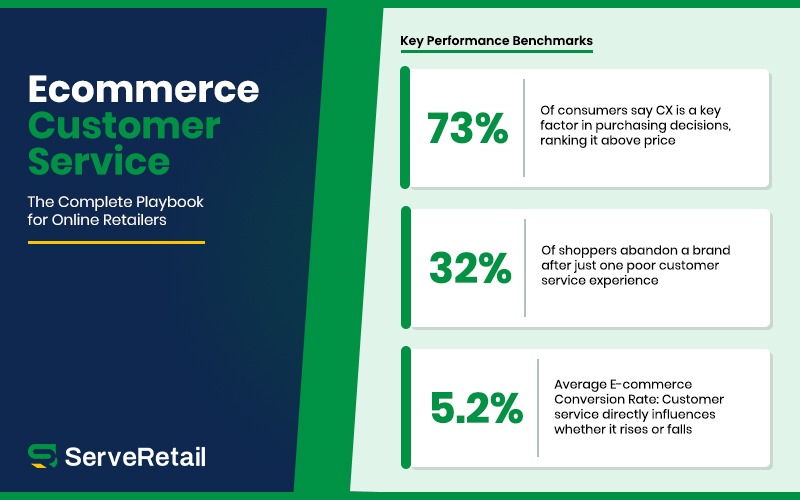
## The Seven Challenges Every Ecommerce Brand Must Solve
### 1. Returns, Refunds, and the Expectation Economy
Online shopping carries an inherent limitation: customers cannot touch, try, or fully evaluate a product before purchasing. This results in structurally higher return rates than in physical retail. The National Retail Federation reports that online return rates average around 17.6%, compared to 10.02% across all retail \[[NRF, 2023](https://nrf.com/research/2023-consumer-returns-retail-industry)\]. Poorly managing returns is not just a customer service failure; it is a logistics and financial failure as well. Brands that invest in frictionless, clearly communicated return processes recover a higher percentage of those customers for future purchases. ### 2. Scaling Through Peak Seasons Without Sacrificing Quality
The math is straightforward and brutal: you cannot hire, onboard, and train enough full-time agents to handle a 400% volume spike for six weeks and then sustain that headcount for the other 46 weeks of the year. The brands that handle peak season well have built scalable operational models, typically through a combination of specialized outsourcing, proactive self-service tools, and pre-built escalation paths. They plan for Black Friday in July. It is a mindset shift as much as an operational one. ### 3. Multilingual Support as a Growth Unlock
As ecommerce brands expand into new markets, whether across the U.S. Spanish-speaking population, into Canada's French-speaking regions, or into international territories, language becomes a customer service variable, not just a marketing one. A shopper who contacts support in their native language and receives a generic English-only response is significantly less likely to convert again. [Multilingual support capability](/okf/page/multilingual.md) covers this across voice, chat, email, and social channels, which matters because language fluency requirements vary by contact type. An agent who can handle a chat in Spanish needs different skills than one managing a nuanced voice escalation. ### 4. Marketplace Complexity and Seller Support
The growth of marketplace commerce, Amazon, Walmart.com, eBay, and dozens of regional platforms, has added a layer of complexity that many brands underestimate. Marketplace channels have their own SLA requirements, seller performance metrics, messaging protocols, and dispute resolution processes. Failing to meet them results in seller account penalties, buy box suppression, and, in serious cases, delisting. As [analysis of the world's largest ecommerce marketplaces](/okf/article/the-10-largest-ecommerce-marketplaces-in-the-world-size-reach-and-cx-strategy.md) illustrates, the CX demands on marketplace sellers are structurally different from those in D2C support and require staffing and management accordingly. ### 5. Cross-Border Commerce and Regulatory Complexity
Cross-border ecommerce introduces customer service challenges that go well beyond translation. Tax and duty inquiries, customs delays, differing return regulations, and currency-related confusion all generate inbound contacts that require agents with specific regional knowledge. European markets, in particular, have distinct regulatory frameworks that shape what customers expect and what retailers are legally required to provide. [How cross-border commerce is reshaping EU retail support models](/okf/article/how-cross-border-commerce-is-rewriting-eu-retail-support-models.md) is a useful lens for understanding the operational implications for brands expanding internationally. ### 6. Balancing Automation with Human Judgment
AI-powered chatbots, automated email routing, and intelligent self-service tools have become standard infrastructure for ecommerce customer service, and for good reason. Automation handles repetitive, high-volume inquiries efficiently, freeing human agents to focus on complex, emotionally sensitive interactions. The failure mode is over-automation: brands that push too many contacts through AI workflows without adequate human escalation paths create frustration at precisely the moments when customer goodwill is most fragile. The right balance is not a fixed ratio. It depends on ticket type, customer segment, and brand positioning. ### 7. Building a Contact Center That Doesn't Break the Budget
The economics of in-house customer service at scale are genuinely difficult. Hiring, training, benefits, real estate, management overhead, and attrition costs add up fast. For many mid-market ecommerce brands, those generating between $10M and $200M in annual revenue, the decision to outsource customer service is not a question of capability. The question is whether the cost structure makes sense. The quiet migration of U.S. retailers toward nearshore and offshore support models is driven precisely by this calculus, as [ServeRetail's analysis of the LATAM support shift](/okf/article/why-u-s-retailers-are-quietly-moving-customer-support-to-latam.md) documents in detail. ## Ecommerce Customer Service Best Practices That Actually Move the Needle
### Build for the Channel Your Customer Is Already Using
The temptation is to launch every channel simultaneously and figure out staffing later. This is how brands end up with a live chat widget that nobody monitors and a social media inbox that responds in four days. A more effective approach is to audit where your customers are contacting you, prioritize those channels for quality coverage first, and expand deliberately. According to *Salesforce*, 76% of customers prefer different channels depending on the context of their issue. This is not a reason to be everywhere simultaneously. It is a reason to understand your specific customer base and meet them where they concentrate. ### Make Self-Service Work Before You Need It To
A well-built knowledge base, an accurate FAQ section, and a functional order tracking integration can deflect between 20 and 40 percent of inbound contacts without any agent involvement \[*Zendesk CX Trends Report, 2023*\]. But self-service only works if it is accurate, up to date, and easy to navigate. Outdated return policy pages, broken tracking integrations, and knowledge bases that answer questions nobody is asking are worse than no self-service at all, because they waste the customer's time before they end up calling anyway, now angrier than when they started. ### Use Data to Prevent Contacts, Not Just Resolve Them
The most efficient ecommerce customer service operation is one that reduces the need for customer service in the first place. This means systematically analyzing contact drivers: What are the top five reasons customers are reaching out this week? Are there product pages generating disproportionate confusion? Are shipping carrier issues in a specific region driving WISMO spikes? Using contact data as an operational diagnostic tool, rather than just a CSAT input, is the difference between reactive and proactive support. ### Think About First-Contact Resolution as a Revenue Metric
First-contact resolution (FCR) is typically framed as an efficiency metric. It is also a revenue metric. [Research](https://www.icmi.com/resources/2011/seven-metrics-to-watch-for-call-center-success) from *ICMI* shows that a 1% improvement in FCR correlates with a 1% improvement in customer satisfaction. Satisfied customers buy more, return more often, and refer others. Brands that invest in giving agents the tools, authority, and information to resolve issues on the first contact, rather than escalating or deferring, see compounding returns on that investment over time. ## When Outsourcing Ecommerce Customer Service Makes Strategic Sense
There is a particular point in the growth curve of an ecommerce brand where the conversation about outsourcing customer service shifts from "*we could never do that*" to "*we have to figure this out.*" It typically arises when the cost and complexity of managing in-house support start to meaningfully divert resources from product, marketing, or operational priorities closer to the brand's core. Outsourcing is not abdication. Done well, it is a deliberate extension of your customer experience capability to a partner with deeper infrastructure, specialized retail expertise, and the operational elasticity to scale up for Black Friday and scale back down in February without the headcount turbulence that would accompany an in-house model. The key is choosing a partner that understands retail, not just general BPO, and has the vertical experience to handle the complexity of ecommerce. The geographic dimension of this decision is also worth understanding clearly. Nearshore models, particularly in Latin America, offer time-zone alignment, bilingual capability, and cultural proximity for U.S. brands. [Philippines-based call centers](/okf/page/philippines.md) have a well-documented history of high English proficiency and ecommerce-specific training pipelines, as [Australian ecommerce brands have increasingly recognized](/okf/article/why-australian-ecommerce-brands-are-choosing-the-philippines-over-local-call-centers.md). The right model depends on your customer base, channel mix, volume patterns, and brand tone, and often involves a combination of locations rather than a single-site decision. What the best ecommerce BPO partnerships share is not geography. It is a commitment to retail-specific expertise, measurable SLA accountability, scalable staffing models, and the ability to operate as a genuine extension of the brand, not a generic answering service with a different area code. The distinction matters more than it sounds. A [retail-specialized contact center](/okf/page/home-copywriting-tool.md) brings category knowledge, returns management experience, marketplace fluency, and seasonal staffing discipline that a generalist BPO simply cannot replicate, regardless of how competitive the pricing looks on a spreadsheet. ## What to Look for in an Ecommerce Customer Service Partner
Choosing the wrong partner is more expensive than building in-house, so the selection criteria deserve more rigour than a three-slide vendor comparison. There are several capabilities that consistently separate high-performing retail BPO partners from adequate ones. 1. Retail vertical depth is non-negotiable. A partner who serves financial services, healthcare, and ecommerce simultaneously does not have the operational muscle memory that a retail-specialized operation develops over years of managing returns spikes, inventory escalations, marketplace SLA pressure, and the emotional register of a customer whose holiday gift did not arrive on time. The sector specificity matters in agent training, in quality frameworks, in the language of internal escalation protocols, everywhere.
2. Omnichannel operational maturity is the second filter. The ability to staff voice, chat, email, social, and marketplace channels is table stakes. The differentiator is whether the partner can deliver a unified customer experience across those channels, where context travels with the customer, agents have full interaction history, and channel-switching does not create service gaps. This is an infrastructure and process capability, not just a technology one.
3. Multilingual coverage at quality is a third dimension that matters more as brands scale. Being able to field contacts in Spanish, French, Portuguese, or Mandarin is not the same as fielding them well. The distinction is between translation-level language skills and native-level cultural fluency, and customers know the difference almost immediately. Brands expanding into multicultural markets or international territories need partners who can staff those language lanes with agents who understand the cultural context of the interaction, not just the words.
4. Finally, and this is the one that gets underweighted in almost every vendor evaluation, ask about peak-season readiness. Specifically: how does your partner ramp from baseline to peak-season volume, what lead time is required, which training standard applies to ramped agents, and what happens to quality during the ramp? The answers to those questions tell you more about operational maturity than any case study or pricing deck.
## Frequently Asked Questions
### What Is the Difference Between Ecommerce Customer Service and Traditional Retail Support?
Traditional retail support benefits from physical presence, agents can read body language, customers have ambient context, and resolution often happens in real time at the point of sale. Ecommerce customer service operates entirely without these advantages. Every interaction is text, voice, or asynchronous, which places higher demands on communication clarity, response speed, and the ability to project empathy through digital channels. Ecommerce support also contends with higher return rates, greater shipping complexity, marketplace channel requirements, and the expectation of 24/7 availability. ### How Much Does Ecommerce Customer Service Outsourcing Cost?
Outsourcing costs vary significantly by geography, channel mix, volume commitments, and service-level requirements. Nearshore models in Latin America typically run between $18 and $28 per hour for fully loaded agent costs. Philippines-based operations often range from $10 to $18 per hour. Domestic U.S. operations can run $28 to $45 or higher. For most mid-market ecommerce brands, the total cost of ownership comparison, accounting for hiring, training, attrition, management overhead, technology, and real estate, consistently favors outsourced models at scale. The savings are real; quality need not be the trade-off. ### When Should an Ecommerce Brand Start Thinking About Outsourcing Support?
The inflection point is usually between 500 and 2,000 monthly contacts, when the hidden costs of in-house support become visible. Before that threshold, a small, dedicated team often makes sense. Beyond it, the economics of outsourcing, combined with the operational expertise a specialized partner brings, typically deliver better outcomes at lower total cost. Peak-season volatility accelerates this timeline for brands with strong seasonal patterns. ### What Channels Should Ecommerce Customer Service Cover?
The baseline for most ecommerce brands in 2025 is live chat, email, and voice, with social media monitoring (at minimum) and marketplace messaging support for brands selling on Amazon, Walmart, or other platforms. SMS is growing as a support and proactive notification channel. The right channel mix for your brand depends on your customer demographics, your ticket volume distribution, and your brand positioning. A luxury fashion brand and a direct-to-consumer supplement company have very different channel priorities, even if both are technically ecommerce businesses. ## The Bottom Line
Ecommerce customer service in 2025 is not about hiring more agents and hoping for the best. It is about building, or partnering to access, an operational infrastructure that matches the actual demands of modern online retail: omnichannel, scalable, multilingual, data-driven, and capable of performing under peak-season pressure without compromising quality or brand experience. The brands winning on customer experience right now did not get there by treating support as a cost center to be minimized. They got there by recognizing that every interaction is a brand moment, and that brand moments, at scale, determine whether a customer buys again, tells their friends, or quietly disappears to a competitor who was one click away all along. For ecommerce brands ready to build that infrastructure, whether from scratch or by upgrading an existing model, [ServeRetail's ecommerce contact center services](/okf/page/ecommerce.md) are built specifically for this challenge. The retail specialization, the global delivery network, and the operational discipline to handle Black Friday and a slow Wednesday with equal consistency, that is the standard. It is also the baseline expectation of every customer who clicks 'Buy Now' and trusts that someone, somewhere, is ready to help if something goes wrong. For a closer look at how brands approach customer service, see [The $430 Billion Industry Under Pressure: Why Australian Retail Needs a CX Reset](/okf/article/430-billion-industry-under-pressure-why-australian-retail-needs-cx-reset.md). For a closer look at this, see [BOPIS Customer Service: Closing the Buy-Online-Pickup-In-Store Support Gap](/okf/article/bopis-customer-service.md). That challenge shows up elsewhere too \\u2014 see [Ecommerce Chargeback Management Outsourcing: A 2026 Playbook for Retail Brands](/okf/article/ecommerce-chargeback-management.md).
---
## Ecommerce Order Tracking Services: Solving the WISMO Problem
Ecommerce order tracking services help retailers reduce WISMO (Where Is My Order) inquiries by connecting shipment visibility, proactive delivery updates, and customer support for delayed, missing, or disputed orders. While tracking software shows customers where their packages are, managed order tracking support helps resolve problems when shipment information alone cannot provide an answer. For ecommerce retailers, that difference matters. A customer may receive a tracking link but still contact support when the carrier has not updated the shipment, an order arrives in separate packages, or the promised delivery date passes. During promotional periods, these inquiries can quickly add pressure to contact centers already handling returns, payment questions, and product concerns. Reducing WISMO calls therefore requires more than automated notifications. Retailers need accurate order information, timely communication, and clear responsibility for delivery exceptions. This article explains how ecommerce order tracking services work, where automation helps, and when outsourced support can improve post-purchase operations.
## What Ecommerce Order Tracking Services Actually Cover
Order tracking is often associated with the tracking number sent after checkout. However, the information displayed by a carrier is only one part of the customer's delivery experience. Retailers must also keep order records accurate, communicate changes, and provide assistance when fulfillment does not proceed as expected. A managed order tracking operation connects these activities. Agents use information from order-management systems, fulfillment partners, and carrier tracking tools to answer customer inquiries and investigate exceptions. Depending on their approved responsibilities, they may also coordinate delivery changes, arrange follow-ups, or initiate replacement and refund workflows. The distinction between tracking technology and outsourced customer support is important when retailers evaluate service providers. Capability Primary Function Where It Helps **Shipment Tracking Software** Displays available shipment status and carrier events. Routine order visibility and self-service tracking. **Automated Customer Notifications** Sends updates when verified order or delivery events occur. Reducing uncertainty and unnecessary status inquiries. **Managed Order Tracking Support** Investigates exceptions, communicates next steps, and coordinates approved resolutions. Delayed shipments, missing parcels, delivery disputes, and escalations.
These capabilities work best when they share reliable information. For example, a notification system may alert customers to a delivery delay, but an agent still needs access to the latest shipment details and applicable policies if the customer requests an alternative. Outsourced [order management and tracking services](/okf/page/order-management-tracking.md) can help retailers manage this work without requiring their internal teams to investigate every routine shipping inquiry. The retailer should nevertheless define which actions agents can complete, what requires approval, and how unresolved cases return to internal fulfillment teams. Businesses exploring the broader causes of shipment-status inquiries can also refer to ServeRetail's [guide to WISMO in ecommerce](/okf/article/navigating-wismo-in-ecommerce-a-comprehensive-guide.md). ## How WISMO Automation and Proactive Order Tracking Work Together
One of the most effective ways to reduce avoidable WISMO contacts is to provide useful information before customers feel the need to request it. This requires communication that reflects the actual progress of an order rather than a series of generic messages. WISMO automation typically uses events from an order-management platform, warehouse system, or carrier integration to trigger customer updates. These events may include order confirmation, dispatch, carrier collection, delivery delays, and successful delivery. However, an automated message is only useful when the underlying information is accurate. A shipping label may have been created even though the carrier has not collected the parcel. Similarly, an estimated delivery date can become outdated when a shipment encounters an unexpected delay. Effective ecommerce delivery tracking should therefore distinguish between confirmed events, estimated milestones, and situations requiring investigation. ### Proactive Notifications That Answer Customer Questions
Customers generally want to know whether their order is progressing as expected and when they should anticipate delivery. An order confirmation establishes the initial expectation, while subsequent updates should explain meaningful changes. When an order is handed to the carrier, customers can receive the tracking information and an estimated delivery window. If the carrier reports a delay, a proactive message should explain what is known and when another update will be available. For split shipments, separate package details can prevent confusion when only part of the order arrives. The communication should remain consistent across email, SMS, self-service tracking pages, and customer support channels. Otherwise, customers may receive conflicting information and contact an agent to establish which update is correct. ### Where AI Can Help Reduce WISMO Calls
Automation can answer routine order-status questions when a retailer's systems provide reliable, current information. An AI voice agent or chatbot may retrieve an order's latest status, explain a verified delivery milestone, or direct the customer to the appropriate tracking details. These capabilities are useful for repetitive inquiries, particularly when customers need information outside regular support hours. However, automation should recognize when a request cannot be resolved from available data. A missing package, disputed delivery, or unresolved carrier exception may require human investigation. Retailers evaluating [AI voice agents for customer service](/okf/page/ai-voice-agent.md) should examine integration requirements, data accuracy, escalation rules, and the experience customers receive when an automated interaction transfers to a live agent. A successful handoff preserves the customer's order details and previous conversation. Without that continuity, automation may shift the workload to another channel rather than resolve the underlying issue. ## The Financial Impact of WISMO Contacts on Ecommerce Support
WISMO inquiries can appear inexpensive when viewed individually. A customer asks for an order update, an agent checks the tracking information, and the conversation ends. Yet repeated inquiries consume considerable support capacity when order volumes increase. These contacts also compete for attention with more complicated issues, including refund disputes, product defects, and urgent delivery problems. As a result, retailers need to understand both the cost of routine status inquiries and the time their teams spend managing avoidable follow-ups. Consider an illustrative ecommerce retailer processing 10,000 orders per month. If 15% of those orders generate one WISMO contact, the business receives approximately 1,500 tracking-related inquiries. Assuming a blended handling cost of $10 per interaction, the monthly expense would be $15,000. > **Illustrative WISMO Cost:** 1,500 contacts × $10 per contact = $15,000 per month, or $180,000 annually.
These figures are hypothetical, not industry benchmarks or documented ServeRetail client results. Actual costs vary by channel, staffing model, customer behavior, and inquiry complexity. Now suppose better notifications, tracking visibility, and exception handling reduce those 1,500 monthly contacts by 20%. That would mean 300 fewer interactions and a potential reduction of $3,000 in monthly handling costs, assuming the same average cost per contact. The calculation does not mean every avoided contact immediately produces an equivalent cash saving. Benefits depend on staffing arrangements, minimum commitments, and whether the released capacity can be reduced or reassigned. Nevertheless, the example shows why retailers should measure WISMO volume instead of treating order-status questions as unavoidable support activity. Contact reduction is only part of the outcome. Customers still need accurate information and timely assistance when something goes wrong. A retailer that suppresses inquiries without improving resolution may report fewer tickets while leaving delivery problems unresolved. ## How Order Tracking Requirements Differ Across Ecommerce Categories
Most ecommerce businesses need accurate shipment updates, but the reasons customers contact support vary across product categories. An effective tracking operation must account for those differences rather than apply the same communication and escalation procedures to every order. ### Fashion and Apparel: Split Shipments and Time-Sensitive Deliveries
Fashion retailers often manage orders containing multiple items, sizes, or products shipped from different fulfillment locations. When an order arrives in separate parcels, customers may believe items are missing unless the tracking information explains the split clearly. Delivery timing can also matter when customers are shopping for events or promotional occasions. Agents supporting [fashion and apparel retailers](/okf/page/apparel-fashion.md) should be able to distinguish an actual fulfillment problem from a normal split shipment and communicate the appropriate next steps. ### Consumer Electronics: High-Value Shipments and Delivery Disputes
Electronics purchases frequently involve expensive products, making missing shipments and delivery disputes particularly sensitive. Customers may need assistance when a package is marked delivered but cannot be located, or when its condition raises concerns. Support teams need reliable tracking records, clear documentation requirements, and defined escalation procedures. They must also know when a case should move from shipping investigation to warranty, returns, or technical product support. ### Furniture and Home Decor: Scheduled Deliveries and Damage Claims
Furniture deliveries involve additional coordination because large items may require appointments, specialized carriers, or installation services. A customer waiting for a sofa or dining table often needs more detailed information than a standard parcel tracking link provides. For [furniture and home decor retailers](/okf/page/furniture-home-decor.md), tracking support may involve delivery-window confirmation, coordination with logistics partners, and follow-up after a missed appointment. Agents also need clear procedures for documenting damage and directing customers toward approved resolutions. ### Beauty and Personal Care: Delivery Timing and Product Condition
Beauty orders may be associated with subscriptions, gifts, product launches, or a customer's regular routine. Delayed deliveries can therefore create questions about replacements, delivery timing, and the condition of affected products. When shipping conditions raise a product-quality concern, the support team should follow the retailer's documented handling policies rather than make assumptions about product safety. Accurate communication helps customers understand what can be verified and what requires further review. These examples show why retail-specific knowledge matters in order tracking support. Agents need to understand the customer's concern as well as the shipment record, especially when delivery exceptions affect returns, replacements, or other post-purchase decisions. ## How Outsourced Order Tracking Teams Resolve Delivery Exceptions
Tracking notifications work well when orders move through fulfillment and transportation as expected. The more difficult work begins when an event is missing, a delivery date changes, or the customer's experience does not match the carrier's record. For example, a customer may report that a package has not arrived even though the carrier marked it delivered. Simply repeating the tracking status will not resolve the problem. The support team needs to review available delivery evidence, confirm the address and shipment details, and determine whether further investigation is required. A managed order tracking team can coordinate these activities through defined procedures. Agents review the relevant order history, identify the type of exception, and contact the appropriate internal or external team when necessary. They then explain the next steps to the customer and follow the case until the agreed resolution is reached. The retailer must establish how much authority the outsourced team has. Some agents may be permitted to update delivery instructions or initiate approved replacements. Others may need authorization before issuing refunds or changing an order. These permissions should be documented before the service goes live. Clear case ownership is equally important. If a carrier investigation remains open, the customer should know when to expect another update and who is responsible for providing it. Without that ownership, a single delivery problem can generate repeated contacts across different channels. Retailers should also maintain procedures for exceptional situations, including severe weather, carrier disruptions, missing inventory, and periods of unusually high delivery volume. These events may affect many orders simultaneously and require coordinated customer communication. The purpose of outsourced WISMO customer support is to manage these inquiries accurately and consistently. Better shipment visibility can reduce routine questions, while trained agents ensure that customers with unresolved problems still receive appropriate assistance. ## Measuring Order Tracking Performance and WISMO Reduction
Retailers cannot determine whether order tracking support is improving simply by counting how many tracking messages were sent. A useful performance framework connects customer inquiries, delivery exceptions, and resolution quality. The starting point is the WISMO contact rate. This measures tracking-related support demand against the number of orders within a defined period. Retailers should also distinguish between first-time inquiries and repeat contacts because the same delivery problem may produce several interactions. Four measures provide a practical foundation: - **WISMO contact rate:** The number of WISMO contacts divided by the number of orders in the reporting period, multiplied by 100. Clearly define whether the calculation uses all orders, shipped orders, or delivered orders.
- **Repeat WISMO contact rate:** The percentage of orders that generate more than one tracking-related contact among orders that generated at least one WISMO inquiry.
- **Delivery exception resolution time:** The elapsed time between identifying an exception and reaching the agreed resolution or completing the authorized action.
- **Proactive notification coverage:** The percentage of eligible order or shipment events for which the required customer notification was successfully sent.
These measures should be reviewed alongside customer satisfaction, service-level performance, and the accuracy of completed actions. A decline in WISMO contacts may indicate improved tracking visibility, but it could also reflect changes in order volume or customer behavior. Segmenting results by carrier, shipping method, retail category, and exception type can help operations teams identify recurring problems. For example, a high rate of repeat inquiries from one shipping service may indicate unreliable scans or unclear delivery estimates rather than a customer service staffing issue. Retailers looking for additional methods can explore ServeRetail's [WISMO reduction playbook](/okf/article/reducing-retail-wismo-calls-40-percent-playbook.md), which focuses on reducing avoidable order-status contacts. ## How Structured Support Performs During High Order Volumes
Although ecommerce parcel tracking differs from on-demand food delivery, both environments require timely order information, coordinated issue resolution, and support teams that can respond to fluctuating demand. ServeRetail's work with a US food delivery marketplace provides a relevant example of managing high-volume, order-related customer interactions. The operation handled inquiries involving order status, restaurant coordination, account access, and escalated customer concerns. Demand varied throughout the day, particularly during busy meal periods and promotional activity. To support the operation, ServeRetail used cross-trained agents, dynamic workforce planning, structured quality monitoring, and customer recovery processes. The published case study reports **93% customer satisfaction, service levels above 80%, and support for a 130-FTE operation**. These outcomes demonstrate service management under changing order volumes. They do not establish a measured percentage reduction in WISMO tickets or guarantee equivalent results for an ecommerce retailer. Read the [food delivery marketplace customer support case study](/okf/case-study/food-delivery-marketplace-sustained-93-customer-satisfaction-during-high-volume-order-surges.md) for more detail on the operational model and results. ## When Should Ecommerce Retailers Outsource Order Tracking Support?
Not every retailer needs a dedicated outsourced order tracking team. Smaller businesses with manageable order volumes and reliable self-service systems may be able to handle most delivery inquiries internally. However, the requirements change when contact volumes grow, service hours expand, or exception handling begins taking time away from other customer support responsibilities. Outsourcing may be worth evaluating when order-status inquiries consume a substantial share of agent capacity. It can also help when customers repeatedly contact the business about the same delivery problem, internal teams struggle to coordinate with carriers, or seasonal demand creates temporary staffing gaps. For retailers considering outsourced shipment tracking and customer notification support, the first step is to review the existing contact data. Understanding how many inquiries involve routine status checks, delayed shipments, missing packages, and delivery disputes will help determine what work can be automated and what still requires agents. The next step is to define the service scope. Some businesses need overflow support for tracking inquiries, while others need broader coverage that includes proactive notifications, carrier coordination, exception management, and post-delivery follow-up. Technology access, integration responsibilities, staffing requirements, and resolution permissions should be discussed before selecting a provider. A proposed service model should also include reporting standards and a clear process for handling issues that the outsourced team cannot resolve independently. For US ecommerce retailers preparing for holiday promotions or other demand spikes, a phased approach may be appropriate. However, implementation timelines depend on recruitment, training, system access, operational complexity, and the responsibilities being transferred. Outsourcing works best when the retailer understands which customer problems need solving and the provider can demonstrate how it will manage them. ## Reducing WISMO Through Better Ecommerce Order Tracking Support
Effective ecommerce order tracking services give customers reliable shipment information and provide a clear path to resolution when deliveries do not proceed as expected. Proactive updates can reduce unnecessary status inquiries, while trained support agents help investigate exceptions that tracking technology cannot resolve on its own. For retail operations leaders, the priority is to connect these capabilities within a manageable service model. Accurate data, consistent communication, defined agent responsibilities, and measurable performance all contribute to reducing repeat contacts and improving the post-purchase experience. ServeRetail supports retailers and ecommerce businesses with [order management and tracking operations](/okf/page/order-management-tracking.md) that can be aligned with their customer service requirements, existing platforms, and expected interaction volumes. **Looking to reduce WISMO calls, manage delivery exceptions, or expand order tracking support?** Share your monthly order volume, support channels, current WISMO contact levels, and fulfillment challenges with ServeRetail. [**Discuss your ecommerce order tracking support requirements with ServeRetail.**](/okf/page/get-a-quote.md)
---
## Eliminating the $15M Data Error: Why Product Catalog Management Outsourcing Is Now a Competitive Moat
In retail, growth is often discussed in terms of marketing, merchandising, and customer experience. Yet one of the most expensive threats to profitability lives quietly in the background: bad data. Product descriptions that don’t match reality. Inventory counts that lag behind fulfillment. Pricing inconsistencies across channels. These issues do not just create friction. They create revenue loss. According to Gartner, poor data quality costs organizations an average of $12.9 million per year, largely due to operational inefficiencies, order errors, and lost customer trust. For retailers operating across ecommerce platforms, marketplaces, and physical stores, the impact compounds quickly. This is why product catalog management outsourcing has shifted from an administrative task to a strategic safeguard for modern retail operations.
## What This Article Covers
- Why Product Data Errors Are a Hidden Revenue Killer.
- The Real Cost of Inaccurate Product Catalogs.
- How Product Catalog Management Outsourcing Creates an “Inventory Truth” Layer.
- Why Internal Teams Struggle to Maintain Catalog Accuracy at Scale.
## Why Product Data Errors Are a Hidden Revenue Killer
At scale, even small inaccuracies create outsized consequences. A single incorrect SKU attribute can trigger order cancellations. A delayed inventory update can oversell stock. A mismatched product image can drive returns. These failures ripple across the business: - Increased customer support volume.
- Higher return and refund rates.
- Marketplace performance penalties.
- Erosion of customer confidence.
Retailers often underestimate how tightly product data is tied to conversion and fulfillment. In reality, catalog accuracy sits at the foundation of every transaction. This is where inventory data processing services play a critical role in maintaining what many retailers now call “inventory truth.” ## The Real Cost of Inaccurate Product Catalogs
Product data errors do not exist in isolation. They affect nearly every downstream function. Incorrect catalog information leads to: - Orders placed for unavailable or incompatible items.
- Fulfillment delays and substitutions.
- Higher dependency on the retail service desk to resolve disputes.
- Increased manual intervention across back-office teams.
As volumes grow, internal teams struggle to keep pace. Manual updates, fragmented systems, and inconsistent governance create blind spots that are difficult to detect until customers complain. Retailers relying solely on internal resources often find themselves reacting to errors rather than preventing them. ## How Product Catalog Management Outsourcing Creates an “Inventory Truth” Layer
Product catalog management outsourcing introduces a centralized governance model that ensures consistency across channels, platforms, and systems. Rather than treating catalog updates as isolated tasks, specialized teams manage product data as a living system. This includes attributes, pricing, imagery, availability, and compliance requirements. By pairing catalog accuracy with inventory data processing services, retailers gain real-time visibility into stock levels and availability. This eliminates sync gaps between Order Management Systems, warehouses, and storefronts. The result is a single, reliable source of truth that supports confident selling. ## Why Internal Teams Struggle to Maintain Catalog Accuracy at Scale
Retail complexity has increased faster than internal processes can adapt. Most retailers now operate across: - Multiple ecommerce platforms.
- Marketplaces with strict data standards.
- Regional pricing and inventory variations.
- High SKU counts with frequent updates.
Internal teams are often stretched thin, balancing merchandising priorities with operational upkeep. This creates delays, inconsistencies, and quality gaps. This is why many brands turn to [retail back-office outsourcing](/okf/page/back-office.md) to introduce specialization without increasing internal overhead. ## The Role of Retail Back Office Outsourcing in Data Governance
Effective retail back office outsourcing goes beyond task execution. It introduces accountability, process discipline, and quality controls that are difficult to sustain internally. Specialized teams manage: - Product catalog updates and validations.
- Inventory reconciliation across systems.
- Documentation and compliance checks.
- Data audits and exception handling.
When supported by structured retail BPO services, retailers reduce error rates, accelerate update cycles, and gain confidence in their operational data. This governance layer protects revenue before problems surface. ## Inventory Accuracy as a CX Differentiator
Customers may never see the backend systems, but they experience the outcomes immediately. Accurate product data enables: - Reliable delivery promises.
- Fewer cancellations and substitutions.
- Clear expectations at checkout.
- Lower dependency on reactive support.
Inconsistent data, by contrast, pushes customers to the retail contact center, leaving them frustrated rather than trusting. By stabilizing data flows, product catalog management outsourcing indirectly strengthens the omnichannel customer experience in retail, even though it operates behind the scenes. ## Why Inventory Data Processing Services Are Now Mission-Critical
As fulfillment speeds increase, tolerance for error decreases. Same-day and next-day delivery leave little room for reconciliation after the fact. Inventory data processing services ensure that availability, backorders, and replenishment signals are updated continuously. This reduces overselling and protects [marketplace performance](/okf/article/the-10-largest-ecommerce-marketplaces-in-the-world-size-reach-and-cx-strategy.md) metrics. Centralized inventory data management can [sharply reduce order-taking errors](/okf/page/order-management-tracking.md) when properly governed. For high-volume retailers, this translates directly into revenue protection. ## How Back-Office Accuracy Reduces Support Costs
Every data error eventually surfaces as a customer issue. When catalogs and inventory are accurate: - Fewer customers contact support for order issues.
- Retail service desk teams handle fewer escalations.
- Agents spend less time correcting preventable mistakes.
This allows [retail call center solutions](/okf/page/home-copywriting-tool.md) to focus on value-driven interactions rather than damage control. In this way, back-office precision becomes a cost-containment strategy across the entire organization. ## From Operational Hygiene to Competitive Advantage
Retailers that treat data accuracy as a hygiene task often struggle with scale. Those who treat it as a strategic asset outperform peers. Retail inventory management outsourcing, when executed with discipline, turns catalog accuracy into a durable competitive advantage. Brands move faster, fulfill more reliably, and protect marketplace standing. This shift requires specialized ownership, not ad-hoc internal fixes. ## How ServeRetail Builds Data Integrity Into Retail Operations
ServeRetail partners with retail brands to deliver structured, secure, and scalable back-office operations that protect data integrity across channels. Through product catalog management outsourcing, inventory coordination, and governed inventory data processing services, [ServeRetail](/okf/page/home-copywriting-tool.md) helps brands maintain consistent SKU accuracy, real-time availability, and documentation reliability. Back-office teams operate as an extension of the retailer, supported by [compliance frameworks](/okf/article/how-confusing-marketplace-compliance-rules-are-costing-retail-brands-millions.md), automation, and category-trained specialists. This enables brands to reduce operational risk while supporting growth. ## Turning Data Accuracy Into Sustainable Growth
In a competitive retail environment, errors compound faster than ever. Brands that invest in accuracy protect both revenue and reputation. By strengthening back-office foundations, retailers gain confidence in every downstream function, from merchandising to fulfillment to customer support. If your organization is struggling with catalog inconsistencies, inventory mismatches, or scaling complexity, ServeRetail can help you implement product catalog management outsourcing that transforms data accuracy into a lasting competitive advantage. For a closer look at this, see [Product Catalog Annotation for Retail Visual Search and Product Discovery](/okf/article/product-catalog-annotation-retail-visual-search.md). **[Connect with ServeRetail](/okf/page/get-a-quote.md)** to build back-office operations that support precision, scale, and long-term retail growth.
---
## English-Spanish Retail Outsourcing: Why Bilingual Nearshore Teams from El Salvador Win Modern Retail CX
Most U.S. retailers still treat Spanish-speaking customers as an afterthought. They route them through clunky IVR menus or translated chatbots. Meanwhile, those same customers spend over $2.8 trillion annually in U.S. retail, according to U.S. Census Bureau data. That gap creates a massive opportunity for brands willing to rethink their support model. English Spanish retail outsourcing fills that exact gap without breaking the operations budget. Furthermore, when delivered from a nearshore location like [El Salvador](/okf/page/el-salvador.md), bilingual support feels native rather than translated. This blog explains why retail leaders are quietly shifting to bilingual nearshore models in 2026.
## The Bilingual Demand Shift Reshaping U.S. Retail
The U.S. Hispanic consumer base now exceeds 62.5 million people. That number grows faster than any other demographic segment. Consequently, retailers ignoring Spanish-language support leak revenue every single day. Common Sense Advisory research shows that [76% of consumers](https://slator.com/third-global-survey-by-csa-research-finds-language-preference-of-consumers-in-29-countries/) prefer to buy in their native language. Moreover, 40% refuse to purchase from English-only websites altogether. This is no longer a niche segment. It is a mainstream retail buying force. However, hiring bilingual agents domestically costs U.S. retailers $48,000 to $65,000 per agent annually. Most mid-market retail brands cannot absorb that cost at scale. That financial reality has fueled a quiet migration. U.S. retailers are now [moving customer support to LATAM](/okf/article/why-u-s-retailers-are-quietly-moving-customer-support-to-latam.md) at a record pace. English Spanish retail outsourcing solves the cost equation without sacrificing retail customer service quality. Furthermore, it expands customer reach across two language markets simultaneously. The shift represents one of the cleanest ROI plays in modern retail BPO operations. ## What English Spanish Retail Outsourcing Actually Delivers
English-Spanish retail outsourcing means more than just translating scripts. It means building genuine bilingual teams that handle every retail workflow fluently in both languages. Additionally, these teams understand cultural context, not just vocabulary. That distinction matters when a Salvadoran customer in Houston complains about a damaged product. The agent must navigate emotional nuance, idiom, and brand tone in real time. A well-built English-Spanish retail outsourcing program covers the full retail journey end-to-end. Specifically, it includes bilingual services in: - **Order management and tracking** that resolves WISMO inquiries across both languages without friction
- **Returns and refunds processing** that handles policy edge cases and dispute resolution fluently
- **Marketplace seller support** for retailers operating on Amazon, MercadoLibre, and Walmart
- **Loyalty program management** that maintains tier integrity for Hispanic and English-speaking members alike
- **Technical product support** for consumer electronics, appliances, and complex retail SKUs
Each workflow ties back to retail customer service outsourcing outcomes that move CSAT, NPS, and repeat purchase rates. Therefore, the program is measured on retail KPIs, not call-handling metrics. ServeRetail builds these programs through [dedicated customer service outsourcing](/okf/page/customer-service.md) tailored to each retail vertical. ## Why Nearshore Bilingual Teams Outperform Single-Language Support
[Nearshore bilingual teams](/okf/page/el-salvador.md) deliver three structural advantages over single-language or offshore alternatives. Each one compounds the others. Together, they explain why retail CX leaders increasingly choose nearshore over every other model. ### Cultural Fluency Beats Translation
Translated support feels translated. Customers hear it immediately. Conversely, agents who grew up navigating both English and Spanish cultures handle emotional context fluently. They understand that "ahorita" doesn’t mean "right now" in Mexico but does in Colombia. They know which Spanish phrasing reads warm in El Salvador versus formal in Argentina. That cultural fluency lifts CSAT by 12-18% in retail accounts, based on industry benchmarks from PwC’s customer experience research. ### Time Zone Alignment Matters More Than Cost
Offshore support runs 12 hours behind U.S. business hours. Therefore, a customer issue logged on Tuesday afternoon often waits until Wednesday to be resolved. Nearshore US-based retail support in El Salvador works within Central Standard Time. Consequently, a 2 PM ticket gets resolved by 2:30 PM the same day. That speed difference shows up directly in NPS scores and review sentiment. ### Hiring Pools Define Service Quality
El Salvador’s call center workforce now exceeds 30,000 trained bilingual agents. Moreover, many studied in the U.S. or worked in U.S. tourism. The accent neutrality alone significantly reduces customer effort scores. ServeRetail leverages this hiring depth through its [multilingual capability framework](/okf/page/multilingual.md), ensuring every agent meets retail-grade fluency standards. ## El Salvador’s Edge in English Spanish Retail Support
El Salvador occupies a unique position in the nearshore retail outsourcing map. The country adopted the U.S. dollar as its official currency in 2001, eliminating exchange rate volatility for outsourcing contracts. Furthermore, its time zone matches Central Standard Time, putting it in lockstep with [U.S. retail operations](/okf/page/united-states.md). Every El Salvador–based retail call center benefits from this dual cost and operational alignment. Salvadoran agents typically deliver 40-60% cost savings compared to U.S.-based bilingual hires. However, the savings story is only half the value. The deeper advantage is cultural alignment with U.S. retail consumers. Many agents have lived, studied, or worked in the United States. Consequently, they intuitively understand U.S. brand expectations, product categories, and shopping behaviors. El Salvador also leads Central America in BPO infrastructure investment. The country ranks #2 in regional infrastructure quality, according to the World Economic Forum's Global Competitiveness Report. Additionally, PCI DSS, SOC 2, and ISO certifications are now standard across reputable retail BPO operations in El Salvador. ServeRetail’s El Salvador–based retail customer service delivery center serves U.S. and LATAM retailers across apparel, beauty, electronics, CPG, and home improvement verticals. The combination of cost, culture, compliance, and capability makes retail customer care El Salvador the standout nearshore choice in 2026. ## Retail Verticals Where Bilingual Support Drives Revenue
Not every retail vertical benefits equally from English-Spanish retail outsourcing. Some categories see immediate ROI. Others build value over longer cycles. Specifically, apparel and fashion brands benefit most from bilingual fit guidance and returns support, since Hispanic shoppers historically return apparel at 22% higher rates than English-only buyers. Consumer electronics and appliances see strong gains in bilingual technical support, especially for first-generation Hispanic buyers navigating warranty claims. Beauty brands leverage bilingual loyalty program management to deepen engagement with Hispanic shoppers, who over-index on premium beauty spending. Furthermore, [global retail support bridges ](/okf/article/global-retail-customer-support-to-bridge-the-language-gap.md)[language gaps](/okf/article/global-retail-customer-support-to-bridge-the-language-gap.md) across all verticals when thoughtfully designed. For a closer look at how brands approach el salvador, see [How El Salvador Quietly Became the Most U.S.-Aligned Retail BPO Destination in Latin America](/okf/article/el-salvador-us-aligned-retail-bpo-destination.md). We go deeper on how brands approach el salvador in [Nearshore Ecommerce Customer Service in El Salvador: How Retailers Cut CX Costs 47% Without Losing Quality](/okf/article/nearshore-ecommerce-customer-service-cost-reduction.md). We go deeper on how brands approach el salvador in [Why Home Improvement Brands Are Building Nearshore Support Teams in El Salvador](/okf/article/el-salvador-home-improvement-call-center.md). Home improvement retailers gain traction through bilingual contractor and DIY support, particularly in Texas, California, Florida, and Arizona markets. Grocery and food brands now lean heavily on bilingual retail ecommerce customer service for delivery, substitutions, and recipe assistance. Marketplace sellers operating across Amazon U.S. and MercadoLibre LATAM use bilingual support as a competitive moat. Every vertical converts at a higher rate when customers feel understood, not just served. ## Ready to Outsource Your Retail Support to El Salvador?
Bilingual nearshore support is no longer optional for U.S. retailers serving Hispanic markets. The cost economics work. The cultural fit is unmatched. Most importantly, the conversion and retention lift is measurable from week one. ServeRetail builds dedicated English Spanish retail outsourcing programs from its [El Salvador delivery center](/okf/page/el-salvador.md). Each program includes PCI DSS, SOC 2, and ISO-compliant operations across voice, chat, email, and social channels. Whether you need order management, returns handling, or end-to-end retail customer support, the team scales with your peak season demand. **[Connect with us](/okf/page/get-a-quote.md)** to scope a bilingual program built around your specific verticals and growth targets.
---
## Expanding Into Portuguese-Speaking Markets? Build Customer Service Around the Customer, Not Just the Language
Expanding into a Portuguese-speaking market creates a customer service challenge that can look deceptively simple. Hire Portuguese-speaking agents, translate the knowledge base, and start taking contacts. In practice, that is rarely enough. A shopper in Portugal and a shopper in Brazil may speak Portuguese. However, they do not necessarily use the language in the same way or interact with the same retail environment. Delivery networks, payment methods, returns processes, terminology, promotions, operating hours, and customer expectations can all differ. Effective Portuguese retail customer service therefore combines language proficiency with market knowledge and retail execution. Agents need to understand not only what the customer is saying. However, also what was purchased. In this case, the order originated. This policies apply, and what action the brand can take next. For global retailers, that distinction can determine whether Portuguese support feels genuinely local or simply translated.
## What This Article Covers
- Portuguese Customer Service Is Not One-Size-Fits-All.
- Where Portuguese Support Matters Across the Retail Journey.
- Portuguese Support Should Follow the Customer Across Channels.
- Where Can Retailers Build Portuguese-Speaking Support Capacity?
## Portuguese Customer Service Is Not One-Size-Fits-All
Portuguese is spoken across several markets. However, retailers planning international support will often encounter one fundamental distinction first. European Portuguese and Brazilian Portuguese. The differences should not be exaggerated into completely separate languages. However, vocabulary, pronunciation, expressions, tone, and everyday usage can vary enough to influence how natural a customer interaction feels. Consideration Portugal Brazil Language requirement European Portuguese may be preferred or required Brazilian Portuguese is typically appropriate Retail terminology Should reflect local Portuguese usage Should reflect Brazilian usage Customer context Portugal and the wider European retail environment Brazilian ecommerce and retail environment Operations Local fulfillment, delivery, returns, and applicable policies Brazil-specific fulfillment and customer workflows Agent preparation European Portuguese capability where the program requires it Brazilian Portuguese capability where the program requires it This is why Portuguese-speaking customer support should begin with the market being served rather than a generic language requirement. The same principle applies more broadly to [global retail customer support](/okf/article/global-retail-customer-support-to-bridge-the-language-gap.md): customers experience language through local context, not through a translation dictionary. ## Where Portuguese Support Matters Across the Retail Journey
Language support becomes valuable when it helps the customer complete an actual retail task. For ecommerce brands, those tasks span the entire buying journey. ### Before the Purchase
A customer may need help comparing products, understanding specifications, confirming availability, choosing a size, checking compatibility, or clarifying a promotion. Here, Portuguese ecommerce customer service can influence conversion. Agents need enough product knowledge to answer naturally rather than simply translate information from an English-language product page. ### Between Checkout and Delivery
After payment, the questions change quickly: Has my order shipped? Can I update the address? Why has tracking stopped? When will the package arrive? Portuguese-language agents need access to the same order information and resolution tools as the retailer's primary-language team. Connecting support with [order management and tracking](/okf/page/order-management-tracking.md) helps agents investigate the transaction instead of sending generic delivery responses. This becomes particularly important as international volume grows. As our guide to [ecommerce order processing outsourcing](/okf/article/order-processing-outsourcing-for-ecommerce-scaling-operations-without-bottlenecks-or-rising-costs.md) explains, operational bottlenecks behind the order can quickly become customer-facing problems. ### After Delivery
A product may arrive damaged, incomplete, incorrect, or simply unsuitable. Customers then need clear guidance on returns, refunds, exchanges, replacements, or claims. A Portuguese-speaking agent must understand the policy that applies to that customer's transaction. Integrating language support with structured [returns, refunds, and claims processing](/okf/page/returns-refunds-claims-processing.md) helps prevent a common failure: communicating fluently while giving the wrong operational answer. ## Portuguese Support Should Follow the Customer Across Channels
Retail customers do not organize their lives around contact center channels. They may start on live chat, respond by email, and call when an issue becomes urgent. That makes Portuguese omnichannel support more valuable than isolated language queues. Voice, email, chat, and digital interactions should draw from consistent customer history, product information, and policies. A shopper should not receive natural Portuguese over the phone and then encounter awkward translated responses when switching to chat. Nor should the customer have to repeat an order number and explain the problem again simply because the channel changed. Our [omnichannel retail customer support guide](/okf/article/omnichannel-retail-customer-support-guide.md) explores this wider requirement: channels become genuinely omnichannel only when context travels with the customer. For international retailers, [multilingual customer support](/okf/page/multilingual.md) should therefore be integrated into the wider CX operation rather than managed as an isolated translation function. ## Where Can Retailers Build Portuguese-Speaking Support Capacity?
Choosing a delivery location requires more than finding a market where Portuguese speakers can potentially be recruited. Retailers should evaluate the required Portuguese variant, operating hours, customer geography, channel mix, recruiting depth, program size, scalability. the complexity of the workflows agents will manage. Within ServeRetail’s Latin American delivery footprint, [Colombia](/okf/page/colombia.md), [El Salvador](/okf/page/el-salvador.md), and Belize can be evaluated for Portuguese-speaking recruitment based on program requirements and available talent. For retailers primarily serving Portugal or European customers, [Morocco](/okf/page/morocco.md) can also be evaluated as a potential EMEA delivery option when European time-zone alignment is important, subject to the availability and validation of appropriate European Portuguese talent for the specific program. The important point is that delivery geography should follow the customer strategy. A retailer should not choose a location first and attempt to make the language requirement fit afterward. ## A Portuguese Knowledge Base Must Localize Operations, Not Just Words
A useful way to structure Portuguese support knowledge is through three layers. 1. **Global brand knowledge:** product information, brand voice, service principles, warranties, approved positioning, and common troubleshooting.
2. **Portuguese-language knowledge:** approved terminology, tone guidance, product vocabulary, written standards, and linguistic quality requirements appropriate to the customer market.
3. **Market-specific operational knowledge:** delivery processes, currencies, return procedures, promotions, escalation paths, fulfillment rules, and other workflows specific to the market being served.
This model creates consistency without forcing every Portuguese-speaking customer into the same script. It is especially important for cross-border sellers. As ServeRetail has examined in its analysis of [cross-border commerce and European retail support](/okf/article/how-cross-border-commerce-is-rewriting-eu-retail-support-models.md), international ecommerce creates complexity at the intersection of language, logistics, policies, and customer expectations. ## How Should Retailers Measure Portuguese Customer Service Quality?
Hiring Portuguese speakers is only the beginning. Quality assurance must determine whether agents are actually delivering accurate retail support. A strong QA framework should evaluate linguistic accuracy, natural communication, product knowledge, policy adherence, documentation, empathy, resolution quality, and compliance with brand standards. That distinction matters. A grammatically perfect Portuguese response that gives the wrong return instruction is still a failed customer interaction. Retailers should also calibrate quality regularly across agents and channels. Recurring terminology errors, unnecessary transfers, repeat contacts, policy confusion, and weak resolution rates can reveal where training or knowledge needs improvement. For larger operations, structured quality management can help brands maintain consistency as contact volumes, channels, and agent populations expand. ## When Does Outsourcing Portuguese Customer Service Make Sense?
Not every retailer needs an outsourced Portuguese operation. A business with manageable volumes and sufficient internal language expertise may be able to support the market effectively in-house. Multilingual customer service outsourcing becomes more relevant when Portuguese volumes exceed internal capacity, a retailer enters a new market, service hours expand, new channels are added, seasonal demand creates staffing pressure, or recruiting appropriate language proficiency becomes difficult. For ecommerce brands, ecommerce customer service outsourcing can also consolidate Portuguese support with order management, delivery inquiries, returns, and other customer workflows instead of maintaining a separate language-only team. The decision should still be based on operational fit rather than outsourcing for its own sake. Retailers evaluating that choice can use our comparison of [in-house versus outsourced ecommerce customer support](/okf/article/in-house-vs-outsourced-customer-support-which-is-better-for-ecommerce-businesses.md) to assess the trade-offs around control, scalability, technology, and operating requirements. ## What Should Retailers Ask a Portuguese Customer Service Provider?
A provider offering a Portuguese call center solution should be able to explain much more than where its agents are located. - Which Portuguese variant will agents support for our customer base?
- How do you validate spoken and written Portuguese proficiency?
- How are agents trained on our products, orders, returns, and customer policies?
- Can Portuguese support operate consistently across voice, email, and live chat?
- How do you separate market-specific workflows within the knowledge base?
- How is Portuguese-language quality evaluated and calibrated?
- What happens when an agent encounters an exception they cannot resolve?
- How can staffing expand during launches, promotions, and seasonal peaks?
The answers help distinguish genuine retail CX capability from a provider that simply has Portuguese-speaking employees. ## Portuguese Support Should Scale With the Market
The question for an expanding retailer is not simply, “Can we offer customer service in Portuguese?” The better question is whether customers can receive Portuguese support that makes sense for where they live, what they purchased, how the order is being fulfilled, and what they need the brand to do next. That requires the right combination of language proficiency, market context, retail knowledge, connected channels, quality assurance, and scalable operations. ServeRetail's [Portuguese call center services](/okf/page/portuguese.md) can support retailers evaluating Portuguese-language customer experiences as part of a wider [ecommerce customer support](/okf/page/ecommerce.md) strategy. For a related angle on native-language support, see [Why Italian-Speaking Customer Support Matters for Fashion and Lifestyle Brands](/okf/article/italian-speaking-customer-support-fashion-brands.md). If your brand is planning to expand into Portugal, Brazil, or other Portuguese-speaking customer markets, begin by defining the customers, language variants, workflows, channels, operating hours, and quality requirements the program actually needs. [**Discuss your Portuguese support coverage with ServeRetail**](/okf/page/get-a-quote.md) and evaluate the delivery model that best fits your customers and growth plans.
---
## Fashion Moves Fast. Can Your Shopify Customer Support Keep Up?
This connects to a related piece: [Returns Should Not Drain Your Shopify Team: How DTC Brands Can Outsource the Workflow](/okf/article/shopify-returns-management-outsourcing.md). That challenge shows up elsewhere too \\u2014 see [Black Friday Is Months Away. Your Shopify Support Team May Already Be Running Out of Time](/okf/article/shopify-bfcm-customer-support.md).A fashion collection can sell out in hours. A creator mention can send thousands of shoppers to a storefront overnight. A seasonal promotion can turn a manageable support queue into a flood of sizing questions, order-change requests, delivery concerns, exchanges, and returns. For growing apparel, footwear, accessories, bridal, and luxury businesses, Shopify customer support for fashion brands cannot operate like a generic ticket desk. Fashion shoppers often need confidence before they buy, reassurance while an order is moving, and clear guidance when a product does not fit as expected. That makes customer support part of the buying experience rather than a function that begins after checkout. The right [Shopify customer support](/okf/page/shopify-customer-support.md) model can help a fashion brand protect conversions, reduce avoidable returns, handle exchanges efficiently, and preserve its voice as order volume grows. Fit uncertainty is especially important. A Shopify-cited survey of 6,000 global consumers found that 61% had [returned apparel](https://www.shopify.com/blog/why-your-retail-store-needs-a-sizing-guide-and-how-to-create-one) because it did not fit. For fashion retailers, helpful sizing support before checkout can influence both the initial sale and the operational cost created after purchase.
## Why Is Fashion Customer Support Different from Other Ecommerce Categories?
A customer buying a phone charger usually wants to know whether it is compatible with a particular device. A shopper considering a dress, shoe, handbag, or jacket may have far more subjective questions. Will the fabric stretch? Does the style run small? How does the garment fit across the shoulders? Is the color accurate in natural light? Can the item arrive before an event? Which size is best when the shopper falls between two measurements? These questions sit at the center of [apparel and fashion customer experience](/okf/page/apparel-fashion.md). They require product knowledge, judgment, empathy, and an understanding of how the brand speaks to its customers. Fashion inventory also moves quickly. Sizes sell out, collections rotate, influencers create sudden demand, and limited-edition products may disappear before a customer receives an answer. Shopify fashion customer service must therefore connect customer conversations with current product, inventory, order, and fulfillment information. ## Which Questions Consume the Most Time for Shopify Fashion Brands?
Support volume rarely comes from one source. It builds across the entire fashion journey, from product discovery to the final return or exchange. Customer Question Potential Business Impact Best Support Response Which size should I buy? Purchase hesitation or incorrect sizing Provide product-specific measurements and fit context Can I change the size or address? Cancellation, fulfillment delay, or delivery failure Check order status and act within an approved change window When will my order arrive? Repeated contacts and declining trust Provide accurate tracking information and next steps Can I exchange instead of returning? Lost revenue if the customer receives only a refund Make eligible exchanges simple and clearly explained Is this item coming back in stock? Missed sale or customer defection Share approved restock information or suitable alternatives ### Sizing and Fit Guidance
Size charts are necessary, but they do not answer every shopper question. Customers may need help understanding cut, rise, length, stretch, compression, drape, or the difference between two styles from the same brand. A well-trained support team should not guess. Agents need accurate garment measurements, model references, material details, fit notes, and clear guidance for customers between sizes. Providing [better fit guidance before checkout](/okf/article/apparel-fit-guidance-support-to-reduce-fashion-returns.md) can reduce uncertainty without making unrealistic promises about how an item will fit every body type. Effective Shopify apparel support also identifies patterns. If dozens of shoppers ask whether one product runs small, the issue may require a clearer product description, an updated fit note, or stronger visual guidance on the product page. ### Order Changes and Delivery Questions
Fashion purchases are often tied to dates: vacations, weddings, birthdays, school openings, product launches, and holidays. A delayed answer may therefore be more costly than the order value suggests. Agents need to know whether an order can still be edited, whether the delivery address can be changed, and when a request must move to the warehouse or carrier. Accurate [order management and tracking](/okf/page/order-management-tracking.md) turns these conversations into resolutions rather than repeated status updates. For preorder and limited-drop products, the support team must also communicate timelines carefully. Overpromising a delivery date may protect a conversation in the moment but damage trust when the shipment does not arrive. ### Returns, Exchanges, and Bracketing
Fashion returns are not always a sign of poor customer intent. Some shoppers order multiple sizes or colors because they cannot confidently assess fit online. This behavior, often called bracketing, shifts uncertainty from the purchase stage into the returns operation. The answer is not to make returns inconvenient. Strong [fashion return reduction strategies](/okf/article/fashion-return-reduction-strategies-for-loyalty.md) improve information before checkout while making legitimate returns and exchanges straightforward afterward. A trained team can confirm eligibility, explain timelines, guide the customer through an exchange, collect the correct reason code, and route exceptions appropriately. Structured [returns, refunds, and claims processing](/okf/page/returns-refunds-claims-processing.md) becomes especially important when seasonal demand produces a sharp increase in post-purchase contacts. During collection launches and holiday peaks, delayed approvals can create a backlog that outlasts the sales event itself. A disciplined approach to [high-volume clothing refund processing](/okf/article/clothing-refund-processing-to-mitigate-high-volume-fashion-returns.md) helps keep customers informed while protecting authorization controls. ## Which Shopify Fashion Customer Service Activities Can Be Delegated?
Many repeatable workflows are suitable for fashion ecommerce customer support outsourcing when the brand provides accurate policies, current product information, clear permissions, and defined escalation paths. A specialized team can typically support: - Live chat, email, voice, and ticket management
- Sizing questions and first-level fit guidance
- Product availability and approved recommendation requests
- Order-status research and delivery updates
- Eligible order changes and cancellations
- Return and exchange guidance
- Refund status inquiries
- Preorder and launch-related questions
- After-hours and peak-volume coverage
However, delegation should not remove internal ownership. Merchandising decisions, influencer relationships, high-value VIP exceptions, brand collaborations, sensitive complaints, and policy changes should remain with designated brand leaders. The objective is to move repeatable work away from ecommerce and merchandising teams without disconnecting customer service from the business. Brands evaluating that transition can first determine [when growing companies should outsource Shopify customer service](/okf/article/outsource-shopify-customer-service-when-and-why.md) and which workflows are stable enough to transfer. ## Why Does Brand Voice Matter So Much in Fashion?
A technically correct answer can still feel wrong if it does not sound like the brand. A luxury label may need calm, polished, discreet communication. A streetwear brand may use a more direct and culturally current tone. A bridal company may require patience and empathy because customers are buying for a high-stakes occasion. A performance apparel brand may need agents who can discuss technical materials and intended use with confidence. That is why fashion DTC support outsourcing requires more than policy training. Agents need examples of approved language, product positioning, customer profiles, tone by channel, and phrases the brand avoids. Quality reviews should measure tone and personalization alongside accuracy. The team should know when to recommend an alternative product, when to reassure the shopper, and when to avoid pushing a sale that is unlikely to meet the customer’s needs. This becomes increasingly important as small teams grow into larger operations. It is one reason [high-growth DTC brands are redesigning support operations](/okf/article/why-high-growth-dtc-brands-are-rebuilding-cx-support-from-the-ground-up.md) instead of simply adding more people to an informal model. ## How Should Fashion Brands Prepare for Drops, Launches, and BFCM?
Peak demand in fashion is not limited to the holiday season. A new collection, creator collaboration, flash sale, bridal season, or limited-edition drop can create a concentrated spike in conversations within minutes. 86
NPS score
How a fashion ecommerce platform scaled to 485 agents and still hit an industry-best NPS of 86.
[Read the case study →](/okf/case-study/fashion-ecommerce-platform-scaled-to-485-fte-in-30-days-and-achieved-industry-best-nps-of-86.md)
Before a major launch, Shopify fashion customer service teams should receive: - Final product specifications and size guidance
- Launch inventory and restock rules
- Promotion terms and exclusions
- Shipping cutoffs and delivery expectations
- Approved responses for likely customer questions
- Escalation contacts for site, payment, and fulfillment issues
Workforce plans should account for the period after the sale as well. The initial spike may involve availability and checkout questions. Several days later, contacts may shift toward order tracking, delivery exceptions, exchanges, and returns. Integrated [retail customer service operations](/okf/page/customer-service.md) help brands manage these changing contact reasons across chat, email, voice, social, and ticketing channels without losing the history of the customer’s interaction. ## What Can Fashion Brands Learn from High-Volume Ecommerce Operations?
Large-scale ecommerce support shows that growth is manageable when operating discipline grows with demand. In one ServeRetail-supported marketplace engagement, customer operations scaled beyond 2,390 specialists while reducing operating costs by 18% through standardized workflows, omnichannel delivery, workforce planning, and performance governance. A Shopify fashion brand may operate at a different scale, but the lesson remains useful. Hiring agents without building reliable knowledge, quality, reporting, and escalation systems only creates a larger version of the original problem. Scalable ecommerce customer support requires clear ownership. Agents need to know what they can resolve, what needs approval, and which issues indicate a wider product, inventory, or fulfillment problem. ## What Should Fashion Brands Look for in a Shopify Support Partner?
The right partner should understand both Shopify operations and fashion-specific customer behavior. General ecommerce experience is useful, but it does not automatically prepare a team to handle fit uncertainty, exchanges, launch pressure, or a highly distinctive brand voice. Before selecting a provider, evaluate its ability to support: - Shopify and Shopify Plus customer workflows
- Apparel, footwear, accessories, bridal, or luxury products
- Product-specific sizing and fit training
- Returns, exchanges, refunds, and order changes
- Launches, seasonal peaks, and BFCM scaling
- Omnichannel brand consistency
- Quality assurance and agent coaching
- Contact-reason reporting and root-cause insights
A credible fashion ecommerce support partner should provide more than ticket counts. Reporting should reveal why customers are contacting the brand, which products generate the most sizing uncertainty, where exchanges are delayed, and what changes could reduce avoidable contacts. That operational insight is what connects [scalable ecommerce customer support](/okf/page/ecommerce.md) to stronger merchandising, fulfillment, and retention decisions. ## Better Shopify Support Protects More Than the Sale
Fashion customer service shapes the shopper’s confidence before checkout and the brand relationship after delivery. It can help a customer select the right size, rescue an order before shipment, turn a return into an exchange, and preserve loyalty when something goes wrong. The strongest **Shopify customer support for fashion brands** combines product knowledge, responsive service, clear operational controls, and a voice that feels consistent with the brand itself. We go deeper on why fashion and lifestyle brands are investing in native Italian-speaking support in [Why Italian-Speaking Customer Support Matters for Fashion and Lifestyle Brands](/okf/article/italian-speaking-customer-support-fashion-brands.md). For a closer look at how brands approach amazon seller support, see [Selling on Amazon and Shopify? Should One Support Team Manage Both?](/okf/article/amazon-and-shopify-customer-support-one-team-or-two.md). As order volume grows, the question is not simply whether the team can answer more tickets. It is whether the support model can protect conversion, manage returns, handle peak demand, and deliver the experience customers expect from the brand. [Request a Shopify fashion CX assessment](/okf/page/get-a-quote.md) to review your sizing, order, exchange, returns, and peak-support workflows. ## Frequently Asked Questions
### What does Shopify customer support for fashion brands include?
It can include live chat, email, voice, product inquiries, sizing guidance, order changes, tracking, delivery support, returns, exchanges, refund updates, preorder questions, and peak-volume coverage. ### Can an outsourced team provide sizing recommendations?
Yes, provided the brand supplies accurate measurements, material information, fit notes, model references, and approved guidance. Agents should explain available information without guaranteeing that a product will fit every customer. ### How can customer support help reduce fashion returns?
Support teams can clarify sizing, materials, fit, product use, and exchange options before purchase. They can also report repeated customer questions so brands can improve product pages and sizing information. ### Why are exchanges important for fashion ecommerce brands?
An exchange can preserve revenue and the customer relationship when the original size, color, or style is unsuitable. Fast, clearly explained exchange workflows reduce frustration and may prevent customers from abandoning the brand. ### When should a Shopify fashion brand outsource customer support?
Outsourcing becomes relevant when customer contacts begin overwhelming internal teams, response times decline, launches create unpredictable volume, or ecommerce leaders spend too much time managing routine sizing, order, and returns inquiries.
---
## Father's Day Is June 21 — Four Retail Categories That Cannot Afford a Contact Center Failure This Week
Father's Day is June 21. That is 27 days away. The gifting window is not opening, it is already open. Orders are being placed right now across apparel, electronics, automotive accessories, and sporting goods. Contact volume is building. Brands that have not confirmed their Father's Day BPO outsourcing plan are already behind the curve. According to the National Retail Federation, Father's Day 2025 reached a [record $24 billion in spending](https://nrf.com/media-center/press-releases/father-s-day-spending-to-reach-record-24-billion). Clothing accounted for $3.7 billion. Electronics contributed $2.6 billion. Online shopping led all channels at 41%. Father's Day has grown into one of the most commercially significant gifting events on the US retail calendar. The contact center pressure that follows it has grown at exactly the same rate. Most US retail brands handle Memorial Day and Q4 with outsourced support. Far fewer have built the same muscle for Father's Day. The gifting surge, the last-minute order volume, and the post-holiday returns wave all land in the same two-week window. That gap is where CSAT scores fall and customers are lost.
ServeRetail Data Insight
#### Father's Day Contact Surge by Retail Category
Relative increase in inbound support contacts during the Father's Day gifting window (June 11–25)
Apparel & FashionSize exchanges, gifting returns, order tracking
+68%
Consumer ElectronicsPre-purchase queries, setup and installation support
+54%
Sports & OutdoorTechnical queries, fit exchanges, urgency calls
+47%
Automotive AftermarketFitment queries, compatibility checks, wrong-fit returns
+41%
Home ImprovementTools, appliances, installation and setup queries
+33%
Source: ServeRetail operational analysis across retail BPO engagements. Contact volume increase relative to non-gifting baseline for the two-week Father's Day window.
## Why Father's Day Creates a Distinct Contact Center Problem
Father's Day is structurally different from other retail peaks. It has the most compressed shopping window of any major US holiday. Most purchases happen in the final ten days before June 21, concentrated, urgent, and largely online. There is no gradual ramp the way Q4 allows. The surge arrives fast. Contact volume that follows arrives faster. Gift buyers behave differently from regular retail customers. They are less familiar with the brand. Higher delivery anxiety drives more WISMO contacts than a standard purchase generates. When the gift arrives wrong, wrong size, wrong model, wrong fit, the return interaction carries emotional weight that a standard product return does not. The stakes are higher because the occasion is personal. According to Ringly's 2026 ecommerce customer support statistics, 93% of buyers repurchase after great service. Poor CX costs $3.7 trillion globally each year. A gifting interaction is often a first-time buyer's introduction to a brand. Getting it right converts a gift buyer into a long-term customer. That is the commercial case for Father's Day BPO outsourcing in plain terms: the contact center is where gifting season customers are won or lost permanently. ## The Four Categories Under the Most Contact Center Pressure
Not every retail segment spikes equally for Father's Day. Four categories consistently generate the highest contact volume relative to their baseline. Each produces a distinct contact mix that requires category knowledge, not just additional headcount. Specialist retail customer service outsourcing calibrated to these categories before June 21 outperforms generic deployments on every CSAT metric that matters. ### Apparel and Fashion
Clothing is the largest physical gift category at $3.7 billion. It is also the category with the highest post-purchase contact rate. Gift buyers order by guessing the recipient's size. Wrong-size exchanges arrive from the moment deliveries begin. Return initiations follow from June 22 onward at volume. Fashion customer service outsourcing built for the gifting season handles these exchanges accurately on first contact. Agents need live inventory access, clear exchange policy knowledge, and the ability to close the interaction without generating a follow-up. Read more on [apparel and fashion retail outsourcing](/okf/page/apparel-fashion.md). ### Consumer Electronics and Appliances
Electronics gifting generates a specific and demanding contact mix. Pre-purchase queries arrive first, buyers calling to confirm compatibility, delivery timing, and whether the product suits the recipient's needs. Post-delivery setup and installation contacts follow immediately after the gift is opened. Warranty activation and product registration queries round out the volume. Consumer electronics customer service outsourcing for Father's Day requires agents with genuine product knowledge depth. A spec sheet reading does not close a setup support call. Explore the [consumer electronics and appliances industry page](/okf/page/consumer-electronics-appliances.md). ### Automotive Aftermarket
Car care kits, accessories, performance parts, and detailing products are strong Father's Day gift categories. The contact mix is dominated by fitment and compatibility queries, buyers checking whether an accessory fits the recipient's specific vehicle before purchasing. Wrong-fit returns arrive when it does not. Automotive call center outsourcing for Father's Day requires agents trained on vehicle compatibility. A single wrong fitment answer generates a return, a replacement order, and two additional contacts. Accurate first-contact resolution closes the gifting cycle cleanly. Read more on the [automotive aftermarket industry page](/okf/page/automotive-aftermarket-parts.md). ### Sports and Outdoor
Sporting goods, fitness equipment, and outdoor gear are growing Father's Day categories. The contact type varies widely. Technical product queries arrive on fitness equipment. Size and fit exchanges come in on apparel and footwear. Shipping urgency calls land from buyers who ordered late and need confirmation before Sunday. Apparel ecommerce support outsourcing for sports and outdoor brands at this volume requires both technical depth and speed of resolution. Explore the [sports and outdoor industry page](/okf/page/sports-outdoor.md). ## What Father's Day BPO Outsourcing Actually Covers
A specialist retail contact center built for Father's Day handles the full gifting lifecycle, from pre-purchase queries through to post-holiday returns. The five contact types driving the highest inbound volume across all four categories during the Father's Day gifting window are: - **Last-minute gift order tracking**, WISMO contacts peak in the final five days before June 21. Gift buyers carry higher delivery anxiety than regular purchasers. Agents need live OMS access to resolve these in a single interaction. Read more on [order management and tracking outsourcing](/okf/page/order-management-tracking.md).
- **Size and gift exchanges** – Apparel gifting generates wrong-size exchange contacts from the moment deliveries begin. Fast, accurate exchange processing protects both the gifting experience and the long-term customer relationship.
- **Holiday gifting returns**, Wrong-gift returns arrive from June 22 onward at volume. Specialist customer returns and refund support outsourcing handles these accurately across all categories without generating follow-up contacts or damaging customer trust. Explore the [returns, refunds, and claims processing capability](/okf/page/returns-refunds-claims-processing.md).
- **Pre-purchase product and compatibility queries** – Electronics and automotive gifting buyers contact support before purchasing to confirm the product is right for the recipient. These calls prevent wrong-item orders and the return cycle that follows.
- **Post-delivery setup and installation support** – Electronics, fitness equipment, and automotive accessories generate setup contacts immediately after delivery. A gift recipient who cannot get the product working contacts support, and that experience becomes the brand's Father's Day review.
For US retail brands building this operation ahead of the gifting window, explore the full [retail customer service outsourcing capability](/okf/page/customer-service.md) and what it covers across channels and contact types. ## The Compressed Window Problem, And Why It Starts Now
Father's Day has the most compressed pre-holiday shopping window of any major US retail event. Most purchases happen between June 11 and June 20. Contact volume builds fast, peaks hard, and transitions directly into the post-holiday returns wave. There is no gradual ramp. In-house retail contact centers sized for average volume cannot absorb that concentrated spike. The choice is between overstaffing year-round or underperforming at the moment that matters most. Neither is commercially sustainable. Ecommerce call center outsourcing that scales for gifting season removes that constraint entirely. The brands that handle Father's Day professionally are not the ones scrambling to add capacity on June 15. They confirmed their outsourced contact center operation in late May, with agents pre-trained on brand voice, product range, exchange policies, and system access before the gifting window opened. A retail BPO partner with a documented onboarding framework delivers all of this before June 11. The full process is detailed in the guide on [retail BPO onboarding before peak season](/okf/article/retail-bpo-onboarding-before-peak-season.md). This is also the moment to think beyond Father's Day alone. The summer retail season runs Memorial Day through Labor Day, encompassing Father's Day on June 21, July 4th sales, and Amazon Prime Day in mid-July. An outsourced operation built now handles all three without a restart between events. For how the Memorial Day window connects to this broader summer calendar, read the [Memorial Day contact center planning guide](/okf/article/memorial-day-call-center-outsourcing-retail-brands.md). ## The Commercial Case, What a Father's Day Contact Center Failure Actually Costs
Father's Day gifting creates first-time buyers at scale. A customer purchasing from a brand for the first time as a gift buyer has no prior relationship to draw on. Their entire perception of the brand forms around the order experience and the support interaction that follows. ### First-Time Buyers Are the Highest-Stakes Contacts of the Season
A smooth exchange on a wrong-size shirt converts a one-time gift buyer into a returning customer. A three-day wait for a delivery query response sends that same buyer to a competitor before Father's Day has even passed. There is a clear commercial asymmetry here. Getting it right means investing in a well-trained outsourced operation. Failing to do so means a customer relationship that never forms. Online retailers whose contact center operations are built for gifting seasons measure success not just in CSAT but in post-holiday repeat purchase rates. BPO services built around gifting season contact types, exchanges, returns, tracking, and setup support, consistently outperform generic deployments on every retention metric. Retail CX outsourcing services that treat the contact center as a gifting season revenue function, rather than a cost to minimise during the surge, are the ones delivering commercially meaningful results after the holiday passes. Read more on how [outsourced customer retention and acquisition](/okf/page/customer-retention.md) connects to long-term gifting season revenue. ### Building for the Full Summer Season, Not Just One Weekend
US-based retail customer service operations, running from nearshore delivery locations with full US timezone alignment, give retail operations leaders the flexibility to scale for Father's Day now and hold that capacity through July 4th and Prime Day without rebuilding between events. The brands that invest in this model do not scramble before each peak. They enter every summer event with a pre-trained, calibrated operation already running. Retail customer service outsourcing USA delivery that covers the full summer calendar is detailed at our [US locations page](/okf/page/united-states.md). One specialist provider of Father's Day BPO outsourcing for US retail brands is this [retail CX outsourcing partner](/okf/page/home-copywriting-tool.md). Dedicated retail practice teams, gifting season protocols, and pre-trained agent capacity are available within the window that remains before June 21. For a closer look at how brands approach english language call center, see [The Frictionless Frontline: Optimizing Multi-Site English Language BPO Services for Global Commerce Networks](/okf/article/english-language-bpo-services-global-retail-cx.md). For a closer look at this, see [Mother's Day is the Biggest Week in DTC Beauty CX - How Smart Brands Handle It](/okf/article/beauty-ecommerce-customer-service-mothers-day.md). ServeRetail works with US retail brands across apparel, electronics, automotive, sports, and home improvement to build contact center operations that convert gifting season contacts into retained customers. Father's Day is June 21. If the operation is not yet confirmed, **[get in touch with the team today](/okf/page/get-a-quote.md)** and let us build it before the window closes.
---
## French Customer Service: Why Canadian Retail Brands Need Native French Support to Win Quebec Customers
Canadian retail is not a one-language market. For brands selling across Canada, especially those serving Quebec, French customer service is not a courtesy or a translation exercise. It is part of how customers judge trust, professionalism, and brand readiness. A retailer may have strong products, competitive pricing, fast delivery, and a polished ecommerce site. Yet if French-speaking customers cannot get support that feels natural, accurate, and locally relevant, the experience can feel incomplete. That gap can affect conversion, reviews, repeat purchases, and long-term customer loyalty. According to Canadian Heritage statistics based on the 2021 Census, Quebec had more than 7 million French-speaking residents by first official language spoken, representing 84.1% of the province’s population. Canada also reported more than 6.5 million bilingual English-French residents. For retail leaders, that is not a small language segment. It is a major customer experience consideration. This is why French customer service has become a strategic priority for Canadian retail brands. Customers do not only want French words. They want clear answers, familiar language, regional understanding, and support that reflects how they actually shop, ask questions, and resolve issues.
## What This Article Covers
- Why French Customer Service Matters in Canadian Retail.
- What Quebec Customers Expect From Retail Brands.
- Where French Support Impacts the Retail Customer Journey Most.
- Why Native French Support Builds Stronger Customer Trust.
## Why French Customer Service Matters in Canadian Retail
French customer service matters because language affects confidence. When customers ask about product details, shipping timelines, returns, subscriptions, warranties, or payment questions, they are often close to making a decision. A clear French-language response can help them move forward. A generic translated answer may create hesitation. This is especially important for [retail customer service](/okf/page/customer-service.md) teams that support customers across ecommerce websites, marketplaces, loyalty programs, mobile apps, and social channels. The customer experience must remain consistent, regardless of where the conversation starts. Retailers that treat French support as a secondary option risk creating a two-tier customer experience. English-speaking customers receive complete, natural communication, while French-speaking customers receive translated templates or slower support. Over time, that difference becomes visible in satisfaction, repeat purchase behavior, and brand perception. French customer service is therefore not only about compliance or inclusion. It is about customer confidence in a bilingual retail environment. ## What Quebec Customers Expect From Retail Brands
Quebec customers often expect more than basic French-language availability. For many conversations, particularly those tied to purchase decisions or complaints, regional familiarity matters. ### Regional Language Familiarity
Québécois French has its own expressions, tone, and customer expectations. A response that sounds overly generic, overly European, or mechanically translated can feel distant. For sensitive or high-value interactions, Montreal-based French support can provide stronger regional familiarity. ### Clear Product and Policy Information
Customers want accurate explanations about products, pricing, delivery fees, returns, refunds, warranties, subscriptions, and marketplace policies. Incomplete answers create uncertainty. Clear French support reduces that friction. ### Fast Support Across Preferred Channels
French-speaking customers may reach out through email, chat, phone, social media, or marketplace messaging. They expect the same level of responsiveness across channels. This makes [multilingual customer support](/okf/page/multilingual.md) important for retailers with national or international customer bases. ### Respectful Post-Purchase Communication
When a delivery is delayed, an item arrives damaged, or a return needs explanation, tone matters. A respectful French-language response can preserve trust even when the customer experience is not perfect. ## Where French Support Impacts the Retail Customer Journey Most
French customer service creates value across the entire retail journey. It is not limited to complaints or post-purchase tickets. ### Product Questions Before Checkout
Customers may ask about sizing, ingredients, compatibility, product comparisons, assembly, warranty coverage, or bundle options. This is especially common in apparel, beauty, electronics, furniture, wellness, and luxury retail. Helpful French support can reduce hesitation and support stronger conversion. ServeRetail has discussed this broader connection between support and conversion in its article on [how customer support impacts ecommerce conversion rates](/okf/article/customer-support-impacts-on-ecommerce-conversion-rates.md). The same principle applies strongly to French-speaking shoppers in Canada. ### Order Tracking and Delivery Updates
Customers expect accurate delivery updates in the language they prefer. With strong [order management](/okf/page/order-management-tracking.md), retailers can reduce WISMO inquiries, prevent repeat contacts, and provide clearer delivery communication in French. ### Returns, Refunds, and Exchanges
Returns are often emotional moments. A customer may be disappointed, confused, or worried about timing. French-language explanations make the process easier to understand and help reduce avoidable frustration. ### Marketplace and Loyalty Program Support
Retailers selling through marketplaces must maintain seller ratings, response times, and customer trust. French support also matters for loyalty programs, points, tiers, subscriptions, and customer retention workflows. This is where [marketplace support](/okf/page/marketplace-seller-vendor-support.md) and [customer retention](/okf/page/customer-retention.md) capabilities become valuable. ## Why Native French Support Builds Stronger Customer Trust
Translation can help customers understand basic information. However, native French support helps customers feel understood. That difference matters. A translated response may be technically correct but still sound unnatural. A native French interaction can explain the same information with better flow, a clearer tone, and stronger cultural fit. For Quebec-specific support, Québécois language familiarity can be even more important. Trust is rarely built during a perfect order. It is usually earned when a customer has a question, encounters a delay, needs help before checkout, or wants reassurance after purchase. French customer service gives retailers a better chance to handle those moments with clarity. This is also why language strategy should not be treated as a single-market decision. ServeRetail’s article on [Spanish customer service for retail brands](/okf/article/spanish-customer-service-retail-brands.md) shows how native-language support can strengthen trust across different customer communities. French support plays a similar role in Canada’s bilingual retail landscape. ## Choosing the Right Delivery Model for French Customer Service
Not every French-language support program should be delivered from the same location. The right model depends on customer expectations, complexity, volume, service hours, and cost structure. For Quebec-specific customer conversations, especially those requiring Québécois tone and regional familiarity, [Montreal-based French support](/okf/page/canada.md) is often the strongest fit. It gives retailers access to native regional context that matters in customer-sensitive interactions. For broader French retail customer service across international markets, [Morocco](/okf/page/morocco.md) offers a mature French-language delivery ecosystem and a strong talent pool for scalable customer service operations. It is especially useful for brands supporting French alongside English, Arabic, Spanish, and other multilingual needs. For North American retailers that need flexible bilingual support aligned with U.S. and Canadian operating hours, [El Salvador](/okf/page/el-salvador.md) can provide a useful extension for selected omnichannel programs. For European multilingual coverage, Albania and Kosovo can support broader language programs where French may be combined with German, Italian, English, and other European support needs. These locations are most relevant when retailers want a flexible multilingual operating model instead of a single-market support structure. The best delivery strategy does not start with the cheapest location. It starts with the customer journey. Retailers should match the delivery model to the type of support customers need. ## Retail Segments Where French Customer Service Creates High Value
French customer service matters across retail, but some categories benefit more because customers need greater confidence before buying. For [ecommerce retailers](/okf/page/ecommerce.md), French support helps customers make decisions without visiting a physical store. Product questions, cart hesitation, order tracking, and return concerns all become moments where language quality matters. For [apparel and fashion](/okf/page/apparel-fashion.md), French-speaking shoppers often need help with fit, size, return windows, delivery timelines, and exchange policies. During seasonal demand, the need becomes even more urgent. ServeRetail’s article on [back-to-school retail customer service](/okf/article/back-to-school-retail-customer-service.md) shows how quickly support demand can increase during peak periods. For [luxury and lifestyle](/okf/page/luxury-lifestyle.md) brands, tone and personalization are critical. Customers expect polished, respectful, and high-touch communication. Native French support can help preserve the brand experience across every interaction. French support is also valuable for grocery, beauty, health and wellness, consumer electronics, pet supplies, and subscription-led retailers. In each case, customers want answers that reduce uncertainty and make the purchase feel easier. ## How Retail Leaders Should Evaluate a French Customer Support Partner
Choosing a French support partner should not be based only on whether agents speak French. Retail leaders should evaluate whether the partner can support the complete customer journey. - **Native French and Québécois capability:** The provider should match language talent to the customer segment, especially for Quebec-facing programs.
- **Retail and ecommerce experience:** Teams should understand orders, delivery, returns, product questions, loyalty programs, and marketplace workflows.
- **Omnichannel coverage:** Support should work across voice, email, chat, social, SMS, marketplaces, and customer portals.
- **Order management knowledge:** Agents should provide clear delivery updates, tracking support, and issue resolution.
- **Marketplace experience:** Retailers selling through marketplaces need timely, accurate, and brand-safe communication.
- **Quality assurance:** French conversations should be reviewed for accuracy, tone, policy alignment, and customer outcomes.
- **Scalable delivery model:** The partner should support seasonal peaks, promotional campaigns, and market expansion.
- **Performance reporting:** Leaders need visibility into response times, resolution quality, CSAT, repeat contacts, and retention impact.
AI can also support this model when used correctly. Automation can help with routing, knowledge retrieval, summaries, and quality monitoring. However, French-speaking customers still need human judgment when tone, regional nuance, or complex resolution matters. ServeRetail’s article on [AI-powered customer experience](/okf/article/how-ai-powered-customer-experience-is-transforming-health-and-wellness-brands.md) explains how AI can support customer service teams without removing the human context customers value. ## French Customer Service Is Becoming a Competitive Advantage
Retailers often think of French support as a requirement. In reality, it can become a competitive advantage. When customers receive clear French-language support before checkout, they are more likely to trust the brand. When delivery questions are answered quickly, they are less likely to escalate. When returns are explained clearly, they are more likely to come back. When loyalty conversations feel familiar, customers are more likely to stay engaged. That is the broader value of localized customer service. It improves the customer experience while supporting revenue, retention, and operational efficiency. This idea also connects to ServeRetail’s guide on [omnichannel retail customer support](/okf/article/omnichannel-retail-customer-support-guide.md). Customers do not think in channels. They think in experiences. French support must therefore feel consistent wherever the customer interacts with the brand. ## Build French Customer Service Around the Customer, Not Just the Language
Canadian retail brands that serve Quebec and other French-speaking customers need more than translated support content. They need a service model that reflects customer expectations, regional language preferences, and the realities of ecommerce growth. ServeRetail helps retail brands deliver [French customer service](/okf/page/french-call-center-services.md), multilingual customer support, order management, marketplace support, customer retention workflows, and retail customer experience operations through flexible delivery models across Canada, Morocco, El Salvador, Albania, and Kosovo. For more on delivering French service across markets, see [One Language, Different Markets: Getting French Ecommerce Customer Service Right Across Borders](/okf/article/french-ecommerce-customer-service-across-borders.md). It's a dynamic worth watching alongside where retail support strategy is headed next, a topic we unpack in [AI Alone Isn’t Enough: How Modern Contact Centers Give HVAC, Plumbing, and Roofing Companies Real CX Superpowers](/okf/article/ai-alone-isnt-enough-how-modern-contact-centers-give-hvac-plumbing-and-roofing-companies-real-cx-superpowers.md). If your retail brand is looking to serve French-speaking customers with greater clarity, consistency, and confidence, [connect with ServeRetail](/okf/page/get-a-quote.md) to explore a support model built around your customers, channels, and growth goals.
---
## From Browsing to Buying to Returning: The New Retail CX Journey Explained
Retail customer experience is no longer a single interaction. It’s a continuous journey, one that starts long before a shopper becomes a buyer and extends well after a product is delivered or returned. In today’s retail environment, customers judge brands not just on product quality or pricing, but on how effortless every interaction feels. From browsing online and engaging with a retail contact center, to receiving post-purchase support from a multilingual workforce, every touchpoint now contributes to loyalty, or churn. This shift is forcing retailers to rethink how they design, staff, and scale customer experience. Traditional in-house models and fragmented support systems are struggling to keep up. As a result, retail BPO and retail customer service outsourcing are becoming strategic enablers rather than cost-saving tactics. To understand why, it’s essential to look at the full retail CX lifecycle, from browsing to buying to returning, and how expectations have changed at each stage.
## Browsing: Where Retail Customer Experience Truly Begins
For modern consumers, browsing is no longer a casual activity. It is an evaluation phase where trust is formed in seconds. Customers today browse across brand websites, [online marketplaces](/okf/article/how-confusing-marketplace-compliance-rules-are-costing-retail-brands-millions.md), mobile apps, social commerce platforms, and increasingly, AI-powered shopping assistants. During this phase, they expect accurate product information, real-time availability, and immediate answers to questions, often through live chat or a retail call center. Salesforce reports that *76% of consumers expect companies to understand their needs and expectations*, not simply respond when something goes wrong. This expectation has elevated pre-purchase CX into a critical revenue driver. Retailers that fail to provide responsive retail customer service during browsing lose customers before checkout even begins. > *Customer experience is no longer owned by a single team. Every interaction, from marketing to commerce to service, shapes how customers perceive a brand.*
This is where modern retail contact centers play a vital role. When browsing, questions are handled quickly, clearly, and in the customer’s preferred language, which builds confidence. When they are ignored or delayed, customers move on. ## Buying: Checkout Is Fast, but Expectations Are Faster
The buying stage has become deceptively short. Customers expect instant checkout, flexible payment options, and immediate confirmation, without friction or confusion. At the same time, this stage is one of the most fragile moments in the retail CX journey. Payment failures, unclear pricing, delivery uncertainty, or missing confirmations trigger anxiety and support requests. Adobe Analytics continues to [report](https://business.adobe.com/blog/the-latest/commerce-table-stakes-that-may-be-costing-you-millions) that *nearly 70% of online shopping carts are abandoned*, mainly due to friction or lack of clarity during checkout. This is why retail customer service can no longer sit on the sidelines of the buying experience. Payment-aware agents, omnichannel support, and real-time order visibility are now essential. > [Shep Hyken](https://www.forbes.com/sites/shephyken/), customer experience expert and *Forbes* contributor, explains it well: “*Customers don’t expect perfection, but they do expect clarity. Confusion is the enemy of trust.*”
Retailers that integrate CX directly into checkout, through chat, voice, or assisted support; see higher conversion and fewer escalations. Many are turning to [retail BPO partners](/okf/page/home-copywriting-tool.md) to ensure this level of responsiveness at scale, especially during peak seasons. ## Post-Purchase: The Most Undervalued CX Stage
Once the order is placed, customers don’t disengage. They become more attentive. Post-purchase expectations revolve around reassurance. Customers want to know that their order was successful, when it will ship, and how to get help if plans change. Silence during this phase creates uncertainty and erodes trust. PwC [found that](https://www.pwc.com/us/en/services/consulting/library/consumer-intelligence-series/future-of-customer-experience.html) *32% of customers will stop doing business with a brand they love after just one bad experience*, and many of those experiences occur after checkout. Retail contact centers that provide proactive updates, [order-tracking assistance](/okf/page/order-management-tracking.md), and fast post-purchase support dramatically reduce inbound queries and increase customer satisfaction. McKinsey [notes](https://www.mckinsey.com/~/media/mckinsey/business%20functions/operations/our%20insights/how%20to%20capture%20what%20the%20customer%20wants/customer-first-personalizing-the-customer-care-journey.pdf) that proactive post-purchase communication can reduce customer contact volume by up to 40%, while improving loyalty. This is one of the strongest arguments for [outsourcing retail customer service](/okf/page/customer-service.md). Scaling post-purchase support internally is difficult, especially across time zones and languages. A multilingual retail support workforce ensures continuity without compromising speed. ## Returns and Refunds: Where Loyalty Is Tested
Returns are no longer an exception. They are an expected part of the retail experience. In [fashion](/okf/page/apparel-fashion.md), beauty, [electronics](/okf/page/consumer-electronics-appliances.md), and home goods, returns are common, and customers judge brands primarily on how easy the process feels. A complicated or delayed return can undo months of positive brand perception. Narvar’s consumer [research shows](https://corp.narvar.com/blog/return-policy-guide-for-ecommerce-retailers) that 96% of customers say they would shop again with a retailer if the return experience is easy, even if the product didn’t work out. Refund speed, transparency, and communication matter more than policy language. Customers want clarity, consistency, and empathy, especially when money is involved. > Bain & Company reinforces this idea: “*Customers remember how a brand handles problems far longer than how it performs when everything goes right.*"
This is where specialized retail call center services add significant value. Well-trained agents who understand return policies, payment workflows, and emotional cues can turn a potential churn moment into a retention opportunity. ## Retention: Where Retail CX Becomes Long-Term Revenue
The retail CX journey does not end with delivery or refund confirmation. It extends into retention, repeat purchases, and advocacy. Accenture reports that *91% of consumers are more likely to shop with brands that recognize, remember, and provide relevant offers and recommendations.* Retention today is driven by consistency rather than discounts. Customers return to brands that make every interaction feel familiar, easy, and human, regardless of channel or geography. This is why omnichannel retail CX and [multilingual](/okf/page/multilingual.md) customer service have become essential. Customers expect the same level of support whether they reach out via chat, phone, email, or social, and they expect it in their preferred language. ### The Retail CX Journey: A Visual Narrative
Imagine the retail CX journey as a continuous loop rather than a straight line. It begins with discovery, where customers browse products and seek reassurance through instant answers, flows into checkout, where speed and clarity determine whether a purchase happens, continues into post-purchase, where proactive communication builds confidence. It loops through returns and refunds, where trust is tested. And it circles back to retention, where personalized engagement invites the next purchase. At every point in this loop, customer experience is shaped by how quickly, accurately, and empathetically a brand responds. Break the loop at any stage, and the journey ends. Strengthen it consistently, and customers keep coming back. ### Why Retailers Are Turning to Retail BPO and CX Partners
Managing this full lifecycle internally is challenging. Retailers face fluctuating demand, seasonal spikes, global customer bases, and rising expectations for instant response. Retail customer service outsourcing allows brands to scale support without sacrificing quality. Retail BPO partners bring trained agents, multilingual capabilities, omnichannel infrastructure, and AI-enabled workflows that internal teams often struggle to build quickly. This is no longer about cost reduction. It’s about resilience, speed, and consistency. ### Final Thought
Retail customer experience is no longer a department. It is the journey itself. From browsing to buying to returning, customers remember how easy, or difficult, you made their lives. Brands that design CX holistically, invest in retail contact center excellence, and partner with experienced retail BPO providers will win loyalty, retention, and long-term growth. Those that don’t will continue to quietly lose customers, one frustrating interaction at a time.
---
## From Chatbots to Agentic AI: How Retail Customer Service Is Becoming Autonomous
Retail customer service has evolved fast, moving from voice-only call centers to omnichannel support and self-service portals. Yet despite heavy investment in automation, many retailers still face rising contact volumes and frustrated customers. The problem is not a lack of tools; it is that most of those tools are still reactive. They wait for the customer to notice a problem and reach out, then help them describe it. Chatbots answer questions and basic automation routes tickets, but neither truly owns the outcome. That is why the next phase of retail CX is not simply more automation; it is agentic AI: systems that can observe a situation, decide what to do, and take action across complex retail workflows. Deployed through a specialized operator like ServeRetail, agentic AI turns e-commerce customer care from a conversation layer into an autonomous resolution engine, with human experts kept firmly in the loop where it counts.
## Why Traditional Chatbots Fail Modern Retail Operations
Retail customer journeys are no longer linear. A single issue can span multiple systems, partners, and channels, which makes rule-based automation brittle. Traditional chatbots struggle most because they lack cross-system authority: they can talk about a problem but cannot reach into the systems that would actually fix it. ### The Structural Limitations of Chatbot-Driven CX
In a modern retail environment, scripted bots fail for a few predictable reasons: 1. Siloed data environments: bots often have no visibility into backend fulfillment, logistics, and finance systems, so they cannot see the real state of an order.
2. Inability to act: most bots can offer answers, but cannot independently initiate refund processing, replacements, or order corrections.
3. Context fragmentation: when a customer switches channels, the bot loses the thread, forcing repetition and compounding frustration.
The gap shows up most clearly in e-commerce customer care, where today's customers expect the issue resolved, not a link to a generic FAQ. ## What Agentic AI Changes in Retail Customer Service
Agentic AI is designed around outcomes rather than scripts. These systems do not just "chat"; they continuously monitor retail operations and act when something deviates from what was promised. That shift from automation to autonomy is what lets a retail helpdesk operate at scale without simply adding headcount for every new ticket. ### How Agentic AI Operates Inside Retail CX Environments
In a live operational setting, an agentic system can carry out connected tasks end to end: - Proactive delay detection: monitoring logistics data in real time to catch shipping delays and failed deliveries as they happen.
- Automated remediation: triggering return support and refund processing automatically when a service-level agreement (SLA) is breached.
- Fulfillment coordination: reconciling inventory mismatches or fulfillment errors with order-processing systems without waiting for a human to intervene.
Instead of waiting for customers to complain, the system addresses issues before a ticket is ever opened. ### A Worked Example: One Stalled Shipment
Consider a common failure mode. A carrier scan shows a parcel stuck in a sorting hub, now 48 hours past its promised delivery window. In a reactive model, nothing happens until the shopper notices, checks tracking, and opens a ticket, usually while already annoyed. An agentic workflow runs the other direction. It flags the stalled shipment the moment the SLA is at risk, reads the order value and the customer's history, and reaches out first with an honest status update, a revised delivery estimate, and a choice: wait, reship, or refund. If the shopper chooses a reshipment, the agent places the replacement order, notifies the warehouse, and logs the original parcel for a carrier claim, all without a human touching it. A person only steps in when the value, sentiment, or complexity crosses a line the brand has set in advance. The customer experiences a brand that noticed before they did; the operation avoids a ticket, a refund dispute, and a churn risk in one move. ## Designing Safe Autonomy: Guardrails, Not Guesswork
Autonomy is only safe when it is bounded. "The AI resolves it" is not a strategy; the strategy lives in the limits you place around what an agent may do on its own. In practice, dependable agentic CX rests on a handful of controls: - Action allowlists: the agent can issue a refund up to a defined value or reship a standard item, while anything above that threshold routes to a human.
- Confidence thresholds: when the system is not sure it has understood the request, it escalates rather than guesses.
- Human-in-the-loop checkpoints: high-value, high-emotion, and policy-exception cases are routed to an agent by design, not by accident.
- Full audit trails: every autonomous action is logged with the reasoning behind it, so the brand can review, tune, and defend each decision.
This is the difference between deploying autonomy and gambling with it. A resolution engine without these controls will eventually make an expensive mistake in public, which is exactly why governance sits at the center of how these systems should be built. ## Where Human Agents Remain Essential
Autonomy does not remove the need for skilled people; it elevates their role. ServeRetail's Human + AI model keeps agents focused on the moments that require judgment and brand stewardship, while AI absorbs the repetitive resolution work that used to consume their day. ### The Value of Humans in an Autonomous CX Model
Even with advanced agentic AI, human agents are best positioned to handle: - Emotionally charged interactions: complex cases involving [apparel returns](/okf/article/clothing-refund-processing-to-mitigate-high-volume-fashion-returns.md) or lost orders often need empathy a machine cannot replicate.
- Loyalty retention: high-value customers and [loyalty program](/okf/page/loyalty-subscription-program-management.md) members expect a personalized, high-touch experience.
- Complex exceptions: situations that call for discretion and nuance rather than predefined logic.
By removing low-impact tasks, agentic AI frees agents to deliver higher-quality experiences across the entire [omnichannel customer experience in retail](/okf/article/omnichannel-retail-customer-support-guide.md). ## Strategic Value: Scaling E-commerce Customer Care
Retailers are under constant pressure to reduce cost-per-contact while improving support quality. Traditional [retail customer service outsourcing](/okf/page/customer-service.md) models often struggle to balance the two, because they scale conversations rather than resolutions. Agentic AI offers a different path: automating the resolution itself, not just the exchange around it. ### Outcomes of an Agentic-First Support Model
Brands that embed agentic intelligence within their [retail call center operations](/okf/page/home-copywriting-tool.md) tend to see a few consistent shifts: - Higher first-contact resolution: issues close on the first touch because the system has the authority to execute actions across connected systems.
- Lower operational cost: clearing routine, repetitive tickets lets brands scale e-commerce customer care without a linear increase in headcount.
- Adaptive scalability: an autonomous layer absorbs volume spikes during peak events like Black Friday without a collapse in CX quality.
Because these systems act rather than deflect, the metrics that matter shift too. It is worth tracking autonomous resolution rate (the share of contacts closed without a human), escalation rate and its reasons, first-contact resolution, and cost per resolved contact rather than cost per conversation. Watched together, they reveal whether autonomy is genuinely resolving issues or simply hiding them from view. ## Why ServeRetail Is Built for Agentic Retail CX
ServeRetail embeds agentic intelligence directly into our retail helpdesk workflows, with the guardrails above built in rather than bolted on. Autonomy is applied safely, transparently, and in alignment with your brand's policies and tone. Whether your stack runs on Shopify or Salesforce Commerce Cloud, our systems integrate across it to close the loop on every interaction, and every autonomous action stays visible and reviewable. From [apparel customer service](/okf/page/apparel-fashion.md) to [consumer electronics support](/okf/page/consumer-electronics-appliances.md), we help brands move past the limits of simple chatbots and turn a support department into a revenue-protecting engine that prevents friction before it reaches the customer. Is your retail support stuck in a reactive cycle? For a closer look at this, see [US Retailers Are Investing in AI, But Customer Experience Isn’t Improving](/okf/article/us-retailers-are-investing-in-ai-but-customer-experience-isnt-improving.md). **[Contact us today](/okf/page/get-a-quote.md)** to see a demo of our Agentic AI in action and learn how we can modernize your e-commerce customer care for an autonomous world.
---
## From Final Whistle to Fulfillment: How Spanish Support Helps Sports Retail Brands Manage Demand Surges
A related angle on this is covered in [Pet Product Recall Customer Service: How Brands Manage Sudden Support Surges](/okf/article/pet-product-recall-customer-service.md). A related angle on this is covered in [Why Health & Wellness Brands Are Rebuilding Customer Support for Summer Demand Peaks](/okf/article/health-wellness-customer-support-outsourcing-for-summer-peak.md). That challenge shows up elsewhere too \\u2014 see [How Outdoor Retail Brands Scale Support When Spring Demand Hits Hard](/okf/article/outdoor-retail-customer-service-spring-peak-season.md).Spain’s World Cup victory on July 19, 2026, created an immediate global moment for football fans, sponsors, marketplaces, and merchandise retailers. Spain defeated Argentina [1–0](https://apnews.com/article/4a3a8c93c0b21c1db866f7bd857f1c32) in extra time, securing its second men’s World Cup title. For sports retailers, moments like this can quickly turn attention into demand. Fans search for jerseys, footwear, collectibles, licensed apparel, equipment, and limited-edition products. Online stores and marketplaces may see order volumes rise within hours. Meanwhile, customer questions increase across voice, chat, email, social media, and messaging. This is where Spanish customer support for sports brands becomes commercially important. Retailers must help Spanish-speaking shoppers find products, confirm sizes, understand delivery timelines, correct orders, and resolve post-purchase problems without forcing them to switch languages or channels. The challenge extends beyond one tournament or one national team. Major sporting events, athlete endorsements, championship wins, product drops, and seasonal participation trends can all create sudden retail demand. Brands that prepare multilingual service before these moments arrive are better positioned to convert interest into completed purchases and long-term customer relationships.
## What This Article Covers
- Why Sports Moments Create Customer Service Surges.
- Where Spanish Customer Support for Sports Brands Adds the Most Value.
- Spanish Support Must Go Beyond Translated Responses.
- Connect Spanish Support Across Every Customer Channel.
## Why Sports Moments Create Customer Service Surges
A major sporting result can change customer behavior faster than a traditional retail campaign. A planned promotion gives a retailer time to prepare inventory, content, and staffing. A championship result, record-breaking performance, or viral athlete moment may create demand almost immediately. That sudden interest affects more than website traffic. Customers begin asking: - Is the winning team’s jersey still available?
- When will a sold-out size return?
- Can a personalized product be changed or canceled?
- Will the order arrive before a celebration or event?
- Is the marketplace seller authorized?
- Can an international order be returned?
- Why was a payment accepted but the order not confirmed?
These questions create a sports retail demand surge across several teams at once. Customer service, fulfillment, inventory, marketplace operations, social media, and returns teams must work from the same information. The response cannot be built after demand begins. Recruiting and training agents takes time, while a fan merchandise spike may develop in a single evening. ServeRetail’s guide to [scaling sports and outdoor retail support during peak demand](/okf/article/outdoor-retail-seasonal-support-peak-demand-scaling.md) explains why product expertise and advanced workforce planning matter as much as more headcount. ## Where Spanish Customer Support for Sports Brands Adds the Most Value
Spanish customer support for sports brands should cover the complete purchase journey. It should not exist only as a phone queue for complaints. Spanish-speaking shoppers may need help before purchase, during checkout, after fulfillment, or when returning an item. The value is in making every stage easier to understand and complete. ### Product Availability, Sizing, and Purchase Questions
Sports merchandise often creates highly specific product questions. Customers may need help comparing adult and youth sizing, understanding regional size conversions, selecting footwear, confirming equipment compatibility, or identifying whether an item is officially licensed. Limited-edition and championship products add pressure because stock can change quickly. Agents need real-time access to availability, backorder dates, product restrictions, and restocking information. Effective Spanish retail customer service helps shoppers make decisions with confidence. Agents should understand the product category, not just read translated descriptions. This is particularly important for technical sports products. A customer buying a running shoe, fitness device, bicycle component, protective item, or piece of outdoor equipment may need guidance before completing the purchase. In these cases, sports equipment support outsourcing must combine language fluency with product knowledge and clear limits on what agents should advise. ServeRetail supports sports and active-lifestyle brands through specialized [Sports & Outdoor retail customer service](/okf/page/sports-outdoor.md), including product guidance, order help, warranty support, and seasonal scaling. ### Spanish Order, Delivery, and Marketplace Support
Once demand converts into orders, the pressure moves to fulfillment. Customers want confirmation that the order was placed correctly, the payment succeeded, the address is accurate. the product will arrive when expected. Spanish ecommerce customer service should help with: - Order confirmations and payment questions.
- Address corrections and order changes.
- Split shipments and partial fulfillment.
- Backorders and restocking estimates.
- Carrier delays and failed delivery attempts.
- International shipping questions.
- Marketplace order policies.
- Cancellation and replacement requests.
Accurate [order management and tracking support](/okf/page/order-management-tracking.md) becomes especially important when customers are buying merchandise for a specific celebration, match, trip, or gift. A delayed package is more frustrating when the purchase has an emotional deadline. Marketplace purchases add another layer. Customers may be dealing with seller policies, platform rules, delivery estimates, authenticity concerns, and different refund procedures. Spanish marketplace customer support should help the shopper understand who owns the issue and what action will happen next. Retailers selling through multiple digital channels can use ServeRetail’s [ecommerce customer service playbook](/okf/article/ecommerce-customer-service-complete-playbook-for-online-retailers.md) to connect orders, channels, staffing, returns, and peak planning into one operating model. ### Returns, Exchanges, and Post-Event Care
The demand surge does not end when the product ships. Sports and fan merchandise can generate high volumes of exchanges and returns after the event. Common reasons include incorrect sizing, duplicate gifts, delayed delivery, damaged packaging, product differences, or restrictions on personalized merchandise. Customers may also struggle to understand whether marketplace, international, or limited-edition purchases qualify for return. Spanish returns support should explain the policy in natural language. Agents need to confirm eligibility, required documentation, refund timing, exchange inventory, and any restrictions before instructing the customer. Structured [returns, refunds, exchanges, and claims support](/okf/page/returns-refunds-claims-processing.md) can reduce repeat contacts and prevent a strong purchase moment from becoming a poor post-purchase experience. The best sports retail customer support teams also identify patterns. A sudden rise in exchanges for one product may indicate unclear sizing, inaccurate product information, or a fulfillment problem that should be corrected at the source. ## Spanish Support Must Go Beyond Translated Responses
Retailers should not treat Spanish service as an English script translated line by line. Sports, fashion, footwear, and fan culture all contain product terms, regional expressions, and emotional context that literal translation may miss. A shopper celebrating a major victory may communicate with excitement. Another customer waiting for a delayed jersey may be frustrated because the product will not arrive before an important event. Agents need to understand both the language and the situation. Culturally fluent Spanish support should include: - Natural, widely understood Spanish.
- Accurate product and sports terminology.
- Clear explanations of policies and restrictions.
- Awareness of regional vocabulary differences.
- Appropriate tone across voice and written channels.
- The ability to clarify rather than assume.
Machine translation can help with simple content, but sensitive order, payment, return, and complaint interactions still need human review and judgment. Retailers building a broader language strategy can read ServeRetail’s guide to [why Spanish customer service matters across the retail journey](/okf/article/spanish-customer-service-retail-brands.md). Brands can also explore dedicated [Spanish call center services](/okf/page/spanish-call-center-services.md) for voice, chat, email, social media, and ecommerce support. ## Connect Spanish Support Across Every Customer Channel
Fans do not remain within one support channel. A customer may ask about stock through social media, place the order through a website, request a delivery update in chat, and later call about an exchange. If each channel operates separately, the customer must repeat the issue. The retailer also loses visibility into the complete journey. Bilingual sports retail support should connect: - Voice and interactive voice response routing.
- Live chat and website messaging.
- Email case management.
- Social media and direct messages.
- SMS or messaging applications.
- Ecommerce platform communication.
- Marketplace buyer and seller messages.
Agents need access to previous contacts, order history, delivery status, return activity, and customer preferences. They should also know when an issue has moved to another team and who owns the next action. ServeRetail’s article on [building connected omnichannel retail customer support](/okf/article/omnichannel-retail-customer-support-guide.md) explains the difference between offering several channels and creating one continuous customer experience. Brands requiring Spanish alongside other languages can also use [multilingual retail customer support](/okf/page/multilingual.md) to build wider language coverage around global sporting events and cross-border ecommerce. ## Connect Customer Care With Ecommerce Operations
Customer service cannot answer accurately when it is cut off from ecommerce and fulfillment systems. During a demand spike, small information gaps quickly turn into large contact volumes. A sports ecommerce support team should have approved access to: - Ecommerce and order-management platforms.
- Inventory and backorder information.
- Warehouse and fulfillment updates.
- Carrier tracking and exception data.
- Returns and exchange systems.
- Marketplace dashboards.
- Customer histories and loyalty accounts.
- Current product and promotion knowledge.
That connection lets agents resolve more questions on the first contact. It also helps them communicate proactively when inventory, delivery dates, or return conditions change. Retailers using Shopify or other major ecommerce platforms should align support workflows with product catalogs, order data, payment status, delivery events, and customer profiles. The goal is not simply to answer contacts. It is to reduce avoidable contacts by giving customers accurate information before uncertainty becomes frustration. ServeRetail provides [ecommerce customer service outsourcing](/okf/page/ecommerce.md) across voice, chat, email, social media, orders, returns, subscriptions, and marketplace journeys. ## Prepare Spanish Support Before the Next Demand Spike
Sports retail demand can rise because of tournaments, championship results, athlete partnerships, limited-edition launches, seasonal participation, or viral social moments. The exact trigger may be unpredictable, but the operating model does not need to be. Customer service outsourcing for sports brands should use a core-plus-surge structure. A trained core team preserves product knowledge and brand consistency. More cross-trained agents can then support selected channels and workflows when volume increases. Preparation should include: - Forecast scenarios based on events and promotions.
- Pre-approved Spanish product and policy content.
- Current size, fit, customization, and licensing guidance.
- Defined marketplace escalation procedures.
- Channel-specific staffing plans.
- Extra order and returns capacity.
- Supervisor and quality-assurance coverage.
- Post-event ramp-down planning.
The team should also conduct product briefings before major launches. Agents need to know which products are limited. This can be personalized, which items cannot be returned, and what delivery commitments the brand is prepared to make. Recruiting after the spike begins is rarely enough. ServeRetail’s guide to [onboarding a retail BPO partner before peak season](/okf/article/retail-bpo-onboarding-before-peak-season.md) explains why knowledge transfer, systems access, training, nesting, QA, and live validation all require lead time. ## Measure the Full Spanish Sports Retail Experience
Contact volume alone does not show whether Spanish customer support for sports brands is working. Retailers should measure both service performance and the quality of the customer outcome. Useful measures include: - Response time: How quickly customers receive help across each channel.
- Service level: Whether interactions are answered within the agreed target.
- Abandonment: How many customers leave before reaching support.
- First-contact resolution: Whether the issue is resolved without repeat contact.
- Transfer rate: How often Spanish contacts move to another agent or language queue.
- Order accuracy: Whether changes, replacements, and cancellations are completed correctly.
- Return resolution: Whether exchanges and refunds are processed clearly and efficiently.
- Spanish-language CSAT: How Spanish-speaking customers evaluate the experience.
- Contact reasons: Which products, policies, or fulfillment problems create the most demand.
Retailers should review results by language and channel. A combined program average may hide long Spanish wait times, excessive transfers, or weaker written-channel performance. Metrics should also support root-cause improvement. If many customers ask the same sizing question, the product page may need better guidance. If delivery contacts rise, the brand may need proactive updates rather than more agents. ## What to Look for in a Spanish Sports Retail Support Partner
A capable Spanish BPO provider should combine language capability with retail and sports-category experience. The provider should be able to show: - Spanish-speaking and writing assessments.
- Experience with sports, outdoor, apparel, footwear, or equipment workflows.
- Voice, chat, email, social, and marketplace capability.
- Product and policy training processes.
- Peak workforce planning.
- Spanish-language quality assurance.
- Connected order and returns workflows.
- Secure system access and clear governance.
- Reporting by language, channel, and contact reason.
The right partner should also understand that a fan is not only buying a product. The purchase may represent identity, community, celebration, or loyalty. Service should respect that emotional context while remaining accurate and efficient. ServeRetail provides [retail customer service outsourcing](/okf/page/customer-service.md) across voice and digital channels, supported by category training, workforce planning, quality management, and multilingual capability. ## Frequently Asked Questions
### Why do sports retailers need Spanish customer support?
Spanish customer support helps sports retailers serve shoppers who prefer Spanish when comparing products, checking availability, placing orders, tracking deliveries, and managing returns. It reduces language friction across both pre-purchase and post-purchase interactions. ### Which channels should Spanish sports retail support cover?
The right mix depends on customer behavior. However, most programs should consider voice, live chat, email, social media, messaging, ecommerce platform communication, and marketplace support. Customer context should remain available when shoppers move between channels. ### Can Spanish support help with the tournament merchandise demand?
Yes. A trained Spanish-language team can help manage product questions, order volume, delivery inquiries, marketplace messages, and returns. However, retailers should prepare staffing, content, system access, and escalation rules before the demand spike begins. ### What should Spanish order support include?
Spanish order support should cover confirmation, payment status, address changes, tracking, backorders, split shipments, delivery exceptions, cancellations, replacements, and marketplace order questions. Agents need reliable access to current order and carrier information. ### How should sports brands prepare for post-event returns?
Brands should forecast exchange and return volume, clarify personalized-product restrictions, prepare Spanish policy content, maintain exchange inventory visibility, and ensure agents understand refund timing and documentation requirements. ### How should retailers measure Spanish sports customer service?
Retailers should track response time, service level, abandonment, first-contact resolution, transfers, order accuracy, return resolution, repeat contacts, and Spanish-language customer satisfaction. Results should be reviewed separately by language and channel. ## Build Spanish Support Around the Entire Fan Journey
A major sporting moment can create demand in an instant. The brands that benefit most are not only those with the right merchandise. They are also the brands prepared to help customers discover, purchase, receive, exchange, and enjoy those products without unnecessary friction. Effective Spanish customer support for sports brands connects cultural fluency with product knowledge, ecommerce systems, order visibility, marketplace workflows, returns, and peak workforce planning. It also extends beyond one result or tournament. The same operating model can support seasonal sports demand, athlete launches, outdoor participation peaks, championship merchandise, and cross-border ecommerce growth. For a closer look at how brands approach furniture and home decor, see [Why Omnichannel Furniture Support Is Reshaping Customer Expectations](/okf/article/omnichannel-furniture-support-improve-customer-expectations.md). ServeRetail helps sports, outdoor, and ecommerce brands build scalable Spanish sports retail customer service across voice, chat, email, social media, marketplaces, orders, returns, and post-purchase support. [**Talk to ServeRetail**](/okf/page/get-a-quote.md) about building Spanish customer support for your sports, outdoor, or ecommerce brand.
---
## From Fragmented to Frictionless: How Retail Customer Service Outsourcing Elevates Retail Performance
The modern retail landscape has become more complex, more competitive, and far more customer-driven. Whether you sell beauty, apparel, electronics, CPG, or supplements, the pressure to deliver fast, smooth, omnichannel support has never been higher. That’s precisely why retail customer service outsourcing has emerged as a strategic growth lever. This helps brands eliminate fragmentation, reduce operational friction, and elevate overall retail performance. Consumers today expect near-instant help, consistent answers, effortless returns, proactive order updates, and personalized care across every touchpoint. Yet many retailers still struggle with siloed systems, understaffed teams, inconsistent workflows, and rising service costs. Outsourcing provides a more innovative, scalable way to bridge those gaps and deliver the frictionless experience customers demand.
## What This Article Covers
- The Fragmentation Problem in Modern Retail Support.
- How Retail Customer Service Outsourcing Creates a Frictionless Experience.
- Industry Use Cases: Beauty, Fashion, CPG & Electronics.
## **The Fragmentation Problem in Modern Retail Support**
Retailers often operate with a patchwork of disconnected tools and teams: one system for order tracking, another for returns, another for CRM, another for social, and another for email or chat. This fragmentation leads to: - Slow response times.
- Repetitive customer queries.
- Inconsistent resolutions.
- High operational costs.
- Frustrated shoppers who quickly switch to competitors.
According to PwC, [32% of consumers](https://www.pwc.com/us/en/services/consulting/library/consumer-intelligence-series/future-of-customer-experience.html) say they would stop doing business with a brand they love after just one bad experience. A fragmented support model makes those bad experiences far more common. This is where outsourcing becomes more than a cost decision. It becomes a performance strategy. ## **How Retail Customer Service Outsourcing Creates a Frictionless Experience**
A well-structured [retail customer service outsourcing](/okf/page/customer-service.md) model transforms complexity into clarity. Instead of juggling multiple disconnected teams, you get a unified support ecosystem that delivers: 1. **Centralized Omnichannel Help:** Phone, chat, email, SMS, social media, marketplace messaging, handled by a single dedicated team.
2. **Faster Response & Resolution Times:** Outsourced retail helpdesk teams operate with trained specialists, SOP-backed workflows, and retail-specific expertise.
3. **Consistent Brand-Aligned Interactions:** Agents trained in brand voice, product knowledge, and CX expectations create predictable, high-quality customer experiences.
4. **Cost-Improved Scalability:** Scale up during seasonal peaks and scale down when traffic slows, without carrying full-time labor overhead.
5. **Proactive, Data-Driven Customer Support:** With integrated reporting and analytics, retailers can anticipate customer problems instead of simply reacting to them. But elevating customer experience is only the beginning. Outsourcing impacts the whole retail value chain.
### **The Business Impact: Beyond Just Better Customer Service**
Retail brands often underestimate how deeply customer service is tied to financial performance, operational efficiency, and long-term loyalty. **Here’s how outsourcing drives measurable improvements:** - **Improved First Contact Resolution** - Specialized teams resolve issues faster, reducing ticket volume and increasing satisfaction.
- **Lower Operational Costs** - Outsourcing removes the burden of recruitment, training, infrastructure, and workforce management.
- **Higher Conversion & Retention Rates** - According to [Bain & Company](https://www.bain.com/insights/retaining-customers-is-the-real-challenge/), increasing customer retention by just 5% can boost profits by up to 95%.
- **Reduced Refunds & Returns** - Better support leads to fewer misunderstandings, incorrect orders, and unnecessary returns.
- **Consistency Across Channels** - Every customer receives the same experience, whether they shop through Shopify, retail locations, marketplaces, or social channels. As retail sectors diversify, outsourcing becomes increasingly crucial to meet industry-specific needs.
## **Industry Use Cases: Beauty, Fashion, CPG & Electronics**
While every retail vertical faces its own customer experience challenges, two segments, [Beauty & Cosmetics](/okf/page/cosmetics-beauty.md) and [Fashion & Apparel](/okf/page/apparel-fashion.md), consistently show the highest impact from specialized outsourcing. Their customers have highly emotional, high-touch, and high-expectation journeys. When support falters, conversions collapse. When support excels, loyalty climbs. ### **Beauty & Cosmetics: Where Personalization Is Everything**
Beauty shoppers often need reassurance, guidance, and rapid answers before making a purchase decision. For them, customer service is part influencer, part educator, and part problem-solver. This is especially true today, as value-driven beauty buyers rapidly reshape the retail landscape, a trend we explored in our insights piece, [Mass vs. Prestige Beauty: The Great Consumer Value Shift of 2025](/okf/article/mass-vs-prestige-beauty-the-great-consumer-value-shift-of-2025.md). **Outsourced beauty CX teams help retailers deliver:**- Shade-matching and product pairing guidance that removes purchase hesitation.
- Skincare and makeup-specific recommendations rooted in real product expertise.
- Fast subscription management for replenishment-driven models.
- High-touch loyalty support that keeps beauty customers engaged and coming back.
With outsourcing, beauty brands finally get the consistency, empathy, and product knowledge needed to support increasingly informed, preference-driven shoppers. ### **Fashion & Apparel: High Expectations, High Complexity**
Apparel shoppers ask more pre-purchase questions than shoppers in nearly any other retail category: about fit, sizing, styling, shipping timelines, exchanges, [cancellations, and returns](/okf/page/returns-refunds-claims-processing.md). Outsourcing helps retailers reduce uncertainty and build confidence with: - **Fit and styling help** that reduces returns and improves conversion.
- **Order modifications** within tight fulfillment windows.
- **Guided returns and refund processing** to maintain ongoing trust.
- **Seasonal scalability** to support high-volume spikes and drop seasons.
The apparel landscape has also become more operationally unpredictable. During major events like Cyber Monday, support volume often surges faster than internal systems can handle. As highlighted in our CX report, [BNPL Drove $1B in Cyber Monday Sales](/okf/article/bnpl-drove-1b-in-cyber-monday-sales-and-it-broke-legacy-cx-systems-overnight.md) , and It Broke Legacy CX Systems Overnight. Inadequate infrastructure can unravel the entire customer journey within hours. Outsourcing delivers the stability, speed, and resilience that fashion brands need to navigate these demanding cycles while maintaining a premium customer experience. For retailers navigating complex demand cycles, product-education needs, and emotionally charged purchase decisions, outsourcing isn’t merely a support solution. It becomes a catalyst for operational stability and brand growth. When executed well, outsourced CX strengthens customer confidence, protects revenue, and builds a foundation for long-term loyalty. With this level of support maturity in place, retailers can finally shift from fighting fires to intentionally shaping their customer experience strategy. ### **What to Look for in a Retail Customer Service Outsourcing Partner**
**Not all outsourcing partners are built for retail. For a frictionless experience, ensure your partner offers:** - **True Omnichannel Coverage:** From order tracking to returns, across every platform customers use.
- **Retail-Specialized Training Programs :** Beauty, apparel, and electronics differ, so agents must understand vertical nuances.
- **Technology Integration Expertise:** Support for Shopify, Salesforce Commerce Cloud, marketplaces, and CRM systems.
- **Scalable Workforce Models:** Flexible capacity for seasonal peaks like holidays and product drops.
- **Quality Assurance & Reporting:** Retail-specific KPIs, analytics, and performance management.
With the right partner, customer service evolves from a reactive obligation into a strategic driver of loyalty, revenue, and long-term growth. Instead of functioning as a cost center, support becomes a performance engine, one that influences repeat purchase behavior, reduces operational risk, and strengthens a brand’s competitive advantage in a crowded retail landscape. ### **Why ServeRetail Is the Ideal Partner for Modern Retailers**
ServeRetail brings a unified, vertically specialized outsourcing model designed for high-growth retailers. With global delivery capabilities, 24/7 omnichannel support, trained retail specialists, and [advanced QA frameworks](/okf/page/ai-qms.md), ServeRetail transforms fragmented operations into frictionless, revenue-driving customer experiences. #### Brands choose ServeRetail because we deliver:
- Shorter wait + resolution times.
- Higher CSAT and repeat purchase rates.
- Stronger loyalty and lifetime value.
- Efficient returns and refund workflows.
- Proactive order management and tracking.
- Scalable service desk operations for beauty, fashion, CPG, and electronics.
A smoother customer journey, and a stronger bottom line. ### **The Future of Retail CX Belongs to the Brands That Remove Friction**
As retail becomes more omnichannel, more competitive, and more emotionally driven, fragmented support systems can no longer sustain customer expectations. Shoppers want clarity, immediacy, and consistency, every time, on every channel. Retail customer service outsourcing enables brands to centralize support, improve response times, strengthen loyalty, and operate with a level of efficiency no internal team can match at scale. For transformation-focused retailers, outsourcing isn’t just an operational fix. It’s a strategic accelerant. And this is where [ServeRetail](/okf/page/home-copywriting-tool.md) stands apart. Our vertically specialized teams, omnichannel infrastructure, and outcome-driven CX frameworks help retailers turn every interaction into an opportunity for stronger relationships and more large revenue. If you're ready to replace fragmentation with frictionless customer experiences, ServeRetail is ready to build it with you. **[Contact us](/okf/page/get-a-quote.md)** now!
---
## GCCs vs. BPOs: Why Retail Brands Should Stop Confusing the Two, and Why It Matters for Your 2026 RFP
If you're a retail VP of customer experience sitting down to write your 2026 contact center RFP, there's a quiet assumption underneath the whole document that's about to cost you money. The assumption is that "*outsourcing your customer service to the Philippines*" is one thing. It isn't. Not anymore. In 2025, two very different kinds of operations competed for the same Filipino talent, the same office buildings, the same overnight shifts. One is the traditional retail BPO that probably picks up your calls today. The other is something called a *Global Capability Center*, or [GCC](https://en.wikipedia.org/wiki/Global_capability_center). They look similar on paper. They behave nothing alike. And if your RFP doesn't distinguish between them, you're going to either overpay or lose your best agents, or both. Here's the situation, and what to do about it.
## What a GCC Actually Is, and Why It Matters to a Retail Brand
A Global Capability Center is what happens when a large company decides to stop outsourcing and instead build its own captive operation in a low-cost geography. JPMorgan has one. Lufthansa has one. Walmart has one. They hire directly, own the real estate, and manage the agents themselves. The Philippines has become one of the world's top destinations for GCCs because English is widely spoken, labor costs are roughly a third of US levels, and the country's new CREATE MORE tax incentive package, passed in late 2025, has made the math even more attractive. Per Apollo, IT and business processing industry employment in the Philippines (the call center capital of the world) rose from 1.15 million in 2016 to 1.9 million in 2025, straight through every major leap in AI capability. The industry's trade group IBPAP (*IT & Business Process Association Philippines*) [projects that](https://ibpap.org/news-room/35) another 70,000 jobs will be added, a 3.7% year-over-year increase. That growth isn't evenly distributed. The traditional voice-agent role is plateauing. The GCC role, business intelligence, project management, transformation, and analytics, is where the curve is steepening. [](https://www.serveretail.com/javascript_content/uploads/2026/05/philippines_bpo_employment_2016_2025.svg)For a retail brand, this matters in three concrete ways. ### The talent fight is changing your unit economics
First, GCCs and BPOs are now hiring from the same pool. A captive at a global bank can offer a Filipino agent a clearer career path, more interesting work, and often better benefits than a BPO can. The result, very visibly in 2025, is that the strongest agents in any given Manila or Cebu market drift toward GCCs over time. The BPO industry's response has been to raise wages and lean harder on technology to maintain service quality. Both of those costs land in your contract sooner or later. And the pressure isn't just coming from captives. Australian retail brands have been steadily [expanding their Philippine outsourcing footprint](/okf/page/australia.md) over the last three years, drawn by the time zone overlap, the shared English fluency, and the cultural fit that AU customers respond well to on the phone. That's good news for the Philippines as a delivery geography, but it also means US retail brands are now competing for the same Manila and Cebu seat capacity against Australian grocery chains, AU department stores, and AU ecommerce players who often pay above the prevailing US rate to lock in shift coverage. When an Australian retailer signs a 500-seat contract, the agents staffing it didn't appear out of thin air. They came from somewhere, often a US brand's queue. If your RFP is benchmarking 2026 rates against a 2022 rate card, the rate card is wrong. Wages in the major Philippine cities rose meaningfully in 2025, and the IBPAP guidance for 2026 makes clear that pressure isn't easing. A retail brand that wants to keep voice quality intact and not give up on cost has to start asking different questions. ### Most retail brands don't have the volume to justify a GCC
Second, and this is the part most retail leaders don't think through clearly: building a captive in the Philippines is a 24-month, multimillion-dollar commitment. You need legal entity setup, real estate, recruiting infrastructure, training systems, attrition management, payroll, compliance, IT, and a senior leader on the ground. Most retail brands, even ones doing $1 billion in revenue, don't have the contact volume to justify that overhead. A typical mid-market retailer needs 150 to 600 agents for peak season and far fewer in the trough. That's a profile that completely breaks the GCC economic model. Which means the real choice isn't BPO versus GCC. It's: how do you get GCC-level capability through a BPO partner so you don't have to build one yourself? ### The proprietary technology question is the new RFP question
Third, this is where the 2026 RFP needs an entirely new section. Old RFPs asked about agent attrition, training duration, and shrinkage. The new RFP needs to ask what proprietary technology your BPO has built that closes the gap with what a GCC would give you. That means asking specifically: what does your partner do about agent accent neutralization in real time? What does their AI-driven quality management look like, and how much of your interaction volume does it actually score? Do they have voice AI agents that can deflect simple tier-one queries before they hit a human? Without good answers to those three questions, your BPO is selling you 2019 economics in a 2026 talent market, and you'll feel it within two quarters. ## What this Means for Your 2026 Retail Contact Center Contract
The retail brands that are getting this right in 2026 are doing three things. They're consolidating their voice volume with a smaller number of specialized partners who genuinely understand retail, rather than spreading work across three or four generalist BPOs. Generalists are losing the talent war the fastest because they can't offer agents the depth of work that specialists or GCCs can. They're insisting on right-shoring rather than single-shoring. The Philippines is one node in a portfolio, not the whole portfolio. For a US retail brand, a partner with a strong presence in the Philippines and Latin America gives you an English voice in two time zones, a Spanish voice for the US Hispanic market, and a hedge against any single geography getting too expensive too fast. And they're treating proprietary technology as a non-negotiable, not a nice-to-have. A [retail-focused BPO](/okf/page/home-copywriting-tool.md) with its own AI tooling, including real-time accent neutralization, [AI-powered quality management](/okf/page/ai-qms.md), and AI voice agents handling tier-one volume, gives you what looks a lot like GCC capability without the GCC cost or the GCC commitment. That's the actual answer to the BPO vs GCC question for most retail brands. You don't need a captive. You need a partner whose proprietary stack and retail focus closes the gap that used to send brands toward captives in the first place. If your contact center is supporting a US retail brand, your evaluation of any [Philippines retail call center](/okf/page/philippines.md) should start with how the provider has rebuilt itself for this new talent market, not with whether they can quote you a 2022 hourly rate. And if your volume is ecommerce-heavy, with order tracking, returns, and seasonal peaks driving most of your contact mix, look closely at how the partner approaches [ecommerce customer service outsourcing](/okf/page/ecommerce.md) as a discipline, rather than a side hustle to their wider book of business. The 2026 RFP that wins is the one that asks better questions. The brands still asking "*how cheap can you go*" are about to find out that's no longer the right question to ask. For a closer look at how major grocery-platform consolidation moves, like Meituan's Dingdong deal, are reshaping ecommerce grocery competition, see [Meituan’s $717 Million Bet on Dingdong: Inside the Deal Reshaping China’s Grocery Wars](/okf/article/meituan-717-million-bet-on-dingdong.md). For a closer look at how brands approach ecommerce, see [Top 20 Ecommerce Companies in the US: A Hybrid Score Ranking of the Best Performers](/okf/article/top-20-ecommerce-companies-in-the-us-hybrid-score-ranking-of-the-best-performers.md).
---
## Generalist vs. Specialist BPO: What Retail Brands Give Up With a One-Size-Fits-All Provider
Every retail brand eventually has the same conversation internally. Someone asks whether the current call center partner truly understands retail. The honest answer is usually no, and nobody wants to say it out loud first. The generalist vs specialist BPO decision sounds abstract in a boardroom. It becomes very concrete the first time a WISMO ticket gets mishandled during Black Friday week. Generalist providers are not incompetent, and that distinction matters here. They are simply built for breadth instead of depth. A single generalist BPO might serve telecom, healthcare, and retail clients from the same delivery center. That structure works fine until retail's specific chaos shows up. Order lifecycles, loyalty tiers, and marketplace suspension risk do not fit neatly into a shared playbook. That playbook was built for three unrelated industries at once, not one specific business model.
## Generalist vs Specialist BPO: Where the Gap Actually Shows Up
The gap rarely appears in the sales pitch. Every vendor demo looks polished, confident, and retail-fluent on the surface. It appears three weeks into a live engagement instead, usually during the first real spike in volume. Generalist vs Specialist Retail BPO
Performance Scorecard
Capability
Generalist
Retail Specialist
Retail-specific training ramp
+6–8 weeks
Ready Day 1
Peak surge capacity
25–50%
300%+
WISMO / returns fluency
Shared playbook
Native expertise
Complex product support
Script-based
Baseline knowledge
Brand voice consistency
Multi-industry dilution
Single-vertical focus
### Training Speed Is the First Casualty
Retail-specific customer support requires fluency in things a generalist agent has never touched. [WISMO resolution](/okf/article/reducing-retail-wismo-calls-40-percent-playbook.md), return window policies, and loyalty tier math all take real time to learn properly. [ServeRetail’s own operational data](/okf/page/united-states.md) points to a consistent pattern here. Generalist BPOs typically need six to eight additional weeks of retail-specific training before performance stabilizes. That is six to eight weeks of weaker first-call resolution. It happens on exactly the tickets that matter most to a retail brand's reputation. ### Surge Capacity Reveals the Real Difference
Peak season is where the theoretical gap becomes an operational emergency. Most generalist onshore providers cap out around 25 to 50 percent surge capacity before service quality degrades. [A genuine retail specialist](/okf/page/home-copywriting-tool.md) builds surge benches specifically for this scenario. Seasonal spikes are not an edge case in retail. They are the entire business model for several months a year. A specialist plans around that reality from day one, not as an afterthought. Peak Season Surge Capacity
Typical usable headcount expansion before quality degrades
Typical Generalist Onshore 25–50%
Retail Specialist (pre-built bench) 300%+
Source: Industry operational benchmarks & ServeRetail delivery data
## Industry-Specialized Outsourcing and the Cost of Getting It Wrong
Here is where this stops being theoretical. An illustrative example published by [Outsource Accelerator](https://www.outsourceaccelerator.com/articles/retail-bpo-holiday-customer-service/) makes this concrete. It walks through a retail brand that tried to absorb a holiday surge using its existing in-house team. Their team was sized for 1,800 contacts. They attempted to stretch through overtime and internal redeployment instead of specialized support. Average first response time climbed from two hours to twenty-one hours during the surge. [Customer satisfaction](/okf/article/retail-customer-satisfaction-metrics-csat-nps.md) dropped eighteen percentage points in the same period. Two-star reviews citing delayed responses appeared publicly during the brand's highest-visibility sales window. That timing could not have been worse. New customers were forming their first impression at exactly that moment. The following year, that same brand built a forty-agent surge team through a specialized nearshore partner instead. The new partner trained agents on brand voice months in advance. That team also integrated directly into the brand's CRM before volume ever arrived. The result was lower overhead and dramatically less reputational damage during the same October through January window. Nothing about the underlying demand changed between those two years. The operating model did, and the outcome followed it directly. YEAR 1 — IN-HOUSE STRETCH
21 hrs
Avg first response time
CSAT –18 pts
Public 2-star reviews
Highest-visibility window
YEAR 2 — SPECIALIST SURGE TEAM
<4 hrs
Avg first response time
Lower overhead
Pre-trained brand voice
CRM integrated in advance
Same demand window. Different operating model. Dramatically different outcome.
### Why "They'll Learn Retail Eventually" Is a Costly Assumption
Buyers often assume a smart generalist team will pick up retail nuance quickly enough. Sometimes that happens, though rarely on the timeline a business actually needs. A useful perspective on [niche BPO specialization](https://nltd.com/blog/specialized-niche-bpo-services) frames this well. Providers who commit to a single vertical build real domain expertise over time. That expertise translates directly into fewer errors and stronger client outcomes. That expertise does not transfer instantly from a different industry, no matter how skilled the underlying team is. There is a version of this mistake that shows up almost every year, and it has a familiar shape. A brand signs with a generalist vendor because the hourly rate looked attractive on paper. The first ninety days go fine, because volume stays normal and nothing tests the seams. Then a product recall, a marketplace policy change, or a [seasonal surge arrives](/okf/article/outdoor-retail-seasonal-support-peak-demand-scaling.md) without warning. Suddenly the account needs judgment the generalist team was never trained to exercise. Improvisation replaces process exactly when process matters most. The Familiar 90-Day Failure Pattern
1
Attractive Rate
Generalist selected on hourly cost
→
2
Quiet First 90 Days
Normal volume hides the gaps
→
3
Sudden Stress Test
Recall / policy change / surge
→
4
Improvisation
Process collapses when needed most
## Retail-Specific Customer Support Has Its Own Vocabulary
There is a somewhat blunt way to put this that tends to land well with skeptical procurement teams. Retail is not a subject a generalist agent can cram for over a long weekend. It has its own vocabulary and its own seasonal panic cycles. It also has its own definition of what "resolved" actually means to a waiting customer. ### Complex Products Make the Gap Even Wider
The difference becomes sharper with technically complex retail products. [ServeRetail’s own breakdown of specialized product support outsourcing](/okf/article/specialized-product-support-outsourcing-why-generic-models-cant-handle-complex-retail-products.md) explains this clearly. Generic support models consistently underperform on categories that require real product knowledge. Customer service scripts alone are not enough for that kind of complexity. A generalist agent trained on basic troubleshooting scripts struggles here. Product-specific nuance is something a specialist team treats as baseline knowledge, not an advanced skill. Voice clarity adds another layer most buyers never think to evaluate upfront. A customer explaining a warranty issue over the phone needs to be understood the first time, not the third. [ServeRetail’s own accent harmonizer technology](/okf/page/accent-harmonizer.md) exists precisely because that friction point costs retailers real resolution time. A generalist provider rarely invests in solving a problem that specific. The business case only makes sense at retail's actual scale and volume. ## What Retail Brands Actually Give Up With a One-Size-Fits-All Provider
Speed to Competency
Every new account restarts the retail learning curve from zero.
Surge Resilience
Capacity fails precisely in the weeks that define annual revenue.
Voice & Tone Consistency
Agents serving multiple industries rarely stay retail-native.
The list is longer than most procurement teams initially expect, and it compounds quietly over time. Brands lose speed to competency, since every account restarts the learning curve from zero. They lose surge resilience precisely when it matters most, during the exact weeks that define annual revenue. They also lose something harder to quantify. Specific voice and tone consistency comes from agents who work exclusively within one industry's expectations. That consistency rarely survives when the same team also serves three or four unrelated industries at once. [ServeRetail’s own onshore delivery model](/okf/article/why-manufacturers-choose-us-based-retail-customer-support.md) addresses this gap directly. It was built specifically for [US-based brands](/okf/article/top-20-ecommerce-companies-in-the-us-hybrid-score-ranking-of-the-best-performers.md) that have outgrown a generalist setup. That approach pairs domain-specific training with the surge capacity retail actually requires. It does not borrow infrastructure built for a completely different industry and call it good enough. The One Question That Cuts Through the Pitch
“What percentage of your current book of business is retail, specifically?”
Small retail footprint
Workflows borrowed from telecom or healthcare — whether acknowledged or not.
Built around retail
No other playbook to fall back on. That is the entire point.
## A Reasonable Question Worth Asking at the Negotiating Table
Every vendor comparison eventually reaches the same practical question. It tends to be more revealing than any case study on a sales deck. What percentage of your current book of business is retail, specifically? A vendor with a small retail footprint applies workflows borrowed from telecom or healthcare. That happens whether they acknowledge it openly or not. A vendor built around industry-specialized outsourcing has no other playbook to fall back on. That is exactly the point worth testing before signature. The uncomfortable truth in this whole comparison is fairly simple, even if it stings a little to hear directly. Retail brands rarely fail because of one bad quarter. They fail because a generalist partner treated a retail account like every other account on the roster. Nobody caught the gap until the numbers already told the story. Ready to work with a partner that never had to learn retail from scratch? [**Talk to ServeRetail**](/okf/page/get-a-quote.md) and see what industry-specialized outsourcing actually looks like in practice.
---
## Germany Sets the Bar: How Retail Contact Centers Must Operate in Mature Markets
Retail leaders often talk about “*customer experience*” as if it were a universal language. In reality, CX is deeply regional. What feels acceptable in one market feels sloppy in another. What passes as “*good service*” in a growth market can quietly fail in a mature one. Germany is where this difference becomes unmistakable. As Europe’s largest retail economy, Germany’s ecommerce market is rebounding with solid growth. According to the HDE Online Monitor 2025, ***online retail net sales are projected to reach approximately €92.4 billion in 2025***. At the same time, marketplaces remain a powerful structural force: the same HDE data shows 57% of German online sales flowing through platforms such as Amazon.de, Otto, and Zalando. But numbers alone don’t explain why Germany sets the bar for retail customer experience. What distinguishes this market is not just demand, it’s expectations around operational precision. And nowhere does that expectation show up more clearly than in the retail contact center. For retailers operating in Germany or expanding there, the contact center is no longer a support function. It is the CX gatekeeper. If it fails, growth stalls, even when everything else looks good.
## Why Germany is the Maturity Test for Retail CX
Germany’s ecommerce growth is driven not by rapid spikes but by stable, incremental expansion. According to [Ecommerce News Europe](https://ecommercenews.eu/top-10-online-shops-drive-growth-in-german-ecommerce/), ***Germany’s top 1,000 online retailers generated €80.4 billion in revenue in 2024***, with leaders like Amazon.de (~€15B) far outpacing competitors. Add to that strong performance from category specialists such as Otto (~€4.4B) and Zalando (~€2.6B), and the picture is unmistakable: German shoppers have very high standards for retail execution. German customers are less likely to complain loudly. They are more likely to disengage quietly, a pattern that silently erodes lifetime value. Service failures rarely erupt on social media. They simply reduce repeat purchases. This creates a dangerous illusion for retailers: the CX scoreboard looks fine, until purchase intervals show up shorter or abandoned entirely. In this environment, retail contact centers don’t just resolve issues. They expose weak execution early, long before revenue indicators catch the decline. ### The German CX Expectation: Fast, Correct, Final
In many markets, a friendly apology can soften the blow of a poor outcome. In Germany, it usually doesn’t. A politely explained delay in a refund is still a delay in a refund. A [loyalty award](/okf/article/the-loyalty-helpdesk-how-retail-contact-centers-protect-points-tiers-and-profitability.md) that does not post correctly is still missing. A return that is “*being processed*” without a firm timeline is simply not enough. Shopify’s [international commerce guidance](https://www.shopify.com/blog/international-ecommerce) emphasizes that localization and service clarity are table stakes in mature markets, not differentiators. Retailers must align fulfillment, payments, returns, and support with local expectations to sustain credibility. German customers expect service interactions to resolve issues quickly, communicate the outcome clearly, and close the loop definitively. This is where retail call center execution matters most. Humor aside, German shoppers won’t roll their eyes at a hiccup. They’ll just stop buying. ### Where Retail Contact Centers Struggle in Mature Markets
Most retail contact centers were built for volume efficiency, not precision in complex environments. That model breaks down in Germany. Orders, returns, loyalty, and payments each live in a separate system. The agent becomes the translator, expected to reconcile it all in real time while the customer waits. In fast-growth markets, customers tolerate this friction. In Germany, they don’t. This leads to a familiar and costly cycle: longer handle times, more escalations, and growing reliance on manual exceptions, goodwill credits, retroactive loyalty adjustments, and non-standard refunds, all made to “*resolve the moment*.” Each decision feels minor; collectively, they erode margin and CX consistency. This is where [retail customer service outsourcing](/okf/page/customer-service.md) can be strategic. When contact centers are designed as operational partners rather than just volume absorbers, they bring governance, consistency, and operational discipline to mission-critical interactions. ## Why the Contact Center Becomes the CX Benchmark
In mature retail markets, the contact center is where promises meet reality. Marketing makes commitments. Logistics executes delivery. Finance processes refunds. Loyalty defines rewards. But when something goes wrong, and it will, the customer turns to the [retail contact center](/okf/page/home-copywriting-tool.md) for clarity and resolution. German customers judge brands not by the number of channels offered, but by whether the person they reach can explain *exactly* what happened and *precisely* what will happen next. This requires more than scripts. It requires system visibility, clear policies, and empowered agents supported by structured escalation paths. This necessity is why leading retailers treat retail contact centers as infrastructure, not cost centers. ## The Hidden Cost of “Almost Right” Service
One of the most expensive CX mistakes in Germany is being “*almost correct.*” A refund was processed but not reflected on the customer’s statement. A return accepted but not reconciled with loyalty status. A pricing error was explained but not documented. These half-resolutions create repeat contacts. Repeat contacts create doubt. Doubt erodes trust faster than a single preference error ever could. Industry analyses show that customers are far more likely to churn after repeated unresolved interactions than after a single standalone failure. In Germany, where expectations are high and patience low, the tolerance threshold is even lower. This is why first-contact resolution matters more in a mature market, not just speed for its own sake, but correctness with closure. ### Where AI Helps, and Where Germany Draws the Line
AI is improving operational CX globally. Automation now handles balance inquiries, order status updates, and routine return questions efficiently. Many German retailers are deploying AI to reduce avoidable volume. But Germany is also where the limits of automation are most visible. AI still struggles with policy exceptions, ambiguity, and emotional nuance, precisely the issues that surface in high-stakes post-purchase moments. The most effective model in Germany is not AI alone, but AI-augmented human execution: automation takes out noise; skilled agents handle complexity and customer context. Together, they deliver the consistency German customers expect. ## ServeRetail’s Perspective: Contact Centers as an Operational Discipline
ServeRetail approaches retail CX in mature markets from a simple premise: customer experience improves when execution becomes predictable. In markets like Germany, that means structuring retail contact center operations to integrate fully with returns, payments, loyalty, and [order management systems](/okf/page/order-management-tracking.md), so agents aren’t guessing or improvising. For example, [AI-powered quality management](/okf/page/ai-qms.md) with sentiment analysis helps identify friction before it escalates and ensures consistent decisions under pressure. Gen-AI voice and chat automation absorb routine inquiries, so skilled agents can focus on complex inquiries. [Accent translation](/okf/page/accent-harmonizer.md) and noise cancellation enhance clarity across [multilingual customer bases](/okf/page/multilingual.md). These capabilities don’t create CX on their own; they enable disciplined execution that Germany demands. ### What Germany Teaches Retail Leaders About Scale
Germany doesn’t just set a high CX bar; it sets the bar. It reveals whether your operating model is durable. If your contact center relies on improvisation, Germany will expose it. If your CX depends on exceptions, Germany will price them in. If your systems don’t align, Germany will make customers notice. Retailers who succeed here tend to think backwards from resolution, not forwards from channels. > ***German retailers rarely lose customers because they are bad. They lose them because they are not precise.***
In Germany, that difference matters. ### CX Isn’t a Promise, It’s an Operational Commitment
Retailers don’t lose customers because they don’t care about experience. They lose them because execution fails under complexity. Rethinking retail customer experience means accepting this hard truth: CX improves not because brands say better things, but because they do better things, consistently, across systems and under pressure. That operational revolution starts with how work gets done, not how it looks. **Is your CX built to pass the maturity test?** ServeRetail helps retailers turn contact center execution into a competitive advantage in demanding markets like Germany. **[Partner with us](/okf/page/get-a-quote.md)** to build retail support that is fast, correct, and final.
---
## Growing on Amazon? Know Which Customer Support Tasks to Keep and Which to Delegate
Growth on Amazon creates a welcome problem. As sales increase, so do buyer messages, product questions, delivery concerns, return requests, refund cases, and order-related escalations. What once took one employee a few hours each week can eventually consume an entire customer service team. For high-volume sellers, the challenge is no longer whether customers need support. It is deciding which workflows need internal control and which repeatable tasks can safely move to a specialized partner. Done well, Amazon customer service outsourcing gives internal teams more time for pricing, inventory, advertising, product development, and marketplace strategy without weakening the customer experience. The opportunity is large. Amazon reports that [independent sellers account for more than 60% of sales in its store](https://www.aboutamazon.com/news/small-business/amazon-independent-sellers-growth-sales). As established sellers capture more demand, customer operations must become just as scalable as fulfillment and marketing. However, mature brands rarely outsource every marketplace responsibility. Instead, they delegate clearly defined, rule-based workflows while keeping authority over sensitive account decisions. This guide explains where that dividing line should sit.
## What This Article Covers
- Why Does Amazon Customer Support Become Harder as Sales Grow?
- What Customer Service Tasks Can High-Volume Amazon Sellers Delegate?
- What Amazon Responsibilities Should Stay In-House?
- How Does Customer Support Differ for FBA and FBM Sellers?
## Why Does Amazon Customer Support Become Harder as Sales Grow?
Customer support does not grow in a neat, predictable line with revenue. The work gets more complex when sellers add more products, fulfillment models, marketplaces, warehouses, promotions, and sales channels. A small seller may handle a few product questions and delivery messages each day. A larger operation may need to manage hundreds of contacts involving product compatibility, missing shipments, damaged items, cancellation requests, warranties, and return eligibility. High-volume Amazon sellers also have to line up customer conversations with inventory data, carrier updates, fulfillment records, warehouse teams, and approved refund policies. At that point, customer service is no longer a standalone inbox. It becomes part of a wider ecommerce operating model. Seasonal demand adds further pressure. Promotional events and holiday periods can increase contact volume before, during, and after the sales spike. Brands that wait until queues are already growing may struggle to train agents, document workflows, and protect response times. That is why [onboarding retail support before peak season](/okf/article/retail-bpo-onboarding-before-peak-season.md) is more effective than searching for emergency capacity after service levels begin to decline. ## What Customer Service Tasks Can High-Volume Amazon Sellers Delegate?
The best candidates for Amazon customer service outsourcing are repetitive workflows governed by clear policies, documented decision trees, and defined escalation rules. These tasks require accuracy and consistency, but they do not always require senior marketplace leadership. Customer Support Activity Delegation Approach Required Control Buyer messages Delegate routine inquiries Approved templates, tone guidance, and escalation rules Product questions Delegate first-level responses Accurate product knowledge and restricted-claim guidance Order-status inquiries Delegate research and response Access to current order and fulfillment information Returns and refunds Delegate approved workflows Authorization limits and exception controls Replacement coordination Delegate standard cases Inventory visibility and clear eligibility rules Warranty inquiries Delegate intake and first-level guidance Documented warranty terms and escalation paths Complex complaints Collaborate and escalate Internal ownership of sensitive resolutions Account-health or policy appeals Keep in-house Senior marketplace and legal oversight ### Buyer Messages and Routine Product Questions
Amazon buyer messaging is one of the clearest workflows to delegate. A trained team can answer questions about dimensions, materials, compatibility, care instructions, packaging, warranty coverage, and expected usage. However, the support team should work from an approved knowledge base. Agents must know when to answer directly and when to escalate a question to product, compliance, or technical specialists. This is especially important for health, wellness, electronics, automotive, and other categories where inaccurate guidance may create risk. Effective [Amazon seller support](/okf/page/amazon-seller-support.md) should reduce response pressure without encouraging unsupported claims or improvisation. ### Order Status and Delivery Inquiries
Order-status questions are often a large share of ecommerce contacts. Agents can investigate available shipment information, explain the next step, document the case, and route unresolved problems appropriately. For sellers operating across Amazon and other channels, an experienced [order management and tracking](/okf/page/order-management-tracking.md) partner can maintain consistent service. That consistency extends across the wider customer journey. The goal is not simply to answer “Where is my order?” It is to resolve the concern with accurate information while identifying recurring carrier, warehouse, or inventory issues. Our guide to [reducing order-related friction through retail order management outsourcing](/okf/article/retail-order-management-outsourcing-wismo-friction.md) explores how stronger workflows can prevent repetitive customer contacts. ### Returns, Refunds, and Replacements
Routine return and refund workflows can also be delegated when the seller has documented eligibility rules, authorization limits, and exception procedures. Agents may collect information, confirm the relevant process, coordinate approved replacements, and escalate cases that fall outside standard policy. For example, a low-value damaged item may follow a predefined resolution path. A high-value order, suspected abuse case, or repeated refund request may require internal review. This balance is important. Outsourced teams need enough authority to resolve standard issues quickly, but they should not make unrestricted financial decisions. Structured [returns, refunds, and claims processing](/okf/page/returns-refunds-claims-processing.md) protects both customer satisfaction and commercial control. Marketplace brands should also understand how refund disputes affect seller operations. The article on [marketplace refund and dispute outsourcing](/okf/article/marketplace-refund-dispute-outsourcing.md) provides useful context for building disciplined case-handling procedures. ## What Amazon Responsibilities Should Stay In-House?
Amazon customer service outsourcing should create capacity, not transfer strategic control. Some responsibilities remain closely tied to brand ownership, financial risk, compliance, and marketplace strategy. Most established sellers should retain internal authority over: - Pricing and promotional decisions.
- Advertising strategy and campaign budgets.
- Inventory planning and purchase decisions.
- Listing strategy and final content approval.
- Brand Registry administration.
- Account-health decisions and policy appeals.
- Approval of exceptions outside documented limits.
- Final decisions involving legal, regulatory, or reputational risk.
An outsourced team can collect evidence, organize case details, track progress, and prepare reports. But final authority should stay with the seller whenever a decision could seriously affect the account or brand. This distinction also applies to broader [marketplace seller and vendor support](/okf/page/marketplace-seller-vendor-support.md). Service execution can be delegated, but marketplace governance still requires clear internal ownership. ## How Does Customer Support Differ for FBA and FBM Sellers?
The right operating model depends heavily on how orders are fulfilled. FBA customer service outsourcing and FBM customer support do not involve the same responsibilities. ### FBA Customer Support
With Fulfillment by Amazon, Amazon manages storage, picking, packing, shipping, returns, and customer service for eligible FBA orders. Therefore, an external support team should not present itself as controlling fulfillment decisions that belong to Amazon. However, FBA sellers may still receive product questions, warranty requests, brand-specific inquiries, technical questions, and contacts through their other channels. A support partner can identify the issue, provide approved guidance, help the customer find the proper resolution path, document recurring problems, and escalate brand-owned concerns. For FBA brands, the greatest value often comes from connecting Amazon-related contacts with the rest of the brand experience. Customers do not always distinguish between Amazon, a brand website, social media, or another marketplace when seeking help. ### FBM Customer Support
With Fulfilled by Merchant, the seller handles fulfillment directly or through its own logistics network. As a result, FBM customer support usually requires closer coordination with warehouses, carriers, inventory systems, and returns operations. An outsourced team may support order tracking, cancellation requests, address-related issues, delivery exceptions, replacement coordination, and approved refund workflows. Because the seller controls more of the order journey, agents need stronger access to current operational information. For brands using both FBA and FBM, workflows must clearly identify who owns each issue. Customers should not be transferred repeatedly because the support team cannot distinguish between fulfillment models. ## How Can Outsourced Teams Access Seller Central Securely?
Secure Seller Central customer support begins with controlled access. Sellers should avoid shared credentials or unrestricted accounts. Every user should receive only the permissions required for assigned responsibilities. A practical access model includes individual user accounts, role-based permissions, periodic access reviews, documented onboarding, and immediate removal when an employee leaves the program. Sensitive actions should remain restricted to authorized internal users. Access control alone is not enough. Sellers also need clear standard operating procedures covering: - Which actions agents may complete independently.
- Which cases require supervisor approval.
- Which issues must return to the internal Amazon team.
- How refunds and replacements are authorized.
- How suspected fraud or policy concerns are escalated.
- How every important action is documented.
This structure creates accountability without slowing down routine resolutions. ## What Should the Amazon Support Operating Model Include?
A dependable outsourcing program requires more than trained agents. It needs an operating model that connects customer support with marketplace operations, fulfillment, finance, product teams, and leadership. High-performing programs usually define response-time expectations, quality standards, escalation paths, refund limits, contact categories, and reporting requirements before launch. Agents then work from shared knowledge resources and approved decision trees. Reporting should show more than total contact volume. Useful measures include first response time, resolution time, backlog aging, escalation rate, repeat contacts, quality scores, contact reason, and refund or replacement accuracy. Contact-reason reporting is particularly valuable. If product questions repeatedly concern the same missing specification, the listing may need improvement. If delivery complaints concentrate around one carrier or warehouse, the issue may sit outside customer service. This is how support data becomes operational intelligence. Brands managing several marketplaces can apply the same discipline through [marketplace seller support outsourcing](/okf/article/marketplace-seller-support-outsourcing-for-visibility-and-compliance.md), while maintaining channel-specific policies and escalation rules. ## How Should Sellers Choose an Amazon Customer Service Outsourcing Partner?
The right partner should understand the difference between answering tickets and protecting a marketplace business. Before selecting a provider, high-volume sellers should evaluate its Amazon knowledge, retail experience, security practices, quality management, scalability, and reporting discipline. Ask how the provider would handle FBA and FBM contacts differently. Review its approach to buyer messages, product knowledge, exceptions, refunds, and escalations. Confirm how access is granted, monitored, and removed. Sellers should also examine how quickly the team can scale before promotional events without lowering quality. Brand voice matters as well. Outsourced Amazon customer service should sound like the seller, not a disconnected call center. Training materials should include product context, audience profiles, approved language, prohibited statements, and examples of strong resolutions. Finally, require visibility. A credible Amazon support partner should provide regular operational reporting, quality reviews, root-cause insights, and clear accountability for improvement actions. ## What Can Marketplace Support Achieve at Scale?
Scale does not need to come at the expense of efficiency. In one large marketplace engagement, a ServeRetail-supported operation grew beyond 2,300 customer support professionals while reducing operating costs by 18%. The program used structured processes, performance governance, and omnichannel operations to support a complex, high-volume customer base. Every Amazon seller has a different operating model. Still, the lesson is consistent: scale becomes manageable when workflows, controls, training, and reporting grow with the business. ## Delegate the Work, Not the Responsibility
The best Amazon customer service outsourcing programs do not remove the seller from the customer experience. They create a clearer division of responsibility. Routine buyer messages, product inquiries, order research, approved returns, replacement coordination, and first-level escalations can often be delegated. Strategic account ownership, policy appeals, financial exceptions, pricing, inventory, and brand decisions should remain under internal control. For high-volume sellers, this model creates capacity without sacrificing oversight. Internal teams can focus on growth while trained specialists manage repeatable customer support workflows with defined permissions and measurable standards. ServeRetail helps established Amazon, FBA, FBM, and omnichannel brands build controlled support models. Coverage includes buyer messages, product questions, orders, returns, escalations, back-office workflows, and seasonal peaks. For a closer look at how brands approach amazon seller support, see [Selling on Amazon and Shopify? Should One Support Team Manage Both?](/okf/article/amazon-and-shopify-customer-support-one-team-or-two.md). [Review your Amazon support workflows with ServeRetail](/okf/page/get-a-quote.md). We will identify what to delegate, what to keep internal, and how to scale without losing control of customer experience. ## Frequently Asked Questions
### What customer service tasks can Amazon sellers outsource?
Amazon sellers can outsource routine buyer messages, product inquiries, order-status research, approved returns and refunds, replacement coordination, warranty intake, case follow-up, and first-level escalation management. ### Can an outsourced team access Seller Central securely?
Yes. Sellers should use individual user access, role-based permissions, documented authorization levels, periodic reviews, and immediate access removal procedures. Unrestricted credential sharing should be avoided. ### What is the difference between FBA and FBM customer support?
Amazon manages fulfillment and customer service for eligible FBA orders. With FBM, the seller controls fulfillment and usually owns more order tracking, cancellation, delivery, replacement, and returns workflows. ### Can outsourced teams process refunds?
They can process or coordinate refunds that fall within approved policies and authorization limits. High-value, unusual, or potentially fraudulent requests should move to designated internal decision-makers. ### When should a high-volume seller outsource Amazon customer support?
Outsourcing becomes relevant when routine support consumes time needed for growth. Buyer messages, product questions, order issues, and returns can distract teams from marketplace strategy, inventory, advertising, and product development.
---
## Holiday Appliance Customer Service: What Happens When the Fridge Dies on Thanksgiving?
At 7:40 on Thanksgiving morning, a warm refrigerator is not just an appliance problem. It is a thawed turkey, a kitchen full of food, relatives arriving in a few hours, and a customer searching for a number that someone will actually answer. That is what makes holiday appliance customer service different from an ordinary product-support interaction. The refrigerator, oven, dishwasher, or small kitchen appliance may be the same product your team supports every other week of the year. The customer's situation is not. During a major holiday, inconvenience becomes urgency. Customers need to know what they can safely check now, whether the product may require service, what their warranty covers, what happens next, and whether somebody will stay with the issue after the first conversation ends. For appliance brands, the challenge is therefore not simply handling more contacts. It is making sure **technical customer service, warranty support, service coordination, and customer care** work together when customers have the least patience for handoffs and uncertainty.
## Why a Holiday Appliance Breakdown Feels So Different
Appliances carry more of the household load during major holidays. Ovens run longer. Refrigerators are fuller. Dishwashers cycle repeatedly. Small kitchen appliances that may sit unused for weeks suddenly become essential to preparing meals for a house full of people. The National Fire Protection Association offers a useful indication of just how unusual Thanksgiving kitchen activity can be. Its research found an average of 1,470 reported home cooking fires on Thanksgiving during 2017–2021, [240%](https://content.nfpa.org/-/media/Project/Storefront/Catalog/Files/Research/NFPA-Research/US-Fire-Problem/Fire-causes/oscooking.pdf?rev=3cf6f13a2049402789ff1f1a6d0cb515) above the average day. That is a fire-safety statistic, not an appliance-failure rate, but it shows how much more intense kitchen use becomes around the holiday. When an appliance does stop working, two problems arrive at once. The first is technical: **What has happened to the product?** The second is practical and emotional: **What is the customer supposed to do now?** Strong [appliance and consumer-electronics customer support](/okf/page/consumer-electronics-appliances.md) has to address both. A technically correct answer that ignores the urgency of the customer's situation can still feel like poor service. ## The First Response Has to Do More Than Open a Ticket
A customer calling about an appliance problem on an ordinary Tuesday may tolerate a standard intake process. On Thanksgiving morning, a long qualification script followed by “someone will get back to you” feels very different. The first interaction needs to establish four things quickly: what is happening, what the customer can safely check, which support path applies, and what will happen next. That does not mean frontline agents should improvise repairs. It means they need access to approved troubleshooting steps, product information, warranty rules, escalation paths, and service guidance. If the issue can be resolved safely through basic troubleshooting, the customer gets help immediately. If it cannot, the agent should know exactly where the case goes next. This is why well-designed [product troubleshooting support](/okf/article/product-troubleshooting-outsourcing-improve-csat-fcr.md) matters during peak periods. It can prevent unnecessary transfers while helping agents distinguish between questions they can resolve and cases requiring technical or service escalation. The same principle applies to broader [technical and product support](/okf/page/technical-product-support.md): customers should not have to understand your internal organization to get the right help. Holiday Appliance Breakdown Response Map
## What the Customer Needs at Each Step After Something Fails
Peak readiness is not only about answering the first call. The operation has to carry the customer from the initial problem through troubleshooting, service decisions, coordination, and final resolution without making the customer manage the handoffs.
01 · FIRST CONTACT
“Can someone help me now?”
**Customer needs:** A fast response and reassurance. **Operation needs:** Holiday coverage, trained intake, urgency rules.
02 · DIAGNOSIS
“Is there anything I can try?”
**Customer needs:** Useful, safe guidance. **Operation needs:** Knowledge base, approved troubleshooting, technical escalation.
03 · SUPPORT PATH
“What happens next?”
**Customer needs:** Clarity on repair, warranty, replacement, or escalation. **Operation needs:** Policy access and decision rules.
04 · COORDINATION
“When will someone fix this?”
**Customer needs:** A realistic commitment. **Operation needs:** Technician, parts, replacement, and callback coordination.
05 · CLOSE THE LOOP
“Has anyone forgotten my case?”
**Customer needs:** Ownership through resolution. **Operation needs:** Status visibility, proactive updates, final follow-up.
**Peak-readiness test:** If ownership becomes unclear at any one of these five stages, the customer is more likely to call again, escalate, or move to another channel for an answer.
## The Problem Often Starts After the First Call
The support journey does not end when the agent diagnoses the issue. A holiday appliance case may move through troubleshooting, warranty verification, service scheduling, parts availability, replacement decisions, and customer follow-up. If those steps sit in disconnected queues, the customer becomes the coordinator. They call again because the technician date is unclear. They send an email because a promised callback never arrived. They contact social media because warranty and service teams appear to be giving different answers. What started as one product issue begins generating multiple interactions and avoidable escalation. That is why [appliance warranty management](/okf/article/master-electronics-warranty-management-reduce-claim-costs.md) cannot be treated as completely separate from the customer experience. Warranty rules may determine the resolution, but communication determines whether the customer understands and trusts that resolution. Where refunds, replacements, claims, or warranty decisions are part of the process, the same principle applies to [returns, refunds, and claims support](/okf/page/returns-refunds-claims-processing.md). The customer needs one understandable journey even when several operational teams are involved behind the scenes. ## Normal Staffing Can Look Fine Until the Holiday Arrives
This is where many appliance support models come under pressure. Annual headcount may be perfectly reasonable. The problem is that holidays concentrate demand differently. Customers may need help outside normal hours, call with more urgent issues, and require a higher proportion of technical or warranty-related support than on a typical day. The capacity gap may not even appear everywhere at once. You could have enough customer-care agents but too few people trained for troubleshooting. Voice may look manageable while email and callbacks begin building. Warranty intake may be adequately staffed while technician coordination becomes the bottleneck. That is why **peak-season staffing should be planned by workflow, skill, channel, and coverage window rather than total headcount alone**. For brands evaluating whether their existing operation can absorb the surge, our guide to [retail peak-season outsourcing](/okf/article/retail-peak-season-outsourcing.md) looks at the wider capacity decision. Appliance brands should then take the analysis one step further and separate general customer care from troubleshooting, warranty, service coordination, and escalation work. ## Build Holiday Coverage Around the Failure Journey
The most useful readiness question is not “How many calls did we get last Thanksgiving?” It is “Where did customers get stuck?” Look at historical holiday contacts by product type, reason for contact, channel, day, and time. Then look beyond the initial volume. Which issues generated repeat calls? Which cases required supervisor intervention? Where did callbacks accumulate? Which warranty or service handoffs created the longest delays? That gives you a much clearer picture of what additional capacity should actually do. You may discover that the biggest requirement is not more generic customer service at all. It could be additional technical customer service, stronger after-hours coverage, faster warranty intake, more callback capacity, or better coordination with the service network. This also prevents a common mistake: adding more people to the front of the queue while the real constraint remains further downstream. ## Work Backward From the Holiday
Skilled appliance support cannot be created on the morning volume rises. The operation needs time to prepare. Several weeks before peak, review the previous holiday's contact drivers and expected changes in volume. If new products have launched, warranty policies have changed, or service networks have different holiday availability, historical data alone will not be enough. Before training begins, refresh troubleshooting guides, escalation rules, warranty processes, holiday operating hours, technician information, and callback ownership. Seasonal or overflow agents can only perform as well as the information and authority they are given. Before holiday week, test the handoffs. If an agent determines that a refrigerator requires service, what happens next? If no technician is available until the following day, what can the agent confidently promise? Who owns an urgent exception? What happens if the customer calls back? Once the holiday begins, compare actual demand with the plan. Move capacity toward the queues building fastest instead of assuming every workflow will behave exactly as forecast. The wider [post-purchase experience for consumer electronics and appliances](/okf/article/the-post-purchase-trap-in-consumer-electronics-delivery-damage-defects-and-disputes.md) is especially important here because product defects, delivery damage, troubleshooting, warranty questions, and replacement decisions often overlap. ## Where Outsourced Appliance Support Actually Helps
Outsourcing should not mean sending every appliance issue to a generic external queue. The strongest model is usually more deliberate. An appliance brand may keep engineering-level escalations, unusual warranty exceptions, and sensitive product-quality decisions in-house while an outsourced team handles higher-volume workflows such as first-line troubleshooting, warranty intake, service-status inquiries, callback queues, appointment coordination, email support, and extended-hour customer care. That is where [retail technical support outsourcing](/okf/article/retail-technical-support-outsourcing-reduce-returns-protects-profitability.md) can become useful. The purpose is not merely to lower cost. It is to add trained, usable capacity exactly where seasonal demand is likely to strain the internal operation. For one appliance brand, the priority may be holiday and weekend coverage. Another may need additional product troubleshooting because standard customer-care agents cannot resolve technical questions efficiently. A third may have sufficient phone coverage but need help clearing email, warranty, and callback queues before they turn into repeat contacts. That is why outsourced appliance support should be designed around the actual workload rather than a generic agent count. ServeRetail supports [consumer electronics and appliance brands](/okf/page/consumer-electronics-appliances.md) across customer care, technical support, post-purchase workflows, warranty-related inquiries, and other high-volume retail interactions. The operating model can be structured around the workflows, hours, channels, and seasonal capacity the brand actually needs. Appliance CX in Practice
## How a Kitchen & Home Appliances Brand Scaled Customer Support 4X
ServeRetail supported a kitchen and home appliances brand as it expanded its CX operation through **4X workforce growth** and a remote-support transformation. The case shows why appliance support needs more than additional headcount: scalable delivery has to be supported by trained teams, consistent workflows, quality controls, and an operating model that can grow with customer demand.
4X
Workforce growth
Remote Support Transformation
A scalable model for growing appliance CX operations
Category-Specific Support
Built around kitchen and home appliance customer journeys
**Why this matters for holiday readiness:** Peak support works best when additional capacity is designed around the product category, customer journey, and operating workflow rather than simply adding generic agents to the queue.
[See the Kitchen & Home Appliances Case Study → ](/okf/case-study/kitchen-home-appliances-brand-scaled-cx-operations-with-4x-workforce-growth-and-remote-support-transformation.md)
## Keep the Customer From Becoming the Coordinator
There is one simple test for whether the holiday support model is working: the customer should not have to chase the organization to move the case forward. When the troubleshooting team identifies a repair need, the next step should be clear. A warranty decision should also have a defined owner, so the customer knows who is responsible. And when service cannot happen immediately, the promised update still needs to arrive when expected. A customer whose refrigerator fails on Thanksgiving may understand that a technician cannot appear instantly. What is much harder to accept is silence, contradictory information, or repeated requests to explain the same problem to different teams. In high-emotion moments, clarity and follow-through can matter almost as much as speed. ## The Holiday Moment Customers Remember Starts Before the Phone Rings
No appliance company can prevent every refrigerator, oven, dishwasher, or small appliance from failing at an inconvenient time. What brands can control is what the customer experiences next. A useful first answer. Safe and relevant troubleshooting. Clear warranty guidance. A realistic service commitment. Updates without repeated chasing. And someone who remains accountable until the issue reaches a resolution. That level of appliance customer support does not happen because an agent happens to be available on Thanksgiving morning. It comes from planning the journey, the skills, the coverage, and the handoffs before peak demand arrives. For appliance and consumer-electronics brands expecting higher seasonal contact volumes, the best time to find the coverage gap is before customers find it for you. Is Your Holiday Appliance Support Ready for the Calls That Cannot Wait?
ServeRetail helps appliance and consumer-electronics brands add trained customer service, technical support, warranty-related, and post-purchase capacity around holiday and seasonal demand.
[Discuss Your Holiday Support Requirements → ](/okf/page/get-a-quote.md)
---
## Home Improvement Vendor Support: Why Your Supplier Data Keeps Breaking Customer Promises
A homeowner orders 40 boxes of oak flooring online, books an installer, and clears the living room. Two days later, an email explains that the supplier only had 22 boxes. Nobody is happy, least of all the couch now parked in the kitchen. That mess rarely starts with a customer service failure. Instead, it starts with a vendor feed that said "in stock" while the warehouse disagreed. Home improvement vendor support exists to catch that gap before your customer does. It is the desk between your storefront and the suppliers and drop-ship partners who hold the goods. This guide is for US home improvement retailers and omnichannel brands that rely on distributed supplier networks. It explains where vendor data breaks, how a vendor desk runs, and what to measure before you outsource it.
## Why Supplier Data Fails Home Improvement Retailers
The scale of the problem surprises even seasoned operators. [IHL Group's 2025 research](https://www.ihlservices.com/product/fixing-inventory-distortion-whos-winning-whos-failing-whats-working/) puts global inventory distortion at $1.77 trillion. By IHL's count, supplier missteps alone cost the industry more than $300 billion. Industry Reality Check
The True Cost of Broken Supplier Data
$1.77T
Global inventory distortion (IHL Group 2025)
$300B+
Lost to supplier missteps alone
69%
Non-RFID orders contain data errors (Auburn + GS1)
Home improvement multiplies the cost: bulky items + project timelines = every stock error hits harder.
Moreover, errors often begin before goods ever reach a shelf. [An Auburn University RFID Lab and GS1 US study](https://www.mhlnews.com/global-supply-chain/rfid-enables-nearly-100-order-accuracy-retail) found data errors in 69% of non-RFID brand-to-retailer orders. Auburn's Bill Hardgrave called the issue "a preventable problem," which is good news and bad news at once. Home improvement makes this harder than most categories. A single online catalog can blend store stock, regional distributor stock and thousands of drop-ship SKUs. Each source updates on its own schedule, so availability can sit wrong for hours. Meanwhile, bulky, special-order and project-based items raise the cost of every single mistake. ## What Home Improvement Vendor Support Covers
Home improvement vendor support is a dedicated team that manages daily operations between a retailer and its supply partners. It does not replace your merchants or buyers. Instead, it handles the follow-through that buyers rarely have time to finish. In practice, the team verifies supplier availability, chases late purchase orders and corrects mismatched shipment data. It also keeps vendor specs and attributes accurate within your [product catalog management](/okf/article/retail-product-catalog-management-outsourcing-to-end-data-errors.md) process. Your customer service team usually hears about problems after customers do. A vendor desk, by contrast, aims to hear about them first. ## How a Home Improvement Vendor Desk Works
A well-run vendor desk behaves like a reconciliation loop rather than a call queue. The four steps below repeat daily, and each one has a clear owner. Daily Operating System
Vendor Desk Reconciliation Loop
1
Reconcile Feeds
Morning check of supplier & drop-ship availability vs. system. Flag false “in stock” before customers see it.
2
Work Exceptions
Call suppliers, confirm new dates, arrange partials or reroute to approved alternates. Keep OMS truthful.
3
Confirm Installers
Verify pro availability before the slot goes live. Installers are vendors too—calendars change fast.
4
Escalate Patterns
Log every miss by vendor, SKU & root cause. Turn incidents into a data-backed vendor scorecard.
Result: Customers see only truthful availability. Procurement gets hard evidence for the next negotiation.
### Step 1: Reconcile Supplier Feeds Every Morning
Each morning, the desk compares supplier and drop-ship feeds against confirmed availability. It starts with fast-moving and high-value SKUs, where a wrong count costs the most. Then it flags discrepancies in your system before shoppers see a false "in stock" badge. This work builds on [real-time inventory data processing](/okf/article/outsourcing-inventory-data-processing-for-real-time-retail-accuracy.md), but it adds a human check that feeds cannot provide. ### Step 2: Work Exceptions Directly With Suppliers
Automated feeds cannot pick up a phone or negotiate. When a shipment slips, the desk calls the supplier, confirms a new date and arranges partial fulfillment where possible. If the primary vendor cannot deliver, the team reroutes the order to an approved alternate. As a result, your [order management and tracking](/okf/page/order-management-tracking.md) data stays truthful for customers and agents alike. ### Step 3: Confirm Installer Availability for Service Orders
Installers are vendors too, and their calendars change faster than paint dries. For orders that include installation, the desk confirms the pro's availability before the slot goes live. Our guide to [installation scheduling and contractor handoffs](/okf/article/home-service-coordination-services-diy-continuity.md) covers the detailed booking workflow. ### Step 4: Escalate Patterns, Not Just Incidents
The desk logs every miss by vendor, SKU and root cause. Over time, those logs become a vendor scorecard that procurement can take into the next negotiation. Consequently, supplier reviews shift from anecdotes to evidence. That shift alone tends to improve vendor behavior, because few suppliers enjoy arguing with hard data. ### Who Owns What
Clear ownership keeps the model honest. Your team keeps vendor contracts, assortment decisions and final escalations. The desk owns daily verification, supplier follow-up, data corrections and weekly reporting. To start, it needs read access to supplier portals or EDI data plus inventory update rights. ## A Real-World Lesson From The Home Depot
Market leaders treat availability as a customer experience issue, not a back-room chore. In early 2023, The Home Depot [rolled out Sidekick](https://corporate.homedepot.com/news/company/home-depot-launches-new-store-application-help-associates-provide-better-customer), an app that uses machine vision to spot empty shelves. Store technology VP Muzammil Akram summed up the logic: "The first step to customer service is being in stock." However, Sidekick works inside stores, where associates can actually see the shelf. Online and drop-ship assortments offer no shelf to scan. That blind spot is exactly where a vendor support desk earns its keep. ## Home Improvement Vendor Management Metrics That Matter
Four numbers tell you whether vendor support is working. Vendor fill rate shows how often suppliers deliver complete orders on time. Ghost-inventory rate tracks listings that fail a physical or supplier check. Installer show rate measures booked installs that happen as scheduled. First-time fulfillment captures orders delivered complete without any follow-up contact. Track all four weekly by vendor, then connect them to cancellations, goodwill credits and [avoidable WISMO calls](/okf/article/reducing-retail-wismo-calls-40-percent-playbook.md). ## Should You Outsource Home Improvement Vendor Support?
Outsourcing makes sense once your supplier base outgrows your team's capacity to follow up. Warning signs include rising cancellations, buyers losing days to PO chasing, and seasonal peaks swamping vendor follow-up. A specialist partner adds trained people, documented workflows and reporting without adding headcount. However, success depends on defining ownership and system access before launch. Clear Ownership
Who Owns What — And When to Outsource
Your Team Keeps
Vendor contracts & commercial terms
Assortment & buying decisions
Final escalations & relationship ownership
Vendor Desk Owns
Daily verification & feed reconciliation
Supplier follow-up & exception handling
Data corrections + weekly scorecard reporting
Outsource when these warning signs appear
Rising cancellations
Buyers losing days to PO chasing
Seasonal peaks overwhelm follow-up
ServeRetail runs this work through our [retail back-office support](/okf/page/back-office.md), alongside the customer-facing teams in our [home improvement BPO services](/okf/page/home-improvement.md). That pairing matters, because the people fixing vendor data can warn agents before customers call. One [cabinet refacing brand scaled appointment operations](/okf/case-study/leading-home-improvement-cabinet-refacing-brand-scaled-appointment-operations-while-reducing-support-costs-by-45.md) with us and cut support costs 45% versus internal staffing. ## Turn Supplier Reliability Into Your Competitive Edge
Home improvement customers judge your promise, not the supplier behind it. They will never ask whose warehouse ran short. A vendor support desk keeps that promise honest, one reconciled SKU at a time. Here is a question worth debating with your ops team: which vendor would you least like audited this week? If a name came to mind instantly, it is time to talk. [Book a free consultation](/okf/page/get-a-quote.md) with our team, and we will review where supplier gaps cost you sales.
---
## Home Service Customer Experience: Why It Has Become the Growth Engine for Home Improvement Companies
We cover this in more depth in [Ending the Inventory War: Why Home Improvement Vendor Support is the Key to Growth](/okf/article/home-improvement-vendor-support-specialized-contractors.md).The home services industry is growing quickly. From HVAC providers and roofing companies to solar installers, plumbers, electricians, and remodeling businesses, homeowners are continuing to invest in their properties. Yet growth alone does not guarantee revenue. In a competitive market, the companies that respond faster, communicate better, and guide customers more clearly are the ones most likely to win the job. That is why home service customer experience has become one of the most important growth drivers for home improvement companies. Customers no longer judge a provider only by the service performed at the job site. They judge the entire journey, from the first call or web inquiry to scheduling, follow-up, service updates, billing, and future maintenance reminders. For many home service businesses, the challenge is simple: leads are expensive, customer expectations are high, and every missed interaction can become lost revenue. According to PwC research, [32% of customers](https://www.pwc.com/us/en/services/consulting/library/consumer-intelligence-series/future-of-customer-experience.html) would stop doing business with a brand they loved after just one bad experience. For service-based companies, that makes responsiveness, convenience, and communication business-critical. ServeRetail helps home improvement and home service organizations improve customer acquisition, customer retention, appointment scheduling, and customer care through scalable support teams, AI-powered automation, omnichannel customer engagement, and performance-focused customer experience operations.
## What This Article Covers
- Why Customer Experience Matters More Than Ever in Home Services.
- The Biggest Customer Experience Challenges Home Service Companies Face Today.
- Every Lead Matters: How Better Customer Experience Improves Conversion Rates.
- How AI Is Transforming Home Service Customer Experience.
## Why Customer Experience Matters More Than Ever in Home Services
Homeowners often contact home service companies when they have an urgent need. A leaking roof, a broken HVAC unit, a plumbing issue, an electrical concern, or a remodeling inquiry usually requires prompt attention. If one provider does not respond quickly, another one will. This makes home service customer experience a direct revenue factor. A company may have strong technicians, competitive pricing, and positive reviews. However, if calls are missed or web inquiries sit unanswered, the opportunity can disappear before the sales process begins. Strong [home improvement customer service](/okf/page/home-improvement.md) helps contractors and home service brands create trust before the job starts. It ensures that customers receive clear answers, accurate appointment options, timely follow-ups, and consistent communication across every touchpoint. This is especially important across industries such as HVAC customer service, roofing customer service, plumbing customer support, solar customer support, and remodeling customer service. These verticals often involve high-value projects, urgent needs, seasonal demand, and multiple customer decision points. In each case, customer experience for home services can influence whether a homeowner books, cancels, refers, or returns. ## The Biggest Customer Experience Challenges Home Service Companies Face Today
Many home service companies are excellent at the work they perform, but they struggle with the operational side of customer communication. As demand grows, small gaps in responsiveness can become serious revenue leaks. ### Missed Calls and Lost Leads
Many homeowners still call when they need immediate help. If those calls go unanswered, they may not leave a voicemail. Instead, they often call the next provider. A reliable home services call center can help businesses capture more inquiries during busy hours, after-hours periods, weekends, and seasonal surges. ### Slow Response Times
Speed matters. When customers submit a web form for a roofing estimate, HVAC repair, plumbing service, or remodeling consultation, they expect a quick response. Slow follow-up weakens trust and gives competitors more time to win the customer. ### Seasonal Demand Surges
HVAC companies experience peak demand during extreme weather. Roofers may see spikes after storms. Remodeling and solar businesses often face seasonal project surges. Without flexible support, teams can become overwhelmed, and the customer experience can suffer. ### Inconsistent Customer Communication
Customers expect updates about appointments, technician arrival windows, rescheduling, estimates, and next steps. If communication is inconsistent, homeowners may feel uncertain, frustrated, or less confident in the company. ### Limited After-Hours Availability
Many home service inquiries happen outside regular business hours. Emergency needs, work schedules, and weekend planning often drive homeowners to contact providers at inconvenient times. A structured home improvement call center can help ensure these opportunities are not missed. ## Every Lead Matters: How Better Customer Experience Improves Conversion Rates
Lead generation has become more expensive for many home service companies. Paid search, local service ads, social media, direct mail, review platforms, and referral programs all require investment. However, generating leads is only part of the equation. The real growth opportunity comes from converting more of the leads already entering the business. This is where home service customer experience becomes a profit lever. Faster response times, stronger lead qualification, better appointment scheduling, and consistent follow-up can help companies increase conversion rates without simply spending more on marketing. ServeRetail helps home service organizations build structured lead management programs through inbound call handling, lead qualification, outbound follow-up, web lead response, appointment scheduling, and customer reactivation campaigns. These capabilities support both customer acquisition outsourcing and day-to-day customer care. For companies that want to improve responsiveness without expanding internal headcount, [contractor call center outsourcing for home services](/okf/article/contractor-call-center-outsourcing-home-services.md) can provide a practical model. It helps home improvement companies capture more leads, route inquiries more effectively, and reduce the risk of missed opportunities during high-volume periods. ## How AI Is Transforming Home Service Customer Experience
AI is changing how home service companies manage customer journeys. However, the best use of AI is not to remove people from the experience. Instead, AI-powered automation helps companies respond faster, support agents better, and create more consistent service operations. When combined with trained customer care teams, AI can help home service brands improve scheduling, lead engagement, customer analytics, and follow-up workflows. This creates a better experience for homeowners and a more efficient operating model for the business. ### Intelligent Appointment Scheduling
AI-supported scheduling workflows can help manage appointment requests, confirmations, rescheduling, reminders, and follow-up communication. This reduces administrative workload while giving customers a more convenient experience. ### Automated Lead Engagement
Many prospective customers reach out after hours. AI-powered engagement tools can help acknowledge inquiries, collect basic information, route requests, and maintain engagement until a live representative is available. ### AI-Powered Voice Support
Voice automation can help manage routine inquiries, appointment confirmations, and basic information requests. ServeRetail’s [AI Voice Agent](/okf/page/ai-voice-agent.md) helps brands improve responsiveness while keeping human agents available for complex or high-value interactions. ### Customer Analytics and Insights
Every customer interaction contains useful business intelligence. With [AI-QMS](/okf/page/ai-qms.md), home service companies can identify common customer concerns, service quality gaps, cancellation reasons, agent coaching opportunities, and customer sentiment trends. Clear communication also matters when customers and agents come from different regions or accents. ServeRetail’s [Accent Harmonizer](/okf/page/accent-harmonizer.md) can help improve clarity in voice interactions, supporting smoother conversations and better customer understanding. ## Building Long-Term Customer Relationships Beyond the First Job
The most successful home service companies understand that a completed job should not mark the end of the customer relationship. A homeowner who purchases a roofing project today may need gutter work, insulation, maintenance, repairs, or future remodeling. An HVAC customer may need annual tune-ups, filter replacements, emergency repairs, or eventual system replacement. This is why customer retention matters. Repeat customers cost less to engage, are more likely to trust the provider, and can become valuable referral sources. Strong customer care after the first service helps companies turn one-time transactions into long-term relationships. ServeRetail supports home service brands with retention programs, renewal campaigns, customer satisfaction outreach, service follow-up, maintenance plan enrollment, and proactive customer engagement. These programs can support customer retention outsourcing while helping companies increase customer lifetime value. For a related retention strategy, ServeRetail’s article on [customer win-back services](/okf/article/customer-win-back-services-how-retailers-recover-revenue-after-churn.md) explains how structured outreach can help recover lost or inactive customers. The same principle applies to home service companies that want to re-engage past customers before competitors do. ## Scaling Customer Experience Without Increasing Overhead
Growth creates pressure. As home service companies expand into new markets, add more technicians, increase ad spend, or handle seasonal surges, customer experience operations often become harder to manage internally. A growing company may need more coverage for calls, emails, live chat, social messaging, appointment scheduling, lead qualification, outbound follow-up, customer analytics, and workforce management. Hiring, training, scheduling, and quality monitoring these teams internally can become expensive and difficult to scale. This is where [home improvement call center outsourcing](/okf/page/home-improvement.md) can create value. A specialized support partner can help businesses manage customer demand without sacrificing quality or responsiveness. ServeRetail provides [customer care solutions](/okf/page/customer-service.md) for brands that need scalable customer support, structured workflows, and omnichannel customer engagement. Our support capabilities include inbound and outbound calls, live chat, email management, lead qualification, appointment scheduling, technical support, quality assurance, AI-powered automation, and analytics. For companies dealing with sudden spikes, the article on [peak volume call center scaling](/okf/article/peak-volume-call-center-scale-operations.md) offers useful insight into how support operations can prepare for demand surges without hurting service quality. ## What High-Performing Home Service Companies Are Doing Differently
High-performing home service companies treat customer experience as an operating system, not an afterthought. They do not wait until customers complain to improve communication. They build processes that reduce friction before it affects revenue. - **They respond quickly:** Calls, web forms, chats, and social inquiries receive prompt attention.
- **They qualify leads properly:** Teams collect the right information before routing inquiries to sales or dispatch.
- **They simplify appointment scheduling:** Customers receive clear appointment options, confirmations, and reminders.
- **They maintain communication:** Customers receive updates before, during, and after the service visit.
- **They use AI wisely:** Automation supports speed and consistency, while humans handle complex conversations.
- **They focus on retention:** Follow-up, maintenance plans, and outreach keep customers engaged after the first job.
- **They measure performance:** Customer analytics reveal where service quality, conversion, and retention can improve.
These practices help companies improve home service customer experience while creating a stronger foundation for growth. They also help home improvement call center providers and support partners align more closely with revenue outcomes, not just call handling. ## How ServeRetail Supports Home Improvement Brands
ServeRetail helps home improvement companies and home service organizations improve customer acquisition, customer care, retention, and operational performance. We support brands that need stronger lead response, better scheduling, scalable support coverage, AI-assisted workflows, and consistent customer communication. Our solutions are especially useful for businesses that want to outsource home improvement customer service without losing control of the customer experience. We operate as an extension of the brand, helping teams improve speed, quality, visibility, and customer satisfaction. **[ServeRetail](/okf/page/home-copywriting-tool.md)** supports home improvement companies through: - Inbound call handling.
- Outbound lead follow-up.
- Lead qualification.
- Appointment scheduling.
- Customer care.
- Technical product and service support.
- Live chat and messaging.
- Email management.
- Customer retention campaigns.
- AI-powered automation.
- Workforce management.
- Customer analytics.
- Quality assurance.
For brands looking to improve revenue performance, ServeRetail’s [customer retention and acquisition](/okf/page/customer-retention.md) solutions help connect customer experience with long-term growth. For specialized post-sale support, our [technical product support](/okf/page/technical-product-support.md) capabilities can also help brands manage more complex customer questions. Home service companies can also explore ServeRetail’s article on [emergency answering services for contractors](/okf/article/emergency-answering-service-contractors-franchise-guide.md) to understand how after-hours support protects urgent opportunities. For remodeling businesses specifically, the guide on [remodeling answering service for lead conversion](/okf/article/remodeling-answering-service-for-lead-conversion.md) explains how better call handling helps reduce lost bids. ## The Future of Customer Experience in Home Services
The future of home services will be shaped by companies that combine skilled professionals with intelligent customer experience operations. Homeowners will continue to expect fast responses, convenient scheduling, proactive communication, and helpful support across channels. AI-powered automation will play a larger role in appointment management, customer routing, reminders, analytics, and service follow-up. At the same time, human support will remain essential for trust-building, complex conversations, sales opportunities, and sensitive issues. In other words, home service customer experience will become more connected, more data-driven, and more proactive. Companies that invest now will be better positioned to win more customers, retain more business, and grow without sacrificing service quality. ## Frequently Asked Questions About Home Service Customer Experience
**What is home service customer experience?** Home service customer experience is the complete journey a homeowner has with a service provider, from the first inquiry to appointment scheduling, service communication, follow-up, retention, and future engagement. **Why is customer experience important for home improvement companies?** Customer experience is important because homeowners often choose the provider that responds fastest, communicates clearly, and makes the process easy. Better experience can improve conversion, reviews, referrals, and repeat business. Case study
A home services marketplace cut cost-per-sale by 21% during peak season.
[See how they did it](/okf/case-study/home-services-marketplace-reduced-cost-per-sale-by-21-while-scaling-seasonal-sales-operations.md)
**How does customer experience affect lead conversion?** Fast response times, strong lead qualification, clear appointment scheduling, and consistent follow-up can help home service companies convert more inquiries into booked jobs. **What is a home improvement call center?** A home improvement call center supports contractors and home service businesses with inbound calls, outbound follow-up, appointment scheduling, customer care, lead qualification, and after-hours support. **Can AI improve customer experience for home services?** Yes. AI can support appointment reminders, automated lead engagement, call routing, customer analytics, agent help, and quality monitoring while human teams manage complex interactions. **What is home improvement customer service outsourcing?** Home improvement customer service outsourcing allows contractors, retailers, and home service brands to partner with a support provider for customer care, scheduling, lead handling, and retention support. **How do customer retention programs help contractors grow?** Retention programs help contractors stay connected with past customers through maintenance reminders, follow-ups, renewal campaigns, satisfaction outreach, and reactivation programs. **What channels should home service companies support?** Home service companies should support phone, email, live chat, SMS, web forms, social messaging, and after-hours communication to match how homeowners prefer to interact. **How can outsourcing improve home service customer experience?** Outsourcing can improve responsiveness, extend coverage, reduce missed calls, support seasonal scaling, improve follow-up, and provide more consistent customer care. **How does ServeRetail support home improvement companies?** ServeRetail supports home improvement companies with customer care, lead qualification, appointment scheduling, inbound and outbound support, customer retention, AI-powered automation, workforce management, and analytics. ## Final Thoughts
Home service customer experience is no longer a soft business metric. It is a growth engine. In a market where homeowners have options, the companies that respond faster, communicate better, and make the journey easier are more likely to win. For HVAC providers, roofers, plumbers, electricians, solar installers, remodelers, and home improvement brands, customer experience now influences lead conversion, customer retention, referrals, and long-term revenue. ServeRetail helps home service organizations build scalable support operations that combine people, process, and AI-powered technology. With the right support model, companies can capture more leads, serve customers better, and grow without losing the responsiveness that made them successful. For a closer look at how brands approach home improvement, see [Smart Home Readiness: Solving Integration Frustration and the Specialized Contractor Gap](/okf/article/smart-home-device-support-contractor-answering-service.md). To explore how ServeRetail can support your home improvement business, visit our [Home Improvement customer experience solutions](/okf/page/home-improvement.md) page or [request a quote](/okf/page/get-a-quote.md).
---
## How AI-Powered Customer Experience Is Transforming Health and Wellness Brands
The health and wellness industry continues to outperform many retail sectors as consumers place greater emphasis on personal well-being, preventative care, fitness, nutrition, supplements, and longevity. From supplement companies and fitness brands to wellness subscriptions and wearable technology providers, the demand for exceptional customer experiences has never been higher.
At the same time, rapid growth creates operational pressure. Higher order volumes, subscription changes, product questions, delivery issues, and retention challenges can quickly overwhelm internal teams. This is why [health and wellness brands](/okf/page/health-wellness.md) are increasingly investing in AI-powered customer experience to scale support while keeping service fast, personal, and consistent.
For wellness brands, customer experience is no longer only about answering questions. It is about helping customers make informed decisions, manage recurring purchases, resolve issues quickly, and stay loyal over time. With the right mix of human support and intelligent automation, ServeRetail helps wellness companies deliver an AI-powered customer experience for health and wellness customers across every stage of the journey.
## What This Article Covers
- Why Customer Experience Has Become a Growth Driver in Health and Wellness.
- The New Expectations of Wellness Consumers.
- How AI Is Transforming Wellness Customer Service.
- Where AI Delivers the Greatest Impact.
## Why Customer Experience Has Become a Growth Driver in Health and Wellness
Wellness customers are highly engaged but also highly selective. They compare ingredients, read reviews, evaluate subscriptions, check delivery timelines, and expect brands to provide clear answers before and after purchase. A poor service experience can cause hesitation, cancellations, negative reviews, or churn.
This is especially important for brands selling supplements, vitamins, fitness products, personal care items, wearable devices, wellness subscriptions, or recurring replenishment products. These categories depend on trust. Customers want confidence in the product, the routine, the brand, and the service experience.
Traditional support models often struggle to keep pace. Internal teams may handle basic tickets manually, agents may lack real-time product guidance, and retention teams may identify churn risks too late. AI-powered customer experience helps solve these gaps by improving speed, personalization, consistency, and visibility across the customer journey.
Brands that already use [customer service solutions](/okf/page/customer-service.md) as a growth function can use AI to make those operations more efficient and more customer-focused. Instead of replacing people, AI helps customer care teams work smarter.
## The New Expectations of Wellness Consumers
Wellness shoppers now expect the same speed and personalization they receive from leading ecommerce brands. However, they also expect more guidance because many wellness products involve personal goals, routines, subscriptions, and usage questions.
### Personalized Product Guidance
Customers want help choosing the right product for their needs. They may ask about ingredients, usage, combinations, product routines, refill cycles, or differences between similar products. AI-enhanced CX for wellness brands can help agents access accurate information more quickly while maintaining consistent responses.
### Flexible Subscription Support
Many wellness brands rely on subscriptions, autoship programs, memberships, or replenishment models. Customers expect easy support for pauses, skips, address changes, cancellations, renewals, and product swaps. Strong subscription support is essential for retention.
### Fast Omnichannel Responses
Customers may contact a brand through chat, email, phone, social media, or SMS. They expect the same answer across every channel. AI-powered customer support can help unify knowledge, reduce delays, and improve consistency for customers.
### Always-On Access to Information
Wellness customers often need answers outside normal business hours. AI virtual assistants can support common questions 24/7 while routing complex issues to trained human agents when needed.
## How AI Is Transforming Wellness Customer Service
AI-powered customer experience in wellness is most effective when it improves both automation and human support. The goal is not to remove people from the experience. The goal is to provide customers with faster answers and agents with better tools.
AI virtual assistants can handle common questions about shipping updates, order status, product usage, account management, subscription changes, and return policies. This reduces ticket volume and helps customers solve simple issues quickly.
Real-time agent help can support live agents during conversations. AI can surface recommended responses, product knowledge, customer history, policy details, and escalation guidance. This helps agents deliver faster, more accurate answers while maintaining a human tone.
Voice analytics and customer intelligence can also identify common pain points. For example, brands can see whether customers often ask about product instructions, subscription changes, delayed deliveries, or cancellation concerns. These insights can help improve products, policies, education, and retention campaigns.
This is where ServeRetail’s AI capabilities become especially relevant. Solutions such as [AI Voice Agent](/okf/page/ai-voice-agent.md) and [AI-QMS](/okf/page/ai-qms.md) can help wellness brands improve automation, quality monitoring, coaching, and customer intelligence at scale.
## Where AI Delivers the Greatest Impact
AI-powered customer experience creates the most value when it supports high-volume, high-impact moments in the wellness customer journey.
- **AI virtual assistants:** Help answer common questions about product usage, order status, subscription updates, returns, and account changes.
- **Real-time agent help:** Gives support teams recommended responses, product details, compliance guidance, and customer history during live interactions.
- **Voice analytics:** Identifies customer sentiment, recurring concerns, product feedback, and service gaps across calls.
- **Churn signals:** Helps brands detect cancellation risk, low engagement, repeated complaints, and subscription friction earlier.
- **Customer intelligence:** Turns support conversations into insights that improve retention, personalization, and product education.
These use cases are especially important for brands that need wellness ecommerce customer service, health and wellness customer support outsourcing, or scalable customer care outsourcing solutions without sacrificing quality.
## Customer Retention Is the New Growth Strategy
Many wellness businesses depend on recurring revenue. Subscriptions, memberships, replenishment models, loyalty programs, and ongoing customer routines all require consistent engagement. In this environment, customer retention is just as important as acquisition.
Customers may cancel because they are confused about usage, unsure about results, frustrated with billing, overwhelmed by subscription settings, or unable to reach support quickly. AI-powered customer experience helps brands identify these risks earlier and respond before customers leave.
ServeRetail supports wellness brands with dedicated customer care teams, subscription support specialists, proactive outreach, win-back initiatives, and [loyalty and subscription program management](/okf/page/loyalty-subscription-program-management.md). These services help brands protect recurring revenue while improving customer trust.
For a deeper look at subscription challenges, the ServeRetail guide on [preventing retail subscription churn](/okf/article/how-to-prevent-retail-subscription-churn.md) is a helpful resource. Brands can also explore how [subscription churn reduction services](/okf/article/subscription-churn-reduction-services-for-retention-excellence.md) support long-term retention.
## Scaling Wellness Customer Service Without Sacrificing Quality
Growth can expose weaknesses in customer experience. A wellness brand may launch new products, expand into ecommerce channels, grow subscriptions, enter marketplaces, or experience seasonal demand spikes. Without the right support model, service quality can decline quickly.
This is where wellness customer service outsourcing and health and wellness customer support outsourcing can help. A specialized partner can provide trained teams, scalable coverage, omnichannel workflows, AI-enabled quality management, and performance reporting.
ServeRetail helps wellness brands manage customer care, technical product questions, live chat, email support, social media support, order management, retention programs, loyalty support, workforce management, analytics, and AI-powered customer support. For brands managing online orders and customer inquiries at scale, [ecommerce support,](/okf/page/ecommerce.md) [order management, and tracking](/okf/page/order-management-tracking.md) are also critical parts of the customer experience.
Wellness brands facing peak demand can also learn from ServeRetail’s existing article on [health and wellness customer support outsourcing for summer peak](/okf/article/health-wellness-customer-support-outsourcing-for-summer-peak.md). It explains why seasonal surges require stronger staffing, faster responses, and better support planning.
## The Human + AI Model Works Best for Wellness Brands
Wellness customers often need empathy as much as speed. A customer asking about a delayed order, a subscription cancellation, a product concern, or a routine change may not want a robotic experience. They want helpful guidance from a brand they trust.
That is why the strongest AI-powered customer experience combines automation with human expertise. AI can handle repetitive tasks, surface insights, and support agents. Human teams can manage sensitive conversations, complex issues, escalations, and relationship-building moments.
This hybrid model is especially valuable in health and wellness because customer trust directly affects loyalty. The ServeRetail article on [why human-in-the-loop retail BPO wins in an automated world](/okf/article/why-human-in-the-loop-retail-bpo-wins-in-an-automated-world.md) explains why human judgment still matters in modern customer support. Similarly, the article on [hybrid CX teams in modern commerce](/okf/article/ai-didnt-replace-retail-jobs-it-created-new-ones-the-rise-of-hybrid-cx-teams-in-modern-commerce.md) shows how AI is reshaping service roles rather than eliminating them.
## How ServeRetail Helps Wellness Brands Build AI-Powered CX
ServeRetail delivers customer experience, sales, retention, and AI-powered support solutions for retail brands worldwide. For wellness companies, this means support operations that can scale with growth while keeping customer care personal, accurate, and consistent.
Our teams help brands manage customer inquiries, order issues, subscription requests, loyalty programs, technical questions, product guidance, and retention campaigns. At the same time, our AI-enabled tools improve quality monitoring, agent coaching, customer intelligence, and support automation.
For wellness brands, this creates a stronger foundation for growth. Customers receive faster answers. Agents receive better support. Leaders gain better insight into customer needs. The brand protects retention, loyalty, and lifetime value.
That connects to how brands approach automotive and aftermarket, something we explore further in [Automotive Peak Season Support: The 4 Failure Points That Cost Auto Retailers Their Q3 Margins](/okf/article/automotive-peak-season-support.md).
For a closer look at this, see [Performance Retention: The Authoritative Guide to Sports Wellness Subscription Management](/okf/article/sports-wellness-subscription-management-to-reduce-churn-in-fitness-era.md). To explore how ServeRetail supports this category, visit our [health & wellness customer experience solutions](/okf/page/health-wellness.md) page or [connect with our team](/okf/page/get-a-quote.md).
## Final Thoughts
The health and wellness market shows no signs of slowing down. However, growth alone is not enough. Brands need customer experience operations that can keep pace with rising expectations, subscription complexity, ecommerce demand, and retention pressure.
AI-powered customer experience helps wellness brands respond faster, personalize engagement, support agents, identify churn risk, and improve long-term customer relationships. When combined with trained human teams, AI becomes a practical growth engine rather than just another technology layer.
For health and wellness brands ready to scale, the future belongs to companies that combine empathy, automation, analytics, and customer care into a single connected experience. ServeRetail helps make that possible.
## Ready to Scale Your Wellness Brand's CX?
Don't let operational pressure slow down your growth. Combine the speed of AI with the empathy of human experts to deliver the premium experience your customers expect.
[Get a Custom CX Quote](/okf/page/get-a-quote.md)
---
## How Cross-Border Commerce Is Rewriting EU Retail Support Models
Cross-border commerce has become the defining feature of European retail. What began as an opportunity created by the EU single market has evolved into a default operating environment for brands of every size. Selling into multiple EU countries is no longer an expansion strategy. It is simply how retail works in Europe today. What many retailers did not anticipate was how deeply cross-border commerce would disrupt customer support. The complexity of serving customers across borders does not first appear in logistics or payments. It surfaces in customer conversations. Languages change. Consumer protection rules vary. Expectations around returns, refunds, and delivery timelines differ by country. Each of these variables increases pressure on retail call centers that were originally designed for single-market operations. As a result, [EU retailers](https://single-market-economy.ec.europa.eu/single-market/services/retail_en) are quietly rebuilding their support models. Local-only call centers are being supplemented or replaced by distributed, outsourced, and technology-enabled structures that can handle multilingual demand at scale. In this new environment, customer support is no longer a departmental function. It has become operational infrastructure.
## What This Article Covers
- Cross-Border Ecommerce Is Now Structural, Not Optional.
- Why EU Retail Support Was Never Built for This Reality.
- Real EU Retail Brands Adapting to the Shift.
- Government and Industry Leaders Acknowledge the Shift.
## Cross-Border Ecommerce Is Now Structural, Not Optional
Cross-border ecommerce in the EU has grown steadily over the past decade, supported by regulatory harmonization and digital adoption. According to the [European Commission](https://ec.europa.eu/eurostat/web/products-eurostat-news/w/ddn-20250220-3), most EU internet users now shop online, and buying from sellers in other EU countries has become a normal part of the single market. This growth has fundamentally changed the nature of customer support demand. One ecommerce call center interaction may involve a Spanish customer, a German warehouse, and a brand based in the Netherlands. EU-wide consumer rights govern the transaction, but local teams execute it. Traditional support models were never built for that level of complexity. Local support teams built around one country, one language, and one legal framework struggle to resolve these interactions efficiently. As cross-border volume increases, support friction becomes visible to customers as slower responses, inconsistent answers, and repeated follow-ups. ## Why EU Retail Support Was Never Built for This Reality
Most European retailers historically designed support around national markets. Language coverage was limited. Escalation paths were local. Compliance knowledge was market-specific. These models worked when cross-border sales were marginal. Cross-border commerce changed that balance. The EU Consumer Rights Directive [standardized protections](https://eur-lex.europa.eu/legal-content/EN/TXT/?uri=CELEX%3A32011L0083) such as refund timelines and withdrawal rights. It also increased the burden on support teams, which became responsible for interpreting and enforcing compliance. Customer service agents are now expected to explain legal rights, manage cross-border returns, and provide consistent guidance regardless of the customer’s location. This has pushed retail call centers into a role that blends customer experience, operations, and regulatory risk. ### The Multilingual Explosion in EU Retail Support
Language diversity is the most visible pressure point. The EU has 24 official languages, and major ecommerce markets regularly require support in five to ten languages simultaneously. This is no longer a translation problem. It is a contextual understanding problem. Customers expect agents to understand not only their language, but also local norms around tone, delivery expectations, and dispute handling. This has driven demand for centralized [multilingual customer service call center](/okf/page/multilingual.md) models that can standardize quality while offering language depth. According to [Eurostat](https://ec.europa.eu/eurostat/statistics-explained/index.php?title=E-commerce_statistics_for_individuals), language barriers remain one of the top reasons consumers hesitate to buy cross-border, directly tying support capability to conversion and retention. ### Nearshore and Offshore Outsourcing Became Structural Solutions
As internal models reached their limits, EU retailers increasingly turned to outsourcing. This was not a short-term cost decision. It was an architectural one. Nearshore locations in Eastern and Southern Europe offer language proximity, cultural alignment, and time-zone overlap. Offshore destinations provide scale and cost efficiency for high-volume interactions. Together, they enable retailers to operate resilient rather than brittle retail call centers. [Deloitte](https://www.deloitte.com/no/no/Industries/consumer/perspectives/retail-trends.html)’s European outsourcing analysis shows that retailers increasingly use hybrid models. They combine nearshore multilingual hubs with offshore scale to manage volatility and maintain service levels. In this context, [ecommerce call center outsourcing](/okf/page/ecommerce.md) has shifted from a tactical lever to a permanent part of retail operating models. ## Real EU Retail Brands Adapting to the Shift
Several major EU retailers have publicly documented elements of this transition. 1. [Zalando](https://corporate.zalando.com/en/about-us/our-corporate-culture), one of Europe’s largest ecommerce platforms, has discussed its centralized customer care approach, designed to support multiple countries through shared service hubs while maintaining language-specific expertise.
2. [H&M](https://hmgroup.com/sustainability/) operates regional service centers that support multiple European markets, reflecting a move away from country-by-country support silos toward standardized, multilingual operations.
3. [IKEA](https://www.inter.ikea.com/en/this-is-inter-ikea-group/our-business-in-brief) has also acknowledged the role of centralized and outsourced customer support as part of its omnichannel strategy, particularly as ecommerce and cross-border demand increased across Europe.
These brands are not framing outsourcing as a shortcut to CX. They are positioning it as a requirement for consistency and scale. ### Technology Is Reshaping the Multilingual Support Equation
Language scale alone is not sufficient. Retailers are increasingly using technology to stabilize quality across distributed teams. [AI-powered accent translation](/okf/page/accent-harmonizer.md) is being introduced to reduce comprehension friction in multilingual environments, particularly for voice interactions involving non-native speakers. This allows agents to communicate more clearly without erasing linguistic diversity, improving customer understanding while preserving human interaction. At the same time, [AI-powered call center quality management](/okf/page/ai-qms.md) is becoming standard in large retail support environments. These systems automate interaction scoring, sentiment analysis, and coaching feedback, allowing retailers to enforce consistent standards across nearshore and offshore locations. This combination of human talent and AI oversight is increasingly viewed as the only viable way to manage multilingual complexity at scale. ## Government and Industry Leaders Acknowledge the Shift
EU policymakers have openly recognized the operational implications of cross-border commerce. > EU policymakers have made a similar point: regulation alone cannot guarantee consumer protection. In practice, enforcement depends on how well businesses run support and complaint handling across borders.
Industry leaders echo this view. Large EU marketplaces increasingly treat consistent customer care across markets as a driver of trust in the single market, alongside pricing and delivery speed. Case study
An office retail ecommerce platform lifted CSAT 20% across every region.
[See how they did it](/okf/case-study/office-retail-ecommerce-platform-improved-csat-by-20-in-3-months-across-geographies.md)
These statements underscore a broader reality. Support is no longer downstream of retail strategy. It is a determining factor in whether cross-border commerce succeeds. ### Support Became Infrastructure, Not a Department
The most important shift is conceptual. EU retailers are no longer asking how to answer more tickets. They are asking how to design support systems that do not break under cross-border pressure. [Retail call centers](/okf/page/home-copywriting-tool.md) are now evaluated on their ability to manage language diversity, compliance interpretation, and volume volatility simultaneously. This has driven structural investment in outsourcing partnerships, shared service hubs, and AI-enabled quality frameworks. Industry research points the same way: companies gain more consistency, and lower their long-term service costs, when they treat customer support as one integrated operating system rather than a set of separate local desks. ## The New EU Retail Support Model
The emerging model across Europe is neither fully local nor fully offshore. It is distributed. Core markets retain local expertise for regulatory nuance and high-value interactions. Nearshore hubs provide multilingual depth and cultural proximity. Offshore teams handle volume-intensive processes under strict quality management. AI systems unify performance standards across the ecosystem. This model is not experimental. It is becoming the baseline for retailers operating at scale across the EU. ### Conclusion
Cross-border commerce did not simply expand EU retail reach. It forced a redesign of customer support. Language diversity, regulatory complexity, and rising expectations made local-only support models unsustainable. Nearshore and offshore outsourcing, combined with multilingual customer service call center design and AI-powered quality systems, emerged as structural solutions rather than tactical fixes. Retailers that recognized this early stabilized their operations. Those that did not are still absorbing the cost through inconsistency and customer dissatisfaction. In modern European retail, customer support is no longer a back-office function. It is the infrastructure that makes cross-border commerce possible. That connects to how brands approach direct response, something we explore further in [The Comeback of Direct Response: Why It Still Works](/okf/article/comeback-of-direct-response-why-it-still-works.md). Worth reading alongside this: [Navigating the Minefield: Regulatory Compliance for Cross-Border FMCG](/okf/article/fmcg-regulatory-compliance-bpo-safety-mandates.md).
---
## How Customer Support Directly Impacts Ecommerce Conversion Rates
Most ecommerce brands obsess over ad spend, product photography, and checkout UX. Yet the single variable that quietly controls ecommerce conversion rates sits one tab away from every shopper’s cart: the quality of customer support. According to Shopify’s conversion rate benchmark research, the average ecommerce conversion rate hovers between 2.5% and 3%. That gap between 2.5% and 3% represents millions of dollars in recovered revenue. Closing it often starts not with a new ad campaign but with a better ecommerce contact center.Think about the last time you abandoned a cart. Chances are, a nagging question went unanswered. Shipping timelines felt murky. A return policy read like a legal contract written by someone who genuinely dislikes shoppers. Those friction points are support failures masquerading as UX problems. An empowered [retail call center](/okf/page/home-copywriting-tool.md) resolves them in real time, turning a would-be abandonment into a completed transaction.The data is unambiguous. Dynamic Yield’s global ecommerce benchmarks show that conversion rates vary sharply by industry, device type, and traffic source. However, the brands consistently sitting at the top of those benchmarks share a common thread: they treat support as a revenue function, not a cost centre. Their ecommerce conversion rates reflect the full customer experience, not just the product page or checkout flow.## **Why Your Retail Call Center Is a Conversion Engine in Disguise**
The idea that a contact centre exists purely to handle complaints is an expensive misconception. Research from Salesforce found that 89% of consumers are more likely to make another purchase after a positive customer service experience. Therefore, every support interaction is, in effect, a sales conversation waiting to happen. A well-run retail call center trains agents to resolve concerns quickly and to guide hesitant shoppers toward a decision. That guidance, delivered at the right moment, directly moves the conversion needle.Consider the case of Chewy, the US-based pet supplies retailer. Chewy built its reputation almost entirely on customer service. Agents send handwritten cards, call customers whose pets pass away, and proactively offer refunds before a complaint arrives. As a result, Chewy reported a customer retention rate above 68% in 2023. High retention rates and high conversion rates are siblings: both grow from the same root of customer trust.> *Customer service is becoming the new marketing: the strongest brands invest as much in customer success as in acquisition.*
Furthermore, live chat support placed strategically on product and cart pages reduces abandonment by as much as 20%. When shoppers sense that a human being is reachable, hesitation dissolves. Consequently, the [ecommerce contact center](/okf/page/ecommerce.md) becomes the most underutilised conversion optimisation tool in most brands’ arsenals.### **The 5 Support Interactions That Directly Lift Conversion**
Not every customer interaction carries the same weight when it comes to driving revenue. Research and real-world data consistently point to five specific touchpoints where support quality has a direct, measurable impact on whether a shopper converts or walks away. Understanding these moments is the first step toward building a contact centre that functions as a genuine growth engine.- **Pre-purchase live chat on product pages:** A shopper hovering on a product page with an unanswered sizing or compatibility question is one click from abandoning. Agents who respond within 60 seconds resolve that hesitation before it becomes a lost sale. This single interaction type has been linked to a 20% reduction in cart abandonment rates.
- **Proactive cart recovery outreach:** When a shopper abandons a cart and later receives a personalised follow-up, a call, text, or email from a knowledgeable agent rather than a generic automated message, recovery rates climb significantly. Trained agents address the specific friction point that caused abandonment, removing the barrier rather than simply nudging.
- **Post-purchase WISMO resolution:** Order anxiety peaks in the 24–48 hours after purchase. Brands that proactively notify customers about order status, before the customer asks, see measurably lower churn and higher repeat purchase intent. Solving the WISMO problem is not a cost exercise; it is a retention strategy disguised as a logistics update.
- **Returns and refunds handling:** A friction-free returns experience is now a conversion driver for future purchases, not just a cost of doing business. Customers who experience a smooth, empathetic return process are 67% more likely to repurchase from the same brand. Every return handled well is a future sale already in the pipeline.
- **Post-resolution follow-up:** A brief, genuine follow-up after a support interaction, asking whether the issue was fully resolved, signals that the brand values the relationship beyond the transaction. This one-touch habit measurably lifts CSAT scores and positions the brand for a higher likelihood of review, referral, and repeat purchase.
Taken together, these five interactions form a cycle of trust-building that operates invisibly beneath the surface of every conversion metric. The brands that invest in training agents to handle each touchpoint with precision are, in effect, building a conversion funnel that runs through their contact centre.## **The Hidden Revenue Leak: Cart Abandonment and the WISMO Crisis**
Two problems drain ecommerce revenue quietly and consistently: cart abandonment and order anxiety. Globally, cart abandonment rates average around 70% ([Baymard Institute, 2024](https://baymard.com/lists/cart-abandonment-rate)). Of that staggering number, a significant share abandon due to unanswered questions about delivery, returns, or product specifics. Proactive [ecommerce cart recovery outreach drive sales](/okf/article/ecommerce-cart-recovery-outreach-drive-sales.md) campaigns, powered by a trained contact centre team, directly reclaim a portion of that lost revenue by engaging shoppers before the window closes.The second silent killer is WISMO: “Where Is My Order?” queries. These post-purchase inquiries flood contact centres and consume agent bandwidth. More importantly, they signal customer anxiety, and anxious customers do not return. Brands that proactively solve this problem through dedicated [ecommerce order tracking services solve the WISMO problem](/okf/article/ecommerce-order-tracking-services-to-solve-the-wismo-problem.md) before it metastasises into a chargeback or a scathing review. Proactive order status notifications, powered by a responsive contact centre, reduce inbound WISMO volume by up to 30%.ASOS, the UK fashion giant, offers an instructive real-world example. After integrating AI-assisted live chat with their order management system in 2022, they reported a measurable reduction in post-purchase support tickets and a corresponding increase in repeat purchase rates. The lesson is straightforward: when customers trust the fulfillment process, they spend more.Additionally, the economics are compelling. It costs five times more to acquire a new customer than to retain an existing one. Consequently, every support interaction that converts a first-time buyer into a loyal customer delivers compounding returns. A strong [retail contact center](/okf/page/home-copywriting-tool.md) is therefore not a cost line but a compound interest machine.## **How an Ecommerce Contact Center Builds the Trust That Converts**
Trust is the invisible ingredient in every completed transaction. Shoppers do not buy products from websites; they buy from brands they believe will deliver on their promise. An ecommerce contact center builds that belief through consistent, responsive, and empathetic interactions. Moreover, it builds it at scale, across every channel where your customers prefer to communicate.Omnichannel support is now a baseline expectation, not a differentiator. Customers who engage a brand across multiple channels have a 30% higher lifetime value than single-channel shoppers. Therefore, an ecommerce contact centre that integrates phone, live chat, email, and social messaging does not just handle queries. It actively grows customer lifetime value.> *The purpose of a business is to create a customer who creates more customers.*
Speed matters enormously. A study by HubSpot found that 90% of customers rate an immediate response as important or very important when they reach out for support. Immediate, here, means under ten minutes for live chat and under one hour for email. Brands that meet this threshold see measurably higher ecommerce conversion rates because speed signals operational competence, and competence builds trust.Home improvementHow a home improvement retailer turned support calls into booked revenue.
See the exact conversion playbook.
[Read the full case study →](/okf/case-study/home-improvement-retailer-increased-revenue-conversion.md)
Language and cultural nuance play an equally important role in global ecommerce. A shopper browsing from Manila who receives support in Filipino rather than generic English is significantly more likely to complete their purchase. Brands operating across Asia-Pacific, LATAM, and EMEA see real conversion lifts when their contact centre delivers support in local languages with local cultural sensitivity. This is precisely where a global BPO partner adds strategic value beyond cost reduction.It is also worth noting the role of first-contact resolution (FCR). Every time a customer’s issue is resolved on the first interaction, without escalation or follow-up, trust deepens and the likelihood of repeat purchase increases. Industry data shows that a 1% improvement in FCR correlates with a 1% improvement in customer satisfaction scores. Over thousands of interactions per month, that correlation translates directly into revenue.#### **Support Is Not a Department, It Is a Growth Strategy**
The ecommerce brands winning in 2025 and beyond will not separate customer support from their growth strategy. They understand that ecommerce conversion rates are a downstream consequence of every upstream customer experience decision, from the clarity of product pages to the speed of post-purchase communication. A world-class ecommerce contact center does not just answer questions. It removes friction, builds trust, recovers abandoned revenue, and transforms single transactions into lifelong customer relationships. The retail call center of tomorrow is data-driven, omnichannel, and deeply human, all at once. Investing in it is not a cost decision. It is a conviction about what kind of brand you want to build.##### **Ready to Turn Your Support Team Into a Conversion Machine?**
ServeRetail by Fusion CX delivers purpose-built ecommerce contact centre solutions for retail and ecommerce brands worldwide. From cart recovery outreach to WISMO resolution, we help you convert more, retain more, and grow faster.It's a dynamic worth watching alongside why high-touch onboarding support is proving decisive for high-growth DTC brands, a topic we unpack in [The Onboarding Paradox: Why High-Touch Support Wins for High-Growth DTC](/okf/article/dtc-customer-onboarding-support-retention-strategy.md). **[Talk to ServeRetail](/okf/page/get-a-quote.md) today, and discover how customer support can become your most powerful conversion channel.**
---
## How El Salvador Quietly Became the Most U.S.-Aligned Retail BPO Destination in Latin America
Ten years ago, no serious U.S. retail brand would have considered El Salvador for customer service operations. Today, hundreds of mid-market and enterprise retailers run their CX from San Salvador. Something fundamental changed, and most of the U.S. retail industry missed it. While analysts focused on the Philippines and India, El Salvador quietly rebuilt itself into the most U.S.-aligned retail BPO destination in Latin America. The nearshore retail BPO benefits that emerged from that transformation now drive a steady migration of U.S. retail operations southward. This blog explains how that alignment happened, why it matters for your CX strategy, and what to verify before signing your first [El Salvador delivery center](/okf/page/el-salvador.md) contract.
## The U.S.-Alignment Test That Most LATAM BPO Destinations Fail
U.S. retail brands evaluate outsourcing destinations against a hidden checklist. The checklist measures how much friction the partnership will create across cost, compliance, time zones, language, and operational rhythm. Most LATAM destinations pass two or three items on the list. El Salvador passes nearly all of them. Consider the typical retail CX evaluation. The buyer needs a partner whose agents speak fluent U.S. English and Spanish. They need predictable contract pricing without FX volatility. They also need PCI DSS, SOC 2, and ISO certifications already in place. They need agents who understand U.S. retail rhythms, including peak season cycles, return windows, and marketplace dynamics. They also need a time zone that lets their internal team manage operations without graveyard-shift calls. El Salvador checks every box. [Colombia's retail BPO operations](/okf/page/colombia.md) match on workforce quality but face currency volatility. [Jamaica's retail customer service](/okf/page/jamaica.md) excels in English fluency but lacks depth in Spanish. El Salvador is the only LATAM destination delivering complete U.S. alignment without trade-offs. That completeness is what makes the nearshore retail BPO benefits compound rather than add up. ## The 7 Nearshore Retail BPO Benefits That Define U.S. Alignment
Not all nearshore retail BPO benefits are created equal. U.S. retail buyers weigh some factors far more heavily than others when scoring partners. In practice, the same seven factors appear in nearly every U.S. retail shortlist evaluation: - **Currency stability:** The U.S. dollar as official currency since 2001, eliminating FX risk that erodes Year 2 and Year 3 contract economics
- **Bilingual workforce depth:** 30,000+ trained English-Spanish agents with cultural fluency across both U.S. and LATAM consumer segments
- **Time zone alignment:** Central Standard Time matches with U.S. retail operations, eliminating night-shift wage premiums entirely
- **Compliance maturity:** PCI DSS, SOC 2, and ISO 27001 certifications are now standard across reputable El Salvador–based retail call center operations
- **Retail-vertical specialization:** Mature delivery models for apparel, beauty, electronics, CPG, and home improvement segments
The remaining two benefits matter just as much: lower agent attrition rates than in the Philippines and India, plus dedicated retail BPO services tuned to U.S. brand voice and SLA standards. Together, these seven factors explain why retail CX leaders increasingly view El Salvador as the default rather than the alternative. Every retail BPO El Salvador operation now competes against in-house U.S. teams on quality, not just price. ## How El Salvador Outperforms Other LATAM Destinations on Each Factor
El Salvador’s lead becomes clearer when you examine specific evaluation dimensions. Three categories matter most for U.S. retail brands making BOFU decisions. Each one reveals why competing LATAM destinations fall short. ### Currency, Cost, and Contract Stability
El Salvador adopted the U.S. dollar as its official currency in 2001. So retail BPO contracts signed in El Salvador carry zero FX risk over multi-year terms. By contrast, currency volatility in some other LATAM markets can erode multi-year outsourcing budgets in ways that dollar-based contracts avoid. Furthermore, El Salvador’s wage structure remains stable because it tracks U.S. dollar dynamics directly. That stability lets U.S. retail finance teams forecast nearshore retail BPO benefits over 24-36 month horizons with high confidence. ### Workforce Quality and Retail-Specific Training Depth
El Salvador’s BPO workforce exceeds 30,000 trained bilingual agents and continues to grow year over year. Agents typically hold associate or bachelor’s degrees, and many have lived or worked in the U.S. That educational depth supports complex retail workflows. Nearshore US-based retail support teams for El Salvador handle warranty claims, marketplace seller support, and [customer retention outsourcing](/okf/page/customer-retention.md) at quality levels that match those of domestic U.S. teams. ### Compliance Infrastructure and Data Governance Maturity
Retail brands cannot risk PCI DSS violations or SOC 2 audit failures. ISO 27001 has also become table stakes for any serious retail BPO contract. El Salvador's BPO sector has systematically built this compliance infrastructure over the past decade. ServeRetail’s [back-office outsourcing for retail](/okf/page/back-office.md) operations in El Salvador exceeds all major retail compliance frameworks, including [returns and refunds processing](/okf/page/returns-refunds-claims-processing.md) and data governance. ## The Retail Verticals Where U.S. Alignment Matters Most
Some retail verticals tolerate offshore friction. Others cannot. Premium and complex retail categories suffer the most when CX delivery lacks U.S. alignment. Apparel and fashion brands feel the gap during peak return windows, when bilingual fit guidance and policy adjudication require real-time cultural fluency. Beauty brands face similar pressure during product launches and loyalty escalations. Consumer electronics retailers see the friction in warranty claims and technical support cycles. [Brands in the consumer packaged goods industry](/okf/page/consumer-packaged-goods.md) depend on U.S.-aligned customer service for complaint handling and food safety inquiries that carry regulatory implications. Additionally, [home improvement retail BPO](/okf/page/home-improvement.md) programs serving contractors and DIY shoppers benefit from the same-time-zone coordination that El Salvador delivers naturally. Marketplace sellers operating across Amazon, MercadoLibre, and Walmart find another layer of value. El Salvador–based retail customer service teams handle marketplace policy escalations, listing optimization, and seller-buyer dispute resolution with cultural fluency that offshore teams cannot match. The pattern repeats across every retail vertical that directly touches U.S. consumers. U.S. alignment is not a feature. It is the foundation. ## What U.S. Retail Brands Should Actually Verify Before Signing
Most retail BPO RFPs measure the wrong things. They overestimate headcount capacity and underestimate cultural alignment, compliance depth, and retail-vertical experience. A serious nearshore retail BPO benefits evaluation should verify five elements before any contract gets signed. First, request agent retention metrics broken out by role tenure. Reputable retail BPO operations in El Salvador show single-digit monthly attrition among senior retail agents. Second, audit compliance certifications directly with the certifying bodies, not just through vendor documentation. Third, request retail-specific case studies covering your exact vertical and seasonal cycles. Reviewing the broader [U.S. retail customer service outsourcing guide](/okf/article/us-retail-customer-service-outsourcing-guide.md) helps frame these requests effectively. For how nearshore CX cuts costs, see [Nearshore Ecommerce Customer Service in El Salvador: How Retailers Cut CX Costs 47% Without Losing Quality](/okf/article/nearshore-ecommerce-customer-service-cost-reduction.md). For a home improvement angle, see [Why Home Improvement Brands Are Building Nearshore Support Teams in El Salvador](/okf/article/el-salvador-home-improvement-call-center.md). Fourth, run a one-day site visit to evaluate floor operations, training infrastructure, and middle-management depth. Fifth, model the three-year total cost of ownership, including transition costs, parallel-running periods, and quality-recovery investments. The deeper context of this evaluation appears in our piece on [retail customer support partner selection](/okf/article/retail-customer-support-outsourcing-choose-right-contact-center-partner.md) and the broader [nearshore vs. offshore BPO analysis for retail](/okf/article/nearshore-vs-offshore-bpo-for-retail.md). Together, these five verification steps separate retail customer care partners in El Salvador that perform from those that simply pitch well. ## Ready to Evaluate El Salvador for Your Retail BPO Operations?
El Salvador’s quiet rise to U.S.-aligned retail BPO leadership took a decade of infrastructure investment, workforce development, and compliance maturity. The result is a destination that delivers the nearshore retail BPO benefits U.S. retail brands actually need: stable economics, fluent bilingual coverage, mature compliance, and retail-vertical specialization under one operational roof. ServeRetail’s El Salvador delivery center supports U.S. retail brands across apparel, beauty, electronics, CPG, and home improvement verticals with unified retail customer service outsourcing SLAs. [**Contact us**](/okf/page/get-a-quote.md) or **[talk to our team](tel:+18552009170)** to schedule a site visit, review certifications directly, and model a 24-month transition aligned to your next peak season.
---
## How Many Agents Do You Need for Black Friday? Free Retail Staffing Calculator
Black Friday 2026 lands on November 27, and Cyber Monday on November 30. That is nine weeks from today. If your support team is not staffed for the spike, customers will feel it within the first hour.
The cost of guessing wrong is high. Last year US shoppers spent $44.2 billion online in the five days from Thanksgiving to Cyber Monday, according to [Adobe Analytics](https://news.adobe.com/news/2025/12/adobe-cyber-monday-hits-record). Cyber Monday alone hit a record $14.25 billion. Every one of those orders can turn into a question about a promo code, a payment, a delivery date or a return.
This guide shows you how to calculate the number of agents you actually need, step by step. Use the free staffing chart below, or follow the worked example to calculate it yourself.
Quick answer
Don't staff from your daily total. Staff from your busiest hour. A retail brand that handles 2,000 contacts on a normal day typically needs **about 2.5 times its normal peak-hour team** on Cyber Monday, not 3 times, and definitely not "a few extra people." In our worked example below, that means going from 26 to 67 phone and chat agents on the floor at peak, plus 27 email agents. Being just 3 agents short can push average wait time from 25 seconds to over 4 minutes.
## Why Black Friday staffing goes wrong for most retail brands
Most teams plan with a simple rule: "Volume triples, so we'll add some temps." That rule breaks in four places.
**1. The spike is sharper than the month.** Adobe reports that the five days of Cyber Week produced 17.1% of the entire November–December online spend ([Adobe 2025 holiday recap](https://business.adobe.com/assets/pdfs/resources/sdk/adobe-holiday-shopping-recap/2025-holiday-shopping-recap.pdf)). Using Adobe's full-season total of $257.8 billion, that makes Cyber Monday roughly 3.4 times an average holiday-season day ([Adobe](https://news.adobe.com/news/2026/01/adobe-holiday-shopping-season)). Your contact volume follows the same curve.
**2. Contacts arrive in waves, not all at once.** Pre-purchase questions (discount codes, stock, sizing, payment failures) hit on the day itself. "Where is my order?" contacts peak 3 to 7 days later. Returns and exchanges build through December and January. One plan has to cover three different waves.
**3. The busiest hour decides everything.** Adobe found shoppers spent $16 million every minute during the 8–10 pm peak on Cyber Monday. If 10% of your day's contacts land in one hour, that hour sets your headcount, not the daily average.
**4. Temps are slower.** New seasonal agents take longer per contact than trained ones, especially in their first weeks. Pull last year's numbers and compare new-hire handle time with tenured handle time. Build that gap into your plan, or the plan is short before the first call arrives.
## The 6 numbers you need before you calculate
You can get all six from your helpdesk and last year's reports. If you don't have last year's data, use the typical ranges below as a starting point.
Input What it means Where to find it Typical retail range **1. Normal daily contacts** Calls, chats and emails on a normal November day, by channel Helpdesk / phone system reports Your own data **2. Peak-day multiplier** How many times normal volume you expect on your biggest day Last year's BFCM vs a normal November day 2x–4x (higher for heavy-promotion brands) **3. Peak-hour share** % of the day's contacts that land in the busiest hour Hourly volume report 8%–12% **4. Average handle time (AHT)** Talk/chat time plus after-contact work, per contact Helpdesk / phone system Voice 5–8 min, chat 8–12 min, email 4–6 min **5. Service level target** % of contacts answered within X seconds Your SLA or CX goal Voice 80% in 30 sec, chat 80% in 60 sec, email within 24 hrs **6. Shrinkage** Paid time agents are not available (breaks, training, absence) Workforce reports 25%–35%
Two tips before you move on. First, split every number by channel, because phone, chat and email behave very differently. Second, use AHT from last year's peak, not your yearly average. Peak contacts are more complex, and new agents are slower.
## How to calculate your Black Friday headcount: a worked example
Let's take a mid-size US apparel brand. On a normal November day it handles 600 calls, 800 chats and 600 emails. It expects Cyber Monday to bring 3 times that volume, with 10% of the day's contacts in the busiest hour.
### Step 1: Find your peak-hour volume
**Peak-hour contacts** = Normal daily contacts × Peak-day multiplier × Peak-hour share
For calls: 600 × 3 × 10% = **180 calls** in the peak hour. For chats: 800 × 3 × 10% = **240 chats**.
### Step 2: Convert volume into workload
**Workload (Erlangs)** = (Contacts per hour × AHT in seconds) ÷ 3,600
With a 6-minute call AHT, 180 calls create 18 hours of talk time inside one hour. That is **18 Erlangs**, the minimum number of agents who would be busy 100% of the time.
For chat, divide AHT by how many chats one agent handles at once. A 10-minute chat with 2 chats at a time counts as 5 minutes, so 240 chats = **20 Erlangs**.
### Step 3: Add enough agents to answer on time (Erlang C)
If you staff exactly 18 agents for 18 Erlangs, the queue never clears. The Erlang C formula tells you how many agents you need to hit a service level, such as 80% of calls answered in 30 seconds. It is the standard model used by workforce planners, and the staffing chart below has already done the maths for you.
**Service level** = 1 − Pwait × e−(N − A) × T ÷ AHT
Here N is the number of agents, A is the workload in Erlangs, T is your target answer time and Pwait is the Erlang C probability that a customer has to wait. Increase N until the service level meets your target.
For our brand: **22 agents** answer 80% of calls within 30 seconds. For chat, **24 agents** answer 87% within 60 seconds.
### Step 4: Add shrinkage
**Agents to schedule** = Agents needed ÷ (1 − Shrinkage)
With 30% shrinkage, 22 phone agents becomes **32 scheduled**, and 24 chat agents becomes **35**.
### Step 5: Plan email separately
Email doesn't need an instant answer, so you plan it by total workload. 1,800 emails × 5 minutes = 150 hours of work. One agent delivers about 5.6 productive hours in an 8-hour shift after 30% shrinkage. That means **27 email agents** on Cyber Monday to clear the day's emails within 24 hours.
### The result
Channel Normal peak hour Cyber Monday peak hour Agents needed (normal → Cyber Monday) Agents to schedule (normal → Cyber Monday) **Phone** 6 min AHT, 80% in 30 sec 60 calls 180 calls 9 → 22 **13 → 32** **Chat** 10 min AHT, 2 at a time, 80% in 60 sec 80 chats 240 chats 9 → 24 **13 → 35** **Email** 5 min AHT, 24-hr reply 600 / day 1,800 / day 9 → 27 (full day) **9 → 27 (full day)**
Notice what happened. Volume tripled, but phone and chat headcount rose about 2.5 times. Bigger teams handle queues more efficiently, so you don't need to triple everyone. But you do need to be precise, as the next section shows.
## What happens when you're just 3 agents short
Queues don't get worse gradually. Once you drop below the right number, wait times explode. Here is our brand's Cyber Monday peak hour for phone (180 calls, 6-minute AHT) at different staffing levels:
Agents on the phones Calls answered within 30 sec Average wait 24 92% 8 sec **22 (the right number)** **80%** **25 sec** 21 69% 48 sec 20 53% 1 min 39 sec **19** **31%** **4 min 30 sec**
Going from 22 to 19 agents cuts headcount by 14%, but the average wait grows more than 10 times. That is when customers abandon calls, switch to chat and email (adding more volume), or abandon the cart altogether.
This is also why an unexpected sick day, a system outage or a viral promotion can break an otherwise good plan. Build a buffer, or have a partner who can add agents within hours.
## Free Black Friday staffing chart
We've done the Erlang C maths for you. Use this chart in two steps.
**Step 1: Work out your peak-hour contacts for each channel.** Multiply your normal daily contacts by your peak-day multiplier and your peak-hour share. Example: 600 calls × 3 × 10% = 180 peak-hour calls.
**Step 2: Find the nearest row below and read across.** If your number falls between two rows, use the higher row.
Peak-hour contacts (per channel) Phone: agents needed Phone: agents to schedule Chat: agents needed Chat: agents to schedule **20** 4 **6** 4 **6** **40** 7 **10** 6 **9** **60** 9 **13** 8 **12** **80** 11 **16** 9 **13** **100** 14 **20** 11 **16** **150** 19 **28** 16 **23** **200** 25 **36** 20 **29** **250** 30 **43** 25 **36** **300** 35 **50** 29 **42** **400** 46 **66** 38 **55** **500** 56 **80** 46 **66**
Assumptions: phone 6-minute AHT with 80% of calls answered in 30 seconds; chat 10-minute AHT with 2 chats at a time and 80% answered in 60 seconds; 30% shrinkage. If your handle time is longer, your service target is stricter or your team is newer, plan above these numbers.
**For email**, use your total emails on the peak day. This chart assumes a 5-minute AHT, a 24-hour reply target and 5.6 productive hours per 8-hour shift.
Emails on your peak day Email agents to schedule (full day) **500** **8** **1,000** **15** **1,500** **23** **2,000** **30** **3,000** **45** **5,000** **75**
Want exact numbers for your own volumes, AHT and service levels? [Send us your contact data](/okf/page/get-a-quote.md) and our workforce team will build your hour-by-hour BFCM staffing plan for free, including the WISMO wave after Cyber Monday and the January returns period.
## Your BFCM 2026 staffing timeline
Knowing your number is half the job. The other half is having trained people in seats in time. Work back from November 27:
When What to do **Late September – early October** Pull last year's peak data. Use the staffing chart in this post. Agree on service levels and budget. **By mid-October** Decide how you will fill the gap: seasonal hires, overtime, AI deflection, an outsourcing partner, or a mix. **Mid-October – early November** Recruit and train. Build peak-specific knowledge: promotions, shipping cut-offs, return policy changes. **Early–mid November** Soft-launch new agents on live contacts. Test chat, phone routing and overflow rules. **November 26 – December 1** Thanksgiving through Cyber Monday. Watch the peak hours in real time and move agents between channels. **December 1–10** WISMO wave: "Where is my order?" contacts peak. Keep extra agents on order tracking. **Late December – January** Returns and exchanges surge. Plan this now, not on December 26.
If you are reading this after mid-October, hiring and training your own seasonal team is risky. An [experienced retail outsourcing partner](/okf/page/home-copywriting-tool.md) can usually stand up trained agents faster, because they already have recruited, retail-trained people on the bench.
## Hire, stretch, automate or outsource? How to fill the gap
In our example, the brand needs about 59 extra agents (94 at peak versus 35 normally) for about a week, then fewer again by mid-January. There are four ways to cover that.
Option Works best when Watch out for **Seasonal hires** You have 8+ weeks and a strong training program Recruiting cost, slow new agents, and letting people go in January **Overtime for your core team** The gap is small (under 10–15%) Burnout at your busiest time, quality drops late in shifts **AI and self-service** Many contacts are simple (order status, store hours, promo rules) Complex issues still need people; a bad bot adds repeat contacts **Outsourced peak support** The gap is large, short-term or late to plan Choosing a partner without retail experience or proper brand training
Most brands use a mix: AI handles simple order-status questions, the core team takes complex and VIP contacts, and a partner absorbs the overflow.
### How ServeRetail helps with peak season
ServeRetail supports only retail and ecommerce brands. That means our agents already understand promotions, [order tracking](/okf/page/order-management-tracking.md), returns and marketplace issues before your peak starts. We run delivery centers in the US and nearshore locations such as [Belize](/okf/page/belize.md), [Jamaica](/okf/page/jamaica.md), [El Salvador](/okf/page/el-salvador.md) and [Colombia](/okf/page/colombia.md), so your customers get agents in US-friendly time zones. We can also add AI voice agents for simple, high-volume questions.
Get a free BFCM staffing plan
Send us your contact volumes. Our workforce team will calculate your peak requirement and show you how we would cover it.
[Book your free peak staffing review](/okf/page/get-a-quote.md)
**Related reading**
- [Which customer service functions to outsource first before holiday peak](/okf/article/retail-customer-service-functions-to-outsource.md)
- [Retail peak season outsourcing](/okf/article/retail-peak-season-outsourcing.md)
- [When should US brands start holiday outsourcing?](/okf/article/us-retail-holiday-customer-service-outsourcing-when-should-brands-start.md)
## Frequently asked questions
### How many more agents do I need for Black Friday?
It depends on your peak-hour volume, handle time and service level. In our worked example, tripling volume required about 2.5 times the normal phone and chat team at peak, and 3 times the email team. Use the staffing chart above with your own numbers.
### What is the Erlang C formula?
Erlang C is the standard model contact centers use to work out how many agents they need to answer a given share of calls within a target time. It accounts for the fact that calls arrive randomly, so you always need more agents than your raw workload.
### What is a good service level for Black Friday?
Many retail brands aim for 80% of calls answered in 30 seconds and 80% of chats in 60 seconds. Some brands accept a lower target on the biggest days to control cost, but they should tell customers about longer waits and offer self-service.
### What is shrinkage in a call center?
Shrinkage is the share of paid time when agents can't take contacts: breaks, meetings, training, absence and system problems. Most contact centers plan for 25% to 35%.
### When should I start planning Black Friday staffing?
Ideally 8 to 10 weeks before Black Friday. For 2026, that means late September to early October, so hiring and training finish before November 27.
### Does chat need fewer agents than phone?
Often, yes, because one chat agent can handle two or three conversations at once. But chats also last longer, so always calculate chat separately using effective handle time.
### Can AI reduce how many agents I need for Black Friday?
Yes, for simple, repeatable questions like order status or promo rules. Complex issues, payment problems and upset customers still need people. Plan AI and human capacity together, not separately.
### Is outsourcing peak season support worth it?
It usually makes sense when the gap is large, short-term or late to plan. A retail-focused partner brings trained agents and flexible capacity, so you don't hire people in October and let them go in January.
---
## How Outdoor Retail Brands Scale Support When Spring Demand Hits Hard
Spring arrives, and sports and outdoor retail get busy fast. Running brands see a surge. Cycling brands ship more in six weeks than they do in six months. Camping gear moves before Memorial Day weekend. Hiking equipment follows. And somewhere behind all of that volume sits a customer service operation sized for the quiet of January, now trying to absorb a demand spike it sees coming every year but rarely prepares for adequately. Outdoor retail customer service is one of the most seasonally concentrated support challenges in retail. The brands that manage it well retain customers through the peak period and carry that loyalty into the next season. Those that struggle lose buyers at precisely the moment their engagement is highest, and those buyers rarely return.
## Why Spring Is the Most Demanding Season for Outdoor Retail Customer Service
The spring demand pattern in [sports and outdoor retail](/okf/page/sports-outdoor.md) is well established. Warmer weather simultaneously triggers purchase intent across cycling, running, hiking, camping, and water sports. E-commerce channels absorb a disproportionate share of that volume. According to data from Circana’s sports equipment practice, over half of sports equipment dollars are now sold online, which means the customer service layer carries more of the purchase relationship than in-store staff ever did. That concentration of online volume creates a specific challenge. When product queries, sizing questions, shipping status inquiries, and returns arrive at volume across multiple channels simultaneously, a support operation adequate in February becomes inadequate almost overnight. McKinsey’s Sporting Goods 2025 report noted that brands that combine a sharp value proposition with strong operational execution are [gaining market share](https://www.mckinsey.com/industries/retail/our-insights/sporting-goods-industry-trends) in a competitive environment. Outdoor retail customer service is part of that execution, the operational layer that either reinforces brand quality or undermines it at the moment a customer is most engaged. ## What Sports and Outdoor Customers Actually Need from Support
The sports and outdoor customer base has specific support requirements that generic retail call center operations might not meet. Understanding these requirements is the start of building a support model that genuinely works under peak conditions. - **Product knowledge depth:** A customer asking about the layering system in a technical jacket, the load rating on a trail pack, or the insulation specification in a sleeping bag needs an agent with category understanding. An agent reading from a product description without real product knowledge drives returns and erodes brand trust at exactly the wrong moment.
- **Technical troubleshooting:** [Consumer electronics and appliances](/okf/page/consumer-electronics-appliances.md) used outdoors, GPS devices, cycling computers, smart fitness trackers, generate post-purchase technical support queries that require structured troubleshooting knowledge. A customer who is unable to sync their GPS watch needs a step-by-step resolution from a trained agent, not a referral to the manual. Our [technical and product support page](/okf/page/technical-product-support.md) covers how this capability is built.
- **Returns and exchanges:** Sports and outdoor customers frequently buy before testing on a trip. They return a pack that was too small, exchange a jacket worn once in the wrong conditions, or swap a shoe size after a long run, confirming the fit was wrong. A returns process handled cleanly and communicated throughout becomes a retention moment. A slow one becomes a reason to buy elsewhere next season. For more on how [outsourced returns, refunds, and claims processing](/okf/page/returns-refunds-claims-processing.md) works at volume, read our dedicated service page.
- **Gear and sizing consultation:** An agent who helps a customer choose the right tent footprint for their group size or the correct boot stiffness for their skiing ability reduces the likelihood of a return and increases the probability of a referral. This is where specialist customer service capability generates direct commercial value, not just resolving tickets, but influencing purchase outcomes.
## The Seasonal Scaling Challenge
Sports and outdoor brands know their demand calendar precisely. They know when spring volume will build, how large the peak will be, and which categories will drive the highest contact volumes. That predictability makes the operational failure that follows, understaffed support operations, extended response times, and frustrated customers during the weeks that matter most commercially, a particularly avoidable one. Most sports and outdoor brands maintain a support team sized for average demand. Average demand is manageable. Spring peak is not the average demand. Bridging that gap requires either permanent overstaffing for most of the year or a scalable model that absorbs peak volume without the brand carrying the overhead year-round. [Customer service outsourcing](/okf/page/customer-service.md) for sports brands solves this structurally. An outsourced retail BPO partner serves as a variable-capacity layer alongside a core in-house team. The core team handles the most complex interactions, product expertise escalations, and brand-sensitive conversations year-round. Meanwhile, the outsourced partner absorbs seasonal volume, with agents pre-trained on the product range, returns policy, and brand voice before peak demand arrives. That pre-training is what makes the seasonal scaling model work. A BPO partner that begins learning the brand during the peak period will always underperform one that was prepared three months earlier. The onboarding window for outdoor retail customer service outsourcing should open in winter rather than spring. For more on timing the onboarding process correctly, read our guide on retail BPO onboarding and [locking in a partner before peak season](/okf/article/retail-bpo-onboarding-before-peak-season.md). ## The Nearshore and Offshore Delivery Mix for Outdoor Brands
For US sports and outdoor brands, the delivery model for outsourced customer service matters as much as the choice of partner. Timezone alignment during spring peak is a practical operational requirement, not a preference. Nearshore retail BPO operations from [Belize](/okf/page/belize.md), [Colombia](/okf/page/colombia.md), and [Jamaica](/okf/page/jamaica.md) provide US time zone alignment, native English, and bilingual English-Spanish capabilities. This matters specifically during the spring peak, when US customer contacts arrive in the evening and on weekends, while in-house teams are unavailable. Nearshore agents working the same schedule absorb those contacts without overnight lag or quality dip. Our [multilingual capability page](/okf/page/multilingual.md) details how bilingual coverage works across channels. Offshore support for sports equipment retailers from [the Philippines](/okf/page/philippines.md) provides cost-effective [back office processing](/okf/page/back-office.md), technical documentation, and overnight coverage that complements nearshore real-time interaction handling. Furthermore, brands using a hybrid nearshore-offshore model get the best of both, nearshore voice quality for customer-facing interactions, offshore efficiency for the processing functions running alongside them. Quality across both models is monitored through our [AI QMS](/okf/page/ai-qms.md) capability, which covers 100% of interactions rather than relying on random sampling. For a full breakdown of how the delivery model decision works, read our analysis of [US retail customer service outsourcing](/okf/article/us-retail-customer-service-outsourcing-guide.md). ## Building a Sports and Outdoor Retail CX Operation That Scales
The brands that scale outdoor retail customer service effectively during spring peak are running a model in which several specific components work together. A specialist retail contact center with experience in outdoor categories handles the inbound volume spike without degrading quality. Generic retail BPO solutions applied to outdoor brands consistently underperform because the product-knowledge requirement is too specific for standard retail training to address. Sports and outdoor call center services need to be built on genuine category expertise, not adapted from a generalist retail playbook. Omnichannel coverage across voice, chat, email, and social is essential. Spring peak demand does not arrive neatly through a single channel, customers contact whichever channel is most convenient in the moment. Additionally, real-time visibility into order management is non-negotiable. During peak season, when carriers are under pressure and fulfillment is moving at volume, agents need live access to order status, inventory availability, and carrier tracking. For more on how this works operationally, read our guide on [outdoor gear technical support and return prevention](/okf/article/outdoor-gear-technical-support-return-prevention-guide.md), and our breakdown of [outdoor retail seasonal support and peak demand scaling](/okf/article/outdoor-retail-seasonal-support-peak-demand-scaling.md). ## What to Look for in a Sports and Outdoor BPO Partner
Not every retail BPO company can represent a sports or outdoor brand credibly during peak season. When evaluating BPO solutions for outdoor equipment retailers and sports brands, three criteria should dominate the decision. Category expertise comes first. Ask specifically whether the partner has experience with outdoor, sporting goods, or active lifestyle brands. A partner with a track record in the category has already built the product knowledge frameworks, returns protocols, and technical troubleshooting guides that a generalist BPO would need months to develop from scratch. Seasonal ramp capability comes second. Request a documented example of peak season scaling from a comparable outdoor or sporting goods client, specifically, how many agents were ramped in what timeframe, and what CSAT looked like during the ramp period. A retail outsourcing company that cannot provide specific numbers has not done so at scale before, regardless of what the proposal claims. Technology integration capability comes third. The partner must connect to the brand's OMS, CRM, and returns management system before go-live, not during the peak weeks themselves. Integration gaps during the highest-volume period cost more in service quality than they save in onboarding timeline. One specialist retail CX outsourcing provider that sports and outdoor brands are increasingly partnering with for structured seasonal scaling is this retail BPO specialist, with dedicated retail practice teams and pre-season onboarding models built specifically for seasonal demand brands. ## Spring Peak Rewards the Brands That Prepared
Outdoor retail customer service during spring peak is predictable, repeatable, and solvable. The brands that consistently solve it treat seasonal demand as an operational planning problem rather than a staffing emergency to be managed in real time. A specialist retail BPO outsourcing partner, pre-trained on the product range and integrated into brand systems before spring demand arrives, absorbs the volume surge without CSAT degradation, handles the technical product queries that generic agents cannot, and processes returns and exchanges in a way that retains buyers rather than losing them. The brands that compete on outdoor retail customer service quality during spring peak retain more customers, generate more referrals, and carry more loyalty into summer and autumn. The ones that scramble are catching up while competitors are already pulling ahead. That connects to how brands approach sports and outdoor, something we explore further in [From Final Whistle to Fulfillment: How Spanish Support Helps Sports Retail Brands Manage Demand Surges](/okf/article/spanish-customer-support-for-sports-retail-brands.md). Ready to build a seasonal CX operation that performs when it matters most? **[Talk to ServeRetail](/okf/page/get-a-quote.md)** about how specialist outdoor retail customer service outsourcing can scale your support through spring peak and beyond.
---
## How Retail Brands Grow Revenue Without Growing Their Support Teams
Customer acquisition in retail has become one of the most expensive line items in the P&L. According to research compiled by Ringly, customer acquisition costs in ecommerce rose from $24 to $28 in 2015 to $78 to $82 in 2025. A more than 200% increase in a decade. Paid social, search advertising, influencer partnerships, and affiliate programmes all cost more than they did five years ago and convert less reliably than they once did. Against that backdrop, the retail brands growing efficiently are not the ones spending more on acquisition. They are the ones extracting more value from the customers they already have — retaining them longer, converting them to higher purchase frequencies, and turning satisfied buyers into active advocates who generate new customers through referral. A retail customer acquisition strategy in 2025 is therefore not primarily about finding new customers. It is about building the CX infrastructure that makes every existing customer more valuable, and every customer interaction a potential acquisition moment. ## The Acquisition Opportunity Within Your Existing Customer Base
The most cost-effective customer acquisition strategy available to most retail brands is referral — existing customers recommending the brand to people in their network who match the brand's target profile. Referral customers convert at higher rates, retain longer, and cost a fraction of what paid channels charge. Referral behaviour is driven by customer experience. A customer who received excellent support, had a return handled gracefully, or received proactive communication during a delivery issue is significantly more likely to recommend the brand than one who did not. Investing in the customer service operation is therefore investing in the referral channel, even though it rarely appears on the acquisition marketing budget. According to Forrester, customer-obsessed organisations achieved at least 10% revenue growth compared to just 10% for CX laggards. The retail brands building this kind of growth are not running more ad campaigns. They are building better customer relationships. ## Where a Retail Customer Acquisition Strategy Connects to CX
A retail customer acquisition strategy that uses CX as a growth lever connects across several specific touchpoints where the existing customer base generates new revenue. Post-purchase upselling and cross-selling is the first. A customer who just bought a product is at peak engagement with the brand. A well-trained agent on a post-purchase support call, or a well-designed post-purchase outreach, can surface a relevant complementary product at a moment when the customer is most receptive. For more on how outsourced [sales and upselling](/okf/page/sales-upselling.md) capability works within a retail CX operation, read our guide on [retail upselling outsourcing services for AOV growth](/okf/article/retail-upselling-outsourcing-services-for-aov-growth.md). Loyalty programme activation is the second. Customers who are enrolled but not actively engaged with a loyalty programme represent an acquisition opportunity within the existing base. Proactive outreach that educates customers on their points balance, upcoming tier benefits, and exclusive offers converts passive programme members into active brand advocates. Win-back campaigns are the third. Lapsed customers who purchased once or twice and then became inactive are acquisition opportunities at a lower cost than new prospects. A structured win-back programme, delivered through an outsourced [customer retention](/okf/page/customer-retention.md) team with personalised outreach, recovers a meaningful portion of lapsed buyers. Read more on [customer win-back services](/okf/article/customer-win-back-services-how-retailers-recover-revenue-after-churn.md). ## The Outsourcing Advantage for Retail Brands
Building a CX operation that actively supports customer acquisition requires capabilities — outbound outreach, loyalty programme management, upselling training, win-back campaign execution — that most in-house retail support teams are not structured to deliver alongside their core inbound contact handling. An outsourced retail CX partner with specialist acquisition and retention capability can run these programmes at scale without requiring the retail brand to build and manage the infrastructure in-house. One specialist retail BPO provider that US retail brands are increasingly partnering with for acquisition-oriented CX operations is [a specialized retail CX outsourcing partner like ServeRetail](/okf/page/customer-retention.md), with dedicated retention and acquisition practice teams and outbound programme capability built into the standard service model. Talk to [ServeRetail](/okf/page/home-copywriting-tool.md) about how a specialist retail customer acquisition strategy built around CX excellence can grow your revenue without growing your team. ## **Frequently Asked Questions**
### Why is customer experience important for retail customer acquisition?
Customer experience can influence whether existing customers recommend a brand to others. Positive experiences with customer support, returns, delivery communication, and issue resolution can encourage referrals, creating an additional acquisition channel without relying entirely on paid advertising.### **How can referrals help reduce retail customer acquisition costs?**
Referrals allow satisfied customers to introduce new shoppers to a brand through their personal networks. Because the relationship with the existing customer is already established, referral-based acquisition can reduce reliance on paid advertising and create opportunities to acquire customers through advocacy.### **How does post-purchase upselling help retail brands increase revenue?**
Post-purchase upselling allows brands to introduce relevant complementary products after a customer has completed a purchase. When recommendations are based on the customer's purchase or needs, they can encourage additional purchases and increase average order value without requiring the brand to acquire a completely new customer.### **Can outsourced customer support help retail brands with customer acquisition?**
Yes. An outsourced retail CX team can support activities such as outbound customer outreach, loyalty program engagement, post-purchase upselling, and win-back campaigns. This allows brands to add specialized capabilities without building and managing every function internally.### **How can retail brands scale acquisition and retention programs efficiently?**
Retail brands can scale these programs by combining customer data, defined workflows, trained support teams, automation, performance tracking, and specialized outsourcing where appropriate. This allows acquisition and retention activities to operate alongside core customer support without requiring proportional increases in internal staffing.
---
## How Retail Brands Maintain Customer Experience During Summer Holiday Staffing Gaps
Summer holidays give employees a welcome opportunity to recharge. For retail brands, however, they also create an often-overlooked operational challenge. Annual leave reduces customer service capacity across Europe and other global markets. Yet shoppers still expect fast responses, accurate delivery updates, seamless returns, and consistent support across every channel. Customers rarely consider whether an agent is on vacation before they contact a retailer. They simply expect the same level of service they received in March or November. For retail and ecommerce brands, maintaining that consistency during July and August requires careful planning, workforce flexibility, and operational resilience. According to the European E-commerce Report, cross-border ecommerce continues to expand across Europe as consumers increasingly shop beyond their home markets. At the same time, Microsoft’s Work Trend Index highlights that customer expectations around responsiveness and service quality continue to [rise](https://www.microsoft.com/en-us/worklab/work-trend-index) regardless of seasonal staffing changes. For retail leaders, the challenge is clear: customer demand does not pause simply because internal teams are taking well-earned holidays. Brands that keep summer customer experiences strong prepare in advance. They add capacity where needed and build resilient support models.
## What This Article Covers
- Why Summer Holidays Create Hidden Customer Experience Risks.
- Customers Do Not Lower Their Expectations During Summer.
- The Summer CX Continuity Framework.
- Building Operational Flexibility Without Increasing Permanent Headcount.
## Why Summer Holidays Create Hidden Customer Experience Risks
Unlike Black Friday or [Back-to-School](/okf/article/back-to-school-retail-customer-service.md), summer holidays rarely generate headlines about customer service. Yet they quietly create operational pressure across contact centers, ecommerce operations, and retail support teams. Annual leave often overlaps across departments. Experienced agents, supervisors, quality analysts, and workforce planners may all be away at different times. Meanwhile, online orders, marketplace transactions, customer inquiries, and delivery requests continue without interruption. The result is rarely one major failure. Instead, retailers experience small operational slowdowns that gradually affect customer satisfaction: - Longer email response times.
- Higher chat queue volumes.
- Increased order status inquiries.
- Delayed case escalations.
- Growing backlog of returns and refunds.
- Reduced multilingual coverage.
Individually, these issues may appear manageable. Together, they create friction throughout the customer journey and place more pressure on the remaining customer service teams. ## Customers Do Not Lower Their Expectations During Summer
Retail customers rarely distinguish between peak trading periods and [holiday seasons](/okf/article/us-retail-holiday-customer-service-outsourcing-when-should-brands-start.md). Summer shoppers may buy a laptop for university, fashion for travel, or outdoor equipment for a family vacation. In every case, they expect accurate information and timely support. This is particularly important for [ecommerce brands](/okf/page/ecommerce.md), where every customer interaction influences trust, conversion, and repeat purchases. Questions about delivery dates, payment confirmations, product availability, sizing, warranty coverage, or subscription renewals continue throughout the holiday period. Many customers are themselves traveling and often require faster responses because deliveries must arrive before they leave home. As discussed in our article on [shopping cart abandonment](/okf/article/how-retailers-reduce-shopping-cart-abandonment-before-it-impacts-revenue-growth.md), unanswered questions often delay purchasing decisions. During the summer holiday season, even slightly slower response times can contribute to abandoned carts and missed revenue opportunities. ## The Summer CX Continuity Framework
High-performing retail organizations rarely rely on last-minute staffing decisions. Instead, they build continuity in customer support into their operational planning well before summer begins. One practical approach is the Summer CX Continuity Framework, built around five operational pillars. ### 1. Workforce Planning Beyond Annual Leave Calendars
Effective planning extends beyond approving employee vacations. Retail operations leaders analyze historical contact volumes, promotional calendars, carrier performance, seasonal product launches, and expected return rates before determining staffing requirements. This helps identify where more capacity may be required without disrupting service levels. ### 2. Omnichannel Visibility
Customers rarely stay on one channel. They may begin with live chat, follow up through email, and then call the contact center if they still need help. Full visibility across voice, chat, email, social messaging, and marketplace inquiries cuts repeated conversations and improves resolution times. Retail brands using integrated [customer service operations](/okf/page/customer-service.md) are usually better placed to stay consistent across channels when staffing shifts. ### 3. Protecting High-Impact Retail Workflows
Certain retail processes cannot slow down simply because staffing levels change. Customer-facing workflows should receive priority throughout the holiday period. **Operational Area** **Common Summer Risk** **Recommended Practice** Order Management Delayed shipment inquiries Maintain dedicated order tracking coverage Returns & Refunds Growing case backlog Prioritize SLA-based processing Marketplace Support Seller performance impact Protect response-time commitments Customer Care Longer waiting times Flexible workforce scheduling Retailers need strong [order management and tracking](/okf/page/order-management-tracking.md) alongside efficient [returns and refunds operations](/okf/page/returns-refunds-claims-processing.md). Together, these capabilities help prevent service disruptions during the holiday season. ### 4. Multilingual Customer Support
Summer is one of the busiest periods for cross-border shopping. Customers purchase while traveling, relocate temporarily, or order products for holiday destinations across Europe. Language matters even more here, because customers are often dealing with delivery changes, address updates, customs questions, or product availability. Retailers supporting multiple European markets benefit from resilient [multilingual customer support](/okf/page/multilingual.md) capabilities that maintain consistent experiences regardless of language. For example, brands serving French-speaking customers often rely on specialized [French customer support](/okf/page/french-call-center-services.md), while German-speaking markets require different linguistic and cultural expectations. We recently explored this in our article on [German-speaking customer support](/okf/article/german-speaking-customer-support-retail.md), where localization proved to be a major driver of customer trust. ## Building Operational Flexibility Without Increasing Permanent Headcount
A common misconception in retail is that keeping customer experience steady during holidays means hiring a lot more full-time staff. In reality, the most resilient retailers focus on operational flexibility, not permanent expansion. Leading ecommerce brands usually set clear demand thresholds in advance. Teams should activate extra capacity when chat queues exceed targets, email backlogs grow, or first-response SLAs begin to slip. Early action prevents customers from noticing a decline in service. This approach protects both operational efficiency and customer experience without creating unnecessary fixed costs once holiday periods end. Many retailers supplement internal teams with partners that understand retail operations. This lets them scale customer service, order management, and marketplace support while maintaining consistent quality. ## Five Areas Retail Leaders Should Review Before Holiday Staffing Becomes a Problem
Instead of reacting once service levels slip, retail operations teams should get ahead of the areas most likely to affect customers. 1. **Forecast contact volumes accurately.** Historical trends, marketing campaigns, school holidays, and promotional calendars often provide reliable indicators of where more support may be needed.
2. **Protect critical customer journeys.** Prioritize order inquiries, delivery updates, payment issues, and returns ahead of lower-impact administrative requests.
3. **Review multilingual coverage.** Cross-border shoppers continue purchasing throughout the summer. Ensure language coverage remains consistent across major markets.
4. **Prepare overflow support.** Establish clear escalation procedures before queues begin growing instead of waiting until service levels have already declined.
5. **Monitor quality continuously.** Staffing shortages should never result in inconsistent customer experiences. Regular quality monitoring helps identify coaching opportunities before customer satisfaction is affected.
## Why Multilingual Support Becomes Even More Important During Summer
Summer is one of the busiest travel periods of the year, making multilingual customer support even more valuable. Customers often place orders while traveling, request deliveries to temporary addresses, or contact retailers from different countries. Home and furnitureA specialty home retailer stayed holiday-ready all season long.
The staffing model behind zero holiday slowdowns.
[Read the full case study →](/okf/case-study/specialty-home-retailer-sustained-holiday-ready-cx.md)
Providing support in the customer’s preferred language helps reduce misunderstandings during complex interactions involving shipping changes, payment verification, customs requirements, warranty questions, or product availability. Retailers operating across multiple European markets often combine delivery centers to improve language coverage. For example, teams in Morocco may support French-language operations. Other nearshore and global locations can deliver German, Italian, English, and more multilingual programs based on business needs. Our recent article on [Retail BPO in Morocco](/okf/article/retail-bpo-morocco-french-customer-support-ecommerce.md) explores how French-language customer support helps European ecommerce brands maintain service quality while expanding across borders. Localization remains a key driver of customer trust. Our article on [French customer service for Canadian retail brands](/okf/article/quebecois-french-customer-service-for-canadian-retail-brands.md) shows how preferred-language communication improves the shopping experience. ## Business Continuity Is Becoming a Competitive Advantage
Retailers increasingly see that customer experience comes down to consistency, not isolated moments of excellence. A brand that delivers dependable service throughout the year earns greater trust. Strong performance during promotions cannot compensate for poor service during quieter periods. Business continuity planning therefore extends beyond IT infrastructure or disaster recovery. It now includes workforce resilience, multilingual capability, omnichannel visibility, and quality governance. Flexible support models also keep customer experience stable during staffing fluctuations. Forward-looking retailers also combine technology with human expertise. AI-powered routing, knowledge management, self-service tools, and virtual assistants reduce repetitive inquiries. Experienced agents can then focus on higher-value interactions without compromising service quality. ## Preparing Today Protects Peak Season Performance Tomorrow
Summer holidays may look less demanding than Black Friday or Back-to-School. But they often expose operational weaknesses that get far more expensive later in the year. Retail brands that maintain consistent service throughout July and August enter autumn in a stronger position. They usually have healthier satisfaction scores, smaller backlogs, and better employee engagement. Protecting customer experience during holiday staffing gaps is less about adding people and more about operational readiness. Workforce planning and multilingual coverage help retailers maintain excellent service. Resilient processes and flexible capacity provide more protection when internal teams are temporarily smaller. The objective is the same across order inquiries, marketplace operations, returns processing, and multilingual support. Customers should never feel the impact of seasonal staffing changes. Review your customer support strategy before the next seasonal demand cycle. Explore how ServeRetail's [retail customer service solutions](/okf/page/customer-service.md), [marketplace support services](/okf/page/marketplace-seller-vendor-support.md), and [order management capabilities](/okf/page/order-management-tracking.md) help brands deliver consistent experiences year-round. ## Frequently Asked Questions
### Why do customer service volumes remain high during summer holidays?
Consumers continue shopping throughout July and August, particularly through ecommerce and marketplaces. They still require help with deliveries, order tracking, returns, product inquiries, and payment issues, even while internal retail teams may be operating with reduced staffing. ### How can retailers maintain service levels during employee vacations?
Successful retailers rely on workforce planning, flexible scheduling, multilingual support, omnichannel visibility, temporary overflow capacity, and continuous quality monitoring rather than simply increasing permanent headcount. ### Which customer support functions should receive the highest priority during holiday periods?
Order management, delivery inquiries, returns and refunds, marketplace support, and customer care should remain fully operational. These functions have the greatest impact on customer satisfaction and revenue. ### Why is multilingual customer support important during the summer?
Cross-border shopping and international travel increase during the summer. Customers often require help in their preferred language, particularly when resolving delivery, payment, warranty, or returns-related inquiries. ### Is outsourcing only useful during peak shopping seasons?
No. Many retailers use flexible support models throughout the year to improve business continuity. This approach maintains quality during staffing changes and prepares teams for seasonal demand without permanently increasing costs. Read [Why Beauty Brands Need More Than a Call Center — They Need a Loyalty Partner](/okf/article/beauty-retail-loyalty-outsourcing-cosmetics-brands.md). This connects to a related piece: [Retail Holiday Overflow: Where AI Voice Agents Help and Where Humans Still Matter](/okf/article/retail-holiday-overflow-ai-voice-agents.md).
---
## How Retail Customer Service Helps Reduce Inventory Problems and Improve Order Management
Retail customer service sits closer to inventory trouble than most leaders admit. Stockouts, delayed shipments, and incorrect orders often generate customer inquiries, making support teams an important source of insight into recurring retail operations problems. That queue holds early warning signs of weak retail order management, long before a finance report shows the damage. Smart retailers therefore treat service teams as a live data source instead of a cost center. Many brands also rely on retail customer service outsourcing to handle those signals at scale. A specialist partner adds trained agents, flexible capacity, and structured reporting without a long hiring cycle. In addition, strong retail back-office support turns each contact into a clean record that planners can use. Together, these layers connect the shop floor, the warehouse, and the customer. Consider the numbers behind the problem, because they show how costly the gap has become. IHL Group estimated that [inventory distortion cost retailers worldwide](https://www.retailtouchpoints.com/features/ihl-study-inventory-distortion-will-cost-retailers-1-77-trillion-in-2023/135961/) about $1.77 trillion in 2023. Overstocks and out-of-stocks both contributed to that figure. Meanwhile, gaps in [order management and tracking](/okf/page/order-management-tracking.md) drive a large share of "where is my order" contacts. While forecasting tools help retailers anticipate demand, effective customer service helps them communicate clearly and respond when products are unavailable.
Global Impact 2023
$1.77T
Inventory distortion cost to retailers worldwide (overstocks + out-of-stocks)
U.S. Returns 2024
$890B
~16.9% of sales — each return re-enters inventory late or at lower margin
Retention Lift
25–95%
Profit increase possible from a 5% rise in customer retention (Bain)
## **How Customer Service Can Reveal Inventory Problems Earlier**
Customers talk before dashboards do. When a product sells faster than planned, support agents hear about it within hours. Shoppers ask when an item will return, and they report stock counts that look wrong on the website. As a result, customer service insights can act as an early warning system for changes in product demand and availability. Agents also spot the opposite problem. Overordering leaves slow-moving goods in warehouses, and questions about clearance pricing often reveal it early. For example, a spike in discount inquiries suggests a surplus, while repeated size-availability questions point to a gap. Tagging each contact by SKU, reason, and channel gives merchandising teams a clear picture. After the supply scares of 2020, many retailers over-ordered again in 2025. That swing from caution to excess shows how quickly planning can drift without fresh customer input. A support team that logs contact reasons consistently can show buyers which categories move first. Therefore, the strongest retailers share weekly contact trends with supply chain and purchasing leaders.## **How Order Management and Tracking Protect the Retail Customer Experience**
Retail order management covers everything between checkout and delivery. That includes payment checks, inventory allocation, picking, shipping, and returns. When any step breaks, the shopper feels it as a service failure. Order tracking visibility often decides whether a delay becomes a complaint or a minor note. Returns deserve special attention. The National Retail Federation and Appriss Retail reported that [U.S. returns reached roughly $890 billion](https://nrf.com/media-center/press-releases/nrf-and-happy-returns-report-2024-retail-returns-total-890-billion) in 2024, about 16.9 percent of sales. Each returned item re-enters inventory late, or it never sells at full price again. Timely processing of returns, refunds, and claims can help retailers resolve customer issues sooner, while coordination with warehouse teams can support the efficient inspection and restocking of eligible returned items. The retail customer experience improves when agents see the same order data that the warehouse sees. Proactive delay alerts also reduce inbound volume, because shoppers stop asking where their parcels are. Moreover, accurate tracking prevents duplicate orders and unnecessary reshipments, which quietly distort inventory counts. Brands that connect their helpdesk to their order system close that loop fast.Retail Order Management Loop
Visibility at every step protects inventory accuracy and CSAT
1
Checkout & Payment
2
Inventory Allocation
3
Pick & Ship
4
Tracking Visibility
5
Returns & Restock
When agents and the warehouse see the same order data, delays become proactive alerts instead of complaint volume — and inventory counts stay accurate.
## **Stockout Customer Service That Strengthens Retail Customer Retention**
Stockouts test a brand's character. A shopper who finds an empty product page can wait, switch to a substitute, or leave. Stockout customer service often decides which path that person takes. Honest restock dates, relevant alternatives, and back-in-stock alerts keep many of those shoppers in the funnel. Retention carries real financial weight. Bain & Company research found that a [5 percent rise in retention can lift profits by 25 to 95 percent](https://www.bain.com/insights/retaining-customers-is-the-real-challenge/). [Retail customer retention](/okf/article/the-loyalty-lift-how-retail-customer-retention-outsourcing-turns-first-time-buyers-into-repeat-revenue.md) therefore depends on how agents handle the worst moments, not only the best ones. Clear communication during stockouts can help preserve customer trust and encourage future purchases. Practical habits help teams respond consistently:- Tag every contact with a SKU and reason code so planners can sort demand signals quickly.
- Offer approved substitutes or pre-orders before the customer asks for them.
- Send proactive delay and restock messages through email, SMS, and chat.
- Review contact trends weekly with buying, warehouse, and merchandising leaders.
- Track first contact resolution and CSAT by order status, not only by channel.
Habit 1
Tag every contact with SKU + reason code
Habit 2
Offer approved substitutes or pre-orders first
Habit 3
Send proactive delay & restock messages
Habit 4
Weekly trend review with buying & warehouse
Measure
Track FCR & CSAT by order status, not only channel
## **Retail Back-Office Support and Outsourcing: Building a Resilient Order Operation**
[Retail customer service outsourcing](/okf/page/customer-service.md) gives brands flexible capacity when volume spikes. Seasonal sales events can significantly increase customer inquiry volumes, making it challenging for internal teams to maintain consistent service without additional capacity. A retail-specialist outsourcing partner can provide trained agents to handle [WISMO (where-is-my-order) inquiries](/okf/article/ecommerce-order-tracking-services-to-solve-the-wismo-problem.md), returns-related questions, and marketplace support workflows, depending on the agreed scope and training. Consequently, internal staff can focus on planning instead of constant firefighting. Retail [back-office support](/okf/page/back-office.md) completes the picture. Order verification, inventory data entry, claims processing, and catalog updates all sit behind the customer-facing queue. When those tasks run accurately, agents quote correct stock levels and delivery dates. ServeRetail's published case studies highlight an [85% first-call resolution result in a bridal retailer program](/okf/case-study/how-a-leading-bridal-retailer-transformed-seasonal-customer-support.md) and [94% quality performance for a global loyalty platform](/okf/case-study/global-loyalty-platform-sustained-94-quality-performance-across-worldwide-member-support.md). Still, outsourcing works only when both sides share goals. Clear SLAs, shared dashboards, and weekly reviews keep the partnership honest. Brands should also ask vendors how they feed contact insights back into inventory and order decisions. A partner that only answers tickets leaves most of the value untouched.## **How ServeRetail Supports Retail Customer Service and Order Management**
ServeRetail helps retail brands manage customer inquiries, order-status requests, delivery delays, returns, and other order-related concerns through structured customer service operations. Its order management and tracking services support shipment updates, order synchronization, and exception handling, helping customers receive clearer information throughout the purchasing journey. In addition, ServeRetail's back-office support can assist with defined operational workflows, including order record updates, data validation, and related administrative tasks, according to the agreed scope of services. Support teams can also categorize recurring customer issues and share relevant insights with retail clients, helping them identify common service challenges and improve customer communication. By connecting customer-facing support with reliable back-office processes, retailers can handle order-related inquiries more consistently while allowing internal teams to focus on other priorities. **Discover how the right support model can help your retail business serve customers more effectively.** Explore ServeRetail's [customer service solutions](/okf/page/customer-service.md) and[ order management and tracking services](/okf/page/order-management-tracking.md) to discover how the right support model can help your retail business serve customers more effectively.### **Conclusion**
Retail customer service does far more than answer questions. It reveals demand shifts, protects margins, and keeps customers loyal during stockouts and delays. Brands that connect support data with retail order management gain earlier warnings and fewer expensive surprises. Meanwhile, brands that treat service as a separate silo keep repeating the same inventory mistakes. Which signals does your support team hear first, and does anyone in planning listen? We invite retail leaders and industry experts to share their experience in the comments.## **Frequently Asked Questions**
### **How can customer service teams help retailers identify inventory problems?**
Customer service teams can identify inventory issues by tracking repeated stock availability questions, order cancellations, delivery delays, and product complaints. Sharing these insights with inventory and merchandising teams helps retailers detect recurring problems and improve customer communication.### **How does order management support a better retail customer experience?**
Effective order management helps retailers maintain accurate order records, provide timely shipment updates, resolve delivery exceptions, and process returns efficiently. These practices reduce customer frustration and build trust throughout the purchasing journey.### **How can outsourced retail customer service help manage order-related inquiries?**
Outsourced retail customer service provides trained agents to handle order tracking, delivery delays, cancellations, and return inquiries. It helps retailers manage fluctuating contact volumes, maintain consistent support, and free internal teams to focus on core operations.
---
## How Retail Loyalty Support Protects Margin, FCR, and Member Trust
Loyalty programs no longer live only in marketing. They now touch checkout, returns, payments, subscriptions, digital wallets, customer profiles, and post-purchase service. As a result, retail loyalty support has become an economic control point. A poorly resolved loyalty issue can create repeat contacts, unnecessary credits, avoidable escalations, and lost member confidence. The opportunity is also growing. [Salesforce research reported by Customer Experience Dive](https://www.customerexperiencedive.com/news/retailers-fight-customer-churn-loyalty-programs/744009/) found that two-thirds of retailers already offer loyalty programs. Another 29% plan to launch one within the next 24 months. The same research found that 84% of loyalty members say these programs make them more likely to repurchase. However, enrollment alone does not protect loyalty economics. Retailers also need a support model that explains rules clearly, resolves issues quickly, and limits unnecessary concessions. That is where loyalty operations start to influence margin, first contact resolution (FCR), and long-term member trust.
## Why Retail Loyalty Support Has Become an Economic Function
Modern loyalty programs connect more systems than most customers ever see. Promotions may change earning rules. Returns can reverse rewards. Subscription benefits can affect eligibility. Digital wallets can add another layer of complexity. Meanwhile, customers expect one clear answer regardless of where the transaction started. When frontline teams lack the right information, they often compensate for uncertainty with manual credits, bonus points, or escalations. Each decision may look small. At scale, however, repeated exceptions can increase cost-to-serve and weaken program economics. Retail loyalty support should therefore do more than close tickets. It should help agents apply policy consistently, protect legitimate member value, explain outcomes clearly, and identify patterns that the loyalty team needs to fix upstream. ## Where Loyalty Support Protects Margin, FCR, and Member Trust
### 1. Reduce Avoidable Concessions
Agents sometimes use credits or points to end difficult conversations quickly. That approach can protect a single interaction, but it can also create hidden leakage when teams use it too often. A stronger support model gives agents clear decision rules, relevant account history, and defined approval thresholds. Therefore, they can resolve the issue without automatically reaching for a concession. When an exception makes sense, the team can document why and track the financial impact. ### 2. Improve First Contact Resolution
Loyalty problems become expensive when customers need to explain the same issue more than once. Repeat contacts raise handling cost and weaken confidence in the program. High-performing teams give agents access to the customer profile, transaction history, loyalty status, promotion rules, and relevant policy guidance. As a result, agents can investigate faster and explain the outcome in one conversation. That makes FCR a useful loyalty economics metric, not just a contact center metric. ### 3. Protect Member Trust Through Clear Explanations
Customers can accept an unfavorable answer more easily when they understand it. Confusion creates a different problem. If a retailer cannot explain why a reward changed or why a benefit did not apply, the program starts to feel arbitrary. Strong retail loyalty support focuses on clarity. Agents explain what happened, what the policy allows, what action they took, and what the member should expect next. This approach reduces uncertainty while keeping the brand accountable. ### 4. Feed Recurring Problems Back Into Loyalty Operations
A contact center sees patterns that program teams may miss. For example, a promotion may trigger repeated questions, a return rule may create unexpected complaints, or a new tier benefit may confuse customers across channels. Instead of treating those contacts as isolated cases, mature operations categorize them and send the insight back to loyalty owners. Consequently, support becomes an early-warning system for policy, process, content, and technology problems. ## The Metrics That Show Whether Loyalty Support Is Working
Handle time alone cannot tell a retailer whether loyalty support protects value. Teams need a balanced scorecard that captures efficiency, decision quality, customer effort, and financial leakage. Metric What It Reveals Why It Matters **First Contact Resolution** How often the team resolves a loyalty issue without repeat contact Lower repeat volume can reduce cost and customer effort **Repeat Contact Rate** How often members return about the same loyalty issue High repeat volume can expose unclear rules or weak resolution quality **Concession Rate** How often agents use credits, points, or manual compensation Helps retailers identify avoidable margin leakage **Escalation Rate** How often frontline teams need specialist or supervisor intervention Shows where knowledge, authority, or system access may be insufficient **Resolution Accuracy** Whether agents apply program rules correctly Protects both member value and program economics **Member Sentiment** How members respond to the resolution and explanation Helps connect operational performance with trust Retailers should read these metrics together. For example, a very low handle time may look efficient, but not if repeat contacts and concessions rise. Likewise, a high FCR rate matters only when teams also apply policy accurately. ## Why Loyalty Support Often Breaks as Programs Scale
Scale introduces complexity faster than many support teams can absorb it. New promotions create exceptions. Partnerships add earning and redemption rules. Ecommerce and stores may use different systems. Subscriptions, wallets, and payment-linked offers can add more dependencies. At the same time, general customer service teams already handle orders, returns, delivery questions, product issues, and complaints. Loyalty then becomes one more knowledge area competing for attention. This is why retailers need a defined operating model. The team should know which issues frontline agents can resolve, which cases require specialist review, and which patterns belong with loyalty operations. Clear ownership reduces guesswork and helps protect FCR. Retailers running complex tier structures should also connect support with broader [tiered loyalty program management](/okf/article/tiered-loyalty-program-management-ensures-omnichannel-integrity.md). That connection helps keep the member experience consistent across channels without turning every support interaction into a manual exception. ## Use AI to Improve Consistency, Not to Remove Judgment
AI can make loyalty support faster when teams apply it to the right work. For example, automation can handle balance checks, reward lookups, case classification, knowledge retrieval, and interaction summaries. Quality tools can also help leaders review more conversations and spot recurring failure patterns. However, loyalty disputes often involve context. A customer may misunderstand a promotion, a return may affect an earned benefit, or a long-term member may face an unusual exception. In those situations, teams still need judgment and clear governance. A practical model combines automation with skilled people. [AI-enabled quality management](/okf/page/ai-qms.md) can help identify coaching opportunities, policy inconsistency, and recurring customer friction. Meanwhile, trained agents can focus on cases that require explanation, discretion, or empathy. This combination matters because efficiency alone does not create loyalty. Retailers need fast answers, but they also need correct and defensible answers. ## Connect Loyalty Support With Retention, Not Just Issue Resolution
A resolved loyalty issue can influence what happens next. When the customer understands the outcome and trusts the process, the brand has a better chance of protecting the relationship. On the other hand, a confusing resolution can turn a small points or benefit issue into a broader retention problem. That is why loyalty teams should connect their support operation with [customer retention programs](/okf/page/customer-retention.md). Support data can reveal recurring friction among valuable member segments, while retention teams can identify where service failures contribute to churn or disengagement. The goal is not to turn every loyalty contact into a sales conversation. Instead, the business should use support insight to understand where member value is at risk and where operational changes can protect it. ## When a Specialized Loyalty Support Model Makes Sense
Not every retailer needs a separate loyalty team. A simple program with limited rules may fit comfortably within general customer service. However, specialization becomes more valuable as the program adds volume, tiers, subscriptions, partner benefits, multilingual markets, or complex promotion logic. Retailers should consider a dedicated operating model when loyalty issues create repeat contacts, inconsistent answers, high escalation rates, frequent manual credits, or significant training pressure. Peak promotions can also expose capacity gaps very quickly. At that point, brands can build the capability internally or evaluate [loyalty and subscription program management support](/okf/page/loyalty-subscription-program-management.md). The right model should align people, knowledge, system access, quality controls, escalation paths, and reporting around the program's actual complexity. ## What Good Loyalty Governance Looks Like
Strong governance keeps customer experience and program economics aligned. It also gives agents confidence because they know which decisions they can make and when they need help. - **Clear decision rights:** Define which credits, corrections, and exceptions frontline agents can approve.
- **Current knowledge:** Update loyalty rules, promotion details, and escalation guidance before changes reach customers.
- **Structured exception tracking:** Record why teams make manual adjustments so leaders can identify leakage and recurring defects.
- **Closed-loop reporting:** Share contact drivers, repeat issues, sentiment, and quality findings with loyalty owners.
- **Regular calibration:** Align operations, quality, and program teams on how agents should interpret difficult scenarios.
These controls do not make service rigid. Instead, they give teams a consistent framework for making better decisions. ## Proof in Practice: Supporting Loyalty at Global Scale
Complex loyalty operations require consistency across markets, languages, and member journeys. ServeRetail has supported a global loyalty platform that sustained **94% quality performance** across worldwide member support. The case illustrates why loyalty support needs more than generic customer service capacity. Quality governance, multilingual delivery, trained teams, and structured workflows all matter when a program serves members across markets. [See the global loyalty platform case study](/okf/case-study/global-loyalty-platform-sustained-94-quality-performance-across-worldwide-member-support.md) for a closer look at that operating environment. ## Retail Loyalty Support Should Protect Value on Both Sides
A strong loyalty program creates value for the member and the retailer. Support determines whether that value survives the moments when rules, systems, or expectations collide. Retailers therefore need to look beyond basic ticket handling. The better question is whether the support operation resolves issues accurately, reduces repeat effort, controls concessions, protects member confidence, and gives loyalty leaders useful operational insight. When those elements work together, retail loyalty support becomes more than a helpdesk. It becomes part of the economic discipline behind the program. ## Build a Loyalty Support Model That Protects Margin and Member Trust
ServeRetail helps retail and ecommerce brands manage loyalty and subscription support with trained teams, multilingual delivery, quality management, and structured operating controls. Our approach can support member inquiries, program complexity, escalations, retention, and changing demand without losing sight of customer experience or program economics. [**Explore Loyalty & Subscription Program Management →**](/okf/page/loyalty-subscription-program-management.md) [**Discuss Your Loyalty Support Requirements →**](/okf/page/get-a-quote.md)
---
## How Retailers Reduce Shopping Cart Abandonment Before It Impacts Revenue Growth
Worth reading alongside this: [BOPIS Customer Service: Closing the Buy-Online-Pickup-In-Store Support Gap](/okf/article/bopis-customer-service.md).For most retail and ecommerce brands, shopping cart abandonment is treated as a marketing problem. More abandoned cart emails, more discount codes, and more retargeting campaigns are usually seen as the solution. But many retailers continue to lose qualified buyers before checkout, even after investing heavily in traffic acquisition, remarketing, and conversion tools. That is because cart abandonment is rarely caused by one isolated issue. In many cases, it is the result of unanswered questions, unclear delivery expectations, weak product confidence, return-policy hesitation, payment friction, or a lack of real-time support when shoppers are closest to buying. According to Baymard Institute’s checkout usability research, about 70% of ecommerce visitors [abandon their shopping cart](https://baymard.com/research/checkout-usability). Baymard also notes that the global average cart abandonment rate is now 70.19%. For retail leaders, the opportunity is not only to recover abandoned carts after customers leave. The bigger opportunity is to reduce shopping cart abandonment before it happens by improving ecommerce customer support, checkout confidence, live help, and customer experience operations throughout the buying journey.
## What This Article Covers
- Shopping Cart Abandonment Is No Longer Just a Marketing Problem.
- Why Customers Leave Before Checkout.
- The Customer Support Gap Behind Ecommerce Cart Abandonment.
- How Leading Retailers Reduce Shopping Cart Abandonment.
## Shopping Cart Abandonment Is No Longer Just a Marketing Problem
Many organizations still assign shopping cart abandonment rates to ecommerce, growth, or digital marketing teams alone. That creates a narrow view of the problem. Marketing can bring shoppers to the site. Promotions can create urgency. Retargeting can bring some customers back. But if customers hesitate because they cannot get quick answers, do not understand delivery timelines, worry about returns, or lack confidence in the product, marketing alone cannot fix the leak. This is where [retail customer service outsourcing](/okf/page/customer-service.md "ServeRetail customer service solutions") becomes more strategically relevant. Ecommerce customer service is no longer only about resolving issues after an order is placed. It also supports shoppers before checkout, when buying intent is high, but purchase confidence has not yet been fully established. Retailers in segments such as [apparel and fashion](/okf/page/apparel-fashion.md "ServeRetail apparel and fashion customer experience solutions"), [consumer electronics and appliances](/okf/page/consumer-electronics-appliances.md "ServeRetail consumer electronics and appliances support solutions"), [health and wellness](/okf/page/health-wellness.md "ServeRetail health and wellness customer experience solutions"), [furniture and home decor](/okf/page/furniture-home-decor.md "ServeRetail furniture and home decor support solutions"), and [pet supplies](/okf/page/pet-supplies.md "ServeRetail pet supplies customer support solutions") often experience higher abandonment rates because shoppers require more product, delivery, or policy information before completing a purchase. ## Why Customers Leave Before Checkout
Customers rarely abandon carts because they are completely uninterested. Many leave because something creates doubt at the final stage of the purchase journey. When that doubt is not addressed quickly, the sale is lost. ### Unexpected Costs Create Last-Minute Friction
Unexpected shipping fees, taxes, handling costs, installation charges, or service fees can quickly change the perceived value of a purchase. When these costs appear late in the checkout process, customers often pause, compare alternatives, or leave entirely. Clearer communication before checkout can reduce that friction. Support teams can also help by answering questions about shipping thresholds, delivery options, payment methods, and available promotions before the customer abandons the cart. ### Product Questions Remain Unanswered
Many shoppers want reassurance before they complete a purchase. Apparel customers may need sizing guidance. Electronics buyers may need compatibility support. Furniture shoppers may need delivery or assembly clarification. Wellness customers may need product-use information. Pet owners may need confidence that they are selecting the right product for a recurring need. When those questions remain unanswered, ecommerce cart abandonment rises. Strong ecommerce customer support helps close that gap by turning uncertainty into purchase confidence. ### Delivery Uncertainty Slows Buying Decisions
Delivery visibility is one of the most important factors in ecommerce conversion. Customers want to know when an order will arrive, whether tracking will be available, whether delivery requires scheduling, and what happens if a shipment is delayed. This is why [order management support](/okf/page/order-management-tracking.md "ServeRetail order management and tracking services") is directly connected to conversion performance. When shoppers understand delivery timelines before checkout, they are more likely to complete the order. ServeRetail has explored this broader post-purchase challenge in its guide to [WISMO in ecommerce](/okf/article/navigating-wismo-in-ecommerce-a-comprehensive-guide.md "ServeRetail guide to WISMO in ecommerce"), where delivery visibility and customer communication play a major role in reducing support friction. ### Return and Refund Concerns Create Risk
Customers often check return policies before purchasing, especially in categories with higher product-fit, compatibility, damage, or expectation risk. If the policy feels unclear, restrictive, or hard to navigate, shoppers may abandon the cart rather than take the risk. Clear [returns, refunds, and claims processing](/okf/page/returns-refunds-claims-processing.md "ServeRetail returns, refunds, and claims processing services") support can improve customer confidence before and after purchase. It also reduces the anxiety that often prevents customers from converting. ## The Customer Support Gap Behind Ecommerce Cart Abandonment
Retailers often think of customer support as a post-purchase function. But in modern ecommerce, support influences the buying decision before the transaction occurs. A shopper comparing two products may need quick guidance. A customer reviewing a subscription offer may need help understanding flexibility. A buyer considering a higher-value product may need reassurance around shipping, returns, warranty, or product setup. If support is not available at that moment, the buyer may leave. This is why reducing shopping cart abandonment should not be treated as a marketing-only objective. It should be part of a larger ecommerce customer service strategy that connects pre-purchase support, checkout help, post-purchase clarity, and retention operations. ServeRetail’s article on [how customer support impacts ecommerce conversion rates](/okf/article/customer-support-impacts-on-ecommerce-conversion-rates.md "How customer support impacts ecommerce conversion rates") explains this connection in greater depth. When support is available at the right moment, it can directly influence completed purchases. ## How Leading Retailers Reduce Shopping Cart Abandonment
The retailers that perform best do not rely only on abandoned cart recovery after shoppers leave. They invest in customer experience systems that remove friction before abandonment happens. ### Real-Time Assistance at Decision Points
Live chat, voice support, messaging, and proactive customer help can help shoppers resolve concerns while they are still engaged. This is especially important for product categories where customers need guidance before buying. For example, a customer comparing two products may need help understanding differences. Another may need clarification about delivery timing. Another may need reassurance about returns. Fast support can keep the customer moving toward checkout instead of leaving the site. ### Better Ecommerce Customer Service Coverage
High-intent shoppers do not always browse during standard business hours. If support is unavailable when questions arise, conversion opportunities are missed. This is one reason many retailers explore [ecommerce customer support outsourcing](/okf/article/ecommerce-customer-support-outsourcing-is-no-longer-optional-heres-why-retail-brands-are-rethinking-it.md "Why ecommerce customer support outsourcing is no longer optional"). Scalable support coverage helps brands manage inquiries across peak periods, evenings, weekends, promotional campaigns, and seasonal demand spikes. ### Multilingual Support for Global Shoppers
Retail and ecommerce brands increasingly serve customers across different regions, languages, and cultural contexts. When customers cannot get help in a language they are comfortable using, hesitation increases. Through [multilingual customer support](/okf/page/multilingual.md "ServeRetail multilingual customer support capabilities"), retailers can offer more accessible help across channels. This is especially valuable for global ecommerce brands and retailers serving multilingual customer bases in the United States, Canada, Europe, and international markets. For Spanish-speaking shoppers, for example, [Spanish ecommerce customer service](/okf/page/spanish-call-center-services.md "ServeRetail Spanish call center services") can support checkout questions, product inquiries, delivery concerns, and post-purchase help in a more customer-friendly way. ### Omnichannel Engagement Across the Buying Journey
Customers rarely follow a straight path to purchase. They may discover a product through social media, revisit it through email, compare it on mobile, ask questions through chat, and then complete checkout later on desktop. Retailers that maintain context across those interactions are better positioned to reduce shopping cart abandonment. ServeRetail’s [omnichannel retail customer support guide](/okf/article/omnichannel-retail-customer-support-guide.md "Omnichannel retail customer support guide") explains why connected service experiences are becoming essential for modern retail growth. ## Signs Your Checkout Experience Needs Human Support
Not every abandoned cart requires human intervention. But certain patterns suggest that customers need more than automation, remarketing, or checkout redesign alone. - Shoppers repeatedly abandon carts after viewing shipping or delivery information.
- Live chat questions increase around product comparison, sizing, compatibility, or returns.
- High-value carts see abandonments more often than low-value carts.
- Customers contact support after leaving checkout but before placing an order.
- Mobile shoppers abandon more often when support options are hard to access.
When these patterns appear, the issue is often not traffic quality. It may be a customer confidence problem, a checkout clarity problem, or a support availability problem. ## Why Retail Customer Service Directly Impacts Conversion Rates
Traffic does not create revenue by itself. Completed purchases do. Retail customer service helps bridge the gap between interest and conversion. When shoppers receive fast answers, clear guidance, and reassurance before checkout, they are more likely to complete the purchase. This is why retail customer care, retail customer support, and ecommerce customer service are increasingly connected to revenue performance. They help retailers reduce friction at the exact moment when customers are deciding whether to buy. For retail brands evaluating growth strategies, [customer retention and acquisition services](/okf/page/customer-retention.md "ServeRetail customer retention and acquisition services") can support both sides of the revenue equation: converting more qualified shoppers and keeping more customers engaged after purchase. ## How Retail BPO Services Help Recover Revenue
Many retailers do not have enough internal capacity to provide real-time support across all buying moments. Seasonal demand, promotional periods, product launches, international growth, and marketplace expansion can stretch customer service teams quickly. Specialized [ecommerce support services](/okf/page/ecommerce.md "ServeRetail ecommerce industry solutions") and retail BPO services help brands scale help without overloading internal teams. That support can include live chat, voice support, email, social messaging, order questions, return-policy clarification, multilingual help, and checkout support. For retailers looking to reduce shopping cart abandonment, the goal is not only to recover carts after abandonment. It is to give customers the confidence to complete the purchase before they leave. Support models across the [United States](/okf/page/united-states.md "ServeRetail United States customer support operations"), [El Salvador](/okf/page/el-salvador.md "ServeRetail El Salvador nearshore retail support"), [Belize](/okf/page/belize.md "ServeRetail Belize retail customer support operations"), and the [Philippines](/okf/page/philippines.md "ServeRetail Philippines retail support operations") can help ecommerce brands extend coverage, support multilingual buyers, and manage demand more efficiently. ## What Retail Decision-Makers Should Measure
Retail leaders need more than a single shopping cart abandonment rate. They need to understand where and why abandonment happens. Useful metrics include checkout completion rate, assisted conversion rate, live chat engagement rate, response time before checkout, abandonment by device, abandonment by product category, abandonment by traffic source, and revenue recovered through support-assisted conversions. These metrics help teams identify whether customers are leaving because of checkout design, product uncertainty, delivery concerns, return-policy hesitation, or lack of support. Retailers that connect these insights with customer service operations can improve conversion performance sustainably. ## Reducing Shopping Cart Abandonment Requires More Than Cart Recovery
Abandoned cart recovery has value. Emails, SMS reminders, retargeting, and personalized offers can recover some lost revenue. But the strongest long-term strategy is prevention. Customers who leave because they need help are unlikely to be convinced by a reminder email alone. When delivery expectations are unclear, even an attractive discount may fail to address the underlying concern. Similarly, shoppers who lack confidence in the return policy often return to the same hesitation, even after seeing retargeting ads or promotional offers. That is why reducing shopping cart abandonment requires a more connected customer experience strategy. Retailers need stronger ecommerce customer service, better pre-purchase support, clearer order information, accessible returns guidance, and customer support operations that work before checkout as well as after purchase. ServeRetail’s article on [ecommerce customer service strategy for US brands](/okf/article/ecommerce-customer-service-strategy-us-brands.md "Ecommerce customer service strategy for US brands") explores how customer service can support growth across the full ecommerce journey. ## Reduce Shopping Cart Abandonment Before Peak Season Arrives
Peak retail periods tend to expose weaknesses throughout the checkout experience. Higher traffic volumes generate more customer questions, while promotional campaigns encourage greater comparison shopping. Tight delivery windows can increase purchase hesitation, and longer support queues often create more friction. Together, these factors can contribute to higher shopping cart abandonment rates during critical selling periods. Reducing shopping cart abandonment before peak season requires support capacity, clear workflows, stronger order visibility, faster response times. the ability to help customers across channels when buying intent is highest. This is where ServeRetail can help. ServeRetail supports ecommerce and retail brands with scalable customer service, multilingual support, order management, customer retention, and revenue-focused retail BPO services designed to improve customer experience across the buying journey. For a closer look at how major grocery-platform consolidation moves, like Meituan's Dingdong deal, are reshaping ecommerce grocery competition, see [Meituan’s $717 Million Bet on Dingdong: Inside the Deal Reshaping China’s Grocery Wars](/okf/article/meituan-717-million-bet-on-dingdong.md). It's a look at the broader ecommerce landscape. See [Top 20 Ecommerce Companies in the US: A Hybrid Score Ranking of the Best Performers](/okf/article/top-20-ecommerce-companies-in-the-us-hybrid-score-ranking-of-the-best-performers.md). If your organization is looking to reduce shopping cart abandonment, improve ecommerce conversion rates, and strengthen customer support before losing revenue, [**connect with ServeRetail**](/okf/page/get-a-quote.md) to explore scalable support solutions that achieve your growth goals.
---
## How to Build Ecommerce Cart Recovery Operations That Scale
Ecommerce cart recovery operations work best when abandoned carts are treated as an operational workflow, not simply another automated marketing sequence. A retailer needs to know which carts are worth pursuing, when outreach should begin, which channel should be used, what information an agent needs, and how recovered revenue will be attributed. The scale of the opportunity makes that discipline important. [Baymard Institute's 2026 cart abandonment benchmark](https://baymard.com/lists/cart-abandonment-rate) places the average documented online shopping cart abandonment rate at 70.22%. However, not every abandoned cart deserves a phone call, chat, or manual follow-up. The goal is to identify recoverable intent and build a cart recovery workflow that focuses people and technology where they can genuinely influence the purchase. This is where cart recovery changes from a marketing tactic into an operating model. Instead of asking, "How many abandoned-cart emails should we send?" retail teams can ask a more valuable question: "Which buyers need help completing a purchase, and what is the most efficient way to give them that help?"
## Ecommerce Cart Recovery Operations Start With the Right Recovery Queue
The first mistake in an abandoned cart recovery process is treating every cart the same. Someone saving a $25 product for later does not require the same intervention as a returning customer hesitating over a $1,500 appliance, premium furniture purchase, or complex home improvement product. Before adding agents or new outreach channels, retailers should define which abandonment signals qualify for recovery. ### 1. Cart Value and Margin
Higher-value carts can justify greater recovery effort, but value should not be considered in isolation. Margin, discount exposure, fulfillment cost, and product category should also influence routing. A retailer may prioritize a moderately priced high-margin product ahead of a larger basket with limited contribution margin. ### 2. Shopper Intent and Behavior
Repeat product views, checkout progression, previous purchases, account activity, and recent interactions can provide useful signals of purchase intent. Someone who reached payment selection may warrant a different response from a visitor who simply added an item while browsing. ### 3. Product Complexity
Technical specifications, compatibility, sizing, installation, warranty coverage, financing, and delivery requirements frequently create questions that automation cannot resolve on its own. This is particularly relevant for [consumer electronics and appliances](/okf/page/consumer-electronics-appliances.md), [home improvement](/okf/page/home-improvement.md), furniture, automotive parts, and other considered purchases. ### 4. Customer Value and Relationship
A loyal customer, subscriber, or high-value returning shopper may justify a different recovery path from a first-time anonymous visitor. Connecting cart data with customer history helps recovery teams avoid treating valuable relationships as isolated transactions. ### 5. Time Sensitivity and Inventory
Limited stock, promotion deadlines, appointment availability, delivery windows, and seasonal products can change the urgency of a recovery opportunity. Recovery workflows should understand those constraints before contacting the shopper. A Practical Cart Recovery Workflow
**Abandonment Signal** → **Eligibility Check** → **Priority & Routing** → **Automated or Human Action** → **Objection Resolution** → **Recovered Order & Attribution**
## Build a Cart Recovery Workflow Before You Add More Outreach
Effective recovery begins with routing logic. Retailers need rules that determine what happens after abandonment rather than sending every shopper into the same sequence. A practical model might look like this: Cart Situation Likely Route Primary Need Possible Action Low-value, low-complexity cart Automation Reminder Email or approved messaging workflow High-value cart Human-assisted recovery Confidence and objection resolution Agent outreach through the appropriate channel Complex product Product-trained agent Compatibility, setup, warranty, or specifications Consultative product assistance Delivery-sensitive purchase CX or order specialist Availability and delivery confidence Confirm inventory, timing, fulfillment options Returning high-value customer Priority recovery Relationship continuity Personalized support using customer history The thresholds will differ by retailer. What matters is that they are deliberate. A recovery operation should not depend on agents manually deciding which carts deserve attention after the queue has already formed. ## Use Cart Abandonment Data to Identify the Right Intervention
Not all abandonment is caused by the same friction. According to Baymard's research into checkout abandonment, once shoppers who were simply browsing are excluded, 40% cite high extra costs and 20% cite delivery that is too slow. That distinction matters operationally. A shipping-cost objection may require transparency about fulfillment options. A delivery concern may need an accurate arrival estimate. A compatibility question may require product expertise. A declined payment may require a completely different path. A good abandoned cart recovery process therefore identifies the probable source of hesitation before deciding how to respond. ## Give Recovery Agents the Data They Need to Close the Sale
An agent cannot resolve hesitation if the customer knows more about the transaction than the person contacting them. Recovery teams need controlled access to the data required to answer the questions that appear immediately before purchase. Depending on the retailer, that can include cart contents, pricing, inventory, shipping options, product information, applicable promotions, return policies, warranties, account history, and previous customer interactions. This is where recovery connects with other ecommerce operations. Accurate [order management and tracking](/okf/page/order-management-tracking.md) information supports delivery conversations. Reliable [retail back-office workflows](/okf/page/back-office.md) help keep inventory and product information usable. For technically complex purchases, trained [technical and product support](/okf/page/technical-product-support.md) can help resolve questions that would otherwise prevent checkout. The objective is simple: give the recovery team enough verified information to remove uncertainty without forcing the shopper into another support journey. ## Match the Recovery Channel to the Customer and the Cart
Channel strategy should follow intent, value, urgency, customer preference, and applicable communication permissions. A recovery operation should not turn abandoned carts into indiscriminate outbound activity. - **Email and automated messaging** can handle reminders, low-complexity carts, and situations where the customer does not require a conversation.
- **Live chat or messaging** can help customers who return to the site and still need quick clarification about delivery, sizing, returns, availability, or product details.
- **Voice outreach** can be reserved for appropriate high-value or high-complexity opportunities where a conversation may materially improve purchase confidence.
For global retailers, language also becomes part of routing. A shopper should not receive a recovery interaction that creates more friction than the original checkout. [Multilingual customer support](/okf/page/multilingual.md) can help brands align recovery conversations with the markets they serve. ## Use Human-in-the-Loop Recovery Where Automation Reaches Its Limit
Automation still has an important role. It can identify abandoned sessions, trigger workflows, [segment carts](/okf/article/how-retailers-reduce-shopping-cart-abandonment-before-it-impacts-revenue-growth.md), prioritize queues, send reminders, and surface customer or product information. The mistake is assuming automation must also handle every objection. When the purchase involves technical compatibility, installation, financing, warranty coverage, delivery timing, product comparison, subscription terms, or other complex questions, a trained person may be better positioned to help the shopper make a confident decision. This is the operational distinction between automated recovery and human-in-the-loop recovery. Automation handles scale and prioritization. People step in where judgment, explanation, reassurance, or assisted selling can change the outcome. If you are evaluating the broader business case for human-assisted recovery rather than the operating model itself, see [Capturing the Lost 70%: How Ecommerce Cart Recovery Outreach Drives Sales](/okf/article/ecommerce-cart-recovery-outreach-drive-sales.md). That article focuses specifically on why conversational outreach can outperform passive recovery for selected high-intent carts. ## Build Quality Management Into Ecommerce Cart Recovery Operations
A cart recovery workflow can generate revenue and still damage the customer experience if conversations feel aggressive, irrelevant, or poorly informed. Quality management should therefore evaluate more than whether an agent secured an order. It should examine whether the interaction was accurate, helpful, compliant with the brand's communication standards, and appropriate for the customer's situation. AI-enabled quality tools such as [AI QMS](/okf/page/ai-qms.md) can help operations teams identify recurring objections, compare conversion behavior, find coaching opportunities, and assess interaction quality at scale. Recovery teams should also respect customer communication preferences, approved outreach windows, opt-out requirements, and the applicable rules governing the channels and markets in which the program operates. Those requirements should be built into workflow design before outreach begins. ## Measure Incremental Revenue, Not Just Recovery Activity
A recovery team can make thousands of contacts and still fail to prove business value. The most useful measurement framework connects recovery activity directly to incremental sales and customer outcomes. Important metrics include: - **Eligible-cart recovery rate:** the percentage of qualified abandoned carts converted after recovery intervention.
- **Contact-to-conversion rate:** how often successful customer contact results in a completed purchase.
- **Recovered revenue per contact:** revenue attributed to recovery divided by meaningful recovery interactions.
- **Recovered average order value:** the value of orders completed through the recovery workflow.
- **Recovery performance by reason and channel:** which objections and channels create the greatest incremental lift.
- **Margin retained:** how much revenue is recovered without unnecessary discounting or concessions.
Teams should also distinguish between purchases that likely would have occurred without intervention and genuinely incremental recovered orders. Without that discipline, a recovery program can overstate its impact. ## Start With a Controlled Cart Recovery Pilot
A retailer does not need to route every abandoned cart to a new team on day one. A controlled pilot provides a clearer way to establish whether the operating model works. Start with one product category, market, customer segment, or cart-value band. Define an eligible-cart population and a comparable baseline. Establish permitted channels, contact timing, routing logic, agent scripts, escalation paths, and measurement rules before launch. During the pilot, review which objections appear most frequently and which ones agents can realistically resolve. Then refine the workflow around real customer behavior rather than assumptions. If [high-value electronics shoppers](/okf/article/master-electronics-warranty-management-reduce-claim-costs.md) repeatedly ask compatibility questions, product expertise may deserve greater emphasis. If home improvement customers abandon because delivery or installation timing is unclear, operational data may matter more than a recovery offer. If customers respond well to chat but poorly to outbound voice, channel allocation should change accordingly. The recovery engine should become smarter as evidence accumulates. ## When Should a Retailer Outsource Cart Recovery Operations?
Outsourcing becomes relevant when the opportunity exists, but internal sales and customer service teams do not have the capacity, coverage, systems discipline, or specialized skills to manage it consistently. This can happen during peak periods, [rapid ecommerce growth](/okf/article/why-high-growth-dtc-brands-are-rebuilding-cx-support-from-the-ground-up.md), expansion into new markets, high-volume campaigns, product launches, or when abandoned-cart demand fluctuates too much to justify permanent internal staffing. The commercial decision should not simply compare agent cost. Retailers should evaluate the ability to train around products, integrate with existing systems, cover required channels and languages, measure incremental revenue, manage quality, and scale capacity without degrading the customer experience. ## How ServeRetail Supports Ecommerce Cart Recovery Operations
ServeRetail helps retail and ecommerce brands operationalize abandoned-cart recovery as part of a broader revenue-generating customer experience strategy. Our [retail sales and upselling services](/okf/page/sales-upselling.md) can support structured cart recovery outreach, assisted selling, objection handling, cross-selling, and other conversion-focused customer interactions. Programs can be aligned with cart value, customer intent, products, channels, operating hours, and brand requirements rather than applying the same intervention to every shopper. Recovery teams can also connect with order information, product knowledge, multilingual support, quality management, and other retail workflows so that agents have the context needed to resolve real purchase barriers. The result is not simply more outreach. It is a measurable recovery operation designed to concentrate effort on customers whose hesitation can actually be resolved. ## Turn Cart Abandonment Into a Managed Revenue Workflow
Cart abandonment will never disappear completely. Many shoppers are researching, comparing, or simply not ready to buy. Trying to recover every cart would waste resources and create poor customer experiences. The opportunity lies in identifying the carts where the retailer can make a difference. Well-designed ecommerce cart recovery operations combine data, routing, automation, trained people, product knowledge, quality management, and revenue attribution. They determine when a reminder is enough, when a shopper needs real assistance, and when no intervention is appropriate. For retailers already investing heavily in acquisition, improving this post-intent workflow can help convert more of the demand they have already paid to create. ### Build a Smarter Recovery Operation
## Turn High-Intent Abandoned Carts Into Qualified Sales Opportunities
See how ServeRetail can combine trained sales support, structured routing, product knowledge, multilingual coverage, and quality management around your ecommerce cart recovery workflow. **✓ Prioritize high-intent carts** **✓ Route customers to the right expertise** **✓ Measure recovered revenue** [**Explore Sales & Upselling Services →**](/okf/page/sales-upselling.md) [**Discuss Your Recovery Program →**](/okf/page/get-a-quote.md)
---
## How to Choose the Right Contact Center Partner for Your Retail Business
Choosing the right retail customer support outsourcing partner can shape how efficiently a retailer handles customer inquiries, protects revenue, and maintains service quality as the business grows. Yet many retailers begin their search by comparing hourly rates, delivery locations, and the number of available agents. Those details matter, but they reveal little about how a contact center will handle the problems that affect customers most. Consider what happens when a customer receives the wrong product during a major sale. The support agent must understand the order, check replacement availability, apply the correct return policy, and explain the next steps. If the agent lacks system access or decision-making authority, a straightforward issue can turn into several contacts, additional costs, and an unhappy customer. This is why selecting a retail outsourcing partner requires a closer look at operational capabilities. Retailers need teams that understand their products, manage changing contact volumes, and resolve customer problems without creating unnecessary work for internal departments. For retail CX leaders, ecommerce directors, and operations teams evaluating **retail customer service outsourcing**, this guide explains what to look for in a contact center partner, how to compare providers, and which factors deserve the most attention before making a decision.
## Why Retail Customer Service Outsourcing Requires Specialized Expertise
Retail customer service operates differently from many other support environments because customer inquiries are closely connected to transactions, product availability, delivery commitments, and post-purchase expectations. An unresolved delivery issue can delay an important purchase, while an incorrectly processed refund can create financial and operational problems. The complexity also varies across retail categories. Apparel retailers manage sizing questions, exchanges, and promotional returns. Consumer electronics brands need agents who can explain product compatibility, troubleshoot devices, and guide customers through warranty procedures. Furniture retailers, meanwhile, must coordinate deliveries, installation schedules, and damage claims, often involving external service providers. These differences become more difficult to manage when demand increases. During promotional campaigns and holiday shopping periods, support teams may face more order-status inquiries, payment concerns, and delivery exceptions. A team that performs well during ordinary trading weeks may struggle when several of these issues occur simultaneously. Retailers often turn to outsourcing to extend operating hours, introduce multilingual support, or increase staffing flexibility. However, adding agents alone will not resolve problems caused by poor system access, unclear policies, or ineffective escalation procedures. A suitable outsourcing partner must understand how the retailer's customer service operation connects with fulfillment, payments, merchandising, and other business functions. That understanding should be evident during the vendor selection process. Instead of relying only on general contact center experience, retailers should examine how prospective partners have managed the particular customer interactions their business handles every day. ## What Should a Retail Customer Support Outsourcing Partner Handle?
Before comparing providers, retailers should define which customer service responsibilities they want to outsource. Some businesses need additional agents for voice and digital inquiries. Others require a broader operation that can manage order changes, returns, refunds, product assistance, and coordination with internal teams. The distinction matters because these activities require different levels of training, system access, and operational authority. A team responsible only for answering delivery questions, needs different capabilities from one authorized to investigate missing shipments, arrange replacements, or initiate refunds. For example, [retail customer service outsourcing](/okf/page/customer-service.md) may include both pre-purchase and post-purchase interactions, while retail helpdesk outsourcing often focuses more narrowly on communication channels, ticket management, and inquiry resolution. Neither model is automatically better. The appropriate scope depends on where the retailer needs additional capacity and which activities it is prepared to delegate. The following table outlines common retail support functions and the capabilities buyers should examine when selecting a provider. Support Function Typical Responsibilities Capabilities to Evaluate Pre-Purchase Assistance Product questions, availability, compatibility, promotions, purchase assistance Product knowledge, catalog access, sales guidance Order and Delivery Support Tracking, cancellations, address changes, delayed or missing deliveries Order-system access, carrier coordination, exception handling Returns and Refunds Return eligibility, exchanges, damaged products, refund updates Policy knowledge, transaction permissions, fraud controls Technical and Product Support Setup guidance, troubleshooting, warranty inquiries Specialist training, technical documentation, escalation procedures Digital Customer Helpdesk Live chat, email, messaging, ticket management Connected interaction history, response management, consistent resolution
Once the scope is clear, retailers can evaluate vendors against actual operational requirements. This also makes commercial proposals easier to compare, since every provider is responding to the same expectations rather than offering different combinations of services. ## How to Evaluate a Retail Customer Support Outsourcing Partner
A contact center's experience, workforce capabilities, technology, and governance practices determine whether it can deliver consistent support. However, these factors should be evaluated together. Strong technology cannot compensate for poorly trained agents, just as an experienced workforce cannot operate effectively without reliable information and clear procedures. The following five areas provide a practical framework for assessing retail BPO providers. ### 1. Retail Industry Experience and Workflow Coverage
Industry experience should be the starting point because retail customer interactions involve workflows that agents must understand before they can resolve problems. A provider with extensive general customer service experience may still need considerable preparation to support a retailer with complex returns, product-specific inquiries, or marketplace transactions. Look beyond the number of retail clients a vendor claims to serve. Examine the categories it supports and the responsibilities its teams manage. A partner experienced in apparel ecommerce may understand promotional returns and exchange policies, while a team supporting consumer electronics may be better prepared for technical troubleshooting and warranty requests. The most useful evaluation takes place when vendors explain how they handle real customer situations. For instance, ask how an agent would respond when a customer reports a damaged delivery, requests an immediate replacement, and discovers that the product is unavailable. The provider should explain how the issue is investigated, which decisions agents can make, and when escalation becomes necessary. Relevant case studies and client references can support these discussions, especially when they provide measurable results and explain how the operation was managed. Retailers should also examine whether the partner can adapt its training and procedures to their particular policies rather than applying the same scripts across unrelated businesses. This level of specialization becomes particularly important for growing [ecommerce businesses](/okf/page/ecommerce.md), where customer service often involves several systems and external fulfillment partners. ### 2. Omnichannel Integration and Technology Compatibility
Customers rarely consider which department or communication channel is responsible for resolving their problem. Someone who starts a conversation through live chat may later call the support center, expecting the next agent to understand what happened previously. When those interactions are disconnected, customers must repeat information and agents spend additional time reconstructing the issue. For this reason, retailers should examine how a prospective outsourcing partner operates across voice, email, chat, and other supported channels. The important consideration is whether agents can access the information required to continue a conversation and complete the appropriate action. Integration with ecommerce platforms, customer relationship management tools, order-management systems, and helpdesk applications can support this process. However, integration capabilities should be demonstrated rather than assumed. Buyers need to know which systems the provider has worked with, what access its agents require, and who will be responsible for implementation and maintenance. Artificial intelligence and automation may also form part of the proposed solution. Automated routing, knowledge assistance, and customer self-service can reduce repetitive work when implemented appropriately. Nevertheless, retailers should examine how these tools perform when information is incomplete or a customer needs an exception to standard policy. A useful vendor demonstration should follow an actual customer journey across channels and systems. It should show how information is retrieved, how an issue is updated, and what happens if an agent cannot complete the request. This reveals far more about operational readiness than a presentation listing available technologies. ### 3. Workforce Scalability, Multilingual Support, and Operating Hours
Retail contact volumes fluctuate throughout the year, often in response to promotional campaigns, new product launches, holidays, and delivery disruptions. As a result, the ability to adjust staffing without compromising service quality is an important consideration when choosing a contact center partner. Providers may offer dedicated teams, shared staffing arrangements, or overflow support. Each option has advantages and limitations. Dedicated agents generally develop deeper familiarity with a retailer's products and policies. Shared teams may provide flexibility for certain smaller programs, while overflow arrangements can help existing operations manage temporary increases in demand. However, additional staffing does not automatically translate into effective capacity. New agents need training, system access, product information, and appropriate supervision before they can manage customer interactions independently. Retailers should therefore assess how vendors forecast demand, recruit employees, plan schedules, and maintain service levels during changes in volume. Language coverage deserves the same attention. A US retailer serving customers in English and Spanish, for example, needs agents who can explain policies accurately and handle complicated situations in both languages. Regional proximity may support operating-hour alignment, but it should not be treated as proof of language proficiency. When reviewing [multilingual customer support capabilities](/okf/page/multilingual.md), ask about recruitment standards, language assessments, training, and quality evaluation. A provider should also explain how it maintains consistent service policies across different languages and locations. Finally, examine the evidence behind scalability claims. Previous ramp-up examples, hiring plans, workforce reports, and training timelines can help determine whether a proposed staffing increase is realistic for the retailer's requirements. ### 4. Quality Assurance, Security, and Performance Management
Contact center performance should be judged by the quality of customer outcomes as well as operational efficiency. Average handle time, for instance, helps businesses understand staffing requirements, but a short interaction offers little value if the customer must contact support again to resolve the same issue. Retailers should therefore examine a balanced set of performance measures. First-contact resolution, customer satisfaction, repeat-contact rates, escalation volumes, refund accuracy, and service-level adherence can provide a clearer picture of how effectively an outsourced team operates. These metrics must also have consistent definitions. One vendor may count an interaction as resolved when the agent closes a ticket, while another may measure whether the customer needs additional assistance. Without understanding these differences, performance comparisons can be misleading. Quality assurance should connect directly to agent coaching and process improvement. A mature operation reviews recurring errors, identifies their causes, and uses the findings to improve training, policies, and workflows. [AI-powered quality management](/okf/page/ai-qms.md) may help teams examine more interactions and identify patterns, although automated assessments still require appropriate validation and human oversight. Security and data protection are equally important because outsourced agents may access personal information, payment-related workflows, order histories, and customer accounts. Retailers should review the provider's access controls, incident management procedures, data-handling practices, and applicable [security and compliance certifications](/okf/page/certifications.md). A capable partner should explain how its quality and security controls work in daily operations. This includes who reviews performance, how problems are escalated, what information is available to the retailer, and how corrective actions are tracked over time. ### 5. Pricing Transparency, Transition Readiness, and Governance
Outsourcing proposals often use different pricing structures, including hourly rates, full-time-equivalent models, and per-contact arrangements. While the headline rate may influence an initial shortlist, it rarely tells the whole story about the cost of operating the program. Retailers should establish whether pricing includes supervisors, training, workforce management, quality assurance, telephony, technology licenses, and reporting. They should also examine staffing minimums, overtime charges, implementation fees, and the commercial treatment of unexpected changes in volume. Transition planning is closely connected to these costs. Moving an established customer service operation to a new provider involves knowledge transfer, recruitment, system access, training, testing, and operational approval. If these activities are underestimated, the retailer may face delayed implementation or additional expenses. The quality of a transition plan becomes evident in its level of detail. A prospective partner should identify responsibilities, milestones, dependencies, and acceptance criteria. It should also explain how customer service will remain operational during the transition and how unresolved issues will be managed after launch. Once the program is running, governance determines how the relationship is managed. Regular performance reviews, clear escalation paths, documented change procedures, and accountable leadership help both organizations address problems before they affect customers. These factors deserve particular attention during contract negotiations. For a more detailed examination of the commercial and operational questions to raise, see [10 Questions to Ask a Retail BPO Before Signing a Contract](/okf/article/retail-bpo-vendor-questions.md). ## Retail Contact Center Partner Selection Scorecard
Even with a structured evaluation process, comparing several outsourcing providers can be difficult. One vendor may offer stronger retail specialization, while another provides broader language coverage or a more attractive commercial proposal. A weighted scorecard helps decision-makers compare these differences using consistent criteria. Rather than relying on an overall impression of each vendor, retailers can assess specific capabilities and determine which ones matter most to their operation. The following model offers a starting point. The suggested weights are illustrative and should be adjusted according to business requirements. Evaluation Area Suggested Weight Evidence to Review Retail Expertise and Workflow Coverage 25% Relevant programs, workflows, references Quality and Governance 20% Historical KPIs, QA methods, management structure Workforce Scalability and Coverage 15% Ramp history, staffing plans, language capabilities Technology and Integration 15% Demonstrations, integration experience, system access Security and Data Protection 10% Relevant certifications, controls, security procedures Commercial Transparency 10% Detailed pricing, assumptions, contract terms Transition Readiness 5% Implementation plan, milestones, responsibilities **Total** **100%** Rate each criterion from 1 to 5 and calculate a weighted total.
For example, a retailer preparing for substantial seasonal fluctuations may give greater weight to workforce scalability. A brand handling sensitive customer information may prioritize security and integration capabilities instead. The scorecard should support informed judgment rather than replace it. If a provider cannot satisfy a mandatory operational or compliance requirement, a strong overall score does not make that weakness acceptable. ## How to Compare Retail Outsourcing Costs Beyond Agent Rates
Pricing becomes easier to evaluate once the required operating model is clear. An hourly rate may appear competitive, but the actual program cost depends on what the provider includes and how the service is delivered. For example, one proposal may include team supervision, quality monitoring, and workforce management, while another charges separately for these functions. Recruitment, training, technology licenses, and implementation expenses can also affect the total cost. Therefore, retailers should compare proposals using the same staffing assumptions, operating hours, channel requirements, and expected contact volumes. Cost efficiency also depends on performance. A lower-cost operation that generates more repeat contacts or incorrect transactions may create additional work for the retailer. Evaluating cost per successfully resolved contact can offer a more useful comparison than agent rates alone. > **Indicative Cost per Resolved Contact = Total Expected Program Cost ÷ Successfully Resolved Contacts**
This calculation is most meaningful when providers use a consistent definition of resolution and the total program cost includes relevant management, technology, and implementation expenses. Retailers should consider the commercial implications of volume changes as well. A seasonal business may require additional staffing for several weeks and a smaller team afterward. Understanding minimum commitments, training costs, and scaling provisions can prevent unexpected expenses when demand returns to normal. For more detail on pricing approaches and cost components, read the [retail call center outsourcing cost guide](/okf/article/retail-call-center-outsourcing-cost.md). ## Can Your Outsourcing Partner Meet Your Launch Timeline?
Implementation timelines deserve special attention when a retailer is preparing for a promotional event, entering a new market, or replacing an underperforming service provider. Although additional staffing may be available, launching a reliable customer support operation involves more than assigning agents to queues. The provider needs time to understand products, policies, systems, and customer journeys. Agents must learn which requests they can resolve independently and which require approval. Meanwhile, operations leaders need to confirm staffing schedules, escalation paths, reporting procedures, and service-level expectations. The complexity of these requirements determines how quickly the operation can begin. A limited overflow program using existing systems and established procedures may be easier to launch than a multilingual omnichannel program involving several integrations and specialized transaction permissions. When timelines are tight, a phased implementation may be appropriate. Retailers might begin with a defined set of inquiries or a single communication channel before transferring more complicated responsibilities. This approach allows teams to validate processes and address early operational issues before expanding the scope. However, any proposed timeline should be supported by a documented implementation plan. Buyers should ask about recruitment readiness, training requirements, systems testing, pilot acceptance, and the criteria used to approve the transition to live operations. A detailed discussion of these considerations is available in the [retail BPO ramp timeline guide](/okf/article/retail-bpo-ramp-timeline-us-retailers.md). ## What Successful Retail Outsourcing Looks Like in Practice
The value of relevant operating experience becomes clearer when examining how a provider has handled a demanding retail environment. In one engagement, ServeRetail supported a high-volume fashion ecommerce platform managing promotional demand, customer inquiries across multiple brands, returns, delivery concerns, and fraud-related cases. Differences in brand policies and interaction types made it necessary to maintain consistent service while expanding the workforce. The operation used structured workforce planning, agent training, service-journey mapping, and performance management to support growth. According to the published case study, the team expanded from **50 to 485 FTE within 30 days**, achieved an **NPS of 86**, and recorded a **16% reduction in service costs**. These outcomes reflect the circumstances of that engagement rather than a standard result or guaranteed deployment timeline. Nevertheless, the example illustrates why retailers should examine how providers manage recruitment, knowledge transfer, service quality, and cost during periods of growth. Read the [fashion ecommerce customer support case study](/okf/case-study/fashion-ecommerce-platform-scaled-to-485-fte-in-30-days-and-achieved-industry-best-nps-of-86.md) for the operating approach and reported results. ## How ServeRetail Approaches Retail Customer Support Outsourcing
ServeRetail supports retail and ecommerce customer service operations across activities such as order inquiries, delivery exceptions, returns and refunds, product assistance, and multilingual customer interactions. Rather than assuming every retailer requires the same support model, the starting point is understanding the business's operational requirements. A fast-growing ecommerce brand may need additional staffing capacity and consistent omnichannel service. An established retailer may be more concerned with reducing repeat contacts, improving resolution quality, or extending support coverage without expanding its internal team. These requirements influence how the operation should be designed. Workforce planning, agent training, technology access, quality monitoring, and reporting must align with the responsibilities being outsourced. Equally important, the retailer and service provider need a shared understanding of what successful performance looks like. ServeRetail's retail-focused service capabilities allow businesses to assess different delivery arrangements according to customer demand, supported channels, language requirements, and the level of operational control they want to retain. A productive outsourcing discussion should therefore begin with current contact volumes, service challenges, existing platforms, performance expectations, and the intended implementation timeline. With these details, both parties can evaluate whether the proposed operating model is appropriate. ## Choosing the Right Retail Customer Support Outsourcing Partner
Retail customer support outsourcing works best when the provider's capabilities match the retailer's actual operating requirements. Relevant industry experience helps agents understand customer problems, while effective technology, workforce planning, and quality management support consistent resolution across channels. Before making a selection, retailers should compare providers using documented evidence, realistic implementation plans, and transparent commercial assumptions. A structured evaluation can reveal differences that may otherwise remain hidden behind similar service presentations and pricing proposals. For businesses preparing for higher contact volumes, expanding customer service coverage, or reassessing an existing outsourcing arrangement, the next step is to define the required scope and discuss how it can be delivered. **Looking for a retail contact center partner that understands your operational requirements?** Share your support channels, estimated contact volumes, language needs, existing systems, and preferred launch timeline with ServeRetail. [**Discuss your retail customer support outsourcing requirements with ServeRetail.**](/okf/page/get-a-quote.md)
---
## How to Evaluate a BPO's Quality Assurance Program Before You Commit
Every BPO sales deck has a slide about quality assurance. Far fewer decks show what that QA program actually covers. A real evaluation looks past the slide and asks one direct question: **what percentage of actual customer interactions does this program review?** Most buyers haven't heard an honest answer to that question. Under a traditional manual sampling model, only a small fraction of interactions — commonly cited as roughly 1–5% industry-wide — are individually scored by a human evaluator. A single analyst can realistically review eight to ten calls in detail per day, and that ceiling hasn't moved much regardless of team size. That means under a typical 3% sampling rate, the vast majority of what customers actually experience is never individually scored. That's not the same as saying it goes completely unmonitored — complaints, escalations, CSAT, and speech analytics can all surface problems — but it does mean the *QA score itself* is only describing a small slice of reality.
The Coverage Gap
What percentage of interactions actually get scored?
Traditional Manual Sampling 3%
≈ 3,000 of 100,000 interactions reviewed
Full-Coverage AI Evaluation 100%
Every interaction scored consistently
## Start With QA Coverage, Not the Score
Coverage sounds like a technical detail until you think through what it means for your brand. A vendor manually reviewing 3% of calls is grading itself on a small, often self-selected slice of interactions. Reviewers don't always select the calls most likely to reveal real problems. Consider a retailer handling 100,000 monthly interactions. At a 3% manual review rate, a human evaluates roughly 3,000 of 100,000 interactions. Automated evaluation can assess the entire interaction set, shifting the question from **“Which calls should we spot-check?”** to **“Which patterns across all 100,000 interactions require intervention?”** This approach gives retailers a much broader view of customer experience. ### Why Sampling Leaves Blind Spots
Systemic problems tend to sit in the middle of the distribution, not at the extremes a supervisor notices. A reviewer pulling calls for spot-checks naturally gravitates toward obvious outliers. Manual reviewers rarely select calls from quietly frustrated customers who never escalate. AI-driven evaluation can score every interaction consistently and reduce that selection bias. Buyers should still ask [how the vendor validates the automated system](/okf/article/retail-bpo-vendor-questions.md), as discussed below. Selection Bias
Where problems actually hide
!
Obvious Outliers
Usually selected for review
?
Quiet Frustration
Rarely sampled
✓
Full AI Coverage
Every pattern visible
## Evaluate the Accuracy of the QA Method
Not every automated QA system uses the same rigorous methodology. Before trusting an accuracy claim, sophisticated buyers should ask: **What task did you measure? What benchmark did you use? And whose human evaluation did you use for validation?** Vendors will sometimes cite classification accuracy figures well above 90% for AI-driven scoring, compared to lower accuracy for older keyword-triggered tools. Numbers like these can be directionally real, but they depend heavily on what's being classified, dataset size, call quality, and how the benchmark itself was defined. A buyer shouldn't take an accuracy percentage at face value any more than they'd take a coverage percentage at face value. The useful framing isn't "AI scoring beats keyword scoring by X points" — it's this: > AI-based QA can generally evaluate broader conversational context than keyword-triggered systems, but buyers should ask vendors how accuracy was benchmarked, what was measured, and against whose human evaluation it was validated.
That question puts the burden of proof back on the vendor, which is where it belongs. ## Connect QA Scores to Customer Outcomes
A QA score in isolation tells you very little about whether customers are actually satisfied. The most useful programs pair that score with CSAT, first-contact resolution, and effort metrics — not as an afterthought, but as the real test of whether the score means anything. Optimizing for a single QA number in isolation tends to produce script-perfect calls that still leave customers frustrated. ServeRetail's comparison of [CSAT vs. NPS](/okf/article/retail-customer-satisfaction-metrics-csat-nps.md) covers this tension in more depth, including which metric tends to predict repeat purchase behavior in retail specifically. A related breakdown of [core ecommerce support KPIs](/okf/article/key-performance-indicators-kpis-for-an-ecommerce-customer-support-team.md) connects quality scoring back to handle time, resolution rate, and escalation numbers most retail leaders already track weekly. Coverage, in other words, isn't just the first question — it's what determines whether any of these downstream numbers can be trusted at all. ## 7 Questions to Ask Before Choosing a BPO
1
Coverage Percentage
What % of interactions are actually evaluated?
2
Feedback Speed
How many days until agents see coaching?
3
Scorecard Freshness
How often are criteria reviewed and updated?
4
Evaluator Calibration
How is scoring consistency measured?
5
Compliance Detection
How are policy risks flagged in real time?
6
AI Validation
Against what benchmark was accuracy measured?
7
Business Outcome Link
Can QA scores be connected to CSAT, FCR, or escalations?
## BPO QA Red Flags
!
Warning Signs to Watch For
- • Won’t disclose coverage %
- • “AI-powered” with no methodology
- • Scores without sampling data
- • Feedback takes days or weeks
- • Static scorecard for years
- • No link to CSAT / FCR / escalations
## A Practical BPO QA Evaluation Framework
Evaluation Area What to Ask Evidence to Request Coverage What % of interactions are evaluated? Monthly coverage report Accuracy How closely does automated scoring match human evaluation? Validation study + methodology Calibration How is scoring consistency maintained? Calibration records Freshness How quickly does feedback reach agents? QA-to-coaching SLA Criteria Who owns and updates the scorecard? Revision history Compliance Which risks are monitored and how? Compliance QA reports Business Impact Does QA correlate with CSAT / FCR / escalations? Outcome analysis Governance Who owns QA performance internally? QA governance model
Use this table in your next vendor conversation to quickly determine whether the BPO can back its “rigorous QA process” with specific evidence. ## How ServeRetail Approaches Quality Management
ServeRetail built its [AI-powered quality management system](/okf/page/ai-qms.md) to close the coverage gap that most manual programs quietly accept, and it's worth being precise about what that means rather than listing figures without context. The platform can analyze up to 100% of customer interactions instead of evaluating only a sample. According to [ServeRetail's internal program data](https://www.serveretail.com/case-studies/), accounts that moved from manual sampling to full-coverage automated evaluation have seen audit productivity increase by up to 150%, largely because scoring no longer requires manual review of every call. Some programs have also reported [CSAT gains of up to 20%](/okf/case-study/leading-automotive-parts-ecommerce-retailer-maintained-92-csat-while-improving-conversion-by-35.md) and escalation reductions of nearly 30% following the shift — attributed to catching patterns before they compound into larger complaints. 150%
Audit Productivity Increase
20%
CSAT Gains Reported
30%
Escalation Reduction
Internal program results. Outcomes vary by account volume and baseline process.
These results come from ServeRetail's own program data, not independent third-party benchmarks. Account volume, evaluation workflows, and baseline QA processes can affect outcomes. Buyers evaluating any vendor's performance claims-including ServeRetail's-should ask the same questions: What did you measure? Over what period? And against what baseline? ## Compliance Coverage Deserves the Same Scrutiny as CSAT
Quality assurance isn't only about customer experience, particularly for retail brands handling payment or personal data. A serious program identifies risky language and policy deviations in real time rather than after a complaint arrives. The certification you need depends on your requirements, the data you handle, your geography, and your contractual obligations. No single certification fits every BPO program. For retail programs handling payments or sensitive customer information, buyers should verify the provider's applicable security controls and certifications directly rather than relying on a generic compliance statement. [ServeRetail's certifications page](/okf/page/certifications.md) lists the specific standards its retail-focused QA program maintains. ## What to Request Before Signing the Contract
Pre-Contract Evidence Checklist
QA coverage reports showing actual % of interactions reviewed
Calibration documentation proving evaluator consistency
Accuracy validation study and benchmark methodology
Compliance evidence relevant to your data and geography
Performance reporting linking QA scores to CSAT / FCR / escalations
## The Question to Ask Before You Sign
Most vendors provide this level of detail only when buyers ask for it. A brand that walks into vendor selection with these questions already prepared saves itself real time — and often catches declining quality that would otherwise go unflagged for months. If you remember one question, make it this: **What percentage of customer interactions does the BPO actually review?** Everything else in a QA proposal — the dashboards, the scorecards, the polished language — sits downstream of that single answer. *Ready to see what full QA coverage looks like on your own account? [**Talk to ServeRetail**](/okf/page/get-a-quote.md) and ask to see a real audit in action.*
---
## How to Resolve Loyalty Points and Tier Disputes Across Omnichannel Retail
Loyalty points and tier disputes can look simple from the customer's side. A reward is missing. A status has changed. A promotion did not apply. However, resolving the issue may require a retailer to check transactions, loyalty rules, returns, promotions, ecommerce accounts, store systems, digital wallets, and subscription activity. That complexity matters because loyalty programs now influence a significant share of retail relationships. [Salesforce research reported by Customer Experience Dive](https://www.customerexperiencedive.com/news/retailers-fight-customer-churn-loyalty-programs/744009/) found that two-thirds of retailers already offer loyalty programs, while another 29% plan to launch one within the next 24 months. The challenge is no longer simply issuing points. Retailers need a repeatable way to investigate discrepancies, explain outcomes, make accurate corrections, and identify the underlying problems that cause members to contact support in the first place.
## Why Loyalty Points and Tier Disputes Become Difficult to Resolve
A modern loyalty transaction rarely lives in one system. A shopper might purchase in a store, manage the account through an app, redeem a reward online, and later return part of the order through another channel. Each step can affect points, benefits, promotional eligibility, and tier status. Problems often appear when those systems do not update at the same time. A delayed transaction may make earned points appear missing. A partial return may reverse more rewards than the member expects. A promotion might exclude a product that looked eligible. In other cases, customers may use different email addresses or account profiles across channels. Therefore, frontline teams need more than a script. They need a clear investigation process and access to the right information. ## A Practical Loyalty Dispute Resolution Workflow
A consistent workflow helps agents solve loyalty problems without guessing or immediately issuing manual compensation. 1. **Capture the member's issue.** Identify exactly what the customer expected and what actually occurred.
2. **Verify the transaction.** Confirm the purchase, return, promotion, channel, account, date, and relevant order details.
3. **Check the applicable loyalty rule.** Review earning rates, promotion terms, tier thresholds, exclusions, expiration rules, or reversal logic.
4. **Compare system records.** Check whether ecommerce, POS, loyalty, wallet, or subscription data reflects the same event.
5. **Resolve or escalate.** Correct straightforward errors and route complex discrepancies to the appropriate loyalty or technical team.
6. **Explain the outcome.** Tell the member what happened, what action the team took, and what they should expect next.
7. **Record the root cause.** Categorize the issue so loyalty leaders can identify recurring operational problems.
The final step is especially important. If hundreds of members report the same missing reward, the business may have a program or system problem rather than hundreds of isolated customer-service cases. ## How to Investigate the Most Common Loyalty Disputes
Different loyalty problems require different checks. The following five areas account for many of the situations retail teams need to investigate across channels. ### Missing Loyalty Points
Start with the transaction rather than the loyalty balance. Confirm that the purchase posted successfully and that the customer used the correct loyalty account. Next, check whether the program applies a posting delay or excludes certain products, services, discounts, or payment methods from earning points. Promotional campaigns add another layer. Bonus-point offers may require activation, a specific purchase window, minimum spend, or qualifying SKUs. Agents should see those rules before they decide that the loyalty engine made an error. If the transaction qualifies and the earning window has passed, the team can then determine whether the issue comes from account matching, synchronization, or another system failure. ### Points Reversals After Returns
Returns create some of the most confusing loyalty conversations. A customer may understand that returning an item affects earned points but still disagree with the amount reversed. Partial returns become especially complicated when the original purchase included bundle offers, bonus points, thresholds, or promotional multipliers. For example, returning one product from a qualifying promotion can change the calculation for the remaining order. Agents should review the original earning event and the return together. They also need a clear explanation of the program's reversal logic. Connecting loyalty support with accurate [returns and refund workflows](/okf/page/returns-refunds-claims-processing.md) helps teams explain these outcomes more consistently. ### Tier Status Disputes
Tier disagreements often begin with a simple question: "Why am I not Gold anymore?" The answer may depend on qualifying spend, earning periods, returned purchases, account activity, or when the loyalty platform recalculates status. Agents should first confirm the measurement period. Some programs use a calendar year, while others use rolling qualification windows. The team should then compare eligible activity with the threshold required for the tier. Retailers with more complex structures also need clear rules for upgrades, downgrades, grace periods, and benefit activation. Our guide to [tiered loyalty program management](/okf/article/tiered-loyalty-program-management-ensures-omnichannel-integrity.md) examines how brands can maintain greater consistency across channels. ### Promotion and Bonus-Reward Disputes
Loyalty promotions can create rapid spikes in contacts when offer language and system logic do not match customer expectations. A shopper may believe every purchase earns double points, while the actual offer applies only to selected products or channels. Support teams need access to the exact terms that were active when the member made the purchase. They should check dates, eligibility, activation requirements, exclusions, and whether another discount affected the offer. This approach prevents the team from treating every disagreement as a system defect. It also gives loyalty managers useful feedback when promotional language repeatedly creates confusion. ### Omnichannel Account and Reward Mismatches
A customer may earn points in a store but fail to see them online. Another shopper may have two loyalty profiles created through different email addresses. Digital wallet activity may not match the primary loyalty record. These cases require account-level investigation. The agent needs to determine which profile owns the transaction, whether records can be matched, and whether the issue involves delayed synchronization rather than missing value. Retailers should also monitor how often these problems occur. Repeated omnichannel mismatches can reveal weaknesses in identity management, POS integration, ecommerce data, or loyalty-platform synchronization. ## Build an Escalation Matrix Before Complex Cases Arrive
Not every loyalty dispute needs a specialist. At the same time, frontline agents should not make complex corrections without the right authority or information. A practical escalation model separates issues into three levels. **Frontline support** can explain standard program rules, verify straightforward transactions, handle known posting delays, and correct approved account issues. **Loyalty specialists** can investigate multi-transaction disputes, complex promotions, tier calculations, repeated account mismatches, and unusual reward reversals. **Program or technical teams** should handle system defects, integration failures, widespread synchronization problems, incorrect program logic, and incidents that affect groups of members. Clear ownership improves consistency. It also prevents customers from moving between teams without knowing who can actually solve the problem. ## Measure Loyalty Resolution Quality, Not Just Contact Volume
Retailers should measure whether the operation solves disputes correctly, not simply how quickly agents end conversations. Useful loyalty-resolution metrics include: - **First contact resolution:** How often the team solves a loyalty problem without another customer contact.
- **Resolution accuracy:** Whether agents apply loyalty rules and corrections correctly.
- **Repeat contact rate:** How often members return about the same unresolved issue.
- **Escalation rate:** The share of cases that frontline teams cannot resolve independently.
- **Correction turnaround time:** How long valid adjustments take from investigation to completion.
- **Recurring defect rate:** How often the same operational or system problem generates new cases.
These measures work best together. A low escalation rate is not positive if agents make incorrect corrections. Likewise, fast handling time has little value when customers contact the brand again because they still do not understand the outcome. ## Industry Context Changes the Loyalty Problem
The underlying investigation process may remain consistent, but the source of loyalty disputes often varies by retail category. ### Beauty and Wellness
Beauty loyalty programs often combine replenishment cycles, personalized offers, events, subscriptions, bonus-point campaigns, and premium tiers. That makes reward accuracy particularly visible to frequent shoppers. The scale can be substantial. Ulta Beauty reported more than 46 million loyalty members at the end of fiscal 2025 and said approximately 95% of its fiscal 2025 sales came from members. Ulta's annual filing illustrates how central loyalty can become to a major retail business. For [cosmetics and beauty brands](/okf/page/cosmetics-beauty.md), support teams may need to investigate bonus rewards, member-exclusive offers, subscription activity, or account recognition across digital and store purchases. ### Apparel and Fashion
Fashion introduces a different challenge: returns. High return activity can trigger point reversals, promotional recalculations, and tier changes that customers do not expect. Imagine a shopper who receives bonus points after meeting a spending threshold, then returns one item. The resulting adjustment may affect both the purchase value and the promotional reward. Support teams serving [apparel and fashion retailers](/okf/page/apparel-fashion.md) need visibility into both the original transaction and the return. They also need language that explains the recalculation without making the customer feel that the brand has taken away a promised benefit. ### Ecommerce and DTC
Online brands often combine loyalty with subscriptions, referral programs, promotional codes, wallet credits, and account-based benefits. A single shopper may interact through email, an app, a website, and customer support before a dispute reaches resolution. For these brands, account identity and data synchronization matter as much as program rules. The support workflow should connect customer history with the ecommerce transaction so the agent can investigate the complete journey. ## When Loyalty Disputes Reveal a Bigger Program Problem
A support team should not treat every case as an isolated event. Patterns can expose weaknesses elsewhere in the loyalty operation. For example, a sudden increase in missing-point contacts may signal a synchronization delay. A wave of complaints after a campaign can indicate confusing promotion terms. Frequent tier disputes may reveal that members do not understand qualification periods. Repeated manual corrections can point to a problem in the loyalty engine itself. This makes loyalty support a valuable source of operational intelligence. Teams should categorize disputes consistently and share recurring themes with program owners, ecommerce teams, IT, marketing, and other relevant functions. Once leaders identify the root cause, they can fix the process instead of repeatedly correcting the same customer-facing symptom. ## Where AI Can Help Loyalty Dispute Resolution
AI can help teams process loyalty issues faster without replacing the judgment required for complex disputes. For example, automation can classify cases, retrieve relevant knowledge, summarize transaction history, identify recurring contact reasons, and handle straightforward balance or status inquiries. Meanwhile, trained agents can focus on exceptions that require interpretation, explanation, or escalation. [AI-enabled quality management](/okf/page/ai-qms.md) can also help leaders review interactions for accuracy, policy adherence, customer sentiment, and coaching opportunities. When several agents struggle with the same loyalty rule, the problem may sit in training or knowledge content rather than individual performance. The goal should be better resolution consistency. Retailers should use automation to surface information and reduce repetitive work while keeping appropriate human judgment in the workflow. ## How Retailers Can Reduce Loyalty Disputes Before They Reach Support
The best loyalty dispute is the one the retailer prevents. Support data gives program teams a practical way to identify preventable friction. If customers repeatedly ask when points will appear, clarify the posting timeline during checkout and inside the account. If returns consistently create confusion, explain the reversal policy before customers complete the return. When tier qualification generates complaints, make the measurement period and eligible spend easier to find. Retailers should also update agent knowledge before launching new promotions. Support teams need the same rules customers see, along with the operational details required to investigate exceptions. These changes reduce avoidable contacts and make legitimate disputes easier to resolve. ## How ServeRetail Supports Complex Loyalty Operations
Some retailers can manage loyalty disputes within their existing customer service operation. Others reach a point where program complexity, contact volume, multilingual requirements, promotional peaks, or specialized workflows demand more structured support. ServeRetail provides [loyalty and subscription program management support](/okf/page/loyalty-subscription-program-management.md) for retail and ecommerce brands that need trained teams, clear workflows, quality governance, and scalable customer coverage. Our teams can support member inquiries, points and reward questions, tier issues, subscriptions, escalations, and other loyalty-related customer interactions. We can also align the operating model with relevant customer service, retention, returns, and digital workflows. The objective is not simply to answer more loyalty contacts. It is to help brands resolve them consistently while giving program owners better visibility into the issues members experience. ## Proof in Practice: Global Loyalty Support at Scale
ServeRetail has supported a global loyalty platform that sustained **94% quality performance** across worldwide member support. The engagement demonstrates the importance of trained teams, multilingual delivery, quality management, and structured operational processes when loyalty programs serve customers across markets. [**Explore the global loyalty platform case study →**](/okf/case-study/global-loyalty-platform-sustained-94-quality-performance-across-worldwide-member-support.md)## A Loyalty Dispute Should End With an Answer, Not Another Ticket
When a member says their points are missing or their tier is wrong, the issue may have started in a promotion rule, return, POS transaction, ecommerce account, wallet, or loyalty platform. The customer should not have to understand that complexity to get a clear resolution. The strongest loyalty operations make that complexity invisible. They give support teams a defined way to verify the transaction, interpret the rule, compare system records, correct the issue, and explain the outcome. Just as importantly, they capture recurring dispute patterns so the business can fix the source instead of repeatedly treating the symptom. That is the real measure of a mature loyalty operation: fewer unexplained exceptions, fewer repeated disputes, and a member experience that remains consistent even when something goes wrong. ### Where Are Your Loyalty Disputes Breaking Down?
If points, tier changes, reward reversals, or cross-channel account issues are creating repeat contacts or difficult escalations, review how the issue moves from first contact to final resolution. [**See How ServeRetail Supports Loyalty Operations →**](/okf/page/loyalty-subscription-program-management.md)
---
## How to Switch Retail BPO Vendors Without a CX Dip: A 60-Day Transition Plan
Most retail brands don't leave a BPO partner over the hourly rate. They leave because CSAT keeps slipping, peak season exposes the same staffing gaps every year, and every fix needs another escalation. The harder question is the switch itself: what happens to your customers while one vendor walks out and another walks in? A badly run retail BPO vendor transition shows up fast in longer waits, repeat contacts and refund errors. That dip comes from a few predictable failures, and each can be planned out. This guide shows how to exit your current provider cleanly and hand over to a new partner in about 60 days, without customers noticing.
The Real Cost of a Poor Transition
Longer waits · Repeat contacts · Refund errors
These surface within days when knowledge, access, or cutover fails.
60
Days
to full handover
0
CX Dip
when executed right
## Signs It's Time to Change Your Retail BPO Partner
Before you switch, make sure the problem is the partner, not a fixable process. These signs usually mean the relationship has run its course: - **KPIs drift and stay there.** CSAT, first-contact resolution (FCR) and average handle time (AHT) trend the wrong way for two quarters or more, despite action plans.
- **Peak season breaks them.** Black Friday or Prime Day brings long holds and abandoned calls because they can't add trained agents fast enough.
- **Attrition is a revolving door.** You retrain the same roles repeatedly, and quality resets each time.
- **Reporting is a black box.** You get monthly averages, not root causes, and QA covers only a small sample.
- **They don't speak retail.** Agents follow scripts but stall on return exceptions, marketplace disputes or warranty claims.
If three or more sound familiar, switching likely costs less than staying. **Not sure?** Our free Transition Feasibility Study benchmarks your current vendor and shows whether a switch is worth it.
[Request your study → ](/okf/page/get-a-quote.md)
## Why Retail BPO Transitions Fail
A failed switch rarely comes down to the new partner's talent. It almost always traces back to one of three gaps: 1
Knowledge Walks Out
Workarounds, escalations & policy exceptions live in agents’ heads and outdated wikis.
2
System Access Lags
No live access to OMS, Shopify, Amazon or returns portal = callbacks only.
3
Big-Bang Cutover
Moving 100% of volume overnight surfaces every gap in front of customers.
The plan below closes all three gaps before customers feel them. ## The 60-Day Retail BPO Vendor Transition Plan
1-10
Clean Exit
Sign new partner Review contract Baseline KPIs
11-25
Knowledge
Shadow + export Macros, matrices Call recordings
26-40
Build & Train
System access Real-ticket training QA scorecard
41-55
Parallel Run
10% live volume Daily KPI compare Gate-based ramp
56-60
Cutover
Full volume move Hyper-care start Incumbent release
Avoid cutover within 6–8 weeks of a major sales event
### Days 1–10: Secure a Clean Exit
Sign with your new partner before you give notice, so there is never a gap in coverage. Then review the incumbent's contract: notice period, termination terms and any transition-assistance obligations. Agree in writing who owns your data, call recordings, knowledge base and QA history, and when each will be handed over. Stay professional; you need their cooperation for six more weeks. Record baseline CSAT, FCR, AHT, speed of answer and contact volume by reason, so you can benchmark the new partner fairly. ### Days 11–25: Capture the Knowledge
Run a structured knowledge transfer. Have the new partner's trainers shadow the incumbent's strongest agents and team leads. Export everything that exists: - macros and response templates
- escalation matrices
- policy-exception logs
- handling paths for your top 20 contact reasons
Also pull three to six months of recorded calls and tickets so the new team can calibrate on real interactions. Treat anything still undocumented on day 25 as lost, and rebuild it deliberately. ### Days 26–40: Build and Train
The new partner sets up system access, call routing and a QA scorecard built around your brand standards. Training should use your real tickets, not generic retail scripts. Before taking a live contact, every agent should be able to: - look up an order across channels
- process a return
- handle a warranty or marketplace claim end to end
For the technology side of this phase, see our [retail BPO integration strategy guide](/okf/article/retail-bpo-integration-strategy-guide.md). ### Days 41–55: Run Both Vendors in Parallel
This is the step most brands skip, and it is the one that prevents the dip. Route a small share of live volume to the new team, around 10% to start, while the incumbent handles the rest. Parallel-Run Volume Ramp (Gate-Controlled)
1st Week 10%
2nd Week 25%
3rd Week 50%
4th Week 75%
Final 100%
Raise share only after CSAT + FCR match baseline for a full week at the current level
Compare KPIs side by side every day. Raise the new team's share only when its CSAT and FCR have matched your baseline for a full week at the current level. ### Days 56–60: Cut Over and Enter Hyper-Care
Once the new team clears its final gate, move the remaining volume and release the incumbent. Then run a hyper-care period of two to four weeks: - daily calibration sessions
- same-day script fixes
- senior supervisors on the floor
- a direct escalation line to your internal team
One timing rule: avoid a cutover within six to eight weeks of a major sales event. Our guides on the [BPO ramp timeline for US retailers](/okf/article/retail-bpo-ramp-timeline-us-retailers.md) and [onboarding a retail BPO before peak season](/okf/article/retail-bpo-onboarding-before-peak-season.md) cover how to plan around the calendar. ## How to Protect Customer Experience During the Switch
The plan controls the handover. These four habits protect the customer while it happens: - **Freeze non-essential changes.** Avoid new return policies, heavily scripted promotions or platform migrations until hyper-care ends.
- **Monitor every interaction.** Score all interactions with AI-assisted QA during the parallel run and hyper-care, not just a small sample. Problems surface in days instead of weeks. Our take on [human-in-the-loop retail BPO](/okf/article/why-human-in-the-loop-retail-bpo-wins-in-an-automated-world.md) explains why people still make the final call.
- **Brief your internal teams.** Warehouse, marketing and eCommerce teams should know the transition dates so they can flag anomalies early.
- **Watch leading indicators.** Repeat contacts, transfers and refund reversals usually move before CSAT does, so act on them first.
## What to Look For in Your Next Retail BPO Partner
A vendor switch only pays off if the next partner is meaningfully better than the last. Look for: - **A documented transition method,** with a named transition manager and a day-by-day plan, not a slide of promises.
- **Retail depth:** returns, WISMO, marketplace disputes, warranty claims and loyalty programs, not just general customer service.
- **Hands-on experience with your stack,** such as Shopify, Amazon Seller Central, your helpdesk and your OMS or ERP.
- **Delivery flexibility:** onshore, nearshore and offshore options so you can match time zones, languages and cost. Our comparison of [nearshore vs offshore BPO for retail](/okf/article/nearshore-vs-offshore-bpo-for-retail.md) can help you decide.
- **Transparent reporting:** real-time dashboards and full-coverage QA instead of a monthly deck.
- **Accountability in writing:** a partner willing to commit to transition KPIs in the contract.
## Plan Your Switch With ServeRetail
Changing vendors shouldn't mean starting your CX from scratch. ServeRetail runs structured transitions for retail and eCommerce brands, including knowledge transfer, parallel runs and hyper-care, across onshore, nearshore and offshore delivery centers. Request a free [Retail BPO Vendor Transition Feasibility Study](/okf/page/get-a-quote.md). We'll review your current contract terms, KPIs and contact mix, then map a 60-day switch plan built around your peak calendar. Ready to switch without the CX risk?
Get your free Transition Feasibility Study
[Get your Transition Feasibility Study → ](/okf/page/get-a-quote.md)
---
## How Warranty Claims Processing BPO Speeds Resolution, Lowers Costs, and Builds Customer Trust
A customer files a warranty claim. The product they paid for has stopped working, and they expect a quick answer. What often happens instead is a request for a receipt. A week later, someone asks for another photo. After that, a manufacturer review gets stuck in someone's inbox. By the time the replacement ships, the customer has already decided not to buy from you again. Warranty claims are rarely lost on the final decision. They are lost in the gaps between steps. That is where a specialized warranty claims processing BPO adds the most value: removing the delays, the rework and the silence that turn a fixable product failure into lost lifetime value. This article looks at the operational side of warranty claims:
- where time and money leak out of the process
- how an outsourced team closes those leaks
- which metrics to hold a partner to
If you want the broader overview of the warranty lifecycle, see our [complete guide to warranty claims processing and management BPO](/okf/article/warranty-claims-processing-and-management-bpo-a-complete-guide-for-retail-brands.md). ## Where Warranty Claims Actually Lose Time
Most claims don't take long because they are complex. They take long because they move back and forth. The usual stall points are predictable: - **Incomplete submissions.** The customer leaves out the proof of purchase, the serial number or a usable photo, and the claim waits for a follow-up.
- **Manual eligibility checks.** An agent has to search order history, warranty terms and product registration across separate systems.
- **Sequential handoffs.** The claim moves from support to returns to the manufacturer to finance, one queue at a time.
- **Unclear approval authority.** Frontline agents can't approve anything, so routine cases wait for a supervisor.
- **Customers chasing updates.** Every "any news on my claim?" contact takes agent time without moving the claim forward.
Addressing these five bottlenecks can remove most avoidable delays without changing your underlying warranty policy. ## How a Warranty Claims Processing BPO Speeds Up Resolution
### 1. Capture the right documents and photos at first contact
The fastest claim is one that never needs a second request. A trained warranty team collects everything at intake, with intake forms and agent scripts that make each item mandatory: - proof of purchase or order number
- product model and serial number
- clear photos of the defect, plus a photo of the serial or rating label
- a short video for intermittent faults, such as noises, power cycling or connectivity drops
- photos of the packaging and shipping label when damage happened in transit
- a brief description of when and how the failure occurred
When a claim arrives with complete documentation, avoidable follow-ups drop and eligible cases move into review sooner. ### 2. Triage claims with clear rules
Not every claim needs the same level of review. A good partner sorts claims into lanes by product, value and failure type: - **Fast-track:** low-complexity claims that are clearly in warranty and pass duplicate-claim, serial number and evidence checks. They are processed under rules the retailer has approved.
- **Standard review:** claims that need a check against warranty terms or a troubleshooting step.
- **Specialist review:** high-value, ambiguous or potentially fraudulent claims, plus out-of-warranty goodwill requests. Authorized reviewers handle these.
Eligible, simple claims move faster, often the same day when approval rules, documentation and systems allow it. Reviewers spend their time where judgment matters. Every automated decision follows your approved policy and has a clear exception path. ### 3. Run handoffs in parallel
Instead of waiting for one team to finish before the next begins, the BPO coordinates the steps together: 1
RMA is issued
2
Return label is sent
3
Manufacturer is notified
4
Replacement is reserved
One case owner keeps all of it moving. ### 4. Give agents defined decision authority
Clear approval limits let trained agents resolve most claims on the first contact. Exceptions go to specialists who have the authority to make the call. ## Where the Cost per Claim Comes Down
The repair or replacement is only part of what a warranty claim costs. The bigger share often hides in labor and leakage, and a specialized team reduces it in several ways: - **Fewer repeat contacts.** Proactive updates and complete intake remove most "where is my claim?" calls.
- **Less rework.** Standard decisions and good documentation mean fewer reopened and reversed claims.
- **Troubleshooting before replacement.** Many "defects" are setup or user errors. A guided troubleshooting step can resolve the issue without shipping anything. This is the same approach behind our work on [retail technical support that reduces returns](/okf/article/retail-technical-support-outsourcing-reduce-returns-protects-profitability.md).
- **Earlier abuse detection.** Serial checks, purchase verification and pattern monitoring catch duplicate or ineligible claims before they are paid.
- **The right remedy.** Clear rules on when to repair, replace, refund or issue a credit stop costly over-compensation.
- **Better product data.** Coded failure reasons give your product and quality teams the patterns they need to fix problems at the source and reduce future claim volume.
To measure progress, track one number consistently: Cost per resolved claim = total claims operating cost ÷ number of claims resolved
Operating cost should include labor, technology, quality assurance, rework and vendor fees. Track repair, replacement, refund and credit costs separately. That way you can see whether processing is getting more efficient, independent of what the remedies cost. For electronics brands, where claim volumes and unit values are high, we break down the numbers in [the ROI of warranty claim processing outsourcing](/okf/article/the-roi-of-warranty-claim-processing-outsourcing-in-the-electronics-market.md). ## How Faster, Consistent Claims Build Customer Trust
Customers forgive a failed product much more readily than a frustrating claims experience. Trust comes from three things a dedicated warranty team is built to deliver: - **Transparency.** Proactive updates at every milestone: claim received, approved, shipped and resolved. The customer never has to ask.
- **Consistency.** The same policy produces the same answer on chat, email and phone, whether it's a quiet Tuesday or the week after the holidays.
- **Ownership.** One person or team owns each case from start to finish. Even when the answer is no, a clear explanation and a fair alternative keep the relationship intact.
Handled well, a warranty claim is one of the few post-purchase moments that can increase loyalty. A customer who has seen you fix a problem quickly has a concrete reason to buy from you again. ## Metrics to Hold Your Warranty Claims BPO Accountable
A warranty claims partner should report on outcomes, not just activity. Track these from the first month: Metric What it tells you Claim cycle time Overall time from submission to resolution First-submission completeness How often claims arrive with all the required information Repeat contacts per claim How often customers need to follow up Cost per resolved claim Total processing cost divided by resolved claims Decision reversal rate How often initial decisions are overturned Warranty CSAT How customers rate the claims experience If a vendor can't report these clearly, treat that as a warning sign. Our list of [questions to ask a retail BPO vendor](/okf/article/retail-bpo-vendor-questions.md) can help you assess them. ## When Outsourcing Warranty Claims Processing Makes Sense
Outsourcing tends to pay off when: - claim volume spikes after peak season or a product issue
- your support team handles warranty claims alongside general inquiries
- resolution times are measured in weeks, not days
- you sell across your own site and marketplaces, with different rules for each
- you have no clear view of why claims happen
## How ServeRetail Handles Warranty Claims
ServeRetail is a retail-only BPO. Our warranty teams are trained on your products, your warranty terms and your customers' expectations. We handle the full process: - complete-first-time intake
- rule-based triage
- coordination with manufacturers and logistics
- proactive customer updates
- reporting that feeds product and quality improvements
We support consumer electronics, appliances, home improvement, outdoor gear and more, across onshore and nearshore delivery centers. For example, a home warranty provider worked with ServeRetail to expand specialized homeowner support across 43 states while keeping service consistent. Read the full case study → **Ready to resolve claims faster without adding headcount?** [Talk to our warranty support team](https://www.serveretail.com/contact-us/) for a free review of your current claims process, and we'll show you where time and cost are leaking.
---
## HVAC Call Center Outsourcing: How to Scale Customer Support for Seasonal Demand
The first major heat wave arrives. No-cool calls start climbing. Emergency requests continue after the office closes. Dispatchers are trying to protect technician capacity while the front office answers phones, checks service areas, schedules appointments, and manages existing customers.
At that point, the challenge is no longer whether demand exists. It is whether the business can capture it. For HVAC companies, an unanswered call can mean more than a poor customer experience. It can mean a service appointment that goes to another contractor. That is why HVAC call center outsourcing should be viewed as a seasonal capacity strategy rather than simply a way to have someone answer the phone.
The right model can add trained support for inbound calls, appointment scheduling, overflow, after-hours intake, dispatch coordination, lead qualification, and routine customer inquiries when internal capacity is stretched thin.
## Why HVAC Has a Different Seasonal Capacity Problem
HVAC demand does not usually grow in a smooth, predictable line. It can rise quickly when temperatures change, equipment begins failing under load, or the first major weather event of the season hits a region.
Summer heat, winter cold, seasonal tune-up campaigns, maintenance periods, and regional weather patterns can all create very different call volumes from one week to the next.
U.S. HVAC DEMAND CONTEXT
88% of U.S. households use air conditioning.
According to the U.S. Energy Information Administration, [**88% of U.S. households use air conditioning**](https://www.eia.gov/todayinenergy/detail.php?id=52558), while two-thirds use central air conditioning or a central heat pump as their main cooling equipment.
When temperatures move sharply across a large region, a very large installed base can need cooling service at roughly the same time.
For HVAC operators, this creates a difficult capacity equation. Permanent staffing sized for peak HVAC seasonal demand can be expensive during quieter periods, while staffing only for average demand can expose the business when call volume rises abruptly.
HVAC SEASONAL CAPACITY MODEL
Demand changes faster than permanent staffing can.
The objective is not to maintain peak-season headcount all year. It is to protect a strong baseline team and add trained capacity when demand crosses it.
NORMAL DEMAND
Baseline Team
Core agents handle routine appointments, maintenance calls, customer questions and normal dispatch volume.
SEASONAL SURGE
Flexible Capacity
Overflow support absorbs appointment booking, inbound calls, after-hours intake, and routine customer-service demand.
EXTREME PEAK
Protect Revenue
Overflow rules protect urgent jobs, technician schedules, and high-value booking opportunities before queues deteriorate.
**Capacity principle:** Keep permanent staffing aligned to sustainable demand, then flex customer-service capacity around heat waves, cold snaps, maintenance campaigns and other predictable surges.
## What Breaks When HVAC Call Volume Exceeds Capacity?
Seasonal pressure rarely causes only one problem. Once the front office becomes overloaded, several parts of the customer journey can deteriorate together.
### Calls Go Unanswered
A homeowner with no cooling or heating is unlikely to treat the issue as a low-priority inquiry. If nobody answers, the caller may simply move to the next contractor.
An HVAC answering service or overflow team can help absorb inbound demand before voicemail becomes the default customer experience.
### Appointment Booking Slows Down
Answering the phone is only the first step. The real outcome is whether the call becomes a qualified, correctly scheduled service appointment.
Effective HVAC appointment scheduling requires agents to understand service territories, job types, available windows, urgency rules, and the information dispatch needs before sending a technician.
### Dispatchers Become Overflow Receptionists
When dispatchers spend significant time answering routine calls, they have less time to manage technician routes, schedule changes, urgent jobs, and field coordination. This is why HVAC dispatch support should be designed around clearly defined workflows rather than simply forwarding every call to the dispatch team.
For a deeper look at this side of seasonal demand, see our guide to [maximizing seasonal home-service revenue through better dispatch operations](/okf/article/maximizing-spring-home-service-revenue-dispatch-guide.md).
### After-Hours Demand Turns Into Voicemail
Equipment does not fail only during office hours. An after-hours HVAC answering service can capture the customer, identify the service need, apply approved urgency rules, and route the next action without forcing the entire office team to remain staffed overnight.
### Customers Call Again
If callers cannot confirm an appointment, technician status, service area, or next step, they may call repeatedly. Repeat contacts make the capacity problem worse because the same underlying issue starts consuming multiple interactions.
## What Should an Outsourced HVAC Call Center Actually Handle?
Good HVAC call center outsourcing goes well beyond message taking. The outsourced team should be attached to clearly defined customer and operational workflows.
Workflow What Support Can Handle Business Impact Inbound Answering Capture customer details, location, equipment type, and service need. Reduce lost opportunities and unanswered calls. Appointment Scheduling Book approved service windows using documented scheduling rules. Convert more inbound calls into booked jobs. Service-Area Qualification Verify ZIP code, territory, and service eligibility before booking. Reduce wasted dispatch effort. After-Hours Intake Capture and classify calls outside normal office hours. Protect evening and weekend demand. Dispatch Support Route qualified situations according to approved escalation and dispatch rules. Protect dispatcher capacity during peak demand. Maintenance Scheduling Book tune-ups, preventive maintenance, and recurring service appointments. Create smoother shoulder-season utilization. Estimate Follow-Up Reconnect with qualified prospects using approved outreach workflows. Recover open revenue opportunities. Appointment Confirmation Confirm, reschedule, or update booked service windows. Reduce avoidable no-shows. Routine Status Inquiries Handle approved appointment, technician, and service-status questions. Keep repetitive calls away from dispatch. Bilingual Support Support appropriate English- and Spanish-language customer interactions. Expand accessible customer coverage.
**Best-fit principle:** Outsource repeatable, rules-driven workflows first. Keep technical diagnosis, safety-sensitive decisions and unusual exceptions under tighter internal control.
ServeRetail also covers the broader operating model in our guide to [contractor call center outsourcing for home-service companies](/okf/article/contractor-call-center-outsourcing-home-services.md), including overflow support, appointment booking, and front-office call handling.
## Not Every HVAC Call Should Be Outsourced
A strong outsourcing model does not send every customer interaction to an external team. Routine, rules-driven workflows are usually the best starting point for HVAC customer service outsourcing.
### Good Candidates for Outsourced Handling
- appointment booking;
- basic service qualification;
- service-area verification;
- overflow answering;
- after-hours intake;
- maintenance scheduling;
- appointment confirmation;
- missed-call recovery;
- routine status updates; and
- approved estimate follow-up.
### Keep Tightly Controlled or Escalated
- safety-sensitive technical advice;
- electrical, refrigerant, or equipment diagnosis;
- unusual pricing exceptions;
- technician-level troubleshooting;
- high-risk complaints; and
- situations requiring management authorization.
The dividing line should be based on risk, authority, required expertise, and system access—not simply on call volume.
## Seasonal Scaling Is About Booking Capacity, Not Just Call Capacity
An HVAC operation can improve answer rate and still fail commercially if callers are not qualified correctly or appointments are not booked accurately.
The more useful question is how much inbound demand reaches the final operational outcome.
Calls Answered × Qualified Opportunities × Booking Rate = Service Jobs Captured
THE HVAC REVENUE CAPTURE FUNNEL
Seasonal demand only creates value if calls become booked jobs.
Measure the full path from incoming demand to an actionable service appointment—not only calls answered.
STEP 1
Incoming Demand
Calls, web leads, emergencies, and maintenance requests.
STEP 2
Demand Answered
Fast pickup, overflow coverage, and after-hours response.
STEP 3
Job Qualified
Service area, job type, urgency, and customer details.
STEP 4
Appointment Booked
A qualified job is scheduled and ready for the next operational step.
**1st Leak** Unanswered or abandoned calls
**2nd Leak** Poor qualification or routing
**3rd Leak 3** Answering the customer but failing to book
**The operational goal:** Optimize the entire booking funnel, not just answer rate.
## When Should an HVAC Company Activate Overflow Support?
HVAC overflow support should be triggered by predetermined operational conditions, not only after customers begin complaining.
Warning signs include:
- abandonment beginning to rise;
- average speed of answer moving beyond target;
- dispatchers regularly answering routine overflow calls;
- appointment conversion falling despite strong inbound demand;
- after-hours voicemail accumulating;
- web leads waiting too long for response; and
- forecast demand exceeding sustainable internal occupancy.
For home-improvement operations facing weather-driven spikes, our guide to [home improvement overflow support during storm season](/okf/article/home-improvement-overflow-support-storm-season.md) explores the same capacity principle in another high-urgency environment.
## How HVAC Call Center Outsourcing Should Work During Peak Season
### 1. Forecast the Demand Trigger
Use historical call volume, service demand, weather patterns, campaign calendars, and maintenance schedules to identify when **HVAC surge capacity** is likely to be required.
### 2. Decide Which Call Types Move to Overflow
Do not move every workflow automatically. Define which interactions the outsourced team owns and which remain with internal customer service, dispatch, technicians, or management.
### 3. Document Scheduling Rules
Agents should know available appointment windows, service territories, job categories, emergency rules, same-day eligibility, and any technician or equipment constraints relevant to booking.
### 4. Connect the Operating Systems
Where appropriate, outsourced teams may need controlled access to systems such as ServiceTitan, Housecall Pro, Jobber, CRM platforms, scheduling tools, or dispatch applications.
The objective is not system access for its own sake. It is to prevent the outsourced team from becoming another message-taking layer that still requires internal employees to complete every transaction.
### 5. Establish Clear Escalation Rules
Define what constitutes an emergency, what can be scheduled normally, what requires an internal transfer, and what should never be handled as remote technical diagnosis.
### 6. Measure Business Outcomes
Do not evaluate an outsourced HVAC call center only on contacts handled or average handle time.
Track measures such as:
- answer rate;
- abandonment rate;
- speed to answer;
- qualified lead rate;
- appointment booking rate;
- call-to-job conversion;
- reschedule rate;
- repeat-contact rate; and
- quality-assurance performance.
## Seasonal Hiring vs. HVAC Call Center Outsourcing
Consideration Seasonal Internal Hiring Outsourced HVAC Support Recruiting Internal team must source, screen and hire additional staff. Provider manages staffing under the agreed capacity model. Training Training materials and delivery remain primarily internal. Training can be built jointly around documented workflows and seasonal requirements. Speed to Scale Depends on recruiting availability and onboarding time. Can be designed around predefined flex-capacity requirements. After-Hours Coverage Requires additional internal schedules and supervision. Can be incorporated directly into the service model. Peak-Only Capacity Seasonal employees may be difficult to recruit and retain. Capacity can be adjusted around forecast demand. Management Load Recruitment, scheduling, coaching and QA remain internal. Operational management can be shared with the outsourcing partner. Workflow Control Highest direct internal control. Requires documented processes, system access and governance. Best Fit Demand that is becoming permanent or consistently predictable. **Demand that repeatedly expands and contracts by season, weather event or campaign.**
**Decision rule:** If higher demand is becoming permanent, internal hiring may be appropriate. If demand repeatedly expands and contracts, flexible outsourced capacity can reduce the need to carry peak headcount year-round.
## What to Look for in an HVAC Call Center Outsourcing Partner
The provider should understand more than generic customer service.
- **HVAC and home-services workflow experience:** Can agents understand appointment, dispatch and service-area rules?
- **Seasonal ramp capability:** How is additional trained capacity added ahead of anticipated peaks?
- **Appointment-booking accuracy:** Are agents measured on correct bookings, not just calls completed?
- **After-hours workflows:** How are urgent and routine situations separated?
- **Bilingual support:** Can English- and Spanish-language customer demand be supported where required?
- **Systems integration:** Can the operation work safely within the tools your teams already use?
- **Quality assurance:** Are booking, brand, compliance and call-handling standards reviewed consistently?
- **Reporting:** Can the provider connect contact-center activity to booking and service outcomes?
You can also review our broader guide to [modern contact center support for HVAC, plumbing and roofing companies](/okf/article/ai-alone-isnt-enough-how-modern-contact-centers-give-hvac-plumbing-and-roofing-companies-real-cx-superpowers.md) for the wider technology and operations perspective.
## HVAC Peak-Season Readiness Checklist
Before seasonal demand rises, HVAC operators should be able to answer yes to the following:
- Peak call volume is forecast by hour and day.
- Weather and seasonal demand triggers are identified.
- Overflow activation thresholds are documented.
- Service territories are current.
- Appointment-booking rules are documented.
- Emergency and routine workflows are separated.
- After-hours coverage is confirmed.
- Scheduling-system access has been tested.
- Current promotion scripts are updated.
- Maintenance and repair workflows are distinguished.
- Bilingual support requirements are defined.
- Dispatch escalation rules are documented.
- Calls that must remain internal are identified.
- Call-to-booking conversion is measured.
- A missed-call recovery process exists.
## Protect Seasonal Revenue Without Carrying Peak Staffing All Year
Seasonal HVAC demand creates a difficult capacity equation precisely because the business does not operate at peak volume twelve months a year. The goal is to protect a stable internal team, establish clear overflow thresholds, and activate additional trained capacity before service levels begin to deteriorate.
Done correctly, HVAC call center outsourcing is not about replacing the people who understand your customers and field operations. It is about preventing predictable seasonal demand from overwhelming them.
The additional capacity should be able to do more than answer the phone. It should qualify the customer, understand the next approved step, schedule accurately, support dispatch workflows, and preserve the path from incoming demand to a booked service job.
SCALE BEFORE THE SURGE
Need more HVAC capacity before the next seasonal spike?
ServeRetail supports home-service and home-improvement operations with inbound customer service, appointment scheduling, after-hours support, bilingual coverage, dispatch coordination and scalable contact-center capacity.
[Talk to ServeRetail About HVAC Support ](/okf/page/get-a-quote.md)
---
## Hygiene and High-Touch: Managing Shade-Match Returns Without Margin Sacrifice
In the professionalized cosmetics & beauty landscape, a return is rarely a zero-sum game. It is a direct financial loss. The apparel industry often restreams garments and returns them to the rack. In contrast, the beauty sector faces an uncompromising wall of hygiene regulations. Once a customer opens a foundation or lipstick, it becomes "unsellable inventory." Consequently, sophisticated solutions are required to protect margins. For high-growth labels, the challenge is maintaining a premium customer experience while navigating the "physics of competition" in a digital-first world. Industry forecasts suggest skin care will account for a large and growing share of the beauty sector's total market value by 2030. This growth brings a surge in high-velocity inquiries, requiring a BPO model that prioritizes technical validation over simple transaction processing. As [retail customer service is becoming autonomous](/okf/article/from-chatbots-to-agentic-ai-how-retail-customer-service-is-becoming-autonomous.md), brands must decide where the human touch is essential to save a sale.
## The Financial Friction of Hygiene-Sensitive Beauty Returns
Returns in the beauty industry carry a unique psychographic profile. Shoppers often engage in "bracketing", the practice of ordering multiple shades of the same product with the premeditated intent of keeping one and returning the rest. In a segment where liquid shipping and fragile glass packaging are standard, the cost of reverse logistics often exceeds the manufacturing cost of the item itself. Brands often suffer from "policy drift" when they use generic BPO services. Specifically, inconsistent enforcement of hygiene rules leads to excessive waste. ServeRetail helps brands bridge this gap. Therefore, we treat [returns, refunds, and claims](/okf/page/returns-refunds-claims-processing.md) as a source of revenue intelligence rather than a cost center. By professionalizing the interaction, we ensure that every return request is a chance to deepen loyalty rather than simply a refund event. ## Optimizing Cosmetics Return Management Solutions for Profit
Successful return management in the beauty sector requires a specialized [technical helpdesk](/okf/page/technical-product-support.md) that understands the nuances of dermatology, aesthetics, and product safety. Instead of a "one-size-fits-all" script, we deploy a technical and product support model that uses "data-telling" to guide customers through the resolution lifecycle. ### 1. Hygiene Compliance and Safety Gates
In 2026, regulatory scrutiny has reached a fever pitch. A specialized BPO must act as a regulatory filter, ensuring that returns support for beauty products comply with medical-grade disposal or recycling standards. Our teams verify whether a seal has been broken via live video assistance before approving an RMA (Return Merchandise Authorization). ### 2. Shade-Matching and Virtual Consultations
The leading cause of beauty returns is a mismatch in shade or texture. To mitigate this, our agents function as "Empathy Experts." If a shopper initiates a return for a foundation that is "too cool," the agent proactively offers a virtual consultation. This transition to consultative support is a hallmark of the [rise of hybrid CX teams in modern commerce](/okf/article/ai-didnt-replace-retail-jobs-it-created-new-ones-the-rise-of-hybrid-cx-teams-in-modern-commerce.md). ### 3. Returnless Refund Logic for Low-Value SKUs
For items under a certain price threshold, the cost of return shipping ($8–$12) and warehouse labor ($5–$8) often results in a "double loss." Effective cosmetics return management solutions utilize rules-based automation to issue "returnless refunds" for these products. This protects the bottom line while generating massive goodwill among your most loyal customers. ### 4. Multi-Platform Compliance Management
Brands selling through social shops and digital malls must navigate a patchwork of platform-specific return rules. Proactive marketplace seller support ensures that your shop remains in high standing. We help you avoid the compliance risk management traps in the marketplace that often lead to account suppression during seasonal spikes. ## Capabilities as a Barrier to Operational Loss
The difference between standard support and an elite industry partnership lies in the technology used to safeguard margins. At [ServeRetail](/okf/page/home-copywriting-tool.md), we integrate advanced CX capabilities directly into the returns, refunds, and claims workflow to eliminate "sync gaps" and [reduce WISMO](/okf/article/navigating-wismo-in-ecommerce-a-comprehensive-guide.md) (Where Is My Order/Refund) anxiety. - [AI QMS for Interaction Integrity](/okf/page/ai-qms.md): We audit 100% of calls and chats to ensure agents are identifying "friendly fraud" or refund abuse patterns early.
- [Accent Harmonizer for Global Clarity](/okf/page/accent-harmonizer.md): Technical ingredient explanations or return instructions are delivered with absolute clarity, ensuring no shopper feels misunderstood due to linguistic barriers.
- [24/7 Support for Beauty and Wellness Retailers](/okf/page/cosmetics-beauty.md): High-expectation shoppers demand immediate answers. Our always-on model ensures that cosmetics order tracking is accessible at all times, reducing the frustration that leads to negative reviews.
By monitoring the right [KPIs for an ecommerce customer support](/okf/article/key-performance-indicators-kpis-for-an-ecommerce-customer-support-team.md) team, such as "Return Deflection Rate" and "Exchange Conversion," beauty brands can measure the true ROI of their outsourcing investment. ## Loyalty and Retention: Beyond the Transaction
In an era of rising acquisition costs, your return process is your strongest retention tool. Evidence shows that 76% of first-time customers who have a smooth, hassle-free return are likely to shop with that retailer again. This transformation of customer retention and acquisition relies on treating the return as a "loyalty moment." By integrating your reverse logistics with [tiered loyalty program management](/okf/article/tiered-loyalty-program-management-ensures-omnichannel-integrity.md), you can offer exclusive "instant-credit" returns for your VIP tiers. This removes the "capital hold" that frustrates shoppers while they wait 7-10 days for a traditional bank refund. Our BPO services for skincare and makeup brands focus on these relationship-deepening outcomes: 1. Personalized Replenishment Nudges: Reaching out with a "New Shade" offer for a customer who previously returned a product.
2. Contextual Sales and Upselling: Identifying opportunities to pair a successful exchange with a high-margin tool or accessory.
3. Product Truth Data Governance: Feeding return reasons back into the back office support team to refine product descriptions, reducing future return incidence by up to 20%.
## The Professionalization of Beauty Operations
The $850 billion global return problem is not a seasonal fluke; it is a structural challenge that demands institutional discipline. In the high-stakes world of [cosmetics & beauty](/okf/page/cosmetics-beauty.md), where every opened bottle is a margin test, cosmetics return management solutions are the foundation of a resilient brand. Case study
A global beauty brand kept cart abandon rates under 5% through 4 years of product launches.
[See how they did it](/okf/case-study/global-beauty-brand-maintained-less-than-5-abandon-rates-through-four-years-of-product-launches-and-customer-growth.md)
ServeRetail provides the specialized BPO infrastructure and technical depth needed to turn reverse logistics into a growth lever. By combining "Internal-First AI" with the human empathy needed to address sensitive skincare concerns, we help you protect your revenue and reputation. In a world where 32% of customers will stop doing business with a brand after one bad experience, mastering the return journey is your most reliable business insurance. **Ready to Protect Your Beauty Margins?**Don't let bracketing and hygiene complexity erode your growth. [Connect with us](/okf/page/get-a-quote.md) to deploy specialized BPO solutions that build lasting trust and profit.
---
## In-House vs. Outsourced Ecommerce Support: Which Model Is Right for Your Business?
For ecommerce leaders comparing **in-house vs outsourced ecommerce support**, there is no universal winner. The right model depends on customer volume, operating hours, seasonality, languages, technology, management capacity, and how much control the business needs to retain internally. An in-house team can provide close brand alignment and direct management, while outsourcing can make it easier to add capacity, extend coverage, support multiple channels, and manage seasonal demand without building permanent internal headcount. The decision matters more as ecommerce continues to grow. According to the [U.S. Census Bureau](https://www.census.gov/retail/eCommerce.html), U.S. retail ecommerce sales reached $340.2 billion in the second quarter of 2026, accounting for 17.1% of total retail sales. More digital transactions create more order questions, delivery exceptions, returns, payment issues, product inquiries, and post-purchase conversations. For many established retailers, the practical question is not which model is universally better, but which operating model fits the business today and can scale with it.
## In-House vs Outsourced Ecommerce Support: Quick Comparison
When comparing **ecommerce customer service outsourcing vs. an in-house team**, the best starting point is to look at the operating responsibilities, cost structure, coverage, scalability, and control behind each model. Factor In-House Customer Support Outsourced Customer Support **Management control** Direct control over people, processes, coaching, and priorities Managed through agreed governance, KPIs, SLAs, and operating procedures **Recruiting** Handled internally Typically managed by the outsourcing partner **Training** Brand owns training resources and delivery Usually delivered jointly using brand knowledge and provider training infrastructure **24/7 coverage** Requires additional shifts, supervisors, and workforce planning Often easier to support through distributed delivery teams **Seasonal scaling** Requires recruiting, training, and managing temporary or permanent employees Can provide planned seasonal or overflow capacity without permanently expanding the internal team **Technology** Business funds and manages its own contact center technology Provider may supply or integrate contact center, QA, workforce, and reporting capabilities **Multilingual support** Languages must be recruited and managed internally Can draw on multilingual delivery locations and existing language talent **Brand knowledge** Can be very deep, particularly for specialized products Depends on training, knowledge management, tenure, and governance **Cost structure** Higher proportion of fixed people and infrastructure costs Can create a more flexible operating-cost model **Best fit** Stable volumes, specialized work, close internal ownership Variable demand, extended coverage, growth, multilingual needs, or specialized operating requirements The important point is that, outsourcing does not automatically mean moving the entire customer service operation outside the company. Many retailers outsource defined queues, channels, hours, markets, or seasonal requirements while retaining strategic customer relationships internally. ## What Does In-House Ecommerce Customer Support Really Cost?
Comparing an employee's salary with a BPO rate does not produce a useful cost comparison. An in-house customer support operation includes much more than frontline payroll. Retailers also need to account for recruiting, onboarding, training, supervisors, workforce management, quality assurance, reporting, technology, telephony, facilities, equipment, security, employee benefits, attrition, overtime, and management time. The same principle applies to outsourced support. Buyers need to understand what is included in the provider's commercial model. Implementation, telecommunications, technology, management layers, operating hours, languages, training, minimum commitments, and seasonal requirements can all affect the final cost. For retail brands comparing the cost of outsourcing digital support operations with building an internal customer experience team, the right approach is to evaluate the full operating model rather than compare one headline rate with another. In-House TCO Outsourced TCO Agent salaries and benefits Agent/FTE/hourly or transaction-based charges Recruiting and onboarding Implementation and transition costs, where applicable Training resources Training arrangements defined in the commercial model Supervisors and operations leadership Operations management included or separately priced Quality assurance and workforce management QA, WFM, and reporting included or separately scoped Contact center systems and licenses Technology charges where applicable Telephony and infrastructure Telephony or pass-through costs where applicable Facilities and equipment Delivery-center infrastructure generally incorporated into the model Overtime and seasonal hiring Peak-volume or ramp requirements Attrition and replacement hiring Contractual staffing and replacement commitments This is why the question should not simply be, "Which model has the lower hourly cost?" A better question is, "What will it cost us to provide the required service level, hours, channels, quality, and capacity under each model?" ## Is In-House or Outsourced Support Better for 24/7 Ecommerce Customer Service?
For most growing ecommerce businesses that need **24/7 customer support**, outsourcing is often easier to scale than building and managing round-the-clock coverage entirely in-house. An internal 24-hour model requires more than adding a night shift. The retailer needs appropriate staffing at every hour, supervisor coverage, workforce scheduling, quality monitoring, escalation paths, technical support, and management processes that continue outside normal business hours. An outsourcing partner with multiple delivery locations can distribute customer demand across teams, shifts, and time zones. This can make extended-hour or 24/7 coverage more practical without requiring the retailer to build every support layer internally. However, an in-house 24/7 operation can still make sense for businesses with sufficient contact volume, existing infrastructure, mature workforce management, and highly specialized support requirements. The decision should therefore be based on operating economics and service requirements rather than assuming one model is always superior. Retailers expanding across regions should also consider how language and operating-hour requirements interact. Our guide to [global retail customer support](/okf/article/global-retail-customer-support-to-bridge-the-language-gap.md) looks more closely at multilingual and cross-market service delivery. ## When Does In-House Ecommerce Support Make More Sense?
Outsourcing is not automatically the right answer for every ecommerce business. Keeping customer support primarily in-house can make sense when contact volumes are relatively predictable, the business already has mature customer service infrastructure, and interactions require deep product or organizational knowledge that would be difficult to transfer efficiently. It may also be appropriate when customer conversations regularly involve internal product teams, highly sensitive exceptions, strategic accounts, or decisions that require immediate access to senior employees. Smaller ecommerce businesses with manageable ticket volumes may also prefer to keep support close to the founding or operating team while they learn why customers contact them and refine their processes. That model often works well until growth begins to add more channels, longer operating hours, greater seasonal variability, and more specialized support requirements. ## When Does Outsourcing Ecommerce Customer Service Make More Sense?
Ecommerce customer service outsourcing becomes more attractive when the operating requirements begin to exceed what the internal model can efficiently support. The signals usually appear gradually rather than all at once. The following pressure points are among the most common signs that an internal model is becoming difficult to scale. ### 1. Demand Changes Faster Than Internal Staffing Can
Retail demand rarely grows in a straight line. Black Friday, Cyber Monday, holiday periods, major promotions, marketplace events, product launches, and viral social-commerce activity can all create sudden increases in customer contacts. Maintaining enough internal employees for the highest possible peak can leave excess capacity during quieter periods, while maintaining only steady-state staffing can create backlogs when demand rises. Planned [seasonal customer support](/okf/article/outdoor-retail-seasonal-support-peak-demand-scaling.md) can give retailers another capacity layer without requiring every peak-season position to become permanent. ### 2. Order Questions Are Consuming Too Much Internal Capacity
High-volume interactions such as "Where is my order?" may be straightforward individually, but they can consume substantial capacity at scale. If experienced internal agents spend much of their day handling repetitive order-status contacts, the retailer should examine whether those interactions can be automated, moved to self-service, or handled through a specialized support team. For a closer look at the issue, see our guides to [WISMO in ecommerce](/okf/article/navigating-wismo-in-ecommerce-a-comprehensive-guide.md) and [reducing order-management and WISMO friction](/okf/article/retail-order-management-outsourcing-wismo-friction.md). ### 3. The Business Needs More Channels, Hours, or Languages
Growth often adds operating complexity before it adds enough volume to justify building every capability internally. A retailer may need live chat in the evening, email support overnight, additional weekend capacity, social support, or another language. Outsourcing selected requirements can be more practical than creating separate internal teams for every new need. ### 4. Recruiting and Training Have Become Operating Constraints
Customer service capacity is only useful when agents are trained and ready to handle real interactions. As volume grows, retailers must recruit, onboard, train, coach, schedule, and replace employees while maintaining day-to-day service levels. This becomes particularly difficult when large hiring waves coincide with peak demand. A specialized provider can take responsibility for much of that workforce infrastructure while the retailer retains control over product knowledge, policies, brand standards, and performance expectations. ### 5. The Operation Needs More Specialized Support Infrastructure
Larger ecommerce operations need more than frontline agents. They also require quality assurance, workforce management, reporting, coaching, knowledge management, escalation ownership, security controls, and increasingly sophisticated technology. Outsourcing can provide access to an operating structure that already includes these capabilities. That does not remove the retailer's governance responsibility. Instead, it changes which parts of the operation the retailer must build and manage directly. ## How Do In-House and Outsourced Models Compare During Peak Season?
Peak periods expose one of the clearest differences between the two models. An internal team can prepare for seasonal demand by hiring temporary employees, authorizing overtime, adjusting schedules, cross-training other teams, or increasing automation. These approaches can work well when the demand pattern is predictable and the business has enough time to prepare. An outsourced model can add another option: temporary or flexible capacity delivered through a partner that already has recruiting, training, workforce management, quality assurance, and contact center infrastructure. However, outsourcing is not an instant switch. Large ramps still require forecasting, hiring, training, systems access, certification, nesting, and operational preparation. Retailers should therefore work backward from the date they need additional capacity in production rather than waiting until queues are already overloaded. ## Returns Make the Capacity Decision Even More Important
Customer support demand does not end when an order is delivered. The [National Retail Federation](https://nrf.com/media-center/press-releases/consumers-expected-to-return-nearly-850-billion-in-merchandise-in-2025) estimated that 19.3% of online sales would be returned in 2025. That means a growing ecommerce operation must plan for the customer contacts created after the sale as well as those generated before purchase. Returns can create questions about eligibility, refunds, exchanges, labels, replacements, damaged products, missing items, warranties, and order status. During high-volume periods, these interactions can arrive immediately after the sales peak, just as internal teams are recovering from the original order surge. That makes post-purchase demand part of the capacity decision, not an afterthought. ## Is a Hybrid Customer Support Model Better?
For many established retailers, the most practical answer to the in-house versus outsourced debate is neither extreme. A hybrid model lets the retailer decide which interactions genuinely require permanent internal ownership and which require reliable capacity, specialist skills, broader hours, or greater flexibility. For example, an internal team might retain VIP customers, complex escalations, high-value product consultations, sensitive complaints, and interactions requiring close coordination with internal departments. An outsourcing partner might handle Tier 1 customer service, order tracking, returns and refunds, email, live chat, after-hours contacts, seasonal overflow, selected languages, or defined markets. This model can preserve internal expertise while reducing the need to build permanent capacity around demand that changes significantly throughout the year. ## How Should Retailers Compare In-House and Outsourced Support?
Before changing the operating model, ecommerce leaders should compare both options against the same business requirements. - **Volume:** What are the average, peak, and seasonal contact volumes by channel?
- **Coverage:** Which hours, days, markets, and languages need support?
- **Complexity:** Which interactions require deep product knowledge or internal decision-making?
- **Cost:** What is the complete TCO of delivering the required service level under each model?
- **Scalability:** How quickly can each model add or remove capacity?
- **Quality:** How will QA, coaching, customer satisfaction, and escalations be managed?
- **Technology:** Which systems must the support team use, and who owns the technology investment?
- **Risk:** What happens if volume exceeds forecast or staffing falls below plan?
- **Governance:** How will responsibilities, KPIs, SLAs, reporting, and decision rights be defined?
If outsourcing is under consideration, retailers should also examine which functions can be separated from the core operation. Our guide to the [top ecommerce back-office tasks to outsource](/okf/article/top-ecommerce-back-office-support-tasks-to-outsource.md) covers additional workflows that may be handled outside the internal team. ## What Should You Ask an Ecommerce Customer Support Outsourcing Partner?
A provider should be evaluated on more than pricing and available seats. Retailers need to understand whether the provider has the operating structure required to support the business reliably as demand changes. - What experience do you have supporting ecommerce and retail customers?
- Which channels can you support: voice, chat, email, social, SMS, or back office?
- How do you recruit and train agents for our products, policies, and brand?
- How quickly can you scale capacity, and what assumptions sit behind that ramp?
- How do you manage QA, workforce planning, coaching, reporting, and escalations?
- Can the operation support our required hours, markets, and languages?
- How will agents access our ecommerce, CRM, order-management, and knowledge systems?
- What security and compliance controls apply to our program?
- How is peak-season capacity reduced when volume returns to normal?
The answers should reveal whether the provider is offering people or a complete operating model. ## Which Ecommerce Customer Support Model Is Right for Your Business?
**Choose an in-house model** when volumes are manageable and predictable, close internal ownership is essential, and the company already has the management, technology, workforce, and quality infrastructure required to operate efficiently. **Consider outsourced ecommerce customer support** when demand fluctuates, extended coverage is required, recruiting has become difficult, additional languages or channels are needed, or maintaining sufficient peak capacity internally is becoming expensive or operationally difficult. **Consider a hybrid model** when the business wants to retain strategic or complex customer interactions internally while using an outsourcing partner for high-volume, seasonal, standardized, after-hours, or multilingual work. The right decision is ultimately less about whether outsourcing is universally "better" and more about which operating model can deliver the required customer experience at the right cost and with enough flexibility for the business ahead. For a deeper strategic discussion, read our whitepaper, [*In-House or Outsourced? Ecommerce Brands Rethinking Customer Support*](/okf/white-paper/in-house-or-outsourced-ecommerce-brands-rethinking-customer-support.md). ## Frequently Asked Questions
### What is the difference between in-house and outsourced customer support?
In-house customer support is operated by employees managed directly by the business. Outsourced support is delivered by an external customer experience or BPO provider under agreed processes, performance measures, and governance. Businesses can also combine both through a hybrid model. ### Which is more cost-effective: in-house or outsourced ecommerce support?
It depends on the operating requirement. Businesses should compare total cost of ownership rather than salary or hourly rates alone. In-house costs include recruiting, benefits, management, training, QA, WFM, technology, facilities, equipment, and attrition. Outsourcing costs depend on scope, location, channels, hours, technology, implementation, and staffing requirements. ### Is outsourced customer support scalable for ecommerce businesses?
Yes. Outsourcing can provide additional flexibility for seasonal demand, promotions, geographic expansion, extended hours, and high-growth periods. However, significant ramps still require forecasting, recruiting, training, systems access, and preparation before agents become production-ready. ### Is outsourcing better for 24/7 ecommerce customer service?
Outsourcing can make 24/7 coverage easier because providers may distribute work across shifts and delivery locations. An in-house 24/7 model can also work when the retailer has enough demand and infrastructure to support overnight staffing, supervision, quality assurance, workforce management, and escalation coverage. ### Can an ecommerce business outsource only part of customer support?
Yes. Many businesses use a hybrid model. Internal teams may retain complex escalations or strategic customer relationships while an outsourced team manages functions such as Tier 1 service, order tracking, returns, chat, email, after-hours contacts, multilingual queues, or seasonal overflow. ### When should a retail enterprise move from in-house customer service to an outsourced BPO model?
Retailers should consider outsourcing when growth, seasonal volatility, operating-hour requirements, recruiting pressure, multilingual demand, channel expansion, or rising support infrastructure costs make the internal model difficult to scale efficiently. The decision should be based on service requirements, TCO, customer experience, and operational risk. ### How can a retail brand compare outsourced ecommerce support with building an internal team?
Retailers should compare the full operating cost and service requirement of both models, including staffing, recruiting, training, supervision, quality assurance, workforce management, technology, operating hours, languages, peak capacity, and management overhead. The comparison should focus on total cost of ownership and the ability to meet service expectations, not simply the cost per agent. ## Compare Your Current Ecommerce Support Model
If your ecommerce operation is reaching the point where internal capacity, operating hours, seasonal demand, recruiting, or customer-service costs are becoming difficult to manage, the next step does not have to be an all-or-nothing outsourcing decision. ServeRetail helps retail and ecommerce brands evaluate where outsourced support can add the most value across customer service, voice, chat, email, order support, returns, multilingual coverage, and seasonal capacity. Whether you are considering a full outsourcing model or a targeted hybrid approach, we can help assess the right structure for your operation. [**Talk to ServeRetail about your ecommerce customer support model →**](/okf/page/get-a-quote.md)
---
## India’s $1.9 Trillion Retail Future: Why CX Infrastructure Will Decide Who Wins
India’s retail market is entering a defining decade. What was once described as a “*high-potential*” sector has now entered an irreversible phase of scale. According to [Deloitte and FICCI](https://www.deloitte.com/in/en/about/press-room/india-s-us-1-06-trillion-retail-sector-is-set-to-reach-1-93-trillion-by-2030.html), India’s retail industry, valued at approximately **$1.06 trillion in 2024**, is projected to grow to **$1.93 trillion by 2030**, driven by digital commerce, rising disposable incomes, and expanding consumption beyond metro cities. But history shows that when markets grow this quickly, growth alone does not decide winners. Infrastructure does. In India’s case, the most under-invested infrastructure layer is not logistics or payments, it is customer experience (CX).
## India’s Retail Growth Is E-commerce-Led, and CX-Heavy
India’s retail expansion is increasingly shaped by e-commerce and omnichannel buying behaviour. Digital marketplaces, D2C brands, and social commerce platforms are no longer limited to Tier-I cities. Tier-II and Tier-III markets are now driving incremental growth. Industry [estimates suggest](/okf/page/ecommerce.md) that India’s e-commerce market alone will exceed **$200 billion by 2027**, growing at a CAGR of more than 20%. This growth has a direct operational consequence: post-purchase interactions are rising faster than sales. Orders scale linearly. Customer issues do not. Delivery delays, failed payments, refunds, replacements, warranty questions, and account queries now dominate customer interactions. For many retailers, these volumes spike sharply during sales events, festivals, and promotional campaigns. This is why ecommerce customer support outsourcing has shifted from a cost-containment tactic to a structural growth decision. ### Why Growth Exposes CX Weakness Faster Than It Rewards Marketing
Indian retailers have become highly effective at driving demand. Performance marketing, influencer-led discovery, deep discounting, and marketplace visibility are well-established growth levers. What has not scaled at the same pace is CX capacity. As order volumes increase, in-house support teams often struggle with delayed response times, inconsistent communication across channels, and limited visibility into customer issues. During peak periods, service quality degrades precisely when customer expectations are highest. This mismatch creates a hidden tax on growth. Customers may complete a purchase, but they are far less likely to return. A [RedSeer](https://redseer.com/articles/indias-e-commerce-festive-performance/) analysis points the same way: repeat-purchase intent in Indian e-commerce drops sharply when post-purchase issues go unresolved for a day or two, driving up both churn and re-acquisition costs. ## Why CX Infrastructure, Not Customer Service, Is the Real Constraint
Many retailers still treat CX as a functional layer: a team, a tool, or a helpdesk. In reality, CX is infrastructure. It connects every promise made during marketing and checkout to the customer’s lived experience after the sale. For Indian retailers operating at scale, CX infrastructure must support: - Continuous omnichannel availability
- Deep integration with order, payment, and logistics systems
- Rapid scalability during seasonal peaks
- Consistent resolution quality across geographies and languages
Trying to build this entirely in-house becomes increasingly complex as volumes grow. Hiring, training, quality assurance, and technology integration often lag behind demand. This is where many brands choose to [outsource customer service](/okf/page/customer-service.md), not to reduce headcount, but to stabilize experience at scale. ## **Why Ecommerce Contact Center Outsourcing Is Accelerating in India**
The Indian retail ecosystem is witnessing a clear shift toward [specialized retail contact center outsourcing partners](/okf/page/home-copywriting-tool.md) that understand retail workflows, not generic call handling. These partners bring pre-built operating models, retail-trained agents, and technology stacks designed for high-volume, high-variance environments. More importantly, they allow retailers to scale support capacity without continuously expanding internal teams. This shift mirrors patterns seen in other fast-growing markets. As volumes rise, retailers increasingly separate experience delivery from experience design, keeping CX strategy in-house while outsourcing execution to partners built for scale. In India’s case, this approach also helps retailers manage multilingual complexity, extended service hours, and surge demand without compromising consistency. ### Why Multilingual CX Is Non-Negotiable in India
India’s diversity adds another layer of complexity to CX at scale. Language preference directly affects trust, comprehension, and satisfaction. CSA Research has consistently shown that customers are significantly more likely to engage, buy, and stay loyal when support is offered in their preferred language. As Indian retail expands beyond metros, multilingual support becomes less of a feature and more of a requirement. Effective ecommerce customer support outsourcing in India must account for regional language needs while maintaining uniform service standards. Case study
India's fastest-scaling ecommerce marketplace delivered omnichannel CX at 2,390 FTE.
[See how they did it](/okf/case-study/indias-fastest-scaling-ecommerce-marketplace-delivered-omnichannel-cx-at-2390-fte-with-18-cost-reduction.md)
This is increasingly supported by AI-assisted tools, including real-time language and accent support, which reduce friction without diluting human interaction. ## **How ServeRetail Frames India’s CX Challenge**
ServeRetail’s view of India’s retail growth challenge is grounded in a simple operational insight: CX breaks at moments of exception, not during routine transactions. Late deliveries, failed refunds, unclear return policies, and [warranty disputes](/okf/article/warranty-claims-processing-and-management-bpo-a-complete-guide-for-retail-brands.md) are where trust is tested. ServeRetail designs CX operations specifically for these moments. Its approach combines retail-trained support teams, omnichannel integration, AI-assisted workflows, and a rightshored delivery model that balances coverage, cost, and quality. High-complexity interactions receive human attention. High-volume interactions are handled efficiently without degrading experience. For retailers looking to [outsource ecommerce customer service](/okf/page/ecommerce.md), this model allows scale without surrendering control over brand perception. ### The Cost of Ignoring CX in a $1.9 Trillion Market
India’s retail market will grow regardless of individual brand readiness. The risk lies in how unevenly that growth is captured. Retailers that neglect CX infrastructure often see rising return rates, higher churn, and escalating customer acquisition costs. Those that invest early in scalable CX systems convert growth into loyalty. As the market approaches the $1.9 trillion mark, the gap between these two outcomes will widen. ### The Strategic Question Indian Retail Leaders Must Answer
India’s retail future is not uncertain. Its scale is inevitable. The only open question is whether a brand’s CX infrastructure will scale with demand, or collapse under it. Retailers that treat ecommerce customer support outsourcing as a strategic enabler, rather than a tactical fix, will be positioned to turn growth into durability. ### Final Thought
India’s retail boom will not reward everyone equally. The winners will not be those who acquire customers the fastest, but those who retain trust when things go wrong. In the next phase of Indian retail, CX will not be a support function. It will be the system that decides who wins. For a closer look at how brands approach india, see [Why India’s Payment Revolution Demands Retail CX](/okf/article/why-indias-payment-revolution-demands-retail-cx.md).
---
## Inventory Reimbursement Audit Services: Recovering Lost Marketplace Revenue Before Deadlines Expire
Marketplace sellers lose revenue every day without noticing. Lost inventory, damaged shipments, and processing errors quietly drain margins, often long after the sale has closed. In 2026, the hard part is no longer finding these errors. It is acting before the window to claim them closes. That is why **inventory reimbursement audit services** now matter so much. Revenue recovery is no longer an occasional cleanup task. It is a disciplined, deadline-driven operation. By tracking inventory movement and reconciling gaps every day, ServeRetail helps sellers recover capital before platforms close the door on claims.
## Why Reimbursement Losses Are So Hard to Track
Modern marketplaces move fast. Inventory travels across global fulfillment centers, third-party carriers, and return hubs in quick cycles. Every handoff is a chance for the data to slip. Industry research puts return losses at roughly 10% to 20% of merchandise value, and much of that stock is never reconciled back into sellable inventory. Common leak points include: - Items marked "received" at the warehouse but never updated in the live catalog.
- Units damaged in transit and written off without telling the vendor.
- [Customer returns](/okf/page/returns-refunds-claims-processing.md) that are refunded but never physically re-enter your stock.
Without [outsourced inventory data processing for real-time accuracy](/okf/article/outsourcing-inventory-data-processing-for-real-time-retail-accuracy.md), most sellers simply do not have the tools to reconcile this data before deadlines pass. ## The 60-Day Recovery Window: Why Timing Is Everything
In late 2025, the rules changed for marketplace sellers. Most [major ecommerce platforms](/okf/article/the-10-largest-ecommerce-marketplaces-in-the-world-size-reach-and-cx-strategy.md) cut the window to file claims for lost or damaged inventory, moving from a generous 18 months down to a strict 60 days. At the same time, platforms shifted from paying out at retail price toward a lower manufacturing-cost model. In plain terms, the amount you can recover per unit has dropped sharply. That combination, less time and smaller payouts, means your audits have to run faster and more accurately than before. Miss the 60-day mark, and the money is gone for good, no matter who caused the loss. This is why [marketplace compliance risk management](/okf/article/marketplace-compliance-risk-management-how-sellers-prevent-suspensions-fines-and-revenue-loss.md) now has to include fast financial reconciliation. ## What Inventory Reimbursement Audit Services Actually Do
A real audit is a daily operational routine, not a report you run once a quarter. It has four core jobs. ### Reconcile Inventory Continuously
Audit specialists track every SKU as it moves through fulfillment, returns, and refunds. They match physical stock against system records in real time and flag recovery chances before they age out. This works hand in hand with [retail order processing services](/okf/article/order-processing-outsourcing-help-retailers-achieve-order-accuracy.md), so every unit is accounted for from inbound shipment to final disposition. ### Document and Submit Disputes
Once a gap is found, the team gathers the evidence a platform needs, such as manufacturer invoices and shipping manifests. They file the claim and track the platform's response, so no case slips through. Because returns and refund data feed the same system, claims stay accurate and do not trip compliance flags. ### Monitor Compliance and Account Health
In 2026, recovery is about account health, not just money. Audit teams keep dispute volumes within safe thresholds. That protects you from account-health warnings while still recovering every legitimate loss. ### Screen Out Fraud and False Losses
Not every gap qualifies for a refund. Some come from first-party fraud, where a customer wrongly contests a charge. Good audit teams add fraud screening to tell real recovery chances apart from deliberate abuse. Using transaction-risk scoring, [ServeRetail](/okf/page/home-copywriting-tool.md) shields seller accounts from unnecessary disputes, so you recover revenue without triggering penalties. ## Why Outsourcing Recovery Pays Off
Many sellers handle recovery in-house until the volume becomes unmanageable. As orders grow, checking thousands of data lines by hand gets slower and more error-prone. Partnering with [experienced marketplace vendor support services](/okf/page/marketplace-seller-vendor-support.md) gives you a team whose whole job is finding and claiming what you are owed. With [specialized retail BPO](/okf/page/home-copywriting-tool.md) support, you get: - Dedicated audit specialists focused only on high-value discrepancies.
- A lighter internal load, so your operations team can focus on growth.
- Integrated workflows, where customer outcomes feed straight into recovery cycles.
## Connect Recovery to Customer Care
Reimbursement does not happen in a vacuum. It overlaps with customer claims, replacements, and [e-commerce customer care](/okf/article/ecommerce-customer-support-outsourcing-is-no-longer-optional-heres-why-retail-brands-are-rethinking-it.md). When recovery audits sit in one place, you get a full view of the fulfillment lifecycle instead of scattered pieces. A structured retail contact center makes this work. When a customer reports a damaged item, your [customer care team](/okf/page/customer-service.md) can trigger an audit event right away. That secures the vendor reimbursement and turns a service problem into protected profit. ## Recovery as a Competitive Advantage
With fees rising and claim windows shrinking, financial precision is no longer optional. Sellers who treat audits as a once-a-year cleanup leave real money on the table, every quarter. Sellers who build recovery into daily operations keep that money and steady their cash flow. Inventory reimbursement audit services turn lost inventory from an unavoidable cost into a recoverable asset. With strict documentation and recovery tied into your wider marketplace operations, you protect your margins and improve cash flow. The brands that win are the ones that execute with precision, every day and every SKU. **Ready to recover your missing revenue?** Do not let platform deadlines expire. [Partner with us](/okf/page/get-a-quote.md) to put fast, accurate audit support to work protecting your margins and your account health.
---
## Jamaica Call Centers for Home Improvement: From First Call to Booked Appointment
This connects to a related piece: [Storm Calls Don’t Arrive on Schedule. Is Your Home Improvement Support Team Ready for the Surge?](/okf/article/home-improvement-overflow-support-storm-season.md). This connects to a related piece: [Why Jamaica Is Emerging as a High-Value Retail Customer Service Destination](/okf/article/jamaica-based-retail-customer-service-for-us-brands.md).A missed home improvement inquiry is rarely just a missed call. It may be a homeowner who needs a roofing estimate, a kitchen renovation consultation, an appliance installation, or an urgent repair and is ready to contact the next available provider. A Jamaica home improvement call center can help retailers, contractors, remodeling brands, manufacturers, and home services platforms respond faster, verify project details, schedule appointments, manage after-hours inquiries, and maintain customer follow-up through the next stage of the journey. Response speed matters because homeowners often compare several providers before deciding whom to trust. According to Invoca, 79% of home services consumers say they would switch to a competitor that [responds faster](https://www.invoca.com/blog/what-home-services-marketers-need-to-know-about-ai-right-now). For home improvement brands investing in advertising, local search, direct response, and referral programs, slow follow-up can allow paid demand to move directly to a competitor. However, speed alone does not create a valuable appointment. The support team must also understand project qualification, service areas, scheduling rules, CRM documentation, contractor handoffs. the performance measures that determine whether an inquiry becomes a viable sales opportunity.
## What This Article Covers
- Why Home Improvement Leads Are Lost Before the Appointment.
- Why Jamaica Fits Home Improvement Call Center Operations.
- What Does a Jamaica Home Improvement Call Center Handle?
- From First Call to Booked Appointment.
## Why Home Improvement Leads Are Lost Before the Appointment
Many home improvement companies invest heavily in generating demand but lose opportunities during the first few minutes or hours after the inquiry. Calls may reach voicemail, web forms may sit unanswered, and sales representatives may return leads only after completing site visits or speaking with other prospects. Lead leakage can also occur when a customer receives a response, but the intake process is incomplete. The agent may fail to record the project type, location, urgency, preferred appointment time, or contact details needed by the sales or contractor team. A structured home improvement lead response process creates clear ownership from the moment a call, chat, form, or campaign inquiry enters the business. It defines who responds, how quickly they respond, what information they collect, and what action follows. ServeRetail’s guide to [why remodeling leads are lost before the first appointment](/okf/article/remodeling-answering-service-for-lead-conversion.md) explains how voicemail, delayed callbacks, weak intake, and inconsistent follow-up can reduce conversion before the sales conversation even begins. Improving speed to lead does not mean rushing through the customer. Instead, it means responding promptly while following a controlled workflow that produces accurate and useful information. ## Why Jamaica Fits Home Improvement Call Center Operations
A Jamaica home improvement call center can provide English-speaking customer support for North American home improvement and home services programs. The delivery model is particularly relevant to voice-led workflows where natural conversation, empathy, urgency recognition, and appointment confidence influence whether the homeowner continues. ServeRetail’s [customer support operations in Jamaica](/okf/page/jamaica.md) can support voice, chat, email, lead intake, appointment scheduling, customer service, and follow-up programs based on each client’s operating requirements. A Jamaica-based retail call center may also support extended operating hours, campaign overflow, seasonal demand, and structured customer follow-up. However, coverage hours should be designed around actual contact patterns rather than treated as a standard feature of every program. For broader regional context, ServeRetail’s analysis of [why U.S. retailers are moving customer support to LATAM](/okf/article/why-u-s-retailers-are-quietly-moving-customer-support-to-latam.md) explains how brands assess time alignment, language capability, workforce experience, governance, and customer expectations across nearshore destinations. A retail call center in Jamaica should still be evaluated on its operating model. Buyers should examine training, quality assurance, CRM access, workforce planning, reporting, security, and experience with appointment-driven programs. ## What Does a Jamaica Home Improvement Call Center Handle?
A Jamaica home improvement call center can answer inquiries, return missed calls, verify project details, qualify prospects, schedule estimates or consultations, cover after-hours contacts, update CRM records. support follow-up through the appointment outcome. ### First-Call and Digital Lead Response
Home improvement inquiries may enter through phone calls, web forms, live chat, social campaigns, referral platforms, direct mail, television, radio, or local advertising. The support team should recognize the lead source and follow the correct response workflow. Live calls may require immediate qualification and booking, while web-form inquiries can follow a defined callback target. Missed calls may need rapid recovery and repeated outreach under client-approved rules. A professional home improvement call center, therefore, provides more value than basic message-taking by collecting information, determining the next step, and recording the disposition before the opportunity disappears. ### Lead Verification and Qualification
Lead verification confirms that the inquiry contains enough accurate information to progress. Depending on the program, agents may verify the homeowner’s name, address, contact details, property type, project need, service area, urgency, timeline, and decision-making authority. Inbound lead qualification may also determine whether the project matches the contractor’s services, minimum requirements, geographic coverage, or appointment availability. Qualification criteria must always be defined by the client. Agents should not make technical diagnoses, estimate pricing, or promise eligibility beyond their approved authority. ### Appointment Setting for Contractors
Appointment setting for contractors may include estimates, consultations, inspections, showroom visits, virtual assessments, installation evaluations, or service appointments. The agent may need to check a calendar, select the correct project category, review contractor availability, record customer notes, and explain how the homeowner should prepare. Accurate appointment setting reduces confusion for both the customer and the field team. ### After-Hours and Overflow Call Handling
Homeowners often research projects during evenings and weekends. In addition, storms, promotions, seasonal peaks, or local market events can create sudden spikes in calls. Contractor answering services can capture these inquiries when the internal team is unavailable. Depending on the agreed scope, agents may schedule an appointment, escalate an urgent request, or create a next-business-day callback. After-hours contractor calls should follow defined urgency and escalation rules. The team should know which situations require immediate routing and which should be documented for normal business-hour follow-up. ## From First Call to Booked Appointment
The strongest appointment operations use one connected process rather than separate teams with unclear ownership. 1. **Capture the inquiry:** Receive the call, chat, form, campaign response, or missed-call request.
2. **Respond within the agreed timeframe:** Apply a service target based on the channel and lead source.
3. **Verify the customer:** Confirm identity, contact details, address, and preferred communication method.
4. **Understand the project:** Record the project type, urgency, timeline, and relevant property details.
5. **Apply qualification rules:** Check service area, project fit, and client-defined eligibility.
6. **Schedule the next step:** Book an estimate, consultation, inspection, or approved service appointment.
7. **Send confirmation:** Provide the date, time, preparation instructions, and rescheduling process.
8. **Complete follow-up:** Send reminders, recover no-shows, and continue outreach to eligible unbooked leads.
9. **Update the CRM:** Record the disposition, appointment status, source, notes, and ownership.
This process makes appointment scheduling outsourcing measurable. It also prevents leads from becoming disconnected as they move between marketing, intake, sales, and contractor teams. For a broader view of how responsiveness, scheduling, and customer care support growth, read ServeRetail’s article on [home service customer experience as a growth engine](/okf/article/home-service-customer-experience-the-growth-engine-for-home-improvement-companies.md). ## How Jamaica Teams Can Support After-Hours Contractor Calls
After-hours coverage should be designed around the types of inquiries a business receives. A remodeling consultation submitted at 9 p.m. may require a callback or appointment. A plumbing or electrical concern may require urgency screening and an escalation path. A Jamaica-based home services team can help capture after-hours demand by collecting project information, confirming contact details, identifying urgency, checking approved availability, and assigning the next action. The team should also distinguish between emergency language and actual emergency criteria. Scripts, decision trees, and escalation rules should be reviewed by the client before launch. ServeRetail’s guide to [contractor call center outsourcing](/okf/article/contractor-call-center-outsourcing-home-services.md) explains how dedicated call handling can support after-hours coverage, scheduling, lead intake, and system integration without turning the outsourced team into an uncontrolled dispatch operation. ## Appointment Confirmation, Reminders, and No-Show Follow-Up
Booking an appointment is not the final outcome. A valid appointment must be confirmed, attended, and transferred into the appropriate sales or service process. Confirmation workflows may include the date, arrival window, location, required documents, property-access instructions, and the steps needed to reschedule. Clear communication reduces uncertainty and helps contractors prepare. No-show follow-up can recover opportunities that would otherwise disappear. The support team may contact the customer, understand what prevented attendance, offer a new time, and update the appointment status in the CRM. Appointment setting for contractors should therefore be measured through more than the number of calendar entries. Brands should also track confirmation, rescheduling, cancellation, no-show, and completed-appointment outcomes. ## Why CRM Integration and Lead Visibility Matter
CRM integration allows the support team to maintain one reliable record of the customer journey. Authorized agents should be able to create or update a lead, record contact attempts, enter project details, assign an owner, and document the appointment outcome. The operating model may also connect with appointment calendars, call-recording tools, lead-distribution systems, contractor schedules, messaging platforms, and performance dashboards. Without system visibility, agents may book unavailable time slots, duplicate records, repeat questions, or transfer incomplete information. These errors create a poor customer experience and waste contractor capacity. After the appointment is booked, coordination becomes equally important. ServeRetail’s guide to [home service coordination between retailers and contractors](/okf/article/home-service-coordination-services-diy-continuity.md) explains why customer details, scheduling information, materials, service-provider availability, and project ownership must remain connected. ## Supporting Different Home Improvement Business Models
Home improvement is not one uniform operating category. A cabinet-refacing company, roofing contractor, home warranty provider, appliance retailer, and home services marketplace may all require different intake and appointment workflows. For example, a remodeler may prioritize project scope and estimate scheduling. A roofing company may require storm-response intake. A retailer may need installation coordination. Meanwhile, a warranty program may need customer verification, claims routing, and service-provider follow-up. Common programs include: - Kitchen and bath remodeling.
- Cabinet refacing.
- Roofing, siding, windows, and doors.
- Flooring and furniture installation.
- HVAC, plumbing, and electrical services.
- Solar and energy-efficiency projects.
- Appliance installation and repair.
- Home warranty and protection programs.
- Home services marketplaces.
ServeRetail’s [home improvement customer service outsourcing](/okf/page/home-improvement.md) programs support retailers, manufacturers, contractors, marketplaces, and service networks across these varied customer journeys. Effective home improvement BPO services should therefore begin with workflow discovery. The provider must understand what qualifies as a lead. This appointments agents can book, and when the interaction must move to a technical, sales, or field team. ## What Strong Appointment Operations Look Like
The operational value becomes clearer when lead verification, appointment setting, quality control, and business continuity are managed as one connected process. Home Improvement Success Story
### How One Home Improvement Brand Scaled Appointment Operations
A leading cabinet-refacing brand used structured lead verification and appointment-setting workflows to support high-volume customer demand while maintaining operational continuity.
400,000+
Monthly transactions supported
45%
Lower customer support costs
Structured
Lead verification and appointment operations
The case shows how disciplined intake, appointment setting, quality assurance, and business-continuity planning can support complex home improvement operations at scale.
[Explore the Full Home Improvement Case Study ](/okf/case-study/leading-home-improvement-cabinet-refacing-brand-scaled-appointment-operations-while-reducing-support-costs-by-45.md)
## Which Metrics Should Home Improvement Brands Track?
A Jamaica home improvement call center should be measured through operational and commercial outcomes rather than call volume alone. Important measures include speed to lead, contact rate, qualification rate, appointment booking rate, booked appointment rate, show rate, no-show rate, appointment accuracy, abandonment rate, service level, quality score, schedule adherence, and customer satisfaction. Each metric should help identify a specific problem. For example, a low contact rate may indicate slow callbacks or weak outreach timing. A low booking rate may point to poor lead quality, limited calendar availability, or qualification rules that are too restrictive. A weak show rate may indicate ineffective reminders or unclear appointment expectations. Meanwhile, high transfer rates may show that agents lack sufficient system access or authority. Results should also be reviewed by lead source, campaign, service category, daypart, location, and appointment outcome. ## How Quality Assurance Protects Appointment Conversion
Quality assurance should evaluate whether the interaction created a valid next step. Reviewing script adherence alone is not enough. Quality teams should assess whether agents verified the correct information, applied qualification rules accurately, selected the right appointment category, documented the CRM properly, and communicated the next step clearly. Call quality monitoring can also identify recurring objections, unclear marketing promises, scheduling restrictions, and project types that often fail qualification. When quality findings reveal a pattern, the response may require more than agent coaching. The business may need to improve scripts, CRM fields, lead-source data, appointment availability, or escalation procedures. ## How Jamaica Support Can Strengthen Business Continuity
Jamaica-based retail customer service can support business continuity by providing alternate capacity during campaign spikes, staffing gaps, seasonal surges, and periods of high call volume. However, one location should not be presented as a complete continuity strategy. A strong plan should define alternate routing, backup staffing, technology access, escalation ownership, reporting, and recovery procedures. For home improvement call center services, continuity planning is especially important during weather events, promotional periods, and local demand spikes. These are often the moments when lead volume and customer urgency increase at the same time. ## When Should a Brand Outsource Its Home Improvement Call Center?
A company may need to outsource a home improvement call center when internal teams cannot respond, qualify, schedule, and follow up consistently. Typical warning signs include repeated missed calls, delayed web-lead response, weak appointment confirmation, inconsistent qualification, incomplete CRM notes, limited after-hours coverage, and poor visibility into lead outcomes. Home improvement call center outsourcing may also be appropriate when a brand launches a new market, increases advertising, adds contractor capacity, or needs flexible support during seasonal demand. The outsourcing decision should still define ownership clearly. The client, support team, sales organization, and contractor network must know who owns each stage of the customer journey. ## What Should Brands Evaluate in a Jamaica Call Center Partner?
Choosing a Jamaica home improvement call center requires more than comparing hourly rates or available seats. Procurement and operations leaders should evaluate: - Experience with home improvement, contractors, or appointment-led programs.
- English-language communication and customer-handling assessments.
- Lead-verification and qualification processes.
- Appointment-setting and calendar-integration capability.
- After-hours and overflow staffing options.
- CRM integration and documentation standards.
- Quality assurance, coaching, and calibration.
- Workforce planning for campaigns and seasonal peaks.
- Data security and controlled system access.
- Business-continuity procedures.
- Service levels, reporting, and governance.
- Relevant references and case studies.
Jamaica retail customer service outsourcing should be built around the client’s lead journey, not a generic answering-service template. ## A Practical Launch Framework
A successful launch usually requires six connected stages. 1. **Analyze demand:** Review lead sources, contact volume, hours, seasonality, project types, and response performance.
2. **Define qualification:** Document required questions, service areas, eligibility rules, urgency criteria, and escalation boundaries.
3. **Set appointment rules:** Define calendars, appointment categories, ownership, confirmations, rescheduling, and no-show procedures.
4. **Configure systems:** Provide controlled access to CRM, telephony, calendars, messaging, and reporting tools.
5. **Train and calibrate:** Cover brand voice, project terminology, scripts, qualification, systems, security, and appointment accuracy.
6. **Launch and improve:** Monitor early interactions closely, correct process gaps, and scale only after performance stabilizes.
## Frequently Asked Questions
### What does a Jamaica home improvement call center do?
A Jamaica home improvement call center can answer inquiries, return missed calls, verify project details, qualify prospects, schedule estimates or consultations, manage after-hours calls, update CRM records. support appointment follow-up. The exact scope depends on the client’s services, systems, hours, and agent-authority rules. ### How does faster lead response improve appointment opportunities?
Faster response helps brands reach homeowners while purchase intent remains high. It also reduces the time competitors have to contact the same prospect. However, the response must still capture accurate information and move the customer toward a clear next step. ### Can Jamaica-based agents qualify contractor leads?
Yes. Agents can verify customer, property, project, location, urgency, and scheduling information using client-defined criteria. They should not diagnose technical issues, estimate prices, or promise eligibility beyond their documented authority. ### Can the team schedule estimates and consultations?
Yes. With access to current calendars and approved booking rules, agents can schedule estimates, consultations, inspections, showroom visits, or other appointment types. They can also manage confirmations, reminders, rescheduling, and no-show follow-up. ### Can a Jamaica team handle after-hours contractor calls?
Yes. A Jamaica-based team can answer evening, weekend, overflow, and campaign-generated calls according to the agreed coverage model. Urgent contacts should follow client-approved screening and escalation rules. ### Which appointment metrics should home improvement brands track?
Brands should monitor speed to lead, contact rate, qualification rate, booked appointment rate, show rate, no-show rate, appointment accuracy, service level, quality score, and customer satisfaction. Results should also be segmented by source, campaign, project type, and time of day. ### What should brands evaluate in a Jamaica call center partner?
Buyers should assess home improvement experience, communication skills, lead verification, scheduling capability, after-hours coverage, CRM integration, QA, workforce planning, data security, continuity, reporting, governance, and references from similar programs. ## Turn More Home Improvement Inquiries Into Valid Appointments
Home improvement brands cannot control when every customer decides to call, submit a form, or request an estimate. They can control how quickly that inquiry receives attention and how consistently it moves through verification, qualification, and appointment setting. A Jamaica home improvement call center can help improve home improvement lead response, appointment setting for contractors, after-hours coverage, CRM visibility, no-show follow-up, and performance reporting within one coordinated operating model. The strongest programs focus not only on answering more calls but also on scheduling accurate appointments. This improves contractor handoffs, and achieving measurable customer outcomes. It's a dynamic worth watching alongside how Shopify-focused customer support needs to move at the same pace as fast fashion. We unpack it in [Fashion Moves Fast. Can Your Shopify Customer Support Keep Up?](/okf/article/shopify-customer-support-for-fashion-brands.md). Explore ServeRetail’s [**Jamaica customer support capabilities**](/okf/page/jamaica.md) and [**home improvement BPO services**](/okf/page/home-improvement.md), or [**request a home improvement CX consultation**](/okf/page/get-a-quote.md).
---
## Key Performance Indicators (KPIs) for an Ecommerce Customer Support Team
Ecommerce customer support used to be treated like a cost center: answer tickets, close cases, move on. That mindset does not survive at scale. In 2026, global ecommerce [sales are projected](https://www.shopify.com/blog/global-ecommerce-sales) to reach $6.88 trillion, and customer expectations are rising along with them. When order volumes climb, support becomes a pressure valve for everything that can go wrong across checkout, fulfillment, delivery, returns, and product usage. At ServeRetail, we help ecommerce brands build support operations that protect revenue and loyalty. The fastest way to tell if support is working is not “*how busy the team is.*” It’s whether you’re tracking the right key performance indicators for an [ecommerce customer support](/okf/page/ecommerce.md) team and using them to reduce friction across the full post-purchase journey. This guide covers the KPIs that matter most, real examples from Amazon, Shopify merchants, and DTC brands, and what these numbers actually mean in the real world.
## Why Ecommerce Support KPIs Are Different
Customer support metrics in ecommerce are unusually tied to money. A slow response can become a canceled order. A confusing return experience can become a chargeback. A missing delivery update can become a one-star review that sits on your product page like a permanent warning sign. Zendesk [reports](https://cxtrends.zendesk.com/) that ***74% of consumers now expect customer service to be available 24/7**, and **88% expect faster responses than they did a year ago**.* Translation: the bar is rising even as your team size stays the same. So your KPIs need to measure four things at once: - Speed and accessibility
- Resolution quality
- Cost and efficiency
- Post-purchase impact (refunds, WISMO, churn)
### KPI Category 1: Speed and Accessibility
#### 1) First Response Time (FRT)
**What it measures:** Time to first human reply. **Why it matters:** Ecommerce customers want reassurance quickly, especially when it comes to delivery issues. **Real example:** On [Amazon](https://sellercentral.amazon.com/help/hub/reference/external/202152030?locale=en-US), responding fast is not optional. Amazon Seller Central explicitly requires sellers to respond to buyer messages within 24 hours, including weekends and holidays, and states that auto-responders don’t count as a valid response. A fast first response lowers anxiety, but it only works if you pair it with a real next step (e.g., tracking the lookup, clarifying policy, setting a resolution timeline). #### 2) SLA Compliance (by Channel)
**What it measures:** whether you hit promised response and resolution timelines. **Why it matters:** It’s your early warning system during peak periods (holiday, sales events, viral product spikes). If SLA slips, escalations and public complaints usually follow. **Pro tip:** Track SLA separately for email, chat, marketplace messaging, and social. Different channels behave differently, and mixing them hides problems. ### KPI Category 2: Resolution Quality and Accuracy
#### 3) First Contact Resolution (FCR)
**What it measures:** percent of issues solved without follow-ups. **Why it matters:** Repeat contacts are expensive, annoying, and usually avoidable. **DTC reality:** High-performing DTC teams often improve FCR by giving frontline agents controlled authority, like instant replacements under a certain order value or immediate refunds for documented delivery failures. When agents can act, cases close faster and customers calm down. FCR improves when three things are true: agents have training, tools, and permission. #### 4) Repeat Contact Rate
**What it measures:** how often customers come back for the same issue. **What it usually signals:** unclear communication, broken handoffs (support ↔ warehouse ↔ courier), or agents giving partial answers. If your repeat contact rate climbs, don’t blame agents first. Look at: - tracking visibility gaps
- refund timelines
- policy ambiguity
- “template answers” that dodge the real question
### KPI Category 3: Customer Experience and Sentiment
#### 5) CSAT (Customer Satisfaction Score)
**What it measures:** “How satisfied were you with this interaction?” **Where it matters most in ecommerce:**- returns and refunds
- delivery exceptions
- product defects
- subscription cancellations
**How Shopify merchants use it:** Many Shopify brands trigger CSAT only after resolution, not after the first response, so they measure outcomes rather than politeness. CSAT is emotional and moment-based. It’s valuable, but it’s not the whole story. Pair it with FCR and repeat contact rate. #### 6) NPS (Net Promoter Score)
**What it measures:** loyalty and recommendation intent. **Why it’s powerful:** Support is where trust is either recovered or lost. NPS gives you the long-view signal. If CSAT is “*Was that interaction okay?*” NPS is “*Do I still like this brand?*” ### KPI Category 4: Volume, Cost, and Operational Control
#### 7) Ticket Volume by Contact Reason
**What it measures:** why customers contact you. **Most common ecommerce drivers:**- WISMO (Where is my order?)
- returns and refund status
- payment failures
- address changes
- product setup or troubleshooting
**Industry stat:** WISMO can account for [around 30%](https://blog.route4me.com/what-is-wismo-where-is-my-order/) of ecommerce customer service contacts. That means if you reduce WISMO, you don’t just improve one metric. You reduce the load across the whole operation. #### 8) WISMO Handling Time and Cost Impact
[WISMO is the ecommerce support tax](/okf/article/navigating-wismo-in-ecommerce-a-comprehensive-guide.md). Nobody wants to pay it, but everyone pays it. Route cites findings, including that Gorgias survey data indicates agents spend about 10 minutes answering WISMO questions, and it references an estimate that each support interaction costs around $6 on average, turning high WISMO volume into major weekly and annual costs. **Real-world example:** Amazon reduces WISMO by proactively delivering updates and setting clear expectations. When tracking is transparent, customers don’t ask. Track WISMO as its own KPI: - WISMO contact rate (% of inbound)
- WISMO resolution time
- WISMO deflection rate (how many were prevented by proactive updates)
#### 9) Cost per Contact (and Cost per Resolution)
**What it measures:** average operational cost per interaction. **Why it matters:** ecommerce margins are thin, and support costs scale quickly. **Important nuance:** A lower cost per contact is meaningless if your repeat contact rate climbs. The better KPI is cost per successful resolution, because it rewards quality and efficiency. #### 10) Backlog Volume and Aging
**What it measures:** how many tickets are waiting, and how old they are. **Why it matters:** Backlog is where customer trust quietly dies. Track: - total backlog volume
- % of tickets older than 24 / 48 / 72 hours
- backlog growth rate week-over-week
If the backlog grows steadily, you don’t have a customer support problem. You have a forecasting and workflow problem. ### KPI Category 5: Refund and Returns Performance
#### 11) Refund and Return Resolution Time
**What it measures:** time from return/refund request to completion. **Why it matters:** Refund delays are a top driver of escalations and disputes. Track refund time by reason: - wrong item
- damaged
- late delivery
- buyer remorse
This shows you what’s operational and what’s product-market fit. ## The KPI Mindset Shift Leading Brands Make
Zendesk’s data shows that customers are demanding faster, more available support than ever. Sprout Social’s [research shows](https://sproutsocial.com/insights/social-media-customer-service/) ***73% of consumers expect a response within 24 hours or sooner*** on social channels. And Amazon enforces fast-response standards within its marketplace. The common thread is simple: customers now treat support speed and clarity as part of the product. So the best ecommerce teams do not use KPIs to pressure agents. They use KPIs to pressure systems: - improve tracking visibility
- clarify policies
- automate repetitive updates
- empower frontline decisions
- fix upstream fulfillment issues
That’s how KPIs turn into growth. ### Final Thoughts: KPIs Should Protect Revenue, Not Just Measure Activity
For ecommerce brands, customer support KPIs are not about perfection. They are about visibility, consistency, and control during moments that matter most to customers. At ServeRetail, a [leading retail call center](/okf/page/home-copywriting-tool.md), we help ecommerce brands design KPI frameworks that: - Reduce WISMO volume
- Improve first-contact resolution
- Lower support costs without sacrificing CX
- Scale smoothly during growth and peak seasons
When KPIs are aligned with customer outcomes, support stops being a cost center and becomes a competitive advantage.
---
## Marketplace Compliance Risk Management: How Sellers Prevent Suspensions, Fines, and Revenue Loss
The global digital landscape in 2026 has transitioned into a zero-tolerance environment for high-volume retail brands. For established vendors, the era of managing account health as a secondary task is officially over. Today, a single process gap, ranging from a delayed refund to a minor listing attribute mismatch, can trigger an automated, non-appealable termination. Consequently, marketplace compliance risk management has evolved from a legal checkbox into a core business strategy. Suspensions in this complex environment rarely stem from malicious intent. They occur because internal workflows cannot keep pace with rapid platform policy changes. In a market where revenue density is high but the margin for error is razor-thin, sellers must treat compliance as an operational discipline. This report explores how integrated marketplace compliance risk management acts as the definitive safeguard for your revenue, reputation, and scalability.
## Why Marketplace Compliance Failures Are Increasing in 2026
The primary driver behind the surge in account actions is the shift toward AI-driven, autonomous enforcement. Platforms are no longer waiting for manual reviews to flag risky behavior. Instead, agentic AI bots monitor every transaction in real-time, matching seller performance against a "regulatory minefield" of ever-shifting standards. By early 2026, the metrics used to evaluate seller health have undergone a significant transformation. For instance, major platforms have introduced the "Negative Feedback Rate" as a primary operational hazard. Sellers are now required to maintain a negative feedback rate of 2% or less over a rolling 60-day window. This shift moves customer sentiment from a marketing concern to a direct threat to account survival. Furthermore, appeal windows have drastically shortened. Without professional [marketplace vendor support services](/okf/article/how-confusing-marketplace-compliance-rules-are-costing-retail-brands-millions.md) to monitor these signals, most brands remain blind to risks until it is too late. In previous years, a seller might have had weeks to provide documentation for a dispute. In 2026, many platforms require verifiable evidence within 48 to 72 hours. Professional marketplace vendor support services monitor these signals and respond with consistent discipline. Without that support, many brands remain blind to suspension risks until it is too late. ## The Hidden Compliance Risks Sellers Overlook
Most sellers focus on obvious violations, such as prohibited items. Yet the most dangerous risks are often invisible and quietly erode account health through policy drift and data silos. ### Listing & Catalog Policy Drift
Policy drift occurs when a platform updates its categorization or claim requirements without notifying the seller. A product listing that was compliant in 2025 may trigger a "Misleading Claims" violation in 2026 because of new automated language filters. Attribute mismatches, such as a discrepancy in weight between the image and the technical data, are now prioritized by search algorithms that penalize "dirty data." Maintaining listing integrity requires constant audits. Every SKU must remain machine-readable for the AI assistants that now influence more than half of global consumer spending. ### Fulfillment, Refund, and Returns Violations
The operational intensity of [returns and refund processing](/okf/page/returns-refunds-claims-processing.md) is a frequent source of compliance failure. In 2026, platforms have tightened standard buyer experiences, often reducing refund timelines from 14 days to just 7 days. If a seller-fulfilled order misses this window, the system may trigger an automatic "Refund-on-First-Scan" at the seller's expense. It may also flag the account for a performance review. High-performance [retail order processing services](/okf/article/order-processing-outsourcing-help-retailers-achieve-order-accuracy.md) are essential for managing these rapid cycles. They track every shipment and reconcile every return before it affects the compliance score. ### Data Sovereignty and Localization Mandates
A rapidly emerging risk for 2026 involves data sovereignty, the principle that data is subject to the laws of the country where it is stored. Large global markets, including EU members, India, and China, are now enforcing strict localization requirements. Sellers operating across borders must ensure their marketplace compliance risk management strategy includes regional storage audits. Failing to align your architecture with these local rules can lead to immediate market exclusion or massive fines under updated GDPR and CCPA frameworks. ### Carbon-Cost Shock and ESG Reporting
As we enter 2026, [Global Supply Chain Risk Management](https://www.startus-insights.com/innovators-guide/global-supply-chain-risk-management/) has moved into the boardroom due to unavoidable carbon costs and sustainability mandates. In many jurisdictions, carbon surcharges and "digital passports" for products have moved compliance details directly onto the customer invoice. Sellers must be able to prove "Real ESG" metrics, such as recycled battery content or verified supplier emissions. Otherwise, platforms pursuing sustainability goals may suppress their listings. ### Regulatory Documentation and eFiling Readiness
A critical new hurdle is the convergence of federal mandates and platform enforcement. By July 8, 2026, the Consumer Product Safety Commission (CPSC) will mandate the electronic filing (eFiling) of safety certificates for all regulated consumer products. This requires importers and sellers to provide digital documentation, including product IDs, manufacture dates, and test laboratory details, before products even reach U.S. borders. Platforms may terminate accounts immediately after a safety complaint or when required certificates are missing. Therefore, "audit readiness" must be permanent rather than seasonal.
>Neglecting safety certificates or eFiling requirements can lead to full deactivation, not merely a warning. This operational negligence serves as the primary trigger for the cascading financial damage detailed in the following section. ## How Compliance Risk Directly Impacts Revenue & Account Health
The financial consequences of a compliance failure extend far beyond the immediate loss of a single sale. Platforms may impose "shadow suppression" when an account enters a high-risk state. Listings remain live but appear so deep in search results that consumers rarely see them. The impact of non-compliance is measurable and severe. Industry analyses put the average cost for organizations that fail to comply with data protection regulations has reached $14.82 million. This is a staggering price tag compared to the average cost of maintaining compliance, which sits at $5.47 million. Furthermore, non-compliance costs 2.71 times more than maintaining compliance when factoring in fines, settlements, and business disruption. Beyond fines, the degradation of an Account Health Rating (AHR) leads to: - Buy Box Loss: Systems automatically rotate the Buy Box toward sellers with higher trust scores and cleaner performance histories.
- ASIN Takedowns: Platforms may permanently deactivate high-performing parent SKUs due to a violation on a single "child" variation.
- Funds Withheld: In many deactivation cases, capital is withheld for up to 90 days, which can cripple a brand's ability to fund restocks or advertising.
Ecommerce fraud prevention services help brands identify anomalous orders. [Retail inventory management outsourcing](/okf/article/the-2025-inventory-crisis-why-retailers-are-over-ordering-again-and-how-smart-support-ops-can-prevent-a-repeat-of-2020.md) maintains "inventory truth" across channels. Together, they prevent cancellations and stockouts that can trigger suppression bots. ## Why Marketplace Compliance Requires Operational Support (Not Just Tools)
Many sellers rely exclusively on automated tools to flag compliance risks. However, while software can identify potential errors, it cannot resolve them. Marketplace compliance risk management in 2026 requires human-in-the-loop oversight to manage the "Intricate Interplay" of man and machine. When a violation notice arrives, it is rarely a simple "Yes/No" scenario. It requires a root-cause analysis, a sophisticated Plan of Action (POA), and the collection of verifiable documentation. Tools flag the risk, but people resolve it through strategic communication and evidence collection. By integrating [retail BPO services](/okf/page/services.md) with a dedicated team, brands gain access to specialists who understand the "hidden language" of platform auditors. This operational rigor ensures that your responses are structured, factual, and submitted within the increasingly tight industry windows. ## Marketplace Compliance Risk Management in Practice
Professionalized risk management is a proactive, daily discipline rather than a reactive scramble. It is built on several primary pillars that ensure long-term resilience. ### Continuous Policy Monitoring
The digital shelf of 2026 is constantly shifting. A robust compliance strategy involves tracking policy updates daily and issuing "Seller Alerts" when changes affect your catalog. Preparation must cover specialized mandates such as the CPSC eFiling requirement. Every SKU should have a "digital safety certificate" ready for auditors before shipment. ### Violation Response & Appeals Handling
When a violation occurs, "quality over speed" is the winning strategy. Rapid-firing multiple weak appeals often results in automatic denials that make subsequent reinstatement attempts significantly harder. Specialized ecommerce outsourcing companies can match suspension language with the correct policy pages. This institutional knowledge helps every appeal address the actual root cause. ### Evidence Collection and Audit Readiness
Effective compliance is demonstrated to auditors through continuous evidence collection rather than seasonal cleanups. This process involves automated logging of all system changes. Brands must also maintain organized invoices and Letters of Authorization (LOAs) for at least 365 days. Additionally, teams should conduct regular self-assessments to ensure ongoing accuracy. When an official audit or 'INFORM Act' request arrives, a compliant brand must produce all documentation within a 10-day window to avoid immediate sales suspension. ### Compliance Mapping and Control Testing
Before you can comply, you must map exactly which regulations, federal, state, or international, apply to your specific SKUs. Modern risk management uses 'Internal-First AI' to extract requirements from complex regulatory texts. This technology maps requirements directly to existing controls. Furthermore, continuous testing verifies your procedures every month or quarter. This ensures that data encryption and return timing function correctly to prevent costly drifts. A 365-day archive of LOAs and invoices provides the foundation. However, the evidence becomes effective only when a skilled team communicates it strategically. This is where the integration of human expertise and platform knowledge becomes the ultimate line of defense. ## The Role of Retail Contact Centers in Compliance Defense
A [specialized retail contact center](/okf/article/retail-customer-support-outsourcing-choose-right-contact-center-partner.md) acts as the frontline defense for your compliance score. In 2026, you must answer customer messages within 24 to 48 hours. This ensures you maintain a Seller Response Rate of 95% or higher. Silence often signals poor service to platform algorithms. As a result, slow responses lead to immediate metric degradation and risk flags. A retail contact center manages the seller-platform communication loop by: - Maintaining response SLAs across all customer inquiries, returns, and dispute cases.
- Providing "Empathy Experts" to de-escalate customer complaints before they turn into damaging negative reviews that impact the 2% threshold.
- Coordinating with back-office teams to ensure that retail customer care outcomes, such as confirmed returns or replacements, feed directly into the inventory and compliance dashboards in near-real-time.
The contact center prevents minor issues from escalating and protects the Account Health Rating. This helps the brand maintain the trust score required to scale globally. ## Turning Compliance From a Risk Into a Competitive Advantage
While many view compliance as a burden, top-tier sellers use it as a strategic differentiator. Brands must demonstrate a consistent history of excellence. For example, you should keep your AHR score above 250 for six months. This consistency often unlocks 'Account Health Assurance.' Consequently, a dedicated specialist will call you before an account suspension occurs for a minor mistake. Compliant sellers scale faster because they face fewer interruptions and enjoy higher platform trust. Cleaner operations lead to better performance metrics, which AI assistants prioritize when making purchase recommendations to consumers. By integrating [e-commerce customer care](/okf/page/ecommerce.md) with high-level marketplace vendor support services, you build a defensible moat that competitors with less disciplined operations simply cannot cross. ## Compliance is the Foundation of Scale
In the professionalized retail environment of 2026, compliance failures are ultimately operational failures. The "physics of competition" has changed; brands can no longer afford to treat platform rules as optional guidelines. Proactive marketplace compliance risk management is the only way to protect your revenue and your reputation from the rising tide of automated, AI-driven enforcement. Prevention is consistently cheaper and more effective than recovery. Enforce documentation discipline and maintain high-velocity response times. By aligning your support infrastructure with platform mandates, you turn compliance into a growth lever. Partnering with a specialist for [marketplace vendor support services](/okf/page/marketplace-seller-vendor-support.md) ensures the brand has 'institutional discipline.' This preparation helps you win on the digital shelf, both today and tomorrow. **[Contact us now](/okf/page/get-a-quote.md)**!
---
## Marketplace Compliance: Where Retail Brands Lose Revenue
Marketplace compliance rarely fails in one dramatic event. It leaks: a chargeback here, a suppressed listing there, a cancellation counted as seller fault, a reseller undercutting your price on a listing you never authorized.
Amazon, Walmart, eBay and TikTok Shop each publish their own seller standards, and each enforces them through account health scores, listing suppression and, eventually, suspension. For a brand selling across several marketplaces and regions, the rules multiply faster than most teams can track them. This guide covers what marketplace compliance actually includes, where failures cost retailers money, the seven most common violations, how enforcement works from detection to resolution, and how large retailers manage compliance at scale. ## What Marketplace Compliance Actually Covers
[Marketplace compliance](/okf/article/marketplace-compliance-risk-management-how-sellers-prevent-suspensions-fines-and-revenue-loss.md) is every rule a platform uses to decide whether you can keep selling, and how visibly. It is much broader than shipping metrics. ### What Marketplace Compliance Actually Covers
Every rule a platform uses to decide whether you can keep selling — and how visibly.
Compliance Area
What the Marketplace Checks
Typical Consequence of Failure
Seller Policies
Account standing, code of conduct, multiple-account rules
Warnings, suspension
Product & Listing Compliance
Accurate titles, attributes, images, category, safety documentation
Suppressed or removed listings
Pricing Compliance
Fair-pricing rules, price consistency, reseller price discipline
Lost Buy Box, listing deactivation
Fulfillment Compliance
Ship-by dates, valid tracking, on-time delivery, cancellations
Account health decline, lost Prime or fast-badge eligibility
Customer-Service Requirements
Message response times, claim handling
Response-rate warnings, A-to-z or chargeback exposure
Returns & Refunds
Return windows, refund timing, return-reason accuracy
Refund-rate flags, forced refunds
Reseller Compliance
Who sells your products, at what price, with what content
Channel conflict, brand damage, MAP erosion
Marketplace-Specific Enforcement
Each platform’s own scoring, alarms and review process
Different penalties for the same mistake on each platform
Most brands manage two or three of these well. The revenue loss usually comes from the ones nobody owns. ## Where Marketplace Compliance Failures Cost Retailers Money
Retailers rarely lose a large sum in a single compliance event. They lose it through small, repeated costs that compound across SKUs, marketplaces and months. - **Marketplace compliance chargebacks.** Buyer chargebacks and A-to-z Guarantee claims count against Amazon's Order Defect Rate, which must stay below 1%. Each one costs the order value and pushes the account closer to review.
- **Refunds and forced returns.** "Item not as described" claims often end in a full refund, sometimes with the item never returned.
- **Penalties and fees.** Late shipments, seller-fault cancellations and invalid tracking feed account health scores that gate what you can sell and how fast you can promise delivery.
- **Suppressed listings.** A missing attribute or non-compliant image can pull a listing from search without any account-level warning.
- **Account restrictions.** Persistent performance issues lead to removed listings, category restrictions or suspension. Walmart states it can suspend or terminate sellers who miss its standards.
- **Lost Buy Box visibility.** Seller performance is weighed alongside price, so a cheaper seller with poor metrics can still lose the Buy Box.
- **Higher operating costs.** Appeals, plans of action, re-listing and manual firefighting consume team hours that never show up as a line-item penalty.
- **Customer dissatisfaction.** Negative feedback suppresses future sales long after the original issue is fixed.
Together these are best understood as **revenue leakage and margin erosion**: rarely visible in one report, always visible in the annual numbers. ## The 7 Most Common Marketplace Compliance Failures
These are the violations we see most often across [apparel](/okf/page/apparel-fashion.md), [beauty](/okf/page/cosmetics-beauty.md), [electronics](/okf/page/consumer-electronics-appliances.md), [home improvement](/okf/page/home-improvement.md) and [CPG sellers](/okf/page/consumer-packaged-goods.md). Each one is a compliance failure first, even when it starts in customer service or the warehouse. ### 1. Late customer response
Response time is a scored metric, not a courtesy. Amazon expects buyer messages answered within 24 hours. Walmart expects 95% or more of messages answered within 48 hours. A single slow reply will not suspend an account, but a falling response rate shows up in account health and raises the odds of a chargeback or A-to-z claim. ### The 7 Most Common Marketplace Compliance Failures
Each failure is a compliance event first — even when it starts in customer service or the warehouse.
01 Critical
Late Customer Response
Amazon: 24h • Walmart: 95% within 48h. Falling rates raise chargeback & A-to-z risk.
02 Critical
Invalid Tracking
Amazon requires ≥95% valid tracking. Cross-border shipments are especially exposed.
03 High
Inventory & Listing Mismatches
Overselling forces seller-fault cancellations. Amazon <2.5% • Walmart <2%.
04 Critical
Incorrect Product Information
Wrong sizes, missing attributes → “item not as described” claims + listing removal.
05 High
Excessive Returns
Apparel fit, beauty shade & electronics setup drive rates. Clear content reduces both.
06 High
Incorrect Cancellation Handling
Wrong flow turns a buyer-requested cancel into seller-fault metric damage.
07 Critical
Delayed Order Processing
Amazon Late Shipment Rate <4% • Walmart on-time delivery >95%. Peak periods expose capacity gaps.
Common Thread
Most penalties start in customer-facing operations, not pure logistics.
Action Required
Customer support must sit inside the compliance program, not beside it.
## Reseller Price and Listing Compliance
For brands that sell through distributors and authorized resellers, the biggest compliance risk is often on listings they do not control. Reseller compliance means knowing who sells your products, at what price and with what content, on every marketplace. The issues to monitor: - **Unauthorized sellers.** Grey-market or diverted stock appears on listings, often without warranty or with older packaging.
- **Pricing violations.** Resellers undercut agreed pricing, pulling the whole channel's price down.
- **MAP-related monitoring.** Where you operate a minimum advertised price policy, track advertised prices against it. Enforcement is contractual between you and your resellers; marketplaces do not enforce MAP for you.
- **Inconsistent product information.** Resellers edit titles, images or specifications, so buyers see different claims for the same product.
- **Unauthorized or duplicate listings.** Extra listings split reviews and confuse buyers.
- **Reseller and channel conflict.** Price gaps between marketplaces and your own store erode trust with retail partners.
When a violation is confirmed, the right response depends on the cause: a reseller conversation for pricing, a marketplace brand-protection report for counterfeit or infringing listings, and a content correction for listing errors. ## Marketplace Compliance Enforcement: From Detection to Resolution
Marketplace enforcement works in two directions. Platforms enforce their rules on you, and you enforce your own standards on resellers and listings. Both need the same repeatable workflow. ### Marketplace Compliance Enforcement Workflow
A repeatable, owned process that turns warnings into closed issues before they become account-level penalties.
1
Monitor
Account health, listing status, reseller offers & buyer messages
2
Detect
Flag rising rates, suppressed listings, new unauthorized sellers
3
Validate
Confirm root cause before acting (carrier vs. warehouse)
4
Prioritize
Rank by revenue at risk & proximity to thresholds
5
Correct
Fix root cause: listing, inventory, cancellation path
6
Escalate
Appeal, Plan of Action or brand-protection report
7
Report
Log outcome so the same failure is caught faster next time
The point of a defined process is speed. Most account-level penalties follow a period of warnings that went unread or unowned. Teams that detect and correct within days rarely reach the escalation stage. ## How Retailers Manage Marketplace Compliance at Scale
At five SKUs on one marketplace, compliance is a checklist. At thousands of SKUs across several marketplaces and regions, it is an operating model. Large retailers that manage it well tend to share these practices: - **One view across marketplaces.** Account health, listing status and performance alarms from every platform in a single dashboard, with a named owner per metric.
- **SKU-level listing audits.** Scheduled checks of titles, attributes, images and safety documentation, prioritized by revenue and by categories with stricter rules.
- **Reseller monitoring.** Continuous tracking of who sells each product and at what price, feeding the enforcement workflow above.
- **Customer interactions as a compliance input.** Message queues worked against each marketplace's response window, with escalation rules for messages that signal a claim or chargeback.
- **Fulfillment exception handling.** Daily review of late shipments, missing tracking and at-risk orders before they become metric hits.
- **Policy-change tracking.** Someone reads seller-central announcements and updates internal playbooks when thresholds or rules change.
- **Peak-season capacity.** Order processing and support staffed for volume spikes, not average weeks.
- **Documented enforcement workflows.** The same monitor-to-report steps on every marketplace, so nothing depends on one person remembering.
The common failure at scale is fragmentation: marketplace teams, customer service, warehouse and brand protection each see part of the problem, and no one sees the whole. ## How Marketplace Compliance Varies by Region
The same failure can carry different consequences depending on where you sell. Use this as a starting map, and confirm current rules in each marketplace's seller center. ### How Marketplace Compliance Varies by Region
The same failure can carry different consequences depending on where you sell.
Region
Main Compliance Pressure
What Sellers Should Watch
United States
Amazon • Walmart • TikTok Shop
Platform performance metrics
Late shipment, cancellation rate, valid tracking, response rate, Order Defect Rate
Canada
High return volumes
High buyer expectations & return volumes
Return and refund rates, clear product content, bilingual listings and support where required
European Union
GPSR effective Dec 2024
Consumer law layered on platform rules
14-day right of withdrawal, per-country return handling, and since 13 December 2024 the **General Product Safety Regulation (GPSR)**: an EU Responsible Person plus manufacturer and Responsible Person details in every listing
Cross-border Sellers
Including from China
Long multi-carrier shipping & documentation
Tracking continuity, customs delays, product safety documents, SKU and listing sync across channels
Of these, GPSR is the clearest example of a regulation enforced through marketplaces: Amazon, eBay and others added mandatory listing fields, and non-compliant listings risk deactivation. ## How ServeRetail Supports Marketplace Compliance
ServeRetail runs the operational side of marketplace compliance for retail brands, so internal teams can focus on growth rather than firefighting. - **Multichannel helpdesk support, 24/7.** Responses across Amazon Buyer-Seller Messaging, Walmart, eBay, Shopify, TikTok Shop and social channels, worked against each marketplace's response window.
- **Marketplace-compliant order processing.** Order confirmation, address verification, SKU and variant checks, cancellation handling through the correct flow, fraud flagging and tracking validation.
- **Compliance monitoring and enforcement support.** Tracking of account health, listing status and policy changes, with issues routed through a detect-to-resolve workflow.
- **Category-specialist teams.** Apparel, beauty, electronics and home improvement support that reduces fit, shade and setup-related returns.
- **People plus AI monitoring.** Alerts when tracking goes invalid, delivery estimates slip or a buyer message signals a likely claim, reviewed by people before action.
The result is fewer seller-fault metrics, fewer avoidable returns and a clearer picture of where compliance risk sits across your marketplaces. ## Compliance Is an Operating Discipline
Marketplace rules will keep changing. Brands that protect their revenue treat compliance as a continuous operation: monitored daily, owned by named people, and connected across customer service, fulfillment, listings and reseller management. Start with three questions. Which marketplace metrics are closest to their thresholds today? Who sells your products, and at what price? And who on your team would notice a policy change this week? **Want to find where your marketplace revenue is leaking?** [Talk to ServeRetail](/okf/page/get-a-quote.md) about a marketplace compliance review across your channels.
---
## Marketplace Refund Disputes Are Destroying Seller Account Health: The 5-Stage Breakdown Cycle
Marketplace sellers rarely lose account health overnight. The damage compounds quietly across weeks of refund disputes that slip past internal SLAs. By the time the marketplace policy team flags the issue, the pattern has been baked in for 60 days. Amazon, eBay, and Walmart all enforce refund timelines aggressively. Payment providers do too. Marketplace refund dispute outsourcing has emerged as the structural fix retail brands adopt before peak exposure breaks them. This blog walks through the 5-stage breakdown cycle that destroys a seller’s standing. It covers the operational fix that reverses it. It also covers what retail brands should evaluate before bringing a partner online for their next dispute spike.
## What This Article Covers
- Why Marketplace Refund Disputes Are Now Operationally Unstable.
- Marketplace Refunds Are No Longer a CX Afterthought.
- Where Marketplace Sellers Lose Control: The 5-Stage Breakdown Cycle.
- What Marketplace Refund Dispute Outsourcing Actually Fixes.
## Why Marketplace Refund Disputes Are Now Operationally Unstable
Refund volumes are climbing across every marketplace category. Ecommerce growth, flexible return policies, and aggressive consumer protection signals all push volume upward. Refund timelines have shrunk at the same time. Dispute thresholds have tightened. Fraud patterns have grown more sophisticated. The challenge is structural rather than tactical. Refunds intersect with payments, warehouses, carriers, customer support, and compliance teams. That breadth makes internal consistency hard to maintain. A routine refund can cascade into delays, disputes, or chargebacks when workflows fragment. The instability erodes the margin quietly and introduces risk that scales faster than revenue. When operational friction reaches customers, it instantly becomes a CX issue. Brands serving the broader [ecommerce industry with expertise](/okf/page/ecommerce.md) feel this pressure hardest during seasonal demand spikes. Marketplace refund dispute outsourcing addresses this by redesigning ownership, not just adding agent capacity. The shift turns refund operations from reactive damage control into proactive risk management. Retail BPO services tuned for marketplace operations differ structurally from generic customer support outsourcing. The difference shows up directly in seller account health metrics. ## Marketplace Refunds Are No Longer a CX Afterthought
From the buyer's perspective, the refund experience is inseparable from the purchase. A delayed refund or unclear claim process undermines confidence faster than a delayed shipment ever could. Marketplace algorithms reflect this dynamic directly. Sellers that treat refunds as an afterthought see CSAT drop, escalations rise, and lifetime value compress. Brands that manage refunds and claims with clarity reinforce trust even when products miss expectations. Marketplace refund dispute outsourcing standardizes workflows and communication. Resolutions feel predictable, fair, and reliable. Customers value those qualities more than raw speed alone. Returns and refunds processing outsourcing programs built for marketplace operations align with platform-specific SLAs from day one. ## Where Marketplace Sellers Lose Control: The 5-Stage Breakdown Cycle
A loss of control rarely happens overnight. It begins with small inefficiencies. Manual approvals. Inconsistent documentation. Delayed refund execution. Each one compounds until the breakdown cycle takes over. Here is what that breakdown looks like in practice: **Stage 1: Refund Request Stalls**Operational bottlenecks or manual handoffs delay the initial review.
↓
**Stage 2: Buyer Chases the Seller**Frustration begins as the customer must chase the brand for status updates.
↓
**Stage 3: Platform SLA Slips**The seller misses the marketplace or payment provider refund window.
↓
**Stage 4: Dispute Gets Filed**The interaction moves outside the seller's direct control.
↓
**Stage 5: Account Health Hit**Payment providers intervene. Marketplace search visibility drops. Teams now manage financial risk instead of CX.
By stage 5, teams are no longer resolving refunds. They are managing risk. Without dedicated ownership of claims and refunds, internal teams stay locked in reactive mode. They prioritize urgency over accuracy. They prioritize resolution over prevention. This reactive cycle is the primary reason sellers struggle to scale marketplace operations without significant account-health fallout. Closing this cycle requires structural change, which is exactly where marketplace refund dispute outsourcing intervenes. If your peak refund window opens within the next 6 weeks, your transition timeline matters. Most retail brands need 14 business days to bring a marketplace seller support outsourcing partner fully operational. [Request a marketplace dispute readiness assessment](/okf/page/get-a-quote.md) before your next account-health review hits. ## What Marketplace Refund Dispute Outsourcing Actually Fixes
Marketplace refund dispute outsourcing delivers measurable control by redesigning ownership, not by adding capacity. Outsourced models introduce structure where fragmentation once existed: - Standardized refund authorization and claim validation workflows tuned to each marketplace.
- Faster, documented refund execution across payment platforms and marketplace policy windows.
- Consistent handling of warranty, defect, and not-as-described claims.
- Proactive buyer communication at every stage to prevent dispute escalation.
- Scalable coverage during seasonal and promotional refund peaks without account-health drift.
The result is not just faster processing. It is predictability across both internal and external workflows. Returns management outsourcing company partners aligned with platform requirements deliver this consistently. The deeper view appears in our [marketplace seller support outsourcing](/okf/page/marketplace-seller-vendor-support.md) framework. [Order management and tracking](/okf/page/order-management-tracking.md) programs also integrate refund operations into broader post-purchase workflows that reduce dispute volume upstream. ## Fraud, Chargebacks, and the Cost of Loose Refund Controls
Refund flexibility carries inherent risk. As marketplace return volumes grow, exposure to abuse, fraud, and chargebacks grows alongside. Marketplaces and payment providers increasingly hold sellers accountable for irregular patterns, regardless of intent. Without structured monitoring, sellers absorb the financial impact directly: 1. Revenue leakage from fraudulent refund claims that bypass internal review.
2. Chargebacks that damage financial standing and marketplace performance metrics.
3. Compliance exposure tied to refund handling, data security, and platform policy alignment.
Integrated fraud detection and validation through BPO outsourcing for claims and refunds catches anomalies early. The patterns get flagged before they escalate into enforcement actions. Fraud prevention is no longer optional in marketplace operations. It is foundational. The deeper context shows up in our piece on [marketplace compliance risk management](/okf/article/marketplace-compliance-risk-management-how-sellers-prevent-suspensions-fines-and-revenue-loss.md). The financial recovery angle gets covered in [inventory reimbursement audit services](/okf/article/inventory-reimbursement-audit-services-recovering-lost-marketplace-revenue-before-deadlines-expire.md). ## How Marketplace Refund Dispute Outsourcing Adapts Across Retail Models
Refund mechanics may look similar on the surface. Yet the operational pressure behind them varies sharply by retail model. What stays constant is the need for control over timelines, validation, communication, and financial exposure. In fashion and apparel marketplaces, refund volume runs hot due to fit, styling, and seasonal buying behavior. Refund processing outsourcing services must move quickly without sacrificing accuracy during peak periods. Outsourced teams scale processing capacity while preserving consistent approval logic. The deeper view appears in [clothing refund processing for fashion returns](/okf/article/clothing-refund-processing-to-mitigate-high-volume-fashion-returns.md) and in our [apparel and fashion retail BPO](/okf/page/apparel-fashion.md) programs. High-end and premium marketplace categories face a different challenge. Refunds are less frequent but far more sensitive. Each claim carries brand risk, margin exposure, and customer perception weight. Marketplace refund dispute outsourcing in these segments emphasizes tighter validation, controlled exception handling, and white-glove buyer communication. Ecommerce and marketplace sellers operate under the strictest enforcement environment. Refund timelines run tight. Disputes escalate quickly. Performance metrics are unforgiving. Structured claims processing through outsourced ecommerce customer service partners helps sellers meet platform SLAs. It documents every action. It resolves issues before they damage account health or search visibility. The cross-category warranty perspective shows up in [warranty claims processing BPO guide](/okf/article/warranty-claims-processing-and-management-bpo-a-complete-guide-for-retail-brands.md). ## Choosing the Right Partner for Marketplace Refund Dispute Outsourcing
Not all providers can manage marketplace post-purchase complexity. Sellers should look beyond generic retail outsourcing solutions. Evaluate partners on ownership depth, not just execution capacity. The right partner brings real experience in marketplace vendor support services and secure payment handling. They handle warehouse and carrier integration. They scale during demand spikes without sacrificing refund accuracy. For a closer look at how brands approach spanish language call center, see [Beyond Translation: Building Spanish Omnichannel Support for U.S. Retail Customers](/okf/article/beyond-translation-building-spanish-omnichannel-support-for-u-s-retail-customers.md). Equally important is alignment with the broader CX ecosystem. Refunds and disputes intersect closely with order visibility, buyer communication, and post-purchase retention. That intersection is why many marketplace sellers integrate outsourcing alongside [customer retention outsourcing](/okf/page/customer-retention.md) and structured order management workflows. The continuity matters. A disconnected refund operation creates the exact fragmentation that triggered the 5-stage breakdown in the first place. Strong marketplace vendor support, outsourcing programs treat refund operations as part of the same workflow, not a separate vertical. The vendor evaluation pattern is documented further in the [marketplace vendor support services](/okf/article/marketplace-vendor-support-services-how-retail-brands-scale-operations-without-losing-control.md) and [confusing marketplace compliance rules](/okf/article/how-confusing-marketplace-compliance-rules-are-costing-retail-brands-millions.md). Mature retail customer service outsourcing models layer marketplace seller support services into one integrated operating model. They also integrate ecommerce customer support outsourcing and ecommerce contact center outsourcing into the same framework. Marketplace account management discipline closes the loop by ensuring refund decisions, dispute responses, and platform escalations all sit under unified governance. ## Ready to Stop the Refund Dispute Cycle Before It Hits Your Account Health?
Refund disputes are no longer operational footnotes. They are moments that define buyer trust, marketplace standing, and financial discipline. Sellers who continue to manage disputes reactively face margin erosion and account health breakdowns that compound over months. Marketplace refund dispute outsourcing reverses that trajectory through structured workflows, trained specialists, and secure, scalable operations. ServeRetail supports marketplace sellers across Amazon, eBay, Walmart, MercadoLibre, and Target Plus with retail BPO services tuned to each platform's policy requirements. Transition timelines run 14 business days from contract signature to live operations. [Request a marketplace refund readiness assessment](/okf/page/get-a-quote.md), or [call our team directly](tel:+18552009170). We will walk through your current dispute volumes, account-health metrics, and the operational fix needed before your next peak refund window.
---
## Marketplace Seller Support During Back-to-School Season: How Retail Brands Scale Marketplace Operations Without Losing Sales
We cover this in more depth in [Data Annotation Outsourcing for Retail AI: How to Scale Without Losing Quality](/okf/article/data-annotation-outsourcing-retail-ai.md). A related angle on this is covered in [Apparel Customer Service During Back-to-School Season: How Fashion Brands Scale Support, Reduce Returns, and Protect Revenue](/okf/article/back-to-school-fashion-customer-service-for-apparel-brands.md). Worth reading alongside this: [Marketplace Refund Disputes Are Destroying Seller Account Health: The 5-Stage Breakdown Cycle](/okf/article/marketplace-refund-dispute-outsourcing.md).For many retail brands, marketplaces have evolved from an more sales channel into one of the most important drivers of ecommerce growth. Amazon, Walmart Marketplace, Target Plus, eBay, Best Buy Marketplace, and other digital marketplaces now influence how millions of consumers discover products, compare prices, and complete purchases. During the back-to-school shopping season, that influence becomes even more significant. Families, students, teachers, and college shoppers often compare dozens of products across multiple sellers before making a purchase. They expect accurate product information, fast responses to questions, reliable delivery, and effortless post-purchase support. Success during this period depends on far more than inventory availability and competitive pricing. Marketplace performance is increasingly shaped by the quality of the customer experience before, during, and after every order. Questions about product compatibility, shipping timelines, order modifications, returns, warranties, delivery exceptions, and replacement requests all increase as seasonal demand accelerates. Every unanswered inquiry, delayed response, or unresolved issue has the potential to reduce customer confidence, generate negative reviews, and impact marketplace performance metrics. According to [Forrester's 2025 Customer Experience Index](https://www.forrester.com/blogs/cx-index-2025-results/), customer experience quality continues to decline globally, increasing the competitive importance of delivering consistent, high-quality service. For marketplace sellers competing alongside dozens, or even hundreds, of alternative vendors, responsive customer support has become a significant differentiator rather than simply an operational function. This is why many retailers invest in outsourcing marketplace seller support before seasonal demand accelerates. Rather than reacting to rising inquiry volumes after service levels decline, leading brands build scalable support operations that help protect customer satisfaction, marketplace performance, and long-term revenue. In this article, we'll explore why marketplace customer support becomes increasingly important during back-to-school shopping, the operational challenges retailers commonly face, and how scalable customer service strategies help brands grow without compromising the customer experience.
## What This Article Covers
- Why Marketplace Selling Changes the Customer Service Equation.
- Why Back-to-School Places Marketplace Operations Under Greater Pressure.
- How Strong Back-to-School Marketplace Seller Support Protects Revenue and Seller Performance.
- The Customer Support Challenges Marketplace Sellers Face During Back-to-School Season.
## Why Marketplace Selling Changes the Customer Service Equation
Traditional ecommerce gives retailers complete control over the customer journey. Their website, checkout experience, communication channels, and fulfillment processes all operate within a single ecosystem. Marketplace selling introduces a very different operating environment. Customers may discover products through marketplace search results, compare multiple sellers simultaneously, review ratings, evaluate delivery promises, and complete purchases without ever visiting a retailer's own website. Throughout that journey, customer expectations remain exceptionally high while marketplace performance standards continue to become more demanding. Unlike many direct-to-consumer channels, marketplace success depends not only on product quality but also on operational consistency. Response times, customer ratings, cancellation rates, fulfillment accuracy, return experiences, and issue resolution all contribute to seller performance. As a result, customer service is no longer simply about resolving inquiries. It directly influences customer trust, seller reputation, repeat purchases, and overall marketplace competitiveness. Retailers selling through multiple marketplaces face more complexity because each platform operates with different communication policies, service-level expectations, fulfillment requirements, and customer engagement processes. Support teams must therefore deliver consistent experiences while adapting to the unique workflows of each marketplace. For organizations managing thousands of seasonal orders, maintaining that consistency becomes increasingly challenging without scalable processes, knowledgeable customer service teams, and effective workforce planning. ## Why Back-to-School Places Marketplace Operations Under Greater Pressure
Back-to-school shopping compresses months of purchasing activity into a relatively short period. Consumers often have fixed deadlines, limited flexibility, and clear purchasing objectives. Parents need school supplies before the first day of classes. College students prepare for move-in dates. Teachers purchase classroom essentials within defined budgets and timelines. Unlike holiday shopping, where delayed deliveries may simply disappoint customers, back-to-school purchases often have immediate consequences. Missing a laptop before university orientation, school uniforms before the first week of classes, or classroom technology before lessons begin can significantly affect the customer experience. This urgency creates a large increase in customer inquiries across marketplace channels. Support teams commonly experience higher volumes of questions related to: - Product availability and inventory updates.
- Order status and delivery tracking.
- Shipping deadlines.
- Product compatibility and specifications.
- Order changes and cancellations.
- Returns, exchanges, and replacements.
- Warranty and technical support enquiries.
- Marketplace policy clarification.
Many of these interactions occur before customers complete their purchases. Fast, knowledgeable responses help reduce uncertainty and drive conversions. Meanwhile, delayed or inconsistent communication often leads to abandoned purchases or customers choosing competing marketplace sellers. Retailers looking to strengthen the entire seasonal customer journey should also consider broader customer experience planning. Our guide to [Back-to-School Retail Customer Service](/okf/article/back-to-school-retail-customer-service.md) explores how leading brands prepare their customer support operations for peak demand. ## How Strong Back-to-School Marketplace Seller Support Protects Revenue and Seller Performance
Marketplace success is measured by far more than sales volume. Every interaction between a retailer and a customer contributes to seller performance, customer satisfaction, and long-term marketplace growth. This is where back-to-school marketplace seller support becomes a strategic advantage rather than simply an operational necessity. During peak shopping periods, marketplace algorithms reward sellers who consistently deliver excellent customer experiences. Fast response times, accurate product information, reliable fulfillment, efficient issue resolution, and positive customer reviews all contribute to stronger marketplace performance. Retailers that struggle to maintain these standards often experience declining visibility, lower conversion rates, and reduced customer confidence. Unlike traditional ecommerce, marketplace shoppers rarely develop loyalty to a platform alone. They remember individual sellers that provide dependable service, transparent communication, and hassle-free support. Every positive interaction increases the likelihood of repeat purchases, favorable reviews, and a stronger brand reputation. For this reason, many retail brands invest in marketplace seller support outsourcing before seasonal demand begins. Rather than reacting to service challenges after performance declines, they build flexible customer support operations that maintain consistency throughout the busiest shopping periods. ## The Customer Support Challenges Marketplace Sellers Face During Back-to-School Season
Customer inquiries increase significantly during back-to-school shopping because consumers are working against fixed deadlines and often purchasing multiple products in a single order. While every retail category experiences higher contact volumes, marketplace environments add complexity because customer expectations are shaped by both the retailer and the marketplace platform. Support teams commonly manage inquiries involving: - Product compatibility and feature comparisons before purchase.
- Inventory availability across multiple marketplace listings.
- Delivery commitments for school or college deadlines.
- Order modifications after purchase.
- Shipping delays and "Where Is My Order?" (WISMO) inquiries.
- Returns, exchanges, and replacement requests.
- Warranty registration and product support.
- Marketplace policy questions and dispute resolution.
Many of these conversations occur before a purchase is completed. A knowledgeable customer service representative who provides quick, accurate answers can reduce uncertainty and help customers purchase with confidence. Slow responses or inconsistent information often lead shoppers to choose another seller on the marketplace within minutes. As inquiry volumes continue to grow, retailers also need efficient [order management and tracking support](/okf/page/order-management-tracking.md) to keep customers informed throughout the fulfillment journey. Clear communication reduces unnecessary follow-up contacts while improving customer confidence during peak shopping periods. ## Scaling Marketplace Operations Without Sacrificing Customer Experience
One of the biggest challenges for retail leaders is preparing for demand that may only last a few weeks while maintaining service quality before, during, and after the seasonal peak. Recruiting and training temporary teams internally often requires significant investment, and seasonal agents may still need time to become familiar with products, marketplace workflows, and customer service expectations. If preparation begins too late, retailers risk entering the busiest weeks of the season with insufficient support capacity. Leading brands instead focus on building flexible operating models that allow customer support resources to scale alongside demand. This is one reason why back-to-school marketplace seller support has become an important planning consideration for retailers selling through Amazon, Walmart Marketplace, Target Plus, Best Buy Marketplace, eBay, and other digital commerce platforms. Scalable support operations usually combine experienced retail customer service professionals, workforce management, quality assurance, knowledge management, and omnichannel engagement. Rather than simply increasing headcount, retailers improve operational resilience by ensuring customers receive consistent service regardless of inquiry volumes. Brands that already operate across multiple ecommerce channels can further strengthen their seasonal strategy by aligning marketplace support with broader omnichannel customer service programs. Our guide to [how customer support impacts ecommerce conversion rates](/okf/article/customer-support-impacts-on-ecommerce-conversion-rates.md) explores how responsive service influences purchasing decisions across digital retail. ## Why Marketplace Seller Support Outsourcing Continues to Grow
Retailers increasingly recognize that customer support is not simply a cost center. It is an important contributor to customer loyalty, marketplace performance, and revenue growth. Case study
A home services marketplace scaled seasonal sales operations without missing a beat.
[See how they did it](/okf/case-study/home-services-marketplace-scaled-seasonal-sales-operations.md)
Modern marketplace seller support outsourcing allows organizations to expand support capacity without compromising service quality. Experienced retail contact center teams can help with customer inquiries, order management, delivery updates, marketplace messaging, returns processing, warranty support, and post-purchase engagement while maintaining consistent service standards. Outsourcing also provides access to multilingual support, extended operating hours, workforce flexibility, and AI-powered quality monitoring that would often require considerably more investment to develop internally. This enables retailers to remain responsive during seasonal demand spikes while continuing to focus internal resources on merchandising, inventory planning, supplier management, and marketplace growth. For organizations evaluating different operating models, our article on [in-house vs. outsourced customer support](/okf/article/in-house-vs-outsourced-customer-support-which-is-better-for-ecommerce-businesses.md) provides a practical framework for determining when outsourced customer experience operations create the greatest value. ## Key Marketplace Performance Metrics Retail Leaders Should Monitor During Back-to-School
Preparing for back-to-school marketplace seller support is not simply about increasing staffing levels. Retail leaders also need clear visibility into the operational metrics that influence customer satisfaction, seller performance, and long-term profitability. While every marketplace uses different performance standards, several key performance indicators consistently help retailers evaluate the effectiveness of their marketplace seller support operations. Metric Why It Matters First Response Time Faster responses improve customer confidence and reduce abandoned purchases. First Contact Resolution (FCR) Resolving issues during the first interaction improves customer satisfaction while reducing repeat contacts. Customer Satisfaction (CSAT) Measures how customers perceive the quality of marketplace customer support. Order Defect Rate Helps protect marketplace seller performance and overall account health. Customer Reviews & Ratings Positive reviews influence product visibility, conversions, and marketplace credibility. Return & Refund Resolution Time Efficient handling reduces customer frustration and encourages repeat purchases. Repeat Purchase Rate Demonstrates how customer experience contributes to long-term customer loyalty. Monitoring these metrics allows retailers to identify operational gaps before they affect customer satisfaction or marketplace performance. Many organizations are also adopting AI-powered quality assurance to evaluate every customer interaction, identify coaching opportunities, and maintain consistent service quality throughout seasonal demand surges. Solutions such as [AI QMS for retail contact centers](/okf/page/ai-qms.md) enable brands to move beyond traditional quality sampling and gain deeper insight into customer conversations across every support channel. ## Building a Marketplace Support Strategy That Extends Beyond Back-to-School
Although back-to-school is one of retail’s busiest shopping periods, it should not be viewed as an isolated event. The operational capabilities developed to support seasonal marketplace sellers often create long-term improvements across the entire retail calendar. Retailers that establish scalable customer service operations before back-to-school are usually better prepared for Prime Day promotions, holiday shopping, Black Friday, Cyber Monday, new product launches, and unexpected demand spikes throughout the year. Rather than building separate support teams for every retail season, leading organizations develop flexible operating models that can scale across multiple campaigns while maintaining consistent customer experiences. This approach also creates opportunities to improve customer journeys across different product categories. While apparel and consumer electronics often experience significant back-to-school demand, retailers in other sectors, including furniture, sporting goods, beauty, grocery, pet supplies, and home improvement, also face seasonal increases in customer inquiries and support requirements. As these sector-specific guides become available, retailers can use them to benchmark customer service strategies for their own industries. Marketplace support should therefore be viewed as part of a broader customer experience strategy rather than a standalone operational function. Integrating marketplace operations with [customer service](/okf/page/customer-service.md), [order management](/okf/page/order-management-tracking.md), [returns and refunds support](/okf/page/returns-refunds-claims-processing.md), and [customer retention programs](/okf/page/customer-retention.md) helps create a more consistent shopping experience across every customer touchpoint. ## Marketplace Customer Experience Is Becoming a Competitive Differentiator
Success on today’s leading marketplaces depends on far more than competitive pricing and product availability. Customers increasingly evaluate sellers based on how quickly questions are answered, how efficiently issues are resolved, and how confidently they can complete a purchase. As marketplace competition continues to intensify, back-to-school marketplace seller support is becoming an important part of seasonal retail planning. Brands that invest in knowledgeable customer service teams, scalable marketplace operations, proactive communication, and continuous quality improvement are better positioned to protect revenue while strengthening customer loyalty. For retailers, the objective is no longer simply to manage higher contact volumes during peak shopping periods. It is to deliver customer experiences that encourage repeat purchases, generate positive reviews, improve marketplace performance, and build long-term brand trust. For a nearshore-delivery angle, see [Native English Retail Outsourcing: Why U.S. Brands Are Quietly Moving CX Operations to Belize](/okf/article/native-english-retail-outsourcing-belize.md). At [ServeRetail](/okf/page/home-copywriting-tool.md), we help retailers strengthen marketplace operations through specialized retail customer service outsourcing, marketplace seller support, omnichannel customer engagement, AI-powered quality assurance, order management, and scalable support solutions designed for modern retail. Whether preparing for back-to-school demand or planning year-round marketplace growth, the right customer experience strategy can become a lasting competitive advantage. To learn more, **[contact us](/okf/page/get-a-quote.md)**.
---
## Marketplace Vendor Support Services: How Retail Brands Scale Operations Without Losing Control
The way brands sell on big online marketplaces has changed. Over the past year, the number of active sellers on [major commerce platforms](/okf/article/the-10-largest-ecommerce-marketplaces-in-the-world-size-reach-and-cx-strategy.md) has fallen by about 25%. The sellers who stayed are more professional, and they earn far more from each listing. For growing brands, the takeaway is simple. Casual selling is over. Winning on a marketplace now depends on how well you run the work behind the listing: the data, the orders, the claims, and the compliance. That back-office work is exactly what **marketplace vendor support services** are built to handle.
## Why Scaling Across Marketplaces Stalls
Most brands assume that more sales channels mean more profit. In practice, every new platform adds work. You get more listings to manage, more rules to follow, and more orders to track. Handled in-house, that overhead climbs fast, and quality slips. The result is a broken kind of scaling. Brands automate messy processes instead of fixing them, so the mess just moves faster. Stock counts drift out of sync. Shoppers see "out of stock" or error pages that should never appear. Good marketplace seller support fixes the root cause. It gives you one source of truth for inventory. A sale on one channel updates stock everywhere else, right away. That single change prevents most stockouts and broken pages that erode customer trust. It is a big reason so many brands are [rethinking why retail CX needs an operational revolution](/okf/article/rethinking-why-retail-cx-needs-operational-revolution.md). ## Protect Your Catalog Data
On a crowded marketplace, your product data is one of your most valuable assets. Small errors cost real money. Research from Convert Cart found that 87% of shoppers will not buy from a brand again after they hit inaccurate product information. One wrong spec or mismatched image can push customers away for good. Strong support teams treat the catalog as something to defend, not just upload. At ServeRetail, we use AI-assisted categorization to process thousands of SKUs at 99% accuracy. That clears the manual bottlenecks that slow product launches. It also keeps your listings clean and readable for the AI shopping assistants that now shape a large share of buying decisions. This kind of catalog discipline matters most in high-volume categories, where clean data also supports smoother [clothing refund processing that reduces high-volume fashion returns](/okf/article/clothing-refund-processing-to-mitigate-high-volume-fashion-returns.md). ## Do Not Miss the 60-Day Claim Window
Selling on global platforms means living with strict rules. Marketplaces have tightened enforcement and shortened the window to file claims for lost inventory or damaged shipments, in many cases from around 18 months down to just 60 days. Miss that window, and you leave real money on the table. Proactive marketplace seller support keeps you ahead of it: - Monitor account health, so small issues do not turn into suspensions.
- Track every shipment, so each claim is backed by accurate records.
- File claims quickly, inside the tighter 60-day limit.
This is the everyday work behind solid [marketplace compliance risk management](/okf/article/marketplace-compliance-risk-management-how-sellers-prevent-suspensions-fines-and-revenue-loss.md). ## What a Marketplace Support Partner Handles
Running operations at this level in-house is expensive, and for many brands it is not sustainable. A mature outsourcing partnership can lower those operating costs and free your team to focus on [omnichannel order management as a competitive battlefield](/okf/article/omnichannel-order-management-services-as-a-competitive-battlefield.md). Outsourcing also gives you fast access to trained people and specialist tools. A good partner ties the core functions together, so your backend never becomes the bottleneck: 1. **Order processing:** every unit is tracked and accounted for, from inbound shipment to final delivery, at a 99% order-accuracy rate.
2. **Inventory management:** cloud tools sync supply with real-time demand and close the gaps that cause stockouts.
3. **Dispute resolution:** claims teams recover revenue that would otherwise be lost inside those tight 60-day windows.
## Turn Backend Support Into a Growth Engine
Handling these functions well does more than clear a support queue. It speeds up the whole business. McKinsey's research on outsourcing points to a clear pattern: brands that lean on specialist partners can adopt new technology faster than those that build everything in-house. When you hand off the technical weight of marketplace vendor support, your leaders get time back for brand, product, and growth. That shift, from reacting to problems to planning ahead, is what separates market leaders from everyone else. The first step is to [choose the right contact center partner](/okf/article/retail-customer-support-outsourcing-choose-right-contact-center-partner.md) to manage your growing volume of orders and customer data. The brands that win in 2026 will not treat backend support as a cost to cut. They will treat it as an engine for growth. ## Scale Your Marketplace With ServeRetail
[ServeRetail](/okf/page/home-copywriting-tool.md) gives you the operational discipline to run a demanding marketplace business without losing control. We combine expert marketplace seller support with data-driven retail inventory management, so every order and every claim works in your favor. **Ready to scale your marketplace performance?** We cover this in more depth in [Marketplace Seller Support During Back-to-School Season: How Retail Brands Scale Marketplace Operations Without Losing Sales](/okf/article/back-to-school-marketplace-seller-support.md). Do not let backend friction or shrinking claim windows cap your growth. [Partner with ServeRetail](/okf/page/get-a-quote.md) to put specialized operational support to work protecting your margins and your reputation on every platform.
---
## Mass vs. Prestige Beauty: The Great Consumer Value Shift of 2025
The beauty industry loves a surprise twist, but 2025 delivered a plot line no one expected. For decades, prestige beauty brands held the “*golden halo*”, commanding premium prices, influencer obsession, and the kind of prestige that came with glossy counters and velvet-gloved service. But while prestige was signing autographs, mass-market beauty quietly hit the gym, learned some science, and showed up this year absolutely ripped. According to [Circana](https://www.circana.com/news/blog/the-state-of-beauty-2024/), mass-market beauty is now growing faster than prestige beauty across nearly every major category, from skincare to cosmetics to body care. It’s not a blip. It’s not a trend. It’s a structural shift, one powered by affordability, better formulations, social media transparency, and consumer fatigue with “*luxury for luxury’s sake*.” 2025 is the year value beats vanity. And the shift is reshaping the entire beauty retail landscape.
## Prestige Beauty Didn’t Lose Its Shine, Consumers Just Got Smarter
It would be wrong to say prestige beauty is “failing.” Prestige is still growing, just not fast enough to keep up with the mass juggernaut. The difference? Consumers are more informed than ever. They read ingredients like chemists, watch dermatologists on TikTok, and compare formulations with the intensity of crime-scene analysts. > As one beauty industry consultant, Larissa Jensen from Circana, noted: **“Consumers now understand the science behind products. They know when a $14 moisturizer performs as well as a $65 one, and they’re acting on that knowledge.”**
Prestige was once a status symbol. But in today’s economy? Value is the new luxury. ### Social Media Flattened the Playing Field
There was a time when prestige beauty controlled the narrative, magazine spreads, celebrity campaigns, and in-store displays. But TikTok turned that hierarchy upside down. When a drugstore mascara goes viral for outperforming a $40 wand, prestige brands can’t hide behind packaging. When a $9 serum dupe gets 80 million views, consumers rethink their loyalty. Many of 2024–25’s top viral products were under $20, a price point that prestige cannot compete with. And this shift in discovery behavior means that beauty is less about brand heritage and more about *proof*, visible results, real reviews, and honest formulations. Prestige beauty still has power… just not the monopoly. ### Macroeconomic Reality Hit Consumers Hard
Inflation. Interest rates. Higher cost of living. Consumers didn’t stop buying beauty, they simply bought smarter. According to an [NIQ report](https://nielseniq.com/global/en/news-center/2024/niq-report-highlights-top-trends-shaping-tech-durables-spending-in-2025/), **67% of consumers are likely to try a new product when it is affordable**, indicating a stronger focus on value and performance than on branding. The numbers show that value isn’t a compromise, it’s a strategy. Prestige still thrives during gift season and special occasions, but everyday beauty routines? Consumers want products that work *and* don’t require taking out a small loan. ### Retailers Were Not Ready for This Shift
The growth of mass beauty created an unexpected problem: Retailers weren’t prepared for the **volume**. Prestige shoppers buy less frequently, spend more per order, and require detailed product consultations. Mass-beauty shoppers buy more often, try new items constantly, and flood customer support with questions about: - shade matching
- ingredient sensitivities
- “dupe” recommendations
- returns for viral products that didn’t meet expectations
- restock notifications for trending items
This is the only list in the entire blog (as requested). Most retailers underestimated how fast mass-beauty demand would scale. Their legacy CX systems, built around slower, prestige-oriented service cycles, collapsed under the sheer weight of everyday beauty consumers reaching out with dozens of micro-questions. > One beauty retail analyst humorously noted: **“Prestige beauty requires six questions per customer. Mass beauty requires six thousand.”**
The shift wasn’t just about price. It was about *volume*, *speed*, and *consumer expectations* evolving faster than retailers could adapt. ## The Mass-Beauty Boom Also Changed Consumer Behavior
The mass-beauty shopper of 2025 is not the mass-beauty shopper of 2010. Today’s value buyer is: - ingredient-aware
- dermatologist-educated
- creator-influenced
- brand-fluid
- highly experimental
- quick to buy and quicker to return
They don’t stick to one brand. They follow trends, results, and authenticity. Prestige depended on loyalty. Mass beauty thrives on experimentation, which means more customer interactions, more pre-purchase questions, more returns, and more real-time communication demands. Retailers simply weren’t ready for this “*high-engagement, low-price-point*” customer dynamic. ## This Is Where ServeRetail Becomes a Critical Advantage
The rise of mass-market beauty requires a completely different operational mindset. It demands **scale**, **speed**, and **scientific product understanding**, not the slow, showroom-style CX models that prestige brands relied on for decades. ServeRetail, a [leading BPO partner for cosmetics and beauty brands](/okf/page/cosmetics-beauty.md), steps in at precisely the moment this transformation becomes overwhelming for retailers. Here’s why: [ServeRetail](/okf/page/home-copywriting-tool.md) trains beauty CX teams not just in products, but in **ingredient science, skin types, allergy risks, performance expectations, shade logic, and consumer psychology**. This allows mass-beauty retailers to deliver prestige-level support at mass-market scale. ServeRetail uses advanced AI tools to identify viral trends early, predict ticket spikes, and prioritize inquiries from anxious customers buying trending products. During peak surges, like a viral mascara or sunscreen, ServeRetail ensures customers receive fast, expert-level responses that prevent returns and protect brand credibility. Case study
A global beauty brand kept cart abandon rates under 5% through 4 years of product launches.
[See how they did it](/okf/case-study/global-beauty-brand-maintained-less-than-5-abandon-rates-through-four-years-of-product-launches-and-customer-growth.md)
Most importantly, ServeRetail embraces the *speed culture* of mass beauty. When a product goes viral at 10 a.m., customer support volume can explode by 2 p.m. Legacy in-house teams can’t keep up. ServeRetail’s scalable staffing and [multilingual coverage](/okf/page/multilingual.md) make it possible to manage spikes that would otherwise overwhelm systems. Simply put: **Mass-market beauty demands mass-scale CX excellence, and ServeRetail delivers precisely that.**### The Value Revolution Isn’t Temporary, It’s the Future
Prestige beauty isn’t dying. It’s evolving. But mass beauty isn’t slowing down, it’s accelerating. Its growth is fueled by transparency, social media, innovation, and economic reality. Consumers trust results over branding. They trust reviews over advertising. They trust value over prestige. Retailers who embrace this shift, with great products *and* great customer support, will own the next decade of beauty sales. Those who don’t? They’ll watch mass-market competitors eat their lunch, their mascara sales, and their entire Q4 forecast. ### Final Takeaway: In Beauty’s New Era, Value Wins, But CX Wins Faster
The mass-beauty boom is here, and it isn’t going anywhere. Consumers want efficacy, transparency, and affordability, backed by fast, empathetic customer service. And with AI-driven tools, ingredient-trained agents, and scalable beauty support operations, ServeRetail is helping retailers turn the mass-beauty wave into long-term brand loyalty. Because in 2025, beauty is no longer about prestige vs mass. It’s about value vs experience, and the brands that deliver both will dominate. We go deeper on how brands approach direct response in [The Comeback of Direct Response: Why It Still Works](/okf/article/comeback-of-direct-response-why-it-still-works.md). This connects to a related piece: [What Avon’s Reunification Reveals About Beauty Retail CX During Brand Resets](/okf/article/beauty-retail-cx-avon-brand-reset.md).
---
## Meituan's $717 Million Bet on Dingdong: Inside the Deal Reshaping China's Grocery Wars
***The acquisition signals the end of standalone fresh delivery startups, and reveals brutal truths about getting vegetables to your door in under 30 minutes***When [Meituan](https://www.meituan.com/en-US/about-us) [announced it](https://www.prnewswire.com/news-releases/dingdong-announces-entry-into-definitive-agreement-to-sell-its-china-business-to-meituan-302679979.html) would acquire [Dingdong](https://ir.100.me/)'s China operations for $717 million in cash this February 2026, the collective reaction from China's tech industry was two words: finally, and about time. The deal absorbs more than 7 million monthly transacting users and over 1,000 front-end warehouses, marking one of the most significant consolidations in Chinese e-commerce in years ([Caixin Global](https://www.caixinglobal.com/2026-02-06/meituan-to-buy-dingdongs-china-business-for-717-million-102411950.html)). But beyond the headline numbers lies a story about why delivering fresh groceries profitably remains one of retail's most punishing challenges, and what it means when even successful players choose to sell rather than fight alone. ## The Scale of China's Grocery Battleground
China's online grocery market was valued at approximately $184 billion in 2024 and is projected to reach nearly $2 trillion by 2034 ([Expert Market Research](https://www.expertmarketresearch.com/reports/china-online-grocery-market)). The quick commerce segment alone, focused on ultra-fast delivery, stands at $91.75 billion in 2025 ([Mordor Intelligence](https://www.mordorintelligence.com/industry-reports/china-quick-commerce-market)). These numbers explain why tech giants are willing to burn billions fighting for market share. They also explain why most standalone players have either collapsed or sought buyers. "*More merger and acquisition deals can be expected as gargantuan delivery firms look to enlarge their business scale and enhance operating efficiency in a cutthroat market*," observed Ding Haifeng, a consultant at Shanghai-based financial advisory firm Integrity, speaking to the South China Morning Post. "Most small players, facing financial difficulties, are willing to be assimilated by big rivals as competition escalates." ## Dingdong's Remarkable Survival Story
Founded in 2017 in Shanghai by serial entrepreneur Liang Changlin, Dingdong pioneered distributed "*dark warehouses*" positioned within residential neighborhoods to enable 29-minute grocery delivery ([PYMNTS](https://www.pymnts.com/news/international/2021/chinese-grocery-app-dingdong-maicai-considering-us-ipo/)). The model attracted SoftBank, General Atlantic, and Sequoia Capital, culminating in a 2021 NYSE IPO. The years following were brutal. Fresh produce is heavy, perishable, and low margin. Customers expect perfection while paying commodity prices. Any [ecommerce call center](/okf/page/ecommerce.md) operator handling fresh grocery complaints knows the pain: a wilted lettuce leaf or bruised apple destroys trust instantly. The logistics of maintaining cold-chain integrity while managing thousands of daily orders requires capital investment that generates returns measured in pennies. While competitors like MissFresh aggressively expanded into lower-tier cities and eventually collapsed, Dingdong made a different choice: it retreated to its profitable strongholds. By Q3 2025, this discipline paid off spectacularly, the company reported record revenue of 6.66 billion yuan, GAAP net profit of 133 million yuan, and 12 consecutive quarters of non-GAAP profitability ([36Kr](https://eu.36kr.com/en/p/3670237954646914)). An investor in Dingdong offered 36Kr a candid assessment: "*When big tech companies keep pouring money into the space, there aren't many good countermeasures. Back when the frontend warehouse model was booming, players flooded in. To still be sitting at the table today is already rare*." The same investor added something revealing about founder Liang: "*He is really a person who spends 80% of his time out in the fields. He could have stayed in Shanghai and lived comfortably, but instead chose to live like a farmer.*" ## Why Meituan Paid a Premium
At market close on February 5, Dingdong's market cap stood at approximately $694 million, indicating that Meituan paid above-market value for the China operations alone ([DealStreet Asia](https://www.dealstreetasia.com/stories/meituan-to-buy-dingdong-china-business-471834)). The rationale becomes clear when you understand Meituan's strategic gaps. In 2021, CEO Wang Xing announced that Meituan's strategy would shift from "*Food + Platform" to "Retail + Technology*". While Meituan's Xiaoxiang Supermarket brand has grown to nearly 1,000 stores, Shanghai has historically been a weak region, precisely where Dingdong dominates. In Shanghai, Dingdong's average daily order volume per warehouse is approaching 1,700, and regional GMV is growing 24.5% year over year. For any [retail call center](/okf/page/home-copywriting-tool.md) tracking fulfillment metrics, these numbers represent operational excellence that takes years to develop. Meituan is essentially buying the capability it couldn't build organically fast enough. > "For Dingdong, selling at this time is a rational choice to 'get out at a high point' after proving its own value," the 36Kr analysis noted. "For Meituan, it is to acquire a core asset that has passed the most dangerous loss-making period."
### The Human Cost and Regulatory Path
The deal requires approval from China's State Administration for Market Regulation, which has blocked high-profile acquisitions since 2021. However, the regulatory environment appears more accommodating in 2026, and the deal's modest size relative to Meituan's $71 billion market cap may reduce complications ([Caproasia](https://www.caproasia.com/2026/02/08/china-71-billion-food-delivery-giant-meituan-to-buy-china-food-platform-dingdong-fresh-for-717-million-meituan-founded-in-2010-by-wang-xing-dinging-fresh-founded-in-2017-by-liang-changlin/)). > For Dingdong's employees, uncertainty looms. "*The news has spread within the company, which has a great impact on employees' morale*," one employee told 36Kr. "*Many colleagues think there will soon be staff optimization*."
Founder Liang appears to have anticipated this moment; sources indicate he's already leading part of his team toward a "*second entrepreneurship*," building B2B overseas operations. ## What This Means for Retail's Future
The Meituan-Dingdong deal confirms what industry observers suspected: the era of standalone fresh grocery delivery startups has ended. Survivors are either profitable niche players or acquisition targets for platforms that can amortize enormous, fixed costs across multiple revenue streams. For consumers, consolidation brings mixed implications. Combined operations could deliver better selection and faster service through supply chain efficiencies. But reduced competition may eventually mean less innovation and higher prices. Meituan's competitors, Alibaba's Freshippo, *JD.com's 7Fresh*, and *Pinduoduo's community-buying operations* - will likely accelerate their own investments in response. The grocery wars aren't ending; they're simply entering a phase where only giants can afford to play. Whether Meituan's $717 million bet pays off will determine not just one company's fortunes, but potentially how 1.4 billion people buy their vegetables for decades to come. That connects to how brands approach ecommerce, something we explore further in [Capturing the Lost 70%: How Ecommerce Cart Recovery Outreach Drives Sales](/okf/article/ecommerce-cart-recovery-outreach-drive-sales.md).
---
## Missed Calls, Missed Orders: Why U.S. Ecommerce Brands Need Support Before Peak Demand
Peak pressure rarely arrives without warning. For many U.S. ecommerce brands, the first signs appear as missed calls, slower replies, unresolved order questions, delayed refund updates, and support queues that start growing before the busiest sales period begins. That is where retail peak season outsourcing becomes a practical decision, not just a staffing option. When customers need answers before buying, changing an order, tracking a delivery, or requesting a return, the cost of delayed support can show up as missed orders, abandoned carts, repeat contacts, negative reviews, and lost repeat purchases. Retailers do not need to wait until the backlog becomes unmanageable. The better move is to identify where support demand is already rising and decide whether [retail customer service outsourcing](/okf/page/customer-service.md) can help close the gap before peak demand puts more pressure on the team.
## Why Missed Calls Become Missed Revenue for Retailers
Missed calls are rarely just missed conversations. In retail, they often happen when a shopper is ready to act. A customer may want help completing a purchase, confirming product availability, changing a delivery address, resolving a payment issue, or asking whether an item will arrive on time. When missed customer inquiries go unanswered, the buyer may not wait. They may leave the site, buy from another seller, send multiple messages, or contact a marketplace directly. For retail customer support teams, this creates a support coverage gap that affects both service quality and revenue. This is especially important for online retailers because customer support can influence conversion before and after checkout. ServeRetail has covered this relationship in its article on how [customer support impacts ecommerce conversion rates](/okf/article/customer-support-impacts-on-ecommerce-conversion-rates.md). Before peak demand, that connection becomes even more important because every delayed answer can affect buying confidence. ## The Support Pressure That Builds Before Peak Demand
Peak demand does not begin on the first day of a holiday campaign or promotional event. It builds earlier as customers browse more, compare more, ask more questions, and place more time-sensitive orders. U.S. ecommerce brands often feel the pressure first in customer service capacity, not fulfillment. A support backlog may begin with small delays. A few more order-status tickets. A few more delivery questions. A few more return-policy inquiries. A few more messages from marketplace buyers. Then the team starts the next day behind, agents rush responses, and supervisors spend more time managing escalations. That is why peak season support should start before volume reaches its highest point. ServeRetail’s blog on [scaling ecommerce customer service](/okf/article/scaling-ecommerce-customer-service-us-growth.md) explains how growth can expose weak spots in support operations. The same problem becomes sharper when seasonal demand, marketing campaigns, and delivery pressure arrive together. ## What Retailers Should Outsource First Before Peak Season
Retailers do not need to outsource every customer-service workflow at once. The best starting point is usually the work that creates the most repeat contacts, delays, and customer frustration before peak demand. For many online brands, [ecommerce customer service outsourcing](/okf/page/ecommerce.md) works best when it begins with high-volume, clearly defined support tasks. Those tasks often include order status, address changes, delivery support, returns support, refund support, marketplace messages, and basic product inquiries. Ecommerce customer support outsourcing can also help reduce WISMO tickets before they consume the internal team’s time. A practical support plan may include: - order status and tracking questions;
- delivery updates and address correction requests;
- return and exchange inquiries;
- refund follow-ups;
- marketplace buyer messages;
- product availability questions;
- escalation routing for urgent or policy-sensitive cases.
ServeRetail’s article on [ecommerce order tracking services](/okf/article/ecommerce-order-tracking-services-to-solve-the-wismo-problem.md) gives more context on why WISMO support can become a major pressure point. During peak periods, even simple tracking questions can create serious queue volume if they are not handled quickly. ## When Retail Peak Season Outsourcing Makes Sense
Retail peak season outsourcing makes sense when a retailer can see the pressure coming but cannot hire, train, schedule, and manage enough internal support capacity in time. It is especially useful when demand is growing across multiple channels, and the internal team is already working near its limit. This is not only about adding agents. It is about adding the right coverage model. Retailers may need overflow support during promotions, evening coverage when shoppers contact support after work, weekend coverage during sales events, or extra support for marketplace response windows. Customer support outsourcing can help when the business sees rising response times, more missed customer inquiries, more repeated tickets, or more unresolved order questions. Retail call center outsourcing can also support voice-heavy programs where missed calls directly affect revenue, retention, or customer confidence. The decision should come before service levels fall. Once customers begin noticing delays, the brand is already reacting instead of preparing. ## Why Outsourcing Should Not Mean Losing Brand Control
Some retail leaders hesitate because they worry that outsourcing will weaken brand voice, service quality, or customer trust. That concern is valid. Poorly managed outsourcing can create inconsistent answers, weak documentation, and unnecessary escalations. However, strong retail customer service outsourcing should work differently. The partner should follow the brand’s policies, tone guidelines, knowledge base, escalation rules, QA standards, and reporting requirements. The goal is not to replace the brand’s service identity. The goal is to protect it when volume rises. Retail BPO services should also give leaders visibility into customer experience KPIs such as response time, resolution quality, escalation rate, backlog volume, CSAT, and contact reasons. ServeRetail’s guide to [KPIs for an ecommerce customer support team](/okf/article/key-performance-indicators-kpis-for-an-ecommerce-customer-support-team.md) is useful here because peak support should still be measured with discipline. Faster response times only matter when the answers are accurate, helpful, and aligned with policy. ## What a Peak-Ready Retail Support Model Should Include
A peak-ready model should connect customer-facing support with the workflows that usually create pressure during busy periods. Ecommerce support services should not operate separately from order tracking, returns, refunds, marketplace support, and escalation management. Support Need Why It Matters Before Peak Demand Outsourcing Role Order support Customers need fast answers before fulfillment or delivery issues grow. [Order management support](/okf/page/order-management-tracking.md) can help with tracking, updates, and address changes. WISMO support Tracking questions can flood teams during promotions and shipping windows. Agents can answer routine order-status questions and reduce repeat contacts. Returns and refunds Peak sales often create post-purchase pressure. [Returns and refunds support](/okf/page/returns-refunds-claims-processing.md) can help customers understand policies and follow-ups. Marketplace support Slow buyer-message responses can affect seller performance and trust. [Marketplace seller support outsourcing](/okf/page/marketplace-seller-vendor-support.md) can help manage buyer messages and escalation routing. Overflow support Volume may rise before hiring catches up. Ecommerce support outsourcing can provide flexible coverage for seasonal spikes. This is where order management outsourcing, returns and refunds processing outsourcing, and marketplace support should connect to the same service strategy. A retailer may not need a separate vendor for every workflow. It needs a support model that keeps customer questions moving before peak pressure turns into lost revenue.
## The Risk of Waiting Until the Backlog Is Visible
By the time a support backlog is visible to leadership, customers may already be feeling the delay. First response time may be slipping. Agents may be rushing through conversations. Refund follow-ups may be taking longer. Order questions may be turning into cancellations. Missed orders may already be affecting revenue. Waiting also reduces the retailer’s ability to train properly. Seasonal agents need systems access, brand guidance, workflow instructions, escalation rules, and QA feedback before they can perform well. A rushed ramp can create more errors at exactly the time customers expect faster answers. ServeRetail’s article on the [retail BPO ramp timeline](/okf/article/retail-bpo-ramp-timeline-us-retailers.md) explains why timing matters. If a retailer waits until the queue is already overwhelmed, it may still get extra people, but it may not get the stable service quality it needs. ## How ServeRetail Helps U.S. Ecommerce Brands Prepare
ServeRetail helps U.S. ecommerce brands prepare support operations around actual demand patterns, not guesswork. That can include retail customer service outsourcing, ecommerce customer service outsourcing, order tracking, returns, refund follow-ups, marketplace inquiries, product questions, delivery updates, and escalation routing. For brands evaluating retail BPO outsourcing, ServeRetail can help design a seasonal support ramp that matches volume, channels, workflows, and customer expectations. The model may include dedicated agents, shared coverage, overflow support, or a phased approach that expands as peak demand gets closer. The goal is not simply to add headcount. It is to protect customer service capacity where the brand is most likely to lose revenue, trust, or operational control. A well-built outsourced retail support team should help reduce retail support gaps before they become customer-facing problems. ## Before Peak Demand Hits, Fix the Support Gaps Customers Already Feel
Peak demand does not create every support problem. It exposes the gaps that already exist. If the team is missing calls, losing order questions, carrying weekend tickets into Monday, or struggling to keep up with delivery and return inquiries, the brand already has a capacity issue. Retail peak season outsourcing can help retailers address those gaps before customers feel the full impact. The right model should support ecommerce customer service outsourcing, order management, WISMO handling, returns, refunds, marketplace messages, and escalation routing without forcing the business into a last-minute hiring scramble. That challenge shows up elsewhere too \\u2014 see [Ecommerce Chargeback Management Outsourcing: A 2026 Playbook for Retail Brands](/okf/article/ecommerce-chargeback-management.md). A related angle on this is covered in [Why Health & Wellness Brands Are Rebuilding Customer Support for Summer Demand Peaks](/okf/article/health-wellness-customer-support-outsourcing-for-summer-peak.md). This connects to a related piece: [Building Beauty Ecommerce Customer Service for Summer Returns and Subscription Pressure](/okf/article/beauty-ecommerce-customer-service-summer-returns.md). For retailers preparing for holiday, promotional, marketplace, or seasonal volume, the best time to review support capacity is before the pressure peaks. **[Assess Your Retail Support Gaps](/okf/page/get-a-quote.md)**## Frequently Asked Questions
### What is retail peak season outsourcing?
Retail peak season outsourcing is the use of an outsourced support team to help retailers manage higher customer-service demand before or during busy sales periods. It can include order support, delivery questions, returns, refunds, marketplace messages, WISMO tickets, and overflow inquiries. ### When should U.S. ecommerce brands outsource customer support before peak season?
U.S. ecommerce brands should consider outsourcing when response times slow, the support backlog grows, missed customer inquiries increase, or the internal team cannot hire and train fast enough before peak demand. ### What support tasks should retailers outsource first?
Retailers should usually start with high-volume and repeatable tasks such as order tracking, delivery questions, WISMO tickets, returns support, refund support, marketplace buyer messages, and escalation routing. ### Is outsourcing better than hiring seasonal retail agents?
It depends on volume, timeline, complexity, and management capacity. Outsourcing can work better when the retailer needs flexible support coverage quickly, while internal hiring may work better for stable, predictable, and highly specialized support needs. ### How does outsourcing help reduce missed calls and missed orders?
Outsourcing adds trained support capacity before demand spikes. That helps customers get answers sooner, reduces queue pressure, and lowers the risk that shoppers abandon, cancel, or contact competitors because support is unavailable.
---
## More Orders, More Pressure: Scaling Ecommerce Customer Service as U.S. Demand Grows
U.S. ecommerce growth can look healthy on a sales dashboard while creating a very different picture inside customer service. More orders bring more delivery questions, returns, payment issues, product questions, and exceptions that need human judgment. For growing brands, scaling ecommerce customer service starts with understanding what is driving contact volume, not simply adding seats. The market is still expanding. The [U.S. Census Bureau reported](https://www.census.gov/retail/ecommerce.html) $340.2 billion in seasonally adjusted retail ecommerce sales for the second quarter of 2026. That was 12.2% higher than a year earlier, and ecommerce represented 17.1% of total retail sales. Growth also puts more pressure on the systems that support orders after checkout. That pressure matters when customers are careful about where they spend. As we explored, [customer interactions change when U.S. shoppers become more selective;](/okf/article/us-retail-customer-experience-cautious-shoppers.md) service quality can influence repeat business.
## More Orders Do Not Create Customer Contacts at the Same Rate
A simple forecast might assume that a 20% increase in orders requires 20% more customer service capacity. Ecommerce operations rarely behave that neatly. A better starting point is the relationship between orders and contacts. **Projected customer contacts = projected orders × expected contacts per order** Historical contacts per order provide a useful baseline. Teams may also track contact rate, or the share of orders that trigger support. Promotions can bring more first-time buyers, while carrier delays create WISMO contacts. Complex products can generate setup questions, and expectation gaps can increase returns. U.S. ecommerce brands need to know which orders, channels, and products create the most support demand. They should also watch whether repeat contacts are pushing workload higher. ## Where Does Support Pressure Usually Appear First?
Post-purchase questions are often an early sign that ecommerce customer support is under strain. Customers want to know whether an order shipped, why tracking stopped moving, or when it will arrive. At scale, these questions can consume significant capacity. WISMO is a clear example. Better proactive communication and accurate order visibility can prevent some contacts before they enter the queue. Our guide to [reducing WISMO before it consumes support capacity](/okf/article/ecommerce-order-tracking-services-to-solve-the-wismo-problem.md) looks more closely at that problem. Strong [order management and tracking support](/okf/page/order-management-tracking.md) can also help teams resolve delivery questions with fewer handoffs. Returns create another layer of work. More orders can mean more exchanges, refund questions, damaged-item reports, and reverse-logistics exceptions. That makes [returns, refunds, and claims processing](/okf/page/returns-refunds-claims-processing.md) part of the capacity conversation. Pre-purchase questions and payment problems can add pressure at the same time. ## How Do You Know Customer Service Is Falling Behind Growth?
The clearest warning is a pattern in which volume grows while response speed, resolution quality, or customer effort steadily worsens. Leaders should look at several operating signals together rather than waiting for complaints to be the first indicator. - **Response times:** Are customers waiting longer across voice, chat, and email?
- **Backlog:** Are yesterday’s contacts still open when today's volume arrives?
- **Repeat contacts:** Are customers coming back because the first interaction did not solve the issue?
- **Contact rate:** Is the number of contacts per order rising?
- **Quality:** Are faster handling targets hurting first contact resolution or customer satisfaction?
The trend matters more than any single number. Our guide to [the customer-support KPIs that reveal operational strain](/okf/article/key-performance-indicators-kpis-for-an-ecommerce-customer-support-team.md) covers measures that connect performance with accessibility, cost, and customer outcomes. ## Fix Avoidable Demand Before Adding More Agents
Some support pressure comes from genuine growth. Some comes from processes that create unnecessary contacts. Treating both as a staffing shortage can increase cost without making service easier for customers. High WISMO may point to weak shipment visibility. Repeated product questions may reveal gaps in product content or the knowledge base. Frequent order corrections can signal a checkout or data issue. Repeat contacts may show that agents lack the access or authority needed to resolve problems the first time. Removing avoidable demand should be part of scaling ecommerce customer service. Automation and self-service can handle predictable questions, while human support remains important for exceptions, judgment, emotion, and work that crosses several systems. ## Five Ways Ecommerce Brands Can Add Customer Service Capacity
Once avoidable demand is reduced, the next question is how to add capacity without weakening quality. The right choice depends on demand predictability, channel mix, operating hours, complexity, and expected growth. Capacity Option Best Fit Watch For Process improvement Avoidable or repeat contacts Will not absorb genuine growth alone Automation and self-service Repetitive, low-complexity questions Exceptions still need escalation Permanent hiring Sustained, predictable growth Recruiting, training, and fixed capacity Seasonal or overflow staffing Known peaks and temporary surges Training and access require planning Outsourced capacity Growth, variable demand, longer hours, or new channels Integration, governance, and quality control For some businesses, the best answer is a combination. An internal team can retain complex work while another team handles defined queues or peak volume. The decision should start with the work itself. Our comparison of [in-house versus outsourced support decisions](/okf/article/in-house-vs-outsourced-customer-support-which-is-better-for-ecommerce-businesses.md) can help teams evaluate those tradeoffs. The goal is to build [scalable customer service operations](/okf/page/customer-service.md) that can flex without fragmenting the customer journey. ## When Does External Ecommerce Support Make Sense?
[Ecommerce customer service outsourcing](/okf/page/ecommerce.md) becomes worth evaluating when demand grows faster than the internal team can recruit, train, and manage without losing consistency. It may also fit when the business needs longer hours, new channels, or seasonal capacity. A company should first define which interactions belong with the internal team, which can be standardized, and which require access to order, payment, fulfillment, or returns systems. If the business decides to outsource ecommerce customer service, the external team needs enough context and authority to resolve the work it receives. The same principle applies to ecommerce call center outsourcing and broader ecommerce support outsourcing. Extra headcount has limited value when agents cannot see order history, understand policies, complete a return, or escalate an exception correctly. ## What Scaling Ecommerce Customer Service Looks Like in Practice
One ServeRetail engagement shows why capacity and quality have to grow together. A premium travel goods brand expanded customer support nearly fourfold while sustaining **92% quality performance**. Processes, onboarding, coaching, and quality oversight had to keep pace. The result is specific to that engagement, not a universal benchmark. The broader lesson is that growth becomes more sustainable when the operating model scales with the people. Read the full [customer support scaling case study](/okf/case-study/premium-travel-goods-brand-sustained-92-quality-performance-through-nearly-4x-customer-support-expansion.md). ## U.S.-Based, Nearshore, or Blended Capacity?
Delivery location should follow the requirements of the work. Some brands may need [U.S.-based customer service capacity](/okf/page/united-states.md) for specific programs or operating needs. Others may use nearshore or offshore teams for added coverage, multilingual support, or a blended model. The comparison should go beyond location. Ecommerce leaders should evaluate training, system access, schedule coverage, data requirements, escalation paths, and interaction complexity. Lower staffing cost has little value if the model creates more transfers or unresolved contacts. ## Plan the Ramp Before the Queue Forces the Decision
External capacity still requires preparation. Teams need workflow documentation, systems access, knowledge transfer, training, quality calibration, reporting rules, and a controlled path into production. The exact ramp depends on the scope and complexity of the program. Capacity planning should therefore begin before service levels deteriorate. Our guide to [what a realistic customer-service ramp requires](/okf/article/retail-bpo-ramp-timeline-us-retailers.md) explains the work between selecting a partner and reaching stable production. For a growing U.S. ecommerce business, a practical plan answers three questions early: how much volume is coming, which demand can be prevented, and which work needs more people. ## Scale the Operation, Not Just the Headcount
Scaling ecommerce customer service works best when growth planning connects orders, contact drivers, processes, technology, and workforce capacity. More agents may be part of the answer, but they should not be the only answer. ServeRetail helps ecommerce organizations strengthen customer care, order management, post-purchase workflows, returns, omnichannel support, and flexible capacity. The goal is to give growing operations room to handle more demand without allowing service quality to slip. That challenge shows up elsewhere too \\u2014 see [Ecommerce Chargeback Management Outsourcing: A 2026 Playbook for Retail Brands](/okf/article/ecommerce-chargeback-management.md). That challenge shows up elsewhere too \\u2014 see [Missed Calls, Missed Orders: Why U.S. Ecommerce Brands Need Support Before Peak Demand](/okf/article/retail-peak-season-outsourcing.md). That challenge shows up elsewhere too \\u2014 see [Scaling Retail Customer Service in Canada Without Compromising Brand Experience](/okf/article/scaling-retail-customer-service-in-canada-without-compromising-brand-experience.md). If your order volume is growing faster than your current support model can comfortably absorb, it may be time to look at where additional capacity would make the biggest difference. **[Explore How to Scale Your Ecommerce Support](/okf/page/get-a-quote.md)**## Frequently Asked Questions
### How should an ecommerce company estimate customer service capacity?
Start with projected order volume and expected contact rate. Then adjust for channel mix, seasonality, product complexity, returns, and known contact drivers. Historical contacts per order can provide a useful baseline. ### What usually causes ecommerce customer service volume to increase?
Common drivers include order growth, WISMO, delivery delays, promotions, returns, payment issues, product questions, and channel expansion. Repeat contacts can increase workload further. ### When should a growing ecommerce brand consider outsourced customer support?
It is worth evaluating when hiring cannot keep pace, seasonal peaks create recurring strain, operating hours expand, or new channels need coverage. The decision should follow a review of workflows, systems, quality requirements, and escalation rules. ### Can automation reduce the need for more ecommerce support agents?
It can reduce repetitive contacts and make simple information easier to access. People are still needed for exceptions, complex returns, sensitive issues, and situations that require judgment across several systems.
---
## Mother's Day is the Biggest Week in DTC Beauty CX - How Smart Brands Handle It
This connects to a related piece: [Beauty Tech Support Services: Troubleshooting the New Era of Smart Skincare Devices](/okf/article/beauty-tech-support-services-smart-skincare.md).Mother’s Day is the second-largest retail spending event in the United States. According to the National Retail Federation, consumer spending on Mother’s Day is expected to reach a record $38 billion this year, surpassing the previous record of $35.7 billion set in 2023. Beauty and skincare sit near the top of the gifting list, with one in five Mother’s Day shoppers planning to give spa or beauty products, and Millennials leading that category by a wide margin. For DTC cosmetics brands, this is the biggest two weeks of the gifting calendar. It is also the most operationally demanding. Beauty ecommerce customer service during Mother’s Day is not a scaled-up version of normal operations. The contact types are different, the emotional stakes are higher, and the buyers are often unfamiliar with the products they are purchasing on someone else’s behalf. The brands that treat this period as a distinct operational challenge outperform those that treat it as a volume spike to absorb.
## Why Mother’s Day Creates a Different CX Challenge for Beauty Brands
Most beauty [ecommerce customer service](/okf/page/ecommerce.md) operations are built around one type of buyer, someone purchasing for themselves. They know their own skin type, their preferred shade range, and what they want. That model works for most of the year. Mother's Day brings a different buyer entirely. The person contacting support in the two weeks before the holiday is typically buying for someone else, a husband choosing skincare for his wife, a daughter picking fragrance for her mother. Someone with no personal product knowledge, a hard deadline, and real emotional stakes attached to getting it right. ### Three Contact Types that Define the Gifting Window:
Shade match queries arrive in volume from buyers who cannot answer basic product questions about the recipient. What foundation works for medium olive skin that runs dry in winter? A generic agent reads from a product description. The buyer loses confidence and either abandons the purchase or buys the wrong item, which comes back as a return after the holiday. Delivery anxiety calls spike in the week before Mother’s Day, not because orders are failing, but because buyers are obsessively tracking. A customer who ordered ten days out becomes anxious by day five if tracking has not updated. WISMO contacts for beauty product customer service during this window are driven by emotion, not logistics, and a proactive outreach capability deflects them before they arrive. Post-gifting returns generate a concentrated second surge the week after. Wrong shade, duplicate gift, product not suited to the recipient. Nobody wants to return a Mother’s Day gift, and how an agent handles that conversation determines whether the brand retains both the gifter and the recipient as future customers. For more on how returns handling connects to retention, read our guide on [cosmetics return management solutions](/okf/article/cosmetics-return-management-solutions-beauty-bpo.md). ## The Three Operational Gaps That Cost Beauty Brands the Most
Most DTC beauty brands experience the same pressure points every Mother's Day. The gaps are predictable, which makes them entirely avoidable with the right operation in place. - **Under-staffed after-hours coverage:** Gifting decisions happen in the evening and on weekends. A buyer researching fragrance options at 9 pm on a Saturday cannot wait until Monday morning for a chat response. Customer support for cosmetics companies that closes at six runs dark precisely when gifting buyers are most active. 24/7 support for beauty and wellness retailers is not a premium feature during the Mother’s Day window, it is a baseline operational requirement.
- **Generic agents on specialist product queries:** Shade matching, formulation questions, skincare compatibility queries, these are not standard ecommerce contacts. A call center for beauty and cosmetics brands trains agents on the product range before the gifting window opens. A generic retail operation does not. The performance gap is evident in first-contact resolution rates and post-gifting return volumes.
- **No proactive management of at-risk orders:** Orders placed in the final five days before Mother’s Day face real carrier pressure. Brands that skip proactive monitoring create unnecessary WISMO contacts. Their beauty ecommerce customer service team absorbs that volume precisely when it is already at peak capacity.
Brands that build this proactive capability into their operation consistently see lower inbound volume and higher satisfaction scores, which is exactly what [retail churn prevention with proactive customer engagement](/okf/article/retail-churn-prevention-with-proactive-customer-engagement-stops-revenue-loss.md) examines across retail categories. ## What Outsourcing Delivers for Beauty Ecommerce Customer Service at Scale
A DTC beauty brand with eight to twelve internal agents has two options when Mother's Day volume arrives. Hire seasonal staff who will not be ready in time. Or stretch the existing team until quality drops. Neither option works. An outsourced specialist operation removes that constraint entirely. BPO services for skincare and makeup brands provide pre-trained agents and flexible surge capacity. The channel coverage gifting season demands that arrivals be ready-built. The brand does not need to construct any of it internally. ### Pre-trained product knowledge
Agents learn the shade families, formulation differences, and skincare categories before the first gifting query arrives. When a buyer calls asking about their mother’s combination skin with hyperpigmentation, the agent answers confidently and accurately. That confidence converts purchases and reduces the post-gifting return rate in a single interaction, which is the commercial outcome a generic agent reading from a product page cannot deliver. ### Round-the-clock omnichannel coverage
An e-commerce [customer service](/okf/page/customer-service.md) call center handling beauty contacts needs to be active when gifting buyers are active. That means evenings, weekends, and the days immediately before the holiday, not weekday business hours. A [specialist outsourced team](/okf/page/home-copywriting-tool.md) provides that coverage as standard, without the brand paying for full-time staff across the eleven months when gifting volume is normal. ### Proactive WISMO management
Rather than waiting for anxious buyers to call, specialist teams monitor order pipelines, identify at-risk shipments, and contact customers before they notice a problem. The inbound contact surge that typically builds in the week before Mother’s Day gets deflected before it arrives. The mechanics behind this approach are covered in our breakdown of [reducing retail WISMO calls](/okf/article/reducing-retail-wismo-calls-40-percent-playbook.md), which applies directly to beauty gifting season operations. ### Scalable surge capacity
Volume builds for the two-week gifting window and reduces cleanly afterward. The brand pays for what it uses rather than carrying a permanent headcount that sits underutilized for most of the year. Outsource ecommerce customer service partners structure this flexibility into the engagement model as standard, it is one of the clearest financial advantages of outsourcing, specifically for seasonal gifting periods. ## The Retention Opportunity Most Beauty Brands Miss
Mother's Day is typically framed as a sales moment. Mother's Day creates two customer acquisition moments for DTC beauty brands. Most brands leave both on the table. The gifter who received confident product guidance and a smooth returns process has seen the brand's support at its best. That experience shapes whether they return as a self-purchasing customer. No post-purchase email delivers that signal as powerfully. The gift recipient is a different acquisition opportunity. Their first interaction with the brand happens when the gift arrives. If something needs to be exchanged, their second interaction is with customer support. A well-trained agent handles the exchange with product knowledge and warmth. They introduce the [loyalty program](/okf/page/loyalty-subscription-program-management.md), turning a purely transactional contact into a lifetime value moment. The difference between brands that capture this value and those that do not is not the product. It comes down to whether the customer support operation treats post-gifting contacts as retention opportunities rather than service tickets to close. That lifetime value outcome is what [beauty industry loyalty management, personalization](/okf/article/beauty-industry-loyalty-management-personalization.md), and [outsourced loyalty program management](/okf/article/how-outsourced-loyalty-program-management-drives-repeat-retail-revenue.md) are built to deliver at scale. ## What to Look for in a Beauty CX Outsourcing Partner for Gifting Season
Not every outsourcing partner can represent a beauty brand credibly during a high-emotion gifting period. When evaluating options specifically for Mother’s Day, three things set a genuine beauty specialist apart from a generic retail BPO services operation claiming cosmetic experience. Product training depth is the first signal. Ask what agent training specifically covers, not how many hours it runs. A partner who trains agents on shade families, formulation categories, and skincare compatibility is building the knowledge required to handle gifting queries. A partner who runs standard retail onboarding is not. Gifting-specific protocols come second. Shade match calls, gift message queries, and post-gifting recipient exchanges are distinct contact types with their own handling requirements. A specialist beauty ecommerce customer service partner has these protocols built and calibrated before the window opens. A generalist operation improvises, and that shows in resolution quality. Full-cycle surge capacity is the third. The week after Mother's Day is as operationally demanding as the week before it. A partner whose staffing plan ends on the day itself leaves the brand exposed during the return-and-exchange surge. Confirm that surge capacity covers the complete gifting cycle, pre-holiday, peak, and post-holiday recovery. The full evaluation criteria, capability, technology, and commercial structure, are broken down here in our blog for [choosing the right contact center partner](/okf/article/retail-customer-support-outsourcing-choose-right-contact-center-partner.md). If you are evaluating outsourcing partners specifically for beauty and gifting season operations, this specialist builds agent training and protocols around the beauty retail calendar rather than adapting a generic retail model to it. ## The Window Is Already Narrow
Mother’s Day arrives in two weeks. The customer relationships built or lost during those two weeks last considerably longer. A gifter who received confident product guidance and proactive delivery communication will return. A gift recipient whose exchange call was handled with warmth and product knowledge becomes a first-time buyer. Those outcomes compound across thousands of contacts during the gifting season. The DTC beauty brands capturing that commercial value already have their beauty ecommerce customer service operation trained, staffed, and running. For those who have not yet built it, the gifting season still offers a chance to get it right before the post-Mother’s Day return surge arrives. How that return conversation is handled determines whether the brand retains both the gifter and the recipient, something our breakdown of [cosmetics return management solutions](/okf/article/cosmetics-return-management-solutions-beauty-bpo.md) covers in detail. It's a dynamic worth watching alongside how brands approach portuguese language call center, a topic we unpack in [Expanding Into Portuguese-Speaking Markets? Build Customer Service Around the Customer, Not Just the Language](/okf/article/portuguese-retail-customer-service.md). **[ServeRetail](/okf/page/home-copywriting-tool.md)** works with DTC beauty and cosmetics brands to build outsourced customer service operations that perform during gifting season and beyond. **[Get in touch](/okf/page/get-a-quote.md)** to explore what that looks like for your brand.
---
## Native English Retail Outsourcing: Why U.S. Brands Are Quietly Moving CX Operations to Belize
U.S. retail brands have a problem they rarely admit publicly. Offshore customer service costs less, but accent friction quietly erodes CSAT scores quarter after quarter. The fix used to feel impossible. Bring CX back onshore, and costs explode. Stay offshore, and customer effort scores keep climbing. A third option has emerged in the last three years, and most retail leaders still haven’t heard about it. Native English retail outsourcing from Belize now serves hundreds of U.S. retail brands, delivering Caribbean-nearshore economics with native English fluency. This blog explains why retailers are quietly moving CX operations to the [Belize delivery center](/okf/page/belize.md) and what the shift means for your customer experience strategy.
## The Native English Problem U.S. Retail Brands Stopped Talking About
Retail CX leaders spent the 2010s pretending accent friction wasn’t a measurable issue. Internal data told a different story. Support leaders consistently find that clear, fluent communication improves first-call resolution, and that customer effort rises when callers struggle to understand an agent. Those numbers directly shape repeat purchase rates and review sentiment. Yet the alternatives looked unattractive for years. Onshore retail customer service costs roughly $58,000 per agent loaded. Conversely, offshore destinations like the Philippines and [India ](/okf/page/india.md)[for retail BPO operations](/okf/page/india.md) offer dramatically lower costs but require accent-neutralization investments to meet U.S. consumer expectations. The middle ground simply did not exist at scale. Native English retail outsourcing changed that math. Specifically, Caribbean and Central American destinations with English as the official language now offer costs 40-50% below those of [United States retail operations](/okf/page/united-states.md) while preserving native-English fluency. Belize sits at the center of this shift. The country has quietly become the smartest entry point for retail brands testing native English nearshore models. ## What Native English Retail Outsourcing Actually Solves
Native English retail outsourcing is not just about accent. Specifically, it solves five distinct retail CX problems that compound across the customer journey. Each one shows up in different SLAs, different KPIs, and different revenue lines. - **First-call resolution acceleration:** Native-English agents tend to resolve complex retail inquiries faster on warranty, returns, and policy disputes
- **Premium brand voice protection:** Luxury, beauty, and high-touch retail brands cannot afford accent friction during VIP customer interactions
- **Emotional escalation handling:** Native fluency lets agents read tone, idiom, and frustration cues that non-native speakers often miss
- **Marketplace dispute resolution:** Amazon, Walmart, and Target seller escalations require fluent U.S. English to navigate platform-specific terminology
- **Outbound retention and win-back calls:** Native-English fluency supports stronger conversion on proactive retention outreach
Each of these problems hits retail brands differently depending on the vertical. Specifically, premium categories suffer more than commodity categories. ServeRetail’s [sales and upselling outsourcing](/okf/page/sales-upselling.md) programs in Belize consistently outperform offshore equivalents on conversion metrics. Furthermore, [loyalty program management outsourcing](/okf/page/loyalty-subscription-program-management.md) requires the kind of brand-voice fluency that only native English speakers reliably deliver. ## Why Belize Specifically? The Three Advantages Nobody Mentions
Belize is a small country, and most U.S. retail leaders have never seriously evaluated it. That gap creates an asymmetric opportunity for brands willing to look closer. Specifically, three structural advantages explain why Belize-based retail customer service has grown into a meaningful nearshore option. ### The Only English-Official Country in Central America
Belize is the sole Central American nation where English serves as the official language. The CIA World Factbook confirms English fluency rates above 80% across the working population. Moreover, the country’s education system has used English instruction for over a century. That linguistic foundation runs deeper than tourist-coast English in nearby destinations. Every English-speaking retail customer care agent in Belize grew up speaking the language professionally. ### U.S. Cultural Affinity Built Through Media and Tourism
Belizeans consume the same television, music, sports, and social media as U.S. consumers. Consequently, retail BPO Belize agents intuitively understand U.S. cultural references. Furthermore, tourism flows put Belizean workers in regular contact with U.S. travelers, deepening cultural fluency naturally. ServeRetail leverages this affinity through its [accent harmonizer technology](/okf/page/accent-harmonizer.md) to deliver a consistent U.S. brand voice across every touchpoint. ### Caribbean Time Zone Working Within U.S. Business Hours
Belize operates on Central Standard Time, matching the time zones of US retail headquarters in Texas, Illinois, and Missouri. Therefore, agents serve U.S. shoppers during normal business hours without overnight premiums. Additionally, the Caribbean climate creates workforce stability that hurricane-prone destinations cannot match. Every nearshore US-based retail call center in Belize benefits from this geographic and temporal alignment. ## Retail Verticals Where Native English Support Drives Real CX Lift
Not every retail brand needs native English fluency equally. Specifically, premium and high-touch verticals see the biggest lift. [Luxury and lifestyle retail BPO](/okf/page/luxury-lifestyle.md) programs depend entirely on brand-voice consistency. A luxury customer hearing accented support for the first time will instantly downgrade their perception of the brand. Native English protects that perception. Sports and outdoor retail brands see similar dynamics. Specifically, [sports and outdoor retail support](/okf/page/sports-outdoor.md) often handles technical product inquiries and warranty escalations that require fluent U.S. English to resolve cleanly. Beauty brands rely on native English for product education and loyalty conversations. Furthermore, consumer electronics retailers benefit from warranty claims and [technical product support outsourcing](/okf/page/technical-product-support.md) interactions, where misunderstandings can cost the brand a return. Marketplace sellers operating across Amazon, Walmart, and Target see another layer of value. Marketplace policy navigation, account-health escalations, and seller-buyer disputes all require fluent U.S. English. Furthermore, win-back campaigns and proactive retention outreach convert significantly higher when delivered by native speakers. The pattern is consistent across categories. Brands serving U.S. consumers in premium, technical, or high-trust contexts derive the greatest measurable lift from Belize-based retail call-center delivery. ## How to Pilot Native English Retail Outsourcing in Belize Before You Commit
Most retail brands do not need to migrate everything at once. Specifically, a structured 90-day pilot reveals whether Belize meets your CX requirements without the risk of a long-term contract. The pilot should cover a single retail vertical, a defined ticket volume, and clearly measurable success metrics. Start by selecting a high-value, mid-complexity workflow. Specifically, returns processing, warranty escalations, or loyalty inquiries work well as pilot scopes. Avoid starting with crisis-volume work like Black Friday or peak holiday returns, since those skew pilot data. Furthermore, define success metrics up front for CSAT, first-call resolution, average handle time, and accent feedback signals. The deeper context of building a modern CX strategy appears in our piece on [modern retail customer support strategy](/okf/article/modern-retail-customer-support-strategy-for-growth.md). It's a dynamic worth watching alongside how brands approach belize, a topic we unpack in [Before You Sign That In-House CX Budget: Belize Call Center Savings Math That Changes the Conversation](/okf/article/belize-call-center-savings-cost-comparison.md). It's a dynamic worth watching alongside how brands approach belize, a topic we unpack in [Stop Losing Your CX Team Every 6 Months: The Low Attrition BPO Partner Playbook from Belize](/okf/article/low-attrition-bpo-partner-belize.md). Run the pilot for at least 90 days. Compare results against your existing offshore or onshore baseline weekly, not monthly. Additionally, schedule a mid-pilot site visit to evaluate operations directly. The pilot should reveal not just performance but also operational fit, communication rhythms, and responsiveness to escalations. ServeRetail’s pilot framework includes a transition roadmap that scales successful pilots into full programs. Furthermore, our analysis of [chatbots to agentic AI in retail](/okf/article/from-chatbots-to-agentic-ai-how-retail-customer-service-is-becoming-autonomous.md) shows how Belize-based native English teams complement automation rather than competing with it. ## Ready to Explore Belize for Native English Retail Outsourcing?
Native English retail outsourcing is no longer a U.S.-only or onshore-only proposition. Belize has quietly built the infrastructure, workforce, and compliance maturity to serve U.S. retail brands at nearshore economics with onshore-equivalent fluency. ServeRetail’s Belize operations support retail customer service outsourcing, technical product support, loyalty management, and marketplace seller support under unified SLAs. Every program includes PCI DSS, SOC 2, and ISO compliance across voice, chat, email, and social channels. [Contact us](/okf/page/get-a-quote.md), or [dial us now](tel:+18552009170) to scope a 90-day Belize pilot aligned to your retail vertical, ticket volumes, and customer experience targets.
---
## Navigating the Minefield: Regulatory Compliance for Cross-Border FMCG
The regulatory environment for the CPG industry has shifted sharply, moving from a background task to a high-stakes priority. As we navigate the global digital marketplace, the "price of admission" for international growth now involves a fractured and often contradictory rulebook of FSMA traceability, MoCRA readiness, and ESG reporting requirements. FMCG regulatory compliance BPO has emerged as a strategic engine that helps brands expand without the risk of account deactivation. For manufacturers of high-velocity goods, the margin for error is effectively zero. Research reveals a sobering financial reality: the average cost of a regulatory non-compliance violation has reached $14.82 million, nearly triple the $5.47 million required to maintain proactive systems. Avoiding the [marketplace compliance risk management](/okf/article/marketplace-compliance-risk-management-how-sellers-prevent-suspensions-fines-and-revenue-loss.md) trap requires a level of "institutional discipline" that standard in-house teams often lack while managing daily volume surges.
## What This Article Covers
- The Transition from Harmonization to Fragmentation.
- Technical Support as a Regulatory Safeguard.
- Breaking Global Barriers with Accent Harmonization.
- Resilience as a Competitive Advantage.
## The Transition from Harmonization to Fragmentation
CPG leaders once assumed that global standards would converge. Instead, we have entered an era of "regulatory fragmentation." For example, the EU and North American markets now enforce different standards. A specialized [call center for fast-moving consumer goods](/okf/page/consumer-packaged-goods.md) must now function as a regulatory filter, ensuring that every technical claim is substantiated before it reaches the digital shelf. By choosing a specialized BPO for CPG companies, brands can navigate these specific H3 modules with precision: ### 1. The US CPSC eFiling Mandate
Beginning July 8, 2026, the Consumer Product Safety Commission (CPSC) will mandate the electronic filing (eFiling) of safety certificates for all regulated products. Importers must provide digital documentation before products reach U.S. borders. Failure to comply leads to immediate shipment seizures, and can also cause [confusing deactivations of marketplace compliance rules](/okf/article/how-confusing-marketplace-compliance-rules-are-costing-retail-brands-millions.md). ### 2. EU Digital Product Passport (DPP) Readiness
Under the Ecodesign for Sustainable Products Regulation (ESPR), nearly all textiles and durable goods sold in the EU must carry a scannable digital record of their environmental footprint. This is particularly relevant for brands operating across [consumer electronics & appliances](/okf/page/consumer-electronics-appliances.md) and [beauty](/okf/page/cosmetics-beauty.md), where "product truth" is the new currency of trust. ### 3. FSMA Section 204 Traceability
The Food Safety Modernization Act (FSMA) now requires near-real-time visibility from the ingredient source to the customer’s doorstep. Our [back office support](/okf/page/back-office.md) teams maintain the digital ledgers required to provide this transparency. This ensures that if a safety event occurs, your brand can respond with the speed required to protect consumer health and [warranty claims processing](/okf/article/warranty-claims-processing-bpo-improves-resolution-time-costs-trust.md) integrity. ## Technical Support as a Regulatory Safeguard
In the professionalized retail era, your technical and product support desk is the frontline defense against consumer fraud litigation. According to the FDA’s updated Human Foods Program (HFP), routine inspections now focus on whether descriptive claims, such as "all-natural" or "gut-healthy," accurately reflect product composition. If a representative at your call center for fast-moving consumer goods provides inaccurate ingredient information, the brand faces potential class-action exposure. ServeRetail addresses this through our [AI QMS](/okf/page/ai-qms.md) capability, which audits 100% of technical interactions. This ensures that every claim made by an agent is verified against a "single source of truth," preventing the [product catalog management errors](/okf/article/retail-product-catalog-management-outsourcing-to-end-data-errors.md) that drive a significant share of online returns. ## Breaking Global Barriers with Accent Harmonization
As brands expand into diverse EMEA and APAC markets, clear communication is essential for maintaining safety standards. Our accent harmonizer technology ensures that complex compliance or ingredient data is delivered with perfect clarity, regardless of the agent's location. This capability is non-negotiable for delivering high-quality customer support for consumer packaged goods in a world where 76% of consumers prefer buying in their native language. By integrating these tools, ServeRetail provides a "compliance shield" that protects your marketplace seller support ratings. We help you track the [right KPIs for ecommerce support](/okf/article/key-performance-indicators-kpis-for-an-ecommerce-customer-support-team.md), moving beyond handle time to prioritize "Regulatory Accuracy" and "Audit Readiness." ## Resilience as a Competitive Advantage
In a volatile world, "nimble beats optimal." Brands that treat compliance as an operational afterthought will inevitably fall behind. In contrast, those that invest in FMCG regulatory compliance BPO build a defensible advantage of trust and transparency. [ServeRetail](/okf/page/home-copywriting-tool.md) provides the institutional discipline and specialized knowledge required to bridge the connectivity gap. By combining back office support with advanced AI QMS and accent harmonizer technology, we ensure that your brand stays at the top of the "invisible shelf," ready for the scrutiny of regulators and consumers alike. It's a dynamic worth watching alongside how brands approach consumer packaged goods. We unpack it in [Procurement Digitization is Only Half the Job: How BPO Fills the Gap for CPG Brands](/okf/article/cpg-procurement-digitization-bpo.md).
---
## Navigating WISMO in Ecommerce: A Comprehensive Guide to Handling “Where Is My Order” Queries
Every e-commerce customer knows the feeling. You place an order. The confirmation email arrives instantly. Your excitement spikes. Then the waiting begins. You refresh the tracking page once. Then twice. Then again, before bed. The delivery date shifts by a day. No explanation. No update. Just silence. At some point, anticipation turns into suspicion. That moment is when WISMO begins. Short for “*Where Is My Order,*” WISMO is the most common, most expensive, and most emotionally charged question in e-commerce customer support. It is also one of the clearest indicators that post-purchase experience has failed to keep pace with e-commerce growth. By 2026, global ecommerce sales are [projected to ](https://www.statista.com/statistics/379046/worldwide-retail-e-commerce-sales/)[exceed](https://www.statista.com/statistics/379046/worldwide-retail-e-commerce-sales/) $6.88 trillion, according to Statista, accounting for more than 21 percent of global retail sales. More orders mean more fulfillment complexity. More fulfillment complexity means more uncertainty. And uncertainty is what drives customers into your inbox, your chat queue, your retail call center, and eventually your chargeback dashboard. This guide exists because WISMO is not just a logistics issue. It is a customer experience issue, an operational issue, and increasingly, a revenue protection issue. Handled poorly, WISMO erodes trust. Handled well, it becomes a loyalty differentiator. This is the complete guide to WISMO customer support. Definitions. Root causes. Costs. Real customer complaints. The role of [retail call centers](/okf/page/home-copywriting-tool.md). Proven strategies. Industry examples. And where WISMO is headed next. And yes, a little humor. Because anyone who has refreshed a tracking page ten times in one afternoon deserves it.
## Understanding WISMO as a Post-Purchase Experience Problem
WISMO covers any customer inquiry related to order status after checkout. Has the order shipped yet? What’s causing the delay? What changed the delivery date? Is tracking still updating? It says “delivered,” but nothing arrived, what should the customer do next? On the surface, these look like simple questions. In reality, they represent broken expectations. Shopify’s ecommerce [research shows](https://www.shopify.com/blog/wismo-ecommerce) that ***96 percent of shoppers track their orders when tracking is available**, and **43 percent check tracking daily until delivery***. That behavior tells us something important. Customers are not casually checking. They are monitoring progress because delivery certainty is now part of the product experience. Amazon set this expectation years ago with real-time updates, accurate delivery windows, and proactive notifications. Whether fair or not, every e-commerce brand is now compared to that standard. When updates stop making sense, customers do not assume it is a “*logistics issue.*” They assume “*brand failure*.” This is why WISMO belongs squarely in customer experience, not just fulfillment. It is also why WISMO customer support volume spikes during peak seasons, promotions, and carrier disruptions. LateShipment [reports that](https://www.lateshipment.com/blog/wismo/) WISMO inquiries can account for ***20 to 40 percent of total ecommerce support tickets**,* and during peak periods, can climb to 50 percent or more. In many retail call centers, WISMO is not a side issue. It is the queue. ### Why WISMO Is Costlier Than Most Brands Realize
Many e-commerce leaders underestimate WISMO because each interaction seems small. A chat. A call. A quick email. The costs add up fast. Industry benchmarks and other CX analysts estimate that each support interaction costs between **$5 and $25**, depending on channel mix, labor costs, and complexity. For a brand handling 3,000 WISMO tickets per month, that is easily **$15,000 to $60,000** in monthly support costs tied purely to order uncertainty. But labor is only the visible cost. The hidden costs are worse. Repeat contacts inflate volume. Customers contacted again because the issue was not resolved. Agents burn time explaining the same situation over and over. Handle times increase. Morale drops. Customer churn accelerates quietly. [According to PwC](https://www.pwc.com/us/en/services/consulting/library/consumer-intelligence-series/future-of-customer-experience.html), ***32 percent of customers will leave a brand they love after just one bad experience**.* Multiply that by millions of orders, and WISMO becomes a revenue problem, not a support inconvenience. There is also reputational damage. Public complaints on Reddit, Trustpilot, and social platforms often center around delayed deliveries and poor communication. Prospective customers read these before buying. WISMO is like a slow leak in a tire. You may not notice it immediately, but the ride gets worse fast. ### Real Customer Complaints Reveal the True WISMO Problem
Customer complaints provide the clearest view into WISMO failure. A [Reddit user](https://www.reddit.com/r/smallbusiness/comments/1bkkoep/dont_know_what_to_do_about_customer_saying_they) described ordering four shirts and receiving only one, with tracking showing “delivered.” The customer had no idea whether the rest were lost, delayed, or never shipped. The post quickly filled with similar stories. Another customer described ordering a dress for a wedding, watching the tracking stall for days, and eventually buying a replacement locally because support could not provide clarity. High-value orders amplify stress. Electronics, appliances, and luxury goods create far more WISMO anxiety than low-cost items. A laptop stuck in transit feels very different than a $10 accessory. The pattern is consistent. Customers are not angry about delays alone. They are angry about silence, confusion, and being forced to chase information. WISMO frustration feels like being ghosted, except your money is involved. ## Root Causes Behind Most WISMO Customer Support Tickets
WISMO does not appear randomly. It follows predictable operational gaps. Poor post-purchase communication is the most common trigger. Customers receive an order confirmation, then nothing until delivery day. Any delay in between feels alarming. Inaccurate delivery estimates create false expectations. “*3 to 5 business days*” becomes seven, without explanation. Carrier hand-off failures are another major source. Tracking pages stop updating. Scan gaps appear. Orders loop between hubs. Split shipments are often poorly communicated. Customers receive one item and assume the rest are missing. Peak season volume strains carrier networks. Weather, labor shortages, and customs delays compound uncertainty. Returns and refunds introduce a second wave of WISMO. Customers ask, “*Where is my refund?*” for the same reason they asked about delivery. They cannot see progress. Fragmented systems make everything worse. When order management, carrier data, and CRM systems do not align, even agents struggle to answer clearly. WISMO is rarely caused by one failure. It is usually the result of several small gaps stacking together. ## The Role of the Retail Call Center in WISMO Resolution
When WISMO escalates, it does not land in the warehouse. It lands in the retail call center. Customers do not call FedEx. They do not call UPS. They call the brand whose logo is on the box and whose name is on their credit card statement. That makes the retail call center the emotional front line of post-purchase experience. This is why WISMO customer support is no longer a low-skill function. It requires agents who can interpret tracking data, explain delays in plain language, and take ownership when something feels wrong. A script alone does not calm a customer who believes their package is lost. The American Customer Satisfaction Index clearly highlights this gap. In its latest Retail and Consumer Shipping Study, call centers ranked among the lowest-scoring CX touchpoints, even as digital experiences improved. That tells us something uncomfortable. The moment customers need reassurance the most is still the weakest link. High-performing retail call centers treat WISMO as a specialized workflow rather than a generic inquiry. Agents are trained to quickly determine whether a case is a simple status or a true exception. Exception cases are escalated with ownership, not bounced between queues. Amazon is often cited here not because it never has delivery issues, but because its support model prioritizes resolution. A missing package is typically handled with a clear replacement or refund path, not endless investigation. Customers feel believed, not interrogated. ### Scaling in-house teams for Peak WISMO call volumes
This is also where [e-commerce customer support outsourcing](/okf/page/ecommerce.md) becomes relevant. WISMO volume is predictable, seasonal, multilingual, and time-zone sensitive. Scaling in-house teams to absorb peak WISMO without burnout is expensive. Outsourced retail call center teams, when trained properly and given visibility, allow brands to absorb volume while maintaining consistency. The retail call center is not just answering “*where is my order?*” It is preserving trust when certainty breaks. ### Proven Strategies to Reduce WISMO Volume Without Hurting CX
The fastest way to reduce WISMO is not deflection. It is prevention. Customers contact support when they feel out of the loop. The brands that win are the ones that over-communicate at the right moments. Accurate delivery promises matter more than fast promises. Shopify’s research consistently shows that customers prefer realistic timelines over optimistic ones that slip. Over-promising creates more WISMO than slow shipping ever will. Proactive communication is the biggest WISMO reducer that most brands underuse. A simple message that says, “*Your order is delayed due to weather, here’s the new expected date,*” can prevent thousands of inbound tickets. LateShipment reports that brands using proactive shipment alerts have reduced WISMO inquiries by up to 75 percent in some cases. Self-service tracking must be readable by humans, not logistics professionals. Carrier jargon like “in transit” or “exception” creates anxiety. Customers want to know if something is wrong, not just where the box was last scanned. Automation plays a role, but only when paired with clean data. Gartner warns that many customer service teams struggle with outdated or poorly maintained knowledge bases, which limit the effectiveness of AI and chatbots. When bots deliver inconsistent information, customers escalate faster. One underrated strategy is explaining split shipments before they happen. Customers are far less likely to contact WISMO support if they know items will arrive separately. And sometimes, goodwill matters more than policy. Offering a small credit or free shipping on the next order during a delay often costs less than handling repeat contacts. Think of WISMO like a smoke alarm. If it keeps going off, the problem is not the alarm. It is the fire. ### Industry Examples of WISMO Done Right
Brands that handle WISMO well rarely advertise it. They simply earn loyalty quietly. A global apparel brand implemented proactive SMS updates tied to carrier data and reduced WISMO contacts by over 20 percent during peak season, while improving repeat purchase rates. The change was not faster shipping. It was better communication. A home furnishings retailer added branded tracking pages with plain-language delay explanations and cut order-status inquiries by nearly half. Customers reported feeling “*informed instead of ignored.*” Published case studies include brands like *Branch Furniture*, which reported a 37 percent reduction in WISMO inquiries after improving post-purchase visibility and implementing proactive alerts. Amazon remains the benchmark because of ownership. When a package is lost or delayed, support agents are empowered to resolve the issue quickly. That empowerment reduces repeat contacts and negative reviews. Smaller brands have succeeded, too. Several DTC companies report using AI-assisted WISMO customer support for basic inquiries while routing high-value exceptions directly to senior agents. The result is fewer tickets and higher satisfaction. The lesson is consistent. WISMO reduction is not about hiding from customers. It is about showing up earlier. ## The Future of WISMO Customer Support
WISMO is not disappearing. It is evolving. [As e-commerce grows](https://www.statista.com/statistics/379046/worldwide-retail-e-commerce-sales/) toward $7.95 trillion globally by 2027, post-purchase expectations will rise alongside it. - AI will become more predictive, not just reactive. Systems will flag likely delays before customers notice, automatically triggering proactive outreach.
- Personalization will deepen. Customers will expect updates that reflect their location, delivery preferences, and past behavior, not generic status messages.
- Returns visibility will matter as much as delivery tracking. “Where is my refund?” is already the next wave of WISMO, and brands that unify delivery and returns tracking will see fewer escalations.
- Retail call centers will evolve into post-purchase command centers. Agents will rely on unified order data, carrier intelligence, and sentiment signals to resolve issues faster.
- Outsourced ecommerce customer support will continue to grow, not as a cost play, but as a scalability and resilience strategy.
The brands that win will treat WISMO as a system rather than a ticket type. Because customers do not judge ecommerce brands by how often things go right. They judge you by how clearly, calmly, and quickly you respond when something goes wrong. And something will always go wrong. That is not a failure of e-commerce. It is the price of scale. ### The Bottom Line
WISMO is not going away. E-commerce trained customers to expect certainty. When certainty breaks, customer support becomes the brand. The brands that succeed do not eliminate WISMO. They manage it intelligently. - They communicate early.
- They resolve exceptions quickly.
- They combine automation with human judgment.
- They empower retail call centers and WISMO customer support teams with visibility and ownership.
Customers may forget how fast your homepage loaded. They will never forget how you handled the moment when they wondered if something had gone wrong. That moment is WISMO. And now you have the complete guide.
---
## Nearshore Ecommerce Customer Service in El Salvador: How Retailers Cut CX Costs 47% Without Losing Quality
We cover this in more depth in [Colombia’s Nearshore CX Advantage for U.S. Retail and Ecommerce Brands](/okf/article/colombia-based-retail-call-center.md). Worth reading alongside this: [Data Annotation Outsourcing for Retail AI: How to Scale Without Losing Quality](/okf/article/data-annotation-outsourcing-retail-ai.md).Retail CX budgets are bleeding. U.S. ecommerce brands now spend 18% more on customer service per order than they did in 2023, according to Deloitte’s 2025 Global Outsourcing Survey. Meanwhile, quality scores have flatlined. Something has to give. Nearshore ecommerce customer service delivers a rare exception to that rule. Specifically, it helps retailers cut CX costs by up to 47% while maintaining or improving CSAT scores. This blog breaks down the cost math, the scalability framework, and the 24-month ROI projection every ecommerce CFO should run before approving next year's CX budget. Furthermore, it explains why [El Salvador](/okf/page/el-salvador.md) has emerged as the standout nearshore destination for retail brands serving the U.S. market.
## The CX Cost Crisis Hitting U.S. Ecommerce Brands in 2026
Three forces are simultaneously squeezing ecommerce CX budgets. First, U.S. wage inflation has pushed fully-loaded customer service agent costs to roughly $58,000 per year. Second, ticket volumes per order have climbed 23% as shoppers expect omnichannel responsiveness. Third, peak season hiring has become brutally competitive across the National Retail Federation’s tracked retail labor pool. Most retail brands respond by trimming headcount or extending response times. Both choices erode the customer experience. Consequently, CSAT drops, churn accelerates, and revenue softens. Furthermore, retail brands operating in apparel, beauty, and consumer electronics face the heaviest CX pressure due to high return rates and complex post-purchase journeys. Nearshore ecommerce customer service breaks this trade-off cleanly. The model preserves response quality while cutting per-contact costs. Additionally, it unlocks capacity for proactive engagement that domestic teams simply cannot afford. Brands serving the U.S. [ecommerce vertical](/okf/page/ecommerce.md) increasingly view nearshore as the only sustainable path forward. The shift mirrors what early adopters discovered three years ago, as captured in our [ecommerce playbook for online retailers](/okf/article/ecommerce-customer-service-complete-playbook-for-online-retailers.md). ## The True Cost Per Resolution Breakdown (In-House vs Nearshore vs Offshore)
Cost-per-resolution is the only metric that matters when evaluating CX delivery models. Specifically, it captures wage, training, attrition, technology, and quality recovery costs in a single number. Here is the realistic 2026 breakdown for a mid-market ecommerce brand handling 100,000 tickets per month: - **In-house U.S. team:** $9.40 per resolution (loaded wage, benefits, real estate, technology stack)
- **Nearshore ecommerce customer service from El Salvador:** $4.95 per resolution (47% lower than in-house)
- **Offshore Philippines:** $3.80 per resolution (lower cost but adds time-zone friction and accent management overhead)
- **Offshore India:** $3.40 per resolution (lowest sticker cost but highest quality recovery cost for premium retail brands)
- **Hybrid nearshore + offshore model:** $4.20 per resolution (balanced for retailers with both premium and high-volume tiers)
The nearshore advantage compounds beyond raw cost. Specifically, El Salvador delivers comparable quality to in-house U.S. teams at offshore-adjacent prices. Furthermore, ServeRetail layers [outsourced ecommerce customer service](/okf/page/customer-service.md) across voice, chat, email, and social channels with unified SLAs. Every El Salvador–based retail call center within ServeRetail’s network operates under the same quality framework, which prevents the cost-quality trade-off most brands fear. ## Why Nearshore Ecommerce Customer Service Scales Faster Than Any Alternative
Cost is the obvious lever. Scalability is the deeper one. Nearshore ecommerce customer service delivers three scaling advantages that neither in-house nor pure offshore models can match. Together, they explain why ServeRetail’s retail BPO clients consistently lean nearshore for peak season and growth-stage scaling. ### Peak Season Hiring Velocity
U.S. retail brands typically need 6-8 weeks to onboard seasonal CX agents. Nearshore US-based retail support in El Salvador delivers the same scale in 2-3 weeks. The El Salvador labor pool of 30,000+ trained bilingual agents creates immediate hiring depth. Moreover, ServeRetail’s [retail BPO onboarding before peak season](/okf/article/retail-bpo-onboarding-before-peak-season.md) framework compresses ramp time without compromising quality assurance. ### Time Zone Coverage Without Premium Wages
El Salvador observes Central Standard Time, which aligns directly with U.S. retail operations. Conversely, offshore locations like the [Philippines retail BPO operations](/okf/page/philippines.md) require night-shift premiums to align with U.S. hours. The El Salvador model eliminates that premium entirely. Therefore, retailers gain real-time coverage during peak business hours without paying graveyard-shift differentials. ### Compliance Infrastructure Already Built In
PCI DSS, SOC 2, and ISO certifications are now standard across reputable retail BPO operations in El Salvador. Additionally, ServeRetail layers retail-specific data governance for returns, refunds, and payment workflows. New ecommerce brands do not need to build compliance from scratch. The infrastructure already meets U.S. retail standards. ## The 24-Month ROI Math Every Ecommerce CFO Should Run
The cost savings are real, but the full ROI story requires a 24-month lens. A typical mid-market ecommerce brand spending $1.2 million annually on in-house CX can expect the following with nearshore migration: Year 1 savings range from $480,000 to $560,000 after accounting for transition costs and parallel-running periods. Specifically, those savings come from wage arbitrage, lower attrition costs, and reduced peak-season premiums. Year 2 savings expand to $620,000 or more as workflows mature and quality recovery costs drop. Therefore, the two-year net savings often exceed $1.1 million on a $2.4 million baseline spend. However, raw savings only tell half the ROI story. Furthermore, brands typically reinvest 30-40% of the savings into proactive CX programs, returns processing, and [order management outsourcing](/okf/page/order-management-tracking.md). Those reinvestments measurably lift retention and repeat purchase rates. The compounding effect is what makes nearshore the dominant model for ecommerce growth-stage brands. Tracking the right metrics is critical, as covered in our deep dive on [KPIs for ecommerce customer support](/okf/article/key-performance-indicators-kpis-for-an-ecommerce-customer-support-team.md). ## Which Ecommerce Verticals Win Biggest With Nearshore Support
Not every retail vertical extracts equal value from nearshore ecommerce customer service. Specifically, the biggest winners share three traits: high ticket volume, complex post-purchase journeys, and meaningful bilingual customer overlap. [Apparel and fashion brands](/okf/page/apparel-fashion.md) lead the field. Hispanic shoppers over-index in fashion ecommerce, and bilingual fit guidance reduces return rates by 18-22%. [Beauty brands](/okf/page/cosmetics-beauty.md) follow closely. Premium beauty buyers expect concierge-level service, and El Salvador agents deliver that fluency at a fraction of U.S. costs. Consumer electronics brands win on technical support depth, particularly for warranty claims and installation guidance. Furthermore, El Salvador–based retail customer service teams handle [marketplace seller support](/okf/page/marketplace-seller-vendor-support.md) and loyalty program management for brands operating across Amazon, MercadoLibre, and Walmart. Home improvement and grocery ecommerce both gain traction from nearshore bilingual coverage in Texas, California, Florida, and Arizona markets. Additionally, retail ecommerce customer service workflows benefit from nearshore agility on order management, returns, and ecommerce contact center outsourcing. The pattern is consistent across categories. Brands with bilingual customer bases and complex retail workflows achieve the highest ROI with nearshore delivery. ## Ready to Cut Your Ecommerce CX Costs Without Cutting Corners?
Nearshore ecommerce customer service is no longer an emerging option. It is the default model for retail brands serious about CX economics in 2026. ServeRetail builds custom nearshore programs from its El Salvador delivery center across voice, chat, email, social, and marketplace channels. Every program includes PCI DSS, SOC 2, and ISO-compliant operations. Furthermore, ServeRetail’s retail BPO services span order management, returns processing, technical support, and loyalty management under unified SLAs. For a closer look at how brands approach el salvador, see [How El Salvador Quietly Became the Most U.S.-Aligned Retail BPO Destination in Latin America](/okf/article/el-salvador-us-aligned-retail-bpo-destination.md). For a closer look at how brands approach el salvador, see [Why Home Improvement Brands Are Building Nearshore Support Teams in El Salvador](/okf/article/el-salvador-home-improvement-call-center.md). **[Contact us](/okf/page/get-a-quote.md)** to model your specific cost-per-resolution savings and scope a transition timeline aligned with your next peak season.
---
## Nearshore vs. Offshore BPO for Retail: Choosing the Right Model for Cost, Scale, and Customer Experience
For a US retailer choosing between **nearshore vs offshore BPO for retail**, the decision often begins with cost. A nearshore contact center may offer easier collaboration with US teams, while an offshore operation may provide attractive staffing economics and access to established delivery capacity. But the best option is not necessarily the one with the lowest hourly rate or the shortest geographic distance. Consider two retailers. One manages bilingual customer service, delivery changes, and frequent escalations to US-based operations teams. The other handles large volumes of email, chat, product questions, and order administration across extended service hours. Both need reliable outsourced support, yet their location priorities could be different. That distinction matters because nearshore and offshore providers can both deliver sophisticated customer service, technical support, sales assistance, and back-office work. Location influences the operating model, but agent capability, management, technology, and process design ultimately determine performance. This comparison examines the differences between nearshore and offshore retail BPO, the costs that should influence a location decision, when a hybrid model makes sense, and how to evaluate competing proposals before committing to a provider.
## Nearshore vs Offshore BPO for Retail: What Is the Difference?
Nearshore business process outsourcing places customer service or operational work in a country relatively close to the retailer's primary market. For US businesses, this typically includes locations such as Colombia, Jamaica, Belize, and El Salvador. These markets offer working-hour overlap with North America, although language availability, labor costs, and operational capacity vary by location. Offshore BPO places operations in a more distant market. India and the Philippines are established offshore destinations for North American retail programs, supporting voice, chat, email, sales, technical assistance, and ecommerce back-office services. The difference is geographic, not a restriction on the work each model can perform. An offshore team can handle complex customer complaints or high-value sales inquiries. Similarly, a nearshore operation can manage order processing, quality assurance, and detailed back-office workflows. Retailers should therefore begin with their actual service requirements before choosing a country. The following visual provides a starting point for thinking through that decision. Retail BPO location decision
Start With the Workload, Not the Country
Three operating priorities that can point toward different delivery models
Priority A
US-Daytime Collaboration
Frequent live escalations, bilingual service, coordination with US departments, or working-hour overlap.
Evaluate first
Nearshore
Colombia · El Salvador · Belize · Jamaica
Priority B
Capacity and Cost Efficiency
High-volume support, established processes, specialist talent, extended coverage, or efficient staffing economics.
Evaluate first
Offshore
Philippines · India
Priority C
Different Needs Across Teams
A combination of language needs, specialist functions, resilience requirements, or distinct coverage windows.
Evaluate first
Hybrid
Nearshore + offshore, with shared governance
Illustrative decision framework, not a fixed ranking. Validate cost, staffing, quality, language, security, and operational readiness in each proposal.
## When Nearshore BPO Is the Stronger Fit for US Retail Operations
Nearshore ecommerce BPO can be valuable when agents frequently coordinate with US-based departments during the same working day. Similar time zones make it easier to conduct live coaching, resolve operational escalations, and involve internal managers when a customer issue cannot be settled by the contact center alone. Take a home improvement retailer that handles installation appointments, order changes, and service coordination. Its agents may need to contact distribution teams or scheduling departments while the customer is still on the line. In this situation, overlapping business hours can be operationally useful, especially when the retailer has not fully automated those handoffs. Nearshore delivery may also appeal to brands requiring bilingual English-Spanish support. Locations such as [Colombia](/okf/page/colombia.md) and [El Salvador](/okf/page/el-salvador.md) provide options for serving US and Latin American customers. However, employers should still verify the language proficiency, product knowledge, and channel-specific skills of the proposed workforce. Similar considerations apply to fashion retailers managing size guidance, exchange requests, and time-sensitive delivery questions. The location can support closer operational coordination, but it does not automatically improve the accuracy of product recommendations or prevent returns. Those results require effective training and reliable information. Another potential advantage is management accessibility. Site visits, launch workshops, and live performance reviews may be easier to organize when the delivery location is closer to the US. Still, actual transition speed depends on hiring, system integration, process complexity, and training rather than distance alone. ## When Offshore Retail BPO Makes More Commercial Sense
Offshore outsourcing can be attractive when retailers need substantial staffing capacity, specialized operational expertise, or cost-efficient support across large volumes. India and the Philippines have established contact center industries that can support both customer-facing work and operational processing. Consider a US ecommerce business handling thousands of weekly order-status inquiries, return requests, product questions, and marketplace interactions. If the processes are clearly documented and customer information is readily accessible, an offshore team may provide a suitable operating model. Offshore is not limited to simple transactions. A properly trained team can handle technical product questions, retention conversations, sales assistance, and complex customer support. For example, an appliance retailer may need agents to troubleshoot common product issues, explain warranty procedures, and identify cases requiring specialist intervention. These capabilities depend on hiring standards, knowledge resources, appropriate system access, and escalation procedures. A [Philippines-based retail contact center](/okf/page/philippines.md) should therefore be evaluated against actual program requirements rather than assumptions about offshore work. Working hours also deserve attention. An offshore operation can serve US customers during the daytime through planned shifts, while nearshore teams can operate outside standard office hours when required. The retailer should verify schedules, supervisory coverage, workforce sustainability, and service continuity in either arrangement. For businesses considering offshore [back-office support](/okf/page/back-office.md), the evaluation may focus more heavily on processing accuracy, exception turnaround time, system integration, and cost per completed transaction. These requirements are different from those of a sales or customer care program, even when the same delivery location is being considered. ## Compare Nearshore and Offshore Costs Beyond the Hourly Rate
Cost is a legitimate reason to consider outsourcing, but the quoted hourly rate rarely captures the whole financial picture. Staffing, supervision, training, technology, quality monitoring, workforce management, and transition costs can materially change the total expense of a program. Before comparing provider proposals, retailers should define the same workload for each location. This includes interaction volumes, required channels, languages, service hours, target service levels, and any seasonal staffing changes. Only then can the proposals be compared fairly. A lower hourly rate may offer meaningful savings, but those savings could narrow if the program requires more repeat contacts, additional management, or higher rework costs. Suppose two providers are bidding for the same customer care program. The first quotes $13 per staffed hour, and the second quotes $10. It would be premature to choose the second provider without determining what is included in each rate and whether both can deliver the same customer outcomes. For a more useful evaluation, buyers can calculate the total cost per qualifying resolved contact: Total cost per resolved contact
**Total relevant delivery costs ÷ contacts resolved to the agreed standard**
Use identical cost components and resolution definitions when comparing providers.
A hypothetical operation costing $100,000 per month and resolving 20,000 qualifying contacts has a cost of $5 per resolved contact. However, that figure is only useful when interpreted alongside quality, response time, first-contact resolution, and customer satisfaction. For back-office services, a similar analysis could use cost per accurately completed transaction rather than cost per resolved customer contact. The point is to compare the cost of achieving the required outcome, not just the price of staffing an agent. ## Is a Hybrid Nearshore and Offshore BPO Model Worth the Complexity?
A hybrid arrangement combines delivery locations to meet different service needs. It might assign bilingual customer support to a nearshore team and certain back-office functions to an offshore operation. Alternatively, a retailer could use offshore teams for English-language voice and chat while a nearshore location provides additional capacity or specialized coverage. The model can improve flexibility when the work genuinely benefits from geographic distribution. It may also support business continuity by avoiding complete dependence on a single location, although resilience depends on infrastructure, staffing, systems, and tested recovery plans. Hybrid delivery also brings additional coordination responsibilities. Separate locations may use different local leadership teams, shift schedules, and training arrangements. Unless these are governed consistently, the retailer risks creating fragmented service rather than greater flexibility. Before selecting a hybrid model, ask what measurable advantage each location contributes. If a second site does not materially improve language availability, specialist capacity, coverage, resilience, or cost, the added operational complexity may not be justified. Where multiple locations are used, shared CRM records, consistent quality standards, documented handoffs, and common reporting definitions help maintain a coherent customer experience. ## A Retail BPO Location Scorecard Buyers Can Actually Use
A weighted scorecard makes location comparisons more disciplined. Rather than choosing nearshore or offshore based on a single perceived advantage, the retailer can evaluate each proposal against the operational requirements that matter most. For a US retail customer care program, the example below assigns 100 points across five decision areas. These weights are illustrative. A retailer with extensive bilingual requirements might increase the importance of language and time-zone fit, while a highly standardized processing operation might place greater weight on cost and accuracy. Evaluation Criterion Example Weight What to Verify Service capability and quality **30%** Relevant retail experience, training, QA results, and SLA commitments Total delivery cost **25%** Fully loaded pricing, productivity, rework, and transition costs Language and time-zone fit **20%** Language assessments, operating schedule, and live escalation coverage Scalability and continuity **15%** Recruitment capacity, seasonal flexibility, and continuity testing Implementation readiness **10%** System access, training plan, leadership ownership, and go-live validation **Total** **100%** Adjust the weights to reflect the actual retail program
To apply the scorecard, rate each provider on a consistent scale against documented evidence, then multiply the rating by the criterion's weight. The weighted totals can help identify trade-offs and clarify procurement discussions. The scorecard should complement, not replace, mandatory requirements. For example, a provider that cannot meet essential data security or language requirements should not be selected merely because it earns a high overall score. ## What to Verify Before Signing a Nearshore or Offshore BPO Contract
Once the delivery model has been shortlisted, the next decision is whether a specific provider can deliver the proposed operation. This requires more than a facility presentation and an attractive pricing sheet. Start with the proposed workforce. Ask how agents will be recruited, assessed, trained, and supported for your particular product categories and service channels. If the program requires bilingual service, obtain evidence of both spoken and written proficiency. Next, review the systems the provider will use. Retail support often depends on ecommerce platforms, order management tools, CRM records, warehouse information, and product documentation. The provider should explain what agents can access, which transactions they may perform, and how exceptions will be escalated. Security and governance are equally important. Review role-based access, customer-data handling, incident procedures, business continuity, and any compliance requirements relevant to the retailer. Certifications should be checked against the actual entity, facilities, and processes covered. Finally, request a transition plan showing hiring, knowledge transfer, systems testing, quality calibration, pilot activities, and production readiness. If you are moving from an incumbent partner, the separate [retail BPO vendor transition guide](/okf/article/beyond-the-handover-a-60-day-blueprint-for-a-frictionless-retail-bpo-vendor-transition.md) explores the operational handover in greater detail. A credible proposal should explain not only why the location is suitable, but also how the team will meet your service requirements after launch. ## The Role of AI and Technology in Distributed Retail CX
Technology can help retailers maintain visibility across nearshore and offshore operations. Shared CRM records, integrated contact center platforms, knowledge management, and workforce planning systems support consistency when agents work from different locations. Quality management is especially important in a distributed model. AI-assisted evaluation can help identify recurring issues and coaching needs across a larger proportion of interactions. However, the scope and accuracy of any automated evaluation depend on the technology, configuration, and human review process. ServeRetail's [AI quality management capabilities](/okf/page/ai-qms.md) can be part of this operating framework. Retailers should assess integration requirements, reporting transparency, evaluation accuracy, and how the results will be used to improve agent performance. Communication-assistance technologies may also support selected voice operations, but they cannot replace clear language proficiency, product expertise, or effective customer service training. Their value should be demonstrated through actual program outcomes rather than assumed from product features. The technology question is therefore not whether nearshore or offshore is more advanced. It is whether the proposed provider can give the retailer consistent operational visibility and maintain control over service quality. ## Multi-Region Retail Support in Practice: A Premium Travel Goods Brand
A premium travel goods brand offers a relevant example of geographically distributed customer support. The company required consistent assistance for product questions, warranty inquiries, and post-purchase service while expanding its international support operation. ServeRetail implemented a dual-region model across El Salvador and Morocco, covering voice, chat, and email. The engagement used structured quality assurance, coaching, calibration, and ongoing performance reviews to maintain service standards as the operation grew. The published case study documents the following results: Nearly 4X
Team growth from 10 to more than 38 FTEs
92%
Reported quality performance
85–88%
Reported customer satisfaction
The engagement demonstrates how shared governance can support an expanding retail operation across different regions. It does not establish that a hybrid model is automatically cheaper than a single-country solution or that the same performance can be guaranteed for another program. The [full premium travel goods case study](/okf/case-study/premium-travel-goods-brand-sustained-92-quality-performance-through-nearly-4x-customer-support-expansion.md) explains the operational approach and documented performance. ## The Right BPO Location Is the One That Meets Your Retail Requirements
There is no universal winner between nearshore and offshore BPO. For some retailers, overlapping US business hours and bilingual talent will carry greater weight. Others may prioritize staffing capacity, specialist capabilities, or the cost of delivering standardized processes at scale. A hybrid model becomes worthwhile when the benefits of combining locations exceed the added coordination costs. A sound decision begins with clear service requirements and comparable proposals. When providers are assessed against the same workload, performance standards, security needs, and cost assumptions, location becomes one part of an informed operating decision rather than a shortcut for predicting success. For retail CX, operations and procurement leaders
### Comparing BPO Locations? Bring the Workload. We'll Help Frame the Options.
A useful location comparison starts with the details that affect cost and customer experience. Share your current or planned retail operation, and explore which delivery approach deserves closer evaluation.
Contact volumes Channels and languages Coverage hours Service expectations
[Compare Delivery Options with ServeRetail →](/okf/page/get-a-quote.md)Explore nearshore, offshore, or hybrid models against your actual operating requirements.
---
## Omnichannel Order Management Services: Why the Invisible Shelf Is the New Competitive Battlefield
Retail competition is no longer won on storefront design, pricing, or seasonal promotions alone. In 2026, much of the real battle is invisible. Customers increasingly meet a brand through AI, often before a human ever clicks a product page, and that first impression is shaped by [the rise of hybrid CX teams](/okf/article/ai-didnt-replace-retail-jobs-it-created-new-ones-the-rise-of-hybrid-cx-teams-in-modern-commerce.md) and the data they keep clean behind the scenes. In this environment, omnichannel order management has moved from a backend chore to a core growth capability. When order data is fragmented, delayed, or inconsistent, a brand can quietly vanish from the "invisible shelf" that AI-driven commerce relies on. ServeRetail treats order management as an operating discipline, not just software, so your brand stays visible and ready to convert.
## What the Invisible Shelf Really Means for Modern Retail
The invisible shelf is the data layer that decides whether a product gets surfaced, recommended, and bought by AI shopping agents. Tools like Amazon's Rufus, ChatGPT, and Gemini increasingly weigh fulfillment reliability and inventory accuracy, not just keywords. If a system sees frequent cancellations or inconsistent availability, it quietly favors more reliable competitors. So a consistent omnichannel experience now depends on how accurately orders are managed across every channel, from marketplaces and brand sites to BOPIS (buy online, pick up in-store) models. The stakes are high: when shoppers hit inaccurate product or order information mid-journey, many simply do not come back. Accuracy has become a discovery signal, not just an internal KPI. ## Why Traditional Order Management Breaks at Scale
Many retailers still run order management built for lower volumes and fewer channels. Manual reconciliation and batch updates create sync gaps that cause overselling and stockouts. The damage goes beyond cost; it erodes the reliability that AI systems reward. Common breakdowns include: - Inventory shows as available on one channel but is sold out on another.
- Updates lag between warehouses, marketplaces, and customer service teams.
- Orders are accepted without real-time fulfillment checks across the 3PL network.
High-volume brands often find their internal teams cannot hold "inventory truth" alone. That is where structured order-processing support and selective inventory-management outsourcing keep small errors from cascading across global channels. ## Order Management as an Operating Model
Software alone does not fix this. Effective [omnichannel order management services](/okf/page/order-management-tracking.md) align people, process, and technology into one operating model. At ServeRetail, we build around a single source of truth, with three priorities: 1. Event-driven updates: real-time synchronization instead of delayed batch processing.
2. Continuous reconciliation: catching mismatches between physical stock and system records at the SKU level.
3. Proactive orchestration: reading demand signals, from weather to search trends, to adjust inventory and staffing before problems hit.
Embedding that rigor into daily work gives brands control without sacrificing the speed multichannel retail demands. ## The Role of Retail Contact Centers in Order Integrity
Order management does not end at checkout. Exceptions, carrier delays, and address changes need quick, human intervention before they turn into negative feedback or account penalties. A dedicated retail contact center is the frontline defense for your order metrics. Skilled agents give customers real-time status, and by [proactively handling WISMO contacts](/okf/article/navigating-wismo-in-ecommerce-a-comprehensive-guide.md), they communicate delays before they become complaints. Paired with scalable outsourced support, this lets brands absorb peak traffic without losing accuracy or response quality, so exceptions get resolved before they drag down performance ratings. ## Scaling Operations Through Specialized Retail BPO
As volume grows, the cost of running everything in-house often becomes unsustainable. Mature outsourcing partnerships can cut operational costs meaningfully, commonly cited in the range of up to 30 percent, while adding round-the-clock coverage and lower error rates. Experienced partners also bring the depth to manage the fine print, including how [marketplace compliance rules quietly cost brands millions](/okf/article/how-confusing-marketplace-compliance-rules-are-costing-retail-brands-millions.md) and how shrinking claim windows erode margin. Outsourcing here is not about giving up control; it is about gaining the operational depth to compete in dense, AI-driven retail. ## Order Management Is the New Competitive Moat
The future favors brands that take backend execution seriously. Order management now shapes how AI systems evaluate, rank, and recommend products. Built on a real operating model rather than a bolt-on tool, omnichannel order management protects margins and secures long-term visibility across channels. Partnering with **[ServeRetail](/okf/page/home-copywriting-tool.md)** helps ensure every order drives growth instead of friction. In the era of the invisible shelf, operational excellence is not optional; it is your most durable competitive moat. **Ready to Unify Your Order Operations?** That challenge shows up elsewhere too \\u2014 see [The Invisible Hand: Orchestrating Post-Purchase Perfection through Luxury Omnichannel Customer Support](/okf/article/luxury-omnichannel-customer-support-white-glove-logistics.md). Don't let fragmented data cap your growth. [**Partner with ServeRetail**](/okf/page/get-a-quote.md) to deploy specialized order management and tracking solutions that protect your revenue and your reputation.
---
## Omnichannel Support for Appliance Buyers: Why Consistency Matters Before and After the Sale
Appliance buyers do not think in channels. They think in moments. They research a refrigerator online, compare models in a retail showroom, check reviews on a marketplace, complete the purchase through ecommerce, wait for delivery, schedule setup, and contact support if something does not work as expected. To the buyer, that is one relationship with one brand. To many appliance manufacturers and retail brands, it is several disconnected systems, teams, and support workflows. That gap is exactly why omnichannel support for appliance buyers matters. When the experience feels connected, buyers get consistent answers before and after the sale. When it feels fragmented, even a strong product can lose trust because the support journey feels harder than the purchase itself.
01
Research
02
Showroom
03
Purchase
04
Delivery & Setup
05
Support & Warranty
One continuous buyer relationship — not five disconnected systems
## Why Appliance Support Breaks Across Channels
Most channel inconsistency does not happen because brands ignore customers. It usually happens because different teams own different parts of the appliance buyer journey. Retail teams manage showroom conversations. Ecommerce teams manage online orders. Marketplace teams handle platform rules. Delivery partners manage arrival windows. Support teams handle warranty, setup, and troubleshooting questions. Each team may do its job well. The problem begins when those teams do not share the same customer context. A buyer may hear one delivery timeline from an ecommerce confirmation email and another from a support agent. A retail associate may explain warranty coverage one way, while a chat agent uses different language. A customer may call about a dishwasher issue, only to repeat details already shared through email the day before. Appliance customer support, then, is more than answering questions. It is the connective layer between retail, ecommerce, delivery, warranty, and post-purchase care. Channel consistency is not a cosmetic improvement — it affects buyer confidence, service recovery, repeat purchase potential, and the customer's willingness to recommend the brand. ## The Moments Where Appliance Buyers Notice the Gap
Appliance purchases often carry higher expectations than smaller retail purchases. Buyers are spending more, waiting longer, coordinating delivery, preparing space at home, and expecting the product to become part of daily life. That makes support gaps more visible. 1
Product Research
Specs, energy ratings and finishes must match across every listing.
2
Retail Showroom
Associate answers must align with what the buyer already saw online.
3
Delivery & Setup
Arrival windows and installation requirements cannot conflict.
4
Warranty & Issues
Policy language and troubleshooting steps must stay identical.
Several moments tend to expose weak appliance brand support: - **Product research:** Buyers compare specifications, sizes, features, energy usage, finishes, and compatibility before they commit.
- **Retail showroom visits:** Customers may ask detailed questions that should match the information shown online.
- **Ecommerce or marketplace purchase:** Order confirmation, delivery timing, and product availability need to stay accurate.
- **Delivery and setup:** Buyers need clear expectations around arrival windows, installation, packaging, and setup requirements.
- **Warranty questions:** Appliance warranty support must give consistent answers across every channel.
- **Post-purchase issues:** Product troubleshooting support should not force customers to start over each time they switch channels.
- **Returns or exchanges:** Customers need clear policy guidance when a product arrives damaged, does not fit, or fails early.
These are not isolated service interactions. Together, they shape the full appliance buyer journey. If one channel fails, the customer does not blame the channel. They blame the brand. This is also why post-purchase support deserves attention long after checkout. In a related ServeRetail article on [small appliance CX](/okf/article/the-post-purchase-trap-in-consumer-electronics-delivery-damage-defects-and-disputes.md), we explain why the moment after unboxing can shape the entire customer experience. The same principle applies to larger appliances, where setup, troubleshooting, warranty, and replacement questions can define whether the buyer trusts the brand again. ## What Omnichannel Support for Appliance Buyers Should Include
Omnichannel support does not mean every channel needs to sound identical. A showroom associate, live chat agent, phone support agent, and email team can each communicate differently. What matters is that they all work from the same accurate information — customer and order history, product and warranty details, delivery status, and case notes. A strong model should include: - **One view of customer and order history:** Agents should see what the buyer purchased, where they purchased it, and what support has already been provided.
- **Consistent product and warranty information:** Specifications, warranty terms, eligibility rules, and policy guidance should not vary by channel.
- **Shared delivery and setup status:** Support teams need access to current delivery information, not outdated estimates.
- **Aligned scripts across voice, chat, email, and retail support:** Messaging should fit the channel while still giving the same answer.
- **Clear escalation paths:** Malfunctions, installation issues, warranty disputes, and damaged deliveries need fast routing.
- **QA checks across channels:** Quality assurance should review whether buyers receive consistent answers, not only whether agents follow scripts.
This is where a single source of truth becomes practical — not just a shared knowledge base, but a stack that connects customer and order context, product knowledge, policy knowledge, case history, routing and escalation, and QA. Together, these are what actually produce consistency, not any one system alone. Retail and ecommerce alignment matters because appliance buyers often move between physical and digital touchpoints before they decide. A buyer may see a model in-store, compare pricing online, ask a question by chat, and then buy through a marketplace. If the information changes at each step, the buyer starts to doubt the brand — and that doubt tends to resurface later, when delivery issues, warranty questions, or troubleshooting come up days or weeks after purchase and the buyer expects the brand to remember the transaction. For brands selling through their own ecommerce store, marketplaces, and retail partners, the support model must account for platform differences without making the customer feel responsible for navigating them. ## The Omnichannel Consistency Model for Appliance Brands
A useful way to improve the omnichannel customer experience is to map where buyers move, where information breaks, and how support should respond. Buyer Stage Common Gap Better Support Design Research Product details differ across channels Single source of truth for specs & claims Purchase Order details never reach support teams Order history visible on every channel Delivery & Setup Conflicting timelines from different teams Live delivery & scheduling data for all agents Warranty Answers vary by agent or channel Standardized policy guidance everywhere Troubleshooting Customer forced to repeat the issue Shared case notes that build on prior context
This model helps brands identify the moments that create the most customer friction, while keeping the solution grounded in real buyer needs rather than abstract channel strategy. ## Why Consistency Can Become a Competitive Advantage
Appliance buyers usually compare products through specs, features, price, reviews, and brand reputation. But after the purchase, service quality becomes part of the product experience. Clear delivery updates, fast troubleshooting, and consistent warranty answers can strengthen trust after the sale — while having to repeat information, chase updates, or reconcile conflicting answers is often what a buyer remembers more than the product itself. Strong omnichannel support reduces friction in concrete ways: fewer repeated explanations, fewer unnecessary escalations, faster resolution, and a clearer view for service teams of what buyers actually experience across the journey. Some of the most avoidable customer frustrations do not come from the appliance itself. They come from gaps between teams, systems, and support channels — which is exactly why consistency can become a competitive advantage. ↓
Repeated Explanations
Fewer hand-offs
↓
Unnecessary Escalations
Faster first resolution
↑
Buyer Confidence
Higher trust & advocacy
↑
Service Visibility
Clear journey insight
The same issue appears on marketplaces, where customers may ask product questions before purchase and raise return concerns after purchase. ServeRetail's article on [Amazon electronics support](/okf/article/key-performance-indicators-kpis-for-an-ecommerce-customer-support-team.md) explains how better product support can stop a question from becoming a return. Appliance brands face a similar risk when unclear answers create avoidable returns, escalations, or dissatisfaction. ## Where Appliance Brands Should Start
Brands do not need to rebuild every channel at once. The smartest starting point is the set of moments where inconsistency creates the most damage. For appliance buyers, those moments are usually delivery, setup, warranty, and troubleshooting — high-emotion interactions because customers have already spent money and expect the product to work as promised. PRIORITY AUDIT CHECKLIST
Product specifications & availability
Delivery timelines & setup requirements
Warranty coverage & claim steps
Return & exchange eligibility
Troubleshooting & escalation rules
A practical first step is to audit the answers customers receive across channels. Ask whether the ecommerce site, retail team, marketplace listing, phone support team, chat team, and email team all give the same guidance on: - product specifications and availability;
- delivery timelines and setup requirements;
- warranty coverage and claim steps;
- return and exchange eligibility;
- troubleshooting steps and escalation rules.
Once those answers are aligned, brands can improve the underlying support process through shared knowledge-base updates, agent training, QA calibration, better case notes, and stronger routing between customer service, delivery, warranty, and technical teams. Seasonal demand can make these gaps more visible. During back-to-school, holiday, or relocation seasons, appliance and electronics buyers often need fast answers about setup, compatibility, delivery, and troubleshooting. ## How ServeRetail Supports Appliance Brands Across the Buyer Journey
ServeRetail helps appliance and consumer electronics brands design support models that connect customer service, order management, delivery communication, returns, warranty support, and technical product assistance. For brands evaluating appliance call center outsourcing, the key question is not only whether a partner can answer calls. It is whether the partner can support the full appliance buyer journey with the right context, training, escalation process, and channel coverage. ServeRetail's services support appliance brands across several critical workflows: - **Order management and tracking support** for buyers asking about purchase status, delivery updates, and shipment issues.
- **Returns and refunds support** for damaged, delayed, incorrect, or unsuitable purchases.
- **Technical and product support** for setup questions, troubleshooting, warranty guidance, and post-purchase education.
- **Marketplace seller support** for brands managing appliance or electronics buyers across third-party sales channels.
ServeRetail helps appliance and consumer electronics brands connect support across ecommerce, retail, marketplaces, delivery, warranty, and technical service — so customers experience one brand, regardless of where they interact. CONNECTED SUPPORT MODEL
One Brand. Every Channel. Full Context.
Order & Delivery
Live status across voice, chat & email
Returns & Refunds
Consistent policy guidance
Technical Support
Setup, troubleshooting & warranty
Marketplace
Unified seller & buyer experience
## Make the Appliance Journey Feel Like One Brand, Not Five Departments
Appliance buyers may move through many channels, but they do not want to manage the complexity behind those channels. They want reliable answers, clear next steps, and support teams that understand what has already happened. When retail, ecommerce, marketplace, delivery, warranty, and support teams operate in silos, the customer experience feels fragmented. When those channels share context, the buyer feels guided instead of handed off. That is the real value of [omnichannel support for appliance buyers](/okf/page/consumer-electronics-appliances.md): turning disconnected interactions into one coherent customer relationship. Worth reading alongside this: [The White-Glove Standard: Improving FCR for Complex Home Appliance Setups](/okf/article/appliance-installation-support-services-enjoy-the-white-glove-edge.md). [Contact us](/okf/page/get-a-quote.md), and let's build consistent support across the appliance buyer journey.
---
## One Language, Different Markets: Getting French Ecommerce Customer Service Right Across Borders
That challenge shows up elsewhere too \\u2014 see [Beyond French Support: Morocco’s Multilingual Advantage for Retail CX](/okf/article/morocco-multilingual-retail-customer-service-2.md).Serving customers in French sounds straightforward until an ecommerce brand begins selling across more than one French-speaking market. A shopper in Paris, Montreal, Brussels, Geneva, or Casablanca may all choose French when they need help. However, the surrounding customer experience is not identical. Terminology changes. Delivery networks change. Return processes change. Payment expectations, service hours, cultural cues, and even the way customers describe an order problem can vary by market. That is why effective French ecommerce customer service requires more than translating an English support script. For retailers expanding across borders, the goal is to create one recognizable brand experience while giving agents enough local knowledge to resolve issues correctly in each market. This becomes increasingly important as ecommerce grows. According to Eurostat, 78% of people in the EU bought or ordered goods or services online in 2025. Meanwhile, 35% of recent online shoppers reported encountering a problem. Slow delivery alone affected 20% of those shoppers who reported issues. For a retailer, every one of those problems can become a language, operations, and loyalty moment. The strongest French retail customer support models therefore combine language fluency with ecommerce knowledge, regional context, clear routing, and consistent quality management.
## What This Article Covers
- Why Does French Ecommerce Customer Service Require More Than Translation?
- How Does French Customer Service Change Across Francophone Markets?
- Which Ecommerce Journeys Need the Strongest French-Language Support?
- Should French Support Use Voice, Chat, Email, or All Three?
## Why Does French Ecommerce Customer Service Require More Than Translation?
Translation answers one question: what do these words mean in French? Customer service has to answer another: what should the brand actually do next? Consider a shopper asking why an order has not arrived. The agent needs far more than French fluency. They may need to understand the fulfillment source, carrier status, promised delivery window, order-edit rules, refund process, local escalation path, and what the brand is authorized to offer. The same principle applies to product questions, exchanges, loyalty benefits, damaged goods, and payment concerns. Language enables the conversation; operational knowledge resolves it. This distinction is central to [French language customer support](/okf/page/french-call-center-services.md). A strong program equips agents with both linguistic capability and the policies, systems, product knowledge, and decision rights needed to act on the customer's request. Retailers building broader international programs face the same challenge across languages. Our guide to [multilingual retail customer support](/okf/article/multilingual-retail-customer-support-solutions-global-cx.md) explores why language coverage works best when it is integrated into the customer journey rather than treated as a translation layer added afterward. ## How Does French Customer Service Change Across Francophone Markets?
A global brand should sound like the same company everywhere. However, consistency does not require every market to use identical wording, workflows, or assumptions. Market What May Differ What Support Teams Need France Local terminology, carrier networks, promotional conventions, and EU ecommerce processes European French plus market-specific order, delivery, and returns knowledge Quebec / Canada Québécois vocabulary, bilingual customer journeys, Canadian fulfillment and service policies French adapted for Quebec plus Canadian operational knowledge Belgium Multilingual customer base and market-specific logistics French support with appropriate routing for customers requiring another supported language Switzerland Multilingual market, local delivery rules, currencies, and premium service expectations French-speaking agents backed by country-specific knowledge and escalation paths Francophone Africa Significant market-by-market differences in logistics, payments, retail infrastructure, and customer expectations French capability combined with local operating guidance for each market served Canada is a good example of why regional adaptation matters. French support designed for France should not simply be copied into Quebec. Vocabulary, customer expectations, and the wider bilingual environment differ. ServeRetail's analysis of [Québécois French customer service for Canadian retail brands](/okf/article/quebecois-french-customer-service-for-canadian-retail-brands.md) examines this distinction in greater depth. The practical solution is not to create an entirely separate customer service operation for every country. Instead, brands can establish a common service framework supported by regional knowledge bases, approved terminology, local policies, and intelligent routing. ## Which Ecommerce Journeys Need the Strongest French-Language Support?
The value of French ecommerce customer service becomes clearest when language capability is connected to the moments that influence conversion, satisfaction, and repeat purchasing. ### Product Discovery and Pre-Purchase Questions
Customers may want clarification on dimensions, materials, ingredients, compatibility, sizing, availability, warranties, promotions, or delivery dates before committing to a purchase. A translated FAQ can handle simple questions. More complex decisions require agents who understand the product well enough to explain it naturally in French. This is where French online retail support can directly reduce hesitation and prevent the customer from abandoning the purchase to search elsewhere. ### Orders and Delivery
After checkout, questions often shift toward order changes, shipping confirmation, tracking, missed delivery windows, and address corrections. These interactions depend on accurate system visibility as much as language. Integrating French-speaking teams with [order management and tracking](/okf/page/order-management-tracking.md) enables agents to investigate the actual order rather than simply translate a generic delivery response. This matters particularly in cross-border ecommerce. In this case, the customer may be buying from a brand headquartered in one country, fulfilled from another, and delivered through a third-party carrier. Our analysis of [how cross-border commerce is changing European retail support models](/okf/article/how-cross-border-commerce-is-rewriting-eu-retail-support-models.md) explains why operating complexity grows quickly when customer journeys cross national boundaries. ### Returns, Refunds, and Exchanges
Returns require clarity. Customers need to know whether an item is eligible. This steps to follow, when a refund should appear, and what happens if the original shipment was damaged or incorrect. A French-speaking agent should therefore understand both the language and the specific return process attached to that customer's market and order. Connecting French retail customer support with structured [returns, refunds, and claims processing](/okf/page/returns-refunds-claims-processing.md) can reduce unnecessary transfers and conflicting answers. ### Loyalty and Post-Purchase Support
Points, rewards, subscriptions, replenishment, warranties, and member benefits often create longer-term relationships than the initial transaction. These conversations can also become more complex because the customer expects the brand to remember previous interactions. For retailers using loyalty as a retention strategy, French customer service should connect to the same member information and policies available in other languages rather than operate as a separate, lower-information queue. ## Should French Support Use Voice, Chat, Email, or All Three?
No single channel is best for every interaction. Live chat works well for quick pre-purchase questions, availability checks, and simple order issues. Email is useful when a customer needs to share documentation, photographs, receipts, or a detailed explanation. Voice becomes particularly valuable when an issue is complicated, urgent, emotional, or difficult to resolve through multiple written exchanges. The stronger model is therefore not simply a French ecommerce call center. It is an omnichannel support operation in which customers can move between channels without starting the conversation again. That requires shared customer history, clear handoffs, and consistent policies. A French-speaking shopper who begins on chat and later calls should not receive a different answer because another team owns voice. This principle is explored more broadly in ServeRetail's [omnichannel retail customer support guide](/okf/article/omnichannel-retail-customer-support-guide.md). For French language support services, omnichannel continuity becomes even more important because fragmented systems can compound both operational and linguistic misunderstandings. ## How Should Cross-Border Retailers Route French-Speaking Customers?
One of the most important decisions is deciding where a French interaction should go. Language alone is not always enough. A Quebec customer contacting a retailer in French may need Canadian delivery policies. A customer in France may require knowledge of an EU fulfillment workflow. A Swiss shopper may need an agent familiar with the local order path. A French-speaking customer in Morocco may need entirely different carrier, payment, or escalation information. Modern routing can therefore consider several signals: - Customer language preference.
- Country or market.
- Order origin and fulfillment location.
- Sales channel.
- Product category.
- Reason for contact.
- Customer value or membership tier.
- Required escalation level.
This does not mean building five separate French teams. It means designing a French-speaking support team that knows which knowledge, permissions, and escalation path apply to the customer in front of them. ## How Can Retailers Maintain Quality Across Multiple French Markets?
French fluency at hiring is only the starting point. Once the program grows, quality depends on governance. Retailers should maintain market-specific terminology, product knowledge, policy updates, calibration sessions, quality scorecards, coaching routines, and escalation procedures. Quality assurance should evaluate more than grammar. It should assess whether the answer was accurate, appropriate for the customer's market, compliant with policy, consistent with brand voice, and capable of resolving the issue. This becomes especially important during rapid growth. In one premium retail engagement, structured operational governance helped maintain about 92% quality performance while customer support capacity expanded to nearly four times its original size. The lesson is relevant to French ecommerce support outsourcing: language capability must scale alongside QA, coaching, workforce planning, and performance reporting. Retailers operating French programs from multiple delivery locations can also benefit from centralized standards. For example, ServeRetail supports multilingual delivery through a global network, including [Canada](/okf/page/canada.md) and [Morocco](/okf/page/morocco.md), while maintaining program-specific quality and governance requirements. The Morocco model is particularly relevant for European programs. Our article on [French-language retail BPO in Morocco](/okf/article/retail-bpo-morocco-french-customer-support-ecommerce.md) examines why brands may use nearshore delivery when they need French capability aligned with European ecommerce operations. ## When Does French Ecommerce Support Outsourcing Make Sense?
Not every retailer needs to outsource French customer service. A company with a small local operation and sufficient internal language expertise may be better served by keeping the function in-house. French ecommerce support outsourcing becomes more relevant when the operating model begins to strain. Common triggers include entering another Francophone market, extending service hours, managing seasonal peaks, adding voice or chat, struggling to recruit enough qualified French-speaking staff, or finding that different regional teams deliver inconsistent answers. At that point, ecommerce customer service outsourcing can provide more capacity without requiring the retailer to build every language operation independently. However, outsourcing should not mean surrendering control of the brand. The retailer should continue to own policies, customer promises, product positioning, escalation rules, and strategic decisions. The partner owns execution within those agreed boundaries. For brands already operating across several countries, [multilingual customer service outsourcing](/okf/page/multilingual.md) can also consolidate language coverage under common technology, reporting, QA, and workforce-management standards. ## What Should Retailers Look for in a French Customer Support Partner?
A provider that speaks French is not automatically equipped to run French ecommerce customer service. Retailers should evaluate whether the partner understands the commercial and operational context behind the language. Important questions include: - Can the team support the specific French-speaking markets we serve?
- How are regional vocabulary and brand terminology documented?
- Does the provider understand ecommerce order, delivery, return, and payment workflows?
- Can customers receive consistent support across voice, chat, and email?
- How are new agents trained and certified?
- How are language quality and resolution quality measured?
- Can routing distinguish between language, market, product, and contact reason?
- How are escalations handled when an agent cannot resolve a case?
- Can the team scale during promotions and seasonal peaks?
- What reporting identifies recurring customer and operational problems?
The strongest provider should function as an extension of the retailer's [customer service operation](/okf/page/customer-service.md), not as an isolated French queue. ## One French Strategy, Locally Relevant Customer Experiences
French ecommerce expansion does not require a completely different customer service organization for every country. It does require recognizing that a shared language does not erase market differences. The most effective French ecommerce customer service model combines one brand standard with locally relevant knowledge. Customers receive the same commitment to accuracy, speed, empathy, and resolution. Meanwhile, agents apply the terminology, policies, logistics knowledge, and escalation paths appropriate to each market. That balance is what allows retailers to expand from one French-speaking market to several without creating fragmented customer experiences. For ecommerce brands evaluating their current coverage, ServeRetail provides [retail and ecommerce customer support](/okf/page/ecommerce.md) across multilingual, omnichannel environments with structured QA, routing, reporting, and scalable delivery models. It's a dynamic worth watching alongside why fashion and lifestyle brands are investing in native Italian-speaking support. We unpack it in [Why Italian-Speaking Customer Support Matters for Fashion and Lifestyle Brands](/okf/article/italian-speaking-customer-support-fashion-brands.md). [Assess your French customer support coverage](/okf/page/get-a-quote.md) to identify where localization, routing, channel coverage, or operational governance may need to evolve as your ecommerce business expands. ## Frequently Asked Questions
### Is French ecommerce customer service the same in France and Canada?
No. The core language is shared, but terminology, customer expectations, fulfillment processes, policies, and regional usage can differ. Retailers serving both markets should maintain consistent brand standards while adapting knowledge and language guidance to each customer's location. ### What is the difference between translating customer service and localizing it?
Translation converts information into French. Localization adapts the interaction to the customer's market, including terminology, policies, delivery processes, currencies, cultural context, and escalation procedures. Ecommerce support generally requires both. ### Which channels should offer French-language ecommerce support?
The right mix depends on customer demand, but voice, chat, and email each serve different purposes. Chat works well for quick questions, email supports documentation-heavy cases, and voice is valuable for complex or urgent issues. Customers should receive consistent answers across channels. ### Can one French-speaking team support several Francophone markets?
Yes. A centralized French-speaking team can support multiple markets when agents have access to regional knowledge, appropriate terminology, market-specific policies, intelligent routing, and clear escalation paths. The operating model matters as much as language fluency. ### When should a retailer outsource French ecommerce customer service?
Outsourcing becomes relevant when French contact volumes grow beyond internal capacity, new markets require more language expertise, service hours need to expand, seasonal peaks create staffing pressure, or quality becomes inconsistent across separate regional teams.
---
## Order Processing Outsourcing for Ecommerce: Scaling Operations Without Bottlenecks or Rising Costs
Most ecommerce brands today are not struggling to generate demand. Traffic is strong. Conversion funnels are improved. Paid media continues to deliver. Yet, growth is still breaking. Orders are delayed. Inventory mismatches increase. Customer queries pile up. Returns rise, not because products fail, but because operations do. This is where outsourcing order processing for ecommerce becomes a strategic necessity, not a tactical decision. Because in modern retail, the ability to scale is no longer defined by how many customers you attract. However, by how efficiently you fulfill what you promise.
## What This Article Covers
- Why Order Processing Has Become a Board-Level Concern.
- The Real Cost of Inefficient Order Processing.
- What Order Processing Outsourcing Actually Solves.
- Where Order Processing Breaks, and How Outsourcing Fixes It.
## Why Order Processing Has Become a Board-Level Concern
Order processing used to sit quietly in the back office. Today, it directly impacts revenue, cost structures, and customer retention. Every order passes through multiple operational checkpoints: validation, inventory sync, fulfillment coordination, shipment tracking. At scale, even minor inefficiencies multiply. - A delay becomes a cancellation.
- A mismatch becomes a return.
- A missed update becomes a support ticket.
According to Gartner, poor data quality costs businesses an average of $12.9 million annually. In ecommerce, where order processing relies on real-time data across systems, this risk is amplified. At the same time, Deloitte reports that 59% of companies outsource to reduce costs. Meanwhile, 57% do so to improve focus on core business functions. This is why leading brands are shifting toward ecommerce order processing outsourcing, not just to handle volume, but to control complexity. ## The Real Cost of Inefficient Order Processing
Most inefficiencies are invisible, until they scale. When [order processing](/okf/article/order-processing-outsourcing-help-retailers-achieve-order-accuracy.md) is handled through fragmented systems or manual workflows, businesses begin to experience: 1. Rising cost per order.
2. Increased WISMO (“Where is my order?”) queries.
3. Higher return rates due to incorrect fulfillment.
4. Inventory discrepancies across channels.
5. Operational strain during peak seasons.
These issues do not operate in isolation. They compound. And as they compound, they directly impact both ecommerce customer service outsourcing costs and retail customer experience. ## What Order Processing Outsourcing Actually Solves
When businesses choose to outsource order processing ecommerce operations, they are not simply delegating tasks. They are restructuring how operations function at scale. A [structured order management](/okf/page/order-management-tracking.md) outsourcing services model ensures: - Real-time order validation and exception handling.
- Inventory synchronization across systems.
- Faster fulfillment coordination.
- Accurate shipment tracking and updates.
- Reduced dependency on manual intervention.
The outcome is not just efficiency. It is operational predictability. ## Where Order Processing Breaks, and How Outsourcing Fixes It
### 1. Order Lifecycle Complexity Increases With Scale
Order processing is not a single step. It is a chain of dependent processes. As volumes grow, even minor delays in validation or fulfillment coordination create downstream disruptions. With order processing outsourcing for ecommerce, businesses introduce structured workflows where: - Orders are validated instantly.
- Exceptions are resolved proactively.
- Fulfillment teams operate with real-time visibility.
This eliminates cascading delays before they impact the customer. ### 2. Inventory Mismatches Create Revenue Leakage
Inventory errors are among the most expensive operational failures in ecommerce. Overselling leads to cancellations. Underselling leads to missed revenue. Through [back office support outsourcing](/okf/page/back-office.md), inventory is continuously reconciled across warehouses, platforms, and marketplaces, ensuring accuracy at every stage. This directly protects both revenue and customer trust. ### 3. Manual Processes Do Not Scale
Many ecommerce brands rely on manual workflows in their early stages. But as order volumes increase, manual processes introduce: - Data entry errors.
- Delayed processing.
- Inconsistent handling of exceptions.
By shifting to outsourced back office services, businesses replace fragmented workflows with standardized, scalable systems designed for high-volume environments. ### 4. WISMO Queries Drain Customer Support Resources
A large percentage of [customer support](/okf/page/customer-service.md) queries are tied to order status. When order processing lacks transparency, support teams are overwhelmed. By aligning ecommerce order-processing outsourcing with ecommerce call-center outsourcing, businesses significantly [reduce WISMO queries](/okf/article/navigating-wismo-in-ecommerce-a-comprehensive-guide.md) through proactive updates, real-time tracking, and improved delivery accuracy. This reduces operational costs while improving customer satisfaction. ### 5. Returns and Refunds Become Operational Bottlenecks
Returns are inevitable in ecommerce. But inefficient handling turns them into a cost center. Slow refunds and unclear processes erode customer trust. When integrated with [returns and refunds processing](/okf/page/returns-refunds-claims-processing.md) outsourcing, order processing becomes part of a closed-loop system where returns are validated quickly, refunds are processed faster, customer communication remains consistent. This transforms returns from a liability into a retention opportunity. ## In-House vs Outsourced Order Processing: A Strategic Comparison
Factor In-House Model Outsourced Model Scalability Limited by internal hiring capacity and onboarding speed Flexible, on-demand scalability aligned to seasonal and campaign-driven volume Cost Structure Fixed labor, training, infrastructure, and management costs that rise with volume Variable, optimized cost model tied to operational demand and measurable output Accuracy Depends heavily on internal training consistency and cross-team coordination Process-led execution supported by structured workflows and performance governance Peak Readiness Often strained during seasonal spikes, promotions, and marketplace surges Built to absorb surge demand without disrupting service levels or turnaround times Technology Requires ongoing investment in tools, integrations, reporting, and workflow automation Access to pre-integrated systems, established processes, and operational best practices
For most growing ecommerce brands, the question is no longer whether to outsource, but when to outsource order processing ecommerce operations. ## How Order Processing Outsourcing Reduces Costs and Improves Efficiency
Cost reduction is one of the primary drivers behind outsourcing, but it is not just about labor arbitrage. With order processing outsourcing for ecommerce, businesses achieve: - Lower cost per processed order.
- Reduced error-related costs (returns, refunds, reshipments).
- Improved workforce utilization.
- Reduced training and infrastructure overhead.
At the same time, efficiency improves through faster processing cycles, standardized workflows, and real-time visibility across operations. This dual impact, reduced costs plus improved efficiency, is what makes outsourcing a strategic lever rather than a tactical decision. ## Why Order Processing Must Align with Customer Experience
Order processing is no longer a backend function. It directly shapes customer perception. A delayed order is a CX failure. An incorrect shipment is a CX failure. A slow refund is a CX failure. When integrated with [ecommerce customer service](/okf/article/ecommerce-customer-service-complete-playbook-for-online-retailers.md) outsourcing and retail contact center operations, order processing becomes part of a unified experience engine. Customers receive accurate information, faster resolutions, consistent communication. And businesses benefit from reduced support load and higher retention. ## How ServeRetail Builds Scalable Order Processing Engines
ServeRetail approaches order processing outsourcing for ecommerce as a structured operational system, not a task-based service. By combining trained retail specialists, standardized workflows, AI-supported validation systems, and secure, compliant infrastructure, **[ServeRetail](/okf/page/home-copywriting-tool.md)** enables businesses to scale operations without compromising accuracy or speed. The focus is not just on handling orders, but on building an operational backbone that supports sustained growth. ## The Business Impact: What Leaders Actually See
When order processing is improved, the results are immediate and measurable: - Reduced operational costs.
- Improved order accuracy.
- Faster fulfillment cycles.
- Lower return rates.
- Higher customer satisfaction.
- Improved customer lifetime value.
For COOs and ecommerce leaders, this translates into one thing: predictable, scalable growth. ## Scaling Ecommerce Requires Operational Discipline
Ecommerce success is no longer driven by acquisition alone. It is sustained by execution. Brands that continue to rely on fragmented or manual processes will struggle to scale efficiently. Those who invest in structured ecommerce order processing outsourcing will operate with speed, accuracy, and control. ### Build a Scalable Ecommerce Operations Engine
If your growth is being constrained by operational inefficiencies, it is time to rethink your approach. ServeRetail helps ecommerce brands implement order processing outsourcing for ecommerce that reduces costs, improves efficiency, and enables scalable growth. [**Connect with us** ](/okf/page/get-a-quote.md)today to transform your order processing into a competitive advantage.
---
## Order Processing Outsourcing Services: How Retailers Achieve 99% Perfect Order Accuracy
In today's hyper-competitive retail landscape, the margin for error in fulfillment has effectively reached zero. As brands scale across multiple marketplaces and digital storefronts, the complexity of managing high-velocity transactions often exceeds the capacity of internal teams. One sync failure or a single inventory mismatch can trigger a cascade of negative reviews, refund requests, and platform suppressions. As a result, high-growth brands are increasingly turning to specialized order processing outsourcing services to safeguard their operational integrity. Achieving a 99% perfect order accuracy rate is no longer just an aspirational goal; it is a business-critical requirement. In an era where [AI shopping assistants](/okf/article/ai-didnt-replace-retail-jobs-it-created-new-ones-the-rise-of-hybrid-cx-teams-in-modern-commerce.md) deprioritize unreliable brands, the precision of your backend execution is just as important as your marketing strategy. By leveraging professional order processing outsourcing services, retailers can transform their fulfillment cycle from a reactive struggle into a proactive engine for customer trust and sustainable growth.
## What This Article Covers
- Why Order Accuracy Has Become a Revenue Metric.
- The Hidden Sync Gaps That Break Order Fulfillment.
- What a “99% Perfect Order Rate” Actually Requires.
- Why In-House Teams Struggle to Maintain Precision at Scale.
## Why Order Accuracy Has Become a Revenue Metric
In 2026, order accuracy is no longer buried in operational reports; it is a primary driver of top-line revenue. Marketplace algorithms and generative search engines now use fulfillment reliability as a core ranking signal. If your brand often cancels orders or delivers the wrong items, you will find your products buried on the "invisible shelf," far out of reach of potential buyers. The cost of getting accuracy wrong is real and compounding. Deloitte's [retail industry outlook](https://www.deloitte.com/us/en/insights/industry/retail-distribution/retail-distribution-industry-outlook.html) underscores that operational efficiency and speed increasingly separate leaders from laggards, and mature outsourcing partnerships are one proven way to close that gap. This efficiency directly correlates with a superior [omnichannel customer experience in retail](/okf/article/retail-cx-trends-in-2026-serveretail-edition.md), which is essential for capturing the exploding revenue density of professionalized commerce. Precision is also the foundation of retention. Precision compounds: shoppers who hit inaccurate product information or shipping errors during their order journey often do not come back. that lost repeat business dwarfs the cost of the original mistake. When you prioritize outsourcing order processing services, you are not just buying labor. you are investing in the data integrity needed to secure a customer for life. Addressing these issues early prevents brands from falling into the how [confusing marketplace compliance rules cost millions](/okf/article/how-confusing-marketplace-compliance-rules-are-costing-retail-brands-millions.md) trap, where technical errors lead to immediate account bans. ## The Hidden Sync Gaps That Break Order Fulfillment
Many retailers assume that automation alone can solve fulfillment errors. However, the move toward "Omnichannel 3.0" has introduced new technical friction points, often referred to as "sync gaps." These gaps occur when disparate systems, such as your Order Management System (OMS), Warehouse Management System (WMS), and marketplace portals, fail to communicate in real-time. Common sync gaps include: - OMS ↔ WMS Mismatches. An order is accepted on the website based on "ghost inventory" that hasn't been updated since the last batch sync.
- Marketplace Timing Gaps. Amazon or Walmart requires shipment confirmation within hours. However, the warehouse only processes updates at the end of the day.
- Manual Exception Handling. When a customer requests a last-minute address change, the update often sits in an inbox instead of flowing directly to the picking line.
Specialized retail order processing services address these vulnerabilities by implementing a "Single Source of Truth" architecture. This ensures that every unit, from inbound shipment to last-mile delivery, is accounted for instantly across all selling platforms. By closing these gaps, ecommerce outsourcing companies prevent the cancellations that trigger platform penalties and degrade your Account Health Rating. Maintaining this level of control is vital for [navigating Wismo in e-commerce](/okf/article/navigating-wismo-in-ecommerce-a-comprehensive-guide.md) and reducing the anxiety that leads to support ticket surges. ## What a “99% Perfect Order Rate” Actually Requires
The industry-standard benchmark of a 99% perfect order rate is notoriously difficult to achieve with in-house resources. It requires more than just picking the right box; it requires a multi-layered verification process that blends machine precision with human-in-the-loop expertise. Professional order processing outsourcing services use a structured workflow that includes: 1. Validation Before Confirmation. Every incoming order is automatically screened for address accuracy, payment authenticity, and inventory availability before the customer receives a confirmation email.
2. Real-Time Inventory Reconciliation: Systems continuously track demand patterns and stock levels across multiple locations to prevent overselling.
3. Exception Resolution Before Shipment. If a SKU is found to be damaged during picking, the system instantly triggers an automated workflow to notify the customer and offer a suitable replacement or priority replenishment.
This level of operational rigor is what separates market leaders from those who struggle with "internal error" pages during traffic surges. When handled through a specialized retail BPO services model, these checkpoints are governed by strict SLAs that guarantee precision even at enterprise scale. ## Why In-House Teams Struggle to Maintain Precision at Scale
While internal teams are often capable during standard business periods, they often collapse under the pressure of seasonal spikes and labor volatility. In 2026, while there are fewer total sellers, those who remain are more professionalized and move inventory faster than ever before. In-house operations face three primary challenges: - Labor Cost Volatility. Hiring and training temporary staff for peak seasons like Black Friday often leads to a massive surge in error rates as new employees learn complex warehouse rules.
- Compounding Errors. A small data entry error in the morning can cascade into hundreds of shipping mistakes by the afternoon if not caught immediately.
- Technical Debt: Maintaining the integrated tech stack required for global retail is often too expensive for brands that aren't primarily logistics companies.
By outsourcing retail call center services, brands can offload these administrative burdens to experts who operate with institutional discipline. Specialized retail BPO services enable you to scale from 25 to 1,600 agents in just 90 days, ensuring consistent quality year-round. ## How Order Processing Outsourcing Services Eliminate Errors
The most effective order processing outsourcing services aren't just running your existing processes, they are redesigning them for maximum efficiency. Leading providers use internal AI tools to automate routine data validation, allowing human agents to focus on high-stakes exception handling. Through these process-driven optimizations, retail order processing services eliminate manual keyboard bottlenecks. Natural-language models can now extract key fields from contracts and manifests with high accuracy. This shift to automated validation and rules-based routing can cut processing times substantially. This helps brands confirm and dispatch orders within the tight 24-hour window that modern marketplaces demand. ## The Role of Retail Contact Centers in Zero-Error Execution
A critical differentiator for ServeRetail is the integration of order fulfillment with a dedicated retail contact center. Fulfillment-only vendors often view their job as finished once a label is printed. However, zero-error execution requires constant communication to handle the "messy middle" of the shipping journey. A specialized retail contact center provides a human force multiplier for your order accuracy by: - Proactive Order Verification: Contacting customers immediately if an address appears invalid to prevent "Undeliverable" returns.
- Managing Shipment Delays. If a carrier experiences weather disruptions, our agents reach out to the customer with personalized updates before the first complaint is filed.
- Real-Time Address Correction: Updating order details in the WMS mid-cycle to ensure the package reaches the correct destination on the first attempt.
When you use [outsourced retail call center services](/okf/article/ecommerce-customer-support-outsourcing-is-no-longer-optional-heres-why-retail-brands-are-rethinking-it.md), you ensure that your e-commerce customer care is not just reactive, but serves as a strategic guardrail for your fulfillment metrics. ## Precision Is the Foundation of Profitability
The ROI of outsourcing order processing services ultimately lies in protecting your margins. Every fulfillment error is an expensive event that involves: 1. Shipping Costs: Paying for the return of the incorrect item.
2. Labor Costs: Paying a team member to inspect and restock the damaged or returned goods.
3. Customer Churn: Losing the Lifetime Value (LTV) of a customer after a bad previous experience.
By investing in retail call center outsourcing and specialized processing, brands can reduce their interaction costs while simultaneously increasing their Average Order Value (AOV) through contextual upselling during support interactions. High-performing [retail customer care](/okf/page/customer-service.md) transforms your fulfillment operation from a cost center into a growth lever that supports the long-term health of your brand. ## Accuracy Is No Longer Optional
In the professionalized retail era of 2026, execution beats intention every single time. Brands that treat order management as a backend afterthought will inevitably fall behind more agile competitors who prioritize precision. Order processing outsourcing services enable your business to achieve the elite 99% accuracy rate required to win on the digital shelf without the unsustainable overhead of local infrastructure. ServeRetail provides the institutional discipline and technical depth needed to manage the most complex omnichannel [order management services](/okf/page/order-management-tracking.md) in the world. By combining expert human oversight with AI-native workflows, we ensure that every order contributes to your brand's reputation rather than its friction. In the end, the retailers who win are those who realize that accuracy is not just a goal. It is a mandate. **Ready to Achieve Zero-Error Fulfillment?** Don't let sync gaps and fulfillment errors erode your margins with **[ServeRetail](/okf/page/home-copywriting-tool.md)**. [**Partner with us**](/okf/page/get-a-quote.md) to deploy specialized order-processing solutions that protect your reputation and revenue.
---
## Outsourced Multichannel Helpdesk Support for Ecommerce: How Retail Brands Handle Voice, Email & Chat at Scale
Every online store eventually meets the same customer. She ordered on Monday, emailed on Wednesday, opened a chat on Thursday, and called on Friday. All four contacts asked one simple question: "Where is my order?" If your team answered four different ways, you do not have a staffing problem. You have a systems problem, and your customer now has a new favorite competitor. That scene explains why multichannel helpdesk support for ecommerce has become a revenue decision, not a back-office chore. Shoppers expect one consistent brand voice across phone, inbox, chat window, and social DMs. Meanwhile, many in-house teams still run each channel like a separate island. Two decades of running [retail customer support services](/okf/page/customer-service.md) taught us what separates brands that scale from those that stall.
## Why Ecommerce Customer Support Breaks When Channels Multiply
Volume rarely sinks a support team on its own, but fragmentation usually does. Email lives in one tool, chat lives in another, and phone notes hide in someone's spreadsheet. Agents miss the full order history, so customers repeat themselves and handle times creep upward. Consequently, one simple delivery question can tie up three agents for two days. ### WISMO Support (Where Is My Order) Quietly Owns Your Queue
Order-status questions outnumber almost every other contact type in ecommerce. Helpdesk platforms such as Gorgias commonly put WISMO at 30 to 50% of tickets for many brands. That share climbs during holiday weeks, when carriers slow down and patience runs out. Strong WISMO support (where is my order) therefore starts before the customer asks, with proactive delivery alerts. Our [order management and tracking](/okf/page/order-management-tracking.md) specialists treat every carrier exception as a ticket waiting to happen. ### Returns and Refunds Customer Support Now Decides Loyalty
Returns once felt like an afterthought, yet they now shape whether shoppers ever buy again. The National Retail Federation [projected that shoppers would send back 19.3% of online sales in 2025](https://nrf.com/media-center/press-releases/consumers-expected-to-return-nearly-850-billion-in-merchandise-in-2025). NRF's Katherine Cullen put it neatly: "Returns are no longer the end point of a transaction." In other words, returns and refunds customer support is retention work wearing a logistics badge. Specialist [returns, refunds, and claims processing](/okf/page/returns-refunds-claims-processing.md) protects goodwill that a slow refund would destroy. Our guide to [returns management outsourcing](/okf/article/returns-management-outsourcing.md) goes deeper. ## Inside a High-Performing Multichannel Customer Service Operation
### How to Manage Customer Support Across Email, Chat and Phone
The smartest operations route by customer intent, not by the channel a shopper happened to pick. A refund dispute that starts in chat should reach a returns specialist, whatever the entry point. Similarly, a phone caller should hear the exact policy an email customer read yesterday. That consistency needs one knowledge base, one ticket history, and one quality standard. INTENT-BASED ROUTING
### One Ticket. Any Channel. Right Specialist.
Route by customer need, not by the window the shopper happened to open.
✉
Email
Detail & claims
💬
Chat
Speed & sizing
☎
Voice
Emotion & escalation
📱
Social / DM
Public & private
UNIFIED TICKET + ORDER HISTORY
AI Layer
WISMO & Tracking
Instant lookups
Human Layer
Returns • Claims • Empathy
Judgment & exceptions
#### Voice: Where Emotion Lives
Customers usually pick up the phone after something has already gone wrong. Good [ecommerce call center services](/okf/page/ecommerce.md) therefore train agents in de-escalation, not just script reading. Jeff Bezos once warned that an unhappy online customer can tell 6,000 friends, not six. Today one angry TikTok can reach six million, so phone support is hardly legacy. #### Email: Where Detail Lives
Email carries the messy cases, such as damaged items, partial shipments, and warranty claims. Agents need photos, order data, and the authority to fix the issue in one reply. Every extra follow-up adds hours and chips away at repeat purchase intent. #### Chat: Where Speed Lives
Shoppers treat a slow chat window like a store with the lights off. Here, automation handles tracking lookups while people take sizing, exchanges, and anything emotional. That split keeps chat fast without turning it into a very polite brick wall. ## The AI Question: What Klarna's Reversal Teaches Ecommerce Helpdesk Leaders
Can a chatbot replace the helpdesk entirely? In early 2024, Klarna said its AI assistant did the work of 700 agents. By May 2025, however, CEO Sebastian Siemiatkowski admitted the cost-first push had lowered service quality. He told Bloomberg that [Klarna was hiring human customer service agents again](https://www.entrepreneur.com/business-news/klarna-ceo-reverses-course-by-hiring-more-humans-not-ai/491396). His conclusion deserves a sticky note on every CX leader's monitor. "Investing in the quality of human support is the way of the future." The lesson is not that AI failed outright. Rather, AI shines on repetitive lookups, while people own judgment, empathy, and exceptions. That blend sits at the heart of omnichannel customer support for retailers today. At ServeRetail, an [AI voice agent](/okf/page/ai-voice-agent.md) clears routine order checks, and retail-trained agents take every judgment call. ## Why Smart Brands Choose Ecommerce Helpdesk Outsourcing Over Building In-House
Hiring, training, and retaining agents takes months, while ecommerce demand shifts weekly. Ecommerce helpdesk outsourcing turns fixed headcount into flexible capacity you can scale on demand. A specialist partner also brings workforce planning, QA tooling, and language coverage most brands cannot justify alone. For example, ServeRetail supports shoppers in [25+ languages](/okf/page/multilingual.md) across voice, chat, email, social, and messaging. Quality improves too, because a partner can audit every conversation instead of sampling a few. Our [AI QMS platform](/okf/page/ai-qms.md) scores every voice and chat interaction daily, not a 2 to 5% sample. Across clients, that discipline averages a 95% quality score, 91% first contact resolution, and 4.7/5 CSAT. Before shortlisting vendors, review these [questions to ask any retail BPO before you sign](/okf/article/retail-bpo-vendor-questions.md). LIVE CLIENT BENCHMARKS
### Quality That Compounds Loyalty
95%
Quality Score
AI QMS scores every interaction daily
91%
First Contact Resolution
Resolved without transfer or callback
4.7
CSAT (out of 5)
Consistent across peak & off-peak
Measured across retail clients • Full conversation audit (not 2–5% sampling)
## Peak Season Customer Support Outsourcing Starts Long Before Black Friday
### How to Handle Customer Support During Holiday Season
Holiday volume rarely doubles politely; it often triples overnight and lingers through January returns. The same NRF report found retailers expect 17% of holiday sales to come back. Therefore, smart brands secure peak season customer support outsourcing by early autumn, not during Cyber Week panic. ServeRetail typically ramps 200 to 500+ retail-trained agents within 30 days from ready benches. Those agents go live on brand workflows in 7 to 10 days, not four to six weeks. One [automotive parts ecommerce retailer kept CSAT above 92%](/okf/case-study/leading-automotive-parts-ecommerce-retailer-maintained-92-csat-while-improving-conversion-by-35.md) through seasonal spikes while lifting conversion by 35%. Running late? Our guide on [why U.S. ecommerce brands need support before peak demand](/okf/article/retail-peak-season-outsourcing.md) maps a realistic timeline. ## DTC Customer Service Outsourcing Without Losing Your Brand Voice
DTC founders often fear an outsourced team will sound generic, and some vendors deserve that fear. The fix combines retail specialization, deep brand onboarding, and shared dashboards you can check anytime. Zappos founder Tony Hsieh famously argued that customer service "should be the entire company," not a department. A strong DTC customer service outsourcing partner extends that culture instead of diluting it. Shopify brands, for instance, keep their apps, macros, and order data through dedicated [Shopify customer support](/okf/page/shopify-customer-support.md). FAQ
## Frequently Asked Questions About Multichannel Helpdesk Support for Ecommerce
What is multichannel helpdesk support for ecommerce? +It is one support operation that handles phone, email, chat, social, and messaging contacts together. Outsourced ecommerce customer support teams run it with shared order data, unified policies, and consistent quality scoring.
What are the benefits of outsourcing ecommerce customer service? +The biggest benefits include flexible capacity, faster ramp-up, multilingual coverage, and 24/7 availability without new hiring. Multichannel customer service outsourcing also gives brands mature QA and workforce tools from day one.
What is the cost of outsourcing customer support for ecommerce? +Pricing depends on channels, hours, languages, volume, and complexity, billed hourly, per agent, or per interaction. ServeRetail clients see up to 50% savings on operational costs.
How early should retailers plan for holiday customer support? +Ideally, retailers lock in peak capacity at least six to eight weeks before Black Friday. That window covers onboarding, workflow testing, and a soft launch before the real surge.
## Ready to Turn Your Helpdesk Into a Growth Channel?
Your customers will not wait for a perfect hiring plan, especially with holiday orders weeks away. ServeRetail is a BPO built only for retail, with 40+ centers and 20K+ trained people. We run voice, email, chat, and back-office support as one connected helpdesk shaped around your brand. [Book a free retail CX consultation](/okf/page/get-a-quote.md), and we will map your contact mix, peak plan, and savings within days. Now we want to hear from you. Where should AI stop and humans take over in your support queue? Share your view in the comments, because this debate is far from settled.
---
## Peak Agility: The Operational Playbook for Scaling Gear-Expert Support During Seasonal Spikes
In the sports and outdoor industry, the calendar is the ultimate disruptor. From the sudden onset of "Winter Sport Season" to the high-velocity chaos of the Q4 holiday rush, demand for technical gear does not grow linearly, it explodes. For retailers, the challenge isn't just answering more calls; it is maintaining athletic equipment support that remains authoritative, even when call volumes triple overnight. Most brands fail during peak because they scale with "generic" bodies. When a customer buying specialized mountaineering gear or a performance road bike encounters an agent who doesn't understand the product, the trust is broken and the return rate skyrockets. At ServeRetail, we provide specialized outdoor retail seasonal support that scales gear expertise as rapidly as it scales capacity.
## The Anatomy of a Seasonal Collapse
For most sports and outdoor brands, peak season is where the "Complexity Gap" becomes a "Complexity Crisis". ### 1. The Quality-for-Quantity Tradeoff
Traditional BPOs often solve seasonal surges by onboarding "temp" agents who lack specialized product knowledge. In the outdoor sector, this results in a devastating drop in First-Contact Resolution (FCR) and an increase in shipping-related errors. ### 2. The "WISMO" Avalanche
High-volume seasons generate massive amounts of "Where Is My Order?" inquiries. If your technical gear experts are stuck answering tracking questions, they aren't available to solve the high-value setup issues that actually prevent returns. ### 3. The Multi-Market Sync Struggle
Scaling across global markets during the holidays requires [multilingual CX](/okf/page/multilingual.md) that doesn't lose its nuance. Without a unified approach, brand voice becomes fragmented across different regions. ## The Agility Framework: Scaling Expertise with ServeRetail
We don't just provide more agents; we provide a "Plug-and-Play" technical workforce. ### Tiered Workforce Architecture
We utilize a tiered scaling model to ensure high-value [technical queries](/okf/page/technical-product-support.md) never wait in the same queue as tracking updates. - Tier 1: Logistics & Order Updates: Efficient, rapid-response teams focused on order processing and tracking to clear the WISMO backlog.
- Tier 2: Gear & Technical Support: Specialists trained in performance gear troubleshooting who can guide customers through setup and sizing during the rush.
### AI-Enabled Rapid Onboarding
To meet sports retail peak demand scaling, we leverage AI QMS to accelerate the onboarding of seasonal teams. By using AI to provide real-time guidance and compliance checks, we ensure that a new agent delivers the same brand-certified technical advice as a veteran specialist from day one. This is the only way to maintain [retail technical support that protects profitability](/okf/article/retail-technical-support-outsourcing-reduce-returns-protects-profitability.md) during a surge. ### Global Reach with Local Nuance
Our global delivery footprint allows us to offer onshore, nearshore, and offshore scaling options to match your budget and language requirements. By utilizing our accent harmonizer, we ensure your [global retail customer support bridges the language gap](/okf/article/global-retail-customer-support-to-bridge-the-language-gap.md) even when scaling rapidly across borders. ## Turning Seasonal Traffic into Long-Term Growth
Peak season is the world’s largest customer acquisition event. ServeRetail ensures you don't just "survive" the surge, but capitalize on it. Scaling Objective ServeRetail Implementation Strategic Outcome Reduce RTO Rates [Technical Gear Guidance](/okf/page/technical-product-support.md) at the point of inquiry. Lower [return logistics](/okf/page/returns-refunds-claims-processing.md) costs. Increase AOV [Sales & Upselling](/okf/page/sales-upselling.md) during the support interaction. Revenue-generating [customer service](/okf/page/customer-service.md). Improve FCR Product & Sizing Experts on all channels. Higher NPS and [repeat purchases](/okf/page/customer-retention.md). While the metrics above demonstrate how to stabilize operations during a rush, true peak agility is measured by what happens after the holiday lights go out. Specifically, the influx of new customers during seasonal spikes represents a massive opportunity for long-term retention. However, many brands lose these gains by failing to provide a soft landing for shoppers once the initial excitement fades. By moving beyond simple ticket resolution, our agents treat every seasonal interaction as a bridge to a permanent relationship. Consequently, this shift in focus allows us to implement high-value retention strategies that protect your bottom line year-round.
## The "Pause-First" Retention Logic
Even during a seasonal rush, we don't forget performance retention. When customers contact us for help with sports wellness subscription management, our agents are trained to offer "Pause" options rather than cancellations, preserving your recurring revenue after the peak fades. ## Own the Peak, Protect the Brand
In 2026, the brands that dominate the sports and outdoor market are those that remain agile without becoming anonymous. Outdoor retail seasonal support must be a high-performance extension of your brand’s own gear expertise. Stop settling for generic seasonal temps. From [inventory data accuracy](/okf/article/outsourcing-inventory-data-processing-for-real-time-retail-accuracy.md) to [rebuilding CX support](/okf/article/why-high-growth-dtc-brands-are-rebuilding-cx-support-from-the-ground-up.md) from the ground up, ServeRetail provides the agility you need to win. Ready to scale your technical authority this season? **[Partner with ServeRetail](/okf/page/sports-outdoor.md)** for specialized seasonal sports scaling.
---
## Peak Season Is Coming: How US Retailers Lock In a BPO Partner Before the Rush
We cover this in more depth in [The March Maintenance Rush: Why Rapid Dispatch is the Difference Between a Lead and a Lost Margin](/okf/article/maximizing-spring-home-service-revenue-dispatch-guide.md).Every retail operations leader knows the feeling. Q3 arrives. Volume starts climbing. And somewhere in the background, there is a nagging awareness that the support operation is not ready for what is coming. Retail BPO onboarding is not something you start when the pressure hits. By that point, it is too late. The brands that go into peak season with a well-ramped outsourcing partner consistently achieve higher CSAT scores, lower cost-per-contact, and a customer base that remains loyal through the surge. The ones that scrambled to onboard in September are still recovering in January. This is about getting ahead of that curve, understanding exactly what retail BPO onboarding involves, how long it takes, and why the retailers moving now are the ones with the competitive advantage when it matters most.
## The Window Is Shorter Than Most Retailers Think
Ask any retail operations leader who has been through a BPO transition how long it took to get an outsourced contact center genuinely performing, and the honest answer is rarely less than eight weeks. More often, it runs ten to twelve. That timeline covers partner selection, contract finalization, systems integration, agent hiring and training, knowledge base build, quality framework setup, and a controlled go-live period where volume is introduced gradually. Cut any of those phases short, and the operation pays for it with elevated handle times, low first-contact resolution rates, and agents who are technically answering phones but not actually solving problems. According to Forrester's Global CX Index, 25% of US brands' customer experience rankings declined for the second consecutive year in 2025, while only 7% improved. A significant proportion of that decline traces to reactive operational decisions, including rushed support transitions during peak periods. The brands that improved were the ones that built their CX infrastructure ahead of demand, not in response to it. If a US retailer wants a fully ramped retail BPO partner operational before the next peak cycle, the onboarding process needs to start now, not when the calendar forces the decision. ## What Retail BPO Onboarding Actually Involves
Many retailers underestimate the scope of a proper retail BPO onboarding process. It is not simply hiring agents and handing them a script. It is building an operational extension of the brand, one that can handle order queries, returns, loyalty questions, WISMO contacts, and escalations with the same accuracy and brand voice as an internal team. A well-structured process covers five distinct phases: ### Systems integration
The outsourced team needs live access to the retailer's OMS, CRM, and inventory systems before a single customer contact is handled. For [ecommerce brands](/okf/page/ecommerce.md), this means Shopify, Salesforce, or Zendesk connectivity established and tested before go-live. Without real-time order visibility, agents cannot resolve contacts accurately, and every integration delay pushes the timeline back. ### Knowledge base development
Agents need to know the product range, return policies, promotional calendar, escalation paths, and brand tone before handling a live contact. Building that knowledge base takes time and active collaboration from the retailer's internal team. The sooner that process starts, the sharper the agents are when volume arrives. ### Quality framework setup
A specialist retail BPO partner builds a quality management framework tailored to the retailer, including CSAT measurement by channel, first-contact resolution tracking, and agent-level performance scorecards. This framework needs to be calibrated and running before go-live, not retrofitted after the first month. For more on how quality frameworks connect to retail CX outcomes, read our guide on [retail customer satisfaction metrics and CSAT vs NPS](/okf/article/retail-customer-satisfaction-metrics-csat-nps.md). ### Controlled go-live
The best retail BPO onboarding processes do not flip a switch and immediately transfer full volume. Volume is introduced gradually, starting with lower-complexity contact types and scaling into higher-complexity ones as agent confidence and accuracy build. This protects CSAT during the ramp period and gives the quality team time to identify gaps before they become patterns. ### Performance baselining
Before peak season arrives, the retail BPO partner needs four to six weeks of live operational data to establish performance baselines. Those baselines, CSAT, FCR, AHT, contact volume by type, are what the team optimizes against when volume spikes. Without them, peak operation runs blind. ## The Cost of Leaving It Too Late
Retailers who delay retail BPO onboarding until pressure is already building face a specific set of problems that urgency alone cannot solve. Rushed knowledge base builds produce agents who sound uncertain on calls. Compressed integration timelines create system access issues that frustrate both agents and customers. Skipped quality calibration produces inconsistent service that damages CSAT precisely when it matters most, during the high-volume periods when every interaction carries commercial weight. Beyond the operational impact, there is a supply problem. According to Forrester, 62% of contact centers in consumer-facing industries are already outsourced, which means most competitors are not building in-house capacity. They are competing for the same BPO partner availability and onboarding slots. A retailer that waits until summer to engage a partner will find the best retail outsourcing companies already have their ramp capacity allocated. The retailers securing onboarding slots now are not just buying time. They are buying availability from partners who have the capacity, the retail expertise, and the scalability to make peak season work. ## What to Look for in a Retail BPO Partner Before You Sign
With the timeline established, the practical question becomes what criteria to apply when evaluating partners. Not every BPO company claiming retail expertise has the operational infrastructure to back it up. Retail-specific experience is the first filter. A partner whose agents are trained on order lifecycle management, returns processing, and loyalty program support will onboard and ramp faster than a generic BPO applying standard workflows to retail contacts. Ask for retail-specific case studies, not general BPO credentials. Integration readiness is the second. Ask specifically which OMS, CRM, and ecommerce platforms the partner has live integrations with. A partner needing to build integrations from scratch will always take longer to go live than one with pre-built connectors already tested. Scalability evidence is the third. Demand documented evidence of peak season scaling. How many agents did they ramp in what timeframe? What was CSAT during the ramp period? A retail BPO partner that cannot answer those questions with specific numbers has not done it at scale before. Case study
A home services marketplace scaled seasonal sales operations without missing a beat.
[See how they did it](/okf/case-study/home-services-marketplace-scaled-seasonal-sales-operations.md)
Nearshore and offshore delivery mix is the fourth consideration. For US retailers, a nearshore delivery model across Belize, Colombia, and Jamaica provides the timezone alignment and bilingual English-Spanish capability that offshore-only models cannot match during real-time peak operation. Read more on delivery models in our breakdown of [US retail customer service outsourcing](/okf/article/us-retail-customer-service-outsourcing-guide.md). For a broader framework, read our guide on retail customer support outsourcing and [choosing the right contact center partner](/okf/article/retail-customer-support-outsourcing-choose-right-contact-center-partner.md). ## The Retailers That Win Peak Season Start Onboarding Now
Peak season is not the time to build a support operation. It is the time to execute one that was already built, trained, and performing before the volume arrived. Retail BPO onboarding is a structured, time-intensive process requiring eight to twelve weeks to be done properly. The retailers who start now arrive at peak season with a fully ramped partner, established quality baselines, and agents who know the brand. The ones who wait arrive with a contact center still learning the product range while managing three times the normal volume. One specialist retail BPO provider that US retailers are increasingly turning to for structured onboarding and rapid ramp capability is ServeRetail, operating across nearshore and offshore delivery locations with dedicated retail practice teams and pre-built technology integrations. That connects to how brands approach customer service, something we explore further in [School Starts Soon. For Retailers, the Hardest Part of Back-to-School May Be Starting Now](/okf/article/last-minute-back-to-school-shopping-retail-cx.md). Ready to lock in your retail BPO partner before peak season? **[Talk to ServeRetail](/okf/page/get-a-quote.md)** about building the right outsourcing model for your US retail operation. For more on how retail brands are transforming CX from reactive to proactive, read our analysis of why retail customer support has [become a growth strategy](/okf/article/modern-retail-customer-support-strategy-for-growth.md) and our breakdown of how outsourcing [retail back office operations changes the business](/okf/article/what-changes-with-outsourcing-retail-back-office-operations-why-it-matters.md).
---
## Performance Retention: The Authoritative Guide to Sports Wellness Subscription Management
A related angle on this is covered in [Protecting the Professional Edge: The Authoritative Guide to Outdoor Gear Technical Support](/okf/article/outdoor-gear-technical-support-return-prevention-guide.md).In the modern sports and outdoor sector, the sale of a piece of equipment is no longer the finish line; it is the starting block for a long-term, habitual relationship. As fitness enthusiasts increasingly move toward integrated digital ecosystems, the industry has shifted into the "Habitual Economy," where success is measured by Performance Retention, the ability to keep customers engaged through recurring memberships and wellness subscriptions. However, this shift brings a unique set of challenges. "Subscription Fatigue" and seasonal churn are the primary threats to recurring revenue. When the outdoor season ends or initial fitness motivation wanes, customers often reach for the "Cancel" button. At **[ServeRetail](/okf/page/home-copywriting-tool.md)**, we provide specialized sports wellness subscription management to turn these friction points into opportunities for long-term loyalty.
## The Seasonality of Performance: Managing the Churn Cycle
Outdoor and athletic pursuits are inherently seasonal. A cyclist may be a daily subscriber in the summer but an at-risk user in the winter. Generic, automated subscription bots often fail to account for this nuance, leading to permanent churn. ### The Pause-First Strategy
To mitigate seasonal churn, specialized fitness membership BPO must implement a "Pause-First" logic. Instead of losing a member entirely, our agents are trained to offer flexible pausing options or seasonal tier downgrades. This preserves the customer's data and progress, making it significantly easier to reactivate them when the season turns. ### Proactive Renewal Engagement
Waiting for a payment to fail is a reactive strategy that costs millions in lost LTV. We utilize back-office support to identify at-risk subscribers based on engagement data, such as a sudden drop in app logins, and reach out with personalized incentives before the renewal date. This is where the [empathy advantage of human-in-the-loop retail BPO](/okf/article/why-human-in-the-loop-retail-bpo-wins-in-an-automated-world.md) becomes a brand’s strongest retention tool. ## The ServeRetail Retention Framework: Scaling Habitual Loyalty
To lead the pack and drive genuine ROI, sports wellness subscription management must be as high-performance as the athletes it serves. ### 1. Specialized Membership and Club Support
We provide dedicated assistance for clubs, loyalty tiers, and recurring membership programs. Our specialists ensure that every interaction, whether it is a billing inquiry or a request for club access, reflects the community-driven nature of the brand. We move [beyond points and perks](/okf/article/how-outsourced-loyalty-program-management-drives-repeat-retail-revenue.md) to create meaningful, high-touch connections that drive repeat revenue. ### 2. Multilingual CX for Global Wellness Communities
Fitness tech and outdoor clubs are global. We utilize multilingual CX and our [accent harmonizer](https://www.boomsourcing.com/technology-ai/accent-harmonizer/) to ensure your community management is linguistically precise and culturally authoritative across all markets. This allows [global retail brands to bridge the language gap](/okf/article/global-retail-customer-support-to-bridge-the-language-gap.md) while maintaining a consistent brand voice. ### 3. AI QMS and Sentiment Monitoring
We treat retention as a science. By leveraging AI QMS, we monitor interactions to ensure agents are following brand-approved "save" protocols while maintaining the appropriate sentiment for at-risk members. This data-driven oversight is critical for [retail loyalty helpdesk outsourcing](/okf/article/retail-loyalty-helpdesk-outsourcing-managing-points-tiers-and-member-trust.md). ## Operationalizing the Revenue Stream: Backend Precision
Retention requires more than just a good conversation; it requires flawless backend execution to maintain member trust. 1. Secure Refunds and Issue Resolution: We handle disputes, billing concerns, and refund requests, ensuring compliance with PCI DSS, SOC 2, and ISO standards.
2. Order Management and Tracking: For subscriptions that include physical gear shipments (e.g., monthly nutrition boxes or apparel kits), we provide real-time updates to [reduce "WISMO" calls](/okf/article/navigating-wismo-in-ecommerce-a-comprehensive-guide.md) and shipping-related churn.
3. Revenue-Generating Support: Our agents are trained in [sales and upselling](/okf/page/sales-upselling.md) techniques to turn a routine support call into a tier-upgrade opportunity. By suggesting relevant equipment add-ons or premium tiers, we turn a support desk into a revenue-generating [customer service](/okf/page/customer-service.md) profit center.
## Conclusion: Winning the Retention Race
In the experience-driven economy, sports wellness subscription management is the difference between a one-time equipment buyer and a lifelong brand advocate. By protecting your recurring revenue through proactive engagement and technical precision, you ensure your brand remains a habitual part of your customer's life. Stop letting seasonal churn dilute your growth. From technical gear support to rebuilding CX for the fitness era, ServeRetail provides the infrastructure you need to lead the pack. We go deeper on how brands approach sports and outdoor in [From Final Whistle to Fulfillment: How Spanish Support Helps Sports Retail Brands Manage Demand Surges](/okf/article/spanish-customer-support-for-sports-retail-brands.md). Ready to secure your recurring revenue? **[Contact us](/okf/page/get-a-quote.md)** for specialized sports and wellness retention ›
---
## Personalization at Scale: Using Skin-Profile Data to Fuel Routine Loyalty
This connects to a related piece: [Why Retail Loyalty Programs Fail Without Exceptional Customer Support](/okf/article/customer-loyalty-program-management-retail.md).The cosmetics and beauty industry is facing a quiet crisis in 2026: "points fatigue." While nearly every brand offers a rewards program, customer switching behavior is at an all-time high because traditional "points-per-dollar" models fail to address actual skin concerns. True beauty industry loyalty management has shifted away from mere transactional rewards toward "routine loyalty", the strategic integration of a brand into a customer’s daily biological ritual. At ServeRetail, we help ecommerce leaders operationalize skin-profile data to create an unbreakable bond between the customer’s bathroom counter and the brand’s bottom line. By treating data as the "DNA" of the customer relationship, we enable brands to scale personalized experiences that drive measurable [customer retention and acquisition](/okf/page/customer-retention.md).
## Leveraging Skin-Profile Data for Hyper-Personalization
Effective [loyalty management](/okf/page/loyalty-subscription-program-management.md) begins with the understanding that every face is a unique, evolving data set. When a customer shares their skin type, concerns, and sensitivity levels, they are providing a roadmap for their future purchases. However, this data is only valuable if the back-office support infrastructure can translate it into real-time action. ### The "Empty Bottle" Prediction Model
One of the most powerful ways to secure retention is by predicting the "moment of need". By integrating order management and tracking with known product usage rates, such as how long a 50ml moisturizer typically lasts, brands can trigger automated "routine reminders" five days before a customer runs out. This eliminates the gap where a customer might browse a competitor’s site out of necessity. ### Shade-Match and Sensitivity Guardrails
In the [luxury and lifestyle sector](/okf/page/luxury-lifestyle.md), a single incorrect recommendation can cause immediate churn. High-performance loyalty program management uses skin-profile data as a safety filter. If a member with reactive skin tries to purchase a high-intensity chemical exfoliant, your technical and product support team or AI agent can proactively suggest a gentler alternative, proving the brand prioritizes skin health over a quick sale. ## Scaling Emotional Connection with Modern CX
Data is the engine of personalization, but human empathy is the driver that fosters long-term advocacy. To achieve global scale without losing a "boutique" feel, beauty brands must harmonize their digital tools with sophisticated human interaction. ### Multilingual Support for Global Loyalty Tiers
As ecommerce brands expand into mature markets like Europe or Asia, maintaining a consistent premium experience is vital. At [ServeRetail](/okf/page/home-copywriting-tool.md), we use [multilingual CX](/okf/page/multilingual.md) to ensure that VIP loyalty members receive native-language support that understands local beauty standards and climates. Our accent harmonizer further ensures that voice interactions remain clear, professional, and brand-aligned, regardless of the agent’s physical location. ### Proactive Sales and Upselling through Consultation
Loyalty programs should be growth engines, not just cost centers. We train our teams in consultative [sales and upselling](/okf/page/sales-upselling.md), where recommendations are based on a customer’s specific "skin journey". By using [AI QMS](/okf/page/ai-qms.md) to monitor these interactions, we ensure agents leverage profile data to offer high-value additions that truly benefit the user’s routine. ## Protecting the Loyalty Loop through Operations
A loyalty program is only as strong as its weakest operational link. If a reward is out of stock or a return is difficult, the emotional bond breaks. Loyalty management must be supported by a frictionless post-purchase ecosystem. ### Returns as a Retention Tool
In the world of beauty, a return is often a cry for help. If a customer returns a foundation because the shade is wrong, our returns, refunds, and claims team uses that data to immediately suggest a correct match. By turning a return into an exchange, we [protect retail profitability](/okf/article/retail-technical-support-outsourcing-reduce-returns-protects-profitability.md) and reinforce the customer's commitment to the brand. ### Omnichannel Integrity and Inventory Accuracy
To maintain "tier trust," your high-status members must never encounter a "reward out of stock" message. This requires outsourcing [inventory data processing](/okf/article/outsourcing-inventory-data-processing-for-real-time-retail-accuracy.md) to ensure that order management and tracking systems are 100% accurate across all channels. When your [back-office support](/okf/page/back-office.md) is optimized, you can offer priority fulfillment as a genuine loyalty perk. ## The Roadmap to Loyalty Leadership
In the experience economy of today, the brands that dominate the cosmetics and beauty sector will be those that move beyond points and start measuring real-time retail accuracy and emotional sentiment. Loyalty management is no longer just a marketing task; it is an operational discipline that requires integrating biological data and human-centric service. Whether you are handling [churn prevention](/okf/article/retail-churn-prevention-with-proactive-customer-engagement-stops-revenue-loss.md) or optimizing [omnichannel order management](/okf/page/order-management-tracking.md), the goal is to ensure the customer feels known and valued at every touchpoint. By partnering with a specialized provider for [retail loyalty helpdesk outsourcing](/okf/article/retail-loyalty-helpdesk-outsourcing-managing-points-tiers-and-member-trust.md), your brand can focus on product innovation while we secure your routine loyalty. 99%
service level
How a global beauty brand hit 99% service levels across every channel.
[Read the case study →](/okf/case-study/global-beauty-brand-enabled-omnichannel-cx-transformation-with-99-service-levels.md)
Ready to turn your skin-profile data into a loyalty engine? [Partner with us](/okf/page/get-a-quote.md) for specialized loyalty program management.
---
## Pet Product Recall Customer Service: How Brands Manage Sudden Support Surges
For a closer look at this, see [Selling Electronics on Amazon? Better Product Support Can Stop a Question From Becoming a Return](/okf/article/amazon-customer-support-to-reduce-electronics-returns.md).A pet product recall can turn a routine customer service operation into a high-pressure response center within hours. Concerned pet owners want to know whether their food, treats, supplements, medication, or accessories are affected. They may also need help identifying a lot code, stopping a recurring shipment, requesting a refund, or reporting a possible health concern. For the brand, the challenge goes far beyond answering more calls. Every response must be accurate, empathetic, consistent, and based on the latest approved information. That is why effective pet product recall customer service requires coordinated workflows across customer care, ecommerce operations, quality teams, legal teams, logistics partners, retailers, and marketplaces. This operational complexity is one reason [pet customer service outsourcing](/okf/article/pet-customer-service-outsourcing-for-ecommerce-growth.md) has become increasingly important for ecommerce growth. Pet brands need support teams that understand both the emotional expectations of pet parents and the operational realities of orders, subscriptions, refunds, replacements, and product inquiries. A well-prepared recall operation helps brands communicate clearly, protect customers from further confusion, and manage the workload created by an unexpected event. A poorly prepared response can create long queues, conflicting answers, repeated contacts, refund delays, and avoidable damage to customer trust.
## What This Article Covers
- Why Pet Product Recalls Create a Unique Customer Service Challenge.
- What Pet Product Recall Customer Service Must Handle.
- Build a Controlled Recall Knowledge Base Before Contacts Arrive.
- How to Scale Omnichannel Support During a Recall Surge.
## Why Pet Product Recalls Create a Unique Customer Service Challenge
Product recalls are difficult in any retail category. In the pet industry, however, the customer’s concern is often emotional as well as practical. People are not simply asking whether an item can be returned. They may be worried about an animal they consider part of their family. This emotional context changes how each interaction must be handled. Agents need to listen carefully, avoid dismissive language, and provide clear next steps without speculating about an animal’s health. At the same time, they must accurately capture product details, purchase information, reported symptoms, and the resolution provided. The importance of that experience is difficult to overstate. According to Salesforce research, [88%](https://www.salesforce.com/news/stories/customer-engagement-research/) of customers say the experience a company provides is as important as its products or services. During a recall, that experience can directly influence whether customers continue to trust the brand after the immediate issue has been resolved. The workload may also arrive through several channels at once. Customers may call the contact center, reply to an email, post on social media, contact a marketplace seller, open a live-chat conversation, or approach the retailer where the product was purchased. Without a coordinated response, the same customer can receive different answers from different channels. Brands therefore need a unified operating model rather than separate teams responding from disconnected scripts and systems. ## What Pet Product Recall Customer Service Must Handle
A recall-ready operation needs more than a temporary increase in headcount. Agents require controlled access to accurate information, defined escalation paths, and the authority to complete approved resolutions. Depending on the product and recall scope, the support team may need to: - Confirm whether an SKU, UPC, date code, batch number, or lot number is included.
- Identify where and when the customer purchased the affected product.
- Explain the brand’s approved instructions for returning or disposing of the item.
- Process an eligible refund, credit, replacement, or exchange.
- Stop affected orders that have not yet shipped.
- Pause or modify autoship and subscription orders containing the recalled item.
- Record customer-reported adverse events using the required case fields.
- Escalate health-related concerns to the brand’s designated team.
- Coordinate cases involving retailers, distributors, or online marketplaces.
- Track unresolved, repeat, high-risk, and socially escalated contacts.
These responsibilities connect customer care with [order management and tracking support](/okf/page/order-management-tracking.md), returns processing, ecommerce operations, and case administration. This connection matters because recall contacts often begin with a product question but quickly become an order-management issue. An affected product may already be in transit, scheduled for an autoship delivery, or included in an open marketplace order. Pet brands that already experience high post-purchase contact volumes should also examine how delivery and tracking problems affect customer confidence. As explained in ServeRetail’s guide to [why order-tracking failures cost pet brands more than refunds](/okf/article/pet-ecommerce-order-tracking-support-failures-cost-pet-brands.md), poor visibility can create repeated contacts and weaken trust even during normal operations. During a recall, that risk becomes more serious. ## Build a Controlled Recall Knowledge Base Before Contacts Arrive
During a recall, yesterday’s answer may no longer be correct today. Product lists can change. More batches may be added. Refund rules may differ by retailer. Disposal instructions may be updated. New escalation requirements may also be introduced. Agents should therefore work from a controlled recall knowledge base rather than emails, informal chat messages, or locally saved documents. The knowledge base should clearly identify the current version and the time of the latest update. It should include: - Affected product names, SKUs, UPCs, and lot numbers.
- Production, expiration, and distribution dates.
- Approved customer statements and often asked questions.
- Refund, credit, replacement, and exchange rules.
- Retailer and marketplace-specific procedures.
- Adverse-event documentation requirements.
- Escalation thresholds and responsible contacts.
- Instructions for subscriptions and unfulfilled orders.
Updates must reach the entire operation quickly. This includes internal teams, outsourced agents, supervisors, quality analysts, marketplace-support teams, and any temporary staff added for the surge. Effective [retail customer service outsourcing](/okf/page/customer-service.md) should include a documented process for distributing, acknowledging, testing, and auditing knowledge changes. It is not enough to upload a revised document and assume every agent has reviewed it. Quality teams should run short knowledge checks whenever critical guidance changes. Supervisors should also monitor early interactions to identify unclear instructions before they affect a larger number of customers. ## How to Scale Omnichannel Support During a Recall Surge
A product recall rarely affects only the voice queue. Customers use whichever channel appears fastest or most visible. As waiting times increase, they may contact the brand through several channels, creating duplicate cases and more workload. A scalable response should cover voice, email, live chat, social media, messaging, retailer escalations, and marketplace contacts. Brands operating in the pet and animal-supplies market can use specialized [pet-supplies customer experience support](/okf/page/pet-supplies.md) to align these channels around a single operating plan. ### Forecast Capacity Using Several Scenarios
Recall volumes are difficult to predict precisely. Brands should develop low-, expected-, and high-volume scenarios based on the number of affected units, distribution channels, geographic reach, notification plan, and previous customer-contact behavior. Workforce plans should account for repeat contacts, longer interactions, supervisor escalations, after-contact documentation, absenteeism, and the more coaching required when instructions change. The operational principles are similar to those used during retail peaks, although the stakes and contact reasons differ. ServeRetail’s guide to [scaling call center operations during peak volumes](/okf/article/peak-volume-call-center-scale-operations.md) explains why forecasting, cross-training, queue prioritization, and contingency staffing should be established before demand rises. ### Separate Routine Questions from High-Risk Cases
Not every contact requires the same skill level. An agent may be able to verify a lot code and process a refund using a standard workflow. However, a reported illness, injury, contamination concern, media inquiry, or threat of legal action requires a different escalation path. Clear routing protects both the customer and the brand. It also prevents highly trained specialists from becoming overloaded with routine refund and replacement requests. ### Use Cross-Trained Teams Without Sacrificing Accuracy
Retail BPO services can provide more capacity through cross-trained agents, overflow teams, or expanded operating hours. However, speed should not come at the expense of accuracy. Before handling live contacts, added agents should complete recall-specific training, knowledge checks, system practice, and monitored interactions. Quality teams should review early contacts closely and provide rapid coaching when errors or unclear explanations appear. Brands can also use [AI-enabled quality management](/okf/page/ai-qms.md) to examine a broader share of customer interactions for required language, documentation gaps, escalation accuracy, and emerging contact themes. Human quality oversight should remain part of the process, particularly for sensitive or high-risk cases. ### Keep Every Channel and Language Aligned
Customers should receive the same core information whether they call, send an email, open a chat, or contact the brand through a marketplace. Channel-specific language may differ, but the affected-product criteria, safety instructions, eligibility rules, and escalation guidance must remain consistent. For brands serving several markets, [multilingual customer support](/okf/page/multilingual.md) may also be required. Translated scripts and knowledge articles should be reviewed carefully so that product identifiers, warnings, and next steps retain the same meaning across languages. ## Manage Refunds, Replacements, and Affected Orders as One Workflow
Customers judge a recall response partly by what happens after the initial explanation. A helpful conversation followed by a delayed refund or another shipment of the recalled item can quickly undermine confidence. Customer service teams therefore need direct or integrated access to order data. They should be able to determine whether an order has shipped, whether it can still be stopped, whether the item was purchased through a third party, and which resolution rules apply. For direct ecommerce orders, the workflow may include canceling an unfulfilled order, issuing a refund, arranging a replacement, or applying an approved account credit. For retail purchases, the customer may need store-specific return instructions or a different proof-of-purchase process. Subscription and autoship programs require particular attention. The team must identify future shipments containing the recalled item, prevent more fulfillment, and communicate any approved substitute or expected availability date. Where recurring orders are involved, the recall workflow should connect with the brand’s [loyalty and subscription program management](/okf/page/loyalty-subscription-program-management.md) processes rather than treating the autoship program as a separate system. Brands using [returns, refunds, and claims processing support](/okf/page/returns-refunds-claims-processing.md) should define authorization limits, evidence requirements, exception rules, and reconciliation procedures before the program launches. Clear rules help agents resolve eligible cases without unnecessary transfers. They also reduce the risk of duplicate refunds, inconsistent compensation, incomplete documentation, and unresolved exceptions. ## Coordinate Recall Requests Across Retailers and Marketplaces
Pet products are often sold through direct websites, specialty stores, supermarkets, veterinary channels, large retailers, and ecommerce marketplaces. Each channel may store different order information and follow a different refund process. A customer who purchased through a marketplace may contact the manufacturer first. Another customer may approach the retailer even though the brand is responsible for the recall communication. These handoffs can create confusion unless the parties agree on responsibilities. Marketplace support teams may need access to seller portals, platform messaging queues, dispute records, order histories, and marketplace-specific refund tools. ServeRetail’s [marketplace seller and vendor support services](/okf/page/marketplace-seller-vendor-support.md) can help organize these workflows across third-party sales channels. Recall cases can also become marketplace disputes when refund eligibility, delivery records, or proof of purchase are unclear. The operational issues described in the guide to [marketplace refund and dispute outsourcing](/okf/article/marketplace-refund-dispute-outsourcing.md) are especially relevant when brands must reconcile customer claims across several sellers and platforms. The goal is not to force the customer to understand the brand’s distribution structure. The goal is to guide the customer toward the correct resolution with as little effort as possible. ## Handle Pet-Health Concerns Without Giving Veterinary Advice
Some customers may report that a pet became unwell after consuming or using the product. These interactions need empathy, careful documentation, and immediate access to the appropriate escalation process. Pet care and suppliesA pet marketplace scaled CX across 3 geographies and cut costs 79%.
The multi-region operating model, explained.
[Read the full case study →](/okf/case-study/pet-marketplace-platform-scaled-cx-across-3-geographies-with-79-cost-reduction-and-5x-service-expansion.md)
Customer service agents should not diagnose a condition, estimate the likelihood that the product caused it, or recommend treatment. They should follow the brand’s approved process, capture the required details, and direct the customer to the appropriate veterinary professional, emergency resource, manufacturer team, or other designated contact. The agent’s role may include documenting the product name, lot code, amount used, timing, reported symptoms, pet information, and contact details. The exact fields and escalation rules should be defined by the brand’s quality, safety, regulatory, and legal teams. This is also where quality assurance matters most. Reviews should confirm that agents used approved language, avoided unsupported conclusions, collected required information, and completed the correct escalation. ## Use Back-Office Support to Keep Recall Cases Moving
The customer conversation is only the visible part of recall management. Considerable work happens after the contact ends. [Retail back-office support](/okf/page/back-office.md) can help with receipt validation, lot-code review, case classification, refund approval, replacement tracking, duplicate-case detection, retailer reconciliation, and daily reporting. Back-office teams can also identify incomplete records before they create reporting or compliance gaps. For example, they may flag a case that is missing a product code, purchase date, reported symptom, resolution status, or required escalation reference. Customer-facing and back-office teams should work from the same case definitions. Otherwise, customers may be asked to provide the same information twice, or a case may appear resolved in one system while remaining open in another. ## Measure More Than Contact Volume and Average Handle Time
Average handle time can help with capacity planning, but it should not be the primary measure of recall-support quality. Agents may need more time to listen to a concerned customer, verify several product identifiers, document a reported health issue, or explain a multi-step return process. A stronger recall-support scorecard includes service level, abandonment rate, first-response time, backlog age, first contact resolution, repeat-contact rate, documentation accuracy, refund accuracy, escalation compliance, quality scores, and customer satisfaction. Brands should also monitor cases that remain unresolved beyond an agreed period. Averages can hide a small number of serious cases that require immediate attention. Daily reporting during the early stage of a recall can reveal emerging questions, unclear scripts, newly affected channels, common documentation errors, and reasons customers are contacting the brand repeatedly. Those insights should feed back into the knowledge base and operating plan. ## What Pet Brands Should Ask a Recall-Support Provider
Pet supply call center outsourcing should be evaluated on more than the number of agents a provider claims it can add. CX, operations, procurement, quality, and risk leaders should examine how the provider will maintain control while scaling. Important questions include whether the provider can support every required channel and language, how quickly recall-specific training can be completed, how knowledge changes are acknowledged, and how high-risk cases are escalated. Brands should also review system access, data-security controls, quality-monitoring procedures, business-continuity plans, reporting capabilities, refund authorization controls, and marketplace experience. Compliance claims should be validated rather than accepted at face value. ServeRetail’s guide to [evaluating compliant BPO outsourcing for retail](/okf/article/compliant-bpo-outsourcing-for-retail-2026-audit.md) explains the security, governance, documentation, and audit questions procurement teams should examine during vendor due diligence. Brands can also review the provider’s relevant [security and operational certifications](/okf/page/certifications.md) as part of that process. The provider should be able to explain how customer-facing support, order management, refund processing, marketplace workflows, and back-office services will operate as one connected system. A large contact center that cannot coordinate those functions may simply move the backlog from one department to another. ## Recall Readiness Should Begin Before a Recall Happens
The middle of a product recall is not the right time to decide who approves a refund. In this case, agents find lot-code information, or how a reported health concern should be escalated. Pet brands should prepare response workflows in advance. That preparation should include approved templates, system-access plans, staffing scenarios, escalation matrices, retailer procedures, marketplace workflows, language requirements, quality forms, and reporting standards. Tabletop exercises can help teams identify gaps before customers are affected. A practice scenario may reveal that order data is unavailable to agents, refund authority is unclear, translated content is outdated, or the after-hours escalation contact cannot be reached. Strong pet product recall customer service combines accurate information with compassionate communication and disciplined execution. It helps pet parents understand what happened, determine whether their product is affected, and complete the next step without unnecessary friction. For growing pet brands, a specialized retail BPO partner can support this preparation across customer service, order management, ecommerce channels, returns, refunds, marketplace support, multilingual care, quality assurance, and back-office operations. ServeRetail helps pet and animal-supply brands build scalable customer support programs for everyday demand and unexpected contact surges. Review your current recall-response plan with our team to identify gaps across staffing, channels, workflows, knowledge management, and customer communication. That connects to how brands approach pet care and supplies, something we explore further in [Trust Is the Product: Rethinking Pet Industry Customer Experience](/okf/article/pet-industry-customer-experience.md). For a closer look at how retail brands are adapting their customer experience playbook, see [BNPL Drove $1B in Cyber Monday Sales — And It Broke Legacy CX Systems Overnight](/okf/article/bnpl-drove-1b-in-cyber-monday-sales-and-it-broke-legacy-cx-systems-overnight.md). [Talk to ServeRetail about building a recall-ready pet customer support operation.](/okf/page/get-a-quote.md)
---
## Prime Day is in June 2026. Is Your Ecommerce Call Center Ready?
Amazon just made it official. Prime Day 2026 is happening in June, four to six weeks earlier than brands planned. For any US brand still running its own support team, that announcement is a direct operational challenge. When you outsource your ecommerce call center before this window closes, you give your brand the elastic capacity, platform integration, and trained agents it needs to handle what is coming. When you don’t, you absorb the consequences in the form of missed contacts, damaged CSAT scores, and lost revenue during your highest-traffic weeks of the year.This is the situation US [ecommerce brands](/okf/page/ecommerce.md "Ecommerce BPO and Contact Center Services") are navigating right now. This guide explains exactly what it takes to move fast, what to look for in a partner, and why retailers acting today have a measurable advantage over those waiting. **⏱ Prime Day Is in June. Your Call Center Needs to Be Ready Now.**ServeRetail deploys retail-trained agents in 3–4 weeks.[**→ Reach Out to Us Today**](/okf/page/get-a-quote.md "Book a Free Retail CX Consultation") ## What Prime Day 2026 Actually Means for Your Call Center
Most brands think of Amazon Prime Day as a sales event. However, it is just as important a customer service event. Every order placed during a 96-hour surge window generates downstream contact volume, WISMO queries, delivery exception calls, returns requests, and product support tickets, within the following five to ten days. According to Radial research, [WISMO support](/okf/article/ecommerce-order-tracking-services-to-solve-the-wismo-problem.md "How to Reduce WISMO Calls in Ecommerce") queries alone drive between 25 and 35 percent of all inbound contact volume in ecommerce. During Prime Day, that figure spikes to 50 percent. A brand processing 5,000 orders on a normal day might handle 800 support contacts. During a Prime Day-level event, that same brand could face 4,000 to 7,000 contacts daily for the following week. Moreover, Prime Day no longer operates in isolation. The 2026 summer peak calendar stacks multiple demand events back to back: - **Late May:** Memorial Day clearance promotions
- **June:** Amazon Prime Day, confirmed, earlier than any year since 2021
- **Mid-June:** Father’s Day gifting and delivery support
- **July 4:** Independence Day promotional push
- **July–August:** Back-to-school season, sustained elevated volume
Consequently, brands that wait until July to address their support capacity have already missed two of the five peak events. The time to act is the first two weeks of May. ## Why In-House Teams Cannot Scale Fast Enough
The mathematics of seasonal staffing consistently works against in-house teams. Hiring a qualified customer service agent takes six to eight weeks from job posting to productive first day. That timeline includes recruiting, screening, offer, onboarding, systems access, and product training. Therefore, a brand that decides today to hire seasonal agents for June is already two weeks behind schedule. Furthermore, even if speed hiring were possible, the unit economics do not hold up. Carrying a full-time headcount to handle a ten-week peak means paying for that capacity across 52 weeks. As a result, brands either overstaff year-round or understaff at peak, neither of which is sustainable. This is exactly why [ecommerce customer support outsourcing](/okf/article/ecommerce-customer-support-outsourcing-is-no-longer-optional-heres-why-retail-brands-are-rethinking-it.md "Why Ecommerce Customer Support Outsourcing Is No Longer Optional") has become the dominant model for US retail brands at scale. A specialist BPO partner solves both problems simultaneously: speed through pre-screened talent pools and economics through a variable-cost model that scales up for peak periods and back down without layoffs. If you are weighing this decision for the first time, our breakdown of [in-house vs outsourced](/okf/article/in-house-vs-outsourced-customer-support-which-is-better-for-ecommerce-businesses.md "In-House vs Outsourced Customer Support for Ecommerce") customer support for ecommerce businesses covers the full cost comparison in detail. ## What It Means to Outsource Your Ecommerce Call Center
When you outsource your ecommerce call center to a retail-specialized partner, you are not simply routing calls to a remote team. You are activating a platform-integrated, brand-trained operation that plugs directly into your order management system, your helpdesk, and your ecommerce storefront. Agents handle contacts in your brand’s voice, follow your return and refund policies, and escalate using your defined protocols, from day one. A fully built-out outsourced ecommerce call center covers five core functions. ### WISMO and Order Tracking
This is the highest-volume function in any ecommerce support operation. Agents access your [order management](/okf/page/order-management-tracking.md "Order Management and Tracking BPO Services") system in real time and resolve delivery status queries, shipping exceptions, and address change requests without escalation. WISMO contacts that once required multiple transfers are resolved on the first interaction. ### Returns, Refunds, and Claims
[Returns and refunds processing](/okf/page/returns-refunds-claims-processing.md "Returns, Refunds and Claims Processing BPO") becomes a friction point at scale, particularly during and after promotional events. A specialist retail BPO team handles RMA approvals, damage claims, refund authorizations, and reverse-logistics communications across all purchase channels. This function directly protects post-purchase CSAT scores. ### Pre-Sale Live Chat and Cart Recovery
70% of online shopping carts are abandoned before checkout, according to research by the Baymard Institute. Pre-sale live chat support, answering sizing questions, clarifying product details, and guiding hesitant buyers, directly reduces that abandonment rate. [DTC brands](/okf/article/why-high-growth-dtc-brands-are-rebuilding-cx-support-from-the-ground-up.md "Why DTC Brands Are Rebuilding CX Support") that add outsourced live chat consistently report measurable improvements in conversion. ### Loyalty and Subscription Support
Post-purchase engagement is where customer lifetime value is built or lost. Outsourced agents manage loyalty point inquiries, subscription changes, renewal facilitation, and win-back outreach, turning one-time buyers into repeat customers. ### Marketplace Seller Support
For brands selling across Amazon, Walmart Marketplace, Shopify, and their own DTC site simultaneously, back-channel marketplace support, case management, seller account queries, and compliance responses, consumes enormous internal bandwidth. A specialist ecommerce BPO handles this in parallel with front-line contacts, so your internal team stays focused on growth. ## How Fast Can You Outsource Your Ecommerce Call Center?
A retail-specialized BPO partner with established infrastructure and pre-screened talent pools can deploy a fully trained, brand-briefed team in three to four weeks. That is significantly faster than the eight to twelve weeks a generalist contact center typically requires, because the retail expertise, training libraries, and platform integrations are already in place. Here is what the realistic ramp timeline looks like if you start this week: Week Milestone **Week 1** Discovery call, scope definition, proposal review, contract execution **Week 2** Platform access granted (Shopify / Zendesk / OMS), knowledge base transfer, brand voice briefing **Week 3** Agent recruitment from pre-screened retail talent pools, product and policy training **Week 4** Soft launch with parallel QA calibration, SLA validation **Week 5+** Full live operation, Prime Day ready It is important to note that this timeline starts from the day a contract is signed, not the day you begin evaluating providers. Accordingly, the actual decision needs to happen now. If you need a clearer view of what this transition involves, our guide on [retail BPO onboarding](/okf/article/retail-bpo-onboarding-before-peak-season.md "Retail BPO Onboarding Before Peak Season") before peak season covers each phase in detail. ## What to Look for When You Outsource Your Ecommerce Call Center
Not every BPO partner is built for ecommerce. In fact, the quality gap between a retail-specialized provider and a generalist contact center is significant, and it shows up precisely when volume spikes. Here is what separates partners worth engaging from the ones that will cost you more than they save. ### Retail-Exclusive Expertise
The most important criterion is industry concentration. A provider where retail and ecommerce represent at least 60 percent of their business has built their training frameworks, operational workflows, and quality management systems specifically for retail. A provider where retail is one of twelve verticals has not. Ask directly: What percentage of your revenue comes from retail clients? ### Platform Integration Depth
Your outsourced ecommerce call center must integrate natively with your existing tech stack. Ask for confirmed production integrations, not general compatibility claims, with your specific platforms. Shopify, Magento, WooCommerce, Amazon Seller Central, Zendesk, and Gorgias are the minimum set of integrations expected of any credible retail BPO in 2026. Confirm that integration takes two weeks or less from contract signing. ### Documented Ramp Speed with Quality Maintained
Request specific case studies with timelines. How many agents? How many weeks from contract to live operation? What were the quality scores in the first 30 days? A provider that cannot show you documented evidence of fast ramps with maintained quality is describing a capability they have not demonstrated. ### AI-Powered Quality Management
Leading retail BPO partners in 2026 score 100 percent of agent interactions using AI quality management systems, not periodic manual sampling of three to five percent. This matters because quality degradation during a peak ramp is the most common failure mode in outsourced ecommerce support. An [AI QMS](/okf/page/ai-qms.md "AI QMS for Retail BPO") catches issues in real time, not after the fact. ## The Right-Shoring Advantage for US Retail Brands
The most cost-efficient outsourced ecommerce call center operations in 2026 use a right-shoring model. Rather than routing all work to a single geography, a right-shoring approach allocates each function to the optimal delivery location based on cost, language requirements, and time zone alignment. For example, voice interactions that require the highest language precision are handled by nearshore agents in English-speaking markets such as [Jamaica](/okf/page/jamaica.md) or by bilingual nearshore teams in [Colombia](/okf/page/colombia.md "ServeRetail Colombia Delivery Center"). Back-office functions such as order reconciliation and data processing are handled by offshore teams in [the Philippines](/okf/page/philippines.md "ServeRetail Philippines Delivery Center"). US-based agents handle complex escalations that require the highest level of cultural alignment. This model consistently delivers 30 to 50 percent lower cost per interaction compared to equivalent in-house teams, while maintaining the service quality that premium retail brands require. For a deeper look at choosing between nearshore and offshore delivery, our analysis of the [right-shoring model](/okf/article/nearshore-vs-offshore-bpo-for-retail.md "Nearshore vs Offshore BPO for Retail Brands") for retail BPO compares the options in detail. ## How ServeRetail Deploys Ecommerce Call Center Operations
ServeRetail is the only BPO built exclusively for retail. Every element of our operation, from talent sourcing and training to quality management and platform integration, is designed around retail and ecommerce customer experience. When US brands outsource their ecommerce call center to ServeRetail, they access a proven retail-exclusive infrastructure that no generalist BPO can replicate. When you partner with ServeRetail, you get: - **Retail-trained agents** across 13 subsegments, including [apparel and fashion](/okf/page/apparel-fashion.md "Apparel and Fashion BPO Services"), [consumer electronics](/okf/page/consumer-electronics-appliances.md "Consumer Electronics BPO Services"), health and wellness, and [beauty](/okf/page/cosmetics-beauty.md), were deployed from day one without a learning curve
- **Accent Harmonizer technology**, ServeRetail’s proprietary [real-time voice clarity AI](/okf/page/accent-harmonizer.md "Accent Harmonizer Real-Time Voice Clarity AI") that transforms agent speech into clear, neutral audio, eliminating the quality concern that makes brands hesitant about offshore voice
- **AI QMS**, our [AI-powered quality management system](/okf/page/ai-qms.md "AI-Powered Quality Management for Retail BPO") scores 100 percent of interactions in near real time, providing supervisors with live coaching signals and clients with full QA transparency
- **A right-shoring network** spanning 40+ delivery centers across 12 countries, giving every client the optimal cost-quality-language mix for their specific requirements
- **Compliance certifications,** including PCI DSS, SOC 2, and ISO, verified and current, not logo claims
Our average client performance metrics across 2024–2025 reflect what retail-exclusive BPO delivers at scale: a 95% quality score, 91% First Call Resolution rate, 4.7/5 CSAT average, and a 50% reduction in operational costs compared to equivalent in-house teams. Our [customer service](/okf/page/customer-service.md "Retail Customer Service BPO Solutions") delivery model scales from 20 agents to 200+ within the same ramp window, because our talent pools, training frameworks, and QA infrastructure are already built for retail before you walk in the door. ## Ready to Outsource Your Ecommerce Call Center Before Prime Day?
Prime Day 2026 arrives in June. Every week you wait compresses the onboarding window and increases the risk of entering your peak season under-supported. ServeRetail has built its entire operation to solve exactly this problem, deploying retail-trained, platform-integrated ecommerce call center teams in three to four weeks, for brands of every size and across every retail subsegment. The brands that act now will handle the June surge with trained agents, real-time platform access, and quality management already calibrated to their brand. Those who wait will improvise, and their customers will notice. Talk to **[ServeRetail](/okf/page/home-copywriting-tool.md)** today. Our retail CX specialists will map out a deployment plan for your brand in a single 30-minute call, at no cost and with no commitment. [**→ Book Your Free Retail CX Consultation**](/okf/page/get-a-quote.md "Book a Free Retail CX Consultation with ServeRetail") **Scale Your Ecommerce Support, Without the Hiring Headache**95% Quality Score | 91% FCR | 4.7/5 CSAT | 50% Cost SavingsWe go deeper on how high-touch recovery tactics help DTC brands claw back lost cart revenue in [Reclaiming the $18 Billion DTC Revenue Leak with High-Touch Recovery](/okf/article/ecommerce-cart-recovery-services-outreach-strategy.md). That connects to how brands approach ecommerce, something we explore further in [GCCs vs. BPOs: Why Retail Brands Should Stop Confusing the Two, and Why It Matters for Your 2026 RFP](/okf/article/gcc-vs-bpo-why-retail-brands-should-stop-confusing.md). [**→ Get a Free Quote from ServeRetail**](/okf/page/get-a-quote.md "Get a Free Quote from ServeRetail") ## Frequently Asked Questions
### How do I outsource my ecommerce call center for peak season?
Start with a retail-specialized BPO partner that has pre-screened talent pools and established retail training frameworks. The process runs: scope your volume and channel requirements → execute a contract → complete platform integration and knowledge transfer in week two → train agents and soft launch in week three → go fully live in week four. For June Prime Day readiness, contract execution needs to occur within the first 10 days of May. ### How much does it cost to outsource an ecommerce call center?
Costs depend on your delivery model. Nearshore agents in Jamaica or Colombia typically run between $8 and $18 per hour. Blended nearshore and offshore models run $12 to $25 per hour. US onshore delivery runs $25-$35 per hour. All-in, brands at $10M to $100M in annual revenue typically see 30 to 50 percent lower total cost per interaction versus equivalent in-house teams. ### What platforms does an outsourced ecommerce call center integrate with?
A credible retail BPO partner integrates with Shopify, Shopify Plus, Magento, WooCommerce, Amazon Seller Central, Walmart Marketplace, Zendesk, Gorgias, Freshdesk, Salesforce Service Cloud, and most major OMS platforms. Confirm specific production integrations, not general compatibility, before signing. ### What is WISMO, and how does an outsourced team handle it?
WISMO stands for “Where Is My Order” and drives 25 to 35 percent of all inbound contact volume in ecommerce, spiking to 50 percent during peak events. An outsourced ecommerce call center with native OMS integration resolves WISMO queries on first contact by accessing live order and fulfillment data, eliminating the repeat contacts and escalations that WISMO generates in teams without real-time system access. ### How do I know if a BPO partner is right for ecommerce specifically?
Ask three questions: What percentage of your revenue comes from retail and ecommerce clients? Can you show me a documented case study of a peak season ramp with specific timelines and quality scores? Which of my specific platforms, Shopify, Zendesk, Amazon Seller Central, do you have confirmed production integrations with? The answers reveal whether a provider is a genuine retail specialist or a generalist repositioning for your business.
---
## Procurement Digitization is Only Half the Job: How BPO Fills the Gap for CPG Brands
CPG brands are spending heavily on procurement technology. E-sourcing platforms, supplier portals, and AI-driven demand forecasting. The investment case is solid. Yet for most consumer packaged goods companies, the technology is only half the answer. CPG procurement digitization BPO support is the operational layer that fills the remaining gap. It sits between what the platform promises and what the business actually delivers on the ground. According to Deloitte's Chief Procurement Officer Survey, organizations investing in digital procurement tools achieve 3.2 times higher ROI on AI investments than their peers. That ROI, however, depends entirely on whether the human operational layer is built correctly. For most CPG brands, it is not. that is precisely where specialist BPO services for CPG brands become the difference between a digitization project that transforms procurement and one that stalls.
The Reality Gap
### Procurement Digitization Alone Leaves Critical Gaps
1
Platform Promise
E-sourcing, supplier portals, AI forecasting go live.
→
2
Operational Reality
Dirty data, untrained suppliers, consumer fallout spike.
→
3
BPO Layer Closes It
Catalog cleanse, multilingual supplier support, consumer exception handling.
Result: 3.2× higher AI ROI when the human layer is built correctly
## What This Article Covers
- Why CPG Procurement Digitization Creates an Operational Gap.
- Where CPG Procurement Digitization BPO Support Actually Fits.
- Order Management and Inventory: Where Digitization Meets the Consumer.
- Demand Sensing: Turning Consumer Signals Into Procurement Intelligence.
## Why CPG Procurement Digitization Creates an Operational Gap
Technology does not implement itself. More importantly, it does not communicate with suppliers, clean catalog data, or manage the consumer impact of procurement disruptions. These are human functions, and procurement digitization makes them more critical, not less. In practice, three gaps appear consistently when CPG brands digitize their procurement operations:
📊
Data Quality Gap
Catalog errors, SKU mismatches and outdated pricing break digital systems before value is delivered. Dedicated cleansing capacity is missing during rollout.
🌍
Supplier Communication Gap
Global supplier onboarding needs structured outreach, training and multilingual query resolution that internal teams cannot absorb alongside tech rollout.
📞
Consumer Impact Gap
Stockouts, delays and substitutions drive contact spikes. Procurement teams are not built to handle the consumer fallout — a CPG call center is.
As a result, CPG brands that invest in procurement technology without structuring the operational layer around it consistently underdeliver on their digitization targets. That is the gap BPO is built to close. ## Where CPG Procurement Digitization BPO Support Actually Fits
So, where exactly does CPG procurement digitization BPO support sit within the operational model? It is not a replacement for the technology. Rather, it is the human infrastructure that makes the technology perform at every stakeholder touchpoint: supplier, internal team, and consumer alike. Human Infrastructure Layer
### Where Specialist BPO Support Fits
C
Catalog Data
Cleansing, governance & real-time accuracy so platforms actually perform.
S
Supplier Onboarding
Structured outreach, training & multilingual first-line support at scale.
E
Exception Handling
Consumer contact spikes from stockouts & delays resolved on first interaction.
### Catalog Data Management
Before a CPG brand can digitize procurement effectively, product data must be clean and consistent across all SKUs and supplier records. Most brands discover during implementation that their catalog data is far messier than anticipated. Duplicated SKUs, missing attributes, and outdated pricing records create errors the moment they enter a digital procurement system. Specialist BPO teams handle catalog cleansing, data governance, and real-time accuracy maintenance. This is the essential work that determines whether a procurement platform performs or produces expensive errors at scale. For more on how this works in practice, read our piece on [retail product catalog management outsourcing and ending data errors](/okf/article/retail-product-catalog-management-outsourcing-to-end-data-errors.md). ### Supplier Onboarding and Communication
Transitioning suppliers onto new digital procurement portals requires more than a system login and a user manual. It requires structured outreach, training support, and first-line query resolution, delivered at scale. For CPG brands sourcing globally, this requires multilingual capabilities in English, Spanish, French, and Arabic at a minimum. A specialist CPG call center handles this supplier communication layer systematically, without pulling internal procurement teams away from the technology rollout itself. This is where contact center outsourcing for the CPG industry delivers direct value, by managing B2B supplier communication generated by procurement digitization at every stage of onboarding. ### Consumer-Facing Exception Handling
When procurement decisions ripple into consumer experience, inbound contact volume spikes. A stockout on a high-velocity SKU. A delayed shipment. A product reformulation. Without a structured consumer support operation, CPG brands absorb that spike on internal teams never designed to handle it. A specialist CPG call center proactively manages this. Agents trained on CPG product ranges and promotional calendars communicate accurately with affected consumers and resolve contacts on the first interaction. As a result, brand perception remains intact during disruption rather than taking a hit that takes months to recover from. For more on how proactive consumer outreach works within CPG operations, read our analysis of [CPG customer engagement solutions and demand sensing](/okf/article/cpg-customer-engagement-solutions-demand-sensing.md). ## Order Management and Inventory: Where Digitization Meets the Consumer
Moving from supplier-facing operations to the consumer side, the impact of procurement digitization becomes even more direct. It flows straight into order management, inventory accuracy, and ultimately the consumer experience at every purchase touchpoint. When new procurement platforms are implemented, order data flows change significantly. Integration gaps between new procurement systems and existing OMS or ERP infrastructure create a transitional window. During that window, manual processing and exception handling become critical to operational continuity, and errors in this phase are the ones consumers notice most. BPO services for CPG brands bridge this gap effectively. Specialist teams manage order processing accuracy and flag inventory discrepancies before they reach the consumer-facing layer. They also ensure the digitization transition does not create a dip in customer experience that erodes the very gains the technology was designed to deliver. For a deeper look at how this works at scale, read our guide on [outsourcing inventory data processing for real-time retail accuracy](/okf/article/outsourcing-inventory-data-processing-for-real-time-retail-accuracy.md). ## Demand Sensing: Turning Consumer Signals Into Procurement Intelligence
Beyond exception handling, specialist CPG BPO partners bring a more strategic value to the procurement digitization journey. It is demand sensing, and it is the most underused capability in the BPO relationship. When a CPG call center team identifies a sustained spike in product availability queries for a specific SKU, that signal should reach the procurement team within hours. Similarly, when return rates for a specific product variant begin to rise, it is a quality signal that procurement needs to act on immediately. When consumers in a specific region begin asking about a competitor's product, that is demand intelligence with direct procurement implications. This closed loop between consumer contact data and procurement decision-making separates a transactional BPO relationship from a genuinely strategic one. It is precisely the kind of operational intelligence CPG procurement digitization is supposed to unlock. However, that the technology platform alone cannot generate without the human contact layer feeding it. Read more on how this works in our piece on [CPG subscription retention strategies and proactive engagement](/okf/article/cpg-subscription-retention-strategies.md). ## Regulatory Compliance, The Silent Requirement
Alongside demand sensing and exception handling, regulatory compliance is another area where CPG procurement digitization introduces complexity that most brands underestimate during planning. As procurement processes become more auditable through digital systems, regulatory requirements around product data, supplier standards, and consumer communication become more visible, and more consequential when missed. A specialist CPG call center with regulatory compliance capability manages the consumer communication layer of this requirement. It handles product recall communications, regulatory query resolution, and consumer safety notifications in a structured, auditable way. BPO teams supporting supplier onboarding also ensure that supplier data meets the regulatory standards required in each market where the CPG brand operates. For a full breakdown of how this works within CPG and FMCG operations, read our guide on [FMCG regulatory compliance, BPO, and safety mandates](/okf/article/fmcg-regulatory-compliance-bpo-safety-mandates.md). ## What to Look for in a CPG Procurement Digitization BPO Partner
Given the breadth of operational support required, choosing the right CPG procurement digitization BPO partner matters enormously. Not every BPO company can credibly support this. Three signals separate genuine CPG specialists from generalists claiming CPG experience. CPG Specialist Partner Scorecard
Evaluate before you commit
01 · VERTICAL DEPTH
Dedicated CPG Practice
Agents trained on SKUs, trade promotions, supplier ecosystems & CPG regulations — not generic retail teams.
02 · GLOBAL REACH
Multilingual Capability
English, Spanish, French, Arabic (minimum) for supplier geographies + consumer markets.
03 · TECH READINESS
Systems Integration Speed
Connects to new procurement platform + existing OMS/ERP inside the onboarding window — not months later.
Quick Check
✓ Dedicated CPG practice (not just clients) ✓ Proven multilingual supplier + consumer coverage ✓ Written integration timeline for your stack
1. **CPG vertical depth** - Agents who understand SKU management, trade promotions, supplier ecosystems, and CPG-specific regulatory requirements deliver fundamentally different outcomes from generic retail BPO teams. Ask specifically whether the partner has a dedicated CPG practice, not just CPG clients on a general roster.
2. **Multilingual and global capability** - CPG supply chains are global. Supplier communication must cover the languages of the sourcing geography. Equally, consumer support must serve the language preferences of the end markets. A BPO partner operating only in English is structurally limited for any brand with international operations.
3. **Systems integration readiness** - The BPO must connect to the CPG brand's new procurement platform, existing OMS, and ERP within the onboarding window, not after months of IT project work. Ask for a specific integration timeline for your tech stack before committing. Slow integration is the most consistent reason BPO partnerships underdeliver in their first quarter.
For a broader context on evaluating a retail and CPG outsourcing partner, read our guide on [choosing the right retail contact center partner](/okf/article/retail-customer-support-outsourcing-choose-right-contact-center-partner.md). ## Procurement Digitization Needs an Operational Partner, Not Just a Platform
To bring this back to the core point, technology does not onboard suppliers, clean catalog data, handle consumer exceptions, sense demand signals, or manage regulatory communication. Those are operational functions, and they determine whether the technology delivers its promised ROI or stalls under the weight of surrounding gaps. CPG procurement digitization BPO support is the layer that makes it all work: catalog accuracy, supplier communication, consumer exception handling, demand intelligence, and regulatory compliance, all delivered by teams who understand how consumer packaged goods businesses actually operate. The CPG brands building this operational infrastructure alongside their technology investment are the ones seeing procurement digitization deliver its full commercial promise. Faster order cycles. Cleaner supplier data. Better consumer communication. And procurement intelligence that actually feeds back into planning decisions. Ready to build the [operational support your CPG procurement](/okf/article/cpg-bpo-outsourcing.md) digitization needs? **[Talk to ServeRetail](/okf/page/get-a-quote.md)** about how our CPG call center and BPO operations support consumer packaged goods brands through every stage of the digitization journey.
---
## Product Catalog Annotation for Retail Visual Search and Product Discovery
Retailers often have plenty of product data. The real problem is its quality. Data may be incomplete, inconsistent, duplicated, or hard for ecommerce systems and AI models to understand.
For example, suppliers may call the same color “navy,” “dark blue,” or “midnight.” A marketplace may list one chair under dining, office, and home décor. An electronics catalog may fail to connect an accessory to the right device.
**Product catalog annotation** turns this scattered information into structured, model-ready data. Annotators label images, extract attributes, identify variants, and map products to a shared taxonomy. This work can improve:
- Retail visual search
- Search filters and recommendations
- Product comparisons
- Marketplace listings
- AI-powered product discovery
Catalog annotation is part of the wider [retail data annotation](/okf/article/why-retail-data-annotation-matters.md) ecosystem. That ecosystem also covers image, text, video, audio, human evaluation, and sensor data.
## What Is Product Catalog Annotation?
Product catalog annotation means labeling, classifying, enriching, and checking product images and metadata. It helps people, ecommerce platforms, and AI models interpret products in the same way.
IBM describes [data labeling](https://www.ibm.com/think/topics/data-labeling) as part of the data preparation used to build machine learning models. In retail, the task involves much more than adding a category name to an image.
A product catalog annotation program may identify:
- Product category and subcategory
- Brand, model, collection, and SKU
- Color, material, pattern, fit, and style
- Dimensions, capacity, weight, and pack size
- Compatibility and technical details
- Product variants and parent-child links
- Image angle, background, and product visibility
- Bundles, multipacks, accessories, and replacement parts
- Related, complementary, and substitute products
- Regional, translated, and normalized attributes
Annotators work with both structured and unstructured content. Sources may include images, supplier spreadsheets, product titles, descriptions, technical documents, packaging, and marketplace listings. Teams may also use existing product information management records.
ServeRetail provides [data annotation outsourcing services](/okf/page/data-annotation.md) for product catalogs and retail AI data. Our teams work with image, text, video, audio, LLM evaluation, and multimodal data.
## Why Retail Catalogs Become Hard to Use at Scale
A small catalog may be easy to review by hand. The challenge grows when a retailer manages thousands or millions of products. Data may come from many suppliers, countries, stores, and marketplaces.
Supplier feeds rarely follow one standard. Common problems include:
- Conflicting category structures
- Missing required attributes
- Promotional titles with few useful details
- Images that show the wrong variant
- Duplicate images saved under different names
These issues also build up over time. A retailer may add a new taxonomy without remapping older products. New packaging can look like a duplicate. Marketplaces may require different categories. Regional teams may translate the same attribute in different ways.
Poor catalog data weakens filters and search results. It can also break comparisons, confuse recommendation systems, and make products harder to find.
Annotation improves the data, but it cannot fix an uncontrolled source process by itself. Retailers also need strong [product catalog management outsourcing](/okf/article/retail-product-catalog-management-outsourcing-to-end-data-errors.md). This keeps SKUs, descriptions, attributes, prices, and stock fields consistent across channels.
## How Product Catalog Annotation Improves Product Discovery
Product discovery works best when a retail system understands products, images, attributes, queries, and customer intent.
A shopper may search for “waterproof black trail shoes for women.” Another shopper may upload a photo to find a similar item. A third may filter furniture by room, material, size, and assembly needs. Each journey depends on structured product data.
### Product Classification and Category Mapping
Ecommerce product classification places each item in a clear category tree. That tree may include a department, product family, subcategory, and product type.
For example:
*Sports & Outdoor → Footwear → Running Shoes → Trail Running Shoes*
Consistent mapping makes browsing easier. It also gives analytics, marketplace listings, recommendations, and inventory reports a shared structure.
Suppliers and regional teams may use different names for the same category. Annotators map those names to one approved retail taxonomy. This prevents each wording change from becoming a new category.
### Catalog Attribute Extraction and Normalization
Categories explain what a product is. Attributes explain its features. These details help shoppers decide whether an item meets their needs.
Teams can extract attributes from:
- Titles and descriptions
- Specification tables
- Packaging and images
- Supplier files
The required fields vary by category. Fashion may need fabric, fit, neckline, sleeve length, occasion, and pattern. Electronics may need a model number, voltage, storage, ports, size, and compatibility. Furniture may need material, finish, room type, dimensions, and assembly status.
Normalization then maps similar values to one standard. For example, “stainless,” “stainless steel,” and “SS” may all map to an approved material value.
### Product Image Labeling
Product image labeling tells an AI system what an image shows. It also connects the image to the right catalog record.
Annotators may label the product type and visible features. They may also identify a front view, side view, studio photo, or lifestyle image. Some models need bounding boxes, polygons, segmentation, or optical character recognition.
The method should match the goal. A basic classifier may need one label per image. A room-scene model may need separate object outlines and visibility labels.
### Retail Visual Search and Similar-Item Discovery
Product catalog annotation creates a foundation for retail visual search data. Images, categories, attributes, variants, and similarity links help models learn which products belong together.
[Google Cloud’s Vision API Product Search documentation](https://docs.cloud.google.com/vision/product-search/docs) shows how retailers can link products to reference images from several viewpoints. Retailers can then group those products for visual matching.
Teams should also label hard-negative examples. These products look similar but differ in an important way. A model may need to tell apart:
- A leather bag and a similar synthetic bag
- A replacement cartridge and an incompatible model
- A youth jersey and an adult jersey
- A single product and a similar-looking multipack
These examples test whether a model understands useful product differences. Surface similarity alone is not enough.
## Product Catalog Annotation by Retail Category
Annotation rules must fit the product category. Fashion shoppers need different details than buyers of electronics, beauty products, groceries, or furniture.
### Apparel and Fashion
For [apparel and fashion retailers](/okf/page/apparel-fashion.md), labels may cover garment type, department, fit, shape, neckline, sleeve length, fabric, pattern, color, occasion, season, and care.
Image labels can identify front, back, detail, model, and flat-lay views. Variant links should connect colors and sizes while keeping different styles separate.
### Consumer Electronics and Appliances
Electronics catalogs may need brand, model, generation, size, capacity, voltage, ports, connectivity, and included accessories. They may also need replacement-part and device-compatibility data.
Compatibility needs special care. Two products may look alike but support different devices or technical standards.
### Furniture, Home Décor, and Home Improvement
Furniture labels may cover product type, room, material, finish, dimensions, shape, seating capacity, storage, assembly, and design style. Teams should also note whether an item is for indoor or outdoor use.
Home improvement products may need details about use, surface compatibility, measurements, installation, component type, and project category.
### Beauty, Grocery, and Consumer Packaged Goods
Beauty catalogs may need shade, finish, formula, skin type, concern, coverage, size, ingredients, and application area.
Grocery and CPG catalogs may need flavor, pack size, dietary labels, package type, unit count, storage needs, and variant links. Teams must separate old packaging, promotional packs, and standard products without creating needless duplicates.
## How Multilingual Product Catalogs Add Complexity
Global catalogs may contain titles, categories, descriptions, and attributes in many languages. Direct translation does not always create consistent data.
A color, fabric, style, or packaging term may have several valid translations. Sizes and units may differ by region. Suppliers may also translate technical terms in different ways.
A shared structure solves this problem. Annotators can map local terms to one internal taxonomy. They can also normalize attributes across languages while keeping one product identity.
For example, English, Spanish, French, German, Italian, Arabic, and Portuguese listings may show local terms. Yet each term can still link to the same internal attribute code.
Teams should also account for writing direction, local units, sizing systems, regulated terms, and marketplace rules.
## Handling Duplicates, Image Angles, and Variants
Teams often need to decide whether two records are duplicates, variants, related items, or different products.
One product may appear in several images. Views may show the front, side, back, inside, or top. The item may also appear on a model or in a room. These images should usually connect to one product record.
Variants need a different structure. A shoe may come in five colors and twelve sizes. All options can share a parent style, while each purchasable item keeps its own SKU.
Packaging changes also need careful review. A supplier may change the label but keep the same product. In other cases, similar packages may contain different sizes, flavors, formulas, or quantities.
Clear annotation rules should explain how to handle:
- Exact and near duplicates
- Different image angles
- Colors and size variants
- Old and new packaging
- Bundles and multipacks
- Compatible accessories and replacement parts
- Visually similar alternatives
## Quality Assurance for Product Catalog Annotation
High-volume labeling only helps when the labels are consistent. Quality starts with clear annotation guidelines.
Guidelines should define each category, attribute, allowed value, exclusion, and edge case. Visual examples can help when similar products need different labels.
A pilot lets the retailer test the taxonomy before scaling. Reviewers can compare decisions and find unclear rules. The team can then improve definitions that cause disagreement.
A mature quality process may include:
- Annotator self-review
- Team-lead checks
- Independent quality reviews
- Golden tasks and calibration sessions
- Exception queues
- Inter-annotator agreement checks
Teams should track errors by type. A category error may hurt navigation. A missing compatibility label may recommend the wrong accessory. A wrong pack size may confuse customers or cause marketplace issues.
Guidelines must change as products and taxonomies evolve. Regular updates reduce label drift and keep decisions consistent.
## How Catalog Annotation Fits Into Retail Operations
Catalog annotation does not work alone. Labeled data must flow into search, recommendations, product pages, marketplaces, inventory systems, and analytics.
Retailers may use annotated catalog data for:
- Ecommerce navigation and search filters
- Recommendations and visual search
- Marketplace listings and seller onboarding
- Product comparison and digital merchandising
- Inventory checks
- AI training and evaluation
Catalog teams may also clean supplier files, correct SKUs, fill missing values, contact vendors, review rejected listings, and update product information systems.
ServeRetail’s guide to [outsourcing retail back-office operations](/okf/article/what-changes-with-outsourcing-retail-back-office-operations-why-it-matters.md) explains how catalog data connects with inventory, orders, vendors, and reporting. Retailers can also use [retail back-office outsourcing](/okf/page/back-office.md) for catalog updates, data cleansing, vendor coordination, and product record maintenance.
Order teams depend on some of the same data. Correct SKUs, pack sizes, variants, and fulfillment fields help them identify the right item and reduce errors.
## Why Marketplace Catalogs Need Consistent Labels
A retailer may use one taxonomy on its own website. Amazon, Walmart, eBay, and other marketplaces may use different categories and required fields.
One product may therefore need several marketplace mappings. Teams must keep the core product identity while adapting titles, categories, details, images, and allowed values.
Poor classification can cause:
- Rejected listings
- Weak search visibility
- Incomplete filters
- Products placed in the wrong category
Missing details also make listings less useful to customers and search systems.
Consistent data supports wider [marketplace listing and seller operations](/okf/article/marketplace-seller-support-outsourcing-for-visibility-and-compliance.md). Catalog and seller-support teams should share common issues. If a marketplace keeps rejecting the same field, the source rule may need an update. Repeating a manual fix will not solve the cause.
## Preparing Product Data for AI-Led Commerce
People are no longer the only users of product data. Search models, recommendation engines, shopping assistants, marketplaces, and software agents also rely on it.
These systems need clear attributes and product links. A marketing description may appeal to a person. However, it may not give an AI system enough detail to compare size, material, price, compatibility, or use.
ServeRetail’s analysis of [agentic commerce operations](/okf/article/agentic-commerce-operations-retail-ecommerce-bpo.md) explains why machine-readable catalog data will matter more as AI systems research and recommend products.
Retailers should treat structured product data as core infrastructure. The same taxonomy can support search, recommendations, marketplaces, support tools, analytics, and future AI shopping experiences.
ServeRetail’s [ecommerce support services](/okf/page/ecommerce.md) connect product information with marketplace work, orders, product questions, and post-purchase support.
## When Should Retailers Outsource Product Catalog Annotation?
An internal team may handle a small pilot or a stable catalog. Outsourcing can help when volume, change, or specialist needs exceed internal capacity.
Retailers may consider outsourcing when they have:
- Large catalog backlogs
- Fast-changing product ranges
- Inconsistent supplier data
- Multilingual product records
- Marketplace expansion
- Seasonal launches
- Image-heavy catalogs
- New visual search projects
- An ongoing need for quality control
A product catalog annotation service can provide trained teams, clear guidelines, flexible capacity, review layers, reporting, and exception handling.
The retailer and provider should agree on the rules before work begins. Key points include the taxonomy, attributes, output format, quality targets, access controls, and feedback process.
## What to Look for in a Product Data Annotation Provider
A provider should understand both data labeling and the retail setting in which the data will be used. Look for:
- **Retail experience:** The team understands products, attributes, variants, and category terms.
- **Image and metadata skills:** The provider can work with structured fields, descriptions, documents, and images.
- **Taxonomy support:** The process covers mapping, normalization, exceptions, and controlled changes.
- **Clear quality control:** The provider documents guidelines, reviews, reports, and acceptance rules.
- **Multilingual readiness:** The team can do more than translate labels word for word.
- **Secure data handling:** Access is limited, controlled, monitored, and aligned with retailer needs.
- **Flexible capacity:** The team can support pilots, backlogs, launches, and regular updates.
- **Auditability:** Retailers can trace rules, reviews, exceptions, and final outputs.
- **Feedback integration:** Search, marketplace, merchandising, and model teams can return errors to the workflow.
A strong partner should explain how the work will run. A simple claim of high accuracy is not enough.
## A Practical Product Catalog Annotation Workflow
A clear workflow often follows six steps.
### 1. Define the objective
First, decide how the data will be used. Visual search, catalog migration, marketplace enrichment, recommendations, and filters may need different labels.
### 2. Audit the source catalog
Review images, metadata, supplier feeds, categories, duplicates, missing values, and language coverage. This shows the true condition of the source data.
### 3. Design the taxonomy and rules
Define categories, attributes, allowed values, product links, exclusions, and exception steps.
### 4. Run a calibrated pilot
Use a sample with simple products, difficult items, rare categories, variants, multilingual records, and hard negatives.
### 5. Scale with layered quality control
Once the rules are stable, expand in controlled batches. Add reviewer checks, quality dashboards, and exception handling.
### 6. Refresh the dataset
Products, packaging, categories, terms, and business rules change. Treat annotation as an ongoing data process, not a one-time cleanup.
## Frequently Asked Questions
### What is product catalog annotation?
Product catalog annotation labels, classifies, enriches, and checks product images and metadata. It may cover categories, attributes, variants, image views, compatibility, product links, and multilingual terms. The output supports ecommerce search, filters, recommendations, marketplaces, visual search, and retail AI.
### How does product catalog annotation improve visual search?
It gives visual search systems structured examples of product types, features, views, variants, and similarity. It also helps teams test products that look alike but differ in material, size, quantity, or compatibility.
### What product attributes should retailers label?
The right fields depend on the category and goal. Common fields include brand, model, product type, color, material, size, dimensions, pattern, style, capacity, pack size, compatibility, technical details, image angle, bundle status, and variant links.
### What are hard-negative examples in retail visual search?
Hard negatives are products that look similar but are not equal. Examples include incompatible accessories, youth and adult apparel, single items and multipacks, or products made from different materials.
### How should multilingual product catalogs be annotated?
Local customer terms should map to one internal taxonomy. Teams may need to normalize attributes, match categories across languages, handle local sizes and units, and avoid duplicate product identities.
### How is product catalog annotation quality measured?
Teams may track acceptance rates, defects, rework, reviewer agreement, golden-task results, error trends, completeness, and exceptions. Quality targets should reflect the business impact of each label.
### When should a retailer outsource product catalog annotation?
Outsourcing may help with large catalogs, inconsistent supplier data, multilingual records, seasonal backlogs, marketplace growth, or limited internal capacity. It can also support ongoing quality control.
## Build Model-Ready Product Data at Scale
Retail AI and ecommerce discovery need more than strong algorithms. They also need complete, consistent, and structured product data.
Product catalog annotation turns scattered images and metadata into model-ready data. The strongest programs combine retail knowledge, clear taxonomies, human review, multilingual skills, and regular updates.
ServeRetail supports product catalog annotation across image, text, video, audio, LLM, and multimodal datasets.
Explore our **[data annotation capabilities](/okf/page/data-annotation.md)** or [**talk to our team**](/okf/page/get-a-quote.md) about a pilot for your retail or ecommerce AI program.
[Get a Custom Annotation Quote](/okf/page/get-a-quote.md)
---
## Protecting Net Margins: When to Implement a Returnless Refund Strategy for Low-Value Items
Returns are not the problem. Uncontrolled return decisions are. As ecommerce continues to scale, retailers are discovering that the true cost of returns has little to do with the product itself. Instead, it lies in shipping, handling, customer support interactions, warehouse processing, and the operational friction that compounds with volume. For low-value items, this friction quietly erodes margins. This is why the benefits of the returnless refund strategy are now being evaluated as a financial and operational decision, not merely a customer experience tactic. For many retail brands, especially those operating at scale, the question is no longer whether returnless refunds should exist; it is whether they should be implemented. It is when they should be applied and how they should be governed.
## The Real Cost Behind Every Retail Return
At first glance, a return seems straightforward. A customer sends an item back and receives a refund. In reality, the economics are far more complex. The average cost to process a return can approach $100 per item once transportation and labor are factored in. This structural imbalance is particularly felt in high-growth sectors where customer expectations are high; for instance, many [Australian e-commerce brands are choosing Philippines call centers](/okf/article/why-australian-ecommerce-brands-are-choosing-the-philippines-over-local-call-centers.md) specifically to handle these complex logistics and support costs more efficiently. According to the National Retail Federation (NRF), the average cost to process a return can exceed $100 per item, including transportation, labor, warehousing, and processing. This cost remains largely fixed regardless of whether the product retails for $20 or $200. For low-value items, this creates a structural imbalance. Retailers often spend more recovering the product than the product is worth. When multiplied across thousands of orders, this imbalance becomes a material margin drain. This is why returns and refund processing have moved from a tactical concern to a board-level conversation. ## How Returnless Refunds Evolved From CX Perk to Margin Lever
Returnless refunds emerged as a way to reduce friction and increase goodwill. What began as a "surprise and delight" tactic has evolved into a key component of the [new retail CX journey](/okf/article/the-new-retail-cx-journey-explained.md), where identifying the point of "negative recovery value" is essential for long-term profitability. However, as ecommerce volumes increased, the economics shifted. Retailers realized that forcing physical returns for certain items made little financial sense. Shipping and handling costs exceeded recovery value. Support teams were overwhelmed with follow-ups. Warehouses processed items that would never be resold. At this point, returnless refund strategy benefits became impossible to ignore. What began as a CX experiment evolved into a margin-protection strategy rooted in math, not sentiment. ## Understanding the Full Cost Stack of a Return
To decide when a returnless refund makes sense, retailers must understand the full cost structure behind every return: - Inbound and outbound shipping expenses
- Warehouse intake, inspection, and restocking labor
- Customer support contacts and follow-ups
- Payment processing and reconciliation costs
- Inventory depreciation, damage, or disposal
When these costs are combined, the financial case for returnless refunds becomes clear for specific product categories and scenarios. This is where structured retail BPO services begin to play a critical role, helping brands move from intuition-based decisions to data-driven governance. ## When Returnless Refunds Make Financial Sense
Returnless refunds are not universally applicable. They are most effective when applied selectively and consistently. ### Low-Value, High-Volume Products
Items with low resale value and high handling costs are often better resolved through immediate refunds rather than physical returns. ### Hygiene-Sensitive or Non-Resalable Goods
Products that cannot be restocked or resold safely create negative recovery value when returned. ### Cross-Border and Long-Distance Orders
International returns often involve shipping and customs costs that exceed the original margin. ### Trusted, Low-Risk Customers
Customers with clean purchase histories and low abuse indicators benefit from faster resolution without added risk. ### High Support Cost Scenarios
When repeated customer contacts inflate service costs, returnless refunds reduce total operational expense. Applied correctly, these scenarios unlock meaningful benefits from a returnless refund strategy without compromising control or fairness. ## Where Returnless Refunds Often Go Wrong
Returnless refunds are most effective when applied selectively. This is especially true for: 1. Low-Value, High-Volume Products
2. Trusted, Low-Risk Customers: Speeding up resolution for loyal buyers.
3. Complex Payment Scenarios: In markets undergoing a [payment revolution](/okf/article/why-indias-payment-revolution-demands-retail-cx.md), providing instant refunds without the wait for reverse logistics can be a massive differentiator for brand trust.
## The Calculus of the Return
Every return decision should answer one question: Does recovering this item create more value than resolving the issue immediately? To make this decision at scale, brands are increasingly relying on [hybrid CX teams](/okf/article/ai-didnt-replace-retail-jobs-it-created-new-ones-the-rise-of-hybrid-cx-teams-in-modern-commerce.md), where AI handles data crunching and policy checks, while human agents handle the empathetic side of customer interactions. This calculation considers multiple variables: - Product value versus processing cost
- Customer lifetime value
- Fraud and abuse risk indicators
- Operational capacity and seasonality
Retailers that lack centralized decision-making often leave these judgments to frontline agents. The result is inconsistency, margin leakage, and poor visibility into outcomes. A mature retail BPO company introduces standardized logic that ensures returnless refunds are applied only when they align with financial and operational goals. ## Why Internal Teams Struggle With Refund Decisioning
Internal teams face inherent limitations when managing refunds at scale: - Fragmented data across ecommerce, logistics, and support systems
- Inconsistent policy interpretation across agents
- Pressure to resolve quickly without full context
- Limited reporting on refund effectiveness
As volumes grow, these constraints become more pronounced. This is where retail call center outsourcing shifts from a cost-saving measure to a control mechanism. [Outsourced retail call centers](/okf/page/home-copywriting-tool.md) bring centralized oversight, analytics, and consistency that are difficult to sustain internally. ## How BPO-Led Refund Governance Changes Outcomes
A structured retail service desk model transforms refund handling from reactive to deliberate. Instead of blanket approvals or denials, refunds are governed by rules tied to product category, order value, customer history, and channel. Exceptions are documented. Trends are analyzed. Policies evolve based on data, not anecdotes. Retail helpdesk outsourcing supports this model by centralizing authority and execution. Brands gain predictable outcomes without increasing internal complexity. ## Returnless Refunds Do Not Have to Hurt Customer Experience
A common misconception is that stricter refund controls harm customer satisfaction. In reality, confusion and delays are far more damaging than clear decisions. According to PwC, customers consistently value speed and transparency over overly generous policies when resolving issues. Fast, clear outcomes reduce frustration and repeat contacts. Well-designed returnless refund strategies therefore benefit from extending beyond cost savings. They improve resolution speed, reduce inbound volume, and strengthen trust. ## Scaling Refund Decisions With Retail BPO
As order volumes increase, manual refund decisioning becomes unsustainable. Retail BPO services provide the structure needed to scale without chaos. Managing the initial decision correctly ensures that [retail customer retention](/okf/article/the-loyalty-lift-how-retail-customer-retention-outsourcing-turns-first-time-buyers-into-repeat-revenue.md) is maintained, turning a potential point of frustration into a loyalty-building moment. By combining trained agents, automated workflows, and centralized reporting, BPO partners help brands manage refund governance across seasons, channels, and product categories. Refund decisions become predictable, auditable, and aligned with margin goals. Retail call center outsourcing, when executed strategically, enables growth without sacrificing control. ## From Blanket Policies to Strategic Control
Returnless refunds are not shortcuts. They are strategic tools. Retailers that succeed apply them selectively, monitor outcomes closely, and continuously refine thresholds. They treat refund decisions as part of revenue protection, not customer appeasement. As ecommerce competition intensifies and margins tighten, structured refund governance becomes a competitive differentiator. ## How ServeRetail Helps Brands Operationalize Smarter Refund Strategies
**[ServeRetail](/okf/page/home-copywriting-tool.md)** partners with retail brands to design returns and refund operations that balance financial discipline with customer trust. Rather than relying on one-size-fits-all rules, ServeRetail helps retailers determine when a returnless refund is the right choice, when a physical return is necessary, and how each outcome affects costs, fraud risk, and customer lifetime value. Through category-trained agents, centralized workflows, and analytics-driven governance, refund decisions remain consistent across channels and seasons. By embedding refund decisioning within a broader retail BPO framework, ServeRetail enables brands to reduce unnecessary return costs while delivering faster, clearer resolutions. ## Turning Refund Decisions Into a Competitive Advantage
The benefits of a returnless refund strategy are realized only when speed is matched with structure. Generosity without governance creates loss. Control without clarity creates frustration. With the right operational partner, refunds stop being a silent margin drain and become a lever for efficiency and trust. If your brand is reassessing how returns and refunds impact profitability, ServeRetail can help you build a smarter, more controlled post-purchase operation. For a closer look at how brands approach returns refunds and claims processing, see [The ROI of Warranty Claim Processing Outsourcing in the Electronics Market](/okf/article/the-roi-of-warranty-claim-processing-outsourcing-in-the-electronics-market.md). **[Connect with us](/okf/page/get-a-quote.md)** to explore how structured returnless refund strategies can protect margins while preserving customer confidence.
---
## Protecting the Professional Edge: The Authoritative Guide to Outdoor Gear Technical Support
In sports and outdoor retail, the sale is no longer the finish line; it is the start of a relationship defined by how the product performs in the field. As outdoor equipment evolves from simple mechanical tools into high-tech ecosystems, with carbon-fiber components, biometric sensors, and companion software, a "complexity gap" has opened between what the customer bought and what they can confidently use. That gap is now one of the category's most expensive problems. When a customer stalls halfway through assembling a high-performance mountain bike, or cannot sync a smart-fitness wearable, the reflex is often to start a return. These "no fault found" returns quietly erode margins: the item works, but it comes back anyway, and the brand absorbs return shipping, inspection, repackaging, and lost resale value, frequently well beyond the cost of the original outbound shipment. The fix is not a bigger helpdesk; it is specialized outdoor gear technical support that closes the gap before a return is ever filed.
## The Anatomy of the Complexity Gap
The "post-purchase trap" is the window where a customer's excitement collides with the reality of gear friction. In outdoor, that friction takes three recurring forms. ### 1. Integration and Ecosystem Friction
Modern athletes live in interconnected tech. When a new performance tracker will not sync with a training platform or a third-party app, the customer rarely blames the app, they call the device "broken" and box it up. Effective support has to understand cross-platform compatibility, firmware quirks, and the common pairing failures, so that a five-minute walkthrough replaces a costly return. ### 2. The Challenge of "Technical Sizing"
On the [apparel and fashion](/okf/page/apparel-fashion.md) side of the [outdoor industry](/okf/page/sports-outdoor.md), fit is functional, not cosmetic. High-altitude layering systems, compression footwear, and technical harnesses use deliberate fits that a first-time buyer can misread as "too small" or simply wrong. Without a gear expert to explain the intended fit and how to layer or adjust it, these items come back unnecessarily, often in perfect condition. ### 3. Assembly and Configuration Barriers
From high-ticket rowing machines to modular tents and bike drivetrains, assembly is a major friction point. Generic manuals rarely account for a specific setup or environment. Live, knowledgeable troubleshooting guides the customer through the critical "first mile" of ownership, which is exactly where high-value returns are won or lost. ## Why "No Fault Found" Returns Hit Outdoor Brands Hardest
Outdoor and sports gear concentrates several risk factors that make no-fault-found returns especially punishing: - High ticket values: a returned e-bike, rowing machine, or GPS watch ties up far more capital than an average apparel return.
- Seasonal windows: gear sent back after a season's peak can miss its selling window entirely, forcing markdowns.
- Resale complexity: opened technical gear often cannot return to full-price inventory without inspection, testing, or refurbishment.
Industry benchmarks put the fully loaded cost of processing a return at roughly 20 to 30 percent of the item's value once shipping, inspection, and restocking are counted, and for high-ticket outdoor gear that is capital that never needed to leave the building. Every avoidable no-fault-found return is a margin event dressed up as a customer-service ticket. ## ServeRetail: Scaling Expertise Through High-Performance BPO
At ServeRetail, we believe [technical support](/okf/page/technical-product-support.md) should match the brand's technical authority. We provide more than call capacity; we provide gear experts who understand the lifestyle and the equipment. ### Expert Product & Gear Guidance
Our agents train on the features, sizing, and compatibility of the specific categories they support. Whether helping a hiker build a layering system for sub-zero conditions or walking a cyclist through component compatibility, the goal is a confident customer who keeps the gear and buys the right accessories to go with it. ### AI QMS for Technical Precision
We treat support as a discipline. With AI-driven quality monitoring, we review 100% of interactions rather than a small sample, so every piece of guidance on warranty validation or equipment setup meets brand-certified protocols. That consistency is what makes retail technical support that [protects profitability](/okf/article/retail-technical-support-outsourcing-reduce-returns-protects-profitability.md) repeatable rather than lucky. ### Multilingual CX for the Global Athlete
Athletic pursuit is global. We use multilingual CX and our accent harmonizer so your technical authority comes through clearly in every market, letting global retail brands [bridge the language gap](/okf/article/global-retail-customer-support-to-bridge-the-language-gap.md) while still delivering nuanced setup guidance. ## Operationalizing Margin Protection
Technical excellence only pays off when it is anchored by disciplined backend operations. The table below maps the core service areas to their brand impact and the KPI each one moves. Service Area Impact on Brand Resulting KPI Warranty Claims Processing Fast validation of defects and replacements. Improved NPS and Trust Returns & Issue Resolution Seamless handling of disputes and concerns. Reduced Churn & Chargebacks Order Processing & Tracking Proactive updates reducing WISMO calls. Lower Inbound Pressure Sales & Upselling Support Strategic add-ons for equipment. Increased AOV and LTV
Outdoor demand is spiky by nature, hiking and camping in summer, snow sports in winter, so this model is built to flex: scaling expert coverage up for a season's peak and back down afterward without losing hard-won product knowledge. ## The Revenue-Generating Support Model
Once a technical barrier is cleared, the interaction shifts from problem-solving to relationship-building. An agent who has just helped a customer get their gear working is perfectly placed to recommend the compatible accessory, the replacement part, or the upgrade that actually fits their use. That is how we turn a support cost center into a [revenue-generating customer service](/okf/article/revenue-generating-customer-service-driving-retail-sales.md) profit center, without the pushy upsell that erodes trust. ## Protecting the Professional Moat
For modern sports and outdoor brands, technical support for outdoor gear is no longer a peripheral service; it is a primary defense against margin dilution. In an era where the experience is the product, helping your customer master their gear is the ultimate loyalty lever. By combining [real-time inventory data processing](/okf/article/outsourcing-inventory-data-processing-for-real-time-retail-accuracy.md) with empathetic, gear-expert human outreach, [ServeRetail](/okf/page/home-copywriting-tool.md) ensures your technical promise is fulfilled at every touchpoint. We go deeper on how brands approach sports and outdoor in [From Final Whistle to Fulfillment: How Spanish Support Helps Sports Retail Brands Manage Demand Surges](/okf/article/spanish-customer-support-for-sports-retail-brands.md). Ready to eliminate technical friction and protect your authority? [Reach out to us](/okf/page/get-a-quote.md) for specialized sports and outdoor technical support.
---
## Real-Time Accent Translation in Retail Call Centers: The Technology Closing the CX Trust Gap
Retail customer service has always claimed to be “*customer-first.*” But for millions of shoppers worldwide, the experience has often felt very different, strained conversations, repeated clarifications, awkward pauses, and that uncomfortable moment when a customer thinks, *“Am I not being understood?”* This isn’t a language problem. It’s an accent problem. As retail expands globally and contact centers rely on multilingual, distributed workforces, accent-related friction has quietly become one of the biggest, and least discussed, threats to customer trust. In 2026, [real-time AI-powered accent translation](/okf/page/accent-harmonizer.md) is emerging as the technology that finally closes this gap. Not by changing people. But by changing how technology listens.
## **The CX Trust Gap Retail Rarely Talks About**
Retail brands obsess over speed, omnichannel support, and personalization. Yet absolute trust, often lost in the first 10 seconds of a call, is often lost. According to a [study](https://hbr.org/2020/03/research-how-speech-patterns-lead-to-hiring-bias) by the *Harvard Business Review*, accent bias can negatively influence customer perceptions even when service quality is high, leading to lower satisfaction and confidence. Customers may not say it out loud, but hesitation, repeated “*Sorry, can you repeat that?*”, or subtle impatience quickly erode confidence. Over time, this affects CSAT, first-call resolution, and brand loyalty. For retail call centers handling high volumes of order tracking, returns, payments, and refunds, that trust gap translates directly into escalations, repeat calls, and lost customers. ### Why Traditional Accent Training Doesn’t Scale
Historically, retailers addressed this challenge through accent-training programs. These initiatives are expensive, time-consuming, and often unfair, placing the burden on agents rather than systems. More importantly, they don’t scale. Retail customer service today operates across time zones, geographies, and peak-season surges. Expecting every agent to “sound local” is neither realistic nor inclusive. Gartner [highlights](https://www.gartner.com/en/newsroom/press-releases/2025-06-25-gartner-identifies-three-trends-that-will-shape-the-future-of-customer-service) this shift clearly, noting that *CX leaders are moving away from agent-centric remediation toward AI-assisted communication enablement.* In short, the industry is realizing that technology should adapt to people, not the other way around. ## What Real-Time Accent Translation Actually Does
Real-time AI-powered accent translation works at the acoustic level, not the language level. It does not translate words. It *harmonizes pronunciation, rhythm, and intonation in real time,* making speech easier to understand while preserving the agent’s natural voice and emotion. Think of it as noise-canceling headphones, but for accents. The result is smoother conversations, fewer misunderstandings, and faster resolution, without asking agents to suppress their identity. And yes, customers still hear a human. Just a clearer one. ### Why This Matters Specifically for Retail Call Centers
Retail contact centers are uniquely vulnerable to accent-related CX issues due to high volume and emotional intensity. Retail calls often involve urgency: - Where is my order?
- Why was I charged twice?
- Why hasn’t my refund arrived?
According to *Zendesk*, *73% of customers say they expect companies to understand them during the first interaction,* without repetition or friction. When accent friction slows conversations, call times increase, emotions escalate, and trust drops, even if the agent is perfectly competent. Real-time accent translation directly addresses this by enabling clearer, faster conversations at scale. ## The Impact on Retail CX Metrics Is Significant
Early enterprise deployments of real-time accent harmonization show measurable improvements across core CX metrics. McKinsey [reports](https://www.mckinsey.com/capabilities/operations/our-insights/the-evolution-of-customer-care-ai-and-the-gen-z-effect) that *AI-enabled voice technologies can improve first-call resolution by 10–15% and reduce average handle time by up to 20%* when communication friction is removed. In retail environments where margins are thin and volume is high, these gains are not incremental, they’re transformative. - Fewer repeat calls.
- Faster resolutions.
- Lower agent fatigue.
- Higher CSAT.
And perhaps most importantly: fewer awkward silences. > Shep Hyken, globally recognized CX expert and *Forbes* contributor, has consistently emphasized clarity as a pillar of trust. “*Customers don’t want perfection. They want to feel understood.*”
> [Brian Solis](https://www.linkedin.com/in/briansolis/), digital analyst and futurist, frames it even more directly: “*The future of CX is not about automation alone. It’s about removing friction from human interaction.*”
Accent translation fits squarely into this philosophy. It doesn’t replace humans, it empowers them. ## Why Multilingual Retail Support Needs More Than Language Translation
Many global retailers already invest in multilingual customer service. But language translation alone does not solve comprehension. A customer and an agent can speak the same language and still struggle to understand each other. That’s the gap accent translation fills. For retail BPO providers and [outsourced retail call center services](/okf/page/home-copywriting-tool.md), this technology enables global talent to serve local markets more effectively, without bias, without retraining, and without compromising authenticity. According to Accenture, *inclusive CX practices can increase customer loyalty by up to 25%.* Accent harmonization is inclusion in action. ### ServeRetail’s Role in AI-Powered Accent Translation
ServeRetail integrates [real-time AI-powered accent translation](/okf/page/accent-harmonizer.md) into its [retail customer service](/okf/page/customer-service.md) operations to ensure clarity without compromise. By combining a [multilingual workforce](/okf/page/multilingual.md) with AI-assisted voice harmonization, ServeRetail enables retail brands to deliver consistent, trustworthy CX across regions, accents, and customer demographics. This approach improves first-call resolution, reduces escalations, and helps agents focus on what actually matters, solving problems, not repeating themselves. And yes, it also reduces the number of times someone has to say, *“Sorry, can you repeat that?”* Which everyone appreciates. ## The Future of Retail CX Sounds Different
Retail customer experience is becoming faster, more global, and more human at the same time. That combination only works when communication is effortless. Real-time accent translation is not a “*nice-to-have*” feature. It’s fast becoming foundational technology for modern retail contact centers and retail customer service outsourcing models. As voice interactions continue to handle high-stakes moments - payments, refunds, complaints, clarity will define trust. And trust will define winners. ### Final Thought
Retail has spent years optimizing checkout flows and delivery speed. Now it’s time to optimize understanding. Because the best technology in the world means nothing if customers don’t feel heard. Real-time AI-powered accent translation doesn’t just improve calls. It restores confidence, dignity, and trust, on both sides of the conversation. And in retail CX, that may be the most valuable outcome of all.
---
## Reducing Return Rates: How Retail Technical Support Outsourcing Protects Profitability
Product returns are often treated as an unavoidable cost of doing business. Yet for many retailers, a large portion of returns is not caused by defective products at all. They are caused by confusion. Customers struggle with setup. They misunderstand features. They select incompatible accessories. When frustration builds, the fastest option feels like returning the product. This is why retail technical support outsourcing has become a profit-protection strategy rather than a support function. When technical guidance is accurate, timely, and easy to access, many “defective” returns never happen. A large share of returned products are sent back not because they are faulty. However. This is because customers do not understand how to use them properly. In retail categories such as electronics, beauty devices, and home improvement tools, this misunderstanding directly erodes margins.
## What This Article Covers
- Why “Defective” Is Often a Support Failure.
- The Hidden Cost of Preventable Returns.
- How Retail Technical Support Outsourcing Stops Returns at the Source.
- Why Internal Teams Struggle to Deliver Technical Precision.
## Why “Defective” Is Often a Support Failure
Retailers see “defective” listed as a top return reason across channels. In practice, true product failure represents only a fraction of these cases. Common issues include: 1. Incorrect installation or configuration.
2. Misinterpreted product features.
3. Compatibility confusion with accessories or devices.
4. Lack of clear usage guidance during first use.
When customers cannot resolve these issues quickly, frustration escalates. Returns follow. This is where outsourcing shifts outcomes by resolving issues before they become return requests. Retailers that ignore this early friction often fall into the [post-purchase trap in consumer electronics](/okf/article/the-post-purchase-trap-in-consumer-electronics-delivery-damage-defects-and-disputes.md), where a single setup failure leads to a permanent loss of customer trust. ## The Hidden Cost of Preventable Returns
Returns do more than reverse revenue. They trigger a chain of costs that most retailers underestimate: - Reverse logistics and restocking.
- Customer support escalation.
- Payment reconciliation.
- Inventory depreciation.
This is especially critical during a [retail inventory crisis](/okf/article/the-2025-inventory-crisis-why-retailers-are-over-ordering-again-and-how-smart-support-ops-can-prevent-a-repeat-of-2020.md), where over-ordered stock makes every preventable return a significant financial burden. Preventing even a small percentage of these returns creates immediate margin impact. According to the National Retail Federation, [total U.S. retail returns exceeded $743 billion](https://nrf.com/media-center/press-releases/nrf-and-appriss-retail-report-743-billion-merchandise-returned-2023), with a significant portion attributed to avoidable errors and misunderstandings. ## How Retail Technical Support Outsourcing Stops Returns at the Source
Modern technical support is no longer reactive. It is preventative. ### Guided Setup and Configuration
Many returns occur during the first interaction with a product. Trained agents guide customers [through the setup step by step](/okf/article/product-setup-support-outsourcing-improve-retention.md), ensuring devices are configured correctly the first time. ### Compatibility and Accessory Validation
Electronics and appliances often fail due to mismatched components. Expert agents confirm compatibility before customers assume a product does not work. ### Smart Device Troubleshooting
Connected devices introduce complexity. Wi-Fi issues, firmware updates, and app integration failures are common but resolvable with the right guidance. ### Beauty and Wellness Device Education
For beauty tools and wellness devices, incorrect usage leads to dissatisfaction and safety concerns. Clear education prevents unnecessary returns and builds trust. This preventative model dramatically reduces the number of cases that escalate to refunds. ### First-Contact Resolution as a Margin Lever
First-contact resolution is often discussed as a CX metric. In technical support, it is a financial one. Improving first-contact resolution is one of the most direct ways to reduce overall support costs. More importantly, it prevents returns that would otherwise erase profit. To maximize this, brands should focus on specific [KPIs for e-commerce customer support](/okf/article/key-performance-indicators-kpis-for-an-ecommerce-customer-support-team.md) that prioritize resolution accuracy over simple speed. Well-executed [retail technical support outsourcing](/okf/page/technical-product-support.md) increases first-contact resolution by combining structured diagnostics with experienced human agents. ## Why Internal Teams Struggle to Deliver Technical Precision
Retail support teams are often expected to handle everything: orders, returns, loyalty questions, and technical issues. This generalist approach breaks down when products become complex. Internal challenges include: - Limited product-specific training.
- Inconsistent troubleshooting workflows.
- Pressure to reduce handle time.
- High agent turnover.
As a result, customers receive partial answers, incomplete guidance, or escalations that delay resolution. This is where retail call center outsourcing enables specialization without internal strain. ## The Role of Retail Call Center Outsourcing in Technical Support
Effective [retail call center outsourcing](/okf/page/customer-service.md) does not replace brand knowledge. It strengthens it. Specialized providers deliver: - Category-trained technical agents.
- Structured diagnostic flows.
- Escalation paths for advanced cases.
- Consistent documentation.
Supported by strong retail call center solutions, these teams maintain accuracy while scaling across seasons and product launches. ## Technical Support Across High-Risk Retail Categories
Technical failure looks different across industries, but the impact is the same. ### Consumer Electronics
Connectivity issues, setup errors, and compatibility mismatches dominate support volume. Without expert help, customers return products prematurely. ### Appliances and Home Improvement
Installation mistakes and configuration errors often appear as “faulty” units. Outsourced appliance support resolves many of these cases before replacements are issued. ### Beauty Devices and Wellness Tools
Improper usage creates dissatisfaction and safety concerns. Clear guidance prevents misuse and returns while improving trust. ### Fitness and Smart Equipment
Complex assemblies and app integrations require hands-on support during onboarding. Across all these categories, prevention-first support protects margins. ## Reducing Pressure on the Retail Contact Center
When technical issues are resolved quickly, they do not cascade into repeat contacts or escalations. Accurate troubleshooting reduces: - Repeat calls.
- Transfers.
- Escalations to supervisors.
- Negative reviews.
This allows the [retail contact center](/okf/page/home-copywriting-tool.md) to operate efficiently and focus on value-driven interactions rather than damage control. ## Technical Support and the Omnichannel Retail Reality
Customers expect consistent help across phone, chat, email, and self-service. A unified omnichannel customer experience in retail ensures technical guidance is accurate regardless of how the customer reaches out. Structured workflows and shared knowledge bases prevent conflicting advice across channels. This consistency builds confidence and reduces abandonment. Now, many [high-growth DTC brands are rebuilding their CX support](/okf/article/why-high-growth-dtc-brands-are-rebuilding-cx-support-from-the-ground-up.md) to ensure this level of technical consistency, knowing that conflicting advice is a primary driver of abandonment. ## How ServeRetail Delivers Prevention-First Technical Support
ServeRetail partners with retail brands to deliver technical and product support that prevents returns, protects margins, and strengthens customer trust. Through retail technical support outsourcing, ServeRetail provides category-trained agents, structured diagnostic workflows, and [AI-enhanced knowledge tools](/okf/page/accent-harmonizer.md) that resolve issues accurately on the first interaction. Support spans electronics, appliances, beauty devices, home improvement tools, and emerging smart products. By integrating technical support within a broader retail BPO framework, ServeRetail helps brands reduce unnecessary returns while maintaining scalable, secure operations. ## Turning Technical Support Into a Profit Safeguard
Returns driven by confusion are preventable. Returns driven by frustration are avoidable. Retailers that invest in expert technical guidance reduce costs, improve satisfaction, and protect revenue. Those who treat support as an afterthought continue to absorb losses quietly. If your brand is experiencing high return rates driven by setup errors, misuse, or product misunderstanding, [ServeRetail](/okf/page/home-copywriting-tool.md) can help you implement retail technical support outsourcing that turns technical help into a margin-protection strategy. For more on the financial side, see [The ROI of Warranty Claim Processing Outsourcing in the Electronics Market](/okf/article/the-roi-of-warranty-claim-processing-outsourcing-in-the-electronics-market.md). [Connect with us](/okf/page/get-a-quote.md) to strengthen product support, reduce preventable returns, and build long-term retail profitability.
---
## Remodeling Answering Service: Why Home Improvement Companies Lose Leads Before the First Appointment
A related angle on this is covered in [Jamaica Call Centers for Home Improvement: From First Call to Booked Appointment](/okf/article/jamaica-home-improvement-call-center-lead-response.md). We cover this in more depth in [Why Meal Kit Brands Lose Subscribers Faster Than Almost Any DTC Category — And How to Fix It](/okf/article/meal-kit-customer-retention-outsourced-support.md).The home improvement industry has never been more competitive. Homeowners today have access to dozens of remodeling companies, online reviews, project galleries, referral platforms, and instant quote request forms. Whether someone is planning a kitchen renovation, a bathroom remodel, a basement finishing project, a home addition, or a whole-home transformation, they usually contact multiple contractors before making a decision. Most remodeling companies understand the importance of generating leads. They invest heavily in Google Ads, Local Services Ads, SEO, social media, referrals, and direct mail campaigns to keep their pipelines full. Yet many businesses overlook a critical reality: generating leads and converting leads are two very different challenges. The truth is that many remodeling opportunities are lost before the first appointment is ever scheduled. The reasons are often surprisingly simple. Calls go unanswered while teams are on job sites. Website inquiries sit unattended for hours. Follow-up processes are inconsistent. Homeowners seeking immediate answers receive delayed responses and quickly move on to competitors. This is where a specialized remodeling answering service can make a measurable impact. By ensuring every inquiry receives prompt attention, remodeling companies can improve appointment rates, strengthen customer experiences, and protect the marketing investments that generated those leads in the first place. For growing contractors, customer experience begins long before construction starts. It begins the moment a homeowner reaches out for help.
## What This Article Covers
- The Hidden Cost of a Missed Remodeling Lead.
- Why Homeowners Choose the First Contractor Who Responds.
- Where Remodeling Companies Lose Leads Before the First Appointment.
- What a Remodeling Answering Service Should Actually Do.
## The Hidden Cost of a Missed Remodeling Lead
Many remodeling companies focus on acquiring more leads when growth slows. In reality, the bigger opportunity may be protecting the leads they already have. Every inquiry represents a homeowner actively considering a project. They have identified a need, begun researching solutions, and taken the important step of contacting a contractor. Losing that opportunity before the first conversation occurs creates a hidden revenue leak that many businesses fail to measure. Consider the average value of common remodeling projects: Project Type Typical Project Value Bathroom Remodel $10,000–$30,000+ Kitchen Remodel $20,000–$75,000+ Basement Finishing $15,000–$50,000+ Home Addition $30,000–$150,000+ Whole-Home Renovation $50,000–$300,000+
When viewed through this lens, a missed call is no longer simply a missed call. It may represent tens of thousands of dollars in potential revenue. Now imagine a remodeling company misses only two qualified inquiries each week due to unanswered calls, delayed responses, or inconsistent follow-up. Over the course of a year, those lost opportunities can have a large impact on booked projects, revenue growth, and profitability. The problem becomes even more significant when marketing costs are considered. Every lead generated through advertising, SEO, referrals, or community outreach requires investment. If those opportunities are not handled effectively, marketing efficiency declines and customer acquisition costs rise. Many contractors discover this challenge only after examining their lead-handling processes more closely. In many cases, the issue is not a lack of demand but a lack of responsiveness. A dedicated contractor answering service, supported by structured customer communication workflows and professional [customer service support](/okf/page/customer-service.md), helps ensure every opportunity receives immediate attention. Many businesses eventually explore [contractor call center outsourcing](/okf/article/contractor-call-center-outsourcing-home-services.md) after realizing how many qualified leads are being lost before conversations even begin. For companies operating throughout the [United States](/okf/page/united-states.md), improving response times often produces a faster return than simply increasing advertising budgets. More leads are valuable, but converting a higher percentage of existing leads is often where the greatest growth opportunity exists. ## Why Homeowners Choose the First Contractor Who Responds
Responsiveness has become one of the most important competitive advantages in the modern remodeling industry. Today's homeowners are accustomed to immediate communication. They can order products online, schedule appointments through mobile apps, and receive instant updates about purchases and deliveries. Naturally, they expect the same level of responsiveness when searching for a remodeling contractor. When a homeowner decides to renovate a kitchen, remodel a bathroom, finish a basement, or add living space to a home, they rarely contact only one company. Most homeowners reach out to multiple contractors within a short period and begin evaluating who responds first, who communicates clearly, and who appears most organized. In many cases, the contractor who responds first gains the first opportunity to build trust. That trust often translates into a scheduled consultation, which significantly increases the likelihood of winning the project. This is why many businesses invest in a dedicated home improvement call center or specialized remodeling answering service to ensure every inquiry receives immediate attention. Contractors looking to improve customer engagement can learn valuable lessons from broader customer experience strategies in [home improvement support operations](/okf/article/home-improvement-vendor-support-specialized-contractors.md), where responsiveness and communication are critical to customer satisfaction. The reality is simple. Homeowners often interpret slow responses as a sign of how communication will be handled throughout the project itself. If a contractor is difficult to reach before the sale, many homeowners assume the same experience will continue after the contract is signed. ## Where Remodeling Companies Lose Leads Before the First Appointment
### Missed Calls During Jobsite Hours
Most remodeling professionals spend their days managing crews, visiting job sites, meeting clients, coordinating vendors, and solving project challenges. While these responsibilities are essential, they often make it difficult to answer incoming calls consistently. Unfortunately, homeowners rarely wait for callbacks. If a prospective customer reaches voicemail, there is a strong possibility they will immediately contact another contractor. A professional contractor phone answering service ensures inquiries are captured even when project managers and sales teams are unavailable. Businesses seeking more insights can explore [after-hours answering service strategies for contractors](/okf/article/emergency-answering-service-contractors-franchise-guide.md), which highlight how missed calls often translate into missed revenue opportunities. ### Delayed Responses to Website Forms
Many remodeling companies have invested heavily in digital marketing and lead generation. However, generating inquiries is only the first step. Website forms often sit unattended for hours while teams focus on active projects. By the time a response is sent, the homeowner may have already scheduled consultations with competing contractors. This challenge becomes even more significant for businesses investing in home improvement lead generation services because every delayed response reduces the return on marketing spend. Companies that improve response times often discover that they can generate more appointments without increasing their advertising budget. ### No After-Hours or Weekend Coverage
Many homeowners research remodeling projects in the evenings and on weekends. They browse websites, compare reviews, and submit inquiries after normal business hours. If nobody is available to respond, valuable opportunities may go cold before the next business day begins. A scalable home services call center can provide after-hours support, helping businesses capture leads when customer interest is highest. For companies experiencing seasonal demand spikes, [dispatch and scheduling optimization](/okf/article/maximizing-spring-home-service-revenue-dispatch-guide.md) strategies can further improve responsiveness and appointment management. ### Weak Appointment Confirmation and Follow-Up Processes
Scheduling an estimate is only part of the customer journey. Without structured follow-up processes, homeowners may forget appointments, become uncertain about project timelines, or lose momentum altogether. Consistent reminders, confirmations, and proactive communication help keep opportunities moving forward. Many organizations strengthen these processes by combining a home improvement call center outsourcing model with structured customer communication workflows and [customer retention programs](/okf/page/customer-retention.md). Businesses can also benefit from lessons shared in [home service coordination](/okf/article/home-service-coordination-services-diy-continuity.md) strategies, where proactive communication plays a major role in customer satisfaction and operational efficiency. ## What a Remodeling Answering Service Should Actually Do
Many contractors assume a remodeling answering service simply answers calls and takes messages. While basic call handling is important, modern homeowners expect much more. The most effective providers function as an extension of the remodeling company's team. They help create a smooth experience from the first inquiry through appointment scheduling and ongoing customer communication. A specialized call center for home improvement companies should be able to capture detailed project information, qualify leads, schedule appointments, manage follow-ups, and ensure homeowners receive timely updates throughout the buying journey. For remodeling companies investing in growth, these capabilities often become just as important as marketing itself. A lead that receives immediate attention is significantly more likely to convert than one left waiting for a callback. Many businesses also combine front-office support with operational services such as [back-office support](/okf/page/back-office.md) and structured [order management workflows](/okf/page/order-management-tracking.md) to create a more connected customer experience. As customer expectations continue to evolve, a modern home improvement call center services solution should support every stage of the customer journey, not just answer incoming calls. ## Why Generic Call Centers Often Fall Short for Remodeling Companies
Not all customer support providers understand the unique needs of remodeling businesses. Generic answering services are often designed to handle high volumes of calls across multiple industries. While they may be effective at basic message taking, they often lack the industry knowledge required to properly engage homeowners planning renovation projects. Remodeling inquiries often involve discussions around budgets, timelines, service areas, consultation processes, financing options, and project requirements. Without proper training, valuable context can be lost before information ever reaches the sales team. This is why many contractors prefer a specialized home improvement customer support model rather than a one-size-fits-all answering service. Companies serving adjacent sectors, such as [furniture and home décor brands](/okf/page/furniture-home-decor.md) and [consumer electronics and smart home devices,](/okf/page/consumer-electronics-appliances.md) face similar customer experience challenges, where product knowledge and industry expertise significantly influence customer satisfaction. The goal is not simply answering more calls. The goal is to create meaningful conversations that move potential customers closer to booking an appointment. ## The Role of a Home Improvement Call Center in Revenue Growth
Many contractors initially view customer support as an operational expense. In reality, it can become one of the most effective revenue-generating investments a business makes. A professional home improvement call center helps improve responsiveness, appointment conversion rates, customer satisfaction, and overall lead management. When inquiries are answered promptly and professionally, homeowners are more likely to trust the company, schedule consultations, and continue through the sales process. Businesses often discover that improving customer communication delivers measurable benefits, including: - Higher appointment booking rates.
- Reduced lead abandonment.
- Improved customer satisfaction.
- Stronger marketing ROI.
- Better close rates.
- More predictable revenue growth.
Organizations looking to strengthen customer engagement often combine customer support with [customer retention and acquisition services](/okf/page/customer-retention.md), creating a more complete approach to growth. Home improvementHow a home improvement retailer turned support calls into booked revenue.
See the exact conversion playbook.
[Read the full case study →](/okf/case-study/home-improvement-retailer-increased-revenue-conversion.md)
Contractors can also apply lessons from broader customer experience initiatives, such as [modern customer experience strategies for contractors](/okf/article/ai-alone-isnt-enough-how-modern-contact-centers-give-hvac-plumbing-and-roofing-companies-real-cx-superpowers.md), where communication quality directly influences business performance. ## Multilingual Customer Support Is Becoming a Competitive Advantage
The demographics of many remodeling markets are changing. Across major metropolitan areas, homeowners increasingly prefer communicating in the language they are most comfortable speaking. Contractors that can support these preferences often gain a competitive advantage during the sales process. Providing [multilingual customer support](/okf/page/multilingual.md) helps improve communication, build trust, reduce misunderstandings, and increase appointment conversion rates. Many remodeling companies now benefit from specialized language support, including [Spanish](/okf/page/spanish-call-center-services.md), [French](/okf/page/french-call-center-services.md), [German](/okf/page/german-call-center-services.md), [Portuguese](/okf/page/portuguese.md), and [Italian customer support](/okf/page/italian-call-center-services.md). For businesses serving diverse communities, multilingual communication can become a powerful differentiator that improves both customer experience and conversion rates. ## When Should Remodeling Companies Outsource Call Handling?
Every remodeling company reaches a point where internal resources become stretched. Owners, project managers, and office staff often find themselves balancing lead management, scheduling, customer communication, project coordination, and administrative responsibilities simultaneously. Several indicators suggest it may be time to explore home improvement customer service outsourcing: - Calls often go unanswered.
- Response times are increasing.
- Marketing campaigns are generating more leads than staff can manage.
- Appointment scheduling has become inconsistent.
- Customer communication is impacting project productivity.
- Seasonal demand creates staffing challenges.
Many organizations choose a flexible support model that combines internal teams with outsourced resources. Depending on business goals, support may be delivered through teams in the [United States](/okf/page/united-states.md), nearshore locations such as [Colombia](/okf/page/colombia.md) and [Belize](/okf/page/belize.md), or larger delivery centers in the [Philippines](/okf/page/philippines.md). This flexibility allows businesses to scale customer support without sacrificing service quality or customer experience. ## How ServeRetail Helps Remodeling Companies Protect Every Lead
At ServeRetail, we understand that every homeowner inquiry represents more than a phone call. It represents a potential project, a future customer relationship, and an opportunity for revenue growth. Many remodeling companies invest heavily in marketing to generate demand, but struggle to maintain consistent responsiveness as lead volumes increase. The result is often a growing gap between customer expectations and operational capacity. Our specialized remodeling answering service solutions help bridge that gap by ensuring every inquiry receives prompt, professional attention from trained customer service professionals. Unlike generic answering services, our teams are trained to support the unique workflows of remodeling and home improvement businesses. From capturing project details and qualifying leads to scheduling appointments and managing customer communications, we help contractors create a smoother customer experience from the very first interaction. ServeRetail’s support capabilities can be customized to align with each company's goals and growth stage. Businesses can combine [customer service support](/okf/page/customer-service.md), [customer retention and acquisition services](/okf/page/customer-retention.md), [back-office support](/okf/page/back-office.md), and [multilingual customer engagement](/okf/page/multilingual.md) to create a scalable customer experience strategy. For organizations seeking operational flexibility, we also offer delivery models through the [United States](/okf/page/united-states.md), [Colombia](/okf/page/colombia.md), [Belize](/okf/page/belize.md), and the [Philippines](/okf/page/philippines.md), allowing businesses to align support resources with their service objectives and budget requirements. Our home improvement clients usually rely on us to support: - Lead intake and qualification.
- Appointment scheduling and confirmations.
- Missed-call recovery.
- After-hours customer support.
- Customer follow-up and engagement.
- Seasonal volume management.
- Multilingual customer communications.
- Customer retention initiatives.
Whether your business is focused on kitchen remodeling, bathroom renovations, basement finishing, home additions, or whole-home transformations, our goal remains the same: helping you capture more opportunities and convert more inquiries into booked appointments. ## Final Thoughts
Most remodeling companies do not have a lead generation problem. They have a lead conversion problem. Every year, contractors spend thousands of dollars generating inquiries through advertising, referrals, search engine optimization, and local marketing campaigns. Yet many of those opportunities disappear before the first appointment is ever scheduled. Missed calls, delayed responses, weak follow-up processes, and inconsistent communication create friction that pushes homeowners toward competing contractors. The good news is that these challenges are often easier to solve than generating more demand. A specialized remodeling answering service, supported by experienced home improvement customer service professionals and scalable home improvement call center services, can help ensure every inquiry receives the attention it deserves. Before increasing your marketing budget, take a closer look at what happens after a lead enters your pipeline. You may discover that the biggest growth opportunity is not finding more leads, it is protecting the ones you already have. ## Frequently Asked Questions
### What is a remodeling answering service?
A remodeling answering service is a specialized customer support solution designed to help remodeling companies answer calls, capture leads, schedule appointments, manage follow-ups, and improve customer communication throughout the sales process. ### How does a home improvement call center help contractors?
A home improvement call center helps contractors improve responsiveness, reduce missed opportunities, schedule appointments more efficiently, and provide a more consistent customer experience across every interaction. ### Why do remodeling companies lose leads before appointments?
The most common causes include unanswered calls, delayed responses to website inquiries, lack of after-hours coverage, poor appointment confirmation processes, and inconsistent customer follow-up. ### When should a remodeling company consider outsourcing customer support?
Companies should consider outsourcing when lead volume exceeds internal capacity, response times begin to affect conversion rates, or customer communication starts to create operational strain on office and project teams. ### Can multilingual customer support improve remodeling lead conversion?
Yes. Many homeowners prefer communicating in their native language. Multilingual customer support can improve trust, reduce misunderstandings, enhance customer experiences, and increase appointment conversion rates. ## Ready to Stop Losing Remodeling Leads?
Every missed call is a potential missed project. ServeRetail helps remodeling companies improve responsiveness, enhance customer experiences, and convert more inquiries into booked appointments through specialized customer support solutions tailored to the home improvement industry. For a closer look at how brands approach home improvement, see [Smart Home Readiness: Solving Integration Frustration and the Specialized Contractor Gap](/okf/article/smart-home-device-support-contractor-answering-service.md). **[Request a consultation today](/okf/page/get-a-quote.md)** and discover how the right support strategy can help your business protect every lead and grow with confidence.
---
## Retail BPO in Morocco: Why European Ecommerce Brands Choose French-Language Customer Support
This connects to a related piece: [Beyond French Support: Morocco’s Multilingual Advantage for Retail CX](/okf/article/morocco-multilingual-retail-customer-service-2.md).European ecommerce brands are expanding across borders, but customer support often struggles to keep pace. A shopper in France may compare products on a marketplace, ask a delivery question through chat, check return terms, and expect a clear answer in French before completing the purchase. That is why retail BPO in Morocco is becoming a practical option for European retailers that need French-language customer support, ecommerce service coverage, and scalable retail operations. Morocco offers French-speaking talent, European time zone alignment, multilingual capabilities, and a growing outsourcing ecosystem that meets the needs of cross-border ecommerce brands. The European E-commerce Report 2025 highlights continued B2C ecommerce growth across Europe. As more customers shop across borders, support quality becomes a larger part of conversion, retention, and customer trust.
## What This Article Covers
- Why French Customer Experience Matters for European Ecommerce.
- Why Morocco Has Become a Strong Retail BPO Destination.
- Where Morocco-Based Retail Support Adds the Most Value.
- How French-Language Support Improves Ecommerce Performance.
## Why French Customer Experience Matters for European Ecommerce
French-speaking customers do not only need translated replies. They need support that feels fluent, clear, and relevant to the market they shop in. That difference matters when customers ask about product details, delivery timelines, refunds, subscriptions, warranties, or marketplace policies. Language quality often shapes trust before customers ever speak to a sales team. Retailers see this across several markets, from [French-speaking shoppers in Canada](/okf/article/quebecois-french-customer-service-for-canadian-retail-brands.md) to [German-speaking retail customers](/okf/article/german-speaking-customer-support-retail.md) and [Spanish-speaking consumers](/okf/article/spanish-customer-service-retail-brands.md). For European ecommerce brands, Morocco becomes especially relevant because it brings French-language customer support closer to the markets where those expectations already exist. When shoppers receive accurate support in their preferred language, they are more likely to complete purchases, trust delivery information, and return after a service issue. When answers feel slow, unclear, or poorly localized, the customer experience suffers. ## Why Morocco Has Become a Strong Retail BPO Destination
Morocco has developed into a mature customer service and outsourcing market for companies serving Europe. For retail and ecommerce brands, the advantage is not just cost. It is the combination of language capability, operational proximity, and scalability. The Moroccan government identifies outsourcing and digital export as a major opportunity for international service operations in its outsourcing and digital export [brochure](https://mmsp.gov.ma/sites/default/files/2024-09/BrochureOffreOutsourcing_20092024_Ang.pdf). For European ecommerce brands, that maturity can support customer service, order management, marketplace support, and multilingual CX programs. A [Moroccan retail BPO](/okf/page/morocco.md) model can be especially useful when brands need French-speaking agents, European business-hour coverage. the ability to scale during campaigns, holiday demand, or marketplace peaks. Retail CX Requirement How Morocco Supports It French-language support Access to French-speaking agents for ecommerce and retail programs European time-zone alignment Coverage that fits France and broader European business hours Multilingual CX Support for French, Arabic, English, and wider multilingual operations Seasonal scalability Flexible retail BPO services for promotions, peak periods, and growth ## Where Morocco-Based Retail Support Adds the Most Value
Retail BPO in Morocco works best when support teams are aligned to the customer journey, not just a language queue. European ecommerce shoppers need help before purchase, after checkout, and during issue resolution. ### Pre-Purchase Support
Before checkout, customers often ask about sizing, availability, ingredients, compatibility, promotions, delivery costs, and warranty terms. Clear French retail customer support can reduce hesitation and improve shopper confidence. This is especially useful for [ecommerce brands](/okf/page/ecommerce.md), [apparel and fashion retailers](/okf/page/apparel-fashion.md), luxury brands, beauty companies, and consumer electronics sellers, where product questions often influence conversion. ### Order Management and Delivery Updates
After purchase, customers want fast and accurate order visibility. If delivery information is unclear, support volume rises quickly. Morocco-based teams can support [order management and tracking](/okf/page/order-management-tracking.md) for French-speaking customers across ecommerce, marketplace, and omnichannel retail journeys. ### Returns, Refunds, and Claims
Returns are moments of risk. A customer may already feel disappointed, impatient, or uncertain. Clear French-language communication around [returns, refunds, and claims processing](/okf/page/returns-refunds-claims-processing.md) helps protect trust when the experience becomes complicated. ### Marketplace and Loyalty Support
European retailers that sell through marketplaces must protect response times, seller ratings, and buyer confidence. Morocco-based teams can support [marketplace sellers and vendors](/okf/page/marketplace-seller-vendor-support.md), while also helping loyalty members, subscribers, and repeat customers through [loyalty and subscription program management](/okf/page/loyalty-subscription-program-management.md). ## How French-Language Support Improves Ecommerce Performance
French-language customer support improves ecommerce performance by removing friction at key decision points. It can help reduce repeated contacts, improve first-contact resolution, increase CSAT, and support customer retention. Support gaps can also affect revenue. In its article on [shopping cart abandonment](/okf/article/how-retailers-reduce-shopping-cart-abandonment-before-it-impacts-revenue-growth.md), ServeRetail discusses how unanswered questions can stop customers before checkout. Language gaps can create the same effect for French-speaking shoppers. This is why retail call center outsourcing should not be evaluated only by cost per contact. European ecommerce leaders should also consider language quality, response speed, product knowledge, channel coverage. the ability to resolve issues without repeated escalation. ## How Morocco Fits Into a Multilingual Retail CX Strategy
European ecommerce is rarely limited to one market. A retailer may need French customer service for France and Belgium, German support for DACH markets, Spanish support for growth markets, Italian support for fashion and luxury customers, and English support for wider international operations. This is where [multilingual customer support](/okf/page/multilingual.md) becomes a growth capability. Morocco can serve as a strong French and Arabic support hub, while other delivery locations can strengthen different language needs. For example, Canada may be better suited for Quebec-specific French. Albania and Kosovo can support European multilingual programs. El Salvador can support Spanish and US-aligned CX. India and the Philippines can support scale, back-office workflows, and wider ecommerce operations. For French-language CX, [French call center services](/okf/page/french-call-center-services.md) from Morocco offer European ecommerce brands a practical way to better serve shoppers in line with their market expectations. ## Retail Segments That Benefit from Morocco-Based Support
Some retail categories benefit more from Morocco-based support because their customers need more help before and after purchase. Fashion retailers often need French-language help with fit, sizing, returns, discounts, and seasonal campaigns. Luxury and lifestyle brands need a careful tone, especially when supporting high-value orders or post-purchase concerns. Beauty and wellness customers may ask about product use, subscriptions, replenishment, and returns. Consumer electronics customers often need troubleshooting, warranty guidance, setup help, and returns support. Marketplace sellers need fast responses to protect visibility, reviews, and buyer confidence. Seasonal demand also matters. As discussed in ServeRetail’s blog on [back-to-school retail customer service](/okf/article/back-to-school-retail-customer-service.md), customer support volume can rise quickly when retail demand spikes. Morocco-based teams can help European ecommerce brands prepare for similar campaign-driven surges. ## What High-Performing Retail Support Teams Have in Common
Strong retail BPO outcomes depend on more than staffing. One global rewards and loyalty support program improved QA performance from 91% to nearly 95% while reducing first-response resolution time to just over five hours. The lesson is clear: multilingual support works best when it is backed by quality management, coaching, reporting, and operational governance. That is why Morocco-based customer service needs real process discipline. Retailers need visibility into CSAT, response time, repeat contacts, escalation patterns, QA performance, and customer outcomes. ## Choosing the Right Retail BPO Partner in Morocco
Choosing a retail BPO partner in Morocco should involve more than asking whether agents speak French. European ecommerce brands should evaluate whether the partner understands retail operations, product journeys, marketplace rules, and customer expectations. - Retail specialization: The partner should understand ecommerce, marketplaces, order management, returns, subscriptions, and customer retention.
- French-language quality: Support should sound natural, clear, and appropriate for French-speaking shoppers.
- Omnichannel coverage: Teams should manage chat, email, voice, marketplace messaging, social, and ticketing workflows.
- Seasonal scalability: The model should support campaigns, flash sales, holidays, and marketplace surges.
- Quality assurance: QA should measure accuracy, tone, resolution quality, compliance, and customer outcomes.
- AI-enabled governance: Tools such as [AI QMS](/okf/page/ai-qms.md) can help monitor quality trends and coaching opportunities.
The right partner should feel like an extension of the retail brand. That is especially important when customer trust depends on language, timing, and resolution quality. ## Why Morocco Is Becoming Strategic for European Retail CX
Retail BPO in Morocco is no longer only a cost decision. For European ecommerce brands, it is becoming a strategic way to support French-speaking shoppers with stronger language alignment, practical time-zone coverage, and scalable customer experience operations. Morocco can support customer service, ecommerce support outsourcing, order tracking, returns, marketplace support, loyalty support, and multilingual CX. When combined with the right QA framework and retail process knowledge, it can help brands improve service consistency across European markets. ServeRetail helps European retail and ecommerce brands scale Morocco-based customer service, French retail customer support, order management, marketplace support, returns handling, loyalty support, multilingual CX, and AI-assisted quality monitoring. We go deeper on how retail brands are adapting their customer experience playbook in [BNPL Drove $1B in Cyber Monday Sales — And It Broke Legacy CX Systems Overnight](/okf/article/bnpl-drove-1b-in-cyber-monday-sales-and-it-broke-legacy-cx-systems-overnight.md). If your brand is evaluating Moroccan retail BPO or French-language ecommerce support, [connect with ServeRetail](/okf/page/get-a-quote.md) to explore a support model tailored to your customers, markets, and growth goals. ## FAQs About Retail BPO in Morocco
### Why is Morocco popular for French-language customer support?
Morocco is popular because it offers French-speaking talent, proximity to Europe, business-hour alignment, and a mature outsourcing ecosystem for customer service and retail operations. ### Is Morocco suitable for ecommerce customer service outsourcing?
Yes. Morocco is suitable for ecommerce customer service outsourcing, especially for brands serving French-speaking shoppers who need help with products, orders, returns, marketplaces, and loyalty programs. ### What retail services can be delivered from Morocco?
Retail services delivered from Morocco can include customer service, order management, returns and refunds, marketplace seller support, loyalty support, ecommerce support, and multilingual customer experience operations. ### Which retail industries benefit most from Morocco-based support?
Apparel, luxury, beauty, consumer electronics, wellness, marketplace, and ecommerce brands often benefit because their customers need detailed pre-purchase and post-purchase help. ### Can Morocco support multilingual retail operations?
Yes. Morocco can support multilingual retail operations, especially French, Arabic, and English programs. It can also work as part of a wider delivery model with locations such as Albania, Kosovo, El Salvador, Canada, India. the Philippines.
---
## Retail Call Center Outsourcing Pricing: 2026 Cost Guide
Every retail brand asks the same question before signing a BPO contract. What does this actually cost? Retail call center outsourcing cost sounds like a simple line item. Yet vendors quote it in at least five different currencies of confusion. One provider leads with an hourly rate. Another opens with cost per contact. A third builds a retainer wrapped in vague "setup fees" that can make the true cost difficult to see. After two decades inside retail BPO delivery, I can tell you the number on page one of a proposal rarely matches the invoice six months later. This guide breaks down call center outsourcing pricing the way procurement teams actually need it. We will cover the models, the real cost drivers, and what separates a fair quote from a fee trap. Ranges below reflect published 2026 industry benchmarking, and every vendor's actual quote will vary by geography, channel, and volume.
## What Drives Retail Call Center Outsourcing Cost in the First Place
Retail call center costs move for reasons that have little to do with generosity or greed. Location sets the labor baseline first, since wages in Manila differ wildly from wages in Atlanta. Channel mix matters too, because voice, chat, email, and marketplace support together cost more than voice alone. Workflow complexity adds another layer to the equation. [Returns processing and warranty claims](/okf/page/returns-refunds-claims-processing.md) simply cost more to staff than order status calls. Seasonality changes everything for retail specifically, and a Black Friday surge can triple contact volume within three weeks, which is why so many brands line up [peak season coverage](/okf/article/retail-peak-season-outsourcing.md) months in advance. Finally, the technology stack behind the agents shapes the final rate considerably. Skip any one of these variables during evaluation, and your budget will eventually correct itself, usually in December. KEY COST DRIVERS
Five forces that move your retail call center rate
1
Location
Labor baseline (Manila vs Atlanta)
2
Channel Mix
Voice + chat + email + marketplace
3
Complexity
Returns & warranty vs order status
4
Seasonality
Black Friday volume spikes
5
Tech Stack
AI QA, CRM, CCaaS tools
## BPO Pricing Models Retail Brands Should Understand Before Signing
Retail call center costs are typically quoted under one of four structures, and each shifts risk between the brand and the provider differently. ### Per-Hour and Per-Agent Pricing
Hourly pricing remains the most common structure in call center outsourcing pricing today. Published 2026 benchmarking from JustCall places offshore rates in the Philippines and India between roughly $6 and $16 per agent hour. Nearshore centers across Latin America and the Caribbean commonly run higher than that band. Onshore U.S. delivery often climbs to $25 or $50 per hour. Compliance requirements and real estate costs tend to push that number higher still. That said, the hourly figure rarely includes supervision, training, or technology fees. Always ask for the fully loaded rate before comparing two proposals side by side. ### Per-Minute Pricing
Some retail brands prefer paying only for talk time instead of a dedicated seat. You pay strictly for interaction duration under this model, regardless of how many contacts arrive. This suits businesses with unpredictable or genuinely low volume, since idle capacity never gets billed. However, per-minute pricing can quietly punish complex retail workflows like size exchanges or [loyalty disputes](/okf/article/tiered-loyalty-program-management-ensures-omnichannel-integrity.md), where handle time naturally runs long. ### Per-Contact Pricing
Per-contact pricing charges a set fee per interaction, regardless of how long that interaction takes. This model makes multichannel volume planning far easier for retail finance teams. The catch sits in the definitions, since a "contact" can mean very different things across vendors, so pin down exactly what counts before you sign anything. ### Per-Resolution and Outcome-Based Pricing
Per-resolution pricing ties cost to a successfully closed issue rather than time or volume. Retail brands and their BPO partners increasingly favor this outcome-based structure, often tied to CSAT and SLA adherence. It rewards a provider for actually solving problems instead of stretching them out. A hybrid retainer, blending a base monthly fee with performance incentives, gives many retail leaders the predictability of a fixed budget with the accountability of a results-driven contract. Pricing Model
Best For
Main Advantage
Main Risk
Per hour / agent
Predictable volume
Simple budgeting
Pay for capacity, not output
Per minute
Variable voice volume
Pay only for usage
Complex calls cost more
Per contact
Multichannel programs
Easier volume forecasting
Definitions vary by vendor
Per resolution
Outcome-focused programs
Spend aligned to results
Needs strong measurement
Hybrid retainer
Mature retail programs
Predictability + flexibility
More complex contracts
## Cost Per Contact: The Metric That Predicts Real Retail Call Center Costs
Cost per contact tells you what it costs to resolve one customer interaction, start to finish. Published 2026 industry estimates commonly place this figure around $4 to $8 for offshore delivery and $7 to $12 for nearshore programs. Domestic U.S. delivery typically runs $10 to $16 per resolved contact under similar benchmarking. Yet a cheap contact that requires a second call is not actually cheap. A simple formula makes this concrete: effective cost per resolution equals total program cost divided by contacts resolved on the first attempt. If 15 percent of offshore contacts need escalation, that effective number creeps toward the onshore figure anyway. Therefore, first call resolution deserves equal weight next to price in any serious comparison. A retailer chasing rock-bottom rates without checking FCR is optimizing the wrong number entirely, and the invoice usually proves it by the second quarter. 2026 BENCHMARK
Typical Cost Per Resolved Contact
Offshore · Nearshore · Onshore (U.S.)
Offshore $4 – $8
Nearshore $7 – $12
Onshore (U.S.) $10 – $16
Effective cost rises when FCR is low. A 15% escalation rate can push offshore numbers toward onshore levels.
## Outsourcing Customer Service Cost vs. Building It In-House
Most retail leaders eventually run the build-versus-buy math themselves. In-house teams carry recruiting costs, benefits, facilities, and management overhead that most spreadsheets forget. Call center turnover also runs well above the average for most service roles, with some 2026 benchmarking placing it between 40 and 45 percent annually, which inflates hiring costs further. Once those hidden costs get tallied, brands frequently report savings in the 30 to 50 percent range by outsourcing instead. Interestingly, cost is no longer the only reason brands make the switch today. Deloitte's Global Outsourcing Survey reports that cost reduction as the top driver fell from 70 percent of respondents in 2020 to 34 percent in 2024, as access to specialized talent moved ahead of it. In other words, retail brands increasingly outsource for retail-specific expertise, not simply a cheaper rate card. That shift should change how you read every proposal that lands on your desk. 30–50%
Typical cost reduction
Reported by retail brands after full cost-of-ownership comparison
40–45%
Annual call-center turnover
Inflates in-house recruiting & training costs year after year
34%
Still cite cost as #1 driver
Down from 70% in 2020 — talent & expertise now lead
## A Real-World Look at Retail Call Center Costs in Practice
Numbers are easier to trust with an actual example attached. A leading automotive aftermarket parts ecommerce retailer needed to protect service quality during a seasonal support surge. The brand also needed to keep costs from spiraling during that same window. Working with a retail-specialist outsourcing model, the retailer maintained CSAT above 92 percent while conversion improved by more than 35 percent, according to [ServeRetail's published case study](/okf/case-study/leading-automotive-parts-ecommerce-retailer-maintained-92-csat-while-improving-conversion-by-35.md). That outcome mattered more than any single hourly rate on a spreadsheet. A bilingual, retail-trained team turned seasonal pressure into a genuine sales advantage instead of a support bottleneck. As David Pourmand, President of Coastline Products LLC, puts it, a real outsourcing partner should "consistently outperform other centers," not simply undercut them on price. ## How to Read a BPO Pricing Proposal Without Getting Burned
Before signing anything, ask every vendor for an all-in rate rather than a headline number. Request a written list of exclusions, since setup fees and tech charges often hide there. Compare every quote using the same pricing model, converting per-contact numbers into monthly totals where needed. Ask how quality actually gets measured across the program. A provider auditing 100 percent of interactions through something like [AI-powered quality monitoring](/okf/page/ai-qms.md) offers a fundamentally different guarantee than one spot-checking five percent of calls. Finally, ask what happens during peak season specifically. A rate that looks great in March can quietly double by November if elastic staffing was never built into the deal. BEFORE YOU SIGN
Five questions that protect your budget
1
All-in rate?
Ask for the fully loaded number — supervision, training, tech, QA included.
2
Written exclusions?
Setup fees, platform licenses, and peak-season premiums must be listed.
3
Same model comparison?
Convert every quote to the same unit (monthly total or per resolved contact).
4
Quality measurement?
100% AI + human audit vs 5% spot checks — the difference is material.
5
Peak-season terms?
Confirm elastic capacity and rate protection before Black Friday arrives.
## Get a Retail Call Center Outsourcing Cost Proposal Built Around Your Numbers
Retail call center outsourcing pricing should never feel like a guessing game, and honestly, it does not have to be one. ServeRetail builds custom proposals around your actual volume, channel mix, and seasonal patterns instead of a generic rate card. Explore how our [customer service outsourcing](/okf/page/customer-service.md) programs, [returns and refund management](/okf/page/returns-refunds-claims-processing.md) solutions, and [order management and tracking](/okf/page/order-management-tracking.md) support fit your retail operation today. Then talk to our team for a transparent, no-obligation cost breakdown built around your brand. **Book a free consultation with ServeRetail today, and find out what your retail call center should actually cost.**
---
## Retail Churn Prevention: How Proactive Customer Engagement Stops Revenue Loss Before It Starts
Retail churn rarely happens overnight. Customers do not wake up one day and decide to abandon a brand without warning. In most cases, churn is the result of unresolved friction, missed deliveries, delayed refunds, inconsistent communication, or a lack of follow-up when something goes wrong. For retailers operating at scale, especially in e-commerce and omnichannel environments, these small failures quietly compound into lost lifetime value. That is why retail churn prevention has become a strategic priority rather than a reactive clean-up exercise. In the current 2026 landscape, consumer electronics and fashion brands are particularly vulnerable, with annual churn rates in e-commerce often exceeding 70% for transactional buyers. ServeRetail approaches churn as an operational challenge, not a customer behavior problem. By combining proactive engagement models with retail-focused BPO expertise, brands can identify dissatisfaction early and intervene before customers disengage. This is exactly why [ecommerce customer support outsourcing](/okf/article/ecommerce-customer-support-outsourcing-is-no-longer-optional-heres-why-retail-brands-are-rethinking-it.md) is no longer optional; brands need professional intervention to survive.
## Why Retail Churn Is an Operational Problem
Most retailers track churn only after it has already occurred, through cancellations, negative reviews, or declining repeat purchases. By that point, recovery is expensive and often ineffective. Research shows that proactive customer success outreach can deliver a retention lift of up to 14%, yet many brands remain stuck in a reactive cycle. Churn typically begins earlier in the journey, during moments such as: - Repeated follow-ups for order status
- Refund delays that exceed stated timelines
- Lack of clarity during returns or exchanges
- Inconsistent answers across support channels
These breakdowns are not failures of intent; they are failures of coordination. This is where [retail customer service outsourcing](/okf/article/from-fragmented-to-frictionless-how-retail-customer-service-outsourcing-elevates-retail-performance.md) becomes a strategic lever rather than a cost decision. When apparel customer service or beauty product customer service is handled by experts, the "gap" between an issue arising and a resolution being offered disappears. ## Proactive Engagement as a Churn Prevention Strategy
Proactive engagement shifts retail support from waiting for complaints to actively monitoring risk signals across the customer lifecycle. Instead of reacting to tickets, retailers intervene based on behavior patterns. According to 2026 retail outlooks, nearly 70% of retail executives now view omnichannel excellence and proactive engagement as structural requirements, not temporary responses to market shifts. We cover this in more depth in [The Silent Killer: A Strategic Guide to Retail Silent Churn Detection and Prevention](/okf/article/a-strategic-guide-to-retail-silent-churn-detection-and-prevention.md). **[ServeRetail](/okf/page/get-a-quote.md)** enables proactive retail churn prevention by integrating customer signals from order systems, CRM platforms, and service histories into daily support workflows. ## What Proactive Retail Engagement Looks Like in Practice
Retail teams using proactive engagement focus on: 1. Identifying At-Risk Customers: Detecting customers experiencing repeated delays, failed payments, or unresolved service issues before they reach out.
2. Triggering Outbound Communication: Reaching out via the customer's preferred channel (SMS, email, or voice) the moment an SLA is breached.
3. Resolving at the Source: Fixing problems during the first point of dissatisfaction rather than waiting for the "final straw" cancellation request.
This approach significantly reduces inbound volume while improving customer confidence in the brand. ## The Role of Retail BPO Services in Churn Prevention
Churn prevention requires consistency, speed, and operational discipline, areas where many in-house teams struggle during peak seasons. ServeRetail’s retail BPO services embed proactive retention workflows directly into daily customer care operations. For brands with recurring models, using specialized [subscription churn-reduction services](/okf/article/subscription-churn-reduction-services-for-retention-excellence.md) ensures potential cancellations are identified before they affect the bottom line. Retailers benefit from: - Structured Escalation Paths: Dedicated "save teams" for at-risk customers.
- Unified Customer Context: Agents see the same history across voice, email, and chat, preventing the "repeat-your-story" frustration.
- Measurable FCR Improvements: Achieving a higher first-contact resolution by empowering agents with real-time data.
This transforms the retail helpdesk from a reactive queue into a high-performance retention engine. ## How Retail Customer Care Drives Long-Term Retention
Effective churn prevention depends on how customers feel during moments of friction. Clear communication, ownership, and follow-through matter more than speed alone. In 2026, 40% of consumer perceptions of brand value are driven by factors such as customer service and ease of resolution, rather than just price. ServeRetail’s approach to [retail customer care](/okf/page/customer-service.md) emphasizes: - Accountability: Taking full ownership of the resolution, from refund processing for clothing brands to technical electronics customer service.
- Transparency: Providing real-time, accurate timelines for replacements.
- Consistency: Ensuring the same high level of care whether a customer is dealing with [return support for beauty products](/okf/page/returns-refunds-claims-processing.md) or a complex [apparel BPO](/okf/page/apparel-fashion.md) query.
When customers feel informed and supported, they are far more likely to remain loyal, even after a negative experience. ## Why Prevention-First Is the New Retail Standard
Retail churn prevention is no longer optional in competitive markets where switching costs are effectively zero. Brands that wait for cancellation requests are already behind. By investing in proactive engagement through experienced [retail customer service outsourcing](/okf/page/customer-service.md), retailers can reduce churn, protect revenue, and strengthen long-term relationships. Retail churn is predictable. With the right operational partner and a "prevention-first" mindset, it is also entirely preventable. Is your brand losing revenue to avoidable customer friction? [Contact ServeRetail today](/okf/page/get-a-quote.md) to learn how our proactive engagement models can transform your customer retention strategy.
---
## Retail Contact Center Fraud: How Social Engineering Attacks Are Targeting Customer Support Teams
Picture a fraudster who never picks a lock or writes a line of malicious code. Instead, they dial a support line, sound a little rushed, and ask a tired agent for "just one quick favor." That single phone call can undo years of firewall investment. Retail brands rarely ask this question early enough in vendor selection: is our support desk secure, or just polite? That gap sits at the center of retail contact center fraud prevention. It starts with a conversation, not a hack. Retailers have spent a decade hardening checkout pages and point-of-sale terminals. Meanwhile, fraudsters simply walked around that wall and knocked on the customer support door instead. Contact centers reward speed, warmth, and quick resolution, and criminals exploit exactly those instincts. This is precisely where contact center fraud prevention retail leaders need to focus next. The attack surface has quietly shifted from the network to the phone line.
## Why Retail Customer Support Teams Became the Favorite Target
Pindrop's 2023 Voice Intelligence and Security Report found something striking. Large retailers face a fraud rate of roughly 1 in 99 inbound calls, seven times higher than banking's 1 in 749. Retail is exposed because agents handle stored payment methods, loyalty balances, and shipping details constantly. Popular, easily resold products make the incentive even stronger for organized fraud rings. CONTACT-CENTER FRAUD RATE
Retail vs Banking (Pindrop 2023)
Large Retailers 1 in 99
Banking 1 in 749
Retail contact centers experience ~7× higher fraud attempt rates
### Three Different Numbers, One Overlapping Problem
It helps to separate what is actually being measured before stacking statistics together. Contact center exposure describes fraud attempts against the voice and chat channel itself, like Pindrop's 1-in-99 figure above. Account takeover exposure describes compromised customer accounts instead. Fraud-consortium research from CIFAS reported millions of confirmed cases across 2024 alone. Retail loss exposure covers the financial fallout on top of that. The National Retail Federation estimates that e-commerce return fraud costs US retailers roughly $23 billion annually. These three categories overlap constantly, and that overlap is the real story. A contact center interaction is often where fraudsters gather or verify stolen data first. UK Finance's own fraud researchers describe contact centers as handling the early "data-gathering" stage of fraud. That stage happens well before any transaction shows up on a statement. In other words, the phone call is rarely the whole crime. It is usually the reconnaissance mission that makes the bigger theft possible later. FRAUD LIFECYCLE
How Contact-Center Reconnaissance Enables Later Loss
1
Data Gathering
Social engineering call or chat to verify stolen details or reset access
2
Account Takeover
Password, email or shipping changes completed under pressure
3
Financial Loss
Refunds, loyalty drains, gift-card transfers or unauthorized orders
## The Anatomy of a Social Engineering Customer Service Attack
Social engineering customer service attacks rarely look dramatic from the agent's chair. Most sound like an ordinary, slightly stressed customer. Understanding what fraudsters actually want helps agents recognize the pattern faster than memorizing a generic script ever could. Identity and account takeover remains the most common goal here. A caller pushes an agent toward resetting a password or changing an email on file. [Refund manipulation](/okf/article/marketplace-refund-dispute-outsourcing.md) follows closely behind that pattern, with fraudsters claiming a missing or defective order. The aim is always the same: pressure an agent into an unearned reimbursement. Loyalty point theft targets rewards balances directly, since points convert to cash or merchandise easily. Gift card fraud works similarly, coaxing an agent into issuing, replacing, or transferring stored value. Internal impersonation flips the script entirely. Here, a caller poses as a supervisor, an IT technician, or even a fraud investigator. Their goal is simple: pressure an agent into bypassing normal controls altogether.
Identity & Account Takeover
Password resets, email changes, MFA bypass under urgency
Refund Manipulation
Missing or defective order claims to force unearned reimbursement
Loyalty & Gift-Card Theft
Point balance transfers or stored-value replacement requests
Internal Impersonation
Posing as supervisor, IT or fraud investigator to override controls
### Why Well-Trained Agents Still Get Fooled
Skilled agents get fooled because social engineering exploits ordinary workplace instincts, not technical ignorance. Fraudsters research targets on LinkedIn and social media first, then reference real details that sound authentic. Handle-time pressure and unclear verification rules make the right call harder in the moment. Fragmented customer data adds another layer of difficulty on top. As Pindrop's David Dewey once put it, "It's a wild west out there." That line still holds up, arguably more than ever, now that AI-generated voices sound eerily natural. AGENT DECISION CHECKLIST
When a Call Feels “Slightly Off”
Does the caller reference details that feel researched rather than personal?
Is there unusual urgency or pressure to skip normal verification?
Would a high-risk action (reset, refund, address change) normally require a second check?
Do I have explicit permission to pause and escalate without handle-time penalty?
If any box is uncertain → escalate. Speed is secondary to control integrity.
## A Real-World Case Retail Leaders Should Study
The 2023 MGM Resorts breach offers a sobering lesson, even though MGM operates in hospitality rather than pure retail. The relevant takeaway isn't the casino setting. It is the attack path itself: public employee research, a support interaction, a credential reset, and a costly shutdown. CISA's advisory on the group known as Scattered Spider explains the pattern well. Attackers routinely combine phone-based impersonation with help-desk pressure to bypass identity checks entirely. MGM's own regulatory filing with the SEC estimated the incident's negative impact at roughly $100 million. Additional one-time remediation costs pushed the total even higher. MGM's CEO, Bill Hornbuckle, later told reporters plainly, "It was partially socially engineered." Nothing about that breach required advanced hacking skill. It required patience, confidence, and one under-trained conversation. That is exactly the exposure retail brands carry every busy season, especially when temporary staff handle resets under pressure. ## Building Retail Customer Support Security Into Everyday Operations
Strong [retail customer support](/okf/article/multilingual-retail-customer-support-solutions-global-cx.md) security works best as layers rather than a single checkpoint. Identity verification should combine more than static knowledge-based questions, since personal data already sits exposed from prior breaches. Interaction intelligence adds a second layer, watching for unusual combinations like a rapid address change followed by a large reorder. Agent controls matter just as much here. Frontline staff need clear escalation paths and explicit permission to pause a rehearsed-sounding call. Quality monitoring at scale forms a fourth layer, reviewing far more conversations than a small manual sample ever could. A feedback loop closes the system last. Confirmed fraud patterns should feed straight back into training, scripts, and authentication rules. Consistency across departments matters as much as the framework itself. A brand's [24/7 retail customer service](/okf/page/customer-service.md) team needs the same verification rules as everyone else. So does its [order tracking and fulfillment](/okf/page/order-management-tracking.md) workflow, and its [returns and refund processing](/okf/page/returns-refunds-claims-processing.md) desk. Fraudsters actively search for the weakest linked process, so gaps between teams become an open invitation. LAYERED DEFENSE MODEL
Five Controls That Compound
1
Multi-factor Identity Verification
Beyond static KBA – behavioral + device signals
2
Interaction Intelligence
Flag rapid address + high-value reorder patterns
3
Agent Empowerment & Escalation
Clear permission to pause without score impact
4
Scaled Quality Monitoring
AI review of far more than a manual sample
5
Closed Feedback Loop
Confirmed fraud patterns update training within weeks
### Where Technology Fits, Without Overselling It
Automated quality monitoring can evaluate a far larger share of customer conversations than manual sampling ever allowed. That coverage helps fraud teams spot recurring verification failures sooner. ServeRetail applies this approach through its [AI-QMS platform](/okf/page/ai-qms.md), which audits conversations at a scale most spot-check programs cannot match. AI-enabled voice workflows offer a similar advantage. They can build authentication rules and behavioral signals directly into a call. ServeRetail's [AI Voice Agent](/okf/page/ai-voice-agent.md) works the same way, routing unusual patterns to connected monitoring systems for human review. Technology narrows the gap considerably, though it still works best alongside trained judgment, not in place of it. VENDOR SCORECARD
Pressure-Test Questions
Rate 1–5
Identity verification strength on high-risk requests
Agents free to escalate without handle-time fear
Quality monitoring covers meaningful conversation volume
Identical rules across refund, address & reset workflows
Confirmed fraud feeds training within weeks, not quarters
Score ≤ 15 → material exposure remains. Score ≥ 20 → strong operational maturity.
## A Quick Gut-Check Before You Choose a Support Partner
A few honest questions reveal more than any vendor pitch deck. Start with identity: how does customer verification actually work, and do high-risk requests trigger stronger checks automatically? Move next to agents, since staff need room to escalate a suspicious call without fear of hurting their handle-time score. Technology deserves scrutiny too, particularly whether quality monitoring covers a meaningful share of conversations rather than a token sample. Workflow consistency matters just as much, so ask whether refund, address-change, and password-reset processes follow identical rules across every channel. Governance closes the loop, and the honest question is whether confirmed fraud incidents feed back into training within weeks rather than quarters. Vendor fit deserves its own scrutiny, too. Reviewing real [retail BPO case studies](https://www.serveretail.com/case-studies/) tells you more than [generic customer service claims](/okf/article/warranty-claims-processing-bpo-improves-resolution-time-costs-trust.md) ever will, since retail-specific fraud patterns rarely match what a telecom or healthcare-focused BPO has already solved. Your contact center is not simply where customers ask for help. It is where customers prove who they are, request money back, and regain access to valuable accounts. Every verification step is quietly part of your fraud-control architecture, whether anyone labels it that way or not. Fraud will keep evolving as generative AI makes impersonation cheaper every year. Retail brands that treat their support desk as a strategic security asset gain a real edge. They absorb these attacks with far less damage than competitors who still treat support as a cost center. If you're ready to pressure-test your own program, ServeRetail's retail-trained agents and layered monitoring were built exactly for this challenge. [Book a free consultation](/okf/page/get-a-quote.md) and find out where your real exposure sits before a fraudster finds it first.
---
## Retail Customer Service Overflow Outsourcing vs. Dedicated Teams: Which Model Fits Holiday Peak?
Retail customer service overflow outsourcing becomes especially useful when holiday demand rises faster than an internal team can absorb it. However, every retailer faces a different capacity problem. One retailer may see a six-week surge in order-status contacts. Another may need more support across voice, chat, email, returns, and Spanish-language service for several months. That leaves retail CX leaders with a practical question before peak. Should they add flexible overflow support, build a dedicated outsourced team, or combine the two? The answer depends on the shape of the workload. Retailers need to understand how much demand is temporary, how predictable it is, and how quickly new agents can become productive. They also need to know what happens when peak ends. The wider staffing environment makes that decision more important. The [National Retail Federation's 2025 holiday data](https://nrf.com/research-insights/holiday-data-and-trends/winter-holidays/winter-holiday-faqs) projected between **265,000 and 365,000 seasonal retail hires**. Retailers hired about **442,000 seasonal workers in 2024**. NRF also noted that retailers were watching demand closely before making further staffing commitments. Customer-service leaders face the same trade-off. Too little capacity can put service levels under pressure. Too much fixed capacity can leave the operation overstaffed after peak. If you are still deciding which workflows should move first, read our guide to [which retail customer service functions U.S. retailers should outsource first](/okf/article/retail-customer-service-functions-to-outsource.md). This article addresses the next decision: which capacity model should support that work.
## Overflow, Dedicated, or Hybrid: The Difference in One Minute
**Overflow support** gives the existing operation extra capacity when demand rises above its normal level. Retailers can use it for seasonal spikes, overloaded channels, extended hours, campaigns, or unexpected surges. A **dedicated outsourced customer service team** handles recurring work over a longer period. The same team works defined processes and builds deeper knowledge of the retailer's products, policies, systems, and customers. A **hybrid customer service model** combines both approaches. The retailer maintains stable capacity for predictable work and adds extra resources when demand rises. None of these models works best in every situation. The demand pattern should drive the decision. ## When Retail Customer Service Overflow Outsourcing Fits
Overflow works best when retailers expect additional demand but do not need that staffing level throughout the year. Black Friday, Cyber Monday, promotional launches, shipping disruptions, and extended shopping hours can all create this pattern. Post-purchase backlogs and post-holiday returns can create another surge later in the season. The model works particularly well when the retailer can define the work clearly before peak starts. Order-status contacts, delivery questions, email queues, chat queues, and basic account inquiries often fit this profile. However, flexible staffing does not mean loose operating standards. Overflow agents still need system access, current policies, clear escalation paths, quality standards, and workforce planning. They also need enough training to handle their assigned queues independently. The flexibility comes from how the retailer deploys capacity. It should never come from lowering production-readiness standards. For more detail on seasonal preparation, see our guide to [retail peak-season outsourcing](/okf/article/retail-peak-season-outsourcing.md). ## When a Dedicated Outsourced Team Makes More Sense
A dedicated team makes more sense when the work no longer looks temporary. Perhaps the queue stays busy every week. Customers may also require deeper product knowledge or more policy judgment. In other cases, the retailer may keep bringing back the same seasonal resources. Those signals point toward a need for greater continuity. A dedicated team can handle a broader scope of work and receive ongoing coaching against the same quality standards. Over time, agents also learn the exceptions that short seasonal training may not cover well. That makes dedicated capacity useful for ongoing [retail customer service outsourcing](/okf/page/customer-service.md), order support, returns, loyalty programs, subscriptions, product troubleshooting, and full omnichannel service. Deeper ownership usually requires more preparation. Recruitment, training, system access, nesting, QA calibration, and workforce planning all take time. Retailers should therefore work backward from the planned launch date. Our [retail BPO ramp timeline](/okf/article/retail-bpo-ramp-timeline-us-retailers.md) explains why that preparation window matters before holiday peak. ## Overflow vs. Dedicated Customer Support: What Actually Changes?
Decision Factor Overflow Support Dedicated Team Demand pattern Temporary, seasonal, or unpredictable Recurring and more predictable Staffing structure Flexible incremental capacity Named or ring-fenced capacity Training Works well for clearly defined workflows Supports deeper specialization Continuity Capacity changes with demand Greater agent and program continuity Holiday role Absorbs volume above the baseline Owns established workflows through peak Post-peak position Retailer can reduce capacity as demand falls Team continues where baseline demand remains Best fit Short-lived surges and variable queues Stable work requiring ongoing ownership
Neither model automatically delivers the lowest cost. A retailer can waste money by carrying dedicated capacity that sits underused after peak. However, temporary staffing can also become expensive. Repeated recruitment, training, and activation create costs when the same work returns throughout the year. Utilization, management, technology, quality, repeat contacts, and service performance all affect the economics. Our guide to [cost-effective retail call center outsourcing](/okf/article/cost-effective-retail-call-center-outsourcing.md) explores those factors in greater detail. ## Five Questions That Usually Reveal the Right Model
Retailers do not need a complicated scoring system to make the first capacity decision. Instead, they need a clear view of five aspects of the workload. ### How Much Demand Will Still Exist After the Holidays?
Start with the volume that remains after the seasonal spike disappears. That volume represents the operating baseline. If a customer-service function needs similar staffing in February and September, Q4 does not make the entire workload seasonal. Holiday demand simply adds another layer on top. A dedicated team can support that stable base. The retailer can then use overflow capacity for the seasonal increment. ### How Large and Predictable Is the Seasonal Increase?
Next, separate the holiday increase from the normal baseline. For example, a retailer may need 60 agents during normal months and 85 during November and December. That does not automatically create a seasonal outsourcing requirement for 85 agents. Instead, the operation has a stable requirement plus a 25-agent peak requirement. If that increase arrives during a predictable window, teams can plan surge capacity in advance. Promotions, product drops, weather, or shipping disruption may make the increase less predictable. In those cases, the retailer needs more flexibility around the forecast. ### Can Additional Agents Become Productive Quickly Enough?
Capacity only helps when agents can handle customers confidently. Order-status questions, delivery updates, selected chat queues, and routine account inquiries often require less preparation. Technical troubleshooting, retention conversations, policy exceptions, and high-value escalations usually require more. As training complexity rises, last-minute overflow becomes harder to execute well. Retailers then need to prepare earlier or rely on a team with deeper program knowledge. ### Where Is the Real Coverage Gap?
Not every peak problem comes from insufficient total headcount. For example, daytime voice coverage may remain healthy while evening chat queues deteriorate. Another retailer may have enough English support but lack Spanish coverage. Weekend demand can also create pressure even when weekday staffing looks adequate. Separating the coverage problem from the total staffing number helps retailers avoid overbuilding the solution. It may also reveal where [surge capacity for retail](/okf/article/onshore-bpo-surge-capacity-retail.md) makes the most sense. ### What Should the Operation Look Like After Peak?
Retailers should decide the post-peak model before seasonal hiring begins. Some overflow resources may roll off after demand falls. Others may move into returns, exchanges, refunds, or claims as post-holiday contacts rise. Meanwhile, a smaller dedicated team can continue handling the normal baseline. This forward view prevents a short-term staffing decision from becoming an unintended long-term operating model. ## Why Many Retailers End Up With a Hybrid Model
Once retailers separate baseline demand from seasonal demand, a hybrid model often becomes easier to understand. The internal team may retain strategic escalations, complex exceptions, or high-value customer relationships. Meanwhile, a dedicated outsourced team can handle predictable volume that continues throughout the year. Then holiday demand creates another layer. Retailers can add trained overflow capacity around both teams during Black Friday, Cyber Monday, shipping deadlines, and major promotional events. The workload can change again after the selling peak. Order-status contacts may dominate before Christmas. Returns, exchanges, refunds, and delivery claims may rise afterward. As a result, retailers do not need to force the same staffing curve onto every customer journey. That is the practical value of a hybrid customer service model. Stable work receives continuity, while variable work receives flexibility. ## Which Holiday Workflows Work Best With Overflow?
Overflow works best when the retailer can define the workflow clearly and train agents against repeatable scenarios. Seasonal demand should also drive a meaningful share of the contact increase. ### Order Status and Delivery Contacts
WISMO and delivery questions often rise quickly after major shopping events. Overflow teams can handle these contacts when they have order-system access, shipping information, decision rules, and escalation paths. Retailers with a broader year-round requirement can also use [order management and tracking support](/okf/page/order-management-tracking.md) for recurring post-purchase work. ### Digital Overflow Across Chat and Email
Voice queues show pressure quickly. Digital backlogs can build more quietly. Chat, email, product questions, promotion inquiries, and order changes may continue accumulating after the first traffic spike. Additional digital capacity can protect response times without forcing the retailer to expand every channel permanently. ### Extended-Hour and Weekend Coverage
Holiday shoppers do not limit their questions to normal business hours. Retailers can use overflow resources to extend evening and weekend coverage. This approach avoids rebuilding the entire internal schedule for a temporary period. ### Post-Holiday Returns and Refunds
The demand curve does not end when holiday selling ends. Returns, exchanges, replacements, refund-status questions, and claims can create another contact spike. Retailers can add capacity around standardized workflows during this period. More complex programs may need dedicated [returns, refunds, and claims support](/okf/page/returns-refunds-claims-processing.md). ### Spanish-Language Demand
Some U.S. retailers have enough bilingual capacity during normal periods but struggle during seasonal peaks. Promotions, extended hours, and higher channel volumes can expose those gaps. In that situation, Spanish retail customer service may begin as an overflow requirement. If Spanish demand remains consistent throughout the year, the retailer may need a dedicated bilingual structure instead. ServeRetail's [Spanish call center services](/okf/page/spanish-call-center-services.md) can support that broader requirement. ## When Overflow Stops Being Flexible and Starts Becoming Inefficient
A temporary model should not become a permanent workaround. If the same overflow need appears every month, the underlying demand may have become structural. Repeatedly rebuilding the same seasonal team can also consume supervisor time and training resources. Complexity creates another warning sign. Some queues require substantial product knowledge, policy interpretation, or continuous coaching. In those situations, stable resources may perform better over time. Retailers can then reserve overflow for demand that truly changes from period to period. ## When a Dedicated Team Can Be More Than the Operation Needs
The reverse problem matters just as much. A retailer should not build permanent capacity simply because Q4 creates several busy weeks. A large dedicated structure can leave unused capacity when demand falls sharply after the season. That risk increases when the work itself remains simple and highly standardized. The same principle applies when the internal team needs help only during certain hours or in one overloaded channel. Therefore, the staffing model should follow the demand pattern. It should not follow an assumption that either flexibility or permanence always works better. Peak Season Proof **From 25 Agents to 150+: How a U.S. Apparel Retailer Scaled for Holiday Demand**
A U.S. apparel retailer faced a sharp rise in holiday customer-service volume. ServeRetail expanded the operation around seasonal demand while supporting training, workforce planning, QA, and SLA governance.
**6X** Peak workforce expansion
**25 → 150+** Agents scaled for holiday demand
**Reliable Peak CX** QA, SLA, and workforce governance
**Why it matters for this decision:** The retailer did not carry peak headcount throughout the year. Instead, the operation expanded with demand while training, quality, leadership, and workforce controls supported the ramp.
[ Read the Apparel Retail Peak-Season Case Study → ](/okf/case-study/apparel-retailer-scaled-cx-operations-with-6x-workforce-expansion-and-cost-efficient-holiday-support.md)
## So How Should You Build the Capacity Plan?
First, separate the work that remains after peak from the work that peak creates. This gives you a realistic baseline. Next, identify where seasonal pressure actually appears. The problem may sit in order status, chat, evenings, weekends, returns, or bilingual support. This matters because a targeted overflow model may solve the problem better than a broad headcount increase. Then assess the training requirement. Straightforward, repeatable workflows give the operation more flexibility when adding temporary capacity. Complex work changes the equation. Agents may need deeper product knowledge, longer nesting, or more exposure to exceptions. In that case, build the team earlier and preserve greater continuity. Finally, plan January before you finalize November. Decide which temporary resources should roll off. Determine which workflows will remain busy. Also account for the second peak that returns and refunds may create after the holidays. Once you answer those questions, the model becomes much clearer. **Keep recurring work in stable capacity. Use overflow for variable demand. Combine both when the operation needs both.**## How ServeRetail Builds Flexible Capacity Around Retail Demand
ServeRetail structures retail CX programs around the actual shape of demand. For predictable recurring volume, we can build dedicated teams with program-specific training, workforce planning, quality management, and clear governance. For holidays, promotions, channel spikes, extended hours, or unexpected demand, we can add overflow capacity around that base. The same model can complement an existing internal team. Internal specialists may keep complex escalations or strategically important customer journeys. Meanwhile, outsourced teams can handle defined recurring workflows and seasonal surges. Delivery can also follow the needs of each workflow. U.S. onshore teams can support programs where local proximity matters. Nearshore operations can provide U.S.-aligned hours and English-Spanish coverage. Offshore teams can add scale, extended hours, and support for high-volume workflows. ServeRetail's [global delivery network](/okf/page/locations.md) gives retailers the flexibility to combine these models where needed. Across those teams, structured training, WFM, clear escalation paths, retail-focused QA, and [AI-enabled quality management](/okf/page/ai-qms.md) help protect service quality as capacity grows. ## Choose the Model Before Holiday Volume Makes the Decision for You
Holiday peak does not automatically require a large dedicated outsourced team. Likewise, overflow does not fit every workflow. The better distinction sits between stable work and variable work. Recurring customer journeys benefit from continuity, deeper knowledge, and consistent ownership. Temporary demand needs capacity that can expand and contract with the season. Many retailers need both. A dedicated core can protect the baseline while overflow capacity absorbs holiday spikes, campaigns, delivery disruptions, and post-purchase surges. **The goal is simple: give stable work enough continuity and seasonal work enough flexibility.** Planning for Holiday Peak? **Build the Capacity Model Before the Queue Starts Growing** Deciding between overflow, dedicated support, and a hybrid model? ServeRetail can help map the right approach to your volume, workflows, channels, languages, coverage hours, and peak timeline.
[Discuss Your Holiday CX Plan →](/okf/page/get-a-quote.md)
## Frequently Asked Questions
### What Is Retail Customer Service Overflow Outsourcing?
Retail customer service overflow outsourcing adds external capacity when the normal support team cannot absorb temporary or variable demand. Retailers often use it for holiday peaks, promotions, extended hours, digital backlogs, and unexpected surges. ### What Is the Difference Between Overflow Support and a Dedicated Customer Service Team?
Overflow support follows demand that expands and contracts. A dedicated team handles recurring work on a more consistent basis and develops deeper program knowledge over time. ### Is Overflow Customer Support Suitable for Holiday Peak?
Yes, when the seasonal increase is temporary and the retailer can define the workflows clearly. Order status, chat, email, extended hours, routine post-purchase questions, and bilingual support often fit this model. ### When Should a Retailer Move From Overflow to a Dedicated Outsourced Team?
Consider a dedicated team when the workload continues throughout the year or repeatedly returns at similar levels. Deeper product knowledge, coaching, continuity, and operational ownership also strengthen the case. ### Can Retailers Combine Dedicated and Overflow Customer Service?
Yes. A hybrid model can combine an internal team, dedicated outsourced capacity, and additional overflow support. Stable resources handle predictable work, while flexible capacity absorbs holiday peaks and unexpected demand.
---
## Retail CX Transformation: Why Better Customer Experience Starts with Operations
Every retailer says it wants better retail CX. Most then buy a new chatbot, refresh the app, and wait for applause. Customers, however, rarely judge you by your homepage. They judge you on the day a package runs late and nobody can explain why.
That gap between promise and delivery defines retail customer experience in 2026. Forrester's 2026 CX Index found that [26% of US and Canadian brands posted significant gains](https://www.forrester.com/blogs/have-we-turned-the-corner-on-cx-quality/). However, 68% stayed flat. After two decades inside retail operations, our view is direct. Better CX in retail rarely starts with marketing, because it starts with operations. ## What Is Retail CX, and Why Has the Definition Changed?
Retail CX, or retail customer experience, is the complete experience a shopper has with a retailer. It spans discovery, purchase, fulfillment, service, returns, and loyalty across every channel. For years, CX for retail meant store design, site speed, and friendly staff. Today, operational performance shapes most of what customers remember. Inventory accuracy, carrier handoffs, refund timing, and agent knowledge now matter as much as any storefront. In short, modern CX in retail is an operating model, not a design layer. ## Why Retail Customer Experience Breaks Behind the Storefront
Customers never see your warehouse system, returns queue, or agent schedule. Yet they feel every one of them. A delayed inventory sync becomes a cancelled order, and a vague refund rule becomes a one-star review. Retail customer experience is simply operations wearing a friendly face. Steve Jobs made a related point at Apple's 1997 developer conference. His advice still applies: "You've got to start with the customer experience and work backwards to the technology." Retailers can apply that logic to operations. Start where the customer feels pain, then trace it back to the process behind it. Often, stronger [retail back-office support](/okf/page/back-office.md) fixes more complaints than a redesign. ## Post-Purchase CX Is Where Operations Become Customer Experience
Most retail CX strategy budgets still pour into acquisition. Meanwhile, loyalty lives or dies after checkout. The post-purchase customer experience follows a predictable chain from purchase to fulfillment, tracking, delivery exceptions, returns, refunds, and support. That chain ends with one decision: whether the customer buys again. Every link is an operational process, and any link can break the relationship. ### WISMO and Order Visibility
The "Where is my order?" call remains the most common symptom of a broken chain. Every WISMO contact signals an upstream communication gap. Proactive delay alerts and accurate carrier data answer the question before anyone dials. Dedicated [order management and tracking support](/okf/page/order-management-tracking.md) then lets agents resolve real exceptions instead of reading tracking pages aloud. ### Returns, Refunds, and Claims
Returns carry even higher stakes. The NRF and Happy Returns estimate shoppers returned [$849.9 billion in merchandise in 2025](https://nrf.com/media-center/press-releases/consumers-expected-to-return-nearly-850-billion-in-merchandise-in-2025), or 15.8% of sales. NRF's Katherine Cullen put it plainly: "Returns are no longer the end point of a transaction." A disciplined [returns, refunds, and claims workflow](/okf/page/returns-refunds-claims-processing.md) turns that cost into a reason to buy again. ## Cost-to-Serve: The Retail CX Metric CX and Finance Should Share
Many brands track CSAT obsessively but never calculate cost-to-serve per order. As a result, they cannot see which experiences build profit and which quietly burn it. Cost-to-serve captures every dollar spent after the sale, including contacts, reships, refunds, and goodwill credits. Cutting handle time looks great on a dashboard. However, a rushed agent who misses the root cause triggers a second and third contact. Cost-to-serve then rises while CSAT falls, which is an impressive way to lose twice. So should cost-to-serve sit beside CSAT on every executive scorecard? We believe it should, and our [2026 retail call center outsourcing pricing guide](/okf/article/retail-call-center-outsourcing-cost.md) shows how these costs stack up. ## Omnichannel Retail CX Requires One Operating Model
Shoppers do not think in channels. They browse on social media, buy in the app, pick up in store, and follow up by email. Omnichannel customer service fails when each channel runs separate rules, tools, and knowledge bases. Instead, one case history and one QA standard should follow the customer everywhere. [BOPIS customer service](/okf/article/bopis-customer-service.md) exposes this gap faster than almost any other journey. ### What Chewy Teaches About Scalable Personalization
Chewy shows how operations power delight. According to [CCW Digital](https://www.customercontactweekdigital.com/customer-experience/articles/chewys-unique-customer-gifts-win-over-loyal-pet-owners), the pet retailer began sending custom pet portraits in 2013. It later sent over 1,000 every week. Those gestures feel spontaneous, yet they rest on deliberate design. The formula combines context, agent authority, customer data, and fulfillment capability. Brands in [pet supplies](/okf/page/pet-supplies.md) and beyond can borrow the principle without borrowing the paintbrush. ## Why the Retail Contact Center Is Becoming a CX Operations Hub
The retail contact center sees every operational failure first. It hears about late carriers, confusing policies, and size charts that run small. Leading retailers mine contact data for root causes and route insights to merchandising and logistics. A good retail contact center tells you why customers call, not just how fast it answered. ## Where AI Fits in an Operations-First Retail CX Strategy
AI earns its place when it removes operational friction, not when it automates a broken journey. First, AI can cluster thousands of conversations into clear contact-reason patterns. Next, [AI-powered quality management](/okf/page/ai-qms.md) can review every voice and chat interaction instead of a small sample. Agent assist and knowledge retrieval then speed up accurate answers. Routine order-status requests suit an [AI voice agent](/okf/page/ai-voice-agent.md). Exceptions, emotional moments, and high-value customers still belong with skilled humans. ## Building an Operations-First Retail CX Transformation Roadmap
A practical retail CX transformation follows seven connected steps. Each one builds on the last. **1. Diagnose.** Tag every interaction by contact reason for at least ninety days. This shows where friction actually lives. **2. Quantify.** Connect each reason to cost-to-serve, repeat contacts, refunds, and churn risk. The ranking usually surprises leadership. **3. Fix upstream causes.** Determine whether fulfillment, policy, inventory, or logistics creates each issue. Then assign an owner outside the contact center. **4. Orchestrate service.** Connect workflows, data, and knowledge across every channel. Customers should never restart a conversation. **5. Automate selectively.** Automate predictable interactions and escalate exceptions intelligently. Keep humans close to complex cases. **6. Measure outcomes.** Track FCR, repeat-contact rate, resolution time, cost-to-serve, CSAT, and retention together. Retire metrics that reward speed over resolution. **7. Scale.** Decide which capabilities stay internal and which benefit from specialist support. That decision leads naturally to outsourcing. ## When Retail Customer Service Outsourcing Supports CX Transformation
Used well, retail customer service outsourcing strengthens operations instead of hiding problems. Retail contact center outsourcing adds elastic capacity, specialist talent, and sharper quality data without new infrastructure. That flexibility matters most before peak season, when [missed calls quickly become missed orders](/okf/article/retail-peak-season-outsourcing.md). Retail depth matters too, which is why a [retail-exclusive BPO](/okf/article/retail-exclusive-bpo.md) handles returns and order exceptions better. Before signing, work through these [10 questions to ask any retail BPO](/okf/article/retail-bpo-vendor-questions.md). ## What Operations-First Retail CX Looks Like in Practice
Consider one [automotive parts ecommerce retailer](/okf/case-study/leading-automotive-parts-ecommerce-retailer-maintained-92-csat-while-improving-conversion-by-35.md) under seasonal pressure. ServeRetail helped it build a more stable [bilingual customer operation](/okf/page/multilingual.md) around real demand. As a result, the retailer held CSAT above 92% while improving conversion by more than 35%. When operations improve, service quality and revenue move together. ## The Bottom Line: Retail CX Is an Operating Model, Not a Touchpoint
Retail CX transformation is not a rebrand, an app refresh, or a shiny chatbot. It is the patient work of fixing how orders move, returns flow, and customers get help. Therefore, your next step is not another campaign but an honest operational audit. ### Turn Retail Operations Into a CX Advantage
ServeRetail is the BPO built exclusively for retail, from first click to final resolution. We help brands cut avoidable contacts, streamline returns, and scale [retail customer service](/okf/page/customer-service.md) without losing the human touch. [Book a free retail CX consultation](/okf/page/get-a-quote.md) with our team. Together, we will map where your operations cost you loyalty.
---
## Retail Data Annotation: The Foundation Behind Smarter AI, Better Customer Experiences, and Faster Retail Innovation
Retailers rarely struggle because they lack product data. The larger problem is that their data is often inconsistent, incomplete, duplicated, or difficult for ecommerce systems and artificial intelligence models to interpret. One supplier may describe a sweater as “navy,” another as “dark blue,” and another as “midnight.” A furniture marketplace may place the same chair under dining furniture, office furniture, and home décor. An electronics catalog may list compatible accessories without connecting them to the correct device models. **Product catalog annotation** turns this fragmented information into structured, model-ready data. Human annotators classify products, label images, extract attributes, normalize terminology, identify variants, and map items to consistent taxonomies. The result is a catalog that can better support retail visual search, filters, recommendations, product comparison, marketplace listings, and AI-powered product discovery. This work is one part of the broader [retail data annotation](/okf/article/why-retail-data-annotation-matters.md) ecosystem, which also includes image, text, video, audio, human evaluation, and sensor data workflows.
## What This Article Covers
- What Is Product Catalog Annotation?
- Why Retail Catalogs Become Difficult to Use at Scale.
- How Product Catalog Annotation Improves Product Discovery.
- Product Catalog Annotation by Retail Category.
## What Is Product Catalog Annotation?
Product catalog annotation is the process of labeling, classifying, enriching, and validating product images and metadata so people, ecommerce platforms, and AI models can interpret products consistently. According to IBM’s explanation of [data labeling](https://www.ibm.com/think/topics/data-labeling), annotation is part of the data-preparation stage used to develop machine learning models. In retail, that preparation may involve far more than attaching a category name to an image. A product catalog data annotation program may identify: - Product category and subcategory.
- Brand, model, collection, and SKU.
- Color, material, pattern, fit, and style.
- Dimensions, capacity, weight, and pack size.
- Compatibility and technical specifications.
- Product variants and parent-child relationships.
- Image angle, background, and product visibility.
- Bundles, multipacks, accessories, and replacement parts.
- Related, complementary, and substitute products.
- Regional, translated, and normalized attributes.
Retail product catalog annotation can involve both structured fields and unstructured content. Annotators may work with product images, supplier spreadsheets, titles, descriptions, technical documents, marketplace listings, packaging text, and existing product information management records. ServeRetail provides [data annotation outsourcing services](/okf/page/data-annotation.md) for product catalogs, images, text, video, audio, LLM evaluation, and other retail AI training data workflows. ## Why Retail Catalogs Become Difficult to Use at Scale
A small catalog may be manageable through manual reviews. However, the operating challenge changes when a retailer manages thousands or millions of products across suppliers, countries, storefronts, and marketplaces. Supplier feeds rarely follow one standard. Category structures may conflict. Required attributes may be missing. Product titles may include promotional language instead of useful specifications. Images may show the wrong variant or appear several times under different filenames. Catalog problems also accumulate over time. A retailer may introduce a new taxonomy without fully remapping older products. Packaging changes may create apparent duplicates. Marketplace category requirements may differ from the retailer’s internal structure. Regional teams may translate attributes differently. These issues affect more than catalog administration. They can weaken filters, produce irrelevant search results, break product comparisons, confuse recommendation systems, and make it harder for customers to find suitable products. Annotation cannot fully compensate for uncontrolled source data. Retailers also need disciplined [product catalog management outsourcing](/okf/article/retail-product-catalog-management-outsourcing-to-end-data-errors.md) to maintain consistent SKU records, product descriptions, attributes, pricing fields, and availability across channels. ## How Product Catalog Annotation Improves Product Discovery
Product discovery depends on a retail system's ability to understand the relationships among products, queries, images, attributes, and customer intent. A shopper may search for “waterproof black trail shoes for women” without knowing the precise product name. Another may upload a photograph and ask the retailer to find a visually similar item. A third may filter a furniture catalog by room, material, finish, dimensions, and assembly requirements. All three experiences depend on structured product information. ### Product Classification and Category Mapping
Ecommerce product classification assigns products to a defined category hierarchy. The hierarchy may include a broad department, a product family, a subcategory, and a more specific product type. For example, a retailer may map one product through: *Sports & Outdoor → Footwear → Running Shoes → Trail Running Shoes*. Consistent category mapping makes browsing easier and provides a shared structure for analytics, marketplace listings, recommendations, and inventory reporting. Taxonomy normalization becomes necessary when suppliers or regional teams use different category names for equivalent products. Annotators map these source terms to a canonical retail taxonomy rather than allowing every variation to become a separate category. ### Catalog Attribute Extraction and Normalization
Categories tell a system what a product is. Attributes describe the characteristics that help a customer decide whether it is suitable. Catalog attribute extraction can identify information from titles, descriptions, specification tables, packaging, images, and supplier files. Product attribute tagging then assigns that information to consistent fields. A fashion catalog may require fabric, fit, neckline, sleeve length, occasion, and pattern. Consumer electronics may require model number, voltage, storage, ports, dimensions, and compatibility. Furniture may require material, finish, room type, dimensions, and assembly status. Attribute normalization prevents functionally identical values from being treated as unrelated. “Stainless,” “stainless steel,” and “SS,” for instance, may need to map to one approved material value. ### Product Image Labeling
Product image labeling helps AI systems understand what appears in an image and how that image relates to the catalog record. Annotators may classify the product type, mark visible attributes, identify whether the image is a front or side view, and distinguish a studio photograph from a lifestyle image. Depending on the model, teams may also use bounding boxes, polygons, segmentation, or optical character recognition. The annotation design should match the use case. A simple product classifier may need one label per image. A model designed to identify multiple items in a room scene may require separate object boundaries and visibility labels. ### Retail Visual Search and Similar-Item Discovery
Product catalog annotation provides the structured foundation for retail visual search data. Product images, categories, attributes, variants, and similarity relationships help models learn which products belong together and which merely appear similar. [Google Cloud’s Vision API Product Search documentation](https://docs.cloud.google.com/vision/product-search/docs) explains that retailers can associate products with reference images from different viewpoints and organize them into product sets for visual matching. Retailers should also label difficult comparison cases. These are sometimes called **hard-negative examples**: products that appear visually similar but differ in an important way. A model may need to distinguish: - A genuine leather bag from a similar synthetic design.
- A replacement cartridge from an incompatible model.
- A youth jersey from an adult jersey.
- A single product from a multipack with nearly identical packaging.
These examples help evaluation teams test whether visual similarity matches commercial and product reality rather than surface appearance alone. ## Product Catalog Annotation by Retail Category
Annotation rules cannot be copied unchanged from one industry to another. The attributes that matter to a fashion shopper differ from those that matter to shoppers of electronics, beauty, groceries, or furniture. ### Apparel and Fashion
For [apparel and fashion retailers](/okf/page/apparel-fashion.md), product catalog labeling may cover garment type, gender or department, fit, silhouette, neckline, sleeve length, fabric, pattern, color family, occasion, season, and care instructions. Image-angle labels can also distinguish front, back, detail, model, and flat-lay views. Variant relationships should connect colors and sizes without collapsing genuinely different styles. ### Consumer Electronics and Appliances
Electronics catalog classification may require brand, model number, generation, dimensions, capacity, voltage, ports, connectivity, included accessories, replacement parts, and device compatibility. Compatibility deserves particular attention. Two products may look nearly identical while supporting different device generations or technical standards. ### Furniture, Home Décor, and Home Improvement
Furniture catalog annotation may cover product type, room, material, finish, dimensions, shape, seating capacity, storage features, assembly requirements, indoor or outdoor use, and design style. Home-improvement products may also require application, surface compatibility, measurements, installation method, component type, and project category. ### Beauty, Grocery, and Consumer Packaged Goods
Beauty product catalogs may require shade, finish, formulation, skin type, concern, coverage, size, ingredient information, and application area. Grocery and CPG catalogs may need flavor, pack size, dietary attributes, packaging format, unit count, storage requirements, and variant relationships. Old packaging, promotional packs, and standard products must be distinguished without unnecessarily creating duplicate catalog entries. ## How Multilingual Product Catalogs Complicate Annotation
Global retail catalogs may contain titles, descriptions, categories, and attributes in several languages. Direct translation alone does not guarantee consistency. A color, fabric, product style, or packaging term may have several valid translations. Regional sizing systems may differ. The same product category may be described differently across markets, while translated supplier feeds may lose technical meaning. Multilingual product catalogs therefore require a common semantic structure. Annotators may perform cross-language taxonomy mapping, multilingual attribute normalization, and product data localization while preserving one canonical product identity. For example, English, Spanish, French, German, Italian, Arabic, and Portuguese catalog records may use localized customer-facing terms while mapping to the same internal attribute code. Multilingual catalog annotation should also consider writing direction, regional units, sizing conventions, regulated product terminology, and local marketplace requirements. ## Handling Duplicate Products, Image Angles, and Variants
One of the most difficult catalog challenges is deciding whether two records represent duplicates, variants, related items, or genuinely different products. The same product may appear in several images. It may be shown from the front, side, back, above, inside, on a model, or in a room scene. These images should generally be linked to a single product record rather than treated as separate items. Variants require a different relationship. A shoe offered in five colors and twelve sizes may share a parent style but contain separate purchasable SKUs. The catalog must preserve both the common relationship and the differences customers need to select. Packaging changes require more judgment. A supplier may update the label while the underlying product remains unchanged. By contrast, two packages may appear nearly identical while containing different sizes, flavors, formulations, or quantities. Clear annotation guidelines should define how teams treat: - Exact duplicates and near-duplicate listings.
- Image-angle variations and product colorways.
- Size variants, and old versus new packaging.
- Bundles, multipacks, and compatible accessories.
- Replacement parts and visually similar alternatives.
## Quality Assurance for Product Catalog Annotation
High-volume labeling is useful only when the labels are sufficiently consistent for the intended use case. Quality begins with written annotation guidelines. These should define every category, attribute, allowed value, exclusion, and ambiguous case. Visual examples are particularly useful when similar products require different labels. A pilot allows the retailer and annotation team to test the taxonomy before scaling. Reviewers can compare decisions, identify unclear rules, and revise definitions that produce disagreement. A mature catalog quality-assurance model may include annotator self-review, team-lead checks, independent QA, golden tasks, calibration sessions, and exception queues. Inter-annotator agreement can help identify labels that different reviewers interpret inconsistently. Quality should also be measured by error type. A category error may affect browse navigation. A missing compatibility label could recommend the wrong accessory. An incorrect pack-size value could create customer confusion or marketplace compliance problems. Annotation guidelines must evolve as products and taxonomies change. Otherwise, label drift can develop as teams begin interpreting older rules differently or applying new product concepts inconsistently. ## How Catalog Annotation Fits Into Retail Operations
Catalog annotation does not operate in isolation. The labeled data must move into the systems that support search, recommendations, product pages, marketplaces, inventory records, and analytics. A retailer may use annotated catalog data for: - Ecommerce navigation and search filters.
- Product recommendations and visual search.
- Marketplace listing creation and seller onboarding.
- Product comparison and digital merchandising.
- Inventory reconciliation and AI training or evaluation.
These workflows often sit alongside retail back-office outsourcing. Catalog teams may need to clean supplier files, correct SKU records, validate missing values, coordinate with vendors, review rejected marketplace listings, and update product-information-management systems. ServeRetail’s guide to [outsourcing retail back-office operations](/okf/article/what-changes-with-outsourcing-retail-back-office-operations-why-it-matters.md) explains how catalog management, inventory records, order data, vendor workflows, and reporting depend on one another. Retailers needing catalog updates, SKU management, data cleansing, vendor coordination, and product-record maintenance can also use [retail back-office outsourcing](/okf/page/back-office.md) to support the operational work surrounding annotation. An order processing service may depend on some of the same product records. Correct SKUs, variant relationships, pack sizes, and fulfillment attributes help teams identify the item ordered and reduce downstream data mismatches. ## Why Marketplace Catalogs Need Consistent Labels
A retailer’s own website may use one taxonomy. Meanwhile, Amazon, Walmart, eBay, or another marketplace applies different listing categories and required attributes. One source product may therefore require several marketplace-specific mappings. Teams must preserve the core product identity while adapting titles, categories, specifications, images, and allowed values to each platform. Incorrect product classification can lead to rejected listings, weak discoverability, incomplete filters, or products appearing in irrelevant categories. Missing attributes can also make listings less useful to customers and marketplace search systems. Consistent product classification and attributes are therefore important to wider [marketplace listing and seller operations](/okf/article/marketplace-seller-support-outsourcing-for-visibility-and-compliance.md). Marketplace seller support services and catalog teams should share issue patterns. If a marketplace repeatedly rejects a category or attribute, the source taxonomy or mapping rule may need revision rather than repeated manual correction. ## Preparing Product Data for AI-Led Commerce
Product data is increasingly consumed not only by people but also by search models, recommendation engines, shopping assistants, marketplaces, and autonomous software agents. These systems need machine-readable attributes and consistent relationships. A vague marketing description may appeal to a person but provide too little structure for an AI system comparing size, compatibility, material, price, or use case. ServeRetail’s analysis of [agentic commerce operations](/okf/article/agentic-commerce-operations-retail-ecommerce-bpo.md) explains why accurate, machine-readable catalog information will become increasingly important as AI systems research, compare, and recommend products. Catalog teams should therefore treat structured product data as durable infrastructure. The same taxonomy and attribute decisions may influence search, recommendations, marketplaces, support tools, analytics, and future agentic commerce experiences. ServeRetail’s wider [ecommerce support services](/okf/page/ecommerce.md) connect product information with marketplace operations, order workflows, product questions, and post-purchase support. ## When Should Retailers Outsource Product Catalog Annotation?
Internal teams may manage a limited pilot or a small stable catalog. Outsourcing becomes more relevant when the volume, variability, or specialist requirements exceed internal capacity. Retailers may consider catalog annotation outsourcing when they face: - Large catalog backlogs or rapidly changing assortments.
- Inconsistent supplier data or multilingual product records.
- Marketplace expansion or seasonal product launches.
- Image-heavy catalogs or new visual-search initiatives.
- An ongoing need for managed quality assurance.
Product catalog annotation services can provide trained annotators, category-specific guidelines, flexible capacity, reviewer layers, reporting, and structured exception management. The objective should not be to transfer uncontrolled work to a larger team. The provider and retailer should first agree on taxonomy rules, attributes, outputs, quality thresholds, access controls, and feedback procedures. ## What to Look for in a Product Data Annotation Provider
A product data annotation provider should understand both the labeling task and the retail environment in which the data will be used. Retailers should look for: - **Retail-category experience:** The team should understand relevant products, attributes, variants, and industry terminology.
- **Image and metadata capability:** The provider should work across structured fields, descriptions, documents, and product imagery.
- **Taxonomy support:** The operating model should accommodate mapping, normalization, exceptions, and controlled taxonomy changes.
- **Documented quality assurance:** Guidelines, calibration, review layers, error reporting, and acceptance criteria should be clearly defined.
- **Multilingual readiness:** Global catalogs require more than direct translation of product labels.
- **Secure data handling:** Access should be role-based, controlled, monitored, and aligned with the retailer’s requirements.
- **Scalable capacity:** The provider should be able to support pilots, catalog backlogs, product launches, and ongoing refresh cycles.
- **Auditability:** Retailers should be able to trace guideline versions, reviewer decisions, exceptions, and final outputs.
- **Feedback integration:** Search, merchandising, marketplace, and model teams should be able to return errors and edge cases to the annotation workflow.
A retail data annotation partner should be able to explain how production will operate, not simply state that its annotators are accurate. ## A Practical Product Catalog Annotation Workflow
### 1. Define the objective
The retailer first identifies the intended use. Visual search, catalog migration, marketplace enrichment, recommendation training, and product filtering may require different labels. ### 2. Audit the source catalog
Teams review images, metadata, supplier feeds, category structures, duplicate records, missing values, and language coverage. This establishes the actual condition of the source data. ### 3. Design the taxonomy and annotation rules
The retailer and annotation team define categories, attributes, allowed values, relationships, exclusions, and exception procedures. ### 4. Run a calibrated pilot
A representative sample should include straightforward products, ambiguous items, rare categories, variants, multilingual records, and hard-negative examples. ### 5. Scale with layered quality assurance
Once the guidelines are stable, the program can expand through controlled batches, reviewer checks, quality dashboards, and exception management. ### 6. Refresh the dataset
Products, packaging, categories, terminology, and business rules change. Annotation should therefore operate as a managed data lifecycle rather than a one-time cleanup exercise. ## Frequently Asked Questions
### What is product catalog annotation?
Product catalog annotation is the process of labeling, classifying, enriching, and validating product images and metadata. It may include categories, attributes, variants, image views, product relationships, compatibility information, and multilingual normalization. The structured output can support ecommerce search, filters, recommendations, visual search, marketplaces, and retail AI models. ### How does product catalog annotation improve visual search?
Product catalog annotation gives visual-search systems structured examples of product types, attributes, views, variants, and similarity relationships. It also helps evaluation teams identify difficult cases in which products look similar but differ in size, material, compatibility, quantity, or commercial purpose. ### What product attributes should retailers label?
The correct attributes depend on the product category and use case. Common fields include brand, model, product type, color, material, size, dimensions, pattern, style, capacity, pack size, compatibility, technical specifications, image angle, bundle status, and parent-child variant relationships. ### What are hard-negative examples in retail visual search?
Hard-negative examples are products that look similar but should not be treated as equivalent. Examples include incompatible electronic accessories, adult and youth apparel, single items and multipacks, or products made from different materials. Including these examples helps teams test whether a model distinguishes meaningful product differences. ### How should multilingual product catalogs be annotated?
Multilingual catalog annotation should connect localized customer-facing terms to a consistent internal taxonomy. Teams may need to normalize attributes, map equivalent categories across languages, account for regional sizes and units, and preserve local terminology without creating duplicate product identities. ### How is product catalog annotation quality measured?
Quality may be measured through reviewer acceptance rates, defect rates, rework, inter-annotator agreement, golden-task performance, category-level error trends, attribute completeness, and guideline-related exceptions. Quality thresholds should reflect the business impact of each label rather than relying on one overall accuracy number. ### When should a retailer outsource product catalog annotation?
Outsourcing may be suitable when a retailer has a large catalog, inconsistent supplier data, multilingual records, seasonal backlogs, marketplace expansion, limited internal labeling capacity, or an ongoing need for managed annotation and quality assurance. This connects to a related piece: [Product Catalog Annotation for Retail Visual Search and Product Discovery](/okf/article/product-catalog-annotation-retail-visual-search.md). For a closer look at this, see [Data Annotation Outsourcing for Retail AI: How to Scale Without Losing Quality](/okf/article/data-annotation-outsourcing-retail-ai.md). ## Build Model-Ready Product Data at Scale
Retail AI and ecommerce discovery depend on more than sophisticated algorithms. They also depend on whether product information is structured, consistent, complete, and aligned with the intended customer experience. Product catalog annotation helps retailers turn fragmented images and metadata into model-ready product data.
The strongest programs combine retail-domain knowledge, clear taxonomies, human-in-the-loop labeling, documented quality assurance, multilingual capability, and continuous dataset refreshes.
ServeRetail supports product catalog annotation services and broader retail data annotation workflows across image, text, video, audio, LLM, and multimodal datasets.
Explore our **[data annotation capabilities](/okf/page/data-annotation.md)** or [**talk to our team**](/okf/page/get-a-quote.md) about building a catalog annotation pilot for your retail or ecommerce AI program.
[Get a Custom Annotation Quote](/okf/page/get-a-quote.md)
---
## Retail Demand Forecasting for Peak Season: How to Accurately Forecast and Manage Customer Service Demand
Retail peak planning often starts with a reassuring number: expected orders. Marketing has the promotion calendar, ecommerce has a traffic forecast, merchandising knows what it expects to sell, and operations has an inventory plan. Then customer service gets the harder question: **How much support capacity will we actually need?** Accurate retail demand forecasting for peak season means looking beyond transactions. Retailers need to understand how expected sales could translate into calls, chats, emails, WISMO inquiries, checkout problems, delivery exceptions, returns, and escalations, and when each type of demand is most likely to arrive. The scale of the coming peak makes that distinction important. Adobe expects U.S. online holiday spending to reach a record [$275.1 billion](https://news.adobe.com/news/2026/09/adobe-us-holiday-shopping-season-to-hit-record) from November 1 through December 31, 2026, up 6.7% year over year. Its forecast is based on more than 1 trillion visits to U.S. retail sites. For CX leaders, the important question is not simply how much customers will spend. It is how much customer service work that spending will create.
## Why Customer Service Demand Can Look Very Different From Sales Demand
Orders and customer contacts do not move in a neat one-to-one relationship. One customer can place an order, receive it on time, and never need assistance. Another customer placing the same order may contact support about tracking, follow up when the parcel does not arrive, escalate the delay, and eventually request a replacement or refund. One transaction has now created several interactions. Support demand can also arrive before the sale. Black Friday and Cyber Monday can generate questions about promotions, stock availability, product compatibility, sizing, delivery promises, payment failures, and checkout issues before an order is even completed. For high-volume online retailers, that makes [ecommerce customer service](/okf/page/ecommerce.md) demand more complicated than simply applying last year's contact percentage to this year's sales forecast. **A sales forecast predicts transactions. A customer service forecast has to predict the work those transactions may create.**## Start With the Reasons Customers Are Likely to Need Help
Before asking how many agents you need, look at why customers are likely to contact you. Before purchase, demand can come from product questions, promotions, inventory availability, payment issues, and checkout assistance. After an order is placed, the contact mix can shift toward tracking, cancellations, address changes, delivery updates, and WISMO. Once products arrive, returns, exchanges, refunds, damaged items, and warranty issues begin creating another stream of work. These contacts do not behave the same way. A promotion question may be resolved in a short chat. A late delivery may turn into a voice escalation. A refund can create several email interactions over multiple days. That is why useful customer service demand forecasting looks at both **contact reason and channel**. For retailers already seeing a large share of their contact volume coming from order status questions, there is another consideration: some demand can be prevented. Better tracking communication and proactive updates can reduce repetitive contacts before adding more capacity. Our [WISMO reduction playbook](/okf/article/reducing-retail-wismo-calls-40-percent-playbook.md) looks more closely at that opportunity, while [order management and tracking support](/okf/page/order-management-tracking.md) becomes especially important when fulfilment volumes start rising. ## Turn Expected Orders Into Expected Work
The first calculation does not need to be complicated: **Expected Orders × Expected Contact Rate = Forecasted Contacts** **Forecasted Contacts × Average Handle Time = Expected Workload** But expected workload still is not the same as required headcount. Channel mix, operating hours, shrinkage, service-level targets, chat concurrency, schedule coverage, absenteeism, and available skills all affect how much productive customer service capacity you actually need. Two retailers may each forecast 100,000 orders during peak. If one has straightforward products, reliable fulfilment, and low post-purchase contact rates while the other has complex products, higher shipping exceptions, and heavier returns, their support requirements can be very different even though their order forecasts are identical. Peak Demand Planning Map
From Sales Forecast to Customer Service Capacity
The staffing decision should come at the end of the forecast, not at the beginning. Work through each layer to see where peak pressure is actually likely to appear.
01
Expected Demand
Orders, traffic, promotions, launches and seasonal events
02
Contact Drivers
Product questions, checkout, WISMO, delivery, returns and exceptions
03
Contact Mix
Voice, chat, email, messaging, contact rate and AHT
04
Required Capacity
Workload adjusted for schedules, shrinkage, coverage and service levels
05
Capacity Gap
What your current team cannot absorb at the required service level
**The planning question:** Where does required capacity exceed productive capacity, for which workflow, on which channel, and for how long?
This is where forecasting becomes genuinely useful. Instead of producing one large staffing number, the model begins to show where the operation may come under pressure. If you need to translate forecasted contacts into an initial agent requirement, ServeRetail's [retail staffing calculator for Black Friday](/okf/article/free-retail-staffing-calculator-for-black-friday.md) provides a useful next step. ## Peak Season Does Not Create Just One Peak
Another common mistake is treating the entire holiday period as one sustained rise in volume. In practice, the work changes as customers move through the buying journey. Peak Stage Likely Customer Service Pressure What to Watch **Black Friday & Cyber Monday** Promotions, products, stock, checkout and payments Chat volume, conversion support, checkout failures **Christmas Fulfilment** WISMO, delivery deadlines, shipping exceptions and escalations Repeat contacts, carrier delays, email backlog **Post-Holiday Period** Returns, exchanges, refunds, damaged products and warranties Return volume, refund status, processing turnaround
The highest sales day and the highest customer service day may therefore be completely different days. As sales-related contacts begin falling, returns and refund work can be rising. Retailers expecting a significant post-holiday wave should plan their [returns, refunds, and claims support](/okf/page/returns-refunds-claims-processing.md) before those cases begin accumulating. Our guide to [returns management outsourcing](/okf/article/returns-management-outsourcing.md) covers that operating challenge in more depth. ## Plan for What Happens When the Forecast Is Wrong
No peak forecast will be perfectly accurate. The plan should therefore account for more than the outcome everyone expects. One possibility is straightforward: sales outperform expectations and customer contacts rise with them. The more difficult scenario is when sales remain close to plan but something operational breaks. Carrier delays, payment failures, website problems, inventory mismatches, confusing promotions, or a product issue can drive contact volume upward without producing another dollar of sales. **A customer service peak can happen even when the sales forecast is accurate.** That is why capacity planning needs room for exception-driven demand. The goal is not to carry enough people for every imaginable problem. It is to know which scenarios would put the operation outside its safe capacity and what you would do if one occurs. ## Find the Capacity Gap Before It Shows Up in the Queue
Once the expected workload is clearer, compare it with what the current operation can realistically handle. Rostered headcount alone is not enough. Leave, training, shrinkage, absenteeism, schedules, channel skills, operating hours, and service-level requirements all reduce or reshape productive capacity. The gap may also be concentrated in one part of the operation. Your [retail customer service](/okf/page/customer-service.md) team may have enough voice capacity while emails begin building into a backlog. Weekdays may be comfortable while evenings and weekends are exposed. Order inquiries may be manageable while returns become the bottleneck. Frontline staffing may even look healthy while supervisors are overwhelmed by escalations. That is a more useful diagnosis than simply concluding that the business needs another 30 people. ## Before You Add Headcount, Look at What Can Reduce the Gap
Not every increase in peak volume requires another hire. Schedules can sometimes be moved toward busier periods. Cross-trained employees can shift between compatible queues. Limited overtime may absorb a short surge. Better proactive communication can remove avoidable WISMO contacts. Automation can handle suitable repetitive interactions. Non-urgent [back-office work](/okf/page/back-office.md) may also be moved away from the busiest customer-facing periods. Those options become less effective when the gap is large, temporary, spread across several channels, or falls outside the hours the internal operation can comfortably cover. That is where [retail peak-season outsourcing](/okf/article/retail-peak-season-outsourcing.md) becomes a capacity decision rather than simply a cost decision. ## Where Outsourcing Helps With Both Planning and Peak Volume
The retailer should continue to own the sales forecast, promotional assumptions, and business plan. An experienced retail customer service outsourcing partner can help translate those assumptions into an operating requirement. That means looking at historical contacts, projected orders, reasons for contact, channel mix, average handle time, operating hours, service targets, and the timing of campaigns. Together, those inputs help determine where additional capacity is likely to be required, which workflows need it, how much support is appropriate, and when trained agents must be production-ready. The timing matters because capacity cannot appear overnight. Recruiting, training, systems access, nesting, schedules, QA, and operational leadership all need to be ready before demand arrives. Retailers considering ecommerce customer service outsourcing for peak should therefore work backward from the date the additional capacity is needed. Our [retail BPO onboarding guide for peak season](/okf/article/retail-bpo-onboarding-before-peak-season.md) covers that preparation in greater detail. The bigger advantage appears once peak begins. If WISMO rises faster than forecast, capacity may need to move toward order support. If email begins accumulating, resources may need to shift toward digital queues. As December order volumes ease and post-holiday returns rise, trained capacity can move again. **The value of flexible outsourcing is not that it makes the forecast perfect. It gives the operation more room to respond when the forecast is not perfect.**## What Fast Peak Capacity Looks Like in Practice
Peak Capacity in Practice
175
FTE
4 Weeks
Ramp Period
Zero
Operational Disruption
In one gifting ecommerce program, ServeRetail scaled holiday operations to 175 FTE in four weeks. The operational lesson is bigger than the headcount: recruiting, training, systems access, workforce planning, QA, scheduling, and leadership all had to be aligned before peak demand arrived.
[ See the peak-season case study → ](/okf/case-study/gifting-ecommerce-brand-scaled-holiday-operations-to-175-ftes-in-4-weeks-with-zero-disruption.md)
Forecasting creates the window to make those decisions. When the queue is already under pressure, many of the better options have disappeared. ## Keep Forecasting After Peak Begins
A peak forecast should become more useful once real demand starts arriving, not less. Compare actual contact volume with the plan and watch what is happening to AHT, backlog, abandonment, WISMO, repeat contacts, channel mix, and operational exceptions. **Forecast → Actual → Reforecast** A forecast created before peak should guide the operation, not freeze it.
If one demand driver begins behaving differently, the capacity plan should respond before the problem spreads into other queues. This is why demand forecasting and workforce planning cannot operate as two disconnected exercises. The forecast has to stay connected to the people, channels, and workflows available to handle the work. ## Forecast Early Enough to Still Have Choices
Peak planning becomes expensive when the first sign that the forecast was wrong is a growing customer queue. By then, overtime is rising, hiring gets rushed, experienced agents are being pulled into repetitive work, and today's backlog can start generating tomorrow's repeat contacts. Better retail demand forecasting for peak season gives CX and ecommerce leaders time to make decisions while they still have options. They can identify what the existing team can absorb, where processes can prevent unnecessary contacts, which workflows need additional capacity, and whether flexible outsourced support is genuinely required. Black Friday may be the first major pressure point, but Christmas fulfilment and post-holiday returns can create completely different customer service workloads. **Forecast demand early enough to make choices. Then build an operation flexible enough to manage what actually arrives.**Need More Capacity for Peak Without Carrying It All Year?
ServeRetail helps retail and ecommerce brands scale customer service, order support, digital queues, returns, and other high-volume workflows around changing seasonal demand.
[Discuss Your Peak Support Requirements →](/okf/page/get-a-quote.md)
---
## Retail Holiday Overflow: Where AI Voice Agents Help and Where Humans Still Matter
Holiday demand not only creates more orders. It also creates more calls, more delivery questions, more return-policy confusion, and more pressure on already stretched support teams. For many retailers, holiday-season overflow is not caused by a single dramatic failure. It builds when routine questions arrive faster than human agents can answer them. That is why AI voice agents are becoming part of the holiday support conversation. They can help absorb selected routine calls, route customers faster, and give live agents more room to handle exceptions. However, they should not be treated as a full replacement for human judgment, empathy, or sales-aware service. The holiday window is also longer than many teams assume. The National Retail Federation defines the winter holiday season as November 1 through December 31 and notes that, in recent years, about two in five holiday shoppers have started browsing and buying [before November](https://nrf.com/research-insights/holiday-data-and-trends/winter-holidays/winter-holiday-faqs). For retailers, that means holiday support planning cannot wait until Black Friday week.
## Why Retail Holiday Overflow Breaks Traditional Support Models
Most retail customer service teams are built around normal operating patterns. Holiday peaks disrupt those patterns. Customers shop across channels, compare shipping promises, buy gifts for other people, and contact support when delivery timing becomes uncertain. During peak periods, holiday call volume can rise from several directions at once. Customers ask about order status, delivery updates, gift card balances, return windows, damaged shipments, address corrections, store hours, and payment issues. Some questions are simple. Others are emotional, urgent, or tied to revenue-sensitive moments. This is where retail holiday overflow becomes difficult. Adding more agents may help, but it does not automatically fix the queue. Retailers first need to separate repetitive calls from contacts that need human attention. Without that segmentation, human agents can spend too much time answering routine questions while complex issues wait. ## Where AI Voice Agents Can Help During Holiday Peaks
AI voice agents work best when the customer intent is clear, the workflow is repeatable, and the answer can be pulled from approved systems or policies. Holiday support creates many of these use cases. - **Order status calls:** An AI order status agent can confirm basic shipment information when connected to the right order data.
- **Delivery updates:** Voice automation can provide tracking updates or collect details before a human handoff.
- **Store hours:** AI voice agents can answer location and holiday-hour questions without tying up live agents.
- **Return policy questions:** AI can explain standard return windows, eligibility rules, and next steps.
- **Gift-card balance checks:** Routine balance inquiries can often be automated when authentication is handled correctly.
- **Appointment or service routing:** AI can collect basic information and send the customer to the right queue.
These are good candidates because they are common, structured, and often time-sensitive. When designed well, AI voice agents can reduce low-complexity pressure and give human agents more space to handle the calls that actually require judgment. For retailers evaluating [AI voice agents for retail and ecommerce](/okf/page/ai-voice-agent.md), the goal should not be to automate everything. The stronger starting point is to identify one high-volume workflow where the answer is predictable, and the risk is controlled. ## Where AI Voice Agents Should Not Work Alone
Holiday support is not only transactional. Some customers are anxious because a gift may not arrive on time. Others are frustrated by a failed delivery, a damaged item, or a refund delay. These moments need more than a fast answer. [AI voice agents](https://www.omind.ai/products/voice-ai/) should not work alone when the issue involves emotional situations, fraud-sensitive information, refund disputes, high-value orders, loyalty exceptions, or failed deliveries close to a holiday deadline. These calls need escalation to human agents with the right context and authority. Sales opportunities also need care. A caller who asks about product availability, alternatives, or shipping options may still be ready to buy. A live agent can recommend a better option, save the order, or prevent the customer from leaving for a competitor. This is the balance that matters. AI can handle routine flow, but human agents should own exceptions, judgment, empathy, and revenue-sensitive conversations. ## The Real Test Is the Handoff
An AI voice agent can create more frustration if it traps the customer or transfers the call without context. The handoff is where many automation programs succeed or fail. A strong handoff should pass useful information to the live agent. That may include authentication status, order number, issue type, customer intent, reason for escalation, and any details already collected. The customer should not have to repeat the entire story. Escalation rules should also be clear. A customer should move to a human agent when the AI detects anger, confusion, repeated failure, policy exceptions, high-value orders, or sensitive account issues. Human backup must be part of the design from the beginning. This is why AI should be treated as part of [retail customer service operations](/okf/page/customer-service.md), not as a separate tool sitting outside the contact center. The AI voice agent, CRM integration, order management system, QA process, and agent workflow need to work together. ## What Should Retailers Automate First?
The safest first pilot is usually a workflow with high volume, clear rules, and low emotional complexity. Retailers do not need to automate the entire support operation at once. A smaller pilot can show whether the system improves speed without hurting service quality. Holiday Workflow Good Fit for AI Voice Agent? Why Order status Yes High volume, repetitive, and system-driven when order data is reliable. Store hours Yes Simple information that customers often need quickly. Return policy questions Yes, with limits Useful for standard policy guidance, but exceptions should transfer. Refund dispute No Requires review, judgment, and often emotional handling. Damaged gift order Human-assisted Often urgent, emotional, and time-sensitive. Delivery exception Hybrid AI can collect details, but humans may need to resolve the issue. For many retailers, order status calls are the best place to start. They are common during Black Friday, Cyber Monday, shipping cutoff periods, and post-holiday returns. If the AI can answer simple WISMO questions accurately and transfer exceptions cleanly, the retailer gains a safer model for holiday overflow automation. ## How to Measure Whether AI Is Helping
AI should not be judged only by how many calls it answers. A poor automation experience can reduce contact center workload while damaging customer trust. Retailers need a balanced scorecard. Useful pilot metrics include containment rate, escalation rate, transfer accuracy, abandonment, average handle time after handoff, repeat-contact rate, CSAT, call-reason accuracy, and QA monitoring results. These measures show whether the AI is helping customers or simply moving friction somewhere else. Containment is especially important. It should measure successful resolution, not just whether a caller stayed inside the AI workflow. If customers call back later because the answer was unclear, the program has not truly reduced work. Retailers should also monitor failure modes. These include misunderstood intent, incorrect routing, missing order data, poor authentication design, weak escalation, and customers repeating information after transfer. Fixing these issues before the largest peak can protect service levels during the heaviest weeks. ## AI Plus Human Support Works Better Than AI Alone
The strongest model for retail holiday overflow is not AI instead of people. It is AI handling selected routine contacts while human agents focus on exceptions, escalation, emotional situations, and sales opportunities. This matters for retail call center solutions because the holiday customer journey is rarely clean. A simple order-status call can become a delivery exception. A return-policy question can become a refund dispute. A product availability question can become a sale. The support model needs room for those shifts. Customer support outsourcing can also play a role when retailers need added coverage, trained live agents, QA support, and reporting around the AI workflow. In that model, AI voice agents absorb structured demand while people protect the moments where trust, retention, and revenue are at stake. ServeRetail's approach is built around that combination: automation where it is useful, human support where it matters, and operational visibility across the full customer-service journey. ## What Operational Discipline Looks Like Under Pressure
AI voice agents do not remove the need for strong service operations. They make process discipline even more important. Routing logic, knowledge management, agent training, escalation rules, and quality monitoring all need to be aligned before the peak arrives. A ServeRetail case study with an office retail and ecommerce platform shows how structured customer support can improve performance under operational pressure. The engagement improved CSAT by more than 20% in three months across geographies. The case is not presented as an AI voice-agent benchmark. It is a useful example of how process discipline, reporting, and service consistency can improve customer outcomes. Read how the [office retail ecommerce platform improved CSAT by 20%](/okf/case-study/office-retail-ecommerce-platform-improved-csat-by-20-in-3-months-across-geographies.md). ## A Practical Holiday Pilot: Start With One Workflow
Retailers do not need to begin with a broad automation program. A better first move is to choose one workflow that is frequent, measurable, and safe to automate. Order status is often the clearest pilot because it is easy to define and heavily affected by holiday demand. Before launch, define success carefully. Decide what the AI should answer, when it should transfer, which systems it needs to access, and how performance will be reviewed. Also decide what should never be automated without human review. This practical approach keeps the program focused. It also gives the retail customer service team confidence before the busiest weeks arrive. ## Use AI to Protect the Holiday Experience, Not Hide the Queue
Retail holiday overflow can strain support teams quickly, but automation should never become a wall between customers and help. AI voice agents are most useful when they remove routine friction and make human agents easier to reach for the issues that need them. ServeRetail helps retail brands evaluate voice workflows, customer-service capacity, live-agent coverage, escalation design, and peak-season support. The aim is not to replace the support team. It is to help the operation handle more demand without letting service quality slip. If your team is preparing for holiday call spikes, start with one question: which routine voice workflow is taking time away from your highest-value customer conversations? For a closer look at this, see [How Retail Brands Maintain Customer Experience During Summer Holiday Staffing Gaps](/okf/article/summer-retail-customer-service-holiday-staffing.md). We cover this in more depth in [Why an AI Voice Agent for Retail and Ecommerce is the Future of CX](/okf/article/ai-voice-agent-for-retail-and-ecommerce.md). **[Identify One Retail Voice Workflow to Automate](/okf/page/get-a-quote.md)**## Frequently Asked Questions
### What is retail holiday overflow?
Retail holiday overflow happens when customer contacts rise beyond the support team's normal capacity during peak shopping periods. It often includes order status calls, delivery updates, return questions, payment issues, and post-holiday returns. ### Where can AI voice agents help during holiday support peaks?
AI voice agents can help with routine, structured calls such as order status, store hours, return policy questions, delivery updates, gift-card balance checks, and basic routing. These workflows are easier to automate when data and escalation rules are clear. ### When should a customer be transferred from an AI voice agent to a human agent?
A customer should be transferred when the issue involves frustration, confusion, refund disputes, failed deliveries, high-value orders, fraud-sensitive information, or a sales opportunity. Human agents should handle exceptions that require judgment or empathy. ### How should retailers measure an AI voice agent pilot?
Retailers should track containment, escalation accuracy, abandonment, transfer quality, repeat contacts, CSAT, call-reason accuracy, and QA monitoring. The goal is not only to deflect calls, but to resolve them safely and improve the customer experience.
---
## Retail Win-Back Campaigns: Re-Engaging Lost Customers and Rebuilding Lifetime Value
Every retailer has a "silent" segment in their database: lapsed customers. These are buyers who were once active, perhaps even loyal, but gradually stopped engaging with the brand. While many companies focus their entire marketing budget on cold acquisition, far fewer invest in a systematic reactivation strategy. This imbalance leaves significant revenue untapped. Retail win-back campaigns are strategically designed to reconnect with these inactive customers through targeted, personalized outreach. When executed well, win-back programs deliver much higher returns than cold acquisition, while also strengthening long-term brand loyalty. ServeRetail helps retailers operationalize these strategies at scale, ensuring [retail customer service outsourcing elevates performance](/okf/article/from-fragmented-to-frictionless-how-retail-customer-service-outsourcing-elevates-retail-performance.md) by turning a "goodbye" into a "welcome back."
## Why Win-Back Campaigns Matter More Than Ever
In the competitive retail market of 2026, customer acquisition costs (CAC) keep climbing. Market data suggests that acquiring a new customer can cost 5 to 7 times as much as reactivating an existing one. Despite this clear financial incentive, many retailers lack the operational infrastructure to effectively re-engage dormant customers. Lapsed customers are not a lost cause; they are a latent asset. They already have brand awareness and have previously navigated your checkout process. Common reasons customers disengage include: - Poor post-purchase communication: A lack of follow-up that leaves the customer feeling like a transaction rather than a person.
- Unresolved service issues: Negative experiences with apparel returns or shipping delays that were never properly addressed.
- Lack of perceived value: A loyalty program that feels stagnant or difficult to use.
- Subscription fatigue: Feeling overwhelmed by generic, high-frequency marketing emails.
Without a structured approach through dedicated retail win-back campaigns, these customers quietly migrate to competitors who offer a "new customer" incentive. This is particularly true for [high-growth DTC brands](/okf/article/why-high-growth-dtc-brands-are-rebuilding-cx-support-from-the-ground-up.md) rebuilding their support to focus on long-term retention over one-off sales. ## Designing Effective Retail Win-Back Campaigns
Successful retail win-back campaigns are built on the twin pillars of relevance and timing. Generic, "one-size-fits-all" discount emails rarely rebuild trust because they fail to acknowledge the customer's unique history with the brand. ServeRetail supports retailers by combining deep customer data with trained agents who understand how to re-establish brand value. ### Core Components of Effective Outreach
For a win-back strategy to succeed, it must feel supportive rather than purely transactional. High-performing campaigns typically include: 1. Contextual Acknowledgment: A clear acknowledgment of past friction or the length of the customer's inactivity.
2. Personalized Incentives: Offers that are specifically tied to the customer's previous purchase behavior (e.g., a discount on their favorite skincare line).
3. Human-Led Conversations: Dialogue designed to rebuild confidence. This is critical to [retail customer support](/okf/page/customer-service.md) success, as it allows the brand to understand why the customer left.
This human approach makes the outreach feel like a genuine attempt to help, which is the foundation of long-term retention. ## Loyalty Programs as a Win-Back Lever
For many global brands, loyalty programs are the most effective tool for reactivation. However, a loyalty program only works if customers find it accessible. Loyalty is a powerful economic lever: consumers who feel loyal to a brand consistently spend more with it over time, which makes the loyalty program a primary driver of successful win-back campaigns. ServeRetail provides a specialized call center for retail loyalty programs, ensuring that lapsed members receive accurate guidance on their rewards, tiers, and available benefits. This is especially impactful in specific verticals: - Beauty Brands: Where personalized [beauty product customer service](/okf/page/cosmetics-beauty.md) can suggest new arrivals based on a customer's skin profile or past purchases.
- Fashion Brands: Where loyalty program assistance tied to seasonal engagement can invite a shopper back for an early-access preview of a new collection for a [fashion retail BPO](/okf/page/apparel-fashion.md).
Well-supported loyalty interactions turn a single reactivation effort into a lasting cycle of engagement, which is especially impactful when [managing tiered loyalty programs](/okf/article/tiered-loyalty-program-management-ensures-omnichannel-integrity.md) to ensure omnichannel integrity. By recognizing a VIP member's history, you can offer a "welcome back" perk that actually feels exclusive. ## The Role of the Retail Contact Center in Reactivation
While automation is a powerful tool for scale, the success of a win-back effort ultimately depends on human execution. Automated messages often lack the nuance required to mend a broken relationship. ServeRetail’s retail contact center teams manage both outbound and inbound win-back interactions, focusing on empathy and total resolution. Our agents are specifically trained to: - Listen and Acknowledge: Addressing past issues without being defensive.
- Problem Solve: Guiding customers toward renewed engagement by resolving old complaints.
- Maintain Brand Voice: Providing consistent messaging that aligns with the brand’s current values.
This human-led approach is a vital part of [proactive retail churn prevention](/okf/article/retail-churn-prevention-with-proactive-customer-engagement-stops-revenue-loss.md), because it addresses the emotional component of churn that automated messages simply cannot reach. ## Scaling Your Strategy with Retail BPO Services
Scaling retail win-back campaigns across thousands of lapsed customers requires significant operational discipline. This is where specialized retail BPO services provide a competitive edge. By outsourcing these high-touch interactions, retailers can maintain a rigorous outreach schedule without distracting their in-house teams from daily sales operations. ServeRetail integrates win-back workflows directly into your existing retail helpdesk or omnichannel setup. That way, [retail technical support outsourcing protects profitability](/okf/article/retail-technical-support-outsourcing-reduce-returns-protects-profitability.md), and the returning customer's first "new" experience is flawless. Whether it is providing electronics customer service or managing high-volume queries, the experience must be seamless to prevent a second lapse. ## Turning Lost Customers Into Long-Term Advocates
Retail win-back campaigns are not merely about short-term revenue recovery. Instead, they are about restoring a fundamental sense of trust and extending the total customer lifetime value (LTV) of your database. By utilizing structured outreach, professional loyalty support, and consistent retail customer support, ServeRetail helps brands transform dormant customers into active advocates once again. In an era where acquisition costs show no signs of slowing, the ability to win back a customer is one of the most valuable skills a retailer can possess. **Key Takeaways for Retailers**- Prioritize Lapsed Data: Use your CRM to identify "at-risk" segments before they become fully dormant.
- Humanize the Outreach: Move beyond the discount code; use human agents to solve the friction that caused the churn.
- Integrate with Loyalty: Use rewards as the "bridge" to bring the customer back into the fold.
Are your lapsed customers waiting for a reason to return? **[Contact ServeRetail](/okf/page/get-a-quote.md)** today to learn how our specialized retail win-back campaigns and human-led support can help you recapture lost revenue and rebuild your customer lifetime value.
---
## Returns Management Outsourcing: The Complete Guide
A related angle on this is covered in [Returns Should Not Drain Your Shopify Team: How DTC Brands Can Outsource the Workflow](/okf/article/shopify-returns-management-outsourcing.md). This connects to a related piece: [Building Beauty Ecommerce Customer Service for Summer Returns and Subscription Pressure](/okf/article/beauty-ecommerce-customer-service-summer-returns.md). We cover this in more depth in [The Resale Boom Is Real: 153 Fashion Brands Now Run Recommerce Platforms. Who's Handling the Returns?](/okf/article/153-fashion-brands-now-run-recommerce-platforms.md).Returns used to be an afterthought scribbled onto a customer service org chart. Not anymore. In 2025, U.S. retailers expected to process $849.9 billion in returned merchandise. That's 15.8% of total retail sales, according to the [National Retail Federation's 2025 Retail Returns Landscape report](https://nrf.com/research/2025-retail-returns-landscape). Ecommerce returns alone reached 19.3% of online orders that same year. Behind every one of those numbers sits a warehouse worker scanning a box. A shopper is checking their refund status. A finance team is trying to close the books. That's why returns management outsourcing has become an increasingly important strategic decision for retailers, not just an operations-team problem.
$849.9B
Total Returns 2025
15.8%
of All Retail Sales
19.3%
Ecommerce Return Rate
Boardroom
Now a Strategic Priority
## Why Returns Management Outsourcing Is Suddenly a Boardroom Topic
Executives used to treat returns as a simple cost of doing business. Most brands underinvested in the process for years. Then online shopping expanded, and returns grew right alongside it. Apparel in particular tends to see meaningfully higher return rates than other categories. Sizing and fit issues are the main driver. Meanwhile, customer expectations kept climbing. Shoppers now expect free, fast, and frictionless returns. Someone always pays for that convenience, even when it's invisible to the shopper. NRF Vice President Katherine Cullen captured the tension well. She noted that retailers are constantly evolving to meet rising customer expectations around the returns process. That's a fair summary of why returns management outsourcing now sits inside strategy meetings, not just operations reviews. ## What Retail Returns Outsourcing Actually Involves
01
Return Authorization
→
02
Fraud & Eligibility Screen
→
03
Refund / Exchange Execution
→
04
Reverse Logistics + Warranty
Single accountable partner • Multilingual agents • Automated validation
Retail returns outsourcing isn't simply shipping boxes back to a warehouse. A capable partner manages return authorization, refund execution, and exchange coordination together. Warranty claims and fraud screening are typically built into the same workflow. That gives brands a single accountable partner instead of several disconnected vendors. ServeRetail's [returns, refunds, and warranty claims processing](/okf/page/returns-refunds-claims-processing.md) model works this way. It layers multilingual agents, automated validation, and reverse logistics coordination into one system. Agents verify eligibility and flag suspicious patterns like wardrobing early. They also keep customers updated at every step. Because these workflows sit alongside [order management and tracking](/okf/page/order-management-tracking.md), brands avoid the clumsy handoffs that usually slow refunds down. ## The Real Cost Refund Processing Outsourcing Actually Solves
VISIBLE
Refund Amount
Card credit only
HIDDEN
Inbound Shipping + Labor
Inspection & restocking
HIDDEN
Warehouse Space + Write-offs
Partial inventory loss
MULTIPLIER
“Where is my refund?” Tickets
Support cost cascade
Here's the part finance teams genuinely care about. A refund is never just the dollar amount credited back to a card. Brands also absorb inbound shipping, inspection labor, and restocking time. Warehouse space and partial write-offs add to that bill too. Add the customer service tickets asking "where is my refund," and costs multiply fast. Refund processing outsourcing exists precisely because these costs compound quietly. Most teams don't catch it until someone finally audits the numbers. Specialist providers process refunds across multiple payment platforms without manual back-and-forth. That matters most during peak season, when internal teams get stretched thinnest. Faster refunds also help protect repeat purchase behavior over time. Customers judge a brand almost as much on the return experience as on the original sale. ## Returns Processing BPO vs. Building an In-House Team
Factor In-House Team Specialist BPO Time to Capability 3–6+ months hiring & training Days – trained agents ready Peak Season Elasticity Hard & expensive to scale Built-in surge capacity Fraud Workflows Must build from scratch Already running & refined Ongoing Cost Structure Fixed headcount + benefits Variable with volume
Some brands still ask whether they should build returns capability internally instead. It's a fair question, and the honest answer depends on volume. Smaller catalogs with low return rates can often manage things manually for a while. As monthly return volume grows, though, response times and accuracy targets tend to start slipping. Hiring, training, and retaining specialized returns staff gets expensive fast. Support roles are notoriously hard to staff and retain in general. A returns processing BPO partner already has trained agents and fraud workflows running. That head start is hard to replicate quickly in-house, especially heading into Q4. ## Ecommerce Returns Management: The Category That Breaks First
If any single category proves the case for outsourcing, it's [ecommerce](/okf/page/ecommerce.md). Shoppers can't try a product before buying it online. As a result, ecommerce return rates are generally higher than in-store rates. Apparel, footwear, and beauty brands feel this pressure hardest. Sizing and shade mismatches drive most of the volume. During major sales events like Black Friday, return volume can spike sharply. Brands without elastic staffing struggle to absorb that surge gracefully. This is exactly where a specialist BPO earns its fee fast. The payoff tends to show up in the first busy season. ## A Real-World Example Worth Studying
Consider a published industry example. A national home improvement retailer worked with reverse logistics specialist ReturnPro to overhaul its returns operation. According to [ReturnPro's published case study](https://www.returnpro.com/resources/content-types/case-study), the retailer cut returns processing time by 70%. It also recovered more than $10 million in previously lost profit. That result didn't come from one clever trick. It came from better triage, faster inspection, and smarter product routing. The broader lesson applies well beyond home improvement. Whenever fragmented returns processes get consolidated under one accountable partner, the upside tends to show up quickly. 70%
Faster Processing Time
$10M+
Recovered Profit
## Choosing the Right Returns Management Services Partner
EVALUATION CHECKPOINTS
1
**Fraud detection depth** — serial returners & wardrobing patterns
2
**OMS / WMS integration** — no new delays from clunky handoffs
3
**Language coverage** — consistent experience across markets
4
**PCI DSS + security posture** — non-negotiable for refund data
Not every provider deserves your returns data or your customers' trust. Ask potential partners how they actually detect return fraud. Serial returners and wardrobing quietly drain margin if nobody's watching. Ask how they integrate with your existing OMS and warehouse systems. Clunky integrations often recreate the same delays you're trying to fix. Ask about language coverage too, since global brands need consistent communication across markets. For retailers handling payment-related data, PCI DSS compliance matters. Strong security controls should be a key requirement when evaluating a provider. Refund handling touches payment data directly, so this isn't a corner worth cutting. It also helps when one partner already runs your [back-office support](/okf/page/back-office.md) or [customer service operations](/okf/page/customer-service.md). After all, returns rarely happen in isolation from everything else. ## Where Returns Management Outsourcing Is Headed Next
Now
AI fraud detection already mainstream (majority of retailers)
Near-term
Returnless refunds + automated eligibility become standard
Next wave
Predictive fraud scoring + human agents handling only high-nuance cases
AI is changing this category quickly, though humans haven't become optional yet. According to NRF's returns landscape research, a large majority of retailers now use AI to help detect return fraud. Expect returnless refunds and automated eligibility checks to become more standard. Predictive fraud scoring will likely follow. Even so, the strongest programs still pair automation with genuinely skilled agents. Those agents understand sizing charts, warranty documentation, and awkward edge cases. Technology handles volume reliably and tirelessly. People still handle the nuance that quietly wins or loses customer loyalty. ## The Bottom Line
Returns management outsourcing has moved from a cost-cutting tactic to a genuine competitive advantage. Brands that treat refunds as part of the customer experience tend to outperform those that treat them as an afterthought. Whether you sell apparel, electronics, beauty products, or home goods, the fundamentals stay similar. Faster resolutions, honest communication, and fraud-aware workflows protect both margin and reputation. For more operational breakdowns like this one, visit ServeRetail's [blog](/okf/page/blog.md). It covers returns, refunds, and broader retail CX strategy in depth. ## Ready to Fix Your Returns Operation Before the Next Peak Season?
ServeRetail builds returns, refunds, and warranty claims workflows exclusively for retail brands. That focus comes from 20+ years of retail-only BPO experience across 200+ clients. Talk to our team and get a custom proposal built around your volume, categories, and SLA requirements. [Book a free consultation](/okf/page/get-a-quote.md) today and start turning returns into a retention advantage instead of a hidden cost.
---
## Returns Should Not Drain Your Shopify Team: How DTC Brands Can Outsource the Workflow
For many Shopify and DTC brands, returns do not become a problem all at once. The pressure builds quietly through return portal questions, exchange requests, refund follow-ups, sizing issues, delayed status updates, and customer service tickets that keep coming back to the team. That is why Shopify returns management outsourcing should not be treated as a last-minute fix. It is a practical way for ecommerce brands to protect the customer experience when returns operations begin pulling internal teams away from merchandising, growth, fulfillment, product launches, and customer retention. The pressure is not small. The National Retail Federation reports that [total returns for the retail industry are projected to reach $849.9 billion in 2025](https://www.nrf.com/research/2025-retail-returns-landscape). For Shopify brands, that number points to a larger reality: returns are now a core part of post-purchase support, not an afterthought. An unclear return workflow creates extra questions at every step. Customers contact support to confirm eligibility, chase refund updates, understand sizing options, or find out whether an exchange is still available. Each delay adds pressure to the team and can turn a manageable return into repeat contacts, lost revenue, or a growing backlog. A stronger Shopify returns support model helps brands handle these moments with clearer answers and better routing.
## Why Shopify Returns Can Overwhelm Growing DTC Teams
Shopify makes it easier for brands to sell, launch, promote, and scale. However, growth also creates more post-purchase complexity. A return request may look simple from the outside, but the support team often has to check order status, return eligibility, product condition rules, refund timing, exchange availability, gift return handling, store credit options, and shipping instructions. For small internal teams, this work can quickly drain time. Agents may answer the same return policy questions across email, chat, SMS, social, and return portals. Operations managers may step in to resolve exceptions. Finance teams may get pulled into refund follow-ups. Merchandising teams may need to explain recurring sizing issues. Over time, the Shopify return workflow becomes a cross-functional burden. This is where [Shopify customer support outsourcing](/okf/page/shopify-customer-support.md) can help. A trained support partner can manage return portal questions, order lookups, exchange requests, refund updates, and escalation routing while the brand keeps control of policy, tone, and customer experience standards. ## Why Fashion and DTC Brands Feel Returns More Sharply
Fashion, footwear, beauty, and lifestyle brands often face a different returns pattern than general ecommerce businesses. Customers may buy multiple sizes, compare fits, change their minds after delivery, ask for store credit, or request exchanges before inventory sells out. That makes fashion returns management outsourcing especially relevant for high-growth Shopify stores. Fashion brands already handle a support mix that includes sizing issues, fit-related returns, product questions, delayed deliveries, exchanges, and refund concerns. As ServeRetail explained in its guide to [Shopify customer support for fashion brands](/okf/article/shopify-customer-support-for-fashion-brands.md), these questions can rise quickly when collections move fast, and customers expect quick answers. For apparel and footwear brands, size guidance customer service matters because a return often begins before checkout. A shopper who is unsure about fit may order multiple sizes, abandon the purchase, or contact support after delivery. A stronger [apparel fit guidance support](/okf/article/apparel-fit-guidance-support-to-reduce-fashion-returns.md) model can reduce confusion while still keeping legitimate returns and exchanges easy for customers. ## What Shopify Brands Should Outsource First
Not every returns task should be outsourced on day one. The best starting point is the work that creates repeat contacts, delayed answers, and avoidable customer frustration. For many brands, that means return portal questions, refund follow-ups, exchange requests, and return policy questions. A practical Shopify returns management outsourcing model can support: - return eligibility checks and policy clarification;
- return portal questions and troubleshooting;
- exchange requests and replacement routing;
- refund follow-ups and refund status updates;
- store credit questions;
- gift returns and seasonal return inquiries;
- sizing issues and fit-related returns;
- escalations for damaged, missing, incorrect, or disputed items.
This is also where [returns and refunds support](/okf/page/returns-refunds-claims-processing.md) becomes important. A customer may not care whether the issue sits with CX, operations, warehouse, or payment processing. They only want a clear answer. A well-trained outsourced team can help keep that answer consistent. ## Returns Automation Helps, But It Does Not Replace Support
Many Shopify brands use returns automation tools such as Loop Returns, AfterShip Returns, or Returnly-style workflows to simplify return requests. These tools can reduce friction, but they do not answer every customer question. Customers still need help when the portal does not recognize an order, an item falls outside the policy, an exchange is unavailable, or a refund appears delayed. That is why returns automation tools and Shopify returns support should work together. Automation can handle standard steps. Agents can handle exceptions, context, reassurance, and escalation. This balance protects the returns experience while reducing unnecessary pressure on internal teams. Not every return can be prevented, but many avoidable returns begin with uncertainty. Strong [fashion return reduction strategies](/okf/article/fashion-return-reduction-strategies-for-loyalty.md) can help brands improve product guidance while keeping legitimate returns easy for customers who need them. ## When Shopify Returns Management Outsourcing Makes Sense
Shopify returns management outsourcing makes sense when returns work is slowing the team, increasing customer follow-ups, or pulling attention away from higher-value work. It is also useful when a brand is preparing for a promotion, holiday period, product drop, or seasonal exchange cycle. Brands should consider outsourcing when: - refund follow-ups are creating repeat tickets;
- return portal questions are taking time from internal agents;
- exchange requests are not being routed quickly;
- customers are confused about return eligibility;
- fit-related returns are rising without enough support guidance;
- the team is carrying a returns backlog into the next business day;
- leaders cannot easily track response time, refund accuracy, escalation rate, and CSAT.
For broader ecommerce teams, [ecommerce customer service outsourcing](/okf/page/ecommerce.md) can connect returns, order support, marketplace messages, customer inquiries, and post-purchase communication into one managed support model. That matters when returns are not the only pressure point. ## How Outsourcing Protects the Returns Experience
Good outsourcing should not make returns feel less personal. It should make the process clearer, faster, and more consistent. The outsourced team should know the brand’s policy, tone, escalation rules, fraud signals, refund process, exchange options, and customer expectations. This is especially important for apparel and fashion brands. ServeRetail’s [fashion customer service outsourcing](/okf/page/apparel-fashion.md) solutions are built around retail-specific workflows such as size questions, exchanges, delivery concerns, returns, refunds, and post-purchase communication. Refund follow-ups also need structure because they can quickly turn into repeat contacts. ServeRetail’s article on [clothing refund processing](/okf/article/clothing-refund-processing-to-mitigate-high-volume-fashion-returns.md) explains why high-volume fashion brands need disciplined workflows for refunds, disputes, and post-purchase updates. The right partner should also help leaders measure performance. Once a Shopify return workflow is outsourced, the brand should track more than ticket closure. First response time, repeat contact rate, refund accuracy, escalation rate, policy compliance, customer satisfaction, and return reasons should connect to the broader [ecommerce customer support KPIs](/okf/article/key-performance-indicators-kpis-for-an-ecommerce-customer-support-team.md) that show whether support is improving the experience. ## What a Strong Shopify Returns Workflow Should Include
A strong Shopify returns workflow should be clear enough for agents to follow and flexible enough to handle exceptions. It should give customers fast answers without forcing every issue back to the internal team. Shopify Returns Workflow: Where Outsourced Support Helps
A clear returns workflow helps agents resolve routine questions quickly while routing exceptions to the right internal team.
1
Return Request
Customer asks about return eligibility, portal access, labels, timing, or policy rules.
2
Eligibility Check
Agent checks order details, return window, item condition rules, and approved policy paths.
3
Best Resolution
Support guides the customer toward exchange, store credit, refund, replacement, or escalation.
4
Status Follow-Up
Agent answers refund status updates, label issues, exchange timing, and return progress questions.
5
Escalation Rules
Damaged, missing, incorrect, disputed, or policy-sensitive cases move to the right team.
**Why this matters:** Shopify returns management outsourcing works best when outsourced agents handle routine return questions and only escalate exceptions that truly need internal review.
Workflow Area Customer Need Outsourced Support Role Return portal questions Customers need help starting or tracking a return. Guide customers through the portal and escalate exceptions. Exchange requests Customers want the right size, shade, item, or replacement. Check eligibility, route exchange requests, and reduce lost revenue. Refund follow-ups Customers want to know when their money will arrive. Provide refund status updates and reduce repeat contacts. Fit-related returns Customers need help understanding size or product suitability. Use approved guidance to answer sizing issues and product questions. Escalations Customers need help with damaged, missing, incorrect, or disputed items. Apply escalation rules and protect customer trust. This is where returns and refunds processing outsourcing becomes more than ticket handling. It becomes part of customer retention. When the returns experience is clear, shoppers are more likely to trust the brand after something goes wrong. ## How ServeRetail Supports Shopify and DTC Returns
ServeRetail helps Shopify and DTC brands manage post-purchase support across returns, exchanges, refunds, order questions, delivery concerns, product inquiries, and escalation routing. For brands that need returns and refunds BPO services, the goal is not only to move tickets faster. It is to protect the customer relationship while keeping internal teams focused on growth. For fashion and DTC brands, the operating model matters as much as the tool stack. In one [fashion eCommerce CX case study](/okf/case-study/fashion-ecommerce-platform-scaled-to-485-fte-in-30-days-and-achieved-industry-best-nps-of-86.md), ServeRetail supported a high-volume fashion platform through complex post-purchase journeys, including returns, refunds, sizing-related complaints, delivery issues, and multi-brand service workflows. ServeRetail’s [retail customer service outsourcing](/okf/page/customer-service.md) capabilities can also support brands that need help beyond returns, including customer care, order tracking, marketplace support, escalation handling, loyalty support, and ecommerce support services. For brands looking for an outsourced ecommerce solutions provider, the right starting point is not always a large transformation. It may begin with one workflow: Shopify returns support. Once the model is stable, brands can expand into order support, customer service, marketplace inquiries, or broader retail CX outsourcing services. ## Returns Should Protect Loyalty, Not Drain the Team
Returns will always be part of ecommerce. The real question is whether they create confusion, backlog, and customer frustration, or whether they become a clear post-purchase experience that protects loyalty. Shopify returns management outsourcing gives growing brands a way to manage return portal questions, exchange requests, refund follow-ups, sizing issues, and returns backlog without overwhelming internal teams. For DTC brands, that can mean faster answers, cleaner workflows, stronger policy compliance, and a better experience after the sale. This connects to a related piece: [Returns Management Outsourcing: The Complete Guide](/okf/article/returns-management-outsourcing.md). Worth reading alongside this: [Black Friday Is Months Away. Your Shopify Support Team May Already Be Running Out of Time](/okf/article/shopify-bfcm-customer-support.md). This connects to a related piece: [When and How to Outsource Shopify Customer Service](/okf/article/outsource-shopify-customer-service-when-and-why.md). ServeRetail can help Shopify, fashion, apparel, beauty, footwear, and lifestyle brands map the returns workflow, identify pressure points, and decide which parts of the process should be supported first. **[Map Your Shopify Returns Workflow](/okf/page/get-a-quote.md)**## Frequently Asked Questions
### What is Shopify returns management outsourcing?
Shopify returns management outsourcing means using a trained external support team to manage return portal questions, exchange requests, refund follow-ups, return policy questions, sizing issues, and escalation routing for Shopify customers. ### When should a Shopify brand outsource returns support?
A Shopify brand should consider outsourcing returns support when return tickets are growing, refund follow-ups are creating repeat contacts, exchange requests are delayed, or the internal team is spending too much time on post-purchase support instead of growth work. ### Can outsourced teams work with Shopify returns tools?
Yes. Outsourced teams can be trained to support workflows connected to Shopify and returns automation tools such as Loop Returns, AfterShip Returns, or Returnly-style processes, depending on the brand’s systems, access rules, and operating procedures. ### Is returns outsourcing only for fashion brands?
No. Fashion brands often feel returns pressure more sharply because of sizing and fit-related returns, but Shopify returns support can also help beauty, footwear, lifestyle, home goods, wellness, and other DTC ecommerce brands. ### What should brands measure after outsourcing Shopify returns?
Brands should track first response time, repeat contact rate, refund accuracy, exchange completion, escalation rate, return reason trends, CSAT, and backlog volume to understand whether the outsourced model is improving the customer experience.
---
## Revenue-Generating Customer Service: Turning Retail Support Into Sales
Revenue-generating customer service is an operating approach in which retail support teams protect existing sales, help customers complete purchases, support retention, and identify relevant sales opportunities while resolving customer needs. Rather than judging customer care solely by its cost, retailers assess how service performance contributes to customer value and profitable business growth. The opportunity is not limited to upselling. A product specialist may help an uncertain shopper complete a purchase. A retention agent may resolve a subscription problem that would otherwise lead to cancellation. Another team may prevent an avoidable refund by correcting a service failure. Each outcome affects commercial performance differently, and each requires its own measurement. However, customer service cannot function as a sales channel at the expense of its primary responsibility. Customers reporting damaged products, unresolved billing problems, or delayed refunds need accurate resolution, not an additional sales pitch. For US retail and ecommerce leaders, the important question is how to build customer service operations that recognize legitimate revenue opportunities while protecting customer experience. This guide examines the workflows, technology, agent training, financial measures, and outsourcing considerations involved.
## What Is Revenue-Generating Customer Service in Retail?
Revenue-generating customer service connects customer support with commercial outcomes. Depending on the interaction, agents may help a shopper finish a purchase, explain a suitable product option, prevent an avoidable cancellation, or resolve a problem that threatens the customer's future business. This approach differs from conventional sales campaigns because the customer often initiates the interaction for another reason. The agent must understand that purpose before identifying an appropriate next step. A revenue-generating service operation can contribute through three broad mechanisms: **purchase conversion**, when assistance helps a shopper complete an order; **customer retention**, when effective support prevents avoidable loss of existing business; and **relevant additional sales**, when a customer chooses a suitable upgrade, accessory, or service. These outcomes should not be combined into a single sales figure without clear definitions. Retained subscription value, incremental accessory revenue, and successfully completed purchases measure different commercial effects. Retailers should also distinguish actual results from potential opportunities. A resolved complaint may protect the customer relationship, but it does not automatically create measurable revenue. Accurate attribution is essential to understanding the program's contribution. ## Where Customer Service Influences Retail Sales and Customer Value
Revenue opportunities can appear at several points in the customer journey, although not every interaction should produce an offer. The commercial role of the service team depends on the customer's original need and whether the agent can help resolve a genuine purchasing or relationship obstacle. For example, an electronics shopper contacting support before checkout may need confirmation that a device is compatible with existing equipment. Accurate assistance can help the customer decide whether to purchase. If a suitable complementary accessory is available, the agent may also explain that option without pressuring the shopper. After purchase, the commercial priorities change. A customer requesting a refund for a defective item should receive the appropriate resolution. If the retailer's policy permits exchanges or replacements, those alternatives can be explained fairly, but the agent should not discourage a refund to meet a sales target. Subscription retailers face another set of decisions. An agent handling a cancellation request may discover that the customer needs a different delivery frequency or an approved plan adjustment. Presenting those options transparently can support retention when they address the actual reason for cancellation. These examples show why retailers need separate workflows for pre-purchase assistance, post-purchase resolution, retention, and appropriate additional sales. Combining all interactions into one revenue target risks rewarding the wrong behavior. ## The Service-to-Revenue Decision: When Should an Agent Sell?
A useful revenue-generating customer service model makes the decision to recommend a product or service conditional on the customer's situation. Agents should not be expected to make an offer merely because a customer is on the phone or in chat. The following framework illustrates how retail teams can route conversations according to their primary purpose. Service-to-revenue decision map
Start With the Customer's Reason for Contact
**Customer initiates a support or purchase-related conversation**
↓
Issue or complaint
Resolve First
Fix delivery, billing, damage, or refund issues according to policy.
Outcome: service recovery
Purchase question
Assist the Decision
Clarify suitability, availability, specifications, or buying options.
Outcome: purchase conversion
Cancellation risk
Understand the Reason
Explain eligible alternatives without obstructing cancellation rights.
Outcome: appropriate retention
**Only when relevant:** Offer an approved upgrade, complementary product, or service if it genuinely benefits the customer. Do not sell during unresolved or sensitive service situations.
Illustrative service design. Retailer policies, customer preferences, product eligibility, consent, and applicable regulations determine which actions are permitted.
This decision framework prevents revenue targets from overriding service responsibilities. It also makes agent coaching more useful: teams can distinguish missed purchase assistance from situations where not offering an additional product was the correct outcome. ## How Customer Service Software Supports Revenue Growth
Customer service software can contribute to retail business growth by connecting the customer's reason for contact with reliable product, account, and transaction information. However, software does not generate additional sales simply because it is installed. The commercial value comes from the decisions and workflows it enables. For a customer asking about a compatible replacement part, an agent may need information from the CRM, product catalog, inventory system, and order history. Bringing these details into one accessible workflow reduces the need to search several platforms during the conversation. Similarly, a subscription agent may need to review the customer's current plan, applicable offers, service history, and cancellation eligibility before explaining alternatives. Without these details, recommendations risk being inaccurate or inappropriate. AI-assisted tools may surface approved product suggestions, highlight relevant customer context, or identify conversations that require specialist support. Nevertheless, agents should verify recommendations against current pricing, inventory, customer eligibility, and retailer policy before presenting them. For revenue-generating customer service teams, technology should therefore support three connected objectives: faster access to accurate information, better execution of approved workflows, and reliable tracking of service and commercial outcomes. The broader potential of personalized experiences is supported by [McKinsey's research on personalization](https://www.mckinsey.com/featured-insights/mckinsey-explainers/what-is-personalization), which reports possible revenue improvements of 5% to 15% across personalization initiatives. These are broader findings, not predicted results for service-led sales or a particular contact center technology. ## Building Customer Service Teams That Can Support Sales
Retailers attempting to combine service and sales responsibilities often discover that traditional contact center management does not provide enough guidance for agents. Employees may be measured on handling time and ticket closure while also being asked to identify additional revenue opportunities. Those expectations can conflict. An agent trying to shorten every interaction may avoid necessary product discovery, while one rewarded mainly for sales may spend too long presenting irrelevant offers. A sustainable model begins with clearly defined roles. Some teams focus on problem resolution and escalate qualified purchasing inquiries to trained sales specialists. Others support service and assisted selling within the same interaction, provided the customer's needs and the program rules make that appropriate. Training must go beyond scripts. Agents need enough category knowledge to explain product differences, recognize compatibility issues, understand approved commercial terms, and identify situations where selling would be inappropriate. For example, a customer service specialist supporting [consumer electronics and appliances](/okf/page/consumer-electronics-appliances.md) may require detailed product knowledge before recommending an upgrade or accessory. A beauty subscription agent may need to understand delivery frequency, product availability, and cancellation policies before discussing a plan adjustment. Quality monitoring should examine the customer outcome, not simply whether an offer was made. Supervisors can review how agents understood the problem, explained information, handled objections, respected customer choices, and recorded transactions. Retailers that want dedicated assistance with product recommendations and upgrades can explore [retail upselling outsourcing](/okf/article/retail-upselling-outsourcing-services-for-aov-growth.md). That is a narrower operating capability within the broader service-to-revenue model described here. ## What Should Revenue-Generating Customer Service Teams Measure?
A common mistake is to measure the additional sales associated with customer service interactions without distinguishing those purchases from transactions that would have occurred anyway. For example, a customer may contact support to confirm product availability and then complete a purchase. That is an assisted conversion. However, the retailer cannot automatically conclude that the purchase would not have happened without the interaction. Similarly, a retained subscription customer has commercial value, but the full future subscription amount should not automatically be reported as new sales revenue. Retailers should use a balanced scorecard that distinguishes service delivery, sales outcomes, and financial contribution. Useful measures include: - **Service Quality:** Customer satisfaction, first-contact resolution, response time, complaint trends, and accuracy.
- **Assisted Conversion:** The percentage of qualified purchase-assistance interactions resulting in completed orders within an agreed measurement window.
- **Additional Sales:** Accepted upsells, cross-sells, or eligible product upgrades recorded through approved processes.
- **Retention:** Eligible cancellation requests that result in retained accounts, alongside subsequent cancellations and customer outcomes.
- **Incremental Contribution:** Estimated additional gross profit after associated discounts, product costs, returns, and program expenses.
The reporting model should distinguish transactions credited to an agent from sales proven to be incremental. Controlled tests or comparable customer groups can provide stronger evidence than simple last-touch attribution, although retailers must account for differences in customer intent and product mix. Another useful measure is revenue per eligible service interaction. Unlike revenue per total interaction, it avoids penalizing teams that correctly exclude complaints, refunds, and other situations where additional selling would be inappropriate. The goal is to understand whether customer service is creating value while maintaining its existing responsibilities, rather than increasing sales activity at the expense of resolution quality. ## How Revenue Opportunities Differ Across Retail Businesses
The commercial value of service interactions varies by industry. Retailers should define opportunities according to their products and customer needs rather than applying the same sales targets to every support team. In electronics, technical questions can affect whether a shopper completes a purchase. Trained agents may support product selection or clarify compatibility, potentially improving conversion while reducing unsuitable purchases. Fashion retailers may receive questions about fit, availability, exchanges, and delivery deadlines. Accurate guidance can help customers complete appropriate purchases, while effective post-purchase support can reduce avoidable dissatisfaction. However, agents should not treat return requests as automatic opportunities to sell more products. For home improvement brands, installation requirements, project specifications, and scheduling concerns can influence buying decisions. A well-supported agent can clarify what is included, explain available services, and direct complex questions to the appropriate specialist. Subscription-based wellness and consumer goods companies may identify retention opportunities when customers ask to pause, change, or cancel recurring deliveries. Suitable alternatives should be explained transparently and must not obstruct the customer's ability to cancel under applicable terms. These differences reinforce the importance of industry-specific training and workflow design. A single revenue target across unrelated retail categories may obscure the actual value agents provide. ## When Outsourcing a Revenue-Generating Customer Service Model Makes Sense
Retailers do not necessarily need to outsource service-led selling. An internal team may already have strong product knowledge, appropriate systems, and the management capacity to test and improve sales-assistance workflows. Outsourcing becomes relevant when the retailer needs additional customer service capacity, specialist training, multilingual coverage, or structured performance management. It may also be appropriate when leadership wants to introduce a controlled pilot without expanding internal operations permanently. However, an outsourcing provider should not promise that every service interaction will produce revenue. The program must start by identifying eligible customer needs, defining approved activities, and deciding which commercial outcomes can be measured accurately. Before selecting a partner, retail leaders should examine contact volumes, sales-related inquiry types, retention opportunities, existing conversion performance, quality standards, and the systems needed to support the proposed workflow. The provider should explain how agents will be trained, how customer-service priorities will be protected, how sales outcomes will be attributed, and how performance will be reviewed. Pricing and incentive arrangements should also avoid encouraging aggressive or inappropriate selling. ServeRetail's [retail customer service operations](/okf/page/customer-service.md) and [sales and upselling capabilities](/okf/page/sales-upselling.md) provide relevant options for businesses evaluating this type of service model. ## What Service-Led Sales Looks Like in a Real Retail Operation
A US home improvement and wellness retailer offers an example of how structured inbound sales and customer engagement can strengthen commercial performance. The retailer received customer inquiries generated through television and digital campaigns. Although these interactions represented potential sales demand, inconsistent processes and limited specialist training created challenges in converting interest into purchases and managing subsequent customer relationships. ServeRetail introduced a dedicated inbound sales operation, standardized workflows, bilingual English-Spanish support, and structured retention and upsell processes. Quality monitoring and coaching supported more consistent execution. According to the published case study, the program improved retention performance by **15%** and maintained service levels above **95%**, alongside more consistent inquiry-to-sale conversion. [Read the documented home improvement sales and retention case study](/okf/case-study/home-improvement-retailer-increased-revenue-conversion.md) for the operating model and results. This case illustrates the importance of structured agent responsibilities, training, and governance. It does not establish a quantified increase in average order value or prove that all service interactions produce incremental sales. ## Revenue Growth Begins With a Better Definition of Service
Customer service can influence sales and retention, but turning every conversation into a sales opportunity is neither realistic nor desirable. The strongest commercial contribution often comes from making the original customer experience work better: answering questions accurately, resolving problems, helping shoppers make informed decisions, and preserving relationships where appropriate. For retailers considering a service-led sales model, the starting point is to identify which customer interactions genuinely affect purchase completion, customer retention, or relevant additional sales. Once those opportunities are defined, teams can establish suitable training, technology, safeguards, and measurement. For retail CX and commercial operations leaders
### Which Customer Conversations Could Be Creating More Value?
A useful service-to-revenue review starts with the customer interactions you already handle. Identify where purchase assistance, retention, or appropriate additional sales may improve commercial performance without weakening service quality.
Contact reasons Existing conversion rates Retention opportunities CX guardrails
[Explore a Service-to-Revenue Review →](/okf/page/get-a-quote.md)Start with your existing retail customer service operation, not a predefined sales script.
---
## Scaling Retail Customer Service in Canada Without Compromising Brand Experience
For a closer look at this, see [Scaling the Supercenter: Centralizing Hypermarket Customer Support Outsourcing](/okf/article/hypermarket-customer-support-outsourcing.md). This connects to a related piece: [Demand Sensing: Scaling Proactive Outreach to Capture CPG Purchase Intent](/okf/article/cpg-customer-engagement-solutions-demand-sensing.md).Canadian retail is growing across stores, ecommerce platforms, marketplaces, mobile apps, and social channels. However, growth also creates more customer questions, delivery exceptions, returns, warranty requests, and seasonal pressure. Retailers must expand support capacity without making the experience feel inconsistent or disconnected. This is where retail customer service outsourcing in Canada can create value. The right operating model gives brands access to trained talent, bilingual customer service, extended coverage, and flexible capacity. Yet outsourcing works only when the provider protects the brand’s language, policies, service standards, and customer relationships. The scale of the opportunity is large. According to [Statistics Canada](https://www150.statcan.gc.ca/n1/daily-quotidien/260220/dq260220a-eng.htm), Canadian retailers generated $837.2 billion in sales during 2025. Retail ecommerce sales reached $4.3 billion in December alone. As physical and digital retail continue to overlap, customer service must support more channels and more complex post-purchase journeys. This guide explains how retailers can use retail customer service outsourcing strategies in Canada to scale responsibly. It covers bilingual delivery, omnichannel operations, seasonal support, data security, provider evaluation, and the delivery models available to growing brands.
## What This Article Covers
- What Retail Customer Service Outsourcing in Canada Should Actually Deliver.
- Why Scaling Canadian Retail Support Is More Complex Than Adding Agents.
- English and French Support Must Operate as One Service Model.
- Omnichannel Retail CX Requires Shared Customer Context.
## What Retail Customer Service Outsourcing in Canada Should Actually Deliver
Retail customer service outsourcing in Canada involves assigning some or all customer support activities to a specialist partner. The retailer still controls its brand standards, products, policies, systems, and customer outcomes. The provider supplies the people, operational management, quality controls, technology support, and scalable delivery structure. A mature outsourced program can cover customer inquiries across voice, chat, email, SMS, social media, and marketplace channels. It may also support order tracking, product questions, account help, cancellations, loyalty programs, returns, warranty claims, and delivery escalations. Retailers evaluating [outsourced retail customer service](/okf/page/customer-service.md) should look beyond seat counts and hourly rates. The real question is whether the provider can act as a reliable extension of the brand in both routine interactions and difficult moments. For ecommerce brands, this also means integrating customer care into the broader post-purchase journey. ServeRetail’s guide to [scaling ecommerce customer support without damaging margins](/okf/article/ecommerce-customer-service-complete-playbook-for-online-retailers.md) explores how order visibility, returns, multilingual service, and seasonal readiness fit together. ## Why Scaling Canadian Retail Support Is More Complex Than Adding Agents
Headcount solves a capacity problem. It does not automatically solve workflow, quality, language, or knowledge problems. A retailer may hire more agents and still experience long resolution times if order information is fragmented. Likewise, a bilingual team may still transfer too many customers if French-language escalation paths are unclear. Extra staffing cannot make up for inconsistent policies or poorly maintained knowledge bases. Several factors make Canadian retail support particularly demanding: - Seasonal and promotional volume can change quickly.
- Customers expect support across both digital and traditional channels.
- English and French services must follow the same policies and quality standards.
- Returns, warranties, delivery issues, and product questions require specialized knowledge.
- Customer and payment data must remain protected across systems and locations.
- Regional expectations may affect language, tone, escalation, and operating hours.
Successful Canadian retail outsourcing therefore begins with process design. Retailers should identify their highest-volume contact reasons, map customer journeys, document exceptions, and define which decisions agents can make without escalation. ## English and French Support Must Operate as One Service Model
Bilingual retail customer service is not the same as translating an English script into French. Customers expect natural communication, accurate terminology, and a tone that reflects the region in which they shop. For brands serving Quebec and other French-speaking customers, [French customer support](/okf/page/french-call-center-services.md) should be incorporated into the operating model from the beginning. It should not be added as an isolated queue after the English program is already established. Effective English and French customer support requires shared product information, aligned policies, consistent escalation rules, and equivalent access to supervisors. Any change to a return policy, promotion, warranty condition, or delivery commitment must appear in both language versions of the knowledge base simultaneously. Language routing also matters. Customers should be able to reach the appropriate team without first explaining their issue to an English-speaking agent. Complex cases also need bilingual escalation support. Without it, frontline language coverage may exist while real resolution is available in only one language. Quality teams should review both languages against the same customer-experience objectives. However, the evaluation should account for regional phrasing, conversational flow, and cultural nuance. This is how bilingual customer care in Canada protects consistency without making every interaction sound standardized or mechanical. Retailers should also obtain appropriate legal guidance on any language requirements that apply to their organization, customer market, contracts, and jurisdiction. Customer expectations and legal obligations are related, but they are not always identical. ## Omnichannel Retail CX Requires Shared Customer Context
Offering several contact channels does not automatically create an omnichannel experience. A retailer may provide voice, email, and chat, but require customers to restart the conversation each time they switch channels. True omnichannel retail CX in Canada gives agents access to the same customer history, order details, delivery status, and previous interactions. A shopper who begins in live chat and later calls should not need to repeat the full problem. That continuity depends on connections between the contact center, CRM, ecommerce platform, order management system, payment workflow, warehouse, and carrier information. It also requires clear ownership when a case moves between teams. Retailers building this model can explore ServeRetail’s detailed guide to [connecting voice, chat, email, and social support](/okf/article/omnichannel-retail-customer-support-guide.md). The distinction is important because multichannel access gives customers choices, while omnichannel service preserves context. Agent profiles should also match the channel. A strong voice agent may not automatically write effective emails or manage several live chats at once. Channel-specific assessment, training, and quality standards help protect clarity and brand tone. ## How to Scale Without Weakening the Brand Experience
Retailers can increase capacity while preserving customer trust when processes, training, and quality controls expand together. The following three areas should be addressed before a large ramp begins. ### Standardize Workflows Before Expanding Capacity
Start by mapping the interactions that generate the most effort for customers and agents. These may include “where is my order” inquiries, delivery exceptions, cancellations, defective products, refund delays, warranty eligibility, and account-access problems. Each workflow should define required information, agent permissions, system steps, escalation conditions, and customer communication. This is especially important for [returns, refunds, and warranty claims](/okf/page/returns-refunds-claims-processing.md), where unclear ownership can create repeat contacts and costly delays. Retailers should also connect frontline support with [order management and tracking](/okf/page/order-management-tracking.md). Agents need dependable information before they can provide dependable answers. ### Train Teams for the Product and the Brand
Retail customer service is category-specific. Apparel agents need to understand fit, sizing, and return conditions. Beauty teams require product familiarity and careful consultation boundaries. Electronics and appliance support may involve setup, troubleshooting, warranty validation, and technical escalation. Brands selling complex products should therefore use dedicated training paths. ServeRetail’s [consumer electronics and appliances support](/okf/page/consumer-electronics-appliances.md) model, for example, connects customer service with product guidance, warranty workflows, and post-purchase troubleshooting. Training should also address brand language. Agents need to know how the retailer communicates. This promises they can make, how to acknowledge frustration, and when to involve a specialist. ### Expand Quality Control Alongside the Workforce
Quality assurance cannot remain sized for the original team while the frontline workforce doubles. Review capacity, coaching support, reporting, and calibration should increase as contact volume increases. For bilingual programs, quality reviews should compare the consistency of English and French outcomes. The team should monitor policy accuracy, resolution quality, customer effort, repeat contacts, transfers, and escalation patterns. Average handle time alone does not show whether customers are receiving useful answers. Regular calibration sessions help the retailer and the provider interpret quality standards consistently. Weekly and monthly reviews also let leadership spot recurring customer problems instead of treating every interaction as an isolated case. ### What Scalable Canadian Retail Support Looks Like in Practice
Adding capacity creates limited value when the underlying workflow remains fragmented. In one ServeRetail engagement, a North American kitchen and home appliances brand expanded its customer support operation from five to 20 agents. The team also eliminated warranty and refund backlogs while introducing a secure remote delivery model. The transformation combined standardized workflows, improved troubleshooting, recruitment planning, structured training, and stronger workforce management. It shows that scalable delivery comes from operational redesign, not headcount alone. Read how the brand achieved [4× workforce growth and backlog-free service delivery](/okf/case-study/kitchen-home-appliances-brand-scaled-cx-operations-with-4x-workforce-growth-and-remote-support-transformation.md). ## Choosing the Right Delivery Model for Canadian Retail Support
No single delivery model is right for every retailer. The best structure depends on volume, languages, operating hours, data requirements, product complexity, and the value of each interaction. Delivery model Where it can fit Canada-based delivery Programs requiring close regional alignment, English and French capability, complex escalations, or onshore data access. Nearshore delivery Extended-hours coverage, North American time-zone alignment, bilingual English-Spanish support, and fast operational collaboration. Offshore delivery Large-volume, structured ecommerce workflows, back-office activities, and round-the-clock coverage. Blended delivery Programs combining Canadian, nearshore, or offshore teams based on language, complexity, hours, and customer segment. Dedicated team Complex products, stable volume, premium service, and programs requiring deep brand knowledge. Core-plus-surge model Retailers that need a stable year-round team with additional capacity for promotions and seasonal peaks. Retailers can explore ServeRetail’s [Canada-based retail BPO services](/okf/page/canada.md) for English and French support, nationwide operating coverage, and scalable customer care. Brands should still compare this option with blended delivery when they require different cost, language, or coverage profiles. ## Preparing for Canadian Retail Peaks Before Demand Arrives
Canadian retail demand does not rise only during Black Friday and the December holiday period. Back-to-school shopping, Boxing Day, product launches, seasonal weather, promotional events, and post-holiday returns can all create sudden pressure. Strong Canadian retail peak support is planned backward from the date agents must be fully proficient. Recruitment is only the first step. Teams also need systems access, product training, policy knowledge, practice interactions, nesting, and quality validation. Waiting until queues grow usually leads to rushed hiring and compressed training. Retailers then place less-experienced agents into the highest-value customer interactions of the year. A structured ramp gives the provider time to establish performance baselines before demand peaks. ServeRetail’s article on [onboarding a retail BPO partner before peak season](/okf/article/retail-bpo-onboarding-before-peak-season.md) explains why knowledge transfer, integrations, quality setup, and controlled go-live periods must happen before the volume arrives. Peak planning should also extend beyond the sales event. Return requests, delivery disputes, exchanges, warranty inquiries, and loyalty questions may arise after the promotional period has ended. A good plan covers both the purchase surge and the post-purchase workload. ## Data Security and Governance Cannot Be Added Later
Retail support teams may access names, contact details, addresses, order histories, payment workflows, loyalty accounts, recordings, and return documentation. So security needs to be designed into the delivery model. Before selecting a provider, retailers should ask: - Where will customer information be accessed and stored?
- How are system permissions approved, reviewed, and removed?
- Which controls apply to remote and facility-based teams?
- How are recordings, screenshots, and exported records managed?
- How is payment information protected?
- What incident escalation and notification processes are used?
- How are subcontractors or more delivery locations governed?
- How often is business continuity tested?
- What happens to customer information when the engagement ends?
Certifications can strengthen due diligence, but buyers should still examine how controls apply to the specific program. ServeRetail maintains [security and operational certifications](/okf/page/certifications.md), including ISO 27001, PCI DSS, SOC 2 Type II, and ISO 9001. Governance is equally important. The retailer and provider should agree on reporting, quality reviews, escalation ownership, change management, and executive oversight before launch. ## How to Evaluate a Retail Customer Service Outsourcing Provider
A strong provider should be able to explain how the operation will function when volumes spike, policies change, a system fails, or a customer presents an unusual problem. General claims about “world-class service” are not enough. Retailers evaluating retail customer service outsourcing options in Canada should review the provider’s experience in their product category. They should also examine bilingual recruitment, training, quality assurance, workforce management, integrations, security, reporting, and business continuity. Ask for case studies that show what was changed, how quickly the team scaled, and whether quality remained stable. Buyers should also understand the commercial model, including volume assumptions, training costs, minimum commitments, ramp-down terms, and change-request processes. ServeRetail’s guide to [choosing the right retail contact center partner](/okf/article/retail-customer-support-outsourcing-choose-right-contact-center-partner.md) provides a broader procurement framework for reviewing capability, governance, people, technology, and transition readiness. Scale and quality do not have to move in opposite directions. In another ServeRetail engagement, a premium travel goods brand maintained more than 92% quality while nearly quadrupling its support operations. The program combined product-focused training, shared quality controls, omnichannel support, and multi-region delivery. ## When Outsourcing May Not Be the Right Choice
Outsourcing is not automatically appropriate for every retailer. A small business with very low contact volume may not need a managed operation. Likewise, a program with constantly changing policies and no internal owner may not be ready to transfer. Outsourcing may also be difficult when data cannot leave a tightly controlled internal environment or when product development requires constant involvement from internal specialists. But the most common readiness problem is undocumented work. A provider cannot consistently apply policies that the retailer has not defined. Retailers should establish process ownership, escalation rules, knowledge sources, and performance expectations before expecting an external team to scale them. ## Frequently Asked Questions
### What is retail customer service outsourcing in Canada?
It is the use of a specialist provider to manage retail customer interactions for Canadian customers. Services can include voice, chat, email, social media, order support, returns, warranty claims, product questions, loyalty inquiries, and English and French customer service. ### Do Canadian retailers need English and French customer support?
The requirement depends on the retailer’s customers, market, contracts, industry, jurisdiction, and applicable laws. However, many brands provide English and French support to improve accessibility, serve Quebec customers effectively, and deliver a more consistent national experience. ### Which retail functions can be outsourced?
Retailers can outsource customer service, order tracking, returns, refunds, warranty claims, technical product support, loyalty programs, customer retention, marketplace help, sales support, and related back-office workflows. ### Can an outsourced team maintain the retailer’s brand voice?
Yes, when the program includes brand-specific recruitment, training, knowledge management, quality assurance, coaching, and regular calibration. The provider should measure both policy accuracy and the quality of the customer interaction. ### How early should retailers prepare for peak-season support?
The timeline depends on the team size, languages, systems, and process complexity. Planning should account for recruitment, access provisioning, training, nesting, quality calibration, and several weeks of live performance before peak demand begins. ### What is the best outsourcing model for Canadian retailers?
There is no universal model. Canada-based, nearshore, offshore, dedicated, shared, and blended teams can all be effective. The right choice depends on language requirements, contact volume, service complexity, operating hours, data controls, and customer expectations. ## Build Capacity Without Fragmenting the Customer Experience
Canadian retailers do not need to choose between scalability and brand consistency. They can achieve both when workflows, language coverage, training, systems, workforce planning, quality assurance, and governance are designed as one operating model. The best retail customer service outsourcing strategy in Canada does more than add people to a queue. It helps customers receive the same accurate, brand-aligned service across English and French, voice and digital channels, routine requests and difficult exceptions. ServeRetail supports retail and [ecommerce brands](/okf/page/ecommerce.md) with bilingual customer care, omnichannel operations, order help, returns support, technical product service, and flexible delivery models. Our teams help retailers build support operations that can grow without losing the qualities customers already trust. It's a dynamic worth watching alongside how retail brands are adapting their customer experience playbook, a topic we unpack in [BNPL Drove $1B in Cyber Monday Sales — And It Broke Legacy CX Systems Overnight](/okf/article/bnpl-drove-1b-in-cyber-monday-sales-and-it-broke-legacy-cx-systems-overnight.md). **[Talk to ServeRetail](/okf/page/get-a-quote.md)** about designing a Canadian retail support model aligned with your languages, channels, customer journeys, security requirements, and peak-season plans.
---
## Scaling the Autonomous Habit: How Agentic Commerce Operations Drive Retail Ecommerce Growth
A related angle on this is covered in [The 10-Minute Timeout: Scaling Real-Time Workforce Strike Teams for High-Velocity Quick-Commerce Networks](/okf/article/omnichannel-grocery-delivery-customer-service-qcommerce.md). A related angle on this is covered in [Why Pet Brands Are Turning to Customer Service Outsourcing to Scale Ecommerce Growth](/okf/article/pet-customer-service-outsourcing-for-ecommerce-growth.md). That challenge shows up elsewhere too \\u2014 see [ChatGPT Is the New Mall: How Agentic Commerce Will Outsell E-Commerce by 2027](/okf/article/chatgpt-is-the-new-mall-how-agentic-commerce-will-outsell-e-commerce-by-2027.md).The traditional linear supply chain, built on reactive forecasting and monthly inventory counts, is fundamentally dead. In the professionalized retail landscape of 2026, the battle for market share is no longer won just by the best product. Instead, it is won by the most resilient data infrastructure. Specifically, the rise of "Agentic Commerce" has forced a total rethink of how a retail BPO operates.
## The Shift to the Machine-to-Machine Economy
For decades, retail customer service focused on helping a human buyer navigate a website. However, we have entered an era where the "customer" is often an AI agent. These autonomous assistants research, negotiate, and execute purchases without human intervention. To thrive, brands must implement sophisticated agentic commerce operations. This transition is not merely a technical upgrade. It is a foundational survival mandate. Consequently, choosing a specialized [retail BPO company in USA](/okf/page/united-states.md) that understands "machine-ready" data is now the primary profit-protection lever. If your brand is invisible to an AI agent, you effectively do not exist on the digital shelf. This is why many brands are now seeking advanced ecommerce BPO solutions to bridge the gap between human intent and machine execution. ## Why Legacy Retail Call Center Outsourcing Fails in 2026
Standard retail call center outsourcing models were built for linear, checkbox-style troubleshooting. Specifically, they treat every interaction as a siloed ticket. In the world of agentic commerce operations, this approach is too slow and fragmented. AI agents require sub-second API responses and high-integrity data. They do not have the patience to wait on hold or navigate a traditional IVR. Therefore, a modern retail BPO company must function more like a data-governance hub. By outsourcing retail call center services to a tech-augmented partner, brands ensure their inventory truth is accessible to autonomous buyers. This same logic applies to ecommerce call center outsourcing, where the goal is no longer just "talking" but "syncing." ### The "Sync Gap": Where Revenue Disappears
Viral "drops" on social commerce platforms create massive, unpredictable demand spikes. For instance, a TikTok Shop trend can move a brand from zero to 100,000 orders in hours. As a result, if your retail BPO services are not synced with your warehouse in real-time, the 'Sync Gap' will crush your margins, a risk that makes [outsourcing inventory data processing](/okf/article/outsourcing-inventory-data-processing-for-real-time-retail-accuracy.md) essential for maintaining real-time accuracy. This is where specialized ecommerce BPO solutions prove their value. At ServeRetail, we eliminate these gaps by integrating advanced CX capabilities directly into the order processing workflow. This level of retail ecommerce customer service ensures that every "viral moment" results in a perfect order rather than a logistics failure. When brands outsource ecommerce call center functions to us, they gain a partner that prioritizes data freshness over simple call volume. ## Bridging the Connectivity Gap with Retail BPO
The economic stakes of this connectivity are massive. Research indicates that brands lose an estimated $158 billion annually due to poor partner connections. Consequently, the transition to agentic commerce operations requires a retail BPO that prioritizes "Memory-Rich" engagement. Our retail BPO company addresses this by using [AI QMS](/okf/page/ai-qms.md) to monitor interaction integrity in real-time. Specifically, we ensure that your product catalog attributes are "API-ready." This operational rigor ensures that when an AI buyer asks for a specific product, your brand is the one recommended. Without these ecommerce BPO solutions, a brand risks total invisibility in the agentic era. ### Scaling Precision: The Hybrid Retail BPO Advantage
While AI agents handle 90% of routine machine-to-machine tasks, the human element remains vital. In fact, "human-in-the-loop" BPO is the gold standard for high-stakes service recovery. Therefore, the most successful brands utilize a hybrid model. By choosing a specialized retail BPO outsourcing partner, you gain access to "Empathy Experts." These experts step in when an autonomous agent encounters a complex error. Specifically, this combination of machine precision and human judgment defines the modern era, where [human-in-the-loop retail BPO wins](/okf/article/why-human-in-the-loop-retail-bpo-wins-in-an-automated-world.md) by providing the nuance that algorithms often miss. Utilizing retail BPO services in the USA allows you to scale from 25 to 1,600 agents rapidly. This ensures quality remains consistent regardless of whether you are running an ecommerce contact center or a brick-and-mortar helpdesk. ### The "Pause" Dividend and Subscription Loyalty
Retention is the new growth engine. Specifically, merchants who implement "pause before cancel" features experience a 9.6% save rate. Furthermore, managing these workflows requires a retail contact center that understands subscriber psychology. Effective ecommerce BPO solutions utilize these pause options to adapt to a customer's life changes. Consequently, you reduce the psychological pressure of "unused product" and keep revenue. Consequently, by professionalizing these 'save' workflows through specialized ecommerce customer support outsourcing, you turn a potential cancellation into a managed lifecycle event that provides [measurable subscription churn reduction](/okf/article/subscription-churn-reduction-services-for-retention-excellence.md). ## The Strategic Value of Back Office Support
Behind every successful technical interaction is a robust [back-office system](/okf/page/back-office.md). This includes managing warranty registrations and inventory synchronization. When retail call center outsourcing is integrated with back-office data, agents can see exactly when a device was purchased. As a result, they can provide a "One-Touch" resolution. Furthermore, for brands operating in global markets, our Accent Harmonizer ensures that voice interactions remain professional. This technical precision ensures that if a device requires a replacement, the customer is informed at every step. Furthermore, this technical precision directly prevents the dreaded 'Where Is My Order' (WISMO) inquiry, a goal best achieved by [outsourcing retail order management](/okf/article/retail-order-management-outsourcing-wismo-friction.md) to eliminate post-purchase friction. ## Breaking Global Barriers with Multilingual CX
Success in borderless retail requires a partner that speaks the customer's language. Specifically, brands gain access to a global talent pool by choosing specialized retail BPO services. Our retail BPO company provides multilingual support across 30+ languages, ensuring consistency in every market. This capability is non-negotiable for delivering high-quality [retail customer service](/okf/page/customer-service.md) today. By integrating these tools, ServeRetail provides a "compliance shield" for your ecommerce contact center. We help you track the right KPIs, moving beyond handle time to prioritize "Regulatory Accuracy" and "Audit Readiness." This is the hallmark of modern ecommerce [customer support outsourcing](/okf/page/customer-service.md). ## Turning Technical Friction into Brand Loyalty
The goal of [retail call center](/okf/page/home-copywriting-tool.md) services isn't just to fix a problem. Instead, it is to salvage the customer relationship. High-performance ecommerce BPO solutions act as a catalyst for growth. When a technician helps a customer [master a complex product](/okf/page/technical-product-support.md), it drives long-term advocacy. By integrating these interactions with specialized loyalty management, brands can reward users for consistent usage. Ultimately, this turns a technical purchase into a lifestyle habit. Effective retail ecommerce customer service also involves handling returns with empathy. By troubleshooting effectively, we prevent "defective" returns that were simply setup errors. This directly protects your retail profitability and reduces the burden on your ecommerce call center outsourcing team. ### Strategic Operational Excellence for 2026
For brands looking to dominate in 2026, the operational backbone must be resilient. This means moving beyond reactive support toward a model of proactive engagement. Whether you are managing warranty claims or [solving the WISMO problem](/okf/article/navigating-wismo-in-ecommerce-a-comprehensive-guide.md), integrating tech with human empathy is key. ServeRetail specializes in building these high-impact support ecosystems. By aligning your retail call center outsourcing with specialized helpdesk solutions, we ensure your brand remains the architect of customer delight. Consequently, you avoid the "Complexity Paradox" that often erodes margins for internal teams. Brands that outsource ecommerce call center operations to us see immediate improvements in FCR (First Contact Resolution). ## The Future of Ecommerce Customer Support Outsourcing
As we look beyond 2026, the role of retail ecommerce customer service will shift further toward data governance. Therefore, your partner must be capable of managing "Agentic" workflows. This means your [ecommerce call center outsourcing partner](/okf/page/ecommerce.md) must be as comfortable talking to an AI agent as they are talking to a human. Specifically, ServeRetail is preparing brands for this transition today. We ensure your data is machine-readable and your agents are "AEO-ready." Ultimately, this forward-thinking approach to ecommerce customer support outsourcing, pairing agentic readiness with [marketplace compliance and risk management](/okf/article/marketplace-compliance-risk-management-how-sellers-prevent-suspensions-fines-and-revenue-loss.md), is what separates market leaders from laggards. ## How do Agentic Commerce Operations Reduce Retail Churn?
In the era of agentic commerce operations, the physics of competition has changed. Success is no longer determined by who can acquire the most customers. Instead, it is won by those who build the most resilient habit loops. Specifically, sophisticated retail BPO strategies turn the logistics of replenishment into the foundation of long-term brand equity. **[ServeRetail](/okf/page/home-copywriting-tool.md)** provides the institutional discipline and specialized retail BPO infrastructure required to navigate this volatile landscape. By combining expert human oversight with AI-native workflows, we help you turn every replenishment cycle into a relationship-deepening moment. Ultimately, mastering the subscription lifecycle is your ultimate competitive advantage. Indeed, winning the "machine-to-machine" journey through elite ecommerce BPO solutions is how brands protect their future. We go deeper on the friction points brands run into once a sale moves through social commerce checkout in [Beyond the Buy Button: Solving the “High-Friction” Gap in Social Commerce Operations](/okf/article/social-commerce-checkout-assistance-conversion-optimization.md). Ready to Modernize Your Retail Strategy? **[Partner with ServeRetail](/okf/page/get-a-quote.md)** for specialized retail BPO solutions ›
---
## Scaling the Supercenter: Centralizing Hypermarket Customer Support Outsourcing
That challenge shows up elsewhere too \\u2014 see [Scaling Retail Customer Service in Canada Without Compromising Brand Experience](/okf/article/scaling-retail-customer-service-in-canada-without-compromising-brand-experience.md).Modern big-box retailers handle millions of weekly transactions. This massive scale is a baseline operational requirement. However, transactional complexity often breaks enterprise customer support systems. Disconnected departmental silos cause these fractures. Isolated service teams often handle grocery delivery tracking, pharmacy inquiries, and merchandise returns. This fragmentation erodes operating margins and destroys customer lifetime value. Standard customer care frameworks cannot sustain a competitive edge at this scale. Market leaders must insulate profits from supply chain overhead and labor inflation. So they are fundamentally restructuring their front-line support architecture. Achieving true operational resilience requires a unified, scalable model. Brands must shift toward hypermarket customer support outsourcing.
## What This Article Covers
- The Hidden Margin Leak: Why Operations Demand Centralized CX.
- Resolving Supply Chain Friction at the Front Line.
- Managing Seasonal Volatility and Labor Churn.
- Elevating Retention via Integrated Loyalty Management.
## The Hidden Margin Leak: Why Operations Demand Centralized CX
Cross-departmental data fragmentation acts as a silent drain on profitability. A single brand often houses grocery, electronics, apparel, and pharmacy services. However, an uncoordinated care network creates immediate friction for shoppers. PwC recently published a landmark study on the future of CX. They found that [32% of customers](https://www.pwc.com/us/en/services/consulting/library/consumer-intelligence-series/future-of-customer-experience.html) will abandon a beloved brand after just one bad experience. For enterprise retailers, disjointed internal operations almost always cause these bad experiences. A major margin leak occurs when departments use separate legacy systems. For example, [grocery delivery support teams](/okf/article/omnichannel-grocery-delivery-customer-service-qcommerce.md) shouldn't use different software than the [furniture support desk](/okf/article/omnichannel-furniture-support-improve-customer-expectations.md) or the [cosmetics return team](/okf/article/cosmetics-return-management-solutions-beauty-bpo.md). Imagine a customer reporting a delayed grocery order and a missing apparel item. If agents cannot view both profiles simultaneously, they endlessly bounce the customer between departments. This friction escalates the cost-to-serve, inflates handle times, and destroys retention. Department Support Silo Core Operational Friction Financial Impact on Enterprise **Grocery Customer Service** Real-time logistics tracking, perishable item claims, and immediate delivery dispatch visibility gaps. High instant-refund rates and lost recurring subscription revenue. **Furniture Delivery Support** Complex LTL (Less-Than-Truckload) shipping tracking, third-party carrier coordination, and scheduling delays. Escalated product damage claims and heavy administrative overhead. **Cosmetics & Apparel Returns** Reverse logistics authentication, item mismatch validation, and serial return fraud mitigation. Inventory write-offs and processing cycle lag times. Multi-category retail operations require a dedicated [centralized contact center for retail](/okf/page/customer-service.md). This normalizes data entry across every product category. A consolidated technical infrastructure provides real-time access to complete interaction histories. This unified visibility prevents repeated explanations and safeguards brand loyalty. ## Resolving Supply Chain Friction at the Front Line
Modern [ecommerce and omnichannel commerce](/okf/page/ecommerce.md) structurally tie support operations to warehouse logistics. Inventory glitches or failed curbside pickups trigger immediate inquiries. Customer service teams face this influx instantly. Without explicit ERP integration, support teams operate with a severe information deficit. Deploying complete hypermarket customer support outsourcing synchronizes front-line operations with backend fulfillment networks. When an agent answers a query about a delayed shipment, they do not rely on generic tracking numbers. They require direct insight into warehouse APIs to [monitor order logistics](/okf/page/order-management-tracking.md) and pinpoint bottlenecks. This integration transforms basic omnichannel retail support services. They evolve from a reactive cost center into active supply chain intelligence. Highly synchronized teams handle customer interactions efficiently. They identify systemic inventory drift before it causes widespread logistics failures. The support network flags anomalies to warehouse operations immediately. This proactive step saves millions in inventory errors. ## Managing Seasonal Volatility and Labor Churn
Retailers often struggle to scale human support operations during Black Friday or holiday rushes. Brands traditionally over-hired seasonal personnel to handle extreme traffic spikes. This approach introduces steep recruitment expenses and compromises service quality. Relying solely on short-term headcount adjustments is operationally unsustainable. Forward-thinking operations partner with specialized retail call center companies. Enterprise networks combine [conversational AI voice agents](/okf/page/ai-voice-agent.md) for routine triage with skilled human experts. This hybrid approach stabilizes operational expenditure. It also protects retail operations' cost-saving goals. Selecting an enterprise-grade [retail call center provider](/okf/page/home-copywriting-tool.md) allows supercenters to maintain consistent resolution speeds. Advanced automation handles low-complexity inquiries, such as gift card balance checks. This allows human specialists to focus completely on high-stakes escalations. These critical interactions dictate long-term customer retention. Strong retail call center solutions turn volatile operational spikes into predictable touchpoints. ## Elevating Retention via Integrated Loyalty Management
Sustained profitability depends heavily on ecosystem retention through loyalty networks and premium subscription models. A customer might encounter an authorization failure with a loyalty account. Agents must resolve this friction instantly to prevent cart abandonment. If your vendor treats loyalty inquiries as secondary tasks, consumer engagement will erode. You must integrate [loyalty program management services](/okf/page/loyalty-subscription-program-management.md) into your central support model. Agents recognize enterprise subscribers immediately. They tailor interactions automatically based on historical purchase frequency. Leveraging sophisticated [back-office outsourcing providers](/okf/page/back-office.md) also allows brands to offload intensive data entry. This structural support keeps the front-line environment focused. Agents deliver empathetic, high-velocity problem resolution. This protects the lifetime value of your customer asset. Shifting to automated workflows is the foundation of true retail CX digital transformation. ## Data Governance for Enterprise Retailers
Enterprises manage pharmacy operations, financial services, and global transactions. So customer support outsourcing services must mirror [compliant BPO corporate architectures](/okf/article/compliant-bpo-outsourcing-for-retail-2026-audit.md). 93%
CSAT maintained
How a food delivery marketplace held 93% CSAT through high-volume order surges.
[Read the case study →](/okf/case-study/food-delivery-marketplace-sustained-93-customer-satisfaction-during-high-volume-order-surges.md)
Centralized support infrastructures implement rigid data security protocols. Support networks must maintain strict compliance with modern global standards: - **PCI DSS Compliance:** Ensuring absolute tokenization of credit card information during phone orders.
- **HIPAA Regulatory Alignment:** Enforcing strict data isolation protocols for pharmacy inquiries.
- **SOC 2 Type II Certification:** Securing customer data systems against external vulnerabilities.
Brands manage multiple regional vendor contracts, creating security vulnerabilities. Consolidating support operations under an enterprise-certified partner eliminates these risks. Centralized data governance encrypts and records every interaction. This guarantees strict alignment with corporate compliance frameworks. ## Roadmap: Shifting to a Unified Architecture
[Migrating away from a fragmented BPO vendor strategy](/okf/article/beyond-the-handover-a-60-day-blueprint-for-a-frictionless-retail-bpo-vendor-transition.md) can seem daunting. However, transitioning to a centralized model for outsourcing hypermarket customer support does not disrupt ongoing daily commerce. A structured 90-day integration method supports a smooth transition. ### Phase 1: Operational Disconnection Audit (Days 1–30)
The strategy begins with an intensive mapping of all active communication flows. This phase isolates redundant workflows and documents API disconnects. It also pinpoints exactly where internal teams lose customer data.
### Phase 2: Unified Interface Engineering (Days 31–60)
During this phase, integration teams configure specialized middleware. This connects your existing CRM tools and ERP systems into a single agent interface. This immediately drives down average handle times.
### Phase 3: Phased Core Migration (Days 61–90)
We migrate support channels in structured, low-risk waves. Usually, we move general merchandise inquiries first. Specialized departments follow systematically. This ensures zero operational downtime.
For a cost comparison, see [Before You Sign That In-House CX Budget: Belize Call Center Savings Math That Changes the Conversation](/okf/article/belize-call-center-savings-cost-comparison.md).
This structured transformation updates your customer support matrix into a scalable asset. Shifting to an integrated architecture allows global brands to eliminate operational inefficiencies. They also mitigate seasonal staffing volatility and secure friction-free consumer experiences. ### Request an Enterprise Retail Operational Diagnostic
Is your support infrastructure leaking margin?
Fragmented customer service models create hidden operational gaps that drive up costs and erode brand loyalty. Connect with our enterprise retail strategy team today. Schedule a customized, 15-minute operational audit of your current cross-departmental workflows and supply chain visibility.
[Schedule Your 15-Minute Operational Audit](/okf/page/get-a-quote.md)
---
## Scaling Without Friction: How Scalable Retail Back Office Operations Unlock Global Growth
Retail growth rarely fails because of demand. It fails because operations cannot keep up. As brands expand across geographies, marketplaces, and fulfillment models, internal teams face increasing pressure to process more data, manage more vendors, and reconcile more transactions without slowing the business down. What once worked at a smaller scale quickly becomes a bottleneck. This is why scalable retail back office operations have become a strategic priority rather than a back-office concern. Retailers that scale successfully do not add friction as volume increases. They remove it.
## What This Article Covers
- Why Operational Bottlenecks Are Retail’s Silent Growth Killer.
- The Shift From Task-Based BPO to Knowledge-Led Operations.
- Where Internal Teams Struggle to Scale.
- How Scalable Retail Back Office Operations Remove Friction.
## Why Operational Bottlenecks Are Retail’s Silent Growth Killer
When growth accelerates, back-office workloads grow faster than front-end revenue. Catalog updates multiply. Vendor coordination becomes complex. Billing exceptions increase. Reporting delays impact decision-making. Organizations that rely heavily on manual back-office processes tend to see materially higher operational costs as they scale. In retail, those costs show up as slower launches, delayed reconciliations, and internal burnout. Because these costs rarely appear as a single P&L line item, they quietly slow execution. This is a fundamental reason [why retail CX needs an operational revolution](/okf/article/rethinking-why-retail-cx-needs-operational-revolution.md), moving from reactive fixes to proactive infrastructure. ## The Shift From Task-Based BPO to Knowledge-Led Operations
Traditional outsourcing focused on volume. Tasks were handed off, completed, and returned. That model breaks down in modern retail environments where workflows are interconnected and time-sensitive. Today’s leaders are moving toward knowledge-driven support models where back-office teams understand context, dependencies, and downstream impact. By building [hybrid CX teams in modern commerce](/okf/article/ai-didnt-replace-retail-jobs-it-created-new-ones-the-rise-of-hybrid-cx-teams-in-modern-commerce.md), retailers ensure that back-office specialists anticipate volume spikes rather than simply reacting to them. ## Where Internal Teams Struggle to Scale
Most internal teams are designed for steady-state operations, not rapid expansion. As complexity grows, predictable challenges emerge: - Billing and reconciliation delays across channels.
- Vendor communication breakdowns.
- Manual reporting that lags real-time performance.
- Increased dependency on the retail helpdesk for internal escalations.
These friction points compound as brands add SKUs, regions, and fulfillment partners. At this stage, many retailers explore retail BPO services not to cut costs, but to restore operational momentum. This is particularly true for marketplaces, where [confusing compliance rules cost brands millions](/okf/article/how-confusing-marketplace-compliance-rules-are-costing-retail-brands-millions.md) in operational penalties. ## How Scalable Retail Back Office Operations Remove Friction
Scalability is not about doing more work. It is about doing the right work with structure. ### Centralized Workflow Ownership
Back-office functions operate under unified governance rather than fragmented ownership across departments. ### Context-Aware Execution
Teams understand how catalog updates affect inventory, how billing impacts vendor relationships, and how delays ripple into customer-facing systems. ### Faster Turnaround Without Burnout
Workloads are balanced dynamically, preventing internal teams from becoming bottlenecks during peak periods. ### Predictable Output at Any Volume
Processes remain consistent whether order volume doubles or triples. This structure is hard to maintain in-house without significant investment. ## Why Retail Back Office Outsourcing Enables Faster Scale
Many retailers turn to [retail back-office outsourcing](/okf/page/back-office.md) to introduce specialization without adding internal complexity. External teams are designed to scale by default. They operate with defined workflows, performance benchmarks, and quality controls that adapt to fluctuations in volume. When supported by mature [retail BPO outsourcing](/okf/page/customer-service.md) models, brands can flex with demand without sacrificing accuracy. This flexibility allows them to address issues like the [2025 inventory crisis](/okf/article/the-2025-inventory-crisis-why-retailers-are-over-ordering-again-and-how-smart-support-ops-can-prevent-a-repeat-of-2020.md) by managing overstock and replenishment data more accurately. ## The Financial Impact of Scalable Back-Office Models
Operational agility directly affects cost and speed. According to McKinsey, organizations that modernize back-office operations through structured outsourcing can [reduce processing costs by 20-30%](https://www.mckinsey.com/industries/industrials/our-insights/optimizing-front-and-back-office-services-in-advanced-electronics) while accelerating implementation timelines. For retail brands, this translates into: - Faster market launches.
- Reduced reconciliation backlogs.
- Improved vendor responsiveness.
- Better financial visibility.
These gains compound over time. ## How Vendor Coordination Breaks at Scale
As supplier networks expand, coordination becomes more complex. Documentation discrepancies, pricing mismatches, and delayed confirmations slow operations. Without scalable support, internal teams spend too much time resolving preventable issues. That pulls the retail service desk into internal problem-solving instead of value creation. Scalable back-office models centralize vendor coordination, ensuring consistency across communication and documentation. ## The Role of Retail BPO Services in Operational Agility
Well-executed retail BPO services go beyond task execution. They provide operational resilience. Key capabilities include: 1. Billing and reconciliation help.
2. Vendor documentation management.
3. Cross-system data verification.
4. Real-time reporting support.
When aligned with internal leadership, these services act as an extension of the organization rather than an external add-on. ## Supporting Growth Without Overloading the Front Line
Back-office inefficiencies eventually surface in customer-facing teams. Errors trigger support tickets. Delays increase inbound volume. Agents spend time fixing preventable problems. By stabilizing operations, scalable back-office support reduces unnecessary pressure on the front line and the broader contact center. This allows frontline teams to focus on revenue and experience rather than damage control. When the back office is structured correctly, it creates a [loyalty lift](/okf/article/the-loyalty-lift-how-retail-customer-retention-outsourcing-turns-first-time-buyers-into-repeat-revenue.md) by ensuring that the post-purchase experience remains seamless, even during periods of rapid expansion. ## Scaling Across Industries Without Rebuilding Processes
Retailers operating across apparel, consumer packaged goods, and electronics face different operational demands. Yet the underlying back-office challenges remain similar. A scalable model adapts across verticals without rebuilding workflows from scratch. This is where a mature retail BPO company delivers value by standardizing processes while accommodating category-specific nuances. ## From Reactive Operations to Proactive Control
The most significant shift that scalable back-office models enable is predictability. Instead of reacting to issues after they occur, teams gain visibility into trends, risks, and workload patterns. Reporting becomes forward-looking rather than historical. This control supports confident decision-making at the leadership level. ## How ServeRetail Enables Scalable Retail Back Office Operations
**[ServeRetail](/okf/page/home-copywriting-tool.md)** partners with retail brands to build back-office operations designed for scale, accuracy, and speed. Through structured retail back office outsourcing, category-trained specialists, and governed workflows, ServeRetail helps brands remove operational bottlenecks before they impact growth. Services span catalog coordination, billing support, vendor operations, and reporting help. By embedding these capabilities within a broader retail BPO framework, ServeRetail enables brands to scale globally without adding internal friction. ## Turning Operational Scale Into Competitive Advantage
Growth should not slow a business down. It should accelerate it. Retailers that invest in scalable retail back office operations gain the confidence to expand into new markets, onboard new partners, and launch new products without operational strain. If your organization is facing back-office bottlenecks that limit growth, ServeRetail can help you design an operational model that scales smoothly, efficiently, and predictably. A related angle on this is covered in [How Retail Brands Grow Revenue Without Growing Their Support Teams](/okf/article/retail-customer-acquisition-strategy-outsourcing.md). **[Connect with us](/okf/page/get-a-quote.md)** to build back-office operations that support sustainable retail growth.
---
## School Starts Soon. For Retailers, the Hardest Part of Back-to-School May Be Starting Now
Back-to-school shopping does not end when the biggest promotions do. In fact, the final stretch of the season can create some of the most demanding customer-service moments for U.S. retailers. Earlier in the summer, shoppers have time to compare products, wait for discounts, rethink purchases, and browse across stores and marketplaces. By mid-to-late August, the job changes. Families need the right size, the right device, the right dorm essential, or the right school supply, and they often need it before a fixed date that the retailer cannot move. The National Retail Federation reported that [62% of back-to-school shoppers had already started shopping by early July](https://cdn.nrf.com/nrfcom/media-center/press-releases/majority-of-back-to-school-shoppers-get-a-head-start-on-the-season). That early start matters, but it does not eliminate the final rush. It changes its composition. The shoppers still active late in the season are often correcting earlier purchases, waiting for final school lists, chasing promotions, or completing college and dorm purchases under tighter deadlines. That makes last-minute back-to-school shopping a customer-experience problem as much as a merchandising one.
## The Last Back-to-School Shopper Is Often the Most Time-Sensitive
Late-season customers are not all procrastinators. Their urgency can come from very different situations. A parent may have just received an updated classroom list. A student may need to replace shoes that do not fit. A college shopper may still be furnishing a dorm. Another customer may have deliberately waited for a better promotion. Someone else may be replacing an order that arrived late, damaged, or incomplete. In each case, the customer's tolerance for uncertainty is shrinking. During early back-to-school shopping, a delivery estimate that slips by a day may be inconvenient. Closer to the start of school, the same delay can make the purchase useless. A size exchange that once had plenty of time becomes urgent. A product question about laptop compatibility can determine whether a shopper buys now or abandons the cart for another retailer. This is why the final weeks require a different approach to back-to-school customer service. Retailers are no longer simply helping customers shop. They are helping them resolve time-sensitive exceptions. ## Five Friction Points That Become More Expensive as School Approaches
### 1. “Where Is My Order?” Becomes Deadline Anxiety
WISMO, “Where is my order?”, is familiar to every ecommerce support team. During the final Back-to-School rush, however, the question carries more urgency because the customer often has a hard deadline. The strongest [order management and tracking support](/okf/page/order-management-tracking.md) does more than repeat carrier status. Agents need visibility into the order, promised delivery timing, exceptions, and the next available resolution path. Retailers that want to reduce pressure on their queues should also examine the causes upstream. Our guide to [reducing avoidable WISMO contacts](/okf/article/reducing-retail-wismo-calls-40-percent-playbook.md) explores how proactive order communication and better visibility can prevent customers from needing to ask in the first place. ### 2. The Wrong Size Becomes an Urgent Exchange
Apparel, footwear, uniforms, sportswear, and accessories generate another late-season problem: the item arrived, but it does not fit. At the beginning of the season, a customer may accept a standard return-and-reorder process. A week before school starts, that may no longer be good enough. Retail customer service teams need clear visibility into available inventory, exchange rules, expected delivery windows, and alternatives. Where appropriate, efficient [returns, refunds, and claims processing](/okf/page/returns-refunds-claims-processing.md) can help customers move from the wrong item to a workable replacement without unnecessary delays. Back-to-school returns should therefore be measured not only by processing speed, but also by whether the customer can still complete the purchase in time. ### 3. Product Questions Become Conversion Blockers
Late-season demand is not purely post-purchase. Customers are still asking whether a laptop works with a required accessory, whether a desk will fit a dorm room, whether a backpack can hold a particular device, or whether a product is available for pickup. At this stage, unanswered questions can quickly become lost sales. Strong ecommerce customer service gives pre-purchase shoppers accurate product information and realistic delivery expectations while there is still time to convert the purchase. This is especially valuable when the shopper is comparing several retailers and does not have days to wait for an answer. As ServeRetail has discussed in its broader analysis of [retail customer support as a growth strategy](/okf/article/modern-retail-customer-support-strategy-for-growth.md), support can influence commercial outcomes well beyond closing a service ticket. ### 4. Inventory Ambiguity Sends Customers Somewhere Else
A late-season shopper who sees “in stock” expects that inventory to be genuinely available. Problems emerge when website inventory, store availability, marketplace listings, and fulfillment systems are not aligned. The customer may place an order only to discover later that the product is unavailable or cannot arrive on time. This is where operational accuracy becomes a customer-experience issue. Our guide to [preventing ecommerce order-processing bottlenecks](/okf/article/order-processing-outsourcing-for-ecommerce-scaling-operations-without-bottlenecks-or-rising-costs.md) explains how inventory mismatches and fragmented order workflows can create cancellations, returns, and customer contacts downstream. During last minute back to school shopping, those errors are particularly costly because the customer has less time to recover. ### 5. Returns Collide With New-Order Volume
The final weeks create a difficult overlap: customers are still buying while the first wave of seasonal returns and exchanges is already arriving. That means service teams can face product questions, WISMO, delivery exceptions, wrong-size exchanges, refund requests, and new-order support simultaneously. Retailers should plan for the contact mix, not just total volume. Ten thousand contacts dominated by simple order-status questions require a different staffing and knowledge model than ten thousand contacts involving exchanges, missing orders, product compatibility, and marketplace-specific rules. ## Marketplace and DTC Orders Create a Customer-Visibility Problem
Back-to-School shoppers rarely think about a retailer's internal channel structure. They think about the brand. A customer may discover a product on social media, buy it through Amazon, visit the brand's website for information, and contact customer service through chat. Internally, that journey may cross different systems, fulfillment models, policies, and teams. This makes marketplace customer support particularly important during high-volume periods. The support team must first identify where the purchase occurred, which policies apply, what information is visible, and who owns the next step. Retailers operating across marketplaces and direct channels should connect this customer-facing work with structured [marketplace seller and vendor support](/okf/page/marketplace-seller-vendor-support.md). Otherwise, a shopper can receive inconsistent answers simply because the order originated on a different platform. The wider principle is straightforward: customers should not have to understand a retailer's organizational chart to get help. ## Don't Measure the Final Rush Only by Contact Volume
Contact volume tells leaders how busy the operation is. It does not necessarily show whether the operation is protecting the seasonal customer experience. For the final Back-to-School weeks, useful measures include WISMO resolution, exchange turnaround time, repeat-contact rate, contact-to-cancellation rate, delivery-exception resolution, CSAT, and conversion from pre-purchase inquiries. A retailer may also want to monitor why customers are contacting support. A sudden rise in WISMO could point to carrier or tracking problems. A spike in exchange requests could reveal sizing or product-information gaps. Repeated questions about one promotion may indicate that the offer itself is unclear. This is where retail customer support becomes a source of operating intelligence rather than a queue-management exercise. For U.S. ecommerce brands, the wider customer-service model should also connect support metrics to commercial outcomes. ServeRetail's guide to [what U.S. ecommerce brands actually need from a customer service partner](/okf/article/ecommerce-customer-service-strategy-us-brands.md) examines why resolution speed alone is not enough when customer retention and revenue are also at stake. ## When Does Temporary Demand Require More Customer-Service Capacity?
Not every seasonal spike requires outsourcing. Retailers with adequate internal capacity, strong forecasting, and flexible schedules may be able to manage the final rush themselves. Additional capacity becomes more relevant when the operation is already showing strain: response times are rising, backlogs are carrying into the next day, after-hours demand is going unanswered, exchanges are slowing, or internal teams are being pulled away from other critical work. In those situations, seasonal customer service should be designed around specific workflows rather than simply adding people to a queue. Agents need product and policy knowledge, access to the right systems, clear escalation paths, and quality controls before they begin handling peak demand. Retailers evaluating [scalable retail customer service](/okf/page/customer-service.md) may use overflow, extended-hour coverage, or dedicated surge teams to protect service levels without permanently staffing the business for peak demand. The same principle applies to retail customer service outsourcing, ecommerce customer service outsourcing, and broader retail BPO services: flexibility creates value only when the added capacity is properly trained and connected to the existing operation. Peak retail programs also need to account for ramp speed. In one high-volume fashion ecommerce engagement, ServeRetail [scaled support from 50 to 485 FTE in 30 days](/okf/case-study/fashion-ecommerce-platform-scaled-to-485-fte-in-30-days-and-achieved-industry-best-nps-of-86.md), while the operation achieved an NPS of 86% and reduced cost of service by 16%. The example is not a Back-to-School program; it demonstrates the operational discipline required when customer-service capacity has to expand rapidly without sacrificing readiness. Retailers considering nearshore capacity for seasonal demand can also evaluate models such as a [U.S.-aligned nearshore retail support operation in Colombia](/okf/article/colombia-based-retail-call-center.md), where staffing, training, governance, and system access are designed around the retailer's actual workflows rather than location alone. ## The Final Weeks Can Decide What Customers Remember About the Season
**Last minute back to school shopping** compresses the customer journey. The shopper has less time to compare, less time to wait, and less time to recover when something goes wrong. That makes operational certainty especially valuable. Customers want to know whether the product is available, whether it will arrive when promised, whether the size can be exchanged, whether the order can be tracked, and whether someone can resolve the problem quickly if the original plan fails. The retailers that handle the final rush well do not simply answer more contacts. They reduce uncertainty at the moments when uncertainty is most expensive. For [ecommerce and online retail brands](/okf/page/ecommerce.md), that means connecting product information, order visibility, marketplace workflows, returns, customer support, and seasonal capacity into one operating model. Back-to-School may be nearing its finish line, but the customer relationship is not. The experience a shopper has resolving an August delivery problem or urgent exchange can influence whether that customer returns for holiday shopping only a few months later. It's a dynamic worth watching alongside what it takes for retail contact centers to meet Germany's high service-quality bar, a topic we unpack in [Germany Sets the Bar: How Retail Contact Centers Must Operate in Mature Markets](/okf/article/germany-sets-the-bar-how-retail-contact-centers-must-operate-in-mature-markets.md). We cover this in more depth in [When U.S. Shoppers Pull Back, Every Customer Interaction Has to Work Harder](/okf/article/us-retail-customer-experience-cautious-shoppers.md). This connects to a related piece: [Apparel Customer Service During Back-to-School Season: How Fashion Brands Scale Support, Reduce Returns, and Protect Revenue](/okf/article/back-to-school-fashion-customer-service-for-apparel-brands.md). That challenge shows up elsewhere too \\u2014 see [Marketplace Seller Support During Back-to-School Season: How Retail Brands Scale Marketplace Operations Without Losing Sales](/okf/article/back-to-school-marketplace-seller-support.md). [**Review your seasonal customer-service capacity with ServeRetail**](/okf/page/get-a-quote.md) and identify where order visibility, returns, channel complexity, or surge demand may still be creating avoidable customer friction. ## Frequently Asked Questions
### Why is late-season Back-to-School customer service different?
Late-season shoppers often have fixed school or college deadlines, which makes delivery delays, wrong sizes, unavailable products, and unresolved questions more urgent. Retailers therefore need faster exception handling, accurate order visibility, and clear escalation paths rather than relying only on standard seasonal scripts. ### Which customer-service issues increase during the final Back-to-School rush?
Common issues include WISMO inquiries, delivery exceptions, apparel and footwear exchanges, product compatibility questions, stock availability, marketplace order questions, returns, refunds, cancellations, and promotion-related inquiries. ### What should retailers measure during peak Back-to-School support?
Useful metrics include WISMO resolution, exchange turnaround time, repeat-contact rate, contact-to-cancellation rate, delivery-exception resolution, CSAT, response time, and conversion from pre-purchase support interactions. Contact reasons should also be analyzed to identify upstream operational problems. ### When should a retailer add seasonal customer-service capacity?
Additional capacity becomes relevant when response times rise, backlogs persist, after-hours contacts are missed, internal teams cannot absorb seasonal volume, or service quality begins to decline. Any temporary team should be trained on products, policies, systems, quality standards, and escalation procedures before handling customer interactions.
---
## Selling Electronics on Amazon? Better Product Support Can Stop a Question From Becoming a Return
A customer opens an electronics order from Amazon, and something does not go as expected. The device will not connect. An accessory appears incompatible. A component seems to be missing. Setup instructions are unclear. Or the product simply is not behaving the way the buyer expected. At that point, returning the item may feel easier than troubleshooting it. For consumer electronics brands, Amazon customer support for electronics is more than an order-service function. The right support model can help customers distinguish among setup issues, compatibility problems, fulfillment errors, genuine defects, and warranty situations before the case becomes an unnecessary return or escalates to a specialist. The scale of the opportunity is significant in the United States. As connected devices, accessories, smart-home products, and consumer electronics reach more households, post-purchase support becomes an increasingly important part of the product experience. For [consumer electronics and appliance brands](/okf/page/consumer-electronics-appliances.md) selling through Amazon, the goal is not to prevent legitimate returns. It is to resolve product uncertainty when the item itself may not be the problem, and make the correct next step clear when it is.
## What This Article Covers
- Why Electronics Create a Different Amazon Support Challenge.
- Before Processing a Return, Find Out What Actually Went Wrong.
- Where Should Frontline Electronics Troubleshooting Stop?
- FBA and FBM Can Change Who Owns the Next Step.
## Why Electronics Create a Different Amazon Support Challenge
A straightforward retail product may generate questions about delivery, returns, or availability. Electronics can add another layer: the customer may need help understanding whether the product works with another device, how it should be configured, what a status light means. This component is required, or whether a symptom indicates a defect. That raises the knowledge requirement for Amazon electronics customer service. Agents may need to understand model differences, approved compatibility information, common setup steps, known product behaviors, warranty workflows, replacement rules, and escalation boundaries. At the same time, they must avoid improvising technical advice that has not been approved by the manufacturer. That distinction is why [specialized product support for complex retail products](/okf/article/specialized-product-support-outsourcing-why-generic-models-cant-handle-complex-retail-products.md) differs from a general customer-service queue. Product knowledge and clear decision trees become part of the operating model. ## Before Processing a Return, Find Out What Actually Went Wrong
Not every customer saying “this doesn’t work” is describing the same problem. A useful Amazon customer support workflow for electronics first identifies the type of issue before determining the next action. Issue Type What May Be Happening Appropriate Support Response **Product misunderstanding** The customer expected a feature or capability the model does not provide Clarify approved product specifications and intended use **Compatibility issue** The product may not work with another device, accessory, network, or environment Use documented compatibility information **Setup issue** The product may be functional but incorrectly configured Guide the customer through approved setup steps **Fulfillment problem** The order arrived damaged, incomplete, or incorrect Identify the correct replacement, return, or fulfillment route **Probable technical defect** Approved troubleshooting does not resolve the issue Escalate to the appropriate technical, warranty, or replacement workflow This classification matters because treating every symptom as a defect can unnecessarily increase returns and replacements. On the other hand, extending troubleshooting after a clear defect has been identified frustrates the customer and wastes their time. The objective is accurate decision-making, not troubleshooting for troubleshooting’s sake. ## Where Should Frontline Electronics Troubleshooting Stop?
One of the most important questions in **technical product support outsourcing** is not simply what agents can troubleshoot. It is where they should stop. ### Tier 0: Knowledge-Led Resolution
Some issues can be resolved with approved manuals, FAQs, setup guides, product specifications, and self-service content. The agent's job is to help the customer find and understand the right information. ### Tier 1: Guided Troubleshooting
Trained agents can handle documented scenarios using approved troubleshooting trees. Examples might include basic connectivity checks, initial configuration, component verification, or compatibility questions where the manufacturer has defined clear steps. This is where structured [technical and product support](/okf/page/technical-product-support.md) can add meaningful value. The agent follows validated procedures rather than experimenting with a customer’s device. ### Tier 2: Specialist Escalation
Complex diagnostics, unusual symptoms, advanced configuration, repair decisions, safety concerns, and engineering-level questions should move to appropriately qualified specialists. Clear escalation boundaries are essential. Our guide to [product troubleshooting support](/okf/article/product-troubleshooting-outsourcing-improve-csat-fcr.md) explains why escalation design matters as much as frontline knowledge when brands want to improve first-contact resolution without introducing unnecessary technical risk. ### Warranty or Replacement Route
Once a case meets documented warranty, replacement, or return criteria, the support team should help the customer move forward rather than repeatedly restarting troubleshooting. Good Amazon technical support therefore requires both product knowledge and the judgment framework to know when another team needs to take ownership. ## FBA and FBM Can Change Who Owns the Next Step
Amazon electronics support becomes more complicated when fulfillment models differ. A customer may not know, or care, whether an order was fulfilled by Amazon or by the seller. The support operation does need to know because the appropriate path can differ. Customer Issue FBA Consideration FBM Consideration Support Priority **Delivery issue** Amazon fulfillment workflow may apply Seller-controlled fulfillment may apply Identify fulfillment model and route accurately **Damaged item** Determine whether the issue is fulfillment-related or product-related Review seller fulfillment and product context Capture accurate facts before routing **Missing component** Determine whether the complete product was fulfilled Review seller shipment details Distinguish fulfillment error from product packaging issue **Technical problem** Brand product expertise may still be required Brand product expertise may still be required Troubleshoot within approved boundaries **Warranty issue** Brand warranty rules may apply Brand warranty rules may apply Apply the approved warranty workflow This is where dedicated [Amazon seller support](/okf/page/amazon-seller-support.md) and broader [marketplace seller support](/okf/page/marketplace-seller-vendor-support.md) can help brands maintain clearer ownership across customer, marketplace, fulfillment, and product-support workflows. As ServeRetail has also discussed in its guide to [Amazon customer service outsourcing](/okf/article/growing-on-amazon-know-which-customer-support-tasks-to-keep-and-which-to-delegate.md), the workflows a brand delegates should be clearly defined with respect to permissions, policies, escalation, and operational responsibility. ## The Best Return Is Sometimes the One Support Prevents
For electronics brands, return prevention should never mean making legitimate returns difficult. If a device is defective, damaged, incorrectly fulfilled, or otherwise qualifies for a return, replacement, or refund, the customer should receive a clear path forward. But some electronics returns begin with uncertainty rather than product failure. A shopper may believe an accessory is incompatible because it has not been configured correctly. A smart-home product may appear defective because it is connecting to the wrong network. A customer may assume a component is missing when it is packaged separately. Another may have ordered the wrong version because compatibility information was misunderstood before purchase. In those situations, effective product compatibility support and approved setup help can resolve the underlying issue while allowing the customer to keep the product working as intended. This is the logic behind using [technical support to reduce avoidable retail returns](/okf/article/retail-technical-support-outsourcing-reduce-returns-protects-profitability.md). The objective is not simply lowering a return-rate KPI. It is helping customers reach the correct outcome more quickly. If a return is still required, integrated [returns, refunds, and claims processing](/okf/page/returns-refunds-claims-processing.md) helps move the customer into the appropriate resolution workflow without forcing them through unnecessary troubleshooting again. ## Warranty Support Needs More Than a Script
Warranty interactions are another area where Amazon customer support for electronics requires disciplined workflows. Agents may need to confirm the product model, proof of purchase, purchase date, reported symptom, troubleshooting already completed, warranty eligibility, and appropriate next step. In some programs, they may also coordinate replacement or repair routing according to manufacturer-approved policies. The customer should not have to repeat the same technical story each time ownership changes. Good Amazon warranty support captures enough information at the first stage to help the next specialist make a faster decision. ServeRetail’s guide to [electronics warranty management](/okf/article/master-electronics-warranty-management-reduce-claim-costs.md) examines why consistent validation, documentation, and resolution workflows matter for both customer trust and operational control. ## What Should Electronics Brands Measure?
Traditional customer-service metrics such as response time and CSAT still matter. However, electronics brands should also measure whether support is improving product outcomes. A practical operating scorecard can include: - First-contact resolution by issue type.
- Repeat-contact rate.
- Technical escalation rate.
- Return-after-support rate.
- Resolution rate for setup and compatibility questions.
- Warranty turnaround time.
- Replacement rate by product or SKU.
- QA accuracy.
- Top recurring technical questions.
- Top documented return reasons.
The last two are particularly valuable. If one SKU generates repeated compatibility questions, the solution may not be more customer-service capacity. The brand may need clearer product content, packaging, setup instructions, or listing information. That is how consumer electronics customer service becomes a feedback loop for product, ecommerce, and operations teams. ## What Should Be Outsourced, and What Should Stay With Specialists?
Consumer electronics customer service outsourcing works best when responsibilities are explicit. Trained support teams can often handle product information, documented compatibility questions, approved basic setup, order inquiries, missing-parts intake, warranty intake, replacement routing, returns help, and known troubleshooting scenarios. Advanced diagnostics, engineering questions, safety-related issues, unauthorized repair guidance, and highly specialized warranty decisions should remain with the appropriate technical or manufacturer-authorized specialists. The same distinction applies to technical product support outsourcing. Outsourcing should expand access to trained help without expanding frontline authority beyond what the brand has validated. For U.S. brands considering consumer electronics customer service outsourcing in the USA or a blended global delivery model, the operating design should be based on product complexity, hours of coverage, required expertise, escalation availability, and demand patterns, not location alone. ServeRetail supports [U.S. retail brands](/okf/page/united-states.md) through delivery models that can combine customer-service scalability with product-specific training and structured escalation. ## What Should an Amazon Electronics Support Partner Be Able to Prove?
Brands evaluating marketplace seller support outsourcing should ask questions that go beyond seat count and hourly price: - How are agents trained on individual product families and SKUs?
- How are FBA and FBM workflows separated?
- Which troubleshooting actions are permitted at each support tier?
- How are technical and warranty escalations documented?
- How quickly can product knowledge be updated after launches or firmware changes?
- How is QA calibrated for technical accuracy?
- Can reporting identify recurring drivers for compatibility, setup, and returns?
- Can capacity expand around product launches, promotions, and seasonal peaks?
The answers reveal whether a provider can genuinely support electronics customers or is simply applying a generic ecommerce customer-service model to a technical product category. ## Scaling Amazon Electronics Support Without Losing Product Knowledge
The challenge becomes harder as product portfolios and customer volumes grow. Adding agents quickly is useful only if those agents understand the products, workflows, escalation rules, and customer promises they are expected to support. ServeRetail has applied this principle in complex appliance environments. In one engagement, a [kitchen and home appliances brand scaled its CX workforce by 4×](/okf/case-study/kitchen-home-appliances-brand-scaled-cx-operations-with-4x-workforce-growth-and-remote-support-transformation.md) while transforming its support operations to achieve greater scalability and remote readiness. That is the kind of operating discipline larger Amazon electronics programs require: scalable staffing paired with structured product knowledge, quality controls, and specialist escalation. For electronics brands, the goal is not to keep every customer away from the return button. It is to make sure the customer reaches the right outcome for the right reason. Strong Amazon customer support for electronics helps brands resolve simple setup and compatibility questions quickly, recognize legitimate defects sooner, route FBA and FBM issues correctly, improve warranty handoffs, and identify recurring product problems before they create unnecessary customer friction. That challenge shows up elsewhere too \\u2014 see [Pet Product Recall Customer Service: How Brands Manage Sudden Support Surges](/okf/article/pet-product-recall-customer-service.md). Worth reading alongside this: [GCCs vs. BPOs: Why Retail Brands Should Stop Confusing the Two, and Why It Matters for Your 2026 RFP](/okf/article/gcc-vs-bpo-why-retail-brands-should-stop-confusing.md). [**Review your Amazon product-support workflows with ServeRetail**](/okf/page/get-a-quote.md) and identify where product knowledge, troubleshooting boundaries, warranty routing, or support capacity can be strengthened. ## Frequently Asked Questions
### What should Amazon customer support for electronics handle?
Depending on the program, trained agents can support product questions, documented compatibility guidance, approved setup steps, order inquiries, missing-parts intake, basic troubleshooting, return help, warranty intake, replacement routing, and escalation. Advanced technical diagnosis should remain with appropriately qualified specialists. ### Can technical support reduce returns of Amazon electronics products?
Technical support can help reduce avoidable returns when a product is functional. However, the customer is experiencing a setup, compatibility, configuration, or product-understanding issue. Genuine defects, damaged products, and eligible returns should still move quickly through the appropriate return, warranty, or replacement process. ### How should brands handle FBA and FBM electronics support differently?
The support team should identify the fulfillment model because delivery, damaged-item, and fulfillment-related workflows may differ. Product questions, approved troubleshooting, and brand warranty issues may still require the manufacturer’s or seller’s expertise, regardless of whether the order was fulfilled through FBA or FBM. ### What should electronics brands look for in an outsourced technical-support partner?
Look for structured product training, documented troubleshooting boundaries, SKU-level knowledge management, clear escalation rules, Amazon workflow familiarity, technical QA, warranty-process knowledge, and reporting that identifies recurring product, compatibility, setup, and return drivers. ## Optimize Your Amazon Electronics Support Strategy
Don't let technical uncertainty drive up your return rates. Combine expert product knowledge with efficient Amazon workflows to deliver the seamless experience your customers expect.
[Get a Custom Support Quote](/okf/page/get-a-quote.md)
---
## Selling on Amazon and Shopify? Should One Support Team Manage Both?
We cover this in more depth in [Selling Electronics on Amazon? Better Product Support Can Stop a Question From Becoming a Return](/okf/article/amazon-customer-support-to-reduce-electronics-returns.md).For consumer brands selling through both Amazon and Shopify, customer support can become fragmented surprisingly quickly. Amazon buyer messages sit in one workflow. Shopify tickets sit in another. Returns follow different rules. Order data lives in different systems. Reporting is split between teams, and customers can receive different answers from the same brand depending on where they purchased. That raises an important question: should one team manage Amazon and Shopify customer support? For many established multichannel brands, the answer is yes, but not by forcing both channels into the same process. Amazon operates within marketplace rules and platform-specific workflows, while Shopify gives merchants considerably more control over the direct customer relationship. The stronger operating model is simple: unify the team, not the rules. Product knowledge, quality standards, workforce planning, and reporting can be shared. Channel policies, permissions, return logic, and escalation paths should remain distinct.
## Amazon and Shopify Customer Support: What Actually Changes Between Channels?
A customer may buy the same product from the same brand on Amazon today and its Shopify store tomorrow. From the customer's perspective, the brand has not changed. Operationally, however, the two transactions can be very different. Support Area Amazon Shopify Customer relationship Operates within Amazon's marketplace environment Direct relationship between brand and customer Support workflows Marketplace-specific processes and buyer interactions Brand-defined customer service workflows Fulfillment May differ between FBA and FBM orders Usually follows the merchant's own fulfillment structure Returns Must follow the applicable Amazon workflow Follows the retailer's Shopify return and exchange policies Brand voice Used within marketplace communication boundaries Greater freedom to shape the end-to-end brand experience Agent access Role-based marketplace permissions Shopify and helpdesk permissions defined by the merchant This is why combining the two channels is not simply a staffing exercise. Brands need people who understand both customer service and the operating environment behind each interaction. Dedicated [Amazon seller customer support](/okf/page/amazon-seller-support.md), for example, requires familiarity with Amazon-specific buyer, order, fulfillment, and escalation workflows. Shopify support requires a different understanding of merchant-controlled orders, returns, exchanges, promotions, and customer relationships. For brands operating across marketplaces, this distinction is especially important. Strong [marketplace operational discipline](/okf/article/marketplace-seller-support-outsourcing-for-visibility-and-compliance.md) depends on following platform-specific processes rather than applying a generic ecommerce playbook everywhere. ## What Can One Support Team Actually Share?
Even though the rulebooks differ, most of the skills needed to deliver great support are the same. A unified Amazon and Shopify customer support team can share product training, troubleshooting knowledge, brand standards, tone-of-voice guidance, quality assurance, workforce planning, and performance management. Consider a consumer electronics brand selling the same headphones through Amazon and its Shopify store. Agents supporting either channel should understand compatibility, setup, common product questions, warranty basics, and troubleshooting. Duplicating that product expertise across two isolated teams creates unnecessary training effort. The same applies to staffing. A cross-trained team can provide flexibility when Amazon contacts surge and Shopify volume is lower. Agents must still be certified for every workflow they handle. This is where ecommerce customer service outsourcing can become valuable for higher-volume brands. Instead of running disconnected pools of specialists, you can centralize the shared work while keeping channel-specific controls. Brands deciding whether consolidation should remain internal or move to a specialist partner should first assess the wider [in-house versus outsourced ecommerce support model](/okf/article/in-house-vs-outsourced-customer-support-which-is-better-for-ecommerce-businesses.md). ## What Should Never Be Standardized Across Amazon and Shopify?
Centralizing gets risky when you confuse efficiency with uniformity. Amazon-specific buyer communications, FBA and FBM processes, marketplace permissions, and escalation procedures should remain clearly documented. Shopify orders may allow different actions around edits, exchanges, promotions, loyalty benefits, or service recovery depending on the merchant's policies. An agent should never assume that a resolution permitted on Shopify can automatically be offered for an Amazon order, or vice versa. That requires channel-specific SOPs. At the start of every interaction, agents should identify the purchase channel and applicable policy. They must also know their authorized actions, the source-of-truth system, and the correct escalation path. In other words: **one team can represent one brand without pretending Amazon and Shopify are one channel.**## Returns Expose the Biggest Difference Between the Two Channels
Returns are where an apparently simple unified support model can break down. A customer says, “I want to return this.” The request sounds identical regardless of channel. The resolution may not be. An Amazon purchase must follow the applicable marketplace and fulfillment workflow. A Shopify purchase follows the merchant's own return structure, which may include exchanges, store credit, replacement options, or other brand-defined paths. A unified team therefore needs a decision tree that starts with the order source, not with the customer's request alone. Agents should identify the channel, confirm the order, and apply the correct eligibility rules. They must then choose the proper return or refund path, document the reason, and escalate exceptions under that channel’s policy. Centralizing [returns and refunds processing](/okf/page/returns-refunds-claims-processing.md) can still create consistency in how cases are documented, measured, and communicated. The actual resolution logic, however, must respect the originating channel. ## One Knowledge Base Should Not Mean One Set of Instructions
A practical unified support model uses a layered knowledge base. 1. **Shared product knowledge:** specifications, sizing, ingredients, compatibility, troubleshooting, warranty basics, and frequently asked product questions.
2. **Shared brand standards:** tone, empathy guidelines, escalation philosophy, prohibited language, and service expectations.
3. **Channel-specific process knowledge:** Amazon workflows, FBA/FBM scenarios, Shopify order actions, returns logic, permissions, and escalation paths.
This structure cuts duplicated training without pushing agents to blur channel boundaries. It also supports customers who move between touchpoints. A shopper may email after using chat or call after an unresolved digital interaction. As explained in our [omnichannel retail customer support guide](/okf/article/omnichannel-retail-customer-support-guide.md), preserving context across interactions is critical to preventing customers from repeatedly explaining the same problem. ## The Real Advantage of One Team Is Visibility, Not Headcount
The business case for **unified Amazon Shopify support** should not rest entirely on reducing duplicate staffing. The bigger opportunity is gaining a clearer view of why customers need help across the business. Leadership should compare Amazon and Shopify using contact volume, contact reasons, first-contact resolution, CSAT, and escalation rates. The analysis should also cover WISMO volume, returns, refunds, and product-level issues. Suppose one SKU suddenly generates a surge in setup questions on both channels. Two disconnected teams may see two moderate problems. Unified reporting can reveal one significant product-experience issue. The same applies to delivery. High WISMO volume may indicate that customer support is not the root problem at all. It may point to carrier delays, poor tracking visibility, or insufficient proactive communication. Our [WISMO reduction playbook](/okf/article/reducing-retail-wismo-calls-40-percent-playbook.md) explains how order visibility and proactive communication can address these contacts upstream. That is why a unified model should create one executive view with channel-level drill-down, rather than simply combining Amazon and Shopify numbers into one total. ## Order Management Is Another Natural Point of Convergence
Customers do not care which internal team owns an order problem. They want an accurate answer. A cross-trained team with the right access can handle order status, shipping questions, delivery exceptions, and cancellations. It can also complete other approved actions while following the purchase channel’s rules. Connecting support with structured [order management and tracking](/okf/page/order-management-tracking.md) gives agents the visibility required to resolve these contacts instead of transferring customers between support and operations. For growing brands, this becomes increasingly important as order volume expands. Our guide to [scaling ecommerce order processing](/okf/article/order-processing-outsourcing-for-ecommerce-scaling-operations-without-bottlenecks-or-rising-costs.md) examines how fragmented order operations can create downstream support tickets, returns, and fulfillment problems. ## When Does One Team Make Sense, and When Doesn't It?
A unified model works well when Amazon and Shopify sell overlapping products and serve similar customers. Shared product expertise and sufficient contact volume make flexible staffing more effective. But consolidation is not automatically the right answer. Separate teams may be appropriate when channels represent different brands or business units. They may also be necessary when products need specialized expertise, regions have different requirements, or permissions are too distinct for efficient cross-training. The goal should be operational clarity, not consolidation for its own sake. ## How Do You Move From Two Teams to One Without Disrupting CX?
Brands considering Amazon and Shopify customer support outsourcing should resist a big-bang transition. A controlled migration is safer. Start by inventorying contact reasons and workflows on both channels. Then map system permissions, document channel-specific SOPs, identify shared knowledge, define escalation ownership, and establish baseline performance metrics. Agents can then be trained and certified by workflow rather than merely by platform name. A parallel or phased launch gives the business time to compare accuracy, response times, escalations, and customer satisfaction before shifting additional volume. This matters because the objective is not simply to move tickets. It is to preserve customer experience while improving operational control. ## What Should You Ask an Amazon and Shopify Support Partner?
For brands considering ecommerce customer service outsourcing, the vendor conversation should go deeper than agent pricing and hours of operation. - How do you separate Amazon and Shopify policies within one support operation?
- How are agents trained and certified for each platform?
- How do you control and audit system permissions?
- Can reporting show combined performance and channel-specific root causes?
- How are Amazon FBA and FBM scenarios handled?
- How are Shopify-specific returns, exchanges, and order changes governed?
- How quickly can capacity shift between channels during volume spikes?
- What happens when an agent encounters a policy exception?
The answers show whether the provider really understands DTC and marketplace support, or is just proposing the same generic queue for two platforms. ## One Team. Two Rulebooks. One Customer Experience.
The strongest Amazon and Shopify customer support model does not erase the differences between the platforms. It organizes around them. Shared product knowledge reduces duplication. Cross-training improves workforce flexibility. Unified quality management creates consistent service standards. Consolidated reporting gives leadership a clearer view of customer friction. Meanwhile, channel-specific SOPs protect the rules, permissions, and resolution paths unique to each environment. For established brands selling across marketplaces and DTC channels, that balance can turn fragmented support into a more scalable operating model. ServeRetail supports [Shopify customer service operations](/okf/page/shopify-customer-support.md), [Amazon seller support](/okf/page/amazon-seller-support.md), and broader [ecommerce customer service outsourcing](/okf/page/ecommerce.md). Brands gain channel expertise without creating disconnected customer experiences. If Amazon and Shopify currently operate as separate support islands, the first step is not automatically combining them. It is identifying what should be shared, what must remain separate, and where fragmented operations are creating unnecessary cost or customer friction. We go deeper on how Shopify-focused customer support needs to move at the same pace as fast fashion in [Fashion Moves Fast. Can Your Shopify Customer Support Keep Up?](/okf/article/shopify-customer-support-for-fashion-brands.md). It's a dynamic worth watching alongside which Amazon seller-support tasks are worth keeping in-house versus delegating, a topic we unpack in [Growing on Amazon? Know Which Customer Support Tasks to Keep and Which to Delegate](/okf/article/growing-on-amazon-know-which-customer-support-tasks-to-keep-and-which-to-delegate.md). [**Assess your unified Amazon and Shopify support model**](/okf/page/get-a-quote.md) with ServeRetail and identify where your teams, workflows, reporting, and escalation structure can work better together.
---
## Smart Home Readiness: Solving Integration Frustration and the Specialized Contractor Gap
The home improvement market is no longer just about hardware. It is a complex, connected ecosystem. Today, the average U.S. household owns over 20 devices. Yet, one in three smart home purchases is still returned. The problem is rarely a hardware defect. Instead, it is 'Integration Frustration.' This happens when protocols like Matter, Thread, and Zigbee fail to work together. For retailers and the professional pros who keep homes running, from those searching for a roofer answering service to specialized electricians, this friction is a profit-killer. At ServeRetail, we bridge this gap by providing specialized smart home device support and dedicated contractor answering service solutions that ensure projects reach completion and products stay in the home.
## The Anatomy of the "Integration Gap" in 2026
Retailers are losing margins on 'No Fault Found' returns. A customer might buy a $400 thermostat but struggle to find their 'C-wire.' If a lock fails to sync with a hub, the product is often returned within 48 hours. ### Why "Good" Devices Fail in Fragmented Ecosystems
The "Smart Home" is not a single product; it is a delicate web of software and hardware. - The Protocol War: Legacy tech and new standards like Matter often trap customers in the middle. Consequently, this leads to a 'Post-Purchase Trap' of technical confusion without expert guidance.
- Physical Installation Hurdles: Average DIYers are rarely prepared for the physical labor smart home tech requires. Therefore, a professional home service answering service becomes critical at this stage
- Professional Coordination: When a DIYer gives up, they call a pro. If that pro uses a generic, slow answering service, the retailer loses the opportunity to save the sale through a professional install.
## Specialized Support: Beyond the Generic Answering Service
Generic call centers lack home improvement expertise. You need agents who know the difference between a circuit breaker and a surge protector. They must distinguish between a minor leak and a major flood. ### The Roofer Answering Service: Managing Emergency Continuity
For roofing professionals, every call during a storm is a high-stakes emergency. A specialized roofer answering service ensures that: - Urgency is Categorized: Agents distinguish between a minor cosmetic fix and a structural leak that requires immediate dispatch.
- Detail Gathering: Capturing roof type and damage extent so the crew arrives with the right materials.
- Brand Trust: Providing a calm, professional voice during a customer's high-stress moment.
### The Electrical Contractor Answering Service: Precision in Power
Smart homes demand smart power. When a customer attempts a smart panel upgrade, they need a pro. An electrical contractor answering service acts as the technical filter: - Safety First: Agents are trained to identify potential hazards and advise on immediate safety steps while the pro is in transit.
- Technical Intake: Gathering specific data on circuit loads and appliance types to reduce "truck roll" costs for the contractor.
### The Home Security Answering Service: Maintaining the "Always-On" Promise
Security is about peace of mind. A home security answering service provides the real-time monitoring and setup support required for modern systems. - System Syncing: Assisting customers through hub connectivity issues to prevent system downtime.
- Proactive Monitoring: Acting as the first line of defense when a sensor triggers, ensuring the right party is notified instantly.
## Scaling Excellence with ServeRetail CX CAPABILITIES
To rank #1, your support must be as advanced as the tech it supports. ### 1. Multilingual CX and Technical Clarity
The home improvement workforce is global and diverse. To support this, we use [multilingual CX](/okf/page/multilingual.md) and our [accent harmonizer](/okf/page/accent-harmonizer.md) to deliver instructions with 100% clarity. Furthermore, this is vital for seamless coordination ### 2. AI QMS for Technical Compliance
Every smart home integration follows a strict protocol. We use [AI QMS](/okf/page/ai-qms.md) to monitor every call, ensuring that our agents follow brand-approved setup steps for Alexa, Google Home, or Apple HomeKit. This prevents "No Fault Found" returns by ensuring the device is correctly integrated the first time. ## Operationalizing Retention and Lifetime Value (LTV)
Expert smart home device support is not just a cost center; it is a revenue driver. - Reducing Returns: By resolving setup issues in the first 48 hours, we [protect retail profitability](/okf/article/retail-technical-support-outsourcing-reduce-returns-protects-profitability.md) and brand trust.
- Revenue-Generating Customer Service: After a successful install, our agents suggest the next logical component. We use consultative sales to grow the user's home ecosystem and increase LTV.
- Order Management & Tracking: By integrating with [order management and tracking](/okf/page/order-management-tracking.md), we ensure that contractors and customers are always in the loop regarding hardware arrivals.
## The Future of the Connected Home
In 2026, the brands that win in home improvement are those that provide the bridge between the product and the finished project. Whether you are a retailer needing smart home device support or a pro seeking a specialized contractor answering service, the goal is the same: project continuity and customer delight. Stop letting "integration frustration" kill your margins. From [warranty claims processing](/okf/article/warranty-claims-processing-bpo-improves-resolution-time-costs-trust.md) to [frictionless retail performance](/okf/article/from-fragmented-to-frictionless-how-retail-customer-service-outsourcing-elevates-retail-performance.md), ServeRetail provides the infrastructure you need to lead the pack. It's a dynamic worth watching alongside how brands approach home improvement, a topic we unpack in [Trust Across the Journey: Why Home Improvement Brands Are Competing on Experience, Not Just Materials](/okf/article/home-improvement-customer-experience-trust.md). Ready to secure your project outcomes? [Partner with us](/okf/page/get-a-quote.md) for specialized home service support.
---
## Spanish Customer Service: Why Retail Brands Need to Reach Spanish-Speaking Consumers
Retail customers do not separate language from experience. When shoppers need help understanding a product, tracking an order, requesting a return, solving a payment issue, or asking a question before checkout, the language of support directly shapes how they feel about the brand. For Spanish-speaking consumers, that experience becomes even more important because support in their preferred language can reduce confusion, improve trust, and make the buying journey feel easier from the first interaction. That is why [Spanish customer service](/okf/page/spanish-call-center-services.md) is no longer a secondary support option for retail brands. It is a growth requirement for companies serving multilingual shoppers across ecommerce, marketplaces, stores, social commerce, and direct-to-consumer channels. Customers expect clarity, speed, empathy, and accuracy. If they cannot get those things in Spanish, many will hesitate, abandon the purchase, or move to a competitor that makes the experience simpler. For retailers, the opportunity is clear. Strong Spanish customer service helps brands remove language barriers, support more customers, improve customer satisfaction, and build loyalty across a fast-growing multilingual retail audience. It also helps companies deliver better [retail customer service](/okf/page/customer-service.md) without overburdening internal teams.
## The Growing Importance of Spanish-Speaking Consumers in Retail
Spanish-speaking customers influence retail demand across categories including fashion, beauty, electronics, home improvement, grocery, health and wellness, pet supplies, and consumer packaged goods. These shoppers are not limited to one channel or one buying behavior. They compare products online, ask questions on chat, browse marketplaces, follow brands on social media, call support teams, track orders, and expect post-purchase care to be just as smooth as the buying experience. This is where Spanish customer service becomes a real competitive advantage. Retailers that offer support only in English can unintentionally create friction for customers who are ready to buy but need reassurance. That friction can appear during product discovery, size or compatibility questions, payment support, order tracking, delivery updates, returns, refunds, warranty questions, subscription management, and loyalty program inquiries. Spanish customer support also matters because retail decisions often involve emotion and trust. Customers want to feel understood. They want support teams to explain policies clearly, resolve issues respectfully, and guide them through next steps without making them repeat themselves. When brands provide Spanish language support across the customer journey, they show customers that their needs are not an afterthought. For growing retailers, this is not just about translation. It is about delivering a complete customer experience in Spanish, supported by trained agents, retail workflows, accurate knowledge bases, and consistent service standards. ## Why Language Matters More Than Ever in Customer Experience
Modern retail is fast, competitive, and unforgiving. Customers compare multiple brands before making a decision, and a single poor support interaction can influence whether they complete a purchase or return. In this environment, language has a direct effect on customer confidence. Spanish customer service gives customers a clearer path to resolution. It helps them understand product details, return policies, delivery timelines, subscription terms, warranty coverage, and payment options. It also reduces the risk of miscommunication, which is especially important when customers are dealing with urgent or emotionally charged issues. For ecommerce brands, the value is even higher. Customers often buy without touching the product, speaking to a store associate, or seeing the item in person. That means [ecommerce customer service](/okf/page/ecommerce.md) must do more of the work. Spanish ecommerce customer service can help shoppers feel confident before purchase and supported after delivery. Language also improves the perceived quality of the brand. A retailer that offers Spanish customer service, Spanish omnichannel customer support, and multilingual customer care appears more accessible, more prepared, and more customer-focused. This is especially important for brands competing in crowded categories where product differences alone are not enough to win loyalty. ## Where Retail Brands Commonly Lose Spanish-Speaking Customers
Many retailers do not lose customers because their products are weak. They lose them because the support experience creates avoidable friction. For Spanish-speaking consumers, that friction usually appears in a few predictable moments. ### Language Barriers During Product Discovery
Before buying, customers often need answers about sizing, ingredients, compatibility, product features, delivery timelines, warranties, or usage instructions. If those answers are available only in English, Spanish-speaking shoppers may delay the purchase or look elsewhere. This is especially common in categories such as [apparel and fashion](/okf/page/apparel-fashion.md), beauty, electronics, supplements, home goods, and technical products. ### Order and Shipping Questions Go Unanswered
Once customers place an order, the biggest support questions are usually simple: Where is my order? When will it arrive? Can I change the address? Why has tracking not updated? If these questions are not answered clearly in Spanish, customers may contact support repeatedly, escalate frustration, or lose confidence in the brand. Strong [order management and tracking support](/okf/page/order-management-tracking.md) help reduce this pressure. ### Returns and Refund Processes Become Frustrating
Returns are already sensitive. Customers want to know whether an item qualifies, how long the refund will take, what label to use, and whether exchanges are possible. If the policy is unclear due to a language gap, the experience can quickly feel unfair. Spanish retail customer service helps customers understand [returns, refunds, and claims processing](/okf/page/returns-refunds-claims-processing.md) without confusion. ### Support Feels Inconsistent Across Channels
A customer may start with live chat, move to email, check social media, and later call the contact center. If Spanish support is available on one channel but missing on another, the experience feels incomplete. This is why Spanish omnichannel customer support is so important for modern retail brands. Customers should not have to switch languages just because they switch channels. ## How Spanish Customer Service Supports the Entire Customer Journey
Spanish customer service should not be limited to complaint handling. It should support the full retail customer journey, from the first product question to long-term loyalty. At the pre-purchase stage, Spanish customer support helps shoppers compare products, understand details, ask about availability, and feel confident enough to complete the order. This is especially valuable for ecommerce brands where support often acts as the digital version of an in-store associate. During purchase, Spanish customer service can assist with checkout issues, promo code questions, payment concerns, shipping choices, and marketplace order confusion. For brands selling across Amazon, Walmart, Shopify, TikTok Shop, or other platforms, Spanish [marketplace customer support](/okf/page/marketplace-seller-vendor-support.md) can help customers navigate policies and reduce friction. After purchase, Spanish retail customer service becomes critical for WISMO questions, return requests, product setup, warranty issues, loyalty points, subscription changes, and repeat purchases. This is where brands protect customer lifetime value. A shopper who receives helpful post-purchase support in Spanish is more likely to return, recommend the brand, and trust future interactions. This is also why retailers should connect Spanish customer service with broader [retail CX journey planning](/okf/article/the-new-retail-cx-journey-explained.md). Language support is not a standalone feature. It is part of how customers experience the brand across every moment. ## What Effective Spanish Customer Service Looks Like
Effective Spanish customer service is not just about hiring bilingual agents. It requires the right channels, workflows, escalation paths, quality monitoring, and retail-specific training. Customers should be able to receive accurate support in Spanish without delays, confusion, or inconsistent answers. - **Phone support:** Spanish inbound call center support for urgent questions, order issues, escalations, and high-touch customer care.
- **Email support:** Clear written responses for order updates, policy questions, returns, exchanges, and follow-ups.
- **Live chat:** Real-time Spanish customer support for ecommerce shoppers who need help before checkout.
- **Social messaging:** Spanish support across social platforms where customers ask public and private questions.
- **Marketplace support:** Assistance for customers buying through marketplaces, including order, refund, and seller-related questions.
- **Order tracking assistance:** Spanish-language help for delivery updates, shipping delays, address changes, and WISMO concerns.
- **Returns assistance:** Clear support for return eligibility, refund timelines, exchange options, and claims processing.
## The Role of Spanish Omnichannel Customer Support in Modern Retail
Customers do not think in channels. They think in problems. A shopper may ask a product question through chat, follow up by email, and later call if the issue is unresolved. If the support experience is disconnected, customers feel like they are starting over every time. That is why [Spanish omnichannel customer support](/okf/page/spanish-call-center-services.md) matters. It gives Spanish-speaking customers a consistent experience whether they contact a brand through phone, chat, email, SMS, social media, or marketplace channels. It also helps support teams maintain context, reduce repeat contacts, and improve first-contact resolution. Retailers that want stronger omnichannel performance should connect their Spanish customer service strategy with a broader [omnichannel retail customer support](/okf/article/omnichannel-retail-customer-support-guide.md) framework. This helps ensure customers receive the same quality of care regardless of where the conversation starts. For ecommerce companies, omnichannel Spanish support can also protect revenue. Customers who cannot get quick answers may abandon carts, delay purchases, or choose a competitor. Helpful support in Spanish can guide them through uncertainty and keep them moving toward conversion. ## How Spanish Customer Service Helps Retailers Drive Revenue
Spanish customer service is often viewed as a support cost, but it should be seen as a revenue enabler. When customers understand product information, policies, delivery options, and next steps, they are more likely to buy and less likely to churn. One of the clearest benefits is conversion support. Spanish ecommerce customer service can help answer pre-purchase questions before hesitation becomes abandonment. A customer who is unsure about sizing, ingredients, specifications, subscription terms, or shipping costs may only need a quick Spanish-language response to complete the purchase. Spanish customer service also supports retention. Customers who receive helpful service after a problem are more likely to give the brand another chance. This is especially important in retail categories where repeat purchases drive profitability, such as beauty, apparel, health and wellness, grocery, pet supplies, and subscriptions. There is also a loyalty advantage. When brands invest in Spanish customer support, customers feel recognized. That sense of recognition can turn a one-time buyer into a repeat customer. For a deeper view of the link between support and revenue, retailers can also explore how [customer support impacts ecommerce conversion rates](/okf/article/customer-support-impacts-on-ecommerce-conversion-rates.md). ## Should Retail Brands Build or Outsource Spanish Customer Service?
Some retailers try to build Spanish customer service internally. This can work for smaller volumes, but it becomes harder as brands grow across channels, time zones, marketplaces, and seasonal peaks. Internal teams may struggle with staffing, training, quality assurance, scheduling, reporting, and multilingual coverage. Outsourcing can help retailers scale faster when they choose the right Spanish BPO provider. A specialized partner can offer Spanish call center services, Spanish inbound call center support, ecommerce workflows, retail-trained agents, quality monitoring, and flexible staffing. This is especially valuable for brands that experience seasonal surges, product launches, promotional spikes, or marketplace expansion. However, outsourcing should not mean losing control. The right partner should operate as an extension of the brand, not a generic vendor. They should understand retail policies, product categories, customer tone, escalation rules, and performance metrics. ServeRetail supports this model through [multilingual customer service outsourcing](/okf/page/multilingual.md) and retail-specific support operations designed for ecommerce, marketplaces, and consumer brands. For businesses comparing operating models, the guide on [in-house vs. outsourced customer support](/okf/article/in-house-vs-outsourced-customer-support-which-is-better-for-ecommerce-businesses.md) provides a useful next step. ## Choosing the Right Partner for Spanish Customer Service
The best Spanish customer service partner should bring more than language fluency. Retail brands need a partner that understands customer behavior, ecommerce operations, order management, returns, marketplaces, loyalty programs, and omnichannel support. Native or near-native Spanish communication is important, but it must be paired with retail process knowledge. Agents should know how to handle product inquiries, order tracking, refund requests, exchanges, loyalty questions, subscription changes, and escalation scenarios. They should also be trained to protect brand tone, especially when customers are frustrated or confused. Location strategy also matters. Spanish-speaking support can be delivered through nearshore, onshore, and global teams depending on the brand’s needs. ServeRetail’s footprint across [Colombia](/okf/page/colombia.md), [El Salvador](/okf/page/el-salvador.md), [Belize](/okf/page/belize.md), [Jamaica](/okf/page/jamaica.md), the [Philippines](/okf/page/philippines.md), and the [United States](/okf/page/united-states.md) helps brands align Spanish customer support with cost, coverage, customer expectations, and scalability. Retailers should also look for reporting and quality controls. Spanish customer service should be measured through CSAT, first-contact resolution, average handle time, response time, escalation rate, quality scores, customer effort, and revenue-related outcomes. With advanced tools such as [AI-QMS](/okf/page/ai-qms.md), brands can strengthen quality management and identify coaching opportunities across customer interactions. ## Spanish Customer Service as Part of a Multilingual Retail Strategy
Spanish customer service often becomes the first step toward a larger multilingual CX strategy. Once retailers see the impact of serving customers in their preferred language, they usually begin asking how to extend that experience across French, German, Italian, Portuguese, Arabic, and English-speaking audiences. This is where brands should think beyond one language and build a scalable multilingual support model. Customers may shop from different regions, speak different languages at home, and expect service that feels local even when the brand operates globally. A strong multilingual model helps retailers create consistent standards while adapting communication to the customer’s language. Spanish language support plays an important role in this larger structure because it often serves a high-volume, high-impact customer base. Retailers that get Spanish customer service right can apply the same operating discipline to other languages and markets. For brands thinking more broadly, ServeRetail’s guide on [multilingual retail customer support solutions](/okf/article/multilingual-retail-customer-support-solutions-global-cx.md) explains how language support can strengthen global customer experience. Another useful resource is the article on [global retail customer support and the language gap](/okf/article/global-retail-customer-support-to-bridge-the-language-gap.md). ## To Wrap It Up:
Spanish customer service is not just a language add-on. It is a customer experience strategy that helps retail brands communicate better, support more shoppers, reduce friction, and build stronger relationships. In a retail environment where customers expect fast answers and personalized care, Spanish-speaking consumers should not have to work harder to receive support. Brands that invest in Spanish customer support can improve pre-purchase confidence, reduce post-purchase frustration, support ecommerce growth, and create more consistent experiences across channels. Whether customers are asking about products, orders, returns, loyalty points, subscriptions, or marketplace purchases, Spanish language support can make the experience easier and more trustworthy. For retailers ready to scale, working with a Spanish BPO provider can make that growth more manageable. With the right partner, Spanish customer service becomes a practical way to improve customer satisfaction, protect revenue, and build long-term loyalty. It's a dynamic worth watching alongside how brands approach spanish language call center, a topic we unpack in [Beyond Translation: Building Spanish Omnichannel Support for U.S. Retail Customers](/okf/article/beyond-translation-building-spanish-omnichannel-support-for-u-s-retail-customers.md). It's a dynamic worth watching alongside how brands approach belize, a topic we unpack in [Stop Losing Your CX Team Every 6 Months: The Low Attrition BPO Partner Playbook from Belize](/okf/article/low-attrition-bpo-partner-belize.md). ServeRetail helps retail and ecommerce brands deliver multilingual, omnichannel customer experiences through trained teams, retail-specific workflows, scalable delivery locations, and performance-focused support. To explore Spanish call center services for your brand, visit [ServeRetail’s Spanish call center services](/okf/page/spanish-call-center-services.md) or [request a quote](/okf/page/get-a-quote.md). ## FAQs
**What is Spanish customer service?** Spanish customer service is customer support delivered in Spanish across channels such as phone, email, chat, social messaging, marketplaces, and helpdesk platforms. It helps Spanish-speaking customers get clear, accurate, and comfortable support. **Why is Spanish customer service important for retail brands?** Spanish customer service helps retail brands reduce language barriers, improve customer satisfaction, build trust, support more shoppers, and create better buying experiences across ecommerce and retail channels. **What channels should Spanish customer support cover?** Spanish customer support should ideally cover phone, email, live chat, social media, SMS, marketplace support, order tracking, returns, refunds, and post-purchase care. **Can Spanish customer service improve ecommerce conversions?** Yes. Spanish ecommerce customer service can answer product questions, clarify policies, reduce hesitation, and help customers complete purchases with more confidence. **What should brands look for in a Spanish BPO provider?** Brands should look for Spanish fluency, retail experience, omnichannel support capability, scalable staffing, strong QA, reporting, ecommerce process knowledge, and the ability to represent the brand accurately.
---
## Specialized Product Support Outsourcing: Why Generic Models Can’t Handle Complex Retail Products
Retail products have evolved rapidly. Today’s catalogs include smart electronics, connected appliances, beauty devices, fitness equipment, and home improvement tools, products that require setup, configuration, compatibility checks, and ongoing guidance. Yet many retailers still rely on generic support models designed for basic, low-complexity inquiries. This widening gap is why specialized product support outsourcing has become a strategic necessity for modern retail brands. When complex product questions are handled by teams without deep product understanding, the fallout is immediate: higher returns, frustrated customers, repeat contacts, and declining trust. What looks like a customer service problem is often a structural failure in how product support is delivered. The data support this shift. The global market for customer support outsourcing, which includes technical and product support, was valued at $9.3 billion in 2025. Data Insights Market projects it will reach $15.95 billion by 2033 (a 7.5% CAGR) as brands seek specialized, scalable support.
## What This Article Covers
- Why Complex Retail Products Break Generic Support Models.
- The Silent Damage Generic Support Creates Across Retail Operations.
- What Makes Product Support “Specialized”, and Why It Changes Outcomes.
- Where Specialized Product Support Outsourcing Delivers the Most Value.
## Why Complex Retail Products Break Generic Support Models
Generic support models are built for speed and uniformity. They depend on scripts, surface-level knowledge bases, and rigid workflows improved for handling time. This approach works when products are intuitive. It fails when products are configurable, technical, or category-specific. Customers buying complex retail products rarely ask simple questions. They ask how products integrate with existing setups, how to troubleshoot nuanced issues, or how to use advanced features correctly. Without product-aware guidance, agents default to manuals or returns. Instead, outsourcing advanced [product troubleshooting](/okf/article/product-troubleshooting-outsourcing-improve-csat-fcr.md) solves root issues by prioritizing diagnostic accuracy over speed. Over time, even strong products suffer from poor post-purchase experiences. The limitation isn’t product demand or quality, it’s the inability of generic support to manage complexity at scale. ## The Silent Damage Generic Support Creates Across Retail Operations
When generic support fails, the impact spreads quietly across the retail operation. These issues rarely surface as a single breakdown; instead, they appear as compounding inefficiencies that erode CX and margins. Retailers commonly experience: - [Increased returns and refund processing](/okf/article/clothing-refund-processing-to-mitigate-high-volume-fashion-returns.md) caused by incorrect usage or unresolved setup issues.
- Higher warranty claims driven by preventable errors.
- Declining satisfaction scores despite strong product demand.
- Escalating support volumes from repeat contacts.
- Marketplace rating and review erosion tied to post-purchase frustration.
These symptoms are often treated in isolation, but they share a common root: support models that are not built for product complexity. ## What Makes Product Support “Specialized”, and Why It Changes Outcomes
Specialization in product support is not about adding more agents or longer scripts. It’s about aligning support operations with how products are actually used. ### Product-Aware Troubleshooting, Not Scripted Responses
In effective product support outsourcing models, agents are trained on product logic and diagnostics, not just resolution paths. Structured troubleshooting workflows allow agents to identify root causes quickly, improving first-contact resolution and customer confidence. ### Contextual Guidance Across the Product Lifecycle
Specialized support extends beyond troubleshooting. Customers need help with setup, compatibility, safe usage, and maintenance. Clear guidance at these stages improves product adoption and reduces unnecessary dissatisfaction and returns. ### Structured Escalations That Actually Resolve Issues
Not all issues can be solved at the first level, but how escalations are handled matters. In specialized product support outsourcing, tiered escalations are purposeful, documented, and efficient, reducing resolution time and customer fatigue. Together, these capabilities turn [product support](/okf/page/technical-product-support.md) from a reactive function into one that actively protects revenue. ## Where Specialized Product Support Outsourcing Delivers the Most Value
The impact of specialization is most visible in categories where product complexity directly affects CX and retention. [Electronics and appliances](/okf/page/consumer-electronics-appliances.md) benefit from accurate product troubleshooting support that prevents avoidable returns. [Beauty devices](/okf/page/cosmetics-beauty.md) and [wellness technology](/okf/page/luxury-lifestyle.md) require usage education to deliver expected outcomes. Home improvement tools and connected equipment depend on setup and compatibility guidance to reduce misuse and damage. Across categories, outsourced product support provides the consistency that internal teams often struggle to maintain during launches, seasonal spikes, and catalog expansion. ## How Specialized Product Support Strengthens CX, Reduces Returns, and Protects Revenue
When customers get clear, confident product guidance, the benefits ripple outward. Fewer issues escalate into complaints. Returns decline as customers learn to use products correctly. Warranty claims become more accurate and defensible. This improves retail customer support outcomes by cutting repeat contacts and raising resolution quality. It also supports a more reliable omnichannel customer experience in retail, ensuring product knowledge remains consistent across voice, chat, and digital channels. There is also a direct revenue connection. [Upselling and cross-selling](/okf/page/sales-upselling.md) are often cited as contributing somewhere between 10% and 30% of ecommerce revenue. Strong guided-selling practices can also improve customer retention. Product-aware support teams are uniquely positioned to enable these outcomes by recommending relevant upgrades, accessories, or subscriptions at the right moment. ## Choosing the Right Specialized Product Support Partner
Not all providers offering [retail BPO services](/okf/page/home-copywriting-tool.md) are equipped to handle product complexity. Retailers should look beyond generic coverage and evaluate partners based on depth of execution. The right partner provides category-trained specialists and structured diagnostic workflows. It also runs secure, compliant operations that integrate with customer service, returns, warranty claims processing, and other retail functions. Generic call center capability is no longer sufficient in complex retail environments. ## Complex Products Demand Support Models Built for Complexity
Retail innovation has outpaced retail support. As products become more advanced, the cost of generic support rises quietly, through higher returns, operational inefficiencies, and damaged trust. By adopting specialized product support outsourcing, retailers align their support operations with the realities of modern product portfolios. The result is stronger CX, lower operational friction, and better protection of revenue long after the sale. At **[ServeRetail](/okf/page/home-copywriting-tool.md)**, we help retail brands deliver accurate, scalable, and product-aware support designed specifically for complex retail environments. This dynamic is closely connected to technical and product support. We examine that relationship in [The Technical Handoff: A Safe Retail BPO Integration Strategy to Eradicate System Downtime](/okf/article/retail-bpo-integration-strategy-guide.md). Ready to strengthen product support without compromising CX? **[Talk to ServeRetail](/okf/page/get-a-quote.md)** about specialized product support outsourcing today.
---
## Staying Visible, Compliant, and Profitable: The Operational Reality of Marketplace Seller Support
Marketplaces promise scale, reach, and fast revenue. They also create a fragile place to operate. Your visibility can drop overnight. A performance score can slip without warning. And one compliance mistake can undo months of growth. That is why more retailers now treat **marketplace seller support outsourcing** as a strategic need, not a back-office nicety. Winning on a marketplace is less about demand and more about how well you manage listings, metrics, disputes, and policy rules at scale. For brands selling across [major ecommerce platforms](/okf/article/the-10-largest-ecommerce-marketplaces-in-the-world-size-reach-and-cx-strategy.md), that daily discipline is the real difference between sellers who grow and sellers who stall.
## Why Strong Sellers Still Lose Ground
Most sellers do not struggle because of weak products or low demand. They struggle because scale adds risk. The more you sell, the more rules you touch: listing standards, performance targets, and enforcement checks that never stop. Here is what makes it hard. Marketplaces apply these rules automatically and around the clock. A small error you would never catch in-house can quietly suppress a listing or trigger an account warning, with no easy way to appeal. Buyer disputes pile on top and pull your team into constant firefighting. It is a big reason brands are [rethinking why retail CX needs an operational revolution](/okf/article/rethinking-why-retail-cx-needs-operational-revolution.md), one that treats marketplace health as a daily job, not an emergency. Marketplace performance rarely collapses in a day. It erodes quietly, one missed detail at a time. ## Seller Support Is Operations, Not a Helpdesk
Many retailers still treat marketplace support as something you do only when an alert pops up or a listing goes dark. Real seller support works the other way. It is a continuous operations job that runs before problems appear. In practice, that means: - Checking account-health signals every day, such as defect rate, late-shipment rate, cancellation rate, and policy flags.
- Keeping listings accurate as standards change.
- Catching disputes early, before they turn into penalties.
- Keeping catalog data compliant across regions and categories.
Without someone owning this daily, you end up reacting to enforcement instead of preventing it. That reactive habit is one of the top reasons sellers lose rankings, Buy Box eligibility, or account standing. Outsourcing hands this work to a team built for it, one that treats marketplace health as an always-on layer and adjusts fast to every platform update. It is the same operational backbone behind strong [marketplace vendor support services](/okf/article/marketplace-vendor-support-services-how-retail-brands-scale-operations-without-losing-control.md) that let brands scale without losing control. ## The Hidden Cost of Messy Listings
Listing accuracy is easy to underrate. Titles, attributes, images, and descriptions can look cosmetic. Marketplaces read them as compliance signals. Over time, small inconsistencies can cause: - Suppressed listings
- Lower discoverability
- Policy warnings
- Lost buyer trust
When you sell across several marketplaces, keeping all of this consistent by hand is nearly impossible. This is where [retail product catalog management outsourcing](/okf/article/retail-product-catalog-management-outsourcing-to-end-data-errors.md) pays off. A dedicated team enforces one set of listing rules and fixes errors across every storefront before they cost you. Clean listings are not just about search rankings. They protect your right to be on the shelf at all. ## Performance Monitoring Protects Your Visibility
Marketplace algorithms reward sellers they can predict. Hit your performance targets consistently, and you earn better visibility, faster support, and fewer enforcement actions. The problem is that these metrics live in scattered dashboards, update at different times, and often get read too late. Outsourced support centralizes that view. A dedicated team watches defect rates, cancellations, fulfillment reliability, and SLA performance in real time. When a number starts drifting toward a threshold, they act before it trips, not after the penalty lands. That same accuracy keeps your [omnichannel order management](/okf/article/omnichannel-order-management-services-as-a-competitive-battlefield.md) competitive across channels. ## Disputes and Appeals: Small Details, Big Consequences
Dispute resolution is one of the most underrated risks in marketplace selling. Handle a dispute poorly and it can: - Hurt your performance scores
- Cost you money directly
- Create policy violations
- Escalate into account restrictions
Winning disputes takes speed, clean documentation, and platform-specific know-how. Strong [marketplace compliance and risk management](/okf/article/marketplace-compliance-risk-management-how-sellers-prevent-suspensions-fines-and-revenue-loss.md) also shields you from fraudulent chargebacks and unauthorized listings that can drag your account down. A general customer-service team rarely knows these workflows well enough. Outsourced marketplace specialists do. They know each platform's evidence rules, escalation paths, and deadlines, which lifts your win rate on appeals and keeps small claims from turning into account problems. ## Fraud Prevention Is Now Your Job, Too
Platforms keep pushing fraud accountability onto sellers. Suspicious transactions, unauthorized listings, and odd order patterns are no longer just the platform's problem. They hit your performance and your account standing directly. Without structured monitoring, you absorb the damage: - Lost revenue from fraudulent orders
- Chargebacks that dent your metrics
- Compliance risks that can trigger enforcement
A specialist team adds real fraud monitoring to your operation. They spot unusual patterns early, investigate quickly, and protect your account before penalties hit. On today's marketplaces, that is not a nice-to-have. It is a baseline for staying in business. ## What Actually Changes When You Outsource
When sellers move to marketplace support outsourcing, the change is operational, not cosmetic. You get: - Continuous monitoring instead of occasional spot-checks
- Prevention-first workflows instead of constant firefighting
- One team accountable for listings, compliance, and disputes
- Extra coverage that scales up for peak seasons
Instead of stretching your in-house team thin, you get support designed for how marketplaces actually work. That stability is what lets you grow without inviting account risk back in. ## Operations as a Competitive Edge
As marketplaces mature, seller success comes down to operational discipline as much as product. Retailers who invest in structured seller support gain: - Predictable account health
- Stronger standing with the platforms
- Fewer disruptions when policies change
- The confidence to scale across more channels
That is why leading brands treat marketplace operations as a real capability, backed by specialists, rather than something improvised between other jobs. ## How to Choose the Right Partner
Not every provider understands marketplace complexity. When you evaluate one, look past generic ecommerce outsourcing and check for: - Real marketplace-specific expertise
- Proven compliance and dispute workflows
- Secure, auditable processes
- Experience with multi-platform sellers
The goal is not to hand over control. It is to hand over the volatility. ## Marketplace Growth Needs Operational Control
Marketplaces reward visibility, consistency, and compliance, and they punish operational gaps without mercy. Seller support outsourcing gives you more control over listings, performance, disputes, and compliance. It turns the marketplace from a source of risk into a channel you can grow on with confidence. At **[ServeRetail](/okf/page/home-copywriting-tool.md)**, we give marketplace sellers and retail vendors structured, scalable operations that protect visibility, performance, and profit at every stage. If you are weighing how to staff Amazon and Shopify, we go deeper in [Selling on Amazon and Shopify? Should One Support Team Manage Both?](/okf/article/amazon-and-shopify-customer-support-one-team-or-two.md) Ready to strengthen your marketplace presence without the operational risk? [Talk to ServeRetail](/okf/page/get-a-quote.md) about marketplace seller support outsourcing today.
---
## Stop Dropping Inbound Revenue: Scaling Support with a Dedicated Peak Volume Call Center
A related angle on this is covered in [Retail Call Center Outsourcing Pricing: 2026 Cost Guide](/okf/article/retail-call-center-outsourcing-cost.md). For a closer look at this, see [Scaling the Supercenter: Centralizing Hypermarket Customer Support Outsourcing](/okf/article/hypermarket-customer-support-outsourcing.md).Scaling enterprise operations demands flexible, purpose-built infrastructure to manage volatile contact volumes. As online catalogs expand and logistics face real-time constraints, consumer brands often see severe spikes in service requests. These surges easily overwhelm traditional staffing models. When hold times increase and drop rates climb, your organization faces an immediate threat. Both short-term revenue and lifetime brand value are at risk. To protect profit margins before seasonal surges, forward-thinking operations heads choose to outsource ecommerce call center environments to agile partners. A specialized peak-volume call center acts as a pressure valve. It absorbs large surges in customer tickets without risking operational execution or brand integrity. Industry data reveal that a significant percentage of online shoppers abandon their purchases after a single negative automated support interaction. When unexpected transaction backlogs delay routing, customer satisfaction (CSAT) metrics fall rapidly, creating a compounding backlog across all digital channels. Moving your front-end communication tier away from unspecialized call centers and onto an adaptive retail framework helps relieve these service constraints. This strategic operational change ensures that your brand remains accessible, responsive, and operationally resilient during maximum traffic events.
## What This Article Covers
- Vertical Friction Points Under Severe Customer Sourcing Strains.
- The Technical Architecture Behind Reliable Peak Capacity.
- Global Infrastructure Balance: Harmonizing Onshore & Offshore Footprints.
- Back-Office Infrastructure: Eliminating Order Processing Latency.
## Vertical Friction Points Under Severe Customer Sourcing Strains
Different retail subsegments encounter completely unique challenges when consumer demand spikes. A generalized support vendor cannot properly handle these vertical-specific needs, as their unspecialized agents must rely purely on generic, flat resolution scripts. True operational efficiency requires specialized knowledge tailored directly to the specific industry challenges of each individual vertical. ### High-Ticket Retail & Consumer Electronics: White-Glove Support Realities
When high-ticket items, heavy home appliances, or complex consumer electronics encounter final-mile logistics damage or installation delays, customer friction escalates rapidly. If a customer encounters a delayed, unhelpful customer care tier, they will quickly abandon the resolution process and file a costly credit card chargeback. Managing these complex scenarios effectively requires advanced technical workflows that can troubleshoot issues before an item is returned. Agents must possess the deep product knowledge needed to handle step-by-step device configurations and coordinate complex shipping routes. This proactive approach resolves technical issues on the very first contact, preventing margin-draining product-return cycles and optimizing overall [ecommerce return management](/okf/article/cosmetics-return-management-solutions-beauty-bpo.md) pipelines. ### Cosmetics & Beauty: Handling Complex Heat Logistics & Subscription Retentions
The mid-year season brings heightened shipping risks for cosmetics brands, as high temperatures often cause formulas to melt or separate in transit. This environmental reality leads to a sudden, highly volatile spike in complex claims that must be handled with deep empathy and speed. Simultaneously, customer vacation schedules lead to a wave of travel-related subscription change requests. Traditional support models often fail here, defaulting to flat account cancellations that actively destroy your recurring revenue streams. Our specialized teams in the [cosmetics & beauty industry](/okf/page/cosmetics-beauty.md) understand exactly [how to prevent retail subscription churn](/okf/article/how-to-prevent-retail-subscription-churn.md) by using flexible account modifications. Trained agents can suggest seasonal product swaps or pause options that perfectly preserve your customer lifetime value and maximize [subscription retention excellence](/okf/article/subscription-churn-reduction-services-for-retention-excellence.md). ### Automotive Aftermarket & Hardlines: Precision Catalog Lookup Optimization
In highly technical subsegments like the [automotive aftermarket](/okf/page/automotive-aftermarket-parts.md), online shoppers often contact support to confirm exact parts fitment parameters before placing an order. Support agents must know how to navigate dense application catalogs and use complex year-make-model database tools with total accuracy. When a customer care tier lacks specialized vertical training, it results in high return rates due to incorrectly ordered components. By contrast, providing access to highly competent technical support specialists stabilizes conversion rates and ensures shoppers complete their transactions with absolute confidence. This specialized approach protects the digital shelf and significantly reduces long-term return costs. ## The Technical Architecture Behind Reliable Peak Capacity
A leading peak-volume call center must operate with advanced technical systems that ensure total security, strict regulatory compliance, and a frictionless customer experience during periods of intense transaction volume. Data privacy is an absolute legal mandate. Modern retail support platforms must maintain strict data compliance across global regional hubs. When processing sensitive payment information or managing customer data during disputes, our workflows operate within completely secure, verified processing environments. This technical architecture ensures that all personally identifiable information (PII) is automatically redacted and never stored on local desktops, keeping your brand fully insulated from data vulnerabilities and perfectly aligned with a [compliant BPO outsourcing](/okf/article/compliant-bpo-outsourcing-for-retail-2026-audit.md) framework. To enforce absolute compliance at high operational scales, our platform integrates an advanced, AI-powered Quality Management System (AI QMS). This engine continuously monitors and scores 100% of customer interactions across voice, chat, text, and email channels simultaneously. By automating quality assurance, the system removes manual sampling biases. It immediately flags process deviations, protocol gaps, or changes in customer sentiment. This real-time oversight ensures that agents consistently apply your strict brand guidelines, compliance parameters, and resolution protocols to every ticket, regardless of incoming volume. Our infrastructure also reduces communication barriers through real-time speech processing and accent harmonization tools. This technical layer instantly removes geographic accent differences during live voice interactions, ensuring effortless clarity between global agents and domestic consumers. This seamless interaction layer speeds up average handle times and dramatically improves first-contact resolution rates during sudden call spikes. It proves that combining advanced software with human expertise is the most effective way to run a high-volume retail customer support engine. ## Global Infrastructure Balance: Harmonizing Onshore & Offshore Footprints
Achieving structural cost efficiency without sacrificing support quality requires a balanced global workforce model. Relying entirely on a single domestic footprint restricts your flexibility during major volume surges. Meanwhile, outsourcing completely to unaligned offshore centers can damage overall brand perception. The ideal solution uses a strategically blended onshore, nearshore, and offshore footprint. Our operational model leverages the distinct benefits of each geographic region to maximize your overall support efficiency: - - **US-Based Core Support Teams:** We deploy specialized, onshore experts at our [US customer service centers](/okf/page/united-states.md) to handle your premium loyalty tiers, brand-critical VIP experiences, and complex executive-level escalations.
- **Offshore Delivery Infrastructure:** We integrate a scalable network at our [India customer service centers](/okf/page/india.md) to provide extensive around-the-clock coverage, easily absorbing overnight surges and off-hours contact lines.
- **Scalable Back-Office Operations:** We run dedicated back-end data teams to manage data entry, inventory alignment, and payment reconciliation in parallel with your front-end queues.
- **Nearshore Cultural Alignment:** We use highly accessible nearshore hubs, such as our centralized [BPO outsourcing center in Belize](/okf/page/belize.md), to balance operational delivery costs while maintaining native-English conversational proficiency.
- **Integrated Cloud Frameworks:** Every global center operates on a single omnichannel cloud platform, ensuring a seamless customer experience regardless of the agent's location.
### Quantifying the Structural Advantage
Distributing your support architecture across a synchronized global footprint does more than just lower labor overhead. It completely alters your baseline performance capabilities under pressure. When a sudden marketing promotion or logistics bottleneck triggers an operational stress test, this multi-tiered infrastructure isolates complex escalations domestically. Simultaneously, it dynamically routes overflow tickets to nearshore and offshore teams. 93%
CSAT maintained
How a food delivery marketplace held 93% CSAT through high-volume order surges.
[Read the case study →](/okf/case-study/food-delivery-marketplace-sustained-93-customer-satisfaction-during-high-volume-order-surges.md)
The structural differences between standard, single-site staff augmentation models and a synchronized, multi-regional retail operation show up clearly in core customer experience metrics: Operational Performance Metric Generic Support Agency Specialized Peak Volume Call Center **Average Speed to Answer (ASA) Under Stress** Exceeds 180 Seconds Maintained Under 25 Seconds **First-Contact Resolution (FCR)** Averages 52%–58% Consistently Exceeds 82% **Onboarding & Deployment Ramp Time** 60 to 90 Business Days 10 to 14 Business Days **Data Compliance Infrastructure** Manual Redaction Audits Automated Zero-Persistence Vaulting ## Back-Office Infrastructure: Eliminating Order Processing Latency
Frontend customer service channels will inevitably fail if your background administrative operations encounter technical delays. True operational scaling requires specialized [back-office support](/okf/page/back-office.md) to handle heavy data processing behind the scenes. When promotional traffic spikes transaction volume overnight, manual data entry errors in product catalog curation, inventory updates, and order validation quickly trigger systemic failures. These internal pipeline backlogs create an immediate wave of avoidably anxious customer tracking inquiries. By deploying dedicated workflows, your brand ensures that live inventory data remains perfectly synchronized across every digital endpoint. This background-tracking precision catches transactional errors before they can affect your frontend customer experience. For more on this, see [Father's Day Is June 21 — Four Retail Categories That Cannot Afford a Contact Center Failure This Week](/okf/article/fathers-day-bpo-outsourcing-retail-brands.md). Our advanced backend infrastructure is engineered to integrate seamlessly into complex enterprise resource planning platforms and modern e-commerce systems. **[ServeRetail](/okf/page/home-copywriting-tool.md)** handles extensive inventory reconciliation, product data synchronization, and specialized [returns, refunds & claims](/okf/page/returns-refunds-claims-processing.md) validation with absolute technical accuracy. This backend support clears operational bottlenecks away from your internal management. This allows your core corporate leadership to focus entirely on acquisition and growth. [**Partnering with us**](/okf/page/get-a-quote.md) ensures your entire fulfillment pipeline is managed, supporting a smooth consumer journey from checkout to final delivery. ## Frequently Asked Questions
### What defines a specialized peak volume call center partner in the retail market?
A dedicated provider delivers highly elastic, demand-matched workforce capacity that scales dynamically with your real-time traffic spikes. Unlike generic call centers, we understand specialized e-commerce data structures, fulfillment workflows, and consumer lifecycle patterns. This vertical expertise ensures high first-contact resolution rates even under peak-volume strain, successfully completing your strategic [retail BPO onboarding](/okf/article/retail-bpo-onboarding-before-peak-season.md) window. ### How can an omnichannel merchant protect customer retention during sudden transaction peaks?
Protecting recurring revenues requires combining proactive outreach tools with flexible customer retention playbooks. Customer support agents must be trained to suggest strategic account skips or customized formula changes rather than executing standard cancellations. Seamlessly connecting your frontend workflows to integrated [loyalty program management](/okf/page/loyalty-subscription-program-management.md) protects your active subscriber community and stabilizes corporate margins throughout the fiscal year. ### Is my customer data fully secure within a global outsourced customer service network?
Yes, provided your outsourcing partner operates within strict, modern data protection frameworks. Our global operational architecture follows all modern regional privacy updates, deploying secure biometric clean rooms alongside automated desktop tokenization tools. This technical infrastructure prevents sensitive personal data from being stored locally, ensuring your customer database remains entirely safe.
---
## Stop Losing Your CX Team Every 6 Months: The Low Attrition BPO Partner Playbook from Belize
Every retail CX leader has lived this nightmare. You spend six months building a high-performing outsourced team. Knowledge transfer is complete. CSAT scores climb. Then the agents disappear. Specifically, your BPO partner reports 40% annual attrition, and you start the cycle over again. NICE inContact’s 2024 BPO Industry Report confirms this is the global norm, not the exception. The fix is structural, not tactical. Choosing a low-attrition BPO partner protects your CX investment every quarter, not just during the honeymoon period. This blog explains why Belize has quietly become the most stable nearshore market for retail brands and how to evaluate any [Belize delivery operations](/okf/page/belize.md) partner against the right retention benchmarks.
## The Hidden Cost of BPO Agent Churn That Most CX Leaders Underestimate
Attrition costs hide in places most CX leaders never look. Specifically, hiring and training a single retail BPO agent costs roughly $4,500 in the Philippines and $3,800 in India. Furthermore, the productivity ramp eats another 60-90 days before agents perform at full capacity. When a BPO partner reports 40% annual attrition, those costs compound across every quarter. The more serious damage hits CSAT and institutional knowledge. Research from MIT Sloan Management Review shows that institutional knowledge takes 9-12 months to rebuild after senior agent departures. Conversely, customer trust eroded by inconsistent service takes even longer to recover. Retail brands operating in [consumer electronics and appliances retail](/okf/page/consumer-electronics-appliances.md) categories feel this acutely during warranty cycles, when product-specific knowledge becomes irreplaceable. A low attrition BPO partner breaks this cycle. Specifically, partners with sub-15% annual attrition deliver compounding quality gains across multi-year contracts. Furthermore, retention reduces hidden recruitment costs, training overhead, and quality recovery investments. The financial case for stability becomes overwhelming once leaders run the full math. Locations like [Canada-based retail customer service](/okf/page/canada.md) hubs and Belize-based retail call center operations consistently outperform on this metric. ## What Makes a Low Attrition BPO Partner Actually Stick
Marketing claims about retention rarely match reality. Specifically, a genuine low-attrition BPO partner exhibits five operational traits that competitors struggle to replicate. Each trait reflects a deeper investment in workforce stability rather than surface-level perks. - **Career-path infrastructure:** Defined progression from agent to team lead to operations manager within 24-36 months, with documented promotion rates
- **Living-wage compensation tied to local economics:** Wages benchmarked above the local median rather than racing to the bottom of the regional labor market
- **Workforce stability metrics tracked transparently:** Monthly attrition reported by tenure cohort, with senior-agent retention isolated separately
- **Cultural fit between agent demographics and brand:** Hiring profiles aligned with retail vertical complexity, not generic call center hiring
- **AI-augmented quality systems that elevate agents rather than replace them:** Tooling like an [AI quality management framework](/okf/page/ai-qms.md) that helps agents grow, reducing burnout
These traits compound in ways that pure cost comparison misses. Specifically, brands evaluating retail BPO services based solely on cost-per-resolution overlook the multi-year ROI of workforce stability. Furthermore, retail customer service outsourcing programs built on stable teams deliver higher first-call resolution, lower escalation rates, and stronger CSAT consistency. The deeper view on building stable transition timelines appears in our piece on [retail BPO vendor transition strategy](/okf/article/beyond-the-handover-a-60-day-blueprint-for-a-frictionless-retail-bpo-vendor-transition.md). ## Why Belize’s Workforce Stability Outperforms Other Nearshore and Offshore Markets
Belize delivers structural advantages in retention that most competing markets simply cannot match. Specifically, three factors explain why Belize-based retail customer service teams stay longer, perform better, and deliver more institutional knowledge over time. ### Economic and Cultural Stability Anchors Career-Path Workers
Belize's BPO sector has grown steadily without the boom-bust cycles that plague larger markets. Therefore, agents view retail BPO Belize roles as long-term career paths rather than stopgap employment. Conversely, agents in saturated offshore markets often treat BPO roles as transitional, jumping vendors every 6-9 months. Belize’s career-anchoring effect alone reduces attrition by significant margins. ### Family-Centered Workforce Reduces Migration Volatility
Belizean workers typically stay close to family networks throughout their careers. Moreover, the country's small geographic footprint means agents rarely relocate for work. Consequently, the workforce volatility that drives attrition in larger offshore markets simply does not exist at the same scale. English-speaking retail customer care teams in Belize benefit from this stability across multi-year contracts. ### Mature Compliance and AI Quality Systems Retain Top Performers
Top BPO performers leave when their employer cannot invest in their growth. ServeRetail addresses this directly through retail-specific training tracks, AI-augmented quality systems, and clear progression paths into supervisory roles. Furthermore, our [human-in-the-loop retail BPO model](/okf/article/why-human-in-the-loop-retail-bpo-wins-in-an-automated-world.md) ensures agents stay engaged with meaningful work rather than burning out on script-driven monotony. ## The Retail Verticals That Suffer Most From High BPO Attrition
Not every retail vertical pays the same price for BPO churn. Specifically, categories with complex products, high-value customers, or specialized workflows suffer disproportionately when agents leave. Premium and technical retail verticals feel the deepest pain. Furniture brands face brutal consequences when agents churn mid-warranty cycle. Specifically, [furniture and home decor retail BPO](/okf/page/furniture-home-decor.md) programs require agents who understand assembly issues, fabric specifications, and delivery logistics that take months to learn. Furthermore, consumer electronics retailers depend on agents who can navigate warranty terms and technical specifications fluently. Pet retail brands show similar dynamics. Specifically, [customer support for pet supplies retail ](/okf/page/pet-supplies.md)requires emotional fluency in pet health, food sensitivities, and subscription management. Agent turnover destroys the trust pet shoppers build with consistent support contacts. Additionally, beauty, luxury, and apparel brands all rely on long-tenured agents to deliver the brand-voice consistency that premium customers expect. Across every retail category, a low attrition BPO partner protects revenue lines that high-churn competitors quietly erode. ## The Low Attrition BPO Partner Evaluation Playbook (5 Steps)
Most BPO RFPs measure attrition incorrectly. Specifically, they ask for aggregate annual attrition figures that hide the metrics that actually matter. A serious evaluation should follow five structured steps before any contract gets signed. Step one: Request monthly attrition broken out by tenure cohort. Specifically, 0-6-month attrition signals hiring quality, while 12+-month attrition signals retention infrastructure. Furthermore, senior-agent attrition above 15% should disqualify any partner. Step two, verify compensation benchmarks against local market medians, not regional averages. A reputable nearshore US-based retail call center in Belize pays above the local median wage. We go deeper on how brands approach belize in [Before You Sign That In-House CX Budget: Belize Call Center Savings Math That Changes the Conversation](/okf/article/belize-call-center-savings-cost-comparison.md). It's a dynamic worth watching alongside how brands approach belize, a topic we unpack in [Native English Retail Outsourcing: Why U.S. Brands Are Quietly Moving CX Operations to Belize](/okf/article/native-english-retail-outsourcing-belize.md). Step three, audit career-path documentation directly. Ask for the last 12 months of internal promotions by name and tenure. Step four, request workforce demographics aligned to your retail vertical. Brands serving [Morocco retail BPO operations](/okf/page/morocco.md) or other geographically dispersed footprints need to verify cultural fit at every site. Step five, deploy a 90-day pilot before committing to multi-year terms. The deeper context of building seamless retail experiences appears in our piece on the shift from [fragmented to frictionless retail CX](/okf/article/from-fragmented-to-frictionless-how-retail-customer-service-outsourcing-elevates-retail-performance.md). Together, these five steps separate retail BPO solutions partners with genuine stability from those who simply market it well. ## Ready to Build a Stable Retail CX Operation in Belize?
Workforce stability is not a feature. It is the foundation of every successful retail BPO partnership. ServeRetail’s Belize operations deliver low-attrition BPO partner economics across voice, chat, email, and [direct-response outsourcing services,](/okf/page/direct-response.md) with retention rates that consistently outperform offshore alternatives. Every program includes PCI DSS, SOC 2, and ISO compliance, plus retail-specific training infrastructure that protects your institutional knowledge over time. Furthermore, ServeRetail’s retail BPO services span order management, returns, technical support, loyalty management, and marketplace seller support under unified SLAs. [Reach out to us](/okf/page/get-a-quote.md) to model your specific attrition cost savings and scope a Belize pilot aligned to your retail vertical.
---
## Storm Calls Don’t Arrive on Schedule. Is Your Home Improvement Support Team Ready for the Surge?
A roofing or restoration company can begin the morning with a manageable queue. By late afternoon, the workload may look very different. Severe weather moves through two service territories, homeowners call about leaks and damage, and scheduled customers want updates. New estimate requests also arrive while field crews are already committed. For businesses that depend on local coverage, appointments, and field capacity, sudden demand exposes weak points quickly. Home improvement overflow support gives the existing team extra capacity when call volume rises beyond normal staffing. The business still has to identify urgency, qualify each request, book the right next step, and pass accurate information into the operation. The timing matters. The National Hurricane Center identifies September 10 as the peak of the [Atlantic hurricane season](https://www.nhc.noaa.gov/climo/index.php). Most activity occurs between mid-August and mid-October. Based on the 1991–2020 climate period, an average Atlantic season produces 14 named storms, seven hurricanes, and three major hurricanes. For home improvement and home services companies, late summer is a practical time to test surge readiness.
## Why Storm-Driven Demand Puts Different Pressure on Support Teams
Most predictable peaks give operations leaders time to prepare. A campaign has a launch date, spring maintenance follows a familiar pattern, and a geographic expansion can be built into a forecast. Weather-related demand is harder to manage. A large number of high-intent contacts can arrive within a small area and within a few hours. Roofers, restoration companies, HVAC providers, plumbers, electricians, and exterior contractors may all see sharp local spikes. When the regular support team is already busy, longer queues and delayed callbacks can appear quickly. Missed calls and overloaded schedulers may follow. For larger service footprints, surge planning belongs inside the wider [home improvement customer service operation](/okf/page/home-improvement.md). It should not be left to an emergency plan created after the phones are backed up. ## The First 72 Hours: Different Calls Need Different Responses
The first few days can produce a mixed queue. Emergencies, new projects, existing-customer questions, and routine inquiries may all arrive at once. Treating every contact the same makes limited capacity harder to use well. ### Active Damage and Emergency Requests
A homeowner reporting water entering the property needs a different response from someone asking about service coverage. Agents need clear escalation rules. They should know what qualifies as urgent, when a request moves to dispatch, and what information must be collected. Companies should also decide how [after-hours emergency home service calls](/okf/article/emergency-answering-service-contractors-franchise-guide.md) will be handled before severe weather arrives. ### Qualified New-Project Leads
Other callers may want an inspection, restoration estimate, or repair related to the event. Useful lead qualification should capture the property location, service needed, urgency, service-area eligibility, and the right appointment type. The process should stay easy for the caller. In return, the business receives a lead it can act on. ### Existing Customers and Scheduled Work
A storm does not remove commitments already on the calendar. Existing customers still need to know whether crews are arriving. They may also need updates on appointments, installation dates, or project timelines. Separate routing and current scheduling information help protect those relationships while the business handles new demand. ### General Inquiries and Lower-Priority Contacts
Questions about service areas, financing, warranties, maintenance, or future availability still deserve a useful response. During peak call volume, routing by urgency and intent helps protect immediate capacity. The most time-sensitive contacts can then receive attention first. ## The Revenue Risk Often Appears Between the Call and the Appointment
Home improvement companies spend heavily on search, local advertising, referrals, marketplaces, and direct-response campaigns. A weather event can add another stream of demand with little warning. Yet demand alone does not create booked work. A homeowner may reach voicemail or wait hours for a callback. Another may leave details but never receive an appointment. Someone else may abandon a long queue and contact another provider. We examined the same conversion gap in our guide to [why remodeling leads are lost before the first appointment](/okf/article/remodeling-answering-service-for-lead-conversion.md). **Speed to answer** matters, but **speed to appointment** is often more useful. If a support team cannot complete **appointment booking**, the bottleneck simply moves to the scheduling team. The goal is to move the right inquiry toward a confirmed next step while intent is still high. ## What Home Improvement Overflow Support Should Actually Handle
A strong overflow model should feel like an extension of the company, not a separate message-taking service. The agent should understand why the customer is calling and verify the service territory. From there, the agent can complete lead qualification, review appointment rules, update the CRM, and route or schedule the request. That work depends on current information. Agents need accurate ZIP code coverage, project categories, appointment availability, escalation boundaries, and operating hours. Connecting overflow into existing [customer service operations](/okf/page/customer-service.md) reduces unnecessary handoffs. Paid media or another acquisition campaign may also contribute to the surge. In that case, [lead qualification and direct-response support](/okf/page/direct-response.md) can help route inbound leads while intent remains high. The result should be a cleaner flow from first contact to the next action. ## When Flexible Capacity Makes More Sense Than Permanent Hiring
A sustained increase in baseline demand may justify permanent hiring. Event-driven volume creates a different workforce problem. A few intense days can be followed by weeks of inspections, rescheduling, project updates, claims-related questions, and follow-up. Home services overflow support lets a business keep its core team in place while adding surge capacity when needed. It can also protect specialist time. Dispatchers, estimators, field coordinators, and sales managers can stay focused on work that needs their expertise. Our guide to [contractor call center outsourcing](/okf/article/contractor-call-center-outsourcing-home-services.md) explains how external capacity can complement an internal team. The entire customer journey does not need to be outsourced for the model to work. ## What Needs to Be Ready Before Call Volume Jumps?
The middle of an overloaded queue is a poor time to decide how customers should be routed. A practical storm-season customer support plan establishes operating rules before extra capacity is needed. Before the Surge What Should Already Be Defined Service territories ZIP codes, markets, and service boundaries Call priorities Emergency, new lead, existing customer, and general inquiry Qualification rules Property, project type, urgency, and eligibility Appointment availability Who can book which appointments and where CRM workflow Required fields, notes, dispositions, and ownership Escalation rules Who receives urgent or unusual requests After-hours coverage What can be scheduled, confirmed, or escalated Reporting Calls, qualified leads, appointments, abandons, and escalations An agent who can answer but cannot see appointment availability still needs another employee to finish the interaction. Unclear service-area or escalation rules create similar rework. A good surge plan removes those gaps before extra volume exposes them. ## The Workload Changes After the Immediate Surge
The first wave of calls is highly visible, but the work that follows can last much longer. Inspections generate estimate questions. Appointments need confirmation or rescheduling. Customers also ask about project status, materials, warranties, and next steps. Our analysis of [home service customer experience](/okf/article/home-service-customer-experience-the-growth-engine-for-home-improvement-companies.md) looks at responsiveness beyond the initial inquiry. Our guide to [building trust across the home improvement customer journey](/okf/article/home-improvement-customer-experience-trust.md) examines the handoffs that shape confidence through installation and follow-up. A surge plan should follow the workload rather than disappear when the weather improves. As emergency calls decline, the support mix may shift toward appointment coordination, status updates, follow-up, and longer-term customer communication. ## Where Can Additional Capacity Come From?
The right delivery model depends on the work. Some companies prefer [U.S.-based customer service capacity](/okf/page/united-states.md) for domestic delivery or close coordination with local operations. Others combine their internal team with [nearshore customer support from Jamaica](/okf/page/jamaica.md) when they need added coverage aligned with U.S. business hours. Operating hours, systems access, appointment complexity, training requirements, continuity expectations, and required skills should shape the decision. This matters when evaluating home improvement call center outsourcing for seasonal demand. A lower staffing rate has little value if the team cannot qualify homeowners or use scheduling information correctly. The same applies if urgent situations cannot be routed without delay. ## What Connected Capacity Can Look Like in Practice
ServeRetail's work with a leading home improvement and cabinet-refacing company offers a relevant example. The engagement developed into a **60+ FTE multi-program operation supporting more than 400,000 monthly transactions**. The work included lead validation, appointment scheduling, installation coordination, outbound verification, QA confirmation, and customer communication. The nearshore model also reduced customer engagement and scheduling support costs by **45% compared with the client's internal staffing benchmark**. These figures describe that specific engagement and are not expected results for every program. The broader lesson is operational. Qualification, appointment management, customer communication, and flexible staffing work better when they function as one connected process. Read the full [**home improvement appointment operations case study**](/okf/case-study/leading-home-improvement-cabinet-refacing-brand-scaled-appointment-operations-while-reducing-support-costs-by-45.md). ## When Is It Time to Bring in an Overflow Partner?
Warning signs usually appear before a full service failure. The regular team may stay close to its limit for long periods. Evening inquiries may wait until morning, or several markets may need shared coverage. Qualified leads may also arrive faster than appointments and callbacks can be completed. Businesses evaluating home improvement call center providers should allow time for knowledge transfer, system access, workflow setup, training, and quality calibration. The right time to build home improvement overflow support is while the internal operation still has room to design the workflow properly. Not every prospect will be ready to book during the first conversation. Some opportunities need a timely follow-up instead. Structured [customer acquisition and follow-up support](/okf/page/customer-retention.md) can help keep viable inquiries moving after the initial surge. ## Prepare the Surge Plan Before You Need It
Weather will remain unpredictable, but customer-contact rules do not have to be. A strong plan defines who answers and which interactions receive priority. It also sets the information requirements, appointment rules, and escalation path before demand rises. The practical value of home improvement overflow support is the room it gives the core operation to keep serving customers. Additional demand can move through the same systems, processes, and service standards. ServeRetail supports home improvement retailers, remodeling organizations, manufacturers, home services businesses, and marketplaces. Our programs can cover customer care, lead qualification, appointment scheduling, seasonal capacity, and customer engagement operations. If your current staffing model would struggle with a sudden call surge, map the gap before the next one arrives. That challenge shows up elsewhere too \\u2014 see [Ending the Inventory War: Why Home Improvement Vendor Support is the Key to Growth](/okf/article/home-improvement-vendor-support-specialized-contractors.md). This connects to a related piece: [The White-Glove Standard: Improving FCR for Complex Home Appliance Setups](/okf/article/appliance-installation-support-services-enjoy-the-white-glove-edge.md). **[Build Your Home Improvement Overflow Plan](/okf/page/get-a-quote.md)**## Frequently Asked Questions
### What is home improvement overflow support?
It adds trained customer-service capacity when normal staffing cannot absorb a temporary rise in demand. The extra capacity can cover calls, leads, appointment requests, and customer inquiries. It can also support weather events, seasonal peaks, marketing campaigns, and after-hours coverage. ### When should a home improvement company consider overflow customer service?
It is worth evaluating when queues regularly approach capacity or missed calls rise during busy periods. Another sign is when after-hours inquiries routinely wait until the next day. Overflow can also help when internal staff is pulled away from sales, scheduling, dispatch, or field coordination. ### Can an overflow team schedule appointments for roofing and home services companies?
Yes, when the team has the required scheduling access and service-area rules. It also needs clear qualification criteria, appointment types, and escalation procedures. With those pieces in place, agents can support scheduling, confirmations, rescheduling, lead routing, and related customer communication. ### How quickly can additional customer support capacity be added?
There is no reliable universal ramp time. Timing depends on team size, systems, operating hours, workflow complexity, training, and access provisioning. It also depends on the supervised production experience needed before the team is ready.
---
## Subscription Churn Reduction Services: Protecting Recurring Revenue in the Retention Economy
The global subscription economy will reach $1.5 trillion by 2026. This marks a shift from acquisition-led growth to a 'retention-first' reality. The "Savvy Subscriber" is more selective than ever in this mature market. One in three consumers cancels at least one subscription each year because of cost or fatigue. Consequently, providing professional subscription churn reduction services is now a critical operational requirement for global brands. For retailers operating at scale, churn is rarely just a matter of product dissatisfaction. It is an operational friction point, a series of failed payments, missed renewal windows, and rigid cancellation flows that erode the bottom line. ServeRetail helps brands transform their support into a revenue-protection engine. This ensures [retail customer service outsourcing elevates performance](/okf/article/from-fragmented-to-frictionless-how-retail-customer-service-outsourcing-elevates-retail-performance.md) across the entire lifecycle.
## Why Subscription Churn is an Operational Challenge in 2026
Most legacy models measure churn as a reactive metric. However, in the 2026 landscape, churn begins long before a customer clicks "cancel." Warning signs include failed or delayed renewals and confusion over billing cycles. Poor communication during payment issues is another clear signal. When these moments are managed by a generic retail call center, the nuance required to save the relationship is often lost. Modern subscription churn-reduction services use 'Agentic AI' to detect disruptions in real time. This allows human teams to intervene with precision. This rigor ensures your [ecommerce customer support is no longer optional](/okf/article/ecommerce-customer-support-outsourcing-is-no-longer-optional-heres-why-retail-brands-are-rethinking-it.md). It serves as a vital defense for revenue. ## The Role of Subscription Renewal Assistance in Churn Mitigation
Effective subscription renewal assistance is significantly more complex than sending automated email reminders. It requires 24/7 human oversight, real-time visibility into account status, and the ability to pivot the conversation based on the customer’s lifecycle stage. ServeRetail provides a comprehensive retail contact center environment where agents are trained specifically in subscription psychology. By utilizing professional subscription renewal assistance, brands can implement the "Pause vs. Cancel" strategy, a critical differentiator, considering that 9.6% of canceled subscriptions were saved by simple pause features in 2025. This ensures that your retail ecommerce customer service provides a path for customers to stay, even when their current circumstances change. This level of support is essential for [high-growth DTC brands rebuilding their CX support](/okf/article/why-high-growth-dtc-brands-are-rebuilding-cx-support-from-the-ground-up.md) to focus on long-term value. ## Preventing Involuntary Churn through Integrated Fraud Defense
One of the most damaging forms of churn is "involuntary churn," typically caused by expired credit cards, bank declines, or overly aggressive security filters. To combat this, ServeRetail incorporates specialized [ecommerce fraud prevention services](/okf/article/marketplace-compliance-risk-management-how-sellers-prevent-suspensions-fines-and-revenue-loss.md) directly into the support workflow. This integrated approach allows our teams to: - Identify and resolve legitimate payment failures through proactive outreach.
- Ensure that high-value customers are not mistakenly blocked by fraud algorithms.
- Manage "gray market" dilution and unauthorized subscription reselling through advanced ecommerce fraud prevention services.
When a retail contact center understands the technical nuances of global payments, it reduces the friction that would otherwise cause loyal customers to leave. ## How Retail Customer Care Drives Subscription Continuity
Subscription customers expect "Contextual Continuity", the feeling that the brand remembers their history and preferences across every touchpoint. At ServeRetail, we build our customer care on a 'single source of truth' architecture. Our agents use "AI copilots" that surface the next best action. During a support interaction, for example, an agent may offer a member-exclusive perk that reinforces the subscription's value. This level of retail customer care transforms a standard inquiry into a loyalty-building event. By protecting these high-value interactions, brands achieve the [loyalty lift required to turn buyers into repeat revenue](/okf/article/the-loyalty-lift-how-retail-customer-retention-outsourcing-turns-first-time-buyers-into-repeat-revenue.md). ## Subscription Continuity as a Pillar of E-commerce Customer Care
Subscriptions do not exist in a vacuum; they are a vital component of the broader e-commerce customer care ecosystem. To be effective, subscription churn reduction services must be perfectly synced with logistics, order history, and returns and refund processing. If a customer returns a product, the subscription status should update fluidly without triggering a billing error. ServeRetail ensures that: - [Returns and refund processing](/okf/article/returnless-refund-strategy-benefits-retail-margins.md) workflows are integrated with subscription billing to prevent revenue leakage.
- Agents have a 360-degree view of the buyer journey, from initial sign-up to post-purchase support.
- The e-commerce customer care team acts as a consultative partner, guiding subscribers toward the right tiers and replenishment cycles.
## The Strategic Advantage of Retail BPO Services
Many retailers struggle to manage the operational intensity of subscriptions internally. As volumes grow, inconsistencies in communication and delays in payment recovery lead to spiraling churn rates. By leveraging specialized retail bpo services, brands gain access to a global, scalable infrastructure that operates with "institutional discipline". Outsourcing to a partner that understands the "physics of competition" in 2026 allows you to: - Scale support instantly during peak promotional periods or seasonal surges.
- Access highly trained agents who function as "empathy experts" rather than script-readers.
- Utilize advanced retail bpo services to handle the technical "Backroom" complexity of multi-channel billing and 3PL integrations.
## Redefining Growth through Retention Excellence
In a professionalized industry where price competition is fierce, the quality of your operational support is your strongest competitive moat. Subscription churn-reduction services enable retailers to shift from reactive defense to proactive growth. We combine expert renewal assistance with robust fraud defense. This makes your subscription program more resilient and profitable. **[ServeRetail](/okf/page/home-copywriting-tool.md)** provides the people, technology, and strategic insight required to turn your recurring billing model into a lifelong customer relationship. A related angle on this is covered in [Performance Retention: The Authoritative Guide to Sports Wellness Subscription Management](/okf/article/sports-wellness-subscription-management-to-reduce-churn-in-fitness-era.md).
---
## The $430 Billion Industry Under Pressure: Why Australian Retail Needs a CX Reset
Australia’s retail sector is a pillar of the national economy. [Valued at over](https://www.nationalretail.org.au/app/uploads/2025/02/ARA-NRA-Pre-budget-Submission-2025-26.pdf) AUD $430 billion, it employs approximately 1.4 million people, making it the country’s largest private-sector employer. Yet scale has not insulated the industry from disruption. Over the past three years, Australian retail has faced accelerating closures, margin compression, and a sharp shift in consumer behaviour driven by ultra-low-cost global e-commerce platforms. The issue is no longer whether Australians will shop online, they already do. The issue is whether ***local retail can compete fairly and sustainably*** when global players operate under different economic and regulatory conditions.
## Ultra-Low-Cost E-commerce and Market Concentration
Foreign-owned ecommerce platforms such as Temu and Shein have [expanded rapidly into Australia](https://www.afr.com/technology/china-s-shein-set-to-smash-1b-sales-in-challenge-to-local-rivals-20240311-p5fblz). Temu is estimated to generate AUD $2.6 billion annually, capturing roughly 5% of Australia’s e-commerce market. In comparison, Shein has reached approximately AUD $1.3 billion in sales, growing at nearly 20% year-on-year over the past two years. This concentration matters. While consumers benefit from low prices in the short term, market dominance reduces diversity, weakens local supply chains, and places enormous strain on domestic retailers already operating under GST, employment, and consumer-law obligations. ### The Hidden Cost of Cheap E-commerce in Australia
Ultra-low prices often mask downstream costs. Australian retailers must comply with the Australian Consumer Law, GST collection, product standards, labour regulations, and environmental requirements. Many offshore sellers face limited enforcement across these areas. The consequences are visible. Several well-known Australian brands, including **Millers, Rivers, and Wittner** [have collapsed in recent years](https://www.abc.net.au/news/2025-02-01/the-demise-of-mid-range-fashion-rivers-millers/104876424). These closures are not isolated failures; they reflect a structural shift where price competition is decoupled from compliance and accountability. Environmental impact is another under-reported cost. The federal government has repeatedly [highlighted the growing waste burden](https://www.smart.unsw.edu.au/news-events/news/fast-fashion-under-spotlight) from fast-fashion imports, much of which ends up in landfills due to poor durability and complex return pathways. ## Why Australian Retail Still Has an Advantage; If It Acts
Despite these pressures, Australian retailers retain structural advantages that global marketplaces struggle to replicate. Local retailers operate closer to customers. They are subject to greater transparency in legal accountability. They can resolve disputes faster, offer transparent warranties, and provide service continuity that offshore-first platforms often lack. Crucially, Australian consumers still value trust. [Roy Morgan research](https://www.roymorgan.com/findings/9758-trusted-brand-awards-2024-services-brands-and-companies) shows that *Australian consumers rank trust and service reliability above price when resolving post-purchase issues*, particularly for higher-value goods. The challenge is not intent; it is execution. These advantages matter only if retailers can deliver across channels, time zones, and peak periods. ### The CX Reset Australian Retail Needs
The next phase of Australian retail competition will not be decided at checkout. It will be decided after that. Returns, refunds, delivery exceptions, and [warranty claims](/okf/article/warranty-claims-processing-and-management-bpo-a-complete-guide-for-retail-brands.md) now account for a disproportionate share of customer dissatisfaction. As online sales grow, post-purchase contact volumes rise faster than sales themselves, a dynamic many retailers underestimated. A CX reset requires reframing customer support as ***national retail infrastructure*** rather than a discretionary cost. This means: - Designing CX for volatility, not averages
- Prioritising resolution over handle time
- Ensuring continuity across voice, digital, and self-service channels
- Maintaining service quality during promotions and disruptions
Technology enables this reset, but only when it supports human judgment rather than replacing it. Automation can accelerate validation and routing; trust is still built by people. ## How ServeRetail Frames the CX Reset
ServeRetail approaches [retail CX](/okf/page/home-copywriting-tool.md) through the lens of exception management. Most CX failures occur when something goes wrong, late deliveries, disputed refunds, misunderstood warranty terms. To address this, ServeRetail combines: - Retail-trained CX teams
- Deep CRM, ERP, and order-system integration
- AI-assisted workflows for validation and routing
- A rightshoring model aligning onshore, nearshore, and offshore teams by interaction complexity
High-emotion and trust-sensitive interactions are handled close to the customer. High-volume transactional interactions are scaled efficiently. [Multilingual capability](/okf/page/multilingual.md) is embedded across the model, supported by [AI-assisted accent translation](/okf/page/accent-harmonizer.md), ensuring clarity without fragmenting the experience. This is not outsourcing for cost reduction. It is outsourcing to protect experience at scale. ### Buying Local Doesn’t End at Checkout
Multiple surveys show Australians want to buy local, but intent erodes quickly when service fails. News Corp’s *Back Australia* campaign [highlighted a striking economic insight](https://www.couriermail.com.au/news/national/back-australia/how-100-a-week-on-australianowned-goods-and-services-could-supercharge-our-economy/news-story/0e11152109f1e2835b2075e53b157b5f): if every Australian household redirected just $100 per week from foreign-made to Australian-made products, it could inject $16 billion into the economy and create 40,000 jobs. But “*buy local*” only survives when post-purchase experience reinforces trust. Customers may tolerate higher prices, but not confusion, silence, or unresolved issues. ## Policy and Regulation: What Needs to Change
Australian business leaders are not calling for protectionism. They are calling for parity. Explicit policy considerations gaining traction include: - GST enforcement parity for all cross-border e-commerce transactions
- Consumer-law compliance standards applied consistently across domestic and offshore sellers
- Environmental accountability for fast-fashion imports
- CX transparency standards, including response times, refund timelines, and dispute resolution visibility
Westfarmers CEO Rob Scott [has publicly questioned](https://thewest.com.au/business/retail/great-scott-wesfarmers-chief-rob-was-right-on-the-money-with-inflation-pledge-c-18601208) *why Australian retailers shoulder compliance burdens that global competitors often avoid while serving the same customers*. Fair competition does not mean limiting choice. It means ensuring the cost of doing business responsibly is not a competitive disadvantage. ### The Question Australian Retail Leaders Must Answer
The real question facing Australian retail is not whether global competition will continue - it will. The question is whether [Australian retailers](/okf/page/australia.md) can ***scale trust, accountability, and post-purchase experience fast enough*** to remain relevant in a globalized marketplace. Those who treat CX as infrastructure will adapt. Those who treat it as an afterthought will continue to exit quietly. ### Final Thought
Australia’s $430 billion retail industry is under pressure, but it is not powerless. Price competition is temporary. Experience compounds. The retailers that endure will not be the cheapest. They will be the most reliable, especially when something goes wrong. And that, increasingly, is where the real competition lies. We go deeper on how brands approach ecommerce in [Scaling the Autonomous Habit: How Agentic Commerce Operations Drive Retail Ecommerce Growth](/okf/article/agentic-commerce-operations-retail-ecommerce-bpo.md).
---
## The 1-800 Number Is Making a Comeback, and It’s Bringing $250 Billion With It
Marketers spent the better part of a decade declaring the phone call dead. They were spectacularly, expensively wrong. Phone calls to businesses exceeded 169 billion annually in the US [by 2024](https://www.biakelsey.com/research/), and a large share of that volume traces directly to television, radio, and print direct response campaigns still running at full strength. Behind every one of those calls sits infrastructure that most marketing decks never feature, but every CFO quietly notices. A high-performing direct response call center converts a well-crafted TV spot into a completed transaction, a subscription start, or a qualified lead. Therefore, the brands quietly rebuilding that infrastructure right now are not being nostalgic; they are being strategically ruthless. **Direct response television alone generates over USD 250 billion in annual global retail sales**, a figure that tends to silence the room at any performance marketing conference. Furthermore, direct response marketing support gives retail brands the real-time attribution that programmatic display has spent 15 years promising but rarely delivering. The resurgence is structural, not sentimental, and the data confirms it at every turn. Connected TV [spend is racing](https://www.emarketer.com/content/ctv-takes-lead--marketers-adapt-multitasking-audiences) toward **USD 46.89 billion by 2028**, and every dollar of that spend creates a new inbound contact moment that brands must capture immediately or risk losing it permanently. Specialist [DRTV call center services](/okf/page/direct-response.md) handle the surge of inbound calls, web leads, and QR code interactions that a single national TV airing generates within minutes. Additionally, modern campaigns run simultaneously across linear TV, streaming platforms, and digital audio, each channel creating its own contact wave with distinct timing, volume patterns, and agent scripting requirements. Consequently, the [retail contact center](/okf/page/home-copywriting-tool.md) has become the most operationally complex and commercially critical piece of any DR campaign in 2026. Brands that treat it as a back-office afterthought are not just leaving money on the table; they are handing it directly to a competitor. Moreover, for brands exploring the full landscape of where CX operations are heading, [Retail CX Trends in 2026](/okf/article/retail-cx-trends-in-2026-serveretail-edition.md) offers a definitive strategic framework that connects DR infrastructure to long-term brand performance. The economics of building DR contact center capability in-house have never worked cleanly for most retail brands. Brands that choose to outsource direct response call center operations gain immediate access to proven scripts, trained agents, and quality monitoring without upfront capital costs. Moreover, they gain the elastic scaling that direct response campaigns demand by design, because a national airing does not wait for headcount approvals. Similarly, inbound support for TV, Radio, and Print campaigns requires 24/7 operational coverage across day parts, time zones, and seasonal media spikes. In contrast, a static in-house team built for steady-state volume will either over-staff during quiet periods or critically under-serve during peak response windows. The math always favors the specialist partner when the creative is working, and the phones start ringing at 2 am. There is a certain irony in spending six figures on producing a TV spot, buying media across 40 cable networks, and then routing inbound calls to a team of three people sharing a single headset. Direct response does not reward optimism. It rewards infrastructure, speed, and agents who know the offer.
## Why the 1-800 Number Never Died; It Just Got Smarter, Faster, and More Valuable
The assumption that digital killed phone-based direct response was always more assertion than evidence. Google’s own data found that [70% of mobile searchers](https://think.storage.googleapis.com/docs/how-ads-drive-calls_research-studies.pdf) call a business directly from search results, and DRTV-driven calls have historically converted at two to four times the rate of web form submissions for high-consideration products. Therefore, the phone call was never just a legacy response mechanism. It was the highest-converting touch-point in the entire direct response chain. Brands that eliminated it in favor of a web-only response paid for that decision in conversion rate declines that took years to diagnose correctly. Furthermore, voice contact creates something that a submitted form never can, a real-time relationship signal. A skilled DR agent captures tone, intent, hesitation, and objection in a single two-minute call. That intelligence feeds campaign optimization, creative refinement, and upsell scripting in ways that passive web analytics simply cannot replicate at comparable depth. A high-performing direct response lead generation agency does not merely answer phones; it engineers the entire post-response journey to maximize conversion and lead quality. Additionally, top-tier DR partners integrate live call data directly into CRM and attribution platforms, providing media buyers with real-time performance signals that enable same-day optimization of air schedules and creative rotations. > *Direct response is the rare form of advertising that gets an immediate grade: the phone rings or it does not, the order comes in or it does not.*
Harrington’s observation captures what makes direct response both terrifying and addictive for performance-driven brand teams. Accountability is total, immediate, and financially quantifiable. Consequently, brands that invest seriously in their DR contact center infrastructure not only improve conversion rates; they also build a measurement system that makes every other marketing decision more intelligent. ### Real-World Example: HelloFresh; Promo Codes, Phone Tracking, and the DR Playbook Behind a Billion-Dollar Brand
HelloFresh built one of the most effective modern direct response operations in consumer goods by combining TV spots with unique promo codes and dedicated inbound call-tracking numbers for each airing. Each call to a HelloFresh DR line was tagged to a specific creative execution, airtime, and network, giving their media team a live dashboard of cost-per-acquisition that most digital-only brands cannot match. As the brand scaled globally, it expanded its DRTV call center services to cover inbound subscription queries, cancellation and retention calls, and order management interactions, treating the contact center as a revenue-protection asset rather than just a response-capture tool. [*Source: HelloFresh Investor Relations & DRTV Industry Analysis; godrtv.com*](https://www.godrtv.com/what-is-drtv)## How Inbound Support for TV, Radio, and Print Fuels Lead Generation and Order Volume at Scale
Radio never became irrelevant; it repositioned as a precision direct response tool that smart brands quietly rely on. Drive-time radio still converts remarkably well for retail, financial services, and subscription products. [Additionally](https://www.dma.org.uk/resources/report/email-benchmarking-report-2025), direct mail open rates average 80–90% compared to email’s 20–30%, making print a channel that disciplined direct response operators never fully abandoned despite digital industry pressure. Therefore, inbound support for TV, Radio, and Print requires a contact center model built for omnichannel response capture, not a phone queue bolted onto a digital support team. Each medium produces a distinct caller profile, urgency level, and offer-specific query pattern that agents must handle with channel-appropriate expertise. Furthermore, [order management and fulfilment services](/okf/page/order-management-tracking.md) form the critical operational layer that determines whether a direct response campaign generates revenue or merely generates calls. An agent who cannot check live inventory, process a payment, and confirm a dispatch date in a single contact loses the sale and the customer in the same breath. The Harvard Business Review [found that](https://hbr.org/2011/03/the-short-life-of-online-sales-leads) brands responding to inbound leads within 1 hour are 7 times more likely to qualify them than those that wait beyond that window. In the world of direct response, where a TV spot creates urgency that expires within minutes, that speed requirement is even more extreme. Moreover, same-day order confirmation significantly reduces return rates and increases first-year customer retention across subscription and continuity programs. > *In direct response, the offer gets the customer to call, but the call center determines whether they buy, which is why under-investing in contact center capability quietly costs conversions.*
Pine’s framing challenges the instinct to treat DR support as a variable cost to minimise. The contact center is a revenue-generating asset that compounds return over the lifetime of every customer it converts and retains. Consequently, the most commercially sophisticated DR operators evaluate their contact center partners on conversion rate and average order value, not headcount cost alone. ### Real-World Example: Proactiv by Guthy-Renker; The Contact Center That Built a USD 1 Billion Skincare Brand
Guthy-Renker built Proactiv into a USD 1 billion brand almost entirely through DRTV and a purpose-built inbound DR operation. At its peak, campaigns ran across 120+ cable networks simultaneously, with a dedicated call center managing subscriptions, cancellations, upsell sequences, and win-back calls around the clock. Their order management and fulfilment services ran as a single integrated function; from inbound call capture through to warehouse dispatch, billing management, and return processing. Average customer lifetime value exceeded brick-and-mortar skincare benchmarks by a factor of three. The lesson: they did not outsource their contact center to reduce costs. They invested in it to compound revenue. [*Source: Guthy-Renker Corporate History; guthy-renker.com*](https://www.guthy-renker.com)## Building a Future-Ready Direct Response Call Center Operation for the Connected TV Era
The direct response landscape of 2026 is more measurable, more targetable, and more operationally complex than at any point in its seventy-year history. Connected TV now allows brands to serve different DRTV ads to different households watching the same program in real time. Additionally, QR codes on-screen drive viewers to mobile-optimized landing pages with pre-populated order forms, creating a hybrid response channel that neither pure digital nor pure phone teams manage alone. Therefore, the contact center of 2026 is not a phone room; it is an omnichannel response hub. Agents handle voice calls, live chat escalations, QR-code-initiated web inquiries, and SMS follow-ups from the same campaign, simultaneously, within the same shift. Brands that outsource this function to a specialist direct response lead generation agency with a true omnichannel infrastructure consistently outperform those relying on single-channel inbound teams. AI-powered speech analytics now score every DR call in real time, flagging objection patterns, compliance issues, and upsell opportunities instantly. Furthermore, predictive dialing and intelligent routing reduce average handle times and improve first-call resolution rates across all campaign types. Moreover, live call volume data from a specialist DR partner can inform same-day media buying decisions; a competitive advantage most brands do not currently leverage. Data governance sits as a non-negotiable foundation beneath every outsourced DR operation today. [TCPA regulations](https://www.fcc.gov/consumers/guides/stop-unwanted-robocalls-and-texts) in the US and GDPR frameworks across international markets govern precisely how DR brands capture, store, and act on inbound contact data. Specialist partners build compliance into their scripting, call recording, and data handling protocols from the outset of every campaign, not as a retrofit after an incident. For retail brands building an integrated customer service infrastructure that spans both DR and ecommerce channels, [The Complete Playbook for Ecommerce Customer Service](/okf/article/ecommerce-customer-service-complete-playbook-for-online-retailers.md) provides the operational blueprint that connects direct response lead capture to long-term customer lifetime value across every touchpoint. The brands winning the connected TV era are not simply buying better media. They are investing in the contact center architecture that captures the response that media generates; immediately, accurately, and at the scale the creative deserves. Ultimately, in direct response, the medium earns the attention. The contact center earns the revenue. ### Conclusion
The 1-800 number never disappeared; it evolved, expanded across channels, and emerged in 2026 as the most accountable response mechanism in performance marketing. Direct response television generates USD 250 billion in annual global retail sales, not because the medium is powerful on its own, but because the best operators pair great creative with specialist DRTV call center services that capture, convert, and retain every response the medium generates. Brands that choose to outsource direct response call center operations to a specialist partner gain speed, expertise, elastic capacity, and omnichannel infrastructure that no in-house team at a comparable cost can match. Furthermore, when those operations integrate order management and fulfilment services into a single seamless journey from first inbound call to delivered product, the compounding revenue effect is impossible to replicate through creative alone. The offer gets them to call. The contact center determines whether they buy, subscribe, return, or tell a friend. Therefore, if your direct response campaign is working, and the USD 250 billion suggests the channel absolutely does work, the most dangerous thing you can do is let the contact center be the weakest link in the chain. For a closer look at how brands approach direct response, see [The Comeback of Direct Response: Why It Still Works](/okf/article/comeback-of-direct-response-why-it-still-works.md). We go deeper on a related shift worth watching in retail CX in [Mass vs. Prestige Beauty: The Great Consumer Value Shift of 2025](/okf/article/mass-vs-prestige-beauty-the-great-consumer-value-shift-of-2025.md).
---
## The 10-Minute Timeout: Scaling Real-Time Workforce Strike Teams for High-Velocity Quick-Commerce Networks
Deploying responsive omnichannel grocery delivery customer service lines is the ultimate operational safeguard for hyper-growth quick-commerce platforms struggling with sudden fulfillment desynchronization. Modern consumer delivery patterns demand instantaneous resolution loops. Within the high-velocity dark store and micro-fulfillment sectors, retaining app users depends entirely on your structural capacity to manage multi-party delivery friction. When an automated picking cue fails during a weekend rush or a localized supply shock delays a dispatch rider, customer loyalty hangs in the balance. Modern consumers will not tolerate fragmented communication models, long hold times, or generic chat scripts. Forward-thinking logistics heads choose a specialized [ecommerce call center](/okf/page/ecommerce.md "Outsource High-Volume Call Center Services") framework to manage volatile delivery spikes safely, protecting corporate lifetime value metrics around the clock.
## What This Article Covers
- The Vulnerability of Fragmented Micro-Fulfillment Operations.
- The Multi-Party Friction: Dissecting the Quick-Commerce Support Challenge.
- Mapping the Technical Touchpoints: Real-Time Data Flow Controls.
- Vertical Demands: Solving Support Pain Points Across Key Grocery Sectors.
## The Vulnerability of Fragmented Micro-Fulfillment Operations
Relying on standard, legacy ticket platforms introduces severe operational risks across your entire delivery grid. Unspecialized support squads lack the technical background needed to track live geographic coordinates, communicate with field couriers, or adjust store inventory data under tight deadlines. When a real-time order issue takes more than two minutes to resolve, the transaction routinely ends in a total loss. App users simply cancel the order, request full refunds, and switch permanently to a competing platform. Transitioning your core support channels to an integrated digital frontline removes these execution barriers cleanly. Partnering with our modern [retail BPO company](/okf/page/home-copywriting-tool.md) allows quick-commerce brands to scale their technical support lines dynamically. This structural scaling ensures your digital shelves remain resilient during maximum demand surges. Figure 1: Real-time, multi-party dispute resolution protects profit margins and preserves consumer trust during delivery bottlenecks.
## The Multi-Party Friction: Dissecting the Quick-Commerce Support Challenge
Most on-demand delivery apps allocate their operational capital toward local driver incentives and customer acquisition campaigns. However, they regularly lose massive transaction volumes because their backend resolution networks fail under pressure. High-velocity delivery ecosystems require an immediate, live link between three independent entities: the app customer, the dark store picker. the gig-economy rider. If any part of this triangle breaks, the order fails immediately. **🛑 THE DARK-STORE TIMEOUT**Out-of-Stock Item Alert → Chatbot Lag → Rider Waits at Depot → Delivery Window Missed → Customer Attrition → **Basket Value and Delivery Costs Lost.**
**🚀 THE SERVERETAIL DISPATCH**Out-of-Stock Item Alert → 15-Second Agent Intervention → Instant Alternative Smart Swap → Automated Rider Release → **Order Completed and Retention Secured.**
Deploying specialized omnichannel grocery delivery customer service transforms your support infrastructure from an expensive overhead item into a strategic sales engine. When unexpected inventory desynchronization delays localized picking workflows, customer app sessions drop fast. True operational stability requires proactive database matching before communication bottlenecks ruin the user experience. Aligning your platform with a vetted [ecommerce call center](/okf/article/outsource-ecommerce-call-center-for-prime-day.md "Outsource High-Volume Call Center Services") specialist ensures real-time delivery issues are solved long before the courier leaves the fulfillment site. This predictive setup reduces platform processing lag, giving consumers the confidence to place high-frequency repeat orders. Partnering with dedicated retail BPO companies prevents these costly drop-offs. ## Mapping the Technical Touchpoints: Real-Time Data Flow Controls
Achieving a flawless delivery handoff requires mapping every live data stream your customer care team must navigate. A standard retail call center functions primarily on historical database lookups. By contrast, a dedicated quick-commerce support framework demands live API data access. To protect your core customer retention metrics, your support network must master three structural data flows, linking backend processes directly to frontline outcomes: - **Live Geo-Location Tracking:** Agents must simultaneously view real-time delivery rider coordinates and traffic blockages to handle late arrivals proactively. This alignment mirrors the systems used in advanced [order management tracking](/okf/page/order-management-tracking.md "Order Management and Tracking Services") architectures.
- **Dark Store Picking Synchronization:** Frontline operators require instant access to store inventory levels to suggest accurate alternative items before item shortages cause order drops, using robust [back office](/okf/page/back-office.md "Back Office Support Services") inventory streams.
- **Automated Refund Verification:** When items break in transit, agents need secure validation rules to process item modifications safely, protecting customer retention fields.
## Vertical Demands: Solving Support Pain Points Across Key Grocery Sectors
Different delivery models face completely unique challenges when transaction volumes spike unexpectedly. A generalized support vendor cannot handle these localized needs. This failure occurs because unspecialized staff rely entirely on rigid scripts. True operational speed requires a deep understanding of grocery supply chains. Choosing an experienced omnichannel grocery delivery customer service specialist removes these friction points completely. ### Instant Quick-Commerce and Dark Store Operations
In the ultra-fast 10-to-20 minute delivery space, every single second counts. If an agent takes too long to respond to a substitute item request, the delivery rider leaves the depot without the full order, causing immediate app abandonment. Our specialized teams manage these alerts within fifteen seconds. This rapid response keeps your fulfillment wheels turning smoothly. ### Subscription Meal-Kit Services and Bulk Restocks
Subscription delivery operations require precise, multi-day scheduling and tracking. When a cold-chain parcel faces transit damage or delivery exceptions, the subscriber expects instant, proactive resolutions. Our dedicated [ecommerce call center](/okf/article/outsource-ecommerce-call-center-for-prime-day.md "Outsource High-Volume Call Center Services") specialists handle these disputes efficiently, using proven save scripts to swap delivery windows and prevent long-term subscription churn. This ensures reliable tracking via improved [loyalty subscription program management](/okf/page/loyalty-subscription-program-management.md "Loyalty and Subscription Management") support. ### National Hypermarts and Online Grocery Superstores
Large grocery operations deal with massive, multi-item order volumes that present significant picking risks. Our frontline teams provide smooth data cross-checks that keep transaction records completely clear across your entire network. This vertical expertise protects your brand's digital presence and drastically cuts operational friction for enterprise digital storefronts. We execute similar technical back-office and front-end mappings daily across our entire customer portfolio. Our workflows empower the high-velocity [apparel fashion](/okf/page/apparel-fashion.md "Apparel and Fashion Industry BPO") niche by reducing fashion returns. We support the highly technical [automotive aftermarket parts](/okf/page/automotive-aftermarket-parts.md "Automotive Aftermarket Parts BPO") vertical by optimizing fitment catalog lookups. Our global networks also safeguard the high-compliance [consumer packaged goods](/okf/page/consumer-packaged-goods.md "CPG Industry BPO Support"), [grocery food](/okf/page/grocery-food.md "Grocery and Food BPO Solutions"), [luxury lifestyle](/okf/page/luxury-lifestyle.md "Luxury and Lifestyle BPO Support"), [sports, outdoor](/okf/page/sports-outdoor.md "Sports and Outdoor BPO Services"), and [health wellness](/okf/page/health-wellness.md "Health and Wellness BPO Support") segments. Finally, our dedicated support squads ensure stable order tracking for [pet supply](/okf/page/pet-supplies.md) brands, handling batch records and subscription lines smoothly. ## Global Delivery Network Balance: Maximizing Multi-Site Efficiency
Achieving structural cost efficiency without sacrificing support quality requires a balanced global workforce model. Over-reliance on single-site internal staff leaves delivery brands exposed to localized labor spikes. This makes a diversified footprint a cornerstone of corporate risk mitigation. Leading retail BPO companies address this issue by leveraging a strategically blended onshore, nearshore, and offshore footprint. #### Integrated Dispatch Network Layout
**Onshore USA Tier** Handles commercial corporate accounts and high-priority regional courier escalation logs.
**Nearshore Latin America** Provides real-time bilingual support via scalable hubs in Colombia and El Salvador.
**Offshore Global Enclaves** Absorbs massive 24/7 night volumes and executes data entry synchronization workflows.
### Sourcing Strategies Across Global Corridors
Our global infrastructure model leverages the distinct benefits of each geographic region to maximize your overall support efficiency: - **US Onshore Core:** We deploy specialized customer care experts at our [US customer service centers](/okf/page/united-states.md "US Support Footprint") to manage enterprise contracts. Using improved US-based retail customer support pathways ensures perfect cultural continuity. Relying on a premier retail call center footprint guarantees seamless communication for your highest-value accounts. Using improved models for smart and effective retail customer service outsourcing in the USA secures long-term stability for domestic hypermarts.
- **Nearshore LATAM Delivery:** We scale regional technical talent through our nearshore US-based retail support hubs in [Colombia](/okf/page/colombia.md "Colombia Operational Hub") and our highly secure nearshore retail call center in [Belize](/okf/page/belize.md "BPO Center in Belize"). This approach balances operational delivery costs with conversational proficiency, allowing brands to scale cost-effectively across our [El Salvador](/okf/page/el-salvador.md "El Salvador Call Center Infrastructure")–based retail customer service assets seamlessly, supported by bilingual channels in [Jamaica](/okf/page/jamaica.md "Jamaica Call Center Location"). Moving support channels to proximity networks allows brands to smoothly reduce ecommerce support operational costs.
- **Offshore Infrastructure Capacity:** We integrate an extensive network at our [India-based retail call center](/okf/page/india.md "India Administrative Center") facilities to handle around-the-clock data clearing and back-office management. This offshore asset handles high-volume tasks through our secure processing channels, managing extensive data updates without error. We route specialized back-office workflows to our global delivery enclaves in the [Philippines](/okf/page/philippines.md "Philippines BPO Support"), [Canada](/okf/page/canada.md "Canada Contact Center"), and [Albania](/okf/page/albania.md "Albania Operational Center") to protect localized data streams securely. For regional protection, establishing a dedicated call center safely outsources Australia-based customer care queues while keeping sensitive enterprise transactions securely bound to localized data networks.
## Eliminating Data Latency: Connecting Back-Office Management with Live Support
Front-end delivery support channels will inevitably slow down if your background administrative operations suffer from technical latency. True operational scaling requires a specialized [back office](/okf/page/back-office.md "Back Office Support Outsourcing") configuration to handle heavy inventory updates behind the scenes. When order spikes flood your network, manual errors in item quantities, rider payout validation, and item descriptions quickly cause systemic delivery failures. Deploying complete multilingual retail customer support solutions addresses this breakdown by simultaneously bridging the gap between global warehouse updates and office metrics. Using a dedicated [AI-QMS](/okf/page/ai-qms.md) infrastructure keeps interaction parameters strictly benchmarked, allowing teams to safely execute a complete retail back-office operations audit. Using improved retail customer service outsourcing in the USA infrastructures ensures international branches remain accessible during peak traffic events. ### Synchronizing Inventory Data and Fulfillment Workflows
By deploying dedicated customer care workflows, your platform ensures that dark store operational data remains perfectly synchronized across every urban delivery hub. Our advanced backend infrastructure integrates seamlessly into complex grocery management software and digital inventory databases. We handle large documentation audits and database synchronization with high technical accuracy. Managing these intensive data flows through a dedicated ecommerce call center enclave removes processing bottlenecks entirely, allowing your internal logistical leads to focus on market expansion. We also improve local vendor metrics through specialized [marketplace seller-vendor support](/okf/page/marketplace-seller-vendor-support.md) divisions. This operational stabilization supports targeted corporate growth through performance-driven sales architectures, helping you expand average order values safely via advanced [sales upselling](/okf/page/sales-upselling.md "Sales and Upselling Solutions") modules. This core data stabilization helps on-demand delivery brands fund customer retention and user acquisition campaigns with confidence. Using a standard retail call center helps secure baseline account integrity during high-volume periods.
93%
CSAT maintained
How a food delivery marketplace held 93% CSAT through high-volume order surges.
[Read the case study →](/okf/case-study/food-delivery-marketplace-sustained-93-customer-satisfaction-during-high-volume-order-surges.md) That challenge shows up elsewhere too \u2014 see [Why Jamaica Is Emerging as a High-Value Retail Customer Service Destination](/okf/article/jamaica-based-retail-customer-service-for-us-brands.md). A related angle on this is covered in [Scaling Retail Customer Service in Canada Without Compromising Brand Experience](/okf/article/scaling-retail-customer-service-in-canada-without-compromising-brand-experience.md). We cover this in more depth in [Scaling the Supercenter: Centralizing Hypermarket Customer Support Outsourcing](/okf/article/hypermarket-customer-support-outsourcing.md).
## Securing Your Operational Horizon
Deploying a resilient, enterprise-grade frontline customer tier is an immediate operational necessity for modern delivery brands. When marketplace volatility shifts and order volumes spike during weekend windows, relying on rigid, internal staffing models results in long wait times, missed deliveries, and rapid user churn. True operational stability requires an elastic support engine that bends dynamically under pressure while maintaining absolute compliance across your entire customer care footprint. By anchoring your user experience with **[ServeRetail](/okf/page/get-a-quote.md)**, your brand gains immediate access to a deep global footprint, specialized talent pools, and technical expertise. We isolate your operational risks, automate your complex quality-assurance processes, and protect your user relationships. This allows your leadership team to focus entirely on market acquisition. Partnering with elite, retail-focused BPO companies guarantees your application maintains its dominant market position throughout the fiscal year. Our unified approach to omnichannel grocery delivery customer service closes the gaps where orders and revenue leak.
Global Sourcing Continuity### Scale Your High-Velocity Delivery Support Across Global Markets
Whether you are managing complex multi-party quick-commerce delivery windows in major cities or scaling native Spanish, French, German, or Italian customer operations across international hypermarts, ServeRetail provides the high-capacity workforce your supply chain requires.
It's a look at multi-site English-language delivery. See [The Frictionless Frontline: Optimizing Multi-Site English Language BPO Services for Global Commerce Networks](/okf/article/english-language-bpo-services-global-retail-cx.md). ✔ **Culturally Nuanced Polyglot Hubs:** Flawless Spanish, French, German, and Italian communication lines mapped directly to native localized customer expectation levels. ✔ **Real-Time Quick-Commerce Syncing:** Dynamic triaging platforms designed to handle instantaneous multi-party logistics disputes (rider, store, and app user). ✔ **Sovereign Data Compliance:** Premium secure cleanroom architectures adhering strictly to localized international regulatory frameworks. [Connect with a Solutions Architect — Request a Sourcing Quote](/okf/page/get-a-quote.md)
## Frequently Asked Questions
### What defines a specialized peak volume call center partner in the retail market?
A dedicated provider delivers highly elastic, demand-matched workforce capacity that scales dynamically with your real-time traffic spikes. Similarly, deploying specialized omnichannel grocery delivery customer service networks protects your localized fulfillment loops during volatile order surges. Unlike a generic retail call center, we understand specialized data structures, cold-chain fulfillment tracking, and courier app integrations, ensuring a smooth strategic [retail BPO onboarding](/okf/article/retail-bpo-onboarding-before-peak-season.md) process. ### How can an omnichannel merchant protect customer retention during sudden transaction peaks?
Protecting recurring revenues requires combining proactive outreach tools with flexible customer retention playbooks. Customer support agents must be trained to suggest strategic account modifications or customized alternatives rather than executing standard cancellations. Seamlessly connecting your front-end workflows to integrated [loyalty subscription program management](/okf/page/loyalty-subscription-program-management.md "Loyalty and Subscription Program BPO Management") platforms protects your active subscriber community and stabilizes corporate margins throughout the fiscal year. ### Is my customer data fully secure within a global outsourced customer service network?
Yes, provided your outsourcing partner operates within strict, modern data protection frameworks. Our global operational architecture follows all modern regional privacy updates, deploying secure biometric clean rooms alongside automated desktop tokenization tools. This technical infrastructure prevents sensitive personal data from being stored locally, ensuring your customer database remains entirely safe.
---
## The 2026 Compliance Audit: Is Your Compliant BPO Outsourcing a Data Liability or a Shield?
The grace period is officially over. As of April 6, 2026, the Digital Personal Data Protection (DPDP) Act in India and the high-risk provisions of the EU AI Act have transitioned from legislative theory to aggressive enforcement. For a modern retailer, a single mishandled customer support ticket is no longer just a "customer service failure", it is a legal event carrying potential penalties of up to ₹250 crore. As brands in apparel & fashion and consumer electronics & appliances scale globally, the biggest vulnerability in their infrastructure isn’t the storefront or the payment gateway; it is the ecommerce call center outsourcing partner. If your current provider is still using privacy frameworks from 2024, your brand is likely carrying an unhedged risk that could bankrupt a mid-market enterprise. In this definitive guide, we explore why compliant BPO outsourcing has become the primary "Resolution Shield" for global commerce and how to audit your vendor ecosystem for 2026 readiness.
## The 2026 Regulatory Convergence: Privacy as a Profit Center
In the legacy retail model, data privacy was a "[back-office](/okf/page/back-office.md)" cost center, a series of checkboxes handled by legal teams. In 2026, the market has flipped. According to recent industry data, 47% of consumers have switched companies specifically due to poor data practices, and 90% of organizations now cite AI governance as a primary driver of their privacy programs. Compliance is no longer a defensive posture; it is a profit center. Brands that leverage compliant BPO outsourcing are seeing a "Trust Dividend." Much like how [India’s payment revolution demanded a retail CX reset](/okf/article/why-indias-payment-revolution-demands-retail-cx.md), the new data laws demand a specialized approach to customer service. When a customer knows their data is being handled by a certified India-based retail customer service team, the friction at checkout disappears. ### The Financial Reality of Non-Compliance
The Indian Data Protection Board (DPB) is now fully operational. Unlike previous years where "best efforts" were enough, the 2026 rules mandate: - ₹250 Crore Penalties for failing to maintain reasonable security safeguards.
- ₹200 Crore Penalties for failing to notify the Board or affected individuals of a data breach.
- Mandatory 72-Hour Reporting for any suspected data leak.
## Decoding the DPDP Act for E-commerce Operations
For any brand using retail BPO solutions, the DPDP Act introduces a critical distinction between the Data Fiduciary (the retailer) and the Data Processor (the BPO). Under Indian law, the Fiduciary remains 100% liable for the Processor's actions. ### The "Purpose Limitation" Mandate
One of the most significant changes in 2026 is the strict enforcement of "Purpose Limitation." In traditional ecommerce call center outsourcing, an agent often had "Open CRM" access. Under the DPDP, this is now illegal. If you are managing complex consumer packaged goods (CPG) or [CPG subscription retention](/okf/article/cpg-subscription-retention-strategies.md), your agents must access only the data required to resolve that specific subscription query. ### The Rise of the "Consent Manager"
By November 2026, the Consent Manager Framework in India will be fully operational. Retailers will be required to integrate their CX platforms with third-party intermediaries that manage user permissions in real-time. This is especially vital for [loyalty program management](/okf/article/how-outsourced-loyalty-program-management-drives-repeat-retail-revenue.md), where customer data is frequently updated. If your retail customer service outsourcing partner cannot sync with these managers, your brand will be in a state of perpetual non-compliance. ## The EU Context: From GDPR to the AI Act
While the DPDP governs the Indian market, brands with a global footprint must also navigate the EU AI Act, which is set to enter its first major enforcement phase in 2026. This is particularly relevant for any multilingual retail BPO utilizing AI-driven chatbots or automated sentiment analysis. As we’ve seen in the shift [from chatbots to agentic AI](/okf/article/from-chatbots-to-agentic-ai-how-retail-customer-service-is-becoming-autonomous.md), the EU now classifies certain autonomous systems as "High Risk." For ecommerce giants, this requires: - Human-in-the-Loop (HITL) oversight.
- Transparency Disclosures (customers must know they are talking to an AI).
By utilizing [ecommerce customer service](/okf/page/ecommerce.md) outsourcing that is "Sovereign by Design," brands can bridge the gap between global mandates, ensuring that order management & tracking and AI ethics are handled under a single, compliant umbrella. ## Technical Architecture: How to Build a "Resolution Shield"?
At ServeRetail, we believe a BPO should be a "Resolution Shield." This requires a complete overhaul of how a retail BPO solutions provider manages infrastructure, particularly in sensitive sectors such as cosmetics & beauty. #### Zero-Persistence Support
The most secure data is the data you don't keep. Compliant BPO outsourcing in 2026 utilizes "Zero-Persistence" environments. When a ticket is closed, the PII (Personally Identifiable Information) associated with that ticket is purged from the agent’s local view and moved to an encrypted, sovereign vault. This is especially critical for [premium brand protection services](/okf/article/premium-brand-protection-services-luxury-heritage.md) in the luxury & lifestyle sector, where data leaks can destroy brand equity overnight. #### AI and Accent Technology
Compliance also extends to how AI interacts with your customers. Our accent harmonizer and AI QMS (Quality Management System) ensure that, while we maintain high security standards, the human element of the conversation remains seamless and culturally resonant. This is a baseline requirement for modern technical & product support. ## The 2026 Strategic Audit: A Checklist for Retailers & E-commerce Brands
Evaluating a partner for compliant BPO outsourcing requires moving beyond traditional metrics such as average handling time (AHT) and cost per ticket. For the teams managing vendor partnerships and procurement, the focus in 2026 must shift toward "regulatory resilience." When auditing your retail CX outsourcing services, the following four pillars should form the core of your operational review. ### I. The DPO Mandate
Does the partner have a registered, localized Data Protection Officer (DPO)? Under the DPDP, this isn't just a title; it is a legal requirement for high-volume data fiduciaries. Your back office support ecosystem is only as secure as the person overseeing it. A dedicated DPO ensures that during a snap audit by the Data Protection Board, your brand has a qualified representative ready to demonstrate compliance. ### II. Authentication of the "Right to Nominate"
How does the partner manage the new "Right to Nominate"? This unique feature of Indian law allows a customer to designate a representative to manage their data rights. Your ecommerce customer service outsourcing partner must have a verified, documented workflow to authenticate these nominees. If your BPO cannot prove how they verify a nominee's identity before granting data access, your brand is exposed to massive unauthorized-access penalties. ### III. Dynamic Cross-Border Data Policies
What is the partner’s current cross-border data policy? As global trade routes shift, so do regulatory "denylists." In 2026, the Indian government has the authority to restrict data flows to specific regions based on geopolitical and security concerns. Your procurement team needs a partner that can navigate these shifting localization laws without disrupting your [scalable back-office operations](/okf/article/scalable-retail-back-office-operations-for-global-growth.md). A truly compliant BPO outsourcing partner must offer "Geofenced Processing," ensuring that data from Indian or EU citizens never touches a server in a restricted zone. ### IV. Algorithmic Transparency and the EU AI Act
Is the partner’s AI "Transparent" under the EU AI Act? If you are using AI for technical & product support or automated ticketing, those tools are now subject to "high-risk" classification. Your partner must provide a transparency dossier that includes documented training data, bias-prevention audits, and a "human-in-the-loop" (HITL) override mechanism. Without this, your ecommerce operations in the European market could face immediate suspension. ## Operational ROI: The "Trust Dividend"
Retailers often fear that compliant BPO outsourcing will slow down operations. The reality is the opposite. When data is "Purpose-Bound," agent efficiency actually increases because they aren't sifting through irrelevant customer history. ### First Contact Resolution (FCR) and Compliance
Specialized retail customer service outsourcing providers are reporting a 15% increase in FCR when moving to a compliance-first desktop environment. This is a crucial metric for home improvement brands looking to [reduce fashion returns](/okf/article/apparel-fit-guidance-support-to-reduce-fashion-returns.md) or manage complex logistics. Compliance is no longer just about avoiding fines; it is about building [customer retention & acquisition](/okf/page/customer-retention.md) and "Trust Equity" that keeps customers coming back. ## Future-Proofing the Retail Journey
The regulatory environment of 2026 is unforgiving, but it is also an opportunity. Brands that continue to rely on "legacy" ecommerce call center outsourcing will eventually face the high cost of a breach or a regulatory fine. Whether you are managing returns, [refunds & claims](/okf/page/returns-refunds-claims-processing.md), [sales & upselling](/okf/page/sales-upselling.md), [marketplace seller support](/okf/page/marketplace-seller-vendor-support.md), or [direct response](/okf/page/direct-response.md), your data integrity is your reputation. Transitioning to compliant BPO outsourcing is an investment in your brand’s longevity. It ensures that as you expand into new markets, from India to the EU, your "Resolution Shield" remains intact. It's a dynamic worth watching alongside how brands approach customer service, a topic we unpack in [School Starts Soon. For Retailers, the Hardest Part of Back-to-School May Be Starting Now](/okf/article/last-minute-back-to-school-shopping-retail-cx.md). Is your brand audit-ready for the 2026 mandates? Don't navigate the transition alone. Read our [strategic guide to retail BPO vendor transitions](/okf/article/beyond-the-handover-a-60-day-blueprint-for-a-frictionless-retail-bpo-vendor-transition.md) or [schedule a free CX audit](/okf/page/get-a-quote.md) with ServeRetail today to evaluate your current ecommerce customer service outsourcing roadmap.
---
## The 40% Fix: How Smart Retailers Are Slashing "Where Is My Order" Calls for Good
Every retail support team knows the feeling. The queue fills up. Agents answer call after call. And the question is always the same, "Where is my order?" Reducing retail WISMO calls is no longer a nice-to-have for online retailers' contact center operations. It is a financial imperative. WISMO, Where Is My Order, inquiries account for up to 40% of total retail customer support volume in high-growth ecommerce brands. That means nearly half your support costs, agent hours, and customer frustration stem from a single, preventable question. The good news? Leading retailers have cracked the code. They are cutting WISMO contact rates by 40%, not by hiring more agents, but by building smarter systems and partnering with the right retail BPO services. This playbook shows you exactly how.
## Why WISMO Calls Are Bleeding Your Retail Support Budget
Before fixing the problem, you need to understand its true cost. A single WISMO contact costs a retail contact center between $4 and $12 to handle, depending on channel, complexity, and handle time. Multiply that across thousands of orders daily, and the numbers become staggering. A mid-sized retailer shipping 50,000 orders per month, with a 35% WISMO contact rate, is handling roughly 17,500 "where is my order" inquiries every single month, at a potential cost of $70,000 to $210,000 monthly, just on this one query type. But the financial bleed goes deeper than direct support costs. Consider: - Agent burnout, from handling repetitive, low-complexity contacts that offer no problem-solving value
- Opportunity cost, every agent tied up on a WISMO call is not available for high-value retention or upselling conversations
- CSAT drag, customers who have to reach out to ask about their order already have a lower satisfaction baseline before the conversation even begins
Retail BPO solutions that specialize in order management understand this math precisely. They build WISMO deflection into the support model from day one, not as an afterthought. For a deeper look at how order management and WISMO friction connect, read our detailed breakdown of [retail order management outsourcing and WISMO friction reduction](/okf/article/retail-order-management-outsourcing-wismo-friction.md). ## What is Actually Driving WISMO Volume in 2026
Most retailers treat WISMO as a customer behavior problem. It is not. It is a systems problem. Here are the four root causes driving WISMO volume in modern retail: 1. Carrier delays without proactive communication: When a shipment is delayed, and the customer is not notified, they contact support. This is entirely preventable with real-time carrier monitoring and automated outbound alerts.
2. Poor tracking UX: Generic carrier tracking pages, with cryptic status codes and no branded context, force customers to seek clarity elsewhere. Your support team becomes the translator.
3. Siloed order data: When order management systems, warehouse platforms, and carrier APIs do not communicate in real time, agents cannot provide accurate answers. This drives repeat contacts and escalations.
4. No proactive outreach capability: Most in-house [retail customer support](/okf/page/customer-service.md) teams are built to react rather than anticipate. They wait for the customer to call rather than reaching out the moment a shipment milestone is missed.
Understanding these root causes is what separates retailers who keep their WISMO rate below 10% from those stuck above 35%. For a comprehensive breakdown of WISMO triggers and resolution paths, see our guide on [navigating WISMO in ecommerce](/okf/article/navigating-wismo-in-ecommerce-a-comprehensive-guide.md). ## The 40% Reduction Framework: How Leading Retailers Are Doing It
Reducing retail WISMO calls at scale requires a layered approach. No single tactic gets you to 40%. The retailers achieving that number are combining four strategies simultaneously. ### 1. Proactive Shipment Notifications
The single highest-impact WISMO deflection tactic is simple: tell the customer before they ask. Automated notifications triggered at every shipment milestone, order confirmed, order dispatched, out for delivery, delivered, eliminate the information vacuum that generates WISMO contacts. Retailers using multi-touch proactive notification sequences report WISMO contact rate reductions of 20–25% from this tactic alone. The key is channel matching. SMS notifications outperform email for delivery updates by a wide margin in open rate and response time. Retailers [serving multilingual customer bases](/okf/page/multilingual.md) should also ensure notifications are delivered in the customer's preferred language, a capability that specialist [retail BPO services](/okf/article/global-retail-customer-support-to-bridge-the-language-gap.md) are well placed to manage. ### 2. Branded Self-Service Order Tracking Portals
Generic carrier tracking pages are a WISMO generation machine. When a customer lands on an unbranded page with a "in transit" status for 4 days, they call support. Branded self-service tracking portals, embedded within the retailer's own domain, reflecting real-time carrier data, and written in plain customer language, deflect contacts by giving customers confidence and clarity at any hour of the day. Retailers who have implemented branded tracking portals alongside proactive notifications report cumulative WISMO contact rate reductions of 30–35%. For a detailed look at how tracking technology and support operations work together, read our piece on [ecommerce order tracking services and the WISMO problem](/okf/article/ecommerce-order-tracking-services-to-solve-the-wismo-problem.md). ### 3. Real-Time Order Visibility for Support Agents
When a WISMO contact reaches an agent, and some always will, the agent needs instant, accurate, and complete order visibility. Retail BPO solutions built for [order management](/okf/page/order-management-tracking.md) integrate directly with retailer OMS platforms, carrier APIs, and warehouse management systems. Agents see the full order journey in a single screen, no system switching, no putting the customer on hold to check with the warehouse, no four-minute silences while someone digs through a back-end portal. Handle time drops. First contact resolution rises. Repeat WISMO contacts fall sharply. Retail BPO solutions built for order management integrate directly with retailer OMS platforms, carrier APIs, and warehouse management systems. Agents see the full order journey on a single screen. Handle time drops. First contact resolution rises. Repeat WISMO contacts fall sharply. This is a significant structural advantage of outsourced retail call centers over in-house teams, which typically lack the technology integration investment to achieve this level of agent-side visibility. ### 4. Outsourcing Order Management to Retail Specialists
In-house support teams were not built to manage WISMO deflection at scale. They lack the proactive outreach capability, carrier relationship intelligence, and technology stack needed to systematically reduce WISMO contact rates. Specialist retail BPO outsourcing partners bring all three. They monitor shipment pipelines in real time, flag at-risk orders before customers notice, trigger proactive outbound communications, and staff for [WISMO spikes during peak seasons](/okf/article/ecommerce-order-tracking-services-to-solve-the-wismo-problem.md) without the retailer needing to hire additional staff. The retailers achieving 40% WISMO contact rate reductions are, almost without exception, doing so in partnership with a specialist retail outsourcing company, not by scaling in-house headcount. ## The Role of a Retail Contact Center in WISMO Deflection
A specialist retail contact center does something fundamentally different from a generic call center. It does not wait for WISMO contacts to arrive. It works to prevent them. Here is what best-in-class retail call center services include for WISMO management: - Shipment pipeline monitoring, proactive identification of delayed or at-risk orders before customer contact
- Outbound notification management, triggered communications across SMS, email, and WhatsApp at every shipment milestone
- Carrier escalation capability, direct relationships with carrier networks to resolve delivery exceptions faster
- Peak season scalability, WISMO volumes spike sharply during Black Friday, Christmas, and sale periods; outsourced retail call centers scale capacity without lead time
- Multilingual WISMO support, for retailers operating across multiple markets, agents handling WISMO queries in the customer's native language dramatically improve resolution satisfaction
This is the operational infrastructure that retail BPO companies bring to the table, infrastructure that would take years and significant capital for a retailer to build in-house. Understanding how post-purchase experience connects to broader brand perception is also critical here. A WISMO contact that is handled poorly does not just cost money, it costs the customer relationship. Read more on [why the post-purchase experience is your brand's quietest CX risk](/okf/article/post-purchase-retail-order-experience-risk.md). ## WISMO's Hidden Impact on Loyalty and Retention
Here is what most retailers miss in the WISMO conversation: it is not just a cost problem. It is a retention problem. A customer who had to contact support to find out where their order was is measurably less likely to reorder. Research across retail cohorts consistently shows that post-purchase friction, even when resolved, reduces the probability of repeat purchase by 15–25% compared with customers who experienced a seamless, proactive delivery communication journey. This means every WISMO contact your team handles is not just a support cost. It is a potential lost repeat customer. At a customer lifetime value of $200–$500 for a typical retail buyer, the retention math around WISMO reduction becomes extremely compelling very quickly. Retailers who approach WISMO reduction as a retention strategy, not just a cost reduction exercise, unlock the full value of the initiative. Pairing WISMO deflection with a broader [retail ](/okf/article/the-loyalty-lift-how-retail-customer-retention-outsourcing-turns-first-time-buyers-into-repeat-revenue.md)[customer-retention outsourcing](/okf/article/the-loyalty-lift-how-retail-customer-retention-outsourcing-turns-first-time-buyers-into-repeat-revenue.md) strategy is how the highest-performing ecommerce brands turn their support operations into revenue engines. Retail BPO services that understand this connection will tie WISMO KPIs to retention metrics, not just handle time and contact volume. That is the signal that you are working with a true strategic partner, not just a call-answering service. ## Measuring Success: KPIs for Reducing Retail WISMO Calls
Reducing retail WISMO calls without measuring the right outcomes is guesswork. Here is the KPI framework that specialist retail BPO solutions track for WISMO reduction programs: 1. WISMO Contact Rate Formula: Total WISMO contacts ÷ Total orders shipped × 100. Benchmark: Best-in-class retailers operate at 8–10% or below. If you are above 20%, you have significant room to improve.
2. First Contact Resolution (FCR) Rate: The percentage of WISMO contacts resolved without a follow-up. Low FCR means agents lack order visibility or authority to resolve, both of which can be fixed with the right retail contact center infrastructure.
3. Proactive Notification Engagement Rate: What percentage of customers are opening and engaging with your shipment notifications? Low engagement means wrong channel, wrong timing, or poor message design.
4. Repeat WISMO Contact Rate: Customers who contact support more than once about the same order indicate a failure in both proactive communication and first-contact resolution. This metric exposes systemic gaps quickly.
5. CSAT Post-Delivery Score: The ultimate measure. Customers who received proactive, clear communication throughout their delivery journey score significantly higher on post-delivery CSAT, even when there were delays.
Any retail BPO company managing your order support should report all five of these metrics weekly, with trend data and root-cause commentary. If they are only reporting call volume and handle time, they are not managing WISMO strategically. ## In-House vs. Outsourced WISMO Management: What the Numbers Say
Many retailers instinctively reach for in-house solutions first. Here is why the numbers rarely support that instinct for WISMO management specifically: Capability In-House Team Specialist Retail BPO Real-time OMS integration Requires significant IT investment Pre-built integrations available Proactive outreach capability Rarely available Core capability Carrier monitoring & escalation Limited Established carrier relationships Peak season scalability Requires advanced hiring On-demand scaling Multilingual WISMO support Expensive for staff Included in the model Time to deploy 3–6 months 4–8 weeks Cost per WISMO contact $8–$12 $4–$7 The cost differential alone, $4–$5 per contact saved across thousands of monthly WISMO interactions, typically delivers full ROI on retail BPO outsourcing within the first quarter of engagement. For retailers weighing this decision carefully, our analysis of [in-house vs. outsourced customer support for ecommerce businesses](/okf/article/in-house-vs-outsourced-customer-support-which-is-better-for-ecommerce-businesses.md) provides a comprehensive framework to make the right call for your specific operation. Retail BPO services in the USA and nearshore markets also offer the added advantage of timezone alignment for North American retailers, meaning WISMO contacts during peak evening and weekend hours are handled by live agents, not voicemail. ## What to Look for in a Retail BPO Partner for WISMO Reduction
Not all retail BPO companies are built for WISMO reduction. Here is the checklist for evaluating a specialist partner: 1. Real-time OMS and carrier integration: Can they connect to your existing order management system and pull live shipment data? If not, agent visibility will always lag.
2. Proactive outreach capability: Do they operate outbound notification programs, or do they only handle inbound contacts? True WISMO reduction requires both.
3. Dedicated retail vertical expertise: Generic BPOs handle too many industries to build deep retail order management expertise. Look for a retail outsourcing company with a dedicated retail practice.
4. Peak-season scalability: WISMO volumes during Black Friday and Christmas can spike by 3–5x. Your retail BPO solutions partner must demonstrate a credible, tested scaling model.
5. Transparent KPI reporting: Weekly dashboards covering all five WISMO KPIs listed above, with trend data and root cause analysis, not just raw numbers.
6. Multilingual capability: If you sell across markets, WISMO support in the customer's native language is not optional. It directly impacts resolution satisfaction and retention.
7. Proven retail track record: Ask for case studies specifically on WISMO contact rate reduction. The numbers should be specific, measurable, and independently verifiable.
## The Smartest Strategy for Reducing Retail WISMO Calls Starts Here
The retailers winning on post-purchase experience in 2026 are not the ones with the biggest support teams. They are the ones who have built systems, and partnerships, that prevent reducing retail WISMO calls from ever becoming a crisis in the first place. A 40% reduction in WISMO contact rate is not a theoretical target. It is an achievable outcome for any retailer willing to shift from reactive support to proactive order-experience management. The framework is clear: proactive notifications, branded tracking, real-time agent visibility, and a specialist retail BPO services partner who treats WISMO reduction as a strategic KPI, not just a call volume metric. Your customers do not want to ask where their order is. And your support team does not want to keep answering that question. The right retail CX outsourcing services partner makes sure neither side has to. For a closer look at this, see [Beauty Tech Support Services: Troubleshooting the New Era of Smart Skincare Devices](/okf/article/beauty-tech-support-services-smart-skincare.md). Ready to cut your WISMO contact rate by 40%? **[Talk to ServeRetail](/okf/page/get-a-quote.md)** about building a proactive order experience operation for your brand.
---
## The BPO Ramp Timeline: What US Retailers Need to Know Before They Sign
The most common disappointment in retail BPO partnerships follows a predictable pattern. The sales process is thorough. The contract is signed. The go-live date arrives. And the operation underperforms, not because the partner cannot do the work, but because the ramp period was compressed, the integration was incomplete, and the agents were not yet genuinely ready when full volume was transferred. Understanding the retail BPO ramp timeline before signing a contract is the single most important factor in whether an outsourcing partnership delivers its promised outcomes or spends its first three months in recovery mode. ## **What the Ramp Period Actually Is**
The ramp period in retail BPO is the structured phase between contract signing and full operational performance. It is not simply training time. It covers seven distinct activities that all need to be completed in the right sequence before the operation can handle full contact volume reliably. ### 1. Systems Integration
The outsourced team needs live connectivity to the retailer's OMS, CRM, inventory system, and any other tools agents will use to resolve contacts accurately. Integration timelines vary depending on the technology stack. Pre-built connectors for platforms like [Shopify](/okf/page/shopify-customer-support.md), Salesforce, and Zendesk compress this phase significantly. Custom integrations extend it. Ask the partner specifically how long integration has taken for retailers with your tech stack, and build the answer into your go-live timeline.
### 2. Knowledge Base Development
Before agents handle live contacts, they need a complete, tested knowledge base covering products, policies, escalation paths, and brand tone. Building that knowledge base requires active participation from the retailer's internal team, which is a dependency most retailers underestimate when they agree to go-live dates.
### 3. Agent Recruitment and Training
Specialist retail agents are not plug-and-play. Training for a retail brand covers product knowledge, policy navigation, system usage, and brand voice, typically three to four weeks for a well-structured programme. Compressing this phase is the most common cause of early CSAT problems.
### 4. Quality Calibration
Before go-live, the quality team and the retailer's internal stakeholders need to review a sample of handled contacts and calibrate scoring against the brand's standards. This ensures the quality framework is aligned before volume scales, rather than after the first month of data reveals the gaps.
### 5. Controlled Volume Introduction
The best retail BPO ramp timelines introduce volume gradually, starting with lower-complexity contact types and adding higher-complexity ones as agent performance stabilises. This protects CSAT during the ramp period and gives the quality team time to coach without being overwhelmed.
### 6. Performance Baselining
Four to six weeks of live operational data establishes the performance baseline that the partner is then measured against. Without this baseline, peak season performance comparisons have no meaningful reference point.
### 7. Peak Season Readiness Review
Before the first peak period, a formal readiness review confirms that agent capacity, quality scores, and integration performance all meet the targets agreed at contract stage.
According to Forrester, 62% of contact centers in consumer-facing industries are already outsourced, which means the BPO transition itself is a well-understood process. What varies is the quality of execution, and the execution quality is almost always determined by whether the ramp timeline was respected or compressed.
## **The Timeline Retailers Should Plan For**
A well-structured retail BPO ramp timeline for a mid-size US retailer runs as follows: - Weeks 1 to 2: Contract finalisation and systems integration initiation
- Weeks 3 to 4: Knowledge base development and agent recruitment
- Weeks 5 to 6: Agent training and quality calibration
- Week 7: Controlled go-live with low-complexity contacts
- Weeks 8 to 10: Volume scaling across all contact types
- Weeks 11 to 12: Full volume transfer and performance baselining
Twelve weeks from contract signing to full operational performance. Retailers who sign in early spring and plan for this timeline are fully operational before the summer demand build. Retailers who sign in August and expect a September go-live at full volume are compressing the timeline and accepting the quality risk that compression creates. ## Key Contractual Protections for Your BPO Agreement
The retail BPO ramp timeline should not be an informal expectation. It should be contractually defined, with milestones, performance thresholds at each phase, and clear remedies if milestones are missed.
At minimum, the contract should define:
1. **The integration completion date**
2. **The knowledge base sign-off date**
3. **The agent training completion and quality calibration date**
4. **The go-live date with initial volume**
5. **The full volume transfer date with associated CSAT and FCR targets**
A partner who resists defining these milestones in the contract is signalling that they are not confident in their ability to meet them. Read more on how to evaluate partners rigorously in our guide on [retail outsourcing vendor selection](/okf/article/retail-customer-support-outsourcing-choose-right-contact-center-partner.md) and our breakdown of [retail BPO onboarding](/okf/article/retail-bpo-onboarding-before-peak-season.md).
One [specialist retail BPO provider](/okf/page/home-copywriting-tool.md) with a structured, milestone-based ramp framework for US retail brands is this retail CX outsourcing partner, with documented ramp timelines available at the proposal stage and a structured pilot programme for retailers who want to validate performance before committing full volume. Talk to ServeRetail about understanding the retail BPO ramp timeline for your specific operation and how to build a transition plan that delivers performance from day one. For more on the commercial case for getting this right, read our analysis of [why retail customer support has become a growth strategy](/okf/article/modern-retail-customer-support-strategy-for-growth.md). ## Frequently Asked Questions
### How long does a typical retail BPO ramp timeline take?
**6 to 12 weeks** from contract signing to full production, broken down into onboarding (Weeks 1-2), knowledge transfer (Weeks 3-4), training (Weeks 5-6), nesting (Weeks 7-8), and full volume ramp (Weeks 9-12).
### When should US retailers start BPO onboarding for Q4 holiday peak?
Sign contracts by **late July or early August**, with agent training starting no later than **mid-September** to ensure systems and agents are stabilized before Black Friday/Cyber Monday (BFCM) volume spikes.
### What is the difference between "Nesting" and "Full Production"?
- **Nesting:** Agents handle live interactions at reduced volume under 100% supervisory monitoring and real-time coaching.
- **Full Production:** Agents handle 100% target volume and operational metrics under standard floor management.
### What technical requirements cause the biggest onboarding delays?
System access provisioning (Zendesk, Gorgias, Salesforce), telephony/VPN network configurations, and setting up PCI-DSS compliant environments for payment processing.
### How are SLAs handled during the initial ramp period?
SLAs operate on a **tiered grace period**, typically set at 75–80% of targets in Month 1, scaling to 90–95% in Month 2, and reaching 100% contractual compliance by Month 3.
### What internal resources must the retailer provide during onboarding?
A dedicated **CX Project Lead** for daily standups, a **Subject Matter Expert (SME)** to resolve policy edge cases, and an **IT Admin** for software provisioning.
For a closer look at how US-based retail brands are elevating customer service for growth, see [The Great Reshoring: Elevating US-Based Retail Customer Service for Growth](/okf/article/us-based-retail-customer-service-for-growth.md). For a closer look at what it takes to build onshore BPO capacity that can flex with retail's surge periods, see [The Infrastructure of Scale: Mastering Onshore BPO Surge Capacity for Retail](/okf/article/onshore-bpo-surge-capacity-retail.md). We go deeper on how brands approach united states in [U.S. Retail Holiday Customer Service Outsourcing: When Should Brands Start?](/okf/article/us-retail-holiday-customer-service-outsourcing-when-should-brands-start.md). That connects to how brands approach united states, something we explore further in [Why Tier-1 Manufacturers are Returning to US-Based Retail Customer Support for Brand Protection](/okf/article/why-manufacturers-choose-us-based-retail-customer-support.md).
---
## The Bracketing Battle: How Fashion Brands Turn Return Logistics into Loyalty Moments
The most fragile moment in a fashion customer's relationship with a brand is not the checkout. It is the unboxing. The global apparel market is being reshaped by a behavior known as "bracketing": shoppers buying the same item in several sizes or colors, intending to keep one and return the rest. In effect, the consumer's bedroom has become a high-cost virtual fitting room, and surveys now put the share of online shoppers who bracket above 60 percent. For high-growth labels, expert fashion return reduction strategies are no longer a tactical nicety; they are a profit-protection mandate. Without a clear path to "size confidence," retailers face steady revenue leakage that compounds season over season. Meeting the shift takes a specialized BPO model that goes beyond reactive processing. Reviewing [**current retail CX trends**](/okf/article/retail-cx-trends-in-2026-serveretail-edition.md) makes the point plain: proactive engagement is now the baseline, not a differentiator.
## The Psychology of Bracketing: Turning Challenges into Insights
Bracketing is a symptom of a sizing disconnect. Shoppers bracket because they do not trust size charts to be consistent from one brand to the next, and digital natives have normalized "buying to try." It lifts conversion in the short term while creating an operational headache for an apparel BPO on the back end. Industry research consistently identifies fit and sizing as the single largest driver of apparel returns, commonly estimated at anywhere from half to two-thirds of all returns, with "too small" the most frequent complaint. To counter it, a specialized [call center for apparel & fashion](/okf/page/apparel-fashion.md) has to act as a digital fitting-room attendant, translating abstract measurements into personalized fit guidance so the customer picks the right SKU the first time. When a brand invests in fashion customer care outsourcing, it can analyze these behaviors at a granular level. Useful signals from bracketing include: - Brand trust indicators: high bracketing rates usually mean customers love the style but distrust the fit.
- Catalog friction points: repeated multi-size orders on a single SKU suggest the imagery misrepresents fabric drape or stretch.
- Acquisition versus retention math: bracketing drives initial sales, but processing a returned garment can consume 20 to 30 percent of its value once shipping, inspection, and restocking are counted, quickly erasing the margin on the one item kept.
Agents trained in category-specific workflows can spot these patterns and feed them back to merchandising, so product pages gain the "true to size" cues that defuse the uncertainty driving returns. ## Mastering Reverse Logistics: The Circular Economy Moat
In a mature retail operation, your [returns, refunds, and claims processing](/okf/page/returns-refunds-claims-processing.md) is the start of a circular loop, not the end of a sale. Treating the reverse supply chain as a revenue driver takes real institutional discipline. ### The Refund Promise and Resolution Speed
Shoppers judge reliability by how fast they get their money back, and expectations have compressed to days rather than weeks. When brands miss that window, they see a sharp rise in [WISMO queries and post-purchase anxiety](/okf/article/navigating-wismo-in-ecommerce-a-comprehensive-guide.md). Our apparel BPO teams counter this by wiring validation logic directly into warehouse data, triggering instant credits for trusted, loyal shoppers. ### Grading, Recovery, and Resale Readiness
Effective fashion return reduction strategies prioritize the return-to-resale cycle. As an item re-enters the return center, teams assess whether it is A-grade or needs refurbishment, and ensure opened or worn goods are handled to strict safety standards, which is central to **[clothing refund processing](/okf/article/clothing-refund-processing-to-mitigate-high-volume-fashion-returns.md)**. Getting stock back into the live pool before the trend expires is the real test of operational agility. ### Fraud Identification and Policy Syncing
Professional refund processing for clothing brands has to separate genuine fit issues from deliberate "wardrobing," where an item is worn once for an event and then sent back. Centralizing returns, refunds, and claims workflows gives brands a single source of truth across web, mobile, and marketplace channels, protecting net product margin while keeping the experience positive for the honest majority. ## High-Velocity Scaling with Apparel BPO
Fashion moves at the speed of social discovery. Trends that once took years to peak now explode in days through social-commerce "drops." Scaling for those moments takes more than extra headcount; it takes integrated technology and dependable [back-office support](/okf/page/back-office.md). Outsourcing fashion customer care can lower operational costs by up to 30 percent while giving brands real staffing elasticity, which is essential for absorbing seasonal spikes without degrading service. A capable BPO partner delivers four pillars of scale: 1. Staffing elasticity: standing up 2x to 3x capacity quickly during peak return seasons.
2. Multilingual CX: seamless support for global expansion across over 130 languages.
3. Data-quality governance: using back-office support to keep SKU attributes consistent across every marketplace.
4. Technological integration: using [agentic AI](/okf/article/from-chatbots-to-agentic-ai-how-retail-customer-service-is-becoming-autonomous.md) to clear routine queries like order status, freeing human experts for high-stakes product support.
With a specialized apparel & fashion call center, a chaotic drop becomes a controlled one, protecting the brand's reputation exactly when attention is highest. ## The Loyalty Lift: Beyond the Points System
Loyalty in modern fashion runs on continuity: customers want to be recognized as individuals, not row IDs in a database. Apparel consistently ranks among the retail categories with the strongest brand loyalty, which makes the post-return moment disproportionately valuable. Through assistance with fashion brand loyalty programs, brands can move past simple points-for-purchase. Agents backed by memory-rich AI can offer exclusive virtual fitting rooms and concierge-level service, building the kind of emotional attachment that makes shoppers markedly more likely to buy again. By integrating [loyalty program management](/okf/page/loyalty-subscription-program-management.md) with the helpdesk, ServeRetail honors a customer's status instantly across every touchpoint. When a VIP customer reaches out with a fit issue, the agent can proactively offer an exchange or a styling consultation, turning a likely refund into a brand-deepening moment and the challenge of return logistics into a retention engine. Furthermore, [multilingual CX](/okf/page/multilingual.md) ensures loyalty rewards are understood and valued across cultural contexts. When a call center for apparel & fashion understands the cultural nuances of fit and style, it can deliver fashion brand loyalty program assistance that feels genuinely personal, wherever the shopper is located. ## Building a Traceable Future
The scale of the challenge is hard to overstate: the National Retail Federation estimates 2025 US retail returns at roughly $850 billion. As Digital Product Passports move toward mandatory status in markets like the EU, sustainable and traceable logistics will become a condition of market access rather than a nice-to-have. Brands investing in fashion return reduction strategies today are building the traceability moat of tomorrow. Apparel and fashionAn apparel retailer expanded its CX team 6x for peak holiday demand.
How they kept cost-per-contact down at 6x scale.
[Read the full case study →](/okf/case-study/apparel-retailer-scaled-cx-operations-with-6x-workforce-expansion-and-cost-efficient-holiday-support.md)
By pairing a genuine "empathy expert" model with radical data transparency, **[ServeRetail](/okf/page/home-copywriting-tool.md)** helps protect your margins and your reputation. With Coresight Research putting the US online apparel return rate near 24.4 percent, among the highest of any major ecommerce category, and shoppers unlikely to return after a poor experience, winning the bracketing battle through fashion customer care outsourcing is a durable competitive advantage. **Ready to Revolutionize Your Fashion Operations?** Worth reading alongside this: [Why Retail Loyalty Programs Fail Without Exceptional Customer Support](/okf/article/customer-loyalty-program-management-retail.md). Don't let bracketing and reverse logistics erode your growth. **[Partner with ServeRetail](/okf/page/get-a-quote.md)** to deploy specialized apparel BPO solutions that build lasting shopper confidence and protect your margins.
---
## The Comeback of Direct Response: Why It Still Works
Digital marketing promised to make old-school direct response advertising obsolete. It did not. In fact, direct response advertising spend in the US reached [USD 163 billion in 2024](https://www.statista.com/statistics/183704/us-direct-marketing-expenditures-since-2007/), growing faster than many brand-awareness channels that once dominated boardroom discussions. Behind every successful campaign sits an infrastructure most marketers never discuss publicly. A high-performing [direct response call center](/okf/page/direct-response.md) converts the impulse generated by a TV spot, radio ad, or print insert into a sale. Therefore, brands that invest in the campaign but neglect the contact center are essentially lighting money on fire, elegantly, but still. Direct response has always been ruthlessly accountable. Every call, every order, every abandoned cart traces back to a specific creative, airtime, and placement. Furthermore, direct response marketing support provides retail brands with real-time performance data that brand advertising simply cannot match. Consequently, in an era of rising CPMs and shrinking attribution windows, direct response is having a very well-deserved moment. Brands that dismissed it as old-fashioned five years ago are quietly rebuilding their DR capabilities today, some without admitting it publicly. Television remains the most powerful direct response medium ever invented, and the data stubbornly support that claim. DRTV call center services handle the surge of inbound calls that a compelling 60-second spot generates at 2 am on a Tuesday. According to the Electronic Retailing Association, DRTV generates over [USD 250 billion](https://www.retailing.org/) in annual retail sales globally. Additionally, the rise of connected TV and streaming platforms has given DRTV a remarkable second act. Brands can now target specific audience segments with traceable direct response creative across streaming, linear TV, and digital simultaneously. Moreover, inbound support for TV, Radio, and Print campaigns requires 24/7 agent availability, which very few in-house teams can sustain cost-effectively. Radio and print have not died; they have repositioned as precision direct response tools. Drive-time radio still converts remarkably well for local retail brands and national subscription products. Similarly, direct mail open rates average 80–90% compared to email’s 20–30%, making print a channel that smart retail brands quietly rely on while competitors chase every new social platform. Brands that decide to outsource direct response call center operations gain speed, scale, and specialist expertise simultaneously. They avoid the capital cost of building overnight staffing, toll-free infrastructure, and DR-specific agent training from scratch. Therefore, the decision to outsource is not a retreat; it is a growth lever that the most profitable DR brands pull early. Direct response is the only advertising discipline in which the creative team and the call center team are judged by the same number. There is something beautifully democratic about that, and something terrifying if your phone line goes down mid-airing.
## How Direct Response Lead Generation and Inbound Support Drive Measurable Retail Revenue
The core promise of direct response has never changed in 70 years of practice. You make a compelling offer, create urgency, provide a clear call to action, and measure every response precisely. What has changed is the sophistication of the infrastructure that captures and converts that response at scale. A direct response lead generation agency does more than answer phones; it engineers the entire post-response journey for maximum conversion. That includes scripting, objection handling, upsell sequencing, and real-time quality monitoring across every inbound contact. Furthermore, top-tier DR agencies integrate directly with a brand’s CRM to feed lead data into nurture sequences without manual handoffs. Response speed determines conversion rate in direct response more than almost any other variable. Research from the Harvard Business Review [shows](https://hbr.org/2011/03/the-short-life-of-online-sales-leads) that brands responding to inbound leads within 1 hour are 7 times more likely to convert. Therefore, the gap between a 90-second answer time and a 9-minute one is not an operational detail; it is a revenue number. Additionally, order management and fulfilment services sit at the heart of any high-performing direct response operation. Capturing the order is only the beginning; inventory checks, payment processing, shipping confirmations, and return handling all demand seamless back-end integration. Brands that treat fulfilment as separate from customer service consistently lose customers at the post-purchase stage. The best direct response brands operate inbound call capture and order fulfilment as a single, integrated function, not as two separate departments. > *“The beauty of direct response is that the market tells you immediately whether your message resonates. No waiting for quarterly brand studies. The phone rings, or it doesn’t.”* – **[Kevin Harrington](https://kevinharrington.tv/), Original Shark on Shark Tank and Pioneer of the Modern Infomercial Format, widely attributed in DRTV industry interviews**
Harrington built an empire on that principle, and the brands that absorbed it earliest built the most durable direct response businesses. The phone ringing is not just a sale; it is a data point, a signal, and a relationship beginning simultaneously. Consequently, how a brand answers that call shapes the entire customer lifetime value calculation that follows. ### Real-World Example: Philips Norelco, DRTV Driving Measurable Retail Lift
Philips ran a sustained DRTV campaign for Norelco shavers across US cable networks, pairing 120-second direct response spots with a dedicated inbound call center team to handle product queries, offer redemptions, and retail store locator support. The campaign generated a measurable 34% increase in retail sell-through at partner stores during the airing period, demonstrating that DRTV call center services amplify in-store performance, not just direct-to-consumer orders. When supported by a specialist contact center, DRTV and retail reinforce each other, compounding commercial impact. [Source: Electronic Retailing Association, DRTV Industry Case Studies](https://www.retailing.org)## Why Retail Brands Outsource Their Direct Response Call Center to Specialist Partners
Building an in-house direct response contact center requires investment that most retail brands cannot justify at launch. Toll-free infrastructure, 24/7 staffing, DR-specific scripting expertise, and real-time reporting demand significant capital before a single call arrives. However, specialist outsourced partners absorb those costs across multiple client campaigns and shared operational infrastructure. Therefore, when retail brands outsource their direct response call center function, they gain a time-to-market advantage that competitors cannot quickly replicate. A specialist partner launches with proven DR scripts, trained agents, and quality-monitoring protocols already embedded in its operations. Moreover, they bring campaign-level analytics revealing which creative executions, air times, and offer structures drive the highest conversion rates. DRTV call center services from specialist partners also provide the elastic capacity that direct response campaigns demand by design. A national TV airing can generate 2,000 inbound calls within 12 minutes of a spot ending. Additionally, radio campaigns create sharp morning and drive-time spikes that static in-house teams cannot absorb without significant overstaffing. The shift toward omnichannel direct response adds further complexity that specialists navigate better than generalist support teams. Today’s direct response campaigns run across linear TV, connected TV, streaming radio, digital audio, and print, often simultaneously. Consequently, agents must handle inbound contacts across all channels with channel-specific context, provide details, and ensure scripting accuracy. For a deeper look at how omnichannel CX infrastructure shapes retail performance, the [Retail CX Trends in 2026 edition](/okf/article/retail-cx-trends-in-2026-serveretail-edition.md) provides the strategic framework retail brands need right now. > *“Direct response is the purest form of marketing accountability. Every dollar you spend either returns more dollars or it doesn’t. There’s no hiding behind “brand awareness” when the phone stops ringing.”* – **[Jay Abraham](https://www.abraham.com/), Marketing Strategist and Author of “Getting Everything You Can Out of All You’ve Got”, widely cited in performance marketing literature**
Abraham’s point cuts through the brand-versus-performance debate that still occupies too many marketing strategy meetings in 2026. Direct response marketing support gives retail brands something genuinely rare: a clear line between spend and revenue. Furthermore, brands that build DR discipline into their marketing mix consistently outperform peers on customer acquisition cost metrics over time. ### Real-World Example: Guthy-Renker, Proactiv’s 30-Year Direct Response Machine
Guthy-Renker built Proactiv into a USD 1 billion skincare brand almost entirely through DRTV and a purpose-built inbound contact center. At its peak, Proactiv’s campaigns ran across 120+ cable networks simultaneously, with a dedicated DR call center handling subscription, cancellations, upsells, and win-back calls around the clock. Their order management and fulfilment services operated as a fully integrated function, from inbound call capture through warehouse dispatch and return processing. The result: average customer lifetime value that exceeded most brick-and-mortar skincare retail benchmarks by a factor of three. [Source: Guthy-Renker Corporate History & DRTV Industry Analysis](https://www.guthy-renker.com)## Building a Future-Ready Direct Response Marketing Support Infrastructure for Retail Brands
The direct response landscape in 2026 is more sophisticated and measurable than at any point in its history. AI-powered speech analytics now score every inbound call in real time, flagging compliance issues and coaching opportunities instantly. Furthermore, predictive dialing and intelligent call routing reduce handle times while improving first-call resolution rates across DR campaigns. Data integration has become the defining capability gap between high-performing and average direct response operations. Brands whose contact center data feeds directly into their CRM, attribution models, and media buying platforms make faster optimization decisions. Additionally, real-time call volume data from a specialist DR contact center can inform same-day media buying decisions, a competitive advantage most brands do not currently exploit. Order management and fulfilment services must integrate seamlessly with inbound call handling to deliver the frictionless experience that DR customers expect. An agent who cannot check live inventory, process a payment, and confirm a shipping date in a single call loses the sale and the customer. Therefore, brands must evaluate their DR partners on the depth of back-end integration, not just on agent quality metrics. Privacy compliance adds a non-negotiable governance layer to every direct response operation in 2026. [TCPA regulations](https://www.fcc.gov/consumers/guides/stopping-unwanted-calls-and-texts) in the US and GDPR across Europe govern how DR brands capture and use inbound contact data. Specialist DR partners build compliance into scripting, data handling, and call recording protocols from the outset of every campaign. For retail brands building end-to-end customer service infrastructure alongside their DR investment, [The Complete Playbook for Ecommerce Customer Service](/okf/article/ecommerce-customer-service-complete-playbook-for-online-retailers.md) provides the operational blueprint that connects direct response lead capture to long-term customer lifetime value. ## Conclusion
Direct response never died; it simply waited for the marketing industry to rediscover accountability. In 2026, with rising digital ad costs and shrinking attribution windows, that rediscovery is well underway. Retail brands that invest in a specialist direct response call center, robust DRTV call center services, and seamless order management and fulfilment services are building the most measurable growth engines in the industry. The brands that will win the next decade of direct response are not necessarily those with the most creative TV spots. They are the ones whose phones get answered on the second ring, by agents who know the offer, know the product, and know how to close. The offer gets them to call. The call center determines whether they buy, return, or buy again. That is the direct response equation that has not changed in 70 years and will not change in the next 70 either. For a closer look at how brands approach direct response, see [The 1-800 Number Is Making a Comeback, and It’s Bringing $250 Billion With It](/okf/article/1-800-number-is-making-comeback-and-its-bringing-usd-250-billion.md). For a closer look at a related shift worth watching in retail CX, see [Mass vs. Prestige Beauty: The Great Consumer Value Shift of 2025](/okf/article/mass-vs-prestige-beauty-the-great-consumer-value-shift-of-2025.md).
---
## The Contractor's Secret Weapon: Why Home Service Brands Are Outsourcing Their Calls
Every missed call in a home service business is a missed job. Not a voicemail waiting to be returned, but a homeowner who picked up the phone, heard nothing useful, and dialled the next contractor on the list. HVAC companies, plumbers, roofers, remodelers, and electricians operate in one of the most call-dependent industries in the country. The phone is the pipeline. Yet most of these businesses run their call operation with a receptionist juggling three other roles, an answering machine nobody checks promptly, or an owner taking calls between job sites and dropping one in five because their hands are mid-repair. Contractor call center outsourcing solves this problem, and the businesses that discover it early consistently outbook competitors, convert more leads, and build a reputation that generates referrals without spending more on marketing. ## **The Call Is the Business**
There is a commercial reality most home service operators acknowledge but rarely address at the root. The phone call is not a support function. It is the primary sales channel. A homeowner searching for an HVAC technician at 7pm on Thursday is ready to book. If they call and reach voicemail, they move to the next result without hesitation. PwC research found that nearly four in ten consumers stop doing business with a company after a single poor call experience. In home services, a poor call experience is often just an unanswered one, the kind that happens when a technician is on a roof, a dispatcher is managing three jobs, or the front-of-house team went home at five while homeowner emergencies kept arriving. Businesses that answer professionally, consistently, and around the clock capture those leads. Businesses that do not hand them permanently to competitors who do. ### **What Contractor Call Center Outsourcing Actually Solves**
The most common objection home service business owners raise against contractor call center outsourcing is that no external team could understand their business well enough to represent them on a call. It is a reasonable concern, and it is also exactly the problem that specialist home services call center teams are built to address. A properly structured outsourced call operation does far more than answer phones. It handles the full front-of-line customer experience from first contact through to confirmed booking, covering several operational gaps that most home service businesses currently absorb internally at real cost. - **After-hours coverage:** Most emergency calls in HVAC, plumbing, and electrical happen outside business hours. A dedicated call team handles those contacts at night, on weekends, and on holidays without the owner taking calls from the kitchen table.
- **Lead qualification and booking:** Agents trained in home service workflows collect job details, assess urgency, check scheduling availability, and confirm bookings directly without a dispatcher needing to be on the line.
- **Overflow management:** During peak season, call volume spikes sharply. Rather than letting calls queue and drop, an outsourced team absorbs that overflow without the business hiring seasonal reception staff.
- **Professional first impression:** A trained agent who answers within three rings, uses the business name, and collects all the right information positions the company as professional before a technician sets foot on a property.
- **Outbound follow-up:** Missed calls that went unanswered internally get returned proactively, recovering leads that would otherwise be permanently gone.
For [home improvement](/okf/page/home-improvement.md) businesses specifically, this kind of structured phone operation increasingly separates companies that grow from those that stall, and the difference often has nothing to do with the quality of the work they deliver. ### **The Revenue Case Is Straightforward**
McKinsey's research on the US home services market found that effective scheduling combined with digital and analytics capabilities can increase bookings by 10 to 20 percent. That improvement does not come from doing better work in the field. It comes from capturing leads that were already calling and previously being lost. For a home service business generating $800,000 in annual revenue, a 10 percent increase in bookings from better call handling translates to $80,000 in additional revenue, without a dollar more spent on marketing, without a new technician hired, and without any change to what gets delivered on the job. The cost of a well-run outsourced call operation is a fraction of that. Most home service owners run this calculation once and find the decision straightforward. The harder question is why they waited so long to ask it. For more on how outsourced operations turn reactive support into a revenue driver, read our piece on [why retail sales outsourcing is the missing link between CX and revenue growth](/okf/article/why-retail-sales-outsourcing-is-the-missing-link-between-cx-and-revenue-growth.md). ## **Why In-House Phone Management Breaks Down at Scale**
Most home service businesses start with one person handling calls, scheduling, and customer questions. At low volume it works. As the business grows, that same person is still answering calls while also managing a team, coordinating suppliers, handling complaints, and trying to grow the operation. The phone function gets stretched first. Response times slow. Calls go to voicemail during busy periods. After-hours coverage disappears. The owner starts receiving calls on weekends. The front-of-house team, where one exists, turns over regularly because the role is demanding and rarely compensated well enough to retain good people. Contractor call center outsourcing removes that structural weakness. It creates a dedicated phone operation that does not depend on any single employee, does not have sick days, and does not clock out at five. The business retains full control over scheduling, pricing, and service quality, but the call handling layer is managed by people who answer phones for a living. For broader context on how unified customer handling creates competitive advantage, read our guide on [omnichannel retail customer support](/okf/article/omnichannel-retail-customer-support-guide.md) and how those same principles apply across service businesses of every kind. ## **What to Look for in a Home Services Call Center Partner**
Not every call center handles home services calls effectively. The language of the industry, from dispatch terminology to urgency triage and warranty questions, is specific. A generic team reading from a script frustrates homeowners who need fast, accurate responses. When evaluating contractor call center outsourcing partners, three things deserve close attention. Genuine home services experience comes first. Ask for specific examples of HVAC, plumbing, roofing, or renovation clients. A partner with a track record in the industry already has call frameworks, triage protocols, and scheduling integration experience that a generic BPO cannot replicate quickly. Case study
A home services marketplace scaled seasonal sales operations without missing a beat.
[See how they did it](/okf/case-study/home-services-marketplace-scaled-seasonal-sales-operations.md)
Coverage hours come second. Emergency call volume in home services peaks precisely when most businesses are closed. A call center operating weekdays from eight to six is not solving the problem. Coverage needs to match actual demand patterns, which means evenings, weekends, and holidays as standard. System integration comes third. The strongest contractor call center outsourcing operations connect directly to field service management tools such as ServiceTitan, Jobber, or Housecall Pro so that bookings flow directly into the schedule without a manual handoff step. That integration is what makes the operation genuinely seamless rather than just another answering service. For a framework on evaluating outsourcing partners, read our guide on [choosing the right retail contact center partner](/okf/article/retail-customer-support-outsourcing-choose-right-contact-center-partner.md), as the evaluation logic applies directly to home services decisions. ## **The Competitive Advantage Is Already Available**
Home service markets are local and intensely competitive. When a homeowner searches for a plumber or roofer, they have multiple options within a short radius. At the point of first contact, the differentiator is rarely price and rarely even reputation. It is responsiveness. Who answers the phone first, sounds professional, and books the job before the homeowner calls the next number. [Contractor call center outsourcing](/okf/page/home-improvement.md) gives home service businesses that responsiveness advantage at a fraction of the cost of building it internally. One home services CX outsourcing provider that growing home service brands are increasingly partnering with for structured phone operations is available here, offering dedicated trained teams with home services experience and flexible coverage models that match real demand patterns. The businesses winning on responsiveness recognised early that every unanswered call is a completed job for a competitor, and they built a phone operation that does not let that happen. Ready to stop losing leads on every missed call? Talk to ServeRetail about how contractor call center outsourcing can increase bookings and free your team to focus on the work that earns revenue. For more on how structured operations drive growth, read our analysis of [why retail customer support has become a growth strategy](/okf/article/modern-retail-customer-support-strategy-for-growth.md) and our breakdown of [how smarter operations reduce avoidable inbound contacts](/okf/article/reducing-retail-wismo-calls-40-percent-playbook.md). For a closer look at how brands approach home improvement, see [Trust Across the Journey: Why Home Improvement Brands Are Competing on Experience, Not Just Materials](/okf/article/home-improvement-customer-experience-trust.md).
---
## The Digital Bastion: Defending the Moat with Premium Brand Protection Services
For the modern luxury and lifestyle house, a brand's "heritage" is its most valuable asset and its most vulnerable liability. Today, the value of a high-end label is predicated on a "Scarcity Logic", the belief that the product is rare, the price is non-negotiable, and the origin is authentic. However, global marketplaces have created a "frictionless" environment that has diluted this exclusivity. Whether through sophisticated counterfeit syndicates or unauthorized gray-market sellers devaluing a heritage timepiece through deep discounting, the result is a systemic erosion of brand equity. Maintaining a premium position in the apparel and fashion and luxury and lifestyle sectors now requires more than just high-quality craftsmanship; it requires premium brand protection services that act as a 24/7 digital customs office.
## The Hidden Costs of Gray-Market Proliferation
The threat landscape has evolved beyond the obvious "fake" handbag sold on a street corner. Today's luxury threats are digital, algorithmic, and global. ### 1. The Erosion of "Price Integrity"
When an unauthorized seller lists a current-season luxury and lifestyle item at a 30% discount on a third-party marketplace, it triggers a "race to the bottom". For the brand, the damage isn't just the lost margin on that one sale; it is the psychological shift in the consumer’s mind. Once a VIP client sees their "exclusive" purchase discounted elsewhere, the perceived value of the entire collection drops. ### 2. The "Ghost Vendor" and Customer Confusion
Unauthorized sellers rarely invest in high-fidelity catalog and inventory support. They use low-resolution images, incorrect product specifications, and inconsistent branding. When a high-net-worth individual (HNWI) interacts with these "ghost vendors," the brand's meticulous attention to detail is compromised. Data shows that 52% of consumers lose trust in a brand after unknowingly purchasing a subpar or counterfeit item online. To prevent these errors from reaching the storefront, brands are increasingly [outsourcing retail product catalog management to end data errors](/okf/article/retail-product-catalog-management-outsourcing-to-end-data-errors.md). ### 3. The Algorithmic Threat of Now
We have entered the era of "Agentic Commerce," where shopping bots scour the web to find the lowest price for premium goods. Without active premium brand protection services, your brand becomes a target for these bots, which feed discounted listings to high-intent shoppers, bypassing your authorized boutiques and high-touch digital showrooms. ## Active Defense: The ServeRetail Framework
Defending a multi-billion-dollar heritage requires moving away from passive monitoring toward active, BPO-led intervention. Our framework for [luxury omnichannel customer support](/okf/article/luxury-omnichannel-customer-support-white-glove-logistics.md) integrates security directly into the customer experience. ### Strategic Brand Registry Management
The first line of defense is the proactive management of global high-value brand registries. Our back-office support teams operate 24/7 to monitor marketplace platforms for trademark infringements, patent violations, and unauthorized use of copyrighted imagery. - Immediate Takedown Protocols: We don't just "flag" issues; we execute immediate takedowns through established platform partnerships.
- Authorized Partner Audits: We ensure your legitimate partners are adhering to Minimum Advertised Price (MAP) policies and brand-sensitive display standards.
### Multilingual Defensive Outreach
Gray markets do not respect borders. An unauthorized shipment of luxury and lifestyle goods may originate in Europe, be sold on a North American marketplace, and be fulfilled by a third party in Asia. We utilize [global retail customer support to bridge the language gap](/okf/article/global-retail-customer-support-to-bridge-the-language-gap.md), ensuring that our defensive outreach to platform administrators and local authorities is linguistically precise and culturally authoritative. ## The Human-in-the-Loop Security Edge
While AI is essential for scanning millions of listings, it lacks the "Heritage Sentiment" required to handle sensitive authenticity claims. This is why [human-in-the-loop retail BPO](/okf/article/why-human-in-the-loop-retail-bpo-wins-in-an-automated-world.md) wins in an automated world; it provides the discernment necessary to distinguish a loyal collector from a malicious bad actor. ### Discreet Resolution of Authenticity Concerns
When a client contacts luxury brand support services with a concern about a product's origin, the interaction is high-stakes. A bot cannot manage the nuance of a client who feels betrayed by a potential counterfeit. We provide refunds and issue resolution specialists trained in luxury and lifestyle heritage. These agents handle concerns with absolute discretion, protecting the client’s ego and the brand’s trust simultaneously. ### AI QMS and Sentiment Guardrails
We utilize [AI QMS](https://www.omind.ai/products/ai-qms/) to monitor every interaction where authenticity or "gray market" concerns are raised. This technology ensures that agents are reinforcing the brand’s craftsmanship story while providing the empathy advantage that only human-in-the-loop BPO can offer during a moment of consumer doubt. ## Financial Reclamation: The ROI of Protection
Premium brand protection services are often viewed as a legal cost, but they are actually a revenue recovery engine. ### Inventory and Marketplace Audits
Discrepancies in high-value fulfillment and unauthorized marketplace sales often leave significant capital "trapped" in platform disputes. Our specialized [back-office support](/okf/page/back-office.md) teams perform [inventory reimbursement and audit services](/okf/article/inventory-reimbursement-audit-services-recovering-lost-marketplace-revenue-before-deadlines-expire.md) to identify these leaks. By reclaiming lost marketplace revenue before deadlines expire, we ensure that the brand's treasury remains as secure as its storefront. ### Mitigating High-Value Fashion Returns
Counterfeits and gray-market items often lead to a spike in fraudulent returns. By implementing strict [clothing refund processing](/okf/article/clothing-refund-processing-to-mitigate-high-volume-fashion-returns.md) to mitigate high-volume fashion returns, we ensure that only authentic, pristine items are re-entered into your inventory. This protects your margins from being diluted by secondary-market scams. ## Preservation is the Ultimate Luxury
In the experience economy of 2026, the brands that remain "premium" are those that refuse to let their heritage be commoditized. Premium brand protection services are the silent guardians of the craftsmanship, story, and exclusivity that your clients pay for. Whether you are managing points, tiers, and member trust or providing styling and product guidance, every touchpoint must be defended against dilution. By partnering with **[ServeRetail](/okf/page/home-copywriting-tool.md)**, you ensure that your brand's "Digital Moat" is as impenetrable as your physical vault. A luxury lifestyle brand used this same discretion-first model to sustain **96% quality** across its digital service lines, [read the case study](/okf/case-study/luxury-lifestyle-brand-maintained-96-quality-performance-while-delivering-near-perfect-digital-service-levels.md).
Is your brand heritage secure against the threats? **[Partner with us](/okf/page/get-a-quote.md)** for active premium brand protection.
---
## The Empathy Advantage: Why Human-in-the-Loop Retail BPO Wins in an Automated World
Automation has reshaped the landscape of modern commerce. Today, order tracking, account updates, and basic inquiries are largely handled by sophisticated algorithms. However, as technology absorbs the bulk of high-volume, repetitive tasks, what remains are the interactions that are emotionally complex, brand-defining, and high-risk if mishandled. This is exactly where many automation-first strategies fail. The future of the industry belongs to a more balanced approach to retail customer support outsourcing. In this framework, AI supports agents instead of replacing them. ServeRetail’s approach ensures that empathy, judgment, and accountability remain at the center of the customer experience, even as we scale globally.
## Why Automation Alone Breaks Down in Retail CX
Retail customers rarely escalate because they simply want information; they do so only when something has gone wrong. When a digital interface fails to resolve a problem, the customer’s frustration levels rise. At this junction, a bot often lacks the contextual awareness to prevent a total brand defection. ### Scenarios Where Automation Consistently Falls Short
Automation struggles most in high-stakes situations involving: - Complex Refund Disputes: A delayed or disputed refund after multiple digital contacts requires a human to investigate the "why" behind the delay.
- Subscription Discrepancies: Subscription or promotional billing discrepancies often involve nuanced policy exceptions that AI cannot navigate.
- Loyalty Program Failures: Loyalty point errors affect the perceived value of the brand, requiring a personalized touch to restore faith.
These issues are frequent in apparel customer service, beauty product customer service, and consumer electronics support. In these sectors, emotions run high, and brand trust is notoriously fragile. Furthermore, consumers consistently report frustration when they cannot reach a person during a high-stakes retail dispute, which is exactly why retail customer support outsourcing must keep the human touch at the center. Also, [choosing the right retail customer support partner](/okf/article/retail-customer-support-outsourcing-choose-right-contact-center-partner.md) is a critical decision for brands that prioritize the human touch. ## The New Role of Retail Agents: Empathy as a Skill
As AI handles routine resolution, the role of the retail agent must evolve. They are no longer just "information providers"; they have become brand ambassadors and retention specialists. Modern retail customer service outsourcing is moving away from rigid scripts and toward emotional intelligence. ### What Modern Retail Agents Are Trained to Do
ServeRetail prepares agents to handle the "emotional heavy lifting" that keeps customers coming back: - De-escalation Excellence: Rebuilding trust during post-purchase failures by acknowledging the customer's frustration.
- Accountable Resolution: Handling refund processing for clothing brands with total clarity and owner-level accountability.
- Specialized Product Knowledge: Managing return support for beauty products where concerns regarding product suitability and hygiene require a human judgment call.
This shift turns customer service into a retention function rather than a cost center. When an agent saves a frustrated customer, they aren't just closing a ticket; they are protecting the customer's lifetime value. This strategy is essential for [high-growth DTC brands rebuilding their CX support](/okf/article/why-high-growth-dtc-brands-are-rebuilding-cx-support-from-the-ground-up.md) to foster deeper emotional attachments. ## How Human + AI Improves Outcomes at Scale
The goal of retail customer support outsourcing should not be to choose between humans and machines. Instead, it should be to equip agents with AI-driven intelligence that enhances the human element. This synergy allows for a retail contact center performance that is both efficient and deeply personal. ### How AI Supports Empathy-Driven CX
At ServeRetail, our agents are supported by a specialized tech stack: - Real-Time Sentiment Detection: AI flags emotional risk early in a call, allowing the agent to adjust their tone immediately.
- Predictive Guidance: The system suggests the "next-best actions" based on historical data, freeing the agent to focus on the conversation rather than the software.
- Unified Customer Context: Agents see the full journey across omnichannel platforms, from Shopify support interactions to apparel returns history.
This combination reduces agent fatigue and ensures that [e-commerce customer service](/okf/page/ecommerce.md) remains high-quality even during peak shopping seasons. ## Maximizing ROI Through Strategic Vertical Expertise
Effective retail customer support outsourcing requires more than just generalists. It requires agents who understand the specific language and logistical hurdles of your niche. By layering empathy on top of vertical-specific knowledge, brands can significantly reduce churn and improve their bottom line. ### 1. Apparel and Fashion Logistics
In the world of fashion brands, the post-purchase experience is the true test of loyalty. High-volume [apparel customer support](/okf/page/apparel-fashion.md) often revolves around sizing issues, [order tracking](/okf/page/order-management-tracking.md), and apparel returns. When an agent navigates these conversations with empathy and brand-specific knowledge, they turn a potential return into an exchange or a future sale. ### 2. Consumer Electronics and Technical Trust
Technical products require technical empathy. Whether it is [electronics customer service](/okf/page/consumer-electronics-appliances.md) for a high-end gadget or appliance customer service for a kitchen staple, customers need to feel that the agent understands the product's complexity. A specialized BPO for consumer electronics ensures that agents can de-escalate technical frustration while providing accurate, authoritative solutions. ### 3. Beauty, CPG, and Nutritional Supplements
In sectors like beauty products, [customer service](/okf/page/customer-service.md), or nutritional supplements, the stakes are personal. Customers often inquire about ingredients, potential reactions, or specific health benefits. Utilizing a [BPO for CPG](/okf/page/consumer-packaged-goods.md) (Consumer Packaged Goods) that prioritizes human judgment ensures that these sensitive conversations are handled with the care and nuance they deserve. ## Why Empathy Scales Better Than Automation Alone
Companies using human-in-the-loop retail BPO models consistently outperform their automation-only peers. While AI excels at speed, empathy is the only tool capable of handling the context-heavy "moments of truth" that define a brand. Brands that keep human agents on complex, emotionally charged issues tend to retain those customers longer and protect more lifetime value than those that route everything to bots. ## Business Outcomes Tied to Empathy-Led CX
Brands that prioritize the human touch in their retail BPO outsourcing strategy see measurable results: - Higher CSAT and Loyalty Scores: Customers feel valued when a human takes ownership of their problem.
- Improved First-Contact Resolution (FCR): Human agents can navigate complex return support or retail order processing issues that lead to "dead ends" for bots.
- Stronger Lifetime Value: Empathy during a crisis creates a "sticky" relationship that outlasts any single transaction.
## Building a "Global-Local" Powerhouse
In a world where 24/7 support is the baseline, the differentiator is how you handle the outliers. Whether it is a [complex return support query](/okf/page/returns-refunds-claims-processing.md) or a [loyalty program](/okf/page/loyalty-subscription-program-management.md) discrepancy, the human element provides the flexibility that code cannot. [ServeRetail](/okf/page/home-copywriting-tool.md) provides a smarter operating model for retail customer support outsourcing. We combine retail helpdesk expertise with cutting-edge AI to ensure that your customers are supported by people who truly care. By balancing automation with high-touch human interaction, we transform support from a liability into a strategic advantage. Is your current automation strategy frustrating your most loyal customers? We cover this in more depth in [What Is the 10/5/3 Rule in Customer Service?](/okf/article/what-is-the-10-5-3-rule-in-customer-service.md). [Connect with ServeRetail](/okf/page/get-a-quote.md) today to learn how our human-in-the-loop retail BPO model can protect your brand and drive long-term loyalty through empathy-led support.
---
## The Empathy Expert Model: Why Product Troubleshooting Outsourcing Improves CSAT and FCR
Retail support is undergoing a quiet but significant shift. Automation and AI now handle many routine customer interactions, from order status updates to basic FAQs. While this reduces cost, it also changes what remains. What is left are the hardest conversations. Customers reach out when products fail, the setup goes wrong, or expectations are not met. These interactions are emotionally charged, time-sensitive, and complex. They cannot be resolved with scripts or bots. This is where product troubleshooting outsourcing has become a strategic advantage rather than a tactical support decision.
## What This Article Covers
- Why Technical Issues Now Carry Higher Stakes.
- The Rise of the “Empathy Expert” in Retail Support.
- Why Internal Teams Struggle With Complex Troubleshooting.
- How Product Troubleshooting Outsourcing Improves First-Contact Resolution.
## Why Technical Issues Now Carry Higher Stakes
As retail products become more advanced, the cost of failure increases. Smart electronics, connected appliances, beauty devices, and fitness equipment all introduce layers of complexity. When something goes wrong, customers feel frustrated quickly. If resolution is slow or unclear, dissatisfaction escalates. According to PwC, 32 percent of customers stop doing business with a brand after just one bad experience, even if they previously loved the product. In technical support, the margin for error is narrow. Retailers that treat troubleshooting as a basic support function struggle to recover trust. ## The Rise of the “Empathy Expert” in Retail Support
With AI managing Tier-1 interactions, human agents now handle a different class of issues: - Advanced diagnostics.
- Repeated failures.
- Emotional frustration.
- High-value product concerns.
These interactions require more than technical knowledge. They require empathy, patience, and judgment. This shift has given rise to what many retailers now recognize as the “Empathy Expert” model. Agents are trained not only to fix problems, but to calm, reassure, and guide customers through stressful moments. Product troubleshooting outsourcing enables this model by allowing retailers to staff and train specialists specifically for complex cases. ## Why Internal Teams Struggle With Complex Troubleshooting
Most in-house retail teams are designed for efficiency, not depth. They handle a broad range of inquiries under tight time constraints. Common limitations include: - Limited product-specific training.
- Pressure to minimize handle time.
- Inconsistent escalation paths.
- High agent turnover.
As a result, complex issues are often escalated multiple times or resolved inconsistently. Customers are forced to repeat themselves, increasing frustration. This is one reason retailers increasingly rely on retail customer service outsourcing to introduce depth without disrupting internal operations. ## How Product Troubleshooting Outsourcing Improves First-Contact Resolution
First-contact resolution is one of the most critical performance indicators in technical support. Strong first-contact resolution is one of the clearest predictors of customer satisfaction: when an issue is solved on the first try, satisfaction rises and repeat contacts fall. In retail, higher FCR also directly reduces return requests. Product troubleshooting outsourcing improves FCR by: - Assigning cases to category-trained agents.
- Using structured diagnostic workflows.
- Providing access to updated knowledge bases.
- Enabling faster escalation when needed.
This approach resolves issues correctly the first time, rather than quickly and incompletely. ## Where Empathy Meets Technical Precision
Technical accuracy alone is not enough. Customers experiencing product issues are often anxious, disappointed, or angry. Empathy experts are trained to: - Acknowledge frustration without defensiveness.
- Explain issues in simple, non-technical language.
- Set clear expectations for resolution.
- Guide customers step-by-step.
This balance between empathy and expertise is difficult to achieve with generalist teams. Well-designed retail call center solutions ensure agents are supported with the tools and training needed to maintain this balance at scale. ## High-Risk Categories That Demand Advanced Troubleshooting
### Consumer Electronics
Connectivity failures, firmware updates, and compatibility issues are common. Strong [electronics customer service](/okf/article/product-setup-support-outsourcing-improve-retention.md) prevents unnecessary replacements and refunds. ### Appliances and Smart Home Products
Installation errors and configuration mistakes often appear as product defects. Skilled troubleshooting resolves many of these cases remotely. ### Beauty and Wellness Devices
Improper usage can create safety concerns. Clear guidance and reassurance reduce anxiety and build trust. ### Fitness and Lifestyle Equipment
Assembly and app integration issues require patience and detailed instruction during early use. Across all categories, specialized troubleshooting reduces cost and improves outcomes. ## The Operational Impact on the Retail Call Center
If a contact center handles complex issues poorly, it creates downstream effects: - Repeat calls.
- Supervisor escalations.
- Negative reviews.
- Increased return volume.
Effective product troubleshooting outsourcing reduces pressure on the broader retail call center, allowing frontline teams to focus on simpler, high-volume interactions. This segmentation improves efficiency across the entire support ecosystem. ## Why Retail Customer Service Outsourcing Enables Consistency
Consistency is one of the biggest challenges in technical support. Customers expect the same level of expertise regardless of channel, time, or agent. Achieving this internally is difficult as teams scale. [Retail customer service outsourcing](/okf/page/customer-service.md) introduces standardized workflows, quality controls, and coaching models that ensure consistent troubleshooting quality across interactions. This structure supports reliability without sacrificing empathy. ## The Role of the Retail Helpdesk and Service Desk
Behind every successful troubleshooting interaction is strong internal coordination. The retail helpdesk and retail service desk support agents by: - Managing escalations.
- Coordinating with manufacturers.
- Tracking recurring product issues.
- Feeding insights back into operations.
This feedback loop improves product documentation, training, and future releases. ## Measuring Success Beyond Handle Time
Traditional metrics like average handle time do not capture the full value of technical support. Leading retailers track: - First-contact resolution.
- Repeat contact rates.
- Return reduction.
- Customer satisfaction after resolution.
By aligning incentives with outcomes, [retail customer service outsourcing](/okf/article/from-fragmented-to-frictionless-how-retail-customer-service-outsourcing-elevates-retail-performance.md) drives both operational efficiency and long-term consumer trust. ## How ServeRetail Delivers Empathy-Led Troubleshooting
ServeRetail partners with retail brands to deliver advanced [technical and product support](/okf/page/technical-product-support.md) through structured product troubleshooting outsourcing. Our agents undergo proper category training, supported by [AI-enhanced knowledge tools](/okf/page/accent-harmonizer.md), and guided by diagnostic workflows that balance speed with accuracy. Our agents handle complex cases with empathy, clarity, and confidence. By embedding troubleshooting within a broader retail contact center and retail customer service outsourcing framework, ServeRetail helps brands reduce escalations, improve FCR, and protect customer relationships. ## Turning Complex Issues Into Trust-Building Moments
Technical problems are inevitable. Poor resolutions are not. Retailers that invest in empathy-led troubleshooting turn moments of frustration into opportunities to strengthen loyalty. Those that rely on scripts and speed lose customers quietly. If your brand handles complex products where support quality directly impacts satisfaction and returns, **[ServeRetail](/okf/page/home-copywriting-tool.md)** can help you implement product troubleshooting outsourcing that improves resolution quality without increasing cost. For a closer look at how brands approach technical and product support, see [Specialized Product Support Outsourcing: Why Generic Models Can’t Handle Complex Retail Products](/okf/article/specialized-product-support-outsourcing-why-generic-models-cant-handle-complex-retail-products.md). This connects to the broader integration picture, a topic we unpack in [The Technical Handoff: A Safe Retail BPO Integration Strategy to Eradicate System Downtime](/okf/article/retail-bpo-integration-strategy-guide.md). [**Connect with ServeRetail**](/okf/page/get-a-quote.md) to build technical support teams that resolve issues, restore confidence, and protect long-term customer value.
---
## The End of the 'Aussie Tax': Why Specialized Retail BPOs are Winning in 2026
Australian retail is currently navigating a "perfect storm." With the cost-of-living squeeze affecting 81% of retail businesses, consumer loyalty has become incredibly fragile. In 2026, a traditional 9-to-5 retail contact centre in Australia is more than expensive. It is a structural vulnerability. For high-growth brands, the conversation has shifted. It’s no longer about finding a generic call center for ecommerce; it’s about building a specialized operational engine that can handle the complexities of "Agentic Commerce", where AI agents and humans co-manage the total retail lifecycle.
## The "Aussie Tax" on CX: Why Local Hiring is Stalling
Domestic labor costs in Australia remain among the highest in the Asia-Pacific. Specifically, for a growing brand, scaling an in-house team to handle seasonal peaks like Click Frenzy often results in what we call the "Aussie Tax", paying premium rates for generalist support that lacks specialized retail depth. ## Why Outsourcing Your Retail Contact Centre in Australia is the 2026 Necessity?
Modern brands are moving toward a hybrid model to escape the talent gap. As we explored in our deep dive into why [Australian ecommerce brands are choosing the Philippines](/okf/article/why-australian-ecommerce-brands-are-choosing-the-philippines-over-local-call-centers.md), the goal isn't just to save money, it’s to gain access to a talent pool that lives and breathes retail workflows while maintaining the service standards of a leading retail contact centre in Australia. ## Vertical Excellence: Why "Generalist" BPOs Leak Revenue
A generic agent might be able to read a script, but can they navigate a Shopify Plus backend or resolve a Magento inventory sync error in real-time? To maintain a competitive edge in 2026, your retail BPO solutions must be category-specific. Generalist models often leak revenue through mismanaged returns or poor technical resolution. This is a critical risk. Research from [Manhattan Associates](https://www.manh.com/) shows 80% of Australian shoppers abandoned purchases this year due to poor service 1. Fashion & Apparel: Managing "bracket shopping" (where customers buy multiple sizes with the intent to return most) requires more than just processing a label. It requires agents who understand clothing refund processing and proactive return-prevention strategies that protect your margins.
2. Consumer Electronics: High-stakes troubleshooting requires a mastery of [electronics warranty management](/okf/article/master-electronics-warranty-management-reduce-claim-costs.md). When an agent can resolve a technical dispute on the first call, they don't just save a ticket, they prevent a costly and unnecessary return.
3. Home Improvement: For contractors and service providers, an [AI-powered home service call center](/okf/article/ai-alone-isnt-enough-how-modern-contact-centers-give-hvac-plumbing-and-roofing-companies-real-cx-superpowers.md) functions as a specialized dispatch engine. By capturing and qualifying every "after-hours" lead, we ensure that zero revenue is lost to the competition during peak local demand.
## The Philippines-Australia Synergy: Cultural Alignment 2.0
One of the primary concerns for AU brands is the "brand voice." However, with ServeRetail’s [real-time accent translation](/okf/article/real-time-accent-translation-in-retail-call-centers.md), the gap has closed. Ecommerce call centre outsourcing in the Philippines offers a unique time-zone advantage, sitting just 2–3 hours behind AEST. This allows for seamless "follow-the-sun" support. When your Sydney office closes, your Manila-based retail squad is just hitting its stride, ensuring ecommerce customer service remains 24/7 without overnight labor premiums. ## Agentic Commerce: The 2026 Operational Revolution
We are no longer in the era of simple chatbots. We are in the era of [Agentic Commerce Operations](/okf/article/agentic-commerce-operations-retail-ecommerce-bpo.md). By [outsourcing retail back-office](/okf/article/what-changes-with-outsourcing-retail-back-office-operations-why-it-matters.md) operations, brands can automate "WISMO" (Where Is My Order?) queries while reserving human empathy for complex loyalty disputes or [subscription churn reduction](/okf/article/subscription-churn-reduction-services-for-retention-excellence.md). ## The "Retail-Ready" Partner Checklist: 2026 Benchmarks
Before signing with any call center for retail companies, ensure they meet these specific ServeRetail-standard benchmarks: - ACL & Industry Compliance: Does the team understand Australian Consumer Law regarding mandatory refunds vs. store credit? ServeRetail agents undergo specific AU-Retail certification to ensure every dispute is handled legally and empathetically.
- The "Accent Harmonizer" Edge: Friction in voice support often stems from a lack of clarity. ServeRetail utilizes Real-time Accent Harmonization, an AI layer that ensures offshore agents sound familiar and clear to Australian ears without losing the human touch.
- Tech-Stack Native (HITL): A partner is only as good as their integration. We offer pre-built connectors for Zendesk, Shopify Plus, etc, ensuring your retail BPO solutions are fed by real-time data.
- AIQMS (AI Quality Management System): Most BPOs only audit 2% of calls. ServeRetail’s AIQMS audits 100% of interactions across voice and chat. Consequently, it identifies 'silent churn' patterns before they become systemic issues.
- 72-Hour Rapid Ramp: Can they scale for Black Friday or a flash sale in 3 days? Our scalable retail back-office operations are designed to handle the volatility of the 2026 market, enabling instant capacity bursts without degrading CSAT.
## The Transition: From Operations to Growth
Operational excellence is the "how," but the "why" is even more critical for your bottom line. Transitioning from a reactive support model to a proactive growth engine requires a partner that doesn't just "close tickets", they open opportunities. When your tech stack (AIQMS + Accent Harmonization) works in perfect sync with specialized retail talent, customer support stops being a cost on your P&L. Rather, it starts being your most effective retention tool. As we move into a more automated retail landscape, the brands that win won't just have the best bots; they will have the best human-augmented infrastructure. ## The "Retail Reset"
Retail customer service outsourcing is no longer a race to the bottom on price. It is a race to the top on Customer Lifetime Value (LTV). Whether you are looking for an [ecommerce call center for Australian retail](/okf/page/australia.md) or a global BPO partner to handle complex [returns and refund processing](/okf/article/clothing-refund-processing-to-mitigate-high-volume-fashion-returns.md), the choice of partner will define your brand’s trajectory in 2026. Don't settle for a vendor; choose an operational partner like **[ServeRetail](/okf/page/home-copywriting-tool.md)** that scales with your ambition. Ready to transform your CX from a cost center into a growth engine? **[Contact us today](/okf/page/get-a-quote.md)** to build a retail-first support strategy tailored to the Australian market.
---
## The Fashion Returns Crisis: Scaling Clothing Refund Processing Services for High-Volume Brands
Fashion ecommerce has never been more accessible. It has also never been more fragile. While online demand continues to grow, profitability across apparel retail is quietly eroding due to one persistent issue: refunds. What retailers once treated as an operational afterthought has now become one of the most significant threats to margin stability, customer trust, and long-term loyalty. Consequently, clothing refund processing services now sit at the center of how high-volume fashion brands scale responsibly. [Ecommerce customer support outsourcing](/okf/page/ecommerce.md) is no longer optional; instead, it serves as a primary strategy for controlling risk at scale.
## Fashion Returns Are a Structural Problem, Not a Seasonal One
Apparel returns behave differently from those in other retail segments. Customers do not return clothing because it fails to work. They return it because expectations change after delivery. According to Coresight Research, apparel consistently ranks as the most returned retail category, with [return rates of around 25%](https://coresight.com/research/the-true-cost-of-apparel-returns-alarming-return-rates-require-loss-minimization-solutions/) that rise significantly during promotional periods. This is not a temporary spike. It is a structural reality of fashion ecommerce. For brands, this creates a volume challenge and a complexity challenge. Each return triggers a chain of decisions involving eligibility, refund timing, communication, logistics validation, and policy enforcement. When refund processing for clothing brands is handled through generic retail systems, those decisions slow down, fragment, and become inconsistent. This is why "[How Retail Customer Service Outsourcing Elevates Retail Performance](/okf/article/from-fragmented-to-frictionless-how-retail-customer-service-outsourcing-elevates-retail-performance.md)?" is a critical topic for brands struggling with inconsistent post-purchase workflows. ## The Seven-Day Refund Expectation Is Now a Trust Threshold
Refund speed has become a proxy for brand reliability. According to McKinsey, more than 75 percent of consumers expect refunds to be completed within seven days. Notably, brands that miss this window experience a drop in repeat purchase intent. This expectation puts immense pressure on [fashion brands' call center](/okf/page/apparel-fashion.md) services. Customers are no longer calling to ask if they will be refunded. They are calling to ask why it has not happened yet. Because each follow-up interaction increases support costs, slow refunds make teams feel reactive and overwhelmed. Therefore, [navigating WISMO (Where Is My Order/Refund)](/okf/article/navigating-wismo-in-ecommerce-a-comprehensive-guide.md) in e-commerce is essential to maintain baseline requirements for modern commerce. ## Bracketing and Wardrobing Are Redefining Refund Risk
Refund abuse in fashion does not look like traditional fraud. It looks like optimization. Customers routinely order multiple sizes, styles, or colors with the intent to return most of them. Others wear items briefly and send them back. In fact, these behaviors, often referred to as bracketing and wardrobing, sit in a gray area between acceptable use and revenue leakage. Furthermore, generic refund workflows cannot handle this nuance. Agents either over-approve to avoid conflict or over-restrict in ways that escalate complaints. Both outcomes are costly. This is where fashion customer care outsourcing becomes strategically valuable. Category-aware teams are trained to recognize patterns over time, not just evaluate isolated tickets. As a result, behavioral context guides these decisions rather than rigid scripts. High-growth companies are increasingly [rebuilding CX support to handle these complexities](/okf/article/why-high-growth-dtc-brands-are-rebuilding-cx-support-from-the-ground-up.md) rather than relying on outdated internal models. ## Where Internal Teams Start to Lose Control
As refund volumes increase, internal teams encounter predictable failure points: - Seasonal surges overwhelm fixed staffing models
- Policy interpretation varies across agents and channels
- Warehouse confirmation delays stall refund execution
- Duplicate or excessive refunds go undetected
These issues compound quickly. Refund queues grow. Customers follow up multiple times. Managers lose visibility into true refund costs. Therefore, apparel return support services do more than just improve efficiency; instead, they restore governance to a process that has outgrown internal capacity. ## What Specialized Clothing Refund Processing Services Do Differently
The difference between generic support and specialized clothing refund processing services lies in how decisions are structured, communicated, and audited. ### Category-Specific Refund Decisioning
Apparel-trained agents understand sizing complaints, fit dissatisfaction, and seasonal usage patterns. This allows for consistent decisions that feel fair to customers while protecting margins. ### Proactive Refund Communication
Instead of waiting for customers to ask, refund status updates are pushed proactively. This reduces inbound contacts and lowers overall support volume. ### Bracketing Pattern Recognition
Repeat multi-size ordering patterns are identified and handled consistently, preventing abuse without penalizing legitimate shoppers. ### Integrated Validation With Logistics
Refund execution is coordinated with return authorization and warehouse data, reducing premature or duplicate payouts. ### Policy Enforcement With Documentation
Every exception is logged and auditable, giving leadership clear insight into where refunds are being approved and why. This level of structure is difficult to maintain internally at scale without significant operational investment. ## Refund Speed Links Directly to Loyalty in Fashion
Refunds are often the last interaction a customer has with a brand. When that experience is slow or unclear, it leaves a lasting negative impression. Research consistently shows that customers who experience smooth, timely resolutions are more likely to repurchase than those who never encounter an issue. By extension, this shift transforms apparel customer service into a post-purchase retention function. When brands treat refund handling as a 'loyalty moment,' they rebuild confidence. Fashion customer care outsourcing works when refund handling is treated as a loyalty moment. Clear timelines, accurate decisions, and respectful communication rebuild confidence after disappointment. ## The Hidden Financial Impact of Inconsistent Refund Handling
Some of the most damaging refund losses never appear in high-level reports. Duplicate credits, over-refunds, and undocumented overrides quietly erode profitability. A specialized call center for apparel & fashion introduces consistency and traceability. Refund decisions are standardized. Exceptions are tracked. Trends are analyzed. Over time, brands gain the insight needed to tighten policies intelligently, rather than reactively. ## Refund Operations Must Support Omnichannel Fashion Retail
Modern fashion brands operate across DTC websites, marketplaces, social commerce, and physical stores. Customers expect refund policies to follow them seamlessly. Delivering a consistent omnichannel customer experience in retail requires centralized refund governance. Customers should receive the same answers regardless of channel. A unified retail contact center model ensures policy consistency, communication alignment, and predictable refund outcomes across every touchpoint. ## From Refund Firefighting to Strategic Control
Returns are inevitable in fashion. Chaos is not. Brands that invest in clothing refund processing services built specifically for apparel complexity move from reactive firefighting to strategic control. Refund timelines stabilize. Support costs decline. Customer confidence improves. For high-volume fashion retailers, refund operations are no longer a cost center to be minimized. Instead, they are a system that leaders must engineer with precision. Using specialized order processing outsourcing to achieve perfect accuracy ensures that the return-to-refund loop closes without errors. The brands that win in the next phase of fashion ecommerce will not be the ones with the lowest return rates. They will be the ones who manage refunds intelligently, transparently, and at scale. ## Master Your Refund Operations with ServeRetail
At ServeRetail, we help fashion brands turn the "return trap" into a competitive advantage. Our specialized clothing refund processing services combine category expertise with structured workflows to protect your margins and your reputation. Stop letting inconsistent refund cycles erode your customer loyalty. Let our apparel-trained experts handle the complexity of bracketing, policy enforcement, and proactive communication. We go deeper on how brands approach returns refunds and claims processing in [The ROI of Warranty Claim Processing Outsourcing in the Electronics Market](/okf/article/the-roi-of-warranty-claim-processing-outsourcing-in-the-electronics-market.md). This connects to a related piece: [The Resale Boom Is Real: 153 Fashion Brands Now Run Recommerce Platforms. Who's Handling the Returns?](/okf/article/153-fashion-brands-now-run-recommerce-platforms.md). Ready to stabilize your refund timelines and reduce support costs? **[Connect with ServeRetail Today](/okf/page/get-a-quote.md)** to explore how our tailored retail BPO solutions can strengthen your post-purchase experience.
---
## The First 30 Days Matter: How Product Setup Support Outsourcing Drives Retention
The most fragile moment in a customer’s relationship with a product is not the purchase. It is the first use. Retailers invest heavily in acquisition, yet many lose customers before the product ever delivers value. Setup confusion, unclear instructions, and early frustration quietly erode trust. When customers fail to activate or use a product correctly, returns and churn follow. This is why product setup support outsourcing has become a retention strategy rather than a support add-on. Retailers that guide customers through early use reduce frustration, protect margins, and extend lifetime value.
## Why the First 30 Days Decide the Customer Lifecycle
Across retail categories, the first month determines whether a customer becomes loyal or disengaged. Research on customer onboarding consistently finds that friction in the first experience makes customers significantly less likely to repurchase, even when the product itself is excellent. In complex product categories, confusion often outweighs perceived value. When customers do not understand how to use what they bought, dissatisfaction forms quickly. This is especially true for: - Consumer electronics
- Smart appliances
- Home improvement tools
- Fitness and wellness equipment
In these segments, early guidance is no longer optional; it is the foundation of the [retail CX trends 2026 ServeRetail edition](/okf/article/retail-cx-trends-in-2026-serveretail-edition.md), where proactive service replaces pure reaction. ## Setup Confusion Is a Hidden Churn Driver
Retailers frequently misclassify setup issues as product failures. In reality, a significant portion of returns originates from simple onboarding gaps such as missed configuration steps, incorrect assembly, or app pairing errors. Without timely assistance, customers assume the product is defective. Implementing product setup support outsourcing allows brands to meet customers at the exact moment frustration arises. By resolving these friction points with expert guidance, companies can avoid the common [post-purchase trap in consumer electronics,](/okf/article/the-post-purchase-trap-in-consumer-electronics-delivery-damage-defects-and-disputes.md) where delivery damage or technical confusion leads to the immediate deactivation of high-value accounts. ## Why Internal Teams Struggle With Product Onboarding
Most retail support teams are built for "firefighting", responding to crises after they happen. Shifting that same team to product onboarding is often a square peg in a round hole because onboarding requires a teacher’s mindset, not a troubleshooter’s. ### The Structural Barriers to Success:
- **The "AHT" Trap:** Standard call centers live and die by Average Handle Time. In a reactive environment, a "good" agent is a fast one. But in onboarding, speed is the enemy. When agents are penalized for "hand-holding," they rush the setup, leading to the very returns the brand is trying to avoid.
- **Knowledge Gaps:** Internal teams are often jacks-of-all-trades. They might know how to process a refund perfectly, but they often lack the deep-dive expertise required for a new firmware update or a complex hardware assembly.
- **The Cost-Quality Conflict:** Under constant pressure to reduce operational overhead, setup guidance often becomes a "check-the-box" exercise. If an agent is juggling a long queue of angry callers, they cannot provide the calm, patient guidance a new user needs to feel confident.
By introducing [retail customer service outsourcing](/okf/article/from-fragmented-to-frictionless-how-retail-customer-service-outsourcing-elevates-retail-performance.md), brands can create a "Special Forces" unit dedicated entirely to the First 30 Days. This allows the core team to handle high-volume transactions while the specialized team protects the customer's initial experience without disruption. ## What Effective Product Setup Support Looks Like in Practice
Successful onboarding support isn't just a retail help desk call; it is a structured journey that moves the customer from "unboxing" to "advocacy." By breaking the process into four critical pillars, retailers can ensure that the "first use" experience is flawless. ### Guided Installation and Assembly
Agents walk customers through the physical or digital setup step by step, effectively eliminating the guesswork that leads to "buyer’s remorse." By using tools like visual IVR or live video assistance, support teams can see exactly what the customer sees, preventing the common assembly errors that result in unnecessary "defective" returns. This high-touch interaction ensures the hardware is physically ready to perform its intended function while lowering the technical barrier for the user. ### Configuration and Personalization
A product only becomes "essential" when it fits the user's specific lifestyle. Experts help customers tailor settings, sync preferences, and manage third-party integrations, such as linking a smart appliance to a home network. This personalization bridge transforms a generic piece of inventory into a customized tool. When a product is configured to a user’s specific needs on day one, the emotional investment in the brand doubles. ### Safety and Usage Education
Clear, empathetic explanations prevent common misuse, reduce brand liability, and increase the user's confidence during those first high-stakes interactions. Specialists proactively highlight "what not to do," protecting both the customer’s investment and the product’s longevity. This educational layer turns a cold, ignored instruction manual into a reassuring, human-led safety net that builds long-term trust. ### Feature Enablement
True retention happens when customers discover the "sticky" features, the ones that provide the most value but are often hidden in sub-menus. Onboarding specialists act as success coaches, highlighting shortcuts or advanced settings that prove the product's ROI within the first week. By ensuring the customer achieves a "quick win" early on, brands significantly lower the risk of the product ending up in a return bin or forgotten in a closet. This proactive guidance transforms the "first use" from a moment of potential frustration into a definitive moment of confidence. By removing the technical and physical barriers to entry, retailers ensure that the product’s value is felt immediately, turning a one-time purchaser into a long-term brand advocate. ## The Role of Product Setup Support Outsourcing in Retention
When onboarding is handled well, customers: - Use products correctly
- Contact support less frequently
- Return fewer items
- Trust the brand more
According to Gainsight, effective onboarding can [improve retention rates](https://www.gainsight.com/blog/user-onboarding-strategies-to-develop-an-effective-retention-strategy/) by up to 30 percent, particularly for complex products. By leveraging product setup support outsourcing, retailers deliver this experience consistently across volumes and channels. ## Impact on the Retail Call Center Ecosystem
Setup-related calls are often long and complex. When handled improperly, they generate repeat contacts and escalations. Effective onboarding reduces: - Repeat calls to the retail call center
- Escalations within the retail contact center
- Dependency on reactive troubleshooting
This allows retail call center solutions to operate more efficiently while improving customer satisfaction. ## Supporting Multiple Channels Without Inconsistency
Customers seek help across phone, chat, email, and self-service. Inconsistent guidance across channels undermines trust. A unified omnichannel customer experience in retail ensures that setup instructions remain accurate regardless of entry point. Centralized knowledge and training prevent conflicting advice. This consistency is difficult to maintain without structured support models. ### Category-Specific Setup Challenges That Drive Returns
#### Consumer Electronics
Connectivity and app integration issues dominate early interactions. Strong electronics customer service resolves these issues quickly. #### Appliances and Home Improvement Tools
Incorrect installation often leads to unnecessary service calls. Clear appliance customer support prevents early dissatisfaction. #### Fitness and Wellness Equipment
Assembly errors and unclear usage guidance reduce engagement and increase churn. Across categories, early guidance is the difference between adoption and abandonment. ## From Reactive Support to Proactive Retention
Traditional support models wait for a customer to complain. Proactive onboarding anticipates potential confusion before it turns into frustration. This shift reduces inbound ticket volume, lowers support costs, and strengthens brand loyalty. - Guided Installation: Stepping customers through physical assembly via voice or video.
- Feature Enablement: Ensuring users know how to access high-value features early to prove ROI.
- Proactive Alerts: Sending "how-to" tips based on activation triggers.
By reducing the initial support burden, brands can focus on [navigating WISMO in Ecommerce](/okf/article/navigating-wismo-in-ecommerce-a-comprehensive-guide.md) and other high-stakes logistics inquiries. Onboarding done this well consistently lifts retention for technology-enabled products, precisely because the customer reaches real value before frustration has a chance to set in. ## How ServeRetail Delivers Onboarding-First Support
ServeRetail helps retail brands implement product setup support outsourcing that improves early-stage adoption and reduces preventable churn. Our specialists use structured diagnostic workflows and clear communication to resolve inquiries efficiently on the first contact. By leveraging [AI and rise of hybrid cx teams in modern commerce](/okf/article/ai-didnt-replace-retail-jobs-it-created-new-ones-the-rise-of-hybrid-cx-teams-in-modern-commerce.md), we ensure that human agents focus on the empathetic nuances of technical setup while AI tools handle routine documentation. This model allows brands to deliver consistent onboarding experiences at scale while maintaining the security and compliance required in the 2026 marketplace. ## Turning First Use Into Long-Term Loyalty
Customers decide whether to keep or return a product long before they experience its full value. Retailers that guide customers through those first moments earn trust, reduce returns, and extend lifetime value. Those who do not lose customers quietly. If your brand sells complex products where early confusion leads to churn, **[ServeRetail](/okf/page/home-copywriting-tool.md)** can help you implement product setup support outsourcing that turns onboarding into a retention advantage. We go deeper on how brands approach technical and product support in [Specialized Product Support Outsourcing: Why Generic Models Can’t Handle Complex Retail Products](/okf/article/specialized-product-support-outsourcing-why-generic-models-cant-handle-complex-retail-products.md). That connects to how brands approach technical and product support, something we explore further in [The Technical Handoff: A Safe Retail BPO Integration Strategy to Eradicate System Downtime](/okf/article/retail-bpo-integration-strategy-guide.md). **[Connect with us](/okf/page/get-a-quote.md)** to strengthen product adoption, reduce early churn, and build lasting customer relationships.
---
## The Frictionless Frontline: Optimizing Multi-Site English Language BPO Services for Global Commerce Networks
That challenge shows up elsewhere too \\u2014 see [The 10-Minute Timeout: Scaling Real-Time Workforce Strike Teams for High-Velocity Quick-Commerce Networks](/okf/article/omnichannel-grocery-delivery-customer-service-qcommerce.md).Deploying specialized English language BPO services has transitioned into an immediate financial protection layer. It safeguards cross-border e-commerce platforms, retail conglomerates, and multi-channel merchants. Modern digital storefronts are effectively borderless, which exposes customer service desks to highly unpredictable demand cycles. These surges hit the United States, Canada, the United Kingdom, and Australia simultaneously. Within this fast-moving landscape, protecting transaction health is critical. Therefore, success relies heavily on your capacity to deliver clear, accurate, and context-aware communication on every interaction. For example, shipping delays, customs exceptions, or system errors can occur during high-volume sales windows. During these specific friction points, unaligned messaging networks or slow handling times simply drive up cart abandonment metrics. Forward-thinking logistics leaders are shifting away from fragmented internal setups. Instead, they choose to scale their customer care channels through an integrated global delivery network. Moving front-end customer touchpoints to a professional, multi-site tier removes most processing bottlenecks. This structure allows enterprise [ecommerce customer service outsourcing](/okf/page/ecommerce.md "Why Ecommerce Customer Service Outsourcing is Essential") models to grow merchant margins safely. Simultaneously, it anchors baseline retail call center services natively. The modern retail ecosystem cannot survive on localized support structures alone. When an enterprise expands its reach globally, it inherits a complex web of consumer expectations. A shopper in New York expects rapid, context-aware resolution. Similarly, a subscriber in Sydney demands the exact same treatment. If your underlying support infrastructure lacks operational elasticity, customer lifetime value declines significantly. Therefore, deploying a complete infrastructure becomes a strategic imperative. Global brands build a durable communication shield by leveraging a balanced workforce framework. This network operates across improved geographic nodes. This approach isolates front-end queues from localized labor shortages while maintaining a highly predictable cost per interaction. So, this framework ensures your enterprise remains responsive around the clock during maximum traffic events. Vetted retail BPO companies actively protect your long-term market valuation.
## What This Article Covers
- The Sourcing Blueprint: Protecting Brand Trust Across Global Channels.
- Technical Touchpoints: Reconciling Global Distribution Data Live.
- The Sourcing Grid: Balancing Cost, Proficiency, and Redundancy.
- Sourcing Allocations: Deep Tier Strategy Across International Delivery Hubs.
## The Sourcing Blueprint: Protecting Brand Trust Across Global Channels
Most enterprise brands allocate their primary capital budgets toward refining mobile user interfaces. Furthermore, they invest heavily in targeted digital acquisition campaigns. However, they often suffer severe revenue leakage when backend customer care networks encounter capacity overloads. These breakdowns usually happen during global sales events. Global brands that anchor their digital frontlines with unified, multi-site English communication tend to protect more customer lifetime value than those relying on fragmented, single-site support. If your customer experience platform lacks a flexible offshore buffer layer, your organization faces an increased risk of user churn. Expanding your capabilities via professional English language BPO services isolates these delivery risks cleanly. This strategic alignment keeps your support queues responsive during major shopping surges. As a result, enterprise teams can leverage scaled [customer retention and acquisition](/okf/page/customer-retention.md "Customer Retention and Acquisition BPO Services") frameworks safely. Partnering with elite, modern retail BPO companies prevents these costly drop-offs cleanly. ### Isolating the Risks of Frontline Capacity Overloads
🛑 **THE CAPACITANCE BOTTLENECK** Fulfillment Exception Surge → Support Queues Backlog → Transaction Abandonment Escalates → Customer Lifetime Value Collapses → **Market Share and Brand Trust Lost Permanently.**🚀 **THE GLOBAL SHIELD CORE** Fulfillment Exception Surge → Real-Time Global Queue Interception → Multi-Site Capacity Allocation → First-Contact Resolution Secured → **Customer Retention and Revenue Reinvested.**Deploying specialized offshore infrastructure transforms your customer support model from an unscalable operational bottleneck into an agile competitive advantage. When shipping disruptions or backend data glitches delay delivery timelines, customer application sessions drop rapidly. Therefore, maintaining true long-term growth requires an enterprise-wide communication layer. This asset must adapt dynamically under pressure. Aligning your infrastructure with a specialized [ecommerce call center](/okf/article/outsource-ecommerce-call-center-for-prime-day.md "Outsource High-Volume Call Center Services") specialist ensures that cross-border customer inquiries proceed smoothly without data latency. This technical integration allows high-velocity platforms to fund expansive customer acquisition strategies with complete confidence. Simultaneously, expanding through premium ecommerce customer service outsourcing frameworks guarantees that your digital customer touchpoints remain entirely secure during maximum demand events. ### Building Longevity into Thin-Margin Delivery Operations
This operational resilience is particularly vital for platforms operating in high-volume, thin-margin sectors. In these spaces, customer retention links directly to response speed. A delayed response is equivalent to a lost customer. By implementing an offshore capacity cushion, enterprise brands maintain an uninterrupted frontline presence. This structural insulation ensures that complex customer inquiries reach an agent instantly. So, this setup reduces average handling times and prevents backlog accumulation. Your internal managers stay focused on product development and market acquisition. They remain secure in the knowledge that your customer experience delivery survives sudden volume variations. Choosing improved ecommerce customer service outsourcing networks ensures international branches remain accessible during maximum traffic events. ## Technical Touchpoints: Reconciling Global Distribution Data Live
Achieving a strong customer resolution loop requires mapping every live communication stream your customer care team must navigate. A standard customer service department relies entirely on historical account reviews. Conversely, an enterprise multi-site communication model demands real-time data access. To protect your brand's core customer relationships, your global retail call center services framework must master three critical operational lines, connecting frontend resolutions directly to backend databases: - **Omnichannel Data Synchronization:** Frontline agents access a unified dashboard. This screen traces customer histories across chat, voice, and email networks simultaneously to support your central [order management tracking](/okf/page/order-management-tracking.md "Order Management and Tracking Services") systems.
- **Real-Time API Interfacing:** Customer care experts need instant access to global logistics records. This step provides accurate order delivery estimates, using robust [back office](/okf/page/back-office.md "Back Office Support Services") updates to handle where-is-my-order queries efficiently.
- **Automated Quality Calibration:** Technical systems maintain consistent performance scoring across all global delivery facilities. This automation ensures communication accuracy remains benchmarked.
Integrating these technical data lines requires a sophisticated middleware layer. This component parses data streams from multiple regional distribution systems smoothly. When an offshore agent handles a high-priority dispute, they cannot wait for slow system syncs or screen refreshes. They require instantaneous visibility into warehouse packing logs, courier dispatch timestamps, and inventory allocations. Providing this deep system access allows your outsourced teams to resolve complex customer issues on the first interaction. Therefore, this baseline cuts down on downstream tracking errors and administrative overloads. This technical maturity transforms your external support operation from a passive message center into an active hub for real-time problem-solving and better efficiency. ## The Sourcing Grid: Balancing Cost, Proficiency, and Redundancy
Different international retail corridors encounter completely unique challenges when consumer demand spikes. A generalized support vendor cannot handle these localized needs. This failure occurs because unspecialized teams lack deep knowledge of complex e-commerce fulfillment paths. True operational speed requires deploying dedicated, native language structures across your entire global enterprise. Selecting an experienced English language BPO services provider addresses this bottleneck by bringing verified technical accuracy and linguistic mastery to the frontline. Furthermore, vertical alignment in specialized call centers is a well-established driver of higher first-contact resolution. This is because agents already understand the product and its common failure modes. This improvement underscores why major brands choose leading retail BPO companies to manage their global footprints. The selection of your sourcing destinations directly determines the long-term stability of your customer care architecture. Each geographic region brings specific structural strengths to your global operating model. This diversity allows smart enterprise operators to build a multi-layered frontline network. By balancing the scale of offshore centers with the proximity of nearshore hubs and the security of onshore locations, brands build a durable communication infrastructure. This geographic diversification isolates your business from regional disruptions, supporting consistent service delivery regardless of seasonal spikes or local labor market pressures. Sourcing Corridor Operational Facility Scale Primary Service Specialization Offshore APAC Hubs 5+ Sites in the Philippines (Manila, Cebu, Silang, Legazpi) 10+ Sites across India High-volume Tier-1 support tracking, technical catalog diagnostics, and 24/7 accent-harmonized voice routing. Nearshore LATAM Centers Bilingual Enclaves in Belize and El Salvador Same-timezone North American tracking loops, high-touch real-time chat operations, and Spanish multi-lingual crossover execution. Onshore and Remote Teams Central US Onshore Centers Fully Remote Workforce across Canada High-value wholesale account escalations, enterprise contract auditing, and white-glove localized brand representation. ## Sourcing Allocations: Deep Tier Strategy Across International Delivery Hubs
Managing high-volume international retail accounts requires deploying specific workloads into improved regions. For example, our offshore core in [India](/okf/page/india.md "BPO Services in India") provides access to massive operational scale and competitive pricing models. This delivery engine is covered safely across more than ten state-of-the-art facilities. Simultaneously, our premier offshore hub for English communication leverages our advanced operations in the [Philippines](/okf/page/philippines.md "BPO Services in the Philippines"). We run over five fully functional sites across Manila, Cebu, Silang, and Legazpi. This extensive footprint delivers deep structural redundancies. Therefore, this alignment enables your brand to source elite, retail-trained specialists. These teams use our advanced [accent harmonizer](/okf/page/accent-harmonizer.md "Accent Harmonizer Technology") software to deliver crystal-clear voice interactions. This architecture forms a highly proficient offshore layer capable of handling high-volume transaction spikes smoothly. It establishes strong performance parameters for enterprise retail call center service lines. ### Deploying Proximity Networks for Real-Time Agility
For brands requiring close geographic proximity, our nearshore facilities offer maximum operational flexibility. Our secure center in [Belize](/okf/page/belize.md "BPO Services in Belize") features an expert, native English-speaking team. This division handles complex customer care tasks smoothly within standard North American time zones. Additionally, if your international consumer base requires targeted bilingual support, we scale native Spanish communication lines across our modern facilities in [El Salvador](/okf/page/el-salvador.md "BPO Services in El Salvador"). This deployment ensures absolute brand consistency across every regional branch. High-ticket consumer transactions and complex enterprise escalations require premium domestic care. ### Anchoring High-Security Domestic Pipelines
We address high-security demands by deploying highly specialized customer care experts at our [United States](/okf/page/united-states.md "US Support Footprint") customer service centers. These targeted facilities manage corporate wholesale contracts with precision. Using these domestic retail call center services ensures perfect cultural alignment and maximum data security for sensitive consumer segments. So, this model serves as the benchmark for enterprise call center outsourcing loops in the region. Simultaneously, we leverage our fully remote workforce across our dedicated infrastructure in [Canada](/okf/page/canada.md "Canada Contact Center"). This network provides an agile, expert layer of remote specialists. These teams scale on demand to insulate your brand during major trading windows, optimizing specialized retail customer care footprints cleanly. ## Eliminating Data Latency: Integrating Backend Task Lines with Global Support
Front-end multi-site communication channels will inevitably fail if your background administrative operations encounter technical delays. True operational scaling requires a specialized back office configuration to handle heavy inventory updates behind the scenes. When international orders spike and flood your system, manual data entry errors in courier coordination quickly trigger systemic delivery failures. Similarly, processing anomalies in customs documentation and billing validation compound this risk. Deploying complete English language BPO service models addresses this breakdown. So, it bridges the gap between global warehouse updates and office metrics simultaneously. Using a dedicated [AI-QMS](/okf/page/ai-qms.md "AI-Powered Quality Management System") infrastructure keeps interaction parameters strictly benchmarked, allowing teams to execute a complete [retail back office operations audit](/okf/article/the-real-roi-of-outsourcing-your-retail-back-office-operations.md "The Real ROI of Retail Back Office Outsourcing") safely, using domestic retail call center services to anchor long-term stability. Executing structured operational partnerships shields your primary workflows from systemic overhead inflation. This deep backend alignment is critical for maintaining transactional accuracy across complex omnichannel platforms. When a frontend agent processes an international order change, that transaction must link immediately with warehouse management databases and regional courier loops. If these data pipelines suffer from processing lag, the shipment layout drops out of alignment. So, this delay leads to duplicate shipments, inventory data errors, and delivery failures. By securing these critical operations through specialized back-office workflows, enterprise retail brands ensure that inventory manifests, customs forms, and invoice validations match up instantly. This internal data alignment reduces processing delays, giving your cross-border customers a consistent, transparent purchase experience from checkout to final delivery. ### Synchronizing Customer Records and Wholesale Metrics
By deploying dedicated customer care workflows, your brand ensures that international field operational data remains perfectly synchronized across every regional office. Our advanced backend infrastructure integrates seamlessly into complex enterprise resource planning platforms and modern customer databases. We handle extensive documentation audits, database synchronization, and specialized [returns, refunds, and claims processing](/okf/page/returns-refunds-claims-processing.md) workflows with high technical accuracy. Managing these intensive data flows through our dedicated verification systems clears international processing backlogs, allowing you to improve [marketplace vendor support services](/okf/page/marketplace-seller-vendor-support.md "Marketplace Vendor Support Services") smoothly. We also improve dealer metrics via specialized systems, leveraging our specialized support divisions. This operational stabilization supports targeted global growth through performance-driven customer care, enabling a dedicated retail framework backed by a performance-driven [sales upselling](/okf/page/sales-upselling.md "Sales and Upselling BPO Solutions") architecture to expand your average order value safely. This operational core allows international brands to fund custom customer retention and acquisition campaigns securely, leveraging our multi-site English language BPO services networks to anchor long-term stability. This technical integration allows your frontline channels to expand safely, transforming your primary ecommerce customer service outsourcing assets into a continuous engine for sustainable market growth while expanding remote customer care structures dynamically.
## Securing Your Operational Horizon
Deploying a resilient, enterprise-grade front-end customer tier is an immediate operational necessity for brands scaling across global borders. When market volatility shifts and your cross-border transaction volumes spike, clinging to static, legacy staffing models guarantees queue drops, margin compression, and severe customer attrition. True operational stability requires a specialized customer care engine that bends dynamically under pressure. Simultaneously, it maintains strict procedural and data compliance across your chosen English language BPO services layout. By anchoring your customer experience with [**ServeRetail**](/okf/page/home-copywriting-tool.md), your brand gains immediate access to the deep global infrastructure, specialized talent pools, and extensive technical expertise. We isolate your operational risks, automate your complex quality assurance lines, and protect your consumer relationships. Therefore, our platform allows your internal leadership team to focus entirely on market acquisition and growth. Partnering with elite retail BPO companies guarantees your brand maintains its dominant market position throughout the fiscal year.
We also explore CX in regulated categories in [How AI-Powered Customer Experience Is Transforming Health and Wellness Brands](/okf/article/how-ai-powered-customer-experience-is-transforming-health-and-wellness-brands.md). ### Align Your Global Frontline with an Enterprise Solutions Architect
Optimizing an international customer service footprint requires balancing transactional handling costs with total conversational fluency. Whether you require robust offshore scale across our 5+ sites in the Philippines and 10+ facilities in India, targeted nearshore responsiveness via Belize and El Salvador, or maximum onshore security within the US and Canada, ServeRetail delivers the customized delivery matrix your brand requires.
[Request an Operational Sourcing Quote →](/okf/page/get-a-quote.md "Request an Enterprise Sourcing Quote")
---
## Frequently Asked Questions
### What defines a specialized peak volume call center partner in the retail market?
A dedicated provider delivers highly elastic, demand-matched workforce capacity that scales dynamically with your real-time traffic spikes. Similarly, deploying specialized English language BPO services networks protects your localized fulfillment loops during volatile order surges. Unlike a generic customer service center, our networks improve localized dial-in configurations and cross-border fulfillment routes smoothly, completing your strategic [retail BPO onboarding](/okf/article/retail-bpo-onboarding-before-peak-season.md "Retail BPO Onboarding Strategy before Peak Season") window efficiently, backed by elite global retail BPO companies and high-performance retail call center services. ### How do global BPO networks prevent accent friction during voice support interactions?
Top-tier providers integrate native-level language training with state-of-the-art interaction technologies. By deploying an advanced software layer capable of real-time phonetic adjustment alongside rigorous retail-specific cultural onboarding, frontline offshore representatives can engage with international callers clearly and naturally, driving customer satisfaction metrics higher. ### What is the benefit of a hybrid onshore and offshore delivery layout over single-site setups?
A hybrid delivery model provides total operational risk insulation while keeping transactional costs improved. While high-volume tier-one inquiries and data entry back-office workloads run at a highly competitive rate in offshore centers, complex contract escalations or high-ticket VIP client accounts can be routed seamlessly to domestic US or Canadian agents, preserving brand trust under any market condition.
---
## The Great Reshoring: Elevating US-Based Retail Customer Service for Growth
Treating customer experience as a pure cost center is no longer viable. For modern manufacturers, every post-purchase interaction is a chance to protect revenue. The problem is that the upfront savings of offshore labor often disappear when complex technical issues go unresolved, leading straight to returns, negative reviews, and customer churn. To fix that, many brands are moving their support closer to home. Investing in US-based retail customer service helps protect brand equity and builds a steadier foundation for long-term profitability. When consumer patience is short, expert, empathetic support becomes a real competitive advantage.
## The Hidden ROI of Onshore Operations
Moving to a US-based retail call center is a growth decision, not just a sourcing one. For years, many brands leaned on offshore hubs for high-volume, low-complexity work. But as products get smarter and supply chains grow more complex, customer questions increasingly need real technical knowledge. A purely transactional approach frustrates buyers who expect consultative, hands-on help. By shifting to [onshore post-purchase operations](/okf/article/post-purchase-retail-order-experience-risk.md), manufacturers can see measurable financial returns. Three things drive that: - **Stronger first-contact resolution:** offshore models often lean on rigid scripts. US-based experts have the autonomy and cultural fluency to diagnose and resolve complex issues on the first try, which cuts repeat calls.
- **Real brand empathy:** a stressful product failure needs careful communication. Onshore agents naturally match the language, cultural, and emotional expectations of North American customers, and that can turn a frustrated buyer into a loyal one.
- **Data sovereignty:** protecting customer data and IP matters. Operating within US regulatory borders makes compliance clearer and lowers the risk tied to international data breaches.
Handled this way, retail customer service outsourcing in the US helps manufacturers stop losing money on preventable returns and instead protect revenue through [strategic sales and upselling](/okf/page/sales-upselling.md). ## Agentic AI and Human-in-the-Loop
Any conversation about reshoring has to include technology. A common worry is that onshore operations are too expensive to scale. But AI has changed that math. Used well, agentic AI inside US-based retail BPO adds real flexibility. Brands see similar benefits when [scaling hybrid CX teams](/okf/article/ai-didnt-replace-retail-jobs-it-created-new-ones-the-rise-of-hybrid-cx-teams-in-modern-commerce.md). Unlike chatbots that just deflect inquiries, agentic AI works behind the scenes. It runs workflows and pulls context in real time to support the human agent. When a customer calls about a broken appliance, the AI can surface warranty status, purchase history, and known defects, and feed that straight to the agent's screen. This human-in-the-loop model is a real shift for technical support. It takes the busywork of data retrieval off the agent, so the human can focus on listening, troubleshooting, and solving the problem. That combination lowers average handle time (AHT) while improving satisfaction. Consumer research consistently finds the same pattern: people are happy to use AI for fast, simple answers, but most still want a smooth handoff to a human for complex issues. Brands that get this hybrid model right tend to see stronger retention than those relying on automation alone. ## Tailoring Support to Each Manufacturing Niche
A generic approach to CX gives generic results. Different manufacturing sectors face very different post-purchase pressures, so an onshore strategy has to fit each product's real-world logistics. ### Home Improvement and Contractor Logistics
The [home improvement](/okf/page/home-improvement.md) sector is high-stakes: delays cost contractors money and derail renovations. A specialized home improvement call center does far more than answer hardware questions. These teams coordinate contractor dispatching, line up delivery schedules with installation crews, and give real-time guidance so the right part arrives at the right time. That prevents costly delays and protects the manufacturer's B2B and B2C relationships. ### Consumer Electronics and Appliances
For appliance makers, the biggest margin threat is the no-fault-found (NFF) return, when a frustrated customer sends back a perfectly good TV or refrigerator simply because setup was confusing. To reduce that, [consumer electronics](/okf/page/consumer-electronics-appliances.md) brands rely on specialized [technical product support](/okf/page/technical-product-support.md). US-based experts walk users through Wi-Fi setup, smart-home syncing, and basic diagnostics, keeping the product in the customer's home and out of the returns pipeline. ### CPG and Subscription Loyalty
In Consumer Packaged Goods (CPG), recurring revenue and loyalty are the business. But subscription fatigue and brand-switching are constant risks. When a customer tries to cancel a monthly replenishment, an automated system just processes the loss. Expert [CPG customer service](/okf/page/consumer-packaged-goods.md) turns that moment into a chance to [reduce churn](/okf/article/how-to-prevent-retail-subscription-churn.md). A trained US-based agent can engage the customer, find the real reason for the cancellation, and offer a tailored fix, saving the sale and protecting lifetime value. ## Security, Compliance, and Data
The move back to US shores is also about risk. In 2026, the rules around consumer data are stricter and more punitive than before. Manufacturers handling large volumes of personally identifiable information (PII) and payment card (PCI) data cannot afford to operate in ambiguous international jurisdictions. As our [nearshore vs. offshore comparison](/okf/article/nearshore-vs-offshore-bpo-for-retail.md) explains, onshore compliance is a real advantage. Choosing US-based support effectively buys a compliance advantage. An onshore partner is bound by strict domestic legal standards, and facilities should meet SOC 2 Type II and ISO 27001 certifications. For enterprise manufacturers, that governance is non-negotiable. Data security also tends to slip during sudden volume surges in poorly managed environments. Keeping a centralized, audited infrastructure keeps every interaction accountable, including clean [retail product catalog management](/okf/article/retail-product-catalog-management-outsourcing-to-end-data-errors.md) that prevents data errors during high-traffic periods. That lowers the risk of a damaging breach and builds trust with customers. ## Anchoring Brand Equity with ServeRetail
Modern commerce needs a partner that treats customer experience as a growth engine, not a line item to cut. Moving away from legacy offshore models is a necessary step for brands that want to lead their categories. To grow revenue, brands need to protect margins from unnecessary returns and run a sound [vendor transition strategy](/okf/article/beyond-the-handover-a-60-day-blueprint-for-a-frictionless-retail-bpo-vendor-transition.md). The right outsourced team should feel like an extension of your own culture. With ServeRetail, you get US-based support built around the full post-purchase journey, not just ticket handling. Our mix of agentic AI workflows and experienced onshore agents helps ensure customers get the accurate, empathetic support they expect. Timing matters when launching a new BPO partner. See [The BPO Ramp Timeline: What US Retailers Need to Know Before They Sign](/okf/article/retail-bpo-ramp-timeline-us-retailers.md). For surge planning, read [Mastering Onshore BPO Surge Capacity for Retail](/okf/article/onshore-bpo-surge-capacity-retail.md). And for more on the reshoring trend, see [Why Tier-1 Manufacturers Are Returning to US-Based Retail Customer Support](/okf/article/why-manufacturers-choose-us-based-retail-customer-support.md). If you are weighing your CX readiness for the quarters ahead, [ServeRetail](/okf/page/home-copywriting-tool.md) brings the governance, vertical expertise, and flexibility to turn everyday support into measurable growth. **[Contact ServeRetail](/okf/page/get-a-quote.md)** to talk through an operational review.
---
## The Infrastructure of Scale: Mastering Onshore BPO Surge Capacity for Retail
For enterprise retail manufacturers, unpredictable volume spikes are the ultimate stress test of brand resilience. Whether triggered by a Black Friday event, a highly successful Prime Day campaign, or a sudden viral social media trend, extreme traffic surges expose every hidden flaw in a company’s operational infrastructure. During these critical windows, standard customer experience models often collapse under the pressure. Historically, manufacturers attempted to solve this scaling problem by rapidly onboarding hundreds of temporary offshore agents. However, modern B2B partners and informed consumers demand highly technical, deeply empathetic problem-solving. Throwing untrained headcount at a complex technical issue no longer works. It actively damages brand equity and drives immediate customer churn. To survive and profit during peak seasons, US-based leaders are abandoning legacy offshore hubs. Instead, they are investing heavily in the strategic elasticity of onshore BPO surge capacity.
## What This Article Covers
- The Hidden Costs of Inflexible Support Operations.
- What is True Onshore BPO Surge Capacity?
- Vertical Application: Scaling Complex Retail Environments.
- Securing the Brand During High-Velocity Operations.
## The Hidden Costs of Inflexible Support Operations
Managing a massive influx of customer inquiries requires far more than just answering the phone quickly. In specialized manufacturing sectors, such as consumer electronics or high-end home goods, post-purchase support involves rigorous technical troubleshooting and complex logistical coordination. When a manufacturer relies on rigid, inflexible support contracts, they face two distinct financial risks. First, if they overstaff in anticipation of a peak that never fully materializes, they burn through their operational budget paying idle agents. But if they are understaffed, hold times spike. This leads directly to abandoned calls, furious reviews, and a massive spike in "No-Fault-Found" product returns. Customers who cannot reach a knowledgeable advocate simply pack up the product and send it back to the warehouse. This dynamic highlights the critical failure of traditional outsourcing. Offshore models are often improved for steady-state volume, not chaotic, high-stakes spikes. When leadership needs to scale up immediately, offshore partners usually struggle with extended hiring timelines, severe language barriers, and a lack of specific product knowledge. This results in a catastrophic drop in First Contact Resolution (FCR). ## What is True Onshore BPO Surge Capacity?
Operational elasticity is the ability to rapidly expand and contract your workforce without sacrificing the quality of the customer interaction. Onshore BPO surge capacity achieves this through a strategic, highly governed framework located within the United States. This approach provides immediate scalability while maintaining the strict compliance and cultural alignment required by premium brands. A resilient onshore strategy relies on two foundational elements: - **Speed-to-Proficiency:** When a volume spike hits, manufacturers do not have weeks to train new agents on complex technical schematics. US-based BPO partners use modular, AI-accelerated training environments. This ensures that surge agents absorb [technical product knowledge](/okf/page/technical-product-support.md) rapidly, allowing them to hit the production floor ready to solve problems, not just read scripts.
- **Cross-Trained Specialized Pods:** Rather than relying on a massive pool of generic temporary workers, elite BPO providers use cross-trained "pods." These are highly experienced, US-based agents who are already familiar with the manufacturer’s overarching industry. During a spike, these dedicated professionals pivot to handle the overflow, protecting service quality.
By implementing a strong onshore BPO surge capacity model, organizations turn peak season from a logistical nightmare into a profitable, brand-building event. ## Vertical Application: Scaling Complex Retail Environments
The mechanics of scaling support vary drastically depending on the specific product being sold. A truly elastic partner understands that a one-size-fits-all approach is deeply flawed. Here is how specialized manufacturers leverage onshore elasticity to dominate their respective markets. ### 1. Consumer Electronics and Smart Appliances
During the holiday season, consumer electronics manufacturers face an avalanche of setup and installation inquiries. A new smart refrigerator or home theater system requires precise [consumer electronics support](/okf/page/consumer-electronics-appliances.md) to sync with existing home networks. If the customer cannot get immediate, highly technical help, they will return the item. Onshore BPO surge capacity provides a vital safety net. US-based agents equipped with Agentic AI tools can walk frustrated customers through complex Wi-Fi integrations, significantly reducing the financial drain of holiday returns. ### 2. Home Improvement and Logistics
In the [home improvement sector](/okf/page/home-improvement.md), peak volume often coincides with seasonal shifts, such as spring renovations or sudden winter-storm preparations. A surge in orders places immense strain on supply chains and contractor logistics. Elastic onshore teams specialize in managing this exact chaos. They track delayed shipments, manage contractor dispatch, and resolve complex warranty claims in real time, helping multi-thousand-dollar projects stay on schedule. ### 3. CPG and E-Commerce Retail
In the fast-moving Consumer Packaged Goods (CPG) space, unexpected demand can drain a brand's inventory in hours. This leads to massive spikes in inquiries about backorders, shipping delays, and subscription modifications. An agile onshore team supports accurate [retail product catalog management](/okf/article/retail-product-catalog-management-outsourcing-to-end-data-errors.md). Agents can proactively communicate delays, manage customer expectations, and deploy [strategic upselling](/okf/page/sales-upselling.md) to convert backorder frustration into future sales. ## Securing the Brand During High-Velocity Operations
One of the most overlooked risks of rapidly scaling a support team is the threat to data security. When offshore centers scramble to add hundreds of temporary seats, compliance protocols often break down. This exposes manufacturers to devastating data breaches and severe regulatory fines. By keeping operations within the United States, brands maintain a strong security posture, even during extreme volume spikes. US-based facilities operate under strict SOC 2 Type II and ISO 27001 standards. Every interaction, regardless of the chaotic seasonal volume, remains fully audited, securely recorded, and strictly compliant with domestic privacy laws. ## Conclusion: Engineering Your Peak Season with ServeRetail
Hope is not a scalable business strategy. Relying on inflexible support models to handle modern retail volatility places your brand equity and your profit margins at profound risk. To capture the full revenue potential of peak seasons, enterprise manufacturers must build an infrastructure designed specifically for elasticity. By partnering with ServeRetail, you integrate elite onshore BPO surge capacity directly into your revenue operations. Our highly specialized US-based teams, backed by intelligent AI workflows, are engineered to absorb massive volume spikes without ever sacrificing the technical empathy your customers demand. We do not just answer the overflow; we protect your brand when it matters most. Case study
A gifting ecommerce brand scaled to 175 seasonal agents in just 4 weeks, with zero disruption.
[See how they did it](/okf/case-study/gifting-ecommerce-brand-scaled-holiday-operations-to-175-ftes-in-4-weeks-with-zero-disruption.md)
For a closer look at the ramp timeline retailers should expect before a new BPO partner goes live, see [The BPO Ramp Timeline: What US Retailers Need to Know Before They Sign](/okf/article/retail-bpo-ramp-timeline-us-retailers.md). It's a look at how US-based retail brands are elevating customer service for growth. See [The Great Reshoring: Elevating US-Based Retail Customer Service for Growth](/okf/article/us-based-retail-customer-service-for-growth.md). We also cover holiday timing in [U.S. Retail Holiday Customer Service Outsourcing: When Should Brands Start?](/okf/article/us-retail-holiday-customer-service-outsourcing-when-should-brands-start.md). Stop letting seasonal surges dictate the quality of your customer experience. **[Connect with us](/okf/page/get-a-quote.md)** today for a complete operational audit and build a resilient infrastructure designed to scale reliably.
---
## The Invisible Hand: Orchestrating Post-Purchase Perfection through Luxury Omnichannel Customer Support
In the ultra-competitive landscape of 2026, the definition of luxury has moved beyond the physical object to the sanctity of the journey. For a high-net-worth individual (HNWI), the brand experience does not conclude at the digital checkout; it is merely the beginning of a high-stakes "phygital" transition where the brand’s promise meets the reality of global logistics. Modern houses face a significant challenge in maintaining 'white-glove' standards. Specifically, they must manage the friction found in international shipping, customs, and third-party carriers. To preserve exclusivity in this environment, brands must move beyond reactive helpdesks and embrace luxury omnichannel customer support. This is the "invisible hand" that orchestrates every touchpoint of the post-purchase journey, ensuring that the logistics of delivery feel as curated and precise as a private boutique fitting.
## The Logistics of Emotion: Why the Wait Matters
For the discerning client, the period between purchase and possession is a time of high emotional investment. In [luxury and lifestyle retail](/okf/page/luxury-lifestyle.md), a standard "Where is my order?" (WISMO) inquiry is not just a request for data; it is a request for reassurance of the brand's commitment. ### The Gap Between Digital Ease and Physical Friction
Digital storefronts serve as masterpieces of user experience. However, the physical delivery phase often creates the most significant 'last mile' brand risk. A $15,000 watch arriving in a damaged box or being left on a doorstep without a signature doesn't just damage a product; it destroys the brand's heritage. Specialized [luxury brand support services](/okf/article/luxury-brand-support-services-digital-clienteling.md) prevent these failures by acting as a concierge for the shipment itself. ### Proactive Transparency as a Luxury Tier
Standard retail logistics are reactive. In contrast, most systems only provide an alert after something goes wrong. ServeRetail flips this model by using [back-office support](/okf/page/back-office.md) to monitor weather patterns, global customs bottlenecks, and carrier delays in real-time. Consequently, the brand transforms a potential negative into proof of superior service. This happens by proactively updating the client with discreet communication before delays become frustrations. ## Orchestrating the "White-Glove" Logistics Engine
Maintaining 10+ seamless touchpoints across a global journey requires sophisticated data synchronization and human empathy. ### 1. Precision in Order Processing and Tracking
Luxury logistics require a level of detail that generic BPOs cannot provide. Our specialists provide accurate, proactive updates that support the white-glove delivery standards elite clients expect. This includes: - Curated Delivery Windows: Coordinating with specialized couriers to ensure the client is present and the delivery environment is appropriate.
- Discreet Packaging Coordination: Ensuring high-value items are shipped in secure, unbranded outer layers to prevent theft while maintaining the prestige of the inner unboxing experience.
- High-Value Product Care Guidance: Providing immediate digital support upon delivery to assist with initial setup, fit, or care instructions for couture and jewelry.
### 2. Multilingual CX for the Global Nomad
The luxury consumer is often a global citizen, purchasing in one region for delivery in another. We use [multilingual CX](/okf/page/multilingual.md) and our accent harmonizer to ensure flawless coordination between international warehouses and local white-glove delivery teams. This localized approach ensures that global retail brands [bridge the language gap](/okf/article/global-retail-customer-support-to-bridge-the-language-gap.md) without losing the nuance and sophistication required for high-net-worth interactions. ## The Evolution of Reverse Logistics: Returns as a Consultation
In the world of apparel, fashion, and high-end footwear, returns are an inevitable part of the "phygital" fit process. However, in luxury, a return should never feel like a rejection, it should feel like a continued consultation. ### Secure and Brand-Sensitive Handling
Managing the return of high-value jewelry, watches, or couture requires more than just a shipping label. It requires PCI DSS, SOC 2, and ISO compliance to ensure that high-value exchanges and product resolutions are handled with absolute security. - Appointment & Concierge Services: We assist clients in arranging boutique visits or private courier pickups for high-value returns, ensuring the item is never at risk.
- Discreet Issue Resolution: By focusing on trust and emotion, our team resolves refunds and concerns quickly. This ensures the client feels valued even when an item does not meet their needs.
## AI QMS and the Sentinel of Sentiment
We utilize AI QMS to monitor how agents manage delivery and return frustrations. By analyzing the sentiment of these high-stakes interactions, we ensure that every response reinforces the brand's heritage and protects the empathy advantage that [human-in-the-loop BPO](/okf/article/why-human-in-the-loop-retail-bpo-wins-in-an-automated-world.md) provides over cold, automated systems. ## Craftsmanship Beyond the Product
In 2026, the ultimate luxury is time and the removal of friction. Ultimately, luxury omnichannel customer support provides the essential final layer of the premium experience. It turns the 'invisible' logistics journey into a powerful brand asset. By integrating specialized catalog and inventory support, ensuring clients receive precise updates on collection availability, with white-glove [order management and tracking](/okf/page/order-management-tracking.md), ServeRetail ensures your brand’s craftsmanship is reflected at every mile of the customer journey. A luxury lifestyle brand used this same discretion-first model to sustain **96% quality** across its digital service lines, [read the case study](/okf/case-study/luxury-lifestyle-brand-maintained-96-quality-performance-while-delivering-near-perfect-digital-service-levels.md).
A premium travel goods brand leaned on this same approach to sustain **92% quality** through a 4x support expansion, [read the case study](/okf/case-study/premium-travel-goods-brand-sustained-92-quality-performance-through-nearly-4x-customer-support-expansion.md).
Is your post-purchase experience as refined as your product? Partner with ServeRetail for specialized luxury omnichannel support.
---
## The Localized Delivery Friction: Minimizing Cross-Border Attrition via Polyglot Support Infrastructures
Worth reading alongside this: [Navigating the Minefield: Regulatory Compliance for Cross-Border FMCG](/okf/article/fmcg-regulatory-compliance-bpo-safety-mandates.md).Deploying specialized multilingual retail customer support solutions is the baseline operational standard for enterprise hypermarts, global D2C conglomerates, and quick-commerce delivery brands. Implementing this asset helps cross-border operations reduce localized communication barriers. Scaling enterprise operations demands flexible, purpose-built infrastructure to manage volatile contact volumes. Within the global commerce sector, sustainable corporate expansion depends entirely on your structural ability to parse regional customer requirements across diverse languages. For example, international consumers often encounter checkout errors. Or an on-demand courier may be unable to locate a delivery address. During these specific friction points, the transaction safety window narrows instantly. Shoppers no longer have the patience to navigate rigid translation bots or unlocalized automated phone trees. They demand immediate, authoritative help in their native language. To protect your brand equity, forward-thinking operations heads choose specialized global networks to anchor their communication tier. Using improved [customer service](/okf/page/customer-service.md "Retail Customer Service Solutions") frameworks ensures international branches remain accessible during maximum traffic events. Implementing these assets within a unified [multilingual](/okf/page/multilingual.md) framework allows global brands to eliminate off-hours lead leakage cleanly.
## What This Article Covers
- The Structural Vulnerability of Monolingual Operations.
- The Polyglot Reality: Understanding Global Friction Zones.
- Mapping the Infrastructure: Core Language Touchpoints in Global BPO.
- Regional Specialization: Breaking Down the Language Page Integration.
## The Structural Vulnerability of Monolingual Operations
Relying on fragmented legacy networks or single-language support models introduces dangerous operational bottlenecks across your distribution footprint. Unspecialized call center providers lack the culturally nuanced communication layers required to triage emergency fulfillment crises or navigate localized regional distribution hubs under strict deadlines. When an international customer care tier fails to answer a live call or chat within thirty seconds, the consumer does not leave a voicemail. Instead, they simply abandon their digital cart and contact your closest geographic competitor. Moving your front-end communication channels to an adaptive global framework helps relieve these service constraints. Choosing to [outsource ecommerce ](/okf/article/outsource-ecommerce-call-center-for-prime-day.md "Outsource High-Volume Call Center Services")[call-center](/okf/article/outsource-ecommerce-call-center-for-prime-day.md)-style high-volume architectures to specialized polyglot partners allows international brands to scale their live dispatch capacity dynamically, keeping their brands responsive around the clock. Leveraging scaled [customer retention and acquisition](/okf/page/customer-retention.md "Customer Retention and Acquisition BPO Services") operations ensures your digital shelves remain resilient during maximum demand surges. Figure 1: Real-time native language help eliminates checkout friction and boosts retention rates across cross-border markets.
## The Polyglot Reality: Understanding Global Friction Zones
Most international e-commerce platforms and quick-commerce delivery giants allocate their marketing budgets to drive digital user acquisition in new geographic territories. However, they often lose millions in recurring revenue when backend communication lines fail during localized off-hours operations. Delivery disputes are far more likely to be resolved cleanly when support agents can handle them in the customer's native language. If your regional delivery hubs route international calls to an unaligned, single-language voicemail box, your brand is actively leaking qualified leads to local operators. Partnering with elite, modern retail BPO companies prevents these costly drop-offs cleanly, turning your customer care footprint into a direct driver of long-term brand equity. This structural stabilization keeps cross-border systems fully insulated from sudden volume spikes. **🛑 THE LOCALIZATION BREAKDOWN**Cross-Border Order Discrepancy → Translation Bot Error → Dialect Misunderstanding → Customer Cancels Subscription → **International Brand Equity and Lifetime Value Lost.**
**🚀 THE POLYGLOT SOLUTIONS**Cross-Border Order Discrepancy → Native Language Routing → Instant Cultural Nuance Matching → Real-Time Resolution → **Customer Retention and Order Value Secured.**
Deploying resilient multilingual retail customer support solutions transforms your global support tier from an administrative cost center into an active revenue driver. When unexpected volume surges delay cross-border information routing, customer satisfaction metrics fall rapidly. So true operational resilience requires proactive technical validation before data desynchronization breaks your automation loop. Partnering with an experienced [home improvement](/okf/page/home-improvement.md "Home Improvement Industry BPO Support") or global commerce specialist guarantees that localized customer care requests interface natively with your corporate platforms. This unified orchestration reduces processing lag, helping international shoppers complete transactions with confidence. Transitioning away from fragmented standard platforms allows you to execute a secure [retail BPO vendor transition strategy](/okf/article/beyond-the-handover-a-60-day-blueprint-for-a-frictionless-retail-bpo-vendor-transition.md "Retail BPO Vendor Transition Strategy Playbook") smoothly whenever legacy networks fail. ## Mapping the Infrastructure: Core Language Touchpoints in Global BPO
Achieving a flawless operational handoff requires mapping every live data stream that global customer experience agents must navigate. A generic retail customer service center relies on flat text scripts. By contrast, an enterprise international communication framework requires native language routing hooks. To ensure continuous uptime, your chosen multilingual retail customer support solutions framework must protect three critical operational lines: - **Omnichannel CRM Language Profiling:** The customer interface must automatically route users based on their preferred language settings, seamlessly integrating with modern [order management and tracking](/okf/page/order-management-tracking.md) networks.
- **Real-Time Dialect Synchronization:** Onboarded agents must possess localized regional vocabulary knowledge to manage customer service pipelines without causing cultural friction.
- **Automated Compliance Audits:** Technical systems must maintain absolute security compliance across international hubs, serving as a pillar for a highly [compliant BPO outsourcing for retail](/okf/article/compliant-bpo-outsourcing-for-retail-2026-audit.md "Compliant BPO Outsourcing Framework")-style architecture.
## Regional Specialization: Breaking Down the Language Page Integration
Different international retail corridors encounter completely unique challenges when consumer demand spikes. A generalized support vendor cannot handle these localized needs. This failure occurs because unspecialized teams lack deep regional language variants. True operational speed requires deploying dedicated, native language structures across your entire global enterprise. Selecting an experienced multilingual retail customer support solutions provider addresses this bottleneck by bringing verified linguistic accuracy to the frontline. Vertical alignment in specialized call centers is also a well-established driver of higher first-contact resolution. This is because agents already understand the product and its common failure modes. This metric underscores why major brands choose leading retail BPO companies to manage their international footprints. ### The Spanish Bilingual Engine (US and LATAM Corridors)
Managing the high-volume US-domestic and Latin American retail pipelines demands strong bilingual execution. Our specialized teams manage [Spanish call center service](/okf/page/spanish-call-center-services.md "Spanish Call Center Services") lines seamlessly to eliminate delivery friction and prevent dropped calls across cross-border e-commerce networks. By implementing our improved workflows, specifically designed around [English-Spanish retail outsourcing](/okf/article/english-spanish-retail-outsourcing-bilingual-nearshore-cx.md "Bilingual Spanish Call Center Support Guide"), bilingual nearshore CX infrastructure guarantees perfect cultural alignment and frictionless interaction logs for high-volume consumer groups. ### The French Cultural Gateway (Euro and Canadian Markets)
The Canadian and European commerce sectors require strict cultural and regulatory localization. Our specialized [French call center services](/okf/page/french-call-center-services.md "French Call Center Services") teams are thoroughly trained in regional dialects, providing smooth product support and delivery coordination that fully satisfy sophisticated consumer bases. ### The German Precision Footprint (Mature Central European Logistics)
The Central European retail landscape demands absolute attention to detail and data compliance. Our dedicated [German call center ](/okf/page/german-call-center-services.md "German Call Center Services")agents operate under strict quality metrics, managing order logistics, warranty claims, and technical support inquiries with precision. ### The Italian Luxury Concierge (Premium Lifestyle and Heritage Retail)
High-end specialty grocery, lifestyle, and premium luxury brands require an elite level of communication. Our specialized [Italian call center services](/okf/page/italian-call-center-services.md "Italian Call Center Services") support divisions in delivering a white-glove experience and managing high-ticket orders and client inquiries through high-touch digital channels. Integrating these targeted multilingual retail customer support solutions ensures your premium tiers remain protected. We execute similar technical back-office and front-end mappings daily across our entire client portfolio. Our workflows empower the high-velocity [apparel fashion](/okf/page/apparel-fashion.md "Apparel and Fashion Industry BPO") niche by reducing fashion returns. We support the highly technical [automotive aftermarket parts](/okf/page/automotive-aftermarket-parts.md "Automotive Aftermarket Parts BPO") vertical by optimizing fitment catalog lookups. Additionally, our global networks safeguard the high-compliance [consumer packaged goods](/okf/page/consumer-packaged-goods.md "CPG Industry BPO Support"), [grocery](/okf/page/grocery-food.md "Grocery and Food BPO Solutions"), [luxury, lifestyle](/okf/page/luxury-lifestyle.md), [sports, outdoor](/okf/page/sports-outdoor.md), and [health and wellness](/okf/page/health-wellness.md) segments. Finally, our dedicated support squads ensure stable order tracking for [pet supply](/okf/page/pet-supplies.md) brands, handling batch records and subscription lines smoothly. ## Workforce Deployment Matrix: Balancing Global Corridors Seamlessly
Achieving structural cost efficiency without sacrificing the quality of international support requires a balanced global workforce model. Over-reliance on single-site internal staff leaves cross-border brands exposed to localized labor constraints. So, a diversified infrastructure framework becomes a cornerstone of corporate risk mitigation. To ensure 24/7 uptime, enterprise retail operators turn to premium retail BPO companies to seamlessly balance onshore, nearshore, and offshore resources. Deploying an advanced [accent-harmonization](/okf/page/accent-harmonizer.md) tier instantly removes regional phonetic friction during high-stakes customer care interactions. #### Integrated Dispatch Network Layout
**Onshore USA Tier** Handles commercial contracts, high-value escalations, and premium domestic accounts.
**Nearshore LATAM Hubs** Delivers real-time bilingual support via scalable hubs in Colombia and El Salvador.
**Offshore Global Centers** Absorbs massive 24/7 night volumes and executes data entry synchronization workflows.
### Sourcing Continuity Across International Facilities
Our operational model leverages the distinct benefits of each geographic region to maximize your overall support efficiency: - **US Onshore Core:** We deploy specialized bilingual experts at our [US customer service centers](/okf/page/united-states.md "US Support Footprint") to manage enterprise contracts. Using improved retail customer service outsourcing models in the USA ensures perfect cultural alignment for high-value domestic consumer groups. Using improved [US-based ](/okf/article/why-manufacturers-choose-us-based-retail-customer-support.md)[retail customer support](/okf/article/why-manufacturers-choose-us-based-retail-customer-support.md "US Retail Customer Support Guide") networks ensures perfect cultural alignment for high-volume consumer groups.
- **Nearshore LATAM Delivery:** We scale regional technical talent through our dedicated hubs in [Colombia](/okf/page/colombia.md "Colombia Operational Hub") to support the Americas. Simultaneously, we anchor our nearshore footprint using our highly secure facility in Belize. For brands seeking proximity-based operations, our team functions as an elite nearshore US-based retail call center; [Belize](/okf/page/belize.md "BPO Center in Belize") workflows deliver the perfect blend of structural cost-efficiency and native conversational fluency. This balanced approach allows omnichannel enterprises to expand cost-effectively across our [El Salvador](/okf/page/el-salvador.md)-based retail customer service assets, seamlessly backed by our bilingual communication channels in [Jamaica](/okf/page/jamaica.md "Jamaica Call Center Location"). Ultimately, shifting high-volume support queues to these proximity networks allows global brands to [smoothly reduce ecommerce support operational costs](/okf/article/nearshore-ecommerce-customer-service-cost-reduction.md).
- **Offshore Infrastructure Capacity:** We integrate an extensive network at our [India-based retail call center](/okf/page/india.md "India Administrative Center") facilities to handle around-the-clock data clearing and back-office management. Furthermore, we route specialized back-office workflows to our global delivery enclaves in the [Philippines](/okf/page/philippines.md "Philippines BPO Support"), [Canada](/okf/page/canada.md "Canada Contact Center"), [Albania](/okf/page/albania.md "Albania Operational Center"), [Morocco](/okf/page/morocco.md "Morocco Support Infrastructure"), and [Kosovo](/okf/page/kosovo.md "Kosovo BPO Location"). This expansive footprint offers absolute continuity for global enterprises. For example, when looking to manage Oceania operations, partnering with our network means a dedicated call center safely outsources [Australia-based customer care](/okf/article/retail-contact-centre-outsourcing-australia.md) queues while keeping sensitive enterprise transactions securely bound to localized data networks.
## Eliminating Data Latency: Integrating Backend Task Lines with Global Support
Front-end polyglot communication channels will inevitably fail if your background administrative operations encounter technical delays. True operational scaling requires a specialized [back office](/okf/page/back-office.md "Back Office Support Outsourcing") configuration to handle heavy inventory updates behind the scenes. When international orders spike, manual data entry errors in courier coordination, customs documentation, and billing validation quickly trigger systemic delivery failures. Deploying complete multilingual retail customer support solutions addresses this breakdown by simultaneously bridging the gap between global warehouse updates and office metrics. Using a dedicated [AI-QMS](/okf/page/ai-qms.md "AI-Powered Quality Management System") infrastructure ensures that interaction parameters remain strictly benchmarked, allowing teams to safely execute a complete [retail back-office operations audit](/okf/article/the-real-roi-of-outsourcing-your-retail-back-office-operations.md). ### Synchronizing Customer Records and Polyglot Metrics
By deploying dedicated customer care workflows, your brand ensures that international field operational data remains perfectly synchronized across every regional office. Our advanced backend infrastructure integrates seamlessly into complex enterprise resource planning platforms and manages these intensive data flows through our dedicated [returns, refunds, and claims processing](/okf/page/returns-refunds-claims-processing.md) systems, clearing international processing backlogs. We also improve dealer metrics through specialized systems, leveraging our [marketplace seller-vendor support](/okf/page/marketplace-seller-vendor-support.md) division. This operational stabilization supports targeted global growth through performance-driven customer care, enabling a dedicated retail framework backed by a performance-driven sales-upselling architecture to safely expand your average order value. This operational core enables international brands to securely fund custom customer retention and acquisition campaigns, leveraging our domestic infrastructure networks to ensure long-term stability.
## Securing Your Operational Horizon
Deploying a resilient, enterprise-grade front-end customer tier is an immediate operational necessity for brands scaling across global borders. When market volatility shifts and your cross-border transaction volumes spike, clinging to static, legacy staffing models guarantees queue drops, margin compression, and severe customer attrition. True operational stability requires a specialized customer care engine that bends dynamically under pressure while maintaining absolute procedural and data compliance across your chosen multilingual retail customer support solutions layout. By anchoring your customer experience with ServeRetail, your brand gains immediate access to the deep global infrastructure, specialized talent pools, and extensive technical expertise of Fusion CX. We isolate your operational risks, automate your complex quality-assurance processes, and protect your consumer relationships. This allows your internal leadership team to focus entirely on market acquisition and growth. Partnering with elite retail BPO companies guarantees your brand maintains its dominant market position throughout the fiscal year.
Global Sourcing Continuity### Scale Your High-Velocity Delivery Support Across Global Markets
Whether you are managing complex multi-party quick-commerce delivery windows in major cities or scaling native Spanish, French, German, or Italian customer operations across international hypermarts, ServeRetail provides the high-capacity workforce shield your supply chain requires.
For a closer look at how brands approach customer service, see [Father's Day Is June 21 — Four Retail Categories That Cannot Afford a Contact Center Failure This Week](/okf/article/fathers-day-bpo-outsourcing-retail-brands.md). ✔ **Culturally Nuanced Polyglot Hubs:** Flawless Spanish, French, German, and Italian communication lines mapped directly to native localized customer expectation levels. ✔ **Real-Time Quick-Commerce Syncing:** Dynamic triaging platforms designed to handle instantaneous multi-party logistics disputes (rider, store, and app user). ✔ **Sovereign Data Compliance:** Premium secure cleanroom architectures adhering strictly to localized international regulatory frameworks. [Connect with a Solutions Architect — Request a Sourcing Quote](/okf/page/get-a-quote.md)
---
## Frequently Asked Questions
### What defines a specialized peak volume call center partner in the retail market?
A dedicated provider delivers highly elastic, demand-matched workforce capacity that scales dynamically with your real-time traffic spikes. Similarly, deploying specialized multilingual retail customer support solutions ensures complete protection across international borders during seasonal call surges. Unlike a generic customer service center, our networks improve localized dial-in configurations and cross-border fulfillment routes, completing your strategic [retail BPO onboarding](/okf/article/retail-bpo-onboarding-before-peak-season.md) within your target window. ### How can an omnichannel merchant protect customer retention during sudden transaction peaks?
Protecting recurring revenues requires combining proactive outreach tools with flexible customer retention playbooks. Customer support agents must be trained to suggest strategic account modifications or customized alternatives rather than executing standard cancellations. Seamlessly connecting your front-end workflows to integrated [loyalty subscription program management](/okf/page/loyalty-subscription-program-management.md "Loyalty and Subscription Program BPO Management") platforms protects your active subscriber community and stabilizes corporate margins throughout the fiscal year. ### Is my customer data fully secure within a global outsourced customer service network?
Yes, provided your outsourcing partner operates within strict, modern data protection frameworks. Our global operational architecture follows all modern regional privacy updates, deploying secure biometric clean rooms alongside automated desktop tokenization tools. This technical infrastructure prevents sensitive personal data from being stored locally, ensuring your customer database remains entirely safe.
---
## The Loyalty Lift: How Retail Customer Retention Outsourcing Turns First-Time Buyers into Repeat Revenue
Retail growth used to be driven by acquisition. But today, with customer acquisition costs rising more than 222% over the last decade, retailers are discovering a hard truth: it’s not enough to win customers, you must keep them. And that’s why retail customer retention outsourcing has become a core strategy for brands that want predictable revenue, stronger loyalty, and better unit economics. The post-purchase experience is where loyalty is earned or lost. From proactive order updates to smooth returns, personalized recommendations, and loyalty program care, these moments shape whether customers come back. Outsourcing allows retailers to deliver these experiences consistently, even as expectations rise and internal teams face pressure.
## Why Customer Retention Is the New Revenue Engine for Retail
Retention is now the most profitable lever in retail. A returning customer spends more, stays longer, and is more likely to recommend your brand to others. Retailers that prioritize retention gain: - Higher lifetime value (LTV)
- Better repeat purchase rates
- Lower refund-related losses
- More efficient post-purchase operations
- Greater conversion from loyalty programs
With the right retail retention services and customer retention outsourcing, brands build resilience, and reduce reliance on expensive acquisition channels. However, many retailers still struggle with fragmented retention workflows that weaken trust long before customers consider a second purchase. ### Why Retailers Struggle With Retention, And How Outsourcing Fixes It
Customers today expect instant responses, proactive updates, and personalized care. But internal teams often face challenges: - Too many channels with inconsistent processes
- High support volumes during peak seasons
- Slow or unclear return and refund workflows
- Limited visibility into customer lifecycle
- Lack of training for specialized segments like beauty or apparel
This creates friction, and friction kills loyalty. Retail customer support outsourcing addresses these gaps by providing brands with trained specialists who manage every post-purchase moment with speed, empathy, and precision. **Outsourced retention teams offer:**- Proactive communication that reduces churn
- Personalized guidance that increases repeat purchases
- Clear, consistent support for returns and exchanges
- Loyalty engagement that strengthens emotional connection
- Scalable staffing for peak retail cycles
When retention becomes a structured system rather than a reactive task, [retail customer care](/okf/page/customer-service.md) becomes a measurable growth driver. Nowhere is this transformation more visible than in beauty and apparel, two industries where retention defines long-term success. ## Industry Use Cases: Beauty & Apparel Lead the Loyalty Revolution
Retention is not equal across all retail verticals. Some categories rely more heavily on repeat behavior, replenishment cycles, and emotional buying patterns. [Beauty & Cosmetics](/okf/page/cosmetics-beauty.md) and [Fashion & Apparel](/okf/page/apparel-fashion.md) consistently top this list, and outsourcing dramatically improves outcomes. ### Cosmetics & Beauty: High-Touch Care Drives High Lifetime Value
Beauty shoppers expect more than assistance, they expect partnership. From shade-matching to ingredient questions, their choices are personal and emotional. Loyalty is built when brands guide rather than answer. This rise of high-touch beauty CX aligns with retail’s broader shift toward hybrid support models, where AI enhances, not replaces, human interaction. We explored this evolution in our insight report, [AI Didn’t Replace Retail Jobs, It Created New Ones: The Rise of Hybrid CX Teams in Modern Commerce](/okf/article/ai-didnt-replace-retail-jobs-it-created-new-ones-the-rise-of-hybrid-cx-teams-in-modern-commerce.md). Outsourced beauty retention teams help brands: - Boost replenishment purchases with regimen guidance
- Increase confidence with personalized product matching
- Improve subscription retention through proactive communication
- Strengthen emotional loyalty through VIP program support
This is where [loyalty program support](/okf/page/loyalty-subscription-program-management.md) for beauty brands becomes a powerful differentiator. ### Fashion & Apparel: Returns, Fit, and Delivery Confidence Shape Loyalty
Apparel customers ask the most questions before and after they buy. Fit, styling, exchanges, refunds, and delivery timing all influence the likelihood of a return. Case study
A global loyalty platform sustained 94% quality across worldwide member support.
[See how they did it](/okf/case-study/global-loyalty-platform-sustained-94-quality-performance-across-worldwide-member-support.md)
However, apparel operations can become unpredictable, especially during peak shopping seasons. As explored in “[The 2025 Inventory Crisis: Why Retailers Are Over-Ordering Again — And How Smart Support Ops Can Prevent a Repeat of 2020](/okf/article/the-2025-inventory-crisis-why-retailers-are-over-ordering-again-and-how-smart-support-ops-can-prevent-a-repeat-of-2020.md)**”**, inventory instability can trigger customer frustration overnight. Outsourced retention teams help apparel brands: - Reduce returns with fit guidance and styling support
- Build trust with transparent delivery communication
- Improve retention by simplifying refunds and exchanges
- Increase repeat sales through curated recommendations
This is how apparel customer retention becomes a direct revenue strategy rather than an operational challenge. What these verticals reveal is clear: retention is won in the moments when customers need reassurance, clarity, and guidance. Outsourcing transforms those moments from friction points into loyalty-building experiences. With a mature retention framework in place, brands don’t just prevent churn, they create predictable, repeatable revenue cycles. ## The Advantages of Retail Customer Retention Outsourcing
Modern outsourcing is no longer about saving costs, it’s about elevating performance. - Higher repeat purchase rates through trusted support
- Improved loyalty program outcomes with expert engagement
- Faster resolutions for returns, exchanges, and order issues
- Scalable operations during peak retail events
- Personalized assistance that strengthens emotional loyalty
With the right partner, [retail customer retention outsourcing](/okf/page/customer-retention.md) becomes a revenue engine, not an expense. ### What to Look for in a Retail Retention Outsourcing Partner
Not all outsourcing partners understand the nuances of retention. Retailers should look for: - **Vertical-Specific Expertise** - Beauty, apparel, CPG, electronics, each has distinct retention triggers.
- **Omnichannel Post-Purchase Support** - A unified system across phone, chat, SMS, social, and marketplaces.
- **Expertisein Loyalty Psychology** - Upsells, reward behavior, cancellation management.
- **Scalable Operations for Seasonality** - Holiday surges, product drops, promotions, and returns.
- **Sharp QA & Performance Analytics** - So retention efforts tie directly to KPIs and revenue.
This is where ServeRetail excels, turning retention into a refined science, not a guesswork practice. ### When Retention Works, Revenue Compounds, And ServeRetail Makes It Happen
Customer retention is no longer optional, it is the foundation of profitable retail. As acquisition costs rise and customer expectations intensify, brands that focus on loyalty, personalization, and post-purchase experience will outperform their competitors. Retail customer retention outsourcing makes this scalable, efficient, and operationally stable. ServeRetail helps retailers turn one-time buyers into lifelong customers, with retention teams trained in vertical nuances, omnichannel workflows, and human-centered customer care. Our approach strengthens loyalty, increases repeat purchases, and builds predictable, compounding revenue.
---
## The March Maintenance Rush: Why Rapid Dispatch is the Difference Between a Lead and a Lost Margin
In the US residential sector, March marks a critical period for maximizing spring home service revenue. As homeowners transition from winter dormancy to active maintenance, the "inbound avalanche" of service requests begins. Consequently, for high-growth brands, the bottleneck to 2026 revenue is rarely a lack of technicians; instead, it is the inability to capture every inbound inquiry before a competitor does. Utilizing a specialized home services call center has therefore become the primary driver for protecting seasonal margins.
## The "Speed to Lead" Critical Window
In the contracting world, the first company to answer the phone almost always wins the job. During the March surge, a homeowner discovering a sump pump failure or an AC unit that won't kick over will not leave a voicemail. Instead, they will call the next competitor on the search results page. By implementing professional contractor answering services, brands ensure that "Speed to Lead" remains under 30 seconds. This level of responsiveness is vital for maximizing spring home service revenue without increasing internal administrative stress. Furthermore, research on the 5-minute rule for emergency HVAC repair dispatch shows that contacting a lead within 5 minutes increases qualification rates by over 20 times compared to waiting just 30 minutes. A dedicated [home improvement call center](/okf/page/home-improvement.md) ensures that even during peak volume, your brand captures every lead within that critical window. ## Why March Demands a Specialized Infrastructure
Traditional office staff often collapse under the pressure of seasonal surges. Specifically, when your lead coordinator is also managing payroll or inventory, the phone lines suffer. This is why many successful firms choose to outsource home improvement call center operations during the spring. By offloading the "first touch" to a [home improvement call center](/okf/page/home-improvement.md), your internal team can focus on what they do best: field operations and technical execution. Moreover, a specialized home services call center provides 24/7 coverage, ensuring you capture late-night emergencies that local competitors might miss. ## Tiered Intake: Triage for Specialized Trades
A professional BPO doesn't just take messages; it acts as a technical gatekeeper for the business. Specifically, to protect your technical team's time and ensure you maximize spring home service revenue, we use a tiered intake system. Whether you need an electrical contractor answering service to triage a wiring fault or a roofer answering service to qualify a leak repair, specialized agents handle the nuances of each trade. ### 1. HVAC and Safety Systems
March is the "AC Tune-up" season in the US. A home services call center manages the high-volume scheduling required for preventative maintenance while keeping a line open for emergency sump pump dispatch. ### 2. Exterior & Structural Maintenance
Roofing and siding leads are high-ticket items. A roofer answering service or remodeling answering service goes beyond simple messaging by vetting the lead's urgency and insurance status. This ensures your sales reps only visit high-intent prospects. ### 3. Electrical and Plumbing Efficiency
Using an electrical contractor answering service's logic allows for categorizing "nuisance trips" versus "fire hazards". This precision helps in prioritizing high-margin emergency jobs over routine plumbing checks. ## Strategic Scaling: Outsource vs. In-House
When you decide to outsource home improvement call center tasks, you eliminate the overhead of seasonal hiring and training. Consequently, your business gains an elastic workforce that scales up in March and down in the slower months. Operational Feature In-House Reception ServeRetail Home Services BPO Availability Standard 9 AM - 5 PM 24/7/365 Coverage Speed to Lead Variable (Avg. 4 Minutes) < 30 Seconds Lead Vetting Generalist Administrative Trade-Specific (HVAC, Roofing) Cost Model Fixed Salary + Benefits Scalable Per-Interaction
## The Role of Technology in Dispatch Excellence
Modern contractor answering services must integrate seamlessly with your existing tech stack. By syncing with tools, agents can book appointments in real-time. Ultimately, this transparency allows owners to monitor their home services call center performance directly through their own dashboard. ## Conclusion: Owning the Spring Surge
The "Seasonality Spike" in March can either break your operations or make your year. Ultimately, maximizing spring home service revenue requires a partner that understands the high-stakes nature of the spring rush. 45%
cost reduction
How a cabinet refacing brand cut support costs while scaling appointments.
[Read the case study →](/okf/case-study/leading-home-improvement-cabinet-refacing-brand-scaled-appointment-operations-while-reducing-support-costs-by-45.md)
Stop letting your leads go to voicemail. From high-volume HVAC scheduling to technical contractor answering services, **[ServeRetail](/okf/page/home-copywriting-tool.md)** provides the institutional discipline needed to own the spring market.
---
## The Memorial Day Contact Center Problem Most US Retail Brands Leave Too Late to Solve
Memorial Day lands on May 25 this year. For most US retail brands, the promotional window has already opened. Sales are live, and orders are building. Customer contacts that follow a long-weekend demand spike arrive across a 72-hour window. Most [US retail customer service operations](/okf/article/us-retail-customer-service-outsourcing-guide.md) were simply not sized to absorb that volume cleanly. Furniture and home decor, home improvement, sports and outdoor, and automotive aftermarket all share a common operational pressure. Customers buy quickly during a sale. They contact support immediately after, with delivery queries, fitment questions, installation requests, and [return initiations](/okf/page/returns-refunds-claims-processing.md). That contact wave arrives while the weekend is still running. A retail contact center already at capacity on Saturday afternoon has no room to absorb it. This is the operational gap that Memorial Day call center outsourcing closes. It gives retail brands the trained, scalable contact capacity to convert promotional spend into retained customers. Without it, most brands end the weekend with a two-week backlog instead. Every retail operation and CX leader should be asking one question right now: Is the support operation ready, and if not, is there time to fix it? According to the National Retail Federation, total US retail sales are forecast to reach $5.6 trillion in 2026. That represents 4.4% growth over the prior year. Seasonal demand events like Memorial Day represent a disproportionate concentration of that volume. For the most affected categories, the surge is never a surprise. Getting ahead of it too often is.
## Why Memorial Day Hits Retail Contact Centers So Hard
The structural problem with three-day holiday weekends is not volume alone. In-house retail contact centers face three compounding pressures at once. Together, they make holiday-weekend surges far harder to manage than any single factor would suggest. Staff availability drops exactly when contact volume peaks. Memorial Day is a federal holiday. Senior agents take time off. Supervisors run skeleton shifts. The team covering Sunday afternoon is not the team built for peak-volume performance. Handling time rises sharply on promotional contacts. Customers call about promotional eligibility, time-limited offer terms, and price match queries. Each of these takes longer than a baseline interaction. Queue capacity compresses as volume builds. The post-weekend backlog then compounds the damage. Contacts not resolved over the holiday queue until Tuesday. When the full team returns, they face days of catch-up work. The [CSAT score](/okf/article/retail-customer-satisfaction-metrics-csat-nps.md) accumulated across the weekend reflects the gap between contact volume and available capacity. Recovering it takes longer than the weekend itself. According to McKinsey research, proactive customer service operations reduce call volume by 20 to 30 percent. Brands that build retail contact center capacity in advance of a peak protect service quality. They also protect the customer relationships that their promotional spend just created. ## The Segments That Feel the Surge the Most
Not every retail vertical spikes equally over a holiday weekend. Four categories consistently generate the highest volume of contact around Memorial Day. Each produces a distinct contact mix that requires category knowledge, not just additional call-handling capacity. Retail CX outsourcing services built for these verticals outperform generic BPO deployments on every measurable outcome. Category-calibrated retail customer service outsourcing is the difference that shows up in CSAT scores by Monday evening. ### Furniture and Home Decor
Furniture and home decor are the earliest and deepest-discount categories in the spring retail calendar. Wayfair, independent furniture ecommerce brands, and home decor retailers all launch promotional events in mid-May. These drive sustained order volume throughout the holiday weekend. What follows is predictable. [Order confirmation and delivery window queries](/okf/page/order-management-tracking.md) arrive first, then assembly support calls, then return initiations from customers whose items did not match the listing. Omnichannel support for furniture brands at this volume requires agents with live access to order management systems and accurate delivery data. Clear knowledge of the return policy is equally non-negotiable. A general retail script does not cover the range of queries a furniture buyer generates after a large promotional order ships. The 48-hour post-purchase window is where it breaks down. Home decor ecommerce brands face the same pattern, high order values and complex delivery logistics. Customers expect consistency across every channel they use. Specialist [furniture and home decor retail CX outsourcing](/okf/page/furniture-home-decor.md) builds this capability before the promotional window opens, not after contacts start arriving. ### Home Improvement
Among all the categories that surge over Memorial Day, home improvement carries the most commercial significance. Lowe’s and Home Depot both treat the long weekend as their spring flagship event. Aggressive pricing on appliances, outdoor power equipment, and project materials drives strong order momentum. DTC home improvement brands benefit from the same consumer energy. Contact pressure comes from two directions. Online buyers generate product support queries. Homeowners who used the long weekend to [book a contractor job](/okf/article/contractor-call-center-outsourcing-home-services.md) drive inbound scheduling calls simultaneously. A home improvement call center unable to handle both contact types will miss booking opportunities from non-callbacks. Home services CX outsourcing built for this dual-channel pressure covers consumer product support and contractor scheduling simultaneously. Inbound call center home improvement operations handling both tracks convert more holiday contact volume into booked revenue. For brands building this capability, [ServeRetail's home improvement outsourcing model](/okf/page/home-improvement.md) covers the full inbound lifecycle across both contact streams. ### Sports and Outdoor
Sports and outdoor brands hit the upper end of their spring demand curve across the Memorial Day window. REI’s Anniversary Sale, outdoor gear ecommerce brands, cycling retailers, and camping equipment sellers all see elevated order volumes. That two-week window surrounding Memorial Day consistently represents their spring peak. Pre-delivery technical queries are the most operationally stressful type of contact here. A customer who ordered a product for the weekend needs a specification or sizing answer before it arrives. These contacts fall squarely under [technical and product support outsourcing](/okf/page/technical-product-support.md). Genuine category depth is required, a generic agent reading a product description cannot handle them reliably. Outsourced retail customer support with category-specific training handles these queries reliably. It also protects both CSAT and return rates across the peak window. For more on managing seasonal demand at volume, read [Outdoor Retail Customer Service for Spring Peak Season](/okf/article/outdoor-retail-customer-service-spring-peak-season.md) and explore [ServeRetail's sports and outdoor industry capabilities](/okf/page/sports-outdoor.md). ### Automotive Aftermarket
Automotive aftermarket brands see Memorial Day as the peak DIY vehicle maintenance season. Consumers preparing for summer road trips place parts orders and raise questions about fitment and compatibility. Many also [return wrong-fit items](/okf/article/auto-parts-return-rate-how-to-reduce-it.md), all within a compressed window. Auto parts ecommerce support services for this contact mix need agents who deeply understand parts compatibility. Automotive call center outsourcing built around this contact type handles the compatibility question, order lookup, and return initiation in a single interaction. That is three separate contacts resolved as one. Every unresolved fitment error generates at least two follow-up contacts: the return initiation and the replacement order query. At holiday-weekend volume, those repeat contacts compound quickly. Automotive call center outsourcing with genuine category training breaks that cycle. Auto parts ecommerce support services without category depth perpetuate it. For brands in this vertical, [ServeRetail's automotive aftermarket outsourcing](/okf/page/automotive-aftermarket-parts.md) is built specifically around the fitment-heavy, returns-intensive contact mix this category generates at peak. ## What Memorial Day Call Center Outsourcing Actually Covers
A specialist [retail BPO USA](/okf/page/united-states.md) operation deployed for a holiday weekend surge handles the full contact lifecycle across all four categories. Five contact types drive the highest inbound volume consistently over Memorial Day weekend: - **Order status and WISMO contacts** – Delivery queries multiply when promotional orders ship into a holiday logistics window with reduced carrier availability. Agents need live OMS access to resolve these on first contact. [Order management and tracking outsourcing](/okf/page/order-management-tracking.md) built for retail ensures resolution without repeat contacts.
- **Product, fitment, and compatibility queries** – Automotive and outdoor customers buy quickly during promotions and follow up with technical questions before products arrive. Category knowledge is non-negotiable for first-contact resolution on these interactions.
- **Returns and exchange initiation**, Wrong-fit orders, damaged deliveries, and buyer’s remorse on large-ticket items generate contacts from Monday onward. Processing [returns, refunds, and claims through a specialist operations team](/okf/page/returns-refunds-claims-processing.md) protects customer trust at its most fragile moment.
- **Installation and setup support** – Appliance, outdoor equipment, and furniture assembly contacts arrive as customers make purchases over the weekend. These lands before the in-house team is back at full strength on Tuesday.
- **Promotional and loyalty queries** – Memorial Day events drive new loyalty sign-ups, points redemptions, and offer eligibility questions throughout the weekend. A [loyalty and subscription program management](/okf/page/loyalty-subscription-program-management.md) capability built into the outsourced operation handles these without sending them back to an already stretched in-house team.
For US retail brands building outsourced retail customer support for this contact mix, [ServeRetail's retail customer service outsourcing](/okf/page/customer-service.md) covers the full inbound lifecycle across all contact types and channels. ## The Pre-Training Window That Closes This Week
Memorial Day is three weeks away. That window is enough to onboard a specialist outsourced team and complete product and policy training. It is also enough to calibrate quality standards and introduce controlled volume before the peak arrives. However, it is only achievable if the decision is made this week. Pre-trained [retail BPO](/okf/page/home-copywriting-tool.md) agents consistently outperform agents who are still learning a brand’s product range during peak periods. Every contact an unprepared agent handles without product knowledge generates a follow-up contact. At holiday weekend volume, those compound quickly. The cost shows up in [CSAT and NPS data](/okf/article/retail-customer-satisfaction-metrics-csat-nps.md) before the weekend is even over. ### What a Structured Memorial Day Onboarding Covers
A Memorial Day onboarding engagement covers four areas: a product knowledge briefing for the highest-volume contact categories, return and exchange policy documentation, access to OMS and CRM systems, and a quality calibration session against brand standards. All four are complete within two to three weeks. Pre-trained retail BPO agents inside a tested system integration deliver higher first-contact resolution from day one than agents still navigating unfamiliar platforms mid-weekend. The full process is detailed in the guide on [retail BPO onboarding before peak season](/okf/article/retail-bpo-onboarding-before-peak-season.md). Brands that absorb Memorial Day professionally are not the ones that found a US retail BPO partner on May 22. Instead, they confirmed their retail BPO services partner in the first two weeks of May. These brands arrived at the weekend with pre-trained retail BPO agents calibrated to brand standards. Their [US-based and nearshore retail BPO USA](/okf/page/united-states.md) delivery teams operated in US-aligned time zones across the full holiday window. For home improvement brands specifically, that pre-training gap is measurable in both first-contact resolution rates and booking conversion across the three-day weekend. ## The Commercial Case for Getting This Right
Memorial Day call center outsourcing is not a cost line. It is a customer retention investment that pays across the full summer buying cycle. A customer who placed a Memorial Day order and received fast, accurate support is far more likely to purchase again at full price. One who waited two days for a response to a basic delivery query is not. Promotional spend compounds across multiple subsequent purchases, or it pays off once, if the post-purchase experience prevents a return visit. That gap is exactly what [proactive retail churn prevention](/okf/article/retail-churn-prevention-with-proactive-customer-engagement-stops-revenue-loss.md) looks like in practice. Ecommerce call center outsourcing that scales by event rather than by quarter protects CSAT without the cost of a permanently oversized in-house team. Retail surge-capacity outsourcing, built around the US retail calendar, delivers variable capacity that makes each event commercially sustainable. Memorial Day, Fourth of July, back-to-school, and the holiday season all follow predictable demand patterns. For home improvement and contractor businesses specifically, home services CX outsourcing that scales across both spring and fall peak windows removes a critical constraint. It is the most persistent staffing barrier to seasonal revenue growth in this category. ### Why Nearshore Delivery Makes the Difference on Holiday Weekends
Retail customer service outsourcing built for US-market brands operates across [nearshore LATAM delivery locations](/okf/article/why-u-s-retailers-are-quietly-moving-customer-support-to-latam.md) with full US-timezone alignment. That gives retail operations leaders the flexibility to scale for Memorial Day this week, and for every subsequent peak on the calendar. Ecommerce call center outsourcing and retail CX outsourcing services pre-configured for the specific contact types each category generates, deliver consistent CSAT and first-contact resolution numbers. That consistency turns a holiday weekend into a retention event rather than a recovery exercise. Memorial Day is not a surprise. A home improvement call center undersized for the weekend is not an accident. It is a planning gap. Retail surge capacity outsourcing built for the US home improvement and contractor market means the inbound call center home improvement brands depend on over Memorial Day is staffed and trained. Integration is complete before the first promotional order ships. One specialist provider of retail BPO services with pre-built Memorial Day ramp protocols across furniture, home improvement, sports, outdoor, and automotive aftermarket is this retail CX outsourcing partner. Dedicated retail practice teams and structured surge onboarding are available within the three-week window remaining. It's a dynamic worth watching alongside how brands approach portuguese language call center, a topic we unpack in [Expanding Into Portuguese-Speaking Markets? Build Customer Service Around the Customer, Not Just the Language](/okf/article/portuguese-retail-customer-service.md). ServeRetail specializes in retail contact center outsourcing for US brands across furniture and home decor, home improvement, sports and outdoor, and automotive aftermarket, the four categories that feel Memorial Day the hardest. If your surge capacity for May 25 is not yet in place, [contact ServeRetail today](/okf/page/get-a-quote.md) so we can set up the right operations before the weekend arrives.
---
## The Midnight Lead Leak: Why Delayed Emergency Dispatch Is Costing Your Home Service Franchise Millions
Worth reading alongside this: [The March Maintenance Rush: Why Rapid Dispatch is the Difference Between a Lead and a Lost Margin](/okf/article/maximizing-spring-home-service-revenue-dispatch-guide.md).Deploying a dedicated, high-velocity emergency answering service for contractors is the baseline operational standard for national home service franchises. Implementing this asset allows brands to eliminate off-hours lead leakage. Scaling enterprise operations demands flexible, purpose-built infrastructure to manage volatile contact volumes. Within the national home services sector, sustainable corporate expansion depends entirely on your structural ability to capture high-velocity, emergency service requests. For example, residential HVAC systems often fail during severe heatwaves. Or a ruptured water main can flood a commercial property at midnight. During these crises, the customer journey changes instantly. Shoppers no longer have the patience to browse digital catalogs or fill out online contact sheets. Similarly, they will not navigate broken automated phone trees. They demand immediate, authoritative help. To protect your brand equity, forward-thinking operations heads choose specialized dispatch networks to anchor their communication tier. This choice ensures franchise branches remain accessible during maximum traffic events.
## What This Article Covers
- The Vulnerability of Standard Support Channels.
- The First-Responder Reality: Understanding the Speed-to-Lead Mechanics.
- Mapping the Infrastructure: Core Touchpoints in an Emergency BPO Framework.
- Vertical Specialization: Isolating Tech Friction Across Home Service Subsegments.
## The Vulnerability of Standard Support Channels
Relying on legacy answering systems introduces dangerous operational bottlenecks across your distribution footprint. Unaligned support vendors significantly worsen this issue. Unspecialized call center agents routinely lack deep technical knowledge. As a result, they fail to triage emergency structural crises or navigate localized subcontractor networks. They also struggle to manage complex dispatch rules under pressure. When a customer care tier fails to answer a live call within thirty seconds, the consumer does not leave a voicemail. Instead, they simply hang up and contact your closest geographic competitor. Moving your front-end communication channels to an adaptive home services framework helps relieve these service constraints. Choosing to [outsource ecommerce ](/okf/article/outsource-ecommerce-call-center-for-prime-day.md "Outsource High-Volume Call Center Services")[call-center](/okf/article/outsource-ecommerce-call-center-for-prime-day.md)-style, high-volume architectures to specialized partners allows home service networks to dynamically scale their live dispatch capacity, keeping their brands responsive around the clock. Figure 1: Real-time emergency call triaging prevents customer drop-offs and locks in off-hours field service revenue.
## The First-Responder Reality: Understanding the Speed-to-Lead Mechanics
Most home improvement and field service brands focus their marketing budgets on driving digital lead generation pipelines. However, they often lose millions in recurring revenue when backend communication lines fail during off-hours operations. Speed-to-lead research across home services points to a critical reality: a large majority of high-value emergency jobs are awarded to the provider that answers the phone first. If your regional branches route late-night calls to an unmonitored voicemail box, your franchise is actively leaking qualified leads to local operators. 🛑 THE LEAD-LEAK SCENARIO Anxious Customer Calls at 11:45 PM → 45-Second Ring Delay → Automated Voicemail Prompt → Customer Hangs Up → Calls Competitor on Google → $2,500 Immediate Value Lost.
🚀 THE SERVERETAIL RUNWAY Anxious Customer Calls at 11:45 PM → 15-Second Live Expert Response → Instant Urgency Triaging → Direct API Field Dispatch Integration → Ticket Secured & Scheduled.
### Maximizing First-Contact Lead Capture
Deploying a resilient emergency answering service for contractors transforms your customer service tier from an administrative cost center into an active revenue driver. When unexpected volume surges delay information routing, customer satisfaction metrics fall rapidly. So, true operational resilience requires proactive technical validation. This validation must occur before data desynchronization breaks your automation loop. Partnering with an experienced [home improvement](/okf/page/home-improvement.md "Home Improvement Industry BPO Support") support specialist guarantees a smooth workflow. It ensures emergency calls interface natively with your corporate field service management platforms. This unified orchestration reduces processing lag, so shoppers complete transactions with confidence. Transitioning away from fragmented standard platforms allows you to execute a secure [retail BPO vendor transition strategy](/okf/article/beyond-the-handover-a-60-day-blueprint-for-a-frictionless-retail-bpo-vendor-transition.md "Retail BPO Vendor Transition Strategy Playbook") smoothly whenever legacy networks fail. ## Mapping the Infrastructure: Core Touchpoints in an Emergency BPO Framework
Achieving a strong operational handoff requires mapping every live data stream that emergency dispatch agents must navigate. A generic retail call center relies on flat text scripts. Conversely, an enterprise home services communication framework requires native software hooks. To ensure continuous uptime, your chosen emergency answering service for contractors must protect four critical operational lines: - Omnichannel CRM Syncing. The infrastructure must transfer historical customer data and active technician states without dropping open operational context, aligning perfectly with modern [order management tracking](/okf/page/order-management-tracking.md "Order Management and Tracking Services") systems.
- Dynamic Subcontractor Routing: Newly onboarded agents must instantly see exact regional technician availability to accurately manage customer service order pipelines.
- Secure Data Enclaves: Technical systems must maintain strict data compliance across global regional hubs. Our secure processing environments automatically redact personally identifiable information (PII). This technical architecture ensures that customer records are never stored on local desktops, serving as a pillar for a highly [compliant BPO outsourcing for ](/okf/article/compliant-bpo-outsourcing-for-retail-2026-audit.md "Compliant BPO Outsourcing Framework")[retail-](/okf/article/compliant-bpo-outsourcing-for-retail-2026-audit.md)style architecture.
- AI-Powered Quality Management System (AI QMS). This technical engine continuously monitors and scores 100% of customer interactions across voice, chat, text, and email channels simultaneously. By automating quality assurance, the system eliminates manual sampling bias and immediately flags process deviations or protocol gaps, protecting members’ trust.
## Vertical Specialization: Isolating Tech Friction Across Home Service Subsegments
Different field service subsegments encounter completely unique challenges when consumer demand spikes. A generalized support vendor cannot handle these vertical-specific needs. This failure occurs because unspecialized agents rely purely on generic templates. True operational efficiency requires specialized knowledge tailored directly to the specific industry challenges of each individual vertical. Selecting an experienced emergency answering service for contractors resolves this bottleneck by bringing deep domain knowledge to the table. Furthermore, vertical alignment in specialized call centers is a well-established driver of higher first-contact resolution. This is because agents already understand the product and the common failure modes. ### HVAC and Climate Control Systems
When regional grids experience extreme seasonal temperatures, HVAC operators face significant surges in volume. If a customer care tier lacks specialized vertical training, it leads to dropped calls and missed booking opportunities. Our specialized teams manage these situations with deep empathy and technical accuracy. Furthermore, we use flexible routing scripts to qualify leads before dispatching technicians, minimizing overhead. ### Plumbing, Restoration, and Flood Emergency Response
Water mitigation requests require immediate, first-contact resolution (FCR) to limit property damage. Our agents are trained to guide anxious callers through step-by-step shutoff procedures. Simultaneously, they route the dispatch ticket to the nearest on-call truck, optimizing overall e-commerce-style emergency pipelines. ### Electrical, Roofing, and Structural Renovation Frontlines
In highly technical subsegments such as commercial electrical or roofing, online operators must confirm the exact project parameters before deploying service teams. Our experts deliver tailored data updates that accurately map property parameters. This specialized approach protects the digital shelf and significantly reduces long-term operational friction across your entire brand network. Integrating an outsourced emergency answering service for contractors ensures these technical details are captured on the initial call. We execute similar technical back-office and front-end mappings daily across our entire client portfolio. Our workflows empower the high-velocity [apparel fashion](/okf/page/apparel-fashion.md "Apparel and Fashion Industry BPO") niche by reducing fashion returns. We support the highly technical [automotive aftermarket parts](/okf/page/automotive-aftermarket-parts.md "Automotive Aftermarket Parts BPO") vertical by optimizing fitment catalog lookups. Additionally, our global networks safeguard the high-compliance [consumer packaged goods](/okf/page/consumer-packaged-goods.md "CPG Industry BPO Support"), [grocery](/okf/page/grocery-food.md "Grocery and Food BPO Solutions"), [luxury lifestyle](/okf/page/luxury-lifestyle.md), [sports, outdoor](/okf/page/sports-outdoor.md), and [health and wellness](/okf/page/health-wellness.md) segments. Finally, our dedicated support squads ensure stable order tracking for [pet supply](/okf/page/pet-supplies.md) brands, handling batch records and subscription lines smoothly. ## Global Infrastructure Balance: Harmonizing Onshore, Nearshore, and Offshore Data Lines
Achieving structural cost efficiency without sacrificing support quality requires a balanced global workforce model. Over-reliance on single-site internal staff leaves brands exposed to localized labor spikes. So, a diversified emergency answering service for contractors framework becomes a cornerstone of corporate risk mitigation. The ideal solution uses a strategically blended onshore, nearshore, and offshore footprint. #### Integrated Dispatch Network Layout
Onshore USA Tier Handles commercial facilities maintenance field SLAs and specialized local regulatory escalation logs.
Nearshore Central America Manages prime off-hours residential phone lines via native-English agents in Belize & El Salvador.
Offshore Global Enclaves Absorbs massive 24/7 overflow queues while executing back-office invoice and database syncs.
### Sourcing Strategies Across Regional Footprints
Our operational model leverages the distinct benefits of each geographic region to maximize your overall support efficiency: - US Onshore Core: We deploy specialized experts at our [US customer service centers](/okf/page/united-states.md "US Support Footprint") to handle your premium commercial contracts and complex partner escalations. Using retail customer service outsourcing in the USA ensures perfect cultural alignment for high-value consumers. Deploying US-based retail BPO services locks in domestic continuity, while a dedicated retail call center USA architecture ensures near-zero processing lag. Brands looking for a stable onshore footprint can leverage a premier US-based retail customer service operation to protect high-ticket transaction lines.
- Nearshore Cultural Alignment: We leverage highly accessible nearshore hubs, such as our centralized BPO outsourcing hub in [Belize](/okf/page/belize.md "BPO Center in Belize"). This approach balances operational delivery costs while maintaining native-English conversational proficiency. Deploying nearshore US-based retail call center networks in Belize allows brands to scale cost-effectively. Additionally, we scale regional technical talent through nearshore US-based retail support, Colombia hubs across our [Colombia](/okf/page/colombia.md) infrastructure, and Belize-based retail customer service channels. Our [El Salvador](/okf/page/el-salvador.md "El Salvador Call Center Infrastructure")–based retail customer service assets deliver strong bilingual capability, while our [Jamaica](/okf/page/jamaica.md "Jamaica BPO Center")-based retail call center provides reliable processing continuity.
- Offshore Sourcing Capacity: We integrate a network of databases at our [India-based retail call center](/okf/page/india.md "India Administrative Center") facilities to handle around-the-clock data clearing. This offshore asset handles high-volume tasks through our secure retail BPO infrastructure in India. We route specialized back-office workflows to our global delivery enclaves in the [Philippines](/okf/page/philippines.md "Philippines BPO Support"), [Canada](/okf/page/canada.md "Canada Contact Center"), [Albania](/okf/page/albania.md "Albania Operational Center"), [Morocco](/okf/page/morocco.md "Morocco Support Infrastructure"), and [Kosovo](/okf/page/kosovo.md "Kosovo BPO Location"). For Oceania operations, establishing a dedicated [call center outsourcing ](/okf/article/retail-contact-centre-outsourcing-australia.md)architecture for Australia helps protect local data lines.
- Integrated Cloud Frameworks: Every global center operates on a single omnichannel platform, ensuring a consistent customer experience. Our infrastructure includes real-time speech tools alongside advanced software frameworks. This technical layer instantly removes geographic accent differences during live voice interactions, ensuring effortless clarity between global agents and domestic consumers. This system operates natively alongside our published guide on [real-time accent translation in retail call centers](/okf/article/real-time-accent-translation-in-retail-call-centers.md "Real-Time Accent Translation Guide"), guaranteeing clear communication during call surges.
## Eliminating Process Latency: Integrating Backend Task Lines with Front-End Support
Front-end dispatch communication channels will inevitably fail if your background administrative operations encounter technical delays. True operational scaling requires a specialized [back office](/okf/page/back-office.md "Back Office Support Outsourcing") configuration to handle heavy data processing behind the scenes. When seasonal emergency calls spike transaction volume overnight, manual data entry errors in technician assignment, parts procurement, and billing validation quickly trigger systemic failures. Deploying a structured emergency answering service for contractors addresses this breakdown. It simultaneously bridges the gap between field updates and office metrics. Live API automation between the answering service and field management platforms like ServiceTitan sharply reduces dispatch data latency across dealer hubs. ### Synchronizing Customer Records and Dealer Metrics
By deploying dedicated customer retention outsourcing workflows, your brand ensures that field operational data remains perfectly synchronized across every regional office. Our advanced backend infrastructure integrates smoothly into complex enterprise resource planning platforms and modern customer databases. We handle extensive documentation audits and database synchronization. We also execute specialized returns and refunds processing outsourcing with high technical accuracy. Managing customer returns & refund support outsourcing through our dedicated [returns, refunds, and claims processing](/okf/page/returns-refunds-claims-processing.md) workflows clears backlogs. Furthermore, we improve dealer metrics through ecommerce marketplace support, outsourcing, and marketplace vendor support systems, leveraging our specialized [marketplace seller-vendor support](/okf/page/marketplace-seller-vendor-support.md) division. This stabilization supports targeted growth through sales and upselling outsourcing services, enabling a dedicated retail upselling outsourcing company framework backed by a performance-driven [sales upselling](/okf/page/sales-upselling.md "Sales and Upselling BPO Solutions") architecture to expand your average booking value safely. This operational core enables brands to securely fund custom [customer retention and acquisition](/okf/page/customer-retention.md) campaigns.
45%
cost reduction
How a cabinet refacing brand cut support costs while scaling appointments.
[Read the case study →](/okf/case-study/leading-home-improvement-cabinet-refacing-brand-scaled-appointment-operations-while-reducing-support-costs-by-45.md)
## Securing Your Operational Horizon
Deploying a resilient, enterprise-grade front-end customer tier is an immediate operational necessity. When market volatility shifts and your transaction volumes spike, clinging to static, legacy staffing models will lead to queue drops, margin compression, and customer attrition. True operational stability requires a specialized customer care engine that bends dynamically under pressure while maintaining strict procedural and data compliance across your chosen emergency answering service for contractors’ layout. By anchoring your customer experience with ServeRetail, your brand gains immediate access to the deep global infrastructure, specialized talent pools, and extensive technical expertise. We isolate your operational risks and automate your complex quality-assurance processes. Furthermore, we protect your consumer relationships, allowing your internal leadership team to focus entirely on market acquisition and growth. Partnering with our responsive emergency answering service for contractors guarantees your brand maintains its market position throughout the fiscal year.
Enterprise Growth Guardrail### Secure 100% Off-Hours Call Capture Across Your Franchise Network
Unanswered off-hours requests are the costliest leakage points in field operations. Partner with **ServeRetail** to deploy an elastic, dedicated human workforce layer engineered to capture high-value midnight leads under strict brand guidelines.
For a related look at contractor support, see [Smart Home Readiness: Solving Integration Frustration and the Specialized Contractor Gap](/okf/article/smart-home-device-support-contractor-answering-service.md). ✔ **Guaranteed 25-Second Answer SLAs:** Eliminate customer hang-ups and drop-offs with immediate off-hours coverage. ✔ **Native CRM & Field Software Syncing:** Real-time booking execution directly inside your local ServiceTitan or FieldEdge pipelines. ✔ **Full AI-QMS Compliance Tracking:** Automated call scoring across 100% of interactions to safeguard franchise brand metrics. [Connect with a Solutions Architect — Request a Sourcing Quote](/okf/page/get-a-quote.md)
## Frequently Asked Questions
### What defines a specialized peak volume call center partner in the retail market?
A dedicated provider delivers highly elastic, demand-matched workforce capacity that scales dynamically with your real-time traffic spikes. Similarly, using an experienced emergency answering service for contractors guarantees coverage during volatile local infrastructure events. Unlike generic call centers, we understand specialized data structures, fulfillment workflows, and consumer lifecycle patterns. This vertical expertise ensures high first-contact resolution rates even under peak-volume strain, successfully completing your strategic [retail BPO onboarding](/okf/article/retail-bpo-onboarding-before-peak-season.md "Retail BPO Onboarding Strategy before Peak Season") window. ### How can an omnichannel merchant protect customer retention during sudden transaction peaks?
Protecting recurring revenues requires combining proactive outreach tools with flexible customer retention playbooks. Customer support agents must be trained to suggest strategic account skips or customized changes rather than executing standard cancellations. Seamlessly connecting your front-end workflows to an integrated [loyalty subscription program management](/okf/page/loyalty-subscription-program-management.md "Loyalty and Subscription Program BPO Management") protects your active subscriber community and stabilizes corporate margins throughout the fiscal year. ### Is my customer data fully secure within a global outsourced customer service network?
Yes, provided your outsourcing partner operates within strict, modern data protection frameworks. Our global operational architecture follows all modern regional privacy updates, deploying secure biometric clean rooms alongside automated desktop tokenization tools. This technical infrastructure prevents sensitive personal data from being stored locally, ensuring your customer database remains entirely safe.
---
## The Moment After Unboxing: Why Great Small Appliance Customer Experience Begins After the Sale
That challenge shows up elsewhere too \\u2014 see [Omnichannel Support for Appliance Buyers: Why Consistency Matters Before and After the Sale](/okf/article/omnichannel-support-appliance-buyers.md).A new air fryer, coffee maker, blender, vacuum, or food processor arrives with a built-in advantage for the brand: the customer is excited to use it. Yet that enthusiasm can disappear quickly when setup feels confusing, a feature behaves differently than expected, or the buyer cannot tell whether a minor issue is normal or a defect. That is why small appliance customer experience is often shaped less by the transaction itself and more by what happens during the first days of ownership. The customer is no longer comparing specifications or prices. They are asking a much more important question: *Did I make the right choice?*For appliance brands, answering that question well can influence product adoption, returns, reviews, repeat purchases, and long-term loyalty. Strong [consumer electronics and appliance customer experience](/okf/page/consumer-electronics-appliances.md) therefore has to extend beyond order delivery into onboarding, troubleshooting, warranty guidance, and ongoing product education. The opportunity is significant. The Association of Home Appliance Manufacturers notes that only 40% of surveyed consumers who returned an appliance had contacted the manufacturer [before returning](https://blog.aham.org/how-to-avoid-returning-home-appliances/) it. That gap represents more than a service problem. It is an opportunity for brands to resolve uncertainty before a usable product becomes an unnecessary return.
## Why Does the First Week Matter So Much for Small Appliance Customer Experience?
For many products, the customer understands the basic experience before buying. A shirt is worn. A table is assembled. A book is read. Small appliances are different because ownership often begins with a learning curve. A customer using an espresso machine for the first time may not know why the coffee tastes weak. An air fryer owner may be unsure whether a particular noise is normal. Someone opening a blender may not understand the locking mechanism and assume the motor is defective when the unit simply has not been assembled correctly. These moments can end in one of two ways. The customer receives clear, reassuring guidance and becomes more confident using the product. Or frustration grows until the appliance is returned, abandoned, or reviewed negatively. This is why [effective product setup support](/okf/article/product-setup-support-outsourcing-improve-retention.md) matters beyond technical resolution. Good onboarding helps customers reach the value they expected when they made the purchase. ## What Are the Five Moments That Define the Post-Purchase Appliance Journey?
Appliance customer support works best when brands stop treating each question as an isolated ticket. The ownership journey is connected, and five moments tend to shape whether customers become confident users or frustrated returners. ### 1. Unboxing
The first interaction is often surprisingly simple. Is every component included? Which accessory is used for which function? Should protective packaging be removed from a particular part? Where is the serial number? Clear instructions, QR-linked help content, searchable knowledge resources, and accessible customer service can eliminate unnecessary confusion before the customer even switches the appliance on. ### 2. Setup
Setup is where many small problems begin to look like product defects. Safety locks, pairing steps, filter installation, water reservoirs, initial cleaning cycles, or calibration procedures may not be obvious to a first-time user. Brands that provide responsive [technical product support](/okf/page/technical-product-support.md) can help customers separate true defects from fixable setup issues while maintaining a patient, brand-appropriate experience. ### 3. First Use
The product is working, but the result may not match expectations. The air fryer is not crisping food the way the customer expected. The coffee maker seems too slow. A mixer attachment is not producing the anticipated result. This is where appliance customer service moves beyond troubleshooting into education. Agents who understand product features can explain settings, recommend the correct usage sequence, and point customers toward approved guides without making unsupported performance claims. ### 4. Troubleshooting
Problems that appear after several uses require more structured diagnosis. The support team needs to ask the right questions, rule out common causes, document what has already been attempted, and determine when the issue should move into warranty or replacement workflows. Our guide to [high-stakes product troubleshooting](/okf/article/beyond-the-manual-mastering-high-stakes-troubleshooting-for-consumer-electronics.md) explores why complex support becomes significantly more effective when agents work from diagnostic logic rather than simply reading instructions back to customers. ### 5. Long-Term Ownership
The customer relationship should not disappear once the first issue is resolved. Maintenance questions, cleaning routines, replacement filters, accessories, descaling, consumables, and warranty coverage can all create valuable future touchpoints. A strong small appliance customer experience turns these contacts into opportunities to help customers get more value from the product while strengthening confidence in the brand. ## What Questions Should Small Appliance Support Teams Be Ready to Answer?
Customer Question What May Really Be Happening Best Support Approach Why won't the appliance turn on? Safety lock, assembly issue, power problem, or defect Follow structured first-level diagnostics before escalation Is this noise normal? Normal operating behavior or mechanical issue Use product-specific troubleshooting guidance How do I clean or descale it? Maintenance uncertainty Provide approved care instructions and intervals Can this part go in the dishwasher? Product-care question with damage risk Give model-specific guidance rather than a generic answer Where can I buy a replacement part? Wear, loss, or damaged accessory Confirm compatible parts and approved purchase options Is this covered by warranty? Potential product failure Explain eligibility, documentation, and next steps clearly The value lies in accuracy. Small appliance customer support should not depend on agents improvising. Teams need model-specific knowledge, approved troubleshooting flows, warranty rules, escalation criteria, and visibility into relevant order information. ## How Can Appliance Customer Support Prevent Avoidable Returns?
Not every return can or should be prevented. A customer may receive a genuinely defective product, order the wrong model, or simply decide that the appliance does not meet their needs. The goal is not to create friction around legitimate returns. The real opportunity is preventing returns caused by uncertainty. Imagine a customer who believes a blender is faulty because it stops when the lid is not correctly locked. If that customer receives a fast and clear explanation, the problem may be solved in minutes. Without accessible support, the same appliance may go back to the retailer as a presumed defect. This is why [technical support can play a direct role in reducing preventable retail returns](/okf/article/retail-technical-support-outsourcing-reduce-returns-protects-profitability.md). The support function becomes a bridge between what the product can do and the customer's ability to use it confidently. For brands evaluating product support outsourcing, this is also an important distinction. The objective should not be ticket deflection alone. It should be better diagnosis, faster education, appropriate escalation, and a clearer path to resolution. ## Why Must Appliance Support Stay Consistent Across Every Sales Channel?
Small appliances are rarely sold through one channel. The same coffee maker may be purchased from the brand's website, Amazon, Walmart, a department store, a specialty retailer, or a marketplace. The customer may buy from one retailer but contact the manufacturer directly when they need help. To the customer, that distinction is largely irrelevant. They see one product and one brand. That makes omnichannel consistency essential. [Retail customer service](/okf/page/customer-service.md) teams need enough visibility and product knowledge to provide the same accurate guidance regardless of where the transaction originated. The workflow should also account for ownership. A manufacturer may handle troubleshooting and warranty questions while the retailer owns certain return or transaction issues. Agents must know when to resolve, when to escalate, and when to guide the customer back to the original seller. For higher-touch products, the experience may also include installation or guided setup. Our article on [appliance installation support](/okf/article/appliance-installation-support-services-enjoy-the-white-glove-edge.md) explains how post-purchase assistance can extend the premium experience beyond the initial sale. ## Where Do Warranty and Replacement Experiences Fit?
A warranty conversation often begins when customer confidence is already fragile. The appliance is not working as expected, and the buyer may be wondering whether the brand will stand behind its product. This is not the moment for fragmented handoffs or vague instructions. Support teams should clearly explain what information is required, what the warranty covers, how the case will progress, and when the customer should expect the next update. They should also distinguish troubleshooting from claims processing so customers are not forced to repeat the same story several times. Strong warranty support can therefore influence much more than claim resolution. As our analysis of [electronics warranty management](/okf/article/master-electronics-warranty-management-reduce-claim-costs.md) explains, structured claim handling can help brands control costs while protecting trust during one of the most sensitive stages of ownership. ## What Does a Scalable Appliance Support Model Look Like?
A growing appliance brand eventually reaches a point where product knowledge cannot live with one or two experienced employees. Support has to become repeatable without becoming robotic. A scalable operating model typically connects product documentation, agent training, troubleshooting logic, warranty workflows, order visibility, quality assurance, and escalation management. Customer conversations should also feed information back into the business. For example, if hundreds of customers contact support about the same first-use step, the issue may not belong to customer service at all. The manual, packaging, quick-start guide, product page, or onboarding content may need improvement. Likewise, repeated questions about delivery, replacements, or accessories may require stronger [order management and tracking](/okf/page/order-management-tracking.md) or better coordination between customer support and fulfillment teams. This is where support data becomes valuable operational intelligence rather than simply a record of closed tickets. ## What Should Appliance Brands Look for in a Customer Experience Partner?
Brands considering outsourced appliance support should look beyond seat capacity. The right partner needs to understand that small appliance customer experience sits at the intersection of retail service, technical guidance, ecommerce operations, and long-term ownership. Key capabilities include: - Structured product and model-level training
- First-use onboarding and setup assistance
- Tiered troubleshooting and escalation procedures
- Warranty and replacement workflow knowledge
- Voice, email, chat, and digital customer support
- Quality assurance and recurring coaching
- Peak-season workforce planning for gifting periods
- Reporting that identifies recurring customer and product issues
Retail customer care should also preserve the personality of the brand. A customer asking how to make their first espresso or use an air fryer setting does not need an overly scripted interaction. They need an accurate answer delivered in language that feels approachable and easy to follow. ## The Sale Is Not the Finish Line
For small appliance brands, the most important customer experience may begin after revenue has already been recorded. The first successful use creates confidence. Helpful troubleshooting prevents unnecessary frustration. Clear warranty support protects trust. Consistent service across retailers, marketplaces, and direct ecommerce channels reassures customers that the brand will still be there after the purchase. That is what strong small appliance customer experience should accomplish: help customers move from unboxing to confident ownership with as little friction as possible. For brands selling through ecommerce, marketplaces, and retail partners, scalable support also creates room for growth. Internal product and ecommerce teams can focus on innovation while trained specialists manage repeatable customer questions, onboarding, troubleshooting, warranty coordination, and post-purchase care. ServeRetail helps appliance and consumer electronics brands build connected support operations across [technical product support](/okf/page/technical-product-support.md), customer service, ecommerce, order management, and post-purchase workflows. We go deeper on how CX infrastructure will shape India's fast-growing retail future in [India’s $1.9 Trillion Retail Future: Why CX Infrastructure Will Decide Who Wins](/okf/article/indias-1-9-trillion-retail-future-why-cx-infrastructure-will-decide-who-wins.md). It's a dynamic worth watching alongside how brands approach direct response, a topic we unpack in [The 1-800 Number Is Making a Comeback, and It’s Bringing $250 Billion With It](/okf/article/1-800-number-is-making-comeback-and-its-bringing-usd-250-billion.md). [Start a conversation about your post-purchase appliance customer experience](/okf/page/get-a-quote.md) and identify where better onboarding, troubleshooting, and support can reduce friction after the sale. ## Frequently Asked Questions
### What is small appliance customer experience?
Small appliance customer experience includes the interactions a buyer has before and after purchase, including setup guidance, first-use support, troubleshooting, product education, warranty assistance, replacements, and ongoing ownership questions. ### Why is the first week important for appliance brands?
The first week is when customers learn how to set up and use the product. Confusion during this period can quickly become dissatisfaction or a return, while accessible guidance can increase confidence and product adoption. ### How can appliance customer support reduce returns?
Support teams can identify setup errors, explain product features, guide troubleshooting, and distinguish normal operation from genuine defects. This helps prevent returns caused primarily by confusion while preserving appropriate return paths for legitimate issues. ### What appliance support tasks can be outsourced?
Brands can outsource first-use onboarding, product questions, basic troubleshooting, warranty intake, replacement coordination, order-status support, case follow-up, and omnichannel customer service when clear procedures and escalation rules are in place. ### What should appliance brands measure beyond response time?
Useful measures can include first-contact resolution, repeat contacts, product-related contact reasons, escalation rates, warranty accuracy, customer satisfaction, preventable-return trends, and the percentage of issues resolved without unnecessary transfers.
---
## The Onboarding Paradox: Why High-Touch Support Wins for High-Growth DTC
DTC brands in 2026 often focus too heavily on the top of the funnel. While marketing budgets pour into acquisition, a massive 'post-purchase chasm' remains. This gap exists between the moment a customer buys and the moment they become a loyal advocate. This gap is where 40% of churn happens, often due to a phenomenon we call the Onboarding Paradox: the more a brand automates the initial experience, the less "sticky" the brand becomes. For high-growth DTC brands, scaling successfully requires moving beyond basic transactional emails toward specialized DTC customer onboarding support. At ServeRetail, we believe that the first 90 days of a customer's journey should not be "rep-free," but rather "friction-free", a goal that requires a sophisticated blend of human empathy and operational precision.
## Why Automation-Only Onboarding is a Revenue Killer
Automated welcome sequences and chatbot FAQs have become the standard for ecommerce efficiency. Efficiency does not always equal effectiveness. For instance, a 'one-size-fits-all' automated flow often leads to setup fatigue. This is especially true for high-growth DTC brands in complex sectors like consumer electronics or home improvement. ### The "Unboxing Anxiety" in Complex Verticals
When a customer receives a high-ticket item, whether it’s a smart security system or specialized sports and outdoor gear, the emotional high of the purchase is quickly replaced by the stress of installation. If the only support available is a generic bot, the customer feels abandoned. Specialized DTC customer onboarding support provides a "human safety net," ensuring that technical hurdles are cleared before they turn into a return request. ### The Technical Friction of Smart Products
Modern DTC products are increasingly connected. From beauty tech to smart kitchen appliances, the "onboarding" process now involves firmware updates, app syncing, and account creation. Without expert [technical and product support](/okf/page/technical-product-support.md), these hurdles become roadblocks. By outsourcing this function, brands can offer real-time troubleshooting that keeps the product in the home and out of the returns warehouse. ## Designing a High-Impact Onboarding Journey
A world-class onboarding strategy is not reactive; it is a proactive architectural design. It requires back-office support that anticipates needs before the customer even realizes they have a problem. ### Personalized Setup Concierge via Multilingual CX
For brands expanding into global markets, the onboarding experience must be culturally and linguistically relevant. At ServeRetail, we utilize [multilingual CX](/okf/page/multilingual.md) to provide native-language guidance for global customers. Our [accent harmonizer](https://www.omind.ai/products/accent-harmonizer/) ensures that even the most complex technical instructions are delivered with clarity and brand-aligned professionalism, removing the frustration of "lost in translation" support during a critical first impression. ### Proactive Engagement vs. Passive Email
While an email might sit in a promotions tab for days, a [proactive customer engagement](/okf/article/retail-churn-prevention-with-proactive-customer-engagement-stops-revenue-loss.md) strategy can reach a customer exactly when they are most likely to struggle. Whether it is a "welcome call" for a high-value purchase or a personalized video tutorial, this human touch transforms a transaction into a relationship. This proactive stance is essential for [preventing churn](/okf/article/subscription-churn-reduction-services-for-retention-excellence.md) in subscription-based DTC models. ## Operationalizing the First 90 Days
To scale DTC customer onboarding support, you must have the data infrastructure to support your human agents. This is where the integration of customer retention and acquisition strategies becomes a measurable science. ### Data-Driven Retention with AI QMS
We don't leave onboarding quality to chance. We use AI QMS to monitor every interaction, identifying sentiment patterns that signal a customer is struggling with their new purchase. This allows our teams to intervene before a negative review is written. By treating onboarding as an extension of the sales and upselling process, we can even suggest complementary accessories or "getting started" kits that enhance the initial experience. ### Order Management & Tracking: The First Step of Onboarding
The onboarding journey actually begins before the package arrives. Accurate [order management and tracking](/okf/page/order-management-tracking.md) is the first "moment of truth". By solving the [WISMO problem](/okf/article/ecommerce-order-tracking-services-to-solve-the-wismo-problem.md) with real-time updates, you build the trust necessary for the customer to follow your guidance once the product is in their hands. ## Onboarding as a Competitive Edge
In the luxury and lifestyle market of 2026, the brands that win aren't just the ones that sell the best products; they are the ones that guide the best journeys. DTC customer onboarding support is the insurance policy on your acquisition spend, ensuring the customers you worked so hard to acquire stay for the long term. By moving beyond the "rep-free" myth and embracing a hybrid, human-led approach, you turn the first 90 days into a foundation for "routine loyalty". Whether you are optimizing your [omnichannel order management](/okf/article/omnichannel-order-management-services-as-a-competitive-battlefield.md) or seeking [specialized helpdesk outsourcing](/okf/article/retail-loyalty-helpdesk-outsourcing-managing-points-tiers-and-member-trust.md), ServeRetail provides the operational expertise to make your DTC brand a market leader. For a closer look at which Amazon seller-support tasks are worth keeping in-house versus delegating, see [Growing on Amazon? Know Which Customer Support Tasks to Keep and Which to Delegate](/okf/article/growing-on-amazon-know-which-customer-support-tasks-to-keep-and-which-to-delegate.md). Is your brand ready to bridge the post-purchase chasm? [Contact us](/okf/page/get-a-quote.md) for specialized customer success and onboarding support ›
---
## The Post-Purchase Retail Order Experience Is Your Brand’s Quietest CX Risk
Retail brands invest heavily in discovery, checkout improvement, and conversion. Yet once the order is placed, many customer journeys quietly fall apart. Shipping updates become inconsistent, exceptions are poorly explained, and customers are left searching for clarity long after payment is complete. This is where the post-purchase retail order experience becomes a hidden but critical determinant of customer trust. While it rarely receives the same strategic focus as pre-purchase CX, it is often the moment customers remember most, especially when expectations are not met. What feels like a small operational gap to retailers can quickly turn into frustration, escalations, and lost loyalty. In modern retail, the transaction may end at checkout. But the customer experience does not.
## What This Article Covers
- What Customers Actually Experience After Checkout.
- Why the Post-Purchase Retail Order Experience Breaks Down.
- The Hidden CX Damage of Poor Post-Checkout Communication.
- Why Fixing Post-Purchase CX Isn’t a Logistics Problem.
## What Customers Actually Experience After Checkout
From a customer’s perspective, post-checkout expectations are simple: transparency, accuracy, and reassurance. They want to know where their order is, whether it is on time, and who to contact if something goes wrong. In reality, many retail environments deliver a fragmented retail post-checkout experience. Order updates may come from multiple systems, tracking links vary by carrier, and customer service teams, often operating within a high-volume retail call center environment, lack a single source of truth. When delays or exceptions occur, communication is often reactive rather than proactive. The result is a growing disconnect between what customers expect after checkout and what they actually experience. That gap erodes confidence even when the final delivery is successful. ## Why the Post-Purchase Retail Order Experience Breaks Down
Breakdowns after checkout are rarely caused by a single failure. They emerge from structural fragmentation across systems, teams, and partners. As order volumes increase and channels expand, retailers must coordinate data across ecommerce platforms, carriers, warehouses, marketplaces, and retail call center operations. Manual handoffs, delayed updates, and inconsistent ownership make it difficult to maintain a coherent post-purchase customer experience. During peak seasons or promotional surges, these weaknesses become more visible. Internal teams shift into reactive mode, resolving issues only after customers escalate. What should be a predictable, confidence-building phase of the journey becomes one of uncertainty. ## The Hidden CX Damage of Poor Post-Checkout Communication
When post-purchase communication fails, the impact extends far beyond logistics. It creates downstream CX issues that quietly compound over time. Retailers often experience: - Rising order-related customer escalations.
- Declining customer trust in retail interactions.
- Increased inbound volume that overwhelms [retail customer support](/okf/article/retail-customer-support-outsourcing-choose-right-contact-center-partner.md), and outsourcing teams.
- Higher returns and refund processing due to miscommunication.
- Lower repeat purchase intent despite strong brand awareness.
Without structured communication ownership, even mature retail customer support outsourcing models are forced into firefighting mode, reacting to customer frustration instead of preventing it. ## Why Fixing Post-Purchase CX Isn’t a Logistics Problem
It is easy to assume that post-checkout failures are purely logistical. In practice, they are primarily communication and coordination challenges. Customers do not expect perfection; they expect clarity. When delays are explained, timelines are updated, and ownership is visible, trust is preserved. When information is fragmented or delayed, frustration escalates, even if the underlying issue is minor. This is why post-purchase CX in retail sits at the intersection of operations and retail customer support outsourcing. While fulfillment teams manage physical movement, CX teams manage perception. Without alignment between the two, even well-run supply chains can deliver poor customer experiences. ## How Strong Order Communication Restores Customer Confidence
Effective post-purchase experiences are built on proactive, consistent communication. Customers should never have to chase updates or repeat themselves to multiple teams. Strong [retail order communication](/okf/page/order-management-tracking.md) ensures that customers receive timely, accurate updates across channels. Exceptions are acknowledged early, ownership is clear, and resolutions are communicated with confidence, especially within a distributed retail call center environment supporting multiple touchpoints. When communication is structured and predictable, customers feel informed, even when things don’t go exactly as planned. ## Where Retailers Lose (or Win) Trust After Checkout
Trust after checkout is fragile and easily influenced by small moments. Retailers usually lose or earn confidence based on how they handle: 1. Delays without explanation.
2. Conflicting updates across email, SMS, and support channels.
3. Silence during shipment exceptions.
4. Reactive responses instead of proactive outreach.
Handled poorly, these moments turn routine issues into brand-damaging experiences. Handled well, they become opportunities to reinforce reliability and accountability, two qualities customers remember long after delivery. ## Turning the Post-Purchase Order Experience Into a CX Advantage
Retailers that treat post-purchase interactions as a strategic CX layer, not an operational afterthought, see measurable improvements in satisfaction, retention, and efficiency. By centralizing ownership, aligning communication workflows, and supporting frontline teams with real-time visibility, brands can transform the post-purchase retail order experience from a risk into a competitive advantage. This is where a well-structured retail BPO model adds value, connecting order data, customer communication, and escalation handling into a single, accountable framework. For growing brands, [retail BPO support](/okf/page/home-copywriting-tool.md) ensures post-checkout CX scales without increasing internal complexity. ## Why the Quietest CX Risk Deserves the Loudest Attention
Retail growth depends not only on winning the sale, but on delivering confidence after it. As customer expectations rise, the post-purchase phase has become one of the most influential, and overlooked, drivers of loyalty and trust. By addressing gaps in communication, ownership, and coordination, retailers can strengthen the post-purchase retail order experience and protect their brand long after checkout. What was once a quiet risk can become a defining strength, especially when supported by the right retail BPO and customer experience infrastructure. At [**ServeRetail**](/okf/page/home-copywriting-tool.md), we help retail and ecommerce brands deliver consistent, transparent, and scalable post-checkout experiences that reduce friction and reinforce trust. For a closer look at this, see [The Invisible Hand: Orchestrating Post-Purchase Perfection through Luxury Omnichannel Customer Support](/okf/article/luxury-omnichannel-customer-support-white-glove-logistics.md). Ready to turn post-purchase order experiences into a CX advantage? **[Talk to us](/okf/page/get-a-quote.md)** today about strengthening order management and post-checkout communication.
---
## The Post-Purchase Trap in Consumer Electronics: Delivery, Damage, Defects, and Disputes
The product page sells confidence. The spec sheet sells confidence. The influencer review sells confidence. The checkout sells confidence. Post-purchase support is where that confidence gets audited. And electronics are audited more rigorously than most categories, because people research them like they are buying a house. [Shopify notes](https://www.shopify.com/enterprise/blog/consumer-electronic-trends) that 72% of consumers “almost always” start their electronics search online. That means customers walk into the purchase with high expectations and a strong sense of what “good” looks like. They also notice when reality does not match the promise. There is another reason the post-purchase phase is getting tougher. Prices are rising in key device categories, and that change in customer behavior happens fast. Technology Magazine [reported](https://technologymagazine.com/news/trumps-tariffs-are-driving-up-electronics-costs-in-the-us) that tariffs are driving up the cost of electronics in the US, citing Sony’s PS5 pricing changes as a clear example. When people pay more, they expect more. They do not want delays, confusion, or “*please wait 48 hours*” copy-and-paste replies. So this is the post-purchase trap in consumer electronics. It shows up the same way again and again. The sale is smooth. The trouble starts after. Delivery, damage, defects, and disputes. If you do not operate that part well, you do not just lose a transaction. You lose trust. And in electronics, trust has a short fuse.
## Delivery: When “*Delivered,*” Does Not Feel Delivered
Electronics delivery is emotional. That sounds dramatic, but it is true. A missing package in this category is not an inconvenience. It is a high-value item that customers often need for work, school, travel, or daily life. Phones, consoles, laptops, wearables, cameras. These are not “*nice to have*” purchases. They are “*I planned my week around these*” purchases. So when tracking shows “*delivered*” and the customer is staring at an empty porch, they are not looking for a tracking update. They are looking for ownership. This is where brands often fail without realizing it. They treat delivery like someone else’s problem. The carrier. The warehouse. The route. Customers do not care. They paid you. Also, “*check with neighbors*” is not a strategy. It is a hobby. Some customers will do it. Many will not. Most will remember the feeling of being doubted. This is why the [consumer electronics contact center](/okf/page/consumer-electronics-appliances.md) becomes the front line of credibility in delivery. If your agents cannot see the full story quickly and explain the next step clearly, customers fill the silence with suspicion. That is how chargebacks start. That is how “never again” starts. ### Damage: The Customer Does Not Care Who Dropped It
If a device arrives damaged, the customer’s mind does not go to logistics. It goes to trust. Was this used? Was this mishandled? Was this poorly packaged? Will this be a headache? Damage claims are also where electronics retailers quietly bleed time and money, because the workflow is rarely simple. It becomes a ping-pong match between photos, carrier claims, warehouse notes, replacement inventory, and policy steps. A bot can ask for a photo. A bot cannot explain why the replacement is delayed, why the claim is “under review,” or why the customer must wait while everyone debates fault. Humor break. The customer does not want to be part of your internal group chat. They want the thing they paid for, in working condition, without a second job. ### Defects: The Product Fails, And The Customer’s Patience Fails Faster
Defects are not rare in electronics. What is rare is a smooth experience when defects happen. This is where consumer electronics customer support becomes “*retail tech support lite*.” Setup problems, firmware updates, Bluetooth pairing, app permissions, syncing failures, battery drain complaints, charger issues, compatibility confusion. It is not a help desk, but it is not a simple retail service either. And that workload is growing, especially in wearables. A [PRNewswire release](https://www.prnewswire.co.uk/news-releases/wearable-technology-market-to-hit-new-high-of-us-885-65-billion-by-2033--over-180-million-smart-watches-were-shipped-in-2024-says-astute-analytica-302404417.html) citing *Astute Analytica* said the wearable technology market was $218.27 billion in 2024 and is projected to reach $885.65 billion by 2033. It also cites about 180 million smartwatches shipped in 2024. More devices in more hands means more “it kind of works” problems, which are the hardest ones to resolve quickly. This is where the contact center either earns loyalty or triggers returns. If agents can troubleshoot confidently, many customers keep the product. If they cannot, the customer returns it and leaves a review that starts with, “I wanted to love it, but…” That is not a product review. It is a support review. ### Disputes: Returns and Refunds Are Where Trust Breaks the Fastest
Refund disputes are the moment the customer stops feeling like a customer and starts feeling like an investigator. Returns are also massive. [NRF and Happy Returns](https://nrf.com/media-center/press-releases/nrf-and-happy-returns-report-2024-retail-returns-total-890-billion) projected $890 billion in returns in 2024, about 16.9% of annual sales. That is not a small operational function. That is a parallel business running behind your main business. Fraud pressure is real, too. Retail Dive [covered a report](https://www.retaildive.com/news/retailers-lost-billions-fraudulent-returns-2024/736393/) (*Appriss Retail and Deloitte)* that estimated $685 billion in merchandise returns in 2024 and $103 billion tied to fraudulent returns and claims. When fraud rises, retailers tighten policies. When policies tighten, honest customers feel friction. That is the trap. Retailers tighten up to protect margins. Customers interpret it as mistrust. Then, support teams get the angry calls. And yes, you can see this frustration out in the open. Here is a real customer [complaint thread from Reddit](https://www.reddit.com/r/amazonprime/comments/1j0cb3n/amazon_keeps_delaying_refund/) where an Amazon shopper described dropping off a return, getting refunded, then later seeing the refund pulled back because the system said the return was never received. The customer described the status flipping and needing to fight through support loops. Here is a Target-related complaint pattern, too, in which customers describe return shipments marked as delivered but refunds delayed or denied, and feel stuck proving something they've already done. These are not “perfect” sources like a peer-reviewed journal. But they are useful as live signals. The same pain repeats: the customer did the steps, the system changed the story, and the customer is left holding the stress. Even big retailers have been publicly drawn into this. Reuters reported that Amazon agreed to settle a consumer class-action lawsuit over its return and refund policies. When refund processes become legal news, that is not a small CX issue. That is a brand risk issue. ## Why AI Alone Will Not Fix Consumer Electronics CX
AI is helpful. It is also often misused. Most brands deploy AI to reduce volume. That is not evil. It is practical. But it becomes a problem when AI is tasked with handling the most sensitive moments in electronics. Customers do not call about electronics because they are bored. They call because money, time, or trust is on the line. A chatbot is fine for a shipping estimate. It is not fine for “*your $699 item says delivered but is missing*.” It is not fine to say, “*My refund is missing, and my bank shows nothing*.” It is not fine to say, “*My wearable keeps disconnecting, and I have tried everything*.” In those moments, customers are not looking for speed. They are looking for a real explanation and a real next step. A bot can say, “***Your refund is processing***.” A human can say, “***Your return is at inspection, it clears in two business days, and if it does not, here is what I will do next.***” That is not softer language. That is ownership. AI can support that ownership. It can summarize the account history. It can pull policy details instantly. It can help an agent see patterns. It can even catch sentiment early, so a supervisor steps in before the conversation goes sideways. But AI cannot replace judgment, especially in electronics, where exceptions are the norm. Also, AI sometimes creates a new problem. It solves easy contacts quickly and leaves the hard contacts to humans. That means when the customer finally reaches a person, they are already frustrated. Agents get the emotional leftovers. That is how burnout rises. That is how handle time rises. That is how “CX” quietly gets worse. ### Post-purchase is the Real Test, and The Contact Center is the Moment of Truth
Consumer electronics brands can spend a fortune acquiring customers. They can build gorgeous sites. They can run flawless campaigns. Then one refund dispute can erase the goodwill. This is why post-purchase support is not “*customer service*” in the old sense. It is business protection, reduces returns, lowers disputes, preserves reviews, and prevents churn. Shopify’s electronics trends content highlights how online research and expectations are shaping the category. That is the upstream side. Downstream, the contact center becomes the place where those expectations are either confirmed or contradicted. And when prices rise due to tariffs or supply pressures, the post-purchase experience matters even more. A customer who paid more will demand clarity. They will not accept vague delays. They will not accept being bounced between bots and scripts. This is where [retail customer service outsourcing](/okf/page/customer-service.md) can be a strategic lever, not a staffing tactic. Not because “*outsourcing*” is magical. Because a specialized [retail BPO](/okf/page/home-copywriting-tool.md) model can bring trained product support, consistent workflows for returns and warranties, and quality programs that reduce repeat contacts. ## Where ServeRetail Fits, From a Capability POV
By the time a customer reaches support in consumer electronics, the mood has changed. They are not browsing anymore, comparing features anymore, trying to fix a real problem. A missing package. A dented box. A device that will not pair. A refund that feels stuck in slow motion. A warranty claim that suddenly needs five steps and three serial numbers. This is the point in the journey where “*customer experience*” stops being a brand statement and becomes an operating test. ServeRetail fits here because this is not basic customer service. It is post-purchase execution across systems that do not always talk to each other. [Order management](/okf/page/order-management-tracking.md), carrier tracking, returns, refund workflows, warranty rules, and loyalty engines all collide in one conversation. Customers do not care which system failed. They just want one clear answer and one clear next step. That is the capability lens. ServeRetail teams are built for this kind of work. Not just answering, but resolving. That means agents are trained to handle electronics setup and troubleshooting without turning every interaction into an escalation. It means structured workflows for high-stakes cases like “*delivered but not received*,” transit damage, defect verification, and [refund disputes](/okf/page/returns-refunds-claims-processing.md). It also means consistency, so customers do not get one answer in chat and a completely different one on the phone. There is also a financial side to this. Post-purchase is where small mistakes become expensive. One wrong refund decision. One inconsistent return exception. One warranty claim was classified incorrectly. These create repeat contacts, disputes, and the slow drip of trust loss that never shows up in a single dashboard, but always shows up in repeat purchase behavior. So the goal is not just to “respond fast.” The goal is to deliver predictable outcomes. Fix it, explain it in plain language, and close the loop so the customer does not have to chase. Automation plays a role, too, but in a practical way. AI should reduce busywork and remove noise, not pretend every customer problem is routine. Routine updates and self-service can handle basic volume. The complex cases still need humans who can use judgment, follow policy intelligently, and own the result. [Quality management](/okf/page/ai-qms.md) matters here as well, because electronics conversations are emotional and detailed. Consistency is not a nice-to-have. It is the product. Two post-purchase landmines are especially common in electronics, and they are where capability shows up fast. The first is [warranty](/okf/article/warranty-claims-processing-and-management-bpo-a-complete-guide-for-retail-brands.md). That is where troubleshooting, policy, and customer trust meet. It is also where customers decide whether your brand actually stands behind what it sells. The second is [loyalty](/okf/article/the-loyalty-helpdesk-how-retail-contact-centers-protect-points-tiers-and-profitability.md). Returns and refunds can break points, tiers, and reward eligibility, and customers notice immediately. That creates a wave of “*where did my points go*” contacts, even when the return itself was handled properly. This is why [loyalty support](/okf/page/loyalty-subscription-program-management.md) often has to be treated as a dedicated workflow, not an afterthought. The simplest way to describe ServeRetail’s fit is this. In consumer electronics, post-purchase is not a department. It is a system. When the system works, customers stay. When it does not, the customer quietly disappears and buys the next device elsewhere. ServeRetail is built to make that system more predictable, especially when things go wrong. ### The Bottom Line
Consumer electronics is not losing customers at checkout. It loses them after checkout. It loses them when delivery issues feel dismissive, damage workflows feel slow, defects turn into endless troubleshooting loops, and refunds and returns become disputes. The return numbers are huge. Fraud pressure is real. Prices are rising. Expectations are rising faster. So the winners in consumer electronics will not just be the brands with the best product features. They will be the brands with the best “*something went wrong*” experience. Because something will go wrong. That is the only feature that ships with every device. This connects to a related piece: [Beyond the Manual: Mastering High-Stakes Troubleshooting for Consumer Electronics](/okf/article/beyond-the-manual-mastering-high-stakes-troubleshooting-for-consumer-electronics.md).
---
## The Real ROI of Outsourcing Your Retail Back Office Operations
Most conversations about retail back office outsourcing start and end with cost savings. That framing misses most of the commercial value available. As a result, many retailers underinvest in back office operations until errors become expensive enough to force action. The outsourced back office ROI picture is broader and more compelling than a headcount reduction calculation. It includes accuracy improvements that reduce downstream service costs and faster processing that improves cash flow. It also adds scalability, removing a persistent constraint on retail growth. ## **The Hidden Cost of Back Office Errors**
Retail back office functions include catalog management, order processing, inventory data, returns documentation, and claims processing. They operate behind the customer-facing experience but play a critical role in business performance. Incorrect product descriptions can lead customers to purchase the wrong items, increasing return rates and customer frustration. Inaccurate inventory data may confirm orders for products that are out of stock. Errors in returns processing can also delay refunds, increase service inquiries, and lower CSAT scores. According to McKinsey research, proactive customer service driven by accurate operational data can lead to a 20 to 30 percent reduction in contact center calls. That reduction translates directly to lower support costs, fewer escalations, and a customer experience that does not require repair after the fact. The back office is where that accuracy is built or lost. For retailers using manual processes and legacy systems, error costs spread across the operation. They appear in support volume, return rates, and customer satisfaction scores. It rarely appears as a line item in the back office budget, which is why it persists. ## **Where Outsourced Back Office ROI Comes From**
A specialist retail [back office support](/okf/page/back-office.md) operation delivers ROI across four areas that in-house teams consistently struggle to optimise simultaneously. Catalog accuracy is the first. Product data management across multiple SKUs, multiple channels, and evolving product ranges requires dedicated capacity and structured governance. A specialist team handles catalog cleansing, ongoing updates, and cross-channel consistency in a way that an in-house team split across multiple functions cannot. Read more on [retail product catalog management outsourcing](/okf/article/retail-product-catalog-management-outsourcing-to-end-data-errors.md). Order processing accuracy is the second. Manual order processing introduces errors at volume. An outsourced operation with structured workflows, defined SLAs, and quality monitoring reduces error rates and the downstream cost of correcting them. Inventory data processing is the third. Real-time inventory accuracy between procurement systems, warehouse management tools, and customer-facing platforms requires continuous maintenance. Read more on [outsourcing inventory data processing for real-time retail accuracy](/okf/article/outsourcing-inventory-data-processing-for-real-time-retail-accuracy.md). Returns and claims processing is the fourth. High return volumes, particularly in [apparel and fashion](/okf/page/apparel-fashion.md) and [consumer electronics and appliances](/okf/page/consumer-electronics-appliances.md), generate significant back office processing demand. A specialist team processes these accurately and quickly, reducing the window between return receipt and refund or exchange confirmation. Read more on [returns, refunds, and claims outsourcing](/okf/page/returns-refunds-claims-processing.md). ## **The Scalability Dimension**
The outsourced back office ROI calculation changes significantly during peak periods. An in-house back office team sized for average volume gets overwhelmed during promotional events, seasonal surges, and new product launches. The cost of adding temporary capacity in-house, recruiting, onboarding, training, and then offboarding, is rarely captured in the cost comparison with outsourcing. Case study
A home services marketplace cut cost-per-sale by 21% during peak season.
[See how they did it](/okf/case-study/home-services-marketplace-reduced-cost-per-sale-by-21-while-scaling-seasonal-sales-operations.md)
An outsourced back office operation scales on demand. The retailer does not pay for idle capacity during quiet periods and does not scramble for headcount during busy ones. That scalability alone often justifies the transition for retailers with significant seasonal volume variance. ## **Calculating the Business Case**
The strongest retail back office outsourcing cases combine three elements. These are current operating costs, the downstream cost of errors, and the opportunity cost of assigning internal resources to back office tasks instead of growth. Most retailers running this calculation for the first time find the third element is the one they had not previously quantified. When a merchandising manager spends 40% of their time on data entry and catalog corrections, that is not just an inefficiency. It is a growth constraint. One specialist [retail BPO provider](/okf/page/home-copywriting-tool.md) building these operations for US brands is this retail operations outsourcing partner. It provides dedicated retail back office teams and pre-built integrations for major OMS and inventory platforms. Talk to ServeRetail about calculating the outsourced back office ROI for your retail operation. Read more on [what changes when retailers outsource back office operations](/okf/article/what-changes-with-outsourcing-retail-back-office-operations-why-it-matters.md) and our guide on [scalable retail back office operations for global growth](/okf/article/scalable-retail-back-office-operations-for-global-growth.md). That connects to how brands approach jamaica, something we explore further in [Jamaica Call Centers for Home Improvement: From First Call to Booked Appointment](/okf/article/jamaica-home-improvement-call-center-lead-response.md). A related angle on this is covered in [Top 10 Back Office Tasks to Outsource for Ecommerce Businesses: A Strategic Guide to Ecommerce Back-Office Support](/okf/article/top-ecommerce-back-office-support-tasks-to-outsource.md). For a closer look at this, see [How Retail Brands Grow Revenue Without Growing Their Support Teams](/okf/article/retail-customer-acquisition-strategy-outsourcing.md). Worth reading alongside this: [Retail Call Center Outsourcing Pricing: 2026 Cost Guide](/okf/article/retail-call-center-outsourcing-cost.md).
---
## The Replenishment Habit: Building Retention-First Support for CPG Subscriptions
In the professionalized retail landscape of now, the Consumer Packaged Goods (CPG) sector is navigating a precarious transition. While the industry previously relied on price increases to drive nearly three-quarters of its sales growth, the "price ceiling" has officially been reached. Today, the battle for market share is won through volume, specifically, the volume generated by habitual, recurring buyers. Consequently, implementing sophisticated CPG subscription retention strategies has evolved from a marketing experiment into a foundational survival mandate for global brands. For high-volume manufacturers, the stakes of customer friction are no longer abstract. Research indicates that retailers and brands lose an estimated $158 billion annually due to poor partner connections and supply chain fragility. When these systemic failures reach the end consumer through missed replenishment or billing errors, the result is immediate churn. To thrive, brands must transition their infrastructure to a [subscription churn reduction services](/okf/article/subscription-churn-reduction-services-for-retention-excellence.md) model that prioritizes operational flexibility and "Memory-Rich" engagement.
## Why the "Pause" Dividend is the New Growth Engine
The current subscription economy is defined by the "Savvy Subscriber." These consumers are quick to consolidate their spending, with 1 in 3 cutting at least 1 recurring service each year due to cost fatigue. However, the most successful [CPG call center](/okf/page/consumer-packaged-goods.md) services have discovered a powerful silver lining: consumers aren't always looking to leave; they are looking for control. Data from recent industry reports reveals that merchants who implement sophisticated "pause before cancel" features experience an average subscription save rate of 9.6%. This feature alone reclaims revenue that would otherwise vanish into the churn cycle. Effective CPG [subscription retention](/okf/page/customer-retention.md) strategies utilize these pause duration options to: - Adapt to Life Changes: Allow customers to skip shipments during vacations or relocations without severing the brand tie.
- Manage Financial Flux: Provide a temporary billing suspension for value-seeking consumers who are re-evaluating their discretionary spend.
- Reduce Guilt: Eliminate the psychological pressure of "unused product" buildup in categories like [cosmetics & beauty](/okf/page/cosmetics-beauty.md) or [health supplements](/okf/page/health-wellness.md).
By professionalizing these "save" workflows through a [specialized BPO for CPG companies](/okf/page/home-copywriting-tool.md), brands can turn a potential cancellation into a managed lifecycle event. ## Bridging the Connectivity Gap with Order Management
Churn in the FMCG space is rarely driven by changes in product quality. Instead, it is frequently triggered by a disconnect between the brand promise and the logistics reality. To prevent these failures, high-performing brands are integrating their customer retention and acquisition efforts with real-time order management and tracking. When a call center for fast-moving consumer goods has instant visibility into "inventory truth," agents can proactively intervene when a disruption occurs. For instance, if a weather-related delay impacts a replenishment route, our agents use [multilingual CX](/okf/page/multilingual.md) to notify the subscriber first and offer a "one-click" reschedule for delivery. This proactive communication is the cornerstone of building a trusted relationship. By reviewing your [key performance indicators for ecommerce support](/okf/article/key-performance-indicators-kpis-for-an-ecommerce-customer-support-team.md), you can see that "Proactive Resolution" is now a higher-weighted metric than raw "Handle Time." ## The Agentic Shift: Preparing for the "Invisible Shelf"
As we enter 2026, the primary customer for CPG brands is often not a human, but an AI agent. These autonomous assistants, integrated into tools like Rufus, ChatGPT, and Gemini, are now executing re-ordering decisions based on structured data and real-time availability. For your CPG subscription retention strategies to succeed, your product data must act as "Digital Packaging" that these agents can read and verify. Specialized [back office support](/okf/page/back-office.md) teams play a critical role in this transition by ensuring your catalog attributes are "API-ready." This operational rigor ensures that when an AI buyer asks for a "sustainable, hypoallergenic laundry detergent under $20," your brand is the one recommended. This level of data integrity is also the primary defense against [marketplace compliance risk-management](/okf/article/marketplace-compliance-risk-management-how-sellers-prevent-suspensions-fines-and-revenue-loss.md) deactivations, which often cripple high-growth brands during viral peaks. ## Hyper-Personalization as a Loyalty Moat
Loyalty in 2026 is no longer about points; it is about "Sympathetic Understanding." Customers want to feel recognized at every touchpoint without having to repeat their history. [ServeRetail](/okf/page/home-copywriting-tool.md) addresses this through our AI QMS and Accent Harmonizer capabilities, which ensure the delivery with human empathy and perfect technical clarity. ### Strategies for Orchestrating Habitual Loyalty
To move from "Earn-and-Burn" points to a community-led ecosystem, our loyalty program management teams focus on these high-value interventions: 1. Micro-Personalized Rewards: Using purchase frequency and skin-profile data in the Cosmetics & Beauty sector to offer rewards that match the user's specific routine.
2. Contextual Win-Back Offers: Deploying targeted [retail win-back campaigns](/okf/article/retail-win-back-campaigns-reactivate-lapsed-customers.md) to subscribers who have paused for more than 60 days.
3. Cross-Sector Synergy: Identifying opportunities to pair high-velocity CPG consumables with Consumer Electronics & Appliances (e.g., detergent subscriptions with smart washing machine installation).
4. Empathy-Led Escalation: Utilizing AI QMS to detect frustration signals in real-time, instantly routing high-risk accounts to our senior retention specialists.
This hybrid approach, combining machine precision with human judgment, is what defines the [omnichannel integrity for tiered loyalty](/okf/article/tiered-loyalty-program-management-ensures-omnichannel-integrity.md) required for enterprise-grade growth. ## The ROI of BPO Specialization
Many CPG firms attempt to manage these complex retention loops internally, only to see their margins erode due to the "Complexity Paradox." As subscription tiers and global regulations multiply, the operational burden often exceeds internal bandwidth. Utilizing professional CPG call center services allows you to rapidly scale from 25 to over 1,600 agents, ensuring your quality remains consistent regardless of the season. By outsourcing these critical functions, brands achieve: - Predictable Unit Costs: Moving from fixed labor overhead to flexible, outcome-based pricing.
- Technical Edge: Gaining instant access to ServeRetail’s proprietary Accent Harmonizer and multilingual CX tech stack.
- Strategic Focus: Freeing your R&D teams to focus on innovation while we manage the "messy middle" of billing and delivery.
## Orchestrating a Predictable Future
In the professionalized retail era, the "physics of competition" has changed. Success no longer comes only to those who can acquire the most customers, but also to those who can build the most resilient habit loops. Sophisticated CPG [subscription retention](/okf/page/customer-retention.md) strategies turn the logistics of replenishment into the foundation of long-term brand equity. ServeRetail provides the specialized BPO infrastructure needed to navigate this volatile landscape. By combining human oversight with AI-native workflows, we help you improve every replenishment cycle. Ultimately, we turn these transactions into relationship-deepening moments. **Ready to Modernize Your Retention Strategy?** It's a dynamic worth watching alongside how brands approach consumer packaged goods, a topic we unpack in [Procurement Digitization is Only Half the Job: How BPO Fills the Gap for CPG Brands](/okf/article/cpg-procurement-digitization-bpo.md). Don't let operational silos or rigid billing models limit your growth. [Partner with us](/okf/page/get-a-quote.md) to deploy specialized CPG and FMCG solutions that protect your revenue and your reputation.
---
## The Resale Boom Is Real: 153 Fashion Brands Now Run Recommerce Platforms. Who's Handling the Returns?
Fashion's most disruptive growth story in 2026 does not live on a runway or a flagship store. It lives in the growing mountain of pre-owned parcels, traveling between strangers who have never met. The global resale market now generates over USD [210 billion annually](https://www.thredup.com/resale/#size-and-impact), and over 153 major fashion brands now operate their own [recommerce](https://en.wikipedia.org/wiki/Recommerce) platforms, a [325% increase since 2021](https://www.gladly.ai/blog/ai-in-retail-industry/). This seismic shift creates an operational challenge that brands consistently underestimate at launch. [Ecommerce customer support outsourcing](/okf/page/ecommerce.md) has become the hidden infrastructure keeping re-commerce platforms from collapsing under their own weight. Therefore, fashion executives who treat resale as a pure marketing initiative without a matching service strategy invite chaos at scale. Re-commerce transactions carry a fundamentally different emotional weight compared to standard new-product purchases. Buyers scrutinize condition descriptions, authentication claims, and seller ratings with forensic intensity that new products rarely attract. Consequently, a specialist [call center for apparel & fashion brands](/okf/page/apparel-fashion.md) handles a far wider range of queries than any generalist team can reliably manage. Agents must navigate condition disputes, authentication queries, fit concerns for pre-worn garments, and complex multi-leg return journeys. Furthermore, resale shoppers skew toward sustainability-conscious, value-driven demographics who hold brands to exceptional transparency standards. As a result, the contact center becomes the most reputationally exposed touch-point in any re-commerce operation today. The logistical anatomy of a resale return differs sharply from a standard retail reverse-logistics workflow. A garment may travel from the seller to the brand's warehouse, then to a quality inspection team, and finally back to the buyer. A professional [call center for retail companies](/okf/page/home-copywriting-tool.md) with re-commerce expertise maps every step of that journey in real time. Accenture data shows that 83% of consumers expect immediate engagement when they contact a brand about a return. In contrast, the average resale return cycle spans five to eight days, a gap that generates disproportionate contact volume. Therefore, investing in purpose-built resale support infrastructure is not optional for fashion brands serious about growth. Managing resale returns without a specialist support team is a bit like assembling flat-pack furniture blindfolded, technically possible, deeply inadvisable, and someone is definitely getting hurt. The brands that have cracked this problem share one common decision: they stopped pretending a generic service team could handle the complexity of pre-owned commerce.
## Why Apparel Re-commerce Customer Service Outsourcing Is Fashion's Most Overlooked Growth Lever
Most fashion brands launch resale platforms with considerable fanfare and almost no dedicated investment in support operations. Lululemon's [Like New](https://likenew.lululemon.com/), Patagonia's [Worn Wear](https://wornwear.patagonia.com/), and Burberry's [ReBurberry](https://us.burberry.com/c/reburberry/) all generate significant support volume that their core teams struggle to absorb. However, the support complexity of resale far exceeds that of standard ecommerce in nearly every measurable dimension. A single resale transaction can generate up to four distinct support contacts across its lifecycle, covering listing disputes, shipping confirmations, quality disagreements, and refund status updates across multiple parties. Furthermore, brands that outsource this function report first-contact resolution rates 28% higher than those achieved by in-house teams. That gap translates into lower costs, stronger reviews, and higher repeat purchase rates on resale channels. The authentication dimension demands genuine product knowledge from every agent handling a fashion support query. Agents must assess whether a returned item genuinely meets the listed condition standard and communicate that verdict to both the buyer and the seller simultaneously. Additionally, they must do so without triggering the kind of public escalations that end up trending on Reddit at 11 PM. According to Shopify's Commerce Trends [report](https://www.shopify.com/research/future-of-commerce), 74% of top fashion brands without in-house resale currently plan to launch one. That wave creates an industry-wide surge in demand for resale-specific support expertise that very few brands currently possess. For brands planning ahead, the latest [Retail CX Trends in 2026](/okf/article/retail-cx-trends-in-2026-serveretail-edition.md) edition offers a clear framework for building support operations that scale from day one. > *“Resale is no longer a niche market. It's becoming a core part of how consumers think about buying clothes, and brands that don't have a strategy are going to be left behind.”***– James Reinhart, Co-Founder & CEO, ThredUp, ThredUp 2024 Annual Resale Report**
Reinhart's point lands harder when you add the operational footnote that his report does not spell out explicitly. A resale channel without specialist CX support is not a growth channel; it is a complaint queue with a sustainability logo. ### Real-World Example: Patagonia's Worn Wear, The Original Resale Support Blueprint
Patagonia launched Worn Wear in 2013, long before resale became mainstream. The program repairs, resells, and recycles used gear, generating complex multi-touch support interactions at every stage. Patagonia built a dedicated team of repair-specialist agents trained to assess condition, process trade-in credits, and manage buyer expectations for pre-owned items. Worn Wear now operates as a standalone business unit, not a marketing footnote, driving loyalty among Patagonia's most engaged customers. [Source: wornwear.patagonia.com](https://wornwear.patagonia.com/)## The Return Nightmare Fashion Brand Call Centers Are Solving, and What Most Brands Get Wrong
Returns represent the most emotionally charged, operationally complex, and brand-defining moment in any resale transaction. A buyer who receives a jacket described as "excellent" but arrives with a broken zipper does not simply feel disappointed. They feel deceived, and that response drives reviews, social sharing, and long-term brand avoidance simultaneously. Therefore, the agent who handles that contact carries the entire brand relationship inside a single five-minute conversation. Fashion brand call centers that invest in resale-specific training report 40% lower escalation rates than those using standard retail scripts. Moreover, resale return policies require agents to make real-time judgment calls that rigid decision trees cannot accommodate effectively. Empowering agents with genuine resolution authority, not just scripted sympathy, separates brands that retain resale customers from those who quietly lose them. That authority is a training-and-culture decision as much as it is an operational one. Brands that invest in it consistently outperform those that script every response from a compliance-first playbook. > *The most environmentally friendly product is one that already exists, but if a brand cannot handle it well when it comes back, the whole point of circularity is lost.*
Chouinard's observation captures what spreadsheet-driven operations routinely miss. Circularity without operational excellence is just good branding for a product that still ends up in a landfill. The returns process is where the sustainability promise either gets honored or quietly abandoned. Seasonal return spikes add another dimension that static in-house teams consistently fail to absorb gracefully. Fashion resale platforms experience sharp volume surges after major promotional events, gifting seasons, and new collection drops. Consequently, brands relying solely on permanent headcount either over-staff during quiet periods or leave customers waiting at peak. Outsourced retail support partners scale capacity elastically in direct response to live demand signals across the trading calendar. Additionally, AI-assisted triage tools now handle up to 40% of tier-one resale queries without human intervention, yet complex disputes and emotionally charged complaints still demand skilled human judgment at every stage. ### Real-World Example: Lululemon Like New, Scaling Resale Support Through Strategic Partnership
In 2022, Lululemon launched Like New, its certified pre-owned resale program, in partnership with ThredUp's managed services division. Rather than building in-house support capacity from scratch, Lululemon leveraged ThredUp's specialist agents trained on condition assessment and return resolution for athletic apparel. The program expanded to all 50 US states within its first year. The lesson: Lululemon did not try to reinvent the support wheel; they partnered with specialists who had already done it. [Source: likenew.lululemon.com](https://likenew.lululemon.com/)## Building a Scalable Ecommerce Support Outsourcing Model That Grows With Your Resale Platform
Fashion brands treating resale as a permanent growth channel need a support infrastructure that scales without friction or fire drills. Building that capability in-house demands technology investment, recruitment pipelines, and management bandwidth that most brand teams cannot spare. Customer service wages have risen sharply across North America and Europe, **\[6\]** making in-house scaling progressively more expensive for growing resale operations. 86
NPS score
How a fashion ecommerce platform scaled to 485 agents and still hit an industry-best NPS of 86.
[Read the case study →](/okf/case-study/fashion-ecommerce-platform-scaled-to-485-fte-in-30-days-and-achieved-industry-best-nps-of-86.md)
However, outsourced ecommerce customer support outsourcing partners spread costs across shared infrastructure, platforms, and multi-client agent pools. Therefore, fashion brands access enterprise-grade quality, quality monitoring, speech analytics, and workforce management at a fraction of the build cost. Moreover, specialist partners bring resale-specific playbooks and platform integration expertise from day one, not month six. Data integration sits at the heart of any high-performing resale support model in 2026. Agents who access real-time order status, seller history, and previous contact logs resolve issues faster and more accurately. Similarly, unified customer data platforms let brands identify emerging quality trends before they explode into public complaints. McKinsey [research shows](https://www.mckinsey.com/capabilities/operations/our-insights/the-ceo-guide-to-customer-experience) that top-quartile customer service operations resolve 80% of contacts on the first interaction. In contrast, brands using disconnected systems resolve fewer than 55% without a costly follow-up contact. That gap represents high unnecessary costs, negative reviews, and lost repeat purchases accumulating every quarter. For fashion brands building their resale support strategy from the ground up, [The Complete Playbook for Ecommerce Customer Service](/okf/article/ecommerce-customer-service-complete-playbook-for-online-retailers.md) provides the operational framework that transforms reactive complaint handling into proactive loyalty engineering. Data governance and privacy compliance must anchor any outsourced resale support arrangement from the very start. Re-commerce transactions collect sensitive data, including payment details, address histories, and garment ownership records across multiple parties. Brands operating across global markets must ensure partners implement end-to-end data security measures that meet [GDPR and CCPA requirements](https://iapp.org/resources/article/us-state-privacy-legislation-tracker/). Reputable outsourced partners build compliance frameworks into their operational DNA from day one, not as an afterthought after an incident forces their hand. Furthermore, brands that conduct regular partner compliance audits demonstrate the due diligence that protects them from regulatory and reputational exposure. Ultimately, a future-ready resale support strategy demands equal investment in people, process, technology, and governance, with zero shortcuts on any pillar. ### Conclusion
The resale revolution is no longer a trend that fashion brands can observe from a safe commercial distance. It is a structural market shift that rewards brands that build operational infrastructure to support it at genuine scale. Ecommerce customer support outsourcing delivers the expertise, elastic capacity, and data integration that in-house teams rarely match consistently. A specialist call center for apparel & fashion brands converts the most complex re-commerce moments into lasting loyalty rather than quietly sending customers elsewhere. The 153 brands already running resale platforms are not competing on product alone; they compete on the experience wrapped around every return, query, and complaint. And here is the question every fashion executive must answer honestly this quarter: when your resale customer hits a problem at 9 PM on a Tuesday, who answers, and how well do they actually handle it? It's a dynamic worth watching alongside why high-touch onboarding support is proving decisive for high-growth DTC brands, a topic we unpack in [The Onboarding Paradox: Why High-Touch Support Wins for High-Growth DTC](/okf/article/dtc-customer-onboarding-support-retention-strategy.md).
---
## The ROI of Warranty Claim Processing Outsourcing in the Electronics Market
In electronics retail, customers expect defects. What they do not tolerate is uncertainty. A delayed warranty response, a vague update, or a stalled claim can undo years of brand trust in a single interaction. Products are becoming more complex, and average order values are rising. As a result, warranty service is now a critical post-purchase moment in consumer electronics and appliance retail. This is why warranty claim processing outsourcing is no longer viewed as a back-office efficiency play. It is now a strategic lever for [customer retention](/okf/page/customer-retention.md), operational control, and revenue protection.
## What This Article Covers
- Why Warranty Experience Defines Electronics Brands.
- The Size and Complexity of the Warranty Challenge.
- Where Internal Warranty Operations Break Down.
- What Warranty Claim Processing Outsourcing Changes Structurally.
## Why Warranty Experience Defines Electronics Brands
Unlike many retail categories, electronics and appliances are long-term purchases. Customers invest not only money, but also expectation. When something fails, they are less concerned with assigning fault and more focused on resolving the issue. Slow or unclear post-purchase service can sharply reduce the odds that a customer buys from the brand again. That risk remains even when the product issue itself is resolved. In electronics retail, warranty handling is often the deciding factor between brand loyalty and permanent churn. This is a key part of the [new retail CX journey](/okf/article/the-new-retail-cx-journey-explained.md) explained, where the post-purchase phase carries as much weight as the sale itself. This makes electronics customer service fundamentally different from standard retail support. The stakes are higher, the interactions are longer, and the marginal impact of dissatisfaction is far greater. ## The Size and Complexity of the Warranty Challenge
The global warranty management market reflects this shift. According to [Fortune Business Insights](https://www.fortunebusinessinsights.com/), the warranty management market is projected to exceed $6.9 billion. Growth in consumer electronics and connected appliances is a major driver. As volumes increase, internal teams struggle to manage the complexity. Warranty claims require documentation, eligibility validation, coordination with manufacturers, logistics partners, and consistent customer communication. When handled internally at scale, delays and errors become inevitable. This is where warranty claim processing outsourcing begins to deliver measurable ROI. ## Where Internal Warranty Operations Break Down
Many electronics retailers attempt to [manage warranty claims](/okf/article/master-electronics-warranty-management-reduce-claim-costs.md) within general support teams. Over time, predictable friction points emerge: - Manual documentation review slows resolution.
- Inconsistent eligibility decisions frustrate customers.
- Back-and-forth communication increases handle time.
- Poor coordination with logistics delays replacements.
As these issues compound, the [call center for consumer electronics and appliances](/okf/page/consumer-electronics-appliances.md) teams shift from resolution to explanation. Customers follow up repeatedly. Support costs rise. Satisfaction drops. At scale, internal warranty operations become reactive rather than controlled. ## What Warranty Claim Processing Outsourcing Changes Structurally
The value of warranty claim processing outsourcing is not in handling more volume, but in redesigning how the work flows. Specialized teams approach warranty workflows with precision and accountability at every step. ### Centralized Claim Intake and Validation
All warranty requests are routed through standardized intake processes, ensuring documentation completeness and faster eligibility checks. ### Category-Trained Electronics Agents
Agents trained specifically in electronics customer service understand product specifications, failure patterns, and warranty conditions, reducing unnecessary escalations. ### Faster Claim-to-Resolution Cycles
By eliminating manual handoffs and fragmented ownership, [outsourced appliance support teams](/okf/article/small-appliance-customer-experience-after-purchase.md) significantly reduce resolution timelines. ### Integrated Logistics Coordination
Warranty replacements and repairs are coordinated directly with warehouses, manufacturers, and service partners. ### Proactive Customer Communication
Reducing the "Where Is My Order" anxiety that often plagues the [post-purchase trap in consumer electronics](/okf/article/the-post-purchase-trap-in-consumer-electronics-delivery-damage-defects-and-disputes.md). These improvements are hard to build in-house without significant investment. ## Why Speed Matters More Than Resolution Type
In electronics retail, customers are often willing to accept replacement, repair, or refund. What they do not accept is silence. Delays create anxiety, especially for high-value appliances and essential electronics. This is why consumer electronics customer service outsourcing focuses heavily on communication cadence, not just outcomes. Clear timelines and proactive updates reduce repeat contacts and protect satisfaction, even when issues take time to resolve. ## The Financial Impact of Faster Warranty Resolution
Warranty delays carry hidden costs. Extended resolution times increase support interactions, inflate labor costs, and reduce repurchase likelihood. Electronics brands that streamline warranty handling consistently see improvements in: - Customer satisfaction scores.
- Repeat purchase rates.
- Accessory and extended warranty sales.
- Overall post-purchase trust.
This is where BPO services for consumer electronics and appliances deliver long-term value. Faster resolution does not just reduce cost. It protects future revenue. Using specialized [retail technical support outsourcing](/okf/article/retail-technical-support-outsourcing-reduce-returns-protects-profitability.md) helps protect profitability by reducing unnecessary returns and ensuring that technical issues are addressed with expert precision. ## Warranty Operations and Retail Infrastructure
Warranty claims do not exist in isolation. They intersect with broader retail systems, including order history, inventory availability, and customer communication channels. A modern retail contact center model ensures that warranty workflows are integrated into the larger support ecosystem. This alignment reduces confusion, improves visibility, and ensures consistent decisioning across channels. When warranty operations are siloed, customers experience conflicting information and delays. When integrated, resolution becomes predictable. ## Scaling Electronics Support Without Losing Control
As electronics portfolios expand and product lifecycles shorten, warranty volumes increase. Manual processes do not scale. This is where outsourced retail call center solutions provide leverage. By combining trained agents, standardized workflows, and analytics, brands scale warranty operations without sacrificing accuracy. Retail customer service outsourcing allows internal teams to focus on product innovation and growth, while warranty specialists manage high-complexity post-purchase interactions. ## The Role of Outsourcing in Appliance Support
Large appliances add complexity. Installation problems, dead-on-arrival units, and logistics coordination all make resolution harder. Outsourced appliance support teams are designed to manage these scenarios by coordinating among customers, carriers, service technicians, and manufacturers. This reduces friction and accelerates resolution for high-value items. Home improvementA home warranty provider expanded specialized support across 43 states.
How they scaled homeowner care without losing consistency.
[Read the full case study →](/okf/case-study/home-warranty-provider-expanded-customer-care-across-43-states-while-scaling-specialized-homeowner-support.md)
For appliance retailers, warranty outsourcing is often the difference between controlled recovery and reputational damage. ## From Warranty Cost Center to Brand Differentiator
Traditionally, warranties were viewed as unavoidable costs. Today, they are competitive differentiators. Brands that resolve claims quickly and transparently stand out in a crowded market. Customers remember how problems were handled more than how they began. Warranty claim processing outsourcing enables electronics retailers to turn a high-risk moment into a trust-building experience. ## How ServeRetail Helps Electronics Brands Master Warranty Operations
ServeRetail partners with electronics and appliance retailers to deliver structured, scalable warranty operations designed for high-value products. Through category-trained agents, integrated workflows, and centralized governance, ServeRetail helps brands reduce claim-to-resolution time while maintaining strict validation and documentation standards. Warranty decisions remain consistent, communication remains clear, and customers stay informed at every stage. [ServeRetail](/okf/page/home-copywriting-tool.md) embeds warranty handling within a broader retail BPO framework. This approach protects margins and reduces operational strain. It also creates a post-purchase experience that reinforces trust. ## Turning Warranty Resolution Into Long-Term Loyalty
Warranty claim processing outsourcing is not about offloading work. It is about engineering reliability into one of the most critical customer touchpoints. When warranty operations are fast, transparent, and predictable, customers stay loyal even after product issues. When they are slow or fragmented, trust erodes quickly. For electronics and appliance retailers navigating rising complexity and customer expectations, the choice is clear. ServeRetail can help your brand improve warranty performance and reduce resolution times. Together, we can build a smarter and more resilient support operation that strengthens post-purchase trust. **[Connect with us](/okf/page/get-a-quote.md)** to explore how warranty claim processing outsourcing can protect revenue and elevate customer confidence.
---
## The Silent Killer: A Strategic Guide to Retail Silent Churn Detection and Prevention
In the modern retail landscape, the most dangerous customer isn’t the one who calls to complain or demands a refund. It is the one who simply stops clicking. We call this "The Ghost in the Data." While active churn, customers canceling subscriptions or closing accounts, is easy to track, retail silent churn detection is far more complex. It involves identifying the "passive disengagement" of a customer who is still technically on your books but has emotionally and financially checked out. To rank #1 and, more importantly, to protect your revenue, your organization must move beyond basic reporting and start looking for the behavioral "tapers" that signal a customer is about to vanish.
## Why Traditional Retention Metrics Are Failing Retailers
For years, brands relied on the Net Promoter Score (NPS) and Customer Satisfaction (CSAT) as the ultimate barometers of health. However, recent data shows a startling trend: many customers who provide a "satisfied" rating still churn within 90 days. Consequently, satisfaction is a moment in time, but loyalty is a continuous behavior. When a brand focuses only on retail customer service at the point of conflict, they miss the 70% of customers who never reach out for help. They just leave. This is why retail BPO services have shifted their focus toward "Silent Churn" monitoring, stitching together data from support logs, purchase intervals, and browsing patterns to see the full picture. This shift is part of a larger movement where the [new retail CX journey](/okf/article/the-new-retail-cx-journey-explained.md) is being redefined by proactive engagement rather than reactive troubleshooting. ## The Anatomy of a Silent Churner: 5 Warning Signals
If you want to master retail silent churn detection, you have to stop looking for "stops" and start looking for "slows." Here are the five most consistent indicators that a customer is drifting away: ### 1. The "Tone Drift" in Routine Interactions
Even in a simple retail call center interaction about a shipping update, sentiment matters. A customer moving from enthusiastic, personal language to short, formal, or indifferent responses is showing signs of emotional detachment. Therefore, analyzing the "emotional intensity" of tickets is a primary precursor to identifying churn. ### 2. Session Decay and Browsing Depth
In ecommerce, engagement is measured by "depth." If a loyal buyer used to view 12 products per visit but now only views two before exiting, their interest is waning. This is a primary indicator that retail BPO providers use to flag an account as "At Risk." ### 3. Feature or Program Abandonment
Are they still using your loyalty rewards? Have they stopped engaging with personalized recommendations? When a customer stops using the "value-added" parts of your platform, they are preparing to switch to a competitor. Protecting these points and tiers is critical, as discussed in our guide on how the [loyalty helpdesk protects profitability](/okf/article/the-loyalty-helpdesk-how-retail-contact-centers-protect-points-tiers-and-profitability.md). ### 4. The Dangerous "Support Silence"
Counter-intuitively, a sudden drop in support tickets from a high-volume account is often a red flag. It doesn't always mean your system is perfect; it often means the customer has stopped caring enough to ask for help. They are no longer invested in a resolution. ### 5. Channel Switching to Low-Effort Touchpoints
If a customer who used to engage in deep retail contact center consultations suddenly shifts only to automated IVR or "check status" bots, they are reducing the "effort" they put into the relationship. ## Turning Back-Office Operations into a Retention Engine
Most businesses view the back office as administrative overhead; however, retail back office outsourcing is actually your best defense against silent churn. When operations fail, the customer doesn't always complain, they simply lose confidence in your ability to deliver. When you outsource tasks like order management support and inventory reconciliation, you are ensuring the operational friction that causes silent churn never happens. For instance, [outsourcing inventory data processing](/okf/article/outsourcing-inventory-data-processing-for-real-time-retail-accuracy.md) ensures that "out-of-stock" disappointments, a major driver of silent disengagement, are eliminated through real-time accuracy. - **[Order Tracking Support](/okf/page/order-management-tracking.md)**: By providing proactive updates through a retail call center provider, you eliminate the "where is my order" (WISMO) anxiety that quietly erodes trust.
- **[Refund & Return Handling](/okf/page/returns-refunds-claims-processing.md)**: A slow refund is a top driver of silent churn. Specialized returns and refunds BPO services ensure that even a "negative" event like a return ends with a "positive" financial resolution.
## Sector-Specific Silent Churn Drivers: A Tailored Approach
Silent churn is not a "one size fits all" problem. To effectively implement retail BPO solutions, you must identify the unique friction points within your specific vertical. ### 1. [Beauty and Cosmetics](/okf/page/cosmetics-beauty.md): The "Education Gap"
In the beauty space, churn often happens because a customer doesn't know how to use a high-tech skincare tool. Without guidance, they simply stop buying. **The Solution:** This is where [beauty tech support services](/okf/article/beauty-tech-support-services-smart-skincare.md) provide the necessary "usage education" that keeps a customer engaged and subscribed. ### 2. [Consumer Electronics](/okf/page/consumer-electronics-appliances.md): The "Setup Hurdle"
For electronics, silent churn often follows a complicated installation process. If a device is too hard to sync, the customer never returns for accessories. **The Solution:** Implementing [product setup support](/okf/article/product-setup-support-outsourcing-improve-retention.md) is a direct way to ensure the customer actually gets value from their purchase on day one. ### 3. [Home Improvement](/okf/page/home-improvement.md): The "Incomplete Project"
Home improvement customers often buy 80% of what they need, get stuck on a technical step, and then abandon the brand for the remaining 20% of the materials. **The Solution:** Providing a specialized contractor answering service or technical helpdesk ensures the project moves toward completion, keeping the customer within your sales funnel. ### 4. [Apparel & Fashion](/okf/page/apparel-fashion.md): The "Fit Friction"
In fashion, the #1 driver of silent churn is a "bad fit" that wasn't worth the effort of a return. The customer keeps the item but vows never to buy from the brand again. **The Solution:** Utilizing apparel fit guidance support at the point of purchase, and proactive follow-ups for first-time buyers, mitigates this risk. ## The Operational "Save": Bridging Strategy and Reality
Understanding the "why" and "how" of silent churn is academic until you apply it to your bottom line. Building this detection engine internally is often cost-prohibitive, which leads us to the final strategic choice: The Partnership Model. By leveraging retail BPO companies to handle the heavy lifting of data monitoring and customer engagement, you lower your Customer Acquisition Cost (CAC) recovery time. You aren't just filling a "leaky bucket" with new leads; you are fixing the holes in the bucket itself. Furthermore, why [human-in-the-loop retail BPO](/okf/article/why-human-in-the-loop-retail-bpo-wins-in-an-automated-world.md) wins is because an experienced agent can hear the "unspoken" frustration in a voice and pivot the conversation toward a solution that an algorithm might miss. ## Transforming Passive Data into Active Loyalty
Silent churn is an operational problem that requires a strategic solution. In a world where customers have infinite choices, you cannot afford to wait for a "Goodbye" email that will never come. By integrating retail silent churn detection into your core retail BPO services, you move from reactive defense to proactive growth. You stop being a vendor and start being a partner in the customer’s journey. **Is your operations engine built for retention?** [Partner with ServeRetail](/okf/page/get-a-quote.md) to implement a structured, scalable approach to retail BPO and ecommerce customer service outsourcing. Let’s turn your operational challenges into a measurable competitive advantage.
---
## The Technical Handoff: A Safe Retail BPO Integration Strategy to Eradicate System Downtime
We cover this in more depth in [Protecting the Professional Edge: The Authoritative Guide to Outdoor Gear Technical Support](/okf/article/outdoor-gear-technical-support-return-prevention-guide.md).Scaling enterprise operations demands flexible, purpose-built infrastructure to manage volatile contact volumes. When transitioning backend logistics and communication systems, a proven retail BPO integration strategy is essential to keep the supply chain resilient against unexpected demand spikes. As digital shelves expand and logistics face real-time constraints, consumer brands often experience spikes in service requests. These surges easily overwhelm traditional staffing models. When hold times increase and drop rates climb, your organization faces an immediate threat. Both short-term revenue and lifetime brand value are at risk.To protect profit margins ahead of seasonal surges, forward-thinking operations heads choose to outsource ecommerce call center operations to agile partners. A specialized ecommerce call center acts as a vital safety valve, absorbing large surges in customer tickets without risking operational execution or brand integrity. Choosing to outsource ecommerce call center services allows retail brands to dynamically scale their front-end capacity. This transition ensures that your brand remains accessible, responsive, and operationally resilient during maximum traffic events. ## What This Article Covers
\- The Integration Bottleneck: Why Retail Vendor Swaps Fail at the API Level.
\- Mapping the Technical Landscape: Core Touchpoints in a Retail BPO Framework.
\- Vertical Specialization: Isolating Tech Friction Across Diverse Subsegments.
\- Global Infrastructure Balance: Harmonizing Onshore, Nearshore, and Offshore Data Lines.
## The Integration Bottleneck: Why Retail Vendor Swaps Fail at the API Level
Most retail brands switch vendors to improve costs. However, they often lose millions when customer CRM data, live order-tracking APIs, or loyalty webhooks fail during the technical handoff. Migrating your front-end communication tier requires a rigid, multi-layered retail BPO integration strategy. Moving away from unspecialized providers completely eliminates these technical service constraints. [Legacy CRM API] ----(Data Migration Friction)---->. [Broken Automation Loop] ->. Customer Attrition [Improved CRM API] --(Parallel System Routing)---->. [Unified Agent Console] ->. Continuous Uptime
A successful switch requires deep alignment between your internal IT infrastructure and your new retail BPO company. If your partner lacks specialized technical frameworks, unexpected transaction backlogs will quickly delay communication routing. Customer satisfaction (CSAT) metrics then fall rapidly, creating a compounding backlog across all digital channels. True operational continuity depends on a structured [retail BPO vendor transition strategy](/okf/article/beyond-the-handover-a-60-day-blueprint-for-a-frictionless-retail-bpo-vendor-transition.md "Retail BPO Vendor Transition Strategy Playbook") before the live go-live date. When assessing corporate capabilities, working with a specialized retail BPO company in the USA provides an added layer of localized infrastructure security. Choosing a premier retail BPO outsourcing partner helps brands navigate this high-stakes data migration seamlessly. ## Mapping the Technical Landscape: Core Touchpoints in a Retail BPO Framework
Achieving a flawless technical transition requires mapping every live data stream that agents must navigate. A generic retail call center relies on flat text scripts. By contrast, an [enterprise ecommerce customer service architecture](/okf/page/ecommerce.md) requires native software hooks. To ensure continuous uptime, your retail BPO integration strategy must secure four critical data lines. Partnering with a proven retail BPO provider ensures your technical architecture remains insulated from service disruptions. To maintain perfect operational flow, an [enterprise retail contact center](/okf/page/home-copywriting-tool.md) must focus on these critical components: - **Omnichannel CRM Syncing:** The migration must transfer historical conversation logs and active ticket states without dropping open customer context.
\- **Real-Time Inventory and OMS Endpoints:** Newly onboarded agents must instantly see exact global warehouse stock to manage **customer service order management** pipelines accurately.
\- **Secure Data Processing Enclaves:** Technical systems must maintain flawless data compliance across global regional hubs. Our secure processing environments automatically redact personally identifiable information (PII). This technical architecture ensures that credit card details are never stored on local desktops, aligning directly with modern retail BPO solutions. This standard is crucial when staging a robust [compliant BPO outsourcing for retail](/okf/article/compliant-bpo-outsourcing-for-retail-2026-audit.md "Compliant BPO Outsourcing for Retail Audit") workflow.
\- **AI-Powered Quality Management System (AI QMS):** This specialized technical engine continuously monitors and scores 100% of customer interactions across voice, chat, text, and email channels simultaneously. By automating quality assurance, the system removes manual sampling biases. It immediately flags process deviations, protocol gaps, or changes in customer sentiment. Using a dedicated retail call center structure ensures that your strict brand guidelines, compliance parameters, and resolution protocols are consistently applied to every ticket, regardless of incoming volume.
## Vertical Specialization: Isolating Tech Friction Across Diverse Subsegments
Different retail subsegments encounter completely unique challenges when consumer demand spikes. A generalized support vendor cannot properly handle these vertical-specific needs, as unspecialized agents rely purely on generic resolution scripts. True operational efficiency requires specialized knowledge tailored directly to the specific industry challenges of each individual vertical. Brands looking for specialized retail outsource companies often struggle with unspecialized providers. Selecting an experienced retail outsourcing company resolves this bottleneck by bringing deep domain knowledge to the table. Choosing verified retail outsourcing solutions ensures your frontend [customer service](/okf/page/customer-service.md "Retail Customer Service BPO Solutions") aligns perfectly with vertical demands. ### Consumer Electronics & High-Ticket Appliances: White-Glove Support Realities
When high-ticket items, heavy home appliances, or complex consumer electronics encounter final-mile logistics damage or installation delays, customer friction escalates rapidly. If a customer encounters a delayed, unhelpful customer care tier, they will quickly abandon the resolution process and file a costly credit card chargeback. Managing these complex scenarios effectively requires advanced technical workflows that can troubleshoot issues before an item is returned. Consumer electronics customer service outsourcing specialists possess deep product knowledge. They handle step-by-step device configurations and coordinate complex shipping routes via dedicated [technical product support](/okf/page/technical-product-support.md "Technical Product Support Services") lines. This proactive approach resolves technical issues on the very first contact, preventing margin-draining product-return cycles and optimizing overall ecommerce return management pipelines for the [consumer electronics and appliances](/okf/page/consumer-electronics-appliances.md "Consumer Electronics and Appliances BPO") vertical. ### Cosmetics & Beauty Retail: Complex Retention Frameworks
The mid-year season brings heightened shipping risks for cosmetics brands, as high temperatures often cause formulas to melt or separate in transit. This environmental reality leads to a sudden, highly volatile spike in complex claims. Our specialized teams provide a dedicated [call center for beauty and cosmetics brands](/okf/page/cosmetics-beauty.md "Cosmetics and Beauty Industry BPO"). We handle these situations with deep empathy and speed. Simultaneously, customer vacation schedules lead to a wave of travel-related subscription change requests. Traditional support models often fail here, defaulting to flat account cancellations that actively destroy your recurring revenue streams. Our experts deliver tailored BPO services for skincare and makeup brands. We understand exactly [how to prevent retail subscription churn](/okf/article/how-to-prevent-retail-subscription-churn.md "How to Prevent Retail Subscription Churn") by using flexible account modifications. Trained agents can suggest seasonal product swaps or pause options that perfectly preserve your customer lifetime value and maximize [subscription retention excellence](/okf/article/subscription-churn-reduction-services-for-retention-excellence.md "Subscription Churn Reduction Services for Retention Excellence"). ### Automotive Aftermarket & Hardlines: Precision Catalog Synchronization
In highly technical subsegments like the [automotive aftermarket parts](/okf/page/automotive-aftermarket-parts.md "Automotive Aftermarket Parts BPO") space, online shoppers often contact support to confirm exact parts fitment parameters before placing an order. Support agents must know how to navigate dense application catalogs and use complex year-make-model database tools with total accuracy. When a customer care tier lacks specialized vertical training, it results in high return rates due to incorrectly ordered components. By contrast, providing access to highly competent technical support specialists stabilizes conversion rates and ensures shoppers complete their transactions with absolute confidence. This specialized approach protects the digital shelf and significantly reduces long-term return costs. ### Complementary High-Demand Verticals
Similar technical infrastructure mappings are executed daily for other specialized verticals. For instance, our workflows empower the [home improvement](/okf/page/home-improvement.md "Home Improvement Industry BPO Support") sector by managing complex subcontractor scheduling. We also support the high-velocity [apparel and fashion](/okf/page/apparel-fashion.md "Apparel and Fashion Industry BPO") niche by optimizing sizing queries to lower apparel return cycles. Our data architectures also safeguard the highly compliant [consumer packaged goods](/okf/page/consumer-packaged-goods.md), [grocery and food](/okf/page/grocery-food.md), [luxury lifestyle](/okf/page/luxury-lifestyle.md), [sports, outdoor](/okf/page/sports-outdoor.md), and [health wellness](/okf/page/health-wellness.md) segments. Finally, our dedicated teams ensure stable operations for [pet-supply](/okf/page/pet-supplies.md) brands, handling intricate batch and tracking metrics seamlessly. ## Global Infrastructure Balance: Harmonizing Onshore, Nearshore, and Offshore Data Lines
Achieving structural cost efficiency without sacrificing support quality requires a balanced global workforce model. Relying entirely on a single domestic footprint restricts your flexibility during major volume surges. However, outsourcing completely to unaligned offshore centers can damage overall brand perception. The ideal solution uses a strategically blended onshore, nearshore, and offshore footprint. \[Unified Omnichannel Cloud Platform\]
**\[US Onshore Core\]** • Premium Loyalty Tiers • VIP Escalations
**\[Belize Nearshore\]** • Native English Fluency • Balanced Delivery Costs
**\[India Offshore\]** • 24/7 Overflow Capacity • Overnight Coverage
Our operational model leverages the distinct benefits of each geographic region to maximize your overall support efficiency: - **US-Based Core Support Teams:** We deploy specialized, onshore experts at our [US customer service centers](/okf/page/united-states.md "US Customer Service Centers") to handle your premium loyalty tiers, brand-critical VIP experiences, and complex executive-level escalations. Using retail customer service outsourcing in the USA ensures perfect cultural alignment for high-value consumers. Deploying US-based retail BPO services locks in domestic continuity, while a dedicated retail call center USA architecture ensures near-zero processing lag. Brands looking for a stable onshore footprint can leverage a premier US-based retail customer service operation to protect high-ticket transaction lines.
\- **Nearshore Cultural Alignment:** We leverage highly accessible nearshore hubs, such as our centralized BPO outsourcing hub in [Belize](/okf/page/belize.md "BPO Call Center in Belize"). This approach balances operational delivery costs while maintaining native-English conversational proficiency. Deploying nearshore US-based retail call center belize systems allows brands to scale cost-effectively. We also scale regional technical talent through nearshore US-based retail support, Colombia pipelines running across our [Colombia](/okf/page/colombia.md) infrastructure, and Belize-based retail customer service teams. Our [El Salvador](/okf/page/el-salvador.md "Retail BPO Infrastructure in El Salvador")–based retail customer service options offer robust bilingual coverage. Similarly, using a [Jamaica](/okf/page/jamaica.md)-based retail call center strikes the right balance between cost and structural efficiency.
\- **Offshore Delivery Infrastructure:** We integrate a scalable network at our [India-based retail call center](/okf/page/india.md "India Customer Service Centers") facilities to provide extensive around-the-clock coverage. This offshore asset easily absorbs overnight surges and off-hours contact lines through our robust retail BPO infrastructure in India. We route specialized tech queues to our delivery hubs in the [Philippines](/okf/page/philippines.md "Retail Contact Center in the Philippines"), [Canada](/okf/page/canada.md "Retail Customer Service Solutions in Canada"), [Albania](/okf/page/albania.md "Retail Contact Center in Albania"), [Morocco](/okf/page/morocco.md "Retail Customer Service in Morocco"), and [Kosovo](/okf/page/kosovo.md "Retail BPO Hubs in Kosovo"). For Oceania markets, establishing a dedicated [call center outsourcing platform in Australia](/okf/article/retail-contact-centre-outsourcing-australia.md) provides strong regional coverage.
\- **Integrated Cloud Frameworks:** Every global center operates on a single omnichannel cloud platform, ensuring a seamless customer experience regardless of the agent's location. Our infrastructure removes communication barriers entirely through real-time speech processing and specialized [accent harmonizer](/okf/page/accent-harmonizer.md "Accent Harmonizer Technology") tools. This technical layer instantly removes geographic accent differences during live voice interactions, ensuring effortless clarity between global agents and domestic consumers. Operating on a unified infrastructure facilitates seamless [multilingual](/okf/page/multilingual.md "Multilingual Retail CX Support") call deployment. This seamless interaction layer speeds up average handle times and dramatically improves first-contact resolution rates during sudden call spikes. It proves that combining advanced software with human expertise is the most effective way to run a high-volume retail customer support engine.
## Eliminating Process Latency: Integrating Back-Office with Front-End Systems
Front-end customer service channels will inevitably fail if your background administrative operations encounter technical delays. True operational scaling requires a specialized order processing service to handle heavy data processing behind the scenes. When promotional traffic spikes transaction volume overnight, manual data entry errors in product catalog curation, inventory updates, and order validation quickly trigger systemic failures. These internal pipeline backlogs create an immediate wave of avoidably anxious customer tracking inquiries. By deploying dedicated [customer retention outsourcing](/okf/page/customer-retention.md "Customer Retention and Acquisition BPO Services") workflows, your brand ensures that live inventory data remains perfectly synchronized across every digital endpoint. This background-tracking precision eliminates transactional errors entirely before they can affect your front-end customer experience. Our advanced backend infrastructure integrates seamlessly with complex enterprise resource planning platforms and modern e-commerce systems via [order management and tracking](/okf/page/order-management-tracking.md) suites. We handle extensive inventory reconciliation, product data synchronization, and specialized returns and refunds processing outsourcing with absolute technical accuracy. Managing customer returns & refund support outsourcing through our dedicated [returns, refunds, and claims processing](/okf/page/returns-refunds-claims-processing.md) workflows eliminates backlogs entirely. We improve seller metrics through ecommerce marketplace support, outsourcing, and marketplace vendor support networks, leveraging our specialized [marketplace seller vendor support](/okf/page/marketplace-seller-vendor-support.md) division. This [back-office](/okf/page/back-office.md) stabilization supports targeted growth through sales and upselling outsourcing services, enabling a dedicated retail upselling outsourcing company framework, backed by a performance-driven [sales upselling](/okf/page/sales-upselling.md) architecture, to expand your average order value safely.
## Securing Your Operational Horizon: The ServeRetail Shield
Deploying a resilient, enterprise-grade front-end customer tier is no longer a long-term strategic luxury, it is an immediate operational necessity. When market volatility shifts and your transaction volumes spike, clinging to static, legacy staffing models guarantees queue drops, margin compression, and customer attrition. True operational stability requires a specialized customer care engine that bends dynamically under pressure while maintaining absolute procedural and data compliance. By anchoring your customer experience with ServeRetail, your brand gains immediate access to deep global infrastructure, specialized talent pools, and extensive technical expertise. We isolate your operational risks, automate your complex quality-assurance processes, and protect your consumer relationships. This allows your internal leadership team to focus entirely on market acquisition and growth. For a closer look at how brands approach technical and product support, see [Specialized Product Support Outsourcing: Why Generic Models Can’t Handle Complex Retail Products](/okf/article/specialized-product-support-outsourcing-why-generic-models-cant-handle-complex-retail-products.md). ### Protect Your Operating Margins Before the Next Volume Spike
Don't let rigid infrastructure or unaligned legacy BPOs bottleneck your customer growth. Contact our specialized retail solutions architects to secure an elastic, high-capacity workforce layer engineered to scale on demand.
[CONNECT WITH A SOLUTION ARCHITECT TODAY](/okf/page/get-a-quote.md) ## Frequently Asked Questions
### What defines a specialized peak volume call center partner in the retail market?
A dedicated provider delivers highly elastic, demand-matched workforce capacity that scales dynamically with your real-time traffic spikes. Unlike generic call centers, we understand specialized e-commerce data structures, fulfillment workflows, and consumer lifecycle patterns. This vertical expertise ensures high first-contact resolution rates even under peak-volume strain, successfully completing your strategic [retail bpo onboarding](/okf/article/retail-bpo-onboarding-before-peak-season.md "Retail BPO Onboarding Strategy before Peak Season") window. ### How can an omnichannel merchant protect customer retention during sudden transaction peaks?
Protecting recurring revenues requires combining proactive outreach tools with flexible customer retention playbooks. Customer support agents must be trained to suggest strategic account skips or customized formula changes rather than executing standard cancellations. Seamlessly connecting your front-end workflows to an integrated [loyalty subscription program management](/okf/page/loyalty-subscription-program-management.md "Loyalty and Subscription Program BPO Management") protects your active subscriber community and stabilizes corporate margins throughout the fiscal year. ### Is my customer data fully secure within a global outsourced customer service network?
Yes, provided your outsourcing partner operates within strict, modern data protection frameworks. Our global operational architecture follows all modern regional privacy updates, deploying secure biometric clean rooms alongside automated desktop tokenization tools. This technical infrastructure prevents sensitive personal data from being stored locally, ensuring your customer database remains entirely safe.
---
## The White-Glove Standard: Improving FCR for Complex Home Appliance Setups
This connects to a related piece: [US Retailers Are Investing in AI, But Customer Experience Isn’t Improving](/okf/article/us-retailers-are-investing-in-ai-but-customer-experience-isnt-improving.md).As home environments become increasingly "smart," the boundary between a hardware sale and a service experience has disappeared. For the modern consumer, the purchase of a high-value appliance is complete only when the appliance is functioning perfectly in their home. However, installation errors account for a staggering portion of post-purchase dissatisfaction. This is why appliance installation support services have emerged as the defining factor in brand reputation for 2026. For retailers selling via Ecommerce or Marketplace channels, managing the "last meter" of the customer journey is an operational minefield. When an appliance is installed incorrectly, it doesn't just lead to a return; it can cause property damage, insurance claims, and catastrophic social media reviews. ServeRetail helps brands navigate this risk through a white-glove BPO model designed for technical excellence.
## Why Appliance Support Requires White-Glove Precision
Unlike quick-turn transactions in [Consumer Packaged Goods (CPG)](/okf/page/consumer-packaged-goods.md), large-scale appliance installations involve complex variables, such as waterline connections, electrical load balancing, and Wi-Fi pairing. If a consumer feels abandoned after the delivery truck leaves, the risk of a "Change of Mind" return, which is notoriously expensive for bulky items, skyrockets. Specialized outsourced [appliance support](/okf/page/consumer-electronics-appliances.md) provides a digital "installation concierge" that guides both the customer and the field technician through a verified checklist. Mature outsourcing partnerships can meaningfully lower operational costs while improving response times and coverage. Furthermore, this level of efficiency is critical when [navigating WISMO in ecommerce](/okf/article/navigating-wismo-in-ecommerce-a-comprehensive-guide.md), as modern customers expect real-time visibility into their technician's arrival and the exact status of their setup. ## The 4 Pillars of High-Performance Appliance BPO
A dedicated call center for consumer electronics and appliances focuses on these high-stakes modules: - Real-Time Troubleshooting: Resolving error codes during the "first-power-on" phase.
- Warranty Clarity: Accurately explaining coverage details to help your brand, which often frustrates buyers and leads to brand defection.
- Technical and Product Support: Providing clear details to [reduce returns and protect profitability](/okf/article/retail-technical-support-outsourcing-reduce-returns-protects-profitability.md).
- Returns, Refunds, and Claims: Managing the "Return-to-Origin" (RTO) process for heavy goods with minimal margin loss.
## The Role of Accent Harmonizer in Global Support
For brands expanding into diverse North American and EMEA markets, communication clarity is non-negotiable. ServeRetail's [Accent Harmonizer](https://www.omind.ai/products/accent-harmonizer/) technology ensures that technical installation advice is delivered with perfect clarity, regardless of the agent's location. This capability is essential for building trust in high-touch sectors like [luxury & lifestyle](/okf/page/luxury-lifestyle.md), where shoppers expect polished, professional interactions. By utilizing real-time accent translation, our global BPO teams can assist with electronics customer service without the cultural or linguistic friction that often delays resolution. This synergy of technology and talent enables AI and the rise of hybrid CX teams to deliver the 95% quality scores that today's leading brands demand. ## Driving Retention through Proactive Onboarding
The value of appliance installation support services extends far beyond the first call. Proactive engagement during the first month of ownership is the strongest driver of customer lifetime value (CLV). ServeRetail’s [customer retention and acquisition](/okf/page/customer-retention.md) workflows utilize predictive analytics to reach out to customers before they experience a maintenance issue. For example, our agents can: 1. Nudge for Filter Replacements: Using purchase data to automate replenishment reminders.
2. Offer Concierge Upgrades: Identifying high-tier loyalty members for exclusive maintenance offers.
3. Conduct "Post-Install" Wellness Checks to ensure the customer is 100% satisfied with their purchase and prevent delayed churn.
By integrating your support with a [loyalty helpdesk for points and tiers](/okf/article/the-loyalty-helpdesk-how-retail-contact-centers-protect-points-tiers-and-profitability.md), we turn every technical interaction into an opportunity to reinforce the brand's commitment to quality. ## The Professionalization of Appliance Care
The $850 billion return problem is a symptom of operational silos. In the appliance vertical, where every returned unit incurs significant logistics and disposal costs, appliance installation support services are your most effective lever for profit recovery. ServeRetail provides the institutional discipline and technical depth required to manage these complex journeys. 4x
workforce growth
How a kitchen and appliance brand scaled CX 4x without losing service quality.
[Read the case study →](/okf/case-study/kitchen-home-appliances-brand-scaled-cx-operations-with-4x-workforce-growth-and-remote-support-transformation.md)
We go deeper on how brands approach consumer electronics and appliances in [Back-to-School Customer Support for Consumer Electronics & Appliance Brands: How Retailers Scale Service During Peak Buying Season](/okf/article/back-to-school-consumer-electronics-customer-support.md). By treating installation as a relationship-building moment rather than an administrative hurdle, we help you build a defensible moat of trust. In an era where 88% of customers view the experience as important as the product, mastering white-glove setup is the ultimate competitive advantage. **[Connect with us](/okf/page/get-a-quote.md)** to learn more.
---
## The Zero-Error Mandate: Mastering Real-Time Availability with Inventory Data Processing Services
Retail customers no longer tolerate uncertainty. If a product appears available, it must be available. If delivery is promised, it must be honored. Yet behind the scenes, inventory accuracy remains one of the most fragile parts of retail operations. Disconnected systems, delayed updates, and manual reconciliation continue to create costly gaps between what customers see and what warehouses can fulfill. Inventory data processing services have become mission-critical for modern retailers operating across multiple platforms. Retailers often find themselves in the [2025 inventory crisis](/okf/article/the-2025-inventory-crisis-why-retailers-are-over-ordering-again-and-how-smart-support-ops-can-prevent-a-repeat-of-2020.md), where over-ordering and poor data visibility quietly erode margins.
## What This Article Covers
- Why Inventory Inaccuracy Is a Revenue Problem, Not Just an Ops Issue.
- The OMS–WMS Synchronization Gap.
- How Inventory Data Processing Services Enable “Zero-Error” Availability.
- Why Retail Inventory Management Outsourcing Has Accelerated.
## Why Inventory Inaccuracy Is a Revenue Problem, Not Just an Ops Issue
Inventory errors are often treated as operational inconveniences. In reality, they directly impact revenue, customer trust, and marketplace standing. According to IHL Group, retailers [lose over $1.7 trillion globally each year](https://chainstoreage.com/ihl-group-inventory-issues-cause-17t-annual-losses) due to overstocks, out-of-stocks, and inventory inaccuracies. These losses show up as canceled orders, delayed shipments, and negative customer experiences. When inventory data lags behind reality, the business pays the price. ## The OMS–WMS Synchronization Gap
Most retailers operate multiple systems: - Order Management Systems (OMS).
- Warehouse Management Systems (WMS).
- Store inventory platforms.
- Marketplace feeds.
When these systems fall out of sync, errors multiply. A product may appear available online even though stock has already been allocated elsewhere. Inventory data processing services create real value by acting as the connective tissue between these feeds. This synchronization is a core component of [omnichannel order management, serving as a competitive battlefield](/okf/article/omnichannel-order-management-services-as-a-competitive-battlefield.md) that ensures every channel reflects the same truth. ## How Inventory Data Processing Services Enable “Zero-Error” Availability
The concept of a “zero-error mandate” reflects rising expectations. Retailers can no longer rely on periodic updates or batch processing. ### Real-Time Inventory Validation
Stock levels are validated continuously across systems, reducing overselling and fulfillment conflicts. ### Exception Handling at Scale
Discrepancies are flagged and resolved before they impact customers or downstream teams. ### Centralized Data Governance
Inventory logic is applied consistently across channels, locations, and marketplaces. ### Faster Update Cycles
Changes propagate quickly, supporting same-day and next-day delivery promises. Together, these capabilities support near-perfect availability accuracy. ## Why Retail Inventory Management Outsourcing Has Accelerated
Maintaining this level of accuracy internally is difficult. Teams must monitor multiple systems, manage exceptions, and coordinate with fulfillment partners in real time. This is why retail inventory management outsourcing has become a strategic choice rather than a cost decision. Specialized teams are built to manage high-frequency data updates and exception workflows without fatigue. When retailers combine outsourcing with [order processing services to achieve 99% accuracy](/okf/article/order-processing-outsourcing-help-retailers-achieve-order-accuracy.md), they stabilize the entire fulfillment loop. ## The Downstream Impact of Inventory Accuracy
Inventory accuracy affects far more than fulfillment. When data is reliable: - Order confirmations are accurate.
- Fewer customers contact the retail helpdesk.
- Fewer escalations reach the retail contact center.
- Frontline teams spend less time correcting errors.
With reliable data, fewer customers contact the helpdesk with "Where is my order?" inquiries. In fact, [ecommerce order tracking services solve the WISMO problem](/okf/article/ecommerce-order-tracking-services-to-solve-the-wismo-problem.md) most effectively when the underlying inventory data is accurate. ## Inventory Accuracy as a CX Multiplier
Customers may never see inventory systems, but they experience the outcomes immediately. Accurate availability supports: - Trust at checkout.
- Predictable delivery timelines.
- Fewer cancellations and substitutions.
This consistency strengthens the [omnichannel customer experience in retail](/okf/article/omnichannel-order-management-services-as-a-competitive-battlefield.md), even though it originates in back-office processes. ## The Role of Retail Back Office Outsourcing in Inventory Control
Effective [retail back office outsourcing](/okf/page/back-office.md) introduces structure and accountability into inventory workflows. Back-office teams manage: - Inventory data reconciliation.
- System-to-system validation.
- Exception documentation.
- Reporting and audit trails.
By extension, this [reduces retail returns](/okf/article/retail-technical-support-outsourcing-reduce-returns-protects-profitability.md) by ensuring customers receive exactly what they expected. When supported by disciplined [retail BPO services](/okf/page/services.md), inventory control becomes proactive rather than reactive. ## How Inventory Errors Inflate Order Processing Costs
Every inventory discrepancy eventually surfaces as an order issue. Manual corrections, customer notifications, and re-shipments increase processing costs. By stabilizing inventory data, [retail order processing services](/okf/page/order-management-tracking.md) become faster and more reliable. Orders flow through systems without constant intervention. This reduces operational overhead and protects margins. ## Why Retailers Struggle to Achieve Accuracy at Scale
As order volumes increase, manual processes break down. Peak seasons amplify every weakness. Internal teams often rely on workarounds, spreadsheets, and delayed updates. These approaches cannot support modern delivery expectations. This is where retail inventory management outsourcing provides relief by absorbing complexity without sacrificing speed. ## From Inventory Visibility to Operational Confidence
Accurate inventory data enables confident decision-making: - Merchandising teams plan replenishment effectively.
- Operations teams allocate stock strategically.
- Leadership gains visibility into real-time performance.
Instead of reacting to issues, teams anticipate them. ## How ServeRetail Supports the Zero-Error Mandate
**[ServeRetail](/okf/page/home-copywriting-tool.md)** partners with retail brands to deliver governed, scalable back-office operations that protect inventory accuracy. Through specialized inventory data processing services, structured retail inventory management outsourcing, and integrated retail back office outsourcing, ServeRetail helps brands synchronize OMS, WMS, and fulfillment systems in real time. Back-office teams operate as an extension of the retailer, supported by automation, compliance frameworks, and category-trained specialists. This enables near-zero inventory errors while supporting growth. ## Turning Inventory Precision Into Competitive Advantage
In modern retail, accuracy is speed. Speed is trust. And trust drives revenue. Retailers that invest in real-time inventory control reduce cancellations, protect brand reputation, and scale with confidence. If your organization struggles with inventory mismatches, fulfillment delays, or overselling risk, ServeRetail can help you implement inventory data processing services that turn accuracy into a competitive advantage. **[Connect with us](/okf/page/get-a-quote.md)** to build back-office operations that deliver real-time availability and operational confidence.
---
## Top 10 Back Office Tasks to Outsource for Ecommerce Businesses: A Strategic Guide to Ecommerce Back-Office Support
## *Ecommerce Growth Is Now an Operations Problem, Not a Demand Problem*
Ecommerce brands are not struggling to create demand. Many are struggling to manage growth.
Paid media, marketplaces, and social commerce continue to bring traffic and sales. But higher order volumes also create new operational challenges.
Common problems include:
- Higher operating costs
- Delayed order fulfillment
- Inventory mismatches
- Incorrect product data
- Slow returns and refunds
- More pressure on internal teams
**The problem is not visibility. It is execution.**
This is where ecommerce back-office support becomes important. Manual processes may work when order volumes are low. They often become harder to manage as the business grows.
Inventory errors appear. Returns build up. Orders require more manual checks. Customer questions also increase when backend systems fail to provide accurate information.
To support long-term growth, ecommerce brands can connect back-office operations with customer service and call center outsourcing. This creates a more unified operating model for both efficiency and customer experience.
## Why Ecommerce Back-Office Support Has Become a Strategic Priority
[Back-office operations](/okf/page/back-office.md) were once treated mainly as administrative work. Today, they have a direct impact on ecommerce performance.
Backend processes affect several parts of the customer journey, including:
- Order accuracy
- Inventory availability
- Delivery timelines
- Refund speed
- Product information
- Customer support
When these processes fail, customer experience can suffer.
According to Gartner, poor data quality costs organizations an average of [$12.9 million annually](https://www.gartner.com/en/data-analytics/topics/data-quality). Ecommerce businesses are especially dependent on accurate data because information moves between catalogs, inventory systems, warehouses, and marketplaces.
Even small errors can create expensive problems.
Deloitte has also reported that 59% of businesses outsource to reduce costs, while 57% outsource to improve their focus on core functions.
This helps explain why more retail and ecommerce companies are using back office outsourcing services. Cost savings still matter. However, better control, accuracy, and scalability are becoming just as important.
In other words, [outsourcing is becoming an operational strategy](/okf/article/what-changes-with-outsourcing-retail-back-office-operations-why-it-matters.md), not simply a cost-cutting tool.
## Top 10 Back Office Tasks to Outsource for Ecommerce Businesses
Operational problems rarely appear everywhere at once. They usually develop around specific processes.
The best back office tasks to outsource are often those that require high accuracy, frequent updates, and consistent processing.
These areas include:
- [Order processing and management](/okf/page/order-management-tracking.md)
- Product catalog management
- Inventory reconciliation
- [Returns and refunds](/okf/page/returns-refunds-claims-processing.md)
- Financial reconciliation
- Vendor coordination
- Marketplace compliance
- Fraud and exception handling
- Logistics coordination
- Data management and reporting
Individually, these tasks may look routine. Together, they form the operational backbone of an ecommerce business.
When these processes are slow or inaccurate, costs rise and customer experience suffers.
This is why companies increasingly outsource ecommerce back-office support. The goal is not simply to move work elsewhere. It is to create a more structured and scalable operation.
### 1. Order Lifecycle Management
Order management involves much more than receiving an order and shipping it.
The full order lifecycle can include:
- Order validation
- Payment confirmation
- Address verification
- Exception handling
- Fulfillment coordination
- Delivery tracking
As order volumes increase, small problems can quickly become larger ones.
A payment failure may delay fulfillment. An incorrect address may cause a failed delivery. A missed exception can lead to a cancellation or customer complaint.
By outsourcing order management and retail order processing, businesses can handle these issues more consistently.
Teams can identify payment failures, address mismatches, and other exceptions before they create downstream problems.
Order management becomes even stronger when it is connected with an ecommerce customer service call center. Support agents gain better visibility into order status, while customers receive faster and more accurate updates.
### 2. Product Catalog and Data Management
Product data plays a direct role in ecommerce conversion.
Customers rely on accurate information before making a purchase. This may include:
- Product names
- Descriptions
- Specifications
- Images
- Sizes and dimensions
- Pricing
- Availability
- Product attributes
Incomplete or incorrect information can confuse customers. It can also contribute to abandoned purchases and unnecessary returns.
The challenge becomes greater when brands sell through several channels.
Amazon, Shopify, Walmart, and other marketplaces may use different formats and product requirements.
With structured ecommerce back-office support, businesses can keep listings accurate and consistent across channels.
Teams can standardize attributes, update product information, identify errors, and maintain listing quality.
This is especially important in categories such as [consumer electronics and appliances](/okf/page/consumer-electronics-appliances.md), [apparel and fashion](/okf/page/apparel-fashion.md), and [cosmetics and beauty](/okf/page/cosmetics-beauty.md).
### 3. Inventory Reconciliation
Inventory errors can quickly affect both sales and customer trust.
If inventory systems are not synchronized, ecommerce businesses may face:
- Overselling
- Stockouts
- Order cancellations
- Delayed fulfillment
- Incorrect availability information
Customers may place an order only to learn later that the product is unavailable.
Retail back office outsourcing can help businesses maintain more consistent [inventory data across ecommerce systems](/okf/article/outsourcing-inventory-data-processing-for-real-time-retail-accuracy.md).
Inventory information can be checked and aligned across warehouses, ecommerce platforms, and marketplaces.
This creates a clearer view of stock and supports more reliable fulfillment.
### 4. Returns and Refund Processing
Returns are a normal part of ecommerce. However, the way a company manages them can strongly influence customer experience.
Problems often appear when return processes rely on manual steps.
Common issues include:
- Slow refund approvals
- Unclear return status
- Manual data entry
- Long processing times
- Repeated customer follow-ups
By outsourcing [returns and refunds processing](/okf/page/returns-refunds-claims-processing.md), businesses can create more consistent workflows.
Returns can be reviewed, tracked, and processed through defined steps. Customers receive clearer updates, while internal teams spend less time on repetitive administrative work.
This can be especially useful for high-return categories such as fashion and beauty.
### 5. Financial Reconciliation
Financial management becomes more complex as an ecommerce business expands.
Transactions may come from:
- Ecommerce websites
- Online marketplaces
- Payment gateways
- Retail partners
- Different countries or regions
Without a structured process, small discrepancies can quickly add up.
Back office process outsourcing can help businesses create consistent reconciliation workflows.
Teams can track payments, identify mismatches, review transaction records, and resolve discrepancies earlier.
This gives decision-makers more reliable financial information as operations scale.
### 6. Vendor and Marketplace Coordination
Modern ecommerce businesses often operate across several sales channels.
A brand may sell through its own website while also working with marketplaces, distributors, and retail partners.
Each channel can have different:
- Processes
- Deadlines
- Documentation requirements
- Inventory rules
- Communication workflows
Managing these relationships takes time.
Through outsourced back office services, businesses can centralize routine vendor and marketplace coordination.
This helps keep communication organized and allows operational issues to be addressed faster.
### 7. Marketplace Compliance and Listing Governance
Online marketplaces have specific rules for sellers and product listings.
Failure to follow these rules may lead to:
- Listing errors
- Reduced visibility
- Penalties
- Product removal
- Account-related issues
Marketplace requirements can also change over time.
Structured ecommerce back-office support helps businesses monitor listings, maintain documentation, and make required updates.
This reduces operational risk and helps listings remain accurate across sales channels.
### 8. Fraud Detection and Exception Handling
Higher ecommerce transaction volumes can also create more fraud and payment exceptions.
Businesses need to identify risky activity without creating unnecessary friction for genuine customers.
Back-office teams can support processes such as:
- Reviewing flagged transactions
- Checking payment exceptions
- Validating order information
- Escalating suspicious activity
- Resolving legitimate transaction issues
A structured process makes it easier to separate high-risk transactions from normal customer activity.
This supports both operational security and customer experience.
### 9. Logistics Coordination and Shipment Visibility
Customers want clear information about their orders.
They expect to know:
- When an order ships
- Where the shipment is
- When it should arrive
- Whether a delay has occurred
- What to do if delivery fails
Problems increase when logistics systems and customer support teams do not share the same information.
By connecting logistics operations with ecommerce call center services and [retail contact center](/okf/page/home-copywriting-tool.md) support, businesses can improve shipment visibility.
Support teams receive better information. Customers get faster answers. Delivery-related issues can also be escalated sooner.
### 10. Data Management and Reporting
Ecommerce businesses generate large amounts of operational data.
However, data is only useful when it is accurate and organized.
Effective reporting depends on:
- Clean data
- Consistent data entry
- Clear metrics
- Regular reporting
- Accurate system records
Through back office support outsourcing, businesses can maintain more consistent operational data.
Teams can organize information, update records, and prepare reports that help leaders understand business performance.
This gives decision-makers a clearer view of operations and helps them identify problems earlier.
## How Back-Office Support Improves Customer Experience
Back-office operations and customer experience are closely connected.
A customer may never see the back-office team, but they experience the results of its work.
Strong backend processes can lead to:
- More accurate order information
- Faster refunds
- Better inventory visibility
- Fewer order errors
- Clearer shipment updates
- Faster customer support
This is why ecommerce customer support outsourcing and retail customer service outsourcing work best when they are connected with back-office operations.
Customer-facing teams gain access to better information. As a result, they can resolve issues faster and handle fewer escalations.
## How ServeRetail Delivers Scalable Ecommerce Back-Office Support
ServeRetail approaches ecommerce back-office support as a connected operating framework.
Instead of managing each task in isolation, the goal is to connect back-office processes with customer experience and retail operations.
Support can include:
- Order management
- Product data management
- Inventory support
- Returns and refunds
- Marketplace operations
- Data processing
- Reporting
- Customer support coordination
ServeRetail combines trained specialists, standardized workflows, and secure infrastructure.
This allows ecommerce businesses to manage growing workloads without adding unnecessary complexity to internal operations.
## Business Benefits of Outsourcing Ecommerce Back-Office Tasks
When ecommerce back-office operations are managed through structured workflows, businesses can improve several areas at once.
Potential benefits include:
- Lower operational costs
- Faster processing
- Better data accuracy
- More consistent workflows
- Reduced pressure on internal teams
- Better order visibility
- Faster issue resolution
- Improved customer experience
- Greater operational scalability
The result is a more manageable operating model as order volumes and channel complexity increase.
## Operational Excellence Can Become a Competitive Advantage
Ecommerce success depends on more than attracting customers.
Brands also need the operational capacity to serve those customers consistently.
As order volumes increase, businesses need processes that can scale without creating delays, errors, or unnecessary costs.
Focusing on the top back office tasks to outsource for ecommerce businesses can help turn operational complexity into a more structured system.
[ServeRetail](/okf/page/home-copywriting-tool.md) helps ecommerce and retail businesses strengthen back-office support, improve efficiency, and build operations that can support long-term growth.
## Build a Scalable Ecommerce Operations Engine
If operational bottlenecks are limiting growth, it may be time to rethink how routine ecommerce processes are managed.
ServeRetail provides structured ecommerce back-office support designed to improve accuracy, efficiency, and operational control.
Want to explore another major ecommerce challenge?
Read [Beyond the Buy Button: Solving the “High-Friction” Gap in Social Commerce Operations](/okf/article/social-commerce-checkout-assistance-conversion-optimization.md) to learn what happens after social commerce checkout and where operational friction can appear.
[**Connect with ServeRetail**](/okf/page/get-a-quote.md) to discuss how a scalable back-office support model can strengthen your ecommerce operations.
---
## Top 10 Ecommerce Marketplaces in the World: 2026 Rankings by GMV, Users & Reach
If global eCommerce were only about price and product assortment, *building the next Amazon would be easy*. It isn’t, because at scale, retail stops being a catalog business and becomes a customer-experience infrastructure business.
The world’s largest eCommerce marketplaces now serve hundreds of millions of buyers, operate across dozens of countries, and manage billions of post-purchase interactions every year. Orders are placed in seconds. Problems, unfortunately, last longer.
That’s why the marketplaces dominating global retail today didn’t just grow big. They learned how to absorb CX chaos at scale, returns, refunds, delivery failures, disputes, and seller issues, without losing customer trust.
If you want a quick way to spot where retail is heading, don’t look at ads. Look at *marketplaces*. They’re where demand aggregates, price expectations reset, delivery standards get weaponized, and customer patience drops to “*two taps, and I’m gone*.” Two data points set the stage: - Global eCommerce [sales are projected](https://www.netguru.com/blog/e-commerce-top-countries) to hit $8.3T by 2025, and mobile commerce is expected to represent 70%+ of online retail sales by 2025.
- Payments are shifting too: [digital wallets accounted](https://www.worldpay.com/en/press-releases/worldpay-global-payments-report-2024-digital-wallet-maturity) for $13.9T in transaction value in 2023 - 50% of eCommerce spend and are projected to exceed $25T by 2027.
That combination (massive volume + mobile-first behavior + wallet-based checkout) is why “*CX strategy*” for marketplaces isn’t a vibe. It’s infrastructure. [See How AI Voice Agents Scale Ecommerce Support → ](/okf/page/ai-voice-agent.md)
## Data Comparison: GMV, Users, Regions, Payments
Yes, this is the list you wanted, and here's what makes it useful. Note:“Users” isn’t standardized across companies (some disclose MAU, others disclose active buyers, and others don’t). GMV (*Gross Merchandise Value*), MAU (*Monthly Active Users*). Marketplace 2024 GMV (USD) User Scale (latest cited) Primary Regions Payments Reality (high-level) Amazon $790.3B 390M MAU North America + EU + global Cards + wallets; wallets rising fast globally Taobao $723.8B 960M MAU China Wallet-dominant (Alipay/WeChat Pay ecosystem) Tmall $682.7B 1B annual users (reported) China Wallet-dominant Pinduoduo $715.2B 720M MAU China Wallet-dominant + mobile-first JD.com $506B 400M MAU China Wallet-dominant + strong logistics-driven checkout Temu $70.8B 292M MAU US + EU + expanding Wallets + cards; low-friction checkout matters eBay $75B 134M active buyers US + EU + global Cards + PayPal-style wallet behavior (varies by market) Douyin (TikTok China) $554B Not consistently disclosed China Wallet-dominant; livestream-native Mercado Libre $51.5B 100M annual unique buyers; 61M Fintech MAU Latin America (18 countries) Wallet + local real-time rails (e.g., Pix in Brazil) Shopee Not disclosed Not disclosed Southeast Asia + select expansion markets Mobile-first + wallets/COD patterns vary by country *Sources: [Business.com](https://www.business.com/articles/10-of-the-largest-ecommerce-markets-in-the-world-b/), [MarketScreener](https://www.marketscreener.com/quote/stock/MERCADOLIBRE-INC-58469/news/Mercado-Libre-delivers-stellar-Q4-2024-with-net-revenue-of-6-1-billion-and-net-income-of-639-milli-49118915/),* [*Worldpay*](https://www.worldpay.com/en/press-releases/worldpay-global-payments-report-2024-digital-wallet-maturity "Worldpay Global Payments Report 2024: Digital Wallet Maturity Ushers in a Golden Age of Payments")
### 1) Amazon (founded 1994; marketplace-era scale, worldwide expectations)
Amazon started in 1994 as an online bookstore, then spent the next decades turning “fast shipping” into a competitive sport. Today, it’s the benchmark marketplace for delivery reliability, returns simplicity, and “I can probably find that in 11 seconds.” The scale is staggering: $790.3B in GMV in 2024, with 390M monthly active users. Amazon’s reach spans North America, Europe, and a widening global footprint, and its assortment ranges from everyday essentials to premium electronics, often with third-party sellers doing the heavy lifting in the long tail. When a platform sets the default expectation (“my package is late” becomes a *brand-level crisis*), the entire retail industry feels it. This is why even non-Amazon brands obsess over post-purchase notifications and returns flows: customers are comparing you to a company that treats delivery like a religion. > Amazon CEO, Andy Jassy has [emphasized](https://www.aboutamazon.com/news/company-news/amazon-ceo-andy-jassy-linkedin-interview) learning velocity as a competitive edge, because in retail, the customer changes their mind faster than your quarterly roadmap.
### 2) Taobao (launched 2003; China’s everyday bazaar at internet scale)
Taobao launched in 2003 and became the online version of “walk two steps, find three options.” Its journey is tightly linked to China’s mobile-first consumer behavior and deep platform ecosystems that blur shopping, content, and payments. $723.8B GMV (2024) and 960M monthly active users - a reminder that in China, “audience” can mean “the population of a continent.” Taobao’s core is broad: fashion, accessories, home goods, electronics, lifestyle, driven by merchants who move quickly on trends and pricing. Payments matter here because China is a wallet-first market. Netguru notes that China’s eCommerce penetration is 47%, and digital wallets dominate, anchored by Alipay and WeChat Pay. When commerce is mobile-first and wallet-native, checkout friction becomes a conversion tax. Taobao’s ecosystem reduces that tax to near-zero. ### 3) Tmall (launched 2008; brand-first commerce, China’s premium front door)
Tmall began in 2008 (as Taobao Mall) and evolved into the “official store” lane, where brands go when they want scale *and* credibility. If Taobao is the bazaar, Tmall is the shopping mall with signage, lighting, and someone actually folding the shirts. With $682.7B GMV (2024) and references 1B annual active consumers, Tmall’s categories skew heavily toward branded retail: beauty, apparel, consumer electronics, premium home, and cross-border “official” storefronts. In a market where online sales can be nearly half of retail, the CX bar is ruthless: fast answers, authentic products, clear returns, and consistent service. Tmall’s model shows that at scale, “brand trust” is operational, not just marketing. ### 4) Pinduoduo (founded 2015; social commerce turned into a value engine)
Pinduoduo launched in 2015 and used social dynamics (group buying, sharing) to make shopping feel like a game, sometimes literally. The journey here is simple: turn value-seeking into a habit loop. With $715.2B GMV (2024) and 720M monthly active users, its assortment is vast, with strong pull in everyday items and price-sensitive categories, and it’s optimized for mobile-first behaviors. Netguru’s China section underscores why platforms like Pinduoduo win: high eCommerce penetration, mobile-dominant transactions, and wallet-first checkout. “Cheap” only works if the service doesn’t collapse. At this scale, even small error rates become huge support volumes. ### 5) JD.com (founded 1998; the logistics-first marketplace)
JD began in 1998 (with an online shift in the early 2000s) and built a reputation around something unglamorous but decisive: control over logistics and fulfillment. That’s not a brand story. That’s a CX strategy disguised as operations. With $506B GMV (2024) and about 400M monthly active users, JD is powerful in electronics and appliances, categories where delivery accuracy, installation coordination, and warranty handling can make or break loyalty. In mobile-dominant markets, “where is my order?” is the universal support ticket. Multiply that by hundreds of millions, and you understand why JD’s end-to-end operational DNA matters. JD demonstrates that the fastest way to reduce customer service costs is to reduce operational uncertainty. ### 6) Temu (launched 2022; ultra-low-cost globalization at speed)
Temu launched in 2022 and expanded like a startup with a jetpack. Its journey is also pretty simple: go global fast, lead with price, and keep checkout friction low enough that customers don’t have time to second-guess their cart. With $70.8B GMV (2024) and 292M monthly active users worldwide, the model creates enormous CX pressure in post-purchase: shipping transparency, returns clarity, dispute handling, and expectation-setting, especially as it crosses borders and regulatory environments. Case study
India's fastest-scaling ecommerce marketplace delivered omnichannel CX at 2,390 FTE.
[See how they did it](/okf/case-study/indias-fastest-scaling-ecommerce-marketplace-delivered-omnichannel-cx-at-2390-fte-with-18-cost-reduction.md)
Payments matter more than people think here. Worldpay notes that digital wallets account for half of eCommerce spend, and consumers increasingly expect familiar, “one-tap” methods. Temu’s biggest CX challenge isn’t acquisition, it’s keeping trust when delivery timelines and product expectations collide. ### 7) eBay (founded 1995; the original marketplace is still doing volume)
eBay launched in 1995 and proved the internet could be a giant yard sale, then turned it into a professional commerce channel. Its journey is resilient: categories change, competitors rise, but eBay keeps a deep buyer base for collectibles, refurbished goods, and niche inventory. With $75B in GMV in 2024 and 134M active buyers, eBay’s regions are broad (primarily the US and Europe), and its seller model makes the customer experience uniquely complex: disputes, authenticity, shipping variability, and policy enforcement. Payments sit inside broader global shifts, wallets and local payment preferences increasingly shape conversion and trust. Marketplaces with heterogeneous sellers need *policy + support* to function like a brand. > CEO Jamie Iannone [highlighted](https://investors.ebayinc.com/investor-news/press-release-details/2025/eBay-Inc.-Reports-Fourth-Quarter-and-Full-Year-2024-Results/default.aspx) consecutive quarters of GMV growth and eBay’s push to “reinvent” ecommerce for enthusiasts.
### 8) Douyin (TikTok China) (social commerce scale, built on attention)
Douyin’s commerce rise isn’t the story of “a store.” It’s the story of “a feed” that became a checkout. The journey: compress discovery, influence, and purchase into a single session, then do it again tomorrow. With $554B in GMV for Douyin commerce in 2024, its assortment is heavily shaped by content-driven demand: beauty, fashion, gadgets, home items, and impulse categories. Livestream shopping transforms customer questions into real-time conversion, and real-time support expectations. When commerce happens inside content, “customer support” starts *before* purchase, often in comments, DMs, and creator-led Q&A. ### 9) Mercado Libre (founded 1999; Latin America’s marketplace + fintech flywheel)
Mercado Libre launched in 1999 and built what many marketplaces attempt but few execute: a commerce platform tightly coupled with fintech, logistics, and advertising. The journey is a regional moat, built by solving local friction (payments, delivery reliability, and trust). The company reports $51.5B commerce GMV for full-year 2024, $21B net revenue, and crossing 100M annual unique buyers, with 61M fintech monthly active users. It operates in 18 countries, and it’s investing aggressively in fulfillment capacity and delivery speed, important because “delivery uncertainty” can be a bigger conversion killer in emerging markets than price. > In Brazil, GMV grew 34% YoY; items sold growth accelerated 42% YoY, and Unique Buyers grew at the fastest pace since Q1 2021.
Mercado Libre shows the power of bundling trust: payments, shipping, and marketplace policies become one customer promise. ### 10) Shopee (launched 2015; Southeast Asia’s mobile-first marketplace reality)
Shopee launched in 2015 and grew in the exact conditions where marketplaces thrive: mobile-first consumers, diverse languages, and a region where logistics complexity can turn “a simple order” into a multi-act drama. Shopee’s core markets are typically recognized across Southeast Asia (including Singapore, Malaysia, Thailand, Vietnam, the Philippines, and Indonesia), with additional presence across fashion and beauty, electronics, and home, often driven by promo cycles and mobile engagement loops. In multi-country, multi-language regions, customer support becomes a product feature. It’s not just “*answering tickets*.” It’s translating intent, resolving delivery exceptions, and maintaining consistent policy enforcement across languages and markets. ## What the Biggest Marketplaces Get Right About CX (and why it’s so hard to copy)
The common thread across these platforms isn’t “better chatbots.” It’s system design: 1. **They reduce uncertainty post-purchase.** Shipping visibility, proactive alerts, and predictable returns aren’t “*nice-to-have*.” They’re how you avoid a support tsunami.
2. **They build CX around mobile behavior.**
>When 70%+ of online retail sales are mobile, the interface becomes the service desk.
3. **They treat payments as CX.**
>Wallet-led checkout is now mainstream: digital wallets were 50% of eCommerce spend in 2023, and the trend is still on the rise.
4. **They invest in governance.** Marketplaces aren’t “stores.” They’re rule-based ecosystems. Trust requires policy enforcement, dispute resolution, and consistent seller standards, at scale.
Scale Ecommerce CX with ServeRetail
[Explore Ecommerce Solutions → ](/okf/page/ecommerce.md)
This is why many rely on an [eCommerce contact center](/okf/page/ecommerce.md) and [eCommerce marketplace support outsourcing](/okf/page/marketplace-seller-vendor-support.md) models behind the scenes. At scale, CX execution must flex faster than internal hiring cycles allow. And yes, this is where the humor sneaks in: marketplaces don’t “*handle customer service*.” They manufacture customer expectations… and then everyone else gets the invoice. As marketplaces grow, something counterintuitive happens: *CX complexity grows faster than GMV (Gross Merchandise Value)*.
Mobile commerce now dominates traffic, digital wallets are replacing cards, and cross-border buying is normal. Every one of those shifts increases customer inquiries. The biggest marketplaces survived not because they avoided this, but because they designed for it.
---
## Top 20 Ecommerce Companies in the US: A Hybrid Score Ranking of the Best Performers
Ecommerce leadership is no longer determined by revenue or website traffic alone. The retailers that consistently stand out are the ones that make it easier for customers to discover products, place orders, get support, resolve issues, and return when something goes wrong. For retailers, that means customer service is no longer a support function sitting behind ecommerce — it is part of the ecommerce experience itself. To understand what separates leading ecommerce companies from the rest of the market, we ranked 20 major US ecommerce retailers using a hybrid methodology that combines market scale, digital reach, and customer experience. The ranking is only the starting point. The more important question for retail leaders is: what are these companies doing differently across [customer service](/okf/page/customer-service.md), omnichannel support, returns, loyalty, and digital experience? 
## How We Evaluated Ecommerce CX Leaders
Each company received three normalized scores between 0 and 100, weighted to reflect how customers actually judge a retailer today: revenue at 40%, web traffic at 25%, and customer experience at 35%. - **Revenue scores** came from US ecommerce sales data published by eMarketer and Statista.
- **Traffic scores** reflected monthly visits to each retailer's primary US domain, via Similarweb.
- **CX scores** blended American Customer Satisfaction Index (ACSI) ratings with public Trustpilot averages and returns-policy quality.
CX carries more weight in this methodology than in most rankings because it predicts durability better than scale does. ACSI founder Claes Fornell has argued that in well-functioning markets, buyer satisfaction and seller profits move together — when they diverge, it signals fragility hiding behind short-term revenue gains. A company posting record sales while customers quietly defect is building pent-up churn, not strength. The list excludes pure tech companies like Apple, even though Apple ranks highly by raw market share, and focuses on retailers serving shoppers across general merchandise, fashion, home, beauty, and grocery. It also mixes pure-play ecommerce leaders with omnichannel giants, because that mix reflects how Americans actually shop today. Hybrid scores are illustrative composites built from different measurement methodologies — treat the ranks as directional, not precise to the decimal. ## CX Analysis of 20 Leading US Ecommerce Retailers
### 1. Amazon — Hybrid Score: 99
**What Amazon gets right:** fast, predictable fulfillment; deep self-service tooling; a low-friction returns process; and omnichannel support that spans chat, phone, and app. **Where the CX model is under pressure:** Amazon's ACSI score (83) is excellent but no longer best in class — a byproduct of an enormous catalog and third-party marketplace complexity that creates inconsistent product quality and support experiences, plus rising returns abuse and fraud. **CX lesson for retailers:** Amazon shows that customer experience at scale depends on the combination of self-service, fulfillment, returns management, and human support — not any single channel. That combination took two decades of simultaneous investment in contact center infrastructure, logistics, and tooling; competitors shouldn't expect to replicate it quickly or cheaply. ### 2. Walmart — Hybrid Score: 92
**What Walmart gets right:** an omnichannel model that blended online ordering with curbside pickup years before most competitors, plus a grocery ecommerce business that now leads Amazon in market share. **Where the CX model is under pressure:** balancing service quality across a rapidly scaling digital operation while its ACSI score, though rising (76), still trails specialty and membership retailers. **CX lesson for retailers:** Walmart proves that legacy retailers can out-execute pure-play competitors on convenience if they invest early in connecting digital and physical experiences. Its peak-season scaling also illustrates why ecommerce retailers generally need flexible customer service capacity to absorb volume spikes without degrading quality — a pattern worth studying separately below. ### 3. Costco — Hybrid Score: 84
**What Costco gets right:** trust. A 90%+ annual membership renewal rate and a return policy that accepts almost anything except electronics and major appliances create a loyalty flywheel that most retailers can't match through promotions alone. **Where the CX model is under pressure:** a curated, limited-SKU model narrows the browsing experience compared to Amazon or Walmart, which caps digital growth even as loyalty stays elite. **CX lesson for retailers:** generous, trust-first policies convert into repeat purchases at rates that discounting can't buy. Retention, not selection, is Costco's real product. ### 4. Home Depot — Hybrid Score: 82
**What Home Depot gets right:** deep integration across inventory checks, project planning, and B2B credit applications inside one app — plus a same-day delivery partnership with Instacart that meaningfully lifted satisfaction. **Where the CX model is under pressure:** high-consideration, complex purchases (contractor orders, project materials) demand specialized support that's harder to scale than commodity retail service. **CX lesson for retailers:** Home Depot built its digital channel as a complement to stores rather than a replacement, so customers get consistent expertise whether they shop online, on the app, or in a warehouse. For high-consideration categories, product expertise is the CX differentiator. ### 5. Target — Hybrid Score: 80
**What Target gets right:** Drive Up curbside service, now driving more than half of digital sales, and exclusive private-label and designer partnerships that convert social buzz into traffic. **Where the CX model is under pressure:** holiday-period service volume can triple within days, requiring outside capacity to hold satisfaction steady. **CX lesson for retailers:** Target's seasonal volume illustrates why ecommerce retailers need scalable customer service capacity during peak periods — the retailers who plan for it in advance are the ones whose satisfaction scores hold steady under load, a lesson worth borrowing regardless of category. ### 6. Chewy — Hybrid Score: 79
**What Chewy gets right:** genuinely cult-like customer care — handwritten condolence cards for lost pets, surprise portraits — that turns support interactions into loyalty moments. Chewy topped ACSI's Online Retail Study three years running (85 in 2025), beating Amazon and eBay outright. **Where the CX model is under pressure:** that emotional, high-touch model is expensive to run at scale and harder to automate than transactional support. **CX lesson for retailers:** emotional connection drives loyalty harder than discounts ever will. Chewy shows that high-touch, emotionally warm service can hold up even at a scale of millions of annual interactions — proof that scale and warmth aren't mutually exclusive when a service operation is trained deeply on brand voice. ### 7. eBay — Hybrid Score: 77
**What eBay gets right:** dedicated support tiers for high-volume sellers and authentication services for sneakers, watches, and luxury goods that rebuilt buyer trust in specific verticals. **Where the CX model is under pressure:** a marketplace model means buyer and seller experiences must work in lockstep, and inconsistent seller quality remains a structural risk to satisfaction. **CX lesson for retailers:** marketplace operators need seller-side support infrastructure just as robust as buyer-side support — the two experiences are inseparable. eBay's ACSI score of 81 shows a marketplace model can hold its own against direct retailers when seller support is treated as a first-class function. ### 8. Kroger — Hybrid Score: 76
**What Kroger gets right:** its Boost membership program, competing directly with Prime and Walmart+, combined with same-day delivery and simplified pickup that keep order accuracy climbing. **Where the CX model is under pressure:** grocery call volume can triple within 48 hours during peak seasons, straining internal capacity. **CX lesson for retailers:** grocery's sharp, predictable demand spikes are a template for any category that needs surge capacity built in ahead of time rather than improvised during the peak itself. ### 9. Best Buy — Hybrid Score: 74
**What Best Buy gets right:** a hybrid model where knowledgeable in-store associates also answer online chat questions, plus a Total Tech Support subscription that smooths recurring revenue and support relationships. **Where the CX model is under pressure:** electronics retail carries high price sensitivity, and price-matching alone isn't a durable differentiator. **CX lesson for retailers:** consistency between channels — the same expertise online and in-store — is what rebuilt Best Buy's trust after its near-collapse in 2012. Patience and channel consistency, not price wars, restored the brand. ### 10. Lowe's — Hybrid Score: 72
**What Lowe's gets right:** pro-contractor digital tools and the MVPs Pro Rewards loyalty program, built specifically to close the B2B gap with Home Depot. **Where the CX model is under pressure:** its ACSI score slipped to 74 as tariff-driven price increases hurt value perception among DIY shoppers. **CX lesson for retailers:** Lowe's carved out defensible niches (outdoor power equipment, appliance installation) rather than competing head-on where a category leader already dominates, while still needing the seasonal support capacity that any DIY-driven demand curve requires. ### 11. Wayfair — Hybrid Score: 70
**What Wayfair gets right:** 3D room-planning and augmented-reality tools that reduce return rates for a category (furniture) where buying unseen is inherently risky. **Where the CX model is under pressure:** oversized-item logistics, damage claims, and delivery scheduling create support complexity most retailers never have to manage. **CX lesson for retailers:** furniture and big-ticket categories need support teams trained specifically on delivery coordination and damage claims — generic customer service training isn't enough to handle a category this operationally complex. ### 12. Macy's — Hybrid Score: 67
**What Macy's gets right:** buy-online-pickup-in-store at every location, which recaptured shoppers who would otherwise default to Amazon for convenience. **Where the CX model is under pressure:** legacy department-store operations scale unevenly, and seasonal call volume roughly triples in November and December. **CX lesson for retailers:** omnichannel consistency (BOPIS everywhere) plus disciplined seasonal scaling kept Macy's relevant while peers like Sears did not survive the same transition. ### 13. Kohl's — Hybrid Score: 65
**What Kohl's gets right:** an ACSI score of 79, powered partly by an unusual partnership — accepting Amazon returns in-store, which drives foot traffic that converts into apparel and beauty sales (including a Sephora shop-in-shop). **Where the CX model is under pressure:** managing two distinct return streams (its own orders plus Amazon drop-offs) requires more sophisticated case management than standard retail returns. **CX lesson for retailers:** returns can be a growth channel, not just a cost center, when they're designed to bring customers back into the store — though that only works if the underlying case management can handle more complex, multi-source returns without slowing down. ### 14. Etsy — Hybrid Score: 64
**What Etsy gets right:** machine-learning tools that surface trustworthy sellers, and expanded buyer-protection programs covering fraud, late shipments, and item-not-as-described claims. Its ACSI score of 79 matches established department stores. **Where the CX model is under pressure:** quality control across millions of independent, home-based sellers is inherently harder to standardize than a single-retailer catalog. **CX lesson for retailers:** Etsy balances marketplace freedom with targeted enforcement rather than heavy-handed seller restrictions, preserving authenticity while still protecting buyers — a model for any platform business weighing control against seller autonomy. ### 15. Nordstrom — Hybrid Score: 62
**What Nordstrom gets right:** a customer service reputation built on flexible returns and personalized stylist relationships that justify premium pricing. **Where the CX model is under pressure:** high-touch service is expensive per customer, which limits how far the model scales outside premium categories. **CX lesson for retailers:** Nordstrom invests significantly more per associate than mass-market competitors, and its satisfaction scores stay elevated despite higher prices — evidence that service quality, not price, is what premium retail customers are actually paying for. ### 16. Gap Inc. — Hybrid Score: 60
**What Gap Inc. gets right:** running four distinct brands (Gap, Old Navy, Banana Republic, Athleta) with segmented service models and distinct tone guidelines for each, so an Athleta caller and an Old Navy caller get different, brand-appropriate treatment. **Where the CX model is under pressure:** satisfaction varies meaningfully across the portfolio, and inconsistent brand recovery (Banana Republic took years) shows how hard multi-brand CX is to manage centrally. **CX lesson for retailers:** portfolio retailers need segmented service models, not one generic script across brands with different customer expectations. ### 17. Williams-Sonoma — Hybrid Score: 58
**What Williams-Sonoma gets right:** consultative selling through culinary- and design-trained associates, white-glove furniture delivery, and a wedding/gift registry business that builds decades-long household relationships. **Where the CX model is under pressure:** high-touch, expert-driven service is costly to staff and train relative to transactional ecommerce categories. **CX lesson for retailers:** long-term customer lifetime value can justify service investments that look expensive on a per-transaction basis — Williams-Sonoma's training model prioritizes relationships over efficiency deliberately. ### 18. Qurate Retail (QVC and HSN) — Hybrid Score: 56
**What Qurate gets right:** direct-response infrastructure built to absorb massive, sudden call-volume spikes during featured product segments — a live-shopping model America had decades before TikTok Shop. **Where the CX model is under pressure:** live commerce demand is unpredictable by nature, which makes staffing and vendor coordination harder than standard ecommerce support. **CX lesson for retailers:** Qurate's urgency-driven, host-led playbook translates directly to modern social commerce — but live-shopping formats demand support capacity that can scale up almost instantly, a capability worth testing carefully before leaning on it for a launch or major promotion. ### 19. Carvana — Hybrid Score: 54
**What Carvana gets right:** radical transparency (full vehicle history, no-haggle pricing, a seven-day return window) that removes the friction customers hate most about traditional dealerships. **Where the CX model is under pressure:** the operational complexity of title transfers, financing, and delivery coordination for a big-ticket, infrequent purchase is unlike typical ecommerce support. **CX lesson for retailers:** Carvana proves that digital-first models can work even in categories with historically high-friction, high-stakes purchases — provided the support team is trained on the unusual transaction types (titles, financing, delivery) those categories require. ### 20. DoorDash — Hybrid Score: 52
**What DoorDash gets right:** support infrastructure built for three-sided disputes — customers, merchants, and Dashers — with refund and credit policies that became industry benchmarks for delivery platforms. **Where the CX model is under pressure:** coordinating three parties with different needs inside tight delivery windows is more support-intensive than a standard two-sided marketplace. **CX lesson for retailers:** DoorDash's partially separate but integrated support workflows for each side of the transaction let it scale faster than typical marketplaces — a useful model for any multi-sided platform business. ## How the Top Ecommerce Companies Compare on CX
Company CX strength Key lesson Amazon Convenience & self-service Scale service without adding friction Chewy Emotional customer care Human connection drives loyalty Walmart Omnichannel Connect digital and physical experiences Costco Trust & loyalty Generous policies encourage retention Home Depot Complex product support Expertise matters for high-consideration purchases eBay Marketplace support Buyer and seller experiences must work together Target Pickup & convenience Fulfillment is part of CX ## What Top Ecommerce Companies Outsource to Improve CX
Leading ecommerce retailers invest heavily in customer service infrastructure — some build entirely internal teams, others partner with [specialized providers](/okf/page/home-copywriting-tool.md) for overflow capacity, [multilingual coverage](/okf/page/multilingual.md), or after-hours support. The most successful retailers blend both approaches rather than treating outsourcing as a pure cost-cutting move. Across the categories above, that need for outside support capacity consistently clusters around a handful of recurring problems: **Peak-volume support.** Holiday sales, promotions, and product launches routinely triple call and chat volume within days (Target, Kroger, Macy's). **Returns and refunds.** High-volume post-purchase interactions, including complex multi-source returns like Kohl's Amazon drop-off program. **Order management.** Order status, delivery delays, cancellations, and "where is my order" (WISMO) inquiries. **Marketplace support.** Seller and vendor inquiries that keep two-sided platforms like eBay and Etsy functioning smoothly. **Multilingual support.** Serving customers across regions and languages as retailers expand their addressable market. **Retention and upselling.** Recovering dissatisfied customers and increasing customer lifetime value rather than just closing tickets. Retail brands evaluating outsourcing partners should look for three specific capabilities: demonstrable expertise in their vertical (home improvement, fashion, electronics, or grocery), infrastructure that gracefully handles 3–5x volume spikes during peak seasons, and quality assurance processes that keep a consistent brand voice across thousands of agents. Without all three, the partnership eventually disappoints both sides. [Explore Ecommerce Customer Service Solutions →](/okf/page/customer-service.md)## What Retailers Can Learn From the Top Ecommerce Companies
**1. Customer service is part of the product.** Chewy ranks sixth on hybrid score despite far less market share than Walmart, largely because its service experience *is* the product differentiator, not an add-on. **2. Returns are a CX opportunity, not just a cost center.** Costco's generosity and Kohl's Amazon-returns partnership both turn a traditionally painful moment into a driver of loyalty and foot traffic. Learn more about [returns, refunds, and claims processing](https://www.serveretail.com/services/returns-refunds-claims/). **3. Omnichannel consistency matters.** Walmart, Target, and Macy's all show that connecting digital and physical experiences — not choosing one over the other — is what retains modern shoppers. **4. Fast order resolution protects loyalty.** DoorDash's benchmark refund policies and Amazon's self-service tools both show that speed of resolution matters as much as the outcome itself. See how [order management and tracking](/okf/page/order-management-tracking.md) supports this directly. **5. Marketplace growth requires seller support.** eBay and Etsy both prove that buyer trust depends on how well sellers are supported, not just how well buyers are protected. Explore [marketplace seller and vendor support](https://www.serveretail.com/services/marketplace-seller-support/). **6. AI should augment human support, not replace it.** ACSI data shows mobile app quality (88) and reliability (87) scoring as the highest-rated CX benchmarks, and 58% of shoppers now use a retailer's app as part of their experience — but the retailers on this list still route complex, emotional, or high-stakes issues to people. Learn more about [AI Voice Agent solutions](https://www.serveretail.com/services/ai-voice-agent/). **7. Peak-season scalability is a competitive advantage.** Target, Kroger, Macy's, and Lowe's all rely on outside capacity to hold satisfaction steady when volume triples — the retailers who plan for that surge in advance are the ones who protect their CX scores through it. Retention and recovery matter just as much once volume returns to normal — see [customer retention and acquisition](https://www.serveretail.com/services/customer-retention-acquisition/) and [sales and upselling](/okf/page/sales-upselling.md) for how that plays out after the initial support interaction. ## Where the Top Online Retailers Are Heading Next
Three shifts will reshape this list over the next three to five years. AI-powered personalization will widen the gap between leaders and laggards, with AI handling routine queries while humans focus on complex, emotional situations. Live and social commerce will go mainstream, following the playbook Qurate Retail already proved, as Amazon Live, TikTok Shop, and Instagram Shopping compete for the same attention. And customer experience will become the dominant competitive moat as price and selection commoditize — Chewy already proved this in pet supplies by beating Amazon despite a far smaller catalog. ## Conclusion: The Real Lesson From the Top Ecommerce Companies
The biggest lesson from these ecommerce leaders isn't simply who ranks first. It's how consistently the strongest retailers connect convenience, customer service, fulfillment, returns, and loyalty into one customer experience. For growing ecommerce brands, competing with Amazon or Walmart on scale isn't realistic. Competing on responsiveness, specialized support, faster issue resolution, and a more consistent customer experience is — and that's where the right customer service and ecommerce operations model becomes a competitive advantage. We go deeper on how high-touch recovery tactics help DTC brands claw back lost cart revenue in Reclaiming the $18 Billion DTC Revenue Leak with High-Touch Recovery. And for brands weighing how to structure this kind of support internally versus externally, see [GCCs vs. BPOs: Why Retail Brands Should Stop Confusing the Two](/okf/article/gcc-vs-bpo-why-retail-brands-should-stop-confusing.md).
---
## Trust Across the Journey: Why Home Improvement Brands Are Competing on Experience, Not Just Materials
Home improvement customer experience is becoming a powerful way for brands to stand apart in a market where homeowners often have several credible choices. A new roof, replacement siding, or a remodeled kitchen is not an everyday purchase. It can represent a significant financial commitment, weeks or months of planning, and considerable disruption to the home itself. Naturally, homeowners care about materials, workmanship, warranties, price, and financing. But they are also evaluating something less tangible throughout the buying process: *Can I trust this company with my home?* The answer takes shape long before installation begins. It develops through the first conversation, the clarity of the estimate, the financing discussion, the consultation, the promises made. the communication that follows. That makes customer experience more than a service function. For roofing, exterior materials, kitchen and bath remodeling, and other [home improvement brands](/okf/page/home-improvement.md), it can become part of the value proposition itself.
## What This Article Covers
- Why Is Experience Becoming a Bigger Home Improvement Differentiator?
- Home Improvement Customer Experience Is Really a Journey of Trust.
- Four Moments That Shape Homeowner Confidence.
- Consistency Matters More Than One Exceptional Interaction.
## Why Is Experience Becoming a Bigger Home Improvement Differentiator?
Materials and installation expertise still matter enormously. The change is that homeowners can often find multiple providers offering credible products, experienced teams, attractive warranties, and competitive financing. That gives the experience surrounding the purchase greater influence. **First, research begins well before the first conversation.** Homeowners compare reviews, project galleries, recommendations, financing offers, websites, and providers before making direct contact. By the time someone calls or submits a form, expectations may already be high. **Second, financing and affordability have become part of the experience.** When a project represents a large household expense, unclear information or inconsistent explanations can create hesitation. Straightforward communication builds confidence even when specialized financing questions ultimately need to be handled by an authorized expert. **Third, the buying journey is unusually long.** Unlike a conventional retail transaction, a remodeling or exterior project can involve consultations, inspections, estimates, financing, scheduling, material coordination, installation, and follow-up. As we have explored in our analysis of [customer experience as a growth engine for home improvement companies](/okf/article/home-service-customer-experience-the-growth-engine-for-home-improvement-companies.md), service quality increasingly influences how homeowners perceive the brand. The next challenge is making that experience consistent from beginning to end. ## Home Improvement Customer Experience Is Really a Journey of Trust
Trust in home improvement is cumulative. A knowledgeable first conversation creates confidence. An organized consultation reinforces it. A clear estimate makes the decision easier to understand. Proactive communication during the project reassures the homeowner that the company remains in control. The reverse is also true. A missed inquiry creates doubt. An estimator who appears unaware of an earlier conversation makes the company feel disconnected. A schedule change that is not communicated can turn an ordinary operational issue into frustration. That is why the strongest home improvement customer experience is not necessarily built around one extraordinary interaction. It comes from delivering a dependable experience repeatedly. The homeowner should feel as though they are dealing with one company, even when sales, customer service, finance, scheduling, field operations, and installation teams are all involved. ## Four Moments That Shape Homeowner Confidence
While every home improvement business operates differently, four moments have an outsized influence on how the overall experience feels. Moment What Builds Trust What Can Undermine It First contact Responsive, knowledgeable communication and clear next steps Missed inquiries, generic responses, or uncertain answers Estimate and financing Transparency around scope, expectations, approved information, and next steps Conflicting explanations, unclear inclusions, or pressure Consultation A prepared team that understands the homeowner and prior conversations Repeated questions or a disconnect between phone and field experiences Project and follow-through Proactive updates, ownership, and post-project engagement Silence around changes or an abrupt end to communication after installation ### 1. First Contact Sets the Emotional Baseline
When a homeowner reaches out, they may be comparing several companies while also trying to understand a problem they do not deal with every day. The strongest first conversations therefore combine responsiveness with reassurance. The goal is not simply to capture a phone number. It is to understand why the customer reached out, explain the appropriate next step, and establish confidence that the inquiry is in capable hands. This is particularly important when high-value inquiries arrive after hours or while sales and field teams are occupied. Our guide to [preventing remodeling leads from being lost before the first appointment](/okf/article/remodeling-answering-service-for-lead-conversion.md) explores why the quality of that initial response can matter well before a salesperson enters the conversation. ### 2. Estimates and Financing Need Clarity, Not Pressure
Price naturally matters. However, homeowners are also trying to understand what they are paying for, what happens next, what could change, and how the project fits their household budget. Good home improvement customer service makes those conversations easier to navigate. Customer-facing teams should communicate approved information consistently, set realistic expectations, and know when a question needs to move to a financing, technical, or sales specialist. Clarity builds confidence. Overpromising may close a conversational gap temporarily, but it creates a larger trust problem later. ### 3. The In-Home Experience Must Match the Promise
A strong phone experience creates an expectation for what happens next. If the consultant arrives prepared, understands the customer's priorities, and appears familiar with information already provided, the brand feels coordinated. If the homeowner has to start again from the beginning, confidence can fall quickly. This is where contractor customer experience becomes a company-wide discipline rather than the responsibility of a single customer service team. Good CRM notes, clear ownership, and disciplined handoffs help the in-home experience reinforce what the customer was told earlier. ### 4. Follow-Through Determines What the Customer Remembers
Signing the contract is not the end of the customer experience. In many ways, it raises the stakes. Homeowners now expect the company to deliver against the confidence it created during the sales process. Scheduling changes, material questions, installation preparation, project updates, warranty concerns, and unexpected issues all become moments where trust can either strengthen or erode. Proactive communication is particularly valuable here. Customers should not have to repeatedly chase a company to discover what is happening with a major project in their home. ## Consistency Matters More Than One Exceptional Interaction
A home improvement company can deliver an excellent first call and still create a disappointing overall experience. Imagine a homeowner who speaks with a knowledgeable representative and books a consultation. The consultant then arrives without the information already provided. Later, the customer receives an estimate but gets conflicting explanations about the next step. Once the project begins, a scheduling change occurs and nobody proactively communicates it. No single failure may appear catastrophic internally. Together, however, they tell the homeowner that the company is fragmented. That is the hidden challenge of the homeowner journey: customers do not evaluate departments independently. They evaluate the brand. Connected home services customer support therefore depends on shared context, consistent expectations, clear escalation paths, and ownership across transitions. Structured [customer service operations](/okf/page/customer-service.md) can help preserve that continuity as interaction volumes and business footprints grow. ## What Should Home Improvement Leaders Measure Beyond Close Rate?
Revenue and close rates matter, but they cannot reveal every weakness in the customer journey. Leadership should also look for signals showing whether the experience is creating, or consuming, trust. Depending on the operating model, useful measures can include response time, appointment completion, repeat contacts, escalation rates, customer satisfaction, project-related complaints, communication adherence, post-project satisfaction, review sentiment, and referrals. The important question is not simply, “Was this interaction handled?” It is, “Did this interaction increase the homeowner's confidence in what happens next?” That perspective can also change how quality is managed. Instead of evaluating conversations only for speed, brands can assess accuracy, expectation-setting, documentation, empathy, ownership, and whether the correct next action occurred. For larger programs, [AI-enabled quality management](/okf/page/ai-qms.md) can provide more visibility into recurring interaction and coaching patterns. ## Where Can a Customer Experience Partner Add Value?
As a home improvement business grows, maintaining the same experience across locations, seasons, channels, and customer volumes becomes more difficult. That is where a centralized support model can help, not by replacing contractors, designers, inspectors, sales professionals, or financing specialists. However, by protecting continuity around them. Depending on the program, a home improvement call center can support repeatable workflows such as initial inquiries, approved qualification, appointment scheduling, reminders, estimate follow-up, project-status inquiries, warranty intake, and post-project outreach. For businesses dealing with seasonal peaks, extended-hours requirements, regional expansion, or inconsistent customer follow-up, home improvement customer service outsourcing can also provide flexible capacity. The objective should be to strengthen the existing customer journey rather than simply move interactions outside the organization. This distinction is important when evaluating home improvement BPO services or home improvement call center outsourcing. A provider should understand how customer interactions connect to sales, field operations, scheduling, and the broader homeowner relationship. As our analysis of [contractor call center outsourcing for home services](/okf/article/contractor-call-center-outsourcing-home-services.md) explains, the value of external support increases when it is connected to the workflows and systems that actually move the customer forward. ## Can the Experience After Installation Create the Next Sale?
One of the most overlooked moments in home improvement customer experience happens after the physical work is complete. The final walkthrough, satisfaction check, warranty information, and follow-up all influence the story a homeowner tells afterward. That matters in a category where reviews, referrals, neighborhood recommendations, and previous experiences can influence future purchasing decisions. Post-project engagement should not feel like an immediate request for a five-star review. First, confirm that the homeowner is satisfied. Make it easy to raise unresolved concerns. Ensure the customer understands where to go for future help. Only then does advocacy become a natural extension of the relationship. Thoughtful [customer retention and acquisition support](/okf/page/customer-retention.md) can help brands maintain that connection beyond project completion rather than allowing the relationship to end when the crew leaves. ## The Bottom Line: Trust Is the Experience Customers Remember
Homeowners may initially compare materials, pricing, reviews, warranties, financing, and timelines. Yet the lasting impression comes from how confidently the company guides them through the decision and the project. They remember whether someone responded promptly, understood their needs, and carried the right information from one team to the next. They also notice whether changes were communicated clearly and whether help was easy to access when something went wrong. The best home improvement customer experience does not depend on one memorable phone call or one excellent consultation. It comes from a series of interactions that consistently reinforce the same message: *you can trust us with your home.* ServeRetail helps home improvement brands strengthen customer-facing operations across inquiry handling, customer care, appointment workflows, follow-up, project communication, and post-service engagement. Meanwhile, keeping specialized decisions with the teams qualified to make them. It's a dynamic worth watching alongside why furniture delivery experience has become a make-or-break moment for customer retention, a topic we unpack in [Why Furniture Delivery Experience is Becoming the Biggest Customer Retention Challenge](/okf/article/furniture-delivery-experience-for-customer-retention.md). This connects to a related piece: [Storm Calls Don’t Arrive on Schedule. Is Your Home Improvement Support Team Ready for the Surge?](/okf/article/home-improvement-overflow-support-storm-season.md). [**Start a Homeowner Journey Experience Review**](/okf/page/get-a-quote.md) to identify where communication gaps, inconsistent handoffs, or capacity constraints may be weakening customer confidence. ## Frequently Asked Questions
### What is home improvement customer experience?
Home improvement customer experience is the overall impression a homeowner develops across interactions with a roofing, remodeling, exterior, or related home improvement brand. It can include initial inquiries, consultations, estimates, approved financing information, scheduling, project communication, installation support, warranty interactions, and post-project follow-up. ### Why is customer experience important for home improvement brands?
Home improvement purchases are often expensive, carefully researched, and completed over an extended period. Consistent communication and expectation-setting can reduce uncertainty and build trust. Meanwhile, disconnected experiences can weaken customer confidence even when the underlying product or installation is strong. ### What makes a strong home improvement customer journey?
A strong journey provides responsive first contact, clear expectations, consistent information across teams, well-managed handoffs, proactive project communication, accessible support, and thoughtful follow-up after completion. The customer should experience one coordinated brand rather than a series of disconnected departments. ### Can home improvement customer service be outsourced?
Yes. Depending on the business model, trained external teams can support inquiries, appointment scheduling, approved qualification, reminders, customer care, project-status requests, warranty intake, and post-project outreach. Technical, financial, pricing, or licensed decisions should remain with appropriately authorized specialists.
---
## Trust Is the Product: Rethinking Pet Industry Customer Experience
The pet industry customer experience is one of the richest opportunities for trust-building in retail. Customers are not simply choosing a product, subscription, marketplace, or service. They are making decisions connected to the health, safety, happiness, and daily care of an animal they consider part of the family. That emotional responsibility changes what customers expect from support. Fast responses still matter. But speed alone cannot reassure a new pet owner or explain a sensitive care policy. It also cannot resolve a delayed shipment or guide a family through a high-stakes concern. The strongest pet brands and platforms build trust through knowledgeable guidance, proactive communication, dependable coordination, and compassionate follow-through. They connect those capabilities across the customer journey instead of dividing them among unrelated teams and systems. The commercial opportunity is significant. According to the [American Pet Products Association](https://americanpetproducts.org/2026-state-of-the-industry/), U.S. pet-industry spending reached $158 billion in 2025. At least one pet lived in 95 million U.S. households. As the category grows, brands must manage more conversations across ecommerce, subscriptions, marketplaces, product guidance, delivery, and post-purchase care. This article examines how enterprise pet businesses can turn customer service into a trust-building operating model. It explains where standard ecommerce support falls short and which moments matter most. It also shows how ServeRetail helps pet brands scale care without making the experience feel transactional.
## What This Article Covers
- Why Trust Carries More Weight in the Pet Industry.
- Pet Customer Experience Is Not One Journey.
- Five Moments That Shape Pet Industry Customer Experience.
- Where Standard Ecommerce Support Falls Short.
## Why Trust Carries More Weight in the Pet Industry
Most retail interactions involve a practical expectation. The customer wants the correct product, a dependable delivery, or a fair resolution. Pet-related journeys carry those same expectations, but they also include emotional and ethical concerns. A parent ordering specialty pet food may need confidence in ingredients and delivery timing. A subscriber may worry about running out of a product their pet depends on. A family working with a pet-placement platform may need clear answers about screening, documentation, travel, and the first days at home. In each case, the support interaction shows more than basic competence. It tells the customer whether the company understands the responsibility behind the purchase. That makes trust especially vulnerable when information is inconsistent. A missed delivery update, an unclear welfare response, or a poorly handled product concern can affect far more than one ticket. Pet-related experiences often generate detailed reviews, recommendations, social posts, and community discussions. As a result, pet businesses need a service model that protects both the customer relationship and the brand promise. ServeRetail’s [pet industry customer experience solutions](/okf/page/pet-supplies.md) are designed around the operational and emotional demands of this category. ## Pet Customer Experience Is Not One Journey
The term “pet industry” covers several distinct business models. Each one creates different trust moments, support requirements, and operational risks. Pet business model Common customer needs Where trust can break **Pet-placement platforms and marketplaces** Screening information, documentation, transport updates, post-placement guidance, welfare escalation Unclear sourcing standards, inconsistent updates, insensitive responses, fragmented ownership **Online pet retailers** Product selection, availability, order tracking, replacements, returns, compatibility questions Incorrect advice, delayed deliveries, conflicting order information, slow service recovery **Food, wellness, and subscription brands** Ingredients, usage guidance, autoship changes, billing, skips, cancellations, replenishment timing Missed shipments, weak product knowledge, difficult subscription changes, poor escalation **Pet-product and accessory brands** Sizing, setup, safety, product fit, replacement parts, warranty and recall information Inaccurate recommendations, inconsistent troubleshooting, delayed claims, unclear safety communication
### Pet-Placement Platforms and Marketplaces
Welcoming a living animal into the family carries significant emotional and ethical responsibility. Customer service must reflect stakes that conventional retail models rarely encounter. Families may ask about sourcing, partner screening, health documentation, travel, handoff procedures, and post-placement care. Agents need clear information and compassionate communication. They must also know when to escalate a question to a qualified internal team. For multi-party platforms, connected [pet marketplace support services](/okf/page/marketplace-seller-vendor-support.md) can help align customer communication with seller, breeder, shelter, transport, or partner coordination. ### Online Pet Retailers
Online pet store customer service often begins with product guidance. Customers may need help selecting the right size, formula, accessory, replacement part, or product type. After checkout, confidence depends on accurate order information. This is especially important when the shipment contains food, medication, wellness products, or another item the customer needs on a specific date. ServeRetail has previously examined how [pet ecommerce order-tracking failures](/okf/article/pet-ecommerce-order-tracking-support-failures-cost-pet-brands.md) create unnecessary anxiety and repeat contacts. Clear ownership and proactive updates can prevent a routine delay from becoming a trust problem. ### Pet Food, Wellness, and Subscription Brands
Recurring pet purchases create long-term relationships. They also create recurring service risks. A delayed autoship order may leave a customer without a product their pet uses every day. A difficult cancellation or delivery-date change can make the relationship feel restrictive rather than convenient. Strong pet food ecommerce support combines product knowledge, accurate account changes, billing help, and proactive replenishment communication. It should also connect with [loyalty and subscription program management](/okf/page/loyalty-subscription-program-management.md) so that support, retention, and recurring revenue are managed as one journey. ## Five Moments That Shape Pet Industry Customer Experience
A dependable pet industry customer experience does not rely on one exceptional interaction. It is built across a sequence of moments that repeatedly confirm the brand is informed, responsible, and easy to work with. ### 1. Discovery and Product Confidence
Trust begins before the transaction. Customers may need guidance on breed suitability, product ingredients, sizing, compatibility, feeding, setup, subscriptions, or care requirements. Agents should not guess. They need approved knowledge, clear boundaries, and access to qualified escalation resources. The objective is to help the customer make an informed decision without presenting unverified medical, nutritional, or welfare advice. ### 2. Source and Safety Confidence
Marketplaces and placement platforms must explain how partners are screened, what documentation is provided, and how standards are monitored. Product brands may need to explain testing, authenticity, ingredients, safety notices, warranties, or recall procedures. Sourcing transparency works best when every customer-facing team uses the same approved facts. It weakens quickly when sales, support, marketplace operations, and logistics provide different answers. ### 3. Order, Placement, and Delivery Confidence
Customers want to know what will happen next. That expectation applies whether they are tracking a food order, coordinating a product delivery, or preparing for a pet’s arrival. ServeRetail’s [pet product order management services](/okf/page/order-management-tracking.md) can connect order visibility, customer communication, delivery exceptions, and escalation handling. Even routine orders can become trust failures when systems display conflicting information. Our article on [order management and WISMO friction](/okf/article/retail-order-management-outsourcing-wismo-friction.md) explains why customer-facing teams need a consistent view of the order journey. ### 4. Early Ownership and Post-Purchase Care
The relationship should not disappear after delivery or placement. New customers may need setup guidance, product education, subscription changes, replacement support, or a thoughtful post-placement check-in. For pet-placement platforms, the first days at home can produce questions that are emotional, urgent, or unfamiliar. A proactive contact can reassure the family, identify issues early, and reinforce the platform’s commitment to responsible placement. For product and subscription brands, post-purchase care supports retention. Good customer loyalty program management connects service recovery, rewards, subscriptions, and repeat purchases instead of treating them as separate programs. ### 5. Sensitive Escalation and Recovery
Trust is tested most severely when something goes wrong. A health concern, damaged product, missed shipment, recall, welfare question, billing dispute, or failed handoff requires more than a standard script. Agents need clear escalation criteria, approved language, strong documentation practices, and access to decision-makers. They must remain compassionate without making promises outside their authority. A defined [pet product recall customer service](/okf/article/pet-product-recall-customer-service.md) plan is essential when a brand must communicate quickly. It should also support customer tracking, replacements, refunds, and claims. ## Where Standard Ecommerce Support Falls Short
Traditional ecommerce support models often organize work by queue. One team handles orders. Another handles returns. A separate group manages marketplace partners, subscriptions, or complaints. That structure can improve departmental reporting. But it creates a poor customer journey when ownership is unclear. A customer may report a delayed recurring food shipment while the pet is nearly out of the product. A transfer between order support and subscription billing may then force the customer to repeat the story. Each team may complete its assigned step, yet the customer still experiences the brand as disconnected. Pet businesses need shared context across customer care, order management, marketplace operations, subscriptions, quality, and escalation teams. The operating model should keep the emotional and practical details of each case intact as work moves between teams. This is where generic customer support outsourcing can fall short. A pet-focused operation requires category knowledge, structured empathy, stronger escalation discipline, and quality standards that evaluate more than speed. ## What a Trust-Building Support Operation Requires
The right technology matters, but trust still depends on how well people use it. Pet-industry teams need training, governance, and quality controls designed for the risks of the category. - **Category-specific training:** Agents need approved knowledge about products, policies, subscriptions, marketplace processes, documentation, and escalation boundaries.
- **Empathy with structure:** Warm communication should be supported by clear procedures, not left to individual interpretation.
- **Connected customer context:** Agents should see relevant order, subscription, marketplace, and previous-contact information.
- **Proactive communication:** Customers should receive updates before uncertainty forces them to contact the brand.
- **Sensitive escalation protocols:** Health, safety, welfare, recall, and high-risk complaints need defined routing and ownership.
- **Quality calibration:** Reviewers should evaluate accuracy, empathy, documentation, expectation setting, and resolution quality.
- **Seasonal workforce planning:** Holiday gifting, adoption periods, promotional events, and subscription peaks may require more coverage.
- **Clear authority limits:** Agents need to know when they can issue a replacement, amend an order, offer a credit, or involve a specialist.
ServeRetail provides [retail customer service outsourcing](/okf/page/customer-service.md) for pet brands that need to combine customer care with order support, subscriptions, marketplace coordination, and post-purchase engagement. ## How Pet Brands Can Measure Trust
Trust is not a single survey score. It appears across customer behavior, operational accuracy, and the quality of sensitive interactions. Customer satisfaction and first-contact resolution remain useful. Leadership teams should also monitor repeat contacts, transfer rates, escalation response times, and delivery-update compliance. Other useful measures include subscription saves, check-in completion, replacement accuracy, recurring complaints, and review sentiment. Quality scorecards should include category-specific measures. For example, did the agent explain the approved sourcing policy correctly? Did the customer receive a clear next step? Was a welfare or safety concern escalated within the required time? Did the agent document the case well enough for the next team to act? Pet care and suppliesA pet marketplace scaled CX across 3 geographies and cut costs 79%.
The multi-region operating model, explained.
[Read the full case study →](/okf/case-study/pet-marketplace-platform-scaled-cx-across-3-geographies-with-79-cost-reduction-and-5x-service-expansion.md)
Leaders should also examine customer effort. A case may eventually be resolved, but requiring three contacts and two transfers will still weaken confidence. ServeRetail’s guide to retail customer satisfaction metrics offers a broader view of customer measurement. It helps CX teams connect service indicators with customer perception and business outcomes. ## When Should a Pet Business Outsource Customer Care?
Outsourcing becomes relevant when growth starts to strain coverage, quality, or internal capacity. The trigger is not just high ticket volume. A pet business may need outside support when: - contact demand is growing faster than internal hiring;.
- evening, weekend, or 24/7 coverage is becoming necessary;.
- order and subscription contacts are creating large backlogs;.
- marketplace growth requires more partner coordination;.
- quality varies significantly between teams or locations;.
- customers repeat their stories across disconnected queues;.
- seasonal peaks require flexible staffing;.
- sensitive complaints need stronger QA and escalation oversight;.
- multichannel support is difficult to manage consistently;.
- leadership needs clearer reporting across the customer journey.
Our guide to [pet customer service outsourcing](/okf/article/pet-customer-service-outsourcing-for-ecommerce-growth.md) explains how ecommerce brands can expand coverage without losing product knowledge, quality control, or customer empathy. The commercial model should match the problem. Some brands need a dedicated pet supply call center outsourcing team. Others need overflow coverage, subscription specialists, marketplace support, back-office processing, or a blended model. ## Connected Pet Customer Experience in Practice
Pet Marketplace Engagement
### Connecting Reassurance, Coordination, and Post-Placement Care
A leading U.S. pet-placement marketplace needed a customer experience model suited to a high-emotion journey. Customer questions could involve screening standards, documentation, transportation, arrival, and the first days after placement.
ServeRetail approached the engagement as a connected care journey rather than a collection of independent queues. The operating model aligned sourcing information, delivery coordination, customer communication, and post-placement support around one consistent experience. **The practical lesson for pet-industry leaders**
A customer should not feel the boundaries between marketplace operations, logistics, support, and post-placement care. Internal teams may own different steps, but the experience must feel continuous.
The engagement also shows why pet marketplace customer support requires more than transactional scripts. Agents need approved knowledge, empathy, reliable escalation, and a clear understanding of the responsibility attached to every interaction.
[Read how a pet marketplace reduced CX costs by 79% and expanded service scope 5x](/okf/case-study/pet-marketplace-platform-scaled-cx-across-3-geographies-with-79-cost-reduction-and-5x-service-expansion.md)
## How to Evaluate a Pet CX Partner
A provider should understand how the pet category actually operates, not just offer available agents. During evaluation, ask how the partner will: - train agents on products, policies, subscriptions, marketplace processes, and escalation boundaries;.
- separate general support questions from health, safety, welfare, or recall concerns;.
- maintain consistent information across voice, chat, email, social, and back-office work;.
- connect order, delivery, subscription, and marketplace context;.
- monitor empathy, accuracy, documentation, and expectation setting;.
- manage seasonal demand without weakening quality;.
- support proactive contact instead of waiting for customers to follow up;.
- protect customer and payment information;.
- govern escalations with the client’s operational and specialist teams;.
- report on trust indicators as well as efficiency metrics.
The best pet retail customer experience solutions create operational control without making service feel scripted or impersonal. ## Frequently Asked Questions
### What makes pet industry customer experience different from general retail support?
Pet-related journeys often involve emotional, ethical, safety, or care considerations in addition to ordinary retail expectations. Agents may need to answer product questions, coordinate sensitive deliveries, explain approved sourcing information, manage subscriptions, or escalate health and welfare concerns. That requires stronger category training and clearer escalation rules than standard transactional support. ### Which customer journeys matter most for pet marketplaces?
The most important journeys usually include partner or breeder information, documentation, transport updates, placement coordination, arrival support, and post-placement check-ins. These experiences should feel connected even when different internal teams manage each step. ### How can online pet retailers build trust after checkout?
They can provide accurate order information, proactive delivery updates, knowledgeable product guidance, easy subscription changes, and clear ownership when something goes wrong. Post-purchase communication is especially important when customers depend on food, wellness products, or other recurring supplies. ### What should pet customer-service agents be trained to handle?
Training should cover product and policy knowledge, order management, subscriptions, marketplace processes, documentation, empathy, complaint handling, and escalation criteria. Agents must also understand where their authority ends and when a specialist should take over. ### Which metrics show whether customer support is building trust?
Useful measures include customer satisfaction, first-contact resolution, repeat-contact rate, customer effort, escalation response time, delivery-update compliance, subscription retention, documentation accuracy, quality scores, and review sentiment. ### When should a pet brand outsource customer service?
A pet brand should consider outsourcing when demand begins to exceed the internal team’s capacity. Triggers may include growth, new channels, seasonal peaks, longer hours, subscriptions, marketplace complexity, or inconsistent quality. The chosen model should preserve category knowledge and customer empathy while improving scale and control. ## Build a Trust Operating Model, Not Another Support Queue
Pet industry customer experience is strongest when customers receive one coherent experience across discovery, purchasing, delivery, subscriptions, placement, and post-purchase care. ServeRetail helps pet brands and platforms connect these moments through trained customer-care teams and order support. Marketplace coordination, loyalty and subscription management, quality assurance, and structured escalation complete the model. The objective is not simply to process more contacts. It is to help every interaction reinforce the customer’s belief that the brand understands what is at stake.
Trust and Experience Readiness Review
Learn how CX infrastructure will shape India’s fast-growing retail future in [India’s $1.9 Trillion Retail Future: Why CX Infrastructure Will Decide Who Wins](/okf/article/indias-1-9-trillion-retail-future-why-cx-infrastructure-will-decide-who-wins.md). We go deeper on how brands approach direct response in [The 1-800 Number Is Making a Comeback, and It’s Bringing $250 Billion With It](/okf/article/1-800-number-is-making-comeback-and-its-bringing-usd-250-billion.md). ## Where Does Trust Break in Your Pet Customer Journey?
ServeRetail can review your customer journeys, contact reasons, escalation paths, subscription workflows, marketplace handoffs, quality controls, and post-purchase support model. The goal is to identify the moments where fragmented operations create unnecessary customer doubt.
[Start a Trust and Experience Review](/okf/page/get-a-quote.md)
---
## U.S. Retail Holiday Customer Service Outsourcing: When Should Brands Start?
For a closer look at this, see [Retail Holiday Overflow: Where AI Voice Agents Help and Where Humans Still Matter](/okf/article/retail-holiday-overflow-ai-voice-agents.md). We cover this in more depth in [How Retail Brands Maintain Customer Experience During Summer Holiday Staffing Gaps](/okf/article/summer-retail-customer-service-holiday-staffing.md).Holiday customer-service failures are often blamed on unexpectedly high demand. In reality, many begin much earlier, when forecasting, hiring, training, system access, and escalation planning are postponed until the shopping season is already underway. Holiday customer service outsourcing should be planned as an operational build, not purchased as last-minute headcount. Enterprise retailers and ecommerce brands may need several months to prepare for peak. They must select a partner, validate forecasts, recruit talent, prepare knowledge, grant access, certify agents, and stabilize performance before Black Friday. The required lead time varies by program. A limited overflow queue may be launched faster than a multilingual, omnichannel operation handling orders, refunds, loyalty, and complex product questions. But every retailer needs enough time to test the support model before customer volume exposes its weaknesses. This guide explains when U.S. brands should begin holiday customer service outsourcing and which milestones must be complete before peak. It also covers demand forecasting and the criteria procurement and CX leaders should use to select a partner.
## What This Article Covers
- Holiday CX Problems Usually Begin Before the First Peak Weekend.
- When Should Retailers Begin Holiday Customer Service Outsourcing?
- Build the Holiday Support Plan Backward From the Peak.
- Forecast Customer Contacts, Not Just Holiday Orders.
## Holiday CX Problems Usually Begin Before the First Peak Weekend
Holiday demand affects more than contact volume. It changes why customers reach out, how urgently they expect a response, and which internal teams must participate in the resolution. Before a purchase, shoppers may ask about sizing, product compatibility, discounts, delivery promises, inventory, gift options, or loyalty benefits. Once orders are placed, demand shifts toward address changes, cancellations, tracking, split shipments, and delivery exceptions. After the holidays, exchanges, damaged products, duplicate gifts, refunds, and gift-card issues can keep queues elevated well into January. Holiday customer service planning must prepare for several distinct demand phases, not one generic seasonal spike. Retailers should settle system access, policy interpretation, and escalation rules well before BFCM. Delaying those decisions creates a compressed implementation window. ServeRetail’s guide to [retail BPO onboarding before peak season](/okf/article/retail-bpo-onboarding-before-peak-season.md) explains why knowledge transfer and production stabilization must precede high-volume demand. ## When Should Retailers Begin Holiday Customer Service Outsourcing?
The appropriate starting point depends on the number of agents, workflows, channels, languages, platforms, and locations involved. Rather than using one universal deadline, retailers should match the planning window to the complexity of the intended operation. ### Begin Six Months or More Before Peak for a New Enterprise Program
A six-month runway is appropriate for an RFP, provider change, or new delivery location. It also suits programs transferring several customer journeys or building a large dedicated seasonal team. The first weeks may be consumed by solution design, procurement, security validation, contracting, forecasting, and implementation planning. Recruitment cannot begin effectively until the provider understands the required agent profile, operating hours, training length, channel mix, and production dates. This timetable is especially relevant for a new U.S. peak season call center. Complex ecommerce systems, strict access controls, or large holiday volume require more preparation. ### Allow Three to Five Months for a Major Expansion
Retailers expanding an existing relationship may have a shorter path because the provider already knows the brand, systems, scorecards, and governance structure. Even so, increasing the workforce materially requires recruiting classes, trainers, supervisors, system licenses, quality coverage, and updated scheduling assumptions. Three to five months may suit a retailer expanding an established outsourcing program. Typical additions include weekend coverage, a second delivery site, digital channels, or many seasonal agents. ### Use a Six-to-Twelve-Week Window for Defined Overflow Work
A narrower support scope can sometimes be launched within six to twelve weeks. Suitable examples include WISMO contacts, selected email queues, basic order updates, weekend coverage, or temporary overflow managed by an incumbent partner. A shorter window works when workflows are stable and the knowledge base is current. Platform access must also be straightforward, with the internal escalation team already prepared. ### Expect Trade-Offs When Fewer Than Six Weeks Remain
A late-stage launch may still be possible, but the scope usually needs to be reduced. The provider may focus on lower-risk contacts, limit agent permissions, use a smaller set of channels, or support only clearly documented workflows. At this point, retailers should resist the temptation to move every queue. A smaller, well-controlled launch is usually safer than transferring complex customer journeys before agents, systems, and supervisors are ready. ## Build the Holiday Support Plan Backward From the Peak
Retail peak season planning is more reliable when the launch calendar begins with the expected demand peak and works backward through every dependency. Countdown to peak Operational priority What should be complete **24–20 weeks** Strategy and procurement Scope, demand assumptions, delivery model, RFP, internal approvals **20–16 weeks** Partner selection Commercial model, security review, staffing commitment, governance ownership **16–12 weeks** Workforce and knowledge preparation Recruiting launch, SOP development, permissions, training materials, escalation matrix **12–8 weeks** Training and certification Product instruction, system practice, role-play, assessments, workflow certification **8–4 weeks** Nesting and calibration Live-contact practice, enhanced QA, forecast refresh, schedule refinement **4–0 weeks** Peak-readiness validation Stress testing, continuity review, command-center roster, final escalation coverage **Post-peak** Returns and workforce transition January queues, ramp-down schedule, retention of high performers, steady-state handoff
This schedule should be expanded when the program includes multilingual customer service outsourcing, new integrations, multiple countries, or highly specialized product support. ## Forecast Customer Contacts, Not Just Holiday Orders
Order projections are useful, but they do not reveal how many customers will seek help. Two retailers can process the same number of transactions and generate very different support demand. Holiday contact forecasts should combine historical tickets, order projections, contact rates, campaign schedules, and product launches. They should also account for new customers, channel behavior, shipping promises, return policies, and carrier performance. A promotional event may increase transactions by 25%, yet contacts could grow faster if shoppers are unfamiliar with the products or promotion terms. On the other hand, clear proactive communication and reliable self-service can cut repetitive tracking requests. Forecasts should also distinguish between contacts and unique customers. A delayed order can generate several interactions across email, chat, and voice. Counting only the first ticket understates the workload and hides avoidable repeat demand. Scenario planning is therefore more useful than a single fixed number. A base case, stronger-than-expected sales case, and disruption case can reveal how much backup staffing capacity may be needed. ServeRetail’s article on [scaling call center operations during peak volume](/okf/article/peak-volume-call-center-scale-operations.md) provides more context for high-demand planning. ## Which Holiday Customer-Service Workflows Can Be Outsourced?
The best seasonal scope is not always the largest one. Retailers should choose workflows based on customer impact, repeatability, system requirements, and the amount of judgment agents must exercise. - **Product and promotion inquiries:** Availability, sizing, compatibility, gift recommendations, shipping promises, and offer terms.
- **Checkout help:** Account access, discount questions, address corrections, payment guidance, and cart-related support.
- **Holiday order support:** Confirmation, order changes, cancellations, split shipments, tracking, and delivery updates.
- **WISMO support:** Carrier delays, missing packages, late deliveries, shipment exceptions, and proactive status communication.
- **Returns and refunds:** Eligibility, labels, exchanges, replacements, refund status, and approved claims documentation.
- **Loyalty and gift cards:** Points, tiers, rewards, missing balances, gift-card activation, and redemption help.
- **Subscription service:** Skips, swaps, delivery-date changes, cancellations, billing issues, and retention offers.
- **Digital customer care:** Email, chat, social messaging, SMS, and selected back-office cases.
- **Complaint escalation:** Damaged items, high-value orders, policy exceptions, repeat contacts, and service-recovery cases.
ServeRetail’s [retail customer service outsourcing](/okf/page/customer-service.md) can be combined with [order management and tracking support](/okf/page/order-management-tracking.md). Brands can also add [returns, refunds, and claims processing](/okf/page/returns-refunds-claims-processing.md) or [loyalty and subscription program management](/okf/page/loyalty-subscription-program-management.md). These connected services help retailers organize customer care around the whole order lifecycle instead of running separate queues with inconsistent ownership. ## Seasonal Agents Need More Than Product PDFs
Recruiting enough people is only the beginning. Seasonal customer service agents must learn how the retailer sells, ships, communicates, and resolves exceptions. Effective seasonal agent training should combine product immersion, policy instruction, platform practice, real-case simulations, customer-verification procedures, written exercises, and workflow assessments. Training must also clarify what the agent cannot do. Refund thresholds, appeasement limits, replacement approval, address changes, fraud flags, and cancellation rules should be explicit. Ambiguity during peak can create inconsistent outcomes and unnecessary escalations. After formal training, new hires should enter a nesting period. Nesting places agents into live production with reduced complexity, heightened supervision, and faster coaching. It gives the operation time to detect knowledge gaps before each agent receives a full workload. When evaluating a holiday call center provider, procurement teams should ask whether the quoted implementation schedule includes nesting or ends when classroom instruction is complete. ## Peak-Season Workforce Management Happens Intraday
A monthly staffing total does not guarantee coverage at the moments customers need help. Demand can change sharply by hour, channel, campaign, and shipping deadline. Workforce management should account for interval-level forecasts, schedule adherence, shrinkage, occupancy, digital concurrency, absenteeism, overtime, breaks, and cross-skilling. During peak, actual volume will rarely match the forecast perfectly. Intraday leaders may need to shift agents from email to chat, postpone nonurgent back-office work, activate overtime, or prioritize delivery and payment queues. These decisions should not be improvised. The client and provider need agreed thresholds for queue movement, overtime approval, SLA protection, backlog prioritization, and escalation to leadership. ## Holiday Governance Should Move at the Speed of the Customer
Weekly reporting may be sufficient during steady-state operations. It is often too slow during BFCM, shipping cutoffs, product launches, and widespread carrier disruptions. Peak season governance may require hourly dashboards, daily performance reviews, active issue logs, staffing projections, escalation tracking, and customer-impact summaries. A holiday command center can bring together customer service, ecommerce, fulfillment, logistics, technology, marketing, and provider leadership. This shared view is especially valuable when the cause of a contact surge sits outside the contact center. For example, a promotion configuration error may first appear to be a customer-service productivity problem. Ecommerce and marketing teams may later find that customers received conflicting discount messages. ## Quality Monitoring Must Intensify as the Workforce Expands
Rapid hiring increases quality risk. New agents may misunderstand return policies, apply the wrong refund path, fail to record an order change, or provide an inaccurate delivery promise. Quality assurance should focus heavily on recently certified agents and high-risk workflows. Refunds, replacements, cancellations, customer verification, payment questions, and policy exceptions may require increased sampling. Quality calibration between the retailer and provider should continue throughout the peak period. The participants must agree on what constitutes a critical error, an acceptable service recovery, and a complete resolution. Handle time should not become the only definition of efficiency. A fast but incomplete response may create another contact, another transfer, or an avoidable refund. Customer satisfaction, first-contact resolution, repeat-contact rate, order-action accuracy, and refund accuracy provide a fuller picture. ServeRetail’s guide to [retail customer satisfaction metrics](/okf/article/retail-customer-satisfaction-metrics-csat-nps.md) explains how CSAT and NPS can be evaluated alongside operational measures. ## Continuity Planning Should Be Tested Before Peak Week
Holiday volume magnifies the impact of outages, staffing shortages, severe weather, telecommunications failures, and third-party disruptions. Business continuity planning may include alternate delivery locations, remote backup teams, redundant connectivity, and documented outage procedures. Backup staffing, emergency messaging, and temporary manual workflows provide further protection. A secondary site is useful only when it can actually receive work. Agents need training, credentials, current knowledge, and tested system access before a continuity event occurs. Retailers changing partners before peak should also review ServeRetail’s article on [retail BPO vendor transition strategy](/okf/article/beyond-the-handover-a-60-day-blueprint-for-a-frictionless-retail-bpo-vendor-transition.md). A transition plan that ignores business continuity can introduce more risk during the busiest period of the year. ## Multilingual Coverage May Need a Separate Hiring Plan
Retailers serving diverse U.S. populations or international shoppers may require multilingual call center outsourcing during holiday peaks. Spanish retail customer service and Spanish ecommerce customer service are particularly relevant for brands serving bilingual U.S. households and cross-border customers. But language coverage should not be added as an afterthought. Bilingual recruiting, written-language assessment, translated knowledge, escalation coverage, and quality review may require a different talent pool from the English-only program. ServeRetail provides [multilingual retail customer support](/okf/page/multilingual.md), including [Spanish call center services](/okf/page/spanish-call-center-services.md) for voice and digital customer journeys. ## January Is Part of the Holiday Support Season
The holiday service operation should not end when Christmas shipping deadlines pass. Late December and January can generate another wave of customer demand. Post-holiday returns may involve incorrect sizes, duplicate gifts, damaged items, missing components, gift receipts, loyalty adjustments, refund delays, and exchange inventory. January returns support should be forecast and priced before the seasonal team is hired. Retailers need to estimate return rates, processing time, warehouse capacity, refund expectations, and the number of cases likely to require customer-service intervention. Returns and refunds processing outsourcing can help manage this demand. However, the customer-facing team must understand where each return sits in the process. “Your refund is being reviewed” rarely answers the customer’s real questions. They want to know whether the returned package arrived and when the credit will appear. ServeRetail’s [retail WISMO reduction playbook](/okf/article/reducing-retail-wismo-calls-40-percent-playbook.md) also shows how proactive communication can reduce avoidable tracking contacts before and after the holiday peak. ## A Holiday Ramp Built for More Than the Sales Spike
Seasonal CX Mobilization
### How a U.S. Apparel Brand Prepared for Thanksgiving, Christmas, and the Return Cycle
A long-established clothing and lifestyle company needed large customer-service capacity for its most demanding retail period. ServeRetail organized the engagement as a staged operational ramp rather than a single hiring event.
Stage 01
Workforce Plan
Holiday demand, class schedules, supervision, and production dates were mapped before deployment.
Stage 02
8–10 Week Ramp
Recruiting, training, certification, and live nesting were completed in phases.
Stage 03
150 FTEs
Seasonal capacity was mobilized for the Thanksgiving and Christmas demand cycle.
Stage 04
Post-Peak Handoff
Staffing moved through peak and into a controlled steady-state transition.
The 150-FTE deployment reflected the requirements of this engagement. Other retailers may need a smaller overflow pod, a dedicated seasonal team, or a blended staffing structure.
## How Is Holiday Customer Service Outsourcing Priced?
Holiday customer service outsourcing costs depend on the required workforce and mobilization speed. The complexity of the supported customer journeys also affects the price. Commercial structures may include dedicated seasonal teams, shared support, overflow capacity, hourly pricing, per-agent pricing, or a blended arrangement. Major cost drivers include contact volume, operating hours, coverage periods, channels, languages, and training time. System complexity, agent skill, quality assurance, workforce management, supervision, and continuity needs also matter. Case study
A gifting ecommerce brand scaled to 175 seasonal agents in just 4 weeks, with zero disruption.
[See how they did it](/okf/case-study/gifting-ecommerce-brand-scaled-holiday-operations-to-175-ftes-in-4-weeks-with-zero-disruption.md)
The cheapest hourly rate may not produce the lowest operating cost. Weak training can lead to repeat contacts, incorrect refunds, missed sales opportunities, order errors, and customer churn. Retailers comparing retail BPO services should examine total cost to serve, resolution quality, implementation risk. the provider’s ability to scale responsibly. ## How to Assess a Holiday Retail Staffing Partner
A capable **holiday retail staffing partner** should be able to defend every major assumption in the proposed ramp plan. - **Retail and ecommerce experience:** Look for evidence across seasonal volumes, order journeys, delivery issues, and post-holiday returns.
- **Recruiting credibility:** Ask how the hiring commitment was calculated and which talent markets will be used.
- **Training capacity:** Review class size, trainer availability, assessments, certification standards, and nesting ratios.
- **Support infrastructure:** Confirm supervisor, quality, workforce, reporting, and technology coverage.
- **Channel readiness:** Validate capability across voice, chat, email, social, SMS, and back-office work.
- **Platform experience:** Assess familiarity with ecommerce, CRM, order, loyalty, returns, shipping, and helpdesk systems.
- **Forecasting discipline:** Ask how the provider will revise schedules as actual demand becomes visible.
- **Quality controls:** Examine new-hire monitoring, calibration, coaching speed, and critical-error management.
- **Continuity:** Require evidence that backup sites or teams can actually receive work.
- **January strategy:** Confirm how the team will handle returns and transition after peak.
A provider offering retail BPO solutions should be transparent about client dependencies. Delayed system access, incomplete knowledge, changing policies, or late forecasts can affect even a well-designed ramp. ## Questions Procurement and CX Leaders Should Ask
**What evidence supports your hiring commitment?** Request recruiting-funnel assumptions, hiring locations, class sizes, expected attrition, and backup plans. **How many trainers, supervisors, QA analysts, and workforce specialists are included?** A seasonal program requires support roles as well as front-line agents. **What must our internal teams complete before training begins?** Clarify responsibilities for policies, product knowledge, credentials, workflows, and escalation ownership. **How will the operation respond if demand exceeds the forecast?** The provider should explain overtime, cross-skilling, reserve capacity, and queue-prioritization options. **Which metrics will be reviewed daily during peak?** The governance model should combine staffing, SLA, backlog, quality, customer, and escalation measures. **How will the seasonal workforce be reduced or retained?** The post-peak strategy should cover January demand, returns, high-performing employees, and steady-state capacity. ## Frequently Asked Questions
### When should retailers start holiday customer service outsourcing?
Large new programs may require six months or more. Major expansions may need three to five months, while defined overflow work can sometimes be launched within six to twelve weeks. The timeline depends on staffing volume, training, channels, systems, languages, security requirements, and the complexity of the customer journeys being transferred. ### Is September too late to select a holiday call center?
September may be too late for a large new operation intended to support Black Friday. A limited overflow queue could still be feasible, particularly with an existing provider and stable processes. However, the retailer may need to reduce the scope, simplify permissions, or focus on lower-risk contacts. ### How long should seasonal agent training last?
Training length varies by product, platform, workflow, and agent authority. Basic order-status work may require less time than returns, product advice, loyalty, subscriptions, or refund processing. The implementation plan should also include assessments and live nesting before agents receive a full production workload. ### Can a provider support BFCM overflow without taking over the entire operation?
Yes. Overflow support can be limited to selected queues, channels, hours, or customer-contact types. Examples include WISMO, email backlog, live chat, weekend coverage, or delivery exceptions. Clear routing and escalation rules are essential so work moves smoothly between the internal and outsourced teams. ### What holiday workflows are most commonly outsourced?
Retailers often outsource product questions, checkout help, order updates, cancellations, tracking, and delivery exceptions. Other common workflows include returns, refunds, exchanges, gift cards, loyalty, subscriptions, digital care, and complaint escalation. ### How should retailers forecast holiday support demand?
Retailers should combine historical contacts, order projections, contact rates, promotions, product launches, new-customer share, channel mix, shipping performance, return policies, and self-service expectations. Base, high-demand, and disruption scenarios provide a better planning range than a single forecast. ### Should seasonal teams remain after Christmas?
Many retailers retain part of the seasonal workforce for late deliveries, returns, refunds, exchanges, loyalty corrections, and gift-card issues. Capacity can then be reduced gradually, while high-performing agents may move into steady-state positions. ### What affects holiday customer service outsourcing cost?
Pricing is influenced by staffing volume, launch speed, channels, operating hours, languages, training, systems, location, management, quality assurance, and continuity requirements. Buyers should compare customer outcomes and total cost to serve rather than evaluate the agent rate alone. ## Secure Holiday Capacity Before the Best Options Disappear
**U.S. retail holiday customer service outsourcing** requires more than finding available agents. The program must connect forecasting, recruitment, training, systems, quality, workforce management, and cross-functional decision-making. Earlier planning creates more options. Retailers can evaluate delivery locations, compare staffing structures, test workflows, and strengthen weak processes before seasonal volume makes every change more difficult. Companies reviewing **retail customer service outsourcing USA** options or **US ecommerce customer service outsourcing** should also plan beyond BFCM. The support model must cover delivery deadlines, Christmas inquiries, post-holiday returns, and the eventual workforce transition.
Holiday CX Readiness Check
## Are Your Forecast, Workforce, and Customer Journeys Ready for Peak?
ServeRetail can review your expected contact demand, seasonal workflows, staffing windows, channels, training needs, system dependencies, continuity risks, and January return volumes.
Volume and contact-rate assumptions
Recruitment and training feasibility
BFCM and January capacity
Learn how long a new BPO partner needs before launch in [The BPO Ramp Timeline: What US Retailers Need to Know Before They Sign](/okf/article/retail-bpo-ramp-timeline-us-retailers.md). Learn how to build onshore capacity for retail surges in [The Infrastructure of Scale: Mastering Onshore BPO Surge Capacity for Retail](/okf/article/onshore-bpo-surge-capacity-retail.md). This connects to how brands approach US-based support. We explore the topic in [Why Tier-1 Manufacturers are Returning to US-Based Retail Customer Support for Brand Protection](/okf/article/why-manufacturers-choose-us-based-retail-customer-support.md).
[Plan Your Holiday Support Capacity](/okf/page/get-a-quote.md)[View Ecommerce CX Solutions ](/okf/page/ecommerce.md)
---
## US Retailers Are Investing in AI, But Customer Experience Isn’t Improving
US retailers are spending big on AI. Chatbots. Automation. Smart tools that promise to fix customer problems before they start. AI shows up everywhere now. Earnings calls. Investor decks. Store signs. App updates. Every brand seems to be racing to prove it is smarter, faster, and more modern than the last. But customer experience is not getting better. In many cases, it is sliding. Something feels off. It is like buying a fancy car and finding the windshield wipers do not work the first time it rains. Everything looks impressive. Until you need it. Customers still get stuck. They still call support. They still get confused. And most importantly, they do not feel like anyone is listening. For shoppers, the gap between promise and reality is growing. The technology sounds advanced. The experience feels familiar. And not in a good way.
## Customer Satisfaction Is Flat, Even with More Tech
New data from the [American Customer Satisfaction Index](https://theacsi.org/wp-content/uploads/2025/01/25jan_Retail-Study-FINAL.pdf) shows that the overall score for online retailers barely budged in 2025. The top performers like Amazon stayed steady, while big names like Target and Walmart saw slight dips. Best Buy and Apple also saw small drops. That is not a small trend. It is more like a warning sign. Retailers have rolled out more AI tools than ever before. Yet customers are not reporting better experiences. They are reporting the same frustrations, just delivered through new channels. Consumers are saying, in effect, “*Your tech is not helping me*.” That matters. Most retailers are betting on AI to solve the very problems customers keep complaining about. ### Problems Still Boil Down to What Happens After the Sale
AI shines at simple tasks. Tracking packages. Answering easy questions. Routing calls. But the toughest moments for shoppers happen after the click. Returns. Refunds. Order issues. Loyalty glitches. Refund delays. These are the sticky spots where humans still matter. These moments are emotional. Money is involved. Time is involved. Trust is involved. A bot can give a status update. It cannot always give reassurance. And US brands are feeling it. For example, Amazon is in the spotlight for its return and refund policies. The company has agreed to settle a nationwide class action lawsuit over how it handled refunds for returned products. Customers online are frustrated, too. Some people report long delays, chat support that does not work, and confusing return flags on their accounts. Many say they are more likely to shop somewhere else next time. That is awkward for the world’s biggest retailer. And it is a clear signal that AI alone is not enough. ### Walmart And Target Are Not Immune Either
Walmart and Target do many things right. Strong stores. Strong logistics. Huge investments in digital and automation. But even they struggle to translate AI into better experiences when something breaks. Both saw satisfaction scores that did not improve in the latest ACSI data. That is despite heavy investment in technology and logistics. That means customers still hit walls when something goes wrong. And when something goes wrong after checkout, it often lands in the [retail contact center](/okf/page/home-copywriting-tool.md), they are the real frontline of post-purchase experience. That is where promises meet reality. And where frustration shows up first. ### Best Buy’s Mixed Signals
Best Buy improved its customer satisfaction score in one recent retail ranking. That is worth noting. But even here, social media tells a different story. One shopper [tweeted](https://www.the-sun.com/money/13747342/best-buy-customer-complaint-return-fee-twitter/) about being charged a hefty restocking fee after being denied the opportunity to test an expensive camera in the store. That is the sort of disconnect AI cannot fix. Another frequent theme around Best Buy is that returns can be confusing or costly, depending on the product and timing. The point is simple. Customers notice friction in real time, even when the checkout was smooth, and the app worked perfectly. ## The Tricky World of Returns and Refunds
Returns in the US are huge. They are no longer a side quest. They are the game. [NRF said](https://nrf.com/media-center/press-releases/nrf-and-happy-returns-report-2024-retail-returns-total-890-billion) returns were projected to reach $890 billion in 2024, or 16.9% of annual sales. NRF also said 93% of retailers see fraud and exploitative behavior as a serious issue. A separate returns [report by](https://www.retaildive.com/news/retailers-lost-billions-fraudulent-returns-2024/736393/) Appriss Retail and Deloitte puts total US merchandise returns in 2024 at about $685 billion and estimates that $103 billion of those were fraudulent. This is why refund timelines are getting tighter, rules are getting stricter, and customers are getting more anxious. Retailers are trying to protect margins. Customers are just trying to get their money back without feeling like they are on trial. And real incidents show how messy it gets. Complaints like this surface regularly in online shopper communities: a return gets dropped off, the refund goes through, and then the system reverses it, claiming the item was never received. Shoppers describe the status flipping from ‘return received’ to ‘return not received’ with no clear explanation, then having to argue with support to get the refund reinstated. That is the kind of thing that makes customers feel preposterous. They did the right steps. Then the system changed the story. This is also where AI struggles. A bot can repeat a policy. It cannot calmly resolve a situation in which two systems disagree, and the customer feels blamed. ### Real Experts See the Gap
Marty Bauer, an ecommerce expert at *Omnisend*, explained the returns problem in a way that feels very real. He said return abuse and “*digital shoplifting*” are pushing retailers to slow refunds and add more checks. It creates extra manual work behind the scenes, and it is one reason shoppers are now seeing stricter return rules and longer waits. This is the kind of gritty truth you do not hear in most glossy AI press releases. The problem is not that retailers have policies. Policies are normal. The problem is how the policy gets executed when the situation is messy, and money is involved. ## Why AI Alone Will Not Fix CX
Here is the thing. AI can be fast. It can be precise. It can scale. But customer experience is not a trivia contest. It is not just “*answer the question*.” It is “*solve my problem and make me feel safe doing business with you again*.” AI is often deployed where it is easiest. Order status. FAQs. Store hours. Password resets. That helps. But it does not touch the moments that shape loyalty. Those moments are post-purchase. [Refund delays. Returns disputes](/okf/page/returns-refunds-claims-processing.md). Wrong item shipped. The package says delivered, but it is not there. Loyalty points vanish. The gift card balance looks wrong. A promotion did not apply. Someone is upset. Money is involved. This is why retailers keep seeing the same pattern. The chatbot works until it does not. Then the customer is pushed to a person who is already frustrated, already tired, and sometimes already convinced the brand is hiding the truth. More data backs this up. [Gartner found](https://www.gartner.com/en/newsroom/press-releases/2024-12-09-gartner-survey-reveals-85-percent-of-customer-service-leaders-will-explore-or-pilot-customer-facing-conversational-genai-in-2025) that 85% of customer service leaders plan to explore or pilot customer-facing conversational GenAI in 2025. Gartner also said many leaders feel pressure from executives to implement it. That explains why AI is spreading so fast. But adoption is not the same as improvement. Zendesk’s [2025 CX Trends report](https://www.zendesk.com/in/newsroom/articles/2025-cx-trends-report/) adds another clue. It found 64% of consumers are more likely to trust AI when it feels more human, with friendliness and empathy. In plain English, people do not hate AI. They hate cold AI. Now connect that to retail. If your bot cannot explain a refund delay in a way that feels clear and fair, the customer does not just feel uninformed; they feel misled. Also, returns are rising and getting stricter at the same time. *NRF* said returns are now [shaping loyalty](/okf/page/loyalty-subscription-program-management.md), and the returns process is a real “*touchpoint*” for customer experience. That is a polite way of saying returns can make or break the relationship. So, AI alone will not fix CX because most CX pain is not “*information*.” It is “*exceptions*.” , “*judgment*.”, “*I need a real answer*.” A bot can tell you your refund is processing. A human can tell you why it is stuck, what will happen next, and what they are doing to fix it. That difference is still the whole ballgame. ## Post-Purchase Is the Real Test
ServeRetail’s view is simple. The sale is not the finish line. It is the starting gun. More retailers are starting to see this clearly. They understand that the real experience begins after checkout, not before it. That is why [post-purchase support](/okf/page/returns-refunds-claims-processing.md) matters so much. When something goes wrong, that is when trust is tested. If a customer calls about a problem and gets a clear answer on the first try, they are far more likely to stay loyal. If they get pushed through bots and loops, they are far more likely to shop somewhere else. It is not science. It is common sense. And it is backed by real satisfaction data. If your satisfaction scores are not rising while your tech spend is climbing, something in your execution needs fixing. A good place to start is how the retail contact center handles those tricky moments. For more on how contact centers drive real outcomes, see ServeRetail’s blog on [retail contact center operations and how brands manage loyalty and return better](/okf/article/rethinking-why-retail-cx-needs-operational-revolution.md). If you want one real, public example of how post-purchase issues turn into brand risk, look at Amazon again. The Reuters report about the refund settlement is not just legal news. It is a customer trust story. Refund handling is supposed to be the easy part. When it becomes a dispute, customers forget the great checkout. They remember the refund fight. ### The Bottom Line
US retailers are not bad at technology. Many lead the world in digital shopping. But none of that matters if customers still feel lost after the purchase. AI alone will not get them there. Real human support will. And that is the part retailers are still figuring out. That challenge shows up elsewhere too \\u2014 see [Why Nutritional Supplement Brands Are Investing in Customer Service Outsourcing](/okf/article/why-nutritional-supplement-brands-are-investing-in-customer-service-outsourcing.md).
---
## Voice, Chat, Email, Social: How Retail Brands Are Finally Connecting the Dots
Picture this. A customer emails your support team on Monday about a delayed order. If no response arrives by Wednesday, they will call. The agent has no record of the email. They explain everything again, and the issue remains unresolved. By Thursday, they will message via Instagram. A third agent. A third retelling of the same story. This is not a rare edge case. For most retail brands that operate without omnichannel customer support, this is Tuesday. Every time it happens, you are not just losing a ticket, you are losing a customer. In 2026, omnichannel retail customer support is no longer a competitive differentiator; it is the baseline expectation. As a result, [E-commerce](/okf/page/ecommerce.md) and retail brands that continue operating with fragmented, channel-siloed support models are bleeding customers, revenue, and reputation simultaneously. The retail contact center has evolved. Whether your support operation has kept pace is the question every retail brand needs to answer. This playbook breaks down what true omnichannel support looks like, why most retail brands are still falling short, and how the right retail customer support infrastructure permanently closes the gap.
## What Omnichannel Retail Support Actually Means And What It Does Not
The word omnichannel is everywhere. It is also one of the most misused terms in retail operations. Having multiple support channels is not omnichannel. A retail brand that offers phone, email, and live chat is multichannel, that is table stakes. True omnichannel retail customer support means every channel shares the same context, history, and order data in real time. Consequently, no matter where a customer reaches out, the agent knows exactly who they are, what they ordered, and what happened last time. The difference sounds subtle. The operational and commercial impact is enormous. In a multichannel model, channels run in parallel but remain disconnected. By contrast, in a true omnichannel model, channels are unified beneath a single customer data layer. As a result, a customer who emailed on Monday and calls on Wednesday is recognized instantly the agent sees the full thread, order details, and interaction history in one screen. The retail industry contact center that operates this way resolves issues faster, with fewer transfers, fewer repeat contacts, and dramatically higher satisfaction scores. The retail brands winning on customer experience in 2026 are not the ones with the most channels. They are the ones where every channel feels like a continuation of the same conversation. ## The Four Channels Retail Brands Must Unify in 2026
Not all channels are equal. Each plays a distinct role in the retail customer journey and requires a different agent skill set, tone, and response protocol. Unifying them does not mean treating them identically, it means ensuring they share the same underlying data layer and customer context. Here is what each channel contributes to the retail support ecosystem: ### Voice
Voice remains the highest-stakes channel in retail customer care. Complex issues, escalations, and emotionally charged situations all land on the phone, and for [luxury and lifestyle](/okf/page/luxury-lifestyle.md) brands and [home improvement](/okf/page/home-improvement.md) retailers, where high-value customers expect white-glove treatment, how that call is handled defines the relationship. Retail call center services that handle voice well are managing not just information but long-term brand perception. An agent with full customer history resolves issues faster and leaves customers feeling understood, not processed. Moreover, for North American retail brands, nearshore locations such as Belize, Colombia, and Jamaica deliver the strongest voice outcomes, combining English fluency, cultural familiarity, and time-zone alignment that offshore models cannot match. ### Live Chat
Live chat is the fastest-growing retail support channel and the one most directly connected to purchase conversion. A customer hesitating at checkout who receives an instant, accurate answer converts. The same customer who waits four minutes for a generic response abandons, and often does not return. A well-staffed e-commerce contact center treats live chat as both a support channel and a [sales and upselling](/okf/page/sales-upselling.md) opportunity. In practice, agents trained to recommend products, surface promotions, or offer loyalty upgrades at the right moment drive measurable uplift in order value that pure support models leave on the table. ### Email
Email is the channel that most retail brands under-invest in, and the one customers rely on most for post-purchase communication. [Returns, refunds, and claims](/okf/page/returns-refunds-claims-processing.md) land heavily in the email queue, alongside warranty disputes, delivery complaints, and subscription queries. The quality of that response shapes long-term brand perception more than almost any other post-purchase touchpoint. Slow, templated, or misrouted email responses are a silent driver of churn. Retail customer care that treats email as a second-tier channel is making a costly and avoidable mistake, particularly for [apparel and fashion,](/okf/page/apparel-fashion.md) [cosmetics, and beauty](/okf/page/cosmetics-beauty.md) brands, where post-purchase satisfaction directly drives repeat purchases. ### Social Media
Social is the most public-facing support channel and carries the highest reputational stakes. An unresolved complaint on Instagram or X does not stay private; it gets screenshots, it gets shared, and it becomes a case study in poor customer service. Proactive social monitoring, identifying and resolving issues before they escalate publicly, is now a core capability of any serious omnichannel retail customer support operation. For [sports & outdoor](/okf/page/sports-outdoor.md) and [consumer electronics](/okf/page/consumer-electronics-appliances.md) brands with passionate, community-driven customer bases, those that respond to social mentions within the hour consistently see higher retention and brand advocacy scores than those that treat social as a peripheral channel. ## Why Retail Brands Are Still Struggling With Channel Fragmentation
If the case for omnichannel is this clear, why are so many retail brands still operating fragmented support models? Three root causes explain the majority of cases. ### Legacy technology silos
Legacy technology sits at the heart of most fragmentation problems. Most retail brands built their support channels at different times, using different tools: the phone system on one platform, email on another, live chat added later, and social monitoring as a separate tool entirely. None of them talk to each other, and customer data lives in four different places. The online retailer's contact center that inherited this infrastructure did not choose fragmentation; it was built into it. ### Channel-specific staffing models
Channel-specific staffing compounds the problem. Many retail brands staff support channels separately, phone agents, email agents, chat agents, with each team managing its own queue, metrics, and view of the customer. When a customer moves between channels, they move between teams, and the context does not carry over. ### The missing data layer
The absence of a unified customer data layer makes omnichannel architecturally impossible without intervention. Specialist [back-office support](/okf/page/back-office.md) operations that consolidate customer data, order records, and interaction history into a single system of record make channel unification possible at the infrastructure level, not just at the surface. ### The real cost of fragmentation
The consequences of fragmentation extend well beyond poor customer experience. Consider what channel fragmentation actually costs a retail operation:
- **Repeat contacts**, every customer who calls back because their issue went unresolved the first time generates a second cost with no incremental revenue attached to it
- **Escalation volume**, agents without full context escalate more frequently, consuming senior agent time on issues that should have been resolved at first contact
- **Agent burnout**, handling the same customer's story for the third time, with no history visible in the system, is demoralizing and directly affects the retention of experienced agents
- **Customer churn**, a customer who experienced channel fragmentation is statistically less likely to reorder, regardless of whether the issue was eventually resolved
Taken together, these costs make fragmentation one of the most expensive structural problems in retail customer support, and one of the most fixable with the right retail outsourcing solutions. ## The Business Case for Unified Omnichannel Retail Customer Support
The numbers make the argument clear. Retail brands that have implemented true omnichannel customer support consistently report significant improvements across all major CX metrics within the first two quarters of full deployment. First-contact resolution rates improve by 20–30% when agents have the complete channel history at their fingertips. Repeat contact rates, one of the most expensive metrics in any retail BPO operation, fall by up to 35% when customers no longer have to re-explain their situation across channels. CSAT scores rise by 15–25% as the friction of repeated retelling is eliminated from the customer journey. Average handle time also drops sharply. Agents spending the first two to three minutes reconstructing a customer's history from scratch are absorbing cost, not delivering value. A unified customer view eliminates that dead time entirely, and the savings compound across thousands of daily interactions. Furthermore, the retail CX outsourcing services that deliver these outcomes are not doing anything magical. They are doing something structural: building the data infrastructure and agent tooling that makes omnichannel resolution operationally possible at scale. According to Zendesk's CX Trends research, companies with strong omnichannel strategies retain significantly more customers year over year than those operating siloed channel models. For retail brands evaluating whether to outsource retail call center services or build in-house, these numbers reframe the decision. The question is not whether omnichannel delivers ROI; it does. The question is how quickly you can get there, and at what cost. Is your retail support operation leaving revenue on the table?
See how ServeRetail builds unified omnichannel CX for retail brands, from day one.
[Get a Free Consultation](/okf/page/get-a-quote.md) ## How Outsourcing Solves the Omnichannel Problem Faster Than Building In-House
Building genuine omnichannel capability in-house is a 12–18 month project at a minimum. It requires CRM integration, OMS connectivity, social listening tooling, a unified agent desktop, cross-channel training programs, and ongoing technology maintenance. For most retail brands, that timeline and capital commitment are simply not viable, particularly when customer expectations are not waiting. Outsourcing to a specialist retail BPO company changes the equation entirely. The infrastructure is already built. The integrations are already proven. Agents are already trained to operate across channels within a single workflow. Deployment timelines compress from 18 months to 6–8 weeks. This is why retail call center outsourcing has accelerated sharply among high-growth ecommerce and omnichannel retail brands in 2026. ### Pre-built technology integration
[A specialist retail BPO company](/okf/page/home-copywriting-tool.md) arrives with CRM, OMS, live chat, and social monitoring platforms already integrated into a unified agent desktop. There is no lengthy IT project and no system compatibility negotiation. Retail BPO solutions built for omnichannel connect to a retailer's existing tech stack - Shopify, Salesforce, Zendesk, or proprietary OMS platforms during onboarding, not after. ### Channel-agnostic agent training
Agents working within a specialist retail outsourcing company are not siloed by channel. They are trained to handle voice, chat, email, and social within a single workflow, switching between channels as needed without losing context or brand voice consistency. This is a fundamentally different model from the channel-specific staffing structures that most in-house retail support teams operate under, and it is what makes true omnichannel resolution possible at the agent level. ### Unified reporting across all channels
A single dashboard showing CSAT, FCR, handle time, and contact volume across every channel simultaneously is what retail BPO outsourcing partners deliver as standard. Not four separate channel reports requiring manual consolidation. One live view, updated in real time, that tells the full story of customer experience across the entire support operation. ### Scalability across all channels simultaneously
Peak season does not just spike voice volume. Chat, email, and social all surge together. Outsourced retail call centers scale across all four channels in parallel, without the lead time, recruitment cost, or training lag that in-house scaling requires. This is particularly critical for [consumer packaged goods](/okf/page/consumer-packaged-goods.md) brands and marketplace sellers managing promotional surges across multiple platforms. This simultaneous multi-channel scalability is the capability most in-house retail support operations simply cannot replicate, regardless of budget. For a detailed look at how fragmented support operations are transformed through outsourcing, read our piece on [how retail customer service outsourcing elevates retail performance](/okf/article/from-fragmented-to-frictionless-how-retail-customer-service-outsourcing-elevates-retail-performance.md). ## What True Omnichannel Looks Like in a Retail Contact Center
### The omnichannel scenario
A customer purchases a smart home device. Three days after delivery, they emailed support to say the setup instructions are unclear. The email goes unanswered for 36 hours, so they open a live chat. The chat agent, operating within a properly unified retail contact center - sees the email immediately. Picking up exactly where the email left off, the agent calls on the brand's [technical and product support](/okf/page/technical-product-support.md) knowledge base, resolves the setup query in eight minutes, and proactively flags the order for a 48-hour satisfaction follow-up. That is omnichannel retail customer support working as designed, no repeated explanations, no channel transfers, and no frustrated customers posting one-star reviews. ### The fragmented alternative
Now consider what happens inside a fragmented retail call center operating with channel-specific teams and without a unified customer data view. The chat agent sees no email history. The customer is asked to describe their issue from the beginning for the third time. Already frustrated by the silence, they escalate. Handle time triples. CSAT drops. The customer leaves and does not return. The difference between these two outcomes is not agent quality, it is infrastructure. The right retail call center solutions, built on a unified data layer and a single agent desktop, make the first scenario the default rather than the exception. For more on how omnichannel [order management and tracking](/okf/page/order-management-tracking.md) specifically reduces inbound contact volume, read our guide on [reducing retail WISMO calls and the 40% reduction playbook](/okf/article/reducing-retail-wismo-calls-40-percent-playbook.md). Stop making your customers repeat themselves.
ServeRetail deploys fully unified omnichannel retail support in 6–8 weeks, no lengthy IT projects, no disruption.
[Talk to an Expert](/okf/page/get-a-quote.md) ## Omnichannel Support Across Global Retail Markets
Omnichannel capability means nothing if the customer cannot be served in their preferred language. For retail brands operating across multiple geographies, language is effectively the fifth channel, and it must be as unified as the other four. The best retail BPO companies build multilingual capability into their omnichannel model from the ground up, not as a bolt-on. Here is how leading delivery locations serve global retail markets: - **[The Philippines](/okf/page/philippines.md)**, A primary hub for APAC-facing retail brands. Omnichannel retail support for Philippine operations combines native English fluency with strong retail domain expertise across voice, chat, and email, making this the first choice for Australian, US, and UK brands serving Asian markets.
- **[Belize](/okf/page/belize.md)** and **[Colombia](/okf/page/colombia.md)** – The nearshore choice for US retail brands requiring bilingual English-Spanish omnichannel support. Cultural alignment with North American customers, overlapping business hours, and strong retail BPO infrastructure make both the fastest-growing nearshore destinations for US retailers in 2026.
- **[Morocco](/okf/page/morocco.md)** – The preferred hub for French and Arabic omnichannel retail support serving European and Middle Eastern markets. Retail BPO Morocco operations offer strong multilingual capability across voice and digital channels for brands expanding into francophone Africa and the Gulf.
- **[Kosovo](/okf/page/kosovo.md)** and **[Albania](/okf/page/albania.md)**– Emerging European delivery hubs offering multilingual support across English, German, Italian, and French for retail brands serving the EU market at competitive cost.
- **[Canada](/okf/page/canada.md)** – For retail brands requiring bilingual retail customer support in Canada operations, combining English and French capability within a North American cultural and regulatory framework.
For a deeper look at how language capability integrates with omnichannel support delivery, read our guide on global retail customer support and [bridging the language gap](/okf/article/global-retail-customer-support-to-bridge-the-language-gap.md). ## The Omnichannel KPIs Every Retail Brand Should Be Tracking
Without the right measurement framework, omnichannel is an operational aspiration rather than a measurable outcome. Here are the five KPIs that specialist retail BPO solutions track to prove omnichannel is delivering real results: ### Cross-channel first contact resolution rate
The percentage of customer issues resolved without the customer needing to switch channels or make contact again. This is the single most important omnichannel KPI, it directly measures whether the unified infrastructure is working at the agent level. ### Channel containment rate
What percentage of contacts are fully resolved on the first channel the customer used? High containment means customers are getting answers where they start, without being redirected elsewhere. ### Contact repetition rate
How often do customers contact support more than once for the same issue across different channels? A high repetition rate is the clearest signal that your channels are not sharing context effectively, and it is entirely preventable with the right retail contact center infrastructure. ### Omnichannel CSAT by channel
Satisfaction scores broken down by channel, not averaged across all channels combined. This reveals which specific channels are underperforming and where agent training or tooling investment is most urgently needed. ### Average handle time by channel
Handle time compared across voice, chat, email, and social. Significant variance across channels often points to tooling gaps or training inconsistencies that a unified retail contact center should systematically eliminate. Any retail BPO company managing your omnichannel operations should report all five of these KPIs weekly, with trend lines and root-cause commentary. If they are reporting only call volume and CSAT, they are managing a call center with a marketing rebrand, not a genuine omnichannel operation. For context on how these metrics connect to broader retail CX performance, read our analysis of [retail CX trends in 2026](/okf/article/retail-cx-trends-in-2026-serveretail-edition.md). Ready to measure what actually matters in omnichannel CX?
ServeRetail tracks all five omnichannel KPIs and reports them weekly, with root cause analysis, not just numbers.
[See How We Report](/okf/page/get-a-quote.md) ## Choosing the Right Retail BPO Partner for Omnichannel Support
Not all retail BPO companies are built for true omnichannel delivery. Many claim to have omnichannel capabilities but operate channel-specific teams behind the scenes. Before committing to a retail call center provider, run through this checklist carefully: ### Technology and operations
- **Native omnichannel platform integration,** The agent desktop must consolidate voice, chat, email, and social into a single interface natively, not through channel bolt-ons added after the fact
- **Single agent workflow across all channels,** Agents must move between channels without logging into separate systems or losing customer context mid-interaction
- **Dedicated retail vertical expertise,** Generic retail outsource companies handle too many industries to build deep retail-specific omnichannel capability; look for a retail outsourcing company with a practice dedicated exclusively to retail and ecommerce
- **Proven multilingual capability,** Verify language capability by channel, not just by headcount; a multilingual agent pool that only handles voice is not an omnichannel multilingual operation
### Performance, scale, and compliance
- **Transparent cross-channel KPI reporting,** Five KPIs reported weekly, with trend data and channel-level root cause analysis. Anything less is vendor management, not a strategic partnership
- **Peak season scalability across all channels simultaneously,** WISMO spikes, returns surges, and promotional peaks hit every channel at once. Your retail BPO services partner must demonstrate tested, rapid scaling across all four channels in parallel
- **Data security and compliance,** PCI DSS, SOC 2, and ISO certifications are the minimum standard for any retail contact center handling payment and personal data across digital channels; verify independently
- **Proven retail track record,** Ask for case studies specifically on omnichannel implementation, with channel containment rates, FCR improvements, and CSAT uplift data; retail BPO companies in the USA and nearshore markets with genuine omnichannel experience will have these numbers readily available
Pairing the right omnichannel BPO partner with a strong [customer retention and acquisition](/okf/page/customer-retention.md) strategy is how the highest-performing retail brands transform their support operation from a cost center into a measurable revenue engine. Read our analysis of [in-house vs. outsourced customer support for ecommerce businesses](/okf/white-paper/in-house-or-outsourced-ecommerce-brands-rethinking-customer-support.md) when evaluating in-house vs outsourced omnichannel support models. ## Omnichannel Retail Customer Support Is Not a Technology Project. It Is a Business Strategy
The retailers winning on customer experience in 2026 did not get there by adding more channels. They got there by making every channel feel like the same conversation, because for their customers, it always was. [Omnichannel retail customer support](/okf/page/customer-service.md) is the operational foundation that makes this possible. It is what separates retail brands that retain customers from those that keep re-acquiring them. It is what separates contact centers that drive revenue from those that drain it. Building that foundation in-house takes time and capital that most retail brands cannot spare. Partner with the right retail BPO services provider, one with proven omnichannel infrastructure, multilingual capability, and retail-specific expertise. This will compress that timeline from 18 months to weeks for you. Your customers are already moving across your channels. The only question is whether your support operation moves with them or forces them to start over every single time. We go deeper on why high-touch onboarding support is proving decisive for high-growth DTC brands in [The Onboarding Paradox: Why High-Touch Support Wins for High-Growth DTC](/okf/article/dtc-customer-onboarding-support-retention-strategy.md). It's a dynamic worth watching alongside how brands approach customer service, a topic we unpack in [The $430 Billion Industry Under Pressure: Why Australian Retail Needs a CX Reset](/okf/article/430-billion-industry-under-pressure-why-australian-retail-needs-cx-reset.md). Ready to unify your retail support across voice, chat, email, and social? [Talk to ServeRetail](/okf/page/get-a-quote.md) about building an omnichannel retail customer support operation that retains customers, reduces contacts, and drives revenue from day one.
---
## Warranty Claims Processing and Management BPO: The 2026 Retail Guide
Warranty claims are no longer a quiet back-office task. They have become one of the most visible, trust-defining moments in the retail customer journey. For retail brands, warranty claims management affects several critical functions. These include customer experience, operational efficiency, regulatory compliance, and cost control across electronics, appliances, home improvement, and DTC goods. When handled poorly, it erodes trust. When handled well, it can actually strengthen loyalty, even when a product fails. This is why warranty claims processing and management BPO has moved from a cost-containment tactic to a strategic CX decision. Leading retailers using specialist BPO partners report 25-35% faster warranty resolutions. They also achieve 20-30% efficiency gains in post-sales operations, with fewer disputes and less silent churn. This guide explains warranty claims BPO and its six-stage lifecycle. It also covers outsourcing triggers, differences between retail segments, partner selection, and the growing role of AI in warranty operations.
## What This Article Covers
- What Is Warranty Claims Processing and Management in Retail?
- What Are the 6 Stages of the Retail Warranty Claims Lifecycle?
- When Should Retailers Outsource Warranty Claims Management?
- How Does Warranty Claims Processing Differ Across Retail Segments?
## What Is Warranty Claims Processing and Management in Retail?
Warranty claims processing and management refer to the end-to-end handling of customer warranty requests after a sale. In retail, the process includes claim intake, eligibility checks, document validation, fraud screening, and adjudication. It also covers manufacturer coordination, repair or replacement execution, refunds, and customer communication. What makes warranty claims uniquely complex is that they are not just a customer service function. They involve product knowledge, policy interpretation, logistics coordination, regulatory compliance, and financial reconciliation. Each delay or inconsistency increases customer dissatisfaction and operational cost. As claim volumes grow and retail operations globalize, handling this internally becomes increasingly difficult to scale. ## What Are the 6 Stages of the Retail Warranty Claims Lifecycle?
To understand where complexity and risk arise, it helps to view warranty claims as a lifecycle rather than a single interaction. In high-performing retail operations, warranty management follows a structured progression. It begins with claim intake across multiple channels, followed by eligibility verification against warranty terms. Documentation and proof of purchase are then validated, after which claims move into adjudication. Approved claims are fulfilled through repair, replacement, or refund, and finally closed with confirmation, reporting, and feedback. Breakdowns at any stage, missing documentation, unclear policies, slow adjudication, create delays, repeat contacts, and customer frustration. Effective [warranty claims processing and management BPO](/okf/page/returns-refunds-claims-processing.md) is designed to stabilize this entire lifecycle, not just individual steps. ### Why Warranty Claims Are a Growing CX and Cost Problem
Warranty claims are among the most emotionally charged interactions in retail. Customers filing claims are already disappointed. The product didn’t meet expectations. Their patience is limited, and their tolerance for friction is low. Even slight delays or unclear communication amplify frustration. PwC [reports](https://www.pwc.com/us/en/services/consulting/library/consumer-intelligence-series/future-of-customer-experience.html) that *32% of customers stop doing business with a brand they love after one bad experience.* Post-purchase interactions, including warranty claims, are a common trigger. From a cost perspective, warranty operations are expensive to manage manually. Fragmented systems, repeated follow-ups, and exposure to fraud significantly increase handling costs. > *Inefficient post-sales service can raise operating costs substantially when warranty work is fragmented and handled manually.*
This combination of emotional pressure and operational inefficiency is why warranty claims have become a strategic risk area for retailers. ## When Should Retailers Outsource Warranty Claims Management?
Many retailers still manage warranty claims internally, relying on small teams, manual workflows, and disconnected systems. While this approach may work at lower volumes, it becomes unsustainable as scale increases. In-house teams struggle with staffing flexibility, training consistency, multilingual coverage, and surge handling during recalls or seasonal peaks. Errors compound, resolution times increase, and CX metrics suffer. By contrast, warranty claims processing and management BPO introduces standardization, automation, and scalability. Specialized BPO teams operate with defined workflows, performance benchmarks, and dedicated tooling explicitly designed for warranty operations. > *Organizations that outsource complex service operations often gain efficiency and automation they would struggle to build in-house.*
### How Does Warranty Claims BPO Handle Magnuson-Moss, GDPR, and CCPA Compliance?
Warranty claims are also subject to increasing regulatory scrutiny. In the United States, warranty disclosures and consumer rights are governed by the Magnuson-Moss Warranty Act, enforced by the Federal Trade Commission. Retailers must ensure accurate disclosures, consistent policy application, and proper documentation. Globally, data privacy regulations such as [GDPR](https://gdpr.eu/what-is-gdpr/) and CCPA apply to warranty documentation, customer communications, and claim records. Non-compliance can result in penalties, disputes, and reputational damage. A mature warranty claims BPO provider embeds compliance checks, audit trails, and data governance into every stage. Many in-house teams struggle to maintain these controls consistently. ### What Are the Benchmark Metrics for High-Performing Warranty Operations?
Retail leaders increasingly benchmark warranty performance as a CX indicator. High-performing warranty operations usually resolve claims within days rather than weeks, achieve strong first-contact resolution rates, and maintain low dispute ratios. [Zendesk](https://www.zendesk.com/blog/why-companies-should-invest-in-the-customer-experience/)’s CX benchmarks show that customers expect resolution speed to be as crucial as resolution outcome in post-sales interactions. McKinsey [further notes](https://www.mckinsey.com/capabilities/operations/our-insights/the-evolution-of-customer-care-ai-and-the-gen-z-effect) that AI-assisted service operations can reduce average handling time by up to 20% while improving accuracy and consistency. These benchmarks help retail leaders evaluate whether their current warranty model is competitive, or holding them back. ### How Are AI and Automation Transforming Warranty Claims Processing?
Modern warranty claims processing is increasingly AI-enabled. Automation helps with document validation, eligibility checks, workflow routing, and fraud detection. AI models flag anomalies, identify recurring patterns, and prioritize cases that require human judgment. Importantly, AI does not replace human agents in warranty management. Instead, it reduces cognitive load, accelerates decisions, and allows agents to focus on complex or sensitive cases. According to [Gartner](https://www.gartner.com/en/customer-service-support/trends/future-of-customer-service), AI-augmented customer service improves both operational efficiency and employee satisfaction when deployed responsibly. ## How Does Warranty Claims Processing Differ Across Retail Segments?
Warranty claims do not behave the same way across retail segments. The volume, complexity, emotional intensity, and operational cost of claims vary significantly depending on the product category, customer expectations, and post-sales ecosystem involved. This is precisely why generic, in-house handling models struggle and why warranty claims processing and management BPO has become segment-specific rather than one-size-fits-all. Below is how warranty claim complexity varies across major retail verticals, with real-world data illustrating why specialized BPO support is increasingly essential. ### How Do Electronics Retailers Handle Warranty Claims?
Electronics retailers face some of the highest warranty claim volumes and dispute rates in retail. According to [SquareTrade](https://www.squaretrade.co.uk/img/merchant/pdf/uk/MCP-3348AMAZON_3UK_TC_10082020.pdf), one in three consumer electronics products fails within three years. This drives warranty claim traffic well beyond the initial sales window. These claims often require serial-number validation, troubleshooting, coordination with manufacturers, and fraud screening. A single claim may involve multiple touchpoints across support, logistics, and finance. Compounding the issue, electronics customers expect fast resolution. Zendesk data shows that technology customers rank resolution speed as their top post-purchase priority, even above refund value. Retailers that [outsource electronics warranty claims](/okf/page/consumer-electronics-appliances.md) to specialized BPO teams usually reduce resolution time by 25–35%. Standardized diagnostics and faster manufacturer coordination drive much of the improvement. ### How Do Appliance Brands Manage Warranty Claims?
Appliance retailers deal with fewer claims by volume, but significantly higher claims in terms of cost and complexity. Major appliances often involve installation verification, service technician scheduling, parts availability, and compliance with manufacturer warranty terms. > Warranty costs are a real burden in the [US home-appliance industry](https://www.statista.com/topics/2843/home-appliance-industry-in-the-us/). A single appliance warranty claim can run from a modest repair to several hundred dollars, depending on category and region.
Delays in handling appliance warranties directly impact customer trust, particularly because these products are essential to daily life. A broken refrigerator or washing machine is not an inconvenience, it’s an emergency. Retailers using warranty-claims BPO models report fewer escalations. Outsourced teams coordinate service logistics, manage field-technician networks, and provide proactive updates that many in-house teams struggle to scale. ### How Do Home Improvement Retailers Handle Warranty Disputes?
Home improvement brands face a different challenge altogether: contextual complexity. Home improvementA home warranty provider expanded specialized support across 43 states.
How they scaled homeowner care without losing consistency.
[Read the full case study →](/okf/case-study/home-warranty-provider-expanded-customer-care-across-43-states-while-scaling-specialized-homeowner-support.md)
Warranty claims here are rarely straightforward. They may involve installation quality, contractor involvement, environmental conditions, or long product lifecycles. [According to the Home Improvement Research Institute](https://www.hiri.org/blog/new-contractor-data-financing-warranties-and-customer-relationships), more than 40% of [home improvement warranty claims](/okf/page/home-improvement.md) involve outside installers or contractors. Their involvement makes validation and liability decisions more complex. These claims often escalate because customers feel “*caught in the middle*” between retailer, manufacturer, and installer. Specialized warranty claims BPO teams help by acting as neutral coordinators, managing documentation, timelines, and communication among stakeholders. Retailers that outsource these claims see measurable reductions in dispute rates and improved customer satisfaction, particularly when [multilingual support](/okf/page/multilingual.md) is available for contractor-heavy regions. ### How Do DTC and Consumer Goods Brands Process Warranty Claims?
[Consumer goods and lifestyle brands](/okf/page/consumer-packaged-goods.md) face high-volume, low-margin warranty claims, where operational efficiency is critical. [According to Narvar](https://corp.narvar.com/solutions/post-delivery), nearly 60% of consumers expect warranty or return-related issues to be resolved within 24–48 hours, even for lower-ticket items. For these brands, the cost of handling a warranty claim often exceeds the cost of replacement. As a result, speed, automation, and decision consistency matter more than manual review. Warranty claims BPO providers help by automating eligibility checks, standardizing approval logic, and enabling instant resolutions. This reduces cost per claim while preserving CX. > *Nearly 60% of consumers expect warranty or return-related issues to be resolved within 24–48 hours.*
### Why Does Warranty Claims BPO Need to Be Segment-Specific?
Across all segments, one pattern is clear: warranty claims are becoming more complex, more emotional, and more visible to customers. Post-sales interactions now make up a large and growing share of retail customer service volume. Warranty-related contacts are among the fastest-growing categories. Retailers that attempt to manage this complexity with generic, understaffed, or manual systems inevitably experience higher costs and lower trust. By contrast, segment-specific warranty claims BPO gives each category the right workflows, expertise, and technology. Brands gain these capabilities without overburdening internal teams. ## What Should Retailers Look for in a Warranty Claims BPO Partner?
Retailers evaluating warranty claims BPO should look beyond cost savings. A strong partner shows deep retail domain expertise, not generic call center capability. They support omnichannel claim intake, provide multilingual coverage, and operate with clear compliance frameworks. They also offer analytics that reveal root causes, product issues, and CX trends. Most importantly, they understand that warranty claims are a brand moment, not just a transaction. ## How ServeRetail Supports End-to-End Warranty Claims Management
ServeRetail operates at the intersection of post-sales CX, warranty operations, and [retail BPO](/okf/page/home-copywriting-tool.md). ServeRetail combines retail-trained CX professionals with structured warranty workflows and AI-assisted validation. Our multilingual team manages claims from intake to closure with speed, accuracy, and empathy. ServeRetail’s approach reduces turnaround time, minimizes disputes, improves customer trust, and ensures compliance. Meanwhile. This allows retail brands to scale without operational strain. ### Executive Takeaway
Warranty claims are no longer a back-office issue. They are strategic CX moments that directly impact loyalty, reputation, and costs. Retailers that continue to manage warranty claims manually or inconsistently risk rising costs and silent churn. Retailers that adopt warranty claims processing and management BPO gain structure, scalability, and control without compromising customer experience. ### Final Thoughts
Products will fail. What customers remember is how you respond when they do. Warranty claims BPO gives retail brands stronger operational discipline and consistent CX. Those strengths can turn a traditionally painful process into a competitive advantage. In a retail landscape where trust is fragile and expectations are high, warranty management is no longer optional; it’s strategic. ## *Frequently Asked Questions About Warranty Claims Processing BPO*
### Q1. What is warranty claims processing and management BPO?
Warranty claims processing and management BPO is the practice of outsourcing the end-to-end handling of warranty claims to a specialized business process outsourcing partner. This includes claim intake, eligibility checks, document validation, fraud screening, and adjudication. It also covers partner coordination, repair or replacement execution, refunds, and customer communication. Specialist warranty BPOs train agents on product-specific workflows and regulations such as Magnuson-Moss, GDPR, and CCPA. Agents also learn category-specific adjudication standards for electronics, appliances, home improvement, and DTC goods. ### Q2. Why should retail brands outsource warranty claims management?
Retail brands outsource warranty claims management to reduce operating costs by 20-30% and scale capacity during recalls or seasonal surges. They also gain multi-OEM expertise and protect customer experience during difficult post-sales interactions. PwC research shows that 32% of customers leave a brand they love after one bad experience. Warranty claims are a common trigger. In-house warranty teams usually face three structural problems. These are staffing flexibility during surges, consistent multilingual training, and the compliance complexity of multi-OEM operations across jurisdictions. ### Q3. What is the 6-stage warranty claims lifecycle?
The retail warranty claims lifecycle has six stages. The stages are: (1) Omnichannel claim intake. (2) Eligibility verification. (3) Document and proof-of-purchase validation. (4) Adjudication and fraud screening. (5) Repair, replacement, or refund fulfillment. (6) Closure, reporting, and feedback collection. Breakdowns at any stage create delays, repeat contacts, and customer frustration. Effective warranty claims processing and management BPO is designed to stabilize this entire lifecycle, not just individual steps. ### Q4. How does warranty claims BPO differ from warranty management software?
Warranty management software provides the platform and workflow automation for handling claims. Warranty claims BPO supplies the trained workforce, operational expertise, and managed service delivery needed for daily operations. The two are complementary, not competitive. Most warranty BPO providers operate on client or partner software platforms. They add human judgment, multilingual coverage, fraud expertise, and customer experience capabilities that software alone cannot provide. Retailers usually choose BPO when they need operational scale and CX quality, and software when they need workflow automation without staffing changes. ### Q5. How much does warranty claims outsourcing cost?
Warranty outsourcing prices vary by claim volume, segment complexity, channel mix, and language requirements. Coverage hours and SLA targets also affect the cost. Most retail brands reduce total warranty operating costs by 20-30% through outsourcing. Higher agent productivity, less fraud, and faster resolutions lower the cost per claim. Rather than publishing rate cards, specialist warranty BPOs usually build custom proposals based on each engagement's volume, segments, and service-level requirements. Talk to a specialist BPO for an indicative cost based on your warranty profile. ### Q6. How long does it take to resolve a warranty claim with a BPO partner?
Warranty claim resolution times vary by segment and complexity. High-performing warranty BPO teams resolve straightforward claims within 24-72 hours. Complex claims may take 5-7 business days, while appliance or installation cases can take 7-14 days depending on technician schedules. Retailers using specialist warranty BPO partners usually reduce average resolution time by 25-35% compared with in-house teams. Standard workflows, parallel OEM coordination, and AI-assisted document validation drive these gains. Resolution speed is now a primary CX metric, with Zendesk research showing that customers expect it to be as important as the resolution outcome itself. ### Q7. How do warranty claims BPOs prevent fraud?
Specialist warranty BPOs prevent fraud through a combination of AI-driven anomaly detection, structured documentation validation, serial number tracking, claim history correlation, and trained adjudicator judgment. AI models flag unusual patterns such as repeat claims, inconsistent failure descriptions, or submissions outside the warranty period. Trained agents then apply human judgment to ambiguous cases. Fraud screening is integrated throughout the 6-stage lifecycle rather than treated as a separate process. Specialist warranty BPOs usually reduce fraudulent claim approvals by 30-50% compared to manual in-house screening, particularly in high-fraud categories like consumer electronics. ### Q8. What's the difference between in-house warranty management and BPO?
In-house warranty management uses internal teams and systems. Warranty BPO relies on a specialist partner with dedicated workflows, technology, and trained agents. The operational differences are significant. In-house teams usually struggle with staffing flexibility during surge periods, training consistency across multilingual requirements. the compliance complexity of multi-OEM warranty operations. Specialist BPO operations introduce standardized workflows, performance benchmarks, and dedicated tooling that most in-house teams struggle to match. For low-volume warranty operations under 100 claims per month, in-house often makes sense. For higher-volume retail operations, BPO usually delivers better unit economics, faster resolution, and stronger CX outcomes. ### Q9. How are AI and automation transforming warranty claims processing?
AI and automation are transforming warranty claims processing through document validation, eligibility automation, workflow routing, fraud detection, and resolution prediction. AI models read warranty documentation, validate proof of purchase, and flag claims that need human judgment. Automation routes claims to the right specialist (electronics, appliances, home improvement) without manual triage. Gartner research shows that AI-augmented customer service improves both operational efficiency and employee satisfaction when deployed responsibly. Importantly, AI does not replace human agents in warranty management. Instead, it reduces cognitive load, accelerates decisions, and allows agents to focus on complex or emotionally sensitive cases. McKinsey notes that AI-assisted service operations can reduce average handling time by up to 20% while improving accuracy and consistency. ### Q10. Can a warranty BPO handle Magnuson-Moss, GDPR, and CCPA compliance?
Yes. A mature warranty claims BPO provider embeds compliance throughout the claims lifecycle. This includes Magnuson-Moss for US warranty rights, GDPR for EU customer data, and CCPA for California consumer data. Controls include accurate disclosures, consistent policies, proper document retention, and audit trails for adjudication decisions. They also cover encrypted handling in PCI DSS, SOC 2, and ISO 27001 environments, plus data-rights management. Compliance expertise is a major reason brands choose specialist warranty BPOs instead of generalist call centers. Generalists often lack the workflow controls needed across multiple jurisdictions. That connects to how brands approach ecommerce, something we explore further in [Scaling the Autonomous Habit: How Agentic Commerce Operations Drive Retail Ecommerce Growth](/okf/article/agentic-commerce-operations-retail-ecommerce-bpo.md).
---
## Warranty ROI: Mastering the $6.98 Billion Claims Landscape with Precision BPO
In the digital economy of now, the warranty is no longer just a legal document, it is a core component of the "Principled Consumption" movement. As consumer electronics become increasingly complex and expensive, shoppers are prioritizing "Right to Repair" and long-term protection as primary purchase filters. The global warranty management market is projected to reach $6.98 billion by 2026, with a remarkable 13.9% CAGR. For high-performance brands, mastering electronics warranty management services is the key to unlocking hidden revenue and building lifelong customer loyalty. Managing this flow requires a sophisticated infrastructure that spans return authorization, refund execution, and exchange coordination, modules that are increasingly being outsourced to specialist BPO providers to leverage technical precision. ServeRetail helps brands transform their warranty desk from a reactive cost center into a strategic engine for customer retention and acquisition.
## The Economic Impact of High-Performance Warranty Support
[Warranty management](/okf/page/technical-product-support.md) is an operational "test" of your brand's promise. When a high-value device fails, the customer's anxiety is at its peak. Any delay in communication or confusion over eligibility can trigger immediate brand defection. Organizations that utilize specialized BPO services for consumer electronics and appliances report processing times 40% to 70% faster. By implementing rules-based automation and "Internal-First AI," ServeRetail eliminates the manual "sync gaps" that lead to overpayments and fraudulent claims. This precision is vital for sectors like [consumer electronics & appliances](/okf/page/consumer-electronics-appliances.md) and [sports & outdoor](/okf/page/sports-outdoor.md), where repair costs are high. ## Why Warranty Maturity Drives Loyalty
A seamless warranty experience is a "Loyalty Moment" that rebuilds trust after a product disappointment. Data shows that loyalty program members generate between 12% and 18% more revenue annually than non-members. Through expert electronics warranty management services, we help you: - Incentivize Exchanges over Refunds: Guiding customers toward a replacement to preserve the sale.
- Reduce Rework Costs: Resolving claims correctly the first time to improve FCR and lower interaction costs.
- Enhance CSAT through Transparency: Providing real-time status updates that eliminate WISMO anxiety.
- Identify Root Causes: Feeding claim data back to R&D teams to prevent future manufacturing defects.
By reviewing your [warranty claims processing guide](/okf/article/warranty-claims-processing-and-management-bpo-a-complete-guide-for-retail-brands.md), retailers can see how an integrated model lowers the customer's total cost of ownership (TCO). ## Defending the Digital Shelf: Compliance and Fraud Prevention
Marketplace platforms like Amazon and Walmart have tightened their performance mandates for 2026, reducing claim windows and increasing penalties for slow resolutions. Proactive marketplace seller support includes continuous monitoring of these standards to protect your Account Health Rating (AHR). To combat revenue leakage, ServeRetail utilizes an advanced AI QMS to identify suspicious patterns in warranty claims and reduce losses from fraudulent disputes. Specifically, this level of oversight is critical for brands selling [luxury & lifestyle goods](/okf/page/luxury-lifestyle.md), where 'friendly fraud' and 'decoy returns' cost the industry billions every year. Ultimately, by utilizing professional electronics warranty management services, you ensure your brand while simultaneously protecting your net margins. ## Achieving Global Scale with Multilingual CX
As your brand expands globally, your warranty policy must adapt to a patchwork of regional regulations. ServeRetail's Multilingual CX capability allows you to support warranty inquiries in 28+ languages, ensuring that a "Repair vs. Replace" decision is communicated clearly in every market. By integrating electronics customer service with specialized BPO infrastructure, you can handle seasonal peaks without sacrificing accuracy. Specifically, retailers who adopt a specialized [warranty claims processing BPO](/okf/article/warranty-claims-processing-bpo-improves-resolution-time-costs-trust.md) to improve resolution time report significant improvements in trust metrics. Our global delivery model provides the elastic scalability required to win in a professionalized retail era. ## The ROI of Protection
In the era we are living in now, the warranty is your final bridge to a repeat purchase. Brands that treat the claim process as an operational afterthought will inevitably fall behind. In contrast, those who view electronics warranty management services as a strategic driver of loyalty will capture the exploding value of the modern tech-savvy shopper. **[ServeRetail](/okf/page/home-copywriting-tool.md)** provides the institutional discipline and technical depth needed to master the most complex technical lifecycles in the world. Partner with us to protect your revenue, your reputation, and your customers. 4x
workforce growth
How a kitchen and appliance brand scaled CX 4x without losing service quality.
[Read the case study →](/okf/case-study/kitchen-home-appliances-brand-scaled-cx-operations-with-4x-workforce-growth-and-remote-support-transformation.md)
**Ready to Modernize Your Technical Support?**We go deeper on how brands approach consumer electronics and appliances in [Back-to-School Customer Support for Consumer Electronics & Appliance Brands: How Retailers Scale Service During Peak Buying Season](/okf/article/back-to-school-consumer-electronics-customer-support.md). Don't let setup friction and warranty gaps erode your margins. [Partner with ServeRetail](/okf/page/get-a-quote.md) to deploy specialized technical BPO solutions that build lasting trust.
---
## What Avon’s Reunification Reveals About Beauty Retail CX During Brand Resets
Avon’s North America business is set to reunite with Avon International under common ownership for the first time since 2016. The public announcement has naturally been covered as a beauty M&A story. For retail and CX leaders, the bigger question is what happens after the announcement, when customers, representatives, ecommerce shoppers, and support teams need clarity. That is where beauty retail CX becomes the real integration test. A brand reset may begin with ownership, leadership, or channel strategy, but customers experience it through practical moments: product availability, order support, returns, loyalty, representative help, and brand voice. Regent has agreed to acquire Avon North America from LG H&H, bringing the North American and international businesses back together under common ownership. The [official Avon announcement](https://www.avonworldwide.com/news/Avon-International-and-Avon-North-America-reunite-for-the-first-time-in-a-decade) frames the move as a new chapter for the brand. For beauty retailers more broadly, it is also a reminder that customer experience continuity must be protected during change.
## The Deal Is About Ownership. Customers Experience the Transition Differently.
Customers do not experience an ownership structure. They experience whether their favorite product is still available, whether an order ships correctly, whether a return policy is clear, and whether support teams give consistent answers. During a brand transition, [beauty customer service](/okf/page/cosmetics-beauty.md) can become more sensitive. Even loyal customers may wonder whether product lines, account rules, rewards, subscriptions, or service channels will change. Representatives and ambassadors may also need updated answers before customer confusion reaches the contact center. This is why beauty retail CX should be treated as an operational workstream during any brand reset. Support teams need accurate information, clear escalation paths, and a consistent service tone before customers start asking difficult questions. ## Why Beauty Brand Resets Create CX Risk
Beauty brands carry a personal relationship with customers. Shoppers often return to the same shade, fragrance, skincare product, routine, or representative because they trust the experience. A brand reset can disturb that trust if communication and support do not stay aligned. Several risks usually appear first. Customers may ask whether a product has been discontinued, whether a formula has changed, or whether a replacement shade is available. Others may need help with order tracking, returns and refunds, loyalty balances, subscriptions, or account access. Beauty retail customer support also has to protect brand voice. A customer asking about a skin type, ingredient, gift order, or favorite product does not want a generic script. They want a clear, confident answer that feels like it comes from the brand they already know. Representative support adds another layer. In social selling and ambassador-led models, the people closest to customers need the same product, policy, and service information as the ecommerce support team. If those answers differ by channel, customer experience continuity weakens. ## Social Selling and Ecommerce Now Need the Same CX Backbone
Avon’s heritage makes the social selling angle especially relevant. Yet modern beauty customers do not move through one channel anymore. They may discover a product through a representative, compare it online, ask a question through chat, purchase through ecommerce, and later contact support about delivery or returns. That journey creates pressure on beauty ecommerce customer service. The support model must connect representative support, DTC beauty customer service, marketplace questions, order support, product guidance, and post-purchase care. Omnichannel customer support is no longer only a convenience. It is the system that keeps the brand experience consistent. For beauty brands, the challenge is not simply adding more channels. The challenge is making sure every channel uses the same approved knowledge base, return rules, product details, escalation paths, and customer communication standards. That is where [customer service operations](/okf/page/customer-service.md) and [beauty ecommerce support](/okf/page/ecommerce.md) have to work together. If ecommerce support says one thing and a representative says another, the customer notices the gap before the brand sees it in a report. ## What Customers Notice During a Beauty Brand Transition
Most customers will not ask about corporate integration. They will ask practical questions that affect their purchase, routine, or relationship with the brand. - Can I still order the products I know?
- Has the return policy changed?
- Where is my order?
- Who supports my account now?
- What happens to rewards, points, or subscriptions?
- Can my representative still help me?
- Is this product available in my market?
- Can I speak with someone who understands the brand?
These questions show why order tracking, loyalty support, subscription support, and beauty product customer service must be ready before a transition becomes visible to customers. Strong [order management and tracking support](/okf/page/order-management-tracking.md) can reduce confusion when customers ask about shipments, delays, or delivery updates. Clear [returns and refunds support](/okf/page/returns-refunds-claims-processing.md) helps protect trust when policies, channels, or expectations change. For brands with recurring purchases, [loyalty and subscription support](/okf/page/loyalty-subscription-program-management.md) also becomes part of the transition experience. ## The CX Workstream Beauty Brands Should Build Before Customers Feel the Reset
A brand reset should include a customer-support workstream before customers start noticing gaps. That workstream should begin with the knowledge base. Agents, representatives, ecommerce teams, and escalation teams should know which product, order, return, account, and loyalty answers have changed. Beauty customer service outsourcing can help when internal teams need added capacity, channel coverage, or specialized support during a transition. However, the outsourced team needs more than scripts. It needs product context, policy clarity, access to relevant systems, and QA calibration. Cosmetics customer service outsourcing also requires careful training around tone. Beauty customers often ask personal questions. Support teams should know how to answer within approved product guidance, when to escalate, and how to avoid unsupported claims. Cosmetics returns management deserves the same attention. A confusing return experience can weaken trust quickly, especially when customers are already unsure about product availability, bundles, replacements, or account changes. ## Product Guidance Becomes More Important When Customers Are Unsure
During brand resets, product questions can rise. Customers may ask whether a shade is still available, whether a formula changed, which item replaces a discontinued product, or whether a routine still makes sense. This is where beauty product advice outsourcing and beauty consultation outsourcing can support the customer journey, as long as agents follow approved guidance. Support should help customers navigate shade matching, ingredient questions, skin type questions, and product comparisons without making unsupported claims. Skincare customer service outsourcing needs the same discipline. Agents should provide brand-approved information, guide customers to the right next step, and escalate sensitive questions when needed. The goal is not to replace expert advice. It is to make product support clear, consistent, and safe across channels. ## Beauty CX Has to Scale Without Breaking the Experience
ServeRetail’s beauty case-study portfolio shows why structure matters when customer demand, product launches, and channel complexity increase. These examples are masked for confidentiality, but they reflect the same operational lesson raised by the Avon news: beauty brands need support models that can scale without weakening service quality. In one engagement, a global beauty brand maintained less than 5% abandonment rates through four years of product launches and customer growth. The case shows how trained capacity, planning, and support discipline can protect accessibility as demand grows. Read how ServeRetail helped a [global beauty brand maintain low abandon rates during product launches and customer growth](/okf/case-study/global-beauty-brand-maintained-less-than-5-abandon-rates-through-four-years-of-product-launches-and-customer-growth.md). Another ServeRetail beauty engagement enabled omnichannel CX transformation with 99%+ service levels. That proof point matters because beauty brands cannot treat voice, email, chat, ecommerce, and post-purchase care as disconnected programs. See how ServeRetail helped a [global beauty brand enable omnichannel CX transformation with 99%+ service levels](/okf/case-study/global-beauty-brand-enabled-omnichannel-cx-transformation-with-99-service-levels.md). ## What the Avon Reset Signals for Beauty Retailers More Broadly
The broader lesson is not limited to Avon. Legacy beauty brands, DTC beauty brands, K-beauty brands, social-selling brands, marketplace beauty sellers, and omnichannel cosmetics retailers all face the same issue. When channels change, support operations must evolve with them. A beauty contact center has to do more than answer questions. It must protect product confidence, channel clarity, service consistency, and brand trust. Customer support for cosmetics companies often includes product questions, order help, returns, loyalty, subscriptions, representative support, and escalation handling. That is why a call center for beauty and cosmetics brands should be evaluated by industry understanding, not only staffing capacity. The right beauty industry BPO model should support product knowledge, brand tone, channel alignment, reporting, quality assurance, and scalable beauty support. In other words, beauty retail CX is no longer a back-office function. It is part of how beauty brands manage growth, change, and customer trust. ## How ServeRetail Helps Beauty Brands Protect CX During Growth and Change
ServeRetail supports beauty and cosmetics brands across customer service, ecommerce support, order management, returns, loyalty, product questions, multilingual customer support, and omnichannel customer support. The focus is to keep customer experience continuity strong while the business changes around it. For brands evaluating beauty customer service outsourcing, the question is not only how many agents a partner can provide. It is whether the partner can understand the customer journey, protect brand voice, support product questions, manage post-purchase workflows, and scale without adding confusion. ServeRetail helps build outsourced beauty customer support models for launches, channel growth, seasonal pressure, representative support, and operational transitions. That can include beauty call center outsourcing, ecommerce support, returns management, loyalty support, and [multilingual customer support](/okf/page/multilingual.md) where markets require it. ## Protect the Customer Experience Before the Brand Reset Reaches the Customer
Brand resets are decided in boardrooms, but customers feel them through service. If a beauty shopper cannot find a product, track an order, understand a return, reach a representative, or get a consistent answer, the transition becomes visible in the wrong way. Beauty retail CX protects the relationship between the brand and the customer during moments of change. It gives customers clarity while the organization resets strategy, ownership, channels, or markets. If your beauty brand is preparing for growth, restructuring, channel expansion, or a customer experience reset, now is the time to review whether support operations are ready. **[Review Your Beauty CX Transition Readiness](/okf/page/get-a-quote.md)** with us. ## Frequently Asked Questions
### What is beauty retail CX?
Beauty retail CX is the customer experience across product discovery, product advice, ecommerce orders, social selling, returns, loyalty, subscriptions, and post-purchase support. It connects beauty customer service with the full journey customers follow before and after purchase. ### Why do beauty brand resets create customer experience risk?
Beauty brand resets can create confusion around product availability, ordering channels, returns, loyalty, account access, representative support, and brand communication. If support teams do not have aligned answers, customers may lose trust during the transition. ### What support workflows matter most during a beauty brand transition?
The most important workflows include order support, returns and refunds, product questions, representative support, loyalty support, subscription support, customer communications, and escalation handling. These areas directly affect customer confidence. ### How can beauty brands protect CX continuity during change?
Beauty brands can protect CX continuity by updating the knowledge base, training agents, aligning ecommerce and social-selling workflows, clarifying policies, monitoring QA, preparing escalation paths, and making customer communication consistent across channels.
---
## What Changes When Retailers Outsource Back Office Functions—And Why It Matters
Retail success is often measured by what customers experience on the surface, speed, convenience, and service quality. Yet behind every smooth interaction sits a complex layer of administrative and operational work that customers never see but immediately feel when it breaks. This is why outsourcing retail back office operations has become essential for brands that want to scale without sacrificing accuracy, trust, or customer experience. As retail operations expand across channels, geographies, and platforms, the strain on internal teams grows quietly. Data errors and inventory mismatches hit revenue directly, which is why [outsourcing inventory data processing](/okf/article/outsourcing-inventory-data-processing-for-real-time-retail-accuracy.md) is vital for real-time accuracy. They surface as customer complaints, escalations, delayed resolutions, and lost confidence, directly affecting revenue and brand perception.
## What This Article Covers
- Why Back Office Complexity Has Grown Faster Than Retail Teams.
- Why Outsourcing Retail Back Office Is Now a Growth Requirement.
- Where Internal Back Office Models Quietly Break Down.
- What Changes When Retailers Start Outsourcing Retail Back Office Functions, and Why It Matters.
## Why Back Office Complexity Has Grown Faster Than Retail Teams
Modern retail back offices operate in a constant-motion environment. Product assortments change rapidly, inventory moves across locations, vendors update documentation, and compliance expectations tighten, all while customers expect near-instant accuracy. This complexity now outpaces traditional internal team structures. Processes that once worked at lower volumes struggle under today’s operational load. Manual workflows become brittle, and siloed systems drift out of sync. Strong [retail product catalog management](/okf/article/retail-product-catalog-management-outsourcing-to-end-data-errors.md) is one of the most effective ways to end persistent data errors. And during peak seasons, even well-run teams are pushed into reactive mode. Several forces are driving this shift: - Multi-channel data proliferation across ecommerce, marketplaces, and physical retail.
- Higher accuracy required by modern compliance and refund standards.
- Compressed turnaround times for updates, reconciliations, and documentation.
- Increased regulatory and audit scrutiny.
When internal capacity cannot scale at the same pace, operational friction becomes inevitable, and that friction destabilizes CX. ## Why Outsourcing Retail Back Office Is Now a Growth Requirement
Growth exposes operational limits early. Brands entering international markets need [scalable retail back-office operations](/okf/article/scalable-retail-back-office-operations-for-global-growth.md) to support global growth without chaos. As retailers expand product lines, channels, and supplier networks, back-office operations become a gating factor if they are not designed to scale. This is where [outsourcing retail back-office](/okf/page/back-office.md) functions moves from a cost decision to a strategic one. Outsourced models introduce standardized workflows, dedicated ownership, and scalable capacity, allowing retailers to grow without multiplying internal complexity. Instead of absorbing operational stress internally, brands gain a structure that flexes with demand, maintains accuracy, and protects execution quality as volume increases. ## Where Internal Back Office Models Quietly Break Down
Back-office failures rarely happen all at once. They accumulate through small inefficiencies: delayed catalog updates, mismatched inventory records, incomplete order documentation, or slow billing reconciliation. Individually, these issues may seem manageable. Collectively, they create drag that surfaces as order errors, fulfillment delays, customer escalations, and financial discrepancies. Internal teams are then forced into firefighting, prioritizing urgency over consistency and correction over prevention. Without structural reinforcement, even experienced teams struggle to maintain reliability at scale. ## What Changes When Retailers Start Outsourcing Retail Back Office Functions, and Why It Matters
Outsourcing the retail back office does not simply redistribute tasks, it fundamentally changes how operations are structured, governed, and scaled. This shift is where the real value lies. Clean data structures also prepare your brand for the next era of [agentic commerce](/okf/article/chatgpt-is-the-new-mall-how-agentic-commerce-will-outsell-e-commerce-by-2027.md), where AI agents handle much of the buying journey. Below are the most meaningful operational changes retailers experience, broken down clearly. ### Centralized Ownership Brings Operational Clarity
In many retail organizations, back-office responsibilities are spread across teams, tools, and locations. Accountability becomes fragmented, and issues are often addressed only after they surface downstream. When retailers begin outsourcing retail back office functions, ownership becomes centralized. Dedicated teams manage defined workflows end to end, ensuring consistency, documentation, and accountability across every operational touchpoint. This clarity significantly reduces errors caused by handoffs, misalignment, and unclear responsibility. ### Preventive Operations Replace Constant Firefighting
Internal back-office teams often operate in response mode, correcting errors, reconciling mismatches, and handling exceptions after customers are already impacted. [Outsourced back-office models](/okf/page/back-office.md) are built around prevention. Standardized processes, validation checkpoints, and continuous monitoring catch issues early, before they escalate into CX problems or financial risk. The operational mindset shifts from reacting to problems to anticipating them. ### Scalability Becomes Predictable, Not Painful
Manual processes may function at low volumes, but they rarely scale without sacrificing speed or accuracy. As transaction volumes rise, so does rework, exception handling, and operational strain. Outsourcing introduces repeatable workflows, automation support, and trained specialists who handle high-volume tasks with precision. This allows retailers to absorb seasonal spikes, promotional surges, and catalog expansions without destabilizing operations. Scalability becomes a built-in capability rather than a recurring challenge. ### Performance Is Measured, Not Assumed
Back-office inefficiencies often remain invisible, absorbed as overhead instead of tracked as performance gaps. Without clear metrics, leaders are forced to rely on assumptions rather than insight. With outsourced retail back-office operations, performance becomes transparent. Turnaround times, accuracy rates, exception volumes, and resolution metrics are monitored continuously. Retail leaders gain data-driven visibility into operations that were previously opaque, enabling better decisions and faster course correction. Taken together, these changes transform the back office from a silent risk into a strategic asset. Retailers gain operational stability, frontline teams face fewer avoidable issues, and customers experience smoother interactions without ever seeing the machinery behind them. This is why outsourcing retail back office functions increasingly underpins scalable, resilient retail growth, not as a support tactic. However, as a foundational capability. ## What Retail Back Office Outsourcing Actually Supports, and Why It Works
Back-office work is often mistaken for a set of isolated administrative tasks. In reality, these functions are deeply interdependent. Errors in one area cascade quickly into others, creating operational and CX fallout. A mature retail back office outsourcing model manages these functions as a single system: - Catalog and product management across channels to keep attributes, pricing, and availability accurate.
- Inventory coordination support to align stock levels with fulfillment realities.
- Order data processing to maintain clean records across systems.
- Billing and reconciliation help to reduce disputes and revenue leakage.
- Vendor coordination workflows to resolve discrepancies efficiently.
- Document verification services to ensure accuracy and audit readiness.
- Compliance and audit support to meet regulatory requirements.
- Reporting and analytics help to provide operational visibility.
Handled together, these capabilities form the operational backbone that enables consistency at scale. Outsourcing works not because tasks are offloaded, but because all these dependencies are managed as one connected system. ## How Back Office Accuracy Protects CX and Revenue
Back-office accuracy has a direct impact on customer experience. Clean data reduces order errors. Timely reconciliation prevents billing disputes. Accurate inventory coordination minimizes cancellations and delays. When these foundations are strong, frontline teams spend less time resolving avoidable issues, and customers experience fewer friction points. In this way, retail back office outsourcing quietly strengthens customer support. It also creates a more reliable omnichannel retail experience without exposing the work behind it. ## Choosing the Right Retail Back Office Outsourcing Partner
Not all providers bring the same level of operational maturity. Retailers should look beyond generic retail outsourcing solutions and evaluate partners based on depth of execution, security, and retail-specific experience. The right partner offers proven retail back office outsourcing services and strong governance. It should also be ready for PCI DSS, SOC 2, and ISO requirements. Seamless integration with existing systems is equally important. Equally important is alignment with broader operations, ensuring back-office work supports customer service, order management, and post-purchase workflows cohesively. ## Scale is Impossible Without Back Office Control
Retail growth is unsustainable without operational control behind the scenes. As complexity increases, so does the cost of inaccuracy, delay, and inconsistency. By embracing outsourcing the retail back office, brands gain the structure, scalability, and visibility required to support growth without operational chaos. The back office becomes a growth engine, quietly powering accuracy, efficiency, and customer trust. At [ServeRetail](/okf/page/home-copywriting-tool.md), we help retail and ecommerce brands strengthen their operational foundations through secure, scalable back-office outsourcing built specifically for modern retail environments. That challenge shows up elsewhere too \\u2014 see [Top 10 Back Office Tasks to Outsource for Ecommerce Businesses: A Strategic Guide to Ecommerce Back-Office Support](/okf/article/top-ecommerce-back-office-support-tasks-to-outsource.md). Worth reading alongside this: [How Retail Brands Grow Revenue Without Growing Their Support Teams](/okf/article/retail-customer-acquisition-strategy-outsourcing.md). Ready to turn your back office into a competitive advantage? [Talk to us](/okf/page/get-a-quote.md) about outsourcing retail back office operations today.
---
## What Is the 10/5/3 Rule in Customer Service?
Walk into any well-run retail store, and you can feel the difference within seconds. Someone notices you. Someone smiles. Someone actually helps. That invisible choreography often comes from one simple framework called the 10/5/3 rule, which customer service teams swear by. For [retail BPO leaders](/okf/page/home-copywriting-tool.md), this rule offers a surprisingly powerful blueprint for human connection at scale. Today's shoppers expect warmth, speed, and authenticity from every brand interaction. However, most retail call centers still chase efficiency metrics while ignoring the emotional signals customers actually remember. The 10/5/3 rule, a customer service principle, bridges that gap beautifully. It teaches teams how to acknowledge people the way humans naturally want to be acknowledged. Retail BPO operations live or die by customer perception, not just first-call resolution stats. Therefore, smart contact center leaders study the 10/5/3 customer service rule and adapt it for voice, chat, and email channels. Furthermore, this approach aligns perfectly with [Google's E-E-A-T expectations](https://developers.google.com/search/docs/fundamentals/creating-helpful-content) around trust signals and human experience. Stick around because the data behind this rule will genuinely surprise you.
## Breaking Down the 10/5/3 Rule for Retail Customer Service Teams
The original concept comes from old-school retail floors, hotels, and hospitality giants. According to [Cornell's School of Hotel Administration](https://business.cornell.edu/hub/2025/03/05/enabling-hotel-guests-customize-their-rooms-fosters-customer-loyalty/)'s research on guest service, service rituals like this drive measurable gains in loyalty. At ten feet, an associate makes friendly eye contact with the approaching customer. At five feet, that same associate offers a warm verbal greeting. At three feet, they engage with a personalized, helpful question or comment. Sounds almost too simple, right? That simplicity is exactly why it works across cultures, languages, and generations. Customers do not want grand gestures during routine errands or service calls. Instead, they want small, predictable signals that someone genuinely sees them. Retail BPO agents cannot literally make eye contact through a phone line, obviously. However, the principle translates remarkably well into voice tone, response speed, and conversational warmth. For example, the ten-foot rule becomes the first ring pickup in voice channels. Likewise, the five-foot rule becomes a warm, scripted greeting that does not sound robotic. Finally, the three-foot rule is the personal touch in which agents reference order history or past concerns. A 2024 PwC retail experience study found that 73% of shoppers cite experience as a top driver of purchase. Meanwhile, only 49% of consumers believe brands actually deliver on that experience promise. That gap is exactly where the 10/5/3 framework earns its keep for retail brands. ## Why the 10/5/3 Customer Service Rule Matters More in Modern Retail
Modern [retail customers contact support](/okf/page/customer-service.md) across phones, chat windows, social DMs, and email threads. Consequently, every channel needs its own version of the ten, five, and three signals. Otherwise, brands feel cold on chat but warm on voice, which confuses loyal shoppers. Consider a real-world example from the home improvement space. A customer calls about a missing delivery item with a contractor breathing down their neck. The agent picks up within 10 seconds, mirroring the original 10-foot acknowledgment. Next, the greeting includes the customer's first name and the brand promise within five seconds. Then the agent says something like this: "*I see your patio set was supposed to arrive yesterday.*" That single sentence is the three-foot moment. It signals attention, preparation, and genuine care without wasting anyone's time. Moreover, that acknowledgment usually drops average handle time because customers stop repeating themselves. [Salesforce State of the Connected Customer research](https://www.salesforce.com/resources/research-reports/state-of-the-connected-customer/) shows 80% of customers say experience matters as much as products themselves. Additionally, 88% of buyers say good service makes them more likely to purchase again. For retail BPO partners, these numbers translate into measurable revenue lift for client brands. Honestly, ignoring this framework feels almost financially irresponsible at this point. There is also a humor angle worth mentioning here. Retail agents joke that bad greetings sound like hostage videos read aloud by exhausted interns. Meanwhile, a proper 10/5/3 greeting sounds like your favorite barista remembering your order. Customers can absolutely tell the difference within the first three seconds. ## How Retail Leaders Operationalize the 10/5/3 Customer Service Framework

Training is where most contact centers either nail this rule or completely fumble it. First, supervisors must define what ten, five, and three actually mean for each channel. Voice teams measure ring time, opening warmth, and personalization speed within the first thirty seconds. Chat teams measure first response time, tone calibration, and contextual reference accuracy. Quality assurance scorecards should reward agents who consistently hit all three signals. However, scorecards must also punish robotic compliance that sounds rehearsed and lifeless on calls. Real warmth cannot be faked by adherence to the script alone, and customers always sniff out fake friendliness. Therefore, smart retail BPO managers blend coaching, role-play, and real-call reviews weekly. [Harvard Business Review research on emotional connection](https://hbr.org/2015/11/the-new-science-of-customer-emotions) shows that emotionally connected customers are over 50% more valuable than highly satisfied ones. Technology helps too, but only when deployed thoughtfully alongside human judgment. CRM screen pops surface customer history before agents even say hello on the line. Furthermore, AI assist tools suggest contextual openers based on order data and past tickets. As a result, agents hit the three-foot personalization moment faster without sounding scripted or creepy. Retailers serving Australian, North American, or European markets see consistent results across regions. Shoppers specifically value directness paired with genuine warmth during after-hours support windows. Meanwhile, North American callers expect speed first, warmth second, and resolution always. The 10/5/3 customer service rule adapts smoothly to all these cultural preferences with light tuning. One more honest note for retail leaders reading this carefully right now. The rule fails when agents treat it as a checklist instead of a mindset shift. Customers do not want to be greeted; they want to feel welcomed by someone awake. That subtle distinction separates great retail contact centers from forgettable ones every single time. ### Conclusion: Small Signals Build Massive Customer Loyalty
The 10/5/3 rule customer service framework is not really about ten feet, five feet, or three feet. Instead, it is about predictable human acknowledgment delivered consistently across every customer touchpoint. Retail operations that embrace this mindset achieve higher CSAT scores, stronger retention, and a warmer brand reputation. Furthermore, agents themselves report better job satisfaction when leadership rewards genuine warmth over rigid scripts. Retail brands cannot afford cold, transactional service in a market overflowing with switching options. Therefore, partnering with a contact center that lives the 10/5/3 customer service rule simply makes business sense. Small signals build massive loyalty, one acknowledged customer at a time. So which signal will your contact center improve first this quarter? It's a dynamic worth watching alongside how brands approach french language call center, a topic we unpack in [One Language, Different Markets: Getting French Ecommerce Customer Service Right Across Borders](/okf/article/french-ecommerce-customer-service-across-borders.md).
---
## What Makes a BPO "Retail-Exclusive" - And Why It Matters for Your Brand
Ask ten outsourcing vendors if they understand retail. Eleven will say yes. That extra one is probably still selling insurance claims processing on the side. This is the quiet joke inside the BPO industry. Everyone claims specialization. Almost nobody actually practices it. A retail-exclusive BPO is different in a way that shows up fast. It shows up in week one, not in the sales deck. You can see it the moment an agent recognizes a WISMO ticket before the customer finishes typing it.
Retail-Exclusive
100%
of tickets are retail-native from day one
Judgment Speed
Week 1
WISMO recognition before the customer finishes typing
Peak Readiness
3×
surge capacity already trained on retail chaos
Retail brands have heard the pitch before. A generalist call center promises flexibility and lower rates. They also promise "industry expertise across verticals." That phrase should raise an eyebrow. Expertise across verticals often means competence in none of them. A [specialized retail call center](/okf/page/customer-service.md) works differently. It builds its entire operation around one business model. That means the order lifecycle, the return window, the loyalty tier, and the marketplace policy that changes every quarter. This is a very different starting point. It changes almost everything downstream. ## Why "Retail-Exclusive" Is a Structural Choice, Not a Marketing Line
A BPO cannot bolt retail expertise onto a healthcare operation. It cannot borrow it from a fintech desk either. The training curriculum is different. The compliance requirements are different. Even the tools are different. Retail-only outsourcing forces a provider to rebuild everything around retail's actual rhythm. That includes hiring criteria, escalation paths, and shift scheduling. It also includes surviving the brutal compression between Black Friday and Cyber Monday. This matters more than most buyers realize during vendor selection. Research on [niche BPO specialization published by NLTD.com](https://nltd.com/blog/specialized-niche-bpo-services) makes the case clearly. Providers who commit to a single vertical develop deeper domain expertise. That expertise translates into fewer errors. It also means fewer moments where a generalist provider would stumble. This is not a marketing claim. It is a structural outcome of choosing depth over breadth. It is also one reason vertical-specific providers can charge a premium without losing the account. Structural Difference Scorecard
● Retail-Exclusive ● Generalist
Training Curriculum
Peak-Season Instinct
QA Framework
Context Switching Penalty
Domain Judgment Depth
Higher score = stronger structural advantage
Retail-exclusive leads on 5 of 5 dimensions
The global customer experience BPO market is not shrinking while providers make this choice. [Grand View Research values the market](https://www.grandviewresearch.com/industry-analysis/customer-experience-business-process-outsourcing-market-report) at roughly $102 billion in 2024. E-commerce is identified as the fastest-growing segment through 2033. That growth is precisely why the retail-exclusive model exists. Enough brands got burned by a "we do everything" partner. A real market opened up for partners who do one thing extremely well. ### The Agent Training Gap Nobody Puts on a Slide
Here is where the difference becomes concrete. A generalist agent trained on telecom troubleshooting can learn retail scripts. That part is easy. What takes longer to teach is judgment. Good judgment means knowing when a "where is my order" question is really a churn risk. It also means noticing when a return request signals a sizing problem the brand should fix upstream. [Specialized retail call center teams](/okf/page/home-copywriting-tool.md) build that judgment into onboarding from day one. It is the only kind of ticket they ever see, so the instinct comes early. Retailers who have evaluated both models tend to describe the same pattern. The retail-exclusive team asks sharper questions during onboarding. They ask about SKU complexity before they ask about hourly rates. That single behavioral difference predicts a lot about how the relationship goes. It rarely fails to show up by the first quarterly business review. ## Retail-Only Outsourcing and the Peak-Season Stress Test
Peak season is where the theory meets reality. Reality does not grade on a curve. A generalist BPO staffs up with agents pulled from whatever queue needs coverage that week. A retail-exclusive BPO staffs differently. Its agents already understand loyalty tier math and marketplace suspension risk. They also recognize the specific panic in a customer's voice on December 22nd. The difference is not subtle once volume triples in a single week. Quality assurance frameworks matter more here than most vendor comparisons admit. A retail-only outsourcing partner can build QA scoring around retail-specific metrics. First-contact resolution on returns is a real example. That [beats a generic CSAT](/okf/case-study/indias-fastest-scaling-ecommerce-marketplace-delivered-omnichannel-cx-at-2390-fte-with-18-cost-reduction.md) average borrowed from industries that have nothing to do with commerce. [ServeRetail’s own AI-powered quality management approach](/okf/page/ai-qms.md) follows this exact logic. It scores interactions against retail-specific resolution paths. That beats a one-size-fits-all rubric built for telecom billing disputes. Peak Season Stress Test Timeline
How the two models actually behave when volume triples
1
Week –3 to –1
Retail-exclusive agents already fluent in loyalty tier math & marketplace risk. Generalist teams begin cross-training from other verticals.
2
Black Friday – Cyber Monday
Specialized teams maintain FCR on returns & WISMO. Generalist queues show rising context-switching errors and longer handle times.
3
Dec 15 – Dec 22
Retail-only agents recognize the specific panic in a December 22 voice. Generalist agents treat it as another high-volume ticket.
4
Post-Peak QBR
Specialized partner presents retail-specific resolution paths. Generalist partner presents a blended CSAT that hides the real gaps.
### What Buyers Actually Lose With a Generalist Partner
The cost of choosing the wrong model rarely shows up in the first invoice. It shows up three months later instead. A satisfaction score quietly drifts downward, and nobody can quite explain why. A specialized retail call center avoids this problem structurally. The agents were never trained on anything else. There is no context-switching penalty and no diluted attention to dilute in the first place. Retail brands weighing this shift can find a deeper walkthrough elsewhere. ServeRetail’s [retail customer support resource](/okf/article/us-retail-customer-service-outsourcing-guide.md) covers the same evaluation logic in more depth. It also lays out the signals that suggest an in-house team has outgrown its capacity. The short version, though, is simple. Specialization is not a nice-to-have feature. It is the entire value proposition. ## A Quick Reality Check, With a Little Humor
Somewhere in every BPO sales call, a vendor says the same line. "We're basically retail experts too," they say with a straight face. Ask them how many SKUs their largest client manages. Ask what percentage of tickets during their last Black Friday were WISMO-related. The silence that follows is usually more honest than the pitch deck. Retail is not a side skill picked up between healthcare shifts. It has its own vocabulary, its own panic cycles, and its own definition of a good day. This is also why the human element still matters more than automation vendors admit. A related piece on [human-in-the-loop retail BPO](/okf/article/why-human-in-the-loop-retail-bpo-wins-in-an-automated-world.md) makes this point well. It explains why that model still wins in an automated world. The judgment calls that define good retail service resist full automation. They require lived experience with retail's specific chaos, not general customer service competence. ## Bringing It Back to the Brand Decision
Choosing a retail-exclusive BPO is ultimately a bet on focus over flexibility. That bet pays off for a specific reason. Retail's operational complexity does not compress well into a generic playbook. Inventory, returns, loyalty, and [marketplace compliance](/okf/page/marketplace-seller-vendor-support.md) all resist shortcuts. Brands that switch from a generalist provider rarely call it an upgrade. They call it finally being understood. That is a strange thing to say about a vendor relationship, but retailers say it anyway. ServeRetail’s [look at how outsourcing elevates retail performance](/okf/article/from-fragmented-to-frictionless-how-retail-customer-service-outsourcing-elevates-retail-performance.md) documents this transformation in more detail. It traces the shift from fragmented support to something considerably more coherent. The pattern holds across categories. Apparel sizing questions and [consumer electronics warranty claims](/okf/article/master-electronics-warranty-management-reduce-claim-costs.md) share the same underlying logic. Depth beats breadth when the stakes are customer trust and repeat revenue. Retail-exclusive is not a tagline. It is a filter. It separates providers who understand the business from providers still learning it on your dime. One question is worth asking every vendor before signing anything. What percentage of your business is retail, and what happens to my account when it isn't?
Decision Filter
One question that separates real retail specialists from everyone else
?
Ask every vendor
“What percentage of your current business is pure retail — and what happens to my account the week it drops below 80%?”
The answer that matters
A true retail-exclusive partner never has to re-allocate agents from healthcare or insurance when your Black Friday volume arrives.
Ready to work with a BPO that was never anything but retail from day one? [**Get a free quote from ServeRetail**](/okf/page/get-a-quote.md) and see what a genuinely specialized partnership looks like from the inside.
---
## What US Ecommerce Brands Actually Need From a Customer Service Partner
Most ecommerce brands build their customer service operation the same way they build everything else, by adding to what exists until it stops working. A support email becomes a shared inbox. The inbox gets a ticketing tool. The ticketing tool gets a small team. The team gets overwhelmed during a sales period. A BPO gets hired on short notice. The BPO underdelivers because they were set up to fail. An ecommerce customer service strategy that actually works does not follow that path. It starts with a clear picture of what the brand needs from its support operation, how that operation connects to revenue, and what an outsourced partner needs to deliver versus what stays in-house.
## The Gap Between Answering Contacts and Retaining Customers
Most ecommerce brands measure customer service by how fast contacts are answered and how many are resolved. Those metrics matter, but they represent the floor, not the ceiling, of what a well-run support operation can do. Forrester Research found that customers with positive support experiences have a [14% higher lifetime value](https://www.edesk.com/blog/ecommerce-customer-service-statistics/) and make purchases 2.6 times more frequently than those without. For an ecommerce brand with an average customer lifetime value of $500, that adds $70 in value per customer. Across a base of 100,000 active buyers, the commercial implication of building support that retains rather than just resolves runs into the millions. The brands that understand this build their ecommerce customer service strategy around retention outcomes, not just resolution metrics. Every interaction becomes an opportunity to reinforce loyalty, not just close a ticket. ## What a Strong Ecommerce Customer Service Strategy Actually Covers
The brands that get customer service right in e-commerce are covering more ground than most operations teams realize. A genuinely effective strategy connects five operational areas that most support setups treat as separate. First is post-purchase order support. WISMO queries, delivery exceptions, and order modifications generate the highest inbound contact volumes in [ecommerce](/okf/page/ecommerce.md). A support operation without real-time OMS access cannot handle these accurately. For more on how to reduce this contact type specifically, read our guide on [reducing retail WISMO calls](/okf/article/reducing-retail-wismo-calls-40-percent-playbook.md). Second is returns and refund management. Returns in ecommerce are not just a logistics problem. How they are handled shapes whether a customer returns or defects. A support team that processes returns accurately and communicates throughout turns a potentially negative experience into a retention moment. Read more on [returns, refunds, and claims outsourcing](/okf/page/returns-refunds-claims-processing.md). Third is proactive outreach. Waiting for customers to contact you about a delayed shipment costs more than reaching out before they notice. An outsourced partner with proactive notification capabilities deflects contact volume while improving the customer experience. Fourth is upselling and cross-selling at the service touchpoint. A contact about a delivery question is also a moment where a well-trained agent can surface a relevant product recommendation. [Sales and upselling](/okf/page/sales-upselling.md) capability within a customer service operation generates measurable revenue lift that pure support models leave entirely on the table. Fifth is [loyalty and subscription management](/okf/page/loyalty-subscription-program-management.md). For brands running loyalty programmes or subscription models, support interactions are where membership value gets reinforced or eroded. An agent who can speak confidently about points balances, tier benefits, and renewal options is doing more than answering a question. Read our guide on loyalty subscription program management outsourcing. ## Why Generic BPO Partners Fail Ecommerce Brands
The most common failure in e-commerce customer service outsourcing is choosing a partner based on cost and volume capacity rather than e-commerce-specific operational depth. A generic BPO can answer contacts at scale. What it cannot do, without the right retail expertise, is make accurate decisions about order exceptions, apply brand-specific returns policies correctly, escalate warranty claims through the right channel, or identify when a frustrated customer is a retention risk rather than just an inquiry. Ecommerce brands that have been through a failed outsourcing partnership typically describe the same pattern: the partner answered the phones, but the brand's CSAT declined, return rates stayed high, and no commercially meaningful data came back from the operation. The partner treated the contract as a call volume agreement rather than a CX partnership. A specialist [ecommerce outsourcing partner](/okf/page/ecommerce.md) structures the relationship differently. They report on outcomes, retention rate, repeat purchase rate, CSAT by contact type, and revenue influenced by support interactions. ## Building the Right Ecommerce Customer Service Strategy
An effective e-commerce customer service strategy starts with a clear answer to one question: what do you want your support operation to do beyond resolving contacts? For most brands, the answer involves some combination of reducing return rates through better post-purchase support, increasing repeat purchase rates through proactive outreach, and improving [loyalty programme engagement](/okf/page/loyalty-subscription-program-management.md) through competent membership support. After defining the outcomes, the partner selection process becomes straightforward. The right partner is the one who can measure progress against those outcomes, has the ecommerce operational depth to actually move them, and runs the technology integrations that make accurate, real-time customer support possible. For a practical framework on how to evaluate and select a contact center partner, read our guide on [choosing the right retail contact center partner](/okf/article/retail-customer-support-outsourcing-choose-right-contact-center-partner.md). ## The Brands That Get This Right Grow Faster
One retail CX outsourcing provider that US ecommerce brands are increasingly partnering with to build outcome-oriented support operations is this specialist retail and ecommerce BPO, with dedicated ecommerce practice teams and pre-built integrations into the major platforms US brands run on. The brands that treat customer service as a growth function rather than a cost function consistently outperform those that do not. According to Forrester, customer-obsessed organizations achieved 10% or more revenue growth in the last fiscal year at a rate four times higher than CX laggards. In ecommerce, where customer acquisition costs have more than tripled in the last decade, retaining more of the customers you already have is the highest-ROI strategy available. We go deeper on how high-touch recovery tactics help DTC brands claw back lost cart revenue in [Reclaiming the $18 Billion DTC Revenue Leak with High-Touch Recovery](/okf/article/ecommerce-cart-recovery-services-outreach-strategy.md). **[Talk to ServeRetail](/okf/page/get-a-quote.md)** about building an ecommerce customer service strategy that connects support directly to commercial outcomes. For more context, read our analysis of why [retail customer support has become a growth strategy](/okf/article/modern-retail-customer-support-strategy-for-growth.md) and our guide on [omnichannel retail customer support](/okf/article/omnichannel-retail-customer-support-guide.md).
---
## When and How to Outsource Shopify Customer Service
For a closer look at this, see [Black Friday Is Months Away. Your Shopify Support Team May Already Be Running Out of Time](/okf/article/shopify-bfcm-customer-support.md).Growing a Shopify store creates a customer-service challenge that is easy to underestimate. Order volume rises, support tickets multiply, product launches generate questions. customers expect fast answers across email, chat, social media, and sometimes phone. A support process that worked for 200 monthly orders may begin to fail at 2,000 or 20,000. Brands often decide to outsource Shopify customer service when ticket volume grows faster than their internal team can handle. However, outsourcing is not simply a way to move conversations outside the business. The right model must protect brand voice, integrate with Shopify and the existing helpdesk, grant agents appropriate authority, and deliver measurable improvements in response time, resolution quality, and customer satisfaction. This guide explains what Shopify customer service outsourcing covers, when it becomes commercially sensible. This staffing model may fit your brand, how integrations affect performance, and what to evaluate before selecting a provider.
## What This Article Covers
- What Is Shopify Customer Service Outsourcing?
- What Can an Outsourced Shopify Support Team Handle?
- When Should You Outsource Shopify Customer Service?
- In-House, Virtual Assistant, Shared Team, or Dedicated Team?
## What Is Shopify Customer Service Outsourcing?
Shopify customer service outsourcing is the use of an external support team to manage customer conversations and ecommerce workflows connected to a Shopify store. The team may answer product questions, provide order updates, process approved cancellations, guide returns, manage subscription requests, resolve delivery issues. support customers before and after purchase. This is different from hiring a developer to maintain a Shopify theme or troubleshoot code. It is also broader than purchasing a helpdesk. Shopify, Gorgias, Zendesk, Reamaze, Richpanel, and similar tools organize work. However, trained people and well-designed workflows still determine how customer issues are resolved. ServeRetail’s [**Shopify customer support outsourcing**](/okf/page/shopify-customer-support.md) service is designed for brands that need trained agents, connected ecommerce workflows, extended coverage. the ability to scale without having to rebuild the support operation after every growth phase. ## What Can an Outsourced Shopify Support Team Handle?
The exact scope depends on the products sold, the brand’s policies, the available integrations. the actions agents are authorized to complete. Common responsibilities include: - **Pre-purchase support:** Product details, sizing, fit, compatibility, availability, shipping estimates, and promotion questions.
- **Checkout help:** Account access, discount-code questions, payment troubleshooting, and cart-related guidance.
- **Shopify order support:** Order confirmation, address changes, cancellation requests, status updates, and delivery questions.
- **WISMO resolution:** Tracking help, shipment delays, carrier exceptions, split shipments, and missing-delivery escalation.
- **Returns and exchanges:** Eligibility verification, return instructions, replacement options, exchange coordination, and label guidance.
- **Refund support:** Approved refund processing, refund-status communication, and escalation of policy exceptions.
- **Subscriptions:** Pauses, swaps, billing questions, cancellations, skips, and account updates through approved subscription tools.
- **Loyalty help:** Points, tiers, rewards, account merging, and redemption questions.
- **Post-purchase support:** Product use, care instructions, warranty routing, complaints, and replacement coordination.
- **Retention and sales:** Approved save offers, product recommendations, cross-selling, and abandoned-cart follow-up.
A provider should not assume authority simply because an action is technically possible in Shopify. Refund limits, cancellation windows, replacements, discounts, subscription saves, and exception handling must be documented before launch. For a deeper look at customer demand after checkout, see ServeRetail’s guide to [managing WISMO inquiries in ecommerce](/okf/article/navigating-wismo-in-ecommerce-a-comprehensive-guide.md). Brands that need a broader operational model can also connect support with [order management and tracking services](/okf/page/order-management-tracking.md), as well as [returns, refunds, and claims processing](/okf/page/returns-refunds-claims-processing.md). ## When Should You Outsource Shopify Customer Service?
The decision should be based on operational evidence rather than a fixed order-volume threshold. Two brands with similar revenue may have very different support needs because of product complexity, return rates, shipping models, subscription volume, and channel mix. ### Ticket Volume Is Growing Faster Than the Team
A rising ticket backlog is one of the clearest warning signs. Customers wait longer, agents rush through cases, and unresolved messages create repeat contacts. The business may appear fully staffed, yet the team spends most of its time reacting to yesterday’s workload. Outsourcing becomes relevant when hiring one person at a time no longer matches the speed or variability of demand. A structured external team can add capacity while preserving queue ownership, service levels, and quality controls. ### Founders and Senior Employees Still Handle Routine Requests
Founder-led customer support is valuable in the early stages because it reveals customer expectations and product problems. It becomes expensive when senior employees continue answering routine tracking, cancellation, and return questions instead of working on merchandising, acquisition, operations, or product development. ServeRetail’s article on [why high-growth DTC brands are rebuilding their CX operations](/okf/article/why-high-growth-dtc-brands-are-rebuilding-cx-support-from-the-ground-up.md) explains why informal support models often need to be redesigned as the business becomes more complex. ### Seasonal Peaks Are Damaging the Customer Experience
Black Friday, Cyber Monday, holiday gifting, product drops, influencer campaigns, and flash promotions may produce contact volumes far above normal demand. If the brand staffs only for average volume, response times deteriorate at the exact moment when new customers are forming their first impression. Seasonal ecommerce customer service outsourcing can provide planned surge capacity. However, temporary agents still need product training, system access, quality monitoring, and clear escalation rules. Adding unprepared headcount can increase errors instead of reducing pressure. ### The Brand Needs More Channels, Languages, or Operating Hours
An internal team may handle weekday email well but struggle when the business adds live chat, social messaging, weekend service, international markets, or voice support. Each more channel changes staffing, response expectations, and quality requirements. Brands may choose to outsource Shopify customer service when they need broader coverage without building separate internal teams for every channel or time period. ## In-House, Virtual Assistant, Shared Team, or Dedicated Team?
There is no single outsourcing model for every Shopify merchant. The right structure depends on ticket volume, complexity, brand requirements, and the level of control the business needs. Support model Best suited for Main consideration **In-house team** Brands needing maximum direct control and deep internal collaboration Recruitment, scheduling, management, and peak capacity remain internal **Virtual assistant** Lower-volume stores with a limited range of repeatable tasks Continuity and scalability may depend heavily on one person **Shared support team** Brands with moderate or variable contact volume Agent dedication and brand immersion may be lower **Dedicated Shopify support team** High-volume, multi-channel, subscription, or Shopify Plus operations Requires a defined staffing commitment and implementation process **Hybrid AI and human model** Brands with significant routine volume and complex exceptions Automation boundaries and human handoffs must be carefully designed For a wider comparison, read [in-house versus outsourced ](/okf/article/in-house-vs-outsourced-customer-support-which-is-better-for-ecommerce-businesses.md)[ecommerce ](/okf/article/in-house-vs-outsourced-customer-support-which-is-better-for-ecommerce-businesses.md)[customer support](/okf/article/in-house-vs-outsourced-customer-support-which-is-better-for-ecommerce-businesses.md). ## How Shopify, Gorgias, and Other Integrations Shape Support
An outsourced team can only resolve issues efficiently when agents can see the information needed to make a decision. If every ticket requires a separate request to an internal employee, outsourcing simply moves the bottleneck. A Shopify support environment may include the Shopify admin, a helpdesk, a returns platform, shipping tools, subscription software, loyalty systems, and customer communication applications. Common examples include Gorgias, Zendesk, Reamaze, Richpanel, Recharge, Skio, Stay.ai, Loop Returns, AfterShip, Klaviyo, Yotpo, and LoyaltyLion. Gorgias support outsourcing is particularly relevant for brands already using Gorgias as their customer-service workspace. Its official Shopify integration can display customer and order data and support authorized order actions from within the helpdesk. Gorgias [documents](https://docs.gorgias.com/en-US/connect-shopify-to-gorgias-81814) the available Shopify connection and actions. The integration plan should define: - **Access:** Which applications and Shopify permissions does each agent role require?
- **Authority:** Which actions can agents complete without approval?
- **Verification:** What customer details must be confirmed before changing an order or account?
- **Documentation:** Which notes, tags, fields, and dispositions are mandatory?
- **Escalation:** Which cases must move to finance, fraud, fulfillment, technical, or management teams?
Role-based access is essential. Agents should have sufficient access to resolve approved workflows, but not unrestricted permissions beyond their responsibilities. ## Where Automation Helps and Where Human Support Still Matters
Automation can reduce repetitive work, but it should be applied according to risk and complexity. Shopify Inbox supports automated and staff-managed customer conversations, while Shopify Flow can automate tasks and processes across a store and connected applications. Brands can review the official documentation for [Shopify Inbox](https://help.shopify.com/en/manual/inbox) and [Shopify Flow](https://help.shopify.com/en/manual/shopify-flow). Routine order-status questions, store policies, basic shipping information, acknowledgments, ticket classification, and simple routing may be suitable for automation. These workflows work best when the information is current, the answer is predictable, and the customer risk is low. Human agents remain important when a customer is upset, a policy exception requires judgment, an order involves several failures, a subscription cancellation needs careful handling, or the interaction may affect long-term loyalty. The strongest outsourced Shopify support model does not force every inquiry into automation or every ticket into a live queue. It defines where automation creates speed and where trained agents create trust, judgment, and recovery. ## How Outsourcing Can Protect Brand Voice
Many growing brands worry that outsourcing will make customer interactions sound generic. That risk is real when the provider receives only a few templates and a basic FAQ. It can be reduced through structured brand training and continuous review. A brand-aligned support program should include tone guidelines, approved terminology, prohibited language, product immersion, example conversations, escalation standards, and instructions for adjusting tone by channel. Email may allow a more detailed response. Chat often requires concise and conversational language. Social support may require rapid acknowledgment and careful transition to a private channel. Voice interactions require listening, empathy, and confident explanations. Quality reviews should evaluate more than grammar and policy compliance. They should assess whether the interaction sounds like the brand, addresses the customer’s concern, and creates an appropriate next step. ## How Shopify Plus Support Differs
Shopify Plus support operations may involve multiple storefronts, larger catalogs, international markets, subscriptions, B2B customers, high order volumes, several brands, and a more complex technology stack. The support team may also need different permissions, routing rules, priority levels, market-specific policies, and reporting views. A simple shared inbox may no longer provide enough control. Shopify Plus support commonly requires stronger workforce management, more formal quality assurance, dedicated leadership, clearer incident procedures, and tighter coordination with ecommerce, fulfillment, finance, fraud, and retention teams. This does not mean every Shopify Plus merchant’s operations are complex. It means the support model should reflect the complexity of the business rather than the platform plan alone. ## What Does It Cost to Outsource Shopify Customer Service?
The cost to outsource Shopify customer service depends on the amount and type of work, not simply the number of tickets received. Commercial models may include hourly pricing, per-agent pricing, dedicated-team pricing, shared support, ticket-based pricing, or a blended structure. The right method depends on how predictable the workload is and how much control the brand needs over staffing. Pricing factors usually include ticket volume, operating hours, weekend coverage, channel mix, languages, product complexity, seasonality, required integrations, agent skill, quality monitoring, reporting, security, and management structure. A low per-ticket price may look attractive but become expensive if the model encourages rushed closures, repeat contacts, unnecessary refunds, or poor retention. Buyers should evaluate total cost to serve alongside customer outcomes. ## How to Implement an Outsourced Shopify Support Team
A structured transition reduces customer risk and gives both teams a clear path to stable performance. 1. **Audit current demand:** Review ticket volume, contact reasons, channels, service hours, backlog, seasonality, and current performance.
2. **Define the scope:** Document which workflows will be outsourced and which will remain internal.
3. **Set agent authority:** Establish refund, cancellation, discount, replacement, subscription, and escalation limits.
4. **Map the technology:** Confirm Shopify permissions, helpdesk integrations, returns tools, subscription platforms, and communication systems.
5. **Build operating knowledge:** Create SOPs, policies, product guidance, macros, brand standards, and escalation paths.
6. **Recruit and train:** Select agents based on channel, product, language, and ecommerce experience.
7. **Test workflows:** Validate logins, order actions, customer verification, ticket routing, and reporting before launch.
8. **Launch a controlled pilot:** Begin with defined queues or hours and monitor quality closely.
9. **Stabilize before scaling:** Correct process and knowledge gaps before increasing scope or headcount.
Knowledge transfer should include real ticket examples rather than only presentation-based training. Agents need to practice handling common contacts, exceptions, escalations, and system actions before they begin serving customers. ## How Should Shopify Support Performance Be Measured?
Performance should reflect both customer experience and operational control. Speed matters, but fast replies are not valuable if they create errors or repeat contacts. Useful measures include first response time, resolution time, customer satisfaction, first-contact resolution, ticket backlog, reopen rate, quality score, refund accuracy, order-action accuracy, SLA compliance, sales conversion, retention outcomes, and cost per contact. Metrics should be reviewed by channel, contact reason, product, market, agent tenure, and customer outcome. For example, a rising response time may indicate insufficient staffing. However, it may also reflect a product issue or shipping disruption that suddenly increased demand. ServeRetail’s guide to [KPIs for an ecommerce customer support team](/okf/article/key-performance-indicators-kpis-for-an-ecommerce-customer-support-team.md) provides more guidance on selecting measures that reveal more than basic productivity. ## Ecommerce Support Scaling in Practice
The disciplines required for Shopify support become most visible when order volume and customer contacts rise quickly. Recruitment alone is not enough. A successful ramp also requires training capacity, systems readiness, quality controls, leadership coverage, and performance governance. Ecommerce Scale in Action
### From Rapid Mobilization to High-Performing Customer Support
A fashion ecommerce platform needed to build large customer-service capacity within a compressed timeline. ServeRetail combined workforce mobilization, structured training, leadership readiness, and performance governance to support the expansion.
Starting Point
Urgent need for large-scale ecommerce customer support capacity
30
Days
86
NPS score
How a fashion ecommerce platform scaled to 485 agents and still hit an industry-best NPS of 86.
[Read the case study →](/okf/case-study/fashion-ecommerce-platform-scaled-to-485-fte-in-30-days-and-achieved-industry-best-nps-of-86.md)
Scale Reached
485 FTEs
Mobilized for the operation
86
NPS
The case study does not identify the client’s commerce platform. However, it shows the workforce planning, training, and quality governance required to scale a complex ecommerce support operation without making customer experience an afterthought.
[ Explore the fashion ecommerce scaling case study ](/okf/case-study/fashion-ecommerce-platform-scaled-to-485-fte-in-30-days-and-achieved-industry-best-nps-of-86.md)
For a broader explanation of why brands are revisiting external support, read [why ecommerce customer support outsourcing is becoming a strategic priority](/okf/article/ecommerce-customer-support-outsourcing-is-no-longer-optional-heres-why-retail-brands-are-rethinking-it.md). ## What Should You Look for in a Shopify Outsourcing Partner?
A strong provider should understand ecommerce operations, not merely call-center staffing. Use the following checklist when evaluating a potential Shopify support outsourcing partner: - **Shopify experience:** Can the provider explain the order, cancellation, return, refund, subscription, and customer account workflows?
- **Helpdesk capability:** Has the team worked with Gorgias, Zendesk, Reamaze, Richpanel, or your selected platform?
- **Brand training:** How are tone, product knowledge, customer empathy, and channel-specific communication taught?
- **Staffing model:** Is the proposed team shared, dedicated, seasonal, overflow, or hybrid?
- **Scalability:** What recruitment, training, and leadership capacity exists for peak periods?
- **Quality assurance:** How are tickets sampled, scored, calibrated, coached, and improved?
- **Reporting:** Which CX, operational, commercial, and accuracy metrics will be reviewed?
- **Access control:** How are Shopify, helpdesk, customer, order, and payment-related permissions managed?
- **Implementation:** Does the provider present a realistic discovery, training, testing, pilot, and stabilization plan?
- **Evidence:** Can the provider show relevant ecommerce case studies and explain the operating model behind the results?
An ecommerce customer service provider should also be transparent about assumptions. Volume forecasts, hiring timelines, language requirements, tool access, client dependencies, and escalation ownership should be documented before pricing and launch commitments are finalized. ## Questions to Ask Before Selecting a Provider
1. Which Shopify workflows can your agents complete independently?
2. How do you assess and train agents for our products and brand voice?
3. Have your teams worked inside Gorgias or our current helpdesk?
4. How will Shopify permissions and customer data be controlled?
5. How do you prepare for BFCM, launches, and unexpected ticket surges?
6. Which cases will remain with our internal team?
7. How will automation and human escalation work together?
8. Which quality and performance metrics will appear in governance reviews?
9. Can the engagement begin with a controlled pilot?
10. What must our team provide before implementation can begin?
## Frequently Asked Questions
### What does it mean to outsource Shopify customer service?
To outsource Shopify customer service means assigning approved customer conversations and ecommerce workflows to an external team. The provider may support product questions, order status, cancellations, returns, refunds, delivery issues, subscriptions, loyalty, and post-purchase service using Shopify and connected support tools. ### When should a Shopify brand outsource support?
A brand should consider outsourcing when ticket volume exceeds internal capacity, response times are deteriorating, founders still handle routine cases, seasonal spikes create backlogs, or the business needs more channels, languages, or operating hours. The decision should reflect customer-service complexity rather than a single revenue or order threshold. ### Can outsourced agents access Shopify orders?
Yes, if the client grants appropriate role-based permissions. Agents should receive only the access needed for approved responsibilities. The implementation plan should define verification procedures, action limits, documentation requirements, and escalation rules before agents change orders, issue refunds, or update customer information. ### Can an outsourced team use Gorgias?
Yes. Gorgias-trained agents can manage tickets and use Shopify-connected data according to the client-configured permissions and workflows. The provider should show experience with ticket views, macros, tags, order actions, reporting, and escalation rather than simply stating familiarity with the platform. ### Will outsourced Shopify support weaken brand voice?
It can if agents receive inadequate training or generic scripts. A well-designed program uses brand guidelines, product immersion, real-ticket practice, approved language, channel-specific tone standards, quality reviews, and ongoing feedback. Outsourcing should make the brand more consistently available without sounding impersonal. ### How much does Shopify customer service outsourcing cost?
Pricing depends on volume, channels, operating hours, languages, complexity, seasonality, staffing model, integrations, quality assurance, reporting, and security requirements. Therefore, brands should compare total cost to serve and customer outcomes rather than evaluating only the hourly or per-ticket rate. ### Can an outsourced provider support Shopify Plus brands?
Yes. Shopify Plus support may require dedicated staffing, more integrations, support for multiple storefronts, international policies, advanced reporting, stronger security controls, and closer coordination with internal teams. The provider should design the operation around the brand’s complexity rather than treating every Shopify store the same way. ### How long does implementation take?
The timeline depends on hiring requirements, scope, channels, languages, integrations, knowledge readiness, access approvals, and training complexity. A controlled implementation usually includes discovery, workflow mapping, recruitment, training, system testing, pilot launch, and stabilization before the full scope is transferred. ## Choose the Right Shopify Support Model for Your Next Growth Stage
Choosing to outsource Shopify customer service should not mean giving up control of the customer experience. The right provider operates within defined policies, integrates with the existing technology stack, protects the brand voice, and provides internal leaders with clearer visibility into performance. Effective outsourced Shopify support combines trained agents, automation, workflow authority, quality assurance, and ecommerce expertise. It should reduce pressure on the internal team while improving the customer journey from product discovery through delivery, returns, subscriptions, and retention. Brands evaluating [ecommerce customer service outsourcing](/okf/page/ecommerce.md) should begin by understanding where current support is failing. This workflows consume the most time, and what the next stage of growth will demand. Shopify Support Assessment
## Find the Support Model Your Store Needs Next
ServeRetail can review your current ticket demand, channel mix, Shopify and helpdesk setup, backlog, operating hours, automation opportunities, seasonal requirements, and implementation risks.
Use the assessment to evaluate:
For a closer look at how major grocery-platform consolidation moves, like Meituan's Dingdong deal, are reshaping ecommerce grocery competition, see [Meituan’s $717 Million Bet on Dingdong: Inside the Deal Reshaping China’s Grocery Wars](/okf/article/meituan-717-million-bet-on-dingdong.md). For a broader market view, see [Top 20 Ecommerce Companies in the US: A Hybrid Score Ranking of the Best Performers](/okf/article/top-20-ecommerce-companies-in-the-us-hybrid-score-ranking-of-the-best-performers.md). - Shared, dedicated, seasonal, or hybrid staffing.
- Shopify, Gorgias, and workflow readiness.
- Service levels, QA, and reporting requirements.
- Transition scope and estimated ramp needs.
[Request a Shopify Support Assessment ](/okf/page/get-a-quote.md)[ Review ServeRetail’s Shopify support capabilities ](/okf/page/shopify-customer-support.md)
---
## When U.S. Shoppers Pull Back, Every Customer Interaction Has to Work Harder
U.S. consumers are still shopping. But increasingly, they are asking a harder question before they spend: *Is this purchase really worth it?* That distinction matters for retailers. When customers become more selective, winning demand is no longer simply about driving more traffic or offering another discount. Product information has to be clear. Promotions have to make sense. Delivery promises need to feel credible. Returns cannot become an obstacle course. And when a shopper needs help, the answer has to move the purchase, or the relationship, forward. Deloitte’s 2026 Global Retail Industry Outlook identifies value-seeking consumers as a “[lasting, foundational shift](https://www.deloitte.com/global/en/Industries/consumer/perspectives/global-retail-industry-outlook.html)”. The report also notes that rising expectations for convenience, value, and personalization are colliding with persistent cost pressure and operational complexity. That creates an important opportunity for U.S. retail customer experience. When shoppers scrutinize every dollar, customer service is not merely what happens after a purchase. It can help customers decide whether to buy, stay, or return to the retailer.
## What This Article Covers
- Why Does U.S. Retail Customer Experience Matter More When Shoppers Become Selective?
- Customer Service Can Protect Revenue Before the Sale.
- Discounting Is Not the Only Way to Win a Value-Conscious Shopper.
- The Post-Purchase Experience Becomes More Valuable When the Next Customer Is Harder to Win.
## Why Does U.S. Retail Customer Experience Matter More When Shoppers Become Selective?
Strong demand can hide operational friction. When consumers are eager to spend, some will tolerate unanswered product questions, confusing promotions, or inconvenient service experiences and complete the purchase anyway. More cautious customers are less forgiving. They have greater reason to compare alternatives, wait, switch retailers, or abandon a purchase when the decision feels uncertain. That changes the economics of retail customer experience. A retailer does not necessarily need to make every interaction longer or more expensive. It does need to remove the forms of uncertainty that make the customer hesitate. For [ecommerce brands](/okf/page/ecommerce.md), uncertainty might mean wondering whether a product is compatible, whether a promotion applies, when an order will arrive, or whether returning the product will be difficult. In physical and omnichannel retail, it can include inventory availability, pickup expectations, loyalty benefits, or whether the store and digital channels are providing the same answer. The question is therefore shifting from “How quickly did we handle the contact?” to “Did the interaction make the customer's next decision easier?” ## Customer Service Can Protect Revenue Before the Sale
Many retailers still think of customer service predominantly as a post-purchase function. Yet a meaningful share of customer questions happen while the shopper is deciding whether to spend at all. Consider the questions a more value-conscious shopper may ask: - Does this product work with what I already own?
- Which size should I choose?
- Is this promotion valid for the item I want?
- Can I pick it up locally?
- Will it arrive before I need it?
- What happens if it does not fit or work?
- Is the higher-priced option actually worth the difference?
Each question represents uncertainty standing between interest and purchase. Effective [retail customer service](/okf/page/customer-service.md) can reduce that uncertainty through accurate product information, realistic delivery expectations, clear policies, and appropriately trained sales-support conversations. This is why pre-purchase customer support deserves closer attention in a cautious spending environment. Our analysis of [how customer support influences ecommerce conversion](/okf/article/customer-support-impacts-on-ecommerce-conversion-rates.md) explores the connection between timely help and purchase completion more directly. The commercial implication is simple: customer service does not create demand out of nothing. However, it can prevent existing demand from disappearing because the customer cannot get a useful answer. ## Discounting Is Not the Only Way to Win a Value-Conscious Shopper
Price matters. Promotions matter. But retailers cannot indefinitely discount their way to growth without putting pressure on margins. Customer experience can offer another kind of value: certainty. The shopper understands what they are buying. The promotion is clear. Inventory information is reliable. The delivery expectation is realistic. The return policy is understandable. Help is available if something goes wrong. None of those benefits requires the retailer to be the cheapest option. They make the purchase feel easier and lower-risk. This aligns closely with Deloitte's finding that consumers evaluate value using more than price alone. For value-conscious shoppers, service, convenience, quality, and trust can contribute to whether an offer feels worthwhile. Retailers should therefore consider whether excessive discounting is compensating for avoidable customer friction. A shopper who abandons a cart because a delivery question goes unanswered does not necessarily need another coupon. They may simply need clarity. ServeRetail’s guide to [reducing shopping cart abandonment before it affects revenue](/okf/article/how-retailers-reduce-shopping-cart-abandonment-before-it-impacts-revenue-growth.md) examines how friction around the purchase journey can translate directly into lost conversion. ## The Post-Purchase Experience Becomes More Valuable When the Next Customer Is Harder to Win
A more selective market raises another strategic question: what is an existing customer worth? If customer acquisition becomes harder or more expensive, unnecessarily losing someone who has already purchased becomes particularly costly. This is where customer retention and post-purchase support become part of revenue protection. A delivery delay does not automatically end the relationship. Neither does receiving the wrong size, a damaged item, or a product that requires clarification. The outcome depends heavily on what happens next. Can the customer see the order status? Does someone take ownership? Is an exchange easier than starting over with another retailer? Can a refund be resolved without repeated contacts? Connecting customer care with [order management and tracking](/okf/page/order-management-tracking.md) gives agents better visibility into WISMO and delivery questions. Likewise, structured [returns, refunds, and claims processing](/okf/page/returns-refunds-claims-processing.md) can help retailers make service recovery more predictable. That matters because a difficult recovery experience can erase the value of the original purchase. Conversely, effective problem resolution can give a shopper another reason to trust the retailer. Our guide to [preventing retail customer churn through proactive engagement](/okf/article/retail-churn-prevention-with-proactive-customer-engagement-stops-revenue-loss.md) examines this retention opportunity in greater depth. ## Customer Service Should Tell Retailers Where Value Is Breaking Down
U.S. retail customer service can also provide something executives do not always extract from operations: evidence of why customers hesitate, abandon purchases, return products, or leave. Contact reasons can reveal recurring friction such as: - promotions customers cannot understand;.
- products generating repeated compatibility questions;.
- unclear size or fit information;.
- delivery promises that create WISMO contacts;.
- inventory discrepancies;.
- repeated refund concerns;.
- policies that customers misunderstand;.
- loyalty benefits that are difficult to use.
That information should not remain trapped inside the contact center. Merchandising may need to improve product content. Ecommerce teams may need to simplify a promotion. Operations may need to investigate recurring delivery exceptions. Product teams may need to address an issue generating avoidable returns. In that sense, retail customer support becomes a listening system for the wider business. That is also how [customer service can operate as a revenue driver](/okf/article/revenue-generating-customer-service-driving-retail-sales.md): not simply by selling during interactions, but by identifying and removing the friction preventing customers from buying or returning. ## What Should Retail Leaders Measure When Consumers Become More Selective?
If consumer behavior changes, the customer-service scorecard should evolve with it. Traditional operational metrics such as response time, service level, and average handling time remain useful. But they should be viewed alongside measures that show whether customer interactions protect conversions and relationships. Journey Stage Useful Measures Before purchase Assisted conversion, pre-purchase contact reasons, cart abandonment after support interactions Order and fulfillment WISMO volume, repeat contacts, delivery-exception resolution, cancellation after contact Returns and recovery Return reason, exchange versus refund, resolution time, repeat contact, CSAT Relationship Repeat purchase, retention, loyalty engagement, win-back, customer lifetime value A particularly useful question is whether customers are contacting the business repeatedly about issues that should have been resolved upstream. High WISMO may reveal a communication problem rather than a staffing problem. High fit-related returns may point toward weak product information. Repeated promotion questions may indicate that the offer itself needs simplification. The best customer experience strategy therefore connects service metrics to the underlying business process. ## Can Retailers Become More Efficient Without Making Customers Work Harder?
Economic caution naturally increases pressure on operating costs. Retail leaders may scrutinize staffing, contact volumes, channel mix, and automation more closely. That discipline is sensible. But there is an important distinction between eliminating waste and transferring work to the customer. Making support harder to find may reduce contacts in a dashboard while increasing abandonment. An inflexible bot can shorten human-agent demand while frustrating customers with complex problems. Making returns deliberately difficult may lower return volume temporarily while damaging customer loyalty. Efficiency should instead focus on routing simple interactions appropriately. This improves self-service where it genuinely solves the problem, eliminating repeat contacts, fixing upstream drivers, and ensuring skilled agents handle the conversations where human judgment creates value. That is particularly important for U.S. retail customer experience: customers increasingly expect convenience without having to understand the retailer's internal cost structure. ## When Does Retail Customer Service Outsourcing Become Part of the Efficiency Strategy?
Outsourcing becomes relevant when a retailer needs to change the economics or flexibility of its customer-service operation without weakening the experience. Potential triggers include seasonal fluctuations, extended-hour requirements, rapid ecommerce growth, difficult recruiting markets, high fixed staffing costs, channel expansion, or the need for specialist capabilities. Retail customer service outsourcing should not simply move the existing queue to another location. The stronger question is which workflows should remain internal. This can be standardized, which require specialist knowledge, and where variable capacity can create a more efficient operating model. That is where retail BPO services, retail CX outsourcing services, and selective ecommerce customer service outsourcing can play different roles depending on the retailer's needs. For brands evaluating [customer support for U.S. retail operations](/okf/page/united-states.md), delivery strategy can include U.S.-based, nearshore, offshore, or blended models depending on customer expectations, complexity, hours, language, and economics. Our [U.S. retail customer service outsourcing guide](/okf/article/us-retail-customer-service-outsourcing-guide.md) provides a broader framework for determining when an external operating model makes sense. ## Efficiency and Customer Experience Do Not Have to Move in Opposite Directions
One of the clearest examples comes from a U.S. office retail and ecommerce operation that needed to improve customer satisfaction while managing workforce variability across peak and lean demand. ServeRetail helped the operation [improve CSAT and quality by more than 20% within three months](/okf/case-study/office-retail-ecommerce-platform-improved-csat-by-20-in-3-months-across-geographies.md), while structured workforce planning helped reduce both idle capacity during quieter periods and under-capacity pressure during peaks. The significance is not that every retailer will produce the same result. Cost discipline and CX improvement do not have to be competing objectives when staffing, quality, processes, and performance management are redesigned together. ## When Shoppers Become Selective, Make Every Interaction Earn Its Place
U.S. retailers cannot control consumer sentiment. They cannot eliminate price sensitivity. And they cannot rely on promotions indefinitely to create growth. They can control how easy it is to understand a product, complete a purchase, track an order, resolve a problem, make an exchange, and continue the relationship. That is where U.S. retail customer experience becomes commercially important. For a value-conscious shopper, great service does not mean extravagance. It means fewer reasons to hesitate. Clear information. Reliable promises. Easy resolution. And confidence that the retailer will still be helpful after the payment goes through. When every customer becomes harder to win, retailers should not ask customer service simply to handle interactions for less. They should ask it to help protect more of the demand the business has already worked hard to create. This connects to a related piece: [Why German-Speaking Shoppers Choose Brands That Deliver Localized Customer Support](/okf/article/german-speaking-customer-support-retail.md). A related angle on this is covered in [Retail Win-Back Campaigns: Re-Engaging Lost Customers and Rebuilding Lifetime Value](/okf/article/retail-win-back-campaigns-reactivate-lapsed-customers.md). [**Review your U.S. retail CX operating model with ServeRetail**](/okf/page/get-a-quote.md) to identify where customer friction, staffing structure, retention gaps, or service costs may be limiting conversion and long-term customer value.
---
## Which Retail Customer Service Functions Should U.S. Retailers Outsource First Before Holiday Peak?
Holiday peak has a way of exposing every weak point in a retail customer service operation. A queue that feels manageable in September can become a backlog in November. Order-status questions multiply. Returns accelerate. Weekend contacts carry into Monday. Bilingual coverage gets stretched. Internal specialists start answering issues that should never have reached them. The pressure is likely to be particularly intense this year. Deloitte forecasts U.S. holiday ecommerce sales of **$316.1 billion to $318.9 billion,** [**up 7.5% to 8.4%**](https://www.deloitte.com/us/en/about/press-room/deloitte-forecasts-holiday-retail-sales.html) during the 2026 holiday season. If your support forecast is rising faster than your hiring capacity, the decision is not necessarily whether to outsource the entire customer service operation. A better question is: **which retail customer service functions should you outsource first before the holiday peak?** The safest answer is usually not the most complex queue or the function with the highest labor cost. Start with work that is high-volume, repeatable, measurable, documented, and supported by a clear escalation path. That approach gives retailers capacity where it matters without introducing unnecessary operational risk just as demand begins to climb.
## Before Peak, Do Not Ask What Can Be Outsourced. Ask What Is Ready.
Almost every customer service function can theoretically be outsourced. That does not mean every function should move at the same time. Retailers evaluating [**retail customer service outsourcing**](/okf/page/customer-service.md) should look at each workflow through five lenses: volume, process maturity, training complexity, customer risk, and time to production. The retail customer service functions to outsource first are generally those where an external team can reach production readiness quickly without depending on unwritten knowledge or constant management intervention. This distinction matters even more as holiday demand approaches. Our earlier guide to [retail peak-season outsourcing](/okf/article/retail-peak-season-outsourcing.md) explains why you may need additional capacity. The next decision is more specific: **where should that capacity actually go?**## A Holiday-Peak Outsourcing Priority Matrix
Customer Service Function Peak Relief Transition Complexity Recommended Approach WISMO / Order Status Very High Low Move First Email & Chat Overflow High Low Move First Routine Returns & Refunds High Medium Move With Controls After-Hours / Weekend Support High Low–Medium Move First Spanish-Language Support High Medium Move When Bilingual QA Is Ready Retail Back Office Medium–High Low–Medium Move in Parallel Tier 1 Product Support Medium–High Medium Move After Certification Retention / Loyalty / Sales Medium Medium–High Move Once the Model Is Proven VIP, Fraud & Policy Exceptions Low High Keep Close Initially
*The right sequence depends on systems, policies, training requirements, product complexity, service channels, and current workforce readiness. Use this as a prioritization framework, not a universal migration rule.*
## The Five Retail Customer Service Functions to Outsource First
### 1. WISMO and Routine Order-Status Support
For many ecommerce operations, order-status contacts are an obvious starting point. Customers want to know whether an order shipped, where it is, whether an address can still be corrected, or why a delivery is delayed. These interactions tend to be high-volume and process-driven. If agents have access to the order management system, carrier information, policies, and defined exception paths, they can often resolve them without extensive discretionary authority. That makes [order management outsourcing](/okf/page/order-management-tracking.md) particularly suitable for a first migration wave. It can relieve internal agents while leaving more complex complaints, sensitive exceptions, and high-value customer issues with experienced internal teams. The objective is not simply to move tickets. It is to keep repetitive demand from consuming people whose time is better spent resolving situations requiring judgment. ### 2. Email, Chat and Customer Service Overflow
A retailer does not need to outsource its entire voice operation to gain meaningful capacity. Email and live chat can be practical starting points when response times begin slipping or digital queues are growing faster than the internal team can absorb them. External capacity can also handle defined overflow when internal agents reach a queue threshold. This is where customer support outsourcing becomes more flexible. Instead of replacing the existing team, retailers can add capacity around it. For businesses that expect sharp but temporary demand, this can be more sensible than permanently staffing the organization for its busiest six or eight weeks of the year. ### 3. Routine Returns, Exchanges and Refund Updates
Returns deserve special attention before holiday peak because ecommerce volume creates a second wave of demand after the original order. NRF's 2025 Retail Returns Landscape estimated that [**19.3% of online sales would be returned**](https://nrf.com/research/2025-retail-returns-landscape), while total retail returns were projected to reach $849.9 billion. That does not mean every return decision should immediately move outside the business. Routine eligibility checks, label requests, exchange guidance, refund-status inquiries, replacement updates, and documented return workflows are better candidates. Suspected fraud, large concessions, unusual policy exceptions, and high-value disputes need stronger controls and clearer decision rights. Retailers considering [returns and refunds processing outsourcing](/okf/page/returns-refunds-claims-processing.md) should therefore separate standardized transactions from judgment-heavy exceptions. Our [returns management outsourcing guide](/okf/article/returns-management-outsourcing.md) explores the broader operating model in more detail. ### 4. After-Hours and Weekend Customer Support
Extending service hours is another relatively contained way to introduce external capacity. Your internal team can remain responsible for its normal operating window while an outsourced team handles evenings, weekends, or selected holidays. This can improve coverage without requiring an entirely new internal night-shift recruiting, supervision, and workforce-management structure. The model is especially useful when customers continue shopping long after the internal contact center closes. Our comparison of [after-hours outsourcing versus an internal night shift](/okf/article/after-hours-retail-support-outsourcing-vs-night-shift.md) looks more closely at that decision. ### 5. Spanish-Language Customer Service
For U.S. retailers, bilingual demand can become a capacity issue of its own. An English-language operation may be adequately staffed while the available Spanish-speaking team is already working close to its limit. In that situation, Spanish retail customer service can be a practical function to add through an outsourcing partner, particularly across voice, chat, email, order questions, returns, and post-purchase support. The requirement goes beyond fluent speakers. Effective [multilingual customer service outsourcing](/okf/page/multilingual.md) also requires bilingual QA, aligned knowledge, supervisory coverage, consistent escalation procedures, and agents trained on the retailer's actual policies and products. ## Back-Office Work Can Move in Parallel
Not every workload contributing to peak pressure is customer-facing. Order updates, documentation, reconciliations, data processing, catalog tasks, case administration, and other operational work can quietly absorb significant internal capacity. Moving appropriate [retail back-office operations](/okf/page/back-office.md) can therefore relieve the frontline indirectly. This matters because a contact-center backlog is sometimes caused upstream. An agent cannot answer a customer accurately if order records are wrong, refund documentation is incomplete, inventory information is stale, or an exception is waiting for administrative processing. A well-designed holiday outsourcing plan should look at the work behind the queue as well as the queue itself. ## What Should Usually Wait Until Training and Controls Are Ready?
Technical and product support can be outsourced successfully, but it is rarely something to move casually at the last minute. Product setup, structured troubleshooting, warranty triage, compatibility questions, and basic diagnostics can fit an outsourced model once agents have completed category-specific training and certification. More complex diagnostic or safety-sensitive interactions need a stronger escalation structure. Retailers can explore a tiered approach through [technical product support outsourcing](/okf/page/technical-product-support.md). Retention, loyalty, subscription management, and sales conversations also deserve more preparation. These contacts directly influence revenue and customer lifetime value. Agents need policy authority, offer logic, product knowledge, QA calibration, and clear commercial goals before they go live. The principle is simple: **the closer an interaction sits to revenue, reputation, safety, or discretionary decision-making, the more preparation it deserves.**## What Should Stay Close to the Business During a Rushed Peak Transition?
Executive complaints, unusual policy exceptions, strategic accounts, sensitive fraud decisions, major concessions, and undocumented workflows are poor candidates for a rushed migration. There is also one rule worth applying across the entire operation: **If your own experienced team cannot explain the process consistently, an outsourced team will not magically make it consistent.** Customer service outsourcing scales an operating model. It does not automatically repair a broken one. ## The 5-Question Holiday Outsourcing Readiness Test
**The Holiday Outsourcing Readiness Test** Five questions to answer before moving a customer-service workflow.
1 Is the contact or workload volume large enough for moving it to create meaningful relief? 2 Can the process be documented clearly without relying heavily on tribal knowledge? 3 Can success be measured through clear SLAs, KPIs, accuracy standards, or resolution outcomes? 4 Can the outsourced team access the systems, knowledge, and customer context required to complete the work? 5 Is there a clearly defined escalation route when the frontline team reaches an exception? 4–5 YES Strong near-term candidate 2–3 YES Prepare before moving 0–1 YES Keep close for now
This is also why timing matters. A simple, documented queue and a complex technical workflow should never be given the same implementation calendar. Retail leaders planning a transition can use our guide to the [retail BPO ramp timeline for U.S. retailers](/okf/article/retail-bpo-ramp-timeline-us-retailers.md) to think through recruiting, system access, training, nesting, and production readiness. ## Do Not Confuse “First to Outsource” With “Cheapest to Outsource”
The lowest-cost workflow is not automatically the best starting point. A function should move first because the provider can perform it accurately, quickly, consistently, and with manageable risk. Cost matters, but so do repeat contacts, escalations, errors, rework, customer effort, and management overhead. As we explained in [Cost-Effective Retail Call Centers: Real Savings or Just a Myth?](/okf/article/cost-effective-retail-call-center-outsourcing.md), true cost efficiency comes from lowering the total cost-to-serve rather than simply finding the lowest hourly agent rate. During holiday peak, that distinction becomes even more important. A cheap transition that generates repeat contacts or pushes work back to internal supervisors is not cheap for long. ## How ServeRetail Builds Peak Capacity Without Disrupting Your Core Team
By the time holiday demand shows up in the queue, most retailers don't have time to redesign the entire customer-service operation. They need extra capacity in the right places without disrupting what is already working. ServeRetail starts with the workflows creating the most pressure and identifies what is genuinely ready to move. That may mean taking on WISMO and order-status contacts, absorbing email and chat overflow, extending evening and weekend coverage, or adding Spanish-language support where bilingual capacity is tight. The aim is not to replace a functioning internal team. It gives that team room to focus on interactions where brand knowledge, judgment, or escalation authority matter most, while ServeRetail handles high-volume work that can be standardized, trained, measured, and scaled. Once the first queues are stable, the model can expand into returns, back-office processing, product support, or other customer journeys that are ready for transition. Delivery is matched to the workflow. U.S. onshore support can be used where proximity matters. Nearshore teams can add time-zone alignment and English-Spanish coverage. Offshore delivery can support scale, extended hours, and selected high-volume work. Across those teams, ServeRetail brings structured training, workforce planning, clear escalation paths, retail-focused QA, and [AI-enabled quality management](/okf/page/ai-qms.md). **The result is not simply more agents. It is the right capacity, applied to the right queues, with the controls needed to protect service levels during peak.** That is easier to see through a real holiday operation. Check out below:## Peak Season Proof **How a U.S. Apparel Retailer Scaled CX From 25 to 150+ Agents for Holiday Demand**
A leading U.S. apparel retailer needed to absorb a sharp seasonal increase in customer contacts without carrying peak staffing costs year-round. ServeRetail built a structured holiday support model around rapid workforce expansion, retail-specific training, workforce planning, quality oversight, and SLA governance.
**6X** Holiday workforce expansion
**25 → 150+** Agents scaled for seasonal demand
**Stable Peak CX** Structured QA, SLA and workforce governance
**The takeaway:** The scale itself was not the strategy. The operation worked because defined workflows, trained capacity, workforce planning, QA, and governance were established before peak volume arrived.
The same principle applies whether a retail company needs 20 additional agents or 150. Start with the queues that are ready, build the controls around them, and expand only when the first phase is performing consistently.
[Read the Full Case Study → ](/okf/case-study/apparel-retailer-scaled-cx-operations-with-6x-workforce-expansion-and-cost-efficient-holiday-support.md)
## Move the Right Queue Before You Move the Whole Operation
Holiday peak should not force retailers into an all-or-nothing outsourcing decision. The better approach is to identify where demand is rising, determine which processes are genuinely ready, and move the work that can provide immediate relief without transferring unnecessary risk. For many U.S. retailers, that means starting with order status, digital overflow, routine returns, after-hours coverage, or bilingual support. More complex customer journeys can follow once training, governance, and performance are proven. The strongest outsourcing decisions are rarely about moving the most work. They are about moving the right work first, proving that the model performs, and expanding from there. Before holiday volume arrives, that sequencing can make the difference between adding useful capacity and adding operational complexity. Planning for Holiday Peak? **Talk to ServeRetail About Your Holiday Capacity Plan** If you are deciding which customer-service queues to outsource before peak, we can help you assess what is ready to move, where additional capacity will have the greatest operational impact, and which delivery model fits your coverage, language, and scaling requirements.
[Talk to Our Retail CX Team →](/okf/page/get-a-quote.md)
## Frequently Asked Questions
**What retail customer service functions should retailers outsource first?** High-volume, repeatable, measurable, and well-documented workflows are usually the best starting point. These may include WISMO and order-status contacts, routine email and chat, standardized returns and refund inquiries, after-hours coverage, and selected bilingual customer support. **Should a retailer outsource its entire customer service team before holiday peak?** Not necessarily. Retailers can outsource specific queues, channels, operating hours, languages, or overflow demand while keeping higher-risk and strategic interactions in-house. **How quickly can customer service outsourcing be launched before peak season?** The timeline depends on hiring needs, systems access, workflow complexity, training, certification, language requirements, and production-readiness standards. Simple, documented workflows can generally transition faster than technical, revenue-sensitive, or exception-heavy customer journeys. **Which customer service functions should not be rushed into outsourcing?** Undocumented processes, executive escalations, high-risk fraud decisions, unusual concessions, sensitive strategic accounts, and complex workflows without clear escalation procedures should generally stay close to experienced internal teams until the operating model matures.
---
## Why Albania Is Emerging as a Nearshore Customer Service Hub for European Retailers
A European retailer looking for additional customer-service capacity rarely starts with a map. The conversation usually begins with more practical questions: Which languages need coverage? When do customers expect support? How quickly must the team expand during seasonal peaks? Which interactions require product knowledge? And how much control does the brand need over quality, tone, and customer data? Only then does location enter the discussion. For some European retail and ecommerce programs, Albania-based customer service deserves closer scrutiny. Its location in Southeast Europe makes it relevant to brands evaluating nearshore delivery, particularly when European operating hours, multilingual requirements, digital support, and flexible capacity need to work together. That does not make Albania the right answer for every retailer. The more useful question is where an Albania delivery model fits, what a retailer should expect from it, and what needs to be validated before making a sourcing decision.
## Why Albania Is Entering the Nearshore Retail Conversation
Cross-border retail has made customer service more complicated. A single ecommerce brand may sell into several European markets while managing different languages, delivery expectations, return journeys, product questions, and customer-service preferences. As we explored in our analysis of [how cross-border commerce is reshaping European retail support](/okf/article/how-cross-border-commerce-is-rewriting-eu-retail-support-models.md), expanding across markets can turn customer service into operational infrastructure rather than a function that simply answers contacts. This is one reason European brands are evaluating a wider range of delivery locations. A nearshore model can offer an alternative between maintaining every support function internally and moving the entire operation farther offshore. Albania also has an increasingly close institutional relationship with Europe. The [European Commission identifies Albania as an EU candidate country](https://enlargement.ec.europa.eu/countries/albania_en), with accession negotiations underway. That status should not be confused with EU membership, nor does it remove the need for retailers to conduct their own legal, security, and compliance assessments. It does, however, provide useful context for companies evaluating Albania within a broader European delivery strategy. For retailers considering [customer service delivery from Albania](/okf/page/albania.md), proximity is therefore only the starting point. Workforce fit, language capability, processes, technology, security, and governance ultimately determine whether the model works. ## Where Albania-Based Retail Customer Service Fits Best
Not every retail workflow requires the same type of team. Before choosing a location, brands should map contact types against language, complexity, volume, channel, operating hours, and escalation requirements. ### Ecommerce and Digital-First Retail
Online retailers generate a broad mix of pre- and post-purchase interactions: product questions, account issues, order changes, delivery inquiries, WISMO contacts, cancellations, exchanges, returns, refunds, and loyalty questions. These workflows can make Albania nearshore customer service relevant for brands that need European-facing capacity across voice and digital channels. The opportunity becomes stronger when agents have access to the same CRM, order-management, knowledge, and ecommerce systems used by the retailer's internal team. Brands evaluating ecommerce customer support outsourcing should therefore look beyond agent availability. Our guide to [in-house versus outsourced ecommerce customer support](/okf/article/in-house-vs-outsourced-customer-support-which-is-better-for-ecommerce-businesses.md) examines the broader operating-model decision, including where outsourcing can add flexibility without giving up control. ServeRetail's [ecommerce customer service operations](/okf/page/ecommerce.md) similarly cover the wider customer journey rather than treating every interaction as an isolated ticket. ### Fashion, Lifestyle, and Brand-Sensitive Support
For fashion and lifestyle retailers, accuracy alone is not enough. Questions about sizing, availability, exchanges, product details, delivery, and loyalty programs often require agents to communicate in a way that still feels consistent with the brand. That makes training and brand voice particularly important when assessing European retail customer service from any outsourced location. The same principle becomes even more important for premium brands. Customers may expect thoughtful digital communication and confident handling of issues rather than a scripted response. ServeRetail's work with [luxury and lifestyle retailers](/okf/page/luxury-lifestyle.md) reflects the operational attention these programs require. ### Seasonal and Variable-Volume Programs
Retail demand rarely arrives evenly throughout the year. Promotions, product launches, holiday periods, sale events, and post-holiday returns can all create rapid changes in contact volume. An Albania delivery strategy can therefore be evaluated not only for steady-state support but also for seasonal scaling. The critical questions are how quickly additional agents can be recruited, trained, nested, calibrated, and moved into production without sacrificing service quality. That planning should happen well before the volume arrives. Our guide to the [retail BPO ramp timeline](/okf/article/retail-bpo-ramp-timeline-us-retailers.md) explains why knowledge transfer, training, nesting, integration, and quality calibration need to be treated as distinct stages rather than compressed into a last-minute launch. ## Multilingual Talent Matters, but Language Alone Is Not Enough
Multilingual capability is an obvious consideration when European brands evaluate retail BPO services. It is also one of the easiest capabilities to oversimplify. An agent being able to speak a language does not automatically mean that the agent is ready to represent a retailer in that market. Language assessment should consider spoken and written proficiency, comprehension, retail terminology, tone, product vocabulary, and the types of conversations the agent will actually handle. Voice support may require different capabilities from email or live chat. A complex product inquiry requires a different vocabulary from an order-status question. Market context matters as well. Customers who share a language can still differ in terminology, expectations, communication style, and shopping behavior. This is why [global retail customer support has to go beyond basic language coverage](/okf/article/global-retail-customer-support-to-bridge-the-language-gap.md). For brands considering multilingual customer service outsourcing, the stronger model combines language capability with product training, localized knowledge, clear escalation rules, and market-specific quality reviews. ServeRetail's [multilingual customer experience capabilities](/okf/page/multilingual.md) are designed around that broader requirement. ## What Does a Strong Albania Nearshore Operation Actually Require?
The quality of **Albania-based retail customer service** ultimately depends less on the pin on the map and more on how the operation is built. 1. **Start with people and training -** Recruitment should reflect the languages, channels, complexity, operating hours, and retail knowledge required by the program. Training then needs to cover products, policies, systems, customer scenarios, brand standards, and escalation paths.
2. **Connect the technology -** Agents need controlled access to the tools required to resolve customer issues. Depending on the program, that may include CRM, ecommerce platforms, order-management systems, knowledge bases, ticketing tools, and communication channels.
3. **Build quality into production -** Quality assurance should evaluate more than whether an agent followed a script. Accuracy, resolution, tone, compliance, product knowledge, and customer outcomes all matter. Multilingual programs may also require language-specific calibration.
ServeRetail's guide to [building omnichannel retail customer support](/okf/article/omnichannel-retail-customer-support-guide.md) explains why channel consistency and shared customer context become particularly important as retail support grows across markets and delivery locations. Govern the operation. Retailers should expect defined SLAs, performance reporting, workforce planning, escalation processes, calibration sessions, and regular business reviews. A retail BPO in Albania should be measured against business and customer outcomes, not simply staffing levels. ## What Should Retailers Validate Around Security and Compliance?
Nearshore does not mean lower scrutiny. Retailers evaluating customer service outsourcing in Albania should conduct the same disciplined security and vendor assessment they would apply to any customer-service location. Depending on the program, that assessment may include access controls, data-handling procedures, device and network security, role-based permissions, incident management, business continuity, audit processes, and requirements related to customers in European markets. Where GDPR or other regulatory obligations apply, retailers should work with their legal and compliance teams to establish the appropriate operating requirements rather than assuming geography alone determines compliance. Provider-level controls matter here. Retailers evaluating ServeRetail can review its [certifications and security standards](/okf/page/certifications.md) as part of their wider procurement and due-diligence process. ## What Should Retail Leaders Ask Before Choosing Albania?
A useful procurement process should move beyond a generic request for headcount and pricing. Before selecting an Albania-based retail customer service model, ask: - Which required languages can be staffed at the proficiency and scale our program needs?
- How are spoken and written language skills assessed before agents enter training?
- What retail or ecommerce experience does the proposed team have?
- How will additional capacity be recruited and trained before seasonal peaks?
- How are quality assurance, coaching, and multilingual calibration managed?
- Which data-security and access controls will apply to our program?
- How will SLAs, customer outcomes, escalations, and workforce performance be reported?
These questions also help distinguish a staffing proposal from a genuine **European retail customer service** operating model. ## When Is Albania the Right Nearshore Choice—and When Is It Not?
Albania may warrant serious consideration when a retailer needs European-facing hours, **multilingual retail support**, scalable digital customer service, or additional capacity without building every function internally. It can be particularly relevant to ecommerce, fashion, lifestyle, and other brands whose support operation combines customer conversations with seasonal fluctuations and multiple digital channels. But location should follow requirements, not the other way around. Albania may be a poor fit if the required languages cannot be recruited at the necessary scale, a program depends on highly specialized or licensed expertise unavailable in the proposed talent pool, contractual requirements mandate another delivery geography, or the volume and complexity do not justify the proposed model. That is why selecting a location works best as part of a broader delivery strategy. The goal is not to prove that one country is universally better. It is to match each customer-service workload with the talent, language, economics, operating hours, technology, and governance it actually requires. ## Quality Still Has to Travel With the Brand
The premium customer experience provides a useful reminder that delivery strategy is only valuable when quality accompanies it. In one ServeRetail engagement, a [luxury and lifestyle brand maintained 96% quality performance while delivering near-perfect digital service levels](/okf/case-study/luxury-lifestyle-brand-maintained-96-quality-performance-while-delivering-near-perfect-digital-service-levels.md). The example is not presented as proof of Albania delivery; rather, it illustrates the level of governance that premium retail support requires regardless of where teams are located. That same principle should guide any evaluation of Albania nearshore customer service. A lower-cost or geographically convenient delivery model has little strategic value if the customer notices a drop in accuracy, responsiveness, or brand experience. ## Building Albania Into a Broader European CX Strategy
The strongest case for Albania is not that every European retailer should move customer service there. It is that the country gives retail leaders another delivery option to evaluate as customer operations become more multilingual, digital, and variable. For the right program, Albania-based retail customer service can form part of a broader nearshore strategy that combines European-facing coverage with structured training, omnichannel support, quality management, and flexible capacity. The decision should still begin with the customer. Identify the markets being served, languages required, contact types, seasonal patterns, service expectations, security requirements, and performance outcomes first. Then determine whether Albania is the location that best supports them. A related angle on this is covered in [Why Jamaica Is Emerging as a High-Value Retail Customer Service Destination](/okf/article/jamaica-based-retail-customer-service-for-us-brands.md). For retailers considering the next stage of their European support model, ServeRetail can help assess the workflows, languages, channels, staffing requirements, and governance needed to determine where Albania fits. [Evaluate Albania delivery for your retail customer service operation](/okf/page/get-a-quote.md). ## Frequently Asked Questions
### Why should European retailers consider Albania for customer service?
Albania can be evaluated as a nearshore option for European retailers that need compatible operating hours, multilingual capabilities, digital customer support, and scalable capacity. Its suitability depends on the specific languages, workflows, volumes, security requirements, and service expectations of the program. ### What retail customer service workflows can be supported from Albania?
Depending on the team and program design, suitable workflows may include product inquiries, order support, delivery questions, returns and exchanges, account assistance, loyalty support, and other ecommerce interactions across voice, email, and chat. Retailers should validate talent and training requirements for each workflow before migration. ### Is Albania suitable for multilingual customer service outsourcing?
Albania can be considered for multilingual programs, but retailers should verify the availability, proficiency, and scalability of every required language. Language capability should also be combined with retail training, localized knowledge, quality assurance, and appropriate escalation processes. ### What should retailers evaluate when selecting a retail call center in Albania?
Retailers should assess language proficiency, retail experience, recruitment capacity, training, technology integration, quality assurance, workforce management, security controls, business continuity, reporting, and seasonal scalability. The decision should be based on the requirements of the customer-service program rather than location or pricing alone.
---
## Why an AI Voice Agent for Retail and Ecommerce is the Future of CX
This connects to a related piece: [Retail Holiday Overflow: Where AI Voice Agents Help and Where Humans Still Matter](/okf/article/retail-holiday-overflow-ai-voice-agents.md).Peak shopping seasons and flash sales trigger massive volume surges. Consequently, traditional customer support networks frequently fracture under the pressure. Wait times skyrocket, abandonment rates climb, and customer satisfaction drops to dangerous lows. To survive this, modern brands are rapidly deploying an AI voice agent for retail and ecommerce. For decades, the default response for brands looking to outsource retail call center services was to simply add more human headcount to absorb the overflow. Today, that linear scaling model is operationally and financially obsolete. Fortunately, this technology changes everything. Brands can now answer calls, understand complex intent, and resolve requests naturally. Most importantly, they do this without ever placing a shopper on hold. However, the secret to deploying a modern retail call center successfully isn't just about buying a software license, it’s about fundamentally restructuring your support architecture. Specifically, success requires blending sub-500ms voice technology with expert human teams. This hybrid approach rewrites the playbook for enterprise customer care. As a result, brands eliminate hold times and drive massive operational ROI.
## The Breaking Point of Traditional Retail Call Center Companies
Historically, brands evaluating traditional retail call center companies were forced into a difficult, no-win compromise. You could lower overall operational costs at the expense of conversational quality (often resulting in script-reading and high customer friction), or you could pay premium domestic rates to protect the customer experience, effectively destroying your profit margins. The legacy BPO model is built on a 1:1 ratio: as your call volume increases, your human headcount must increase. This leads to severe operational bottlenecks: - High Attrition Rates: The retail BPO sector suffers from notoriously high turnover, meaning your brand is constantly paying for recruitment and training rather than actual performance.
- The AHT Trap: Legacy centers measure success by Average Handle Time (AHT). Agents are pressured to get customers off the phone as quickly as possible, leading to unresolved issues and repeat calls.
- Inflexible Scaling: You cannot hire, train, and deploy 100 human agents overnight when a viral TikTok video causes your inventory to sell out.
The introduction of a purpose-built, automated **[voice agent](/okf/page/ai-voice-agent.md)** shatters this compromise. Previously, brands relied solely on human agents for repetitive "[Where is my order?" (WISMO) calls](/okf/article/navigating-wismo-in-ecommerce-a-comprehensive-guide.md). Now, an advanced AI engine can listen, think, and speak in under half a second. Consequently, shoppers get immediate answers, and your human frontline is freed up to handle complex, high-value customer escalations. This approach transforms standard retail call center services from a volume-based cost center into a hyper-efficient, flexible, revenue-protecting machine. ## High-Volume Workflows: Industry Deep Dives
This technology goes far beyond legacy, frustrating IVR menus that force users to mash buttons ("Press 1 for Shipping, Press 2 for Returns"). It is an active, generative conversational engine designed to completely absorb the highest-friction touchpoints across varying commercial sectors. Here is how an AI voice agent for retail and ecommerce operates across specific, complex verticals: ### 1. Fast Fashion & Apparel: Automating Reverse Logistics
In the [apparel sector](/okf/page/apparel-fashion.md), the rise of "bracket buying" (ordering three sizes to keep one and return two) has created a reverse logistics nightmare. When customers call about return policies or missing refunds, they are often anxious and frustrated. Our AI voice agent provides step-by-step guidance in a natural, empathetic tone. It instantly verifies the customer's identity, locates the transaction, and initiates [returns and refunds processing](/okf/page/returns-refunds-claims-processing.md) seamlessly within your CRM. By automating the most tedious parts of reverse logistics, your brand accelerates inventory turnaround times and reduces the cost-per-return. ### 2. Grocery & Quick-Commerce: Real-Time Dispatch and WISMO
In the [grocery and food delivery space](/okf/page/grocery-food.md), time is measured in minutes, not days. When a customer's dinner is 15 minutes late, they do not want to wait on hold for an agent to manually message a driver. By integrating directly with your delivery APIs, the AI voice agent instantly resolves WISMO inquiries. It can ping the driver's GPS location and relay the exact ETA to the customer conversationally. This instant [order management and tracking](/okf/page/order-management-tracking.md) capability is what separates leading q-commerce brands from those plagued by canceled orders and refund demands. ### 3. Consumer Electronics: Intelligent Technical Triage
Consumer electronics brands face [high volumes of technical support](/okf/page/technical-product-support.md) queries that range from simple ("How do I reset my router?") to highly complex ("My smart home ecosystem is failing to sync"). The AI voice agent acts as an intelligent Tier-1 triage desk. It effortlessly walks customers through basic, documented troubleshooting protocols. If the issue requires advanced diagnostic skills, the AI cleanly routes the call, along with a full transcript and summary of the steps already taken, to a tier-two human specialist, ensuring zero repetition for the customer. ## The Financial Argument: The ROI of an AI Voice Agent for Retail and Ecommerce
For COOs and VPs of Customer Experience, the decision to modernize retail BPO services comes down to the balance sheet. Transitioning to an AI-augmented model shifts your customer service operation from a linear CapEx/OpEx drain into a highly scalable asset. Traditional outsourcing bills by the minute or the hour, meaning your costs rise identically with your volume. By utilizing voice automation, your cost-per-resolution drops dramatically. The AI absorbs up to 40-60% of Tier-1 inquiries. Because the AI does not require overtime pay, health benefits, or shift scheduling, the baseline cost of maintaining 24/7 availability plummets. Your budget is then reallocated to highly trained, specialized human agents who focus strictly on revenue-saving interactions, such as subscription retention and high-value complaint resolution. ## Overcoming the "AI Hallucination" Fear: The Human-in-the-Loop Safeguard
Despite the massive financial benefits, many enterprise leaders hesitate to adopt AI due to a very valid fear: *What if the AI hallucinates, gives the wrong information, or authorizes a massive refund it shouldn't have?*Most software vendors sell you an API key, wish you luck, and leave the heavy lifting of machine learning and risk mitigation to your internal team. But building a truly elite retail BPO company environment requires a fully managed approach. This is where the **[ServeRetail](/okf/page/home-copywriting-tool.md)** "Human-in-the-Loop" framework becomes your ultimate safeguard. For true [ecommerce contact center outsourcing](/okf/page/ecommerce.md), our automated agent handles the massive baseline volume, but our human professionals actively monitor the system. We write the agent's instructions, define strict guardrails, and step into the conversation the exact moment human judgment or empathy is required. Furthermore, we pair our Gen-AI technology with our proprietary [Accent Harmonizer](/okf/page/accent-harmonizer.md). This ensures that every single retail ecommerce customer service interaction remains crystal clear, whether the human specialist steps into the escalated call, onshore, operating from a [nearshore hub in Belize](/okf/page/belize.md), or working from our offshore centers. Finally, every conversation is automatically logged, transcribed, summarized, and sentiment-scored through our internal AI Quality Management System (QMS). Instead of randomly auditing 2% of calls like a traditional center, our [AI QMS](/okf/page/ai-qms.md) audits 100% of interactions, guaranteeing absolute brand alignment, policy adherence, and compliance. ## Global Scale: Multilingual CX and Cross-Border Commerce
As your retail brand expands cross-border, your customer support infrastructure must scale alongside it without missing a beat. Hiring native speakers across multiple time zones is notoriously expensive and difficult to manage. With an AI voice agent, your language capabilities scale instantly. The agent can seamlessly transition into fluent multilingual support, welcoming global shoppers in [Spanish](/okf/page/spanish-call-center-services.md), [French](/okf/page/french-call-center-services.md), [German](/okf/page/german-call-center-services.md), [Italian](/okf/page/italian-call-center-services.md), or [Arabic](/okf/page/arabic-2.md). Backed by our specialized global support teams, this ensures that a customer in Paris receives the exact same premium, culturally nuanced brand experience as a customer in [New York](/okf/page/united-states.md). ## Simple Integration: Build, Connect, Launch
Transitioning to an AI-augmented support model is significantly faster than the legacy [BPO onboarding process](/okf/article/retail-bpo-onboarding-before-peak-season.md). Instead of spending 90 days writing manuals, launching recruitment drives, and hosting classroom training sessions, can help you optimize and launch your new infrastructure in a matter of days. ### 1. Design Your Agent
No-code voice and behavior setup
Set your agent's voice parameters, behaviors, and core prompts in plain English, just as you would write a job description for a human hire. Test a live voice conversation inside your browser before executing the launch.
### 2. Connect Your Systems
CRM and internal API connection
Plug directly into your existing CRMs (Salesforce, Zendesk, Shopify), scheduling tools, and internal logistics APIs via webhooks. The agent looks up order numbers and securely updates system records live on the call.
### 3. Launch Phone Workflows
Inbound and outbound automation
Point your routing numbers to the agent to absorb inbound overflow, or deploy automated outbound phone campaigns for loyalty program follow-ups, abandoned cart recovery, and appointment reminders.
## Protecting Brand Trust with Enterprise Security
As automated voice systems process sensitive payment details, home addresses, and personal customer data, enterprise-grade security cannot be an afterthought, it must sit at the core of the infrastructure. Our [AI voice systems](/okf/page/ai-voice-agent.md) align strictly with PCI DSS, SOC 2, and ISO [compliance standards](/okf/page/certifications.md). All audio data is heavily encrypted both in transit and at rest. Furthermore, our systems are designed to automatically mask sensitive details (like credit card numbers and social security inputs) before transcripts are generated, ensuring your brand remains entirely compliant across all global regulatory markets. ## The Future Belongs to Hybrid Retail Support
The era of choosing between automated frustration and expensive human labor is over. By blending instantaneous conversational AI speed with expert human oversight, retail brands can completely eliminate hold times, navigate seasonal shopping spikes with zero operational panic, and dramatically lower their overhead costs. We go deeper on why a loyalty-minded partner, not just a call center, is what keeps beauty customers coming back in [Why Beauty Brands Need More Than a Call Center — They Need a Loyalty Partner](/okf/article/beauty-retail-loyalty-outsourcing-cosmetics-brands.md). Do not let outdated contact center models cap your brand's growth potential. To see exactly how this hybrid infrastructure can transform your customer care metrics, discover more about ServeRetail's AI Voice Agent capabilities, or [**connect with our executive team**](/okf/page/get-a-quote.md) to request a live, customized operational demonstration today.
---
## Why Apparel Brands That Outsource CX Outperform Those That Do Not
Fashion retail has always been operationally demanding. Seasonal surges, high return rates, size and fit queries, trend-driven demand spikes: the customer service requirements of an apparel brand are unlike those of almost any other retail category. Yet most apparel brands build their customer support operation like a generic retailer: a shared inbox, a small team, and a BPO partner brought in when volume gets uncomfortable. The brands that compete effectively on customer experience in fashion take a different approach. They build apparel BPO customer experience operations around the specific operational realities of fashion retail. they do it with partners who understand the industry rather than adapting generic models to it.
## What This Article Covers
- Fashion Retail Has a Returns Problem That Customer Service Can Solve.
- Where Apparel BPO Customer Experience Goes Beyond Basic Support.
- The Data Behind the Decision.
- What to Look for in an Apparel BPO Partner.
## Fashion Retail Has a Returns Problem That Customer Service Can Solve
Returns are the single biggest operational challenge in apparel ecommerce. According to McKinsey’s State of Fashion report, more than half of fashion executives cite customer retention strategies as a key theme shaping the industry, driven in part by the sustained pressure that high return rates place on margins and customer relationships. Most apparel brands treat returns as a logistics function. The smarter brands treat them as a customer experience function. The difference matters because how a return is handled determines whether a customer comes back. A return processed accurately and communicated throughout becomes a neutral or positive experience. A return that goes silent, is delayed, or issues the wrong refund becomes a permanent reason to shop with a competitor. A [specialist apparel BPO](/okf/page/apparel-fashion.md) customer experience team handles returns as a retention activity rather than a processing task. This is a structural distinction that generic BPOs rarely make. ## Where Apparel BPO Customer Experience Goes Beyond Basic Support
The operational complexity of [apparel and fashion retail](/okf/page/apparel-fashion.md) demands customer support capabilities that most brands lack the capacity to build in-house. Several specific areas distinguish a specialist apparel BPO from a generic customer service operation. Fit and sizing guidance is the first. A significant proportion of apparel returns are preventable. Customers buy the wrong size because they lack the information to choose correctly. Agents trained on the brand’s sizing guides, material properties, and fit profiles can significantly reduce preventable returns, directly improving margins without any change to the product. Order management and exchange handling is the second. Fashion customers who want to exchange a size or color should be able to do so in a single interaction without being bounced between departments. A support operation with live OMS access can initiate exchanges, check inventory, and confirm the new order in the same contact. Read more on how [order management and tracking outsourcing](/okf/page/order-management-tracking.md) works in practice. Loyalty program support is the third. For apparel and fashion brands running points-based programs or membership tiers, the support team is the primary relationship touchpoint for loyalty members. Agents who can speak confidently about tier benefits, point balances, and promotional eligibility turn loyalty interactions into retention moments rather than query resolution tasks. Seasonal volume scaling is the fourth. Fashion retail demand is inherently cyclical. A support operation that cannot scale rapidly for new collection launches, sale periods, and promotional campaigns will always underperform during the moments that matter most commercially. ## The Data Behind the Decision
Shopify's research on fashion ecommerce found that roughly 19.3% of all online fashion sales were [returned in 2025](https://www.shopify.com/in/enterprise/blog/ecommerce-fashion-industry), making apparel one of the most return-intensive categories in retail. For a brand doing $10 million in annual online revenue, that translates to nearly $2 million in returns volume. every return is a moment where customer experience either retains or loses the buyer. Apparel and fashionAn apparel retailer expanded its CX team 6x for peak holiday demand.
How they kept cost-per-contact down at 6x scale.
[Read the full case study →](/okf/case-study/apparel-retailer-scaled-cx-operations-with-6x-workforce-expansion-and-cost-efficient-holiday-support.md)
The brands that invest in specialist apparel BPO customer experience operations are the ones converting a portion of those return moments into exchanges, loyalty points, or repeat purchases rather than permanent customer losses. That conversion rate, even a modest improvement, carries significant commercial value. ## What to Look for in an Apparel BPO Partner
When evaluating apparel BPO customer experience partners, fashion brands should ask specifically about return-handling capability, fit-guidance training, OMS integration depth, and evidence of seasonal scaling. A partner who processes returns accurately is meeting the minimum bar. A partner that handles returns as part of a broader retention strategy, with proactive communication, exchange facilitation, and loyalty touchpoints built into every interaction, delivers genuine commercial value. For a practical framework on partner evaluation, read our guide on [choosing the right partner for retail customer support outsourcing](/okf/article/retail-customer-support-outsourcing-choose-right-contact-center-partner.md). One specialist retail BPO provider with deep apparel and fashion expertise is this retail CX outsourcing partner, with dedicated fashion practice teams that understand the returns cycle, loyalty dynamics, and seasonal demand patterns specific to apparel brands. We go deeper on how brands approach apparel and fashion in [Circular Fashion BPO: Using Digital Product Passports for Traceability](/okf/article/circular-fashion-bpo-using-digital-product-passports-for-traceability.md). **[Contact us](/okf/page/get-a-quote.md)** to know how a specialist apparel BPO customer experience operation can reduce your return rates, improve loyalty engagement, and scale without the overhead of building it in-house. For more on how fashion brands are addressing the returns challenge specifically, read the [ServeRetail](/okf/page/get-a-quote.md) guide on fashion return reduction strategies and our breakdown of how [apparel fit guidance reduces returns](/okf/article/apparel-fit-guidance-support-to-reduce-fashion-returns.md).
---
## Why Australian Ecommerce Brands Are Choosing the Philippines Over Local Call Centers
Australian ecommerce has entered a different phase of maturity. What once felt like a growth opportunity now feels like an operational stress test. Orders are increasing, delivery expectations are tightening, and customers are far less forgiving when something goes wrong after checkout. For many [Australian ecommerce brands, the pressure point](/okf/article/430-billion-industry-under-pressure-why-australian-retail-needs-cx-reset.md) is no longer marketing efficiency or conversion rates. It is customer experience support. More specifically, it is post-purchase support handled through an [ecommerce call center](/okf/page/ecommerce.md) model that can absorb volume, complexity, and variability without degrading service quality. This is why an increasing number of [Australian ecommerce brands are choosing the Philippines](/okf/page/australia.md) over local call centers. Not because local teams are ineffective, but because the demands of modern ecommerce have outgrown traditional, local-only retail call center models.
## What This Article Covers
- Australian Ecommerce Growth Has Outpaced Local Support Models.
- The Philippines Time Zone Advantage for Australia.
- The Philippines Has Deep Ecommerce Call Center Expertise.
- Real Australian Ecommerce Brands Using Offshore Support.
## Australian Ecommerce Growth Has Outpaced Local Support Models
Australia’s ecommerce market has grown rapidly over the last five years. [According to Statista](https://www.statista.com/outlook/dmo/ecommerce/australia), ecommerce revenue in Australia surpassed AUD 63 billion in 2024 and continues to grow steadily, driven by fashion, electronics, home goods, and subscription-based retail. With this growth has come a structural shift in customer behavior. Australian shoppers now expect fast responses, extended support hours, accurate order tracking, and smooth returns regardless of time of day or purchase channel. These expectations place sustained pressure on ecommerce call centers that rely solely on local staffing models. Australia Post’s [annual eCommerce Industry Report](https://ecommerce-report.auspost.com.au/) highlights that delivery visibility and post-purchase communication are among the top drivers of customer satisfaction and repeat purchase intent. The challenge is that many local call centers in Australia were designed for predictable volumes and standard business hours. Ecommerce does not behave that way, especially when brands scale nationally or expand cross-border. ### Post-Purchase Support Is Where Pressure Builds
Across ecommerce globally, most customer interactions now happen after checkout. This trend is even more pronounced in Australia due to geographic distances, delivery lead times, and cross-border shipping. Shopify’s ecommerce research confirms that order tracking, shipping delays, returns, and refunds account for the majority of customer support interactions handled by ecommerce call centers. In operational terms, this means that ecommerce support volume is highly sensitive to fulfillment performance. A single delay can generate multiple contacts across email, chat, and phone, particularly when customers lack proactive updates. [Industry data shows](/okf/article/navigating-wismo-in-ecommerce-a-comprehensive-guide.md) that WISMO (“*Where Is My Order?*”) queries alone can account for 30-50% of inbound ecommerce support volume during peak periods. For Australian brands relying on local-only support teams, these spikes often occur outside standard business hours. This creates response gaps that directly impact CSAT and customer trust. ### Why Local Call Centers Struggle at Scale
Local Australian call centers bring brand familiarity and cultural alignment, but they face real structural constraints as ecommerce volume grows. Labour costs in Australia are among the highest in the Asia-Pacific region. According to the [Australian Bureau of Statistics](https://www.abs.gov.au/statistics/labour/earnings-and-working-conditions), labour costs in service industries have risen steadily. This makes it difficult for ecommerce brands to scale customer service outsourcing internally without sacrificing margin or flexibility. Beyond cost, talent availability is a challenge. Experienced ecommerce agents with hands-on knowledge of order management systems, returns workflows, and omnichannel platforms are in short supply locally. Training new hires takes time, and ecommerce demand does not pause while teams ramp. From a CX metrics perspective, brands relying solely on local retail call centers often see performance dip during growth phases. When support systems are fragmented, CSAT, first-contact resolution, and repeat-contact rates all tend to move in the wrong direction, especially for post-purchase issues. These outcomes are rarely caused by effort. They are caused by scale limitations. ## The Philippines Time Zone Advantage for Australia
One of the most overlooked advantages of using a [call center in the Philippines for Australian ecommerce support](/okf/page/australia.md) is time zone alignment. The Philippines operates within two to three hours of *Australian Eastern Standard Time* for much of the year. This alignment allows Australian brands to extend support coverage into evenings and weekends without running overnight shifts locally. From a customer perspective, support feels immediate and responsive. From an operations perspective, staffing becomes sustainable. This is a key reason why the [Philippines call center](/okf/page/philippines.md) model has become so attractive for Australian ecommerce brands that need near-real-time post-purchase support without burning out local teams. ## The Philippines Has Deep Ecommerce Call Center Expertise
The Philippines is not new to ecommerce support. It is one of the world’s largest customer service outsourcing hubs, with decades of experience supporting global retail and ecommerce brands. According to the *[IT and Business Process Association of the Philippines](https://www.ibpap.org/) (IBPAP*), the Philippine BPO industry employs over 1.4 million professionals, with customer experience services representing the largest segment. Many ecommerce call centers in the Philippines specialize in [order tracking](/okf/page/order-management-tracking.md), returns processing, refund coordination, [loyalty program support](/okf/page/loyalty-subscription-program-management.md), and [marketplace customer service](/okf/page/marketplace-seller-vendor-support.md). Agents are routinely trained on platforms such as Shopify, Magento, Salesforce, Zendesk, and Freshdesk. This is what distinguishes a Philippine retail call center from a generic offshore support setup. The focus is on ecommerce-native workflows, not scripted customer service. ### Accent Neutrality and Customer Trust
A common concern among Australian brands considering customer service outsourcing is whether offshore support impacts trust. In practice, data shows that clarity, empathy, and resolution speed matter far more than geography. Filipino agents are widely recognized for their strong English proficiency and neutral accents, which align well with Australian customer expectations. According to the [Australian Contact Center Association](https://accs.asn.au), customer satisfaction is driven primarily by issue resolution and empathy rather than agent location. Retail call center data reinforces this. When first-contact resolution improves, CSAT increases, regardless of whether the agent is based locally or in a Philippine call center. ## Real Australian Ecommerce Brands Using Offshore Support
Several well-known Australian ecommerce brands have openly discussed their use of offshore or hybrid support models. [Kogan](https://www.kogan.com/au/), one of Australia’s largest online retailers, has long leveraged offshore customer service operations to support its high-volume ecommerce business while maintaining competitive pricing. [Catch Group](https://thecatchgroup.com/) has similarly invested in scalable ecommerce call center models to handle demand surges during peak events such as Click Frenzy and Black Friday. These examples reflect a broader pattern. High-volume ecommerce brands require elastic support capacity, something ecommerce call centers in the Philippines are structurally built to deliver. ### CX Metrics That Drive the Outsourcing Decision
For Australian ecommerce brands, the decision to use customer service outsourcing is increasingly driven by measurable CX outcomes rather than cost alone. In mature offshore ecommerce support models, CSAT tends to stay strong even during peak periods, first-contact resolution improves through specialized workflows and system access, and repeat-contact rates fall when order management and tracking services are integrated effectively. Cost per contact is also materially lower. Offshore ecommerce support can meaningfully reduce cost per interaction compared to fully local retail call center models. Meanwhile, maintaining or improving CX performance. ## Why Customer Service Outsourcing Becomes Strategic
At scale, customer service outsourcing becomes a control mechanism rather than a cost lever. Deloitte’s research on the future of customer service shows that organizations increasingly outsource to gain scalability, consistency, and access to specialized retail talent that would be difficult to build internally during periods of rapid growth. For Australian ecommerce brands, partnering with a [Philippines call center](/okf/page/philippines.md) allows CX leaders to decouple performance from local hiring cycles while maintaining quality through structured QA and training. ### Modern CX Support Is Operational Infrastructure
In modern ecommerce, customer support is no longer reactive. It is preventative. Proactive customer communication can meaningfully reduce inbound support volume while improving satisfaction scores. This is why ecommerce call centers increasingly integrate order management, tracking, returns, and loyalty visibility into a single CX workflow. When customers can self-serve accurate information, support teams regain capacity to focus on complex issues. Amazon’s long-term investment in customer support infrastructure illustrates this principle at scale. Jeff Bezos has consistently framed customer experience investments as long-term competitive advantages. ### The Hybrid Model Is Becoming the Australian Standard
The most successful Australian ecommerce brands are not choosing between local and offshore. They are combining them. Local teams handle escalation, VIP customers, and brand-sensitive interactions. Offshore teams, often based in ecommerce call centers in the Philippines, manage scale, post-purchase operations, extended coverage, and routine resolution. This hybrid model allows brands to maintain control while gaining resilience. ## Conclusion
Australian ecommerce brands are choosing the Philippines over local call centers, not because local support has failed, but because ecommerce has changed. Post-purchase complexity, delivery visibility, returns management, and customer expectations now define brand perception. Support is no longer a background function. It is a core operational system. In this environment, a Philippine [retail call center](/okf/page/home-copywriting-tool.md) offers Australian brands what local-only models struggle to deliver: scale, coverage, ecommerce expertise, and predictability. The brands that recognize this early are not simply outsourcing. They are building a customer experience infrastructure that can support long-term growth. ## Scale Your Australian Ecommerce Support with Confidence
Don't let post-purchase complexity slow down your growth. Combine the scale of the Philippines with the expertise of ServeRetail to deliver the seamless experience your customers expect.
[Get a Custom CX Quote](/okf/page/get-a-quote.md)
---
## Why Auto Parts Brands Lose Customers to a 19.4% Return Rate And How to Reduce It
For a closer look at this, see [Why Meal Kit Brands Lose Subscribers Faster Than Almost Any DTC Category — And How to Fix It](/okf/article/meal-kit-customer-retention-outsourced-support.md).The auto parts return rate is one of the most expensive problems in ecommerce retail. At 19.4%, it ranks among the highest return rates of any product category. Yet the parts themselves are rarely defective. The real problem is simpler: the wrong part gets ordered in the first place. For brands selling across DTC channels and auto parts marketplaces, that 19.4% is not a logistics footnote. It is a margin problem, a trust problem, and a retention problem rolled into one. This post covers what drives the auto parts return rate up, what it costs aftermarket brands, and what actually fixes it. Customer experience trends in the automotive industry are moving fast toward digital-first, real-time resolution. Brands that treat [returns as a support challenge](/okf/page/returns-refunds-claims-processing.md) rather than a shipping cost are the ones pulling ahead.
## What the Auto Parts Return Rate Actually Looks Like
The average ecommerce return rate across all retail categories hit 20.4% in 2024. Auto parts, at 19.4%, sit just below that average. However, the comparison is misleading. Most retail categories generate returns from preference, impulse, or sizing issues. Auto parts generate returns from a structural communication failure at the point of purchase. A customer does not return a brake pad because they changed their mind. They return it because it does not fit their vehicle. Furthermore, the scale of this problem makes the numbers consequential. The global automotive aftermarket ecommerce market reached $113.3 billion in 2025. Online parts marketplaces see a 12% higher return rate than physical stores. That gap exists because physical stores have counter staff who catch compatibility mismatches before the sale closes. Online, that human check disappears unless a brand builds it deliberately into their support layer. Reducing the auto parts return rate is therefore a revenue-protection objective, not just a customer-service goal. Brands solving this problem invest in better [automotive customer service](/okf/page/automotive-aftermarket-parts.md), not better packaging. ## Why the Auto Parts Return Rate Is So High
Returns are not random. Three structural causes drive the auto parts return rate, and each one points to a support-layer failure rather than a product failure. ### Fitment errors at the point of purchase
Inaccurate fitment information causes 86% of product returns in automotive ecommerce. That single statistic explains most of the problem. A brake pad for a 2019 Ford F-150 with a 5.0L V8 will not fit a 2019 Ford F-150 with a 3.3L V6. Both vehicles look identical from the outside. Without Year/Make/Model verification, the wrong part ships. DIY shoppers misread compatibility. DIFM customers make fast decisions under time pressure. Both groups need an informed touchpoint before they confirm their order. Our automotive technical support outsourcing model is built specifically around this pre-purchase check. ### Catalog complexity and the online knowledge gap
In a physical store, counter staff know the inventory well. They know which part numbers cross-reference and which fitment edge cases trip up customers. Online, that institutional knowledge does not carry across automatically. Sellers often manage 50,000 or more SKUs, each carrying 30 to 50 technical attributes. Product descriptions alone cannot prevent wrong orders. When customers cannot quickly reach an informed agent, they guess. Guesses generate returns. [Specialized product support outsourcing](/okf/article/specialized-product-support-outsourcing-why-generic-models-cant-handle-complex-retail-products.md) for complex retail covers this problem in depth. When the wrong part arrives, the outcome depends on the first contact. A customer who cannot reach a knowledgeable agent defaults to a return. If that return experience is slow or impersonal, they do not come back. A trained agent with live order data can cross-reference part numbers, confirm the right replacement, and initiate an exchange in a single call. Without spare parts order tracking support integrated into the CX workflow, a return becomes a lost customer. ## What the Auto Parts Return Rate Is Costing Your Business
Returns feel like a shipping line item. In practice, they create compounding losses across three distinct areas. The first is the direct processing cost. Every returned part carries reverse shipping, inspection, and restocking expenses. For heavy components such as exhausts, suspension assemblies, and engine parts, those per-unit costs are high. Multiply them across a 19.4% return rate on a large catalog, and the annual operating drag becomes material. Structured auto parts returns management addresses this directly, but it works best when paired with upstream prevention. The second is the erosion of customer lifetime value. A customer who receives the wrong part and has a poor return experience is unlikely to purchase again. Aftermarket profitability depends on repeat purchases. Brake pads, filters, wiper blades, and fluids are all items to be repurchased. Losing a customer due to a single fitment failure results in a disproportionate revenue loss. Customer retention research in the automotive industry consistently shows that the first poor experience is the turning point. [Retail churn prevention through proactive customer engagement](/okf/article/retail-churn-prevention-with-proactive-customer-engagement-stops-revenue-loss.md) covers the commercial mechanics in detail. The third is operational drag on support teams. Returns create pressure across every function, from warehouse operations to customer service queues to inventory accuracy and refund processing. Brands absorbing this load without a dedicated automotive call-center outsourcing model bear the full cost in-house at full overhead. [Retail technical support outsourcing](/okf/page/technical-product-support.md) that reduces returns shows exactly how the cost equation shifts when a specialist team handles the volume. ## How Specialist Support Reduces the Auto Parts Return Rate
Three targeted support interventions directly reduce return rates in automotive ecommerce. Each one requires agents who understand the category, not generalists reading from a standard script. The first intervention is pre-purchase fitment verification. A live chat or phone agent checks VIN data, cross-references part numbers against Year/Make/Model specifications, and confirms compatibility before the order ships. This prevents the most common cause of returns before it occurs. Automotive call center outsourcing built for the aftermarket category consistently outperforms general-purpose BPO on return rate outcomes because of this single capability. The second intervention is first-contact exchange resolution. When the wrong part does arrive, resolution speed determines whether the customer stays or leaves. A trained agent with live OMS access initiates an exchange, confirms that the correct part is in stock, and arranges the return label in a single contact. Without this, customers bounce between departments and wait for callbacks. Each friction point converts a recoverable situation into a permanent loss. [Ecommerce customer support outsourcing and why retail brands are rethinking it](/okf/article/ecommerce-customer-support-outsourcing-is-no-longer-optional-heres-why-retail-brands-are-rethinking-it.md) builds the full structural argument for this model. The third intervention is returns management treated as a retention activity. Automotive retail solutions that process returns as a back-office task miss the commercial opportunity entirely. Every return interaction is a chance to save a customer. A trained agent accurately validates the return, communicates proactively throughout the process, and closes with an offer for the correct part. The result is a customer who buys again rather than one who leaves permanently. This is also why [retail order management outsourcing](/okf/page/order-management-tracking.md) and [WISMO friction reduction](/okf/article/retail-order-management-outsourcing-wismo-friction.md) matter as much to auto parts brands as they do to any other ecommerce category. ## What to Look for in an Automotive Customer Service Partner
Not every outsourcing partner can solve the auto parts return rate problem. When evaluating a car parts ecommerce BPO or automotive CX outsourcing company, check for these specific capabilities: - Agents trained in YMM compatibility, VIN lookup, and fitment standards rather than just order entry
- Live OMS integration that allows exchange initiation and inventory confirmation in a single contact
- Structured auto parts returns management workflows with defined SLAs and proactive customer communication
- Auto parts marketplace support experience across Amazon, eBay Motors, Walmart, and DTC channels
- Scalable capacity to handle spring maintenance cycles, tax refund season, and winter tire changeovers without quality drops
- Multilingual delivery for brands serving diverse North American and international customer bases
These are not premium add-ons. In a category where one wrong fitment recommendation can permanently break customer trust, they are the minimum standard. ## How ServeRetail Reduces the Auto Parts Return Rate
ServeRetail delivers end-to-end automotive call center services built for the technical precision that aftermarket parts retail demands. Our agents handle vehicle fitment queries, Year/Make/Model compatibility checks, VIN lookup support, and spare parts order tracking. They stop wrong orders from shipping. When a wrong-part arrival does happen, they resolve it in a single contact using live OMS access to confirm the correct replacement, initiate the exchange, and close the interaction cleanly. Our [AI QMS](/okf/page/ai-qms.md) reviews every interaction for accuracy and quality. Besides, our [Multilingual CX](/okf/page/multilingual.md) capability delivers consistent fitment guidance across all languages and channels. Furthermore, our operations run with full PCI DSS, SOC 2, and ISO compliance across delivery locations in the United States, Philippines, India, Colombia, and Jamaica. We manage auto parts returns management as a retention activity, not a processing task. Our agents use real-time order data to initiate exchanges, confirm inventory availability, and proactively communicate at every step of the return process. The goal is not just a resolved ticket. The goal is a customer who places their next order with confidence. The auto parts return rate is high due to a fixable issue. The fix is not a stricter return policy. It is a support team that knows the category well enough to stop the wrong order from shipping in the first place. It's a dynamic worth watching alongside how brands approach automotive and aftermarket, a topic we unpack in [Automotive Peak Season Support: The 4 Failure Points That Cost Auto Retailers Their Q3 Margins](/okf/article/automotive-peak-season-support.md). Ready to reduce your auto parts return rate? **[Talk to ServeRetail](/okf/page/get-a-quote.md)** about building an automotive customer service operation that protects your margins, retains your customers, and grows with your ecommerce business.
---
## Why Automotive Aftermarket Brands Are Rebuilding Customer Support Operations
The automotive aftermarket industry is changing faster than most brands anticipated. For years, growth depended primarily on inventory scale, marketplace visibility, and pricing competitiveness. Today, however, operational execution has become equally important. Customers no longer evaluate brands solely on product availability. They evaluate how quickly issues are resolved, how accurately products match their vehicles, and how consistently support teams can guide them through increasingly technical buying journeys. This shift is forcing aftermarket retailers to rethink how customer operations are built. Many brands are now investing in retail customer service outsourcing and scalable [back-office support](/okf/page/back-office.md) operations to improve responsiveness while controlling operational costs during periods of rapid ecommerce growth. According to a recent Salesforce Connected Customer [report](https://www.salesforce.com/resources/research-reports/state-of-the-connected-customer/), 88% of customers say the experience a company provides is as important as its products or services. In automotive ecommerce, where urgency and technical accuracy directly influence purchasing decisions, that expectation becomes even more critical. The challenge is no longer generating demand. The challenge is supporting growth without operational breakdowns.
## What This Article Covers
- Why Automotive Ecommerce Creates Unique CX Pressure.
- The Real Cost of Poor Fitment and Product Support.
- Why Automotive Brands Are Increasingly Outsourcing CX Operations.
- Operational Scalability Is Becoming the Competitive Advantage.
## Why Automotive Ecommerce Creates Unique CX Pressure
Automotive ecommerce behaves very differently from traditional retail. Customers purchasing aftermarket products are often solving immediate functional problems. A delayed shipment, incorrect fitment recommendation, or unresolved technical issue can directly impact vehicle usability, repair schedules, or business continuity. As a result, customer expectations are significantly higher. Unlike general ecommerce environments where convenience dominates decision-making, automotive buyers prioritize reliability, confidence, and support accessibility throughout the purchase journey. This is one reason many organizations are shifting toward specialized [ecommerce customer service strategies](/okf/article/ecommerce-customer-service-strategy-us-brands.md) tailored to modern retail complexity rather than relying on generalized support models. The pressure becomes even greater as catalog sizes expand across marketplaces, DTC channels, and regional fulfillment networks. When operational systems fail to scale alongside demand, the impact reaches both customer experience and profitability. Without operational alignment, scaling quickly can create: - fitment inaccuracies that increase return rates,.
- higher WISMO ticket volumes,.
- slower response times during peak demand periods,.
- inventory synchronization issues across sales channels,.
- and inconsistent customer experiences across ecommerce touchpoints.
This operational strain is why many brands are increasingly combining [order management support](/okf/page/order-management-tracking.md), technical help, and omnichannel service operations into a more unified retail CX framework. ## The Real Cost of Poor Fitment and Product Support
In automotive ecommerce, operational friction usually begins long before a customer files a complaint. Most problems originate during product selection itself. Customers often struggle to validate compatibility between products and vehicle configurations. Even advanced fitment tools cannot fully eliminate confusion, especially when modifications, trim differences, or installation variables are involved. When support systems fail to close that confidence gap, the downstream consequences become expensive. ### Returns Escalate Faster Than Most Brands Expect
Wrong-part purchases create far more than refund costs. Brands absorb reverse logistics expenses, inventory disruption, customer dissatisfaction, marketplace penalties, and increased support volume simultaneously. Over time, repeated operational friction also weakens customer retention and lifetime value. This is why many retailers are investing more heavily in [technical and product support services](/okf/page/technical-product-support.md) that proactively guide customers before checkout rather than reacting after problems occur. The operational value of this approach aligns closely with ServeRetail’s insights on [reducing automotive ecommerce return rates](/okf/article/auto-parts-return-rate-how-to-reduce-it.md), where fitment support directly impacts profitability. ### Technical Guidance Is Now Influencing Conversion Rates
Automotive support is no longer limited to post-purchase troubleshooting. Today, knowledgeable support interactions often determine whether a customer completes a transaction at all. Buyers want reassurance that products will work correctly before committing to a purchase. That means support teams increasingly directly influence revenue generation. This operational evolution mirrors broader retail trends discussed in ServeRetail’s guide to [revenue-generating customer service](/okf/article/revenue-generating-customer-service-driving-retail-sales.md), where support operations contribute directly to conversion growth and long-term retention performance. ## Why Automotive Brands Are Increasingly Outsourcing CX Operations
Many automotive aftermarket companies initially attempted to scale support internally. However, rapid ecommerce expansion has exposed the limitations of traditional staffing models. Hiring more agents alone does not solve operational inconsistency. As support complexity increases, organizations also need stronger quality governance, multilingual scalability, technical product expertise, workforce flexibility, and integrated order visibility across multiple customer channels. This is exactly why more brands are investing in specialized [retail customer support outsourcing](/okf/page/customer-service.md) strategies built specifically for modern ecommerce environments. Rather than functioning as isolated vendors, modern retail BPO providers increasingly operate as integrated operational extensions of the brand itself. Support operations now extend across customer service, order tracking, returns processing, technical support, marketplace coordination, and post-purchase engagement workflows. For automotive brands experiencing seasonal fluctuations, promotional spikes, or rapid SKU expansion, this operational flexibility has become a major competitive advantage. ## Operational Scalability Is Becoming the Competitive Advantage
Automotive ecommerce growth is no longer determined solely by advertising efficiency or catalog depth. The brands gaining long-term advantage are the ones building operational environments capable of supporting increasingly demanding customer expectations at scale. ### Customer Experience Expectations Continue to Rise
Modern buyers expect immediate visibility across every stage of the purchase journey. They want proactive order updates, fast issue resolution, accurate technical guidance, and frictionless communication across channels. As these expectations continue rising, disconnected support environments become increasingly difficult to sustain. This is why many retailers are investing in [omnichannel customer support strategies](/okf/article/omnichannel-retail-customer-support-guide.md) that unify voice, chat, email, marketplace messaging, and ecommerce service operations into a consistent customer experience model. ### Operational Visibility Improves Retention
Support operations now influence retention just as much as pricing or promotions. When customers consistently receive accurate information and proactive communication, confidence increases. When operational friction accumulates, loyalty erodes quietly over time. This operational relationship between CX and retention is explored further in ServeRetail’s article on [proactive retail churn prevention strategies](/okf/article/retail-churn-prevention-with-proactive-customer-engagement-stops-revenue-loss.md), where operational responsiveness becomes a key differentiator for modern ecommerce brands. ## AI and QA Infrastructure Are Reshaping Retail Support
As support environments grow more complex, retailers are modernizing quality governance systems as well. Many organizations are now implementing technologies such as [AI-powered quality monitoring platforms](/okf/page/ai-qms.md) to improve coaching consistency, interaction visibility, and operational accountability across distributed support teams. This shift allows retailers to scale customer operations without sacrificing service quality during periods of aggressive growth or seasonal demand spikes. ## Automotive Customer Experience Is Now an Operational Strategy
The automotive aftermarket industry is entering a far more operationally demanding era. Customers still care about pricing and product availability. But increasingly, they also evaluate how effectively brands solve problems, reduce friction, and support them throughout the ownership journey. That means customer support operations can no longer function as a reactive infrastructure. They have become a strategic growth lever tied directly to retention, operational efficiency, return reduction, customer trust, and long-term profitability. [**ServeRetail**](/okf/page/home-copywriting-tool.md) helps automotive aftermarket brands build scalable customer operations through specialized retail BPO services, omnichannel support environments, technical product help, and ecommerce-focused CX strategies designed for growth. Because in today’s automotive ecommerce market, operational consistency is what customers remember most. For more on peak-season readiness, see [Automotive Peak Season Support: The 4 Failure Points That Cost Auto Retailers Their Q3 Margins](/okf/article/automotive-peak-season-support.md). Brands that modernize customer operations early will be better positioned to reduce friction, strengthen retention, and scale profitably as automotive ecommerce continues evolving. **[Connect with us](/okf/page/get-a-quote.md)** to explore how our retail CX and support solutions can help your automotive brand scale with greater operational confidence. ## Scale Your Automotive Aftermarket Operations
Don't let fitment errors and support bottlenecks slow down your growth. Combine expert technical knowledge with scalable CX operations to deliver the seamless experience your customers expect.
[Get a Custom CX Quote](/okf/page/get-a-quote.md)
---
## Why Beauty Brands Need More Than a Call Center — They Need a Loyalty Partner
Beauty retail has one of the most loyal customer bases in consumer goods, and one of the most fragile. A customer who finds their foundation shade, discovers a skincare routine that works, or gets into a fragrance collection becomes a high-frequency, high-lifetime-value buyer. Lose that customer because of a poor post-purchase experience and you rarely get them back. Most beauty brands understand loyalty in their marketing strategy. Fewer build it into their customer support operation. Beauty retail loyalty outsourcing changes that by connecting the customer service layer directly to retention outcomes, making every interaction an extension of the brand's loyalty programme rather than a separate administrative function. ## **The Loyalty Gap in Beauty Customer Service**
The gap between what beauty brands spend on loyalty marketing and what they invest in loyalty-oriented customer service is significant. Brands run points programmes, VIP tiers, birthday offers, and exclusive launches. Then a customer calls about a damaged product, gets a script-reading agent who processes a refund and closes the ticket, and the carefully constructed loyalty relationship gets no benefit from the interaction at all. According to Forrester, companies that focus on customer feedback and implement changes experience a 25% reduction in churn. In beauty retail, churn prevention is not primarily a marketing problem. It is a customer service problem, and it happens at the moments when customers reach out after a purchase, with a product question, a shade match query, a subscription concern, or a return. Those moments are where loyalty is won or lost, and most beauty brand support operations are not built to win them. ## **What Beauty Retail Loyalty Outsourcing Actually Looks Like**
A specialist beauty retail loyalty outsourcing operation structures customer service interactions around three loyalty-building objectives that generic call centers do not address. The first is personalised product support. Beauty customers have specific needs, specific skin types, specific preferences. An agent who can speak knowledgeably about the brand's product range, recommend alternatives when a product is out of stock, and help a customer find the right shade match creates a support experience that reinforces expertise and brand trust. A script-reading agent who cannot answer product questions damages both. The second is loyalty programme integration. When a [cosmetics and beauty](/okf/page/cosmetics-beauty.md) customer contacts support, the agent should be able to see their loyalty tier, point balance, recent purchase history, and upcoming benefits in real time. That visibility allows the agent to acknowledge membership status, apply relevant benefits to the resolution, and close the interaction with a retention action rather than just a transaction. Read more on [loyalty subscription program management outsourcing](/okf/page/loyalty-subscription-program-management.md). The third is subscription retention handling. Beauty subscription boxes and replenishment programmes are among the highest-lifetime-value customer relationships in the category. When a subscriber contacts support to cancel or pause, that interaction needs to be handled by a trained agent who can identify the reason, address it, and offer a relevant retention option rather than processing the cancellation without question. Our guide on [CPG subscription retention strategies](/okf/article/cpg-subscription-retention-strategies.md) covers this in detail. ## **The Commercial Case for Loyalty-Oriented Support**
Beauty brands invest heavily in acquiring customers, through paid social, influencer partnerships, and sampling programmes. The acquisition cost for a new beauty customer has risen sharply in recent years. Against that backdrop, the commercial logic of investing in support that retains existing customers rather than just resolving their queries is compelling. A 5% increase in customer retention can boost profits by 25 to 95%, according to Bain and Company research. In beauty retail, where replenishment cycles are short and basket sizes grow with customer tenure, even modest retention improvements carry significant revenue implications. ## **What Makes a Beauty BPO Partner Different**
Not every outsourcing partner can deliver beauty retail loyalty outsourcing credibly. The category has specific demands: product knowledge depth, shade and formulation expertise, sensitivity around skincare concerns, and the ability to handle returns and exchanges on prestige products without making customers feel processed. 99%
service level
How a global beauty brand hit 99% service levels across every channel.
[Read the case study →](/okf/case-study/global-beauty-brand-enabled-omnichannel-cx-transformation-with-99-service-levels.md)
When evaluating partners for [cosmetics and beauty](/okf/page/cosmetics-beauty.md) operations, brands should ask specifically about product training depth, loyalty CRM integration capability, and subscription retention protocols. One specialist retail BPO provider with dedicated beauty and cosmetics expertise is [this retail CX outsourcing partner](/okf/page/home-copywriting-tool.md), with teams trained on prestige and mass beauty brand operations and loyalty programme integration built into the standard service model. Talk to ServeRetail about how beauty retail loyalty outsourcing can reduce churn, improve membership engagement, and turn every support interaction into a retention moment. For more, read our breakdown of [beauty industry loyalty management and personalisation](/okf/article/beauty-industry-loyalty-management-personalization.md) and our guide on [cosmetics return management solutions](/okf/article/cosmetics-return-management-solutions-beauty-bpo.md). We go deeper on how brands approach customer service in [Father's Day Is June 21 — Four Retail Categories That Cannot Afford a Contact Center Failure This Week](/okf/article/fathers-day-bpo-outsourcing-retail-brands.md). Worth reading alongside this: [What Avon’s Reunification Reveals About Beauty Retail CX During Brand Resets](/okf/article/beauty-retail-cx-avon-brand-reset.md).
---
## Why Furniture Delivery Experience is Becoming the Biggest Customer Retention Challenge
Buying furniture has always been emotional. Customers compare styles, measure rooms, imagine layouts, and make high-value purchasing decisions tied directly to their homes. But increasingly, what customers remember most is not the checkout experience. It is everything that happens after the purchase. The modern furniture ecommerce journey now extends far beyond product discovery. Delivery coordination, order visibility, assembly guidance, damage resolution, returns management, and omnichannel communication have become defining moments in the customer experience. When those operational touchpoints break down, even premium [furniture and home decor brands](/okf/page/furniture-home-decor.md) can lose customer trust quickly. For furniture and home decor retailers, customer retention is becoming increasingly tied to operational consistency rather than marketing alone. This is why furniture delivery experience is now one of the most important post-purchase priorities for modern retailers. A great product can still create a poor brand impression if the delivery process is unclear, delayed, damaged, or difficult to resolve. Many furniture retailers are now investing in [retail customer service outsourcing](/okf/page/customer-service.md), structured ecommerce support operations, and scalable retail BPO services to improve delivery visibility, customer communication, and post-purchase consistency during periods of growth.
## What This Article Covers
- Reliability Matters More Than Delivery Speed.
- Why Furniture Ecommerce Support Is Under More Pressure Than Ever.
- The Hidden Operational Costs of Poor Furniture Delivery Experience.
- Signs Your Furniture Support Operations Are Struggling to Scale.
## Reliability Matters More Than Delivery Speed
Modern ecommerce customers are increasingly prioritizing reliable delivery windows, visibility, and predictable post-purchase experiences over ultra-fast shipping, especially for high-value categories like furniture and home decor.
Customers willing to wait 2–3 days for reliable delivery
90%
Source: [McKinsey ecommerce delivery expectations research ](https://www.mckinsey.com/industries/logistics/our-insights/what-do-us-consumers-want-from-e-commerce-deliveries "McKinsey ecommerce delivery expectations research")
## Why Furniture Ecommerce Support Is Under More Pressure Than Ever
The operational demands surrounding [furniture ecommerce customer support](/okf/page/furniture-home-decor.md) have expanded significantly. Unlike smaller retail categories, furniture and home furnishing purchases involve large-item logistics, extended delivery windows, vendor coordination, installation complexity, and emotionally sensitive customer interactions. A single delayed shipment or damaged item can create weeks of customer frustration if support operations are not structured effectively. At the same time, modern customers expect consistent omnichannel engagement. They may browse through a mobile app, compare products online, visit a store, place an order through ecommerce, track delivery through SMS, and then contact a furniture ecommerce call center for assembly help or delivery updates. Customers no longer separate ecommerce from customer service. They view the experience as one connected journey. This growing complexity is pushing more retailers toward [back-office support outsourcing](/okf/article/the-real-roi-of-outsourcing-your-retail-back-office-operations.md), retail contact center expansion, and omnichannel support for furniture brands capable of maintaining communication consistency across channels. ### Large-Item Logistics Create More Customer Friction
Furniture logistics support services involve significantly more coordination than traditional ecommerce categories. Retailers must manage warehouse visibility, carrier communication, delivery scheduling, white-glove service coordination, damage claims, replacement workflows, and returns processing at the same time. When customers lack visibility into those processes, support volume increases quickly. This is why furniture order tracking support and ecommerce order tracking support have become important operational priorities for modern retailers. Customers want to know where their order is, when it will arrive, whether delivery requires an appointment, and what happens if something goes wrong. ### Customers Expect Real-Time Delivery Communication
[Modern ecommerce buyers](/okf/page/ecommerce.md) expect accurate updates throughout the delivery lifecycle. Delayed communication creates anxiety, especially for high-value furniture purchases tied to room redesigns, relocations, renovations, or seasonal buying cycles. For home furnishing retailers, the delivery experience often becomes the most emotionally charged part of the customer journey. A sofa, bed frame, dining table, or accent cabinet is not just another package. It may be tied to a move-in date, guest arrival, home renovation timeline, or planned room reveal. Many retailers are therefore expanding ecommerce customer support outsourcing operations to provide proactive communication, delivery coordination, and order visibility management before customer frustration escalates. ### Omnichannel Retail Expectations Continue to Rise
Furniture and home decor customers often move between digital and physical touchpoints before making purchasing decisions. They may engage through marketplaces, retail websites, mobile apps, loyalty programs, live chat, social media, design consultations, and in-store teams. Disconnected communication environments often create inconsistent customer experiences. A customer may see one delivery estimate in an app, receive another through email, and hear something different from a support agent. That kind of inconsistency directly weakens trust. This is why home decor customer service outsourcing and omnichannel retail support environments are becoming increasingly important for retailers seeking to improve [customer retention and long-term loyalty](/okf/page/customer-retention.md). ## The Hidden Operational Costs of Poor Furniture Delivery Experience
Poor furniture delivery experience creates far more damage than a single negative interaction. In many cases, operational breakdowns trigger long-term customer churn, lower repeat purchase behavior, negative online reviews, rising support costs, and declining brand trust. Furniture retailers often underestimate how closely post-purchase operations are tied to profitability. When delivery coordination fails, customer support teams often experience a sharp increase in WISMO inquiries. Refund requests begin rising. Return complexity increases. Escalations become more frequent. Meanwhile, internal teams struggle to coordinate across logistics providers, marketplaces, warehouses, vendors, and customer support systems. Returns are especially expensive in furniture because products are bulky, fragile, costly to move, and difficult to restock. A slow or poorly handled return can turn an already frustrating delivery issue into a lasting customer retention problem. As a result, many brands are now investing in retail BPO outsourcing and specialized retail call center outsourcing environments designed to support delivery coordination, home decor returns support, and customer communication at scale. Furniture complaint handling outsourcing has also become increasingly important as brands attempt to reduce escalation pressure while protecting customer satisfaction during operational disruptions. These challenges become even more difficult when retailers operate across multiple ecommerce platforms or marketplaces. Furniture marketplace support services now require centralized visibility across inventory systems, shipping providers, support teams, customer records, and communication channels. This operational reality is pushing many furniture brands toward integrated retail customer support operations that combine ecommerce customer service, order management outsourcing, returns processing, and customer lifecycle management under one scalable operational framework. ## Signs Your Furniture Support Operations Are Struggling to Scale
Furniture support problems rarely appear all at once. They usually begin as small operational signals that become larger customer experience issues over time. - WISMO inquiries are increasing faster than order volume growth.
- Delivery coordination delays are creating higher refund pressure.
- Customer communication becomes inconsistent across support channels.
- Repeat purchase behavior begins declining after fulfillment issues.
- Support teams spend more time reacting to escalations than proactively assisting customers.
When these signals begin appearing together, the issue is rarely isolated to customer service performance alone. More often, it indicates that customer support infrastructure is no longer scaling effectively alongside ecommerce growth. At that point, adding more agents is not always enough. Furniture retailers need stronger workflows, better backend coordination, clearer ownership, and connected visibility across the post-purchase journey. ## Why Furniture Retailers Are Expanding Retail BPO and Ecommerce Support Operations
Modern furniture ecommerce operations require more than reactive support. They require connected operational ecosystems capable of maintaining customer trust throughout the entire post-purchase journey. This is why more retailers are investing in retail BPO services, ecommerce call center operations, and retail CX outsourcing services designed specifically for large-item retail environments. ### Omnichannel Customer Support is Becoming Essential
Furniture retailers now operate across ecommerce storefronts, marketplaces, mobile apps, social commerce channels, physical retail environments, and third-party delivery partners. Customers expect continuity across every interaction. Scalable retail call center services help unify communication across these touchpoints while improving response consistency, escalation handling, and operational visibility. For furniture and home decor retailers, omnichannel support is not just about answering customers on more channels. It is about making sure every channel has the same order data, delivery visibility, return status, and customer history. Many retailers are also expanding support coverage through flexible delivery models, including [nearshore retail support in Colombia](/okf/page/colombia.md), [omnichannel retail support in the Philippines](/okf/page/philippines.md), and [Belize-based retail customer service operations](/okf/page/belize.md). ### Back-Office Coordination Is Now Part of Customer Experience
Many customer frustrations originate from operational gaps that customers never directly see. Inventory mismatches, warehouse delays, vendor communication failures, refund bottlenecks, and disconnected fulfillment systems often create the delivery issues customers eventually experience. Home and furnitureA specialty home retailer stayed holiday-ready all season long.
The staffing model behind zero holiday slowdowns.
[Read the full case study →](/okf/case-study/specialty-home-retailer-sustained-holiday-ready-cx.md)
This is why retail back office outsourcing and furniture backend support outsourcing are becoming increasingly important for operational scalability. Retailers that align customer-facing support with backend operational coordination are often better positioned to reduce escalations, improve order visibility, and maintain customer confidence during periods of rapid growth. This broader operational alignment is also closely connected to the growing importance of retail back office operations within modern ecommerce ecosystems. ### Technical Product Support Is Becoming More Important
Furniture support no longer revolves solely around delivery coordination. Many modern retailers now manage app-connected products, smart furniture systems, AR room tools, assembly guidance, installation workflows, and digital customer experiences tied to ecommerce ecosystems. As a result, [technical customer service](/okf/page/technical-product-support.md) and product support are becoming increasingly important for retailers seeking to reduce customer frustration after delivery. Brands that provide structured post-purchase help often experience stronger customer retention and lower return pressure over time. ### Order Visibility Reduces Escalation Pressure
Order visibility is one of the most important operational levers in furniture ecommerce. When customers know what is happening, they are less likely to contact support repeatedly. When updates are vague, support teams often face repeat contacts, escalation chains, and avoidable refund pressure. Furniture retailers can reduce this friction by aligning [order management support](/okf/page/order-management-tracking.md) with proactive customer communication and ecommerce order tracking workflows. This is especially important for multi-item furniture orders, partial shipments, vendor-direct fulfillment, backorders, and replacement deliveries. ## Furniture Customer Experience is Becoming an Operational Strategy
The furniture and home decor industry is entering a far more operationally demanding phase of ecommerce growth. Customers still care about product quality, aesthetics, and pricing. But increasingly, they also evaluate how effectively brands manage delivery coordination, communication consistency, returns handling, order visibility, and post-purchase support. That means furniture delivery experience is no longer simply a logistics function. It has become a customer retention strategy tied directly to profitability, loyalty, and long-term brand perception. Brands that solve operational friction early are often the ones that retain customers longer, scale ecommerce operations more efficiently, and maintain stronger customer trust during periods of rapid growth. Furniture and home decor brands also need to think beyond one-time transactions. A customer who has a smooth sofa delivery today may return later for lighting, rugs, storage, bedding, outdoor furniture, or seasonal decor. But a customer who experiences a frustrating delivery or unresolved damage claim may never come back. That is why customer retention services, returns and refund processing, order tracking, and post-purchase support now belong inside the same strategic conversation. ## Build a More Scalable Furniture Customer Support Operation
**[ServeRetail](/okf/page/home-copywriting-tool.md)** helps furniture and home decor brands build scalable support operations through specialized retail BPO services, ecommerce customer support outsourcing, omnichannel engagement environments, order management support, returns coordination, and customer retention operations designed for modern retail growth. If your business is experiencing rising delivery complexity, increasing customer support pressure, growing refund volume, or inconsistent post-purchase communication, now is the time to strengthen your operational infrastructure before these issues begin to affect customer retention. For a closer look at how brands approach furniture and home decor, see [Why Omnichannel Furniture Support Is Reshaping Customer Expectations](/okf/article/omnichannel-furniture-support-improve-customer-expectations.md). That connects to how brands approach furniture and home decor, something we explore further in [Why Surviving the Q3-Q4 Peak Demands High-Level Furniture Customer Service](/okf/article/high-level-furniture-customer-service-peak.md). [**Connect with us**](/okf/page/get-a-quote.md) to build scalable furniture ecommerce customer support operations designed to improve delivery visibility, customer retention, operational consistency, and long-term ecommerce growth.
---
## Why German-Speaking Shoppers Choose Brands That Deliver Localized Customer Support
German-speaking shoppers are among the most informed and comparison-driven customers in European retail. They research product details, review delivery terms, compare return policies, evaluate seller credibility, and expect clear answers before they commit to a purchase. For retail and ecommerce brands, this means German-speaking customer support cannot be treated as a simple translation layer. A translated FAQ may answer basic questions. However, it rarely creates the confidence needed to complete a high-value order, trust a new seller, or return for repeat purchases. Localized customer support is different. It gives shoppers language clarity, cultural familiarity, policy transparency, and service consistency across the buying journey. That is why retail brands expanding into German-speaking markets are paying closer attention to how support is delivered, who delivers it, and whether it feels natural to the customer. According to the International Trade Administration’s Germany ecommerce guide, Germany’s ecommerce market is expected to grow annually from 2025 to 2029 and reach a market volume of [USD 142 billion](https://www.trade.gov/country-commercial-guides/germany-ecommerce) by 2029. This opportunity is significant, but growth depends on more than product availability. Retailers also need service experiences that match the expectations of German-speaking customers.
## What This Article Covers
- German-Speaking Customers Expect More Than Translated Support.
- Localization Builds Confidence Before the Purchase.
- Localized Customer Support Strengthens Every Retail Touchpoint.
- Why German-Speaking Customer Support Influences Retail Revenue.
## German-Speaking Customers Expect More Than Translated Support
Retailers often begin localization with the visible parts of the buying experience. They translate product pages, adjust currency, update delivery information, and localize checkout flows. These steps are important, but they do not complete the customer experience. Support interactions reveal whether a brand is truly prepared for a market. When a German-speaking shopper asks a product question, checks delivery timing, questions a return rule, or raises an issue after purchase, the response must feel precise, natural, and relevant. Generic replies can weaken confidence, even when the product itself is strong. This is why German-speaking customer support matters. It gives retailers the ability to answer questions in the customer’s language while also reflecting local expectations around clarity, accuracy, tone, and follow-through. ServeRetail covered the broader expansion challenge in its article on why retail brands are [rethinking German customer support as they expand across Europe](/okf/article/german-language-bpo-for-retail-brands-expanding-in-europe.md). This article goes one step further by looking at localization through the eyes of the shopper. ## Localization Builds Confidence Before the Purchase
Many German-speaking shoppers want detailed information before they buy. In categories such as electronics, appliances, fashion, furniture, wellness, and lifestyle products, customers often compare features, compatibility, sizing, warranties, delivery options, and return conditions before making a decision. A customer may not need persuasion. They may need reassurance. A clear answer about delivery timing, return eligibility, product specifications, or warranty coverage can be the difference between completing checkout and leaving the site. This is where localized customer support becomes a conversion tool. When German language experts understand the brand, the product, and the customer’s concern, they can remove friction without sounding scripted. That creates a more confident purchase journey. The impact is especially important for online retailers. In ecommerce, customers do not have a store associate nearby. Support becomes the digital equivalent of expert in-store guidance. Brands operating in [ecommerce](/okf/page/ecommerce.md) need localized help that helps shoppers move forward with confidence, not just faster response times. ## Localized Customer Support Strengthens Every Retail Touchpoint
German-speaking customer support is valuable across the entire retail journey. It begins before the purchase, continues through checkout and delivery, and remains important after the order is fulfilled. ### Product Discovery and Research
Customers comparing products may need help understanding differences between models, sizes, ingredients, materials, features, or compatibility. A localized support experience helps them make informed decisions without leaving the brand’s website or marketplace listing. ### Checkout and Payment Questions
Payment preferences, invoice options, delivery charges, and checkout rules can vary by market. German-speaking shoppers often expect direct, clear explanations. Poorly localized support can create unnecessary hesitation at the final stage of the purchase journey. ### Delivery and Order Updates
After an order is placed, customers expect accurate information. Strong [order management support](/okf/page/order-management-tracking.md) helps retailers explain delivery timelines, tracking updates, delays, address issues, and fulfillment questions in a way customers can trust. ### Returns and Exchanges
Returns are not just a post-purchase cost. They are part of the trust equation. A customer who understands the return process is more likely to purchase confidently. Localized support helps explain policies clearly and reduces confusion when a shopper needs help after delivery. ### Marketplace Support
Retailers selling through marketplaces must respond quickly and consistently to questions, disputes, delivery issues, and seller-related inquiries. German-speaking marketplace customers expect professional communication that protects both customer satisfaction and seller reputation. This is where [marketplace seller support](/okf/page/marketplace-seller-vendor-support.md) can play an important role. ## Why German-Speaking Customer Support Influences Retail Revenue
Retail leaders often measure customer service through response time, ticket volume, cost per contact, or resolution rate. Those metrics matter, but they do not show the full commercial impact of localized support. German-speaking customer support can influence conversion, cart abandonment, average order value, customer satisfaction, repeat purchase behavior, and long-term customer retention. A shopper who receives a clear answer before checkout may buy immediately. A customer who receives respectful support after a delivery issue may return for a future order. ServeRetail’s article on [how customer support impacts ecommerce conversion rates](/okf/article/customer-support-impacts-on-ecommerce-conversion-rates.md) explains why support should be viewed as part of revenue performance, not only issue resolution. The same logic applies strongly to German-speaking markets. When localized support reduces uncertainty, customers are more likely to trust the brand. When support feels impersonal or poorly adapted, shoppers may continue searching elsewhere, even if the product is competitive. ## Retail Categories Where Localization Matters Most
Every retail segment benefits from clear communication, but some categories rely more heavily on customer confidence. For [apparel and fashion](/okf/page/apparel-fashion.md) brands, shoppers often need help with size, fit, returns, exchange timelines, and delivery expectations. Localized support can reduce confusion and help customers feel more confident before placing an order. For [consumer electronics and appliances](/okf/page/consumer-electronics-appliances.md), German-speaking customers may ask about compatibility, warranty coverage, installation, product setup, technical specifications, or troubleshooting. A vague answer can slow the purchase or increase post-purchase dissatisfaction. Furniture, wellness, luxury, sports, and marketplace-led retail also benefit from localized customer support because customers often need more context before buying. In these categories, the support experience can influence trust as much as the product description does. This is also why customer experience planning should not be limited to peak seasons. ServeRetail’s article on [back-to-school retail customer service](/okf/article/back-to-school-retail-customer-service.md) shows how demand spikes can expose weaknesses in support readiness. The same is true when brands enter new language markets. ## How Leading Retailers Scale Localized German Support
Retail brands do not always need to build large domestic teams inside Germany to deliver high-quality German-speaking customer support. Many are now using multilingual delivery models that combine language capability, retail process knowledge, and scalable operations. For German support, delivery location matters because it affects cost, scalability, availability, and service coverage. ServeRetail’s multilingual operations use delivery hubs in Kosovo, Albania, and Morocco to support a German-language retail customer experience across different operating models. [Kosovo](/okf/page/kosovo.md) is particularly valuable for scalable German-speaking customer support because of its strong German-language talent availability and suitability for high-volume retail and ecommerce operations. Albania can support quality-focused German service teams. Meanwhile, Morocco can be useful for brands that need German alongside French, English, Arabic, Spanish, and other multilingual capabilities. The goal is not only to reduce costs. The stronger goal is to create a delivery model that gives retailers the flexibility to serve customers consistently across channels, campaigns, seasons, and markets. ## AI Can Help, but Localization Still Needs Human Judgment
AI tools can support multilingual customer service by helping with routing, knowledge retrieval, translation help, summarization, and quality monitoring. However, localized German support still requires human understanding. A customer asking about a delayed order may need empathy. A shopper comparing two products may need context. A buyer questioning a return policy may need a clear explanation that feels fair and professional. Automation can speed up service, but German language experts help ensure the interaction feels appropriate and trustworthy. This is especially important when support involves premium products, technical questions, complaints, loyalty issues, or sensitive account concerns. AI can help the agent, but it should not replace the judgment needed to protect the customer relationship. ServeRetail’s article on [AI-powered customer experience for wellness brands](/okf/article/how-ai-powered-customer-experience-is-transforming-health-and-wellness-brands.md) explores how AI can strengthen support operations when paired with trained customer experience teams. ## Localized Support Should Feel Consistent Across Channels
German-speaking shoppers may interact with a brand through a website, marketplace, email, chat, social media, SMS, or phone. They expect the experience to feel connected across all of these channels. That is why localization must be part of omnichannel customer service. The customer should not receive one tone through chat, a different experience through email, and another standard through marketplace messaging. Consistency matters because it shapes brand trust. ServeRetail’s [omnichannel retail customer support guide](/okf/article/omnichannel-retail-customer-support-guide.md) explains why connected service experiences are becoming essential for modern retail growth. For multilingual retailers, this consistency is even more important. Customers in different markets may speak different languages, but they should still recognize the same brand promise. That is why [multilingual customer support](/okf/page/multilingual.md) should be built on shared workflows, quality standards, reporting, and brand training. ## What Retail Leaders Should Look for in German-Speaking Customer Support
Choosing a German-speaking support partner should not be based only on whether agents can speak the language. Retail leaders need to evaluate whether the partner can support the complete customer journey. - **Native-level communication:** Support should sound natural, accurate, and appropriate for German-speaking customers.
- **Retail process knowledge:** Teams should understand orders, returns, exchanges, product inquiries, marketplace questions, and customer retention.
- **Omnichannel capability:** Support should work across chat, email, voice, social, marketplace, and customer portal channels.
- **Quality assurance:** German conversations should be reviewed for tone, accuracy, compliance with brand policy, and resolution quality.
- **Scalable delivery:** The model should support seasonal peaks, campaign surges, and market expansion without service disruption.
- **Technology alignment:** Agents should work smoothly with CRM, ecommerce, marketplace, order management, and knowledge-base systems.
The best German-speaking customer support model feels like an extension of the brand. It gives customers the confidence of localized service while giving retailers the scalability of a structured support operation. ## Localized German Support Is Becoming a Retail Growth Advantage
Retail brands competing in German-speaking markets cannot rely on translation alone. Customers increasingly expect support that understands their expectations, answers questions clearly, and helps them make confident purchase decisions. This is why localized customer support has become more than an operational detail. It is now part of how brands earn trust, improve conversion, reduce friction, and build customer loyalty. ServeRetail has also discussed this broader multilingual opportunity in its article on [multilingual retail customer support solutions](/okf/article/multilingual-retail-customer-support-solutions-global-cx.md), as well as in its analysis of [why Spanish customer service matters for retail brands](/okf/article/spanish-customer-service-retail-brands.md). Together, these trends show that language capability is becoming central to retail CX strategy. German-speaking customer support gives retailers a stronger foundation for growth because it meets shoppers where they are. It respects how they research, how they ask questions, how they evaluate trust, and how they decide whether to return. ## Serve German-Speaking Shoppers With Support That Feels Local
German-speaking shoppers choose brands that make the customer experience feel clear, familiar, and reliable. They do not want support that feels translated after the fact. They want service that understands the buying journey and removes friction at the right moments. ServeRetail helps retail and ecommerce brands scale localized support through [German call center services](/okf/page/german-call-center-services.md), multilingual customer support, [retail customer service](/okf/page/customer-service.md), ecommerce support, order management, marketplace support, and customer experience operations delivered through flexible multilingual teams. For a closer look at what it takes for retail contact centers to meet Germany's high service-quality bar, see [Germany Sets the Bar: How Retail Contact Centers Must Operate in Mature Markets](/okf/article/germany-sets-the-bar-how-retail-contact-centers-must-operate-in-mature-markets.md). If your brand is expanding into German-speaking markets or improving service for existing German-speaking customers, [connect with ServeRetail](/okf/page/get-a-quote.md) to explore a support model built around language quality, customer trust, and scalable retail growth.
---
## Why Health & Wellness Brands Are Rebuilding Customer Support for Summer Demand Peaks
We cover this in more depth in [How Retail Brands Maintain Customer Experience During Summer Holiday Staffing Gaps](/okf/article/summer-retail-customer-service-holiday-staffing.md). That challenge shows up elsewhere too \\u2014 see [Why Nutritional Supplement Brands Are Investing in Customer Service Outsourcing](/okf/article/why-nutritional-supplement-brands-are-investing-in-customer-service-outsourcing.md). For a closer look at this, see [Why Automotive Aftermarket Brands Are Rebuilding Customer Support Operations](/okf/article/automotive-customer-service-outsourcing-for-aftermarket-brands-growth.md).The health and wellness industry has entered a more operationally demanding phase of ecommerce growth. Seasonal demand surges, subscription fluctuations, rising customer expectations, and stronger competition are forcing wellness brands to rethink how they manage customer interactions at scale. For many companies, growth is no longer limited by product demand. It is increasingly constrained by operational consistency. As supplement subscriptions expand and wellness ecommerce sales accelerate heading into summer, fragmented support operations can create direct pressure on customer retention, loyalty, and recurring revenue. Delayed responses, refund friction, subscription confusion, and poor order visibility now damage customer trust faster than many brands expect. For subscription-driven wellness ecommerce brands, this makes customer support more than a service function. It becomes part of the retention engine. This is why many companies are now investing in [retail customer service outsourcing](/okf/page/customer-service.md "ServeRetail customer service solutions"), scalable support operations, and structured customer retention workflows before seasonal demand pressures intensify further.
## What This Article Covers
- Why Wellness Ecommerce Support Pressure Is Rising.
- Why Summer Demand Creates Operational Pressure for Wellness Ecommerce Brands.
- Why Health and Wellness Customer Support Outsourcing Is Becoming a Strategic Priority.
- The Operational Warning Signs Wellness Brands Cannot Ignore.
## Why Wellness Ecommerce Support Pressure Is Rising
McKinsey’s Future of Wellness research shows why health and wellness brands are facing higher customer expectations, stronger subscription demand, and more support complexity as the market expands.
**US wellness market size** $480B
**US consumers who rank wellness as top/important** 82%
**US consumers are prioritizing wellness more than last year** 58%
**US consumers are now trying to lose weight** 60%
**Consumers are open to using wearables in the future** 75%+
Source: [McKinsey Future of Wellness research](https://www.mckinsey.com/industries/consumer-packaged-goods/our-insights/the-trends-defining-the-1-point-8-trillion-dollar-global-wellness-market-in-2024 "McKinsey Future of Wellness research").
## Why Summer Demand Creates Operational Pressure for Wellness Ecommerce Brands
Summer creates a unique set of operational challenges for health and wellness ecommerce businesses. Unlike traditional retail cycles, wellness purchasing behavior becomes more volatile during seasonal transitions. Customers pause supplement subscriptions, adjust purchasing frequency, shift delivery locations, and become more sensitive to shipping delays or service inconsistency. At the same time, wellness brands often expand their campaigns to include fitness, nutrition, hydration, immunity, weight management, and lifestyle improvement. These campaigns increase both order volume and customer inquiries. That combination creates pressure across customer service, subscription support, fulfillment coordination, and retention operations. ### Subscription Volatility Increases During Seasonal Shifts
Recurring revenue models are valuable for wellness ecommerce brands, but they also create operational complexity. Subscription pauses, skipped shipments, failed payments, renewal confusion, and delivery changes become more common during the summer months. Without structured [subscription management support](/okf/page/loyalty-subscription-program-management.md "ServeRetail loyalty and subscription program management services"), temporary friction can quickly turn into permanent churn. Many wellness brands discover too late that subscription retention is not only a marketing challenge. It is often a challenge for customer support and operational continuity. ### Refund Sensitivity Rises as Wellness Orders Scale
Health and wellness customers are particularly sensitive to delivery delays, damaged shipments, incorrect orders, and refund timelines. Unlike many discretionary retail purchases, wellness products are often tied to routines, replenishment cycles, and repeat consumption behavior. When support slows down, refund requests increase, and retention performance begins to weaken. This is why health and wellness customer support outsourcing is becoming increasingly important for brands preparing for seasonal demand increases. ### Customer Trust Directly Influences Repeat Purchases
Trust plays an outsized role in wellness ecommerce. Customers purchasing supplements, nutrition products, wellness kits, personal care products, or recurring health-focused items expect transparency, responsiveness, and consistency throughout the customer journey. Poor communication often impacts long-term brand perception more than the original issue itself. This operational reality is pushing more brands toward structured [customer retention services](/okf/page/customer-retention.md "ServeRetail customer retention and acquisition services") and omnichannel support environments that can maintain service continuity during periods of elevated demand. ## Why Health and Wellness Customer Support Outsourcing Is Becoming a Strategic Priority
Health and wellness customer support outsourcing is no longer viewed simply as a cost-reduction initiative. Increasingly, it has become a strategic operational decision tied directly to retention, scalability, and ecommerce growth. As wellness ecommerce operations expand across subscriptions, marketplaces, direct-to-consumer storefronts, and omnichannel retail environments, support complexity increases significantly. Customers now expect rapid response times, proactive communication, personalized help, accurate order visibility, and seamless issue resolution across channels. That consistency matters because PwC’s Future of Customer Experience survey found that [32% of customers](https://www.pwc.com/us/en/services/consulting/library/consumer-intelligence-series/future-of-customer-experience.html) would stop doing business with a brand they love after one bad experience. Meeting these expectations internally becomes harder as scale increases. Many wellness brands are turning to specialized retail BPO services that support ecommerce customer service, subscription continuity, customer lifecycle management, multilingual customer service, order management workflows, and recurring retention operations. This operational shift is closely connected to the growing importance of [ecommerce customer support outsourcing](/okf/article/ecommerce-customer-support-outsourcing-is-no-longer-optional-heres-why-retail-brands-are-rethinking-it.md "ServeRetail blog on ecommerce customer support outsourcing") within modern retail growth strategies. ## The Operational Warning Signs Wellness Brands Cannot Ignore
As summer demand accelerates, operational friction often appears gradually before becoming visible revenue pressure. Many health and wellness ecommerce brands begin to notice rising subscription instability, increased customer frustration, and declining retention before leadership teams identify the root operational causes. - Subscription cancellations or pause requests increase during campaign periods.
- Response times rise as order volume and support volume grow together.
- Refund requests increase because delivery, billing, or fulfillment issues remain unresolved.
- WISMO inquiries are increasing as customers seek greater delivery visibility.
- Loyalty engagement drops when support interactions become slow or inconsistent.
When these challenges appear together, the issue is rarely isolated to customer service performance alone. More often, it indicates that customer support infrastructure is no longer scaling effectively alongside ecommerce growth. ## How Retail BPO Services Help Wellness Brands Improve Retention and Scalability
Modern wellness ecommerce operations require more than reactive customer service. They demand structured support ecosystems capable of protecting customer retention while maintaining operational efficiency at scale. This is where retail BPO services are becoming valuable for health and wellness brands. ### Subscription Retention and Customer Recovery
Subscription retention has become one of the most important drivers of profitability in wellness ecommerce. Recurring customer relationships generate predictable revenue, improve customer lifetime value, and reduce dependence on acquisition. However, maintaining those relationships requires proactive operational engagement. By implementing structured [subscription retention strategies](/okf/article/subscription-churn-reduction-services-for-retention-excellence.md "ServeRetail blog on subscription churn reduction services"), wellness brands can manage pauses, failed renewals, cancellation requests, and recurring engagement workflows before customer churn accelerates. ### Omnichannel Ecommerce Customer Support
Today’s wellness customers engage across multiple channels at once. Support inquiries may originate through email, live chat, social media, SMS, marketplaces, subscription portals, and ecommerce storefronts. Disconnected communication environments create operational inconsistency and customer frustration. A scalable retail contact center helps unify these customer interactions while improving responsiveness and visibility across the customer lifecycle. This is especially important for high-growth wellness ecommerce brands managing recurring subscription customers across multiple sales channels. ### Multilingual Support for Expanding Wellness Brands
Health and wellness ecommerce growth is increasingly global. Many brands are expanding across multilingual customer bases, especially in the United States and nearshore markets. As a result, multilingual customer service is becoming essential for maintaining customer trust and operational continuity. Brands leveraging [US-based retail customer service teams](/okf/page/united-states.md "ServeRetail United States location page") alongside scalable multilingual operations are often better positioned to maintain service consistency during periods of elevated demand. ### Back-Office Coordination for Operational Consistency
Customer experience failures are often caused by operational gaps behind the scenes rather than front-end service interactions alone. Inventory synchronization issues, delayed fulfillment updates, refund bottlenecks, and inconsistent order management workflows often create the friction customers eventually experience. This is why many wellness brands are aligning customer support with back-office coordination and ecommerce operational visibility. The growing importance of [retail order management](/okf/article/retail-order-management-outsourcing-wismo-friction.md "ServeRetail blog on retail order management outsourcing") reflects a broader shift toward operationally connected ecommerce ecosystems. ## Why Wellness Ecommerce Brands Are Combining Customer Support and Back-Office Operations
Customer support and operational infrastructure can no longer function independently within modern wellness ecommerce environments. As recurring subscriptions, fulfillment complexity, and omnichannel retail expansion continue to grow, operational visibility becomes essential for maintaining customer trust. Brands that integrate customer service, order management, refund coordination, customer retention operations, and ecommerce support workflows are often better positioned to scale efficiently without sacrificing the quality of the customer experience. This integrated model also improves the ability to manage [ecommerce order tracking support,](/okf/article/ecommerce-order-tracking-services-to-solve-the-wismo-problem.md) and customer communication during periods of elevated seasonal demand. Increasingly, health and wellness brands recognize that customer retention is shaped not only by product quality but also by operational consistency across the entire customer journey. ## Operational Consistency Is Becoming the Competitive Advantage in Wellness Ecommerce
The health and wellness industry is entering a more operationally competitive phase of ecommerce growth. Customers still care about product quality, pricing, and brand positioning. However, they also evaluate how effectively brands manage communication, recurring subscriptions, fulfillment visibility, and issue resolution throughout the customer lifecycle. This means customer support operations are no longer secondary infrastructure. They are becoming a strategic growth lever tied directly to customer retention, operational efficiency, recurring revenue stability, and long-term profitability. **[ServeRetail](/okf/page/home-copywriting-tool.md)** helps [health and wellness ecommerce brands](/okf/page/health-wellness.md "ServeRetail health and wellness industry solutions") build scalable support operations through specialized retail BPO services, omnichannel customer engagement, subscription continuity management, ecommerce-focused support environments, and customer retention operations designed for modern retail growth. Because in today’s wellness ecommerce market, operational consistency is what customers remember most. ## Build a More Scalable Wellness Customer Support Operation
If your wellness ecommerce operations are beginning to experience growing subscription pressure, rising support complexity, or increasing retention challenges, now is the time to strengthen your operational infrastructure before seasonal demand intensifies further. It's a dynamic worth watching alongside how brands approach health and wellness, a topic we unpack in [How AI-Powered Customer Experience Is Transforming Health and Wellness Brands](/okf/article/how-ai-powered-customer-experience-is-transforming-health-and-wellness-brands.md). [**Connect with us**](/okf/page/get-a-quote.md "Contact ServeRetail for health and wellness customer support outsourcing") to build scalable health and wellness customer support outsourcing operations designed to improve customer retention, operational visibility, and long-term ecommerce growth.
---
## Why High-Growth DTC Brands Are Rebuilding CX Support From the Ground Up
For many direct-to-consumer (DTC) brands, early growth feels deceptively smooth. Orders increase, marketing efficiency improves, and brand awareness accelerates. What is less visible is the mounting pressure on customer experience operations, particularly after checkout. As DTC brands scale, customer support quickly becomes the most strained operational layer in the business. Ecommerce customer service [data consistently shows](https://www.edesk.com/blog/ecommerce-customer-service-statistics/) that support demand grows faster than order volume during periods of rapid growth, driven largely by post-purchase uncertainty rather than pre-purchase friction. Brands that fail to anticipate this shift often find themselves reacting to customer frustration instead of managing it. This is why high-growth DTC companies are [rebuilding CX support](/okf/article/rethinking-why-retail-cx-needs-operational-revolution.md) from the ground up, rethinking the role of the retail call center as operational infrastructure rather than a downstream function.
## What This Article Covers
- Growth Exposes the Weakest Operational Layer.
- WISMO Is a CX Failure, Not a Shipping Failure.
- DTC Brands That Recognized the Shift Early.
- Why Customer Service Outsourcing Becomes Strategic.
## Growth Exposes the Weakest Operational Layer
In early stages, most DTC brands rely on lean in-house teams and lightweight tools to manage customer interactions. Shared inboxes, chat widgets, and basic CRM setups work when volume is low. As order velocity increases, however, complexity multiplies. Our [guide to WISMO](/okf/article/navigating-wismo-in-ecommerce-a-comprehensive-guide.md) explains that post-purchase inquiries make up the majority of ecommerce customer contacts, with order tracking, delivery delays, and returns dominating support queues. What initially appears to be a fulfillment issue quickly becomes a CX issue when customers lack visibility. [Retail call centers](/okf/page/home-copywriting-tool.md) observe a consistent pattern: support volume does not scale linearly with revenue. It accelerates faster because one unresolved issue often triggers multiple follow-ups across email, chat, and social channels. ### Checkout Is Optimized. Post-Purchase Is Not.
Most DTC investment goes into conversion. Checkout improvement, payment flexibility, and abandonment recovery receive constant attention. Yet customers rarely disengage because checkout was difficult. They disengage because the experience after payment feels uncertain. Across ecommerce service studies, more than 70 percent of ecommerce [customer inquiries occur post-purchase](/okf/article/the-post-purchase-trap-in-consumer-electronics-delivery-damage-defects-and-disputes.md), not before conversion. These include order-tracking questions, shipping delays, return eligibility, refund status, and loyalty-point discrepancies. Within any ecommerce call center environment, the most dominant category is [WISMO](/okf/article/navigating-wismo-in-ecommerce-a-comprehensive-guide.md), “*Where Is My Order?*” Data from post-purchase platforms indicates that ***WISMO inquiries alone can account for 30-50% of inbound support volume*** during growth or peak periods. From an operational perspective, this is not a customer patience problem. It is a visibility problem. ## WISMO Is a CX Failure, Not a Shipping Failure
Delivery delays happen even in mature logistics networks. What differentiates high-performing brands is how they communicate during those delays. Post-purchase experience [research shows](https://www.eshopbox.com/blog/reducing-wismo-queries-with-post-purchase-journey) that proactive shipping updates reduce customer anxiety and inbound support volume by addressing uncertainty before customers feel compelled to reach out. Route, a widely used tracking solution, reports that branded tracking pages combined with proactive notifications can reduce WISMO tickets by up to 75 percent when implemented correctly. This is where [order management and tracking services for retail](/okf/page/order-management-tracking.md) shift from backend operations to frontline CX infrastructure. When customers have accurate order status, expected delivery windows, and return eligibility upfront, support volume drops and confidence increases. ### In-House Support Teams Reach a Scaling Ceiling
As ticket volume rises, many brands respond by hiring more agents. It seems intuitive, but it usually brings diminishing returns. Zendesk [benchmark data](https://www.zendesk.com/blog/customer-service-statistics/) shows that 60 percent of customers feel frustrated when they must repeat the same issue to multiple agents, a common outcome in under-structured support environments. Tool fragmentation makes it worse: agents switch between order systems, shipping platforms, return portals, and loyalty dashboards in a single interaction. #### CX Metric Callout (Industry Benchmarks):
- Average ecommerce CSAT drops by 5–10 points during rapid growth phases if workflows are not restructured.
- First Contact Resolution (FCR) often falls below 65% in fragmented environments.
- Repeat contact rates can exceed 30 percent for WISMO-driven inquiries.
These are not staffing problems. They are system design problems. When brands expand internationally, the challenge intensifies. Customers expect support in their native language, across time zones, with a local delivery context. Without a [multilingual call center](/okf/page/multilingual.md) model, consistency quickly erodes. ### CX Friction Quietly Erodes Retention
Customer experience failures rarely cause immediate churn. Instead, they erode trust gradually. PwC research shows that 32 percent of customers will stop doing business with a brand after just one bad experience, even if the product itself meets expectations. Bain & Company further reports that improving customer retention by just five percent can increase profits by 25 to 95 percent, depending on the industry. This is why [customer retention and acquisition services](/okf/page/customer-retention.md) increasingly overlap with support operations. Support interactions shape repeat purchase behavior, referrals, and long-term brand equity more directly than most paid acquisition channels. ## DTC Brands That Recognized the Shift Early
Warby Parker is [frequently cited](https://www.customerexperiencedive.com/news/warby-parker-customer-experience-AI-try-ons/741312/) for embedding customer experience into its operating model. Company leadership has consistently emphasized service as a growth lever, not a downstream function. Executives have highlighted the importance of integrating digital tools with human support to preserve trust at scale. Glossier followed a [similar philosophy](https://www.wired.com/story/how-to-build-a-brand-glossier/). Founder Emily Weiss has spoken publicly about how customer conversations informed product and brand decisions, positioning support teams as insight engines rather than reactive help desks. Allbirds also [acknowledged that](https://www.placer.ai/anchor/articles/warby-parker-and-allbirds-q2-2025-recap) returns handling and post-purchase communication would determine loyalty as it scaled globally, prompting investments in clearer policies and CX alignment. These brands did not rebuild CX because support failed. They rebuilt because growth changed customer expectations. ## Why Customer Service Outsourcing Becomes Strategic
For high-growth DTC brands, customer service outsourcing becomes strategic once internal models stop scaling at the pace of the business. Brands usually adopt outsourced support to gain scalability, consistency, and access to retail-specific expertise that is hard to build internally during rapid growth. Retail-focused customer service outsourcing allows brands to decouple CX stability from hiring cycles. Support capacity can flex during seasonal spikes, product launches, or international expansion without sacrificing quality. [Outsourced retail call center](/okf/page/home-copywriting-tool.md) teams are already trained on ecommerce order flows, returns logic, and [post-purchase](/okf/article/the-post-purchase-trap-in-consumer-electronics-delivery-damage-defects-and-disputes.md) anxiety management. Outsourcing also enables stronger multilingual coverage. Instead of fragmenting regional support, brands centralize quality through a unified multilingual call center model that preserves tone, accuracy, and brand voice. ## Modern CX Support Is Operational Infrastructure
In modern ecommerce, customer support no longer reacts to failures. It prevents them. Proactive customer communication can meaningfully reduce inbound call volumes while improving satisfaction scores. This reframes support as a preventive system rather than a reactive one. This is why order management and tracking services for retail, [returns handling](/okf/page/returns-refunds-claims-processing.md), and loyalty visibility are now inseparable from CX strategy. When customers can self-serve accurate information, support teams regain capacity to handle complex issues with care and speed. Amazon illustrates this infrastructure mindset at scale, having long framed customer experience investments as a long-term advantage that justifies extensive investment in support and post-purchase systems. #### CX Metric Callout (Mature CX Models):
- CSAT consistently above 85 percent.
- FCR rates above 75 percent.
- Repeat contact rates reduced below 15 percent.
Support data from these environments also feeds into operations, highlighting where fulfillment breaks down, policies confuse customers, or communication fails. ### Loyalty Program Support as a CX Control Point
As loyalty programs grow more sophisticated, support becomes the enforcement layer of brand promises. Customers judge loyalty value not by marketing emails, but by how quickly missing points, reward issues, or tier eligibility problems are resolved. Customers are far more likely to repurchase from brands that deliver strong service experiences, particularly within loyalty programs. Dedicated [loyalty program support](/okf/page/loyalty-subscription-program-management.md) ensures these interactions reinforce trust rather than undermine it. ### Conclusion: Support Is How DTC Brands Scale Trust
High-growth DTC brands are rebuilding CX support because growth rewrites the rules. Post-purchase experience now defines brand perception. Order tracking, returns handling, loyalty resolution, and multilingual accessibility are no longer secondary concerns. In this environment, the [ecommerce call center](/okf/page/ecommerce.md) evolves into operational infrastructure. Brands that recognize this early stabilize growth and protect retention. Those that delay absorb the cost through churn, negative reviews, and lost lifetime value. Sustainable ecommerce growth is not driven solely by what brands sell. It is driven by how well they support customers after the sale.
---
## Why Home Improvement Brands Are Building Nearshore Support Teams in El Salvador
A related angle on this is covered in [Storm Calls Don’t Arrive on Schedule. Is Your Home Improvement Support Team Ready for the Surge?](/okf/article/home-improvement-overflow-support-storm-season.md). This connects to a related piece: [Why Albania Is Emerging as a Nearshore Customer Service Hub for European Retailers](/okf/article/albania-based-retail-customer-service.md).Home improvement leads do not always arrive when an internal sales team is ready to answer. Homeowners may call after work, submit a form during the weekend, open a chat during a promotion, or request an estimate while contractors are already on job sites. An El Salvador home improvement call center can help brands respond to these inquiries, qualify project needs, schedule appointments, support English- and Spanish-speaking customers, and document each interaction in the appropriate system. This form of nearshore home improvement support gives retailers, manufacturers, contractors, and home services platforms a structured way to manage demand without relying on voicemail or inconsistent callbacks. However, the value of a nearshore team depends on more than answering speed. The operation must understand qualification criteria, service areas, scheduling rules, contractor availability, escalation paths, and the customer experience expected by the brand. This guide explains where an El Salvador support team can add value, how bilingual home services support should work. This metrics buyers should track, and what procurement teams should evaluate before choosing a provider.
## What This Article Covers
- Why Home Improvement Brands Are Looking Beyond In-House Support.
- Why El Salvador Fits Nearshore Home Improvement Support.
- Where Does an El Salvador Home Improvement Call Center Add Value?
- How Does Bilingual Support Help Home Improvement Brands?
## Why Home Improvement Brands Are Looking Beyond In-House Support
Home improvement customer journeys often involve several handoffs. A homeowner may first respond to an advertisement, speak with an intake agent, schedule an estimate, meet a contractor, approve a project, coordinate materials, and arrange installation. If the first interaction fails, none of the later stages occur. Internal teams may struggle when inquiries arrive at the same time, outside normal hours, or during a promotion. Sales representatives may also spend time returning missed calls instead of speaking with qualified prospects. Meanwhile, inconsistent intake can leave contractors without the information needed to prepare for an appointment. A specialist home improvement call center can create a consistent process for: - Answering phone, chat, web-form, and campaign-generated inquiries.
- Returning missed calls according to an agreed response window.
- Collecting project, location, timing, and customer information.
- Applying client-defined qualification criteria.
- Booking estimates, consultations, inspections, or showroom visits.
- Sending confirmations, reminders, and rescheduling messages.
- Updating the CRM and routing qualified opportunities.
- Managing after-hours and overflow contacts.
So the decision to outsource a home improvement call center is not simply a staffing decision. It is an opportunity to establish a measurable lead-response, appointment-setting, and customer-support operation. ## Why El Salvador Fits Nearshore Home Improvement Support
An El Salvador home improvement call center can operate as an extension of a U.S. lead, scheduling, and customer care team. The nearshore model supports closer working-hour alignment and real-time collaboration between agents, sales teams, contractors, and customer operations leaders. ServeRetail delivers bilingual English-Spanish [customer support operations in El Salvador](/okf/page/el-salvador.md) across voice and digital channels. Brands can use this delivery model for lead intake, appointment scheduling, customer service, follow-up, and selected contractor-coordination workflows. Businesses researching [El Salvador’s nearshore retail BPO advantages](/okf/article/el-salvador-us-aligned-retail-bpo-destination.md) should still examine the actual operating model. Important considerations include agent experience, English and Spanish proficiency, training, quality assurance, system access, scalability, security, and governance. This form of El Salvador-based retail customer service creates the most value when it is organized around business outcomes. A retail BPO El Salvador program should define response targets, qualification rules, scheduling permissions, escalation procedures, and reporting requirements before launch. ## Where Does an El Salvador Home Improvement Call Center Add Value?
### Rapid Lead Response
Homeowners often contact more than one provider when researching a repair, renovation, installation, or replacement project. So delayed follow-up can reduce the likelihood of reaching the prospect while interest remains high. A structured home improvement lead response process can cover live calls, website forms, chats, campaign inquiries, abandoned calls, and scheduled callbacks. Agents can confirm the reason for contact, capture essential details, and route the opportunity according to urgency and project type. ServeRetail’s guide explains [why remodeling leads are lost before the first appointment](/okf/article/remodeling-answering-service-for-lead-conversion.md). Common breakdowns include unanswered calls, slow callbacks, incomplete intake, and unclear ownership after a lead enters the business. Speed to lead matters, but speed should not replace accuracy. The agent must collect enough information to determine the next appropriate action. The client should define separate response rules for live calls, web leads, chats, missed calls, and urgent inquiries. ### Contractor Lead Qualification
Contractor lead qualification helps distinguish a genuine, serviceable opportunity from an inquiry that falls outside the company’s market, project scope, or operating criteria. Depending on the program, agents may confirm: - Customer name and contact information.
- Property address and service area.
- Project type and affected area.
- Repair, replacement, renovation, or installation need.
- Property ownership or decision-making authority.
- Project urgency and preferred timeline.
- Budget or financing interest, when appropriate.
- Preferred appointment date and time.
- Any safety concern requiring escalation.
These criteria must be approved by the client. Agents should not make technical diagnoses, pricing promises, or eligibility decisions beyond their documented authority. When the lead does not meet immediate booking requirements, it may still belong in a follow-up or nurturing workflow. Structured [lead qualification and customer acquisition support](/okf/page/customer-retention.md) can help manage callbacks, reactivation, and longer-consideration prospects without treating every unbooked inquiry as lost. ### Appointment Scheduling and Follow-Up
Appointment scheduling outsourcing should involve more than selecting an available slot. Agents may need to verify the service area, match the inquiry to the appropriate team, check contractor or showroom availability, and record project details before confirming the appointment. Depending on the home improvement category, the appointment could be: - An in-home estimate.
- A property inspection.
- A virtual consultation.
- A showroom visit.
- A product demonstration.
- An installation assessment.
- A service or warranty appointment.
After booking, the support team can send a confirmation, explain preparation requirements, manage rescheduling, and perform reminder or no-show follow-up. Each result should return to the CRM so sales, operations, and contractor teams can see the same information. ### After-Hours and Overflow Coverage
Many prospects research home improvement projects during evenings or weekends. Campaigns, seasonal demand, severe weather, and local promotions can also create sudden increases in calls. After-hours home services support can capture these inquiries, identify urgency, book approved appointments, or create a next-business-day follow-up task. Overflow call handling can also protect response levels when the internal team is busy. For contractors and home services networks, answering the telephone is only the first step. A structured [contractor call center outsourcing](/okf/article/contractor-call-center-outsourcing-home-services.md) model can support intake, service-area checks, appointment scheduling, escalation, and CRM documentation when internal personnel are unavailable. Coverage does not have to mean a universal 24/7 model. The right schedule should follow contact volume, campaign timing, customer behavior, and the cost of missed opportunities. ## How Does Bilingual Support Help Home Improvement Brands?
Bilingual home services support allows a brand to manage English- and Spanish-language inquiries without transferring customers between disconnected teams. Language continuity can improve clarity when agents collect project details, explain the next step, confirm appointments, and follow up with the homeowner. Bilingual delivery should cover more than conversational fluency. Agents must understand approved terminology, qualification questions, brand policies, CRM fields, scheduling instructions, and escalation procedures in both languages. ServeRetail’s analysis of [English-Spanish nearshore customer support](/okf/article/english-spanish-retail-outsourcing-bilingual-nearshore-cx.md) explains why language continuity matters for retailers and home improvement brands serving multilingual U.S. communities. A bilingual workflow can help reduce avoidable transfers and repeated explanations. It can also allow appointment confirmations, reminders, and follow-up messages to remain in the customer’s preferred language. However, language performance should be measured separately. Quality teams should review whether English and Spanish interactions apply the same qualification rules, provide consistent information, and meet the same service expectations. ## From First Inquiry to Booked Appointment
A well-designed lead journey should make ownership clear from the moment an inquiry enters the business. 1. **Capture the inquiry:** Receive calls, chats, form submissions, campaign responses, or missed-call requests.
2. **Respond within the agreed timeframe:** Apply separate service targets by channel and lead source.
3. **Confirm the customer and project:** Record contact details, location, project type, urgency, and relevant requirements.
4. **Apply qualification rules:** Validate serviceability and determine the appropriate next step.
5. **Schedule the appointment:** Book an estimate, consultation, inspection, or other approved activity.
6. **Send confirmation:** Provide the date, time, preparation instructions, and rescheduling process.
7. **Complete reminders and follow-up:** Reduce missed appointments and recover eligible leads that did not book immediately.
8. **Update the CRM:** Record disposition, notes, source, appointment status, and ownership.
9. **Report the outcome:** Track contact, qualification, booking, show, and conversion results.
This process makes appointment scheduling outsourcing measurable. It also helps prevent lead leakage between marketing, intake, sales, and contractor teams. ## Why CRM Integration and Contractor Coordination Matter
An outsourced team cannot manage leads effectively without access to current customer, appointment, and routing information. CRM integration should allow authorized agents to create or update records, review previous contact, enter dispositions, and assign the next action. Depending on the program, the workflow may also connect with: - Appointment calendars.
- Lead distribution platforms.
- Marketing attribution systems.
- Contractor or installer availability.
- Customer messaging tools.
- Call recording and quality systems.
- Reporting dashboards.
Contractor coordination becomes especially important after an appointment is scheduled. The receiving team should understand the project type, customer concern, location, preferred time, and any preparation requirement. Appointment booking does not create value if the handoff fails. ServeRetail’s guide to [home service coordination between retailers and contractors](/okf/article/home-service-coordination-services-diy-continuity.md) explains how customer details, scheduling information, materials, and provider availability can affect project continuity. When the scope extends beyond lead intake, structured [retail and home improvement customer service outsourcing](/okf/page/customer-service.md) can connect voice, chat, email, customer inquiries, scheduling, updates, and escalations within one operating model. ## Which Home Improvement Businesses Can Use Nearshore Support?
Home improvement business models vary widely. So scripts and workflows should be designed around the category rather than copied from a generic call center program. A nearshore team may support: - Home improvement retailers and DIY chains.
- Roofing, windows, siding, and exterior contractors.
- Kitchen and bath remodeling companies.
- Flooring and furniture installation programs.
- HVAC, plumbing, and electrical service providers.
- Appliance and smart-home brands.
- Solar and energy-efficiency providers.
- Home warranty and protection programs.
- Home services marketplaces.
For example, a remodeling company may emphasize estimate booking and project qualification. A home warranty provider may require customer intake, claims routing, service-provider coordination, and retention. Meanwhile, a retailer may need installation scheduling, order updates, and post-purchase support. ServeRetail’s [home improvement customer service outsourcing](/okf/page/home-improvement.md) programs support retailers, manufacturers, DIY marketplaces, appliance brands, and service networks across these different journeys. As a result, effective home improvement BPO services should begin with workflow discovery. The provider must understand which contacts are sales opportunities. This require customer service, and which must be escalated to a technical or field team. ## What Strong Home Improvement Support Performance Can Look Like
An El Salvador home improvement call center should be managed through defined service, quality, and business measures. These may include response time, service level, contact rate, qualification rate, appointment booking rate, show rate, transfer rate, retention, and customer satisfaction. ### HOME IMPROVEMENT SUCCESS STORY
### *Bilingual Support That Improved Retention and Service Reliability*
One home improvement retailer supported by ServeRetail delivered customer engagement in English and Spanish, maintained service levels above 95%, and improved retention by 15% through structured customer service, sales, retention, and quality workflows. These results demonstrate how bilingual delivery, consistent operating processes, and service governance can support stronger customer and revenue outcomes. This case study should not be interpreted as proof of delivery from El Salvador unless that specific location is separately confirmed.[ **Read the home improvement customer service case study** ](/okf/case-study/home-improvement-retailer-increased-revenue-conversion.md)
The case also illustrates an important principle: operational measures should connect with business outcomes. A high service level matters. However, procurement and operations teams should also examine whether the program improves qualification consistency, appointment completion, retention, and customer continuity. ## Which KPIs Should Home Improvement Brands Track?
Metrics should be defined before launch and reviewed by lead source, language, campaign, service line, and time of day. Key measures include: - **Speed to lead:** Time between inquiry receipt and the first response.
- **Contact rate:** Percentage of leads successfully reached.
- **Qualification rate:** Percentage that meets the client’s criteria.
- **Appointment booking rate:** Percentage of eligible contacts that schedule.
- **Show rate:** Percentage of booked customers who complete the appointment.
- **Transfer rate:** Percentage requiring another team or specialist.
- **Abandonment rate:** Percentage leaving before receiving help.
- **Service level:** Percentage answered within the agreed target.
- **Quality score:** Accuracy, compliance, documentation, and customer handling.
- **Retention rate:** Percentage of eligible customers retained.
Metrics should also reveal the cause of weak performance. A low booking rate may indicate poor lead quality, unclear qualification rules, limited appointment availability, or inadequate coaching. A high transfer rate may show that agents lack system access or decision authority. ## How Should Quality Assurance Work?
Quality assurance should assess more than script adherence. Reviewers should confirm that agents understood the customer, applied the correct qualification criteria, recorded accurate details, selected the right disposition, and created a usable next step. For bilingual programs, reviews should also evaluate language clarity, terminology, tone, and consistency between English and Spanish interactions. A practical quality framework should cover call recording, calibration, coaching, escalation review, documentation accuracy, appointment accuracy, and recurring error analysis. It should also distinguish between minor mistakes and errors that invalidate a lead or disrupt an appointment. In addition, quality findings should feed back into training, scripts, CRM fields, and process design. Repeated errors may point to an operational problem rather than an individual agent issue. ## When Should a Brand Outsource a Home Improvement Call Center?
A brand may need to outsource a home improvement call center when its current process cannot manage demand consistently. Common signs include: - Calls often reach voicemail.
- Web leads wait too long for a response.
- Campaign volume overwhelms internal teams.
- English-Spanish coverage is inconsistent.
- Qualification varies by employee or location.
- Appointment notes are incomplete.
- After-hours inquiries lack ownership.
- No-show follow-up is inconsistent.
- Lead outcomes cannot be traced in the CRM.
- Seasonal demand requires temporary capacity.
Home improvement call center outsourcing can address these gaps, but only when roles are clearly defined. The provider, client, sales team, and contractor network should understand who owns each stage of the lead and customer journey. ## What Should Brands Evaluate in an El Salvador BPO Partner?
Choosing an El Salvador home improvement call center requires more than comparing headcount and price. Procurement teams should evaluate whether the provider can run the full workflow reliably. Key questions include: - How are English and Spanish language skills assessed?
- What home improvement or home services experience does the provider have?
- How will agents learn the products, trades, service areas, and qualification rules?
- Can the team schedule appointments directly within the client’s system?
- Which hours, channels, and overflow models are available?
- How are response time, service level, quality, and booking performance reported?
- What quality assurance and calibration process will be used?
- How will CRM access and customer data be protected?
- What workforce-management plan supports campaigns and seasonal peaks?
- What is the implementation and governance model?
- Can the provider share relevant references and case studies?
The best nearshore home improvement support model should match staffing, systems, reporting, and accountability to the client’s commercial goals. ## A Practical Launch Plan for Nearshore Home Improvement Support
A successful launch should include six stages. 1. **Review demand:** Analyze lead volume, channels, operating hours, languages, seasonality, and contact reasons.
2. **Define qualification:** Document project types, service areas, eligibility rules, required questions, and escalation boundaries.
3. **Set service expectations:** Agree on response times, service levels, scheduling rules, quality standards, and reporting.
4. **Configure systems:** Provide controlled CRM, calendar, call, messaging, and reporting access.
5. **Train and calibrate:** Cover products, customer journeys, scripts, language, systems, security, and appointment accuracy.
6. **Launch and improve:** Begin with close monitoring, review outcomes, correct gaps, and scale after performance stabilizes.
The implementation plan should also identify a client owner, provider owner, escalation contacts, reporting cadence, and change-control process. ## Frequently Asked Questions
### What does an El Salvador home improvement call center do?
An El Salvador home improvement call center can answer inbound inquiries, return missed calls, qualify projects, schedule estimates or consultations, provide English-Spanish customer support, update CRM records, and coordinate selected follow-up activities. The precise scope depends on the client’s products, systems, operating hours, and agent-authority rules. ### Why do home improvement brands use nearshore support?
Nearshore home improvement support can provide closer alignment with U.S. operating hours, bilingual English-Spanish delivery, scalable staffing, and easier collaboration with internal sales and customer operations teams. Brands still need to assess the provider’s vertical experience, quality model, security, systems, and governance. ### Can an outsourced team qualify contractor leads?
Yes. Agents can collect project, location, timing, property, and customer information and apply client-defined qualification criteria. However, they should not make technical diagnoses or promises beyond their approved authority. Clear scripts, decision trees, and escalation rules are essential. ### Can the team schedule estimates and consultations?
Yes. Agents can schedule estimates, inspections, consultations, showroom visits, or other approved appointments when they have access to current availability and documented booking rules. They can also manage confirmations, reminders, rescheduling, and no-show follow-up. ### How does bilingual home services support help?
Bilingual home services support allows English- and Spanish-speaking customers to complete intake, qualification, booking, and follow-up in their preferred language. This can reduce avoidable transfers and repeated explanations. Both languages should follow the same quality, documentation, and service standards. ### Which KPIs should home improvement brands track?
Brands should track speed to lead, contact rate, qualification rate, appointment booking rate, show rate, abandonment, service level, quality, transfer rate, retention, and customer satisfaction. Results should be segmented by language, source, campaign, service line, and appointment outcome. ### What should brands evaluate in an El Salvador BPO provider?
Buyers should assess bilingual proficiency, home improvement experience, training, qualification method, appointment capabilities, CRM integration, operating hours, workforce planning, quality assurance, security, business continuity, reporting, governance, and references from comparable programs. ## Build a Faster and More Consistent Home Improvement Lead Operation
Home improvement brands cannot control when every customer decides to inquire. However, they can control how quickly the lead receives a response, how consistently the project is qualified, and how clearly the next step is communicated. An El Salvador home improvement call center can combine home improvement lead response, appointment setting, bilingual home services support, CRM visibility, after-hours coverage, and contractor coordination within one nearshore operating model. For more on this nearshore destination, see [How El Salvador Quietly Became the Most U.S.-Aligned Retail BPO Destination in Latin America](/okf/article/el-salvador-us-aligned-retail-bpo-destination.md). For the cost angle, see [Nearshore Ecommerce Customer Service in El Salvador: How Retailers Cut CX Costs 47% Without Losing Quality](/okf/article/nearshore-ecommerce-customer-service-cost-reduction.md). For the revenue link, see [Why Retail Sales Outsourcing is the Missing Link Between CX and Revenue Growth](/okf/article/why-retail-sales-outsourcing-is-the-missing-link-between-cx-and-revenue-growth.md). The strongest programs are not measured by call volume alone. They are measured by whether qualified prospects receive timely help, appointments are booked accurately, customer information reaches the right team, and performance remains visible to the brand. Explore ServeRetail’s [**El Salvador customer support capabilities**](/okf/page/el-salvador.md) and [**home improvement BPO services**](/okf/page/home-improvement.md), or [**request a retail and home improvement CX consultation**](/okf/page/get-a-quote.md).
---
## Why India’s Payment Revolution Demands Retail CX
India has undergone one of the fastest digital payment transitions in global history. From street vendors to luxury retailers, digital payments have become the default, not the alternative. Everywhere you look, UPI, QR codes, contactless cards, BNPL, paying has never been easier. But while payments have entered the future, customer support often remains stuck in 2014. The gap between how customers pay and how they receive help has widened dramatically. And as India moves deeper into real-time digital commerce, this mismatch is becoming costly. Retailers that treat CX as an afterthought are finding out the hard way: payment innovation is useless if customer experience cannot support it.
## **UPI’s Explosive Growth Has Redefined the Scale of Retail**
India’s payment revolution didn’t just accelerate, it exploded. The Unified Payments Interface (UPI) is now one of the most successful real-time financial systems in the world. According to the [RBI](https://www.business-standard.com/finance/news/upi-s-contribution-to-payments-ecosystem-volume-grows-to-83-4-in-fy25-125052900871_1.html), UPI processed **185.9 billion transactions in FY 2024–25**, representing 84% of all Indian retail payment volumes. In [October 2024](https://pib.gov.in/PressReleasePage.aspx?PRID=2079544) alone, UPI crossed **16.58 billion transactions**, worth ₹23.5 lakh crore. The numbers are staggering, but they also come with complexity. More digital payments mean more payment failures, refund delays, dispute cases, and cross-channel queries. Every friction point becomes a support ticket. > **UPI did not just change how India pays; it changed how often, and how quickly, customers demand answers.**
### **More Digital Payments Mean More Support Interactions Than Ever Before**
Every time a payment becomes easier, customer expectations rise. Every time something goes wrong, customers expect answers even faster. The psychology is simple: if the money moved instantly, the support should be just as instant. But retailers aren’t equipped for this. A single failed UPI transaction at peak sale time can result in thousands of angry chats, calls, tweets, and support emails. If BNPL doesn’t sync instantly, customers assume fraud. If refunds take longer than promised, trust collapses quickly. The result is a silent explosion of demand for support, one that legacy models can’t handle. > **Customers rarely complain because they want attention; they complain because they want certainty.**
## **CX Is Now Part of the Product, Not a Separate Department**
Today's Indian consumer no longer separates *what* they buy from *how* they buy it. Customer experience is as central to the brand as packaging, design, or pricing. According to PwC, one in three customers will stop engaging with a brand after a single negative customer experience. [Salesforce](https://www.salesforce.com/research/customer-expectations/) adds that 62% of customers stop purchasing after a poor support interaction. This means every delayed reply, unclear refund message, or unresolved payment issue doesn’t just frustrate a customer, it directly affects revenue. > **In the customer's eyes, every second counts, and support that lags behind instant payments erodes trust fast.**
### **Legacy Support Systems Aren’t Built for Today’s Digital Retail Chaos**
Most Indian retail support systems were designed for cash-based transactions, slower workflows, and fewer interaction channels. They can’t withstand: - instant UPI reversals,
- high-volume BNPL queries,
- marketplace payments,
- multi-app purchases,
- and omnichannel delivery systems.
Retailers also underestimate the emotional element: a failed payment isn’t a “technical issue” to the customer, it feels like a threat to their money. In the old days, a cashier could calm a customer by explaining the situation. Today, that conversation must be managed through chat, email, phone, WhatsApp, and social DMs, instantly. Customer experience for Retail must evolve to handle the scale, speed, and emotional sensitivity of digital payments. ## **Retail CX 2.0: The Modern Solution for a Modern Payment Landscape**
Retail CX 2.0 isn’t about answering calls. It’s about creating a payment-aware, omnichannel, AI-assisted support engine that works at the speed of UPI. It relies on seamless workflows between payment gateways, e-commerce platforms, logistics teams, returns systems, and customer touch-points. Retail CX 2.0 eliminates duplicate queries, standardizes payment explanations, and creates real-time visibility for every customer interaction. Case study
India's fastest-scaling ecommerce marketplace delivered omnichannel CX at 2,390 FTE.
[See how they did it](/okf/case-study/indias-fastest-scaling-ecommerce-marketplace-delivered-omnichannel-cx-at-2390-fte-with-18-cost-reduction.md)
At its core, Retail CX 2.0 focuses on **three pillars**: - **Speed** (fast replies, fewer escalations)
- **Clarity** (accurate payment information, easy refunds)
- **Trust** (empathetic communication, consistent systems)
This is the new baseline for Indian retail competitiveness. ## **ServeRetail: The Partner Helping Retailers Navigate Payment-Driven CX**
[ServeRetail](/okf/page/home-copywriting-tool.md) delivers precisely the kind of support ecosystem this new retail era demands. Instead of providing generic call center assistance, ServeRetail builds CX operations tailored for India’s digital-first market. Their teams understand UPI flows, BNPL logic, refund timelines, gateway failures, card reversals, and marketplace payment structures. They combine this [expertise with multilingual coverage](/okf/page/multilingual.md), Hindi, English, Tamil, Telugu, Bengali, Marathi, Gujarati, Kannada, and more, ensuring every region feels supported. ServeRetail integrates AI-driven routing, sentiment detection, automated workflows, and real-time dashboards so retailers always know why customers are reaching out and how fast issues are resolved. More importantly, ServeRetail handles the emotional intensity behind digital payment problems with professionalism and empathy. Whether a customer’s refund hasn’t been reflected, or a UPI payment shows “*debit but no credit*,” ServeRetail agents resolve issues while maintaining trust, something AI alone cannot do. In an era where digital transactions are instant but customer confidence is fragile, ServeRetail becomes the stability retailers need. ### **Final Thoughts: Payment Innovation Demands CX Innovation**
India has become a global leader in digital payments. But with great speed comes great responsibility, and retailers must evolve or be left behind. As UPI, wallets, tap-to-pay, and BNPL define the new buying experience, Retail CX 2.0 must define the new support experience. Retailers who modernize their CX will convert digital convenience into customer loyalty. Those who don’t will lose customers to competitors who offer faster clarity. And with advanced tools, multilingual teams, and deep payment expertise, ServeRetail is one of the rare partners ready to help India make that leap, from payment revolution to CX revolution. It's a dynamic worth watching alongside how CX infrastructure will shape India's fast-growing retail future, a topic we unpack in [India’s $1.9 Trillion Retail Future: Why CX Infrastructure Will Decide Who Wins](/okf/article/indias-1-9-trillion-retail-future-why-cx-infrastructure-will-decide-who-wins.md).
---
## Why Italian-Speaking Customer Support Matters for Fashion and Lifestyle Brands
Fashion and lifestyle purchases often involve questions that cannot be answered by an order number alone. Shoppers may need help interpreting a size chart, comparing fabrics, confirming product availability, understanding care instructions, locating a delayed delivery, or exchanging an item before an important occasion. Italian-speaking customer support helps brands manage these interactions in clear, natural Italian while preserving the tone and service standards customers associate with the brand. It can support shoppers before purchase, during checkout, after fulfillment, and throughout returns, exchanges, loyalty, and marketplace journeys. This capability is increasingly relevant for brands selling across Europe. According to Eurostat, 77% of EU internet users bought or ordered goods or services online in 2024. As more fashion and lifestyle purchases move across websites, applications, marketplaces, and national borders, retailers need language support that spans the entire digital customer journey. However, effective Italian retail customer service involves more than translating English scripts. It requires cultural fluency, product knowledge, ecommerce access, language-specific quality assurance, and clear ownership of customer issues.
## What This Article Covers
- Why Italian-Speaking Customer Support Matters in Fashion Retail.
- Italian Customer Service Must Go Beyond Translation.
- Where Italian-Speaking Customer Support Adds the Most Value.
- Italian Support Across the Omnichannel Customer Journey.
## Why Italian-Speaking Customer Support Matters in Fashion Retail
Fashion buying decisions are often subjective. A technical product may have a fixed specification. However, the right dress, shoe, jacket, handbag, or home accessory depends on personal style, fit, occasion, comfort, and expectation. Customers may ask whether a garment runs large, whether a fabric has stretch, whether a color appears different in natural light, or whether a product will arrive before a wedding, holiday, or gift date. These questions influence purchase confidence and cannot always be resolved through a standard FAQ. Italian fashion customer support should therefore help customers understand products without overpromising. Agents need access to approved size charts, fabric information, product images, stock data, delivery estimates, and return policies. They should also know when a question requires escalation to a product specialist or store team. Italian-language capability works best when it is supported by category knowledge. Fashion brands considering [fashion customer service outsourcing](/okf/article/outsource-apparel-bpo-customer-experience-to-outperform.md) should ensure agents understand sizing, fabrics, product variants, order workflows, and the reasons shoppers hesitate before buying. ServeRetail’s [fashion and apparel customer support](/okf/page/apparel-fashion.md) programs cover product questions, size and fit guidance, orders, delivery, exchanges, returns, and other interactions across the purchase journey. ## Italian Customer Service Must Go Beyond Translation
A translated response can be grammatically correct and still feel unnatural. Literal translation may miss the level of formality, product terminology, emotional context, or brand voice required for the interaction. Italian tone and formality may vary according to the channel, brand positioning, customer relationship, and purpose of the conversation. A luxury complaint should not sound like a generic shipping notification. Likewise, a social-media response may require a different style from an email about a refund or a phone conversation concerning a high-value purchase. Culturally fluent Italian agents should be able to: - Communicate in natural, widely understood Italian.
- Use formal and informal address appropriately.
- Explain products and policies without literal translation.
- Adapt tone across voice, chat, email, and social media.
- Understand fashion, footwear, beauty, and lifestyle terminology.
- Recognize frustration, urgency, and purchase hesitation.
- Preserve brand voice while remaining clear and helpful.
Machine translation can support simple content, but customer-facing decisions still require judgment. Order changes, refund disputes, damaged goods, high-value purchases, and emotionally sensitive complaints should be reviewed or handled by qualified people. Brands that need support across voice and digital channels can explore ServeRetail’s [Italian customer support services](/okf/page/italian-call-center-services.md) for product inquiries, orders, returns, marketplace interactions, loyalty programs, and post-purchase care. ## Where Italian-Speaking Customer Support Adds the Most Value
### Product Questions, Size, and Fit Guidance
Product uncertainty is one of the most important areas for Italian product inquiry support. Customers may need help comparing sizes, understanding fit, identifying materials, checking stock, or selecting between similar products. Fashion and lifestyle agents may answer questions about: - Italian, European, UK, and US size conversions.
- Garment fit and brand-specific sizing.
- Footwear width, shape, and size guidance.
- Fabric composition and product care.
- Color, finish, pattern, and style differences.
- Product availability and backorder timing.
- Accessories, matching items, and product compatibility.
- Personalization, alteration, and gifting restrictions.
Agents should guide customers using approved information rather than personal assumptions. Size and fit guidance can improve confidence, but it should not be presented as a guarantee that every item will fit. ### Orders, Delivery, and Post-Purchase Support
Once a purchase is completed, the focus moves to payment, fulfillment, and delivery. Italian ecommerce customer service should help customers confirm that the order was received, the address is correct. the product will arrive within the communicated timeframe. Common workflows include order confirmation, payment questions, address corrections, split shipments, backorders, delivery delays, failed delivery attempts, cancellations, replacements, and damaged-package reports. Accurate [order management and tracking support](/okf/page/order-management-tracking.md) allows Italian-speaking agents to check current information and explain the next step without moving customers between disconnected teams. For larger ecommerce operations, order management outsourcing may also cover order entry, carrier coordination, delivery exceptions, address corrections, cancellations, and proactive customer notifications. ### Returns, Exchanges, and Refund Questions
Fashion returns can be complicated by sizing, product condition, return windows, promotional terms, marketplace policies, personalization, and cross-border shipping. Italian returns support should explain whether an item is eligible. This documents are required. In this case, it should be sent, whether exchange inventory is available, and when the refund is expected. Agents should also understand restrictions affecting altered, worn, engraved, or personalized products. Fashion returns require more than a translated policy. Brands managing higher volumes can explore ServeRetail’s guide to [clothing returns and refund processing](/okf/article/clothing-refund-processing-to-mitigate-high-volume-fashion-returns.md). Structured [returns, refunds, and exchange support](/okf/page/returns-refunds-claims-processing.md) helps customers understand eligibility, return windows, replacement options, documentation, and refund timing. Returns and refunds BPO services should combine consistent policy application with clear Italian communication. ## Italian Support Across the Omnichannel Customer Journey
Fashion customers rarely remain within one channel. A shopper may discover a product through social media, ask a question in live chat, complete the purchase on a website, request delivery information through email, and later call about an exchange. Italian omnichannel support should connect: - Voice and language-based routing.
- Live chat and website messaging.
- Email case management.
- Social media and direct messages.
- SMS and approved messaging applications.
- Ecommerce platform communications.
- Marketplace buyer and seller messages.
Providing several channels does not automatically create a unified experience. ServeRetail’s guide to [connected omnichannel retail customer support](/okf/article/omnichannel-retail-customer-support-guide.md) explains why customer history, order context, and issue ownership must move with the shopper. Agents should be able to see previous contacts and current case status. Otherwise, customers must repeat product information, order numbers, delivery concerns, and return details each time they change channels. When Italian support is part of a wider program, structured [retail customer service outsourcing](/okf/page/customer-service.md) can connect product guidance, order questions, complaints, returns, and account support across voice and digital channels. ## How Italian Support Helps Fashion Ecommerce Operations
Italian-language service cannot operate effectively when agents are separated from ecommerce systems. A translated knowledge base may explain a general policy. However, it cannot confirm whether a product is in stock, a payment succeeded, or a replacement has shipped. Depending on role permissions, agents may need access to: - Product catalogs and approved descriptions.
- Inventory and backorder information.
- Ecommerce and order-management systems.
- Payment and fraud-review status.
- Carrier tracking and delivery exceptions.
- Returns and exchange platforms.
- Marketplace dashboards.
- Customer profiles and loyalty histories.
Italian ecommerce support outsourcing should connect language capability with these operational tools. This enables agents to resolve more issues during the first interaction and communicate accurately when inventory, delivery, or return status changes. Italian-speaking shoppers may purchase from domestic retailers, global fashion houses, marketplaces, or brands selling across several European countries. ServeRetail’s analysis of [cross-border European retail support](/okf/article/how-cross-border-commerce-is-rewriting-eu-retail-support-models.md) explores how language, delivery, returns, and regional expectations affect ecommerce operations. EU consumer rules also shape how retailers communicate product information, delivery terms, cancellations, and returns during cross-border ecommerce journeys. Retailers can review these requirements through the European Commission’s [guidance](https://commission.europa.eu/law/law-topic/consumer-protection-law/consumer-contract-law/consumer-rights-directive_en) on the Consumer Rights Directive. ServeRetail’s broader [ecommerce customer support services](/okf/page/ecommerce.md) connect product discovery, customer accounts, orders, marketplace purchases, delivery, and post-purchase care. ## Why Luxury and Lifestyle Brands Need a Higher Service Standard
Luxury customer care is not defined only by speed. Customers may also expect discretion, accurate product knowledge, continuity, thoughtful escalation, and communication that reflects the brand’s positioning. Italian luxury customer care may involve high-value orders, limited collections, gifts, boutique appointments, product reservations, delivery coordination, loyalty profiles, authenticity questions, repairs, or personalized items. Agents supporting these journeys should avoid scripted or overly casual responses. They need enough information to recognize the commercial and emotional importance of the purchase while remaining accurate and professional. Premium service may extend beyond issue resolution. ServeRetail’s guide to [digital clienteling and luxury brand support](/okf/article/luxury-brand-support-services-digital-clienteling.md) explains how personalized product guidance, discreet communication, and relationship continuity can preserve elements of the boutique experience across digital channels. Brands serving premium customers may also require specialized [luxury and lifestyle customer service outsourcing](/okf/page/luxury-lifestyle.md) built around high-value purchases, gifting journeys, loyalty interactions, and brand-sensitive communication. Luxury customer experience outsourcing should still use measurable standards. High-touch support for luxury clientele does not remove the need for response-time targets, documented escalation paths, quality assurance, and secure access to customer information. ## Supporting Italian Customers on Marketplaces
Fashion and lifestyle brands increasingly sell through marketplaces alongside their own websites and stores. These platforms introduce more policies, responsibilities, and escalation paths. An Italian-speaking customer may need help identifying whether the seller or marketplace owns the issue. Questions may involve listing accuracy, delivery dates, product authenticity, damaged items, cancellations, returns, refunds, or dispute procedures. Italian marketplace customer support should explain what will happen next instead of directing customers between the brand, seller, carrier, and platform without clear ownership. Brands operating across third-party platforms may use [marketplace seller support services](/okf/page/marketplace-seller-vendor-support.md) to connect customer questions with listing accuracy, order policies, disputes, returns, compliance, and platform-specific escalation. Marketplace seller support outsourcing works best when customer-service teams can return recurring issues to catalog, fulfillment, and seller-management teams. Repeated authenticity questions, listing errors, or incorrect return instructions may indicate an operational problem that should be corrected at its source. ## How to Build Quality Assurance for Italian Customer Service
Italian language quality should be assessed independently rather than hidden within a combined multilingual score. The quality model should review language accuracy, comprehension, tone, product knowledge, policy application, documentation, resolution quality, and brand voice consistency. Voice, email, chat, social media, and marketplace interactions may require different scorecard criteria. A practical Italian quality-assurance program should include: - Speaking, listening, reading, and writing assessments.
- Fashion and lifestyle terminology tests.
- Product and policy knowledge checks.
- Italian-language interaction reviews.
- Regular calibration between operations and the brand.
- Channel-specific coaching.
- Complaint and escalation analysis.
- Refresher training after product or policy changes.
Quality assurance for Italian support should be performed by evaluators who can identify unnatural phrasing, inappropriate formality, unclear explanations, and terminology errors. Translating an English scorecard without qualified language review is not enough. ## How Should Brands Measure Italian Retail Support?
Italian retail customer service should be measured by language and channel. A global program average may hide long Italian wait times, high transfer rates, or poorer written-channel quality. Useful performance measures include: - Response time: How quickly customers receive help.
- Service level: Whether contacts are answered within target.
- Abandonment: How many customers leave before support begins.
- First-contact resolution: Whether the issue is resolved without repeat contact.
- Transfer rate: How often Italian contacts move to another queue.
- Repeat-contact rate: Whether customers must return for the same issue.
- Order accuracy: Whether changes and cancellations are completed correctly.
- Return resolution: Whether exchanges and refunds are processed clearly.
- Language quality: Whether communication is accurate and natural.
- Italian-language CSAT: How customers evaluate the experience.
Metrics should also reveal root causes. A high volume of fit questions may indicate unclear product information. Repeated delivery inquiries may show that proactive updates are missing. High transfer rates may indicate insufficient system access or weak agent authority. ### What Strong Digital Service Performance Can Look Like
One luxury and lifestyle brand supported by ServeRetail maintained 96% quality performance while achieving 99% digital service levels, zero chat abandonment, and an average email response time of approximately three hours. It demonstrates the level of quality control, digital responsiveness, and channel discipline that premium fashion and lifestyle brands should expect from a customer support operation. [**Read the luxury and lifestyle customer service case study**](/okf/case-study/luxury-lifestyle-brand-maintained-96-quality-performance-while-delivering-near-perfect-digital-service-levels.md)
Metrics should also reveal root causes. A high volume of fit questions may indicate unclear product information. Repeated delivery inquiries may show that proactive updates are missing. High transfer rates may indicate insufficient system access or weak agent authority. ## Dedicated, Shared, or Blended Italian Support?
The right staffing model depends on contact volume, service hours, product complexity, channel mix, and brand expectations. ### Dedicated Italian Team
A dedicated team may suit brands with stable volume, complex catalogs, high-value customers, or a need for deep product knowledge. Dedicated agents can develop stronger familiarity with brand tone, collections, policies, and recurring customer needs. ### Shared Multilingual Team
A shared Italian contact center model may be suitable when volumes are lower or variable. However, shared delivery should not mean diluted training or poorer-quality Italian. Agents still need defined schedules, product access, coaching, and service-level targets. ### Blended Model
A blended structure can use a core Italian team for complex interactions while cross-trained capacity supports selected channels, peaks, and simpler workflows. Italian may also be delivered through a broader [multilingual customer service](/okf/page/multilingual.md) model. The choice should reflect business needs rather than a universal preference for dedicated or shared staffing. ## When Should a Brand Outsource Italian Customer Service?
Brands may consider Italian call center outsourcing when customer demand exceeds internal language capacity or when service performance begins to affect the customer journey. Common triggers include: - Expansion into Italy or Italian-speaking customer segments.
- Growing ecommerce or marketplace volume.
- Seasonal fashion launches and promotional peaks.
- Slow Italian response times.
- High transfers to English-speaking teams.
- Inconsistent Italian writing quality.
- Limited evening or weekend coverage.
- Rising order, delivery, or return contacts.
- Need for voice, chat, email, and social-media support.
Italian BPO services should not be selected on language availability alone. The provider should also understand fashion, ecommerce, orders, returns, marketplaces, quality assurance, workforce planning, and secure system access. ## What to Look for in an Italian Customer Support Partner
A qualified Italian customer support partner should be able to show: - Verified Italian speaking and writing proficiency.
- Fashion, apparel, luxury, lifestyle, or ecommerce experience.
- Product, size, fit, material, and care training.
- Voice and digital-channel capability.
- Italian-language quality assurance.
- Order, delivery, exchange, and refund experience.
- Marketplace customer-support capability.
- Secure and controlled system access.
- Workforce planning for launches and seasonal peaks.
- Reporting by language, channel, and contact reason.
- Clear governance and escalation procedures.
The provider should also explain who will review Italian interactions, how language calibration will work, what happens when product information changes, and how recurring customer issues will be shared with the brand. Retail BPO services should create an operating model around the customer journey rather than simply supply Italian-speaking agents. ## A Practical Launch Framework for Italian Support
1. **Review Italian contact demand -** Identify volume, seasonality, channels, contact reasons, transfer rates, response times, and unresolved issues.
2. **Define the operating scope -** Set service hours, channels, supported workflows, service levels, escalation boundaries, and system permissions.
3. **Choose the staffing model -** Decide whether the program requires dedicated, shared, or blended Italian support.
4. **Localize knowledge and workflows -** Review product content, size guidance, order procedures, delivery messaging, return policies, templates, and escalation instructions in Italian.
5. **Train and calibrate -** Agents should complete language, product, system, policy, security, and brand-voice training before handling live contacts.
6. **Launch and improve -** Track performance separately for Italian, review recurring contact reasons, and update training or operational processes when patterns emerge.
## Frequently Asked Questions
### Why do fashion brands need Italian-speaking customer support?
Italian-speaking customer support helps fashion brands answer product, sizing, order, delivery, return, and marketplace questions in natural Italian. It can reduce language friction and give customers clearer information before and after purchase. The program should combine language proficiency with product knowledge and access to current ecommerce systems. ### Is translated English support enough for Italian customers?
Not always. Translation may communicate basic information, but it may not preserve natural tone, appropriate formality, fashion terminology, or brand voice. Complex interactions involving complaints, returns, high-value orders, or product guidance usually require qualified Italian-language review and human judgment. ### Which channels should Italian retail support cover?
The right mix depends on customer behavior. Brands may need Italian support across voice, live chat, email, social media, messaging, ecommerce platforms, and marketplaces. Customer history and case ownership should remain visible when a shopper moves between channels. ### Can Italian customer support help with size and return confusion?
Italian fashion customer support can explain approved size charts, fit notes, materials, care information, return eligibility, exchange availability, and refund timing. However, agents should avoid guaranteeing fit or making unsupported product claims. ### How should Italian customer service quality be measured?
Brands should track response time, service level, abandonment, first-contact resolution, transfers, repeat contacts, order accuracy, return resolution, language quality, and Italian-language customer satisfaction. Results should be separated by language and channel. ### Should Italian support use a dedicated or shared team?
A dedicated team may suit stable volumes, complex products, and premium service requirements. Shared delivery may work for lower or variable demand. A blended model can combine a core Italian team with cross-trained surge capacity. The choice should follow operational needs. ### What should brands look for in an Italian customer support partner?
Brands should evaluate Italian language proficiency, fashion and ecommerce experience, product training, channel capability, language-specific QA, system security, workforce scalability, reporting, escalation procedures, and experience with orders, returns, and marketplaces. ## Build Italian Support Around the Full Customer Journey
Fashion and lifestyle customers need more than translated answers. They need accurate product information, clear order guidance, dependable delivery updates, understandable return policies, and communication that feels consistent with the brand. Effective Italian-speaking customer support connects cultural fluency with product knowledge, ecommerce systems, omnichannel continuity, quality assurance, and measurable operational performance. That connects to how brands approach sales and upselling, something we explore further in [Why Retail Sales Outsourcing is the Missing Link Between CX and Revenue Growth](/okf/article/why-retail-sales-outsourcing-is-the-missing-link-between-cx-and-revenue-growth.md). ServeRetail helps fashion, luxury, lifestyle, and ecommerce brands build Italian retail customer service across product inquiries, orders, delivery, returns, marketplaces, voice, chat, email, and social media. **[Explore our Italian customer support services](/okf/page/italian-call-center-services.md)** or **[request a retail CX consultation](/okf/page/get-a-quote.md)**.
---
## Why Jamaica Is Emerging as a High-Value Retail Customer Service Destination
We cover this in more depth in [Why Albania Is Emerging as a Nearshore Customer Service Hub for European Retailers](/okf/article/albania-based-retail-customer-service.md). That challenge shows up elsewhere too \\u2014 see [Protecting Net Margins: When to Implement a Returnless Refund Strategy for Low-Value Items](/okf/article/returnless-refund-strategy-benefits-retail-margins.md).Retailers evaluating customer service locations are no longer comparing hourly rates alone. They need teams that can communicate clearly, work within North American business hours, understand digital retail journeys, and respond quickly when order volumes or customer contacts rise. That is bringing greater attention to Jamaica-based retail customer service. Jamaica already has an established outsourcing industry. What is changing is the type of work retailers can place there. Programs are expanding beyond basic inbound calls to include ecommerce support, customer retention, appointment operations, digital channels, account management, and specialized post-purchase workflows. For retailers, this creates an opportunity to evaluate Jamaica as more than a traditional call-center destination. English-language capability, North American time-zone alignment, an established services workforce, and nearshore access can support closer collaboration and more responsive operations. However, location advantages create the most value when they are supported by retail training, workforce planning, quality assurance, technology, secure processes, and strong governance. This guide explains where Jamaica can add value. This retail workflows are a good fit for the location, how distributed delivery models work, and what retailers should look for in a Jamaica-based CX partner.
## What This Article Covers
- What Is Jamaica-Based Retail Customer Service?
- Why Jamaica Is Gaining Attention for Higher-Value Retail CX.
- English Fluency Helps, but Retail Fluency Creates Value.
- How Jamaica Aligns With North American Retail Operations.
## What Is Jamaica-Based Retail Customer Service?
Jamaica-based retail customer service is the delivery of retail and ecommerce customer interactions through contact-center teams operating in Jamaica. These teams commonly support North American customers across voice, live chat, email, social media, messaging, and selected back-office workflows. The scope may include product questions, account help, order updates, delivery exceptions, returns, refunds, loyalty inquiries, retention, appointment setting, lead qualification, and marketplace communication. A Jamaica-based retail call center may operate as a dedicated site, a shared customer service team, or a component of a wider multi-location network. The retailer continues to control its products, policies, systems, data requirements, and brand standards. The provider manages recruitment, training, scheduling, supervision, reporting, and day-to-day delivery. Retailers exploring [retail customer service delivery from Jamaica](/okf/page/jamaica.md) should therefore evaluate the complete operating model. The physical location matters, but so do the processes, systems, leadership, and quality controls surrounding it. For a broader view of outsourced service design, ServeRetail’s guide to [choosing the right retail contact center partner](/okf/article/retail-customer-support-outsourcing-choose-right-contact-center-partner.md) explains why capability depth and governance matter more than the number of seats alone. ## Why Jamaica Is Gaining Attention for Higher-Value Retail CX
Jamaica is not new to outsourcing. It has an established global-services sector and an English-speaking workforce serving international businesses. The more useful question is why the country is becoming increasingly relevant for higher-value retail work. Retail support has become more complex. Customers move between stores, websites, marketplaces, mobile applications, and social channels. They contact brands about orders, delivery promises, loyalty benefits, warranties, refunds, subscriptions, account issues, and product compatibility. These interactions require more than call handling. Agents need access to ecommerce systems, customer histories, order data, knowledge bases, and clear escalation paths. They also need the judgment to distinguish a routine request from a customer relationship at risk. This is where an English-speaking nearshore BPO can become attractive. Jamaica provides English-language capability and strong overlap with North American working hours. Those attributes can support faster collaboration between customer-service teams and internal retail operations. Jamaica’s value is therefore not simply that agents speak English. Its value comes from combining English-language capability with retail knowledge, digital-channel skills, workforce management, and measurable service governance. ## English Fluency Helps, but Retail Fluency Creates Value
English fluency makes the conversation possible. Retail fluency makes the conversation useful. A customer asking about a missing order does not simply need an English-speaking agent. The agent must understand the order management system, carrier status, replacement rules, refund authority, and the promised delivery date. Likewise, a shopper contacting a home-improvement brand may need help with installation scheduling, product specifications, measurements, or warranty conditions. A beauty customer may require product guidance, while an electronics buyer may need troubleshooting before starting a return. Effective English-speaking customer support, therefore, requires category-specific training. Jamaican customer-service teams should be prepared for the products, systems, policies, and customer moments they will handle. Written channels also require separate assessment. A strong voice agent may not automatically be ready for email, chat, or social support. Digital agents need concise writing, sound grammar, accurate documentation, and the ability to manage several conversations without losing context. This is one reason retailers should evaluate specialized retail BPO services instead of assuming any general customer-service operation can support retail effectively. Retailers building connected channel coverage can also review ServeRetail’s guide to [unifying voice, chat, email, and social support](/okf/article/omnichannel-retail-customer-support-guide.md). A location may provide talent, but the customer experience still depends on how well those channels share information. ## How Jamaica Aligns With North American Retail Operations
One of the practical advantages of Jamaica’s nearshore customer service is the overlap with U.S. and Canadian business hours. Retail operations teams can conduct training, calibration, escalation reviews, and performance meetings during the same working day. This overlap can be especially useful during product launches, promotions, marketplace events, and seasonal demand. A retailer can review queue conditions, adjust staffing, clarify a policy, or escalate a customer issue without waiting for another region’s workday to begin. Time-zone alignment can also improve collaboration between agents and internal teams responsible for ecommerce, fulfillment, fraud, loyalty, returns, and product support. However, U.S.-aligned retail support should not be confused with automatic customer alignment. Retailers must still define brand voice, escalation rules, agent authority, service levels, and quality standards. The value of North America-aligned support comes from how the operating model uses that overlap. Real-time coaching, live reporting, accessible leadership, and faster decision-making are the practical advantages. ## Which Retail Workflows Fit Jamaica Best?
Jamaica can support many retail activities, but buyers should allocate work based on complexity, skills, operating hours, and customer expectations. ### Ecommerce Orders, Delivery, Returns, and Refunds
Jamaica ecommerce support can manage high-volume post-purchase interactions such as order confirmation, tracking, delivery delays, cancellations, exchanges, refunds, and damaged-item claims. These workflows require dependable system access and clear ownership. An agent should be able to view the order, understand its current status, explain the next step, and complete an approved action without unnecessary transfers. Retailers considering ecommerce customer service outsourcing should connect customer care with [order management and tracking](/okf/page/order-management-tracking.md). They should also establish structured processes for [returns, refunds, exchanges, and warranty claims](/okf/page/returns-refunds-claims-processing.md). ServeRetail’s [ecommerce customer service playbook](/okf/article/ecommerce-customer-service-complete-playbook-for-online-retailers.md) provides a wider framework for managing digital channels, post-purchase workflows, seasonal demand, and support economics. ### Customer Retention and Consultative Support
Jamaican teams can also support interactions that require more judgment than a standard service request. These may include subscription changes, cancellation saves, loyalty concerns, account reviews, product education, and appropriate upselling. Successful customer retention outsourcing depends on listening and diagnosis. The agent needs to understand why the customer may leave before presenting a suitable alternative. Consultative interactions also require clear boundaries. Agents should know when to recommend a product, when to resolve a service problem, and when not to sell. For more on the operational role of retention, retailers can read how [customer retention support can turn first-time buyers into repeat customers](/okf/article/the-loyalty-lift-how-retail-customer-retention-outsourcing-turns-first-time-buyers-into-repeat-revenue.md). ### Lead Qualification and Appointment Operations
Retail and home-improvement programs may use Jamaica for inbound and outbound verification, lead qualification, appointment scheduling, SMS follow-up, document review, and customer reactivation. In one ServeRetail engagement, Jamaica participated in a dual-location operation supporting a cabinet-refacing brand. The wider program handled lead verification, appointment setting, SMS communication, and contract review at scale. Across the complete dual-location operating model, the client reduced support costs by 45%. Jamaica contributed to the wider program through structured appointment, verification, and customer communication workflows. Read how the brand [scaled appointment operations through a structured multi-location model](/okf/case-study/leading-home-improvement-cabinet-refacing-brand-scaled-appointment-operations-while-reducing-support-costs-by-45.md). ## How Jamaica Fits Into a Distributed Retail CX Model
Retailers do not always need to place every customer interaction in one location. A distributed model can assign work according to service line, complexity, hours, language, customer segment, or required expertise. Jamaica may serve as the primary location for selected workflows, provide overflow capacity, or operate alongside teams in other nearshore and offshore destinations. This approach can reduce dependence on one site, provide more staffing options, support different operating hours, and allow specialized teams to focus on the work they handle best. However, multi-location retail delivery must still feel like one operation to the customer. Sites need shared knowledge, common quality standards, connected reporting, aligned escalation rules, and regular cross-site calibration. In one ServeRetail engagement, a U.S.-based pet marketplace expanded customer support across three delivery geographies while growing from one to five service lines. The operation scaled from two to more than 18 FTEs and maintained a 4.65/5 CSAT score. The client also reduced operating costs by 79% compared with its former U.S. in-house model. Jamaica participated in the distributed delivery structure. The results reflect the client’s specific starting point, service mix, and distributed operating model. They show what a well-designed program can achieve rather than establishing a standard benchmark for every Jamaica-based retail customer service operation. Read how the pet marketplace [expanded support across three geographies and five service lines](/okf/case-study/pet-marketplace-platform-scaled-cx-across-3-geographies-with-79-cost-reduction-and-5x-service-expansion.md). ## Scalability Depends on Workforce Planning
Jamaica offers access to an established English-speaking services workforce. The provider’s recruitment, training, workforce management, and leadership model determine how effectively the workforce functions as a stable retail operation. Retailers evaluating retail customer service in Jamaica should understand how recruitment, screening, system provisioning, training, nesting, and proficiency validation will be managed. Seasonal scale requires even more planning. Holiday campaigns, product launches, back-to-school demand, promotional events, and post-holiday returns can lead to distinct contact patterns. Adding agents without preparing trainers, supervisors, QA analysts, and system access can reduce service quality precisely when demand is highest. A credible provider should explain how capacity is forecast, how experienced agents are retained, and how new hires are introduced without overwhelming the existing team. The transition plan should also account for the period after peak demand. Retailers need a controlled ramp-down model that protects the core team and avoids unnecessary fixed capacity. ServeRetail’s guide to [onboarding a retail BPO partner before peak season](/okf/article/retail-bpo-onboarding-before-peak-season.md) explains why recruitment is only one part of readiness. Knowledge transfer, integrations, QA, nesting, and live validation all require time. ## Quality Assurance for Jamaica-Based Retail Customer Service
The quality of a Jamaica program should be measured through customer and business outcomes, not assumptions about the location. For general customer service, useful measures include customer satisfaction, first-contact resolution, repeat contacts, transfer rate, abandonment, escalation accuracy, and policy compliance. Ecommerce programs may also track order-update accuracy, delivery-exception resolution, refund turnaround, return documentation, and repeat “where is my order” contacts. Sales, retention, and appointment programs require more measures. These may include conversion, retained customers, appointment quality, verification accuracy, contactability, and cancellation rates. Quality reviews should also reflect the channel. Voice interactions require listening, empathy, and clear explanations. Written channels require accuracy, tone, grammar, and complete documentation. Regular calibration allows the retailer and provider to interpret standards consistently. Coaching should then focus on root causes rather than isolated scores. Well-designed QA turns Jamaica-based retail customer service into a measurable operating function instead of a location-based promise. ## Build Security and Business Continuity Into the Delivery Model
Retail customer service teams may handle customer contact details, order histories, loyalty accounts, payment-related workflows, recordings, and return documentation. Security and operational resilience should be built into the program from the beginning. A mature Jamaica-based operation should use role-based system access, controlled work environments, documented incident procedures, secure connectivity, and tested continuity plans. Retailers should also confirm that the controls applied to their specific program align with the systems, channels, and customer information involved. Business continuity is equally important for any customer service location. Providers should maintain redundancy in connectivity, backup operating procedures, workforce communication plans, and the ability to redistribute work when required. In a multi-location model, service lines can also be balanced across sites to reduce dependence on one delivery center and support continuity during unexpected disruptions. ServeRetail supports its operations through established [security, quality, and compliance frameworks](/okf/page/certifications.md), including ISO 27001, PCI DSS, SOC 2 Type II, and ISO 9001 certifications. ## What Retailers Should Look for in a Jamaica-Based CX Partner
The right provider should combine Jamaica’s location advantages with genuine retail operating experience. Buyers should look for a partner that understands their customer journeys, channels, products, seasonal patterns, and service expectations. Five capabilities matter most: - Retail and ecommerce expertise: The team should understand orders, delivery exceptions, returns, loyalty, product questions, retention, and marketplace workflows.
- Channel-ready talent: Voice, chat, email, social media, and messaging require different communication and productivity skills.
- Scalable workforce planning: The provider should be able to prepare for promotions, holiday demand, launches, and post-peak volume changes.
- Measurable quality management: Reporting should connect service levels with resolution, customer satisfaction, accuracy, and business outcomes.
- Secure and resilient delivery: The operating model should include controlled system access, continuity planning, and clear governance.
The strongest partner will also provide a structured transition plan covering recruitment, knowledge transfer, systems access, training, nesting, reporting, and launch governance. A credible retail BPO provider in Jamaica should be able to show these capabilities through relevant experience, measurable service governance, and a clear operating model. ServeRetail delivers [retail customer service outsourcing](/okf/page/customer-service.md) across voice and digital channels. Its operating model combines retail-focused training, workforce planning, quality assurance, reporting, and ongoing governance. ## Match the Jamaica Delivery Model to the Right Workflows
Jamaica can support a broad range of retail and ecommerce activities, but the operating model should reflect the complexity of the work. High-volume order inquiries may require a different staffing structure from retention, technical product support, appointment setting, or premium customer care. Retailers should decide which interactions need dedicated agents, which can use shared capacity, and which should remain with internal specialists. They should also determine the required operating hours, escalation paths, system access, and seasonal flexibility. For some brands, Jamaica can serve as the primary customer service location. For others, it may support selected channels, specialized workflows, overflow demand, or one part of a wider delivery network. This workflow-based approach helps retailers capture Jamaica’s advantages while maintaining the right level of control, expertise, and customer experience for each interaction. ## Frequently Asked Questions
### What is Jamaica-based retail customer service?
Jamaica-based retail customer service involves delivering customer care for retail and ecommerce brands through teams operating in Jamaica. Services may include voice, chat, email, social media, order help, returns, loyalty support, retention, appointment setting, and marketplace communication. ### Why do U.S. retailers use call centers in Jamaica?
Retailers may choose Jamaica for its English-speaking workforce, overlap with North American business hours, established outsourcing sector, and nearshore access. The location can support close collaboration when combined with retail training, technology, QA, and governance. ### Which retail services can be delivered from Jamaica?
A retail call center in Jamaica can support customer inquiries, order tracking, delivery exceptions, returns, refunds, product questions, retention, loyalty programs, appointments, lead verification, social care, and selected back-office workflows. ### Is Jamaica suitable for ecommerce customer support?
Yes, when agents receive training in ecommerce platforms, order workflows, delivery communication, returns, refunds, and digital channels. Effective Jamaica ecommerce support also requires dependable system access, connected customer histories, clear escalation rules, and channel-specific QA. ### Can Jamaica support seasonal retail demand?
Jamaica can support seasonal demand when the provider has sufficient recruiting capacity and begins planning early. Retailers should account for hiring, systems access, training, nesting, QA calibration, and live validation before peak volumes arrive. ### How should retailers evaluate a BPO provider in Jamaica?
Review the provider’s retail experience, workforce capacity, written and verbal skills, channel coverage, QA model, security controls, reporting, business continuity, leadership structure, client references, and transition approach. ### How can Jamaica fit into a multi-location retail support model?
Jamaica can operate as a primary customer service location, support selected service lines, provide overflow capacity, or work alongside other delivery centers. Shared systems, reporting, QA, and escalation procedures help customers receive a consistent experience across locations. ## Evaluate Jamaica as an Operating Model, Not Just a Location
Jamaica offers several attributes that can support modern retail CX. These include English-language capability, North American time zone alignment, nearshore access, and an established global services workforce. However, the strongest Jamaica-based retail customer service programs are built on more than location. They combine category training, connected systems, workforce planning, channel-specific QA, secure operations, business continuity, and clear governance. That connects to how brands approach jamaica, something we explore further in [Jamaica Call Centers for Home Improvement: From First Call to Booked Appointment](/okf/article/jamaica-home-improvement-call-center-lead-response.md). That connects to how brands approach india, something we explore further in [Why India’s Payment Revolution Demands Retail CX](/okf/article/why-indias-payment-revolution-demands-retail-cx.md). For some retailers, Jamaica may serve as a primary customer-service destination. For others, it may provide specialized workflows, overflow capacity, or one part of a distributed delivery model. The right choice depends on the retailer’s customers, channels, service complexity, risk requirements, and growth plans. That is the standard by which retail outsourcing in Jamaica should be evaluated. [**Talk to ServeRetail**](/okf/page/get-a-quote.md) about evaluating Jamaica for your retail or ecommerce customer service operations.
---
## Why Meal Kit Brands Lose Subscribers Faster Than Almost Any DTC Category — And How to Fix It
The meal kit category has a churn problem that no amount of recipe innovation fixes. Subscribers sign up with genuine enthusiasm, receive two or three boxes, and then quietly cancel. The food is not the reason they leave. The support experience usually is. Meal kit customer retention sits at 12.7% monthly churn, the highest of any subscription category according to Focus Digital's 2025 analysis. Half of subscribers cancel within the first month. Only 20% remain after six months. For a [grocery and food](/okf/page/grocery-food.md) brand spending heavily on acquisition through paid social, influencer programs, and discount-first trial offers, losing customers this fast makes the unit economics unsustainable. The fix is not a better recipe. It is a better support operation.
## Why Meal Kit Churn Is a Support Problem, Not a Product Problem
Most meal kit brands diagnose their churn problem as a product or price issue. That diagnosis is wrong for the majority of cancellations. Research from RMS Omega found that beyond cost, the primary driver of cancellations is service dissatisfaction, fulfillment errors, communication failures, and slow response times. A well-run [customer service](/okf/page/customer-service.md) operation resolves these on first contact. A subscriber who opens a box with a missing ingredient and hears nothing from the brand has not experienced a product failure. They left because nobody tried to keep them. Four specific support failures recur across meal kit brands of all sizes. - **Missing or wrong ingredients with no outbound notification:** Fulfillment errors happen in every operation. The retention damage comes from silence. Proactive [order management and tracking](/okf/page/order-management-tracking.md) capability prevents this contact from arriving at all.
- **Delivery delays without proactive communication:** A subscriber watching a tracker go quiet on Thursday evening contacts support out of anxiety. That contact was entirely preventable.
- **Cancellation requests processed without a retention attempt:** Every cancellation contact is a live retention opportunity. Most brands let it pass without a single trained response.
- **Billing queries handled slowly or inaccurately:** A subscriber waiting 48 hours for a billing resolution frequently cancels before it arrives.
The patterns that lead to silent cancellation are covered in our guide on [retail silent churn detection and prevention](/okf/article/a-strategic-guide-to-retail-silent-churn-detection-and-prevention.md), and they apply directly to the meal kit subscriber lifecycle. ## The Four Moments Where Meal Kit Customer Retention Is Actually Decided
Meal kit customer retention is not determined by overall satisfaction scores. Four specific high-stakes moments determine it. Miss them and the subscriber churns. Handle them well and they stay significantly longer than industry benchmarks suggest. ### The first delivery window
The first box sets the subscriber's benchmark for everything that follows. A missing ingredient, an unclear preparation guide, or a late delivery with no communication creates an impression the brand rarely recovers from. A specialist support team runs proactive outreach after the first delivery, confirming satisfaction and resolving any issues before doubt forms. Most in-house teams lack the capacity to run this outreach at the volume a growing meal kit brand needs. ### The cancellation contact
When a subscriber contacts support to cancel, the outcome depends entirely on the next three minutes. A generic agent who processes the cancellation loses the subscriber permanently. A trained retention specialist identifies the reason, acknowledges it, and presents a relevant alternative, a pause, a reduced frequency, a smaller box, a temporary credit. Industry data shows that skilled retention agents convert a significant proportion of cancellation requests into retained subscriptions. Our breakdown of [subscription churn reduction services](/okf/article/subscription-churn-reduction-services-for-retention-excellence.md) covers how specialist teams build around exactly this moment. ### The billing dispute
Billing contacts carry disproportionate churn risk in subscription food businesses. A subscriber who receives a slow, uncertain response to an unexpected charge cancels before resolution arrives. A fast, accurate resolution with a small goodwill gesture converts that high-risk contact into a loyalty-reinforcing moment. The difference is whether the agent has live billing system access and the authority to resolve on first contact. ### The repeat complaint
A subscriber who contacts support twice about the same issue signals imminent departure. Most meal kit operations do not systematically identify repeat complainants. A specialist outsourced team flags these contacts, escalates them to a retention specialist, and initiates a proactive outbound call before the silent cancellation follows. Our guide on [retail churn prevention with proactive customer engagement](/okf/article/retail-churn-prevention-with-proactive-customer-engagement-stops-revenue-loss.md) explains how this early intervention model works across subscription retail categories. ## What a Specialist Outsourced Operation Delivers for Meal Kit Customer Retention
A [consumer packaged goods](/okf/page/consumer-packaged-goods.md) or food brand that manages meal kit customer retention with a generalist in-house team faces a structural disadvantage. The volume of retention-critical contacts, combined with the need for proactive outreach, subscription platform access, and trained cancellation interception, exceeds what most internal teams can deliver consistently at scale. A specialist retail BPO for food brands changes the operational picture in five specific ways. - **Proactive first-delivery outreach:** Agents contact new subscribers after the first box to confirm satisfaction before any complaints form. This single intervention measurably reduces early churn.
- **Trained cancellation interception:** A retention-trained agent handles every cancellation contact with a defined reason-identification framework and a menu of offers matched to the subscriber's specific concern. No cancellation processes without a retention attempt.
- **Billing accuracy on first contact:** Agents with live access to the subscription management system resolve billing queries accurately in a single interaction. The friction that drives cancellation disappears.
- **Fulfillment error management with resolution authority:** Agents resolve missing or incorrect ingredient contacts immediately, issuing credits or replacements without escalation delay. Proactive outreach on known fulfillment issues deflects contacts before they arrive.
- **Repeat contact identification and recovery:** Our [AI QMS capability](/okf/page/ai-qms.md) monitors 100% of interactions and flags every subscriber who contacts more than once about the same issue. A proactive retention call follows before the silent cancellation occurs.
This is what food delivery customer service outsourcing looks like when it builds around retention outcomes rather than contact volume metrics. The [loyalty lift that retail customer retention outsourcing delivers](/okf/article/the-loyalty-lift-how-retail-customer-retention-outsourcing-turns-first-time-buyers-into-repeat-revenue.md) applies as powerfully to meal kit subscribers as it does to any other high-frequency DTC category. For more on the [customer retention and acquisition](/okf/page/customer-retention.md) service model, read our dedicated service page. ## The Subscription Flexibility Advantage Most Brands Underuse
One of the most effective meal kit customer retention tools is subscription flexibility. The ability to pause, skip, reduce frequency, or customise box size gives at-risk subscribers a path that is not cancellation. Research from EasyRoutes' meal kit industry analysis confirmed that flexible subscription options directly enhance retention by removing the binary choice between full subscription and exit. A specialist outsourced support team presents these options fluently during every at-risk contact. In-house agents present them inconsistently. That means the retention rate on at-risk contacts varies by which agent answers the call, not by the subscriber's actual intention to leave. Pairing subscription flexibility with a well-managed [loyalty subscription programme](/okf/page/loyalty-subscription-program-management.md) creates a compounding retention effect. Subscribers who are both flexible-plan eligible and loyalty-engaged cancel at significantly lower rates than transactional subscribers. Our breakdown of [sports and wellness subscription management to reduce churn](/okf/article/sports-wellness-subscription-management-to-reduce-churn-in-fitness-era.md) demonstrates how this model transfers across high-frequency DTC subscription businesses. ## What to Look for When Evaluating a Meal Kit Retention BPO Partner
Meal kit customer retention performance depends on the outsourcing partner as much as the product. A generic retail BPO services operation handles cancellation contacts as administrative tasks. A specialist food and grocery CX outsourcing team treats every cancellation contact as a commercial recovery opportunity. Three criteria separate them clearly. ### Integration, training and outreach
Subscription platform integration comes first. The support team needs live access to the subscription management system, order history, delivery record, pause history, billing status, in a single screen before any retention conversation begins. Without that visibility, agents cannot make informed offers. Retention-specific training comes second. Ask whether the partner has a defined cancellation interception workflow and what their conversion rate on at-risk contacts is. A retail BPO outsourcing partner that cannot answer with specific data has not built a retention-focused operation. Proactive outreach capability comes third. The strongest meal kit customer retention operations monitor engagement signals, skipped boxes, no app logins, billing errors, and run outbound retention calls before the cancellation request arrives. Our [multilingual capability](/okf/page/multilingual.md) ensures retention conversations happen in the subscriber's preferred language, which carries measurable impact on conversion rates for US brands serving bilingual customer bases. ### Delivery model for US meal kit brands
For US brands, nearshore delivery from [Colombia](/okf/page/colombia.md) and [Belize](/okf/page/belize.md) provides timezone alignment and English-Spanish bilingual capability for evening and weekend retention work. [Philippines](/okf/page/philippines.md)-based offshore teams handle overnight back office processing and quality review alongside the nearshore real-time retention operation. The full evaluation criteria for [choosing the right retail contact center partner](/okf/article/retail-customer-support-outsourcing-choose-right-contact-center-partner.md) apply directly to meal kit BPO selection. Meal kit brands evaluating partners now for a June ramp should also review the onboarding timeline guidance in our [retail BPO onboarding before peak season](/okf/article/retail-bpo-onboarding-before-peak-season.md) guide, the window is narrowing. 93%
CSAT maintained
How a food delivery marketplace held 93% CSAT through high-volume order surges.
[Read the case study →](/okf/case-study/food-delivery-marketplace-sustained-93-customer-satisfaction-during-high-volume-order-surges.md)
One specialist retail CX outsourcing services provider building dedicated subscription retention operations for food and grocery ecommerce brands is this [food and grocery CX outsourcing partner](/okf/page/grocery-food.md), with meal kit-specific cancellation interception protocols, subscription platform integration, and proactive outreach capability built into the standard operating model. ## The Brands Growing in Meal Kits Solved the Retention Problem Operationally
The food subscription market grows from $6.74 billion in 2026 to $14.42 billion by 2032, according to Fortune Business Insights. The brands capturing that growth are not the ones with the best recipes. They are the ones that treated meal kit customer retention as an operational discipline rather than a product variable. The four retention moments, first delivery, cancellation contact, billing dispute, repeat complaint, happen in every meal kit operation. What varies is whether a trained retention specialist handles them or a generalist agent processes them. Crucially, that difference compounds across thousands of monthly subscriber contacts into a retention rate gap that determines whether the unit economics work. Brands that apply the same model to adjacent categories see it work consistently. Our guide on [customer win-back services and recovering revenue after churn](/okf/article/customer-win-back-services-how-retailers-recover-revenue-after-churn.md) shows how the same proactive retention approach recovers lapsed subscribers across subscription and repeat-purchase retail categories. Meal kit customer retention is not a product problem, a price problem, or a marketing problem. It is a support operations problem, and it is entirely solvable. It's a dynamic worth watching alongside how brands approach portuguese language call center, a topic we unpack in [Expanding Into Portuguese-Speaking Markets? Build Customer Service Around the Customer, Not Just the Language](/okf/article/portuguese-retail-customer-service.md). **[ServeRetail](/okf/page/home-copywriting-tool.md)** builds outsourced customer service operations for food and grocery ecommerce brands that protect subscription revenue and keep subscribers longer. [Get in touch](/okf/page/get-a-quote.md) to discuss what a retention-focused meal kit support operation looks like for your brand.
---
## Why Nutritional Supplement Brands Are Investing in Customer Service Outsourcing
For a closer look at this, see [US Retailers Are Investing in AI, But Customer Experience Isn’t Improving](/okf/article/us-retailers-are-investing-in-ai-but-customer-experience-isnt-improving.md).The nutritional supplement market is no longer a simple replenishment category. It has become a competitive ecommerce ecosystem shaped by subscriptions, product education, ingredient transparency, influencer-led discovery, marketplace expansion, and rising customer expectations. Consumers buying vitamins, protein powders, probiotics, collagen, herbal supplements, sports nutrition products, and wellness formulations are not always making quick, low-consideration purchases. Many compare ingredients, read reviews, check serving instructions, evaluate subscription flexibility, and look for reassurance before placing an order. For growing supplement brands, this creates a clear operational challenge. Customer service must do more than answer tickets after a sale. It must support purchase confidence, order accuracy, subscription continuity, product clarity, and long-term customer retention. Nutritional supplement customer service outsourcing is becoming a strategic priority for health and wellness retailers. It lets them scale ecommerce growth without weakening customer experience. McKinsey’s Future of Wellness research values the global wellness market at [about $2 trillion](https://www.mckinsey.com/industries/consumer-packaged-goods/our-insights/future-of-wellness-trends). It also finds that wellness has become a daily, personalized practice for younger consumers. For nutritional supplement brands, that shift creates opportunity, but it also raises the bar for service quality, trust, and support consistency.
## What This Article Covers
- The Supplement Customer Journey Is More Complex Than Most Retail Categories.
- Why Customer Service Has Become a Growth Lever for Supplement Brands.
- Subscription and Replenishment Models Increase Support Pressure.
- Product Education Must Be Helpful, Clear, and Responsible.
## The Supplement Customer Journey Is More Complex Than Most Retail Categories
A customer buying a supplement is often making a decision tied to personal goals. They may be looking for better sleep, fitness support, digestive health, immune support, weight management, energy, or overall wellness improvement. That makes the buying journey more nuanced than a typical ecommerce transaction. Most shoppers are looking for more than a product description. Customers want reassurance that a supplement aligns with their needs. They also expect clear usage information, transparent subscription terms, dependable delivery, and accessible support. For many health and wellness retailers, meeting those expectations creates demand across multiple stages of the customer lifecycle. Product inquiries, order modifications, shipping concerns, subscription adjustments, account-management requests, and retention-related conversations often occur simultaneously. Companies that still treat supplement support as simple ticket resolution usually hit growing operational pressure as volumes rise. Brands that treat customer service as a strategic part of the experience are better positioned to build trust. They can also improve conversion rates and encourage long-term loyalty. ## Why Customer Service Has Become a Growth Lever for Supplement Brands
In the nutritional supplement industry, customer service directly affects revenue because the category depends heavily on repeat behavior. A single positive interaction can support customer loyalty. A single confusing or frustrating experience can trigger cancellation, refund requests, negative reviews, or churn. This is why many brands are rethinking how they structure supplement customer service. Instead of relying only on small internal teams, brands are evaluating [customer service outsourcing](/okf/page/customer-service.md "ServeRetail customer service solutions"). These models extend coverage, improve response times, and deliver consistent support across channels. For e-commerce-focused supplement companies, the customer service function now supports several business goals at once. It helps answer product questions before purchase, reduce order-related friction, protect subscription revenue, support returns and refund workflows, and improve customer satisfaction after delivery. ServeRetail has also explored how support influences conversion in its article on [customer support's impact on ecommerce conversion rates](/okf/article/customer-support-impacts-on-ecommerce-conversion-rates.md "How customer support impacts ecommerce conversion rates"). That same connection is highly relevant for supplement brands, where shoppers often need reassurance before they buy. ## Subscription and Replenishment Models Increase Support Pressure
Subscriptions are one of the strongest growth engines in nutritional supplements. They create predictable revenue, simplify replenishment, and help customers stay consistent with their wellness routines. However, subscription growth also increases support complexity. Customers may need help changing delivery dates, updating payment details, modifying product quantities, switching products, pausing shipments, restarting plans, or understanding renewal timing. Each of these interactions has a direct impact on customer retention. If the process feels easy, customers are more likely to stay. If it feels rigid, confusing, or slow, they are more likely to cancel. This is where [loyalty and subscription program management](/okf/page/loyalty-subscription-program-management.md "ServeRetail loyalty and subscription program management services") become important. Supplement brands need support teams that can manage recurring customer relationships with accuracy, empathy, and speed. ServeRetail’s guide to [preventing retail subscription churn](/okf/article/how-to-prevent-retail-subscription-churn.md) provides more context on subscription risk. It explains why retention must be part of the customer experience, not a last-minute save attempt. ## Product Education Must Be Helpful, Clear, and Responsible
Nutritional supplement customers often ask detailed questions. They may want to understand serving size, flavor options, ingredient lists, allergen information, product bundles, subscription options, or the difference between similar products. Customer support teams should not give medical advice. But they can help customers work through approved product information, find resources, understand policies, and reach the right escalation path when a question needs it. This distinction helps protect both the customer experience and the brand. Support teams should be equipped to answer product-related questions accurately while ensuring conversations remain consistent with approved information and company guidelines. Strong nutritional supplement customer service outsourcing models include agent training, knowledge-base alignment, escalation rules, quality monitoring, and clear brand-approved response frameworks. This helps ensure customers receive accurate, consistent information while the brand maintains control over messaging and compliance-sensitive topics. ## Order Management Can Make or Break the Customer Experience
Supplement customers often expect routine, predictable deliveries. When a product is part of a daily habit, delays or unclear shipping updates can quickly create frustration. A missed shipment of protein powder, vitamins, probiotics, or wellness supplements is not always viewed as a minor inconvenience. For many customers, it disrupts a routine they are trying to maintain. That is why [order management support](/okf/page/order-management-tracking.md "ServeRetail order management and tracking services") plays such an important role in supplements ecommerce. Customers want accurate status updates, clear delivery timelines, help with address changes, and fast resolution when an order is delayed, lost, damaged, or incorrect. Outsourced teams can handle order-related questions across ecommerce platforms, marketplaces, and subscription systems. They also cut repeat contacts by giving customers clearer answers the first time. For brands scaling quickly, this kind of operational support helps protect both customer satisfaction and internal team productivity. ## Returns, Refunds, and Cancellations Need Careful Handling
Every supplement brand eventually deals with refunds, returns, cancellations, and dissatisfied customers. The difference lies in how well those moments are handled. A refund request may come from a first-time buyer who did not understand the subscription terms. A cancellation may come from a loyal customer who simply needs to pause for a month. A return may be tied to damaged packaging, delivery delays, or product confusion. If these interactions are handled poorly, the brand may lose the customer permanently. If they are handled clearly and respectfully, the customer may return later. This is why [returns, refunds, and claims processing](/okf/page/returns-refunds-claims-processing.md "ServeRetail returns, refunds, and claims processing services") should be connected to customer retention, not treated as a purely transactional workflow. ServeRetail’s article on [customer win-back services](/okf/article/customer-win-back-services-how-retailers-recover-revenue-after-churn.md "Customer win-back services for retailers") explains how thoughtful recovery workflows can help retailers bring customers back after friction, churn, or poor experiences. ## Signs a Supplement Brand Has Outgrown Its Internal Support Model
Internal teams often work well in the early stages of brand growth. But as order volume, subscriptions, product lines, and customer expectations increase, support gaps become more visible. - Response times increase during promotions, product launches, or seasonal wellness campaigns.
- Subscription changes and cancellation requests take too long to resolve.
- Customers repeatedly ask about order status, delivery delays, or product availability.
- Support agents struggle to keep product information consistent across channels.
- Customer retention is declining even as acquisition and website traffic grow.
When these patterns appear, the issue is often larger than staffing. The brand may need a more scalable support structure, stronger workflows, and a partner that understands ecommerce customer service for health and wellness retail. ## Why Multichannel and Multilingual Support Matter More Now
Supplement customers interact with brands across websites, marketplaces, social media, email, chat, SMS, and subscription portals. They expect the experience to feel connected, even when they move between channels. That expectation makes [omnichannel retail customer support](/okf/article/omnichannel-retail-customer-support-guide.md "Omnichannel retail customer support guide") especially important for supplement brands. Customers should not have to repeat an issue when they move from chat to email. The same principle applies when they switch from a marketplace inquiry to a brand-owned channel. Language access is also becoming more important as health and wellness brands grow across regions. [Multilingual customer support](/okf/page/multilingual.md "ServeRetail multilingual customer support capabilities") helps brands serve broader customer bases with greater clarity and confidence. For brands serving Spanish-speaking customers, [Spanish customer service support](/okf/page/spanish-call-center-services.md "ServeRetail Spanish call center services") can improve accessibility across product inquiries, order issues, subscription questions, and post-purchase support. ## What to Look for in a Nutritional Supplement Customer Service Outsourcing Partner
The right outsourcing partner should understand that nutritional supplements are not ordinary retail products. Customers may ask more detailed questions, subscriptions may require careful handling, and product communication must remain consistent with brand-approved guidance. Supplement brands should evaluate a provider’s ecommerce experience, agent training, quality assurance, and omnichannel capabilities. They should also review subscription expertise, order tracking, multilingual coverage, data security, and staffing scalability. It also helps to choose a partner that can support growth without making the experience feel generic. Supplement shoppers expect clarity, responsiveness, and trust. A good partner should help preserve the brand’s voice while improving operational performance. ServeRetail delivers [health and wellness retail solutions](/okf/page/health-wellness.md "ServeRetail health and wellness retail solutions") for growing ecommerce brands. Services include customer care, order management, subscriptions, retention workflows, multilingual support, and retail BPO. ## Nutritional Supplement Customer Service Outsourcing Is Becoming a Competitive Advantage
The supplement category will keep growing, but growth alone will not protect brands from churn, poor reviews, cancellations, or frustration. As product options increase, customer experience becomes a stronger differentiator. Shoppers may try a brand because of a product claim, recommendation, or promotion. They stay because the full experience works for them. That experience includes clear product information, reliable order support, flexible subscription management, accessible service channels, and fast resolution when something goes wrong. Nutritional supplement customer service outsourcing is becoming a strategic investment for growing brands. It prevents internal teams from becoming overwhelmed and protects customer relationships. For more context, read ServeRetail’s article on [why ecommerce customer support outsourcing is growing](/okf/article/ecommerce-customer-support-outsourcing-is-no-longer-optional-heres-why-retail-brands-are-rethinking-it.md "Why ecommerce customer support outsourcing is growing"). It explains why online retailers are rethinking how customer experience operations support scale. ## Scale Supplement Customer Support Without Losing Customer Trust
Your organization may sell vitamins, sports nutrition, probiotics, collagen, wellness bundles, herbal supplements, or subscription products. In every category, customer experience directly affects retention and lifetime value. ServeRetail helps supplement and wellness brands scale through specialized retail support solutions. These cover customer service, order management, multilingual care, returns, subscriptions, and retention. This dynamic also shapes how brands approach health and wellness. We explore it in [How AI-Powered Customer Experience Is Transforming Health and Wellness Brands](/okf/article/how-ai-powered-customer-experience-is-transforming-health-and-wellness-brands.md). For a closer look at how brands approach furniture and home decor, see [Why Surviving the Q3-Q4 Peak Demands High-Level Furniture Customer Service](/okf/article/high-level-furniture-customer-service-peak.md). If your brand is ready to improve support quality and reduce customer friction, [connect with ServeRetail](/okf/page/get-a-quote.md "Contact ServeRetail for nutritional supplement customer service outsourcing"). Learn how nutritional supplement customer service outsourcing can create a more scalable operation and support your next stage of growth.
---
## Why Omnichannel Furniture Support Is Reshaping Customer Expectations
That challenge shows up elsewhere too \\u2014 see [BOPIS Customer Service: Closing the Buy-Online-Pickup-In-Store Support Gap](/okf/article/bopis-customer-service.md).Furniture retail has become significantly more connected, digital, and experience-driven than it was even a few years ago. Customers no longer discover products through one channel, complete purchases through another, and rely on a single support touchpoint afterward. Instead, modern furniture buying journeys now move continuously across ecommerce websites, mobile apps, marketplaces, physical showrooms, chat support, social commerce, loyalty programs, and delivery communication systems. But while customer behavior has evolved rapidly, many furniture support environments still remain fragmented behind the scenes. Customers may receive one delivery update through email, another through SMS, and entirely different information from a support agent. Marketplace orders often operate separately from direct ecommerce systems. [Loyalty support](/okf/page/loyalty-subscription-program-management.md) may not connect with customer service teams. Store associates may lack visibility into online purchases. And when customers are forced to repeat information across channels, frustration grows quickly. This growing disconnect is one reason omnichannel furniture support is becoming increasingly important for modern retailers seeking to improve customer retention, strengthen post-purchase engagement, and create more consistent ecommerce experiences. For [furniture and home decor brands](/okf/page/furniture-home-decor.md), customer experience is no longer defined solely by products or pricing. Increasingly, it is shaped by how seamlessly customers can move across channels without losing visibility, context, or support continuity.
## What This Article Covers
- Connected Customer Journeys Are Becoming the New Retail Standard.
- Why Fragmented Furniture Support Creates Customer Friction.
- Modern Furniture Retail Requires Connected Customer Operations.
- Signs Your Furniture CX Environment Is Operationally Disconnected.
## Connected Customer Journeys Are Becoming the New Retail Standard
Customers increasingly expect brands to recognize them consistently across ecommerce, support, delivery, and digital engagement channels. According to Salesforce’s State of the Connected Customer research, 73% of customers expect companies to understand their unique needs and expectations. That expectation is reshaping how [furniture and home decor retailers](/okf/page/furniture-home-decor.md) approach omnichannel engagement, customer communication, and post-purchase support operations. ### Connected Customer Journeys Are Becoming the New Retail Standard
Customers increasingly expect brands to recognize them consistently across ecommerce, support, delivery, and digital engagement channels.
Customers who say companies treat them like an individual rather than a number
73%
Source: [ Salesforce State of the Connected Customer ](https://www.salesforce.com/resources/research-reports/state-of-the-connected-customer/)
### Furniture Customers No Longer Shop Through One Channel
The modern furniture customer journey is far more dynamic than traditional retail support models were designed to handle. A customer may discover a dining table on Instagram, browse more options in a mobile app, compare dimensions on an ecommerce site, visit a physical showroom, purchase online during a promotional event, and then contact a furniture ecommerce call center for delivery coordination or assembly support. From the customer’s perspective, this is one continuous journey. But internally, many furniture retailers still operate separate support structures for ecommerce, marketplaces, stores, loyalty programs, fulfillment operations, and customer service. That disconnect often creates fragmented customer experiences that damage trust over time. ### Mobile-First Shopping Behavior Is Changing Expectations
Customers increasingly browse furniture and home decor products through mobile-first experiences. They save products across devices, compare collections through apps, revisit abandoned carts later, and expect continuity throughout the buying journey. Modern home furnishing customer support environments must therefore maintain visibility across digital touchpoints while preserving customer context throughout interactions. This is one reason many retailers are expanding retail and ecommerce customer support outsourcing operations designed specifically for omnichannel retail engagement. ### Marketplaces Are Creating More Complex Support Journeys
Furniture retailers increasingly operate across marketplaces alongside direct ecommerce channels. While this expands reach, it also creates operational complexity around customer communication, returns coordination, [order visibility, and post-purchase support](/okf/page/order-management-tracking.md). Furniture marketplace support services now require retailers to coordinate support interactions across multiple selling environments while maintaining consistent brand experiences. Without centralized visibility, customers often receive conflicting information depending on where they purchased the product or which support team they contact. ### Store and Ecommerce Experiences Must Work Together
Furniture retail still maintains a strong physical shopping component. Many customers continue visiting showrooms before purchasing online later. Others begin online and then finalize purchases in-store after viewing the products in person. That crossover means omnichannel furniture support can no longer treat stores and ecommerce operations separately. Retailers that connect showroom visibility, ecommerce systems, customer records, and post-purchase communication environments are often better positioned to create stronger customer experiences across the entire buying lifecycle. ## Why Fragmented Furniture Support Creates Customer Friction
Disconnected support environments rarely fail dramatically at first. More often, they create small moments of friction that gradually weaken customer confidence. A customer repeats the same issue to multiple agents. Delivery updates vary between channels. Marketplace orders receive slower response times than ecommerce orders. Store teams lack visibility into online purchases. Loyalty benefits fail to apply correctly across systems. Individually, these issues may appear operationally minor. Collectively, they create experiences that feel inconsistent and disconnected. This is particularly important for furniture and home decor retailers because customer journeys are usually longer, higher-value, and more emotionally driven than in many other ecommerce categories. Unlike impulse purchases, furniture-buying decisions often involve significant consideration, multiple household stakeholders, room planning, delivery scheduling, financing coordination, and long-term expectations about quality and service. As a result, fragmented support interactions can quickly affect customer trust and long-term loyalty. Many brands are therefore investing in retail contact center operations, centralized customer support visibility, and home decor customer service outsourcing models capable of improving communication consistency across channels. For growing ecommerce retailers, omnichannel support environments are increasingly becoming operational infrastructure rather than optional customer service enhancements. Modern furniture ecommerce growth is also increasing demand for [ecommerce customer support outsourcing](/okf/article/ecommerce-customer-support-outsourcing-is-no-longer-optional-heres-why-retail-brands-are-rethinking-it.md) and connected post-purchase engagement operations. For many retailers, fragmented customer journeys are now directly affecting long-term loyalty, making structured [customer retention operations](/okf/article/customer-win-back-services-how-retailers-recover-revenue-after-churn.md) increasingly important. ## Modern Furniture Retail Requires Connected Customer Operations
Furniture ecommerce growth now depends heavily on operational alignment across support environments, fulfillment systems, customer engagement channels, and post-purchase communication workflows. Retailers that continue operating disconnected support ecosystems often struggle to maintain consistent customer experiences as order volume, marketplace expansion, and digital engagement complexity increase. ### Omnichannel Retail Support Requires Unified Visibility
Customers expect support teams to recognize previous interactions regardless of channel. They do not expect to restart conversations each time they move between chat, email, apps, SMS, stores, or phone support. This is why omnichannel support for furniture brands increasingly requires centralized customer visibility across support environments. Retailers are now expanding retail CX outsourcing services and ecommerce support services designed to unify communication workflows, customer history, delivery coordination. support escalation management. ### Back-Office Coordination Directly Impacts Customer Experience
Many customer experience failures originate from backend operational gaps that customers never directly see. Inventory mismatches, disconnected fulfillment updates, delayed vendor coordination, and fragmented order visibility often create the support problems customers eventually encounter. As a result, [back-office support outsourcing](/okf/page/back-office.md) for furniture backend support is becoming increasingly important for operational scalability. Retailers that align customer-facing communication with backend operational visibility are often better positioned to reduce escalations, improve delivery coordination, and maintain stronger customer trust. This broader operational alignment also connects closely with the growing importance of [retail back office operations](/okf/article/the-real-roi-of-outsourcing-your-retail-back-office-operations.md) within modern ecommerce environments. ### Marketplace and Ecommerce Coordination Is Becoming Essential
Modern furniture brands often manage orders across direct ecommerce storefronts, marketplaces, social commerce environments, and retail partnerships simultaneously. That complexity requires support operations capable of maintaining consistent service quality regardless of purchase origin. This is one reason furniture ecommerce customer support and ecommerce customer service operations increasingly rely on centralized [retail BPO services](/okf/page/home-copywriting-tool.md) that support customer communication across multiple commerce channels. Retailers are also expanding multilingual and nearshore support operations through environments such as [nearshore retail support in Colombia](/okf/page/colombia.md) and omnichannel retail support in the [Philippines](/okf/page/philippines.md) to improve scalability while maintaining customer experience consistency. Global brands are also investing in scalable [bilingual retail outsourcing models](/okf/article/english-spanish-retail-outsourcing-bilingual-nearshore-cx.md) to support multilingual ecommerce growth. ## Signs Your Furniture CX Environment Is Operationally Disconnected
1. Customers repeat information when moving between support channels.
2. Delivery updates vary across ecommerce, support, and marketplace systems.
3. Store teams lack visibility into online purchases or delivery status.
4. Loyalty, returns, and customer service operations feel disconnected.
5. Escalation volume increases during promotional periods or seasonal peaks.
When these operational signals begin appearing consistently, the issue is often broader than customer service staffing alone. In many cases, it reflects a fragmented support infrastructure that is no longer aligned with modern omnichannel retail behavior. ## Why Omnichannel Furniture Support Is Becoming a Competitive Advantage
Furniture ecommerce is becoming increasingly experience-driven. Customers still care about pricing, aesthetics, and product quality. But increasingly, they also evaluate how effectively brands maintain continuity throughout the buying journey. That continuity now includes consistent order visibility, connected support communication, seamless delivery coordination, unified marketplace experiences, and post-purchase engagement that feels organized rather than fragmented. Retailers capable of creating those connected experiences are often better positioned to improve customer retention, reduce support friction, strengthen brand trust, and scale ecommerce growth more efficiently over time. For many brands, omnichannel furniture support is no longer simply a customer service initiative. It is becoming a long-term operational strategy tied directly to retention, loyalty, and ecommerce scalability. **[ServeRetail](/okf/page/home-copywriting-tool.md)** helps furniture and home decor brands build scalable omnichannel support environments through specialized retail BPO services, ecommerce customer support outsourcing, marketplace coordination, [multilingual engagement operations](/okf/page/multilingual.md), and connected customer experience solutions designed for modern retail growth. ### Creating Connected & Consistent Furniture Customer Experiences
If your business is experiencing inconsistent customer communication, fragmented marketplace support, disconnected ecommerce workflows, or rising support complexity across channels, now is the time to strengthen your omnichannel customer operations. It's a dynamic worth watching alongside why furniture delivery experience has become a make-or-break moment for customer retention. We unpack it in [Why Furniture Delivery Experience is Becoming the Biggest Customer Retention Challenge](/okf/article/furniture-delivery-experience-for-customer-retention.md). For a closer look at how brands approach furniture and home decor, see [Why Surviving the Q3-Q4 Peak Demands High-Level Furniture Customer Service](/okf/article/high-level-furniture-customer-service-peak.md). Retailers looking to improve delivery visibility, support continuity, and omnichannel customer engagement can **[contact us](/okf/page/get-a-quote.md)** to build scalable customer support operations designed for modern retail growth.
---
## Why Pet Brands Are Turning to Customer Service Outsourcing to Scale Ecommerce Growth
The pet industry has evolved into one of the most dynamic and resilient sectors in retail ecommerce. What was once largely driven by in-store purchases has transformed into a sophisticated ecosystem of direct-to-consumer brands, subscription programs, mobile shopping experiences, recurring replenishment models, and highly engaged customer communities. For pet brands, growth is creating tremendous opportunities. However, it is also introducing operational complexity that many customer support environments were never designed to handle. Today's pet owners expect fast answers, personalized interactions, proactive communication, and smooth support throughout their purchasing journey. They want visibility into recurring orders, immediate updates on deliveries, convenient subscription management, and rapid issue resolution whenever problems arise. At the same time, pet brands are managing increasing order volumes, expanding product catalogs, growing subscription programs, and supporting customers across multiple channels. As a result, pet customer service outsourcing is increasingly becoming a strategic growth decision rather than simply a cost-management initiative. According to Packaged Facts research highlighted by Pet Food Industry, [39% of pet product shoppers](https://www.petfoodindustry.com/business-strategy/article/15773398/pet-food-subscriptions-grow-with-ecommerce-evolution) now use the internet for at least one type of pet product subscription, demonstrating how recurring commerce models are becoming deeply integrated into the pet retail landscape. As subscription adoption continues to rise, customer support requirements become significantly more complex. For many brands, the challenge is no longer attracting customers. The challenge is maintaining exceptional service as the business scales.
## What This Article Covers
- The Modern Pet Customer Journey Is More Complex Than Ever.
- Why Customer Expectations Are Rising Across the Pet Industry.
- The Hidden Cost of Managing Customer Support Internally.
- Subscription Growth Is Creating New Customer Support Demands.
## The Modern Pet Customer Journey Is More Complex Than Ever
Today's pet customers rarely interact with brands through a single channel. A customer might discover a new pet supplement through social media, read reviews on a marketplace, visit the brand's ecommerce store, enroll in a recurring subscription program, contact support about shipping timelines, and later engage with loyalty rewards through email or SMS. From the customer's perspective, these interactions represent one continuous relationship with the brand. However, many pet retailers continue operating disconnected support environments where ecommerce operations, subscriptions, fulfillment, customer service, loyalty programs, and post-purchase engagement function independently. This disconnect often creates friction that customers notice immediately. Questions about subscription modifications may be handled by one team. Delivery inquiries may require another. Loyalty-related issues may involve a separate process altogether. When support experiences become fragmented, customer confidence often declines. This challenge becomes even more significant as pet ecommerce brands expand their customer base and recurring revenue programs. ## Why Customer Expectations Are Rising Across the Pet Industry
Pet ownership has become increasingly emotional and relationship-driven. Unlike many traditional retail categories, pet products are often tied directly to health, wellness, nutrition, and daily care routines. Customers are not simply purchasing products. They are purchasing products for animals they consider family members. This emotional connection changes expectations. Customers expect brands to understand their preferences, remember previous interactions, and provide personalized support throughout the customer lifecycle. According to the American Pet Products Association (APPA), the pet industry continues demonstrating strong long-term growth and consumer investment, reinforcing the importance of customer retention and brand loyalty across the sector. As competition increases, customer experience often becomes one of the most important differentiators between brands offering similar products. This is one reason many pet retailers are investing heavily in pet customer service outsourcing and scalable support operations designed to improve customer continuity and long-term retention. ## The Hidden Cost of Managing Customer Support Internally
Many pet brands initially build customer support functions internally. During early growth stages, this approach often works well. Teams remain small, customer volumes are manageable, and support interactions are relatively straightforward. As ecommerce growth accelerates, however, support complexity increases dramatically. Customer inquiries expand beyond simple product questions and begin including: - subscription management requests,.
- delivery concerns,.
- loyalty program inquiries,.
- order modifications,.
- refund requests,.
- account management issues,.
- and post-purchase support needs.
The result is often rising operational costs combined with increasing pressure on internal teams. Many retailers discover that scaling customer support internally becomes increasingly difficult without sacrificing consistency, responsiveness, or customer satisfaction. This challenge has led many brands to explore [outsourcing retail customer service ](/okf/page/customer-service.md)to maintain service quality while supporting continued ecommerce growth. The objective is not simply to reduce costs. It is creating support environments that scale with the business. ## Subscription Growth Is Creating New Customer Support Demands
Subscription commerce has become a major growth driver for pet brands. Recurring deliveries help create predictable revenue while improving customer convenience. Customers no longer need to remember to reorder food, supplements, treats, grooming products, or wellness items. However, subscription models also create entirely new support requirements. Customers often need help updating delivery schedules, changing shipping addresses, modifying order quantities, pausing subscriptions, reactivating recurring orders, or updating payment information. Every one of these interactions represents an opportunity to either strengthen customer loyalty or increase churn risk. Strong pet customer support operations help brands manage these interactions efficiently while protecting customer relationships. The importance of retention becomes even more apparent when subscription programs mature. Many retailers discover that preventing churn is often more profitable than continuously acquiring new customers. This is why many growing brands are investing in structured [customer retention services](/okf/page/customer-retention.md) and support environments designed to improve long-term customer value. In addition, brands increasingly rely on strategies similar to those discussed in our guide on [retail subscription churn](/okf/article/how-to-prevent-retail-subscription-churn.md) to maintain recurring revenue growth as customer expectations continue evolving. ## Delivery Visibility Directly Impacts Customer Trust
Few issues generate customer frustration faster than uncertainty. Pet owners depend on timely deliveries, particularly when recurring shipments involve food, supplements, medications, or other essential products. When delivery communication breaks down, support inquiries often increase rapidly. Customers want to know: - where their order is,.
- when it will arrive,.
- whether delays are expected,.
- and what actions should be taken if problems occur.
Many of these challenges closely mirror the issues explored in our article on [pet order tracking failures](/okf/article/pet-ecommerce-order-tracking-support-failures-cost-pet-brands.md), where communication breakdowns often create larger customer experience challenges than the delays themselves. Strong [order management support](/okf/page/order-management-tracking.md) and proactive communication workflows help reduce uncertainty while improving customer confidence throughout the post-purchase journey. ## Why Customer Loyalty Is Becoming a Support Function
Traditionally, customer loyalty was often viewed as a marketing responsibility. Brands focused on rewards programs, promotional campaigns, and retention incentives designed to encourage repeat purchases. Today, loyalty is increasingly influenced by customer support performance. A customer who receives fast, helpful, and personalized help is far more likely to remain engaged with a brand than one who experiences delays, inconsistent communication, or repeated friction. For pet brands, this relationship is especially important because purchasing behavior is often recurring. Customers regularly reorder food, treats, supplements, grooming products, and wellness items throughout the year. Every support interaction, therefore, influences future purchasing decisions. A customer who struggles to modify a subscription may cancel altogether. A customer who experiences multiple delivery issues may begin exploring competitors. A customer who receives proactive help, on the other hand, often develops stronger trust in the brand. This is why many pet retailers are investing in customer support operations that extend beyond issue resolution and actively contribute to customer retention. Support teams are increasingly becoming part of the broader customer loyalty strategy. Many retailers are also finding success with approaches similar to those discussed in our article on [loyalty program management](/okf/article/how-outsourced-loyalty-program-management-drives-repeat-retail-revenue.md), in which customer engagement and support operations work together to improve long-term retention. ## Signs Your Pet Customer Support Operation Is Struggling
As ecommerce complexity increases, support challenges rarely emerge all at once. More often, they appear gradually through operational warning signs that indicate support environments are struggling to keep pace with growth. Common indicators include: 1. Subscription-related inquiries are increasing faster than support capacity.
2. Customers often contact support about delivery visibility.
3. Response times increase during promotions, seasonal campaigns, or product launches.
4. Customer satisfaction scores begin declining despite sales growth.
5. Support teams struggle to maintain consistency across multiple channels.
When several of these issues begin appearing simultaneously, the challenge often extends beyond staffing alone. In many cases, customer support infrastructure is no longer aligned with the scale and complexity of the business. ## Why Pet Brands Are Investing in Customer Service Outsourcing
Customer service outsourcing has changed significantly over the past decade. Modern support environments are no longer limited to answering calls or responding to emails. Today's retail support operations often encompass subscription management, loyalty engagement, order coordination, customer retention workflows, omnichannel communication, and proactive customer outreach. For growing pet brands, these capabilities can provide meaningful operational advantages. ### Scalability Without Continuous Hiring
Support demand rarely remains static. New product launches, promotional campaigns, subscription growth, seasonal purchasing trends, and ecommerce expansion can all increase inquiry volumes rapidly. Many brands struggle to hire, train, and manage internal support teams quickly enough to accommodate these fluctuations. This is one reason pet customer service outsourcing has become increasingly attractive for ecommerce retailers seeking greater flexibility. Scalable support environments allow brands to respond more effectively to changing demand without compromising service quality. ### Better Support for Recurring Revenue Models
Subscription-based businesses require a different support approach than traditional transactional retail. Customers need help throughout the lifecycle of their subscriptions. They expect support teams to understand previous interactions, recurring orders, account preferences, and product history. Strong subscription support services help improve customer continuity while reducing the friction that often contributes to churn. For many pet brands, improving subscription retention has become one of the most important objectives within customer support operations. ### Stronger Omnichannel Customer Experiences
Pet customers increasingly expect consistency regardless of how they interact with a brand. They may begin a conversation through chat, continue it through email, review account information through a mobile device, and later contact support by phone. Customers do not view these as separate experiences. They view them as one relationship with the brand. This is why many retailers are expanding retail contact center operations and investing in omnichannel support environments capable of maintaining visibility across multiple customer touchpoints. Brands that create connected experiences often reduce customer effort while improving satisfaction and retention. ### Multilingual Support Supports Expansion
As ecommerce brands expand into new regions and customer segments, language requirements often become more complex. Many retailers now rely on [multilingual customer support](/okf/page/multilingual.md) environments to improve accessibility and customer satisfaction across diverse customer bases. Pet care and suppliesA pet marketplace scaled CX across 3 geographies and cut costs 79%.
The multi-region operating model, explained.
[Read the full case study →](/okf/case-study/pet-marketplace-platform-scaled-cx-across-3-geographies-with-79-cost-reduction-and-5x-service-expansion.md)
Nearshore and global support operations can also provide greater flexibility when managing seasonal demand spikes and growth initiatives. For example, many retailers leverage bilingual retail operations similar to those highlighted in our article on [English-Spanish retail outsourcing](/okf/article/english-spanish-retail-outsourcing-bilingual-nearshore-cx.md) to improve customer communication while supporting growth across multiple markets. In addition, support environments in locations such as [Colombia](/okf/page/colombia.md) and [El Salvador](/okf/page/el-salvador.md) continue attracting retailers seeking scalable nearshore customer experience solutions. ## Customer Experience Is Now a Competitive Differentiator
The pet industry continues becoming more competitive as ecommerce brands expand product offerings, subscription models, and digital engagement strategies. As product differentiation becomes more difficult, customer experience increasingly influences purchasing decisions. Customers remember: - how quickly issues were resolved,.
- whether support interactions felt personalized,.
- how clearly delivery updates were communicated,.
- and how easy it was to manage subscriptions and recurring purchases.
These experiences often determine whether customers remain loyal or begin exploring alternative brands. This broader shift is one reason many retailers are investing in [ecommerce customer support outsourcing](/okf/article/ecommerce-customer-support-outsourcing-is-no-longer-optional-heres-why-retail-brands-are-rethinking-it.md) and retail CX outsourcing services designed to support long-term growth. Increasingly, customer support is no longer viewed as a back-office function. It is becoming a direct contributor to revenue protection, customer retention, and brand loyalty. ## Pet Customer Service Outsourcing Is Becoming a Growth Strategy
The most successful pet brands are increasingly treating customer support as a growth function rather than simply a service function. This shift reflects a broader change occurring across ecommerce. Customer support is no longer measured solely by ticket volume or response times. Instead, it is increasingly evaluated based on its contribution to customer retention, subscription longevity, customer lifetime value, and overall business performance. For pet retailers, this evolution is particularly important because customer relationships often extend over many years. A customer who purchases pet food today may continue purchasing from the same brand every month for several years. The same is true for supplements, treats, wellness products, grooming essentials, and recurring care items. That means every interaction has long-term implications. Support teams that create positive experiences help reinforce customer trust. Teams that struggle with consistency, visibility, or responsiveness often increase customer effort and retention risk. As ecommerce competition intensifies, brands that successfully combine product quality with exceptional customer experiences are often better positioned to sustain long-term growth. This is one reason pet customer service outsourcing continues gaining traction among ecommerce-focused pet brands. Rather than viewing support as a necessary cost center, many organizations are leveraging specialized retail BPO services to create more scalable, customer-centric operations. ## Why Operational Consistency Matters More Than Ever
Customers rarely judge a brand based on a single interaction. Instead, they evaluate the entire experience. A pet owner may interact with marketing campaigns, ecommerce storefronts, subscription programs, delivery communications, loyalty rewards, customer support teams, and post-purchase engagement workflows over the course of a year. If those experiences feel disconnected, customer confidence often declines. When every interaction feels coordinated and consistent, trust tends to grow. This is why operational alignment has become increasingly important across modern pet ecommerce environments. Customer service, order management, loyalty engagement, subscription support, fulfillment communication, and retention initiatives must increasingly work together rather than operate independently. Brands that achieve this level of coordination often create stronger customer experiences while reducing operational friction behind the scenes. The result is a more scalable foundation for sustainable growth. ## Pet Ecommerce Growth Requires Stronger Customer Support Operations
The pet industry continues expanding through ecommerce innovation, recurring revenue models, digital engagement strategies, and evolving customer expectations. At the same time, support environments are becoming more complex. Customers expect visibility into their orders, flexibility within subscriptions, personalized communication, faster issue resolution, and consistent experiences across channels. Meeting those expectations consistently requires operational infrastructure capable of scaling alongside the business. This is why many growing pet brands are investing in pet customer service outsourcing, retail customer support operations, subscription support services, customer retention programs, and specialized retail BPO services designed to improve both customer experience and operational performance. ServeRetail helps [pet supplies brands](/okf/page/pet-supplies.md) strengthen customer experiences through retail customer service outsourcing, subscription support services, loyalty engagement programs, order management support, multilingual customer support, and scalable customer experience operations tailored to modern ecommerce environments. Whether your business is managing growing subscription volumes, increasing customer inquiries, delivery communication challenges, or customer retention pressures, the right support infrastructure can play a critical role in sustaining growth. If your organization is evaluating how to improve customer continuity, strengthen retention, and scale support operations more efficiently, now is the time to assess whether your current customer experience environment is built for the next stage of growth. For more on this, see [Trust Is the Product: Rethinking Pet Industry Customer Experience](/okf/article/pet-industry-customer-experience.md). We also explore multi-site English-language delivery in [The Frictionless Frontline: Optimizing Multi-Site English Language BPO Services for Global Commerce Networks](/okf/article/english-language-bpo-services-global-retail-cx.md). **[Connect with ServeRetail](/okf/page/get-a-quote.md)** to explore scalable pet customer service outsourcing solutions designed to improve customer satisfaction, operational efficiency, subscription retention, and long-term ecommerce performance.
---
## Why Retail Brands Are Rethinking German Customer Support as They Expand Across Europe
European expansion looks attractive for many retail and ecommerce brands. The market is mature, digitally active, and full of customers who value product quality, reliability, and clear communication. But for brands entering German-speaking markets, growth depends on more than translated product pages or localized checkout flows. German customer support can quickly become one of the most important parts of the customer experience. Shoppers expect accurate answers, clear policies, dependable follow-through, and support that understands both language and context. When that experience feels generic, slow, or poorly localized, customer trust can weaken before a brand has the chance to build loyalty. This is why many retailers are rethinking German language BPO as a growth strategy rather than a back-office cost. The right support model helps brands serve German-speaking customers with greater consistency across ecommerce, marketplaces, delivery, returns, product inquiries, and post-purchase engagement. According to the International Trade Administration, Germany’s ecommerce market is expected to grow annually from 2025 to 2029 and reach a market volume of USD 142 billion by 2029. That opportunity is significant. However. As a result, is the pressure to deliver customer experiences that match the expectations of a highly informed retail audience. [Germany’s ecommerce market is expected to reach USD 142 billion by 2029](https://www.trade.gov/country-commercial-guides/germany-ecommerce).
## What This Article Covers
- German Customer Support Is No Longer Just a Language Requirement.
- Why German-Speaking Customers Expect More From Retail Brands.
- Where Retail Brands Struggle Without German Language BPO.
- Where Leading Retail Brands Build German Language Support Teams.
## German Customer Support Is No Longer Just a Language Requirement
For years, some retailers treated German customer service as a translation requirement. They added German-language email templates, translated FAQs, and basic support scripts. That approach may work for simple inquiries. However, it often falls short when customers need help with delivery issues, product details, refund rules, marketplace orders, or account-specific concerns. German customer support now influences the full retail journey. It affects whether shoppers complete purchases, whether customers trust delivery commitments, whether return concerns are handled smoothly, and whether post-purchase experiences lead to repeat revenue. For brands expanding across Europe, German-language BPO provides a way to scale localized service without building every process internally. It combines language capability with customer service operations, quality assurance, ecommerce workflows, and retail-specific support expertise. This matters because German-speaking customers often value precision. They may expect detailed product information, transparent policies, clear timelines, and structured communication. A vague or poorly translated answer can create more frustration than no answer at all. ## Why German-Speaking Customers Expect More From Retail Brands
Retail customers in German-speaking markets are often highly research-driven. They compare product specifications, delivery options, return terms, warranty information, reviews, and seller credibility before making a purchase decision. That behavior creates a support environment where clarity matters. A customer asking about a product feature is not always casually browsing. They may be close to buying but need confidence before checkout. Another customer asking about return conditions may not be difficult; they may simply want to understand the risk before committing. German customer service must therefore be built around accuracy, not just speed. Fast responses are useful, but they only work when the answer is complete, relevant, and aligned with the brand’s policies. This is especially important for retailers in categories such as [consumer electronics and appliances](/okf/page/consumer-electronics-appliances.md), [furniture and home decor](/okf/page/furniture-home-decor.md), [apparel and fashion](/okf/page/apparel-fashion.md), [health and wellness](/okf/page/health-wellness.md), and [luxury and lifestyle](/okf/page/luxury-lifestyle.md). In these segments, product confidence, delivery clarity, and post-purchase assurance can directly influence conversion and retention. ## Where Retail Brands Struggle Without German Language BPO
Many retailers underestimate the operational complexity of serving German-speaking customers. The challenge is not limited to hiring people who speak German. Brands also need support teams that understand ecommerce processes, order management systems, return policies, marketplace rules, escalation workflows, and brand tone. Internal teams may struggle when inquiry volumes rise during campaigns, peak seasons, product launches, or marketplace expansion. Hiring German-speaking agents can also be difficult, expensive, and slow, especially when brands need extended coverage across multiple time zones or service channels. Without a strong German language BPO model, support gaps often appear in predictable places. Product questions take longer to resolve. Delivery complaints become harder to manage. Return inquiries create avoidable frustration. Marketplace messages are answered inconsistently. Escalations take too much internal time. These problems do not always show up as a single major failure. More often, they appear as small moments of customer friction that gradually reduce trust, lower satisfaction, and increase churn. ## Where Leading Retail Brands Build German Language Support Teams
Building high-quality German customer support is no longer limited to hiring within Germany. As retail brands expand across Europe, many are adopting multilingual delivery models that provide greater scalability, longer service coverage, and access to experienced German-speaking customer service professionals. Instead of relying on a single domestic support operation, retailers increasingly work with German-language BPO partners that operate from specialized multilingual delivery hubs across Europe. These locations offer mature contact center ecosystems, strong German language capabilities, and the operational flexibility needed to support growing ecommerce businesses. [Kosovo](/okf/page/kosovo.md) has become one of the strongest destinations for German-language retail support. Its large German-speaking talent pool, cultural familiarity with German consumers, and ability to scale quickly make it well suited for customer service, marketplace operations, order management, and post-purchase support. [Albania](/okf/page/albania.md) has also emerged as an attractive location for brands looking to balance language quality with operational efficiency. German-speaking professionals support omnichannel customer service, technical support, back-office operations, and ecommerce customer experience across multiple retail categories. For retailers serving several European markets simultaneously, [Morocco](/okf/page/morocco.md) offers an more advantage. Alongside German customer support, brands can access French, English, Spanish, Arabic, and other multilingual capabilities through a single delivery ecosystem, simplifying operations while maintaining localized customer experiences. Today, selecting the right German language BPO partner is less about choosing the lowest-cost location and more about finding the right combination of language expertise, retail knowledge, scalability, operational resilience, and customer experience excellence. ## How German Language BPO Supports Ecommerce Growth
Ecommerce growth depends on more than traffic and product availability. Customers need confidence throughout the buying journey. German language BPO helps retailers create that confidence by supporting customers before, during, and after purchase. ### Pre-Purchase Product Questions
German-speaking shoppers often want clear information before making a buying decision. They may ask about product specifications, compatibility, sizing, ingredients, warranty coverage, delivery conditions, or differences between product versions. When German-speaking customer support teams provide accurate answers quickly, customers are more likely to move forward with confidence. This is especially relevant for high-consideration categories where small uncertainties can delay or stop a purchase. ### Order and Delivery Communication
Delivery expectations play a major role in customer satisfaction. Customers want to know when their order will arrive, whether tracking is available, how delays are handled, and what support is available if something goes wrong. With strong [order management support](/okf/page/order-management-tracking.md), retailers can reduce confusion and improve customer confidence. German customer service teams can also help prevent avoidable repeat contacts by giving customers complete and accurate delivery information the first time. ### Returns, Refunds, and Complaint Handling
Returns are a critical part of ecommerce trust. German-speaking customers expect clear policies, simple processes, and professional communication when something does not meet expectations. Retailers that handle returns poorly risk losing customers even when the original product experience was strong. Support teams trained in [returns, refunds, and claims processing](/okf/page/returns-refunds-claims-processing.md) can help customers understand next steps while protecting brand reputation. ### Post-Purchase Retention
The relationship does not end after delivery. German customer support also affects repeat purchases, loyalty program engagement, subscription continuity, warranty confidence, and customer reviews. Brands that connect customer service with [customer retention services](/okf/page/customer-retention.md) are better positioned to turn support interactions into long-term value rather than isolated resolutions. ## Why German Customer Service Needs Context, Not Scripted Translation
Translation can help customers understand basic information, but it does not replace context. German customer service requires the ability to interpret tone, intent, urgency, and policy details in a way that feels natural to the customer. This is where German language experts become valuable. They do more than convert words from one language to another. They help preserve clarity, professionalism, and trust in customer conversations. For example, a literal translation of a return-policy explanation may be technically correct but still feel unclear or impersonal. A native-level support interaction can explain the same policy with better structure, more appropriate tone, and greater confidence. This distinction matters for retail brands because support conversations often happen at moments of hesitation or frustration. Customers may be waiting for an order, comparing two products, questioning a refund, or deciding whether to buy again. Poor language handling can turn a manageable issue into a lost customer. ## What Retail Leaders Should Look for in German Contact Center Services
Choosing a German-speaking call center company should not be based only on language coverage. Retail brands need a partner that can support real customer experience outcomes. - **German-speaking agent capability:** Teams should be able to handle customer conversations naturally, not rely only on translated scripts.
- **Retail and ecommerce process knowledge:** Agents should understand orders, returns, product inquiries, marketplace messages, loyalty programs, and delivery workflows.
- **Quality assurance and coaching:** German contact center services should include QA processes that review accuracy, tone, policy adherence, and customer outcomes.
- **Omnichannel coverage:** Support should work across email, chat, voice, social messaging, marketplace channels, and customer portals.
- **Escalation management:** Complex issues should be routed quickly to the right internal teams without making customers repeat information.
- **Data security awareness:** Retailers need processes that protect customer information, especially when handling payments, accounts, orders, and personal data.
The best German language BPO partner should function as an extension of the brand, not a disconnected vendor. That means agents need training, workflow access, brand context, and clear performance expectations. ## German Ecommerce Support Services Are Becoming More Strategic
Retailers entering German-speaking markets often focus first on storefront localization, payment methods, logistics, and marketing. Those are important, but customer support should not be left until the end. German ecommerce support services can influence product discovery, checkout confidence, order transparency, customer satisfaction, and long-term retention. They also help brands identify recurring friction points that may be hurting conversion or increasing support costs. For example, repeated questions about sizing may indicate a product-content problem. Frequent delivery inquiries may show gaps in tracking communication. High return-related contacts may reveal unclear policy language. German customer support teams can surface these insights and help retailers improve the broader customer journey. This connects closely with ServeRetail’s perspective on [how customer support impacts ecommerce conversion rates](/okf/article/customer-support-impacts-on-ecommerce-conversion-rates.md). Support is no longer just a reactive function. It can actively influence revenue, trust, and customer lifetime value. ## Multilingual Customer Support Must Feel Consistent Across Markets
German language support should not operate in isolation. Retailers expanding across Europe need consistency across every market they serve. A customer in Germany should receive the same level of service quality as a customer in France, Italy, Spain, Portugal, or the United States. The language may change, but the brand promise should remain consistent. This is why [multilingual customer support](/okf/page/multilingual.md) has become essential for international retail growth. It helps brands maintain consistent experiences while adapting communication to local customer expectations. ServeRetail’s article on [multilingual retail customer support solutions](/okf/article/multilingual-retail-customer-support-solutions-global-cx.md) explores how global retail brands can build more connected support models across languages and regions. ## AI Can Support German CX, but Human Judgment Still Matters
AI translation, chatbots, and automation can help retail brands improve response speed and manage repetitive questions. However, German customer service often requires judgment, especially when a customer is frustrated, a policy is sensitive, or the issue involves delivery failure, returns, warranty, product detail, or payment concern. Automation works best when it supports trained agents rather than replacing human understanding entirely. AI can help with routing, knowledge retrieval, summarization, and quality monitoring. German language experts can then bring context, empathy, and decision-making to the interaction. This balanced model is especially important for brands using [AI-powered quality monitoring](/okf/page/ai-qms.md) to improve support consistency. Quality assurance can help identify where responses need better accuracy, tone, escalation, or resolution quality. For a broader view of AI in retail support, ServeRetail’s article on [AI voice agents for retail and ecommerce](/okf/article/ai-voice-agent-for-retail-and-ecommerce.md) explains how automation can support faster service while preserving customer experience quality. ## German Language BPO Is Becoming a Competitive Advantage
Retail brands expanding across Europe are competing not only on price, assortment, and delivery speed. They are also competing on trust. German customer support plays a major role in that trust. Customers want service that is clear, reliable, localized, and easy to access. When a brand can provide that experience consistently, it becomes easier to reduce friction, improve retention. support growth across German-speaking customer segments. German language BPO gives retailers a scalable way to deliver that experience. It helps brands combine native-level communication, retail customer service outsourcing, ecommerce customer support, order management, returns support, and customer retention workflows into a more connected operating model. For brands that want to grow in Europe, language capability is only the starting point. The real advantage comes from building customer support that understands the customer, the market, the product, and the retail journey. ## Scale German Customer Support Without Losing Brand Trust
German-speaking customers expect more than translated responses. They expect clarity, confidence, and follow-through at every stage of the retail journey. [ServeRetail](/okf/page/home-copywriting-tool.md) helps retail and ecommerce brands scale German customer support through multilingual [German call center services](/okf/page/german-call-center-services.md) delivered from our specialized European delivery hubs in Kosovo, Albania, and Morocco, designed for international growth. Whether your brand is entering German-speaking markets, expanding ecommerce operations across Europe, or looking to improve service quality for existing customers, the right German language BPO partner can help protect customer trust while supporting scalable growth. It's a dynamic worth watching alongside what it takes for retail contact centers to meet Germany's high service-quality bar. We unpack it in [Germany Sets the Bar: How Retail Contact Centers Must Operate in Mature Markets](/okf/article/germany-sets-the-bar-how-retail-contact-centers-must-operate-in-mature-markets.md). [Connect with ServeRetail](/okf/page/get-a-quote.md) to explore German customer support solutions tailored to your retail and ecommerce growth goals.
---
## Why Retail Customer Support Has Become a Growth Strategy—Not Just a Cost Center
For decades, retail customer support was treated as a necessary expense, something to be minimized, tightly controlled, and measured primarily by cost per interaction. That mindset, however, no longer reflects how modern retail businesses operate or compete. Today, customer interactions span far beyond simple issue resolution. From order updates and delivery delays to returns, exchanges, and loyalty inquiries, support has become a defining part of the customer journey. As a result, a modern retail customer support strategy now plays a direct role in revenue protection, customer lifetime value, and brand differentiation. Retailers that continue to view customer support as a cost center are increasingly outpaced by those that treat it as a strategic growth function, one that influences buying decisions long after the first transaction is complete.
## What This Article Covers
- The Old Cost-Center View of Retail Customer Support, and Why It No Longer Works.
- What Changed?
- How a Modern Retail Customer Support Strategy Drives Business Growth.
- Where Many Retail Brands Still Fall Short.
## The Old Cost-Center View of Retail Customer Support, and Why It No Longer Works
Historically, [retail customer service](/okf/page/customer-service.md) teams were designed around efficiency alone. Retail call centers were staffed to handle high volumes at the lowest possible cost, with performance measured by speed rather than outcome. While this approach controlled expenses, it often ignored the customer’s broader experience. In a store-first era, these limitations were less visible. However, in today’s digital retail environment, every interaction is connected. When retail customer support is slow, inconsistent, or fragmented, the impact extends well beyond a single ticket. Customers abandon carts, lose trust, and share negative experiences publicly. As outlined in [From Browsing to Buying to Returning: The New Retail CX Journey Explained](/okf/article/the-new-retail-cx-journey-explained.md), support interactions are no longer isolated events. They are moments that shape the entire perception of a retail brand. ## What Changed?
### *The Forces Reshaping Retail Customer Expectations*
The transformation of retail customer support did not happen overnight. Instead, it is the result of several converging forces that have permanently altered customer behavior. Ecommerce growth has significantly increased post-purchase interactions, making [retail ecommerce customer service](/okf/article/ecommerce-customer-support-outsourcing-is-no-longer-optional-heres-why-retail-brands-are-rethinking-it.md) a daily touchpoint rather than an exception. At the same time, customers expect brands to respond consistently across [voice, chat, email, and social platforms](/okf/article/omnichannel-order-management-services-as-a-competitive-battlefield.md), creating a baseline expectation for omnichannel customer experience in retail. According to Salesforce’s [State of the Connected Customer](https://www.salesforce.com/small-business/what-are-customer-expectations/), more than 73% of customers expect companies to understand their needs across channels, yet many retailers still struggle to deliver that level of continuity. This gap between expectation and execution is where customer frustration, and opportunity, emerges. Marketplace dominance has further raised the bar. As explored in [The 10 Largest eCommerce Marketplaces in the World: Size, Reach, and CX Strategy](/okf/article/the-10-largest-ecommerce-marketplaces-in-the-world-size-reach-and-cx-strategy.md), customers now compare every interaction to the best experience they have had anywhere, not just within a single category. ## How a Modern Retail Customer Support Strategy Drives Business Growth
As expectations evolve, leading retailers are redefining the role of support within their organizations. Rather than treating it as a reactive function, they are aligning retail customer support with measurable growth outcomes. Before examining the impact in detail, it is important to understand how support influences different stages of the customer lifecycle. When designed intentionally, retail customer service contributes value in three critical ways: - Revenue enablement: Well-trained agents can guide purchase decisions, recover abandoned carts, and support upsell or cross-sell opportunities during live interactions. In this context, retail customer support complements sales rather than operating separately from them.
- Customer retention: Fast resolutions, proactive updates, and consistent retail customer care reduce friction after the sale. These experiences encourage repeat purchases and long-term loyalty, especially when issues arise.
- Brand differentiation: In highly competitive retail categories, experience often outweighs price. Reliable, empathetic support builds trust, particularly during high-stress moments such as delivery failures or returns.
Taken together, these outcomes explain why customer support is increasingly viewed as a growth lever. McKinsey's research links superior customer experience to faster revenue growth, largely through stronger retention and lifetime value. ## Where Many Retail Brands Still Fall Short
Despite the clear upside, many retailers struggle to translate strategy into execution. Support teams are often constrained by disconnected systems, manual processes, and limited visibility into performance. As interaction volumes grow, these limitations become more pronounced. Retail contact center teams are forced into reactive modes, addressing problems only after customers escalate. Quality assurance remains inconsistent, making it difficult to improve service at scale. Over time, these gaps erode trust and increase operational costs, prompting many retailers to rethink how their support models are structured. ## Why Outsourcing Is Becoming Central to Modern Retail Support Models
To meet rising expectations without expanding fixed overhead, retailers are increasingly exploring new operating models. This shift has made retail customer service outsourcing a strategic consideration rather than a tactical decision. Before choosing this path, retailers often evaluate what outsourcing actually enables. When executed correctly, a modern retail BPO model delivers several structural advantages: - Scalability: Support capacity can expand or contract based on demand, without compromising service quality during peak seasons.
- Operational maturity: Outsourced retail call centers bring standardized processes, trained talent, and performance discipline that are difficult to build internally.
- Technology enablement: Many partners integrate analytics, quality monitoring, and automation that enhance visibility and consistency across channels.
These benefits explain why outsourcing is no longer just about offloading volume. As detailed in [How to Choose the Right Contact Center Partner](/okf/article/retail-customer-support-outsourcing-choose-right-contact-center-partner.md), the real value lies in enabling growth through reliability, speed, and insight. ## What to Look for in a Retail Customer Support Partner?
Once the decision to outsource is on the table, the evaluation process becomes critical. Not all partners are equipped to support complex retail environments, particularly those operating across multiple channels and markets. Retailers should look for partners with deep retail domain expertise, omnichannel capability, and strong post-purchase support experience. Equally important is governance. Partners should offer strong quality frameworks, analytics, and continuous improvement models that align retail call center performance with broader business goals. This alignment ensures that retail customer support evolves alongside the brand, rather than becoming a static operational function. ## Measuring Retail Customer Support as a Growth Lever
When support is treated strategically, measurement evolves as well. Instead of focusing solely on handle time or ticket volume, leading retailers track metrics that connect service performance to business outcomes. These include customer satisfaction, first-contact resolution, repeat purchase rates, and cost-to-serve efficiency. Over time, these indicators reveal how a modern retail customer support strategy contributes directly to [revenue growth](/okf/article/revenue-generating-customer-service-driving-retail-sales.md) and customer loyalty. By linking performance data to CX outcomes, retailers gain the clarity needed to continuously refine and improve their support models. ## The Future of Retail Growth Runs Through Customer Support
Retail customer support is no longer just a response mechanism. Instead, it is a strategic capability that shapes how customers buy, return items, and remain loyal to a brand. As a result, retailers that invest in scalable, insight-driven support models will be better positioned to compete. Those that continue to treat support as a cost center risk falling behind in a machine-mediated economy. A modern retail customer support strategy aligns operations with customer expectations: consistently, intelligently, and at scale. For today’s retail leaders, that alignment transforms everyday interactions into lasting competitive advantage. We cover this in more depth in [What Is the 10/5/3 Rule in Customer Service?](/okf/article/what-is-the-10-5-3-rule-in-customer-service.md). **[ServeRetail](/okf/page/home-copywriting-tool.md)** helps brands modernize their operational foundations through secure, scalable support built specifically for the 2026 retail environment. Ready to turn your customer support into a strategic growth engine? **[Contact Us](/okf/page/get-a-quote.md)**!
---
## Why Retail Loyalty Programs Fail Without Exceptional Customer Support
Retailers spend heavily on loyalty programs, rewards, points, member discounts, subscription benefits, and personalized offers. Yet many programs still struggle to keep customers engaged after the first sign-up. The reason is simple. Customer loyalty is not created by rewards alone. It is earned through the full customer experience, especially when members need help redeeming rewards, tracking orders, managing subscriptions, resolving account issues, or understanding program benefits. This is where customer loyalty program management becomes more than a marketing function. For retail brands, it connects rewards, customer service, order management, retention, and member support into one connected experience. According to [Antavo’s Global Customer Loyalty Report 2025](https://secure.businesswire.com/news/home/20250115709339/en/Antavo-Launches-Industrys-Most-Comprehensive-Global-Customer-Loyalty-Report-2025-Loyalty-AI-Customisation-and-Rewards-on-the-Rise), 83% of loyalty program owners reported positive ROI, with an average ROI of 5.2x. That shows why loyalty remains a major retail investment, but ROI depends on more than rewards. It depends on whether customers can use the program easily and get support when they need it.
## What This Article Covers
- Customer Loyalty Programs Are About Experiences, Not Just Rewards.
- What Is Customer Loyalty Program Management?
- Where Retail Loyalty Programs Usually Break Down.
- Why Customer Support Determines Loyalty Success.
## Customer Loyalty Programs Are About Experiences, Not Just Rewards
Many retail loyalty programs begin with a strong promise. Customers join to earn points, unlock exclusive offers, receive faster access, get birthday rewards, enjoy subscription savings, or feel closer to a brand they already like. However, the real test begins after enrollment. Can the customer understand how the program works? Can they redeem rewards easily? Can they get help if points are missing? Can they modify a subscription without friction? Can they trust the brand when an order, refund, or reward fulfillment issue arises? These everyday moments decide whether a loyalty program feels valuable or frustrating. For retailers, loyalty program management is therefore not limited to campaign planning. It must include [retail customer service](/okf/page/customer-service.md), member support, issue resolution, quality monitoring, and retention-focused engagement. ## What Is Customer Loyalty Program Management?
**Customer loyalty program management** is the ongoing operation of a retail loyalty, rewards, membership, or subscription program. It includes the systems, people, workflows, and support processes that help customers use the program successfully. In practical terms, it may include reward redemption support, account help, points-related inquiries, subscription changes, renewal support, order status updates, missing reward investigations, escalation handling, and member communication. For ecommerce and omnichannel retailers, it also connects with [order management](/okf/page/order-management-tracking.md), returns, marketplace support, CRM workflows, and customer retention strategies. Strong loyalty operations make the program easier to use. Weak loyalty operations create friction that reduces engagement, repeat purchases, and customer lifetime value. ## Where Retail Loyalty Programs Usually Break Down
Retail loyalty programs often fail because the experience after enrollment is not as strong as the promise that attracted the customer. A customer may join for a discount but later struggle to apply it. Another may earn points but not understand why they are missing. A subscription customer may want to pause, switch products, or update billing details but cannot get a clear answer quickly. These issues may seem small in isolation. Across thousands of members, they become a retention problem. Retail loyalty programs commonly break down in five areas: unclear reward rules, slow customer support, weak account visibility, disconnected channels, and poor handling of exceptions. When customers need to repeat information across chat, email, phone, or marketplace channels, the loyalty experience starts to feel fragmented. That fragmentation can damage trust. Customers do not separate the loyalty program from the brand. If the program feels difficult, the brand feels difficult. ## Why Customer Support Determines Loyalty Success
Customer loyalty depends on trust, and trust is often built during service interactions. A customer who receives quick help with a missing reward may stay. A member who cannot resolve a subscription issue may cancel. A shopper who receives clear support after a delayed order may still return. This is why customer support should be part of every retail loyalty strategy. Support teams influence loyalty through speed, accuracy, empathy, consistency, and follow-through. They help customers understand benefits, resolve account questions, complete redemptions, manage subscriptions, and recover from poor experiences. For retail brands, this makes [loyalty and subscription program management](/okf/page/loyalty-subscription-program-management.md) a core customer experience function. It is not only about maintaining a rewards engine. It is about helping members receive the value they were promised. ServeRetail has also covered how friction affects revenue in its article on [shopping cart abandonment](/okf/article/how-retailers-reduce-shopping-cart-abandonment-before-it-impacts-revenue-growth.md). Loyalty programs face a similar challenge: when customers encounter confusion, they hesitate, disengage, or leave. ## Retail Insight: Support Quality Strengthens Loyalty Operations
**Retail Insight:** In one global rewards and loyalty support program, structured quality management helped maintain **94.78% QA scores**, exceeding the client’s **90% benchmark**, while reducing first-response resolution to **5 hours and 16 minutes** against a 12-hour target. This shows why disciplined support operations matter. Loyalty programs scale better when member experience, quality monitoring, coaching, and performance governance work together. ## How Leading Retailers Build Loyalty Beyond Discounts
Discounts may attract customers, but they rarely create long-term loyalty by themselves. Leading retailers build loyalty through a combination of value, convenience, service, personalization, and reliability. A strong loyalty experience usually includes clear program rules, easy reward redemption, fast account support, proactive communication, flexible subscription options, and consistent service across channels. For subscription-led brands in health and wellness, beauty, pet supplies, apparel, and ecommerce, support becomes even more important. Customers need help with renewals, delivery changes, product swaps, cancellations, and membership benefits. This is why [customer retention](/okf/page/customer-retention.md) and loyalty operations should work together. The goal is not only to acquire members. The goal is to keep them active, satisfied, and willing to buy again. ServeRetail’s article on [nutritional supplement customer service outsourcing](/okf/article/why-nutritional-supplement-brands-are-investing-in-customer-service-outsourcing.md) shows how subscription-heavy categories depend on responsive support to protect retention and repeat purchases. ## Why Loyalty Programs Need Omnichannel Support
Loyalty members do not always use one channel. They may check rewards in an app, ask a question through live chat, follow up by email, purchase through a marketplace, and call support when an issue becomes urgent. If these channels do not connect, the customer experience suffers. The member may need to repeat details, wait longer for resolution, or receive inconsistent answers. Omnichannel support helps retailers maintain continuity. A customer service team should be able to understand the member’s issue, program status, order history, and escalation path without forcing the customer to start over. This is especially important for retailers that manage loyalty programs across ecommerce, stores, mobile apps, and marketplace channels. Strong [marketplace support](/okf/page/marketplace-seller-vendor-support.md) also helps protect customer satisfaction when loyalty-related questions connect with third-party selling platforms. For a wider view of connected customer journeys, ServeRetail’s guide on [omnichannel retail customer support](/okf/article/omnichannel-retail-customer-support-guide.md) explains why customers expect consistent service across every interaction. ## How AI Can Improve Loyalty Program Management
AI can make loyalty program management more efficient when it supports people, processes, and quality control. AI-powered quality monitoring can review more interactions, identify recurring issues, detect coaching opportunities, and highlight member experience trends. It can help leaders understand why customers contact support, where confusion occurs, and which agents need more guidance. Tools such as [AI QMS](/okf/page/ai-qms.md) can strengthen consistency across loyalty and subscription support programs. An [AI voice agent](/okf/page/ai-voice-agent.md) can also help with routine questions, while human agents handle complex issues that require judgment, empathy, or account-specific resolution. The best loyalty programs use AI to improve service quality, not to remove human support from moments that matter. ## Retail Segments Where Loyalty Support Matters Most
Loyalty program management is valuable across retail, but some categories depend on it more heavily. For [ecommerce](/okf/page/ecommerce.md) brands, loyalty programs help encourage repeat purchases in a competitive digital market. However, customers need easy access to points, rewards, offers, account details, and delivery updates. For [apparel and fashion](/okf/page/apparel-fashion.md), loyalty support often connects with returns, exchanges, sizing questions, seasonal campaigns, and promotional rewards. Seasonal pressure can intensify these needs, as discussed in ServeRetail’s guide on [back-to-school retail customer service](/okf/article/back-to-school-retail-customer-service.md). For [cosmetics and beauty](/okf/page/cosmetics-beauty.md), loyalty programs may include subscriptions, product recommendations, birthday rewards, samples, replenishment reminders, and VIP benefits. For [health and wellness](/okf/page/health-wellness.md), customer loyalty often depends on recurring purchases, subscription convenience, product education, and responsive support. These categories show why loyalty support cannot be generic. Each retail segment has different customer expectations, product cycles, and service triggers. ## When Retailers Should Consider Loyalty Program Management Outsourcing
Retailers should consider loyalty program management outsourcing when internal teams can no longer support member expectations at scale. Common signs include rising support volumes, slow response times, inconsistent answers, missed reward inquiries, subscription churn, poor visibility into support trends, and limited multilingual coverage. Outsourcing can help retailers scale faster without losing control over quality. The right partner brings trained agents, workforce management, reporting, quality assurance, coaching, and customer experience governance. For growing retail brands, [customer loyalty program management](/okf/page/loyalty-subscription-program-management.md) outsourcing can support loyalty members, subscription customers, rewards redemption, fulfillment questions, and retention workflows while internal teams focus on strategy and brand growth. ## How to Choose the Right Customer Loyalty Program Management Partner
The right partner should understand both loyalty operations and retail customer experience. A provider should not only handle tickets. It should help customers stay engaged with the program. - **Retail experience:** The partner should understand ecommerce, stores, marketplaces, subscriptions, returns, and member expectations.
- **Rewards and redemption support:** Agents should help customers resolve points, gift cards, merchandise, travel rewards, and fulfillment questions.
- **Subscription support:** Teams should manage pauses, renewals, changes, cancellations, and customer save opportunities.
- **Quality assurance:** The provider should measure accuracy, tone, resolution quality, compliance, and customer outcomes.
- **Reporting and analytics:** Leaders should receive visibility into trends, repeat contacts, escalations, and performance.
- **Multilingual capability:** Loyalty programs serving multiple regions need support in the languages customers prefer.
- **Scalability:** The model should support seasonal demand, campaign spikes, and program growth.
A strong partner helps retailers protect the member experience while improving operational efficiency. ## Loyalty Is Earned After the Customer Joins
A loyalty program begins when a customer enrolls, but loyalty is earned after that moment. Every reward question, subscription change, order issue, return request, and service interaction shapes whether the customer stays engaged. Retailers that invest in customer loyalty program management can improve member satisfaction, reduce churn, increase repeat purchases, and strengthen customer lifetime value. Rewards may start the relationship. Customer support sustains it. ServeRetail helps retail brands manage loyalty programs, subscription support, rewards member service, customer retention, order management, marketplace support, and AI-assisted quality monitoring through scalable retail-focused support operations. That connects to where retail support strategy is headed next, something we explore further in [AI Alone Isn’t Enough: How Modern Contact Centers Give HVAC, Plumbing, and Roofing Companies Real CX Superpowers](/okf/article/ai-alone-isnt-enough-how-modern-contact-centers-give-hvac-plumbing-and-roofing-companies-real-cx-superpowers.md). If your loyalty or subscription program needs stronger support, better visibility, and a more consistent member experience, [connect with ServeRetail](/okf/page/get-a-quote.md) to explore a customer loyalty program management model built around your growth goals.
---
## Why Retail Sales Outsourcing is the Missing Link Between CX and Revenue Growth
Retail brands often treat customer experience and revenue as separate goals, one owned by service teams, the other by sales and ecommerce. But customers don’t experience brands in silos. They experience a single conversation, a single interaction, and a single moment of decision. This is why retail sales outsourcing has emerged as a critical growth lever. When customer conversations are handled by teams trained not only to resolve issues but also to guide purchase decisions, support becomes more than a cost center. It becomes a revenue channel that strengthens trust while driving measurable growth. Moving toward [revenue-generating customer service](/okf/article/revenue-generating-customer-service-driving-retail-sales.md) is quickly becoming essential for global brands. The real opportunity lies not in creating new demand, but in converting the intent that already exists inside everyday customer interactions.
## The False Divide Between Customer Experience and Sales
Many retailers hesitate to blend CX and sales because they fear being “too salesy.” Upselling and cross-selling are often associated with pressure tactics, irrelevant recommendations, or damaged trust. In reality, customers routinely enter service conversations already evaluating a purchase. They ask about fit, compatibility, usage, alternatives, bundles, or better options. These are not interruptions, they are buying signals. When these moments are handled only as retail sales support tasks focused on speed and closure, revenue potential is lost. Professional [retail upselling outsourcing services](/okf/article/retail-upselling-outsourcing-services-for-aov-growth.md) can transform these inquiries into significant AOV growth. When handled with context and intent, retail upselling and cross-selling become a natural extension of good service. ## Why Traditional Retail Sales Models Leave Revenue on the Table
Most retail sales strategies still rely on digital-first mechanisms such as ecommerce optimization, promotions, and paid acquisition. While necessary, these approaches assume customers are ready to make independent decisions. In practice, many purchase decisions, especially in fashion, beauty, consumer electronics, and supplements, require reassurance. Customers want clarity before committing, and when that reassurance is missing, even strong demand fails to convert. Internally, this gap persists because: - Agents are trained to resolve issues, not recommend solutions
- Metrics prioritize handle time over conversion quality
- Product knowledge varies widely across teams
- Upsell moments aren’t documented or operationalized
Even strong internal teams struggle to scale revenue-driven conversations consistently. This is where outsourced retail sales and ecommerce sales outsourcing models create value, by bringing structure, training, and measurement to moments that were previously unmanaged. ## Why Retail Sales Outsourcing Changes the CX–Revenue Equation
This is where retail sales outsourcing fundamentally shifts outcomes. Rather than treating sales as a separate function, outsourcing enables retailers to embed sales capability directly into customer interactions. Trained teams operate with clear playbooks, category expertise, and quality controls, turning CX touchpoints into reliable revenue opportunities. A mature retail sales BPO model helps brands: 1. Increase average order value through relevant recommendations
2. Convert uncertainty into confident purchases
3. Reduce cart abandonment with timely engagement
4. Support subscriptions and replenishment adoption
5. Scale sales capacity without increasing internal headcount
The result is a measurable improvement in retail sales and upselling outcomes, without sacrificing customer trust. ## From Support Interactions to Revenue-Generating Conversations
Customers rarely announce that they are ready to buy more. They express hesitation, comparison, or curiosity instead. This is where well-trained teams deliver personalized product recommendations that feel helpful rather than promotional. When recommendations are grounded in use case, preference, and context, they improve both conversion and satisfaction. This is also where cross-selling strategies for ecommerce perform best, inside live conversations where nuance matters more than algorithms. ## Where Retail Sales Outsourcing Delivers the Highest Impact
Retail sales outsourcing works best when focused on moments of genuine intent, including: - Cart recovery and checkout hesitation, where [ecommerce cart recovery outreach](/okf/article/ecommerce-cart-recovery-outreach-drive-sales.md) helps address last-mile doubts. This proactive outreach recaptures revenue that would otherwise be lost to abandoned sessions.
- Product comparison and selection queries, where guidance accelerates decisions
- Order changes and exchanges, which create natural upgrade opportunities
- Subscription and replenishment discussions, where subscription upselling is framed around convenience and value
- Post-purchase guidance, where relevant add-ons improve outcomes
Handled correctly, these moments make retail upselling and cross-selling feel like service, not selling. ## What Actually Changes When Retailers Outsource Sales Enablement
The biggest change isn’t staffing, it’s discipline. Case study
A home services marketplace scaled seasonal sales operations without missing a beat.
[See how they did it](/okf/case-study/home-services-marketplace-scaled-seasonal-sales-operations.md)
A strong retail outsourcing provider brings systems that most internal teams don’t have the bandwidth to build, including: - Category-specific sales playbooks
- Continuous training on product attributes and buying behavior
- Quality frameworks that balance CX and conversion
- Performance reporting tied to revenue outcomes
This is where [retail BPO services](/okf/page/home-copywriting-tool.md) pay off over time. Outsourced teams become deeply familiar with products, customers, and patterns, improving both efficiency and results. Over time, retail sales outsourcing becomes a real revenue channel rather than a tactical add-on. ## Sales Without Pressure: Why CX Improves, Not Declines
One of the biggest misconceptions is that sales-enabled support degrades experience. In reality, CX improves when recommendations are relevant and optional. Effective models focus on: 1. Context before conversion
2. Guidance over persuasion
3. Choice over pressure
This strengthens retail conversion optimization while reducing returns, dissatisfaction, and repeat contacts. ## Choosing the Right Retail Sales Outsourcing Partner
Not every provider can execute revenue-driven CX responsibly. When evaluating sales and upselling outsourcing, retailers should look for partners that offer: - Retail-specific expertise (not generic scripts)
- Proven ability to support upselling and cross-selling naturally
- Strong coaching and quality governance
- Secure, compliant operations
- Clear revenue and CX reporting
The best [retail sales and upselling services](/okf/page/sales-upselling.md) feel like an extension of your commercial strategy, not an external call center. For brands exploring [sales outsourcing for retail brands](/okf/page/sales-upselling.md), alignment matters more than scale. ## Revenue Growth is Already Embedded in CX
Retail brands don’t need to invent new revenue opportunities. Many already exist inside customer conversations, through questions, comparisons, exchanges, and moments of hesitation. The brands that win are those that operationalize these moments. For example, using specialized [customer win-back services](/okf/article/customer-win-back-services-how-retailers-recover-revenue-after-churn.md) allows retailers to reactivate lapsed buyers through personalized, high-intent outreach. That’s why retail sales outsourcing is the missing link between CX and revenue growth: it transforms everyday interactions into structured, scalable revenue outcomes, while keeping customer trust intact. If you’re ready to turn customer conversations into measurable growth through sales enablement, upselling, and cross-selling, [ServeRetail](/okf/page/home-copywriting-tool.md) can help you build a CX-powered revenue model designed specifically for retail. **[Contact us now](/okf/page/get-a-quote.md)**!
---
## Why Retail Subscription Brands Lose Customers in Month Three — And How to Stop It
Subscription retail has built a compelling economic model across categories. Beauty boxes, wellness supplements, [meal kit programs](/okf/article/meal-kit-customer-retention-outsourced-support.md), apparel rental, and food delivery subscriptions all promise predictable recurring revenue and higher lifetime value per customer. The subscriber base renews without re-acquisition cost. That is the promise. The operational reality is harder to sustain. Acquisition runs strong and initial engagement is high for the first delivery or two. Then month three arrives and the cancellation rate spikes. A subscriber who signed up with genuine enthusiasm becomes someone who barely opened last month's box. They are now looking for the cancel button. Retail subscription churn prevention is the discipline that flattens that curve, and it must begin well before month three. Most subscription brands treat churn as a product problem. If customers are canceling, the product must not be good enough. That framing defers the harder conversation: most subscription churn is not a product failure at all. It is a retention operation failure. The products were fine. Nobody intervened at the right moment, with the right message, or the right offer. The subscriber left because the brand never gave them a compelling reason to stay. According to Bain & Company, a [5% increase in customer retention can boost profits by up to 95%](https://www.bain.com/insights/retaining-customers-is-the-real-challenge/). In subscription retail, every retained subscriber represents compounding recurring revenue across months and years. Customer retention outsourcing gives subscription brands the structured operational infrastructure to act on that math consistently. What most brands lack is not the motivation to retain subscribers. It is the dedicated operation to do it at scale.
## Why Month Three Is the Danger Zone
The month three cancellation spike follows a predictable emotional arc. Understanding it is the foundation of any serious retail subscription churn prevention operation. A subscriber signs up with enthusiasm, drawn in by a promotion, a recommendation, or genuine curiosity about the category. The first delivery lands and engagement is high. The second arrives and the subscriber is still paying attention. By the third month, the evaluation begins. Discovery mode is over. The subscriber is asking a harder question: is this worth continuing to pay for? Value perception is fragile at this point. A product they did not connect with, a box that felt generic rather than personalized, or a [support interaction that made them feel like a transaction](/okf/article/what-is-the-10-5-3-rule-in-customer-service.md) rather than a member can tip the decision. Industry data confirms this is not an isolated pattern. Research from Swell, analyzed across subscription box categories, shows that [44% of all subscription cancellations occur within the first 90 days](https://www.dontpayfull.com/explore/subscription-box-statistics). That makes this window the single most commercially significant retention period a subscription brand manages. What makes this moment so costly is that most subscription brands are not watching for it. No outreach acknowledges the subscriber's history. No retention offer surfaces before the cancel button is pressed. The subscriber cancels not because they hated the product. They cancel because nobody reminded them why they signed up, and that is entirely fixable. ## What Retail Subscription Churn Prevention Actually Requires
Effective retail subscription churn prevention is built on four operational capabilities that generic customer service teams do not run by default. Subscription support outsourcing built specifically for retention delivers these as a structured operation, not as an add-on to a generalist contact center. Retail CX outsourcing services calibrated for subscriber lifecycle management outperform generic BPO deployments on every retention metric that matters. ### Getting Ahead of the Cancel Decision
Subscribers show disengagement signals well before they reach the cancel button. Declining email open rates, no loyalty program activity, and reduced product interaction all appear weeks in advance. A retention team that identifies these signals and triggers personalized outreach converts a significant proportion of at-risk subscribers before any cancellation decision is made. For more on catching disengagement before it shows up in churn data, read the guide on [retail silent churn detection and prevention](/okf/article/a-strategic-guide-to-retail-silent-churn-detection-and-prevention.md). When a subscriber does contact support to cancel, the first response should never be a confirmation. A trained retention agent identifies the reason and responds with a relevant alternative, a pause option for cost concerns, a frequency adjustment for product accumulation, or a personalized curation conversation for subscribers who did not connect with recent items. Outsource customer retention services with real-time subscriber data access consistently outperform scripts at this moment. The [customer retention and acquisition capability](/okf/page/customer-retention.md) at ServeRetail is built around exactly this model. Read more on [CPG subscription retention strategies](/okf/article/cpg-subscription-retention-strategies.md) for category-specific frameworks. ### Loyalty Integration and Win-Back
Subscribers engaged with a loyalty program cancel at significantly lower rates than those who are not. Retail loyalty program outsourcing services ensure agents can see loyalty status in real time during every subscriber interaction. An agent who tells a subscriber they are 200 points from a reward, and that canceling forfeits that progress, is having a fundamentally different conversation from one who processes the cancellation without that context. Read more on how [outsourced loyalty program management drives repeat retail revenue](/okf/article/how-outsourced-loyalty-program-management-drives-repeat-retail-revenue.md) and explore ServeRetail's [loyalty and subscription program management](/okf/page/loyalty-subscription-program-management.md). Subscribers who cancel are not permanently lost. A structured win-back program, triggered at the right interval with a personalized offer, recovers a meaningful proportion of lapsed subscribers at a lower cost than acquiring new ones. A win-back subscriber already knows the brand and cancels far less frequently the second time when the original retention gap was addressed during re-acquisition. Read the guide on [retail win-back campaigns that reactivate lapsed customers](/okf/article/retail-win-back-campaigns-reactivate-lapsed-customers.md). ## The Categories Where Subscription Churn Cuts Deepest
Subscription churn is not uniform across retail verticals. Three categories consistently experience the highest early-stage cancellation rates. Each has specific dynamics that shape what effective retail customer retention outsourcing services need to look like in practice. ### Beauty and Cosmetics
[Subscription boxes](/okf/page/cosmetics-beauty.md) for cosmetics and beauty products face the personalization problem most acutely. [Beauty consumers](/okf/article/beauty-ecommerce-customer-service-mothers-day.md) have specific skin types, ingredient preferences, and product sensitivities. A generic curation model cannot reliably serve these across months of delivery. When the box stops feeling relevant, cancellation follows quickly. The retention operation for beauty subscriptions requires agents with genuine product knowledge who can hold a real personalization conversation, not a script that offers the same discount to every canceler. ### Health and Wellness
[Health and wellness subscriptions](/okf/page/health-wellness.md) carry the highest emotional stakes in the category. A subscriber following a supplement program or personalized nutrition plan is making decisions about their body. When a delivery arrives wrong, the wrong formula, the wrong quantity, or the wrong timing, the impact is immediate and personal. Outsourcing subscription renewal management for this category requires agents who deeply understand the product range. They need to resolve issues on first contact and retain the subscriber’s trust in the same interaction. ### Grocery and Meal Kits
Grocery and [meal kit subscriptions](/okf/article/meal-kit-customer-retention-outsourced-support.md) operate on the shortest feedback loop in subscription retail. A subscriber whose box arrives missing an ingredient or with a damaged item makes their cancellation decision within days, not weeks. The retention model here must be built around response speed and proactive outreach after a known delivery issue. Reactive handling, once the subscriber has already decided to leave, is too late. For the broader grocery and food retail context, read [ServeRetail's grocery and food industry capabilities](/okf/page/grocery-food.md). ## When Acquisition Spikes, And What That Does to Churn
Subscription retail has distinct demand patterns that create concentrated retention pressure at predictable points in the year. New subscriber acquisition spikes during major promotional periods. [Prime Day](/okf/article/outsource-ecommerce-call-center-for-prime-day.md), gifting seasons, and holiday windows all drive high-volume sign-ups. Customer acquisition outsourcing during these windows delivers strong subscriber volumes. Those new subscribers are the most likely to reach their month-three cancellation window during the quieter period that follows. The Memorial Day and summer window is particularly significant for outdoor, wellness, and food subscription categories. A brand that acquired a wave of new subscribers during a spring promotion will hit its peak cancellation window in July and August. Without a structured retention function sized for that volume, the resulting churn erodes much of the commercial value the spring acquisition campaign created. For more on how the [Memorial Day demand window](/okf/article/memorial-day-call-center-outsourcing-retail-brands.md) drives acquisition volume, the Memorial Day contact center guide covers this in detail. For seasonal brands, outdoor gear subscriptions, sports nutrition programs, and similar categories, the churn curve carries additional complexity. A subscriber who signed up for a summer outdoor gear box has a natural endpoint in mind. The retention operation must identify these subscribers before their self-defined season ends. It should either reframe the subscription's year-round value or transition them to a lower-commitment tier. For how outdoor and seasonal retail brands manage this, read the guide on [outdoor retail customer service for spring peak season](/okf/article/outdoor-retail-customer-service-spring-peak-season.md). ## Building the Retention Operation That Changes the Outcome
### Structure the Team as a Dedicated Function
The subscription retention operation works best as a dedicated function within broader contact center for retail industry operations. It should not be handled by generalist agents alongside all other contact types. A specialist retention team trained on subscription retention conversations, loyalty program dynamics, and win-back protocols consistently outperforms generalist teams on every metric that matters. The structural argument is straightforward. Outsourced retail call centers that run subscription retention as a dedicated practice deliver measurably better cancellation prevention rates. A generalist agent handling order status queries, product questions, and cancellation requests in a single queue cannot cleanly shift between routine inquiries and high-stakes retention conversations. Retention conversations require a different mindset, different tools, and a different measure of success. ### Why Specialist Retail BPO Services Outperform In-House Teams
Retail BPO services built specifically for subscription retention combine access to subscriber data, visibility into loyalty programs, and structured training for retention conversations into a single operation. That combination is what makes outsource customer retention services consistently more effective than in-house generalist teams at the exact moment the subscriber is deciding whether to stay. For more on how a proactive retention model prevents churn before it appears in cancellation data, read the guide on [retail churn prevention with proactive customer engagement](/okf/article/retail-churn-prevention-with-proactive-customer-engagement-stops-revenue-loss.md) and the breakdown on [subscription churn reduction services for retention excellence](/okf/article/subscription-churn-reduction-services-for-retention-excellence.md). For a broader view of how retention connects to revenue growth across [ecommerce retail](/okf/page/ecommerce.md), the industry page covers the full picture. One specialist retail BPO provider building dedicated subscription retention operations for US brands is [this retail CX outsourcing partner](/okf/page/home-copywriting-tool.md), with loyalty program integration, real-time subscriber data access, and structured retention conversation frameworks built into the standard service model. We go deeper on how brands approach french language call center in [One Language, Different Markets: Getting French Ecommerce Customer Service Right Across Borders](/okf/article/french-ecommerce-customer-service-across-borders.md). ServeRetail delivers customer retention outsourcing for subscription retail brands across beauty, wellness, grocery, and ecommerce categories, combining retail loyalty program outsourcing, subscription support outsourcing, and retail CX outsourcing services into a single retention operation that intervenes before the cancel button is pressed. If month three is already visible as a problem in your subscriber data, [contact ServeRetail today](/okf/page/get-a-quote.md) and let us build the operation that changes it.
---
## Why Surviving the Q3-Q4 Peak Demands High-Level Furniture Customer Service
For the US home decor market, the mid-July sales surge, driven by summer renovations and new home closures, is merely the warm-up. This mid-year spike initiates a relentless, six-month pressure test that builds steadily toward the Black Friday and Cyber Monday (BFCM) holiday hosting rush. When consumers invest in high-ticket home goods during this crucial window, their anxiety is high, and their expectations are uncompromising. Providing high-level furniture customer service is no longer just about basic politeness or answering FAQs; it is an exercise in rigorous logistical orchestration. Enterprise brands that fail to upgrade their backend infrastructure ahead of this peak season risk catastrophic reverse logistics costs and permanent brand damage. To survive the Q3-Q4 surge, retail leaders must transition their support centers from reactive cost centers into proactive, revenue-protecting hubs.
## The Financial Stakes of High-Ticket Home Purchases
There is a massive operational difference between standard [retail call center support](/okf/page/home-copywriting-tool.md) and specialized furniture ecommerce customer support. If a customer experiences a delayed delivery on a $30 t-shirt, they might be annoyed. If they experience a delayed delivery on a $3,000 custom dining set days before hosting a family holiday, the brand friction is severe. In the home goods sector, the margin for error is razor-thin. According to enterprise data from the latest Zendesk CX Trends Report, over 70% of consumers will switch to a competitor after a single bad customer service experience. When dealing with heavy, expensive items, this churn metric accelerates. C-suite leaders must view the customer experience as a critical driver of Average Order Value (AOV) protection. By optimizing the [post-purchase retail order experience](/okf/article/post-purchase-retail-order-experience-risk.md), manufacturers ensure that minor shipping delays do not escalate into canceled orders. Expert agents de-escalate tension, retain the sale, and protect the massive initial customer acquisition cost. ## The Architecture of Premium Furniture CX
A generic call center script cannot assemble a sectional sofa or schedule a freight elevator. Delivering high-level furniture customer service requires mapping specific operational workflows to the exact logistical realities of heavy-goods commerce. ### 1. Proactive Long-Lead and Custom Order Tracking
Custom furniture orders often involve lead times spanning weeks or months. Silence during this waiting period breeds buyer anxiety and triggers a flood of inbound “Where is my order?" (WISMO) calls. Elite brands use dedicated furniture order-tracking support to execute proactive outbound communication. By maintaining flawless [retail product catalog management](/okf/article/retail-product-catalog-management-outsourcing-to-end-data-errors.md), agents can push real-time manufacturing and freight updates to the buyer before the buyer even asks. This proactive transparency builds profound trust. ### 2. White-Glove Delivery and Assembly Guidance
The last mile is where most furniture brands lose their customers. Providing true home-furnishing customer support means serving as the central intelligence hub among the central warehouse, the final-mile logistics carrier, and the buyer. Through dedicated furniture logistics support services, agents coordinate precision white-glove delivery. They verify building clearances, confirm delivery windows, and, once the item arrives, deploy expert [technical product support](/okf/page/technical-product-support.md) to guide the customer through complex, flat-pack assembly processes, preventing frustration-based returns. ### 3. Damage Claims and Large-Item Reverse Logistics
When a heavy item arrives scratched or defective, shipping it back to the warehouse destroys the profit margin for that entire order. Outsourcing specialized furniture complaint handling is required to triage these escalations. Highly trained agents manage large-item reverse logistics by finding creative resolutions on the very first contact. Whether dispatching a local furniture medic, shipping a replacement part, or offering a strategic partial discount, this rigorous home decor returns support minimizes freight losses and [prevents permanent buyer churn](/okf/article/how-to-prevent-retail-subscription-churn.md). ## Sustaining Operational Elasticity Through Black Friday
As the Q3 summer surge transitions into the Q4 holiday rush, volume scales dramatically. You cannot survive November by simply hiring untrained seasonal temps. Premium furniture ecommerce customer support requires deep product knowledge that cannot be learned in a weekend. To scale securely, leading [furniture and home decor](/okf/page/furniture-home-decor.md) brands are shifting away from rigid legacy models. Instead, they leverage the strategic elasticity of [nearshore BPO hubs](/okf/article/nearshore-vs-offshore-bpo-for-retail.md), such as those in [El Salvador](/okf/page/el-salvador.md), to provide seamless time zone alignment with US buyers. These specialized facilities provide true omnichannel support for furniture brands, ensuring the brand voice and technical expertise remain consistent whether customers reach out by phone, live chat, or social media. Furthermore, managing this peak season requires intelligent staffing. By [scaling hybrid CX teams](/okf/article/ai-didnt-replace-retail-jobs-it-created-new-ones-the-rise-of-hybrid-cx-teams-in-modern-commerce.md), organizations blend Agentic AI workflows with seasoned human experts. This ensures agents can focus entirely on complex logistical troubleshooting and [strategic upselling](/okf/page/sales-upselling.md), rather than getting bogged down by routine administrative tasks. ## Scaling Your Operations with a Specialized Partner
Surviving the relentless Q3-Q4 sales cycle requires a partner who deeply understands the emotional and financial weight of home investments. Generic contact centers lack the architectural nuance to manage freight logistics, warranty protocols, and high-ticket buyer anxiety. To successfully execute high-level furniture customer service, you must build an infrastructure designed for heavy-goods commerce. As the premier furniture CX outsourcing company, ServeRetail provides exactly that. We manage the complexity of your backend operations, from white-glove delivery coordination to [loyalty program management](/okf/page/loyalty-subscription-program-management.md), so your leadership team can focus strictly on growth. Home and furnitureA specialty home retailer stayed holiday-ready all season long.
The staffing model behind zero holiday slowdowns.
[Read the full case study →](/okf/case-study/specialty-home-retailer-sustained-holiday-ready-cx.md)
It's a dynamic worth watching alongside why furniture delivery experience has become a make-or-break moment for customer retention, a topic we unpack in [Why Furniture Delivery Experience is Becoming the Biggest Customer Retention Challenge](/okf/article/furniture-delivery-experience-for-customer-retention.md). For a closer look at how brands approach furniture and home decor, see [Why Omnichannel Furniture Support Is Reshaping Customer Expectations](/okf/article/omnichannel-furniture-support-improve-customer-expectations.md). Do not wait for the holiday surge to expose the cracks in your support network. Establishing a robust [retail BPO vendor transition strategy](/okf/article/beyond-the-handover-a-60-day-blueprint-for-a-frictionless-retail-bpo-vendor-transition.md) today will secure your margins tomorrow. We invite your operations team to reach out for a comprehensive CX audit. **[Contact us today](/okf/page/get-a-quote.md)** to discover how our specialized furniture support infrastructure can scale your brand and protect your revenue this peak season.
---
## Why Tier-1 Manufacturers are Returning to US-Based Retail Customer Support for Brand Protection
The way manufacturers sell is changing. Direct-to-consumer (DTC) is becoming the norm, and supply chains built for wholesale distribution were never designed for the demands of individual consumer support. For years, the push for the lowest possible cost per minute came at the expense of the customer experience. Now, as fragmented, low-quality support starts to erode brand trust, many global leaders are moving retail customer support back to the United States to protect their revenue and their reputation.
## From Cost Center to Profit Center
For a US-based retail BPO, the job has changed. Support is no longer just a way to deflect complaints. It is a real driver of retention, loyalty, and market insight. Manufacturers in high-stakes categories now treat their support teams as central to the brand, especially in [consumer electronics and appliances](/okf/page/consumer-electronics-appliances.md), [apparel and fashion](/okf/page/apparel-fashion.md), and [home improvement](/okf/page/home-improvement.md). A customer calling about a complex installation, or handling a high-value apparel return, wants someone who understands the product and can actually help. That is why more brands are working to [reduce churn](/okf/article/how-to-prevent-retail-subscription-churn.md) by looking past raw efficiency metrics like Average Handle Time (AHT). They favor retail BPO services built around First Contact Resolution (FCR) and, where it fits, [sales and upselling](/okf/page/sales-upselling.md). US-based teams can give agents the deep product knowledge that complex questions require, whether that means troubleshooting a smart-home device or guiding a customer through a major renovation. Handled well, a routine service call becomes a chance to add value and extend the customer's lifetime value. ## Compliance and Data Privacy as a Real Advantage
For global manufacturers, data privacy is no longer a legal checkbox. It is part of the trust customers place in the brand. With rules like GDPR, CCPA/CPRA, and India's DPDPA in force, consumers pay attention to how their personal information is handled. Keeping support in a US-based, tightly governed environment helps ensure that sensitive financial and personal data stays inside an audited infrastructure. This matters most for [Consumer Packaged Goods](/okf/page/consumer-packaged-goods.md) (CPG) and electronics brands, which often need to meet ISO 27001 and SOC 2 Type II standards and avoid costly regulatory penalties. Security should be built in from the start, not added later. Our [vendor transition strategy](/okf/article/beyond-the-handover-a-60-day-blueprint-for-a-frictionless-retail-bpo-vendor-transition.md) covers how to do that during a migration. A compliant support setup protects manufacturers from the high cost of poorly governed data, and it signals to customers that privacy is taken seriously. ## Staying Flexible When Demand Spikes
A strong US retail call center has to hold up under pressure. That flexibility is what protects margins during demand spikes, whether from a seasonal apparel rush or a surge in [summer return volume](/okf/article/beauty-ecommerce-customer-service-summer-returns.md). To protect the bottom line, manufacturers increasingly lean on onshore surge capacity. That flexibility lets brands: - **Protect revenue:** keep [product catalog data](/okf/article/retail-product-catalog-management-outsourcing-to-end-data-errors.md) accurate and current, which cuts canceled orders and out-of-stock friction.
- **Stay ready year-round:** use a global delivery network, including [nearshore support](/okf/article/nearshore-vs-offshore-bpo-for-retail.md) in hubs like [El Salvador](/okf/page/el-salvador.md) and [Morocco](/okf/page/morocco.md), for 24/7 coverage and [peak-season readiness](/okf/article/outsource-ecommerce-call-center-for-prime-day.md).
- **Add technical depth:** scale [multilingual customer service](/okf/page/multilingual.md) and [hybrid CX teams](/okf/article/ai-didnt-replace-retail-jobs-it-created-new-ones-the-rise-of-hybrid-cx-teams-in-modern-commerce.md) without losing the human judgment that technical troubleshooting needs.
## Why Onshore Governance Wins
An onshore partner is easier to work with closely. Account managers can act as a real extension of your leadership, with the day-to-day access that offshore-only models often lack. That closeness matters for manufacturers running complex ecommerce [catalog operations](/okf/article/retail-product-catalog-management-outsourcing-to-end-data-errors.md), where real-time coordination between support and the warehouse can prevent thousands of dollars in lost sales. Transparency is central to how good governance works. [AI-powered quality management](/okf/page/ai-qms.md) gives manufacturers a clear, real-time view of their performance metrics and supports steady improvement. A strong partner does more than manage volume. It also finds ways to cut waste and smooth the customer journey. ## Global Hubs for Regional Coverage
For manufacturers serving the EMEA market, a Morocco-based call center is a useful language gateway, connecting brands to French-, Spanish-, and Arabic-speaking customers. An El Salvador hub offers strong time-zone alignment and cultural proximity for real-time work with North American teams. The goal is one consistent brand experience for every customer, whether the caller is in New York, Paris, or Mexico City. Using [multilingual customer service](/okf/page/multilingual.md) across these hubs lets manufacturers scale internationally without building a separate support center in every region. ## Specialized Support for Complex Categories
Generic support no longer works for specialized industries. A home improvement call center may handle everything from contractor scheduling to technical product advice, which takes far more training than standard retail. Agents in [automotive aftermarket parts](/okf/page/automotive-aftermarket-parts.md) and appliances need real [technical product support](/okf/page/technical-product-support.md) skills. That expertise reduces no-fault-found returns, which quietly erode manufacturer margins. Vertical expertise pays off in higher FCR and CSAT. In [cosmetics and beauty](/okf/page/cosmetics-beauty.md), empathetic support can reduce subscription churn and build advocacy, and [loyalty program management](/okf/page/loyalty-subscription-program-management.md) can strengthen those results further. ## Anchoring Global Growth
Choosing to run retail support from the United States sends a clear signal. It tells customers and stakeholders that you value trust and quality as much as the sale itself. With **[ServeRetail](/okf/page/home-copywriting-tool.md)** as your support partner, you move from simply solving problems to actively protecting margin in a secure, high-empathy environment. For a closer look at how US-based brands are improving service, see [The Great Reshoring: Elevating US-Based Retail Customer Service for Growth](/okf/article/us-based-retail-customer-service-for-growth.md). And if seasonal planning is on your mind, [U.S. Retail Holiday Customer Service Outsourcing: When Should Brands Start?](/okf/article/us-retail-holiday-customer-service-outsourcing-when-should-brands-start.md) covers the timing. This connects to a related piece: [The Digital Bastion: Defending the Moat with Premium Brand Protection Services](/okf/article/premium-brand-protection-services-luxury-heritage.md). Building a resilient foundation for global growth takes a partner that understands your specific manufacturing niche. ServeRetail brings the governance, vertical expertise, and flexible capacity to protect your brand. **[Contact us](/okf/page/get-a-quote.md)** to talk through an operational review and the right next step for your support model.
---
## Why U.S. Retail Brands Are Rethinking Who Answers Their Phones
For most U.S. retail brands, the in-house customer support model made sense, until it did not. Hiring cycles that could not keep pace with peak season. Technology costs that kept climbing. Agents handling the same repetitive queries, while complex issues went unresolved. US retail customer service outsourcing has moved from a fringe option to the mainstream response to exactly these pressures. The shift, however, is not about cutting corners. It is about building a support operation that actually scales, one that absorbs volume surges, [serves bilingual customer bases](/okf/page/multilingual.md), and delivers consistent CX without the overhead of managing it all internally. This guide walks through how US retailers are making that transition, what the right model looks like, and how to avoid the decisions that cost brands more than staying in-house ever would.
## Why In-House Retail Support Breaks Down at Scale
Most retail brands build their support operations re-actively. A small team handles customer queries. Volume grows. More agents are hired. Another channel is added. Before long, the operation is held together by spreadsheets, siloed systems, and institutional knowledge that lives in the heads of three people who might leave next quarter. The structural problem, however, runs deeper than staffing. Three specific pressure points expose in-house retail customer support for what it really is, a model built for average days, not peak ones: - **Technology gaps**, In-house teams rarely have real-time OMS connectivity, omnichannel platforms, or AI quality monitoring built in. Constructing that infrastructure internally takes 12 to 18 months, and the capital is better directed toward product and growth for most retail brands.
- **Peak season fragility**, A team sized for average daily volume cannot absorb a Black Friday spike without degraded service, long queues, and CSAT scores that take months to recover.
- **Scaling cost** – Hiring, onboarding, and then scaling back down after peak season costs money in both directions. [Outsourced retail call center services](/okf/page/home-copywriting-tool.md) absorb that cycle without the brand carrying the overhead.
Taken together, these pressures explain why US retail brands are not just outsourcing to cut costs. They are outsourcing to build an operation that holds up when it matters most. The direction of travel is clear, according to *Deloitte's Global Outsourcing Survey*, [80% of executives](https://www.deloitte.com/global/en/issues/work/global-outsourcing-survey.html) plan to maintain or increase their investment in third-party outsourcing, signaling that this is now a growth strategy rather than a cost-reduction exercise. Understanding which delivery model achieves that for retail specifically is where the decision really begins. ## The Three Models Every U.S. Retailer Is Evaluating
US retail customer service outsourcing is not a single decision. It is a choice between three fundamentally different delivery models, each with its own cost structure, capability profile, and fit for different retail use cases. ### Onshore
US-based agents, US-based operations, and US-based accountability. [Onshore retail BPO](/okf/page/united-states.md) runs between $30 and $34 per hour, the highest-cost model, but the strongest for regulatory alignment, native communication, and premium brand interactions. For [luxury and lifestyle](/okf/page/luxury-lifestyle.md) retailers and high-value customer segments where tone and nuance define the relationship, onshore remains the right call for escalations and complex resolutions. ### Nearshore
LATAM and Caribbean-based, primarily [Belize](/okf/page/belize.md), [Colombia](/okf/page/colombia.md), [Jamaica](/okf/page/jamaica.md), and [El Salvador](/okf/page/el-salvador.md), for US retail brands. At $12 to $16 per hour, nearshore delivers 50 to 60 percent cost savings versus onshore while maintaining timezone alignment, English fluency, and the cultural proximity that US consumers expect. Moreover, bilingual English-Spanish capability from Colombia and El Salvador serves the US Hispanic market natively, without the cost premium of onshore bilingual staffing. This is the fastest-growing model in US retail BPO solutions today, and the commercial reasons are straightforward. ### Offshore
Philippines and India-based operations typically pay $8 to $12 per hour. Offshore delivers the deepest cost savings and excels at high-volume, process-driven work, [back office support](/okf/page/back-office.md), technical product troubleshooting, inventory processing, and overnight coverage. For [consumer electronics and appliances](/okf/page/consumer-electronics-appliances.md) brands managing complex post-purchase support at scale, offshore is not a compromise; it is the right tool for the job. For a deeper comparison of how these models perform across specific retail scenarios, read our analysis of [nearshore vs offshore BPO for retail](/okf/article/nearshore-vs-offshore-bpo-for-retail.md). ## Why Nearshore Is Now the Default Choice for US Retail BPO
If you ask US retail operations leaders where their customer support is moving, the answer is increasingly toward nearshore locations. The data supports it, according to *Auxis Nearshore Outsourcing Research*, 90% of organizations considering new outsourcing destinations are now evaluating Latin America specifically for its proximity and skilled workforce. The shift is not driven by a single factor; it is the combined weight of four operational advantages that offshore models simply cannot replicate in US-based retail BPO services. ### Timezone alignment
When a WISMO surge hits at 7 pm EST on a Friday before a long weekend, nearshore agents in Colombia and Belize are still on shift. Agents operating from Asia are not. Real-time collaboration with internal US retail teams, same-day escalation resolution, and peak-season support without overnight hand-offs; these advantages compound over thousands of monthly contacts. For more on how WISMO drives contact volume, read our guide on [reducing retail WISMO calls](/okf/article/reducing-retail-wismo-calls-40-percent-playbook.md). ### Bilingual capability at nearshore cost
The US Hispanic consumer market is one of the most significant growth segments in American retail. Serving it well requires agents for whom Spanish is a first language, not translated scripts. Nearshore US-based retail support from Colombia, El Salvador, and Belize delivers genuine bilingual capability at a cost structure that makes commercial sense. Onshore bilingual staffing at $32-$34 per hour does not. ### Cultural proximity
US consumer expectations regarding resolution speed, direct communication, and service warmth are well understood by LATAM and Caribbean agents. This shows up measurably in CSAT scores, escalation rates, and first contact resolution data. Retailers who have moved from offshore-only to nearshore-first models consistently report CSAT improvement within the first quarter of transition. ### Cost efficiency that holds up under scrutiny
At $12 to $16 per hour, nearshore retail BPO outsourcing delivers a cost structure that makes genuine operational sense without sacrificing the quality that US consumers expect. That is the sweet spot that has made nearshore the default starting point for US retail brands evaluating retail customer service outsourcing for the first time, and the model most established operators are consolidating toward. ## Where Offshore Delivers Superior Value
Nearshore is not the answer to everything, and the strongest US retail outsourcing operations know this. Writing off offshore entirely is an operational mistake because three specific retail use cases consistently favor it over every other model. Back office processing is where offshore shines most clearly. Order data management, catalog processing, inventory reconciliation, and returns documentation all require accuracy and volume capacity more than real-time voice communication. Consequently, offshore teams handle these workflows at a cost and scale that nearshore simply cannot match. For more on what changes operationally when these functions are outsourced, read our breakdown of [outsourcing retail back office operations](/okf/article/what-changes-with-outsourcing-retail-back-office-operations-why-it-matters.md). [Technical product support](/okf/page/technical-product-support.md) is the second area where offshore consistently excels. [Philippines-based retail call center services](/okf/page/philippines.md) have evolved into sophisticated technical hubs, particularly for consumer electronics and appliance brands, where post-purchase troubleshooting and warranty processing require deep, consistent technical knowledge delivered at scale. Overnight coverage at genuine 24/7 depth is only cost-effective through offshore delivery. Running an offshore overnight shift alongside a nearshore daytime operation is the hybrid model that delivers full coverage without the cost of two nearshore shifts running simultaneously. As a result, the most strategically sophisticated US retail brands are not choosing between nearshore and offshore, they are running both. Nearshore handles real-time customer-facing interactions during business hours. Offshore handles back office and overnight processing. Together, they form a retail BPO operation that is more capable than either model alone. ## How US Retail Brands Evaluate Customer Service Outsourcing Partners
Choosing the right partner matters more than choosing the right model. A well-structured nearshore operation run by the wrong partner will underperform a carefully managed offshore operation run by a genuine retail specialist. The evaluation comes down to three areas, each with a question that separates real retail BPO expertise from a convincing sales presentation. ### Capability and retail expertise
Does the partner understand order lifecycles, returns workflows, and [loyalty program management](/okf/page/loyalty-subscription-program-management.md), or are they a generic BPO applying a standard playbook to a retail client? Three signals separate genuine retail specialists from generalists: - **Retail-specific agent training** – On order lifecycles, returns workflows, escalation paths, and retail-specific compliance requirements, not generic customer service scripts
- **Bilingual delivery verified by channel**, A bilingual agent pool that only handles email is not a bilingual retail operation; verify Spanish capability across voice, chat, and digital channels specifically
- **Multi-model delivery**, A partner locked into one geography cannot build the hybrid nearshore-offshore operation that most US retail brands ultimately need as they scale
### Technology and integration
Real-time OMS and CRM connectivity - Shopify, Salesforce, Zendesk - must be live within the onboarding window, not after months of IT work. If agents cannot see order data from day one, the operation will not deliver. Beyond connectivity, three technology capabilities now separate genuine retail BPO partners from call centers with retail clients: 1. **Omnichannel agent desktop** – Voice, chat, email, and social unified in a single view; for more on why this matters operationally, read our guide on [omnichannel retail customer support](/okf/article/omnichannel-retail-customer-support-guide.md)
2. **AI quality management**, 100 percent interaction monitoring, not random sampling; ask specifically how quality data is reported and acted upon between review cycles
3. **Integration speed** – Ask how long system connectivity takes for your specific tech stack before signing; slow integration is the most common reason new outsourcing relationships underdeliver in the first quarter
### Commercial structure
Transparent pricing and demonstrated scalability are the two commercial signals that matter most. Itemized quotes with no hidden setup fees, seat minimums that match actual volume, and independently verified PCI DSS, SOC 2, and ISO compliance are the non-negotiables before any contract is signed. Beyond the paperwork, ask for a specific Black Friday or peak-season case study that includes actual contact volume data. A retail BPO company that cannot produce one is not a retail BPO company, it is a call center with retail clients. For a full partner evaluation framework, read our guide on [choosing the right retail contact center partner](/okf/article/retail-customer-support-outsourcing-choose-right-contact-center-partner.md). ## The Real Cost of Getting This Wrong
A failed outsourcing transition is not a line item; it is a brand event. US retail brands that have unwound a poorly chosen BPO partnership know the actual cost: CSAT that takes two quarters to recover, customer churn during the transition period, and the internal disruption of rebuilding an operation that was never properly structured in the first place. The most common failure modes are entirely predictable. Selecting purely on the hourly rate without evaluating the timezone fit. Choosing a generic BPO without retail domain expertise. Committing to a single delivery model without the flexibility to scale across nearshore and offshore as the operation matures. Furthermore, underestimating the cost of the technology integration gap in handling time, repeat contacts, and escalations every day quietly and continuously compounds the damage. US retail customer care, both in the USA and internationally, confirms the same conclusion, outsourcing done right is not a procurement decision. It is an operational strategy. The brands that treat it as one, choosing partners for capability rather than cost alone, are the ones building support operations that outlast contract cycles and deliver measurable CX improvement year over year. For more on how retail brands are turning support into a commercial growth driver, read our piece on [why retail customer support has become a growth strategy](/okf/article/modern-retail-customer-support-strategy-for-growth.md). ## Build the Right Operation, Not Just the Cheapest One
The nearshore vs offshore debate is ultimately a distraction from the real question. The right delivery model is the one structured around your retail brand's specific contact profile, customer demographics, peak season shape, and growth trajectory, not the one with the lowest headline rate. What is clear is that US retail customer service outsourcing has matured well beyond simple labor arbitrage. The US retailers winning on customer experience are not chasing the lowest hourly rate. Instead, they are building structured outsourcing partnerships, with the right mix of nearshore and offshore delivery, genuine retail expertise, and technology integration that enables consistent CX at scale. According to Clutch's BPO Pricing Guide, the difference between getting the model right and wrong can represent a cost swing of $20 or more per agent hour, a gap that compounds significantly across a mid-sized retail contact operation. That connects to a related shift worth watching in retail CX, something we explore further in [Mass vs. Prestige Beauty: The Great Consumer Value Shift of 2025](/okf/article/mass-vs-prestige-beauty-the-great-consumer-value-shift-of-2025.md). Ready to build a US [retail call center outsourcing](/okf/page/home-copywriting-tool.md) model that works for your brand? [Contact us](/okf/page/get-a-quote.md) about designing the right mix of nearshore and offshore delivery for your retail operation.
---
## Why U.S. Retailers Are Quietly Moving Customer Support to LATAM
You won't find a press release about it. No retailer is putting out an earnings-call slide that says "we moved our call center to San Salvador." But talk to anyone in CX, ops, or procurement at a mid-size or large U.S. retailer, and a pattern shows up fast: nearshore support in Latin America has moved from a pilot program to a serious option for many retail teams. This isn't just a cost play. It's a response to how retail support itself has changed — and it's the shift we spend most of our time on at Serveretail, helping U.S. retail teams figure out where and how to make the move.
## What Broke First
Then
Domestic-Only Teams
High cost Hard to scale 24/7
Then
Distant Offshore
Time-zone lag Slow escalations
Now
LATAM Nearshore
Real-time collab Scale + quality
The middle path that fixed both cost and speed
Ten years ago, most retail support conversations happened before a purchase — sizing questions, product specs, "will this ship in time for the holidays." Today, the bulk of contact volume is post-purchase: order changes, delivery problems, returns, refunds, loyalty account issues. Those interactions are time-sensitive and often emotionally loaded, which puts real pressure on speed and tone. Customer experience research has consistently tied slow responses and repeated call transfers to lower satisfaction and retention — even when the underlying issue itself is small. That turned support from a cost center into something closer to a brand-risk function, which changed how retailers were willing to staff it. Two older models stopped working well enough: - **Domestic-only teams** are expensive to scale and hard to staff for extended or 24/7 coverage.
- **Distant offshore centers** (particularly in Asia) introduced time-zone lag that slowed down escalations right when speed mattered most.
Nearshore LATAM support became the middle path — geographically close enough for real-time collaboration, cost-efficient enough to scale, and culturally aligned enough to keep quality high. ## Why LATAM Specifically Fits U.S. Retail
A few structural factors keep showing up in why retailers choose the region: - **Time-zone overlap.** Many LATAM markets offer substantial overlap with U.S. business hours, which makes real-time collaboration and same-day escalation handling easier.
- **Cultural proximity.** Familiarity with U.S. retail norms and shopping behavior tends to translate into clearer, more empathetic conversations.
- **Bilingual depth.** Spanish-English bilingual talent is widely available, which matters as Spanish-language support becomes less of a "nice to have" and more of a baseline expectation for national retail brands.
That combination has fed steady growth in ecommerce-focused outsourcing across the region. What follows is directional context rather than precise, current figures — BPO employment numbers shift year to year and are worth verifying against the primary source before quoting them externally (see Sources below). ## Four LATAM Markets Retailers Should Know
### El Salvador
English proficiency has improved steadily, helped by education initiatives and close cultural ties to the U.S. Spanish-English bilingual capability is common, which supports multilingual programs without splitting them across separate teams. Industry and government sources point to strong job growth in the country's call center and BPO sector in recent years, and the national investment agency, Invest El Salvador, actively courts BPO investment with tax incentives and workforce programs. Several U.S. brands in telecom, retail, and financial services already run contact centers there. ### Belize
Belize's standout feature is that English is the official language — a real advantage for retailers prioritizing clear, U.S.-familiar communication. The workforce is often fluent in English, Spanish, and Creole, and the country's time zone lines up with U.S. Central Time. The talent pool is smaller than in bigger LATAM markets, which makes Belize a better fit for focused, quality-first programs than for massive scale. Retailers typically use it as one piece of a multi-country nearshore strategy rather than a sole destination. ### Colombia
Colombia is one of the more mature BPO markets in the region, with a large, educated workforce experienced in supporting U.S. retail and ecommerce brands. English-Spanish bilingual talent is broad, and Portuguese and French capability is increasingly available for retailers with wider regional footprints. Industry association data points to the sector supporting several hundred thousand direct jobs, and government bodies like ProColombia have invested in the digital infrastructure and incentives that support that scale. A number of major U.S. retail and ecommerce brands rely on Colombia for support, order management, and loyalty programs. ### Jamaica
Jamaica has one of the longest track records in Caribbean BPO. Strong English proficiency and cultural familiarity with the U.S. make it well-suited to voice-heavy retail programs, and it runs on U.S. Eastern Time for most of the year, simplifying scheduling. Jamaican officials have cited significant growth in BPO employment over the past two decades, and the Jamaica Promotions Corporation (JAMPRO) actively supports the sector through incentives and training. It's frequently used by retailers that need agents strong in communication and empathy, not just call-handling speed. ### Which Market Fits Your Retail Support Model?
If you prioritize…
Primary Markets
Best For
English-first conversations
Belize / Jamaica
Voice clarity & cultural fit
English + Spanish coverage
El Salvador / Colombia
Bilingual depth at scale
Larger-scale operations
Colombia
Workforce depth & maturity
Voice-heavy support
Jamaica
Empathy & communication
Smaller, focused programs
Belize
Quality-first, multi-country
Flexible bilingual capacity
El Salvador
Multilingual without silos
Directional starting points only — final selection requires volume, language mix, and channel analysis.
These are directional starting points, not a substitute for evaluating workforce availability, service requirements, cost, technology, security, and vendor performance for your specific program. > **Not sure which of these fits your program?** The right country usually depends on volume, language mix, and how voice-heavy your support is — not just cost per hour. This is the kind of fit assessment our team at Serveretail runs with retail clients before recommending a market. [Talk to us about your setup](https://claude.ai/contact/).
## AI Didn't Replace This Shift — It Accelerated It
Retailers moving support to LATAM aren't leaning on labor cost and location alone. Many pair nearshore teams with AI-driven quality management: automated interaction scoring, sentiment analysis, and coaching feedback layered on top of human agents. That combination tends to standardize quality across distributed teams in a way that's harder to achieve with a single domestic call center — and it's part of why the nearshore model has held up under scrutiny rather than being treated as a short-term cost fix. ## Nearshore Is Becoming Retail CX Infrastructure
Nearshore support is increasingly treated as a permanent part of how large retail and ecommerce operations run — not a side experiment. Retailers with high, seasonal, or multilingual contact volume are the ones most likely to lean on it, since those are exactly the conditions where domestic-only staffing struggles and distant offshore centers introduce too much lag. The direction of travel in the industry is toward nearshore being one of several standard components of a retail support stack, alongside self-service tools and AI-assisted quality management, rather than a stopgap used only during cost-cutting cycles. ## Cost Matters Less Than People Assume
Cost per contact is lower with LATAM nearshore models than U.S.-only operations, and that's real. But it's not the main reason serious retail operators are making the switch. The bigger draw is predictability: deep talent pools that can flex with seasonal demand, time-zone alignment that keeps escalations from stalling overnight, and quality-management tooling that keeps standards consistent across locations. What retailers are really buying isn't "LATAM" as a location — it's faster response times, scalable staffing, bilingual coverage, lower operating cost, and retained quality control. The geography is just how they get there. ## What Retail Teams Should Evaluate Before Choosing a Market
Before picking a country or vendor, it's worth answering a short list of questions: - What's your actual language mix today, and where is it heading?
- How seasonal or spiky is your contact volume?
- Do you need voice-heavy support, written/chat support, or both?
- What are your data security and compliance requirements?
- How will you measure and monitor quality once the program is live?
Getting these answers right up front is what separates a nearshore program that sticks from one that gets quietly reversed a year later. ## Where This Leaves Retail Teams Evaluating the Move
El Salvador, Belize, Colombia, and Jamaica each solve a slightly different problem — accent familiarity, bilingual scale, workforce depth, or voice-support maturity — and most retailers running mature nearshore programs use more than one of these markets rather than betting everything on a single country. ## How Serveretail Fits In
We work with U.S. retail and ecommerce teams at exactly this decision point. Our work generally breaks into three stages: 1
Diagnose
Map contact volume, channels, languages, and seasonality to understand exactly what you are staffing for.
2
Select
Evaluate and shortlist the nearshore markets and vendors that actually fit the profile — not the best-known country.
3
Control
Install QA processes, AI-assisted monitoring, SLAs, and benchmarks so quality does not drift after go-live.
We're not positioning as another call-center vendor — we help retail teams design and manage the nearshore model itself, from the first market decision through ongoing performance. If you're evaluating a nearshore move, or already running one and not sure it's performing the way it should, [get in touch](https://claude.ai/contact/) and we'll walk through what fits your volume, language needs, and growth timeline.
---
## About
## Redefining Retail Outsourcing with Purpose
We help retailers scale smarter through secure global operations, intelligent automation, and customer-first outsourced service delivery.
[ Get A Free Quote ](/okf/page/get-a-quote.md)

###### About ServeRetail
# The Retail BPO Partner Built for Modern Commerce
ServeRetail is a global retail outsourcing company helping brands optimize customer experience, order workflows, marketplace operations, and back-office performance. With 20+ years of expertise, multilingual teams, and secure PCI DSS, SOC 2, and ISO-certified operations, we support retailers across every category. Our approach blends human skill, intelligent automation, and right-shoring to improve efficiency, reduce costs, and enhance long-term customer loyalty.
### 20 K+
Workforce
### 40 +
Centers
### 200 +
Clients


## Powered by HUMAN + TECH
ServeRetail runs on proprietary Accent Harmonizer and AI QMS tools — built to sharpen every agent interaction and ensure consistent, measurable quality across every retail touchpoint.
### Our Vision
We strive to be the most admired provider of transformational CX services and solutions.
### Our Mission
We will transform customer interactions into impactful journeys by applying the latest “human + tech” solutions to enable our customers to grow and thrive.

## Built for Retail Security & Compliance
We adhere to the industry’s highest standards to protect customer data and ensure trust.


###### Our Expertise
## Driven by Values
##### Integrity
We operate with honesty, transparency, and unwavering commitment to doing what’s right.
##### Innovation
We continuously explore new technologies to help retailers grow smarter and faster.
##### Courage
We take bold decisions that strengthen performance and redefine traditional outsourcing standards.
##### Empathy
We listen, understand, and support customers with genuine care in every interaction.
##### Excellence
We deliver outstanding service quality through disciplined processes and measurable performance outcomes.
##### Teamwork
We collaborate across global teams to solve challenges and support retail growth.
##### Fun
We build positive, energetic workplaces that inspire creativity and great customer service.
###### Latest News
## Latest from the Blog
[  ](/okf/article/chatgpt-is-the-new-mall-how-agentic-commerce-will-outsell-e-commerce-by-2027.md)
October 23, 2026 [ AI ](https://www.serveretail.com/blog/ai/)
## [ ChatGPT Is Becoming the New Mall: How Agentic Commerce Could Reshape Retail by 2027 ](/okf/article/chatgpt-is-the-new-mall-how-agentic-commerce-will-outsell-e-commerce-by-2027.md)
[  ](/okf/article/retail-order-management-outsourcing-wismo-friction.md)
October 22, 2026 [ CX ](https://www.serveretail.com/blog/cx/)
## [ “Where Is My Order?” How Outsourced Order Management & Tracking Eliminates Retail CX Friction ](/okf/article/retail-order-management-outsourcing-wismo-friction.md)
[  ](/okf/article/appliance-extended-warranty-support.md)
October 21, 2026 [ CX ](https://www.serveretail.com/blog/cx/)
## [ Appliance Extended Warranty Support: How Coverage Clarity Shapes Purchase Confidence ](/okf/article/appliance-extended-warranty-support.md)
[  ](/okf/article/home-improvement-appointment-setting.md)
October 20, 2026 [ CX ](https://www.serveretail.com/blog/cx/)
## [ “We’ve Been Saving for This for Years”: Why Home Improvement Appointment Setting Has to Go Beyond Price and Specs ](/okf/article/home-improvement-appointment-setting.md)
[  ](/okf/article/retail-demand-forecasting-peak-season.md)
October 19, 2026 [ CX ](https://www.serveretail.com/blog/cx/)
## [ Retail Demand Forecasting for Peak Season: How to Accurately Forecast and Manage Customer Service Demand ](/okf/article/retail-demand-forecasting-peak-season.md)
[  ](/okf/article/ecommerce-order-tracking-services-to-solve-the-wismo-problem.md)
October 16, 2026 [ CX ](https://www.serveretail.com/blog/cx/)
## [ Ecommerce Order Tracking Services: Solving the WISMO Problem ](/okf/article/ecommerce-order-tracking-services-to-solve-the-wismo-problem.md)
## Let’s Build Smarter
Retail Experiences Together
Connect. Scale. Serve. Win with us.
[ Get a Free Retail CX Consultation ](/okf/page/get-a-quote.md)

---
## Accent Harmonizer
## Clear Communication for Global Retail Teams
We help retail brands improve voice clarity, reduce friction, and strengthen customer trust across worldwide support operations.
[ Get A Free Quote ](/okf/page/get-a-quote.md)
[ See How it Works ](#see-how-it-works)

# AI-powered Real-Time Accent Neutralization Software for Retail Support
Accent neutralization software gives retail contact centers a clear, consistent voice on every customer call. ServeRetail delivers it via Accent Harmonizer, our real-time voice clarity capability. The system converts diverse agent accents into neutral, easy-to-understand speech as people talk. So customers stop asking agents to repeat themselves, and calls move faster.
Teams handling order tracking, returns, subscriptions, and product questions communicate with more confidence. In turn, brands see stronger CSAT, lower AHT, and steadier customer loyalty worldwide.
## Real Results That Drive Performance
Clearer speech improves the metrics retail leaders watch most closely, from handle time to satisfaction. Each gain comes from fewer repeated explanations on live calls.

### Average Handling Time
(AHT)
Cut call duration by up to 18% when speech becomes clear the first time.

### Customer Satisfaction
(CSAT)
Raise satisfaction scores by as much as 22% through smoother, easier conversations.

### Agent
Efficiency
Improve agent productivity by up to 26% because agents repeat themselves far less.

### Errors
Reduce communication errors by nearly 18.5% across returns, orders, and product support.
## Why Choose Our Accent Neutralization Software
Our capability stays invisible to customers while it does the hard work in the background. It pairs instant clarity with simple deployment, so global retail operations adopt it quickly.
##### Real-Time Harmonization
It transforms speech into a clear, neutral voice the moment an agent talks.
##### Background Noise Cancellation
It strips out surrounding noise, so every conversation sounds calm and professional.
##### Seamless Integration
It connects with your existing voice platforms, and your engineers barely lift a finger.
##### Global Compatibility
It works across regions, devices, and your multilingual support environments without extra setup.

## How Accent Neutralization Software Works
Accent neutralization software processes every call in milliseconds, so customers never notice the technology. Three steps turn natural agent speech into polished, easy-to-follow audio.
#### Speech Recognition
Advanced voice models capture each spoken word with high accuracy.
#### Accent Transformation
The system converts accents into clear, neutral speech in real time.
#### Clear Output
Customers then hear polished audio that keeps conversations smooth and friendly.
## Same agent. Same voice. Sounding Clearer to Listeners
What you’re about to hear are real recordings from agents across our delivery network.
Toggle each region OFF to hear it raw.
Toggle ON to hear the same audio through Accent Harmonizer, in real-time.
India
ON OFFON
▶
Philippines
ON OFFON
▶
Africa
ON OFFON
▶
LATAM
ON OFFON
▶
Best with headphones · click each region’s ON/OFF toggle to compare
## Get In Touch
Ready to give every retail call a clear, neutral voice? ServeRetail can deploy accent neutralization across your contact center quickly. Tell us about your operation, and our team will map the right rollout.
CountryUnited States (+1)United Kingdom (+44)India (+91)Australia (+61)Canada (+1)China (+86)France (+33)Germany (+49)Italy (+39)Japan (+81)Netherlands (+31)New Zealand (+64)Pakistan (+92)Philippines (+63)Russia (+7)Saudi Arabia (+966)Singapore (+65)South Africa (+27)Spain (+34)Sri Lanka (+94)Sweden (+46)Switzerland (+41)Thailand (+66)Turkey (+90)Ukraine (+380)United Arab Emirates (+971)Vietnam (+84)Afghanistan (+93)Albania (+355)Algeria (+213)Argentina (+54)Austria (+43)Bangladesh (+880)Belgium (+32)Brazil (+55)Chile (+56)Colombia (+57)Czech Republic (+420)Denmark (+45)Egypt (+20)Finland (+358)Greece (+30)Hong Kong (+852)Hungary (+36)Indonesia (+62)Iran (+98)Iraq (+964)Ireland (+353)Israel (+972)Kenya (+254)Kuwait (+965)Malaysia (+60)Mexico (+52)Morocco (+212)Nepal (+977)Nigeria (+234)Norway (+47)Poland (+48)Portugal (+351)Qatar (+974)Romania (+40)South Korea (+82)Taiwan (+886)Tanzania (+255)Venezuela (+58)Zimbabwe (+263)
Your Industry \*Apparel & FashionCosmetics & BeautyConsumer Electronics & AppliancesCPG / FMCGEcommerceHome ImprovementLuxury & LifestyleSports & OutdoorFurniture & Home DecorAutomotive / EVPet SuppliesGrocery & FoodOther
Preferred Delivery Location \*OnshoreNearshoreOffshoreHybrid
Attach RFx Document
(\*.docx, .pdf, .zip only)
Your information will be securely sent to and stored in Google Sheets for the purpose of processing your form submission.
###### Your Questions Answered
## Frequently Asked Questions (FAQs)
These common questions explain how accent neutralization software improves quality, accuracy, and customer experience across global retail operations.
[ How does accent neutralization software help retail customer service teams?
](#collapse-576b76b6add62fa76bfc)
It removes accent-related confusion, so agents and customers understand each other on the first try. Calls get shorter, repeat explanations drop, and resolution rates climb. Returns, order tracking, warranty help, and subscription support all run more smoothly. As a result, CSAT rises and customer trust grows.
[ Will accent neutralization change the agent's personality or tone?
](#collapse-ebe1fd56add62fa76bfc)
No. It keeps each agent's natural style while it sharpens accent clarity. The aim is better comprehension, not a new identity. Customers still hear a warm, human voice, just with clearer pronunciation and smoother delivery.
[ Can accent neutralization software integrate with existing retail contact center platforms?
](#collapse-ec011286add62fa76bfc)
Yes. It connects with major CCaaS, telephony, and cloud-voice platforms with ease. Deployment stays simple and needs minimal engineering support. Because setup is light, you can enable it for new hires, remote teams, or global centers fast.
[ Does accent neutralization improve retail metrics like AHT, FCR, and CSAT?
](#collapse-c51b7276add62fa76bfc)
Yes. Clearer speech means fewer repetitions, faster understanding, and more accurate resolutions. That combination lowers AHT, lifts first-contact resolution, and reduces escalations. Teams handling devices, returns, loyalty, and high-volume orders see the fastest gains.
[ Is accent neutralization secure and compliant for retail operations?
](#collapse-231b3f56add62fa76bfc)
Yes. ServeRetail aligns with PCI DSS, SOC 2, and ISO security standards. Encryption and strict data controls protect all audio processing. We store no sensitive customer data, so privacy and compliance stay intact worldwide.
###### Latest News
## Insights on Retail CX
Explore the latest trends, research, and practical strategies shaping the future of retail customer experience.
[  ](/okf/article/chatgpt-is-the-new-mall-how-agentic-commerce-will-outsell-e-commerce-by-2027.md)
October 23, 2026 [ AI ](https://www.serveretail.com/blog/ai/)
## [ ChatGPT Is Becoming the New Mall: How Agentic Commerce Could Reshape Retail by 2027 ](/okf/article/chatgpt-is-the-new-mall-how-agentic-commerce-will-outsell-e-commerce-by-2027.md)
[  ](/okf/article/retail-order-management-outsourcing-wismo-friction.md)
October 22, 2026 [ CX ](https://www.serveretail.com/blog/cx/)
## [ “Where Is My Order?” How Outsourced Order Management & Tracking Eliminates Retail CX Friction ](/okf/article/retail-order-management-outsourcing-wismo-friction.md)
[  ](/okf/article/appliance-extended-warranty-support.md)
October 21, 2026 [ CX ](https://www.serveretail.com/blog/cx/)
## [ Appliance Extended Warranty Support: How Coverage Clarity Shapes Purchase Confidence ](/okf/article/appliance-extended-warranty-support.md)
[  ](/okf/article/home-improvement-appointment-setting.md)
October 20, 2026 [ CX ](https://www.serveretail.com/blog/cx/)
## [ “We’ve Been Saving for This for Years”: Why Home Improvement Appointment Setting Has to Go Beyond Price and Specs ](/okf/article/home-improvement-appointment-setting.md)
[  ](/okf/article/retail-demand-forecasting-peak-season.md)
October 19, 2026 [ CX ](https://www.serveretail.com/blog/cx/)
## [ Retail Demand Forecasting for Peak Season: How to Accurately Forecast and Manage Customer Service Demand ](/okf/article/retail-demand-forecasting-peak-season.md)
[  ](/okf/article/ecommerce-order-tracking-services-to-solve-the-wismo-problem.md)
October 16, 2026 [ CX ](https://www.serveretail.com/blog/cx/)
## [ Ecommerce Order Tracking Services: Solving the WISMO Problem ](/okf/article/ecommerce-order-tracking-services-to-solve-the-wismo-problem.md)
## Let’s Build Smarter
Retail Experiences Together
Connect. Scale. Serve. Win with us.
[ Get a Free Retail CX Consultation ](/okf/page/get-a-quote.md)

---
## AI QMS
## AI-Powered Quality Management for Retail
We transform retail contact center quality with AI-driven auditing, real-time insights, and continuous performance improvement.
[ Get A Free Quote ](/okf/page/get-a-quote.md)

# AI-Powered Quality Management System - Strengthening Retail Performance with Automated Reviews & Intelligent Insights
ServeRetail’s AI QMS elevates retail quality management by analyzing up to 100% of customer interactions with automated accuracy. Our platform identifies coaching opportunities, compliance risks, sentiment shifts, and workflow gaps in real time. Retail teams that support returns, orders, subscriptions, loyalty, and technical inquiries perform consistently better. With faster insights and unbiased evaluations, brands achieve higher CSAT, improved productivity, and measurable operational excellence.
## Measurable Impact That Drives Real Business Results
AI QMS delivers performance improvements that help retailers reduce errors, enhance efficiency, and strengthen customer experience at scale.

### QA Productivity
Gains
Increase audit productivity by up to 150% with automated interaction scoring capabilities.

### CX Score
Growth
Boost satisfaction scores by up to 20% through consistent quality improvements and delivery.

### Escalation
Reduction
Reduce escalations by nearly 30% using early detection of service issue patterns.

### Faster Compliance
Reviews
Speed compliance reviews by as much as 40% through automated verification workflows.
## Why You’ll Love It
AI QMS simplifies quality oversight with automated auditing, intelligent analytics, and scalable coaching tools for retail operations.
##### Automated 100% Auditing
Analyze every interaction with no manual sampling required.
##### Sentiment Analysis & Insights
Understand customer emotion trends instantly across channels.
##### Real-Time Coaching Tools
Provide instant guidance to help agents improve performance.
##### Fair, Randomized Evaluations
Ensure unbiased assessments across global retail teams.

## Benefits That Redefine Quality Management
Our AI-powered system enhances retail quality by delivering actionable insights and workflow improvements across global support teams.
#### Stronger Compliance Controls
Maintain security and policy adherence with automated checks.
#### Enhanced Agent Productivity
Improve performance through continuous feedback and coaching.
#### Streamlined Operations
Simplify QA processes with automated workflows and insights.
#### Actionable Business Intelligence
Extract meaningful trends to guide strategic retail decisions.
## Get In Touch
Looking to reduce administrative workload and improve operational accuracy? ServeRetail can support your back-office needs from end to end.
CountryUnited States (+1)United Kingdom (+44)India (+91)Australia (+61)Canada (+1)China (+86)France (+33)Germany (+49)Italy (+39)Japan (+81)Netherlands (+31)New Zealand (+64)Pakistan (+92)Philippines (+63)Russia (+7)Saudi Arabia (+966)Singapore (+65)South Africa (+27)Spain (+34)Sri Lanka (+94)Sweden (+46)Switzerland (+41)Thailand (+66)Turkey (+90)Ukraine (+380)United Arab Emirates (+971)Vietnam (+84)Afghanistan (+93)Albania (+355)Algeria (+213)Argentina (+54)Austria (+43)Bangladesh (+880)Belgium (+32)Brazil (+55)Chile (+56)Colombia (+57)Czech Republic (+420)Denmark (+45)Egypt (+20)Finland (+358)Greece (+30)Hong Kong (+852)Hungary (+36)Indonesia (+62)Iran (+98)Iraq (+964)Ireland (+353)Israel (+972)Kenya (+254)Kuwait (+965)Malaysia (+60)Mexico (+52)Morocco (+212)Nepal (+977)Nigeria (+234)Norway (+47)Poland (+48)Portugal (+351)Qatar (+974)Romania (+40)South Korea (+82)Taiwan (+886)Tanzania (+255)Venezuela (+58)Zimbabwe (+263)
Your Industry \*Apparel & FashionCosmetics & BeautyConsumer Electronics & AppliancesCPG / FMCGEcommerceHome ImprovementLuxury & LifestyleSports & OutdoorFurniture & Home DecorAutomotive / EVPet SuppliesGrocery & FoodOther
Preferred Delivery Location \*OnshoreNearshoreOffshoreHybrid
Attach RFx Document
(\*.docx, .pdf, .zip only)
Your information will be securely sent to and stored in Google Sheets for the purpose of processing your form submission.
###### Your Questions Answered
## Frequently Asked Questions (FAQs)
Here are the most common questions retailers ask about our AI-powered Quality Management System.
[ How does AI QMS improve retail customer experience?
](#collapse-576b76b6add6c1097ce9)
AI QMS analyzes all interactions to identify sentiment, accuracy, compliance risks, and coaching opportunities. This allows retail teams to improve communication clarity, reduce repeat contacts, and resolve customer issues faster. Consistent quality monitoring drives higher CSAT, improved FCR, and stronger customer trust across all service channels.
[ Does AI QMS replace human quality analysts?
](#collapse-ebe1fd56add6c1097ce9)
No. It enhances their capabilities. AI QMS handles repetitive auditing tasks, scoring all interactions automatically. Human analysts then focus on interpretation, coaching, brand alignment, and decision-making. This combination reduces manual workload while increasing coverage, accuracy, objectivity, and operational impact for retail-focused quality teams.
[ Can AI QMS detect compliance or security risks?
](#collapse-ec011286add6c1097ce9)
Yes. AI QMS identifies risky language, policy deviations, and potential compliance issues in real time. This helps retail brands maintain PCI DSS, SOC 2, and ISO-aligned standards across global customer interactions. Early alerts help prevent errors before they affect customer trust or operational stability.
[ How quickly can AI QMS be implemented?
](#collapse-c51b7276add6c1097ce9)
AI QMS can typically be deployed within weeks, depending on system integrations and workflow requirements. ServeRetail’s implementation team ensures seamless setup with your CRM, telephony, CCaaS, or support platforms. Once active, the system starts scoring interactions and generating insights immediately.
[ Does AI QMS work across different retail service workflows?
](#collapse-231b3f56add6c1097ce9)
Yes. AI QMS supports all retail customer service functions, including order inquiries, returns, technical troubleshooting, billing questions, subscription support, and loyalty inquiries. Its insights help teams work more consistently, reduce mistakes, and deliver stronger brand-aligned experiences across every channel.
###### Latest News
## Insights on Retail CX
Explore the latest trends, research, and practical strategies shaping the future of customer experience in the Apparel & Fashion industry.
[  ](/okf/article/chatgpt-is-the-new-mall-how-agentic-commerce-will-outsell-e-commerce-by-2027.md)
October 23, 2026 [ AI ](https://www.serveretail.com/blog/ai/)
## [ ChatGPT Is Becoming the New Mall: How Agentic Commerce Could Reshape Retail by 2027 ](/okf/article/chatgpt-is-the-new-mall-how-agentic-commerce-will-outsell-e-commerce-by-2027.md)
[  ](/okf/article/retail-order-management-outsourcing-wismo-friction.md)
October 22, 2026 [ CX ](https://www.serveretail.com/blog/cx/)
## [ “Where Is My Order?” How Outsourced Order Management & Tracking Eliminates Retail CX Friction ](/okf/article/retail-order-management-outsourcing-wismo-friction.md)
[  ](/okf/article/appliance-extended-warranty-support.md)
October 21, 2026 [ CX ](https://www.serveretail.com/blog/cx/)
## [ Appliance Extended Warranty Support: How Coverage Clarity Shapes Purchase Confidence ](/okf/article/appliance-extended-warranty-support.md)
[  ](/okf/article/home-improvement-appointment-setting.md)
October 20, 2026 [ CX ](https://www.serveretail.com/blog/cx/)
## [ “We’ve Been Saving for This for Years”: Why Home Improvement Appointment Setting Has to Go Beyond Price and Specs ](/okf/article/home-improvement-appointment-setting.md)
[  ](/okf/article/retail-demand-forecasting-peak-season.md)
October 19, 2026 [ CX ](https://www.serveretail.com/blog/cx/)
## [ Retail Demand Forecasting for Peak Season: How to Accurately Forecast and Manage Customer Service Demand ](/okf/article/retail-demand-forecasting-peak-season.md)
[  ](/okf/article/ecommerce-order-tracking-services-to-solve-the-wismo-problem.md)
October 16, 2026 [ CX ](https://www.serveretail.com/blog/cx/)
## [ Ecommerce Order Tracking Services: Solving the WISMO Problem ](/okf/article/ecommerce-order-tracking-services-to-solve-the-wismo-problem.md)
## Let’s Build Smarter
Retail Experiences Together
Connect. Scale. Serve. Win with us.
[ Get a Free Retail CX Consultation ](/okf/page/get-a-quote.md)

---
## AI Voice Agent
## AI Voice Agent for Retail
Give every retail caller fast, human-sounding support, day or night. Trained agents step in the moment a conversation needs them.
[ Get A Free Quote ](/okf/page/get-a-quote.md)


###### AI-powered Voice Agent for Customer Engagement
## The voice channel that never sleeps
Not an IVR. Not a menu tree. A Voice AI that holds natural conversation, handles interruptions, switches languages mid-call, and resolves issues end-to-end. This AI voice bot works 24/7, at the scale of every call you receive — replacing hold queues with instant, intelligent resolution.
[ Experience it Live ](#voicebot)

Choose your AI agent
🏢
Collections
BFSI / lending . Debt resolution call
✓
🚢
Scheduling
Healthcare / clinic . Appointment + reminder
✓
⚡
Travel Booking
Travel & Hospitality - Booking Assistance & Itinerary Management
✓
🛡️
Qualification
Insurance / BPO . Lead screen + handoff
✓
Natural voice · **ultra-low latency**
📞
Select an agent
Tap a card above to continue
›
📞
Selected agent
Experience It Live
Agent description here.
Full Name
Work Email (optional)
Phone Number 🇺🇸 +1 🇮🇳 +91 🇨🇦 +1 🇯🇲 +1 🇵🇭 +63
📞 Call me now Not now — go back By submitting, you consent to receive calls from Serveretail, which may be placed by an AI agent, a human representative, or both. Message and data rates may apply.
📞
Calling you now…
+1 555 123 4567
Answer your phone — agent is ready
← Try a different agent
# AI Voice Agent for Retail & Ecommerce Customer Service and Support Human Teams
An AI voice agent for retail answers customer calls, understands intent, and resolves requests in natural conversation. ServeRetail delivers conversational AI through our Gen-AI Voice Agent, built for high-volume retail customer service. It listens, thinks, and speaks in under half a second, so callers never wait on hold. When a request needs judgment, a trained retail agent steps in.
Retail brands use voice automation to cut wait times, handle seasonal spikes, and keep service consistent. As a result, customers stay loyal and support costs fall. Our approach blends AI speed with human expertise, so quality never slips during busy periods.
## AI Voice Agent Capabilities at a Glance
Here is what you get from day one, at a glance.

### Service Type
Inbound calls and legitimate outbound campaigns, both fully supported.

### Call Capacity
Up to 10 concurrent calls, with more available on request.

### <500ms Response
The agent listens, thinks, and speaks in under half a second.

### 100% Logged
We log, transcribe, summarize, and sentiment-score every call through our [AI QMS](/okf/page/ai-qms.md).

### 24/7 Coverage
Always-on support with no shifts, no scheduling, and no busy signal.

### Minutes to Launch
Launch a live demo agent in minutes, with production in days.
## How the AI Voice Agent for Retail Works
**Build. Connect. Launch.**
Set up your agent the way you would onboard a new hire. Write its instructions, test it live in your browser, then point your numbers at it. Most teams go live in minutes, not months.
##### Design Your Agent
Set voice, behavior, prompts, and variables in a no-code interface. Give the agent a name, then write its job in plain English. Test a live voice conversation in your browser before you launch.
##### Connect Your Systems
Plug into CRMs, scheduling tools, and internal APIs with webhooks and custom functions. Your agent then books, looks up, and updates records live on the call.
##### Launch Phone Workflows
Go live on inbound calls, or run outbound campaigns for reminders, follow-ups, and collections. We log, transcribe, and analyze every call the moment it ends.

## Retail Conversations It Handles
An AI voice agent for retail shines in high-volume, repetitive calls that drain support teams. It frees your people to focus on complex, high-value conversations.
[
#### Order Tracking
Order tracking and delivery updates, answered instantly at any hour
](/okf/page/order-management-tracking.md)
[
#### Returns, Refunds, & Claims
Returns, refunds, and claims processed with clear, step-by-step guidance
](/okf/page/returns-refunds-claims-processing.md)
[
#### Loyalty & Subscription
Loyalty and subscription questions handled with fast, accurate answers
](/okf/page/loyalty-subscription-program-management.md)
[
#### Technical & Product Support
Technical and product support triaged before it reaches a specialist
](/okf/page/technical-product-support.md)
[
#### Customer Service
Customer service overflow absorbed during peak demand
](/okf/page/customer-service.md)
#### Multilingual Conversations
Multilingual conversations that welcome global shoppers, backed by our [Multilingual CX](/okf/page/multilingual.md) team
## Human Expertise Behind Every AI Conversation
Most vendors sell software and leave the hard work to you. ServeRetail runs the whole operation as a managed service instead. Our retail-trained agents design, monitor, and improve every AI conversation. They review calls, refine prompts, and step in when judgment matters.
This human layer is why our voice automation holds quality at scale. Our agents pair the Gen-AI Voice Agent with our [Accent Harmonizer](/okf/page/accent-harmonizer.md), so every conversation stays crystal clear. People catch what models miss, so your customers always feel understood. You get the speed of AI with the trust of a specialist team.
## Measurable Retail Results
Retailers adopt an AI voice agent for retail to move the metrics that matter most. Clear, fast, accurate calls lift satisfaction and lower cost to serve.
Higher call containment, since the agent resolves routine requests on the first try
Lower average handle time, because answers arrive without menu mazes
Stronger CSAT, as customers reach help fast and feel heard
Reduced cost to serve, even through holiday and promotion surges
These outcomes reflect the gains ServeRetail teams target, and real results vary by program, volume, and season.

## Secure, Compliant Voice Automation
An AI voice agent for retail handles sensitive payment and personal data on every call. So security sits at the core of our build. We align with PCI DSS, SOC 2, and ISO standards across every interaction. Encryption protects audio in transit and at rest, and strict controls limit access. We also mask sensitive details and follow clear data-retention rules. That way, your brand stays compliant in every market you serve.
## Get In Touch
ServeRetail can quickly deploy AI Voice agents across your contact center. Tell us about your operation, and our team will map the right rollout.
CountryUnited States (+1)United Kingdom (+44)India (+91)Australia (+61)Canada (+1)China (+86)France (+33)Germany (+49)Italy (+39)Japan (+81)Netherlands (+31)New Zealand (+64)Pakistan (+92)Philippines (+63)Russia (+7)Saudi Arabia (+966)Singapore (+65)South Africa (+27)Spain (+34)Sri Lanka (+94)Sweden (+46)Switzerland (+41)Thailand (+66)Turkey (+90)Ukraine (+380)United Arab Emirates (+971)Vietnam (+84)Afghanistan (+93)Albania (+355)Algeria (+213)Argentina (+54)Austria (+43)Bangladesh (+880)Belgium (+32)Brazil (+55)Chile (+56)Colombia (+57)Czech Republic (+420)Denmark (+45)Egypt (+20)Finland (+358)Greece (+30)Hong Kong (+852)Hungary (+36)Indonesia (+62)Iran (+98)Iraq (+964)Ireland (+353)Israel (+972)Kenya (+254)Kuwait (+965)Malaysia (+60)Mexico (+52)Morocco (+212)Nepal (+977)Nigeria (+234)Norway (+47)Poland (+48)Portugal (+351)Qatar (+974)Romania (+40)South Korea (+82)Taiwan (+886)Tanzania (+255)Venezuela (+58)Zimbabwe (+263)
Your Industry \*Apparel & FashionCosmetics & BeautyConsumer Electronics & AppliancesCPG / FMCGEcommerceHome ImprovementLuxury & LifestyleSports & OutdoorFurniture & Home DecorAutomotive / EVPet SuppliesGrocery & FoodOther
Preferred Delivery Location \*OnshoreNearshoreOffshoreHybrid
Attach RFx Document
(\*.docx, .pdf, .zip only)
Your information will be securely sent to and stored in Google Sheets for the purpose of processing your form submission.
###### Your Questions Answered
## Frequently Asked Questions (FAQs)
These answers explain how an AI voice agent for retail works and where it fits your support operation.
[ What is an AI voice agent?
](#collapse-576b76b6addab786e9cb)
An AI voice agent is software that holds natural phone conversations and resolves customer requests. It uses speech recognition, large language models, and text-to-speech to understand and respond. Unlike a phone menu, it adapts to real speech and takes action. It can track orders, process returns, and answer questions without a script.
[ How is conversational AI different from a chatbot?
](#collapse-ebe1fd56addab786e9cb)
A chatbot follows fixed rules and stalls when a question changes. Conversational AI understands context, remembers the conversation, and replies with intent. It works across voice and text, and it handles messy, real-world requests. So it resolves issues instead of simply deflecting them.
[ Can an AI voice agent handle retail customer service?
](#collapse-ec011286addab786e9cb)
Yes. It manages high-volume retail calls like order tracking, returns, and loyalty questions. It works around the clock and scales instantly during seasonal spikes. When a call needs a human, a trained ServeRetail agent takes over with full context.
[ Will an AI voice agent replace my human agents?
](#collapse-c51b7276addab786e9cb)
No. It handles routine, repetitive calls so your people can focus on complex ones. At ServeRetail, human agents monitor, coach, and step into the AI conversations. This blend keeps quality high and customers satisfied.
[ How does an AI voice agent integrate with our systems?
](#collapse-231b3f56addab786e9cb)
It connects to your order, CRM, and telephony systems through standard integrations. Setup stays light, and your team avoids heavy engineering work. Because it syncs in real time, records and customer data stay accurate.
[ How many calls can the AI voice agent handle at once?
](#collapse-6dc83266addab786e9cb)
It handles up to 10 concurrent calls right out of the box. We add more concurrent capacity on request as your volume grows. So it scales smoothly through holiday peaks and promotions.
[ Does the AI voice agent support outbound calls?
](#collapse-822edf76addab786e9cb)
Yes. It supports inbound calls and legitimate, consent-based outbound campaigns. Use it for reminders, follow-ups, surveys, and collections. Every outbound call follows compliance and do-not-call rules.
[ How fast does the AI voice agent respond?
](#collapse-fadb4f56addab786e9cb)
It responds in under half a second on live calls. The agent listens, thinks, and speaks in real time, so conversations feel natural. This low latency keeps callers engaged and reduces drop-offs.
[ Why Traditional Retail IVR Falls Short
](#collapse-c15b9046addab786e9cb)
Old phone systems frustrate shoppers because they force callers through rigid menus. They rarely understand natural speech, and they almost never resolve the issue. These gaps cost retailers sales and loyalty every day.
- Long hold times that push frustrated customers to abandon the call
- Rigid menus that fail the moment a shopper speaks naturally
- No real action, so most calls still end with a human transfer
- Flat capacity that buckles during holiday and promotion spikes
A modern AI voice agent removes these blockers and keeps service steady under pressure. Because it understands intent, it solves problems instead of routing them.
[ What Is an AI Voice Agent for Retail?
](#collapse-e91726e6addab786e9cb)
An AI voice agent for retail is software that holds spoken, human-like conversations with customers over the phone. It combines speech recognition, large language models, and text-to-speech to understand callers and reply naturally. Unlike a scripted phone menu, it adapts to how people actually talk. It also takes action, such as tracking an order, processing a return, or booking a callback.
Conversational AI goes further than a basic chatbot. A chatbot follows fixed rules and breaks when a question shifts. A voice agent understands context, remembers the conversation, and responds with intent. That difference is why retailers now use it to resolve calls, not just deflect them.
[ Are calls recorded and analyzed?
](#collapse-e23b7dd6addab786e9cb)
Yes. We log, transcribe, and summarize 100% of calls automatically. Each call is also sentiment-scored, so you see patterns and coaching moments fast. This gives you full visibility into quality and customer experience.
[ How quickly can we launch an AI voice agent?
](#collapse-5d619f06addab786e9cb)
You can spin up a live demo agent within minutes of signing up. Most teams reach production in days, not months. Our specialists handle setup, testing, and tuning to speed things along.
###### Latest News
## Insights on Retail CX
Explore the latest trends, research, and practical strategies shaping the future of retail customer experience.
[  ](/okf/article/chatgpt-is-the-new-mall-how-agentic-commerce-will-outsell-e-commerce-by-2027.md)
October 23, 2026 [ AI ](https://www.serveretail.com/blog/ai/)
## [ ChatGPT Is Becoming the New Mall: How Agentic Commerce Could Reshape Retail by 2027 ](/okf/article/chatgpt-is-the-new-mall-how-agentic-commerce-will-outsell-e-commerce-by-2027.md)
[  ](/okf/article/retail-order-management-outsourcing-wismo-friction.md)
October 22, 2026 [ CX ](https://www.serveretail.com/blog/cx/)
## [ “Where Is My Order?” How Outsourced Order Management & Tracking Eliminates Retail CX Friction ](/okf/article/retail-order-management-outsourcing-wismo-friction.md)
[  ](/okf/article/appliance-extended-warranty-support.md)
October 21, 2026 [ CX ](https://www.serveretail.com/blog/cx/)
## [ Appliance Extended Warranty Support: How Coverage Clarity Shapes Purchase Confidence ](/okf/article/appliance-extended-warranty-support.md)
[  ](/okf/article/home-improvement-appointment-setting.md)
October 20, 2026 [ CX ](https://www.serveretail.com/blog/cx/)
## [ “We’ve Been Saving for This for Years”: Why Home Improvement Appointment Setting Has to Go Beyond Price and Specs ](/okf/article/home-improvement-appointment-setting.md)
[  ](/okf/article/retail-demand-forecasting-peak-season.md)
October 19, 2026 [ CX ](https://www.serveretail.com/blog/cx/)
## [ Retail Demand Forecasting for Peak Season: How to Accurately Forecast and Manage Customer Service Demand ](/okf/article/retail-demand-forecasting-peak-season.md)
[  ](/okf/article/ecommerce-order-tracking-services-to-solve-the-wismo-problem.md)
October 16, 2026 [ CX ](https://www.serveretail.com/blog/cx/)
## [ Ecommerce Order Tracking Services: Solving the WISMO Problem ](/okf/article/ecommerce-order-tracking-services-to-solve-the-wismo-problem.md)
## Let’s Build Smarter
Retail Experiences Together
Connect. Scale. Serve. Win with us.
[ Get a Free Retail CX Consultation ](/okf/page/get-a-quote.md)

---
## Albania
## European Multilingual Retail Outsourcing Delivered from Albania
ServeRetail supports European retailers through multilingual outsourcing excellence based in Albania.
[ Talk to Our Albania EMEA Team ](/okf/page/get-a-quote.md)

###### Built for Retail. Powered by Experience.
# Retail Contact Center and BPO Services Delivered from Albania
ServeRetail delivers multilingual retail outsourcing from Albania, supporting European and international brands with teams that speak English, Italian, German, and French. Albania provides nearshore convenience, strong cultural alignment, and competitive cost models. With PCI DSS, SOC 2, and ISO-certified operations, Albania ensures secure workflows across customer service, marketplace management, order processing, and back-office retail tasks.
## Our Albania Operations at a Glance
##### Agents/Seats
Our Albania location supports 500+ trained retail agents, providing a skilled, multilingual nearshore workforce purpose-built for European retail brands requiring high-quality, cost-efficient outsourcing close to home.
##### Time Zone Coverage
Albania operates on Central European Time (CET, UTC+1), shifting to Central European Summer Time (CEST, UTC+2) during summer months — placing our teams in perfect working-hours alignment with major European retail markets including Italy, Germany, France, and the UK. Our extended shifts also cover North American Eastern (ET) and Central (CT) time zones for globally operating retail brands.
##### Languages Supported
We deliver support in English, Italian, German, and French — the four most commercially dominant languages for European retail markets — with Albanian agents widely recognized for strong language proficiency and neutral, clear communication across all four.
##### Retail Verticals Handled
Our Albania teams are experienced across: Ecommerce, Apparel & Fashion, Consumer Electronics & Appliances, Cosmetics & Beauty, CPG/FMCG, Home Improvement, Luxury & Lifestyle, and Sports & Outdoor.
##### Operational Hours
We operate 24/7, 365 days a year, ensuring uninterrupted retail support across all customer channels and markets.
###### Industry Leading Integrated Services
## Comprehensive Retail Outsourcing Solutions Delivered from Albania
Albania strengthens retail operations with multilingual talent and reliable nearshore European delivery.

### Customer Service
Support
Managing multilingual inquiries and resolutions across European markets.
[ ](/okf/page/customer-service.md)

### Order Management
Assistance
Supporting orders, tracking, and shipment coordination.
[ ](/okf/page/order-management-tracking.md)

### Returns and Claims
Handling
Processing returns, exchanges, and warranties promptly.
[ ](/okf/page/returns-refunds-claims-processing.md)

### Sales and Upsell
Support
Offering purchase guidance to improve conversions.
[ ](/okf/page/sales-upselling.md)

### Loyalty Program
Management
Handling memberships, points, and reward questions.
[ ](/okf/page/loyalty-subscription-program-management.md)

### Marketplace Vendor
Support
Supporting catalog accuracy and vendor compliance needs.
[ ](/okf/page/marketplace-seller-vendor-support.md)

### Back-Office
Operations
Managing reconciliation and documentation workflows.
[ ](/okf/page/back-office.md)

### Technical Product
Assistance
Guiding setup, troubleshooting, and device support.
[ ](/okf/page/technical-product-support.md)
## Albania Supports European Retail Categories
ServeRetail Albania supports the multilingual needs of customers across major European retail industries.
01
[ #### Apparel & Fashion
Resolving fit, size, and return questions.
](/okf/page/apparel-fashion.md)
02
[ #### Cosmetics & Beauty
Guiding routines, devices, and subscription needs.
](/okf/page/cosmetics-beauty.md)
03
[ #### Electronics & Appliances
Delivering setup and troubleshooting assistance.
](/okf/page/consumer-electronics-appliances.md)
04
[ #### Consumer Packaged Goods
Supporting delivery and replenishment concerns.
](/okf/page/consumer-packaged-goods.md)
05
[ #### Ecommerce
Managing orders, communication, and returns.
](/okf/page/ecommerce.md)
06
[ #### Home Improvement
Assisting with materials, installation, and queries.
](/okf/page/home-improvement.md)
07
[ #### Luxury & Lifestyle
Offering refined, multilingual customer guidance.
](/okf/page/luxury-lifestyle.md)
08
[ #### Sports & Outdoor
Handling gear, sizing, and performance inquiries.
](/okf/page/sports-outdoor.md)
## Benefits Of Outsourcing in Albania
Albania offers multilingual nearshore outsourcing with strong cultural fit and cost efficiency.
#### Multilingual Coverage
Supports major European languages with strong fluency.
#### Cultural Fit
Alignment with European customer expectations enhances service quality.
#### Cost Efficiency
Offers lower costs compared to Western Europe, with strong delivery performance.
#### Scalable Workforce
Expands quickly during seasonal peaks.
#### Secure Framework
PCI DSS, SOC 2, and ISO compliance ensure safety.
#### Nearshore Convenience
Time-zone alignment supports real-time communication.
## Start Your Albania Retail Transformation
Connect with our team to explore outsourcing solutions built for Albania retail growth.
CountryUnited States (+1)United Kingdom (+44)India (+91)Australia (+61)Canada (+1)China (+86)France (+33)Germany (+49)Italy (+39)Japan (+81)Netherlands (+31)New Zealand (+64)Pakistan (+92)Philippines (+63)Russia (+7)Saudi Arabia (+966)Singapore (+65)South Africa (+27)Spain (+34)Sri Lanka (+94)Sweden (+46)Switzerland (+41)Thailand (+66)Turkey (+90)Ukraine (+380)United Arab Emirates (+971)Vietnam (+84)Afghanistan (+93)Albania (+355)Algeria (+213)Argentina (+54)Austria (+43)Bangladesh (+880)Belgium (+32)Brazil (+55)Chile (+56)Colombia (+57)Czech Republic (+420)Denmark (+45)Egypt (+20)Finland (+358)Greece (+30)Hong Kong (+852)Hungary (+36)Indonesia (+62)Iran (+98)Iraq (+964)Ireland (+353)Israel (+972)Kenya (+254)Kuwait (+965)Malaysia (+60)Mexico (+52)Morocco (+212)Nepal (+977)Nigeria (+234)Norway (+47)Poland (+48)Portugal (+351)Qatar (+974)Romania (+40)South Korea (+82)Taiwan (+886)Tanzania (+255)Venezuela (+58)Zimbabwe (+263)
Your Industry \*Apparel & FashionCosmetics & BeautyConsumer Electronics & AppliancesCPG / FMCGEcommerceHome ImprovementLuxury & LifestyleSports & OutdoorFurniture & Home DecorAutomotive / EVPet SuppliesGrocery & FoodOther
Preferred Delivery Location \*OnshoreNearshoreOffshoreHybrid
Attach RFx Document
(\*.docx, .pdf, .zip only)
Your information will be securely sent to and stored in Google Sheets for the purpose of processing your form submission.
###### Your Questions Answered
## Frequently Asked Questions (FAQs)
Common Questions About Outsourcing Retail Operations to Albania.
[ Which languages does Albania support?
](#collapse-576b76b6addac67aecc6)
Albania supports English, Italian, German, and French, covering key European markets. This makes Albania ideal for retailers expanding across Europe or requiring multilingual CX and back-office help.
[ How secure are Albania's operations?
](#collapse-ebe1fd56addac67aecc6)
ServeRetail Albania adheres to PCI DSS, SOC 2, and ISO standards, ensuring secure processing across all retail operations.
[ Why is Albania preferred for European outsourcing?
](#collapse-ec011286addac67aecc6)
Albania offers cultural alignment, language versatility, cost advantages, and accessible nearshore support for European regions.
[ Does Albania support technical product troubleshooting?
](#collapse-c51b7276addac67aecc6)
Yes. Albania teams provide structured troubleshooting for electronics, appliances, and smart devices.
[ Is Albania suitable for scaling retail teams quickly?
](#collapse-231b3f56addac67aecc6)
Albania excels at rapid scaling, supporting seasonal retail surges and expansion into new regions.
###### Latest News
## Insights on Retail CX
Explore the latest trends, research, and practical strategies shaping the future of customer experience in the Apparel & Fashion industry.
[  ](/okf/article/chatgpt-is-the-new-mall-how-agentic-commerce-will-outsell-e-commerce-by-2027.md)
October 23, 2026 [ AI ](https://www.serveretail.com/blog/ai/)
## [ ChatGPT Is Becoming the New Mall: How Agentic Commerce Could Reshape Retail by 2027 ](/okf/article/chatgpt-is-the-new-mall-how-agentic-commerce-will-outsell-e-commerce-by-2027.md)
[  ](/okf/article/retail-order-management-outsourcing-wismo-friction.md)
October 22, 2026 [ CX ](https://www.serveretail.com/blog/cx/)
## [ “Where Is My Order?” How Outsourced Order Management & Tracking Eliminates Retail CX Friction ](/okf/article/retail-order-management-outsourcing-wismo-friction.md)
[  ](/okf/article/appliance-extended-warranty-support.md)
October 21, 2026 [ CX ](https://www.serveretail.com/blog/cx/)
## [ Appliance Extended Warranty Support: How Coverage Clarity Shapes Purchase Confidence ](/okf/article/appliance-extended-warranty-support.md)
[  ](/okf/article/home-improvement-appointment-setting.md)
October 20, 2026 [ CX ](https://www.serveretail.com/blog/cx/)
## [ “We’ve Been Saving for This for Years”: Why Home Improvement Appointment Setting Has to Go Beyond Price and Specs ](/okf/article/home-improvement-appointment-setting.md)
[  ](/okf/article/retail-demand-forecasting-peak-season.md)
October 19, 2026 [ CX ](https://www.serveretail.com/blog/cx/)
## [ Retail Demand Forecasting for Peak Season: How to Accurately Forecast and Manage Customer Service Demand ](/okf/article/retail-demand-forecasting-peak-season.md)
[  ](/okf/article/ecommerce-order-tracking-services-to-solve-the-wismo-problem.md)
October 16, 2026 [ CX ](https://www.serveretail.com/blog/cx/)
## [ Ecommerce Order Tracking Services: Solving the WISMO Problem ](/okf/article/ecommerce-order-tracking-services-to-solve-the-wismo-problem.md)
## Let’s Build Smarter
Retail Experiences Together
Connect. Scale. Serve. Win with us.
[ Get a Free Retail CX Consultation ](#)

---
## Amazon Seller Support
## Amazon Customer Support That Protects Your Seller Rating
ServeRetail delivers 24/7 Amazon customer service outsourcing for sellers who want faster replies, higher ratings, and more time to grow.
[ Get A Free Quote ](/okf/page/get-a-quote.md)

###### Built for Retail. Powered by Experience.
# Amazon Customer Service Outsourcing Services for Sellers and Marketplace Brands
ServeRetail provides Amazon customer service outsourcing for sellers who are scaling past their in-house limits. Our agents train on your Amazon seller policies, buyer messaging, and brand voice before day one. They handle Buyer-Seller Messaging, A-to-Z Guarantee claims, returns, and product questions with speed and care. Additionally, we work within Seller Central and Vendor Central to fit the way your business already runs. As a result, your buyers get fast, accurate answers while your seller rating stays strong.
With over two decades of retail operations expertise, ServeRetail treats support as a growth engine rather than a cost line. We support private label sellers, FBA and FBM merchants, dropshippers, and multi-marketplace brands. Our teams also scale agent capacity fast during Prime Day, Black Friday, and seasonal spikes. Backed by PCI DSS, SOC 2, and ISO compliance, every buyer interaction remains secure and on-brand. Global delivery centers give you onshore, nearshore, and offshore options built around your budget and hours.
###### Industry Leading Integrated Services
## Amazon Customer Service Solutions for Every Stage of the Buyer Journey
ServeRetail delivers full-stack Amazon seller support that helps marketplace brands protect ratings, reduce refunds, and turn buyers into loyal repeat customers.

### 24/7 Buyer Message
Management
Agents answer Buyer-Seller Messaging around the clock, including weekends and holidays, before delays hurt your rating.

### Order, Returns, &
Refund Handling
We process returns, refunds, and exchanges in Seller Central, always in accordance with Amazon policy and your store rules.

### A-to-Z Guarantee
Claims Support
Trained agents respond to A-to-Z claims quickly and correctly, helping you avoid costly performance hits.

### Seller Feedback &
Review Protection
We monitor feedback, respond to reviews, and work to turn unhappy buyers into satisfied, returning customers.

### Pre-Sales Product
Inquiry Support
Agents answer product, sizing, and shipping questions to help shoppers make a confident purchase decision.

### Prime Day & Peak Season
Scaling
Flexible staffing expands your team fast during Prime Day, Black Friday, and major product launches.

### Multilingual Global
Marketplace Support
Multilingual agents support buyers across Amazon's global marketplaces in the languages your customers speak.

### Seller Central & Vendor
Central Support
We support both third-party Seller Central and first-party Vendor Central accounts with tailored workflows.
###### Inside Your Amazon Account
## Amazon Seller Workflows We Manage End to End
ServeRetail agents work natively inside the Amazon tools your business runs every day. This means faster onboarding, fewer errors, and support that feels fully in-house.
#### Buyer-Seller Messaging
We manage buyer questions, order updates, and follow-ups directly through Amazon's messaging system.
#### A-to-Z Guarantee Claims
Agents handle claims and disputes carefully, protecting your account health and performance metrics.
#### Returns and Refund Processing
We process returns and refunds in accordance with Amazon policy, keeping buyers happy and your metrics clean.
#### Feedback and Review Management
We monitor and respond to seller feedback and product reviews, always in accordance with Amazon's guidelines.
###### Clear Boundaries, Full Compliance
## What We Handle and What Stays With You
Amazon sets clear rules on what a support partner can and cannot do. ServeRetail fully respects those boundaries, which protects your account and your reputation.
#### What ServeRetail Handles
Buyer-Seller Messaging, order and return support, refund processing within policy, A-to-Z claim responses, feedback monitoring, review responses, and pre-sales product questions.
#### What Stays With You
High-level policy decisions, account appeals, actions needing payment or security access, and anything Amazon requires the account holder to manage directly.
This honest, policy-first approach is exactly why sellers trust ServeRetail. We strengthen your account health rather than putting it at risk.
## Retail Verticals We Support
ServeRetail delivers Amazon customer support across a wide range of marketplace categories. Each vertical gets specialized agents, tailored scripts, and workflows built for your buyers.
01
[ #### Apparel & Fashion
Agents handle sizing questions, fit guidance, and return requests that shape fashion buying decisions. Additionally, we manage seasonal launches and high-volume message spikes with ease.
](/okf/page/apparel-fashion.md)
02
[ #### Cosmetics & Beauty
We support ingredient questions, shade matching, and subscription replenishment for beauty sellers. Furthermore, our agents protect feedback scores with brand-perfect responses.
](/okf/page/cosmetics-beauty.md)
03
[ #### Consumer Electronics & Appliances
Agents troubleshoot products, answer technical specs, and process warranty questions for electronics buyers. Consequently, complex claims resolve faster, and returns drop.
](/okf/page/consumer-electronics-appliances.md)
04
[ #### CPG / FMCG
We manage high-volume order questions, subscribe-and-save inquiries, and replenishment cycles for CPG sellers. Our teams also handle bundle and multipack questions with accuracy.
](/okf/page/consumer-packaged-goods.md)
05
[ #### Ecommerce
Multi-marketplace brands rely on us for order support, returns, and pre-sales questions that convert. Moreover, we protect brand voice across every buyer touchpoint.
](/okf/page/ecommerce.md)
06
[ #### Home Improvement
Agents answer questions about product fit, materials, and installation for home improvement buyers. We also coordinate freight delivery updates and bulk order support with care.
](/okf/page/home-improvement.md)
07
[ #### Luxury & Lifestyle
We deliver white-glove Amazon support with premium tone, authenticity help, and gifting guidance. Additionally, our agents protect the elevated experience luxury buyers expect.
](/okf/page/luxury-lifestyle.md)
08
[ #### Sports & Outdoor
Agents guide gear selection, answer fitment questions, and handle seasonal surges in equipment demand. Our teams also support warranty questions and product troubleshooting.
](/okf/page/sports-outdoor.md)
###### Ready to Transform
## AI Solutions
ServeRetail pairs skilled agents with advanced AI tools to improve speed, accuracy, and consistency across every Amazon support conversation.
[
##### AI QMS
AI-driven quality scoring across every Amazon ticket keeps service consistent and always improving.
](/okf/page/ai-qms.md)
[
##### AI Voice Agent
Automated multilingual responses handle routine order and product questions instantly, freeing agents to focus on complex claims.
](/okf/page/ai-voice-agent.md)
[
##### Accent Harmonizer
Real-time voice enhancement builds clear, confident phone conversations with your global buyer base.
](/okf/page/accent-harmonizer.md)

## Key Benefits
ServeRetail gives Amazon sellers the scale, expertise, and technology needed to deliver support that protects ratings and drives revenue.
#### Stronger Seller Ratings
Fast, accurate buyer responses protect your feedback score and keep your account health in good standing.
#### Lower Support Costs
Global delivery and optimized workflows reduce your cost per ticket without cutting service quality.
#### Faster Response Times
Trained agents and connected tools cut reply times, so buyers get answers before they leave negative feedback.
#### Seamless Peak Scaling
Flexible teams expand during Prime Day and launches, then scale back when volume returns to normal.
#### Fewer Negative Reviews
Proactive, caring support resolves issues early, turning frustrated buyers into loyal repeat customers.
#### Full Data Security
PCI DSS, SOC 2, and ISO compliance protect buyer data across every interaction and delivery location.
## Let's Transform Your Amazon Customer Support Today
Ready to scale your Amazon support without the hiring headache? Our team is here to build a solution that fits your store, budget, and growth plans.
CountryUnited States (+1)United Kingdom (+44)India (+91)Australia (+61)Canada (+1)China (+86)France (+33)Germany (+49)Italy (+39)Japan (+81)Netherlands (+31)New Zealand (+64)Pakistan (+92)Philippines (+63)Russia (+7)Saudi Arabia (+966)Singapore (+65)South Africa (+27)Spain (+34)Sri Lanka (+94)Sweden (+46)Switzerland (+41)Thailand (+66)Turkey (+90)Ukraine (+380)United Arab Emirates (+971)Vietnam (+84)Afghanistan (+93)Albania (+355)Algeria (+213)Argentina (+54)Austria (+43)Bangladesh (+880)Belgium (+32)Brazil (+55)Chile (+56)Colombia (+57)Czech Republic (+420)Denmark (+45)Egypt (+20)Finland (+358)Greece (+30)Hong Kong (+852)Hungary (+36)Indonesia (+62)Iran (+98)Iraq (+964)Ireland (+353)Israel (+972)Kenya (+254)Kuwait (+965)Malaysia (+60)Mexico (+52)Morocco (+212)Nepal (+977)Nigeria (+234)Norway (+47)Poland (+48)Portugal (+351)Qatar (+974)Romania (+40)South Korea (+82)Taiwan (+886)Tanzania (+255)Venezuela (+58)Zimbabwe (+263)
Your Industry \*Apparel & FashionCosmetics & BeautyConsumer Electronics & AppliancesCPG / FMCGEcommerceHome ImprovementLuxury & LifestyleSports & OutdoorFurniture & Home DecorAutomotive / EVPet SuppliesGrocery & FoodOther
Preferred Delivery Location \*OnshoreNearshoreOffshoreHybrid
Attach RFx Document
(\*.docx, .pdf, .zip only)
Your information will be securely sent to and stored in Google Sheets for the purpose of processing your form submission.
###### Your Questions Answered
## Frequently Asked Questions (FAQs)
Below are the most common questions sellers ask before choosing ServeRetail for Amazon customer service outsourcing.
[ What does Amazon customer service outsourcing include?
](#collapse-576b76b6add62f2431a6)
Amazon customer service outsourcing covers Buyer-Seller Messaging, order support, returns, and refunds. It also includes A-to-Z claim responses, feedback monitoring, and pre-sales product questions. Additionally, ServeRetail agents work inside Seller Central and Vendor Central from day one. As a result, your buyers get fast answers while your seller rating stays protected.
[ Can outsourced agents handle Amazon reviews and feedback?
](#collapse-ebe1fd56add62f2431a6)
Yes. Our agents monitor seller feedback and respond to product reviews in accordance with Amazon's rules. They work to resolve buyer issues early and turn negative experiences into positive ones. However, agents never manipulate or post fake reviews, since that violates Amazon policy. This honest approach protects your account health and long-term reputation.
[ How fast can ServeRetail scale my team for Prime Day?
](#collapse-ec011286add62f2431a6)
We expand your support team quickly ahead of Prime Day, Black Friday, and product launches. Flexible staffing and a deep talent pool mean you are never caught short during a surge. Consequently, response times stay low even when buyer messages spike sharply. After the peak passes, we scale back so you only pay for what you need.
[ Do you support both Seller Central and Vendor Central?
](#collapse-c51b7276add62f2431a6)
Yes. We support third-party Seller Central accounts and first-party Vendor Central accounts. Our agents understand the different messaging flows and policies for each model. Moreover, we tailor workflows to match how your specific Amazon business operates. This flexibility helps brands of every size run support smoothly.
[ Is my buyer data secure with ServeRetail?
](#collapse-231b3f56add62f2431a6)
Absolutely. ServeRetail operates under PCI DSS, SOC 2, and ISO security standards. All support happens through encrypted systems, controlled access, and NDA-covered teams. Additionally, we offer onshore, nearshore, and offshore delivery options built around your needs. Your buyer data and seller reputation stay protected across every interaction.
###### Latest News
## Insights on Retail CX
Explore operational strategies, process optimization insights, and support frameworks that help brands improve efficiency through scalable back-office operations.
[  ](/okf/article/chatgpt-is-the-new-mall-how-agentic-commerce-will-outsell-e-commerce-by-2027.md)
October 23, 2026 [ AI ](https://www.serveretail.com/blog/ai/)
## [ ChatGPT Is Becoming the New Mall: How Agentic Commerce Could Reshape Retail by 2027 ](/okf/article/chatgpt-is-the-new-mall-how-agentic-commerce-will-outsell-e-commerce-by-2027.md)
[  ](/okf/article/retail-order-management-outsourcing-wismo-friction.md)
October 22, 2026 [ CX ](https://www.serveretail.com/blog/cx/)
## [ “Where Is My Order?” How Outsourced Order Management & Tracking Eliminates Retail CX Friction ](/okf/article/retail-order-management-outsourcing-wismo-friction.md)
[  ](/okf/article/appliance-extended-warranty-support.md)
October 21, 2026 [ CX ](https://www.serveretail.com/blog/cx/)
## [ Appliance Extended Warranty Support: How Coverage Clarity Shapes Purchase Confidence ](/okf/article/appliance-extended-warranty-support.md)
[  ](/okf/article/home-improvement-appointment-setting.md)
October 20, 2026 [ CX ](https://www.serveretail.com/blog/cx/)
## [ “We’ve Been Saving for This for Years”: Why Home Improvement Appointment Setting Has to Go Beyond Price and Specs ](/okf/article/home-improvement-appointment-setting.md)
[  ](/okf/article/retail-demand-forecasting-peak-season.md)
October 19, 2026 [ CX ](https://www.serveretail.com/blog/cx/)
## [ Retail Demand Forecasting for Peak Season: How to Accurately Forecast and Manage Customer Service Demand ](/okf/article/retail-demand-forecasting-peak-season.md)
[  ](/okf/article/ecommerce-order-tracking-services-to-solve-the-wismo-problem.md)
October 16, 2026 [ CX ](https://www.serveretail.com/blog/cx/)
## [ Ecommerce Order Tracking Services: Solving the WISMO Problem ](/okf/article/ecommerce-order-tracking-services-to-solve-the-wismo-problem.md)
## Let’s Build Smarter
Retail Experiences Together
Connect. Scale. Serve. Win with us.
[ Get a Free Retail CX Consultation ](/okf/page/get-a-quote.md)

---
## Apparel & Fashion
## Smarter CX Solutions Built for Apparel & Fashion
Redefining Apparel & Fashion customer experiences through global call center strength, advanced automation, and results-driven retail BPO services.
[ Get A Free Quote ](/okf/page/get-a-quote.md)

###### Built for Retail. Powered by Experience.
# Fashion & Apparel Customer Service Outsourcing
for Modern Retail Brands
ServeRetail runs fashion customer service outsourcing and apparel BPO programs for global fashion brands, online retailers, DTC labels, and brick-and-mortar chains. Our agents train on size charts, fit interpretation, fabric properties, and brand-specific sizing variances across women’s wear, men’s wear, footwear, and accessories. That training pays off where it matters. Lower wrong-size returns. Fewer bracketing-driven exchanges. Stronger purchase confidence at checkout. We handle order updates, exchanges, loyalty inquiries, and post-purchase care across voice, chat, email, social, in-app, and messaging apps in 25+ languages, with PCI DSS, SOC 2, and ISO compliance built into every workflow.
We’ve been doing this for 20+ years, which means we’ve seen how fashion retail actually breaks at scale. Weekly collection drops that 10× ticket volume overnight. Q4 holiday peaks. Black Friday surges. Bridal seasonality. Influencer drops that overrun your support queue in an afternoon. Our fast-fashion operations model handles it all. Agent retraining on new collections within 48 hours. Seasonal volume surges are absorbed without additional ramp time. Inventory and pricing updates synced to your PIM and OMS. Powered by 20,000+ retail-trained agents across 40+ centers in 12 countries. The result our fashion clients see: NPS scores above 86, 6X workforce expansion without quality drops, and FCR rates that hold through peak weeks at 3X normal ticket volume.
###### Industry Leading Integrated Services
## Call Center Services Designed for Apparel & Fashion Brands
Our Apparel & Fashion BPO services support the full retail lifecycle from product inquiries to returns, helping brands deliver seamless customer experiences across global markets.

### Customer Service Outsourcing
Fast, reliable support that enhances satisfaction and strengthens long-term shopper loyalty.
[ ](/okf/page/customer-service.md)

### Order Processing & Tracking
Accurate order entry and detailed updates that reduce customer anxiety and improve trust.
[ ](/okf/page/order-management-tracking.md)

### Returns Management & Bracketing Reduction
Efficient handling of return requests to reduce operational costs and protect revenue.
[ ](/okf/page/returns-refunds-claims-processing.md)

### Fashion Product
Inquiry Support
Assistance with size, fit, materials, and availability to improve purchase confidence.
[ ](/okf/page/technical-product-support.md)

### Sales & Upsell Assistance
Targeted interactions that increase average order value across digital and retail channels.
[ ](/okf/page/sales-upselling.md)

### Loyalty Program Management
Personalized rewards and engagement workflows that boost repeat purchases and retention.
[ ](/okf/page/loyalty-subscription-program-management.md)

### Catalog & Inventory Management
Real-time product accuracy that reduces customer complaints and cart abandonment.
[ ](/okf/page/back-office.md)

### Refund Verification & Processing
Secure, efficient workflows that speed up refunds and build customer trust.
[ ](/okf/page/returns-refunds-claims-processing.md)
## Fashion & Apparel Segments We Support
From everyday apparel and performance wear to footwear, occasion fashion and resale, ServeRetail supports customer journeys across the fashion industry. Our teams adapt to each category's product questions, sizing needs, order patterns, returns and seasonal demand.
Everyday & Lifestyle Active, Sports & Outdoor Fit, Intimates & Swim Premium, Occasion & Trend Workwear & Professional Footwear & Accessories Digital & Circular Fashion
### Everyday & Lifestyle Apparel
Support for high-SKU apparel businesses where size, style, availability and frequent assortment changes create continuous pre-purchase and post-purchase customer questions.
SEGMENTS
- Women's Apparel
- Men's Apparel
- Children's Apparel
- Baby Apparel
- Denim

CX SUPPORT FOCUS
- Fit & sizing
- Product questions
- Stock availability
- Order tracking
- Exchanges & returns
- Seasonal demand
### Active, Sports & Outdoor Apparel
Support for performance-led apparel where shoppers need accurate guidance around fit, materials, intended activity and product features before and after purchase.
SEGMENTS
- Activewear/Athleisure
- Sportswear
- Performance Apparel
- Outdoor Apparel

CX SUPPORT FOCUS
- Fit & sizing
- Product features
- Materials
- Activity guidance
- Availability
- Exchanges & returns
### Fit, Intimates, Swim & Loungewear
Support for fit-sensitive categories where sizing, comfort, personal preferences and product selection can strongly influence purchase confidence, exchanges and returns.
SEGMENTS
- Plus-Size
- Petite
- Maternity
- Intimates/Lingerie
- Swimwear
- Sleepwear & Loungewear

CX SUPPORT FOCUS
- Size guidance
- Fit questions
- Product selection
- Availability
- Exchanges
- Returns
### Premium, Occasion & Trend Fashion
Support for higher-consideration and trend-led fashion purchases where product knowledge, availability, timing and responsive service can strongly shape the buying experience.
SEGMENTS
- Formalwear/Occasionwear
- Bridal
- Designer Apparel
- Contemporary Fashion
- Streetwear

CX SUPPORT FOCUS
- Product guidance
- Fit & sizing
- Stock availability
- Time-sensitive orders
- Launch support
- Exchanges & returns
### Workwear & Professional Apparel
Support for apparel selected around workplace requirements, professional use and reliable sizing, where customers often need precise information before ordering, replacing or reordering products.
SEGMENTS
- Workwear
- Uniforms
- Scrubs/Medical Apparel

CX SUPPORT FOCUS
- Sizing
- Product specifications
- Availability
- Order changes
- Replacements
- Repeat orders
### Footwear, Accessories & Leather Goods
Support for footwear and accessory purchases where size, materials, product details, care and availability commonly drive pre-purchase questions, exchanges and returns.
SEGMENTS
- Footwear
- Athletic Footwear
- Fashion Accessories
- Handbags & Small Leather Goods

CX SUPPORT FOCUS
- Sizing & fit
- Product details
- Materials & care
- Stock availability
- Order support
- Exchanges & returns
### Digital, Circular & Fast-Cycle Fashion
Support for digital-first and alternative fashion models where product drops, rapidly changing inventory, product condition and nontraditional ownership journeys create different service demands.
SEGMENTS
- DTC Fashion Brands
- Resale/Secondhand Fashion
- Rental Fashion
- Fast Fashion

CX SUPPORT FOCUS
- Digital-first support
- Drop demand
- Condition questions
- Order tracking
- Rental & return cycles
- Seasonal demand
###### Ready to Transform
## AI Solutions Built for Fashion & Apparel
AI helps monitor quality and surface customer context, while fashion-trained agents handle fit, product, and service decisions.
[
##### AI QMS
AI-powered quality management system for 100% call audits ensuring consistent performance.
](/okf/page/ai-qms.md)
[
##### Conversational AI
Multilingual AI voice agent and chatbot delivering fast, automated responses to common fashion queries.
](/okf/page/multilingual.md)
[
##### Accent Harmonizer
Real-time voice clarity enhancement for smoother conversations with global customers.
](/okf/page/accent-harmonizer.md)

## Why Fashion Brands Outsource Customer Service to ServeRetail
ServeRetail gives Apparel & Fashion brands the scalability, talent, and technology needed to deliver consistent, high-quality customer experiences worldwide.
#### Global Customer Coverage
24/7 multilingual support helping fashion retailers serve customers across regions, seasons, and sales cycles.
#### Expert Apparel Agents
Skilled professionals trained to handle size issues, product questions, and complex customer needs accurately.
#### Flexible Delivery Models
Elastic BPO structures that adapt to launches, promotions, and rapid demand spikes without compromising service quality.
#### Integrated Retail Automation
Intelligent AI systems improving response times, workflow accuracy, and operational performance for apparel brands.
#### Revenue-Focused Outcomes
Reduced churn, stronger retention, and optimized return handling that protect margins and improve cash flow.
#### Real-Time Performance
Transparent dashboards offering complete visibility into customer interactions, agent performance, and service outcomes.
###### Global Scale. Proven Performance.
## Proven BPO Solutions for Global Fashion & Apparel Brands
These programs show how ServeRetail has supported fashion brands through rapid growth, seasonal peaks, complex service journeys, and high-volume customer demand.
### [ Fashion eCommerce Platform Scaled to 485 FTE in 30 Days and Achieved Industry-Best NPS of 86% ](/okf/case-study/fashion-ecommerce-platform-scaled-to-485-fte-in-30-days-and-achieved-industry-best-nps-of-86.md)
NPS 86% Industry-Best Score
From high-volume fashion demand and complex multi-brand service journeys to a precision-driven CX model delivering industry-leading satisfaction scores. The Client... [Read More](/okf/case-study/fashion-ecommerce-platform-scaled-to-485-fte-in-30-days-and-achieved-industry-best-nps-of-86.md)
### [ Apparel Retailer Scaled CX Operations with 6X Workforce Expansion and Cost-Efficient Holiday Support ](/okf/case-study/apparel-retailer-scaled-cx-operations-with-6x-workforce-expansion-and-cost-efficient-holiday-support.md)
6X Scale Peak Workforce Expansion
From seasonal inefficiencies to a scalable, cost-efficient CX model built for peak retail demand The Client A U.S.-based apparel retailer... [Read More](/okf/case-study/apparel-retailer-scaled-cx-operations-with-6x-workforce-expansion-and-cost-efficient-holiday-support.md)
### [ Bridal Retailer Transformed Seasonal Customer Support ](/okf/case-study/how-a-leading-bridal-retailer-transformed-seasonal-customer-support.md)
4X Volume Handled
From fragmented vendor chaos to centralized excellence—handling 4x volume spikes without compromising quality The Client A thriving U.S.-based online bridal... [Read More](/okf/case-study/how-a-leading-bridal-retailer-transformed-seasonal-customer-support.md)
## Connect with Us Today
Ready to strengthen customer experience, reduce costs, and modernize your Apparel & Fashion operations? Our team is here to help.
CountryUnited States (+1)United Kingdom (+44)India (+91)Australia (+61)Canada (+1)China (+86)France (+33)Germany (+49)Italy (+39)Japan (+81)Netherlands (+31)New Zealand (+64)Pakistan (+92)Philippines (+63)Russia (+7)Saudi Arabia (+966)Singapore (+65)South Africa (+27)Spain (+34)Sri Lanka (+94)Sweden (+46)Switzerland (+41)Thailand (+66)Turkey (+90)Ukraine (+380)United Arab Emirates (+971)Vietnam (+84)Afghanistan (+93)Albania (+355)Algeria (+213)Argentina (+54)Austria (+43)Bangladesh (+880)Belgium (+32)Brazil (+55)Chile (+56)Colombia (+57)Czech Republic (+420)Denmark (+45)Egypt (+20)Finland (+358)Greece (+30)Hong Kong (+852)Hungary (+36)Indonesia (+62)Iran (+98)Iraq (+964)Ireland (+353)Israel (+972)Kenya (+254)Kuwait (+965)Malaysia (+60)Mexico (+52)Morocco (+212)Nepal (+977)Nigeria (+234)Norway (+47)Poland (+48)Portugal (+351)Qatar (+974)Romania (+40)South Korea (+82)Taiwan (+886)Tanzania (+255)Venezuela (+58)Zimbabwe (+263)
Your Industry \*Apparel & FashionCosmetics & BeautyConsumer Electronics & AppliancesCPG / FMCGEcommerceHome ImprovementLuxury & LifestyleSports & OutdoorFurniture & Home DecorAutomotive / EVPet SuppliesGrocery & FoodOther
Preferred Delivery Location \*OnshoreNearshoreOffshoreHybrid
Attach RFx Document
(\*.docx, .pdf, .zip only)
Your information will be securely sent to and stored in Google Sheets for the purpose of processing your form submission.
###### Your Questions Answered
## Frequently Asked Questions (FAQs)
Here are the most common questions apparel and fashion retailers ask before choosing ServeRetail as their customer support outsourcing partner.
[ What is fashion customer service outsourcing?
](#collapse-576b76b6add62facb093)
[Fashion customer service outsourcing](/okf/page/apparel-fashion.md) is the practice of contracting a specialized BPO partner to handle customer support, order management, returns, fit and size guidance, exchanges, loyalty interactions, and post-purchase care for an apparel or fashion brand. A typical engagement covers voice, chat, email, social, and marketplace support across multiple languages, with the BPO providing fashion-trained agents, contact center technology, quality assurance, and reporting as a managed service. Fashion-specialist BPOs differ from generalist providers by training agents on size charts, fit interpretation, fabric and material questions, collection-cycle product knowledge, and returns workflows specific to fashion ecommerce.
[ Why do fashion brands outsource customer service?
](#collapse-ebe1fd56add62facb093)
Fashion brands outsource customer service to reduce operating costs by 30 to 50%, access 24/7 multilingual coverage without expanding internal teams, scale agent capacity during seasonal peaks and new collection drops, and gain access to agents already trained on fit consultation, size guidance, and returns workflows. In-house fashion CS teams typically struggle with three structural problems: high agent attrition during seasonal hiring cycles, capacity gaps during Black Friday and holiday peaks, and the cost of building multilingual coverage for global ecommerce expansion. A fashion-specialist BPO solves all three while protecting CSAT and brand voice.
[ When should a fashion brand outsource customer service?
](#collapse-ec011286add62facb093)
Most fashion brands hit the outsourcing tipping point when in-house support teams start missing first-response SLAs during normal volume and breaking entirely during sale events. Common signals include CSAT dropping below 90% during Q4, return rates exceeding 30% on size-driven categories, ticket backlogs lasting more than 48 hours after weekly collection drops, needing [multilingual](/okf/page/multilingual.md) or 24/7 coverage that's not feasible to hire in-house, and planning a marketplace or international expansion. Fashion brands between $10M and $500M+ in annual revenue typically benefit most from partial or full customer service outsourcing.
[ How does customer service outsourcing reduce fashion returns?
](#collapse-c51b7276add62facb093)
Customer service outsourcing reduces fashion returns by providing pre-purchase fit consultation, size guidance, and product expertise that prevent wrong-size and wrong-fit orders before they ship. Fashion-specialist BPOs train agents on size chart interpretation, fabric properties, brand-specific sizing variances, and silhouette guidance for womenswear, menswear, footwear, and accessories. Proactive size assistance during chat and pre-checkout interactions typically reduces returns by 8 to 15% on size-driven categories. Post-purchase, outsourced agents also handle exchange-first conversations rather than defaulting to refunds, which preserves revenue while resolving the customer's underlying fit concern.
[ What is bracketing in fashion ecommerce and how do BPOs help reduce it?
](#collapse-231b3f56add62facb093)
Bracketing in fashion ecommerce is when customers order multiple sizes or colors of the same item intending to return all but their preferred choice. The behavior is now standard in apparel ecommerce: industry data suggests 30 to 60% of fashion shoppers bracket at least occasionally, and bracketing drives return rates above 40% in some categories. Fashion BPOs help reduce bracketing through proactive size consultation in pre-purchase chat, targeted educational outreach for repeat bracketers, structured exchange workflows that retain revenue, and clear sizing communications across product pages and post-purchase email. A specialist apparel BPO can measurably reduce bracketing-related returns within 60 to 90 days of deployment.
[ How do fashion BPOs handle fast fashion collection drops?
](#collapse-656f81e6add62facb093)
Fashion BPOs handle fast fashion collection drops through rapid agent retraining cycles, pre-trained ready benches, and structured product knowledge updates timed to the brand's drop calendar. ServeRetail's fast fashion operations model supports agent retraining on new collections within 48 hours of drop, seasonal volume surges absorbed without additional ramp time, and inventory and pricing updates synced to the brand's PIM and OMS systems. For brands running weekly or bi-weekly collection drops, the BPO becomes part of the operational rhythm rather than a quarterly resource, with continuous agent education and quality calibration matched to the brand's release cadence.
[ How much does it cost to outsource fashion customer service?
](#collapse-d851d656add62facb093)
Fashion customer service outsourcing pricing varies based on delivery location, channel mix, language requirements, workflow complexity, hours of coverage, and SLA targets. Most fashion brands save 30 to 50% on total support costs compared with running operations in-house, once recruiting, attrition, seasonal training, infrastructure, and management overhead are factored in. Rather than publishing rate cards, ServeRetail builds custom proposals tailored to each engagement based on volume, channels, languages, and service levels. Talk to our team for an indicative cost based on your specific program requirements.
[ Can a fashion BPO handle recommerce and resale support?
](#collapse-70e7b736add62facb093)
Yes. Fashion BPOs can handle recommerce and resale customer service including buyer-seller mediation, item authentication queries, condition verification disputes, return processing for resale items, and post-purchase support for both first-party resale platforms and brand-owned recommerce programs. With 153+ major fashion brands now running recommerce platforms in 2026, this category requires agents trained on authentication standards, vintage and pre-owned condition grading, and the specific return and refund logic that differs from first-sale ecommerce. ServeRetail supports recommerce operations including resale-specific returns, condition disputes, and circular fashion programs using digital product passports.
[ How long does it take to launch a fashion customer service outsourcing program?
](#collapse-fd7890b6add62facb093)
Standard fashion customer service outsourcing programs go live in 30 to 60 days from contract signature. Faster ramps are possible. ServeRetail has launched 50-agent fashion programs in 21 days and pre-seasonal expansions of 200+ agents within 30 days using our pre-trained retail ready bench. Timeline depends on channel complexity, language requirements, integration depth with the brand's CRM, OMS, and PIM systems, and the number of quality calibration cycles before going live. Fashion brands planning Black Friday, Q4, or major collection-launch coverage should engage 90 to 120 days before the peak to ensure full agent training and brand voice calibration.
[ How is quality measured in an outsourced fashion call center?
](#collapse-ffeed266add62facb093)
Fashion call center quality is measured through six core KPIs: CSAT, first-call resolution (FCR), average handle time (AHT), quality assurance score (QA), service level (SL), and return-resolution rate (RRR). At ServeRetail, every interaction is scored against a fashion-specific QA rubric covering size guidance accuracy, fit consultation quality, return workflow adherence, and brand voice consistency. Our [AI QMS platform audits 100% of voice and chat conversations daily](/okf/page/ai-qms.md), rather than the 2 to 5% spot-check sampling typical of generalist BPOs. Clients receive real-time dashboards covering all KPIs by channel, agent, and program.
[ How does ServeRetail support Apparel & Fashion brands?
](#collapse-3263c476add62facb093)
ServeRetail supports apparel and fashion brands through end-to-end customer service outsourcing covering orders, exchanges, returns, fit and size guidance, product inquiries, loyalty management, and marketplace seller support across voice, chat, email, and social. Our fashion-trained agents work in 25+ languages across 40+ delivery centers in 12 countries, supporting brands from $10M DTC startups to $500M+ global apparel retailers. ServeRetail clients have scaled fashion programs to 485 FTE in 30 days, achieved NPS scores above 86, and absorbed 6× workforce expansion during holiday peaks without quality degradation.
[ What channels does ServeRetail support for apparel customer service?
](#collapse-eb95cc76add62facb093)
ServeRetail supports apparel customer service across every channel fashion shoppers use, including voice (inbound and outbound), live web chat, email, social DMs across Instagram, Facebook, and TikTok, messaging apps including WhatsApp and Viber, in-app messaging, SMS, and in-store assistance through omnichannel back-office workflows. Conversation history flows through a single unified thread regardless of where a customer reaches out, so shoppers never repeat their order number or size question across channels. We integrate natively with Salesforce, Zendesk, HubSpot, Freshdesk, Gorgias, and the major CRM and helpdesk stacks fashion brands run.
[ How do ServeRetail's AI tools help apparel retailers?
](#collapse-59c4f566add62facb093)
ServeRetail deploys three proprietary AI technologies across apparel and fashion customer service operations. [AI QMS](/okf/page/ai-qms.md) audits 100% of voice and chat conversations daily using a fashion-specific quality rubric that covers size guidance accuracy, fit consultation quality, return workflow adherence, and brand voice consistency. [Accent Harmonizer](/okf/page/accent-harmonizer.md) applies real-time voice-clarity adjustments that lift CSAT by up to 22% by transforming agent speech into neutral audio without changing the agent's voice or warmth. Conversational AI handles common fashion queries through multilingual voice and chat bots, freeing live agents for higher-complexity fit consultations and styling conversations.
###### Latest News
## Insights on Retail CX
Explore the latest trends, research, and practical strategies shaping the future of customer experience in the Apparel & Fashion industry.
[  ](/okf/article/occasionwear-customer-service.md)
October 14, 2026 [ CX ](https://www.serveretail.com/blog/cx/)
## [ Beyond the Fitting Room: How Occasionwear Customer Service Protects High-Stakes Fashion Purchases ](/okf/article/occasionwear-customer-service.md)
[  ](/okf/article/back-to-school-fashion-customer-service-for-apparel-brands.md)
July 2, 2026 [ CX ](https://www.serveretail.com/blog/cx/)
## [ Apparel Customer Service During Back-to-School Season: How Fashion Brands Scale Support, Reduce Returns, and Protect Revenue ](/okf/article/back-to-school-fashion-customer-service-for-apparel-brands.md)
[  ](/okf/article/outsource-apparel-bpo-customer-experience-to-outperform.md)
April 22, 2026 [ CX ](https://www.serveretail.com/blog/cx/)
## [ Why Apparel Brands That Outsource CX Outperform Those That Do Not ](/okf/article/outsource-apparel-bpo-customer-experience-to-outperform.md)
[  ](/okf/article/153-fashion-brands-now-run-recommerce-platforms.md)
March 24, 2026 [ Insight ](https://www.serveretail.com/blog/insight/)
## [ The Resale Boom Is Real: 153 Fashion Brands Now Run Recommerce Platforms. Who’s Handling the Returns? ](/okf/article/153-fashion-brands-now-run-recommerce-platforms.md)
[  ](/okf/article/apparel-fit-guidance-support-to-reduce-fashion-returns.md)
February 14, 2026 [ CX ](https://www.serveretail.com/blog/cx/)
## [ Apparel Fit Guidance Support: Reducing Fashion Returns in the Bracketing Era ](/okf/article/apparel-fit-guidance-support-to-reduce-fashion-returns.md)
[  ](/okf/article/circular-fashion-bpo-using-digital-product-passports-for-traceability.md)
February 12, 2026 [ CX ](https://www.serveretail.com/blog/cx/)
## [ Circular Fashion BPO: Using Digital Product Passports for Traceability ](/okf/article/circular-fashion-bpo-using-digital-product-passports-for-traceability.md)
## Let’s Build Smarter
Retail Experiences Together
Connect. Scale. Serve. Win with us.
[ Get a Free Retail CX Consultation ](/okf/page/get-a-quote.md)

---
## Arabic Call Center Services
## Customer Experience Solutions for Arabic-Speaking Customers
Helping retail and ecommerce brands strengthen customer relationships through Arabic language support, multilingual expertise, and culturally aligned customer engagement solutions.
[ Get A Free Quote ](/okf/page/get-a-quote.md)

###### Built for Retail. Powered by Experience.
# Arabic Language Customer Support Built for Trusted Retail Relationships
Arabic-speaking customers often expect service experiences that feel accessible, respectful, and culturally aligned. ServeRetail helps retail and ecommerce brands deliver Arabic customer support across customer service, order management, returns and refunds, loyalty programs, marketplace interactions, sales assistance, and product-related enquiries. Through voice, chat, email, social media, and messaging channels, our teams help brands provide consistent Arabic language support while strengthening customer trust, satisfaction, and long-term loyalty.
With delivery operations in Morocco, ServeRetail provides flexible Arabic call center outsourcing solutions designed for modern retail environments. Our teams support Arabic-speaking customer support programs, Arabic retail customer service initiatives, and Arabic customer care services through experienced Arabic language specialists with B2, C1, and C2 Arabic proficiency levels. As a trusted partner for Arabic BPO services, we help brands scale multilingual customer engagement through secure processes, flexible staffing models, and Arabic language BPO solutions tailored to evolving retail customer expectations.
###### Industry Leading Integrated Services
## Arabic Customer Support Service Offerings

### Customer
Service
Deliver responsive Arabic customer service across retail and digital touchpoints.

### Order Management
& Tracking
Provide accurate order updates, shipment visibility, and delivery communication.

### Returns, Refunds
& Claims
Resolve post-purchase enquiries through efficient support and communication.

### Customer Retention & Acquisition
Build stronger customer relationships through proactive outreach programs.

### Loyalty Program
Management
Strengthen customer retention through rewards and membership engagement.
[ ](/okf/page/marketplace-seller-vendor-support.md)

### Marketplace Seller
Support
Support buyers and sellers across marketplace and ecommerce channels.
[ ](/okf/page/returns-refunds-claims-processing.md)

### Back Office
Support
Handle data entry, order processing, and administrative tasks that keep retail operations running.

### Technical & Product
Support
Provide assistance for products, warranties, and troubleshooting enquiries.
## Retail Segments We Support
01
[ #### Apparel & Fashion
Support Arabic-speaking shoppers with sizing guidance, returns assistance, loyalty engagement, and personalized service throughout the fashion journey.
](/okf/page/apparel-fashion.md)
02
[ #### Automotive Aftermarket Parts
Assist customers with compatibility questions, warranty enquiries, technical guidance, and product-specific support across automotive categories.
](/okf/page/automotive-aftermarket-parts.md)
03
[ #### Consumer Electronics & Appliances
Provide troubleshooting assistance, warranty guidance, setup support, and post-purchase customer care for electronics customers.
](/okf/page/consumer-electronics-appliances.md)
04
[ #### Consumer Packaged Goods
Manage product enquiries, subscriptions, loyalty interactions, and customer engagement across fast-moving consumer retail categories.
](/okf/page/consumer-packaged-goods.md)
05
[ #### Cosmetics & Beauty
Help customers navigate product selection, ingredient questions, loyalty programs, subscriptions, and personalized beauty support experiences.
](/okf/page/cosmetics-beauty.md)
06
[ #### Ecommerce
Deliver Arabic retail customer support for order enquiries, shipping updates, account assistance, and customer retention initiatives.
](/okf/page/ecommerce.md)
07
[ #### Furniture & Home Decor
Assist customers with delivery coordination, assembly guidance, damage claims, returns management, and communication during high-value purchases.
](/okf/page/furniture-home-decor.md)
08
[ #### Grocery & Food
Support customers with delivery updates, subscription services, product enquiries, and loyalty engagement programs.
](/okf/page/grocery-food.md)
09
[ #### Health & Wellness
Assist wellness brands through recurring order support, product education, subscription management, and customer engagement initiatives.
](/okf/page/health-wellness.md)
10
[ #### Home Improvement
Guide customers through product selection, installation enquiries, project support, and service coordination requirements.
](/okf/page/home-improvement.md)
11
[ #### Luxury & Lifestyle
Deliver attentive customer experiences aligned with premium brand expectations and high-value customer relationships.
](/okf/page/luxury-lifestyle.md)
12
[ #### Sports & Outdoor
Assist customers with product recommendations, warranty support, seasonal purchases, and technical product enquiries.
](/okf/page/sports-outdoor.md)
###### Ready to Transform
## AI Solutions
ServeRetail enhances multilingual customer engagement through intelligent technologies designed to improve quality, efficiency, and service consistency.
[
##### AI QMS
Monitor multilingual interactions through automated quality evaluation.
](/okf/page/ai-qms.md)
[
##### Conversational AI
Accelerate routine customer support through intelligent automation.
](/okf/page/multilingual.md)
[
##### Accent Harmonizer
Improve communication clarity across multilingual support environments.
](/okf/page/accent-harmonizer.md)

###### Arabic Customer Support AI Solutions
## Key Benefits
#### Stronger Customer Trust
Build confidence through culturally aligned communication and dependable customer support experiences.
#### Improved Customer Satisfaction
Deliver timely assistance and consistent service across every customer interaction.
#### Greater Market Accessibility
Connect with Arabic-speaking customers through native-language engagement and support.
#### Scalable Support Operations
Adapt support resources quickly to accommodate growth and seasonal demand.
#### Lower Operational Costs
Improve efficiency through flexible delivery models and optimized workflows.
#### Consistent Customer Experiences
Maintain service quality across voice, chat, email, messaging, and social channels.
## Get In Touch
Looking to strengthen relationships with Arabic-speaking customers? ServeRetail helps retail and ecommerce brands deliver culturally aligned customer experiences through multilingual expertise, Arabic customer support capabilities, and scalable retail service solutions.
CountryUnited States (+1)United Kingdom (+44)India (+91)Australia (+61)Canada (+1)China (+86)France (+33)Germany (+49)Italy (+39)Japan (+81)Netherlands (+31)New Zealand (+64)Pakistan (+92)Philippines (+63)Russia (+7)Saudi Arabia (+966)Singapore (+65)South Africa (+27)Spain (+34)Sri Lanka (+94)Sweden (+46)Switzerland (+41)Thailand (+66)Turkey (+90)Ukraine (+380)United Arab Emirates (+971)Vietnam (+84)Afghanistan (+93)Albania (+355)Algeria (+213)Argentina (+54)Austria (+43)Bangladesh (+880)Belgium (+32)Brazil (+55)Chile (+56)Colombia (+57)Czech Republic (+420)Denmark (+45)Egypt (+20)Finland (+358)Greece (+30)Hong Kong (+852)Hungary (+36)Indonesia (+62)Iran (+98)Iraq (+964)Ireland (+353)Israel (+972)Kenya (+254)Kuwait (+965)Malaysia (+60)Mexico (+52)Morocco (+212)Nepal (+977)Nigeria (+234)Norway (+47)Poland (+48)Portugal (+351)Qatar (+974)Romania (+40)South Korea (+82)Taiwan (+886)Tanzania (+255)Venezuela (+58)Zimbabwe (+263)
Your Industry \*Apparel & FashionCosmetics & BeautyConsumer Electronics & AppliancesCPG / FMCGEcommerceHome ImprovementLuxury & LifestyleSports & OutdoorFurniture & Home DecorAutomotive / EVPet SuppliesGrocery & FoodOther
Preferred Delivery Location \*OnshoreNearshoreOffshoreHybrid
Attach RFx Document
(\*.docx, .pdf, .zip only)
Your information will be securely sent to and stored in Google Sheets for the purpose of processing your form submission.
###### Your Questions Answered
## Frequently Asked Questions (FAQs)
Below are the most common questions retail and ecommerce brands ask about Arabic customer support, multilingual customer engagement, and retail service solutions at ServeRetail.
[ What Arabic customer support services does ServeRetail provide?
](#collapse-576b76b6addab7ca5430)
ServeRetail delivers Arabic customer support across customer service, order management, returns and refunds, loyalty program management, marketplace seller support, customer retention initiatives, sales assistance, and technical product support.
[ Do you provide native and bilingual Arabic-speaking agents?
](#collapse-ebe1fd56addab7ca5430)
Yes. ServeRetail supports programs through bilingual agents and experienced Arabic language specialists with B2, C1, and C2 Arabic proficiency levels aligned to program requirements.
[ Which industries do you support with Arabic customer service?
](#collapse-ec011286addab7ca5430)
We support apparel and fashion, automotive aftermarket parts, consumer electronics and appliances, consumer packaged goods, cosmetics and beauty, ecommerce, furniture and home decor, grocery and food, health and wellness, home improvement, luxury and lifestyle, pet supplies, and sports and outdoor brands.
[ Do you provide Arabic retail customer support?
](#collapse-c51b7276addab7ca5430)
Yes. Our teams provide Arabic retail customer support across customer enquiries, loyalty initiatives, order management, product assistance, and customer engagement programs.
[ Can ServeRetail support Arabic customer care services?
](#collapse-231b3f56addab7ca5430)
Yes. We provide Arabic customer care services for order assistance, account support, product enquiries, shipping updates, returns processing, and post-purchase customer interactions.
[ What communication channels do you support?
](#collapse-9d56eaf6addab7ca5430)
ServeRetail provides Arabic customer service across voice, chat, email, social media, messaging platforms, SMS, and marketplace communication channels.
[ Where are your Arabic support teams located?
](#collapse-4df55c56addab7ca5430)
Our Arabic language support operations are delivered through teams located in Morocco, providing scalable coverage, multilingual talent access, and operational flexibility.
[ Can your teams scale during seasonal retail peaks?
](#collapse-45c50a66addab7ca5430)
Yes. Our staffing models help brands manage promotional campaigns, holiday demand, product launches, and business growth while maintaining service quality.
[ Is customer information handled securely?
](#collapse-7b846586addab7ca5430)
Yes. Our operations follow PCI DSS, SOC 2, and ISO-compliant processes designed to protect customer information and support secure retail operations.
[ Why choose ServeRetail for Arabic BPO services?
](#collapse-b3fde8e6addab7ca5430)
ServeRetail combines retail expertise, Arabic language experts, omnichannel capabilities, automation, and scalable delivery operations to help brands strengthen customer experiences while maintaining quality, efficiency, and operational consistency.
###### Latest News
## Insights on Arabic-Language Retail CX
Explore multilingual customer experience strategies, customer engagement insights, and retail support best practices designed to help brands strengthen relationships with Arabic-speaking customers.
[  ](/okf/article/chatgpt-is-the-new-mall-how-agentic-commerce-will-outsell-e-commerce-by-2027.md)
October 23, 2026 [ AI ](https://www.serveretail.com/blog/ai/)
## [ ChatGPT Is Becoming the New Mall: How Agentic Commerce Could Reshape Retail by 2027 ](/okf/article/chatgpt-is-the-new-mall-how-agentic-commerce-will-outsell-e-commerce-by-2027.md)
[  ](/okf/article/retail-order-management-outsourcing-wismo-friction.md)
October 22, 2026 [ CX ](https://www.serveretail.com/blog/cx/)
## [ “Where Is My Order?” How Outsourced Order Management & Tracking Eliminates Retail CX Friction ](/okf/article/retail-order-management-outsourcing-wismo-friction.md)
[  ](/okf/article/appliance-extended-warranty-support.md)
October 21, 2026 [ CX ](https://www.serveretail.com/blog/cx/)
## [ Appliance Extended Warranty Support: How Coverage Clarity Shapes Purchase Confidence ](/okf/article/appliance-extended-warranty-support.md)
[  ](/okf/article/home-improvement-appointment-setting.md)
October 20, 2026 [ CX ](https://www.serveretail.com/blog/cx/)
## [ “We’ve Been Saving for This for Years”: Why Home Improvement Appointment Setting Has to Go Beyond Price and Specs ](/okf/article/home-improvement-appointment-setting.md)
[  ](/okf/article/retail-demand-forecasting-peak-season.md)
October 19, 2026 [ CX ](https://www.serveretail.com/blog/cx/)
## [ Retail Demand Forecasting for Peak Season: How to Accurately Forecast and Manage Customer Service Demand ](/okf/article/retail-demand-forecasting-peak-season.md)
[  ](/okf/article/ecommerce-order-tracking-services-to-solve-the-wismo-problem.md)
October 16, 2026 [ CX ](https://www.serveretail.com/blog/cx/)
## [ Ecommerce Order Tracking Services: Solving the WISMO Problem ](/okf/article/ecommerce-order-tracking-services-to-solve-the-wismo-problem.md)
## Let’s Build Smarter
Retail Experiences Together
Connect. Scale. Serve. Win with us.
[ Get a Free Retail CX Consultation ](/okf/page/get-a-quote.md)

---
## Australia
## Retail Call Centre Outsourcing in Australia
Australian market presence. APAC-aligned delivery. English-first retail support. Scalable customer experience operations for Australian shoppers.
[ Talk to Our Australia Retail Team ](/okf/page/get-a-quote.md)

###### Built for Retail. Powered by Experience.
# Retail Call Centre and BPO Services for Australian Retail & Ecommerce Brands
ServeRetail provides retail-focused call centre outsourcing in Australia for ecommerce businesses, omnichannel retailers, consumer brands, and speciality retailers that need to scale customer experience without adding unnecessary operational complexity. Our teams support customer service, order management, returns, loyalty programs, marketplace operations, sales, technical product assistance, and back-office workflows across voice, live chat, email, social media, and messaging channels. With an established Australian market presence, we help brands stay closer to local customer expectations while building flexible support around high-volume operations, seasonal demand, and increasingly connected retail journeys.
Our delivery model combines Australian market alignment with scalable APAC support, including established operations in the Philippines and India. This gives retailers a practical alternative to relying entirely on domestic staffing or shifting every workflow into a disconnected offshore structure. For brands considering customer service outsourcing in Australia, customer-facing programs can align with Australian business hours, while extended and 24/7 coverage supports ecommerce, after-hours enquiries, peak trading periods, and continuous retail operations. Retailers evaluating call centre outsourcing in Australia also gain access to retail-specialist teams, flexible workforce models, and secure operating environments backed by PCI DSS, SOC 2, and ISO standards.
## Our Australia Retail Delivery Model at a Glance
##### Delivery Footprint
Australian market presence connects brands with scalable APAC delivery, including established Philippine and India operations for customer-facing support and managed retail workflows.
##### Time Zone Coverage
APAC-aligned teams support Australian business hours across major time zones, with extended and 24/7 coverage available for national and always-on retail programs.
##### Languages Supported
English-first customer service supports Australian shoppers across channels, backed by ServeRetail's wider multilingual capabilities for brands serving customers across international markets.
##### Retail Verticals Handled
Retail-specialist teams support ecommerce, grocery, fashion, consumer electronics, home improvement, furniture, cosmetics and beauty, and luxury and lifestyle brands.
##### Operational Hours
Flexible operating models support standard business hours, extended coverage, weekends, peak periods, and 24/7 retail operations when the program requires it.
###### Industry Leading Integrated Services
## Australian Call Centre Services Built Around Retail Operations
ServeRetail combines customer-facing CX and operational support to help Australian brands manage the complete retail journey across channels.

### Customer Service
Support
Voice, live chat, email, social, and messaging support for product enquiries, account issues, deliveries, complaints, and everyday customer care.
[ ](/okf/page/customer-service.md)

### Order Management
Assistance
Managing WISMO enquiries, order changes, cancellations, shipment updates, delivery coordination, and post-purchase communication across retail channels.
[ ](/okf/page/order-management-tracking.md)

### Returns and Claims
Handling
Supporting returns, exchanges, refunds, damaged items, warranty requests, and claims through structured, brand-aligned resolution workflows.
[ ](/okf/page/returns-refunds-claims-processing.md)

### Sales and Upsell
Support
Providing product guidance, purchase assistance, cross-sell, and upsell conversations that improve conversion while keeping recommendations relevant.
[ ](/okf/page/sales-upselling.md)

### Loyalty Program
Management
Managing enrolments, points, tiers, rewards, redemptions, member enquiries, and VIP support across loyalty and subscription programs.
[ ](/okf/page/loyalty-subscription-program-management.md)

### Marketplace Vendor
Support
Supporting customer and seller workflows across Amazon, eBay, and other marketplaces serving Australian shoppers and retail brands.
[ ](/okf/page/marketplace-seller-vendor-support.md)

### Back-Office
Operations
Handling catalogue updates, order administration, reconciliation, product data, documentation, fraud review, and other high-volume retail processes.
[ ](/okf/page/back-office.md)

### Technical Product
Assistance
Providing Tier 1 and Tier 2 troubleshooting, setup assistance, compatibility guidance, warranty support, and product education.
[ ](/okf/page/technical-product-support.md)
## Retail Industries We Support in Australia
Category-specific support for orders, returns, product enquiries, loyalty, technical assistance, and customer care.
01
[ #### Apparel & Fashion
Resolving sizing, fit, stock availability, delivery, exchanges, returns, and promotion enquiries across fashion and apparel retail.
](/okf/page/apparel-fashion.md)
02
[ #### Cosmetics & Beauty
Supporting product discovery, replenishment, subscriptions, loyalty, beauty-device enquiries, orders, and repeat-purchase customer care across beauty retail.
](/okf/page/cosmetics-beauty.md)
03
[ #### Consumer Electronics & Appliances
Providing product guidance, setup, troubleshooting, compatibility, warranty assistance, returns, and post-purchase technical support across electronics and appliances.
](/okf/page/consumer-electronics-appliances.md)
04
[ #### Grocery & Food
Managing substitutions, delivery enquiries, refunds, promotions, loyalty, and subscription issues across fast-moving grocery and food journeys.
](/okf/page/grocery-food.md)
05
[ #### Ecommerce
Supporting orders, WISMO, cancellations, delivery issues, returns, marketplace enquiries, and digital customer care across online retail.
](/okf/page/ecommerce.md)
06
[ #### Home Improvement
Helping customers with product specifications, compatibility, delivery coordination, installation questions, scheduling, and after-sales support throughout the purchase journey.
](/okf/page/home-improvement.md)
07
[ #### Luxury & Lifestyle
Delivering high-touch support for premium purchases, VIP customers, product guidance, order management, loyalty, and discreet issue resolution.
](/okf/page/luxury-lifestyle.md)
08
[ #### Furniture & Home Decor
Managing bulky-item deliveries, order changes, damaged-item claims, missing parts, assembly questions, returns, and post-purchase enquiries.
](/okf/page/furniture-home-decor.md)
## Why Australian Retail Brands Choose ServeRetail
ServeRetail combines Australian market presence, retail specialisation, and APAC delivery flexibility to help brands scale customer experience without compromising service quality.
#### Australian Market Alignment
Closer market presence supports stronger alignment with Australian retail expectations, service standards, customer journeys, and operating requirements.
#### Philippine Delivery Strength
Established Philippine operations provide scalable English-first support for customer service, ecommerce, loyalty, orders, and other retail workflows.
#### APAC Time-Zone Advantage
Natural APAC alignment enables efficient coverage across Australian business hours while supporting faster collaboration and operational continuity.
#### English-First Customer Experience
Strong English communication helps teams deliver clear, natural interactions across voice and digital channels while protecting brand tone.
#### Peak-Season Flexibility
Flexible staffing helps retailers scale around Black Friday, Cyber Monday, Boxing Day, Christmas, launches, promotions, and demand surges.
#### Secure Global Operations
Secure, certified frameworks support consistent governance, quality control, and protection of customer and payment data.
## Talk to Our Australia Retail Team
Explore call centre outsourcing in Australia, ecommerce support, back-office operations, managed retail support, and flexible APAC delivery tailored to your customer experience and operational requirements.
CountryUnited States (+1)United Kingdom (+44)India (+91)Australia (+61)Canada (+1)China (+86)France (+33)Germany (+49)Italy (+39)Japan (+81)Netherlands (+31)New Zealand (+64)Pakistan (+92)Philippines (+63)Russia (+7)Saudi Arabia (+966)Singapore (+65)South Africa (+27)Spain (+34)Sri Lanka (+94)Sweden (+46)Switzerland (+41)Thailand (+66)Turkey (+90)Ukraine (+380)United Arab Emirates (+971)Vietnam (+84)Afghanistan (+93)Albania (+355)Algeria (+213)Argentina (+54)Austria (+43)Bangladesh (+880)Belgium (+32)Brazil (+55)Chile (+56)Colombia (+57)Czech Republic (+420)Denmark (+45)Egypt (+20)Finland (+358)Greece (+30)Hong Kong (+852)Hungary (+36)Indonesia (+62)Iran (+98)Iraq (+964)Ireland (+353)Israel (+972)Kenya (+254)Kuwait (+965)Malaysia (+60)Mexico (+52)Morocco (+212)Nepal (+977)Nigeria (+234)Norway (+47)Poland (+48)Portugal (+351)Qatar (+974)Romania (+40)South Korea (+82)Taiwan (+886)Tanzania (+255)Venezuela (+58)Zimbabwe (+263)
Your Industry \*Apparel & FashionCosmetics & BeautyConsumer Electronics & AppliancesCPG / FMCGEcommerceHome ImprovementLuxury & LifestyleSports & OutdoorFurniture & Home DecorAutomotive / EVPet SuppliesGrocery & FoodOther
Preferred Delivery Location \*OnshoreNearshoreOffshoreHybrid
Attach RFx Document
(\*.docx, .pdf, .zip only)
Your information will be securely sent to and stored in Google Sheets for the purpose of processing your form submission.
###### Your Questions Answered
## Frequently Asked Questions (FAQs)
Practical answers for Australian retailers evaluating customer service, call centre, and retail outsourcing options.
[ What does call centre outsourcing in Australia include for retailers?
](#collapse-576b76b6addab54afdd7)
For retailers, call centre outsourcing in Australia can cover voice, live chat, email, social media, customer care, order support, returns, loyalty, marketplace operations, sales, technical assistance, and selected back-office workflows. ServeRetail can support individual functions or combine them within a broader retail CX program.
[ Can Australian retailers outsource customer support while maintaining local market alignment?
](#collapse-ebe1fd56addab54afdd7)
Yes. Customer support outsourcing in Australia can combine Australian market alignment with scalable APAC delivery rather than placing every workflow in one location. ServeRetail structures support around business hours, channels, service complexity, brand requirements, and expected customer demand.
[ How does Philippine delivery support Australian retail programs?
](#collapse-ec011286addab54afdd7)
ServeRetail's established Philippine operations provide scalable English-first support with close APAC time-zone alignment. Australian brands can use these teams for customer service, ecommerce support, orders, returns, loyalty, and other high-volume retail workflows while maintaining stronger alignment with their Australian operations.
[ Can ServeRetail support Australian business hours and 24/7 retail operations?
](#collapse-c51b7276addab54afdd7)
Yes. Programs can align with Australian business hours across major time zones and extend into evenings, weekends, after-hours periods, or 24/7 coverage for ecommerce, peak trading periods, and always-on retail environments.
[ Which retail industries does ServeRetail support in Australia?
](#collapse-231b3f56addab54afdd7)
ServeRetail supports ecommerce, grocery and food, apparel and fashion, consumer electronics and appliances, home improvement, furniture and home decor, cosmetics and beauty, and luxury and lifestyle. Support can be configured around each category's products, customer journeys, seasonal patterns, and operational requirements.
[ How does ServeRetail protect Australian retail customer data?
](#collapse-7af38226addab54afdd7)
ServeRetail operates within PCI DSS, SOC 2, and ISO-certified security and compliance frameworks. These controls support the protection of customer information, payment-related workflows, and sensitive retail data across supported operations.
###### Latest News
## Insights on Retail CX
Explore practical strategies, trends, and research shaping customer experience, ecommerce operations, retail outsourcing, AI, and omnichannel growth.
[  ](/okf/article/chatgpt-is-the-new-mall-how-agentic-commerce-will-outsell-e-commerce-by-2027.md)
October 23, 2026 [ AI ](https://www.serveretail.com/blog/ai/)
## [ ChatGPT Is Becoming the New Mall: How Agentic Commerce Could Reshape Retail by 2027 ](/okf/article/chatgpt-is-the-new-mall-how-agentic-commerce-will-outsell-e-commerce-by-2027.md)
[  ](/okf/article/retail-order-management-outsourcing-wismo-friction.md)
October 22, 2026 [ CX ](https://www.serveretail.com/blog/cx/)
## [ “Where Is My Order?” How Outsourced Order Management & Tracking Eliminates Retail CX Friction ](/okf/article/retail-order-management-outsourcing-wismo-friction.md)
[  ](/okf/article/appliance-extended-warranty-support.md)
October 21, 2026 [ CX ](https://www.serveretail.com/blog/cx/)
## [ Appliance Extended Warranty Support: How Coverage Clarity Shapes Purchase Confidence ](/okf/article/appliance-extended-warranty-support.md)
[  ](/okf/article/home-improvement-appointment-setting.md)
October 20, 2026 [ CX ](https://www.serveretail.com/blog/cx/)
## [ “We’ve Been Saving for This for Years”: Why Home Improvement Appointment Setting Has to Go Beyond Price and Specs ](/okf/article/home-improvement-appointment-setting.md)
[  ](/okf/article/retail-demand-forecasting-peak-season.md)
October 19, 2026 [ CX ](https://www.serveretail.com/blog/cx/)
## [ Retail Demand Forecasting for Peak Season: How to Accurately Forecast and Manage Customer Service Demand ](/okf/article/retail-demand-forecasting-peak-season.md)
[  ](/okf/article/ecommerce-order-tracking-services-to-solve-the-wismo-problem.md)
October 16, 2026 [ CX ](https://www.serveretail.com/blog/cx/)
## [ Ecommerce Order Tracking Services: Solving the WISMO Problem ](/okf/article/ecommerce-order-tracking-services-to-solve-the-wismo-problem.md)
## Let's Build Smarter Retail Experiences Together
Connect. Scale. Serve. Win with us.
[ Get a Free Retail CX Consultation ](/okf/page/get-a-quote.md)

---
## Automotive Aftermarket & Parts
## BPO Services That Solve Fitment, Returns, and Warranty Complexity
Helping auto parts retailers, tire brands, and EV accessories companies reduce returns, improve fitment resolution, and scale customer experiences through global automotive BPO and omnichannel support.
[ Get A Free Quote ](/okf/page/get-a-quote.md)

###### Built for Retail. Powered by Experience.
# Automotive Aftermarket Parts Customer Service Outsourcing for Fitment Accuracy and Customer Trust
ServeRetail delivers end-to-end automotive customer service outsourcing built for the technical demands of aftermarket parts retail. Auto parts fitment support and compatibility guidance sit at the core of everything we do. Our trained specialists handle vehicle fitment query resolution, spare parts order tracking, auto parts returns management, and automotive warranty claims outsourcing with category-level precision. We also manage DIY technical guidance, DIFM mechanic account support, auto service scheduling, and CX for loyalty programs. As a trusted automotive CX outsourcing company, we pair multilingual agents with secure, compliant workflows. Full PCI DSS, SOC 2, and ISO certification backs every interaction. The result is a specialized automotive customer support model built around fitment accuracy, faster issue resolution, and consistent service across voice, chat, and digital channels.
With 20+ years serving global retail categories, ServeRetail supports automotive aftermarket brands through scalable automotive BPO services, right-shoring, and intelligent workflow automation. Our automotive call center operations handle seasonal demand peaks, such as tax refund surges, spring maintenance cycles, and winter tire changes. First-contact resolution for complex fitment and compatibility queries increases. Warranty claim processing costs go down. The automotive aftermarket includes national auto parts chains, tire retailers, auto accessories support services, car parts ecommerce BPO, auto parts marketplaces, and the fast-growing EV parts customer service segment. Brands also operating across [sports and outdoor vehicle accessories](/okf/page/sports-outdoor.md) or [home improvement](/okf/page/home-improvement.md) DIY categories benefit from our integrated delivery model. Customer experience trends in automotive now favor digital-first, real-time resolution. Our trained agents, real-time data, and [multilingual CX capabilities](/okf/page/multilingual.md) deliver fitment accuracy and confidence in compatibility at every touchpoint. In aftermarket retail, an incorrect fitment recommendation can quickly lead to returns, repeat contacts, added cost, and lost customer confidence.
###### Industry Leading Integrated Services
## Automotive Call Center Services That Reduce Returns and Build Buyer Confidence
Fitment sits at the center of aftermarket CX, but support also extends to orders, warranties, trade accounts, loyalty, and technical guidance.

### DIY & DIFM
Customer Support
Fast, accurate resolution of product, account, and parts availability queries for DIY shoppers and professional trade customers — delivered through a dedicated automotive call center built for the aftermarket category.
[ ](/okf/page/customer-service.md)

### Fitment & Compatibility
Guidance
Precise year-make-model guidance and structured compatibility support help customers choose the right part and reduce avoidable returns.
[ ](/okf/page/technical-product-support.md)

### Parts Order Status
& Inventory Lookups
Real-time spare parts order tracking support and store inventory checks reducing customer effort and repeat contacts for parts and accessories orders across your auto parts ecommerce platform.
[ ](/okf/page/order-management-tracking.md)

### Warranty & Exchange
Claims Processing
Automotive warranty claims outsourcing and auto parts returns management — accurate validation and claims handling reducing unnecessary replacements and protecting margin.
[ ](/okf/page/returns-refunds-claims-processing.md)

### Rewards & Loyalty
Program CX
Loyalty enrollment, points balance queries, and redemption support driving repeat customer visits and purchase frequency — the foundation of customer retention in the automotive industry.
[ ](/okf/page/loyalty-subscription-program-management.md)

### Commercial Fleet & Trade
Account Management
Account and back-office support for mechanics, installers, fleet customers, and other professional buyers with high-volume purchasing needs.
[ ](/okf/page/back-office.md)

### Parts Upsell & Bundle
Engagement
Targeted interactions increasing parts bundle purchases, service plan add-ons, and average transaction value per customer visit across auto accessories support services and ecommerce channels.
[ ](/okf/page/sales-upselling.md)

### Seasonal Campaign &
Appointment Response
Inbound auto service scheduling support for tire changeover promotions, vehicle maintenance support outsourcing campaigns, and appointment scheduling inquiry handling.
[ ](/okf/page/direct-response.md)
## Automotive Aftermarket Segments We Support
From replacement parts and tires to performance upgrades, vehicle electronics and EV aftermarket products, ServeRetail supports the fitment, technical, order and warranty journeys that define automotive aftermarket retail and distribution.
Parts Retail & Distribution Performance & Specialty Accessories & Electronics Tires, Wheels & Batteries Mechanical & Powertrain Maintenance & Collision Alternative & Specialty
### Everyday & Lifestyle Apparel
Support for high-SKU apparel businesses where size, style, availability and frequent assortment changes create continuous pre-purchase and post-purchase customer questions.
SEGMENTS
- Women's Apparel
- Men's Apparel
- Children's Apparel
- Baby Apparel
- Denim
CX SUPPORT FOCUS
- Fit & sizing
- Product questions
- Stock availability
- Order tracking
- Exchanges & returns
- Seasonal demand
### Performance, Off-Road & Specialty Parts
Support for enthusiast and specialty categories where compatibility, specifications and intended vehicle use are central to product selection and post-purchase assistance.
SEGMENTS
- Performance Parts
- Off-Road / 4x4 Accessories
- Classic & Restoration Parts

CX SUPPORT FOCUS
- Compatibility
- Product specifications
- Vehicle-use guidance
- Availability
- Order support
- Returns
### Vehicle Accessories & Electronics
Support for vehicle accessories and electronics where installation, compatibility and feature questions can drive contacts before and after purchase.
SEGMENTS
- Automotive Accessories
- Truck Accessories
- Automotive Lighting
- Automotive Electronics
CX SUPPORT FOCUS
- Fitment
- Installation questions
- Feature guidance
- Compatibility
- Warranty support
- Returns
### Tires, Wheels & Batteries
Support for fitment-critical replacement categories where vehicle specifications, availability, installation timing and warranty questions directly affect purchase confidence.
SEGMENTS
- Tire Retailers / Tire Dealers
- Wheel & Rim Retailers
- Battery Retailers

CX SUPPORT FOCUS
- Fitment accuracy
- Availability
- Product selection
- Installation coordination
- Warranty support
- Returns
### Mechanical & Powertrain Parts
Support for technical replacement parts where accurate identification, compatibility and specifications are essential to reducing wrong-part orders and repeat contacts.
SEGMENTS
- Brake Parts
- Suspension & Steering Parts
- Engine Components
- Transmission & Drivetrain Parts
- Exhaust & Emissions Parts

CX SUPPORT FOCUS
- Part identification
- Compatibility
- Technical questions
- Inventory checks
- Order support
- Returns
### Maintenance, Repair & Collision Products
Support for maintenance and repair purchases spanning routine care, fluids and collision components, with emphasis on product selection, availability and resolution accuracy.
SEGMENTS
- Car Care & Detailing Products
- Automotive Fluids & Lubricants
- Collision / Body Parts
CX SUPPORT FOCUS
- Product selection
- Compatibility
- Inventory checks
- Order tracking
- Damage issues
- Returns
### Alternative & Specialty Vehicle Aftermarket
Support for used, remanufactured, motorcycle and EV parts where condition, compatibility, warranty and product availability require careful customer guidance.
SEGMENTS
- Used Auto Parts / Auto Recyclers
- Remanufactured Auto Parts
- Motorcycle Parts & Accessories
- EV Aftermarket

CX SUPPORT FOCUS
- Condition questions
- Vehicle fitment
- Product availability
- Warranty support
- Order tracking
- Returns
###### Ready to Transform
## AI Solutions for Precision Automotive CX Outsourcing
AI surfaces fitment and quality signals faster, while automotive specialists handle compatibility, technical questions, and complex exceptions.
[
##### AI QMS
AI-powered quality management system for 100% call audits ensuring consistent, technically accurate automotive customer service outsourcing across every fitment, warranty, and returns interaction.
](/okf/page/ai-qms.md)
[
##### Conversational AI
Multilingual voice bot delivering instant responses across fitment guidance, spare parts order tracking support, and warranty-related automotive inquiries — reducing live agent load while sustaining CX quality.
](/okf/page/multilingual.md)
[
##### Accent Harmonizer
Real-time voice clarity improvement for precise, clear interactions between automotive customers and global contact center agents — because clarity is non-negotiable in automotive technical support outsourcing.
](/okf/page/accent-harmonizer.md)

## Why You’ll Love Us
ServeRetail combines global reach, trained agents, and advanced tools to help grocery and food retail brands scale customer support confidently.
#### Global Multilanguage Coverage
Around-the-clock automotive answering service connecting auto parts brands with DIY and professional trade customers worldwide.
#### Experienced Automotive Retail Specialists
Trained agents delivering vehicle spare parts call center support, auto parts returns management, DIFM mechanic account support, and automotive technical support outsourcing with technical precision.
#### Flexible Delivery Options
Scalable automotive BPO services adapting to seasonal demand peaks, new model year launches, and promotional campaigns.
#### Integrated Smart Automation
AI-driven tools reducing handling time and improving resolution rates for complex fitment, warranty, and spare parts order tracking contacts.
#### Revenue-Focused Customer Retention
Better loyalty retention, reduced return losses, and stronger customer retention in the automotive industry through accurate, trust-building support.
#### Transparent Performance Insights
Real-time dashboards providing full visibility into fitment resolution rates, CSAT scores, auto parts returns management trends, and warranty claim outcomes.
## Let's Talk About Your Automotive Aftermarket CX Goals
Ready to improve fitment accuracy, reduce warranty costs, strengthen customer retention in the automotive industry, and scale automotive customer service outsourcing that genuinely performs? Our team is here to help.
CountryUnited States (+1)United Kingdom (+44)India (+91)Australia (+61)Canada (+1)China (+86)France (+33)Germany (+49)Italy (+39)Japan (+81)Netherlands (+31)New Zealand (+64)Pakistan (+92)Philippines (+63)Russia (+7)Saudi Arabia (+966)Singapore (+65)South Africa (+27)Spain (+34)Sri Lanka (+94)Sweden (+46)Switzerland (+41)Thailand (+66)Turkey (+90)Ukraine (+380)United Arab Emirates (+971)Vietnam (+84)Afghanistan (+93)Albania (+355)Algeria (+213)Argentina (+54)Austria (+43)Bangladesh (+880)Belgium (+32)Brazil (+55)Chile (+56)Colombia (+57)Czech Republic (+420)Denmark (+45)Egypt (+20)Finland (+358)Greece (+30)Hong Kong (+852)Hungary (+36)Indonesia (+62)Iran (+98)Iraq (+964)Ireland (+353)Israel (+972)Kenya (+254)Kuwait (+965)Malaysia (+60)Mexico (+52)Morocco (+212)Nepal (+977)Nigeria (+234)Norway (+47)Poland (+48)Portugal (+351)Qatar (+974)Romania (+40)South Korea (+82)Taiwan (+886)Tanzania (+255)Venezuela (+58)Zimbabwe (+263)
Your Industry \*Apparel & FashionCosmetics & BeautyConsumer Electronics & AppliancesCPG / FMCGEcommerceHome ImprovementLuxury & LifestyleSports & OutdoorFurniture & Home DecorAutomotive / EVPet SuppliesGrocery & FoodOther
Preferred Delivery Location \*OnshoreNearshoreOffshoreHybrid
Attach RFx Document
(\*.docx, .pdf, .zip only)
Your information will be securely sent to and stored in Google Sheets for the purpose of processing your form submission.
###### Your Questions Answered
## Frequently Asked Questions (FAQs)
Here are the top questions car spare parts, accessories and components providers ask before choosing ServeRetail as their customer service and BPO partner.
[ How does ServeRetail support Automotive Aftermarket & Parts Retail brands?
](#collapse-576b76b6add5e48f3dd0)
ServeRetail delivers automotive aftermarket customer service outsourcing and automotive BPO services across vehicle fitment query handling, spare parts order tracking support, auto parts returns management, automotive warranty claims outsourcing, DIY technical guidance, auto service scheduling support, DIFM mechanic account support, and loyalty program CX. Our auto parts ecommerce support services and automotive retail solutions are built for the technical complexity of the aftermarket category, helping brands deliver faster, more accurate support for both consumer and professional trade customer segments.
[ Can ServeRetail handle complex vehicle fitment and compatibility queries?
](#collapse-ebe1fd56add5e48f3dd0)
Yes. Our vehicle spare parts call center agents are trained in year-make-model fitment logic, helping customers identify the correct part before purchase. This reduces order errors, minimises return rates, and improves buying confidence for both DIY shoppers and professional mechanics — directly supporting customer retention in the automotive industry.
[ Does ServeRetail support omnichannel communication for auto parts retailers?
](#collapse-ec011286add5e48f3dd0)
We support voice, chat, email, and digital messaging channels. Automotive customers often begin with an online fitment search on an auto parts marketplace and then call to confirm availability before purchasing. Our unified workflows maintain consistent, accurate automotive call center services across every step in that journey. Brands also operating sports and outdoor vehicle accessories will find our delivery model an effective fit.
[ How do ServeRetail's AI tools help automotive aftermarket brands improve accuracy?
](#collapse-c51b7276add5e48f3dd0)
Our [AI QMS](/okf/page/ai-qms.md) audits every fitment, warranty, and auto accessories support interaction for accuracy and quality. Our multilingual voice bot handles routine spare parts order tracking support and loyalty queries instantly, while [Accent Harmonizer](/okf/page/accent-harmonizer.md) ensures clear communication across our global delivery network. Together, these tools reduce errors and improve first-contact resolution on technically complex automotive technical support outsourcing queries.
[ What is the business case for outsourcing automotive customer service to ServeRetail?
](#collapse-231b3f56add5e48f3dd0)
Automotive aftermarket and parts retail brands that partner with ServeRetail benefit from reduced operational costs, improved CSAT scores, stronger customer retention in the automotive industry, and measurable revenue impact through loyalty and upsell programs. Our car parts ecommerce BPO model and vehicle maintenance support outsourcing eliminate the overhead of building in-house automotive call center capacity, while delivering specialist-level performance in fitment guidance, auto parts returns management, and commercial trade account management. Right-shoring across onshore, nearshore, and offshore delivery gives you the optimal balance of cost efficiency and CX quality.
[ Where does ServeRetail deliver automotive aftermarket customer service outsourcing?
](#collapse-a28468a6add5e48f3dd0)
ServeRetail delivers automotive BPO services and automotive call center outsourcing from contact centers across [United States](/okf/page/united-states.md), [Canada](/okf/page/canada.md), [Jamaica](/okf/page/jamaica.md), [Colombia](/okf/page/colombia.md), [Belize](/okf/page/belize.md), [El Salvador](/okf/page/el-salvador.md), [India](/okf/page/india.md), [Philippines](/okf/page/philippines.md), [Albania](/okf/page/albania.md), [Morocco](/okf/page/morocco.md), and [Kosovo](/okf/page/kosovo.md) — giving automotive aftermarket brands the right combination of onshore, nearshore, and offshore delivery for their customer base, language requirements, and operational cost targets.
###### Latest News
## Insights on Retail CX
Explore the latest CX trends, automotive call center strategies, and customer experience insights transforming the Automotive Aftermarket & Parts Retail industry.
[  ](/okf/article/automotive-peak-season-support.md)
May 18, 2026 [ CX ](https://www.serveretail.com/blog/cx/)
## [ Automotive Peak Season Support: The 4 Failure Points That Cost Auto Retailers Their Q3 Margins ](/okf/article/automotive-peak-season-support.md)
[  ](/okf/article/automotive-customer-service-outsourcing-for-aftermarket-brands-growth.md)
May 8, 2026 [ CX ](https://www.serveretail.com/blog/cx/)
## [ Why Automotive Aftermarket Brands Are Rebuilding Customer Support Operations ](/okf/article/automotive-customer-service-outsourcing-for-aftermarket-brands-growth.md)
[  ](/okf/article/auto-parts-return-rate-how-to-reduce-it.md)
April 23, 2026 [ CX ](https://www.serveretail.com/blog/cx/)
## [ Why Auto Parts Brands Lose Customers to a 19.4% Return Rate And How to Reduce It ](/okf/article/auto-parts-return-rate-how-to-reduce-it.md)
## Let’s Build Smarter
Retail Experiences Together
Connect. Scale. Serve. Win with us.
[ Get a Free Retail CX Consultation ](/okf/page/get-a-quote.md)

---
## Back Office
## Back-Office Outsourcing for Core Retail Operational Efficiency
ServeRetail provides secure, scalable back-office services that help retail brands streamline operations, reduce workload, and improve overall business accuracy.
[ Get A Free Quote ](/okf/page/get-a-quote.md)

###### Built for Retail. Powered by Experience.
# Back-Office Outsourcing Services Supporting Retail Efficiency, Accuracy, and Growth
ServeRetail delivers comprehensive back-office outsourcing solutions for retail and ecommerce brands, managing the full range of operational processes that keep your business running accurately and efficiently — including catalog and SKU management, chargeback processing, vendor reconciliation, compliance documentation, data entry and cleansing, billing support, inventory coordination, and workflow optimization. Our multilingual teams support routine and complex operations, ensuring accuracy and efficiency across high-volume tasks. With PCI DSS, SOC 2, and ISO compliance, all sensitive information remains fully secure.
For over 20 years, ServeRetail has delivered outsourced back office services that help retail brands reduce administrative bottlenecks, improve operational visibility, and maintain greater efficiency across critical business functions. Our back-office delivery model combines category-trained specialists with RPA-assisted automation, making back office process outsourcing more accurate, scalable, and efficient by reducing manual errors, accelerating processing turnaround times, and freeing internal teams to focus on higher-value priorities. Whether supporting enterprise retailers or growing organizations seeking back office outsourcing solutions, our right-shored delivery model, automation capabilities, and retail-trained specialists help simplify internal workloads, strengthen process consistency, and improve operational reliability across complex retail environments.
###### Industry Leading Integrated Services
## Back-Office Outsourcing Service Offerings
From catalog and inventory updates to reconciliation, vendor coordination, compliance, and reporting, these services keep high-volume retail operations accurate and moving.

### Catalog and Product
Management
Updating product details, attributes, descriptions, pricing, and inventory data.
[ ](/okf/page/technical-product-support.md)

### Inventory
Coordination Support
Monitoring stock levels, backorders, replenishment needs, and fulfillment constraints.
[ ](/okf/page/order-management-tracking.md)

### Order Data
Processing
Managing documentation, confirmations, updates, and corrections across retail systems.

### Billing and Reconciliation
Assistance
Supporting invoicing, payments, adjustments, and financial verification tasks.

### Vendor Coordination
Operations
Communicating with vendors regarding updates, discrepancies, documentation, and product inquiries.
[ ](/okf/page/marketplace-seller-vendor-support.md)

### Document Verification
Services
Ensuring accuracy across forms, claims, requests, and customer-submitted documentation.
[ ](/okf/page/returns-refunds-claims-processing.md)

### Compliance and Audit
Support
Maintaining regulatory documentation and assisting with required audit-related processes.

### Reporting and
Analytics Assistance
Preparing performance reports, operational dashboards, and real-time insights for decision-making.
## Retail Segments We Support
The workload changes by category, so ServeRetail adapts its outsourced back-office support to the product complexity, transaction volume, and operating demands of each retail segment.
01
[ #### Apparel & Fashion
We manage catalog accuracy, inventory updates, size mapping, attribute corrections, and vendor coordination to support fast-moving apparel and footwear collections with reliable operational execution.
](/okf/page/apparel-fashion.md)
02
[ #### Cosmetics & Beauty
Support includes subscription updates, product detail accuracy, compliance checks, ingredient data updates, and catalog management for skincare, cosmetics, and wellness brands requiring precise information.
](/okf/page/cosmetics-beauty.md)
03
[ #### Consumer Electronics & Appliances
We manage warranty documentation, technical product data, catalog attributes, inventory coordination, and vendor communication for electronics and appliances that require meticulous detail management.
](/okf/page/consumer-electronics-appliances.md)
04
[ #### CPG / FMCG
Back-office support includes invoice reconciliation, subscription updates, stock coordination, batch data management, and reporting for high-volume consumer packaged goods operations.
](/okf/page/consumer-packaged-goods.md)
05
[ #### Ecommerce
ServeRetail assists with data processing, catalog updates, order documentation, reconciliation tasks, and vendor coordination for multi-category ecommerce retailers managing complex SKU ecosystems.
](/okf/page/ecommerce.md)
06
[ #### Home Improvement
Support includes material documentation, installation data, SKU details, claim processing, and inventory updates for home improvement and renovation product workflows.
](/okf/page/home-improvement.md)
07
[ #### Luxury & Lifestyle
We manage catalog precision, product metadata, authenticity documentation, SKU accuracy, and vendor communication for premium retailers requiring flawless operational detail.
](/okf/page/luxury-lifestyle.md)
08
[ #### Sports & Outdoor
Back-office work includes gear catalog updates, seasonal inventory management, product data verification, and vendor coordination for athletic and outdoor brands.
](/okf/page/sports-outdoor.md)
###### Ready to Transform
## AI Solutions
AI and automation reduce manual effort while specialists maintain accuracy, quality, and control across critical back-office workflows.
[
##### AI QMS
Automated quality scoring ensuring accuracy across back-office workflows.
](/okf/page/ai-qms.md)
[
##### Conversational AI
Automates routine administrative queries to improve operational speed.
](/okf/page/multilingual.md)
[
##### Accent Harmonizer
Enhances clarity for cross-border vendor and partner communication.
](/okf/page/accent-harmonizer.md)

## Key Benefits
The value of retail back-office outsourcing shows up in cleaner data, steadier workflows, lower administrative burden, and more capacity for internal teams to focus on core retail priorities.
#### Improved Operational Efficiency
Automation and right-shored teams streamline repetitive tasks, allowing internal teams to focus on higher-value retail initiatives.
#### Greater Data Accuracy
Standardized workflows and continuous quality checks reduce catalog errors, reconciliation issues, and operational inconsistencies across platforms.
#### Lower Administrative Costs
Back-office outsourcing reduces overhead, staffing burden, and internal resource dependencies while improving workflow reliability.
#### Scalable Workload Capacity
Flexible teams support product launches, seasonal increases, new category expansion, and outsourced back-office operations without slowdowns.
#### Enhanced Regulatory Compliance
Structured processes and secure systems ensure accurate reporting, documentation storage, and audit readiness.
#### Stronger Vendor Coordination
Consistent communication with suppliers improves documentation accuracy, reduces discrepancies, and strengthens product availability.
## Get In Touch
Looking to reduce administrative workload and improve operational accuracy? ServeRetail's retail back office outsourcing services help brands streamline workflows, improve process control, and support scalable operational growth from end to end.
CountryUnited States (+1)United Kingdom (+44)India (+91)Australia (+61)Canada (+1)China (+86)France (+33)Germany (+49)Italy (+39)Japan (+81)Netherlands (+31)New Zealand (+64)Pakistan (+92)Philippines (+63)Russia (+7)Saudi Arabia (+966)Singapore (+65)South Africa (+27)Spain (+34)Sri Lanka (+94)Sweden (+46)Switzerland (+41)Thailand (+66)Turkey (+90)Ukraine (+380)United Arab Emirates (+971)Vietnam (+84)Afghanistan (+93)Albania (+355)Algeria (+213)Argentina (+54)Austria (+43)Bangladesh (+880)Belgium (+32)Brazil (+55)Chile (+56)Colombia (+57)Czech Republic (+420)Denmark (+45)Egypt (+20)Finland (+358)Greece (+30)Hong Kong (+852)Hungary (+36)Indonesia (+62)Iran (+98)Iraq (+964)Ireland (+353)Israel (+972)Kenya (+254)Kuwait (+965)Malaysia (+60)Mexico (+52)Morocco (+212)Nepal (+977)Nigeria (+234)Norway (+47)Poland (+48)Portugal (+351)Qatar (+974)Romania (+40)South Korea (+82)Taiwan (+886)Tanzania (+255)Venezuela (+58)Zimbabwe (+263)
Your Industry \*Apparel & FashionCosmetics & BeautyConsumer Electronics & AppliancesCPG / FMCGEcommerceHome ImprovementLuxury & LifestyleSports & OutdoorFurniture & Home DecorAutomotive / EVPet SuppliesGrocery & FoodOther
Preferred Delivery Location \*OnshoreNearshoreOffshoreHybrid
Attach RFx Document
(\*.docx, .pdf, .zip only)
Your information will be securely sent to and stored in Google Sheets for the purpose of processing your form submission.
###### Your Questions Answered
## Frequently Asked Questions (FAQs)
Below are the most common questions retail and ecommerce brands ask about back-office outsourcing, operational support, and administrative process management at ServeRetail.
[ What back-office tasks can ServeRetail manage?
](#collapse-576b76b6addac6a93b88)
ServeRetail manages catalog updates, data processing, billing support, vendor coordination, reconciliation, documentation, reporting, and compliance workflows across retail and ecommerce operations. Our back-office outsourcing services are designed to improve efficiency, accuracy, and operational consistency at scale.
[ Do you integrate with major ecommerce platforms?
](#collapse-ebe1fd56addac6a93b88)
Yes. ServeRetail supports Shopify, Magento, BigCommerce, Salesforce Commerce Cloud, and leading marketplace ecosystems, enabling seamless back-office workflows across retail operations.
[ How do you ensure accuracy?
](#collapse-ec011286addac6a93b88)
Accuracy is maintained through AI-driven quality scoring, structured workflows, manual audits, and trained specialists who follow standardized operating procedures across every back-office process.
[ Are your operations secure?
](#collapse-c51b7276addac6a93b88)
Yes. All back-office activities are supported by PCI DSS, SOC 2, and ISO-compliant processes, ensuring sensitive business information remains secure, controlled, and auditable.
[ Can back-office outsourcing reduce costs?
](#collapse-231b3f56addac6a93b88)
Absolutely. Back-office outsourcing helps reduce labor costs, improve turnaround times, eliminate administrative bottlenecks, and create more efficient operational workflows.
[ Can ServeRetail support growing retailers and small business back office outsourcing needs?
](#collapse-9d56eaf6addac6a93b88)
Yes. ServeRetail supports both enterprise retailers and growing businesses with scalable back-office services that adapt to changing operational requirements, seasonal demand, and business growth.
###### Latest News
## Insights on Retail CX
Explore operational strategies, process optimization insights, and support frameworks that help brands improve efficiency through scalable back-office operations.
[  ](/okf/article/the-real-roi-of-outsourcing-your-retail-back-office-operations.md)
May 13, 2026 [ CX ](https://www.serveretail.com/blog/cx/)
## [ The Real ROI of Outsourcing Your Retail Back Office Operations ](/okf/article/the-real-roi-of-outsourcing-your-retail-back-office-operations.md)
[  ](/okf/article/top-ecommerce-back-office-support-tasks-to-outsource.md)
March 20, 2026 [ Marketplace ](https://www.serveretail.com/blog/marketplace/)
## [ Top 10 Back Office Tasks to Outsource for Ecommerce Businesses: A Strategic Guide to Ecommerce Back-Office Support ](/okf/article/top-ecommerce-back-office-support-tasks-to-outsource.md)
[  ](/okf/article/what-changes-with-outsourcing-retail-back-office-operations-why-it-matters.md)
March 11, 2026 [ CX ](https://www.serveretail.com/blog/cx/)
## [ What Changes When Retailers Outsource Back Office Functions—And Why It Matters ](/okf/article/what-changes-with-outsourcing-retail-back-office-operations-why-it-matters.md)
[  ](/okf/article/retail-product-catalog-management-outsourcing-to-end-data-errors.md)
January 29, 2026 [ CX ](https://www.serveretail.com/blog/cx/)
## [ Eliminating the $15M Data Error: Why Product Catalog Management Outsourcing Is Now a Competitive Moat ](/okf/article/retail-product-catalog-management-outsourcing-to-end-data-errors.md)
[  ](/okf/article/outsourcing-inventory-data-processing-for-real-time-retail-accuracy.md)
January 28, 2026 [ CX ](https://www.serveretail.com/blog/cx/)
## [ The Zero-Error Mandate: Mastering Real-Time Availability with Inventory Data Processing Services ](/okf/article/outsourcing-inventory-data-processing-for-real-time-retail-accuracy.md)
[  ](/okf/article/scalable-retail-back-office-operations-for-global-growth.md)
January 9, 2026 [ CX ](https://www.serveretail.com/blog/cx/)
## [ Scaling Without Friction: How Scalable Retail Back Office Operations Unlock Global Growth ](/okf/article/scalable-retail-back-office-operations-for-global-growth.md)
## Let’s Build Smarter
Retail Experiences Together
Connect. Scale. Serve. Win with us.
[ Get a Free Retail CX Consultation ](/okf/page/get-a-quote.md)

---
## Belize
## Bilingual Retail Outsourcing Delivered Seamlessly from Belize
ServeRetail supports retail brands with bilingual English–Spanish outsourcing services from Belize.
[ Talk to Our Belize Nearshore Team ](/okf/page/get-a-quote.md)

###### Built for Retail. Powered by Experience.
# Retail Contact Center and BPO Services Delivered from Belize
ServeRetail provides bilingual retail outsourcing from Belize, offering English–Spanish support for U.S. and LATAM retailers. Belize’s cultural familiarity, clear communication, and nearshore time-zone advantage make it an effective outsourcing hub for customer service, order workflows, returns, and back-office operations. With PCI DSS, SOC 2, and ISO compliance, Belize ensures secure, high-quality retail support.
## Our Belize Operations at a Glance
##### Agents/Seats
Our Belize location supports 1,500+ trained retail agents, making it one of our largest nearshore delivery hubs — purpose-built for high-volume U.S.-facing retail programs requiring consistent English-first communication at scale.
##### Time Zone Coverage
Belize operates on Central Standard Time (CST, UTC-6) year-round with no daylight saving time, providing stable and consistent alignment with U.S. Central Time (CT). Our teams extend full coverage across Eastern (ET), Mountain (MT), and Pacific Time (PT) for complete coast-to-coast North American support.
##### Languages Supported
We deliver support in English and Spanish — English is Belize's official language and the primary delivery medium, with strong Spanish proficiency readily available, making it a natural fit for brands serving both North American and Latin American customers.
##### Retail Verticals Handled
Our Belize teams are experienced across: Ecommerce, Apparel & Fashion, Consumer Electronics & Appliances, Cosmetics & Beauty, CPG/FMCG, Home Improvement, Luxury & Lifestyle, and Sports & Outdoor.
##### Operational Hours
We operate 24/7, 365 days a year, ensuring continuous, uninterrupted retail support across voice, chat, email, and digital channels.
###### Industry Leading Integrated Services
## Comprehensive Retail Outsourcing Solutions from Belize
Belize supports bilingual retail workflows with strong alignment to U.S. markets.

### Customer Service
Support
Handling bilingual customer communication needs.
[ ](/okf/page/customer-service.md)

### Order Management
Assistance
Supporting shipment tracking and order adjustments.
[ ](/okf/page/order-management-tracking.md)

### Returns and Claims
Handling
Processing refunds and warranty questions.
[ ](/okf/page/returns-refunds-claims-processing.md)

### Sales and Upsell
Support
Offering bilingual purchase recommendations.
[ ](/okf/page/sales-upselling.md)

### Loyalty Program
Management
Supporting points and customer membership needs.
[ ](/okf/page/loyalty-subscription-program-management.md)

### Marketplace Vendor
Support
Ensuring seller compliance and listing correctness.
[ ](/okf/page/marketplace-seller-vendor-support.md)

### Back-Office
Operations
Supporting documentation, reconciliation, and inventory tasks.
[ ](/okf/page/back-office.md)

### Technical Product
Assistance
Providing bilingual device and troubleshooting support.
[ ](/okf/page/technical-product-support.md)
## Belize Supports Key U.S. and LATAM Retail Segments
Belize’s bilingual teams assist multiple retail categories across regions.
01
[ #### Apparel & Fashion
Helping with size and return issues.
](/okf/page/apparel-fashion.md)
02
[ #### Cosmetics & Beauty
Supporting routines and device assistance.
](/okf/page/cosmetics-beauty.md)
03
[ #### Electronics & Appliances
Delivering bilingual troubleshooting guidance.
](/okf/page/consumer-electronics-appliances.md)
04
[ #### Consumer Packaged Goods
Managing replenishment needs and delivery.
](/okf/page/consumer-packaged-goods.md)
05
[ #### Ecommerce
Supporting bilingual digital retail operations.
](/okf/page/ecommerce.md)
06
[ #### Home Improvement
Handling installation and materials questions.
](/okf/page/home-improvement.md)
07
[ #### Luxury & Lifestyle
Offering polished bilingual interactions.
](/okf/page/luxury-lifestyle.md)
08
[ #### Sports & Outdoor
Assisting with gear and sizing questions.
](/okf/page/sports-outdoor.md)
## Benefits Of Outsourcing in Belize
Belize offers bilingual, nearshore, and cost-efficient outsourcing for U.S. retail brands.
#### Bilingual Coverage
English–Spanish fluency boosts customer satisfaction.
#### Cultural Similarity
Strong alignment with American communication style.
#### Nearshore Advantage
Quick response times due to time-zone proximity.
#### Cost Efficiency
Belize offers reliable performance at a lower cost.
#### Consistent Delivery
Stable teams ensure predictable service quality.
#### Flexible Scaling
Easily expands for seasonal retail peaks.
## Start Your Belize Retail Transformation
Connect with our team to explore outsourcing solutions built for Belize retail growth.
CountryUnited States (+1)United Kingdom (+44)India (+91)Australia (+61)Canada (+1)China (+86)France (+33)Germany (+49)Italy (+39)Japan (+81)Netherlands (+31)New Zealand (+64)Pakistan (+92)Philippines (+63)Russia (+7)Saudi Arabia (+966)Singapore (+65)South Africa (+27)Spain (+34)Sri Lanka (+94)Sweden (+46)Switzerland (+41)Thailand (+66)Turkey (+90)Ukraine (+380)United Arab Emirates (+971)Vietnam (+84)Afghanistan (+93)Albania (+355)Algeria (+213)Argentina (+54)Austria (+43)Bangladesh (+880)Belgium (+32)Brazil (+55)Chile (+56)Colombia (+57)Czech Republic (+420)Denmark (+45)Egypt (+20)Finland (+358)Greece (+30)Hong Kong (+852)Hungary (+36)Indonesia (+62)Iran (+98)Iraq (+964)Ireland (+353)Israel (+972)Kenya (+254)Kuwait (+965)Malaysia (+60)Mexico (+52)Morocco (+212)Nepal (+977)Nigeria (+234)Norway (+47)Poland (+48)Portugal (+351)Qatar (+974)Romania (+40)South Korea (+82)Taiwan (+886)Tanzania (+255)Venezuela (+58)Zimbabwe (+263)
Your Industry \*Apparel & FashionCosmetics & BeautyConsumer Electronics & AppliancesCPG / FMCGEcommerceHome ImprovementLuxury & LifestyleSports & OutdoorFurniture & Home DecorAutomotive / EVPet SuppliesGrocery & FoodOther
Preferred Delivery Location \*OnshoreNearshoreOffshoreHybrid
Attach RFx Document
(\*.docx, .pdf, .zip only)
Your information will be securely sent to and stored in Google Sheets for the purpose of processing your form submission.
###### Your Questions Answered
## Frequently Asked Questions (FAQs)
Frequently asked questions about Belize’s nearshore retail outsourcing capabilities.
[ Why choose Belize for retail outsourcing?
](#collapse-576b76b6add62fe10d67)
Belize provides bilingual English–Spanish support, cultural alignment with the U.S., competitive pricing, and operational stability, making it strong for retail workflows.
[ How secure is Belize?
](#collapse-ebe1fd56add62fe10d67)
ServeRetail Belize follows PCI DSS, SOC 2, and ISO-certified practices to ensure secure retail operations.
[ Does Belize support omnichannel retail?
](#collapse-ec011286add62fe10d67)
Yes. Belize supports voice, chat, email, and social communication needs.
[ What industries does Belize support?
](#collapse-c51b7276add62fe10d67)
Belize supports apparel, beauty, electronics, ecommerce, home improvement, luxury, sports, and CPG brands.
[ Does Belize support seasonal scaling?
](#collapse-231b3f56add62fe10d67)
Yes. Belize can rapidly expand teams for high-volume retail periods.
###### Latest News
## Insights on Retail CX
Explore the latest trends, research, and practical strategies shaping the future of customer experience in the Apparel & Fashion industry.
[  ](/okf/article/belize-call-center-savings-cost-comparison.md)
May 26, 2026 [ CX ](https://www.serveretail.com/blog/cx/)
## [ Before You Sign That In-House CX Budget: Belize Call Center Savings Math That Changes the Conversation ](/okf/article/belize-call-center-savings-cost-comparison.md)
[  ](/okf/article/low-attrition-bpo-partner-belize.md)
May 20, 2026 [ CX ](https://www.serveretail.com/blog/cx/)
## [ Stop Losing Your CX Team Every 6 Months: The Low Attrition BPO Partner Playbook from Belize ](/okf/article/low-attrition-bpo-partner-belize.md)
[  ](/okf/article/native-english-retail-outsourcing-belize.md)
May 3, 2026 [ CX ](https://www.serveretail.com/blog/cx/)
## [ Native English Retail Outsourcing: Why U.S. Brands Are Quietly Moving CX Operations to Belize ](/okf/article/native-english-retail-outsourcing-belize.md)
## Let’s Build Smarter
Retail Experiences Together
Connect. Scale. Serve. Win with us.
[ Get a Free Retail CX Consultation ](/okf/page/get-a-quote.md)

---
## Blog
---
## Canada
## Reliable Retail Outsourcing Solutions Across Canada Regions
ServeRetail strengthens Canadian retail operations with bilingual English–French support.
[ Talk to Our Canada Onshore Team ](/okf/page/get-a-quote.md)

###### Built for Retail. Powered by Experience.
# Retail Contact Center and BPO Services Offered Across Canada
ServeRetail supports Canadian retailers with bilingual English–French customer service, secure workflows, and highly reliable operations. Canada’s strong retail workforce ensures consistent service quality for ecommerce and omnichannel brands across provinces. With PCI DSS, SOC 2, and ISO certifications, we protect customer data while improving resolution times, order accuracy, and the end-to-end customer experience across Canadian markets.
## Our Canada Operations at a Glance
##### Agents / Seats
Our Canada location supports 300+ trained retail agents, scalable to meet seasonal peaks, campaign surges, and long-term program growth across provinces.
##### Time Zone Coverage
Our Canadian teams primarily serve Eastern Time (ET) and Central Time (CT), with full coverage across Mountain (MT) and Pacific Time (PT) — spanning coast to coast from Ontario to British Columbia.
##### Languages Supported
We deliver support in English and French — Canada's two official languages — ensuring full nationwide coverage including Quebec and all English-speaking provinces.
##### Retail Verticals Handled
Our Canada teams are experienced across: Ecommerce, Apparel & Fashion, Consumer Electronics & Appliances, Cosmetics & Beauty, CPG/FMCG, Home Improvement, Luxury & Lifestyle, and Sports & Outdoor.
##### Operational Hours
We operate 24/7, 365 days a year, providing uninterrupted retail support across all customer channels.
###### Industry Leading Integrated Services
## Comprehensive Retail Outsourcing Solutions For Canada
ServeRetail provides complete retail outsourcing support tailored to Canada’s bilingual environment.

### Customer Service
Support
Managing bilingual inquiries and customer resolutions nationwide.
[ ](/okf/page/customer-service.md)

### Order Management
Assistance
Handling bilingual order tracking and delivery inquiries.
[ ](/okf/page/order-management-tracking.md)

### Returns and Claims
Handling
Supporting refunds, exchanges, and warranties.
[ ](/okf/page/returns-refunds-claims-processing.md)

### Sales and Upsell
Support
Providing dual-language purchase recommendations.
[ ](/okf/page/sales-upselling.md)

### Loyalty Program
Management
Handling membership questions and point clarifications.
[ ](/okf/page/loyalty-subscription-program-management.md)

### Marketplace Vendor
Support
Ensuring listing accuracy and seller compliance.
[ ](/okf/page/marketplace-seller-vendor-support.md)

### Back-Office
Operations
Supporting documentation and reconciliation workflows.
[ ](/okf/page/back-office.md)

### Technical Product
Assistance
Delivering bilingual troubleshooting and product support.
[ ](/okf/page/technical-product-support.md)
## Supporting Canadian Retailers Across All Segments
Canadian retailers across multiple sectors rely on ServeRetail for bilingual outsourcing excellence.
01
[ #### Apparel & Fashion
Guiding sizing, returns, and bilingual assistance.
](/okf/page/apparel-fashion.md)
02
[ #### Cosmetics & Beauty
Supporting routines and subscription shipments.
](/okf/page/cosmetics-beauty.md)
03
[ #### Electronics & Appliances
Offering bilingual setup and troubleshooting.
](/okf/page/consumer-electronics-appliances.md)
04
[ #### Consumer Packaged Goods
Managing replenishment and delivery questions.
](/okf/page/consumer-packaged-goods.md)
05
[ #### Ecommerce
Handling bilingual digital orders and customer communication.
](/okf/page/ecommerce.md)
06
[ #### Home Improvement
Assisting with materials and installation guidance.
](/okf/page/home-improvement.md)
07
[ #### Luxury & Lifestyle
Providing polished bilingual support.
](/okf/page/luxury-lifestyle.md)
08
[ #### Sports & Outdoor
Supporting equipment, sizing, and performance inquiries.
](/okf/page/sports-outdoor.md)
## Benefits Of Outsourcing in Canada
Canada provides bilingual, compliant, and culturally aligned outsourcing for retail brands.
#### Bilingual Advantage
English–French proficiency enhances nationwide coverage.
#### Cultural Alignment
Familiarity with Canadian retail expectations increases satisfaction.
#### Compliance Strength
Strong data security for regulated industries.
#### Stable Workforce
Reliable teams ensure consistent service performance.
#### Customer Familiarity
Understanding of local buying behavior improves communication.
#### Scalable Delivery
Easily expands across Canadian regions.
## Start Your Canada Retail Transformation
Connect with our team to explore outsourcing solutions built for Canada retail growth.
CountryUnited States (+1)United Kingdom (+44)India (+91)Australia (+61)Canada (+1)China (+86)France (+33)Germany (+49)Italy (+39)Japan (+81)Netherlands (+31)New Zealand (+64)Pakistan (+92)Philippines (+63)Russia (+7)Saudi Arabia (+966)Singapore (+65)South Africa (+27)Spain (+34)Sri Lanka (+94)Sweden (+46)Switzerland (+41)Thailand (+66)Turkey (+90)Ukraine (+380)United Arab Emirates (+971)Vietnam (+84)Afghanistan (+93)Albania (+355)Algeria (+213)Argentina (+54)Austria (+43)Bangladesh (+880)Belgium (+32)Brazil (+55)Chile (+56)Colombia (+57)Czech Republic (+420)Denmark (+45)Egypt (+20)Finland (+358)Greece (+30)Hong Kong (+852)Hungary (+36)Indonesia (+62)Iran (+98)Iraq (+964)Ireland (+353)Israel (+972)Kenya (+254)Kuwait (+965)Malaysia (+60)Mexico (+52)Morocco (+212)Nepal (+977)Nigeria (+234)Norway (+47)Poland (+48)Portugal (+351)Qatar (+974)Romania (+40)South Korea (+82)Taiwan (+886)Tanzania (+255)Venezuela (+58)Zimbabwe (+263)
Your Industry \*Apparel & FashionCosmetics & BeautyConsumer Electronics & AppliancesCPG / FMCGEcommerceHome ImprovementLuxury & LifestyleSports & OutdoorFurniture & Home DecorAutomotive / EVPet SuppliesGrocery & FoodOther
Preferred Delivery Location \*OnshoreNearshoreOffshoreHybrid
Attach RFx Document
(\*.docx, .pdf, .zip only)
Your information will be securely sent to and stored in Google Sheets for the purpose of processing your form submission.
###### Your Questions Answered
## Frequently Asked Questions (FAQs)
Common questions about retail outsourcing operations across Canada.
[ Do you support bilingual French–English service?
](#collapse-576b76b6addac65bb8b3)
Yes. ServeRetail Canada specializes in bilingual support for nationwide retailers, ensuring accurate communication for customers in Quebec and English-speaking provinces.
[ How secure are Canadian operations?
](#collapse-ebe1fd56addac65bb8b3)
Canada follows strict PCI DSS, SOC 2, and ISO compliance, making it highly suitable for sensitive retail workflows.
[ Do you support omnichannel retailers in Canada?
](#collapse-ec011286addac65bb8b3)
Yes. We support voice, chat, email, and social channels for Canadian ecommerce and store-first brands.
[ What industries does ServeRetail Canada support?
](#collapse-c51b7276addac65bb8b3)
We support apparel, beauty, electronics, CPG, home improvement, luxury, sports, and ecommerce brands.
[ Can Canadian teams scale quickly?
](#collapse-231b3f56addac65bb8b3)
Yes. Canada supports rapid growth and seasonal team expansion based on your retail needs.
###### Latest News
## Insights on Retail CX
Explore the latest trends, research, and practical strategies shaping the future of customer experience in the Apparel & Fashion industry.
[  ](/okf/article/chatgpt-is-the-new-mall-how-agentic-commerce-will-outsell-e-commerce-by-2027.md)
October 23, 2026 [ AI ](https://www.serveretail.com/blog/ai/)
## [ ChatGPT Is Becoming the New Mall: How Agentic Commerce Could Reshape Retail by 2027 ](/okf/article/chatgpt-is-the-new-mall-how-agentic-commerce-will-outsell-e-commerce-by-2027.md)
[  ](/okf/article/retail-order-management-outsourcing-wismo-friction.md)
October 22, 2026 [ CX ](https://www.serveretail.com/blog/cx/)
## [ “Where Is My Order?” How Outsourced Order Management & Tracking Eliminates Retail CX Friction ](/okf/article/retail-order-management-outsourcing-wismo-friction.md)
[  ](/okf/article/appliance-extended-warranty-support.md)
October 21, 2026 [ CX ](https://www.serveretail.com/blog/cx/)
## [ Appliance Extended Warranty Support: How Coverage Clarity Shapes Purchase Confidence ](/okf/article/appliance-extended-warranty-support.md)
[  ](/okf/article/home-improvement-appointment-setting.md)
October 20, 2026 [ CX ](https://www.serveretail.com/blog/cx/)
## [ “We’ve Been Saving for This for Years”: Why Home Improvement Appointment Setting Has to Go Beyond Price and Specs ](/okf/article/home-improvement-appointment-setting.md)
[  ](/okf/article/retail-demand-forecasting-peak-season.md)
October 19, 2026 [ CX ](https://www.serveretail.com/blog/cx/)
## [ Retail Demand Forecasting for Peak Season: How to Accurately Forecast and Manage Customer Service Demand ](/okf/article/retail-demand-forecasting-peak-season.md)
[  ](/okf/article/ecommerce-order-tracking-services-to-solve-the-wismo-problem.md)
October 16, 2026 [ CX ](https://www.serveretail.com/blog/cx/)
## [ Ecommerce Order Tracking Services: Solving the WISMO Problem ](/okf/article/ecommerce-order-tracking-services-to-solve-the-wismo-problem.md)
## Let’s Build Smarter
Retail Experiences Together
Connect. Scale. Serve. Win with us.
[ Get a Free Retail CX Consultation ](/okf/page/get-a-quote.md)

---
## Career
## Join the Team Behind Exceptional Retail Experiences
Be part of a team that's redefining retail support worldwide. From customer service to operations and leadership, every role contributes to creating exceptional shopping experiences.

# Build the Future of Retail Customer Experience with ServeRetail
Join a global team helping retail brands deliver faster, smarter, and more human customer experiences. At ServeRetail, every role supports the retail journey — from first click to final resolution — across customer service, order management, marketplace support, technical assistance, sales, retention, back-office operations, and leadership.
Whether you are starting your career or ready for your next growth opportunity, ServeRetail gives you the chance to work with global teams, modern technology, and customer-first retail programs built for scale. Explore current opportunities, find the role that matches your skills, and apply today to grow your career with us.

### Customer Support Associate – Order Management & Customer Operations – Manila, Philippines
Job Description Great customer experiences begin with seamless order management. ServeRetail is looking for Customer Support Associates to…
Manila, Philippines
Full Time
[ Apply Now ](/okf/job/customer-support-associate-order-management-customer-operations-manila-philippines.md)

### Sales Executive – Wellness Solutions – Mumbai, India
Job Description Help customers make informed wellness decisions through meaningful conversations. ServeRetail is hiring Sales Executives for our…
Mumbai, India
Full Time
[ Apply Now ](/okf/job/sales-executive-wellness-solutions-mumbai-india.md)

### Customer Support Associate – Beauty & Lifestyle Services – Siliguri, India
Job Description Help create exceptional shopping experiences for beauty and lifestyle customers. ServeRetail is looking for Customer Support…
Siliguri, India
Full Time
[ Apply Now ](/okf/job/customer-support-associate-beauty-lifestyle-services-siliguri-india.md)

### Customer Support Associate – E-commerce Operations – Durgapur, India
Job Description Help power seamless online shopping experiences behind the scenes. ServeRetail is hiring Customer Support Associates for…
Durgapur, India
Full Time
[ Apply Now ](/okf/job/customer-support-associate-e-commerce-operations-durgapur-india.md)
#### 20+
Years
#### 20K+
Workforce
#### 40+
Centers
#### 200+
Clients
#### 12+
Countries
###### Our Culture
## Driven by Values. United by Purpose.
##### Integrity
We operate with honesty, transparency, and unwavering commitment to doing what’s right.
##### Innovation
We continuously explore new technologies to help retailers grow smarter and faster.
##### Courage
We take bold decisions that strengthen performance and redefine traditional outsourcing standards.
##### Empathy
We listen, understand, and support customers with genuine care in every interaction.
##### Excellence
We deliver outstanding service quality through disciplined processes and measurable performance outcomes.
##### Teamwork
We collaborate across global teams to solve challenges and support retail growth.
##### Fun
We build positive, energetic workplaces that inspire creativity and great customer service.
## Let’s Build Smarter
Retail Experiences Together
Connect. Scale. Serve. Win with us.
[ Get a Free Retail CX Consultation ](/okf/page/get-a-quote.md)

---
## Certifications
## Certified Excellence Powering Retail Trust
ServeRetail maintains globally recognized certifications, ensuring secure, compliant, and high-quality outsourcing for retail brands worldwide.
[ Get A Free Quote ](/okf/page/get-a-quote.md)

###### Built for Retail. Powered by Experience.
# Industry-Leading Certifications Strengthening Security, Compliance, and Quality Standards Globally
ServeRetail upholds internationally recognized compliance and quality certifications that safeguard customer data, strengthen operational integrity, and elevate retail outsourcing performance. Our security-first approach ensures retailers meet stringent regulatory expectations while benefiting from secure contact center workflows, transparent governance, and consistent program delivery. These certifications reflect our commitment to global standards, risk mitigation, and enterprise-grade trust for retail brands across every market.
### ISO 27001:2022
Ensures enterprise-wide information security management with strict controls protecting sensitive retail and customer data.
### PCI DSS 4.0.1
Protects all payment-related processes through secure handling, encryption, validation, and continuous compliance monitoring.
### SOC 2 Type II
Demonstrates rigorous controls for security, availability, confidentiality, and processing integrity across all retail operations.
### ISO 9001
Promotes consistently high-quality service delivery through strong process governance, structured workflows, and continuous improvement.
### NMSDC Certification
Recognized as a certified minority-owned business committed to supply chain diversity and operational excellence.
### HITRUST
ServeRetail is now HITRUST CSF certified — the gold standard in cybersecurity frameworks.
Locations – USA (Pittsburgh, Utah), EL Salvador, Singapore, Philippines (Eastwood)
###### Latest News
## Insights on Retail CX
Explore the latest trends, research, and practical strategies shaping the future of customer experience in the Apparel & Fashion industry.
[  ](/okf/article/chatgpt-is-the-new-mall-how-agentic-commerce-will-outsell-e-commerce-by-2027.md)
October 23, 2026 [ AI ](https://www.serveretail.com/blog/ai/)
## [ ChatGPT Is Becoming the New Mall: How Agentic Commerce Could Reshape Retail by 2027 ](/okf/article/chatgpt-is-the-new-mall-how-agentic-commerce-will-outsell-e-commerce-by-2027.md)
[  ](/okf/article/retail-order-management-outsourcing-wismo-friction.md)
October 22, 2026 [ CX ](https://www.serveretail.com/blog/cx/)
## [ “Where Is My Order?” How Outsourced Order Management & Tracking Eliminates Retail CX Friction ](/okf/article/retail-order-management-outsourcing-wismo-friction.md)
[  ](/okf/article/appliance-extended-warranty-support.md)
October 21, 2026 [ CX ](https://www.serveretail.com/blog/cx/)
## [ Appliance Extended Warranty Support: How Coverage Clarity Shapes Purchase Confidence ](/okf/article/appliance-extended-warranty-support.md)
[  ](/okf/article/home-improvement-appointment-setting.md)
October 20, 2026 [ CX ](https://www.serveretail.com/blog/cx/)
## [ “We’ve Been Saving for This for Years”: Why Home Improvement Appointment Setting Has to Go Beyond Price and Specs ](/okf/article/home-improvement-appointment-setting.md)
[  ](/okf/article/retail-demand-forecasting-peak-season.md)
October 19, 2026 [ CX ](https://www.serveretail.com/blog/cx/)
## [ Retail Demand Forecasting for Peak Season: How to Accurately Forecast and Manage Customer Service Demand ](/okf/article/retail-demand-forecasting-peak-season.md)
[  ](/okf/article/ecommerce-order-tracking-services-to-solve-the-wismo-problem.md)
October 16, 2026 [ CX ](https://www.serveretail.com/blog/cx/)
## [ Ecommerce Order Tracking Services: Solving the WISMO Problem ](/okf/article/ecommerce-order-tracking-services-to-solve-the-wismo-problem.md)
## Let’s Build Smarter
Retail Experiences Together
Connect. Scale. Serve. Win with us.
[ Get a Free Retail CX Consultation ](/okf/page/get-a-quote.md)

---
## Colombia
## Bilingual Retail Outsourcing Solutions Delivered from Colombia
ServeRetail supports U.S. and LATAM retailers with bilingual outsourcing excellence from Colombia.
[ Talk to Our Colombia Nearshore Team ](/okf/page/get-a-quote.md)

###### Built for Retail. Powered by Experience.
# Retail Contact Center and BPO Services Delivered from Colombia
ServeRetail provides bilingual English–Spanish retail outsourcing from Colombia, supporting retailers across North America and Latin America. Colombia delivers strong communication skills, cultural fit, and cost-efficient operations for customer service, logistics coordination, marketplace support, and back-office tasks. With PCI DSS, SOC 2, and ISO compliance, Colombian operations ensure safe, accurate, and scalable retail support.
## Our Colombia Operations at a Glance
##### Agents/Seats
Our Colombia location supports 1,000+ trained retail agents, with scalable capacity to accommodate seasonal surges, new program launches, and long-term growth across LATAM and North American markets.
##### Time Zone Coverage
Colombia operates on Colombia Time (COT, UTC-5) year-round with no daylight saving time, providing stable and predictable alignment with U.S. Eastern Time (ET). Our teams extend full coverage across Central (CT), Mountain (MT), and Pacific Time (PT) for complete North American reach.
##### Languages Supported
We deliver support in Spanish and English — with Spanish as the primary delivery language and strong English proficiency widely available across Colombia's mature BPO talent pool, ideal for dual-market retail programs.
##### Retail Verticals Handled
Our Colombia teams are experienced across: Ecommerce, Apparel & Fashion, Consumer Electronics & Appliances, Cosmetics & Beauty, CPG/FMCG, Home Improvement, Luxury & Lifestyle, and Sports & Outdoor.
##### Operational Hours
We operate 24/7, 365 days a year, ensuring continuous retail support across all customer channels without disruption.
###### Industry Leading Integrated Services
## Comprehensive Retail Outsourcing Solutions from Colombia
Colombia offers bilingual customer and back-office support aligned with U.S. and LATAM expectations.

### Customer Service
Support
Managing English–Spanish inquiries and resolutions.
[ ](/okf/page/customer-service.md)

### Order Management
Assistance
Handling tracking, changes, and delivery updates.
[ ](/okf/page/order-management-tracking.md)

### Returns and Claims
Handling
Processing refunds and warranty claims.
[ ](/okf/page/returns-refunds-claims-processing.md)

### Sales and Upsell
Support
Providing bilingual purchase recommendations.
[ ](/okf/page/sales-upselling.md)

### Loyalty Program
Management
Handling points and membership issues.
[ ](/okf/page/loyalty-subscription-program-management.md)

### Marketplace Vendor
Support
Supporting seller compliance and catalog accuracy.
[ ](/okf/page/marketplace-seller-vendor-support.md)

### Back-Office
Operations
Managing documentation, reconciliation, and workflows.
[ ](/okf/page/back-office.md)

### Technical Product
Assistance
Delivering bilingual troubleshooting help.
[ ](/okf/page/technical-product-support.md)
## Colombia Supports U.S. and LATAM Retail Categories
Supporting sizing, orders, and returns.
01
[ #### Apparel & Fashion
Supporting sizing and returns bilingual
](/okf/page/apparel-fashion.md)
02
[ #### Cosmetics & Beauty
Managing routines and subscription assistance.
](/okf/page/cosmetics-beauty.md)
03
[ #### Electronics & Appliances
Providing warranty and troubleshooting guidance.
](/okf/page/consumer-electronics-appliances.md)
04
[ #### Consumer Packaged Goods
Handling delivery and replenishment concerns.
](/okf/page/consumer-packaged-goods.md)
05
[ #### Ecommerce
Managing bilingual digital support needs.
](/okf/page/ecommerce.md)
06
[ #### Home Improvement
Supporting scheduling and installation queries.
](/okf/page/home-improvement.md)
07
[ #### Luxury & Lifestyle
Delivering refined bilingual interactions.
](/okf/page/luxury-lifestyle.md)
08
[ #### Sports & Outdoor
Handling equipment and performance questions.
](/okf/page/sports-outdoor.md)
## Benefits Of Outsourcing in Colombia
Colombia offers bilingual talent, nearshore alignment, and competitive pricing for retail outsourcing.
#### Bilingual Workforce
Spanish–English fluency improves reach.
#### Time-Zone Match
Supports U.S. customers in real time.
#### Cost Efficiency
Lower operational costs with firm performance.
#### Cultural Alignment
Natural understanding of U.S. expectations.
#### Secure Operations
Compliance ensures safe data handling.
#### Scalability Strength
Fast team expansion for peak demand.
## Start Your Colombia Retail Transformation
Connect with our team to explore outsourcing solutions built for Colombia retail growth.
CountryUnited States (+1)United Kingdom (+44)India (+91)Australia (+61)Canada (+1)China (+86)France (+33)Germany (+49)Italy (+39)Japan (+81)Netherlands (+31)New Zealand (+64)Pakistan (+92)Philippines (+63)Russia (+7)Saudi Arabia (+966)Singapore (+65)South Africa (+27)Spain (+34)Sri Lanka (+94)Sweden (+46)Switzerland (+41)Thailand (+66)Turkey (+90)Ukraine (+380)United Arab Emirates (+971)Vietnam (+84)Afghanistan (+93)Albania (+355)Algeria (+213)Argentina (+54)Austria (+43)Bangladesh (+880)Belgium (+32)Brazil (+55)Chile (+56)Colombia (+57)Czech Republic (+420)Denmark (+45)Egypt (+20)Finland (+358)Greece (+30)Hong Kong (+852)Hungary (+36)Indonesia (+62)Iran (+98)Iraq (+964)Ireland (+353)Israel (+972)Kenya (+254)Kuwait (+965)Malaysia (+60)Mexico (+52)Morocco (+212)Nepal (+977)Nigeria (+234)Norway (+47)Poland (+48)Portugal (+351)Qatar (+974)Romania (+40)South Korea (+82)Taiwan (+886)Tanzania (+255)Venezuela (+58)Zimbabwe (+263)
Your Industry \*Apparel & FashionCosmetics & BeautyConsumer Electronics & AppliancesCPG / FMCGEcommerceHome ImprovementLuxury & LifestyleSports & OutdoorFurniture & Home DecorAutomotive / EVPet SuppliesGrocery & FoodOther
Preferred Delivery Location \*OnshoreNearshoreOffshoreHybrid
Attach RFx Document
(\*.docx, .pdf, .zip only)
Your information will be securely sent to and stored in Google Sheets for the purpose of processing your form submission.
###### Your Questions Answered
## Frequently Asked Questions (FAQs)
Common questions about Colombia-based retail outsourcing.
[ Why choose Colombia for nearshore outsourcing?
](#collapse-576b76b6addac6480db5)
Colombia provides bilingual support, strong cultural alignment, and competitive nearshore pricing, making it ideal for U.S. and LATAM retail brands seeking fast response times.
[ Is Colombian outsourcing secure?
](#collapse-ebe1fd56addac6480db5)
ServeRetail Colombia adheres to PCI DSS, SOC 2, and ISO compliance frameworks.
[ What industries does Colombia support?
](#collapse-ec011286addac6480db5)
We support apparel, beauty, electronics, CPG, home improvement, luxury, sports, and ecommerce categories.
[ Does Colombia support voice and chat channels?
](#collapse-c51b7276addac6480db5)
Yes. Colombia excels in bilingual voice, chat, email, and social support.
[ How fast can teams scale in Colombia?
](#collapse-231b3f56addac6480db5)
Colombia supports rapid staffing for seasonal and high-volume retail periods.
###### Latest News
## Insights on Retail CX
Explore the latest trends, research, and practical strategies shaping the future of customer experience in the Apparel & Fashion industry.
[  ](/okf/article/chatgpt-is-the-new-mall-how-agentic-commerce-will-outsell-e-commerce-by-2027.md)
October 23, 2026 [ AI ](https://www.serveretail.com/blog/ai/)
## [ ChatGPT Is Becoming the New Mall: How Agentic Commerce Could Reshape Retail by 2027 ](/okf/article/chatgpt-is-the-new-mall-how-agentic-commerce-will-outsell-e-commerce-by-2027.md)
[  ](/okf/article/retail-order-management-outsourcing-wismo-friction.md)
October 22, 2026 [ CX ](https://www.serveretail.com/blog/cx/)
## [ “Where Is My Order?” How Outsourced Order Management & Tracking Eliminates Retail CX Friction ](/okf/article/retail-order-management-outsourcing-wismo-friction.md)
[  ](/okf/article/appliance-extended-warranty-support.md)
October 21, 2026 [ CX ](https://www.serveretail.com/blog/cx/)
## [ Appliance Extended Warranty Support: How Coverage Clarity Shapes Purchase Confidence ](/okf/article/appliance-extended-warranty-support.md)
[  ](/okf/article/home-improvement-appointment-setting.md)
October 20, 2026 [ CX ](https://www.serveretail.com/blog/cx/)
## [ “We’ve Been Saving for This for Years”: Why Home Improvement Appointment Setting Has to Go Beyond Price and Specs ](/okf/article/home-improvement-appointment-setting.md)
[  ](/okf/article/retail-demand-forecasting-peak-season.md)
October 19, 2026 [ CX ](https://www.serveretail.com/blog/cx/)
## [ Retail Demand Forecasting for Peak Season: How to Accurately Forecast and Manage Customer Service Demand ](/okf/article/retail-demand-forecasting-peak-season.md)
[  ](/okf/article/ecommerce-order-tracking-services-to-solve-the-wismo-problem.md)
October 16, 2026 [ CX ](https://www.serveretail.com/blog/cx/)
## [ Ecommerce Order Tracking Services: Solving the WISMO Problem ](/okf/article/ecommerce-order-tracking-services-to-solve-the-wismo-problem.md)
## Let’s Build Smarter
Retail Experiences Together
Connect. Scale. Serve. Win with us.
[ Get a Free Retail CX Consultation ](/okf/page/get-a-quote.md)

---
## Consumer Electronics & Appliances
## Customer Experience Built for Electronics Brands
Helping electronics and appliance brands deliver expert technical support, warranty assistance, and post-purchase customer experiences through global retail BPO expertise.
[ Get A Free Quote ](/okf/page/get-a-quote.md)

###### Built for Retail. Powered by Experience.
# Consumer Electronics & Appliances Contact Center Outsourcing Services for Customer Support Excellence
For electronics and appliance buyers, the customer experience continues well beyond checkout through setup, troubleshooting, warranty support, repairs, returns, and replacements. ServeRetail delivers consumer electronics customer service outsourcing programs built around warranty excellence, managing warranty registration, claim validation, repair dispatch coordination, and extended warranty upsell initiatives across high-SKU electronics and appliance portfolios. We handle product questions, troubleshooting, returns, replacements, and order-related concerns across all sales channels, with multilingual teams, secure workflows, and full PCI DSS, SOC 2, and ISO compliance delivering consistent customer experiences while reducing operational costs and improving satisfaction.
With over 20 years of retail BPO experience, ServeRetail supports electronics and appliance brands through scalable delivery models, right-shoring, and intelligent workflow automation. Our multilingual technical support teams operate in 28+ languages and are trained on product manuals, structured troubleshooting paths, and manufacturer escalation protocols. Our agents understand the complexity of electronics customer service across product categories ranging from household appliances and personal devices to connected smart-home ecosystems and IoT-enabled technologies. We also provide specialized appliance customer support that helps brands reduce warranty-related losses, manage seasonal demand spikes, and maintain high first-contact resolution rates. Supported by trained agents, real-time insights, and proven compliance frameworks, ServeRetail delivers dependable support experiences for both in-store shoppers and digital buyers across global markets.
###### Industry Leading Integrated Services
## Services Offerings Built for Electronics Brands
Electronics support continues beyond the sale, covering setup, troubleshooting, warranty claims, repairs, returns, replacements, and everyday product use.

### Customer
Service
Fast, expert electronics customer service across product, account, and after-sales inquiries.
[ ](/okf/page/customer-service.md)

### Warranty
Support Services
Accurate claim handling that reduces replacements and improves customer trust.
[ ](/okf/page/returns-refunds-claims-processing.md)

### Technical
Troubleshooting
Guided troubleshooting that resolves common device and appliance issues quickly.
[ ](/okf/page/technical-product-support.md)

### Order Processing
& Tracking
Clear order updates that reduce WISMO calls and improve satisfaction.
[ ](/okf/page/order-management-tracking.md)

### Returns & Replacement
Handling
Efficient workflows reducing costs from damaged or defective products.
[ ](/okf/page/returns-refunds-claims-processing.md)

### Product Knowledge
Support
Guidance on product features, compatibility, installation, setup, and everyday usage across electronics and appliance categories.
[ ](/okf/page/technical-product-support.md)

### Connected Device &
App Support
Helping customers with pairing, connectivity, app setup, firmware guidance, and common smart-device integration issues.
[ ](/okf/page/loyalty-subscription-program-management.md)

### Repair & Service
Coordination
Seamless scheduling and updates with authorized repair partners.
[ ](/okf/page/technical-product-support.md)
## Consumer Electronics & Appliance Segments We Support
From personal devices and gaming hardware to smart-home products, major appliances and refurbished electronics, ServeRetail supports product discovery, setup, compatibility, order, warranty and post-purchase journeys across electronics retail.
Computing & Personal Tech Mobile & Wearables TV, Audio & Gaming Smart Home & Networking Home Appliances Refurbished & Protection
### Computing & Personal Technology
Support for computing products where specifications, compatibility, peripherals and setup questions influence both purchase decisions and post-purchase satisfaction.
SEGMENTS
- Computers & Laptops
- Computer Accessories & Peripherals
- Tablets & E-Readers

CX SUPPORT FOCUS
- Specifications
- Compatibility
- Setup support
- Accessory questions
- Order tracking
- Returns
### Mobile & Connected Devices
Support for mobile and wearable products where device compatibility, accessories, setup and feature questions often continue well beyond the initial purchase.
SEGMENTS
- Smartphones & Mobile Devices
- Mobile Accessories
- Wearable Technology
CX SUPPORT FOCUS
- Compatibility
- Setup support
- Feature guidance
- Accessory questions
- Warranty support
- Returns
### TV, Audio, Imaging & Gaming
Support for entertainment and imaging products where setup, connectivity, compatibility and feature guidance can prevent avoidable returns and repeat contacts.
SEGMENTS
- Televisions
- Home Audio
- Headphones & Personal Audio
- Cameras & Imaging
- Gaming Hardware

CX SUPPORT FOCUS
- Setup support
- Connectivity
- Compatibility
- Feature guidance
- Warranty support
- Returns
### Smart Home, Security & Networking
Support for connected-home products where installation, pairing, network compatibility and troubleshooting shape the customer experience throughout setup and everyday use.
SEGMENTS
- Smart Home Devices
- Home Security Electronics
- Networking Equipment
CX SUPPORT FOCUS
- Installation
- Device pairing
- Network setup
- Troubleshooting
- Warranty support
- Replacement support
### Home & Household Appliances
Support for appliance purchases involving product selection, delivery, installation, troubleshooting, repairs and warranty coordination across large and small household products.
SEGMENTS
- Major Appliances
- Small Appliances
- Kitchen Appliances
- Floor Care Appliances
- HVAC / Air Treatment Appliances

CX SUPPORT FOCUS
- Product selection
- Delivery coordination
- Installation
- Troubleshooting
- Warranty & repair
- Returns
### Refurbished, Trade-In & Protection Services
Support for circular electronics and protection journeys where condition, grading, trade-in status, warranty coverage and claims require clear customer communication.
SEGMENTS
- Refurbished Electronics
- Renewed / Certified Pre-Owned Electronics
- Electronics Recommerce
- Device Trade-In Platforms
- Electronics Warranty / Protection Plans

CX SUPPORT FOCUS
- Condition & grading
- Trade-in status
- Warranty coverage
- Claims support
- Order tracking
- Returns
###### Ready to Transform
## AI Solutions for Better Electronics CX
AI speeds knowledge access and quality checks, while product-trained agents manage troubleshooting, warranty questions, and complex technical escalations.
[
##### AI QMS
AI-powered quality management system auditing 100% of calls for consistent performance.
](/okf/page/ai-qms.md)
[
##### Conversational AI
Multilingual voice bot providing instant responses for common troubleshooting queries.
](/okf/page/multilingual.md)
[
##### Accent Harmonizer
Real-time voice clarity enhancement improving communication with global customers.
](/okf/page/accent-harmonizer.md)

## Why You’ll Love Us
ServeRetail gives electronics and appliance brands the scale, expertise, and technology needed to deliver dependable, efficient customer support.
#### Global Multilanguage Support
24/7 coverage offering seamless assistance to customers across regions.
#### Highly Skilled Agents
Trained teams equipped to manage complex technical and warranty inquiries accurately.
#### Flexible Delivery Models
Scalable BPO structures adapting to product launches and seasonal surges.
#### Intelligent Workflow Automation
Smart tools streamlining processes for faster, more accurate service outcomes.
#### Revenue-Driven Impact
Improved cash flow, reduced churn, and optimized warranty management for better margins.
#### Transparent Performance Metrics
Real-time dashboards offering complete insight into service quality and operations.
###### Global Scale. Proven Performance.
## Proven BPO Solutions for Global Appliance Brands
### [ Kitchen & Home Appliances Brand Scaled CX Operations with 4X Workforce Growth and Remote Support Transformation ](/okf/case-study/kitchen-home-appliances-brand-scaled-cx-operations-with-4x-workforce-growth-and-remote-support-transformation.md)
4X Growth CX Team Expansion
From service backlogs to a scalable, remote-ready CX model built for technical support and operational efficiency The Client A North... [Read More](/okf/case-study/kitchen-home-appliances-brand-scaled-cx-operations-with-4x-workforce-growth-and-remote-support-transformation.md)
## Let’s Talk About Your Electronics CX Needs
Ready to strengthen customer service, reduce operating costs, and scale support for electronics and appliance customers? Let’s build your ideal solution.
CountryUnited States (+1)United Kingdom (+44)India (+91)Australia (+61)Canada (+1)China (+86)France (+33)Germany (+49)Italy (+39)Japan (+81)Netherlands (+31)New Zealand (+64)Pakistan (+92)Philippines (+63)Russia (+7)Saudi Arabia (+966)Singapore (+65)South Africa (+27)Spain (+34)Sri Lanka (+94)Sweden (+46)Switzerland (+41)Thailand (+66)Turkey (+90)Ukraine (+380)United Arab Emirates (+971)Vietnam (+84)Afghanistan (+93)Albania (+355)Algeria (+213)Argentina (+54)Austria (+43)Bangladesh (+880)Belgium (+32)Brazil (+55)Chile (+56)Colombia (+57)Czech Republic (+420)Denmark (+45)Egypt (+20)Finland (+358)Greece (+30)Hong Kong (+852)Hungary (+36)Indonesia (+62)Iran (+98)Iraq (+964)Ireland (+353)Israel (+972)Kenya (+254)Kuwait (+965)Malaysia (+60)Mexico (+52)Morocco (+212)Nepal (+977)Nigeria (+234)Norway (+47)Poland (+48)Portugal (+351)Qatar (+974)Romania (+40)South Korea (+82)Taiwan (+886)Tanzania (+255)Venezuela (+58)Zimbabwe (+263)
Your Industry \*Apparel & FashionCosmetics & BeautyConsumer Electronics & AppliancesCPG / FMCGEcommerceHome ImprovementLuxury & LifestyleSports & OutdoorFurniture & Home DecorAutomotive / EVPet SuppliesGrocery & FoodOther
Preferred Delivery Location \*OnshoreNearshoreOffshoreHybrid
Attach RFx Document
(\*.docx, .pdf, .zip only)
Your information will be securely sent to and stored in Google Sheets for the purpose of processing your form submission.
###### Your Questions Answered
## Frequently Asked Questions (FAQs)
Here are common questions consumer electronics & appliances brands ask about customer support, warranty management, technical troubleshooting, and post-purchase service operations before partnering with ServeRetail.
[ How does ServeRetail support electronics and appliance brands?
](#collapse-576b76b6addac796ec99)
ServeRetail delivers electronics customer service and appliance customer support across product inquiries, troubleshooting, warranty issues, repairs, returns, replacements, and order-related concerns. Our trained agents, structured workflows, and automation tools help brands improve customer trust, reduce support costs, and deliver consistent post-purchase experiences.
[ Can ServeRetail handle technical troubleshooting?
](#collapse-ebe1fd56addac796ec99)
Yes. Our agents receive detailed training on device functionality, product compatibility, installation guidance, common troubleshooting scenarios, and manufacturer escalation procedures. This allows many issues to be resolved quickly without requiring unnecessary technician visits, returns, or replacements.
[ Do you support warranty and repair processes?
](#collapse-ec011286addac796ec99)
Yes. We manage warranty validation, claim processing, repair scheduling, replacement coordination, and communication with authorized service providers. Our workflows help reduce unnecessary replacements, improve claim accuracy, and strengthen the overall after-sales experience.
[ How does ServeRetail ensure secure customer interactions?
](#collapse-c51b7276addac796ec99)
All operations follow PCI DSS, SOC 2, and ISO compliance standards. We maintain secure workflows, controlled system access, encrypted processes, and ongoing monitoring to protect customer, warranty, payment, and order-related information across every support channel.
[ Why should electronics brands outsource customer support?
](#collapse-231b3f56addac796ec99)
Consumer electronics customer service outsourcing helps brands reduce support costs, improve resolution speed, manage seasonal demand spikes, and provide specialized expertise for technical and warranty-related inquiries. ServeRetail combines global delivery, automation, and trained product-support teams to deliver dependable customer experiences at scale.
###### Latest News
## Insights on Retail CX
Explore the latest insights, service innovations, and support strategies transforming customer experience in the Consumer Electronics & Appliances industry.
[  ](/okf/article/appliance-extended-warranty-support.md)
October 21, 2026 [ CX ](https://www.serveretail.com/blog/cx/)
## [ Appliance Extended Warranty Support: How Coverage Clarity Shapes Purchase Confidence ](/okf/article/appliance-extended-warranty-support.md)
[  ](/okf/article/holiday-appliance-customer-service.md)
October 12, 2026 [ CX ](https://www.serveretail.com/blog/cx/)
## [ Holiday Appliance Customer Service: What Happens When the Fridge Dies on Thanksgiving? ](/okf/article/holiday-appliance-customer-service.md)
[  ](/okf/article/omnichannel-support-appliance-buyers.md)
August 28, 2026 [ CX ](https://www.serveretail.com/blog/cx/)
## [ Omnichannel Support for Appliance Buyers: Why Consistency Matters Before and After the Sale ](/okf/article/omnichannel-support-appliance-buyers.md)
[  ](/okf/article/small-appliance-customer-experience-after-purchase.md)
August 7, 2026 [ Insight ](https://www.serveretail.com/blog/insight/)
## [ The Moment After Unboxing: Why Great Small Appliance Customer Experience Begins After the Sale ](/okf/article/small-appliance-customer-experience-after-purchase.md)
[  ](/okf/article/back-to-school-consumer-electronics-customer-support.md)
July 6, 2026 [ CX ](https://www.serveretail.com/blog/cx/)
## [ Back-to-School Customer Support for Consumer Electronics & Appliance Brands: How Retailers Scale Service During Peak Buying Season ](/okf/article/back-to-school-consumer-electronics-customer-support.md)
[  ](/okf/article/beyond-the-manual-mastering-high-stakes-troubleshooting-for-consumer-electronics.md)
February 19, 2026 [ CX ](https://www.serveretail.com/blog/cx/)
## [ Beyond the Manual: Mastering High-Stakes Troubleshooting for Consumer Electronics ](/okf/article/beyond-the-manual-mastering-high-stakes-troubleshooting-for-consumer-electronics.md)
## Let’s Build Smarter
Retail Experiences Together
Connect. Scale. Serve. Win with us.
[ Get a Free Retail CX Consultation ](/okf/page/get-a-quote.md)

---
## Consumer Packaged Goods
## Powering Better CX for Global CPG Brands
Helping CPG & FMCG brands streamline customer service with fast, accurate support through secure, scalable global BPO operations worldwide.
[ Get A Free Quote ](/okf/page/get-a-quote.md)

###### Built for Retail. Powered by Experience.
# CPG & FMCG Customer Service Outsourcing for Stronger Consumer Experiences
ServeRetail supports Consumer Packaged Goods and FMCG brands with reliable customer service and BPO solutions across the entire consumer lifecycle. Our agents are trained to handle regulatory and compliance queries — including ingredient questions, allergen disclosures, labeling compliance calls, and product safety concerns — with accuracy and care, reducing risk for food, beverage, personal care, and household brands operating in regulated markets. We manage product inquiries, order updates, subscription issues, delivery concerns, quality questions, complaints, and loyalty engagement across voice, chat, email, and messaging in 28+ languages — with multilingual teams and PCI DSS, SOC 2, and ISO-aligned controls supporting secure, consistent customer interactions across channels.
With more than 20 years serving global retail categories, ServeRetail provides scalable BPO delivery, right-shoring, and automation for CPG and FMCG brands across both direct-to-consumer and retailer-mediated channels — recognizing that DTC consumer relationships and retailer-sold CPG inquiries require distinct support models, different communication approaches, and separate escalation workflows. Our DTC programs manage subscription management, direct consumer complaints, and loyalty engagement — while our retail channel programs handle retailer-mediated product queries, retailer and distributor inquiries involving approved product, policy, and compliance information, and distributor-related consumer concerns. We manage seasonal spikes, improve first-contact resolution, and maintain stable service quality across channels with trained agents and data-driven workflows.
###### Industry Leading Integrated Services
## Services Offerings for CPG Brands
CPG support connects product information, orders, complaints, subscriptions, refunds, loyalty, and repeat-purchase engagement across the consumer journey.

### Customer
Service
Fast, reliable support resolving product questions, order concerns, and consumer issues.
[ ](/okf/page/customer-service.md)

### Order Processing
& Tracking
Real-time updates reducing WISMO calls and improving delivery experiences.
[ ](/okf/page/order-management-tracking.md)

### Product Inquiry
Assistance
Clear guidance on ingredients, usage, safety, and compatibility concerns.
[ ](/okf/page/technical-product-support.md)

### Returns & Complaint
Handling
Smooth resolution of complaints, defects, and product dissatisfaction cases.
[ ](/okf/page/returns-refunds-claims-processing.md)

### Subscription
Support
Help managing recurring CPG orders, renewals, changes, and cancellations.
[ ](/okf/page/customer-retention.md)

### Sales & Upsell
Support
Targeted engagement increasing reorders and repeat purchases across key categories.
[ ](/okf/page/sales-upselling.md)

### Refunds & Issue
Resolution
Secure, timely handling of refunds, disputes, and product-related concerns.
[ ](/okf/page/returns-refunds-claims-processing.md)

### Loyalty & Rewards
Management
Personalized programs strengthening consumer retention and long-term brand engagement.
[ ](/okf/page/loyalty-subscription-program-management.md)
## Consumer Packaged Goods Segments We Support
From packaged foods and beverages to household care, personal care and consumer health, ServeRetail supports CPG brands across product questions, orders, promotions, subscriptions, complaints and high-volume consumer-care interactions.
Packaged Foods & Meals Snacks & Beverages Home & Household Care Personal & Family Care
### Packaged Foods & Meals
Support for packaged food brands handling product information, ingredients, availability, order issues and consumer feedback across everyday and convenience-led food categories.
SEGMENTS
- Packaged Foods
- Breakfast Foods
- Frozen Foods
- Prepared Meals

CX SUPPORT FOCUS
- Product information
- Ingredients & allergens
- Availability
- Order support
- Complaints
- Promotional demand
### Snacks, Beverages, Coffee & Tea
Support for frequently purchased food and beverage categories where product questions, promotions, subscriptions and consumer feedback can create sustained contact volume.
SEGMENTS
- Snacks
- Confectionery
- Non-Alcoholic Beverages
- Functional Beverages
- Coffee & Tea Brands

CX SUPPORT FOCUS
- Product questions
- Ingredients
- Subscriptions
- Promotions
- Order support
- Consumer feedback
### Home & Household Care
Support for household essentials where usage guidance, product availability, packaging issues and complaints require consistent, high-volume consumer-care operations.
SEGMENTS
- Household Cleaning Products
- Laundry Care
- Dish Care
- Paper Products
- Trash & Food Storage
- Air Care

CX SUPPORT FOCUS
- Usage guidance
- Product availability
- Packaging issues
- Complaints
- Order support
- Recall inquiries
### Personal, Family & Consumer Health
Support for personal, family and OTC health products where usage questions, sensitive interactions, product availability and consumer concerns require clear, accurate assistance.
SEGMENTS
- Personal Care
- Oral Care
- Feminine Care
- Baby Care
- OTC Consumer Health

CX SUPPORT FOCUS
- Product guidance
- Usage questions
- Sensitive support
- Availability
- Complaints
- Recall inquiries
###### Ready to Transform
## AI Solutions for Modern CPG & FMCG Support
AI monitors quality and routine inquiries, while trained agents handle product, subscription, complaint, and consumer-sensitive interactions.
[
##### AI QMS
AI-powered quality management system auditing 100% of interactions.
](/okf/page/ai-qms.md)
[
##### Conversational AI
Multilingual voice bot automating responses to common CPG-related inquiries.
](/okf/page/ai-voice-agent.md)
[
##### Accent Harmonizer
Real-time clarity enhancement improving communication with diverse customers worldwide.
](/okf/page/accent-harmonizer.md)

## Why You’ll Love Us
ServeRetail combines operational expertise, global scale, and advanced automation to help CPG brands deliver consistent, reliable consumer experiences.
#### Global Language Support
24/7 multilingual coverage supporting consumers across markets and time zones.
#### Skilled CPG Specialists
Agents trained to handle detailed product, quality, and ingredient questions.
#### Flexible Delivery Choices
Scalable models adapting to seasonal spikes and new product launches.
#### AI-Enhanced Performance
Smart automation improving accuracy, speed, and overall support quality.
#### Revenue-Driven Results
Better retention, reduced churn, and stronger repeat purchase behavior.
#### Transparent Performance Insights
Real-time dashboards providing complete visibility into operations.
## Let’s Talk About Your CX Support Goals
Ready to improve customer experience, reduce costs, and scale consumer support across your CPG product lines? We’re here to help.
CountryUnited States (+1)United Kingdom (+44)India (+91)Australia (+61)Canada (+1)China (+86)France (+33)Germany (+49)Italy (+39)Japan (+81)Netherlands (+31)New Zealand (+64)Pakistan (+92)Philippines (+63)Russia (+7)Saudi Arabia (+966)Singapore (+65)South Africa (+27)Spain (+34)Sri Lanka (+94)Sweden (+46)Switzerland (+41)Thailand (+66)Turkey (+90)Ukraine (+380)United Arab Emirates (+971)Vietnam (+84)Afghanistan (+93)Albania (+355)Algeria (+213)Argentina (+54)Austria (+43)Bangladesh (+880)Belgium (+32)Brazil (+55)Chile (+56)Colombia (+57)Czech Republic (+420)Denmark (+45)Egypt (+20)Finland (+358)Greece (+30)Hong Kong (+852)Hungary (+36)Indonesia (+62)Iran (+98)Iraq (+964)Ireland (+353)Israel (+972)Kenya (+254)Kuwait (+965)Malaysia (+60)Mexico (+52)Morocco (+212)Nepal (+977)Nigeria (+234)Norway (+47)Poland (+48)Portugal (+351)Qatar (+974)Romania (+40)South Korea (+82)Taiwan (+886)Tanzania (+255)Venezuela (+58)Zimbabwe (+263)
Your Industry \*Apparel & FashionCosmetics & BeautyConsumer Electronics & AppliancesCPG / FMCGEcommerceHome ImprovementLuxury & LifestyleSports & OutdoorFurniture & Home DecorAutomotive / EVPet SuppliesGrocery & FoodOther
Preferred Delivery Location \*OnshoreNearshoreOffshoreHybrid
Attach RFx Document
(\*.docx, .pdf, .zip only)
Your information will be securely sent to and stored in Google Sheets for the purpose of processing your form submission.
###### Your Questions Answered
## Frequently Asked Questions (FAQs)
Here are common questions CPG companies ask when evaluating ServeRetail as a customer service and BPO partner.
[ How does ServeRetail support CPG & FMCG brands?
](#collapse-576b76b6addac705ae79)
ServeRetail handles customer service, product questions, complaints, order updates, subscriptions, refunds, and loyalty support. Our trained agents and automation tools ensure faster responses and consistent consumer experiences across all channels.
[ Do you support food, beverage, and personal care brands?
](#collapse-ebe1fd56addac705ae79)
Yes. We work with a wide range of CPG products including food, beverage, health, beauty, personal care, home essentials, and more—offering specialized workflows for each category.
[ Can ServeRetail support subscription-based CPG & FMCG models?
](#collapse-ec011286addac705ae79)
Absolutely. We manage subscription renewals, edits, cancellations, delivery issues, and proactive engagement to reduce churn and increase repeat orders.
[ How does ServeRetail ensure product safety and compliance?
](#collapse-c51b7276addac705ae79)
We follow strict PCI DSS, SOC 2, and ISO standards. Agents use approved scripts and workflows to ensure compliant communication around ingredients, safety guidelines, and regulatory requirements.
[ Why should CPG & FMCG brands outsource customer support?
](#collapse-231b3f56addac705ae79)
Outsourcing improves efficiency, reduces operational costs, and provides access to trained agents and scalable teams. ServeRetail combines automation, global reach, and retail expertise to deliver reliable, consistent consumer experiences.
[ How can ServeRetail improve CPG customer service?
](#collapse-502cf536addac705ae79)
ServeRetail helps CPG brands improve customer service through trained support teams, retail and CPG-focused processes, omnichannel engagement, quality monitoring, and scalable operations designed around consumer expectations and brand standards.
###### Latest News
## Insights on Retail CX
Explore the latest trends, research, and practical strategies shaping the future of customer experience in the Apparel & Fashion industry.
[ 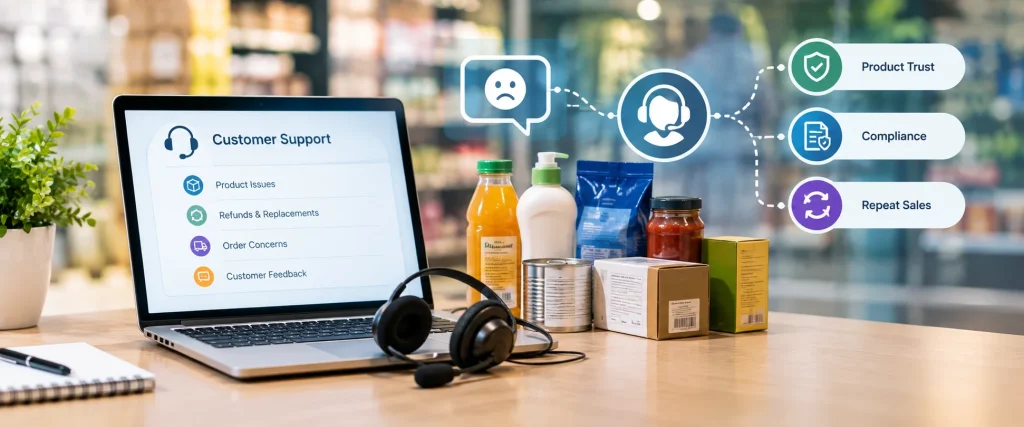 ](/okf/article/consumer-complaint-management-outsourcing-cpg.md)
September 30, 2026 [ CX ](https://www.serveretail.com/blog/cx/)
## [ Consumer Complaint Management Outsourcing for CPG Brands: Protect Product Trust, Compliance & Repeat Sales ](/okf/article/consumer-complaint-management-outsourcing-cpg.md)
[  ](/okf/article/cpg-bpo-outsourcing.md)
September 14, 2026 [ CX ](https://www.serveretail.com/blog/cx/)
## [ CPG BPO Outsourcing: A Complete Guide to Contact Center and Back-Office Success ](/okf/article/cpg-bpo-outsourcing.md)
[  ](/okf/article/cpg-procurement-digitization-bpo.md)
April 14, 2026 [ CX ](https://www.serveretail.com/blog/cx/)
## [ Procurement Digitization is Only Half the Job: How BPO Fills the Gap for CPG Brands ](/okf/article/cpg-procurement-digitization-bpo.md)
[  ](/okf/article/fmcg-regulatory-compliance-bpo-safety-mandates.md)
March 6, 2026 [ CX ](https://www.serveretail.com/blog/cx/)
## [ Navigating the Minefield: Regulatory Compliance for Cross-Border FMCG ](/okf/article/fmcg-regulatory-compliance-bpo-safety-mandates.md)
[  ](/okf/article/cpg-customer-engagement-solutions-demand-sensing.md)
March 6, 2026 [ CX ](https://www.serveretail.com/blog/cx/)
## [ Demand Sensing: Scaling Proactive Outreach to Capture CPG Purchase Intent ](/okf/article/cpg-customer-engagement-solutions-demand-sensing.md)
[  ](/okf/article/cpg-subscription-retention-strategies.md)
March 5, 2026 [ CX ](https://www.serveretail.com/blog/cx/)
## [ The Replenishment Habit: Building Retention-First Support for CPG Subscriptions ](/okf/article/cpg-subscription-retention-strategies.md)
## Let’s Build Smarter
Retail Experiences Together
Connect. Scale. Serve. Win with us.
[ Get a Free Retail CX Consultation ](/okf/page/get-a-quote.md)

---
## Cosmetics & Beauty
## Outsource Your Beauty Customer Service
Helping beauty brands deliver personalized customer experiences, subscription support, and product guidance through global contact center and retail BPO expertise.
[ Get A Free Quote ](/okf/page/get-a-quote.md)

###### Built for Retail. Powered by Experience.
# Beauty & Cosmetics Customer Service Outsourcing for DTC, Subscription, and Global Beauty Brands
ServeRetail runs beauty customer service outsourcing and cosmetics BPO programs for global beauty brands, DTC labels, subscription companies, and indie skincare startups. Our beauty-trained agents support shade matching, brand-guided skin-type and product selection questions, ingredient inquiries, and personalized product recommendations across color cosmetics, skincare, haircare, fragrance, and clean beauty categories. That training pays back where it matters. Fewer mismatched-shade returns. Higher conversion at checkout. Stronger purchase confidence on first-time products. We cover order tracking, subscription support, returns, ingredient queries, and post-purchase care across voice, chat, email, social, and messaging in 25+ languages, with PCI DSS, SOC 2, and ISO compliance built into every workflow.
Beauty CX has its own operational rhythm, and we’ve spent 20+ years learning it. Product launches can create sudden, high-volume ticket surges. Mother’s Day. Black Friday. Subscription box monthly cycles. Influencer-driven shade drops. Our beauty operations model handles all of it. Subscription-trained agents who manage box customization, product swaps, skip-and-pause, trial-to-paid conversion, and cancellation-save workflows. Launch-specific training and flexible staffing help teams prepare for sudden increases in support demand. Inventory and pricing updates synced to your PIM and OMS. Powered by 20,000+ retail-trained agents across 40+ centers in 12 countries. Our beauty experience includes programs that maintained less than 5% abandon rates through recurring product launches and achieved 99%+ service levels during an omnichannel CX transformation.
###### Industry Leading Integrated Services
## Call Center Services Offerings Tailored for Beauty Brands
Beauty support spans discovery through post-purchase care, connecting product guidance, orders, returns, subscriptions, loyalty, and social customer engagement.

### Customer
Service
24/7 multilingual support across voice, chat, email, and social for beauty brands of every scale.
[ ](/okf/page/customer-service.md)

### Order Processing
& Tracking
Real-time order tracking, proactive shipping updates, and WISMO resolution for cosmetics orders.
[ ](/okf/page/order-management-tracking.md)

### Returns & Refund
Handling
Hygiene-aware returns workflows, exchange-first conversations, and shade-match return reduction.
[ ](/okf/page/returns-refunds-claims-processing.md)

### Product Inquiry
Support
Shade matching, brand-guided product selection, ingredient questions, and personalized recommendations across beauty categories.
[ ](/okf/page/technical-product-support.md)

### Sales & Upsell
Assistance
Targeted interactions that increase cross-sell and boost average order value.
[ ](/okf/page/sales-upselling.md)

### Subscription
Management Services
Box customization, skip-and-pause, swap requests, and cancellation-save workflows for beauty subscription brands.
[ ](/okf/page/customer-retention.md)

### Loyalty Program
Management
Tiered loyalty support, points redemption, VIP program management, and personalized retention workflows.
[ ](/okf/page/loyalty-subscription-program-management.md)

### Social & Review
Monitoring
Active monitoring and response across Instagram, TikTok, Sephora, Ulta, Amazon, and Trustpilot reviews.
[ ](/okf/page/back-office.md)
## Beauty & Personal Care Segments We Support
From skincare and makeup to haircare, fragrance, professional beauty and DTC commerce, ServeRetail supports product discovery, shade and suitability questions, orders, returns, subscriptions and loyalty across beauty retail.
Skincare & Sun Care Makeup, Nails & Brows Hair Care Fragrance & Grooming Clean & Professional Beauty Beauty Retail & DTC
### Skincare & Sun Care
Support for skincare categories where ingredients, product suitability, routines and usage guidance frequently shape purchase confidence and post-purchase questions.
SEGMENTS
- Skincare
- Sun Care / Sun Protection
- Dermocosmetics
- Clinical Skincare

CX SUPPORT FOCUS
- Product suitability
- Ingredients & allergens
- Routine guidance
- Routine guidance
- Order support
- Returns
### Makeup, Nails, Lashes & Brows
Support for color and beauty categories where shade, finish, application, availability and trend-led demand can drive both discovery and service contacts.
SEGMENTS
- Color Cosmetics / Makeup
- Nail Care
- Lashes & Brows

CX SUPPORT FOCUS
- Shade guidance
- Product selection
- Application questions
- Availability
- Order tracking
- Returns
### Hair Care & Professional Hair
Support for consumer and professional hair categories where hair type, color, treatment goals and product usage influence recommendations and repeat purchases.
SEGMENTS
- Hair Care
- Hair Color
- Salon Haircare

CX SUPPORT FOCUS
- Product selection
- Hair-type guidance
- Usage questions
- Color support
- Availability
- Repeat orders
### Fragrance, Bath, Body & Grooming
Support for fragrance, body and grooming products where scent, suitability, gifting, product availability and seasonal demand shape the customer journey.
SEGMENTS
- Fragrance
- Bath & Body
- Men’s Grooming

CX SUPPORT FOCUS
- Product selection
- Scent questions
- Gifting support
- Availability
- Order support
- Returns
### Clean, Natural & Professional Beauty
Support for ingredient-conscious and professional beauty customers who often need clear product information, suitability guidance and accurate usage support.
SEGMENTS
- Clean Beauty
- Natural / Organic Beauty
- Professional Beauty

CX SUPPORT FOCUS
- Ingredient questions
- Product suitability
- Usage guidance
- Professional-use questions
- Availability
- Order support
### Beauty Products, Retail & DTC Commerce
Support for beauty tools, devices, subscriptions and digital retail models where product education, recurring orders and post-purchase assistance drive loyalty.
SEGMENTS
- Beauty Tools
- Beauty Devices
- Beauty Subscription Boxes
- Beauty Retailers
- DTC Beauty Brands

CX SUPPORT FOCUS
- Product education
- Device support
- Subscription changes
- Order tracking
- Returns
- Loyalty support
## Built for Beauty Operations
Six specialist capabilities generalist BPOs can't replicate. Each one is trained, calibrated, and measured against the operational outcomes beauty brands actually need.
#### Shade Matching Expertise
Beauty-trained agents handle shade matching, undertone analysis, and ingredient guidance that cuts mismatched returns 10 to 20 percent.
#### Subscription Save Workflows
Subscription-trained agents manage box customization, swaps, skip-pause, and cancellation-save workflows that retain 25 to 40 percent of attempts.
#### DTC Beauty Operations
Preserve brand voice across launches and influencer drops while scaling support for founder-led DTC and Shopify-based beauty brands.
#### Specialty Beauty Segments
Category-trained agents support clean beauty, K-beauty, fragrance, and specialty skincare with ingredient transparency, routine guidance, and scent expertise.
#### Beauty Tech Support
Tier 1 and 2 support for LED masks, microcurrent devices, app-connected skincare tools, firmware updates, and warranty workflows.
#### Beauty Marketplace Support
Seller and vendor support across Sephora, Ulta, Amazon Beauty, and major marketplaces including listings, returns, and ratings management.
###### Ready to Transform
## AI-Powered Beauty Customer Service Tools
AI supports quality, speed, and customer context, while beauty-trained agents handle product, subscription, loyalty, and sensitive service conversations.
[
##### AI QMS
AI-powered quality management system for 100% call audits ensuring consistent performance.
](/okf/page/ai-qms.md)
[
##### Conversational AI
Multilingual voice bot delivering instant responses across common beauty-related inquiries.
](/okf/page/multilingual.md)
[
##### Accent Harmonizer
Real-time voice clarity improvement for smoother global customer interactions.
](/okf/page/accent-harmonizer.md)

## Why Beauty Brands Choose ServeRetail
ServeRetail combines global reach, trained agents, and advanced tools to help beauty brands scale customer support confidently.
#### Global Multilanguage Coverage
Around-the-clock multilingual support connecting beauty brands with customers worldwide.
#### Experienced Beauty Specialists
Trained agents handling complex skincare and product questions with accuracy and care.
#### Flexible Delivery Options
Scalable BPO models adapting to launches, promotions, and high-demand seasonal periods.
#### Integrated Smart Automation
AI-driven tools improving handling time, quality, and process efficiency.
#### Revenue-Focused Impact
Better retention, reduced churn, and improved cash flow through accurate, timely support.
#### Transparent Performance Insights
Real-time dashboards providing complete visibility into service outcomes and customer trends.
###### Global Scale. Proven Performance.
## Proven Outcomes for Global Cosmetics & Beauty Brands
### [ Global Beauty Brand Maintained Less Than 5% Abandon Rates Through Four Years of Product Launches and Customer Growth ](/okf/case-study/global-beauty-brand-maintained-less-than-5-abandon-rates-through-four-years-of-product-launches-and-customer-growth.md)
<5% Peak Abandon Rate
Supporting beauty consumers through recurring product launches while maintaining accessibility, responsiveness, and premium service experiences. The Client A globally recognized... [Read More](/okf/case-study/global-beauty-brand-maintained-less-than-5-abandon-rates-through-four-years-of-product-launches-and-customer-growth.md)
### [ Global Beauty Brand Enabled Omnichannel CX Transformation with 99%+ Service Levels ](/okf/case-study/global-beauty-brand-enabled-omnichannel-cx-transformation-with-99-service-levels.md)
99%+ Service Levels Achieved
From fragmented operations to a digitally enabled, omnichannel CX model spanning multiple markets The Client A globally recognized beauty and... [Read More](/okf/case-study/global-beauty-brand-enabled-omnichannel-cx-transformation-with-99-service-levels.md)
## Talk to a Beauty CX Specialist
Ready to improve service quality, reduce costs, and support more beauty customers at scale? Our team is here to help.
CountryUnited States (+1)United Kingdom (+44)India (+91)Australia (+61)Canada (+1)China (+86)France (+33)Germany (+49)Italy (+39)Japan (+81)Netherlands (+31)New Zealand (+64)Pakistan (+92)Philippines (+63)Russia (+7)Saudi Arabia (+966)Singapore (+65)South Africa (+27)Spain (+34)Sri Lanka (+94)Sweden (+46)Switzerland (+41)Thailand (+66)Turkey (+90)Ukraine (+380)United Arab Emirates (+971)Vietnam (+84)Afghanistan (+93)Albania (+355)Algeria (+213)Argentina (+54)Austria (+43)Bangladesh (+880)Belgium (+32)Brazil (+55)Chile (+56)Colombia (+57)Czech Republic (+420)Denmark (+45)Egypt (+20)Finland (+358)Greece (+30)Hong Kong (+852)Hungary (+36)Indonesia (+62)Iran (+98)Iraq (+964)Ireland (+353)Israel (+972)Kenya (+254)Kuwait (+965)Malaysia (+60)Mexico (+52)Morocco (+212)Nepal (+977)Nigeria (+234)Norway (+47)Poland (+48)Portugal (+351)Qatar (+974)Romania (+40)South Korea (+82)Taiwan (+886)Tanzania (+255)Venezuela (+58)Zimbabwe (+263)
Your Industry \*Apparel & FashionCosmetics & BeautyConsumer Electronics & AppliancesCPG / FMCGEcommerceHome ImprovementLuxury & LifestyleSports & OutdoorFurniture & Home DecorAutomotive / EVPet SuppliesGrocery & FoodOther
Preferred Delivery Location \*OnshoreNearshoreOffshoreHybrid
Attach RFx Document
(\*.docx, .pdf, .zip only)
Your information will be securely sent to and stored in Google Sheets for the purpose of processing your form submission.
###### Your Questions Answered
## Frequently Asked Questions (FAQs)
Here are common questions cosmetics, beauty, skincare, and wellness brands ask about customer experience, subscriptions, product support, and retail BPO services before partnering with ServeRetail.
[ What is beauty customer service outsourcing?
](#collapse-ebe1fd56addac7b72edf)
[Beauty customer service outsourcing](/okf/page/cosmetics-beauty.md) is the practice of contracting with a specialized BPO partner to handle customer support, shade matching, skin-type assessment, ingredient questions, subscription management, returns, loyalty interactions, and post-purchase care for a cosmetics or beauty brand. A typical engagement covers voice, chat, email, social, and messaging across multiple languages, with the BPO providing beauty-trained agents, contact center technology, quality assurance, and reporting as a managed service. Beauty-specialist BPOs differ from generalist providers by training agents in product knowledge spanning skincare, color cosmetics, haircare, and fragrance, as well as subscription operations and ingredient regulations specific to the beauty industry.
[ Why do beauty brands outsource customer service?
](#collapse-231b3f56addac7b72edf)
Beauty brands outsource customer service to reduce operating costs by 30 to 50%, access 24/7 multilingual coverage without expanding internal teams, scale agent capacity for product launches and subscription cycles, and gain access to agents already trained in shade matching, ingredient questions, and beauty subscription operations. In-house beauty CS teams typically struggle with three structural problems: agent attrition during launch cycles, capacity gaps during Mother's Day and Black Friday peaks, and the cost of building multilingual coverage for global DTC expansion. A beauty-specialist BPO solves all three while protecting CSAT and brand voice.
[ When should a beauty brand outsource customer service?
](#collapse-ec7e4fa6addac7b72edf)
Most beauty brands hit the outsourcing tipping point when in-house teams start missing first-response SLAs during normal volume and breaking entirely during product launches or Mother's Day. Common signals include subscription churn exceeding 8%, CSAT dropping during Q4, ticket backlogs lasting more than 48 hours after launches, the need for multilingual or 24/7 coverage that's not feasible to hire in-house, and planning international expansion across the EU, UK, or APAC markets. Beauty brands with annual revenue between $5M and $300M+ typically benefit most from partial or full customer service outsourcing.
[ How do BPOs help reduce shade matching returns and beauty returns?
](#collapse-5a3d49c6addac7b72edf)
Beauty BPOs reduce shade-matching returns by providing pre-purchase consultation, undertone analysis guidance, and product comparison support that prevents wrong-shade orders before they ship. Specialist beauty agents are trained in undertone identification (warm, cool, neutral), brand-specific shade ranges, and interactions between skin type and formulations. Proactive shade matching during chat and pre-checkout interactions typically reduces shade-match returns by 10 to 20% across foundations, concealers, and color cosmetics. Post-purchase, beauty BPOs handle exchange-first conversations rather than defaulting to refunds, which preserves revenue and resolves the customer's underlying shade concern.
[ How do you outsource customer service for a beauty subscription brand?
](#collapse-aa554826addac7b72edf)
Beauty subscription customer service outsourcing covers box customization, product swap requests, skip-and-pause management, trial-to-paid conversion, cancellation-save workflows, and recurring billing inquiries. ServeRetail's subscription-trained agents handle all five workflows daily for beauty box, skincare subscription, and replenishment brands. The most impactful subscription outsourcing focuses on improving save-rate: trained agents typically retain 25 to 40% of cancellation attempts through offer matching, pause workflows, and product-swap problem-solving. Integration with major subscription platforms, including Recharge, Bold Subscriptions, and Stay AI, is standard.
[ How much does it cost to outsource beauty customer service?
](#collapse-35ce8616addac7b72edf)
Beauty customer service outsourcing pricing varies based on delivery location, channel mix, language requirements, workflow complexity, hours of coverage, and SLA targets. Most beauty brands save 30 to 50% on total support costs compared with running operations in-house, once recruiting, attrition, launch-cycle training, infrastructure, and management overhead are factored in. Rather than publishing rate cards, ServeRetail builds custom proposals tailored to each engagement based on volume, channels, languages, and service levels. Talk to our team for an indicative cost based on your specific program requirements.
[ What's the difference between a beauty-specialist BPO and a generalist call center?
](#collapse-c70925e6addac7b72edf)
A beauty-specialist BPO trains every agent, workflow, quality framework, and technology stack specifically for cosmetics and beauty operations. A generalist BPO retrofits operations from telco, financial services, or technical support models, which miss beauty-specific nuances. Beauty-specialist BPOs handle shade matching, skin type assessment, ingredient questions, subscription operations, product launch surges, and beauty-specific returns (often involving hygiene-driven restock restrictions). Generalist BPOs typically require 6 to 8 weeks of additional beauty-specific training and still produce lower first-contact resolution on shade matching, ingredient, and subscription queries. ServeRetail operates as a retail-specialist BPO with dedicated beauty operations across 200+ retail clients.
[ Can a beauty BPO support clean beauty or K-beauty brands?
](#collapse-86f78b86addac7b72edf)
Yes. Beauty BPOs can support clean beauty, K-beauty, indie cosmetics, fragrance, and specialty skincare brands with category-trained agents who understand the unique product positioning, ingredient priorities, and customer expectations of each segment. Clean beauty agents are trained on EWG ratings, ingredient transparency, free-from claims, and certifications. K-beauty agents understand multi-step routine guidance, ingredient layering, and Korean-specific product categories like essences, serums, and ampoules. ServeRetail supports both established global beauty brands and emerging clean and K-beauty labels with the same operational rigor.
[ How do beauty BPOs handle product launch surges?
](#collapse-32f01626addac7b72edf)
Beauty BPOs handle product launch surges through pre-trained ready benches, accelerated launch-specific agent training, and AI-assisted quality monitoring that absorbs 3 to 5× normal volume without service degradation. ServeRetail typically activates surge capacity within 7 to 14 days of a launch announcement, with brand-specific product training delivered through digital learning paths and live calibration. One ServeRetail client (a global beauty brand) maintained less than 5% abandon rates across four consecutive years of major product launches and customer base growth. Pre-launch planning typically begins 30 to 60 days before drop date.
[ How is quality measured in an outsourced beauty call center?
](#collapse-1a3d6076addac7b72edf)
Beauty call center quality is measured through six core KPIs: CSAT, first-contact resolution (FCR), average handle time (AHT), quality assurance score (QA), service level (SL), and return-resolution rate (RRR). At ServeRetail, every interaction is scored against a beauty-specific QA rubric covering shade matching accuracy, ingredient guidance quality, subscription workflow adherence, and brand voice consistency. Our AI-QMS platform audits 100% of voice and chat conversations daily, rather than the 2 to 5% spot-check sampling typical of generalist BPOs. One client maintained 99%+ service levels across an omnichannel CX transformation. Clients receive real-time dashboards covering all KPIs by channel, agent, and program.
[ How does ServeRetail support cosmetics & beauty brands?
](#collapse-576b76b6addac7b72edf)
ServeRetail supports cosmetics and beauty brands through end-to-end customer service outsourcing covering orders, returns, shade matching, ingredient questions, subscription management, loyalty programs, and post-purchase care across voice, chat, email, social, and messaging. Our beauty-trained agents work in 25+ languages across 40+ delivery centers in 12 countries, supporting brands from $5M indie startups to global beauty conglomerates. ServeRetail clients have maintained less than 5% abandonment rates across four consecutive years of product launches and achieved 99%+ service levels through omnichannel CX transformations.
[ Does ServeRetail support omnichannel communication for beauty retailers?
](#collapse-ec011286addac7b72edf)
ServeRetail supports beauty customer service across every channel beauty shoppers use, including voice (inbound and outbound), live web chat, email, social DMs across Instagram, TikTok, and Facebook, messaging apps including WhatsApp, in-app messaging, SMS, and review platform monitoring across Sephora, Ulta, Amazon, and Trustpilot. Because beauty customers frequently move between channels during the purchase journey, our unified workflows deliver consistent conversations regardless of where a customer reaches out. We integrate natively with Salesforce, Zendesk, HubSpot, Gorgias, Yotpo, and the major CRM, helpdesk, and review platforms beauty brands run.
[ How do ServeRetail’s AI tools help beauty companies?
](#collapse-c51b7276addac7b72edf)
ServeRetail deploys three proprietary AI technologies across beauty customer service operations. [AI-QMS audits 100% of voice and chat conversations](/okf/page/ai-qms.md) daily using a beauty-specific quality rubric that covers shade-matching accuracy, ingredient-guidance quality, subscription-workflow adherence, and brand-voice consistency. [Accent Harmonizer](/okf/page/accent-harmonizer.md) applies real-time voice-clarity adjustments that lift CSAT by up to 22% by transforming agent speech into neutral audio without altering the agent's voice or warmth. Conversational AI handles common beauty queries via multilingual AI voice agents and chatbots, freeing live agents for more complex shade consultations and skincare routine conversations.
###### Latest News
## Insights on Retail CX
Explore the latest trends, research, and practical strategies shaping the future of customer experience in the Apparel & Fashion industry.
[  ](/okf/article/cosmetics-beauty-customer-service-bpo.md)
September 24, 2026 [ CX ](https://www.serveretail.com/blog/cx/)
## [ Cosmetics & Beauty Customer Service BPO: Handle Breakage, Claims & Product Questions Without Losing Customers ](/okf/article/cosmetics-beauty-customer-service-bpo.md)
[  ](/okf/article/beauty-ecommerce-customer-service-summer-returns.md)
May 14, 2026 [ CX ](https://www.serveretail.com/blog/cx/)
## [ Building Beauty Ecommerce Customer Service for Summer Returns and Subscription Pressure ](/okf/article/beauty-ecommerce-customer-service-summer-returns.md)
[  ](/okf/article/beauty-ecommerce-customer-service-mothers-day.md)
April 27, 2026 [ CX ](https://www.serveretail.com/blog/cx/)
## [ Mother’s Day is the Biggest Week in DTC Beauty CX – How Smart Brands Handle It ](/okf/article/beauty-ecommerce-customer-service-mothers-day.md)
[  ](/okf/article/cosmetics-return-management-solutions-beauty-bpo.md)
March 9, 2026 [ CX ](https://www.serveretail.com/blog/cx/)
## [ Hygiene and High-Touch: Managing Shade-Match Returns Without Margin Sacrifice ](/okf/article/cosmetics-return-management-solutions-beauty-bpo.md)
[  ](/okf/article/beauty-industry-loyalty-management-personalization.md)
March 4, 2026 [ CX ](https://www.serveretail.com/blog/cx/)
## [ Personalization at Scale: Using Skin-Profile Data to Fuel Routine Loyalty ](/okf/article/beauty-industry-loyalty-management-personalization.md)
[  ](/okf/article/beauty-tech-support-services-smart-skincare.md)
March 2, 2026 [ CX ](https://www.serveretail.com/blog/cx/)
## [ Beauty Tech Support Services: Troubleshooting the New Era of Smart Skincare Devices ](/okf/article/beauty-tech-support-services-smart-skincare.md)
## Let’s Build Smarter
Retail Experiences Together
Connect. Scale. Serve. Win with us.
[ Get a Free Retail CX Consultation ](/okf/page/get-a-quote.md)

---
## Customer Retention
## Driving Customer Loyalty, Retention & Growth for Retailers
ServeRetail helps retail brands strengthen customer retention outsourcing strategies and customer acquisition outsourcing programs through data-driven engagement, operational precision, and customer-focused communication.
[ Get A Free Quote ](/okf/page/get-a-quote.md)

###### Built for Retail. Powered by Experience.
# Retail Customer Retention and Acquisition Services for Brand Loyalty & Growth
ServeRetail delivers retail customer retention outsourcing services and customer acquisition BPO services that help retailers increase lifetime value, reduce churn, and strengthen customer relationships. Our multilingual contact center teams support lead nurturing, reactivation campaigns, win-back programs, loyalty upgrades, and targeted outbound engagement. Using data-driven workflows and secure, PCI DSS and SOC 2-compliant processes, we help retail brands accelerate growth through measurable, customer-centric performance.
From first-time buyers to long-standing loyal customers, ServeRetail supports customer lifecycle management outsourcing through omnichannel communication across voice, email, chat, and social platforms. Through proactive outreach, predictive engagement, and personalized retention strategies, we help retailers improve client retention management, increase purchase frequency, elevate customer satisfaction, and strengthen acquisition efficiency while reducing operational costs.
###### Industry Leading Integrated Services
## End-to-End Customer Retention and Acquisition Solutions for Retailers
ServeRetail offers comprehensive acquisition and retention services designed to boost customer loyalty, increase conversions, and strengthen lifetime value across all retail channels.

### Lead Qualification
Support
Identifying high-intent prospects through structured customer acquisition outsourcing workflows.
[ ](/okf/page/sales-upselling.md)

### Customer Win-Back
Campaigns
Re-engaging inactive customers through outsourced customer retention and personalized communication.
[ ](/okf/page/customer-retention.md)

### Loyalty Program
Upselling
Promoting reward tiers and exclusive membership benefits effectively.
[ ](/okf/page/loyalty-subscription-program-management.md)

### Subscription Renewal
Assistance
Ensuring on-time renewals and service continuity.
[ ](/okf/page/order-management-tracking.md)

### Proactive Outbound
Engagement
Reaching customers for promotions, reminders, and offers.
[ ](/okf/page/customer-service.md)

### Customer Churn
Prevention
Managing dissatisfaction through early detection and fast intervention.

### Cross-Sell Program
Support
Encouraging complementary product purchases with tailored guidance.
[ ](/okf/page/sales-upselling.md)

### Reactivation Outreach
Services
Reconnecting customers through multi-channel outsource customer acquisition and retention strategies.
## Supporting Retail Growth Across Major Consumer Segments
ServeRetail helps retailers retain more customers and acquire new ones through data-driven engagement programs tailored to each industry’s buyer behavior.
01
[ #### Apparel & Fashion
Helping increase repeat purchases through personalized fit recommendations, loyalty incentives, and style-driven engagement.
](/okf/page/apparel-fashion.md)
02
[ #### Cosmetics & Beauty
Supporting product education, replenishment reminders, and loyalty-tier upgrades.
](/okf/page/cosmetics-beauty.md)
03
[ #### Electronics & Appliances
Encouraging repeat purchases through warranty renewals, accessory recommendations, and upgrade messaging.
](/okf/page/consumer-electronics-appliances.md)
04
[ #### Consumer Packaged Goods
Boosting subscription renewals, reorder reminders, and brand loyalty growth.
](/okf/page/consumer-packaged-goods.md)
05
[ #### Ecommerce
Driving conversions with abandoned-cart outreach, reactivation campaigns, and omnichannel engagement.
](/okf/page/ecommerce.md)
06
[ #### Home Improvement
Supporting project follow-ups, service reactivation, and long-cycle loyalty-building programs.
](/okf/page/home-improvement.md)
07
[ #### Luxury & Lifestyle
Providing high-touch communication that strengthens emotional connections with the brand.
](/okf/page/luxury-lifestyle.md)
08
[ #### Sports & Outdoor
Driving retention with equipment upgrades, seasonal offers, and member-based engagement.
](/okf/page/sports-outdoor.md)
###### Ready to Transform
## AI Solutions
ServeRetail uses advanced automation and AI tools to improve retention outcomes, streamline acquisition workflows, and enhance customer satisfaction.
[
##### AI QMS
AI-powered quality evaluations ensure consistent performance across all interactions.
](/okf/page/ai-qms.md)
[
##### Conversational AI
Intelligent bots manage multilingual engagement with natural responses.
](/okf/page/multilingual.md)
[
##### Accent Harmonizer
Enhances voice clarity using real-time accent harmonization technology.
](/okf/page/accent-harmonizer.md)

## Key Benefits
ServeRetail delivers measurable impact with tailored engagement programs and secure, data-driven workflows.
#### Higher Customer Loyalty
Personalized engagement increases satisfaction levels, boosts repeat purchases, and strengthens long-term emotional connections with your retail brand.
#### Improved Acquisition Efficiency
Structured qualification and outreach workflows reduce cost-per-acquisition while ensuring high-intent prospects convert faster and more consistently.
#### Lower Customer Churn
Proactive detection of dissatisfaction enables timely intervention, preventing revenue loss and preserving customer lifetime value across all channels.
#### Increased Upsell Opportunities
Intelligent recommendations and strategic promotional messaging drive higher order values and improve cross-sell success rates for retail brands.
#### Stronger Lifetime Value
Retention-focused engagement nurtures long-term relationships, increasing purchase frequency, subscription longevity, and total customer revenue.
#### Scalable Engagement Models
Flexible support teams adapt to peak seasons, product launches, and sudden volume shifts without compromising service quality.
## Get In Touch
Partner with ServeRetail to build customer retention and acquisition strategies that strengthen your retail performance and long-term growth.
CountryUnited States (+1)United Kingdom (+44)India (+91)Australia (+61)Canada (+1)China (+86)France (+33)Germany (+49)Italy (+39)Japan (+81)Netherlands (+31)New Zealand (+64)Pakistan (+92)Philippines (+63)Russia (+7)Saudi Arabia (+966)Singapore (+65)South Africa (+27)Spain (+34)Sri Lanka (+94)Sweden (+46)Switzerland (+41)Thailand (+66)Turkey (+90)Ukraine (+380)United Arab Emirates (+971)Vietnam (+84)Afghanistan (+93)Albania (+355)Algeria (+213)Argentina (+54)Austria (+43)Bangladesh (+880)Belgium (+32)Brazil (+55)Chile (+56)Colombia (+57)Czech Republic (+420)Denmark (+45)Egypt (+20)Finland (+358)Greece (+30)Hong Kong (+852)Hungary (+36)Indonesia (+62)Iran (+98)Iraq (+964)Ireland (+353)Israel (+972)Kenya (+254)Kuwait (+965)Malaysia (+60)Mexico (+52)Morocco (+212)Nepal (+977)Nigeria (+234)Norway (+47)Poland (+48)Portugal (+351)Qatar (+974)Romania (+40)South Korea (+82)Taiwan (+886)Tanzania (+255)Venezuela (+58)Zimbabwe (+263)
Your Industry \*Apparel & FashionCosmetics & BeautyConsumer Electronics & AppliancesCPG / FMCGEcommerceHome ImprovementLuxury & LifestyleSports & OutdoorFurniture & Home DecorAutomotive / EVPet SuppliesGrocery & FoodOther
Preferred Delivery Location \*OnshoreNearshoreOffshoreHybrid
Attach RFx Document
(\*.docx, .pdf, .zip only)
Your information will be securely sent to and stored in Google Sheets for the purpose of processing your form submission.
###### Your Questions Answered
## Frequently Asked Questions (FAQs)
Find answers to the questions retailers frequently ask about ServeRetail’s customer retention and acquisition services.
[ How does ServeRetail maximize customer retention outsourcing performance?
](#collapse-576b76b6add62fa675b6)
ServeRetail improves customer retention outsourcing performance by identifying churn signals early, enabling proactive outreach, and personalizing communication for each customer segment. Our retention programs use data-driven insights, loyalty reminders, service recovery workflows, and targeted engagement campaigns to strengthen customer relationships and improve customer lifetime value.
[ What customer acquisition BPO services does ServeRetail provide?
](#collapse-ebe1fd56add62fa675b6)
Our customer acquisition BPO services include lead qualification, outbound engagement, personalized offers, abandoned-cart outreach, omnichannel messaging, and segmentation strategies designed to help retailers acquire high-value customers more efficiently.
[ Do your services support both ecommerce and in-store retail?
](#collapse-ec011286add62fa675b6)
Yes. ServeRetail supports ecommerce, omnichannel, and brick-and-mortar retailers through customer lifecycle management outsourcing programs that include online engagement, loyalty communication, post-purchase outreach, and personalized customer support.
[ Can ServeRetail manage renewals and customer reactivation campaigns?
](#collapse-c51b7276add62fa675b6)
Absolutely. We manage subscription renewals, failed payment follow-ups, personalized messaging, and reactivation campaigns for retailers looking to outsource customer retention services and improve recurring revenue.
[ How do you measure retention and acquisition success?
](#collapse-231b3f56add62fa675b6)
ServeRetail uses AI-powered analytics, KPI reporting, dashboards, and customer engagement tracking to optimize customer acquisition outsourcing and retention program performance while improving visibility into conversions, churn reduction, and lifetime value growth.
###### Latest News
## Insights on Retail CX
Explore strategies, engagement insights, and lifecycle support approaches that help brands acquire new customers and strengthen long-term retention.
[ 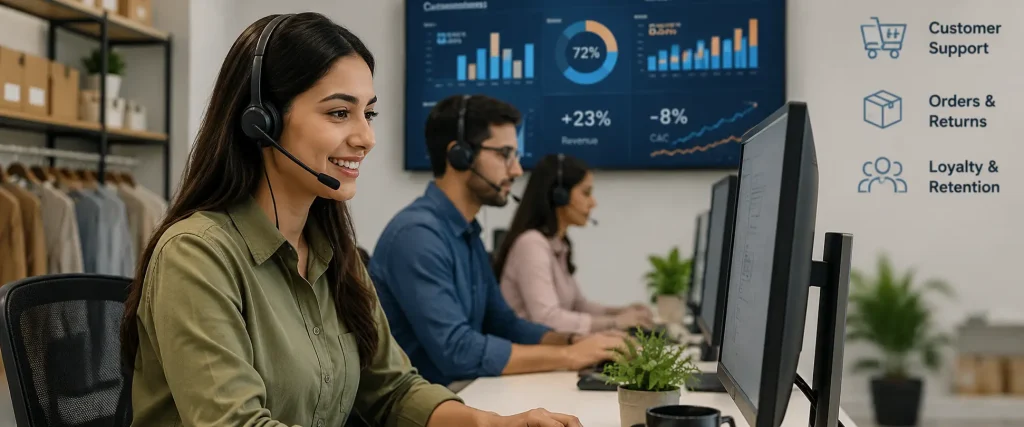 ](/okf/article/retail-customer-acquisition-strategy-outsourcing.md)
September 1, 2026 [ CX ](https://www.serveretail.com/blog/cx/)
## [ How Retail Brands Grow Revenue Without Growing Their Support Teams ](/okf/article/retail-customer-acquisition-strategy-outsourcing.md)
[  ](/okf/article/how-to-prevent-retail-subscription-churn.md)
May 6, 2026 [ CX ](https://www.serveretail.com/blog/cx/)
## [ Why Retail Subscription Brands Lose Customers in Month Three — And How to Stop It ](/okf/article/how-to-prevent-retail-subscription-churn.md)
[  ](/okf/article/a-strategic-guide-to-retail-silent-churn-detection-and-prevention.md)
March 25, 2026 [ CX ](https://www.serveretail.com/blog/cx/)
## [ The Silent Killer: A Strategic Guide to Retail Silent Churn Detection and Prevention ](/okf/article/a-strategic-guide-to-retail-silent-churn-detection-and-prevention.md)
[  ](/okf/article/customer-win-back-services-how-retailers-recover-revenue-after-churn.md)
January 30, 2026 [ CX ](https://www.serveretail.com/blog/cx/)
## [ Customer Win-Back Services: How Retailers Recover Revenue After Churn ](/okf/article/customer-win-back-services-how-retailers-recover-revenue-after-churn.md)
[  ](/okf/article/retail-win-back-campaigns-reactivate-lapsed-customers.md)
January 21, 2026 [ CX ](https://www.serveretail.com/blog/cx/)
## [ Retail Win-Back Campaigns: Re-Engaging Lost Customers and Rebuilding Lifetime Value ](/okf/article/retail-win-back-campaigns-reactivate-lapsed-customers.md)
[  ](/okf/article/retail-churn-prevention-with-proactive-customer-engagement-stops-revenue-loss.md)
January 2, 2026 [ CX ](https://www.serveretail.com/blog/cx/)
## [ Retail Churn Prevention: How Proactive Customer Engagement Stops Revenue Loss Before It Starts ](/okf/article/retail-churn-prevention-with-proactive-customer-engagement-stops-revenue-loss.md)
## Let’s Build Smarter
Retail Experiences Together
Connect. Scale. Serve. Win with us.
[ Get a Free Retail CX Consultation ](/okf/page/get-a-quote.md)

---
## Customer Service
## Retail Customer Service Outsourcing for Modern Brands
> ServeRetail helps brands scale retail customer service across voice, chat, email, social media, and messaging channels with multilingual, always-on customer support operations designed to improve response times, customer satisfaction, and operational efficiency.
[ Get A Free Quote ](/okf/page/get-a-quote.md)

###### Built for Retail. Powered by Experience.
# Retail Customer Service Outsourcing Solutions to Improve Retail Performance
ServeRetail delivers complete retail customer service outsourcing for retail and ecommerce brands, handling customer inquiries, product questions, order updates, returns, exchanges, and issue resolution across voice, live chat, email, social media, WhatsApp, and in-app messaging — all operating 24/7 in 28+ languages. Our multilingual agents operate in accordance with PCI DSS, SOC 2, and ISO compliance standards to deliver consistent retail customer care and accurate communication. By reducing backlogs and improving response times, brands strengthen customer trust, improve customer satisfaction, and lower overall support costs.
With over two decades of retail operations experience, ServeRetail powers scalable retail customer service programs built for peak seasons — Black Friday, Cyber Monday, Q4 holiday surges, and flash sales — with up to 3× agent surge capacity and a 30-day ramp timeline backed by 20,000+ trained agents globally. We help brands improve first-contact resolution, reduce unnecessary escalations, and maintain predictable customer support outsourcing service quality with zero CSAT degradation even during high-demand retail periods. Our agents, workflows, and automation tools ensure every interaction aligns with brand standards and delivers reliable, efficient customer care outcomes.
###### Industry Leading Integrated Services
## Customer Service Capabilities Covering All Major Retail Support Needs

### Customer Support
& Helpdesk
Responsive retail customer support across chat, email, voice, and social customer communication channels.
[ ](/okf/page/customer-service.md)

### Order Support
& Tracking
Accurate order support updates reducing WISMO inquiries and improving delivery communication.
[ ](/okf/page/order-management-tracking.md)

### Returns & Refund
Assistance
Smooth retail customer care handling returns, refunds, and product issue resolution across support channels.
[ ](/okf/page/returns-refunds-claims-processing.md)

### Product Information
Guidance
Clear product support guidance covering sizing, materials, specifications, compatibility, and usage.
[ ](/okf/page/technical-product-support.md)

### Account & Billing
Assistance
Secure customer support assistance managing customer accounts, payment issues, billing, and profile updates.
[ ](/okf/page/back-office.md)

### Complaint Resolution
Management
Fast issue analysis and customer care escalation workflows preventing dissatisfaction and escalation.

### Loyalty Program
Support
Retail customer support assistance for points, rewards, tiers, redemptions, and exclusive loyalty inquiries.
[ ](/okf/page/loyalty-subscription-program-management.md)

### Subscription Customer Support
Managing renewals, modifications, cancellations, and cyclical subscription customer support communication.
[ ](/okf/page/loyalty-subscription-program-management.md)
## Retail Verticals We Support
ServeRetail adapts customer service workflows to the expectations and challenges of each retail industry segment. Every vertical benefits from trained agents, category expertise, and tailored communication workflows.
01
[ #### Apparel & Fashion
We assist customers with sizing questions, fit guidance, order updates, exchanges, returns, and personalized support to maintain confidence throughout the apparel, footwear, and accessories shopping journey.
](/okf/page/apparel-fashion.md)
02
[ #### Cosmetics & Beauty
Support includes shade assistance, product guidance, subscription management, delivery troubleshooting, replacements, and inquiries across skincare, cosmetics, wellness, and beauty categories requiring personalized attention.
](/okf/page/cosmetics-beauty.md)
03
[ #### Electronics & Appliances
We provide troubleshooting support, setup instructions, warranty assistance, replacement coordination, and delivery communication for electronics and appliance customers needing accurate, technically sound guidance.
](/okf/page/consumer-electronics-appliances.md)
04
[ #### CPG / FMCG
Support includes subscription orders, product inquiries, delivery issues, replacements, and complaint resolution for high-volume CPG brands that require consistent, fast, and dependable customer communication at scale.
](/okf/page/consumer-packaged-goods.md)
05
[ #### Ecommerce
ServeRetail manages inquiries, product questions, tracking updates, returns, refunds, and billing support across marketplaces, DTC brands, and multi-category ecommerce retailers operating diverse product catalogs.
](/okf/page/ecommerce.md)
06
[ #### Home Improvement
Support includes installation questions, scheduling assistance, material guidance, delivery updates, and order management for home improvement, remodeling, and renovation customers who require dependable, knowledgeable service.
](/okf/page/home-improvement.md)
07
[ #### Luxury & Lifestyle
High-touch customer service, including gifting, delivery updates, loyalty tiers, premium inquiries, white-glove coordination, and personalized recommendations, for luxury retail and lifestyle experience brands.
](/okf/page/luxury-lifestyle.md)
08
[ #### Sports & Outdoor
We handle gear questions, sizing guidance, delivery support, product suitability inquiries, and returns for active lifestyle, performance, and outdoor sports equipment brands.
](/okf/page/sports-outdoor.md)
###### Ready to Transform
## AI Solutions
ServeRetail enhances every customer interaction with intelligent automation tools.
[
##### AI QMS
Automated quality scoring ensuring customer service accuracy and consistent performance across every retail interaction.
](/okf/page/ai-qms.md)
[
##### Conversational AI
AI-powered multilingual responses reducing handle time for routine retail customer support inquiries.
](/okf/page/multilingual.md)
[
##### Accent Harmonizer
Real-time voice clarity enhancements improving communication quality across global customer service interactions.
](/okf/page/accent-harmonizer.md)

## Key Benefits
ServeRetail enhances customer satisfaction through consistently high-quality, scalable service operations. Our customer service outsourcing strengthens performance, reduces costs, and improves operational visibility.
#### 24/7 Global Availability
Always-on multilingual retail customer service ensures fast response times and dependable support across every time-zone, channel, and customer interaction point.
#### Specialized Retail Expertise
Agents trained in product categories, workflows, communication styles, and industry expectations deliver accurate support aligned with retail brand standards.
#### Flexible, Scalable Operations
Flexible customer support outsourcing operations enable seamless expansion during holidays, product launches, promotions, and unpredictable retail demand increases.
#### Higher First-Contact Resolution
Optimized workflows, structured knowledge bases, and trained agents reduce escalations and resolve customer issues swiftly on the first attempt.
#### Lower Operational Costs
Efficient staffing, automation, and global delivery models help customer service outsourcing programs reduce expenses while maintaining strong customer experience outcomes.
#### Real-Time Operational Visibility
Intelligent dashboards provide instant insight into volumes, performance trends, quality metrics, and customer satisfaction indicators for better decisions.
## Let’s Talk
Ready to strengthen your customer service operation? Our team will help you build a scalable and efficient support model that aligns with your brand’s goals.
CountryUnited States (+1)United Kingdom (+44)India (+91)Australia (+61)Canada (+1)China (+86)France (+33)Germany (+49)Italy (+39)Japan (+81)Netherlands (+31)New Zealand (+64)Pakistan (+92)Philippines (+63)Russia (+7)Saudi Arabia (+966)Singapore (+65)South Africa (+27)Spain (+34)Sri Lanka (+94)Sweden (+46)Switzerland (+41)Thailand (+66)Turkey (+90)Ukraine (+380)United Arab Emirates (+971)Vietnam (+84)Afghanistan (+93)Albania (+355)Algeria (+213)Argentina (+54)Austria (+43)Bangladesh (+880)Belgium (+32)Brazil (+55)Chile (+56)Colombia (+57)Czech Republic (+420)Denmark (+45)Egypt (+20)Finland (+358)Greece (+30)Hong Kong (+852)Hungary (+36)Indonesia (+62)Iran (+98)Iraq (+964)Ireland (+353)Israel (+972)Kenya (+254)Kuwait (+965)Malaysia (+60)Mexico (+52)Morocco (+212)Nepal (+977)Nigeria (+234)Norway (+47)Poland (+48)Portugal (+351)Qatar (+974)Romania (+40)South Korea (+82)Taiwan (+886)Tanzania (+255)Venezuela (+58)Zimbabwe (+263)
Your Industry \*Apparel & FashionCosmetics & BeautyConsumer Electronics & AppliancesCPG / FMCGEcommerceHome ImprovementLuxury & LifestyleSports & OutdoorFurniture & Home DecorAutomotive / EVPet SuppliesGrocery & FoodOther
Preferred Delivery Location \*OnshoreNearshoreOffshoreHybrid
Attach RFx Document
(\*.docx, .pdf, .zip only)
Your information will be securely sent to and stored in Google Sheets for the purpose of processing your form submission.
###### Your Questions Answered
## Frequently Asked Questions (FAQs)
Below are the most common questions retail brands ask before outsourcing technical product support services to ServeRetail.
[ What does retail customer service outsourcing include?
](#collapse-576b76b6addac6d159f9)
> Retail customer service outsourcing includes assistance with inquiries, orders, product questions, returns, complaints, account issues, and omnichannel customer support. ServeRetail provides trained agents and secure workflows that help retailers improve customer satisfaction and streamline support operations.
[ How does ServeRetail maintain retail customer care quality?
](#collapse-ebe1fd56addac6d159f9)
All interactions are monitored through AI-driven quality scoring and human review. Our retail customer care teams receive ongoing training and follow structured workflows to ensure accurate, brand-aligned communication.
[ Can ServeRetail's customer support outsourcing services scale during peak retail seasons?
](#collapse-ec011286addac6d159f9)
Yes. Our customer support outsourcing services scale rapidly to support holiday peaks, flash sales, and product launches without impacting response times or service quality.
[ What compliance standards support your retail BPO customer service operations?
](#collapse-c51b7276addac6d159f9)
ServeRetail operates in accordance with PCI DSS, SOC 2, and ISO standards to protect customer data, payments, and communication channels across all retail BPO customer service operations.
[ Do you provide omnichannel retail customer support?
](#collapse-231b3f56addac6d159f9)
Absolutely. We provide omnichannel retail customer support across phone, chat, email, SMS, social media, WhatsApp, and in-app messaging to maintain seamless customer experiences across every channel.
###### Latest News
## Insights on Retail CX
Explore proven strategies, CX insights, and operational best practices that help retailers deliver faster, more consistent customer service experiences.
[  ](/okf/article/retail-demand-forecasting-peak-season.md)
October 19, 2026 [ CX ](https://www.serveretail.com/blog/cx/)
## [ Retail Demand Forecasting for Peak Season: How to Accurately Forecast and Manage Customer Service Demand ](/okf/article/retail-demand-forecasting-peak-season.md)
[ 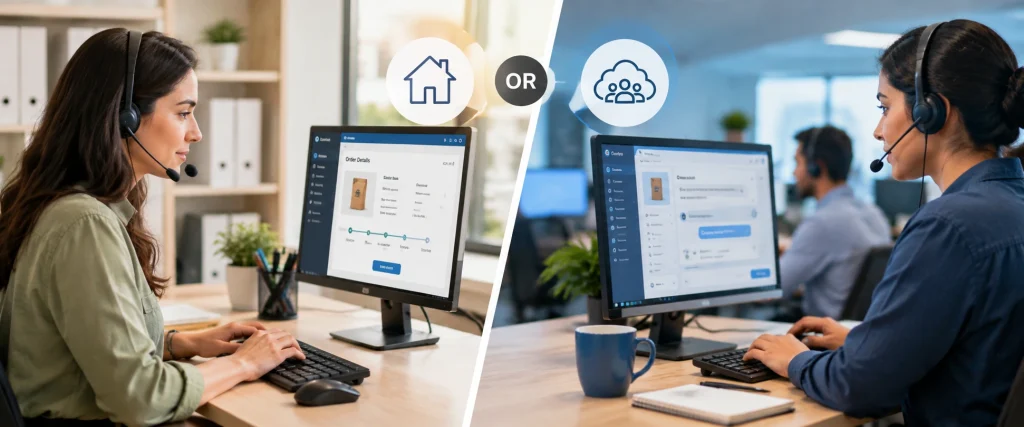 ](/okf/article/in-house-vs-outsourced-customer-support-which-is-better-for-ecommerce-businesses.md)
October 15, 2026 [ CX ](https://www.serveretail.com/blog/cx/)
## [ In-House vs. Outsourced Ecommerce Support: Which Model Is Right for Your Business? ](/okf/article/in-house-vs-outsourced-customer-support-which-is-better-for-ecommerce-businesses.md)
[  ](/okf/article/retail-customer-support-outsourcing-choose-right-contact-center-partner.md)
October 13, 2026 [ CX ](https://www.serveretail.com/blog/cx/)
## [ How to Choose the Right Contact Center Partner for Your Retail Business ](/okf/article/retail-customer-support-outsourcing-choose-right-contact-center-partner.md)
[  ](/okf/article/retail-customer-service-overflow-outsourcing.md)
October 9, 2026 [ CX ](https://www.serveretail.com/blog/cx/)
## [ Retail Customer Service Overflow Outsourcing vs. Dedicated Teams: Which Model Fits Holiday Peak? ](/okf/article/retail-customer-service-overflow-outsourcing.md)
[  ](/okf/article/revenue-generating-customer-service-driving-retail-sales.md)
October 1, 2026 [ CX ](https://www.serveretail.com/blog/cx/)
## [ Revenue-Generating Customer Service: Turning Retail Support Into Sales ](/okf/article/revenue-generating-customer-service-driving-retail-sales.md)
[  ](/okf/article/cyber-monday-call-center-readiness.md)
September 28, 2026 [ CX ](https://www.serveretail.com/blog/cx/)
## [ Cyber Monday Call Center Readiness: Can Your Customer Support Handle the Holiday Surge? ](/okf/article/cyber-monday-call-center-readiness.md)
## Let’s Build Smarter
Retail Experiences Together
Connect. Scale. Serve. Win with us.
[ Get a Free Retail CX Consultation ](/okf/page/get-a-quote.md)

---
## Data Annotation
## Data Annotation That Powers Smarter Retail AI
ServeRetail delivers human-labeled data annotation outsourcing for retail brands training computer vision, NLP, and RLHF models at production scale.
[ Get A Free Quote ](/okf/page/get-a-quote.md)

###### Built for Retail. Powered by Experience.
# Data Annotation Outsourcing Services for Retail AI and Machine Learning Teams
ServeRetail runs data annotation outsourcing programs for retail brands, ecommerce platforms, and B2B ML vendors. Our expert annotators label image, text, video, audio, and 3D sensor datasets with precision. We prepare training data for planogram configurations, shelf-compliance audits, and autonomous-shopping store deployments. Our teams also support individual contractors building fine-tuned AI models on tight timelines. Additionally, our workflows include RLHF, human-in-the-loop review, and structured quality assurance at every stage. As a result, your training data reaches production-ready accuracy before it ever touches your model.
With over two decades of retail operations expertise, ServeRetail combines skilled annotators with proven quality management systems. Our teams handle bounding box annotation, semantic segmentation, LiDAR labeling, sentiment tagging, and intent classification. We annotate shelf imagery for retail execution AI, smart checkout systems, and inventory robot deployments. Moreover, we support the full AI lifecycle from data collection to model deployment and monitoring. Global delivery centers across North America, Latin America, Asia Pacific, and EMEA give your project speed and scale. PCI DSS, SOC 2, and ISO compliance protect every dataset at every stage of the project.
###### Industry Leading Integrated Services
## Data Annotation Services Supporting Every AI Training Workflow
ServeRetail delivers full-stack data annotation services that help retail brands and AI training companies produce accurate, structured, model-ready datasets.

### Image
Annotation
Bounding box annotation, polygon segmentation, and keypoint labeling for computer vision and product recognition models.

### Text Annotation
Services
Named entity recognition, sentiment tagging, and intent classification for NLP and LLM training data pipelines.

### Video Annotation
Services
Frame-by-frame labeling, object tracking, and action recognition for retail surveillance and behavior analysis models.

### Audio
Annotation
Transcription, speaker identification, and sentiment tagging for voice assistants and conversational AI training datasets.

### 3D and LiDAR
Annotation
3D point cloud annotation, sensor fusion labeling, and depth mapping for autonomous systems and robotics.

### RLHF and Human
Feedback
Human evaluators score model outputs, rank responses, and generate preference data for LLM fine-tuning.

### Product Catalog
Labeling
Attribute extraction, category mapping, and visual search dataset preparation for retail and ecommerce AI systems.

### Quality Assurance
& Validation
Three-layer QA framework catches annotation errors early, ensuring model-ready accuracy at every project milestone.
###### Robotics Product Lifecycle
## Human-in-the-Loop Support for the Robotics Product Lifecycle
ServeRetail supports the robotics product lifecycle with human-in-the-loop teams that keep autonomous fleets running safely and continuously improving.
##### Watchers
Live human operators monitor robot fleets 24/7, flagging anomalies and edge cases before they escalate.
##### Resolvers
Trained specialists handle exception events, guiding robots through unfamiliar tasks and documenting decisions for retraining.
##### Teleoperation
Remote operators control robots hands-on, capturing camera feeds, LiDAR data, and force feedback for training datasets.

###### End-to-End AI Support
## Physical AI Training Data and Full Model Lifecycle Coverage
ServeRetail helps retail AI teams manage the physical AI training data lifecycle. Coverage runs from raw data collection to live model performance monitoring.
#### Data Collection
Structured data sourcing across image, video, audio, text, and sensor streams for supervised model training.
#### Model Training
Human-labeled data feeds directly into training pipelines, with built-in support for RLHF and fine-tuning.
#### Model Deployment
Pre-deployment validation and staged rollout support ensure your model performs reliably in production environments.
#### Monitor and Maintenance
Ongoing monitoring, drift detection, and retraining workflows keep models accurate as real-world data evolves.
## Retail Verticals We Support
ServeRetail delivers data annotation and AI training data services across a wide range of retail categories. Each vertical receives specialized annotators, tailored quality frameworks, and workflows built for retail AI success.
01
[ #### Apparel and Fashion
We label product images, tag visual attributes, and prepare visual search datasets. Additionally, our teams annotate size charts and fit data for personalization models.
](/okf/page/apparel-fashion.md)
02
[ #### Cosmetics & Beauty
Our annotators tag product ingredients, shade categories, and skin tone data for personalization AI. We also process user-generated content for sentiment and review analysis models.
](/okf/page/cosmetics-beauty.md)
03
[ #### Consumer Electronics & Appliances
Bounding box annotation and attribute extraction support product recognition, warranty automation, and troubleshooting AI systems. Furthermore, we handle technical spec labeling for advanced comparison engines.
](/okf/page/consumer-electronics-appliances.md)
04
[ #### CPG / FMCG
We tag SKU images, label promotional creative, and structure product data for recommendation engines. Our teams also process shelf imagery for retail execution and compliance AI.
](/okf/page/consumer-packaged-goods.md)
05
[ #### Ecommerce
DTC and marketplace brands rely on us for catalog annotation, visual search data, and review sentiment labeling. Consequently, product discovery improves across every customer touchpoint.
](/okf/page/ecommerce.md)
06
[ #### Home Improvement
We annotate tool images, label material categories, and prepare project matching datasets. Our workflows also support augmented reality features for home visualization apps.
](/okf/page/home-improvement.md)
07
[ #### Luxury & Lifestyle
Precision annotation supports authenticity verification, premium product recognition, and personalized recommendation models. Moreover, we handle sensitive brand data with strict confidentiality controls.
](/okf/page/luxury-lifestyle.md)
08
[ #### Sports & Outdoor
We tag gear images, label technical specifications, and process fitment data for equipment matching AI. Our teams also annotate action video for performance analysis models.
](/okf/page/sports-outdoor.md)
## Key Benefits
ServeRetail gives retail brands and AI training companies the scale, expertise, and technology needed to deliver production-ready datasets.
#### Higher Model Accuracy
Multi-layer quality checks and expert annotators produce clean, structured training data that improves model performance.
#### Faster Time to Production
Global staffing and parallel workflows compress annotation timelines, helping your AI reach production-ready faster.
#### Scalable Annotation Capacity
Flexible teams scale up during major training pushes and scale back when workloads normalize.
#### Full Data Security
PCI DSS, SOC 2, and ISO compliance protect your datasets across all workflows and delivery locations.
#### Lower Annotation Costs
Global delivery centers and optimized workflows reduce your cost per labeled item without cutting quality.
#### Retail Domain Expertise
Annotators trained in retail categories understand product context, customer language, and shopper behavior signals.
## Let's Build Your AI Training Data Program Today
Ready to scale your data annotation outsourcing program? Our team is here to build a solution that fits your model, budget, and timeline.
CountryUnited States (+1)United Kingdom (+44)India (+91)Australia (+61)Canada (+1)China (+86)France (+33)Germany (+49)Italy (+39)Japan (+81)Netherlands (+31)New Zealand (+64)Pakistan (+92)Philippines (+63)Russia (+7)Saudi Arabia (+966)Singapore (+65)South Africa (+27)Spain (+34)Sri Lanka (+94)Sweden (+46)Switzerland (+41)Thailand (+66)Turkey (+90)Ukraine (+380)United Arab Emirates (+971)Vietnam (+84)Afghanistan (+93)Albania (+355)Algeria (+213)Argentina (+54)Austria (+43)Bangladesh (+880)Belgium (+32)Brazil (+55)Chile (+56)Colombia (+57)Czech Republic (+420)Denmark (+45)Egypt (+20)Finland (+358)Greece (+30)Hong Kong (+852)Hungary (+36)Indonesia (+62)Iran (+98)Iraq (+964)Ireland (+353)Israel (+972)Kenya (+254)Kuwait (+965)Malaysia (+60)Mexico (+52)Morocco (+212)Nepal (+977)Nigeria (+234)Norway (+47)Poland (+48)Portugal (+351)Qatar (+974)Romania (+40)South Korea (+82)Taiwan (+886)Tanzania (+255)Venezuela (+58)Zimbabwe (+263)
Your Industry \*Apparel & FashionCosmetics & BeautyConsumer Electronics & AppliancesCPG / FMCGEcommerceHome ImprovementLuxury & LifestyleSports & OutdoorFurniture & Home DecorAutomotive / EVPet SuppliesGrocery & FoodOther
Preferred Delivery Location \*OnshoreNearshoreOffshoreHybrid
Attach RFx Document
(\*.docx, .pdf, .zip only)
Your information will be securely sent to and stored in Google Sheets for the purpose of processing your form submission.
###### Your Questions Answered
## Frequently Asked Questions (FAQs)
Below are the most common questions retail AI teams ask before choosing ServeRetail for data annotation outsourcing.
[ What is data annotation outsourcing?
](#collapse-576b76b6addab771eee5)
Data annotation outsourcing means partnering with a specialized company to label your raw AI training data. Human annotators tag images, text, video, audio, and sensor data with structured labels. As a result, your machine learning models train on clean, accurate, production-ready datasets. Furthermore, outsourcing allows your internal team to focus on model development rather than manual data preparation.
[ What types of data can ServeRetail annotate for AI training?
](#collapse-ebe1fd56addab771eee5)
ServeRetail handles image, text, video, and audio annotation, as well as 3D point cloud labeling. We also support RLHF workflows for LLM fine-tuning and preference modeling. Additionally, our retail specialists label product catalogs and review sentiment and visual search datasets. Every annotation project follows a documented quality assurance framework from start to finish.
[ How does ServeRetail ensure annotation accuracy?
](#collapse-ec011286addab771eee5)
Our three-layer quality assurance framework catches errors at multiple checkpoints during every project. Annotators self-review, team leads spot-check work, and independent QA teams validate final outputs. Consequently, we consistently deliver first-pass accuracy above industry benchmarks. Real-time dashboards give your team full visibility into progress and quality metrics.
[ Can ServeRetail support RLHF and LLM training data programs?
](#collapse-c51b7276addab771eee5)
Yes. Our teams provide RLHF, human-in-the-loop review, and preference ranking for LLM training data. Trained evaluators score model outputs and generate structured feedback for fine-tuning workflows. Moreover, we support both individual contractors and enterprise B2B AI development teams. Every project is subject to strict confidentiality and NDA protection across all delivery locations.
[ Is my data secure with ServeRetail?
](#collapse-231b3f56addab771eee5)
Absolutely. ServeRetail operates in accordance with PCI DSS, SOC 2, and ISO security standards. All annotation happens through encrypted systems, controlled access, and NDA-covered workforces. Additionally, we offer on-premise deployment options for highly sensitive datasets. Your intellectual property and training data stay protected across every project stage.
###### Latest News
## Insights on Retail CX
Explore the latest trends, research, and practical strategies shaping the future of retail customer experience.
[  ](/okf/article/chatgpt-is-the-new-mall-how-agentic-commerce-will-outsell-e-commerce-by-2027.md)
October 23, 2026 [ AI ](https://www.serveretail.com/blog/ai/)
## [ ChatGPT Is Becoming the New Mall: How Agentic Commerce Could Reshape Retail by 2027 ](/okf/article/chatgpt-is-the-new-mall-how-agentic-commerce-will-outsell-e-commerce-by-2027.md)
[  ](/okf/article/retail-holiday-overflow-ai-voice-agents.md)
August 27, 2026 [ AI ](https://www.serveretail.com/blog/ai/)
## [ Retail Holiday Overflow: Where AI Voice Agents Help and Where Humans Still Matter ](/okf/article/retail-holiday-overflow-ai-voice-agents.md)
[ 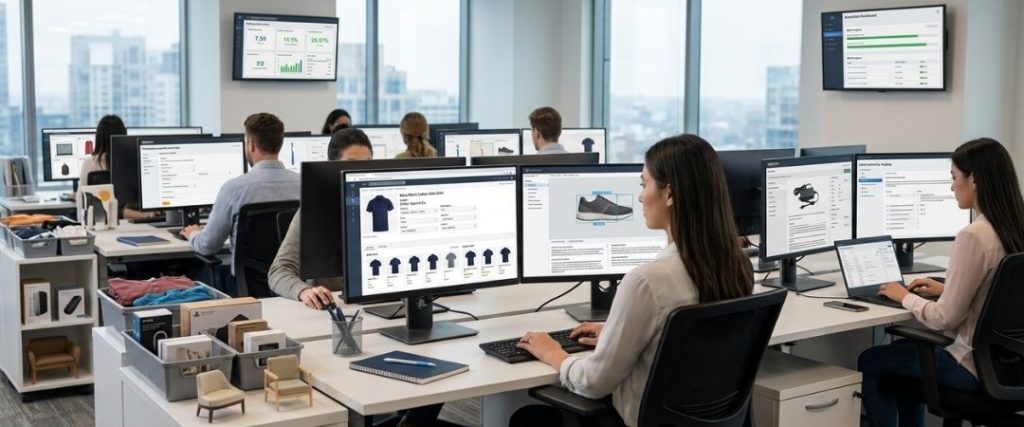 ](/okf/article/product-catalog-annotation-retail-visual-search.md)
July 21, 2026 [ AI ](https://www.serveretail.com/blog/ai/)
## [ Product Catalog Annotation for Retail Visual Search and Product Discovery ](/okf/article/product-catalog-annotation-retail-visual-search.md)
[  ](/okf/article/data-annotation-outsourcing-retail-ai.md)
July 14, 2026 [ AI ](https://www.serveretail.com/blog/ai/)
## [ Data Annotation Outsourcing for Retail AI: How to Scale Without Losing Quality ](/okf/article/data-annotation-outsourcing-retail-ai.md)
[  ](/okf/article/why-retail-data-annotation-matters.md)
July 8, 2026 [ AI ](https://www.serveretail.com/blog/ai/)
## [ Retail Data Annotation: The Foundation Behind Smarter AI, Better Customer Experiences, and Faster Retail Innovation ](/okf/article/why-retail-data-annotation-matters.md)
[  ](/okf/article/ai-voice-agent-for-retail-and-ecommerce.md)
June 18, 2026 [ AI ](https://www.serveretail.com/blog/ai/)
## [ Why an AI Voice Agent for Retail and Ecommerce is the Future of CX ](/okf/article/ai-voice-agent-for-retail-and-ecommerce.md)
## Let’s Build Smarter
Retail Experiences Together
Connect. Scale. Serve. Win with us.
[ Get a Free Retail CX Consultation ](/okf/page/get-a-quote.md)

---
## Direct Response
## Direct Response Support That Converts Calls into Revenue
ServeRetail helps retail and ecommerce brands capture leads, process orders, and maximize conversions from DRTV, radio, print, and direct mail campaigns through expert 24/7 live agent support.
[ Get A Free Quote ](/okf/page/get-a-quote.md)

###### Built for Retail. Powered by Experience.
# Direct Response Call Center Outsourcing Services for Retail and Ecommerce Brands
ServeRetail manages inbound direct response calls with precision and brand alignment. Our trained agents handle order capture, product inquiries, high-touch purchase guidance, up-sells, and PCI-compliant payment processing. We support campaigns running across DRTV, radio, print, direct mail, and digital channels simultaneously. With multilingual agents fluent in Spanish, French, and additional languages, every caller receives a professional experience that builds trust. Additionally, our compliance workflows cover TCPA and telesales regulations, protecting your brand throughout every campaign.
With over two decades of retail operations expertise, ServeRetail integrates with your order management systems, CRM platforms, and payment gateways through secure API connections. DRTV and radio campaigns produce severe fluctuations in call volume that in-house teams cannot reliably absorb. Therefore, we deploy scalable agent pools that expand on demand the moment your ad airs or your mailer lands. Supported by real-time dashboards and custom scripting, our teams reduce abandonment, increase conversion rates, and deliver campaign success regardless of size, scale, duration, or media channel.
###### Industry Leading Integrated Services
## Direct Response Solutions Supporting Every Stage of Campaign Performance
ServeRetail delivers comprehensive direct response call center workflows that help retail brands capture every inbound lead, process every order, and convert ad-driven traffic into consistent, measurable retail revenue.

### Inbound Call
Answering
Live agents answer every campaign call 24/7, ensuring no retail lead slips away during DRTV, radio, or direct mail windows.
[ ](/okf/page/customer-service.md)

### Order Capture
and Processing
Agents take orders accurately and enter them directly into your retail or ecommerce platform in real time without delays.
[ ](/okf/page/order-management-tracking.md)

### Up-Sell
and Cross-Sell
Trained agents present relevant add-ons and related products to increase average order value on every qualifying inbound call.
[ ](/okf/page/returns-refunds-claims-processing.md)

### Lead
Qualification
Agents gather caller information, qualify purchase intent, and route high-value leads to your internal sales team instantly.
[ ](/okf/page/technical-product-support.md)

### Call Volume Spike
Management
Flexible staffing expands agent capacity the moment ad traffic surges, keeping wait times short and conversion rates consistently high.
[ ](/okf/page/back-office.md)

### Payment Processing
and Compliance
PCI-compliant agents process card payments securely, with TCPA-aligned workflows protecting your brand across every telesales interaction.

### Custom Script
Development
Dedicated teams build and continuously refine call scripts that reflect your brand voice, product details, and campaign objectives.
[ ](/okf/page/loyalty-subscription-program-management.md)

### Campaign Reporting and Analytics
Real-time dashboards track call volume, conversion rates, geographic caller data, and agent performance across every active campaign.
[ ](/okf/page/loyalty-subscription-program-management.md)
## Retail Verticals We Support
ServeRetail manages direct response call center operations for a wide range of retail categories. Each vertical receives specialized agent training, tailored scripts, and campaign-specific communication workflows built for measurable results.
01
[ #### Apparel & Fashion
We handle inbound calls from fashion-focused DRTV and direct mail campaigns. Agents capture orders, manage size inquiries, and guide callers through product selections with speed, accuracy, and brand confidence.
](/okf/page/apparel-fashion.md)
02
[ #### Cosmetics & Beauty
Support covers subscription offers, product consultations, bundle up-sells, and promotion-specific order capture. Furthermore, multilingual agents deliver consistent brand messaging across all beauty and personal care direct response campaigns.
](/okf/page/cosmetics-beauty.md)
03
[ #### Electronics & Appliances
We manage inbound calls for high-value electronics, handling product questions, payment verification, warranty add-ons, and order confirmation with careful, detail-oriented attention at every step.
](/okf/page/consumer-electronics-appliances.md)
04
[ #### CPG / FMCG
We capture subscription sign-ups, process replenishment orders, and convert trial offers for CPG brands running direct mail and DRTV campaigns across competitive retail markets.
](/okf/page/consumer-packaged-goods.md)
05
[ #### Ecommerce
ServeRetail supports DTC and marketplace ecommerce brands with inbound order capture, product FAQ handling, and seamless API integration into existing order management and fulfilment platforms.
](/okf/page/ecommerce.md)
06
[ #### Home Improvement
We handle calls for tool, equipment, and material offers. Agents capture orders, provide high-touch product guidance, and confirm delivery timelines for home-improvement direct-response advertising.
](/okf/page/home-improvement.md)
07
[ #### Luxury & Lifestyle
Support covers white-glove inbound handling, premium script delivery, gifting order capture, and authenticity communication, tailored specifically to the expectations of luxury retail direct-response buyers.
](/okf/page/luxury-lifestyle.md)
08
[ #### Sports & Outdoor
We manage inbound calls for gear, equipment, and seasonal promotions. Agents process orders, answer product questions, and capture leads from radio and DRTV campaigns with efficiency.
](/okf/page/sports-outdoor.md)
###### Ready to Transform
## AI Solutions
ServeRetail uses advanced AI tools to improve call accuracy, agent performance, and conversion consistency across direct response campaigns for retail and ecommerce brands of every size.
[
##### AI QMS
AI-driven quality scoring across all direct response calls for precise conversion tracking and continuous agent performance improvement.
](/okf/page/ai-qms.md)
[
##### Conversational AI
Automated multilingual responses handle standard product and order questions instantly, freeing live agents for high-value conversion opportunities.
](/okf/page/multilingual.md)
[
##### Accent Harmonizer
Real-time voice enhancement improves agent clarity and builds confident, natural communication with diverse inbound caller audiences.
](/okf/page/accent-harmonizer.md)

## Key Benefits
ServeRetail gives retail and ecommerce brands the scale, expertise, and technology needed to capture every inbound lead and convert every direct response opportunity with confidence.
#### Higher Campaign Conversion Rates
Trained agents and optimized call scripts turn more inbound callers into paying customers with every single ad that runs across any channel.
#### Lower Call Abandonment
Scalable staffing and fast answer times keep hold times short. As a result, callers stay on the line and convert rather than hanging up in frustration.
#### Greater Average Order Value
Skilled up-sell and cross-sell execution increases revenue per call. Moreover, it improves overall campaign profitability without requiring additional media investment from your brand.
#### Seamless Peak Scalability
Flexible agent pools expand instantly during ad airings, flash sales, and high-traffic campaign windows without service disruption or performance loss.
#### Real-Time Campaign Visibility
Live dashboards and call analytics let your brand monitor conversion performance, caller geography, and agent output from one unified view.
#### Lower Cost Per Acquisition
API-integrated workflows, smart scripting, and global staffing reduce the cost of converting each inbound direct response lead significantly and consistently.
## Let's Transform Your Direct Response Campaign Performance Today
Ready to capture more leads, reduce abandonment, and convert every inbound call into revenue? Our team is here to build a solution tailored to your brand and campaign needs.
CountryUnited States (+1)United Kingdom (+44)India (+91)Australia (+61)Canada (+1)China (+86)France (+33)Germany (+49)Italy (+39)Japan (+81)Netherlands (+31)New Zealand (+64)Pakistan (+92)Philippines (+63)Russia (+7)Saudi Arabia (+966)Singapore (+65)South Africa (+27)Spain (+34)Sri Lanka (+94)Sweden (+46)Switzerland (+41)Thailand (+66)Turkey (+90)Ukraine (+380)United Arab Emirates (+971)Vietnam (+84)Afghanistan (+93)Albania (+355)Algeria (+213)Argentina (+54)Austria (+43)Bangladesh (+880)Belgium (+32)Brazil (+55)Chile (+56)Colombia (+57)Czech Republic (+420)Denmark (+45)Egypt (+20)Finland (+358)Greece (+30)Hong Kong (+852)Hungary (+36)Indonesia (+62)Iran (+98)Iraq (+964)Ireland (+353)Israel (+972)Kenya (+254)Kuwait (+965)Malaysia (+60)Mexico (+52)Morocco (+212)Nepal (+977)Nigeria (+234)Norway (+47)Poland (+48)Portugal (+351)Qatar (+974)Romania (+40)South Korea (+82)Taiwan (+886)Tanzania (+255)Venezuela (+58)Zimbabwe (+263)
Your Industry \*Apparel & FashionCosmetics & BeautyConsumer Electronics & AppliancesCPG / FMCGEcommerceHome ImprovementLuxury & LifestyleSports & OutdoorFurniture & Home DecorAutomotive / EVPet SuppliesGrocery & FoodOther
Preferred Delivery Location \*OnshoreNearshoreOffshoreHybrid
Attach RFx Document
(\*.docx, .pdf, .zip only)
Your information will be securely sent to and stored in Google Sheets for the purpose of processing your form submission.
###### Your Questions Answered
## Frequently Asked Questions (FAQs)
Below are the most common questions retail brands ask before outsourcing direct response call center services to ServeRetail.
[ What does direct response call center outsourcing include?
](#collapse-576b76b6addac101426d)
Direct response outsourcing covers inbound call answering, order capture, lead qualification, up-sell execution, PCI-compliant payment processing, custom scripting, TCPA compliance monitoring, and campaign analytics. ServeRetail provides specialized agents and API-integrated workflows designed to convert ad-driven traffic into retail revenue. Our teams support campaigns of any size, scale, duration, and media channel with consistent brand alignment on every call.
[ How does ServeRetail handle sudden call volume spikes from TV or radio ads?
](#collapse-ebe1fd56addac101426d)
DRTV and radio campaigns produce severe call volume fluctuations that in-house teams cannot reliably absorb. ServeRetail maintains flexible, scalable agent pools that expand on demand the moment your ad airs. Supervisors monitor live call flow in real time and deploy additional agents instantly, preventing abandonment and protecting your conversion rates at the most critical campaign moments.
[ Can ServeRetail support up-selling and cross-selling on direct response inbound calls?
](#collapse-ec011286addac101426d)
Yes. Agents train specifically on your product catalog, promotion details, and up-sell scripts before your campaign launches. They identify the right moments to present related products and add-ons naturally during each call. Consequently, average order value increases without callers feeling pressured or rushed at any point in the conversation.
[ Is payment processing secure with ServeRetail's direct response agents?
](#collapse-c51b7276addac101426d)
Absolutely. Our operations follow PCI DSS, SOC 2, and ISO standards across all payment handling and order processing workflows. Agents process card transactions through encrypted, controlled-access systems with TCPA-aligned telesales compliance built into every interaction. Additionally, verification steps protect your brand and your customers from fraudulent activity and costly chargebacks throughout every campaign window.
[ Do you support multilingual direct response campaigns?
](#collapse-231b3f56addac101426d)
Yes. ServeRetail provides multilingual agents fluent in Spanish, French, and additional languages to serve diverse inbound caller audiences. This expands your campaign reach and helps your brand connect with a broader consumer base across domestic and international markets. Language requirements and script translation needs are confirmed and finalized during your dedicated onboarding consultation with our team.
###### Latest News
## Insights on Retail CX
Explore proven strategies, CX insights, and operational best practices that help retailers deliver faster, more consistent customer service experiences.
[  ](/okf/article/1-800-number-is-making-comeback-and-its-bringing-usd-250-billion.md)
March 30, 2026 [ Insight ](https://www.serveretail.com/blog/insight/)
## [ The 1-800 Number Is Making a Comeback, and It’s Bringing $250 Billion With It ](/okf/article/1-800-number-is-making-comeback-and-its-bringing-usd-250-billion.md)
[  ](/okf/article/comeback-of-direct-response-why-it-still-works.md)
March 25, 2026 [ Insight ](https://www.serveretail.com/blog/insight/)
## [ The Comeback of Direct Response: Why It Still Works ](/okf/article/comeback-of-direct-response-why-it-still-works.md)
## Let’s Build Smarter
Retail Experiences Together
Connect. Scale. Serve. Win with us.
[ Get a Free Retail CX Consultation ](/okf/page/get-a-quote.md)

---
## Ecommerce
## Ecommerce CX Solutions for Retail Businesses
Delivering ecommerce customer service that helps online brands scale support with seamless contact center operations, omnichannel solutions, and BPO expertise worldwide.
[ Get A Free Quote ](/okf/page/get-a-quote.md)

###### Built for Retail. Powered by Experience.
# Outsource Ecommerce Customer Service.
Sound Like You. Scale on Demand.
ServeRetail provides ecommerce customer service outsourcing for online retailers, marketplaces, and DTC brands moving serious volume. Our ecommerce call center handles order queries, shipping updates, returns, refunds, product questions, and post-purchase support across voice, chat, email, and social. We support Shopify stores, Amazon seller queues, and major marketplaces. Our agents manage the full customer journey in 25+ languages, with PCI DSS, SOC 2, and ISO compliance built into every workflow.
We’ve been delivering ecommerce customer service for **20+** years, helping brands handle every kind of ecommerce surge a contact center can face. Flash sales that **10X** volume overnight. Q4 holiday peaks. Prime Day. BFCM. Influencer drops that overwhelm your support queue in an afternoon. Our ecommerce call center outsourcing model handles it all: 3X surge capacity on a 30-day ramp, plus 20,000+ retail-trained agents across nearshore and offshore hubs. The result? Consistent CX during peak weeks, lower return-related losses, and FCR performance that holds steady even when daily ticket volume triples. Web, mobile, marketplace. Same quality, same SLA, every channel.
We handle conversations across every channel your customers actually use, and integrate with any CRM or helpdesk stack you already run. Wherever your customers reach out, we’re there. Voice. Live chat. Email. In-app messaging. WhatsApp. Viber. Facebook Messenger. Our ecommerce contact center provides unified omnichannel support, with conversation history flowing through a single thread, so no one repeats their order number. We integrate natively with Salesforce, Zendesk, HubSpot, Freshdesk, Jira, Asana, and Slack, or a homegrown stack.
###### Industry Leading Integrated Services
## Call Center Services Offerings for Next Gen Ecommerce Brands
ServeRetail delivers ecommerce customer service and BPO solutions that help online brands provide fast, reliable, and seamless support throughout every stage of the customer journey.

### Customer
Service
Fast, accurate ecommerce help desk support that resolves shopper questions and builds confidence throughout the purchase journey.
[ ](/okf/page/customer-service.md)

### Order Processing
& Tracking
Real-time updates reducing WISMO inquiries and delivery concerns.
[ ](/okf/page/order-management-tracking.md)

### Returns & Refund
Support
Smooth handling that reduces costs and builds customer trust.
[ ](/okf/page/returns-refunds-claims-processing.md)

### Product Inquiry
Assistance
Guidance improving understanding of product details and features.
[ ](/okf/page/technical-product-support.md)

### Cart Recovery
Support
Targeted outreach helping reduce abandoned carts and increase conversions.
[ ](/okf/article/ecommerce-cart-recovery-services-outreach-strategy.md)

### Subscription
Management Help
Dependable workflows strengthening recurring revenue programs.
[ ](/okf/page/customer-retention.md)

### Loyalty Program
Management
Personalized engagement driving retention and repeat purchases.
[ ](/okf/page/loyalty-subscription-program-management.md)

### Amazon / Shopify
Seller Support
Seller support for Amazon and Shopify inquiries, returns, customer messages, order issues, and marketplace service workflows.
## Ecommerce Business Models We Support
From DTC brands and marketplaces to omnichannel, subscription, cross-border and recommerce businesses, ServeRetail supports the customer-service and back-office workflows behind modern digital commerce.
DTC & Digital-First Marketplace Commerce Omnichannel Commerce Subscription & Membership Cross-Border & B2B Recommerce & Value
### DTC & Digital-First Commerce
Support for digital-first retailers where fast growth, lean teams and direct customer relationships create pressure across orders, returns, product questions and retention.
SEGMENTS
- DTC / Direct-to-Consumer Brands
- Online-Only Retailers / Pure-Play Ecommerce
- Shopify Merchants
- Dropshipping Retailers

CX SUPPORT FOCUS
- Product questions
- Order tracking
- Returns
- Peak-volume scaling
- Retention
- Back-office support
### Marketplace Commerce
Support for marketplace operators and sellers managing buyer questions, seller coordination, listings, orders, returns and platform-specific service requirements.
SEGMENTS
- Online Marketplaces
- Marketplace Sellers
- Amazon Sellers / Amazon Brands
- Retail Marketplace Operators
CX SUPPORT FOCUS
- Buyer support
- Seller support
- Order issues
- Returns
- Listing support
- Escalations
### Omnichannel & Connected Commerce
Support for retailers connecting stores, apps, social channels and ecommerce across inventory visibility, pickup, delivery and consistent customer-service journeys.
SEGMENTS
- Omnichannel Retailers
- Mobile Commerce / M-Commerce
- Buy Online, Pick Up In Store (BOPIS) Retailers
- Social Commerce

CX SUPPORT FOCUS
- Inventory visibility
- BOPIS support
- Channel consistency
- Order changes
- Delivery issues
- Returns
### Subscription & Membership Commerce
Support for recurring-revenue models where billing, skips, cancellations, renewals and member benefits directly influence retention and customer lifetime value.
SEGMENTS
- Subscription Commerce
- Subscription Boxes
- Retail Membership Commerce

CX SUPPORT FOCUS
- Subscription changes
- Billing support
- Skips & pauses
- Cancellations
- Renewals
- Member benefits
### Cross-Border & B2B Ecommerce
Support for ecommerce models involving international fulfillment or business buyers, where delivery visibility, documentation, account needs and order complexity increase service demands.
SEGMENTS
- Cross-Border Ecommerce
- B2B Ecommerce

CX SUPPORT FOCUS
- Order visibility
- Shipping questions
- Documentation
- Account support
- Bulk-order changes
- Escalations
### Recommerce, Resale & Value Commerce
Support for resale and value-commerce models where condition, authenticity, seller-buyer coordination, inventory turnover and returns create distinct service workflows.
SEGMENTS
- Recommerce
- Resale Marketplaces
- Refurbished Goods Marketplaces
- Flash-Sale / Off-Price Ecommerce

CX SUPPORT FOCUS
- Condition questions
- Seller-buyer support
- Order tracking
- Inventory changes
- Returns
- Peak-demand scaling
## Ecommerce Marketplace Support for Sellers
ServeRetail provides [dedicated marketplace support](/okf/page/marketplace-seller-vendor-support.md) (*Amazon Seller Central, Shopify Plus, Walmart Marketplace, eBay, Etsy, and others*) and ecommerce call center outsourcing services for sellers seeking stronger compliance, operational visibility, and marketplace performance.
01
#### Seller Onboarding
End-to-end onboarding assistance covering documentation, category approvals, policy alignment, and platform setup for smooth and compliant marketplace entry.
02
#### Seller Account Management
Daily account oversight including listings, pricing, inventory accuracy, performance tracking, and policy adherence to maintain a competitive, healthy seller profile.
03
#### Fraud Prevention & Compliance Monitoring
24/7 monitoring across orders, payments, returns, and buyer activity to detect fraud, reduce chargebacks, and avoid penalties or account suspensions.
04
#### Training and Education
Structured training programs helping seller teams understand marketplace rules, best practices, and performance standards to reduce errors and improve ratings.
###### Ready to Transform
## AI Solutions Built for Ecommerce Performance
AI helps ecommerce teams resolve routine demand faster while improving quality, consistency, and context across high-volume customer interactions.
[
##### AI QMS
AI-powered quality management system auditing 100% of calls daily.
](/okf/page/ai-qms.md)
[
##### Conversational AI
Multilingual AI Voice Agent automating answers to common ecommerce questions.
](/okf/page/ai-voice-agent.md)
[
##### Accent Harmonizer
Real-time voice clarity enhancement for smoother global communication.
](/okf/page/accent-harmonizer.md)

## Why Ecommerce Brands Trust ServeRetail
ServeRetail provides the talent, tools, and scalability needed to support fast-moving ecommerce and online retail brands with dependable operational performance.
[
#### Global Multilanguage Coverage
24/7 multilingual support ensuring smooth customer communication worldwide.
](/okf/page/multilingual.md)
#### Ecommerce-Trained Agents
Skilled teams familiar with marketplace rules, ecommerce customer service call center workflows, and digital buyer expectations.
#### Flexible Delivery Models
Scalable ecommerce BPO solutions adapting to seasonal spikes and flash-sale volumes.
#### Smart Workflow Automation
Integrated AI improving accuracy, speed, and cost efficiency.
#### Revenue-Focused Outcomes
Stronger cash flow, higher retention, and reduced churn across channels.
#### Transparent Performance Insights
Real-time dashboards giving full visibility into service quality.
###### Global Scale. Proven Performance.
## Proven BPO Solutions for Global Ecommerce Brands
These engagements show how ecommerce support can scale across marketplaces, loyalty ecosystems, and event-driven retail operations without sacrificing performance.
### [ Global Autonomous Retail Technology Provider Maintained 99.65% SLA Across Event-Driven Retail Operations ](/okf/case-study/global-autonomous-retail-technology-provider-maintained-99-65-sla-across-event-driven-retail-operations.md)
99.65% SLA Adherence
Powering autonomous retail operations with real-time data annotation, event-ready staffing, and technical support built around rapidly changing demand. The Client... [Read More](/okf/case-study/global-autonomous-retail-technology-provider-maintained-99-65-sla-across-event-driven-retail-operations.md)
### [ Global Loyalty Platform Sustained 94% Quality Performance Across Worldwide Member Support ](/okf/case-study/global-loyalty-platform-sustained-94-quality-performance-across-worldwide-member-support.md)
94% QA Quality Performance
In this global loyalty platform case study, discover how we support multilingual loyalty, rewards, and member engagement programs through AI-powered... [Read More](/okf/case-study/global-loyalty-platform-sustained-94-quality-performance-across-worldwide-member-support.md)
### [ India’s Fastest-Scaling eCommerce Marketplace Delivered Omnichannel CX with 18% Cost Reduction ](/okf/case-study/indias-fastest-scaling-ecommerce-marketplace-delivered-omnichannel-cx-at-2390-fte-with-18-cost-reduction.md)
18% Lower Cost Per Interaction
From fragmented buyer-seller interactions to a unified, omnichannel CX engine that scales at the pace of India’s fastest-growing marketplace. The... [Read More](/okf/case-study/indias-fastest-scaling-ecommerce-marketplace-delivered-omnichannel-cx-at-2390-fte-with-18-cost-reduction.md)
## Talk to an Ecommerce Call Center Specialist
Tell us about your ecommerce support requirements. An ecommerce CX specialist follows up within one business day with a custom scope, ramp plan, and pricing.
CountryUnited States (+1)United Kingdom (+44)India (+91)Australia (+61)Canada (+1)China (+86)France (+33)Germany (+49)Italy (+39)Japan (+81)Netherlands (+31)New Zealand (+64)Pakistan (+92)Philippines (+63)Russia (+7)Saudi Arabia (+966)Singapore (+65)South Africa (+27)Spain (+34)Sri Lanka (+94)Sweden (+46)Switzerland (+41)Thailand (+66)Turkey (+90)Ukraine (+380)United Arab Emirates (+971)Vietnam (+84)Afghanistan (+93)Albania (+355)Algeria (+213)Argentina (+54)Austria (+43)Bangladesh (+880)Belgium (+32)Brazil (+55)Chile (+56)Colombia (+57)Czech Republic (+420)Denmark (+45)Egypt (+20)Finland (+358)Greece (+30)Hong Kong (+852)Hungary (+36)Indonesia (+62)Iran (+98)Iraq (+964)Ireland (+353)Israel (+972)Kenya (+254)Kuwait (+965)Malaysia (+60)Mexico (+52)Morocco (+212)Nepal (+977)Nigeria (+234)Norway (+47)Poland (+48)Portugal (+351)Qatar (+974)Romania (+40)South Korea (+82)Taiwan (+886)Tanzania (+255)Venezuela (+58)Zimbabwe (+263)
Your Industry \*Apparel & FashionCosmetics & BeautyConsumer Electronics & AppliancesCPG / FMCGEcommerceHome ImprovementLuxury & LifestyleSports & OutdoorFurniture & Home DecorAutomotive / EVPet SuppliesGrocery & FoodOther
Preferred Delivery Location \*OnshoreNearshoreOffshoreHybrid
Attach RFx Document
(\*.docx, .pdf, .zip only)
Your information will be securely sent to and stored in Google Sheets for the purpose of processing your form submission.
###### Your Questions Answered
## Frequently Asked Questions (FAQs)
Here are the most common questions ecommerce brands ask when considering ServeRetail as their customer service and BPO partner.
[ What is ecommerce customer service outsourcing?
](#collapse-e371eb56add62fd6cb1c)
Ecommerce customer service outsourcing allows online retailers and DTC brands to partner with a specialized BPO provider to manage customer support, including orders, shipping, returns, refunds, product inquiries, and post-purchase assistance across multiple channels.
[ What does an ecommerce call center handle?
](#collapse-22b56d96add62fd6cb1c)
An ecommerce call center can handle order inquiries, order tracking, WISMO requests, product questions, payment and billing support, returns, refunds, exchanges, delivery issues, complaints, and other customer service interactions.
[ Why should ecommerce brands outsource customer support?
](#collapse-231b3f56add62fd6cb1c)
Ecommerce brands outsource customer support to cut operating costs by 30 to 50%, access 24/7 multilingual coverage without expanding internal headcount, and scale agent capacity elastically during peak shopping periods. In-house teams typically struggle with three structural problems: high agent turnover at 40%+ industry average, capacity gaps during seasonal spikes, and the cost of building multilingual and after-hours coverage from scratch. A specialist ecommerce BPO solves all three at once while giving brands access to retail-trained agents who already understand the post-purchase journey, marketplace policies, and ecommerce-specific tooling.
[ How much does ecommerce call center outsourcing cost?
](#collapse-d0dfd3a6add62fd6cb1c)
Ecommerce call center pricing depends on factors such as contact volume, number of agents, operating hours, channels, location, technology requirements, and service complexity. Providers can develop pricing based on the brand's specific support requirements.
[ What makes ServeRetail different from a general BPO?
](#collapse-8c712a46add62fd6cb1c)
ServeRetail focuses specifically on retail and ecommerce customer service. Its teams, processes, and support solutions are designed around retail customer journeys, including orders, shipping, returns, refunds, product support, loyalty, and post-purchase interactions.
[ How does ServeRetail help ecommerce brands scale customer support?
](#collapse-3d4df0c6add62fd6cb1c)
ServeRetail combines trained customer service teams, flexible staffing, omnichannel support, technology, and retail-focused processes to help ecommerce brands increase support capacity without continuously expanding their internal customer service operation.
[ Can ServeRetail handle ecommerce peak-season customer support?
](#collapse-5fb83d56add62fd6cb1c)
Yes. ServeRetail's scalable ecommerce customer service model is designed to help brands manage demand spikes during holidays, flash sales, major shopping events, product launches, and other high-volume periods
"}},{"@type":"Question","name":"What makes ServeRetail different from a general BPO?","acceptedAnswer":{"@type":"Answer","text":"ServeRetail focuses specifically on retail and ecommerce customer service. Its teams, processes, and support solutions are designed around retail customer journeys, including orders, shipping, returns, refunds, product support, loyalty, and post-purchase interactions.
"}},{"@type":"Question","name":"How does ServeRetail help ecommerce brands scale customer support?","acceptedAnswer":{"@type":"Answer","text":"ServeRetail combines trained customer service teams, flexible staffing, omnichannel support, technology, and retail-focused processes to help ecommerce brands increase support capacity without continuously expanding their internal customer service operation.
"}},{"@type":"Question","name":"Can ServeRetail handle ecommerce peak-season customer support?","acceptedAnswer":{"@type":"Answer","text":"Yes. ServeRetail's scalable ecommerce customer service model is designed to help brands manage demand spikes during holidays, flash sales, major shopping events, product launches, and other high-volume periods
"}}]}
---
## El Salvador
## Bilingual Retail Outsourcing Excellence Delivered from El Salvador
ServeRetail strengthens retail operations with bilingual English–Spanish outsourcing across El Salvador.
[ Talk to Our El Salvador Nearshore Team ](/okf/page/get-a-quote.md)

###### Built for Retail. Powered by Experience.
# Retail Contact Center and BPO Services Delivered from El Salvador
ServeRetail provides bilingual English–Spanish retail outsourcing from San Salvador, El Salvador, supporting U.S. and LATAM retailers with efficient, nearshore operations. El Salvador delivers strong communication quality, cultural alignment with U.S. markets, and cost-efficient workforce scalability. With PCI DSS, SOC 2, and ISO compliance, El Salvador ensures secure customer handling, accurate billing, consistent order management, and reliable retail operations.
## Our El Salvador Operations at a Glance
##### Agents/Seats
Our El Salvador operations span multiple delivery sites supporting 1,200+ trained retail agents, providing the redundancy, resilience, and scale needed for high-volume retail programs across U.S. and LATAM markets.
##### Time Zone Coverage
El Salvador operates on Central Standard Time (CST, UTC-6) year-round with no daylight saving time, providing consistent and predictable alignment with U.S. Central Time (CT). Our multi-site teams extend full coverage across Eastern (ET), Mountain (MT), and Pacific Time (PT) for complete North American reach.
##### Languages Supported
We deliver support in Spanish and English — Spanish as the primary delivery language with strong English proficiency across our El Salvador workforce, making it ideal for dual-language retail programs serving both North American and Latin American customers.
##### Retail Verticals Handled
Our El Salvador teams are experienced across: Ecommerce, Apparel & Fashion, Consumer Electronics & Appliances, Cosmetics & Beauty, CPG/FMCG, Home Improvement, Luxury & Lifestyle, and Sports & Outdoor.
##### Operational Hours
We operate 24/7, 365 days a year, ensuring uninterrupted retail support across voice, chat, email, and digital channels.
###### Industry Leading Integrated Services
## Comprehensive Retail Outsourcing Solutions from El Salvador
El Salvador supports bilingual customer-facing and back-office retail workflows.

### Customer Service
Support
Managing bilingual customer inquiries and resolutions.
[ ](/okf/page/customer-service.md)

### Order Management
Assistance
Handling tracking, updates, and fulfillment changes.
[ ](/okf/page/order-management-tracking.md)

### Returns and Claims
Handling
Processing refunds, exchanges, and warranties.
[ ](/okf/page/returns-refunds-claims-processing.md)

### Sales and Upsell
Support
Encouraging purchases through helpful recommendations.
[ ](/okf/page/sales-upselling.md)

### Loyalty Program
Management
Supporting points, rewards, and memberships.
[ ](/okf/page/loyalty-subscription-program-management.md)

### Marketplace Vendor
Support
Ensuring listings and seller compliance needs.
[ ](/okf/page/marketplace-seller-vendor-support.md)

### Back-Office
Operations
Handling documentation and administrative processes.
[ ](/okf/page/back-office.md)

### Technical Product
Assistance
Delivering bilingual troubleshooting assistance.
[ ](/okf/page/technical-product-support.md)
## El Salvador Supports U.S. and LATAM Retail Markets
El Salvador provides bilingual coverage for major retail categories.
01
[ #### Apparel & Fashion
Helping with sizing and order issues.
](/okf/page/apparel-fashion.md)
02
[ #### Cosmetics & Beauty
Supporting routines and subscription concerns.
](/okf/page/cosmetics-beauty.md)
03
[ #### Electronics & Appliances
Delivering warranty and setup guidance.
](/okf/page/consumer-electronics-appliances.md)
04
[ #### Consumer Packaged Goods
Handling replenishment inquiries.
](/okf/page/consumer-packaged-goods.md)
05
[ #### Ecommerce
Supporting bilingual digital retail operations.
](/okf/page/ecommerce.md)
06
[ #### Home Improvement
Managing materials, installation, and scheduling.
](/okf/page/home-improvement.md)
07
[ #### Luxury & Lifestyle
Offering polished bilingual communication.
](/okf/page/luxury-lifestyle.md)
08
[ #### Sports & Outdoor
Supporting equipment questions and sizing.
](/okf/page/sports-outdoor.md)
## Benefits Of Outsourcing in El Salvador
El Salvador provides nearshore bilingual support aligned with U.S. retail expectations.
#### Bilingual Talent
English–Spanish coverage expands customer reach.
#### Cultural Fit
Strong alignment with U.S. consumer expectations.
#### Cost Savings
Lower costs with reliable delivery.
#### Time Alignment
Moves in step with U.S. business hours.
#### Secure Handling
Compliance ensures the protection of customer information.
#### Scalable Teams
Easily expand during peak demand.
## Start Your El Salvador’s Retail Transformation
Connect with our team to explore outsourcing solutions built for El Salvador’s retail growth.
CountryUnited States (+1)United Kingdom (+44)India (+91)Australia (+61)Canada (+1)China (+86)France (+33)Germany (+49)Italy (+39)Japan (+81)Netherlands (+31)New Zealand (+64)Pakistan (+92)Philippines (+63)Russia (+7)Saudi Arabia (+966)Singapore (+65)South Africa (+27)Spain (+34)Sri Lanka (+94)Sweden (+46)Switzerland (+41)Thailand (+66)Turkey (+90)Ukraine (+380)United Arab Emirates (+971)Vietnam (+84)Afghanistan (+93)Albania (+355)Algeria (+213)Argentina (+54)Austria (+43)Bangladesh (+880)Belgium (+32)Brazil (+55)Chile (+56)Colombia (+57)Czech Republic (+420)Denmark (+45)Egypt (+20)Finland (+358)Greece (+30)Hong Kong (+852)Hungary (+36)Indonesia (+62)Iran (+98)Iraq (+964)Ireland (+353)Israel (+972)Kenya (+254)Kuwait (+965)Malaysia (+60)Mexico (+52)Morocco (+212)Nepal (+977)Nigeria (+234)Norway (+47)Poland (+48)Portugal (+351)Qatar (+974)Romania (+40)South Korea (+82)Taiwan (+886)Tanzania (+255)Venezuela (+58)Zimbabwe (+263)
Your Industry \*Apparel & FashionCosmetics & BeautyConsumer Electronics & AppliancesCPG / FMCGEcommerceHome ImprovementLuxury & LifestyleSports & OutdoorFurniture & Home DecorAutomotive / EVPet SuppliesGrocery & FoodOther
Preferred Delivery Location \*OnshoreNearshoreOffshoreHybrid
Attach RFx Document
(\*.docx, .pdf, .zip only)
Your information will be securely sent to and stored in Google Sheets for the purpose of processing your form submission.
###### Your Questions Answered
## Frequently Asked Questions (FAQs)
Common questions about Colombia-based retail outsourcing.
[ Why is El Salvador strong for retail outsourcing?
](#collapse-576b76b6addac63d2455)
El Salvador delivers bilingual English–Spanish support, cultural alignment with U.S. customers, and competitive pricing, making it an ideal nearshore destination for retail brands.
[ How secure is outsourcing in El Salvador?
](#collapse-ebe1fd56addac63d2455)
ServeRetail maintains PCI DSS, SOC 2, and ISO compliance across its operations in El Salvador.
[ Does El Salvador support omnichannel retail?
](#collapse-ec011286addac63d2455)
Yes. Voice, chat, email, and social channels are all supported.
[ What industries benefit from Salvadoran outsourcing?
](#collapse-c51b7276addac63d2455)
Apparel, beauty, electronics, CPG, sports, home improvement, and ecommerce.
[ Can teams scale quickly?
](#collapse-231b3f56addac63d2455)
Forks. El Salvador can expand workforce capacity rapidly during seasonal spikes.
###### Latest News
## Insights on Retail CX
Explore the latest trends, research, and practical strategies shaping the future of customer experience in the Apparel & Fashion industry.
[  ](/okf/article/chatgpt-is-the-new-mall-how-agentic-commerce-will-outsell-e-commerce-by-2027.md)
October 23, 2026 [ AI ](https://www.serveretail.com/blog/ai/)
## [ ChatGPT Is Becoming the New Mall: How Agentic Commerce Could Reshape Retail by 2027 ](/okf/article/chatgpt-is-the-new-mall-how-agentic-commerce-will-outsell-e-commerce-by-2027.md)
[  ](/okf/article/retail-order-management-outsourcing-wismo-friction.md)
October 22, 2026 [ CX ](https://www.serveretail.com/blog/cx/)
## [ “Where Is My Order?” How Outsourced Order Management & Tracking Eliminates Retail CX Friction ](/okf/article/retail-order-management-outsourcing-wismo-friction.md)
[  ](/okf/article/appliance-extended-warranty-support.md)
October 21, 2026 [ CX ](https://www.serveretail.com/blog/cx/)
## [ Appliance Extended Warranty Support: How Coverage Clarity Shapes Purchase Confidence ](/okf/article/appliance-extended-warranty-support.md)
[  ](/okf/article/home-improvement-appointment-setting.md)
October 20, 2026 [ CX ](https://www.serveretail.com/blog/cx/)
## [ “We’ve Been Saving for This for Years”: Why Home Improvement Appointment Setting Has to Go Beyond Price and Specs ](/okf/article/home-improvement-appointment-setting.md)
[  ](/okf/article/retail-demand-forecasting-peak-season.md)
October 19, 2026 [ CX ](https://www.serveretail.com/blog/cx/)
## [ Retail Demand Forecasting for Peak Season: How to Accurately Forecast and Manage Customer Service Demand ](/okf/article/retail-demand-forecasting-peak-season.md)
[  ](/okf/article/ecommerce-order-tracking-services-to-solve-the-wismo-problem.md)
October 16, 2026 [ CX ](https://www.serveretail.com/blog/cx/)
## [ Ecommerce Order Tracking Services: Solving the WISMO Problem ](/okf/article/ecommerce-order-tracking-services-to-solve-the-wismo-problem.md)
## Let’s Build Smarter
Retail Experiences Together
Connect. Scale. Serve. Win with us.
[ Get a Free Retail CX Consultation ](/okf/page/get-a-quote.md)

---
## French Call Center Services
## French Customer Support Services for Retail Brands
Helping retailers create seamless French-language customer experiences through multilingual expertise, omnichannel engagement, and scalable support operations across Canada, Europe, and North Africa.
[ Get A Free Quote ](/okf/page/get-a-quote.md)

###### Built for Retail. Powered by Experience.
# French Language Customer Experiences Built for Global Brands
French-speaking consumers expect more than translated customer service. They expect interactions that reflect regional language preferences, cultural nuances, and the service standards associated with established retail brands. ServeRetail helps retailers deliver authentic French-language customer experiences that strengthen trust, support loyalty, and create meaningful customer connections across every stage of the buying journey.
From customer enquiries and order support to loyalty programs, product guidance, marketplace interactions, and post-purchase assistance, our French customer support teams help brands engage customers across voice, chat, email, social media, and messaging platforms. Whether supporting shoppers in Quebec, France, Belgium, Switzerland, Morocco, or other French-speaking regions, we help retailers create consistent experiences that reflect their brand standards. Through delivery operations in Montreal, Morocco, El Salvador, Albania, and Kosovo, ServeRetail provides flexible French language support services that balance quality, scalability, business continuity, and operational efficiency. Our teams support French retail customer support programs, French ecommerce call center operations, and multilingual customer engagement initiatives through trained language specialists with B2, C1, and C2 French proficiency levels.
###### Industry Leading Integrated Services
## German Customer Support Service Offerings

### Customer
Service
Assist French-speaking customers through every stage of the buying journey.

### Order Management
& Tracking
Provide delivery visibility and order assistance in fluent French.

### Returns, Refunds
& Claims
Simplify post-purchase resolutions through clear French-language communication.

### Customer Retention & Acquisition
Build lasting customer relationships through proactive outreach initiatives.

### Loyalty Program
Management
Strengthen customer loyalty through personalized member engagement programs.

### Marketplace Seller
Support
Support marketplace buyers and sellers across French-speaking regions.

### Back Office
Support
Process orders, manage records, and handle administrative workflows behind every customer interaction.

### Technical & Product
Support
Deliver knowledgeable assistance for products, warranties, and troubleshooting.
## Retail Segments We Support
01
[ #### Apparel & Fashion
Support style-conscious shoppers with sizing assistance, order updates, returns guidance, loyalty engagement, and personalized customer interactions.
](/okf/page/apparel-fashion.md)
02
[ #### Automotive Aftermarket Parts
Assist customers with fitment verification, technical questions, warranty requests, and product-specific guidance across automotive categories.
](/okf/page/automotive-aftermarket-parts.md)
03
[ #### Consumer Electronics & Appliances
Help customers navigate setup, troubleshooting, warranty coverage, and post-purchase support for connected products and appliances.
](/okf/page/consumer-electronics-appliances.md)
04
[ #### Consumer Packaged Goods
Manage product enquiries, subscriptions, loyalty interactions, and customer communications across fast-moving consumer retail environments.
](/okf/page/consumer-packaged-goods.md)
05
[ #### Cosmetics & Beauty
Support beauty shoppers with product education, shade selection, loyalty engagement, subscriptions, and personalized post-purchase assistance.
](/okf/page/cosmetics-beauty.md)
06
[ #### Ecommerce
Deliver French ecommerce call center support for account management, shipping enquiries, customer retention, and order assistance.
](/okf/page/ecommerce.md)
07
[ #### Furniture & Home Decor
Guide customers through delivery coordination, assembly support, returns management, and communication during major purchases.
](/okf/page/furniture-home-decor.md)
08
[ #### Grocery & Food
Assist customers with order updates, delivery coordination, loyalty rewards, subscriptions, and product-related enquiries.
](/okf/page/grocery-food.md)
09
[ #### Health & Wellness
Support wellness-focused brands through product education, recurring order assistance, subscription management, and customer engagement.
](/okf/page/health-wellness.md)
10
[ #### Home Improvement
Help customers navigate product selection, project planning, installation enquiries, and service coordination requirements.
](/okf/page/home-improvement.md)
11
[ #### Luxury & Lifestyle
Deliver refined customer experiences that align with premium brands and elevated service expectations.
](/okf/page/luxury-lifestyle.md)
12
[ #### Sports & Outdoor
Support active lifestyle brands through product guidance, warranty enquiries, and seasonal customer engagement initiatives.
](/okf/page/sports-outdoor.md)
###### Ready to Transform
## AI Solutions
ServeRetail enhances customer interactions through intelligent technologies designed to improve quality, efficiency, and service consistency.
[
##### AI QMS
Monitor customer interactions through automated multilingual quality reviews.
](/okf/page/ai-qms.md)
[
##### Conversational AI
Accelerate routine support requests with intelligent automation tools.
](/okf/page/multilingual.md)
[
##### Accent Harmonizer
Promote clearer communication across globally distributed support teams.
](/okf/page/accent-harmonizer.md)

###### German Customer Support AI Solutions
## Key Benefits
#### Improved Customer Satisfaction
Create smoother customer journeys through culturally aligned communication and responsive multilingual service delivery.
#### Stronger Customer Retention
Strengthen brand loyalty through personalized interactions and consistent customer engagement across channels.
#### Greater Operational Flexibility
Adjust staffing capacity quickly to support retail growth, promotions, and seasonal demand fluctuations.
#### Expanded Market Reach
Connect with customers across Canada, Europe, North Africa, and additional French-speaking regions.
#### Lower Service Costs
Optimize support delivery through strategically located operations without compromising customer experience quality.
#### Consistent Omnichannel Experiences
Maintain unified customer interactions across voice, chat, email, messaging, and social platforms.
## Get In Touch
Looking to strengthen relationships with French-speaking customers? ServeRetail helps retailers deliver exceptional French-language customer experiences through scalable support operations, multilingual expertise, and retail-focused customer engagement strategies.
CountryUnited States (+1)United Kingdom (+44)India (+91)Australia (+61)Canada (+1)China (+86)France (+33)Germany (+49)Italy (+39)Japan (+81)Netherlands (+31)New Zealand (+64)Pakistan (+92)Philippines (+63)Russia (+7)Saudi Arabia (+966)Singapore (+65)South Africa (+27)Spain (+34)Sri Lanka (+94)Sweden (+46)Switzerland (+41)Thailand (+66)Turkey (+90)Ukraine (+380)United Arab Emirates (+971)Vietnam (+84)Afghanistan (+93)Albania (+355)Algeria (+213)Argentina (+54)Austria (+43)Bangladesh (+880)Belgium (+32)Brazil (+55)Chile (+56)Colombia (+57)Czech Republic (+420)Denmark (+45)Egypt (+20)Finland (+358)Greece (+30)Hong Kong (+852)Hungary (+36)Indonesia (+62)Iran (+98)Iraq (+964)Ireland (+353)Israel (+972)Kenya (+254)Kuwait (+965)Malaysia (+60)Mexico (+52)Morocco (+212)Nepal (+977)Nigeria (+234)Norway (+47)Poland (+48)Portugal (+351)Qatar (+974)Romania (+40)South Korea (+82)Taiwan (+886)Tanzania (+255)Venezuela (+58)Zimbabwe (+263)
Your Industry \*Apparel & FashionCosmetics & BeautyConsumer Electronics & AppliancesCPG / FMCGEcommerceHome ImprovementLuxury & LifestyleSports & OutdoorFurniture & Home DecorAutomotive / EVPet SuppliesGrocery & FoodOther
Preferred Delivery Location \*OnshoreNearshoreOffshoreHybrid
Attach RFx Document
(\*.docx, .pdf, .zip only)
Your information will be securely sent to and stored in Google Sheets for the purpose of processing your form submission.
###### Your Questions Answered
## Frequently Asked Questions (FAQs)
Below are the most common questions retail and ecommerce brands ask about French customer support, multilingual customer experience solutions, and French-language retail support services at ServeRetail.
[ What French customer support services does ServeRetail provide?
](#collapse-576b76b6addab7a00092)
ServeRetail delivers French customer support across customer service, order management, returns and refunds, loyalty program management, marketplace seller support, sales assistance, customer retention initiatives, and technical product support for retail and ecommerce brands.
[ Do you provide Canadian French and international French support?
](#collapse-ebe1fd56addab7a00092)
Yes. ServeRetail supports customer interactions across Canadian French, European French, and other French-speaking markets through multilingual teams trained to meet regional language and customer experience expectations.
[ What French language proficiency levels do your agents support?
](#collapse-ec011286addab7a00092)
Our French language specialists are available across B2, C1, and C2 French proficiency levels, allowing brands to align language expertise with customer expectations, industry requirements, and service complexity.
[ Can ServeRetail support French ecommerce call center operations?
](#collapse-c51b7276addab7a00092)
Yes. We support French ecommerce call center programs for order enquiries, shipping updates, account assistance, subscription management, returns processing, and post-purchase customer care.
[ Do you provide French retail call center services?
](#collapse-231b3f56addab7a00092)
Yes. Our French retail call center services support customer enquiries, loyalty programs, order management, technical assistance, and customer engagement across voice and digital channels.
[ Which industries do you support with French customer service?
](#collapse-9d56eaf6addab7a00092)
We support brands in apparel and fashion, automotive aftermarket parts, consumer electronics and appliances, consumer packaged goods, cosmetics and beauty, ecommerce, furniture and home decor, grocery and food, health and wellness, home improvement, luxury and lifestyle, pet supplies, and sports and outdoor.
[ Do you offer French marketplace customer support?
](#collapse-4df55c56addab7a00092)
Yes. We help brands manage buyer and seller interactions across leading marketplaces, supporting account enquiries, disputes, product questions, and order-related communications.
[ What channels can you support?
](#collapse-45c50a66addab7a00092)
ServeRetail provides omnichannel French customer support across voice, chat, email, social media, SMS, messaging applications, and marketplace communication platforms.
[ Where are your French-language support teams located?
](#collapse-7b846586addab7a00092)
Our French language support services are delivered through operations in Montreal, Morocco, El Salvador, Albania, and Kosovo, providing flexible coverage, scalability, and business continuity.
[ Can ServeRetail support seasonal retail demand and international growth?
](#collapse-b3fde8e6addab7a00092)
Yes. Our flexible staffing models help brands scale customer support during holiday peaks, promotional campaigns, product launches, and expansion into French-speaking markets.
[ Why choose ServeRetail for French BPO services?
](#collapse-15658bc6addab7a00092)
ServeRetail combines retail expertise, multilingual talent, omnichannel capabilities, automation, and global delivery operations to help brands deliver exceptional French-language customer experiences while maintaining quality, efficiency, and scalability.
###### Latest News
## Insights on French-Language Retail Experiences
Discover customer experience trends, multilingual service strategies, and retail engagement best practices that help brands deliver exceptional support across Canada, Europe, North Africa, and other French-speaking markets.
[  ](/okf/article/chatgpt-is-the-new-mall-how-agentic-commerce-will-outsell-e-commerce-by-2027.md)
October 23, 2026 [ AI ](https://www.serveretail.com/blog/ai/)
## [ ChatGPT Is Becoming the New Mall: How Agentic Commerce Could Reshape Retail by 2027 ](/okf/article/chatgpt-is-the-new-mall-how-agentic-commerce-will-outsell-e-commerce-by-2027.md)
[  ](/okf/article/retail-order-management-outsourcing-wismo-friction.md)
October 22, 2026 [ CX ](https://www.serveretail.com/blog/cx/)
## [ “Where Is My Order?” How Outsourced Order Management & Tracking Eliminates Retail CX Friction ](/okf/article/retail-order-management-outsourcing-wismo-friction.md)
[  ](/okf/article/appliance-extended-warranty-support.md)
October 21, 2026 [ CX ](https://www.serveretail.com/blog/cx/)
## [ Appliance Extended Warranty Support: How Coverage Clarity Shapes Purchase Confidence ](/okf/article/appliance-extended-warranty-support.md)
[  ](/okf/article/home-improvement-appointment-setting.md)
October 20, 2026 [ CX ](https://www.serveretail.com/blog/cx/)
## [ “We’ve Been Saving for This for Years”: Why Home Improvement Appointment Setting Has to Go Beyond Price and Specs ](/okf/article/home-improvement-appointment-setting.md)
[  ](/okf/article/retail-demand-forecasting-peak-season.md)
October 19, 2026 [ CX ](https://www.serveretail.com/blog/cx/)
## [ Retail Demand Forecasting for Peak Season: How to Accurately Forecast and Manage Customer Service Demand ](/okf/article/retail-demand-forecasting-peak-season.md)
[  ](/okf/article/ecommerce-order-tracking-services-to-solve-the-wismo-problem.md)
October 16, 2026 [ CX ](https://www.serveretail.com/blog/cx/)
## [ Ecommerce Order Tracking Services: Solving the WISMO Problem ](/okf/article/ecommerce-order-tracking-services-to-solve-the-wismo-problem.md)
## Let’s Build Smarter
Retail Experiences Together
Connect. Scale. Serve. Win with us.
[ Get a Free Retail CX Consultation ](/okf/page/get-a-quote.md)

---
## Furniture & Home Decor
## CX Solutions Built for Furniture & Home Decor
Helping furniture retailers, home decor brands, and DTC sleep companies scale buyer experiences through global contact centers, omnichannel support for furniture brands, and high-performance retail BPO solutions.
[ Get A Free Quote ](/okf/page/get-a-quote.md)

###### Built for Retail. Powered by Experience.
# Furniture & Home Decor Customer Service Outsourcing Built for High-Ticket Buyer Expectations
ServeRetail delivers furniture retail customer service outsourcing and home decor BPO services through global contact center operations built for the high-ticket, emotionally invested nature of home purchases. As a specialist furniture CX outsourcing company, we manage white-glove delivery customer support, large-item scheduling, furniture damage claim handling outsourcing and reverse logistics, assembly guidance and post-purchase support, furniture order tracking support for long-lead and custom orders, home decor returns support, and loyalty and design program CX. With multilingual agents, secure workflows, and full PCI DSS, SOC 2, and ISO compliance, our home furnishing customer support solutions improve satisfaction while reducing service costs for furniture retailers, home decor ecommerce brands, and mattress DTC operations worldwide.
With 20+ years serving global retail categories, ServeRetail supports furniture and home decor brands — spanning large-format ecommerce retailers, premium home lifestyle brands, mattress DTC companies, kitchenware specialists, and flooring retailers — through scalable home decor customer service outsourcing, right-shoring, and intelligent workflow automation. Our furniture ecommerce call center operations help manage seasonal demand peaks — new year home refresh, spring improvement periods, and holiday gifting — reduce the cost and complexity of furniture complaint handling, and maintain high first-contact resolution for complex bulky-item delivery concerns. The furniture and home decor category increasingly demands omnichannel support for furniture brands that unifies ecommerce, marketplace, and in-store buyer journeys seamlessly. Brands also operating across [luxury and lifestyle](/okf/page/luxury-lifestyle.md) or [home improvement](/okf/page/home-improvement.md) categories will find our integrated furniture backend support outsourcing model effective at delivering consistent CX. Our trained agents, real-time data, and [multilingual CX capabilities](/okf/page/multilingual.md) deliver furniture contact center outsourcing as refined as the products these brands sell.
###### Industry Leading Integrated Services
## Service Offerings Tailored for Furniture & Home Decor Brands
We provide end-to-end home decor ecommerce support and furniture logistics support services tailored to the unique needs of fast-growing furniture and home decor companies worldwide.

### Buyer Support &
Post-Purchase Care
High-ticket home purchases create service needs long after checkout, from delivery coordination and assembly to damage claims, protection plans, and repeat purchases.
[ ](/okf/page/customer-service.md)

### Custom Order Status &
Long-Lead Tracking
Proactive furniture order tracking support reducing buyer anxiety and repeat contacts for high-ticket and made-to-order home purchases across ecommerce and marketplace channels.
[ ](/okf/page/order-management-tracking.md)

### Damage Claims &
Reverse Logistics
Furniture damage claim handling outsourcing and home decor returns support — efficient defective item workflows and furniture logistics support services that reduce replacement costs and protect buyer trust.
[ ](/okf/page/returns-refunds-claims-processing.md)

### Assembly Guidance &
Product Support
Step-by-step assembly assistance, installation guidance, and post-purchase product support reducing return rates across home furnishing and decor categories.
[ ](/okf/page/technical-product-support.md)

### Design Loyalty &
Trade Program CX
Design rewards, trade program, and loyalty program CX driving repeat purchases and long-term brand loyalty — the foundation of customer retention for furniture and home decor brands.
[ ](/okf/page/loyalty-subscription-program-management.md)

### White-Glove Delivery &
Gift Registry Back-Office
Outsourced support for white-glove delivery, gift registry management, and furniture backend support outsourcing for custom order coordination at scale.
[ ](/okf/page/back-office.md)

### Room Bundle & Protection
Plan Upsell
Targeted buyer interactions increasing room bundle purchases, warranty protection add-ons, and average home decor order value across furniture ecommerce and marketplace support services.
[ ](/okf/page/sales-upselling.md)

### Win-Back & Repeat
Buyer Retention
Post-purchase follow-up and re-engagement programs converting first-time furniture buyers into loyal repeat home decor customers through personalized, data-driven outreach.
[ ](/okf/page/customer-retention.md)
## Furniture & Home Furnishing Segments We Support
From residential furniture and mattresses to décor, lighting, housewares and furniture marketplaces, ServeRetail supports high-consideration purchases, complex delivery journeys and post-purchase service across the home category.
Residential Furniture Office & Sleep Décor & Furnishings Textiles & Housewares Digital Furniture Commerce
### Residential Furniture
Support for residential furniture purchases where dimensions, materials, availability, delivery timing and damage resolution can create extended customer-service journeys.
SEGMENTS
- Home Furniture
- Living Room Furniture
- Bedroom Furniture
- Dining Furniture
- Outdoor / Patio Furniture

CX SUPPORT FOCUS
- Product questions
- Dimensions & materials
- Delivery scheduling
- Order tracking
- Damage claims
- Returns
### Office, Mattress & Specialty Furniture
Support for office and sleep purchases where product suitability, dimensions, delivery, trial periods and warranty questions often require higher-touch assistance.
SEGMENTS
- Office Furniture
- Mattresses & Sleep Products

CX SUPPORT FOCUS
- Product selection
- Dimensions
- Delivery coordination
- Trial-period questions
- Warranty support
- Exchanges
### Home Décor, Lighting & Furnishings
Support for furnishing categories where size, color, materials, style and product availability influence purchase decisions across high-SKU catalogs.
SEGMENTS
- Home Décor
- Lighting
- Rugs & Floor Coverings
- Window Treatments
- Wall Décor & Art

CX SUPPORT FOCUS
- Product details
- Dimensions
- Color & materials
- Availability
- Order tracking
- Returns
### Home Textiles, Housewares & Organization
Support for everyday home categories with broad assortments, gifting demand and frequent questions around product details, orders, replacements and returns.
SEGMENTS
- Bedding & Linens
- Kitchen & Dining Décor
- Housewares
- Home Organization & Storage

CX SUPPORT FOCUS
- Product questions
- Availability
- Gifting support
- Order changes
- Replacements
- Returns
### Digital Furniture & Home Commerce
Support for digital-first furniture brands and marketplaces spanning product discovery, seller coordination, delivery exceptions and high-value post-purchase resolution.
SEGMENTS
- DTC Furniture Brands
- Furniture Marketplaces

CX SUPPORT FOCUS
- Pre-purchase support
- Seller coordination
- Order tracking
- Delivery exceptions
- Damage resolution
- Returns
###### Ready to Transform
## AI Solutions for Premium Furniture & Home Decor CX
AI improves oversight while specialists handle delivery, assembly, and damage concerns.
[
##### AI QMS
Audits 100% of interactions to identify service gaps and strengthen consistency.
](/okf/page/ai-qms.md)
[
##### Conversational AI
Automates order tracking and delivery scheduling inquiries, reducing repetitive workloads.
](/okf/page/multilingual.md)
[
##### Accent Harmonizer
Improves voice clarity when agents communicate about damage claims, replacements, and next steps.
](/okf/page/accent-harmonizer.md)

## Why You’ll Love Us
ServeRetail combines global reach, trained agents, and advanced tools to help grocery and food retail brands scale customer support confidently.
#### Global Multilanguage Coverage
Around-the-clock home decor customer service outsourcing connecting home brands with buyers across every global market.
#### Experienced Home Retail Specialists
Trained agents managing white-glove delivery support, furniture damage claim handling, home decor returns support, and design program queries with accuracy and care.
#### Flexible Options for Delivery
Scalable home decor BPO services adapting to seasonal home refresh peaks, new collection launches, and holiday gifting demand.
#### Integrated Smart Automation
AI-driven tools reducing handling time and improving resolution rates across complex high-ticket furniture ecommerce call center contacts.
#### Revenue-Focused Impact
Reduced return losses, improved loyalty retention, and better cash flow through accurate, timely home furnishing customer support.
#### Transparent Performance Insights
Real-time dashboards providing full visibility into delivery resolution rates, furniture damage claim trends, home decor returns support volumes, and CSAT scores.
###### Global Scale. Proven Performance.
## Proven BPO Solutions for Global Furniture & Home Decor Companies
Long-term delivery experience shows how flexible support can protect service continuity when seasonal demand changes quickly.
### [ Specialty Home Retailer Delivered 100% Service Continuity with Lean, Surge-Ready Holiday CX ](/okf/case-study/specialty-home-retailer-sustained-holiday-ready-cx.md)
4+ Years Continuous Delivery
From uneven seasonal demand to a flexible, surge-enabled support model built for peak retail performance The Client A U.S.-based specialty... [Read More](/okf/case-study/specialty-home-retailer-sustained-holiday-ready-cx.md)
## Let's Talk About Your Furniture & Home Decor CX Goals
Ready to improve delivery CX, reduce furniture damage claim costs, strengthen home decor returns support, and scale furniture retail customer service outsourcing that genuinely performs? Our team is here to help.
CountryUnited States (+1)United Kingdom (+44)India (+91)Australia (+61)Canada (+1)China (+86)France (+33)Germany (+49)Italy (+39)Japan (+81)Netherlands (+31)New Zealand (+64)Pakistan (+92)Philippines (+63)Russia (+7)Saudi Arabia (+966)Singapore (+65)South Africa (+27)Spain (+34)Sri Lanka (+94)Sweden (+46)Switzerland (+41)Thailand (+66)Turkey (+90)Ukraine (+380)United Arab Emirates (+971)Vietnam (+84)Afghanistan (+93)Albania (+355)Algeria (+213)Argentina (+54)Austria (+43)Bangladesh (+880)Belgium (+32)Brazil (+55)Chile (+56)Colombia (+57)Czech Republic (+420)Denmark (+45)Egypt (+20)Finland (+358)Greece (+30)Hong Kong (+852)Hungary (+36)Indonesia (+62)Iran (+98)Iraq (+964)Ireland (+353)Israel (+972)Kenya (+254)Kuwait (+965)Malaysia (+60)Mexico (+52)Morocco (+212)Nepal (+977)Nigeria (+234)Norway (+47)Poland (+48)Portugal (+351)Qatar (+974)Romania (+40)South Korea (+82)Taiwan (+886)Tanzania (+255)Venezuela (+58)Zimbabwe (+263)
Your Industry \*Apparel & FashionCosmetics & BeautyConsumer Electronics & AppliancesCPG / FMCGEcommerceHome ImprovementLuxury & LifestyleSports & OutdoorFurniture & Home DecorAutomotive / EVPet SuppliesGrocery & FoodOther
Preferred Delivery Location \*OnshoreNearshoreOffshoreHybrid
Attach RFx Document
(\*.docx, .pdf, .zip only)
Your information will be securely sent to and stored in Google Sheets for the purpose of processing your form submission.
###### Your Questions Answered
## Frequently Asked Questions (FAQs)
Here are the top questions furniture and home decor retail brands ask before choosing ServeRetail as their customer service and BPO partner.
[ How does ServeRetail support Furniture & Home Decor Retail brands?
](#collapse-576b76b6adda78e500ae)
ServeRetail manages furniture retail customer service outsourcing across the full buyer journey — white-glove delivery customer support outsourcing, furniture damage claim handling, furniture order tracking support, assembly guidance, home decor returns support, mattress DTC returns outsourcing, gift registry support, and design loyalty program CX. Our home decor BPO services and furniture logistics support services are built for the high-ticket, emotionally invested nature of home purchases, helping brands deliver the premium post-purchase experience their buyers expect.
[ Can ServeRetail handle white-glove delivery coordination and damage claims?
](#collapse-ebe1fd56adda78e500ae)
Yes. We manage white-glove delivery scheduling, last-mile escalations, and furniture damage claim handling outsourcing for large-item and premium home brands. Our structured reverse logistics and furniture backend support outsourcing workflows reduce replacement costs, accelerate resolution timelines, and protect buyer trust throughout the most anxiety-prone stage of a home purchase.
[ Does ServeRetail support omnichannel communication for home decor retailers?
](#collapse-ec011286adda78e500ae)
We support voice, chat, email, and digital messaging channels as part of our omnichannel support for furniture brands. Furniture and home decor buyers typically research online, purchase across channels — including furniture marketplace support services — and then contact support regarding delivery, damage, or assembly. Our unified workflows deliver consistent, high-quality furniture ecommerce customer support across every touchpoint. Brands also operating luxury and lifestyle product lines alongside their home collections will find our premium CX delivery model a natural fit.
[ How do ServeRetail's AI tools help furniture brands improve delivery CX?
](#collapse-c51b7276adda78e500ae)
Our [AI QMS](/okf/page/ai-qms.md) audits every delivery, damage claim, and home decor returns support interaction for quality and resolution accuracy. Our multilingual voice bot handles routine furniture order tracking support queries instantly, while [Accent Harmonizer](/okf/page/accent-harmonizer.md) ensures clear, professional communication across our global delivery network. Together, these tools reduce handling time and improve buyer satisfaction at the critical post-purchase moments that define long-term loyalty for high-ticket home brands.
[ What makes ServeRetail the right furniture CX outsourcing company for home brands?
](#collapse-231b3f56adda78e500ae)
Furniture and home decor brands that partner with ServeRetail benefit from reduced operational costs, improved CSAT scores, and measurable revenue impact through loyalty and upsell programs. Our home decor ecommerce support and furniture complaint handling outsourcing model eliminates the overhead of building in-house contact center capacity, while delivering specialist-level performance in white-glove delivery support, furniture logistics support services, home decor returns management, and trade account management. Right-shoring across onshore, nearshore, and offshore delivery gives you the optimal balance of cost efficiency and CX quality at scale.
[ Where does ServeRetail deliver furniture retail customer service outsourcing?
](#collapse-11634486adda78e500ae)
ServeRetail delivers home decor BPO services and furniture contact center outsourcing from contact centers across [United States](/okf/page/united-states.md), [Canada](/okf/page/canada.md), [Jamaica](/okf/page/jamaica.md), [Colombia](/okf/page/colombia.md), [Belize](/okf/page/belize.md), [El Salvador](/okf/page/el-salvador.md), [India](/okf/page/india.md), [Philippines](/okf/page/philippines.md), [Albania](/okf/page/albania.md), [Morocco](/okf/page/morocco.md), and [Kosovo](/okf/page/kosovo.md) — giving furniture and home decor brands the right combination of onshore, nearshore, and offshore delivery for their buyer demographics, language requirements, and operational cost targets.
###### Latest News
## Insights on Retail CX
Explore the latest CX trends, furniture contact center strategies, and buyer engagement insights transforming the Furniture & Home Decor Retail industry.
[  ](/okf/article/furniture-delivery-experience-for-customer-retention.md)
May 22, 2026 [ CX ](https://www.serveretail.com/blog/cx/)
## [ Why Furniture Delivery Experience is Becoming the Biggest Customer Retention Challenge ](/okf/article/furniture-delivery-experience-for-customer-retention.md)
[  ](/okf/article/omnichannel-furniture-support-improve-customer-expectations.md)
May 19, 2026 [ CX ](https://www.serveretail.com/blog/cx/)
## [ Why Omnichannel Furniture Support Is Reshaping Customer Expectations ](/okf/article/omnichannel-furniture-support-improve-customer-expectations.md)
[  ](/okf/article/high-level-furniture-customer-service-peak.md)
May 15, 2026 [ CX ](https://www.serveretail.com/blog/cx/)
## [ Why Surviving the Q3-Q4 Peak Demands High-Level Furniture Customer Service ](/okf/article/high-level-furniture-customer-service-peak.md)
## Let’s Build Smarter
Retail Experiences Together
Connect. Scale. Serve. Win with us.
[ Get a Free Retail CX Consultation ](/okf/page/get-a-quote.md)

---
## German Call Center Services
## Customer Experience Solutions for German-Speaking Customers
Helping retail and ecommerce brands deliver reliable customer experiences through German language support, multilingual expertise, and scalable customer engagement solutions.
[ Get A Free Quote ](/okf/page/get-a-quote.md)

###### Built for Retail. Powered by Experience.
# German Language Customer Support Built for Service Excellence
German-speaking consumers often expect detailed product information, timely assistance, and dependable service throughout every stage of the customer journey. ServeRetail helps retail and ecommerce brands deliver consistent German customer support across customer service, order management, returns and refunds, loyalty programs, marketplace interactions, technical assistance, and customer engagement initiatives. Through voice, chat, email, social media, and messaging channels, we help brands provide reliable experiences that strengthen customer confidence while maintaining high service standards across German-speaking markets.
With delivery operations in Kosovo, Albania, and Morocco, ServeRetail provides flexible German contact center services tailored to evolving retail requirements. Our teams support German retail customer service programs, German ecommerce support services, and German ecommerce call center operations through experienced German language specialists with B2, C1, and C2 German proficiency levels. As a trusted German-speaking call center company, we help brands improve customer engagement, strengthen service consistency, and expand multilingual retail operations through tailored German language support and German language BPO solutions.
###### Industry Leading Integrated Services
## German Customer Support Service Offerings

### Customer
Service
Deliver responsive German customer service across every stage of the retail journey.

### Order Management
& Tracking
Give shoppers precise order status, shipment tracking, and proactive delivery updates.

### Returns, Refunds
& Claims
Simplify post-purchase requests through efficient issue resolution processes.

### Customer Retention & Acquisition
Re-engage German-speaking customers through proactive, relationship-focused outreach.

### Loyalty Program
Management
Support loyalty initiatives that encourage repeat purchases and retention.

### Sales
& Upselling
Help customers compare options and select products confidently.

### Direct
Response
Handle inbound campaign, promotional, and advertising responses with fast, conversion-focused support.

### Technical & Product
Support
Resolve technical questions through knowledgeable product specialists.
## Retail Segments We Support
01
[ #### Apparel & Fashion
Support fashion retailers through sizing guidance, returns management, loyalty engagement, and customer communication throughout the buying journey.
](/okf/page/apparel-fashion.md)
02
[ #### Automotive Aftermarket Parts
Assist customers with compatibility verification, technical enquiries, warranty requests, and product-specific guidance across automotive categories.
](/okf/page/automotive-aftermarket-parts.md)
03
[ #### Consumer Electronics & Appliances
Provide detailed product support, troubleshooting assistance, warranty guidance, and post-purchase customer care for electronics buyers.
](/okf/page/consumer-electronics-appliances.md)
04
[ #### Consumer Packaged Goods
Manage customer enquiries, subscription services, loyalty interactions, and product-related communication across consumer retail operations.
](/okf/page/consumer-packaged-goods.md)
05
[ #### Cosmetics & Beauty
Guide beauty shoppers through product discovery, ingredient and formulation questions, loyalty tiers, subscriptions, and personalized aftercare.
](/okf/page/cosmetics-beauty.md)
06
[ #### Ecommerce
Deliver German ecommerce support services for order enquiries, account assistance, shipping updates, and customer retention initiatives.
](/okf/page/ecommerce.md)
07
[ #### Furniture & Home Decor
Guide customers through delivery scheduling, assembly assistance, damage claims, and communication during high-value purchases.
](/okf/page/furniture-home-decor.md)
08
[ #### Grocery & Food
Support customers with delivery coordination, subscription programs, product enquiries, and loyalty engagement across food retail operations.
](/okf/page/grocery-food.md)
09
[ #### Health & Wellness
Assist wellness brands through recurring order support, product education, subscription management, and customer engagement programs.
](/okf/page/health-wellness.md)
10
[ #### Home Improvement
Help customers make informed decisions through product guidance, installation enquiries, project support, and service coordination.
](/okf/page/home-improvement.md)
11
[ #### Luxury & Lifestyle
Deliver refined customer experiences aligned with premium brand expectations and high-value customer relationships.
](/okf/page/luxury-lifestyle.md)
12
[ #### Sports & Outdoor
Assist customers with product guidance, warranty support, seasonal purchases, and technical product-related enquiries.
](/okf/page/sports-outdoor.md)
###### Ready to Transform
## AI Solutions
ServeRetail enhances customer interactions through intelligent technologies designed to improve quality, efficiency, and service consistency.
[
##### AI QMS
Evaluate multilingual interactions through automated quality monitoring.
](/okf/page/ai-qms.md)
[
##### Conversational AI
Handle routine enquiries while accelerating response efficiency.
](/okf/page/multilingual.md)
[
##### Accent Harmonizer
Improve communication clarity across distributed support operations.
](/okf/page/accent-harmonizer.md)

###### German Customer Support AI Solutions
## Key Benefits
#### Improved Customer Confidence
Deliver accurate information and dependable service experiences that strengthen trust throughout the customer journey.
#### Better Service Accuracy
Support customers with consistent information, detailed guidance, and reliable issue resolution processes.
#### Greater Operational Flexibility
Adjust support capacity efficiently to support growth, promotions, and changing customer requirements.
#### Expanded Market Reach
Connect with customers across German-speaking markets through experienced German language experts and multilingual support capabilities.
#### Lower Support Costs
Optimize operational performance through strategically located delivery teams and scalable support models.
#### Consistent Customer Experiences
Maintain service quality across voice, chat, email, messaging, and digital customer engagement channels.
## Get In Touch
Looking to strengthen customer engagement across German-speaking markets? ServeRetail helps retail and ecommerce brands deliver dependable customer experiences through German contact center services, multilingual expertise, and retail-focused support solutions.
CountryUnited States (+1)United Kingdom (+44)India (+91)Australia (+61)Canada (+1)China (+86)France (+33)Germany (+49)Italy (+39)Japan (+81)Netherlands (+31)New Zealand (+64)Pakistan (+92)Philippines (+63)Russia (+7)Saudi Arabia (+966)Singapore (+65)South Africa (+27)Spain (+34)Sri Lanka (+94)Sweden (+46)Switzerland (+41)Thailand (+66)Turkey (+90)Ukraine (+380)United Arab Emirates (+971)Vietnam (+84)Afghanistan (+93)Albania (+355)Algeria (+213)Argentina (+54)Austria (+43)Bangladesh (+880)Belgium (+32)Brazil (+55)Chile (+56)Colombia (+57)Czech Republic (+420)Denmark (+45)Egypt (+20)Finland (+358)Greece (+30)Hong Kong (+852)Hungary (+36)Indonesia (+62)Iran (+98)Iraq (+964)Ireland (+353)Israel (+972)Kenya (+254)Kuwait (+965)Malaysia (+60)Mexico (+52)Morocco (+212)Nepal (+977)Nigeria (+234)Norway (+47)Poland (+48)Portugal (+351)Qatar (+974)Romania (+40)South Korea (+82)Taiwan (+886)Tanzania (+255)Venezuela (+58)Zimbabwe (+263)
Your Industry \*Apparel & FashionCosmetics & BeautyConsumer Electronics & AppliancesCPG / FMCGEcommerceHome ImprovementLuxury & LifestyleSports & OutdoorFurniture & Home DecorAutomotive / EVPet SuppliesGrocery & FoodOther
Preferred Delivery Location \*OnshoreNearshoreOffshoreHybrid
Attach RFx Document
(\*.docx, .pdf, .zip only)
Your information will be securely sent to and stored in Google Sheets for the purpose of processing your form submission.
###### Your Questions Answered
## Frequently Asked Questions (FAQs)
Below are the most common questions retail and ecommerce brands ask about German customer support, multilingual customer engagement, and retail support services at ServeRetail.
[ What German customer support services does ServeRetail provide?
](#collapse-576b76b6addab7aa220b)
ServeRetail delivers German customer support across customer service, order management, returns and refunds, loyalty program management, marketplace seller support, customer retention initiatives, sales assistance, and technical product support.
[ Do you provide native and bilingual German-speaking agents?
](#collapse-ebe1fd56addab7aa220b)
Yes. ServeRetail supports programs through bilingual agents and experienced German language specialists with B2, C1, and C2 German proficiency levels aligned to program requirements.
[ Which industries do you support with German customer service?
](#collapse-ec011286addab7aa220b)
We work with apparel and fashion, automotive aftermarket parts, consumer electronics and appliances, consumer packaged goods, cosmetics and beauty, ecommerce, furniture and home decor, grocery and food, health and wellness, home improvement, luxury and lifestyle, pet supplies, and sports and outdoor brands.
[ Can ServeRetail support German ecommerce call center operations?
](#collapse-c51b7276addab7aa220b)
Yes. Our teams support German ecommerce call center programs for order enquiries, account assistance, shipping updates, subscription management, returns processing, and post-purchase customer care.
[ Do you provide German retail customer service?
](#collapse-231b3f56addab7aa220b)
Yes. We support German retail customer service programs across customer enquiries, loyalty initiatives, order management, product assistance, and customer engagement activities.
[ What communication channels do you support?
](#collapse-9d56eaf6addab7aa220b)
ServeRetail provides German customer service across voice, chat, email, social media, messaging platforms, SMS, and marketplace communication channels.
[ Where are your German support teams located?
](#collapse-4df55c56addab7aa220b)
Our German language support operations are delivered through teams located in Kosovo, Albania, and Morocco, providing scalable coverage, operational flexibility, and business continuity.
[ Can your teams scale during seasonal retail peaks?
](#collapse-45c50a66addab7aa220b)
Yes. Flexible staffing lets brands ramp capacity for holiday peaks, promotions, product launches, and sustained growth while holding service levels steady.
[ Is customer information handled securely?
](#collapse-7b846586addab7aa220b)
Yes. We operate under PCI DSS, SOC 2, and ISO-aligned controls that safeguard customer data across every German support workflow.
[ Why choose ServeRetail as a German-speaking call center company?
](#collapse-b3fde8e6addab7aa220b)
ServeRetail combines retail expertise, multilingual talent, omnichannel capabilities, automation, and scalable delivery operations to help brands strengthen customer experiences while maintaining quality, efficiency, and operational consistency.
###### Latest News
## Insights on German-language Retail CX
Explore customer experience strategies, multilingual support insights, and retail engagement best practices designed to help brands strengthen customer relationships across German-speaking markets.
[  ](/okf/article/german-speaking-customer-support-retail.md)
July 1, 2026 [ CX ](https://www.serveretail.com/blog/cx/)
## [ Why German-Speaking Shoppers Choose Brands That Deliver Localized Customer Support ](/okf/article/german-speaking-customer-support-retail.md)
[  ](/okf/article/german-language-bpo-for-retail-brands-expanding-in-europe.md)
June 29, 2026 [ CX ](https://www.serveretail.com/blog/cx/)
## [ Why Retail Brands Are Rethinking German Customer Support as They Expand Across Europe ](/okf/article/german-language-bpo-for-retail-brands-expanding-in-europe.md)
[  ](/okf/article/germany-sets-the-bar-how-retail-contact-centers-must-operate-in-mature-markets.md)
January 8, 2026 [ CX ](https://www.serveretail.com/blog/cx/)
## [ Germany Sets the Bar: How Retail Contact Centers Must Operate in Mature Markets ](/okf/article/germany-sets-the-bar-how-retail-contact-centers-must-operate-in-mature-markets.md)
## Let’s Build Smarter
Retail Experiences Together
Connect. Scale. Serve. Win with us.
[ Get a Free Retail CX Consultation ](/okf/page/get-a-quote.md)

---
## Germany
## Germany-Based Retail Call Center Outsourcing
Germany-based delivery. DACH market alignment. CET/CEST coverage. Flexible retail CX built for European customer journeys.
[ Talk to Our Germany Retail Team ](/okf/page/get-a-quote.md)

###### Built for Retail. Powered by Experience.
# Retail Call Center and BPO Services in Germany
ServeRetail provides retail-focused call center outsourcing in Germany for ecommerce businesses, omnichannel retailers, consumer brands, and specialty retailers that need customer experience operations closer to European markets. From our Germany-based delivery presence, teams support customer service, order management, returns, loyalty, sales, marketplace operations, technical product assistance, and back-office workflows across voice, live chat, email, social media, and messaging. This local delivery capability gives brands closer alignment with customers and retail teams across Germany and the wider DACH region while supporting the responsiveness expected in mature European retail environments.
Our Germany delivery model can operate as an onshore solution or connect with ServeRetail’s network when retailers require extended hours, additional languages, seasonal capacity, or a more flexible cost structure. For brands considering customer service outsourcing in Germany, high-value and brand-sensitive interactions can remain closer to the market while other workflows are assigned to locations best suited to them. CET and CEST alignment enables real-time collaboration across Germany and neighboring European markets, while PCI DSS, SOC 2, and ISO-certified operating environments support secure operations. This gives retailers a flexible way to combine market proximity, scale, and efficiency without forcing every customer journey into a single delivery model.
## Our Germany Retail Delivery Model at a Glance
##### Delivery Footprint
Germany-based delivery connects local market proximity with ServeRetail's European and global network for scalable retail CX and operational support.
##### Time Zone Coverage
CET and CEST alignment supports real-time collaboration across Germany, Austria, Switzerland, and neighboring European markets throughout the working day.
##### Languages Supported
Local-language support is backed by English and ServeRetail's wider multilingual network for retailers serving customers across multiple European markets.
##### Retail Verticals Handled
Teams support ecommerce, automotive aftermarket, electronics, fashion, home improvement, furniture, beauty, and grocery retail across customer-facing and operational workflows.
##### Operational Hours
Programs can cover standard German business hours, evenings, weekends, seasonal peaks, and extended or 24/7 service when business requirements demand it.
###### Retail-Focused Integrated Services
## Retail CX and Operational Services Delivered from Germany
ServeRetail connects customer-facing service with essential retail operations, helping brands manage customer journeys efficiently across channels and markets.

### Customer Service
Support
Voice, chat, email, social, and messaging support for product inquiries, account issues, deliveries, complaints, and customer care.
[ ](/okf/page/customer-service.md)

### Order Management
Assistance
Managing WISMO inquiries, order changes, cancellations, shipment updates, delivery coordination, and post-purchase communication across retail channels.
[ ](/okf/page/order-management-tracking.md)

### Returns and Claims
Handling
Supporting returns, exchanges, refunds, damaged items, warranty requests, and claims through structured, brand-aligned resolution workflows.
[ ](/okf/page/returns-refunds-claims-processing.md)

### Sales and Upsell
Support
Providing product guidance, purchase assistance, cross-sell, and upsell conversations that improve conversion while keeping recommendations relevant.
[ ](/okf/page/sales-upselling.md)

### Loyalty Program
Management
Managing enrollments, points, tiers, rewards, redemptions, member inquiries, and VIP support across loyalty and subscription programs.
[ ](/okf/page/loyalty-subscription-program-management.md)

### Marketplace Vendor
Support
Supporting customer and seller workflows across Amazon, eBay, and other marketplaces serving German and European shoppers.
[ ](/okf/page/marketplace-seller-vendor-support.md)

### Back-Office
Operations
Handling catalog updates, order administration, reconciliation, product data, documentation, fraud review, and other high-volume retail processes.
[ ](/okf/page/back-office.md)

### Technical Product
Assistance
Providing Tier 1 and Tier 2 troubleshooting, setup guidance, compatibility support, warranty assistance, and product education.
[ ](/okf/page/technical-product-support.md)
## Retail Industries We Support from Germany
Category-specific support for product inquiries, orders, returns, technical assistance, loyalty, and post-purchase customer care.
01
[ #### Apparel & Fashion
Resolving sizing, fit, stock availability, delivery, exchanges, returns, and promotional inquiries across fashion retail.
](/okf/page/apparel-fashion.md)
02
[ #### Cosmetics & Beauty
Supporting product discovery, replenishment, subscriptions, loyalty, beauty-device questions, orders, and repeat-purchase customer care across beauty retail.
](/okf/page/cosmetics-beauty.md)
03
[ #### Consumer Electronics & Appliances
Providing product guidance, setup, troubleshooting, compatibility, warranty assistance, returns, and post-purchase technical support for electronics and appliances.
](/okf/page/consumer-electronics-appliances.md)
04
[ #### Grocery & Food
Managing substitutions, delivery inquiries, refunds, promotions, loyalty, and subscription issues across fast-moving grocery and food journeys.
](/okf/page/grocery-food.md)
05
[ #### Ecommerce
Supporting orders, WISMO, delivery issues, returns, marketplace inquiries, and digital customer care across high-volume online retail.
](/okf/page/ecommerce.md)
06
[ #### Home Improvement
Supporting product specifications, compatibility, delivery coordination, installation questions, scheduling, and after-sales assistance throughout the purchase journey.
](/okf/page/home-improvement.md)
07
[ #### Automotive Aftermarket Parts
Helping customers with parts identification, compatibility, order status, returns, warranty questions, and post-purchase assistance.
](/okf/page/automotive-aftermarket-parts.md)
08
[ #### Furniture & Home Decor
Managing bulky-item deliveries, order changes, damage claims, missing parts, assembly questions, returns, and post-purchase inquiries.
](/okf/page/furniture-home-decor.md)
## Why Germany Works for Retail CX Delivery
Germany gives retailers the market proximity, time-zone alignment, operational control, and delivery flexibility needed to support demanding European customer journeys.
#### Germany-Based Delivery
Local delivery keeps customer-facing operations closer to the market, supporting stronger oversight, collaboration, and service consistency.
#### DACH Market Proximity
A Germany presence supports closer alignment with customers and retail operations across Germany, Austria, and Switzerland.
#### CET/CEST Alignment
Shared working hours simplify collaboration, escalations, quality reviews, and day-to-day program management across European markets.
#### European Delivery Flexibility
Programs can combine Germany with ServeRetail's wider network based on workflow, language, capacity, hours, and cost requirements.
#### Peak-Season Readiness
Flexible delivery helps retailers respond to promotions, product launches, holiday demand, seasonal peaks, and unexpected volume increases.
#### Secure Retail Operations
PCI DSS, SOC 2, and ISO-certified frameworks support strong governance, quality controls, and protection of customer and payment data.
## Build Your Retail Support Model in Germany
Explore call center outsourcing in Germany, customer experience operations, back-office support, and flexible European delivery designed around your markets, channels, and growth requirements.
CountryUnited States (+1)United Kingdom (+44)India (+91)Australia (+61)Canada (+1)China (+86)France (+33)Germany (+49)Italy (+39)Japan (+81)Netherlands (+31)New Zealand (+64)Pakistan (+92)Philippines (+63)Russia (+7)Saudi Arabia (+966)Singapore (+65)South Africa (+27)Spain (+34)Sri Lanka (+94)Sweden (+46)Switzerland (+41)Thailand (+66)Turkey (+90)Ukraine (+380)United Arab Emirates (+971)Vietnam (+84)Afghanistan (+93)Albania (+355)Algeria (+213)Argentina (+54)Austria (+43)Bangladesh (+880)Belgium (+32)Brazil (+55)Chile (+56)Colombia (+57)Czech Republic (+420)Denmark (+45)Egypt (+20)Finland (+358)Greece (+30)Hong Kong (+852)Hungary (+36)Indonesia (+62)Iran (+98)Iraq (+964)Ireland (+353)Israel (+972)Kenya (+254)Kuwait (+965)Malaysia (+60)Mexico (+52)Morocco (+212)Nepal (+977)Nigeria (+234)Norway (+47)Poland (+48)Portugal (+351)Qatar (+974)Romania (+40)South Korea (+82)Taiwan (+886)Tanzania (+255)Venezuela (+58)Zimbabwe (+263)
Your Industry \*Apparel & FashionCosmetics & BeautyConsumer Electronics & AppliancesCPG / FMCGEcommerceHome ImprovementLuxury & LifestyleSports & OutdoorFurniture & Home DecorAutomotive / EVPet SuppliesGrocery & FoodOther
Preferred Delivery Location \*OnshoreNearshoreOffshoreHybrid
Attach RFx Document
(\*.docx, .pdf, .zip only)
Your information will be securely sent to and stored in Google Sheets for the purpose of processing your form submission.
###### Your Questions Answered
## Frequently Asked Questions (FAQs)
Practical answers for retail and ecommerce brands evaluating Germany-based customer experience, BPO, and outsourcing options.
[ What retail BPO services can ServeRetail deliver from Germany?
](#collapse-576b76b6addab5409995)
ServeRetail's Germany-based retail BPO services can support customer service, order management, returns and claims, sales assistance, loyalty programs, marketplace operations, back-office processes, and technical product support. Retailers can outsource individual workflows or build a broader program around their customer journey, channel mix, and operational requirements.
[ Why choose call center outsourcing in Germany?
](#collapse-ebe1fd56addab5409995)
Call center outsourcing in Germany gives retailers closer market proximity, CET and CEST alignment, stronger operational oversight, and access to a wider European delivery network. It can be particularly valuable for high-touch, complex, or brand-sensitive interactions where service consistency, communication, and close coordination with internal teams matter.
[ Can retailers use customer support outsourcing in Germany as part of a hybrid delivery model?
](#collapse-ec011286addab5409995)
Yes. Customer support outsourcing in Germany can form the onshore component of a broader delivery strategy. ServeRetail can combine Germany-based operations with other European or global locations when retailers require additional capacity, extended hours, multilingual coverage, back-office support, or a different delivery model for specific workflows.
[ Can ServeRetail support DACH retail programs from Germany?
](#collapse-c51b7276addab5409995)
Yes. Germany-based delivery provides close market and time-zone alignment for programs serving Germany, Austria, and Switzerland. When a retail program extends into other markets, ServeRetail's wider multilingual and delivery network can add the languages, operating hours, and capacity required to support a broader European footprint.
[ Can Germany-based retail support operate 24/7?
](#collapse-231b3f56addab5409995)
Yes. Core programs can align with German business hours, while ServeRetail's wider delivery network can extend coverage into evenings, weekends, seasonal peaks, or 24/7 operations. This gives ecommerce and omnichannel retailers additional flexibility without requiring every shift or workflow to remain in one location.
[ How does ServeRetail support secure retail operations in Germany?
](#collapse-7af38226addab5409995)
ServeRetail operates within PCI DSS, SOC 2, and ISO-certified security frameworks. Programs can also be structured around applicable European data protection requirements, role-based access, secure customer-data handling, quality controls, and the specific security needs of each retail workflow.
###### Latest News
## Insights on Retail CX
Explore practical strategies, research, and trends shaping European retail customer experience, ecommerce operations, outsourcing, AI, and omnichannel service.
[  ](/okf/article/chatgpt-is-the-new-mall-how-agentic-commerce-will-outsell-e-commerce-by-2027.md)
October 23, 2026 [ AI ](https://www.serveretail.com/blog/ai/)
## [ ChatGPT Is Becoming the New Mall: How Agentic Commerce Could Reshape Retail by 2027 ](/okf/article/chatgpt-is-the-new-mall-how-agentic-commerce-will-outsell-e-commerce-by-2027.md)
[  ](/okf/article/retail-order-management-outsourcing-wismo-friction.md)
October 22, 2026 [ CX ](https://www.serveretail.com/blog/cx/)
## [ “Where Is My Order?” How Outsourced Order Management & Tracking Eliminates Retail CX Friction ](/okf/article/retail-order-management-outsourcing-wismo-friction.md)
[  ](/okf/article/appliance-extended-warranty-support.md)
October 21, 2026 [ CX ](https://www.serveretail.com/blog/cx/)
## [ Appliance Extended Warranty Support: How Coverage Clarity Shapes Purchase Confidence ](/okf/article/appliance-extended-warranty-support.md)
[  ](/okf/article/home-improvement-appointment-setting.md)
October 20, 2026 [ CX ](https://www.serveretail.com/blog/cx/)
## [ “We’ve Been Saving for This for Years”: Why Home Improvement Appointment Setting Has to Go Beyond Price and Specs ](/okf/article/home-improvement-appointment-setting.md)
[  ](/okf/article/retail-demand-forecasting-peak-season.md)
October 19, 2026 [ CX ](https://www.serveretail.com/blog/cx/)
## [ Retail Demand Forecasting for Peak Season: How to Accurately Forecast and Manage Customer Service Demand ](/okf/article/retail-demand-forecasting-peak-season.md)
[  ](/okf/article/ecommerce-order-tracking-services-to-solve-the-wismo-problem.md)
October 16, 2026 [ CX ](https://www.serveretail.com/blog/cx/)
## [ Ecommerce Order Tracking Services: Solving the WISMO Problem ](/okf/article/ecommerce-order-tracking-services-to-solve-the-wismo-problem.md)
## Let's Build Smarter Retail Experiences Together
Connect. Scale. Serve. Win with us.
[ Get a Free Retail CX Consultation ](/okf/page/get-a-quote.md)

---
## Get a Quote
# Get in Touch With Us
Connect with our team to explore how secure global operations, intelligent automation, and customer-first service solutions can help your retail brand grow smarter and faster. Have a formal RFP? Upload it and we'll respond within 1 business day.
[ Why Choose Us ](/okf/page/about.md)

##### For Sales Only
- [ (855) 200-9170 ](tel:+18552009170)
- [ sales@serveretail.com ](mailto:sales@serveretail.com)
### Let’s Build the Right CX Solution for Your Retail Brand
From onshore to offshore delivery, we create flexible CX solutions tailored to your business, customers, and growth goals. We’ll get back to you within 1 business day.
CountryUnited States (+1)United Kingdom (+44)India (+91)Australia (+61)Canada (+1)China (+86)France (+33)Germany (+49)Italy (+39)Japan (+81)Netherlands (+31)New Zealand (+64)Pakistan (+92)Philippines (+63)Russia (+7)Saudi Arabia (+966)Singapore (+65)South Africa (+27)Spain (+34)Sri Lanka (+94)Sweden (+46)Switzerland (+41)Thailand (+66)Turkey (+90)Ukraine (+380)United Arab Emirates (+971)Vietnam (+84)Afghanistan (+93)Albania (+355)Algeria (+213)Argentina (+54)Austria (+43)Bangladesh (+880)Belgium (+32)Brazil (+55)Chile (+56)Colombia (+57)Czech Republic (+420)Denmark (+45)Egypt (+20)Finland (+358)Greece (+30)Hong Kong (+852)Hungary (+36)Indonesia (+62)Iran (+98)Iraq (+964)Ireland (+353)Israel (+972)Kenya (+254)Kuwait (+965)Malaysia (+60)Mexico (+52)Morocco (+212)Nepal (+977)Nigeria (+234)Norway (+47)Poland (+48)Portugal (+351)Qatar (+974)Romania (+40)South Korea (+82)Taiwan (+886)Tanzania (+255)Venezuela (+58)Zimbabwe (+263)
Your Industry \*Apparel & FashionCosmetics & BeautyConsumer Electronics & AppliancesCPG / FMCGEcommerceHome ImprovementLuxury & LifestyleSports & OutdoorFurniture & Home DecorAutomotive / EVPet SuppliesGrocery & FoodOther
Preferred Delivery Location \*OnshoreNearshoreOffshoreHybrid
Attach RFx Document
(\*.docx, .pdf, .zip only)
Your information will be securely sent to and stored in Google Sheets for the purpose of processing your form submission.
## Let’s Build Smarter
Retail Experiences Together
Connect. Scale. Serve. Win with us.
[ About Our Company ](/okf/page/about.md)

---
## Grocery & Food
## CX Solutions Built for Grocery & Food Products Brands
Helping grocery retailers, food delivery brands, and food and beverage companies scale shopper experiences through global contact centers and high-performance retail BPO solutions.
[ Get A Free Quote ](/okf/page/get-a-quote.md)

###### Built for Retail. Powered by Experience.
# Grocery & Food Retail Customer Service Outsourcing Built for High-Volume Shopper Expectations
ServeRetail delivers grocery customer service outsourcing and food retail BPO solutions through global food call center operations built for high-volume shopper demand. We manage WISMO and curbside/BOPIS escalations, food delivery customer service and online order substitution queries, loyalty card enrollment and reward redemption, subscription grocery and meal kit CX, and multilingual shopper support. With multilingual agents, secure workflows, and full PCI DSS, SOC 2, and ISO compliance, we improve satisfaction while reducing service costs — serving national supermarket chains, online grocery platforms, DTC food brands, and serving national supermarket chains, online grocery platforms, DTC food brands, and other food and beverage retailers.
With 20+ years serving global retail categories, ServeRetail supports grocery and food retail companies through scalable food and beverage BPO services, right-shoring, and intelligent workflow automation. We help manage seasonal demand spikes — holiday rushes, promotional events, and harvest peaks — improve first-contact resolution on substitution and delivery queries, and maintain consistent performance across regions. Our grocery retail contact center outsourcing solutions serve the full scope of customer service in the food and beverage industry: high-volume supermarket chains, online grocery and ecommerce food channels, grocery delivery and quick-commerce operators, and meal kit and subscription food brands. Brands also operating across [consumer packaged goods](/okf/page/consumer-packaged-goods.md) or [ecommerce](/okf/page/ecommerce.md) channels will find our integrated delivery model particularly effective. Our trained agents, real-time data, and [multilingual CX capabilities](/okf/page/multilingual.md) deliver dependable food customer service at every shopper touchpoint.
###### Industry Leading Integrated Services
## Service Offerings Tailored for Grocery & Food Supplies Brands
We provide end-to-end retail BPO and customer service solutions tailored to the unique needs of high-volume grocery & food companies worldwide.

### Shopper Support &
Escalation Management
Grocery CX moves at the speed of the order, making accurate substitutions, delivery updates, refunds, rewards, and marketplace coordination especially important.
[ ](/okf/page/customer-service.md)

### Order Status &
WISMO Resolution
Real-time food delivery customer service and order tracking support that reduces repeat contacts and shopper frustration across every fulfillment channel.
[ ](/okf/page/order-management-tracking.md)

### Substitution, Refund &
Complaint Handling
Efficient workflows resolving online grocery order errors, substitution disputes, and refund requests with speed and accuracy.
[ ](/okf/page/returns-refunds-claims-processing.md)

### Shopper Loyalty &
Rewards CX
Loyalty card enrollment, points balance queries, and reward redemption support building long-term shopper retention and visit frequency.
[ ](/okf/page/loyalty-subscription-program-management.md)

### Subscription &
Meal Kit Retention
Cancellation-save, pause, skip, and retention workflows designed to protect recurring grocery and meal kit subscription revenue.
[ ](/okf/page/customer-retention.md)

### Basket Growth &
Upsell Engagement
Targeted shopper interactions increasing average basket size, subscription upgrades, and cross-category purchasing at scale.
[ ](/okf/page/sales-upselling.md)

### Promotional Campaign
Response
Inbound shopper support for food and beverage promotional campaigns, digital coupon offers, and new store or platform launch response handling.
[ ](/okf/page/direct-response.md)

### Online Grocery Platform
& Marketplace Support
Seller and third-party vendor support for online grocery marketplace operations and digital food delivery platform partner management.
[ ](/okf/page/marketplace-seller-vendor-support.md)
## Grocery & Food Retail Segments We Support
From supermarkets and specialty grocers to online grocery, meal delivery and fresh-food retailers, ServeRetail supports order, delivery, substitution, loyalty and service journeys across U.S. food retail.
Supermarkets & Grocers Specialty Grocery Value & Convenience Online Grocery & Delivery Fresh & Specialty Food Confectionery & Beverages
### Supermarkets & Grocery Retailers
Support for full-line and regional grocery businesses managing high transaction volumes, loyalty programs, store questions, orders and everyday service needs.
SEGMENTS
- Supermarkets
- Grocery Stores
- Regional Grocery Chains
- Independent Grocers

CX SUPPORT FOCUS
- Store questions
- Product availability
- Loyalty support
- Order issues
- Refunds
- Peak-volume support
### Specialty & Community Grocery
Support for natural, specialty and community-focused grocers where product knowledge, dietary preferences and local assortment questions influence the customer experience.
SEGMENTS
- Natural & Organic Grocers
- Specialty Grocers
- Ethnic Grocery Stores

CX SUPPORT FOCUS
- Product questions
- Dietary guidance
- Availability
- Store support
- Order issues
- Loyalty support
### Value, Club & Convenience Retail
Support for value and convenience formats handling high transaction volumes, membership questions, promotions, availability and store-related customer contacts.
SEGMENTS
- Discount Grocers
- Warehouse Clubs
- Supercenters
- Convenience Stores

CX SUPPORT FOCUS
- Membership support
- Promotions
- Availability
- Store questions
- Order issues
- Peak-volume support
### Online Grocery & Food Delivery
Support for digital grocery and meal businesses where substitutions, delivery windows, missing items and refunds require fast, precise resolution.
SEGMENTS
- Online Grocery
- Grocery Delivery Platforms
- Meal Kit Companies
- Prepared Meal Delivery

CX SUPPORT FOCUS
- Delivery tracking
- Substitutions
- Missing items
- Refunds
- Subscription changes
- Delivery escalations
### Fresh & Specialty Food Retail
Support for fresh-food specialists where availability, product questions, preparation, pickup and order accuracy can be especially time-sensitive for customers.
SEGMENTS
- Specialty Food Retailers
- Butcher / Meat Retailers
- Seafood Retailers
- Bakery Retailers
- Produce Markets

CX SUPPORT FOCUS
- Product availability
- Product questions
- Order accuracy
- Pickup support
- Refunds
- Time-sensitive issues
### Confectionery & Beverage Retail
Support for specialty confectionery and beverage retailers across gifting, product information, seasonal demand, customer orders and delivery-related questions.
SEGMENTS
- Candy / Confectionery Retailers
- Beverage Retailers

CX SUPPORT FOCUS
- Product questions
- Gifting support
- Availability
- Order tracking
- Delivery issues
- Seasonal demand
###### Ready to Transform
## AI Solutions for Food & Grocery CX
AI helps teams manage high-volume shopper demand while improving quality across orders, substitutions, refunds, loyalty, and delivery support.
[
##### AI QMS
AI-powered quality management system for 100% call audits ensuring consistent grocery support performance at scale.
](/okf/page/ai-qms.md)
[
##### Conversational AI
Multilingual voice bot delivering instant responses across WISMO, food delivery customer service, and loyalty-related shopper inquiries.
](/okf/page/multilingual.md)
[
##### Accent Harmonizer
Real-time voice clarity improvement for smoother interactions between shoppers and global food call center agents worldwide.
](/okf/page/accent-harmonizer.md)

## Why You’ll Love Us
ServeRetail combines global reach, trained agents, and advanced tools to help grocery and food retail brands scale customer support confidently.
#### Global Multilanguage Coverage
Around-the-clock [ multilingual CX ](/okf/page/multilingual.md) support connecting grocery brands with diverse shopper communities worldwide.
#### Experienced Grocery & Food Service Specialists
Trained agents delivering customer service in food service and food and beverage environments — from supermarket chains to fast-casual operators and meal kit brands — with accuracy and care.
#### Flexible Delivery Options
Scalable BPO models adapting to holiday surges, food and beverage promotional spikes, and seasonal grocery demand peaks.
#### Integrated Smart Automation
AI-driven tools improving handling time, first-contact resolution, and process efficiency across grocery and food delivery customer service operations.
#### Revenue-Focused Impact
Better subscription retention, reduced churn, and improved shopper lifetime value through accurate, timely food customer service.
#### Transparent Performance Insights
Real-time dashboards providing complete visibility into WISMO rates, CSAT scores, and resolution trends across all grocery CX channels.
## Let's Talk About Your Grocery CX Goals
Ready to improve service quality, reduce costs, and support more grocery and food service shoppers at scale? Our team is here to help.
CountryUnited States (+1)United Kingdom (+44)India (+91)Australia (+61)Canada (+1)China (+86)France (+33)Germany (+49)Italy (+39)Japan (+81)Netherlands (+31)New Zealand (+64)Pakistan (+92)Philippines (+63)Russia (+7)Saudi Arabia (+966)Singapore (+65)South Africa (+27)Spain (+34)Sri Lanka (+94)Sweden (+46)Switzerland (+41)Thailand (+66)Turkey (+90)Ukraine (+380)United Arab Emirates (+971)Vietnam (+84)Afghanistan (+93)Albania (+355)Algeria (+213)Argentina (+54)Austria (+43)Bangladesh (+880)Belgium (+32)Brazil (+55)Chile (+56)Colombia (+57)Czech Republic (+420)Denmark (+45)Egypt (+20)Finland (+358)Greece (+30)Hong Kong (+852)Hungary (+36)Indonesia (+62)Iran (+98)Iraq (+964)Ireland (+353)Israel (+972)Kenya (+254)Kuwait (+965)Malaysia (+60)Mexico (+52)Morocco (+212)Nepal (+977)Nigeria (+234)Norway (+47)Poland (+48)Portugal (+351)Qatar (+974)Romania (+40)South Korea (+82)Taiwan (+886)Tanzania (+255)Venezuela (+58)Zimbabwe (+263)
Your Industry \*Apparel & FashionCosmetics & BeautyConsumer Electronics & AppliancesCPG / FMCGEcommerceHome ImprovementLuxury & LifestyleSports & OutdoorFurniture & Home DecorAutomotive / EVPet SuppliesGrocery & FoodOther
Preferred Delivery Location \*OnshoreNearshoreOffshoreHybrid
Attach RFx Document
(\*.docx, .pdf, .zip only)
Your information will be securely sent to and stored in Google Sheets for the purpose of processing your form submission.
###### Your Questions Answered
## Frequently Asked Questions (FAQs)
Here are the top questions grocery and food retail brands ask before choosing ServeRetail as their customer service and BPO partner.
[ How does ServeRetail support Grocery & Food Retail brands?
](#collapse-576b76b6addac0f46129)
ServeRetail manages the full spectrum of grocery customer service outsourcing and customer service in the food industry — from WISMO and BOPIS escalations to online order substitution handling, loyalty card enrollment, meal kit subscription management, and multilingual shopper support. Our food retail BPO solutions are built for the high-volume, time-sensitive demands of customer service in the food service sector, helping brands deliver faster, more accurate support across digital, curbside, and phone channels.
[ Can ServeRetail handle meal kit and subscription grocery CX?
](#collapse-ebe1fd56addac0f46129)
Yes. We manage recurring subscription orders, pauses, modifications, and cancellation save programs for meal kit and subscription grocery brands. Our food call center agents are trained to retain subscribers through empathetic, solution-focused conversations that protect recurring revenue and reduce voluntary churn — whether the brand operates in traditional grocery, online food retail, or fast-casual food and beverage subscription models.
[ Does ServeRetail support omnichannel grocery interactions?
](#collapse-ec011286addac0f46129)
We support voice, chat, email, social messaging, and app-based contact channels. Grocery shoppers and food delivery customers move fluidly across platforms — from placing an order on an app to calling our food delivery call center about a curbside substitution — and our unified workflows maintain consistent, high-quality food customer service at every touchpoint. Brands also managing [ecommerce](/okf/page/ecommerce.md) operations alongside grocery will benefit from our integrated omnichannel delivery model.
[ How do ServeRetail's AI tools help grocery brands manage contact volume?
](#collapse-c51b7276addac0f46129)
Our [AI QMS](/okf/page/ai-qms.md) audits every interaction for quality, our multilingual voice bot automates common WISMO queries and food delivery customer service contacts, and [Accent Harmonizer](/okf/page/accent-harmonizer.md) ensures clear communication across all global delivery locations. Together, these tools reduce handling time and improve resolution rates during high-volume grocery and food and beverage demand peaks.
[ Where does ServeRetail deliver grocery customer service outsourcing?
](#collapse-231b3f56addac0f46129)
ServeRetail delivers food and beverage BPO services and grocery retail contact center outsourcing from locations across [United States](/okf/page/united-states.md), [Canada](/okf/page/canada.md), [Jamaica](/okf/page/jamaica.md), [Colombia](/okf/page/colombia.md), [Belize](/okf/page/belize.md), [El Salvador](/okf/page/el-salvador.md), [India](/okf/page/india.md), [Philippines](/okf/page/philippines.md), [Albania](/okf/page/albania.md), [Morocco](/okf/page/morocco.md), and [Kosovo](/okf/page/kosovo.md) — giving grocery and food retail brands the right combination of onshore, nearshore, and offshore delivery for their market, language profile, and cost requirements.
###### Latest News
## Insights on Retail CX
Explore the latest CX trends, food delivery customer service strategies, and shopper engagement insights transforming the Grocery & Food Retail industry.
[  ](/okf/article/hypermarket-customer-support-outsourcing.md)
June 19, 2026 [ CX ](https://www.serveretail.com/blog/cx/)
## [ Scaling the Supercenter: Centralizing Hypermarket Customer Support Outsourcing ](/okf/article/hypermarket-customer-support-outsourcing.md)
[  ](/okf/article/omnichannel-grocery-delivery-customer-service-qcommerce.md)
June 15, 2026 [ CX ](https://www.serveretail.com/blog/cx/)
## [ The 10-Minute Timeout: Scaling Real-Time Workforce Strike Teams for High-Velocity Quick-Commerce Networks ](/okf/article/omnichannel-grocery-delivery-customer-service-qcommerce.md)
[  ](/okf/article/meal-kit-customer-retention-outsourced-support.md)
April 28, 2026 [ CX ](https://www.serveretail.com/blog/cx/)
## [ Why Meal Kit Brands Lose Subscribers Faster Than Almost Any DTC Category — And How to Fix It ](/okf/article/meal-kit-customer-retention-outsourced-support.md)
## Let’s Build Smarter
Retail Experiences Together
Connect. Scale. Serve. Win with us.
[ Get a Free Retail CX Consultation ](/okf/page/get-a-quote.md)

---
## Health & Wellness
## BPO Solutions for Supplement & Wellness
Helping wellness supplement brands, nutrition companies, and DTC health retailers scale consumer support through global call centers and high-performance retail BPO services.
[ Get A Free Quote ](/okf/page/get-a-quote.md)

###### Built for Retail. Powered by Experience.
# Supplement & Wellness Customer Service Outsourcing for DTC, Subscription, and Nutraceutical Brands
ServeRetail runs supplement customer service outsourcing and wellness BPO programs for DTC supplement brands, subscription wellness companies, nutraceutical labels, and functional food retailers. Our wellness-trained agents handle autoship modifications, subscription save workflows, brand-guided supplement product support, product guidance, billing disputes, loyalty rewards, and post-purchase care across voice, chat, email, social, and messaging in 25+ languages. Scope is clear and disciplined. Retail and direct-to-consumer channels only, not clinical or pharmaceutical operations. We are a retail CX partner, not a healthcare provider. PCI DSS, SOC 2, and ISO compliance are built into every workflow.
Wellness CX has its own rhythm, and we’ve spent 20+ years learning it. New Year wellness surges that 4× ticket volume in January. Subscription save windows where the wrong response costs $200+ in LTV. Product launches that ride influencer endorsement curves. Functional food category education that goes beyond simple WISMO queries. Our wellness operations model handles all of it. Subscription-trained agents managing autoship, skip-and-pause, swaps, and cancellation-save workflows. Stack advisory agents trained on category-specific product guidance within retail scope. Trained capacity can be aligned to January demand surges and major product-launch periods. Powered by 20,000+ retail-trained agents across 40+ centers in 12 countries.
###### Industry Leading Integrated Services
## Wellness & Supplement BPO Services for DTC, Subscription, and Retail Brands
We provide end-to-end retail BPO and consumer service solutions tailored to the unique needs of fast-growing health supplements & wellness companies worldwide.

### Wellness Consumer
Support
Wellness support requires a careful balance of product knowledge and retail boundaries across subscriptions, billing, retention, loyalty, and product guidance.
[ ](/okf/page/customer-service.md)

### Autoship & Subscription
Management
Recurring supplement order management, plan modifications, autoship swaps, pauses, and cancellations across major subscription platforms.
[ ](/okf/page/order-management-tracking.md)

### Subscriber Save
& Retention Programs
Cancellation-save conversations, win-back campaigns, and proactive churn-prevention workflows that protect supplement subscription LTV.
[ ](/okf/page/customer-retention.md)

### Wellness Rewards
& Membership CX
Loyalty enrollment, tier management, points tracking, and redemption support for supplement and wellness brand loyalty programs.
[ ](/okf/page/loyalty-subscription-program-management.md)

### Billing Dispute
& Refund Resolution
Billing dispute resolution, chargeback prevention, and refund processing for supplement ecommerce and DTC wellness brands.
[ ](/okf/page/returns-refunds-claims-processing.md)

### Product Guidance
& Stack Advisory
Brand-approved product, ingredient, certification, and compatibility guidance within clearly defined retail support boundaries.

### DTC Acquisition
& Upsell Engagement
Brand-guided sales support for product bundles, membership upgrades, and subscription conversions across DTC wellness channels on DTC wellness brand channels.

### Wellness Campaign
Inbound Response
Inbound campaign response for supplement launches, New Year wellness surges, and seasonal fitness product demand peaks.
[ ](/okf/page/direct-response.md)
## Health & Wellness Retail Segments We Support
From pharmacies and supplements to optical, home medical, wellness devices and subscription brands, ServeRetail supports consumer health journeys that require clarity, sensitivity, order accuracy and dependable post-purchase service.
Pharmacy & OTC Nutrition & Weight Lifestyle Wellness Vision & Accessibility Home Medical Supplies Wellness Tech & Recovery
### Pharmacy & OTC Health
Support for pharmacy and OTC retail journeys involving product availability, order status, account questions and sensitive consumer interactions that require careful handling.
SEGMENTS
- Pharmacies / Drugstores
- Online Pharmacies
- OTC Health Products

CX SUPPORT FOCUS
- Order status
- Product availability
- Account support
- Refill-related service
- Delivery issues
- Sensitive interactions
### Nutrition & Weight Wellness
Support for nutrition and weight-wellness customers across product selection, subscriptions, recurring orders and questions about product use and availability.
SEGMENTS
- Vitamins & Supplements
- Sports Nutrition
- Functional Nutrition
- Weight Management

CX SUPPORT FOCUS
- Product selection
- Usage questions
- Subscriptions
- Repeat orders
- Availability
- Returns
### Personal & Lifestyle Wellness
Support for personal wellness categories where discretion, product guidance, recurring purchases and individualized needs shape the service experience.
SEGMENTS
- Sleep Wellness
- Sexual Wellness
- Women’s Wellness
- Men’s Wellness
- Senior Wellness / Healthy Aging

CX SUPPORT FOCUS
- Sensitive support
- Product guidance
- Order tracking
- Subscriptions
- Availability
- Returns
### Vision, Hearing & Accessibility
Support for vision, hearing and accessibility products where fit, compatibility, product selection and replacement needs require detailed customer assistance.
SEGMENTS
- Optical Retail
- Hearing Products
- Mobility & Daily-Living Products
CX SUPPORT FOCUS
- Product selection
- Fit questions
- Compatibility
- Order support
- Replacement support
- Returns
### Home Medical & Health Supplies
Support for home medical products where product specifications, availability, order accuracy and replacement needs are especially important to the customer journey.
SEGMENTS
- Home Medical Equipment / DME Retail
- First Aid & Medical Supplies
CX SUPPORT FOCUS
- Product specifications
- Availability
- Order accuracy
- Delivery tracking
- Replacement support
- Returns
### Wellness Technology, Recovery & Membership
Support for devices, recovery products and wellness memberships spanning setup, product use, subscriptions, troubleshooting and recurring customer relationships.
SEGMENTS
- Wellness Devices
- Recovery & Massage Products
- Fitness & Wellness Subscription Brands

CX SUPPORT FOCUS
- Setup support
- Usage guidance
- Troubleshooting
- Subscription changes
- Order tracking
- Warranty support
###### Ready to Transform
## AI Solutions for Health & Wellness Retail CX
AI strengthens quality and consistency while wellness-trained agents manage subscriptions, product questions, billing, loyalty, and retention conversations.
[
##### AI QMS
AI-powered quality management system for 100% call audits ensuring consistent wellness retail support performance across every supplement and nutrition brand interaction.
](/okf/page/ai-qms.md)
[
##### Conversational AI
Multilingual AI voice agent delivering instant responses across autoship changes, supplement ecommerce support queries, and loyalty-related wellness consumer inquiries.
](/okf/page/multilingual.md)
[
##### Accent Harmonizer
Real-time voice clarity improvement for smoother interactions between wellness consumers and global health and wellness retail contact center agents.
](/okf/page/accent-harmonizer.md)

## Why Supplement & Wellness Brands Choose ServeRetail
ServeRetail combines global reach, trained agents, and advanced tools to help health and wellness retail brands scale consumer support confidently.
#### Global Multilanguage Coverage
Around-the-clock [multilingual CX](/okf/page/multilingual.md) support connecting wellness supplement brands and nutrition companies with consumers across every global market.
#### Experienced Wellness Specialists
Trained agents delivering healthcare product customer support and nutrition brand support outsourcing — handling autoship modifications, DTC brand queries, and subscription concerns with accuracy and consumer-first care.
#### Flexible Delivery Options
Scalable BPO models adapting to New Year wellness surges, supplement product launches, and seasonal fitness product customer care demand peaks.
#### Integrated Smart Automation
AI-driven tools improving handling time, first-contact resolution, and process efficiency across supplement ecommerce support and wellness consumer CX operations.
#### Revenue-Focused Impact
Better subscription retention, reduced churn, and improved consumer lifetime value through accurate, timely health and wellness customer support outsourcing.
#### Transparent Performance Insights
Real-time dashboards providing complete visibility into autoship rates, subscriber save rates, and consumer satisfaction trends across all wellness retail CX channels.
## Talk to a Wellness CX Specialist
Ready to improve service quality, reduce subscriber churn, and support more wellness consumers at scale? Our team is here to help.
CountryUnited States (+1)United Kingdom (+44)India (+91)Australia (+61)Canada (+1)China (+86)France (+33)Germany (+49)Italy (+39)Japan (+81)Netherlands (+31)New Zealand (+64)Pakistan (+92)Philippines (+63)Russia (+7)Saudi Arabia (+966)Singapore (+65)South Africa (+27)Spain (+34)Sri Lanka (+94)Sweden (+46)Switzerland (+41)Thailand (+66)Turkey (+90)Ukraine (+380)United Arab Emirates (+971)Vietnam (+84)Afghanistan (+93)Albania (+355)Algeria (+213)Argentina (+54)Austria (+43)Bangladesh (+880)Belgium (+32)Brazil (+55)Chile (+56)Colombia (+57)Czech Republic (+420)Denmark (+45)Egypt (+20)Finland (+358)Greece (+30)Hong Kong (+852)Hungary (+36)Indonesia (+62)Iran (+98)Iraq (+964)Ireland (+353)Israel (+972)Kenya (+254)Kuwait (+965)Malaysia (+60)Mexico (+52)Morocco (+212)Nepal (+977)Nigeria (+234)Norway (+47)Poland (+48)Portugal (+351)Qatar (+974)Romania (+40)South Korea (+82)Taiwan (+886)Tanzania (+255)Venezuela (+58)Zimbabwe (+263)
Your Industry \*Apparel & FashionCosmetics & BeautyConsumer Electronics & AppliancesCPG / FMCGEcommerceHome ImprovementLuxury & LifestyleSports & OutdoorFurniture & Home DecorAutomotive / EVPet SuppliesGrocery & FoodOther
Preferred Delivery Location \*OnshoreNearshoreOffshoreHybrid
Attach RFx Document
(\*.docx, .pdf, .zip only)
Your information will be securely sent to and stored in Google Sheets for the purpose of processing your form submission.
###### Your Questions Answered
## Frequently Asked Questions (FAQs)
Here are the top questions retail health and wellness-focused nutraceuticals and nutritional supplements brands ask before choosing ServeRetail as their customer service and BPO partner.
[ What is supplement customer service outsourcing?
](#collapse-576b76b6add62fd6fa30)
[Supplement customer service outsourcing](/okf/page/health-wellness.md) is the practice of contracting a specialized BPO partner to handle customer support, autoship management, subscription saves, stack advisory, billing inquiries, loyalty support, and post-purchase care for a supplement, nutraceutical, or DTC wellness brand. A typical engagement covers voice, chat, email, social, and marketplace support across multiple languages, with the BPO providing wellness-trained agents, contact center technology, quality assurance, and reporting as a managed service. Wellness-specialist BPOs differ from generalist providers by training agents on supplement product knowledge, subscription operations, certification literacy (USP, NSF, Informed Sport), and the regulatory differences across global wellness markets.
[ Why do supplement and wellness brands outsource customer service?
](#collapse-ebe1fd56add62fd6fa30)
Supplement and wellness brands outsource customer service to reduce operating costs by 30 to 50%, access 24/7 multilingual coverage for global DTC expansion, scale agent capacity for January wellness surges and product launches, and gain agents already trained on autoship workflows, subscription save conversations, and supplement stack advisory. In-house wellness CS teams typically struggle with three structural problems: subscription save rate erosion during high-churn periods, capacity gaps during January surges and product launches, and the cost of training agents on certification standards (USP, NSF, Informed Sport) and category-specific product knowledge. A wellness-specialist BPO solves all three while protecting CSAT and subscription LTV.
[ How do BPOs handle supplement autoship and subscription saves?
](#collapse-ec011286add62fd6fa30)
Supplement BPOs handle autoship and subscription saves through six core workflows: autoship modifications, skip-and-pause management, product swap requests, plan changes, trial-to-paid conversion, and cancellation-save conversations. Specialist supplement agents are trained on offer matching, save scripts, pause workflows, and product-swap problem solving. Trained agents typically retain 25 to 40% of cancellation attempts. ServeRetail integrates natively with Recharge, Bold Subscriptions, Stay AI, Loop Subscriptions, and the major subscription platforms supplement brands run. Subscription save rate improvement is the single highest-ROI outsourcing outcome for DTC supplement brands.
[ What is supplement stack advisory and how do BPOs handle it?
](#collapse-c51b7276add62fd6fa30)
Supplement stack advisory is product-level guidance on how individual supplements work together, optimal timing within a regimen, dietary compatibility, and certification or free-from interpretation. This is product guidance within retail scope, not clinical or medical advice. Specialist BPOs train stack advisory agents on category interactions (pre-workout with creatine, protein timing, omega-3 with multivitamins), certification literacy (USP, NSF, Informed Sport, GMP), and brand-specific product portfolios. Critically, well-run stack advisory programs maintain strict scope discipline. Agents are calibrated to redirect medical, diagnostic, or treatment questions to qualified healthcare providers, which protects both consumers and brands from compliance risk.
[ How is supplement customer service different from pharma customer service?
](#collapse-231b3f56add62fd6fa30)
Supplement customer service operates under retail and DTC commerce frameworks (FTC, FDA cosmetic and food regulations, consumer protection laws), while pharma customer service operates under healthcare frameworks (HIPAA, prescription drug regulations, FDA pharmaceutical compliance). The differences are operational, not just regulatory. Supplement CS handles autoship modifications, stack advisory within retail scope, and DTC subscription saves. Pharma CS handles prescription refills, prior authorization, pharmacy benefit management, and clinical workflows under HIPAA. ServeRetail provides supplement and wellness customer service outsourcing within retail and DTC scope only. We are a retail CX partner, not a healthcare provider. Brands needing prescription pharmacy, clinical, or HIPAA-covered services should engage a healthcare-licensed BPO.
[ How do you handle supplement product launches and New Year wellness surges?
](#collapse-c44040a6add62fd6fa30)
Supplement BPOs handle launches and New Year wellness surges through pre-trained ready benches, accelerated launch-specific agent training, and AI-assisted quality monitoring that absorbs 3 to 5× normal volume without service degradation. ServeRetail typically activates 100 to 200 FTE surge capacity for January wellness peaks, with brand-specific training delivered through structured learning paths and live calibration during December 15 to 26. For mid-year product launches, surge capacity activates within 7 to 14 days of a launch announcement. Pre-launch planning typically begins 30 to 60 days before drop date for major SKUs.
[ What's the difference between a wellness-specialist BPO and a generalist call center?
](#collapse-7db446f6add62fd6fa30)
A wellness-specialist BPO trains every agent, workflow, quality framework, and technology stack specifically for supplement and wellness operations, including subscription save workflows, autoship modifications, stack advisory, and certification literacy. A generalist call center retrofits operations from telco, financial services, or technical support models, which miss wellness-specific nuances. Wellness-specialist BPOs handle supplement product launches, subscription save conversations, ingredient and certification queries, and DTC brand voice preservation. Generalist call centers typically require 6 to 10 weeks of additional wellness-specific training and still produce lower first-contact resolution on save and stack queries. ServeRetail operates as a retail-specialist BPO with dedicated wellness operations.
[ How much does it cost to outsource supplement customer service?
](#collapse-4c6215d6add62fd6fa30)
Supplement customer service outsourcing pricing varies based on delivery location, channel mix, language requirements, workflow complexity, hours of coverage, and SLA targets. Most supplement and wellness brands save 30 to 50% on total support costs compared with running operations in-house, once recruiting, attrition, January-surge training, infrastructure, and management overhead are factored in. Rather than publishing rate cards, ServeRetail builds custom proposals tailored to each engagement based on volume, channels, languages, and service levels. Talk to our team for an indicative cost based on your specific program requirements.
[ Can a BPO support nutraceutical or functional food brands?
](#collapse-d1eb6cd6add62fd6fa30)
Yes. Wellness BPOs can support nutraceutical, functional food, vitamin, OTC wellness, fitness supplement, and indie wellness brands with category-trained agents who understand the unique product positioning, ingredient priorities, and regulatory nuances of each segment. Nutraceutical agents are trained on certification standards (USP, NSF, Informed Sport, GMP) and regional regulatory differences. Functional food agents handle hybrid food-supplement positioning, shelf-life questions, and consumption-timing guidance. Vitamin and OTC wellness agents handle broader-spectrum consumer questions across life-stage targeting (prenatal, geriatric, performance) and clean-label expectations. ServeRetail supports both established global wellness brands and emerging indie nutraceutical and functional food labels.
[ How is quality measured in an outsourced supplement call center?
](#collapse-6e3ab016add62fd6fa30)
Supplement call center quality is measured through six core KPIs: CSAT, first-contact resolution (FCR), average handle time (AHT), quality assurance score (QA), service level (SL), and subscription save rate (SSR). At ServeRetail, every interaction is scored against a wellness-specific QA rubric covering subscription save accuracy, stack advisory scope discipline, autoship workflow adherence, and brand voice consistency. Our AI-QMS platform audits 100% of voice and chat conversations daily. Subscription save rate is typically the single most-tracked metric for DTC supplement brands. A 5-point save rate improvement on a $40 monthly subscription with 10,000 subscribers represents $24,000+ in monthly LTV protection.
[ How does ServeRetail support supplement and wellness brands?
](#collapse-381a4536add62fd6fa30)
ServeRetail supports supplement and wellness brands through end-to-end customer service outsourcing covering autoship management, subscription save workflows, stack advisory within retail scope, billing dispute resolution, loyalty program management, and post-purchase care across voice, chat, email, social, and marketplace channels. Our wellness-trained agents work in 25+ languages across 40+ delivery centers in 12 countries, supporting brands from indie DTC supplement startups to global nutraceutical conglomerates. Scope is retail and direct-to-consumer only, not clinical services, pharmacy operations, or HIPAA-covered programs. We are a retail CX partner, not a healthcare provider.
[ Does ServeRetail support omnichannel communication for supplement and wellness brands?
](#collapse-d4589fe6add62fd6fa30)
ServeRetail supports supplement customer service across every channel wellness shoppers use, including voice (inbound and outbound), live web chat, email, social DMs across Instagram, TikTok, and Facebook, messaging apps including WhatsApp, in-app messaging, SMS, and marketplace channels (Amazon, Walmart Marketplace, iHerb, Vitamin Shoppe, GNC). Because wellness customers frequently move between channels during the autoship lifecycle, our unified workflows deliver consistent conversations regardless of where a customer reaches out. We integrate natively with Salesforce, Zendesk, HubSpot, Gorgias, and the major CRM and helpdesk platforms supplement brands run. ServeRetail does not provide pharma retail call center services or prescription pharmacy operations.
[ How do ServeRetail's AI tools help wellness brands reduce churn?
](#collapse-764d6806add62fd6fa30)
ServeRetail deploys three proprietary AI technologies across supplement and wellness customer service operations. [AI QMS audits 100% of voice and chat conversations](/okf/page/ai-qms.md) daily using a wellness-specific quality rubric that covers subscription save accuracy, stack advisory scope discipline, autoship workflow adherence, and brand voice consistency. [Accent Harmonizer](/okf/page/accent-harmonizer.md) applies real-time voice-clarity adjustments that lift CSAT by up to 22% by transforming agent speech into neutral audio without altering the agent's voice or warmth. Conversational AI handles common wellness queries through multilingual voice and chat bots, freeing live agents for higher-complexity save conversations and stack advisory interactions.
###### Latest News
## Insights on Wellness Customer Experience
Explore the latest CX trends, supplement ecommerce support strategies, and consumer engagement insights transforming the Health & Wellness Retail industry.
[  ](/okf/article/why-nutritional-supplement-brands-are-investing-in-customer-service-outsourcing.md)
June 29, 2026 [ CX ](https://www.serveretail.com/blog/cx/)
## [ Why Nutritional Supplement Brands Are Investing in Customer Service Outsourcing ](/okf/article/why-nutritional-supplement-brands-are-investing-in-customer-service-outsourcing.md)
[  ](/okf/article/how-ai-powered-customer-experience-is-transforming-health-and-wellness-brands.md)
June 23, 2026 [ CX ](https://www.serveretail.com/blog/cx/)
## [ How AI-Powered Customer Experience Is Transforming Health and Wellness Brands ](/okf/article/how-ai-powered-customer-experience-is-transforming-health-and-wellness-brands.md)
[  ](/okf/article/health-wellness-customer-support-outsourcing-for-summer-peak.md)
May 21, 2026 [ CX ](https://www.serveretail.com/blog/cx/)
## [ Why Health & Wellness Brands Are Rebuilding Customer Support for Summer Demand Peaks ](/okf/article/health-wellness-customer-support-outsourcing-for-summer-peak.md)
## Let’s Build Smarter
Retail Experiences Together
Connect. Scale. Serve. Win with us.
[ Get a Free Retail CX Consultation ](/okf/page/get-a-quote.md)

---
## Home

## The Only BPO
Built Exclusively for Retail,
## From First Click to Final Resolution
[ Book a Free Consultation ](/okf/page/get-a-quote.md)
###### About ServeRetail
# Retail Call Center Outsourcing & BPO Services
ServeRetail delivers specialized retail call center outsourcing and BPO services that help retailers strengthen customer service, streamline operations, and scale with demand.
### 20+
Years
### 20K+
Workforce
### 40+
Centers
### 200+
Clients
### 12+
Countries




###### Who We Serve
## Retail Industries We Power with CX Excellence
We empower retail segments with tailored customer experience solutions.

### [Apparel
& Fashion ](/okf/page/apparel-fashion.md)
Delivering seamless size guidance, returns management, and omnichannel customer service through specialized fashion BPO services.

### [Consumer Electronics
& Appliances ](/okf/page/consumer-electronics-appliances.md)
Enhancing warranty support, post-purchase assistance, and product knowledge through skilled, multilingual retail call center teams.

### [Ecommerce
& Online Retail ](/okf/page/ecommerce.md)
Managing order tracking, returns, and cross-channel engagement through our expert ecommerce call center teams.

### [Cosmetics
& Beauty](/okf/page/cosmetics-beauty.md)
Providing personalized skincare and makeup support with AI-powered BPO expertise for growing beauty brands.
[ View All Industries ](/okf/page/industry.md)
## Immediate Impact That Drives Real Results
Every interaction delivers measurable efficiency, accuracy, and satisfaction.
#### 95%
Average Quality
Score
#### 91%
First Call Resolution (FCR)
#### 4.7/5
Average CSAT
Score
#### 50%
Savings on Operational Cost
### \* Average performance metrics across ServeRetail clients, 2025–2026.
## The CX Advantage No Other Retail BPO Can Offer
Give your customers the fast, seamless support they expect with a retail call center built around your brand. From order tracking and product inquiries to returns, refunds, delivery support, and complaints, our trained retail customer service agents deliver responsive and personalized assistance across every interaction.
Scale your retail customer support without compromising quality. With flexible staffing, omnichannel support, rigorous quality monitoring, and retail-focused expertise, we help brands reduce support costs, improve customer satisfaction, and handle growing customer volumes with confidence.
**Let us power your retail customer experience while you focus on growing your business.**
*Clients see up to **22% higher CSAT scores** after deployment.*
[ Talk to Our Experts ](/okf/page/get-a-quote.md)
###### Our Expertise
## What Makes a Retail Call Center Different
[
##### Omnichannel & Multilingual
Serving global customers in 25+ languages across voice, chat, email, and social platforms as a comprehensive online retailer's call center
](/okf/page/multilingual.md)
##### Right-shoring
Optimizing costs and performance through 40+ strategically located centers in 10+ countries worldwide
##### AI-powered Solutions
Leveraging automation, analytics, [AI Voice Agent](/okf/page/ai-voice-agent.md), [AI QMS](/okf/page/ai-qms.md), and [Accent Harmonizer](/okf/page/accent-harmonizer.md) to deliver consistent, high-quality retail experiences

###### Service Offering
## Retail Call Center Services Designed for Modern Retail Brands
Every service is purpose-built for retail, from order management and returns to loyalty and seasonal scaling.
[
#### 24/7 Customer Service
Seamless assistance that boosts satisfaction, retention, and brand loyalty.
](/okf/page/customer-service.md)
[
#### Order Processing & Fulfillment
Fast, accurate retail order management with real-time visibility.
](/okf/page/order-management-tracking.md)
[
#### Returns & Refund Management
Streamlined reverse logistics reducing cost and improving customer trust.
](/okf/page/returns-refunds-claims-processing.md)
[
#### Customer Retention
Expert customer retention outsourcing with personalized campaigns to increase lifetime value and repeat purchases.
](/okf/page/customer-retention.md)
[
#### Sales & Upselling Support
Intelligent engagement strategies that increase conversions and average order values.
](/okf/page/sales-upselling.md)
[
#### Loyalty Program Management
Scalable loyalty solutions that drive repeat business and long-term customer relationships.
](/okf/page/loyalty-subscription-program-management.md)
###### Global Scale. Proven Performance.
## Why Top Retail Brands Outsource
Their Call Centers to ServeRetail
### [ Global Autonomous Retail Technology Provider Maintained 99.65% SLA Across Event-Driven Retail Operations ](/okf/case-study/global-autonomous-retail-technology-provider-maintained-99-65-sla-across-event-driven-retail-operations.md)
99.65% SLA Adherence
Powering autonomous retail operations with real-time data annotation, event-ready staffing, and technical support built around rapidly changing demand. The Client... [Read More](/okf/case-study/global-autonomous-retail-technology-provider-maintained-99-65-sla-across-event-driven-retail-operations.md)
### [ Leading Automotive Parts Ecommerce Retailer Maintained 92%+ CSAT While Improving Conversion by 35%+ ](/okf/case-study/leading-automotive-parts-ecommerce-retailer-maintained-92-csat-while-improving-conversion-by-35.md)
92%+ CSAT Maintained
Turning seasonal support pressure into a more stable bilingual customer operation that protected service quality while strengthening ecommerce sales performance.... [Read More](/okf/case-study/leading-automotive-parts-ecommerce-retailer-maintained-92-csat-while-improving-conversion-by-35.md)
### [ Home Warranty Provider Expanded Customer Care Across 43 States While Scaling Specialized Homeowner Support ](/okf/case-study/home-warranty-provider-expanded-customer-care-across-43-states-while-scaling-specialized-homeowner-support.md)
43 States Nationwide Coverage
In this home warranty provider case study, discover how we delivered scalable bilingual English-Spanish homeowner support while strengthening claims, customer... [Read More](/okf/case-study/home-warranty-provider-expanded-customer-care-across-43-states-while-scaling-specialized-homeowner-support.md)
## Trusted by Retail Leaders Worldwide

[  ](#)
[  ](#)
[  ](#)
[  ](#)
[  ](#)
[  ](#)
[  ](#)
## Client Testimonials
“We’ve partnered with ServeRetail for over 15 years, and their management team consistently impresses us with their adaptability. They proactively identify growth opportunities—optimizing scripts, objection handling, and quality processes—that have directly boosted our sales and customer satisfaction. ServeRetail is more than a vendor; they’re a true strategic partner driving meaningful results.”
— Joe Palmer, Partner,
Radius Media Group
*“Our team at ServeRetail is the best partners one could hope for! They consistently deliver impressive support to our field with exceptional NPS and Service Level results.* *Their professionalism and willingness to go the extra mile ensure our consumers are always in good hands, providing best-in-class front office operations daily.”*
– Sanja Mirković Rakićević, Front Office Operations Lead,
Avon International
*“Having worked with ServeRetail for over 10 years, we’ve found they consistently outperform other centers. Their attentiveness to our needs is unmatched. In the fast-paced direct response space, where we are constantly testing and changing offers, ServeRetail is always agile enough to accommodate us and deliver results.”*
– David Pourmand, President,
Coastline Products LLC
“ServeRetail has been a strong partner for our campaign, consistently demonstrating commitment, adaptability, and a clear focus on the customer experience. Their team maintains solid performance and remains highly engaged even through periods of change. What stands out most is their willingness to evolve and stay aligned with the service standards that matter most in retail.”
– Ariel Negron, Customer Service Manager
Travelpro Products Inc.
“The level of service delivered is exceptional. We’ve seen impressive service levels and low abandon rates, which truly speaks to their commitment to high-quality care. Their professionalism and willingness to go the extra mile ensure our customers are in good hands; we truly value this partnership.”
– Jaci Brown, Director of Customer Excellence
Blain Supply, Inc.
“I really enjoy working with ServeRetail. It has been an overall great experience. The team is very caring, supportive, and truly dedicated to what they do. It’s clear that everyone is committed to doing their best work while supporting one another.”
-Ashley Morgan, Customer Service Manager
Made By Gather
###### Your Questions Answered
## Frequently Asked Questions
Here’s what retail leaders often ask when exploring ServeRetail’s call center outsourcing and BPO solutions.
[ What is retail call center outsourcing?
](#collapse-ebe1fd56addad7322347)
Retail call center services provide outsourced customer support for retail and ecommerce businesses. Services can include order support, product inquiries, order tracking, returns and refunds, billing assistance, complaints, and general customer service through voice and digital channels.
[ Why do retail brands outsource their call centers?
](#collapse-ec011286addad7322347)
Outsourcing customer service allows retail businesses to access trained support agents, scale operations during peak periods, extend support hours, and manage customer inquiries more efficiently while reducing the costs associated with maintaining an in-house contact center.
[ When should a retail brand outsource its call center?
](#collapse-a798fc96addad7322347)
A retail brand should consider outsourcing its call center when customer inquiries are increasing, internal support teams are becoming difficult to scale, or service costs are rising. Outsourcing can also be valuable during seasonal sales, product launches, rapid business expansion, or when customers expect extended support hours.
[ How does retail call center outsourcing work?
](#collapse-27560b46addad7322347)
Retail call center outsourcing allows a brand to partner with an experienced BPO provider to manage customer interactions on its behalf. The provider recruits and trains agents based on the brand’s products, policies, and customer service requirements, then handles calls and other support channels such as email, chat, and messaging. The BPO manages day-to-day operations, quality assurance, performance reporting, and staffing, while the retail brand maintains oversight through agreed service levels, reporting, and performance metrics.
[ How much does it cost to outsource a retail call center?
](#collapse-52732106addad7322347)
The cost of outsourcing a retail call center depends on factors such as service scope, call volume, operating hours, number of agents, support channels, location, technology, and required service levels. Providers may charge per hour, per agent, per interaction, or through a customized pricing model.
[ How long does it take to launch a retail call center outsourcing program?
](#collapse-b94c1c86addad7322347)
The launch timeline depends on the scope and complexity of the retail customer support program. A straightforward campaign may be launched within a few weeks, while larger programs requiring multiple channels, system integrations, agent training, customized workflows, and quality assurance may take longer.
[ How do retail call centers handle seasonal peaks like Black Friday and holiday surges?
](#collapse-a0df8f76addad7322347)
Retail call centers handle seasonal peaks through pre-trained ready benches, elastic staffing models, and AI-assisted quality monitoring that absorbs 3× normal volume without service degradation. ServeRetail typically ramps 200 to 500+ retail-trained agents within 30 days for Black Friday, Cyber Monday, Q4 holiday peaks, Prime Day, and major product launches. New agents go live with brand-specific workflows in 7 to 10 days using pre-trained retail ready bench resources instead of the standard 4 to 6 weeks. Clients typically maintain CSAT within one point of baseline throughout peak weeks, even at 3× daily ticket volume.
[ How is quality measured in an outsourced retail call center?
](#collapse-e9710396addad7322347)
Retail call center quality is measured through six core KPIs: CSAT, first-call resolution (FCR), average handle time (AHT), quality assurance score (QA), service level (SL), and contact resolution time (CRT). At ServeRetail, every interaction is scored against a retail-specific QA rubric, and our AI-QMS platform audits 100% of voice and chat conversations daily rather than the 2 to 5% spot-check sampling typical of generalist BPOs. Clients receive real-time dashboards covering all six metrics by channel, agent, and program. Our average performance benchmarks are 95% QA score, 91% FCR, and 4.7 out of 5 CSAT.
[ Who is ServeRetail, and how does it help?
](#collapse-576b76b6addad7322347)
ServeRetail is a **retail-focused BPO and call center outsourcing company** that helps retail and ecommerce brands manage customer service, order support, returns and refunds, loyalty programs, marketplace support, sales, and back-office operations. With 20+ years of retail experience, ServeRetail combines trained teams, omnichannel support, flexible global delivery, and technology to support brands across different markets and customer journeys
[ What technologies does ServeRetail use to enhance CX?
](#collapse-c51b7276addad7322347)
ServeRetail combines AI, automation, omnichannel technology, and human expertise to improve customer experience across retail interactions. Its technology stack includes AI QMS, which automates quality evaluation across customer conversations; Conversational AI and AI Voice Agents, which handle routine customer inquiries and provide multilingual support; and Accent Harmonizer, which is designed to improve voice clarity during calls.
[ What languages does ServeRetail's retail call center support?
](#collapse-1fb10cd6addad7322347)
ServeRetail provides multilingual retail call center support in 25+ languages, helping brands serve customers across international markets through voice, chat, email, social media, and messaging channels. Key languages include English, Spanish, French, German, Italian, Portuguese, Dutch, Hindi, Arabic, and Mandarin, along with additional regional languages such as Tagalog, Tamil, Telugu, Punjabi, Malayalam, Vietnamese, and Greek.
## Let’s Build Smarter
Retail Experiences Together
Connect. Scale. Serve. Win with us.
[ Get a Free Consultation ](/okf/page/get-a-quote.md)

---
## Home improvement
## Outsource Home Improvement BPO Services
Customer service outsourcing for home improvement retailers, appliance manufacturers, and DIY marketplaces.
[ Get A Free Quote ](/okf/page/get-a-quote.md)

###### Built for Retail. Powered by Experience.
# Home Improvement Customer Service Outsourcing for Retail Brands, Appliance Manufacturers, and DIY Marketplaces
ServeRetail runs home improvement customer service outsourcing and BPO programs for retail brands, appliance manufacturers, DIY marketplaces, and home services platforms. Our agents handle installation coordination, warranty management, post-installation follow-up, smart home device support, and the multi-step service journeys that high-AOV home product purchases require. That training pays back where it matters. Faster warranty resolutions. Lower scheduling failure rates. Higher conversion on complex purchases. We cover product inquiries, billing assistance, returns, and seasonal demand spikes across voice, chat, email, and messaging in 25+ languages, with PCI DSS, SOC 2, and ISO compliance built into every workflow.
Home improvement CX has its own operational rhythm, and we’ve spent 20+ years learning it. Storm-driven restoration surges. Spring lawn and HVAC peaks. Q4 holiday appliance launches. Hurricane season claims volume. Our home improvement operations model handles it all. Trained capacity supports seasonal scaling when storms, promotions, or category peaks drive sudden increases in demand. Warranty workflow integration with major OEM portals. Installation appointment coordination synced to your scheduling platform. Powered by 20,000+ retail-trained agents across 40+ centers in 12 countries. The results our home improvement clients see: 45% lower support costs than internal staffing, 21% lower cost per sale with seasonal scaling, 95%+ service levels, and a 15% retention lift through proactive follow-up workflows.
###### Industry Leading Integrated Services
## Home Improvement BPO Services for Retailers, Manufacturers, and Marketplaces
ServeRetail delivers a complete suite of customer service and BPO solutions designed for home improvement, renovation, and remodeling businesses across every stage of the service journey.

### Customer Care
& Helpdesk
Home improvement support spans the entire project journey, connecting early buyer intent with appointments, purchases, installation, warranties, claims, and retention.
[ ](/okf/page/customer-service.md)

### Lead
Qualification
High-intent lead screening, qualification, and routing for home improvement retailers running PPC, social, and inbound campaigns.

### Appointment
Setting
Installation, consultation, and in-home appointment booking with reminders, rescheduling, and confirmation workflows.

### Sales
& Upsells
Inside sales for high-AOV home improvement purchases including project upgrades, premium installation, and bundled appliance promotions.
[ ](/okf/page/sales-upselling.md)

### Customer
Retention
Post-purchase follow-up, loyalty program management, and proactive retention campaigns for home improvement and DIY retail brands.
[ ](/okf/page/customer-retention.md)

### Warranty & Repair
Coordination
Warranty validation, parts dispatch coordination, service technician communication, and multi-OEM claims documentation handling.

### Refunds & Claims
Processing
Bulky-item returns processing, refund verification, freight claim handling, and dispute mediation for high-AOV products.
[ ](/okf/page/returns-refunds-claims-processing.md)

### Order
Fulfilment
Order management, delivery coordination, freight scheduling, and installation kit dispatch for retail and marketplace orders.
## Home Improvement Segments We Support
From home centers and trade supplies to HVAC, kitchen and bath, exterior building products and smart-home systems, ServeRetail supports product selection, project questions, orders, delivery, installation and post-purchase resolution.
Home Centers & Materials Tools & Equipment Plumbing, Electrical & HVAC Surfaces, Kitchen & Bath Exterior & Renovation Lawn & Outdoor Living Smart Home & Security
### Home Centers, Hardware & Building Materials
Support for broad home-improvement assortments where product availability, project needs, store questions and bulky-material orders create varied customer-service demands.
SEGMENTS
- Home Improvement Retailers / Home Centers
- Hardware Stores
- Building Material Dealers
- Lumberyards
- Insulation
CX SUPPORT FOCUS
- Product availability
- Project questions
- Store support
- Order tracking
- Delivery issues
- Returns
### Tools, Equipment & Storage
Support for tools, outdoor equipment and storage products where specifications, compatibility, parts and warranty questions frequently influence purchase and ownership.
SEGMENTS
- Tools & Power Tools
- Outdoor Power Equipment Retailers
- Storage & Organization
CX SUPPORT FOCUS
- Product specifications
- Compatibility
- Parts questions
- Availability
- Warranty support
- Returns
### Plumbing, Electrical & HVAC Products
Support for technical home systems where specifications, compatibility, installation questions and replacement needs require accurate product assistance before and after purchase.
SEGMENTS
- Plumbing Products
- Electrical Products
- HVAC Products
CX SUPPORT FOCUS
- Compatibility
- Product specifications
- Installation questions
- Replacement parts
- Order support
- Returns
### Flooring, Surfaces, Kitchen & Bath
Support for renovation purchases where dimensions, materials, color, project quantities, special orders and delivery timing can drive complex customer journeys.
SEGMENTS
- Flooring
- Tile & Stone
- Kitchen & Bath
- Cabinetry
- Countertops
- Paint & Wallpaper Retailers

CX SUPPORT FOCUS
- Measurements
- Materials & color
- Project quantities
- Special orders
- Delivery tracking
- Damage claims
### Exterior Building & Renovation Products
Support for major exterior products where measurements, specifications, project timing, delivery and damage resolution are critical to successful purchases.
SEGMENTS
- Doors
- Windows
- Roofing
- Siding
- Decking
- Fencing

CX SUPPORT FOCUS
- Measurements
- Product specifications
- Project timing
- Order tracking
- Delivery issues
- Damage claims
### Lawn, Garden & Outdoor Living
Support for seasonal outdoor categories where product selection, availability, weather-driven demand and delivery or equipment questions can create sharp volume swings.
SEGMENTS
- Garden Centers / Nurseries
- Lawn & Garden
- Outdoor Living
- Pool & Spa Supplies

CX SUPPORT FOCUS
- Product selection
- Availability
- Seasonal demand
- Order tracking
- Equipment questions
- Returns
### Smart Home, Security & Lighting
Support for connected-home and lighting products where compatibility, installation, pairing and troubleshooting define much of the post-purchase customer experience.
SEGMENTS
- Smart Home / Home Automation
- Home Security
- Lighting & Fixtures

CX SUPPORT FOCUS
- Compatibility
- Installation
- Device pairing
- Troubleshooting
- Warranty support
- Replacement support
## Home Improvement Retail Categories We Support
We support specialized segments within home improvement, remodeling, and renovation with trained agents, industry-specific workflows, and dependable customer operations that strengthen service quality across every project stage.
01
#### HVAC and Electrical Appliance Brands
CX support for HVAC manufacturers and electrical product brands handling installation queries, warranty claims, smart device pairing, and replacement parts coordination.
02
#### Kitchen and Bath Product Manufacturers
Customer service for kitchen and bath product brands covering fixture installation guidance, replacement part queries, warranty validation, and showroom appointment coordination.
03
#### Roofing Material Manufacturers and Distributors
Support for roofing material brands and distributor channels including installer credentialing queries, product specification questions, warranty registration, and claim documentation.
04
#### Disaster Restoration and Insurance Claims Support
First Notice of Loss intake, claims documentation, contractor dispatch coordination, and urgent customer communication for restoration brands and insurance-adjacent home services.
05
#### Outdoor Living and Garden Equipment Brands
Seasonal customer service for outdoor living, lawn equipment, garden, and landscaping product brands including warranty support, parts orders, and seasonal service queries.
06
#### DIY Tools, Hardware, and Smart Home Brands
Customer service for DIY tools, hardware brands, paint manufacturers, and smart home product makers covering product selection guidance, technical support, and warranty assistance.
###### Ready to Transform
## AI Solutions for Home Improvement Customer Support
AI improves quality and response speed while specialists manage appointments, warranties, installation, claims, and complex product support.
[
##### AI QMS
AI-powered quality management system auditing 100% of interactions.
](/okf/page/ai-qms.md)
[
##### Conversational AI
Multilingual AI voice agent automating common home service requests.
](/okf/page/multilingual.md)
[
##### Accent Harmonizer
Real-time clarity enhancement improving communication with diverse customers.
](/okf/page/accent-harmonizer.md)

## Why Home Improvement Brands Choose ServeRetail
ServeRetail gives home improvement brands the scale, expertise, and technology needed to support customers reliably across all service channels.
#### Global Language Coverage
24/7 multilingual service supporting customers across regions and service areas.
#### Skilled Service Agents
Experienced teams resolving complex project, installation, and product questions.
#### Flexible Service Models
Scalable BPO options supporting seasonal peaks and high-demand months.
#### AI-Driven Efficiency
Smart automation improving response speed, accuracy, and project workflows.
#### Revenue-Focused Operations
Better retention, stronger cash flow, and reduced churn across service lines.
#### Real-Time Performance
Full visibility through custom dashboards and real-time reporting tools.
###### Global Scale. Proven Performance.
## Proven Outcomes for Global Home Improvement Brands
Across warranty, home improvement, and marketplace programs, these results show measurable gains in scale, cost efficiency, and customer support.
### [ Home Warranty Provider Expanded Customer Care Across 43 States While Scaling Specialized Homeowner Support ](/okf/case-study/home-warranty-provider-expanded-customer-care-across-43-states-while-scaling-specialized-homeowner-support.md)
43 States Nationwide Coverage
In this home warranty provider case study, discover how we delivered scalable bilingual English-Spanish homeowner support while strengthening claims, customer... [Read More](/okf/case-study/home-warranty-provider-expanded-customer-care-across-43-states-while-scaling-specialized-homeowner-support.md)
### [ Leading Home Improvement & Cabinet Refacing Brand Scaled Appointment Operations While Reducing Support Costs by 45% ](/okf/case-study/leading-home-improvement-cabinet-refacing-brand-scaled-appointment-operations-while-reducing-support-costs-by-45.md)
45% Lower Support Costs vs. Internal Staffing
Operating across multiple markets and retail partnership programs, this leading home improvement provider faced increasing complexity in coordinating customers, scheduling... [Read More](/okf/case-study/leading-home-improvement-cabinet-refacing-brand-scaled-appointment-operations-while-reducing-support-costs-by-45.md)
### [ Home Services Marketplace Reduced Cost Per Sale by 21% While Scaling Seasonal Sales Operations ](/okf/case-study/home-services-marketplace-reduced-cost-per-sale-by-21-while-scaling-seasonal-sales-operations.md)
21% Lower Cost Per Sale
From rising acquisition costs and workforce instability to a surge-ready sales and customer engagement operation built for seasonal scalability, workforce... [Read More](/okf/case-study/home-services-marketplace-reduced-cost-per-sale-by-21-while-scaling-seasonal-sales-operations.md)
## Talk to a Home Improvement CX Specialist
Looking to improve customer service, reduce operational costs, and scale your remodeling or renovation business? Our team is ready to help.
CountryUnited States (+1)United Kingdom (+44)India (+91)Australia (+61)Canada (+1)China (+86)France (+33)Germany (+49)Italy (+39)Japan (+81)Netherlands (+31)New Zealand (+64)Pakistan (+92)Philippines (+63)Russia (+7)Saudi Arabia (+966)Singapore (+65)South Africa (+27)Spain (+34)Sri Lanka (+94)Sweden (+46)Switzerland (+41)Thailand (+66)Turkey (+90)Ukraine (+380)United Arab Emirates (+971)Vietnam (+84)Afghanistan (+93)Albania (+355)Algeria (+213)Argentina (+54)Austria (+43)Bangladesh (+880)Belgium (+32)Brazil (+55)Chile (+56)Colombia (+57)Czech Republic (+420)Denmark (+45)Egypt (+20)Finland (+358)Greece (+30)Hong Kong (+852)Hungary (+36)Indonesia (+62)Iran (+98)Iraq (+964)Ireland (+353)Israel (+972)Kenya (+254)Kuwait (+965)Malaysia (+60)Mexico (+52)Morocco (+212)Nepal (+977)Nigeria (+234)Norway (+47)Poland (+48)Portugal (+351)Qatar (+974)Romania (+40)South Korea (+82)Taiwan (+886)Tanzania (+255)Venezuela (+58)Zimbabwe (+263)
Your Industry \*Apparel & FashionCosmetics & BeautyConsumer Electronics & AppliancesCPG / FMCGEcommerceHome ImprovementLuxury & LifestyleSports & OutdoorFurniture & Home DecorAutomotive / EVPet SuppliesGrocery & FoodOther
Preferred Delivery Location \*OnshoreNearshoreOffshoreHybrid
Attach RFx Document
(\*.docx, .pdf, .zip only)
Your information will be securely sent to and stored in Google Sheets for the purpose of processing your form submission.
###### Your Questions Answered
## Frequently Asked Questions (FAQs)
Common questions retail brands, appliance manufacturers, and DIY marketplaces ask before outsourcing home improvement customer service. Topics include installation coordination, warranty management, smart home support, seasonal scaling, and program economics.
[ What is home improvement customer service outsourcing?
](#collapse-576b76b6add62fd64c35)
[Home improvement customer service outsourcing](/okf/page/home-improvement.md) is the practice of contracting a specialized BPO partner to handle customer support, installation coordination, warranty management, appliance support, returns, and post-purchase care for a home improvement retail brand, appliance manufacturer, or DIY marketplace. A typical engagement covers voice, chat, email, social, and marketplace support across multiple languages, with the BPO providing retail-trained agents, contact center technology, quality assurance, and reporting as a managed service. Specialist home improvement BPOs differ from generalist providers by training agents on multi-OEM warranty workflows, installation appointment coordination, bulky-item returns, and the multi-step service journeys that high-AOV home product purchases require.
[ Why do home improvement retailers outsource customer service?
](#collapse-04b3b0c6add62fd64c35)
Home improvement retailers outsource customer service to reduce operating costs by 30 to 50%, access 24/7 multilingual coverage for storm-response and seasonal peaks, scale agent capacity for spring HVAC and Q4 appliance surges, and gain agents already trained on installation coordination, warranty workflows, and smart home device support. In-house home improvement CS teams typically struggle with three structural problems: scheduling failures during peak demand, warranty backlog growth during seasonal spikes, and the cost of training agents on multi-OEM warranty portals and connected-device troubleshooting. A specialist BPO solves all three while protecting CSAT and brand voice.
[ When should a home improvement brand outsource customer service?
](#collapse-3eb62956add62fd64c35)
Most home improvement brands hit the outsourcing tipping point when in-house teams start missing first-response SLAs during normal volume and breaking entirely during storm events or seasonal surges. Common signals include scheduling failure rates exceeding 8%, warranty backlogs lasting more than 5 days, CSAT dropping during Q4 appliance launches or hurricane season, needing multilingual or 24/7 coverage for storm-response, and planning marketplace expansion across Wayfair, Home Depot, Amazon Home, or Build.com. Home improvement brands between $25M and $500M+ in annual revenue typically benefit most from partial or full customer service outsourcing.
[ How do BPOs handle installation coordination and warranty management for home improvement brands?
](#collapse-ea82c806add62fd64c35)
Home improvement BPOs handle installation coordination through contractor network communication, appointment booking, technician dispatch coordination, real-time scheduling adjustments, and post-installation follow-up workflows. Warranty management coverage includes claims intake, multi-OEM warranty portal navigation, parts dispatch coordination, replacement scheduling, and customer expectation management during the resolution wait. ServeRetail clients typically see warranty resolution times drop 30 to 50% versus generalist call centers that aren't trained on the specific OEM workflows. Installation appointment confirmation rates also improve through structured outbound confirmation calls and automated reminder workflows.
[ Can a retail BPO support smart home device customers?
](#collapse-0de4f6d6add62fd64c35)
Yes. Retail BPOs with smart home device support specialization handle device pairing across iOS, Android, Alexa, Google Home, and HomeKit ecosystems, firmware updates, app authentication issues, hub-to-device connectivity troubleshooting, and the integration frustrations that drive returns on otherwise functional products. ServeRetail supports smart home device customers for thermostat, lighting, security, video doorbell, and whole-home automation brands. Trained agents resolve smart home support tickets with 30 to 50% lower handle times than generalist technical support teams, because they're calibrated on the specific failure modes connected devices actually produce.
[ How do home improvement BPOs handle storm-response and seasonal surges?
](#collapse-a50f03d6add62fd64c35)
Home improvement BPOs handle storm-response and seasonal surges through pre-trained ready benches, elastic staffing models, accelerated brand-specific training, and AI-assisted quality monitoring. ServeRetail typically activates 200+ FTE surge capacity within 30 days of a hurricane, ice storm, or major weather event, with claims-intake workflows, FNOL processing, restoration contractor dispatch coordination, and bilingual customer communication ready to deploy. Seasonal scaling for spring HVAC tune-ups, hurricane season, and Q4 appliance peaks follows the same elastic model, with agent training delivered through structured learning paths and live calibration before going live.
[ What's the difference between a retail BPO and a generalist call center for home improvement?
](#collapse-b50ee1a6add62fd64c35)
A retail-specialist BPO trains every agent, workflow, quality framework, and technology stack specifically for retail operations, including home improvement-specific workflows like multi-OEM warranty management, installation coordination, bulky-item returns, and smart home device support. A generalist call center retrofits operations from telco, financial services, or technical support models, which miss home improvement-specific nuances. Generalist call centers typically require 6 to 10 weeks of additional category-specific training and still produce lower first-contact resolution on warranty and installation queries. ServeRetail operates as a retail-specialist BPO with dedicated home improvement operations across multiple retail and marketplace clients.
[ How much does it cost to outsource home improvement customer service?
](#collapse-94722a56add62fd64c35)
Home improvement customer service outsourcing pricing varies based on delivery location, channel mix, language requirements, workflow complexity, hours of coverage, seasonal surge requirements, and SLA targets. Most home improvement brands save 30 to 50% on total support costs compared with running operations in-house, once recruiting, attrition, seasonal training, infrastructure, and management overhead are factored in. Rather than publishing rate cards, ServeRetail builds custom proposals tailored to each engagement based on volume, channels, languages, and service levels. Talk to our team for an indicative cost based on your specific program requirements.
[ How long does it take to launch a home improvement BPO program?
](#collapse-e6163856add62fd64c35)
Standard home improvement customer service outsourcing programs go live in 45 to 75 days from contract signature, slightly longer than other retail categories because of multi-OEM warranty integration requirements and installation appointment system connections. ServeRetail has launched smaller programs in 30 days and pre-storm-season expansions of 200+ agents within 21 days using our pre-trained retail ready bench. Timeline depends on the number of OEM warranty portals to integrate, scheduling system connections, channel complexity, language requirements, and the number of quality calibration cycles required before going live.
[ How is quality measured in an outsourced home improvement call center?
](#collapse-d3215d86add62fd64c35)
Home improvement call center quality is measured through seven core KPIs: CSAT, first-contact resolution (FCR), average handle time (AHT), quality assurance score (QA), service level (SL), warranty resolution time (WRT), and scheduling success rate (SSR). At ServeRetail, every interaction is scored against a home improvement-specific QA rubric covering installation coordination accuracy, warranty documentation quality, smart home troubleshooting effectiveness, and brand voice consistency. Our AI-QMS platform audits 100% of voice and chat conversations daily. One ServeRetail home improvement client maintained 95%+ service levels across an enterprise CX program. Clients receive real-time dashboards covering all KPIs by channel, agent, and program.
[ How does ServeRetail support home improvement and DIY retail brands?
](#collapse-b0149f86add62fd64c35)
ServeRetail supports home improvement and DIY retail brands through end-to-end customer service outsourcing covering installation coordination, warranty management, smart home device support, appliance technical assistance, bulky-item returns, seasonal storm-response, and marketplace seller support across voice, chat, email, and social. Our retail-trained agents work in 25+ languages across 40+ delivery centers in 12 countries, supporting brands from mid-market home improvement retailers to global appliance manufacturers. ServeRetail clients have achieved 45% lower support costs versus internal staffing, 21% lower cost per sale on seasonal scaling, 95%+ service levels, and 15% retention lift through proactive follow-up workflows.
[ How does ServeRetail handle installation scheduling and appointment coordination?
](#collapse-c1af59c6add62fd64c35)
ServeRetail handles installation scheduling and appointment coordination through trained agents who manage estimate requests, in-home appointment booking, contractor network communication, technician dispatch coordination, schedule changes, and reminder workflows. We integrate with major scheduling platforms used by home improvement retailers and appliance manufacturers, ensuring real-time visibility into technician availability, customer preferences, and rescheduling needs. Scheduling failure rates typically drop by 30% or more after deploying specialized appointment-coordination workflows versus untrained call center handoffs.
[ How does ServeRetail protect sensitive home improvement customer data?
](#collapse-ef9653d6add62fd64c35)
ServeRetail operates under PCI DSS, SOC 2 Type II, and ISO 27001 compliance across every delivery center. Home improvement customer data including payment information, installation addresses, warranty registration details, and project documentation is handled in PCI-segmented environments with encrypted workflows, role-based access controls, and 24/7 SOC monitoring. Agent workstations run on locked-down virtual desktops with disabled USB ports, restricted clipboard access, and full session recording for every customer interaction. We undergo annual third-party audits across all compliance frameworks.
###### Latest News
## Insights on Retail CX
Explore the latest CX trends, supplement ecommerce support strategies, and consumer engagement insights transforming the Health & Wellness Retail industry.
[  ](/okf/article/home-improvement-appointment-setting.md)
October 20, 2026 [ CX ](https://www.serveretail.com/blog/cx/)
## [ “We’ve Been Saving for This for Years”: Why Home Improvement Appointment Setting Has to Go Beyond Price and Specs ](/okf/article/home-improvement-appointment-setting.md)
[  ](/okf/article/hvac-call-center-outsourcing-for-seasonal-demand.md)
September 29, 2026 [ CX ](https://www.serveretail.com/blog/cx/)
## [ HVAC Call Center Outsourcing: How to Scale Customer Support for Seasonal Demand ](/okf/article/hvac-call-center-outsourcing-for-seasonal-demand.md)
[  ](/okf/article/home-improvement-overflow-support-storm-season.md)
August 24, 2026 [ CX ](https://www.serveretail.com/blog/cx/)
## [ Storm Calls Don’t Arrive on Schedule. Is Your Home Improvement Support Team Ready for the Surge? ](/okf/article/home-improvement-overflow-support-storm-season.md)
[  ](/okf/article/home-improvement-customer-experience-trust.md)
August 14, 2026 [ CX ](https://www.serveretail.com/blog/cx/)
## [ Trust Across the Journey: Why Home Improvement Brands Are Competing on Experience, Not Just Materials ](/okf/article/home-improvement-customer-experience-trust.md)
[  ](/okf/article/home-service-customer-experience-the-growth-engine-for-home-improvement-companies.md)
June 24, 2026 [ CX ](https://www.serveretail.com/blog/cx/)
## [ Home Service Customer Experience: Why It Has Become the Growth Engine for Home Improvement Companies ](/okf/article/home-service-customer-experience-the-growth-engine-for-home-improvement-companies.md)
[  ](/okf/article/remodeling-answering-service-for-lead-conversion.md)
June 10, 2026 [ CX ](https://www.serveretail.com/blog/cx/)
## [ Remodeling Answering Service: Why Home Improvement Companies Lose Leads Before the First Appointment ](/okf/article/remodeling-answering-service-for-lead-conversion.md)
## Let’s Build Smarter
Retail Experiences Together
Connect. Scale. Serve. Win with us.
[ Get a Free Retail CX Consultation ](/okf/page/get-a-quote.md)

---
## India
## Global Retail Outsourcing Excellence Delivered from India
ServeRetail powers global retail workflows from India, supporting operations in the APAC, Europe, and North America regions.
[ Talk to Our India Offshore Team ](/okf/page/get-a-quote.md)

###### Built for Retail. Powered by Experience.
# Retail Contact Center and BPO Services Delivered by Our India-based Centers
ServeRetail delivers high-performance retail outsourcing from our state-of-the-art delivery centers across India’s Tier 1, Tier 2, and Tier 3 cities, including Bengaluru, Mumbai, Kolkata, Gurugram, and more. We support global brands with highly scalable operations, multilingual teams, and substantial technical depth. India’s talented workforce enables precise customer handling, efficient back-office processing, and consistent order management—even in the most complex retail ecosystems.
Operating from PCI DSS, SOC 2, and ISO-certified environments, our centers ensure secure, streamlined, and compliant operations for ecommerce brands, multichannel retailers, and enterprise-scale global retail companies.
## Our India Operations at a Glance
##### Agents/Seats
Our India operations span multiple delivery centers across Tier 1, Tier 2, and Tier 3 cities, supporting 5,000+ trained retail agents — making India our largest and most scalable offshore delivery hub for global retail programs.
##### Time Zone Coverage
India operates on India Standard Time (IST, UTC+5:30) — a single national time zone with no daylight saving adjustments. Our 24/7 operations naturally cover all global time zones, with IST's overlap making India particularly effective for APAC, Middle East, and early European market hours, while night shifts seamlessly serve North American and LATAM clients.
##### Languages Supported
We deliver support in English, Hindi, and 10+ regional and international languages including Tamil, Telugu, Kannada, Bengali, Marathi, and Malayalam — as well as European and APAC languages sourced from India's deep multilingual talent pool, enabling true global retail coverage from a single hub.
##### Retail Verticals Handled
Our India teams are experienced across: Ecommerce, Apparel & Fashion, Consumer Electronics & Appliances, Cosmetics & Beauty, CPG/FMCG, Home Improvement, Luxury & Lifestyle, and Sports & Outdoor.
##### Operational Hours
We operate 24/7, 365 days a year, with round-the-clock shifts across our multi-city centers ensuring uninterrupted support for clients across every global time zone.
###### Industry Leading Integrated Services
## Comprehensive Retail Outsourcing Solutions Delivered from India
India strengthens retail operations with scalable support for customer service, logistics coordination, marketplace management, and technical workflows.

### Customer Service
Support
Handling inquiries, complaints, resolutions, and digital engagement across channels.
[ ](/okf/page/customer-service.md)

### Order Management
Assistance
Managing order creation, updates, tracking, and fulfillment workflows.
[ ](/okf/page/order-management-tracking.md)

### Returns and Claims
Handling
Processing refunds, exchanges, warranties, and defect checks.
[ ](/okf/page/returns-refunds-claims-processing.md)

### Sales and Upsell
Support
Providing purchase recommendations to increase conversions.
[ ](/okf/page/sales-upselling.md)

### Loyalty Program
Management
Supporting memberships, points, and reward clarifications.
[ ](/okf/page/loyalty-subscription-program-management.md)

### Marketplace Vendor
Support
Helping sellers with listings, compliance, and catalog updates.
[ ](/okf/page/marketplace-seller-vendor-support.md)

### Back-Office
Operations
Managing reconciliation, documentation, and administrative processes.
[ ](/okf/page/back-office.md)

### Technical Product
Assistance
Delivering device guidance, troubleshooting, and setup help.
[ ](/okf/page/technical-product-support.md)
## India Supports Global Retail Categories with Scale
India enables seamless coverage for diverse retail industries through trained teams and established operational workflows.
01
[ #### Apparel & Fashion
Supporting fit inquiries, returns, exchanges, and product questions.
](/okf/page/apparel-fashion.md)
02
[ #### Cosmetics & Beauty
Guiding subscriptions, routines, and device troubleshooting.
](/okf/page/cosmetics-beauty.md)
03
[ #### Electronics & Appliances
Managing diagnostics, setup, and warranty clarity.
](/okf/page/consumer-electronics-appliances.md)
04
[ #### Consumer Packaged Goods
Supporting replenishment, subscription, and delivery concerns.
](/okf/page/consumer-packaged-goods.md)
05
[ #### Ecommerce
Handling orders, cancellations, and omnichannel conversations.
](/okf/page/ecommerce.md)
06
[ #### Home Improvement
Assisting with materials, installation, and scheduling support.
](/okf/page/home-improvement.md)
07
[ #### Luxury & Lifestyle
Providing polished, detail-driven communication experiences.
](/okf/page/luxury-lifestyle.md)
08
[ #### Sports & Outdoor
Guiding gear, sizing, and performance-related inquiries.
](/okf/page/sports-outdoor.md)
## Benefits Of Retail Contact Center Outsourcing from India
India offers a scalable workforce, multilingual support, and strong technical expertise for global retail brands.
#### Large-Scale Talent
India offers an abundance of skilled professionals ideal for high-volume retail operations.
#### Technical Expertise
Strong capability supporting electronics, appliances, and product troubleshooting.
#### Cost Efficiency
India provides high-quality outsourcing with optimized cost structures.
#### Multilingual Capability
Access to diverse Asian, Middle Eastern, and European language talent.
#### Compliance Strength
Mature compliance processes aligned with global standards protect customer data.
#### 24/7 Coverage
India enables always-on availability across global time zones.
## Start Your India Retail Transformation
Connect with our team to explore outsourcing solutions built for India retail growth.
CountryUnited States (+1)United Kingdom (+44)India (+91)Australia (+61)Canada (+1)China (+86)France (+33)Germany (+49)Italy (+39)Japan (+81)Netherlands (+31)New Zealand (+64)Pakistan (+92)Philippines (+63)Russia (+7)Saudi Arabia (+966)Singapore (+65)South Africa (+27)Spain (+34)Sri Lanka (+94)Sweden (+46)Switzerland (+41)Thailand (+66)Turkey (+90)Ukraine (+380)United Arab Emirates (+971)Vietnam (+84)Afghanistan (+93)Albania (+355)Algeria (+213)Argentina (+54)Austria (+43)Bangladesh (+880)Belgium (+32)Brazil (+55)Chile (+56)Colombia (+57)Czech Republic (+420)Denmark (+45)Egypt (+20)Finland (+358)Greece (+30)Hong Kong (+852)Hungary (+36)Indonesia (+62)Iran (+98)Iraq (+964)Ireland (+353)Israel (+972)Kenya (+254)Kuwait (+965)Malaysia (+60)Mexico (+52)Morocco (+212)Nepal (+977)Nigeria (+234)Norway (+47)Poland (+48)Portugal (+351)Qatar (+974)Romania (+40)South Korea (+82)Taiwan (+886)Tanzania (+255)Venezuela (+58)Zimbabwe (+263)
Your Industry \*Apparel & FashionCosmetics & BeautyConsumer Electronics & AppliancesCPG / FMCGEcommerceHome ImprovementLuxury & LifestyleSports & OutdoorFurniture & Home DecorAutomotive / EVPet SuppliesGrocery & FoodOther
Preferred Delivery Location \*OnshoreNearshoreOffshoreHybrid
Attach RFx Document
(\*.docx, .pdf, .zip only)
Your information will be securely sent to and stored in Google Sheets for the purpose of processing your form submission.
###### Your Questions Answered
## Frequently Asked Questions (FAQs)
Common questions about ServeRetail’s retail outsourcing capabilities in India.
[ Why is India effective for retail outsourcing?
](#collapse-576b76b6add62fe61ea7)
India offers a deep talent pool, multilingual capability, and strong technical skills. ServeRetail leverages India’s strengths to support global retail functions, including order management, customer service, product troubleshooting, and back-office processing. This ensures efficient workflows and reliable coverage across regions, especially during seasonal or high-volume periods.
[ Does India support technical retail products?
](#collapse-ebe1fd56add62fe61ea7)
Yes. India excels in technical support for electronics, appliances, fitness devices, and smart home products. Agents follow structured diagnostic steps to resolve customer issues quickly and accurately.
[ How secure are Indian operations?
](#collapse-ec011286add62fe61ea7)
ServeRetail India operates under PCI DSS, SOC 2, and ISO standards. Access controls, data encryption, and monitored workflows guarantee secure processing for all retail programs.
[ What languages does India support?
](#collapse-c51b7276add62fe61ea7)
India supports English at scale, along with multiple Asian, Middle Eastern, and select European languages, based on program requirements.
[ Can India support 24/7 retail operations?
](#collapse-231b3f56add62fe61ea7)
Absolutely. India is globally recognized for providing round-the-clock support that aligns with international time zones and meets the expectations of retail customers.
###### Latest News
## Insights on Retail CX
Explore the latest trends, research, and practical strategies shaping the future of customer experience in the Apparel & Fashion industry.
[  ](/okf/article/chatgpt-is-the-new-mall-how-agentic-commerce-will-outsell-e-commerce-by-2027.md)
October 23, 2026 [ AI ](https://www.serveretail.com/blog/ai/)
## [ ChatGPT Is Becoming the New Mall: How Agentic Commerce Could Reshape Retail by 2027 ](/okf/article/chatgpt-is-the-new-mall-how-agentic-commerce-will-outsell-e-commerce-by-2027.md)
[  ](/okf/article/retail-order-management-outsourcing-wismo-friction.md)
October 22, 2026 [ CX ](https://www.serveretail.com/blog/cx/)
## [ “Where Is My Order?” How Outsourced Order Management & Tracking Eliminates Retail CX Friction ](/okf/article/retail-order-management-outsourcing-wismo-friction.md)
[  ](/okf/article/appliance-extended-warranty-support.md)
October 21, 2026 [ CX ](https://www.serveretail.com/blog/cx/)
## [ Appliance Extended Warranty Support: How Coverage Clarity Shapes Purchase Confidence ](/okf/article/appliance-extended-warranty-support.md)
[  ](/okf/article/home-improvement-appointment-setting.md)
October 20, 2026 [ CX ](https://www.serveretail.com/blog/cx/)
## [ “We’ve Been Saving for This for Years”: Why Home Improvement Appointment Setting Has to Go Beyond Price and Specs ](/okf/article/home-improvement-appointment-setting.md)
[  ](/okf/article/retail-demand-forecasting-peak-season.md)
October 19, 2026 [ CX ](https://www.serveretail.com/blog/cx/)
## [ Retail Demand Forecasting for Peak Season: How to Accurately Forecast and Manage Customer Service Demand ](/okf/article/retail-demand-forecasting-peak-season.md)
[  ](/okf/article/ecommerce-order-tracking-services-to-solve-the-wismo-problem.md)
October 16, 2026 [ CX ](https://www.serveretail.com/blog/cx/)
## [ Ecommerce Order Tracking Services: Solving the WISMO Problem ](/okf/article/ecommerce-order-tracking-services-to-solve-the-wismo-problem.md)
## Let’s Build Smarter
Retail Experiences Together
Connect. Scale. Serve. Win with us.
[ Get a Free Retail CX Consultation ](/okf/page/get-a-quote.md)

---
## Industries
## Retail Outsourcing Expertise Across Industries
ServeRetail helps retail and ecommerce brands scale customer experience and operations with specialized support built around products, customers, channels, and demand.
[ Get A Free Quote ](/okf/page/get-a-quote.md)

###### Built for Retail. Powered by Experience.
# Retail BPO Outsourcing Across Specialized Retail Industries
Different retail categories create different customer journeys, service expectations, and operational pressures. A fashion shopper may need sizing and exchange support. An appliance buyer may require installation or warranty guidance. Automotive customers ask about fitment and compatibility, while ecommerce brands manage order exceptions, returns, subscriptions, and marketplace issues at scale.
ServeRetail provides retail BPO outsourcing designed around those differences. Our teams support customer service, order management, returns, marketplace operations, retention, sales, technical product support, and back-office workflows across specialized retail industries. With more than two decades of retail experience, multilingual delivery, secure operations, and AI-enabled quality management, we help brands scale without losing category knowledge, customer context, or operational control.
## Retail Support Built Around How Your Customers Buy
ServeRetail supports retail and ecommerce brands across categories with customer experience and operational models adapted to each industry's products, service requirements, and customer journeys.
01
[ #### Apparel & Fashion
Support sizing, fit, product questions, order updates, loyalty, exchanges, returns, and seasonal demand with teams trained around fast-moving fashion and apparel customer journeys.
](/okf/page/apparel-fashion.md)
02
[ #### Automotive Aftermarket Parts
Help customers navigate parts compatibility, fitment, product questions, inventory, orders, warranties, returns, and purchase decisions across automotive aftermarket and ecommerce journeys.
](/okf/page/automotive-aftermarket-parts.md)
03
[ #### Consumer Electronics & Appliances
Support product selection, setup, troubleshooting, compatibility, warranties, replacement coordination, delivery questions, and post-purchase care for electronics and appliance customers.
](/okf/page/consumer-electronics-appliances.md)
04
[ #### CPG & FMCG
Manage high-volume consumer inquiries, recurring orders, subscriptions, delivery issues, product questions, complaints, refunds, and repeat-purchase support for consumer packaged goods brands.
](/okf/page/consumer-packaged-goods.md)
05
[ #### Cosmetics & Beauty
Support product discovery, skincare and beauty questions, loyalty, subscriptions, orders, returns, replacements, and personalized post-purchase care across cosmetics and beauty categories.
](/okf/page/cosmetics-beauty.md)
06
[ #### Ecommerce
Handle order tracking, WISMO, payments, returns, refunds, subscriptions, marketplaces, product questions, and omnichannel customer support for online retailers and DTC brands.
](/okf/page/ecommerce.md)
07
[ #### Furniture & Home Decor
Support product specifications, delivery coordination, assembly questions, damaged-item claims, returns, order updates, and high-consideration purchases across furniture and home decor retail.
](/okf/page/furniture-home-decor.md)
08
[ #### Grocery & Food
Manage order issues, substitutions, delivery questions, product information, complaints, refunds, recalls, and high-volume customer contacts across grocery and food retail operations.
](/okf/page/grocery-food.md)
09
[ #### Health & Wellness
Support product inquiries, subscriptions, recurring orders, delivery issues, retention, refunds, account questions, and customer care for health, wellness, and consumer lifestyle brands.
](/okf/page/health-wellness.md)
10
[ #### Home Improvement
Coordinate product questions, installations, appointments, warranties, repairs, contractor interactions, delivery, returns, and technical support across home improvement and DIY customer journeys.
](/okf/page/home-improvement.md)
11
[ #### Luxury & Lifestyle
Protect premium brand experiences through high-touch customer care, personalized communication, loyalty support, order assistance, multilingual service, and carefully managed post-purchase interactions.
](/okf/page/luxury-lifestyle.md)
12
[ #### Sports & Outdoor
Help customers with product selection, specifications, equipment questions, orders, returns, shipping issues, technical guidance, and seasonal demand across sports and outdoor retail.
](/okf/page/sports-outdoor.md)
###### PROVEN RETAIL EXPERIENCE
## Built for Complex Retail Customer Journeys
ServeRetail supports demanding retail environments where service quality, speed, flexibility, and category knowledge directly influence customer loyalty and revenue.
Our experience spans large-scale fashion ecommerce operations, automotive parts retail, beauty and cosmetics, home improvement, consumer products, technical retail, subscriptions, marketplaces, and other complex customer journeys.
From rapid seasonal ramps to multilingual operations and specialized post-purchase support, we design programs around measurable business requirements rather than applying the same delivery model to every retailer.
[ Get A Free Quote ](/okf/page/get-a-quote.md)

## One Retail BPO Partner.
Different Models for Different Categories.
Retail brands do not need the same combination of people, channels, workflows, technology, or delivery locations. ServeRetail builds support around the operating model each category requires.
#### Category-Trained Teams
Agents learn your products, policies, customer questions, service standards, escalation paths, and category-specific workflows before supporting customers.
#### Omnichannel Customer Experience
Voice, chat, email, social, messaging, and digital support help customers move between channels without losing context or service consistency.
#### Flexible Global Delivery
Onshore, nearshore, offshore, and hybrid models help balance language coverage, operating hours, scalability, customer expectations, and cost.
#### Seasonal Scalability
Programs can flex around holidays, promotions, product launches, weather-driven demand, marketplace events, and other category-specific volume changes.
#### AI-Enabled Quality
AI-assisted quality management and automation help improve visibility, coaching, consistency, and efficiency while keeping complex customer interactions with trained people.
#### Secure Retail Operations
Structured controls and secure workflows support customer and operational processes aligned with PCI DSS, SOC 2, and ISO standards.
## Find the Right Support Model for Your Retail Category
Tell us about your industry, customer journey, channels, volumes, and operational priorities. We will help identify the right combination of people, technology, delivery locations, and retail support workflows.
[ Discuss My Retail Support Needs ](/okf/page/get-a-quote.md)
## Let’s Talk
Ready to strengthen your customer service operation? Our team will help you build a scalable and efficient support model that aligns with your brand’s goals.
CountryUnited States (+1)United Kingdom (+44)India (+91)Australia (+61)Canada (+1)China (+86)France (+33)Germany (+49)Italy (+39)Japan (+81)Netherlands (+31)New Zealand (+64)Pakistan (+92)Philippines (+63)Russia (+7)Saudi Arabia (+966)Singapore (+65)South Africa (+27)Spain (+34)Sri Lanka (+94)Sweden (+46)Switzerland (+41)Thailand (+66)Turkey (+90)Ukraine (+380)United Arab Emirates (+971)Vietnam (+84)Afghanistan (+93)Albania (+355)Algeria (+213)Argentina (+54)Austria (+43)Bangladesh (+880)Belgium (+32)Brazil (+55)Chile (+56)Colombia (+57)Czech Republic (+420)Denmark (+45)Egypt (+20)Finland (+358)Greece (+30)Hong Kong (+852)Hungary (+36)Indonesia (+62)Iran (+98)Iraq (+964)Ireland (+353)Israel (+972)Kenya (+254)Kuwait (+965)Malaysia (+60)Mexico (+52)Morocco (+212)Nepal (+977)Nigeria (+234)Norway (+47)Poland (+48)Portugal (+351)Qatar (+974)Romania (+40)South Korea (+82)Taiwan (+886)Tanzania (+255)Venezuela (+58)Zimbabwe (+263)
Your Industry \*Apparel & FashionCosmetics & BeautyConsumer Electronics & AppliancesCPG / FMCGEcommerceHome ImprovementLuxury & LifestyleSports & OutdoorFurniture & Home DecorAutomotive / EVPet SuppliesGrocery & FoodOther
Preferred Delivery Location \*OnshoreNearshoreOffshoreHybrid
Attach RFx Document
(\*.docx, .pdf, .zip only)
Your information will be securely sent to and stored in Google Sheets for the purpose of processing your form submission.
###### Your Questions Answered
## Frequently Asked Questions (FAQs)
Here are the most common questions retailers ask about outsourcing industry-specific customer service and operational support to ServeRetail.
[ What retail industries does ServeRetail support?
](#collapse-576b76b6add5eb7eb406)
ServeRetail supports Apparel & Fashion, Automotive Aftermarket Parts, Consumer Electronics & Appliances, CPG/FMCG, Cosmetics & Beauty, Ecommerce, Furniture & Home Decor, Grocery & Food, Health & Wellness, Home Improvement, Luxury & Lifestyle, Pet Supplies, and Sports & Outdoor brands.
[ Why does industry-specific retail BPO outsourcing matter?
](#collapse-ebe1fd56add5eb7eb406)
Retail categories have different products, purchase cycles, customer questions, return patterns, seasonality, technical requirements, and service expectations. Industry-specific retail BPO outsourcing aligns training, workflows, knowledge, staffing, and escalation processes with those differences instead of applying one generic support model to every brand.
[ Can ServeRetail support multiple workflows within one retail industry?
](#collapse-ec011286add5eb7eb406)
Yes. Programs can combine customer service, order management, returns, marketplace support, retention, loyalty, sales, technical product support, and back-office operations depending on the brand's requirements. Services can also expand as volumes or operational needs change.
[ Can ServeRetail scale during retail peak seasons?
](#collapse-c51b7276add5eb7eb406)
Yes. Programs can be planned around holidays, promotions, launches, marketplace events, seasonal buying patterns, and unexpected demand. Staffing, training, coverage hours, and delivery models are designed around the category's forecasted requirements.
[ Does ServeRetail provide multilingual support for global retail brands?
](#collapse-231b3f56add5eb7eb406)
Yes. Multilingual customer support can be incorporated across markets, channels, and retail workflows. Programs can use onshore, nearshore, offshore, or hybrid delivery depending on language requirements, coverage, complexity, scalability, and customer expectations.
###### Latest News
## Insights Across Retail Industries
Explore practical research, trends, and strategies shaping customer experience, ecommerce operations, outsourcing, AI, and growth across today's retail categories.
[  ](/okf/article/chatgpt-is-the-new-mall-how-agentic-commerce-will-outsell-e-commerce-by-2027.md)
October 23, 2026 [ AI ](https://www.serveretail.com/blog/ai/)
## [ ChatGPT Is Becoming the New Mall: How Agentic Commerce Could Reshape Retail by 2027 ](/okf/article/chatgpt-is-the-new-mall-how-agentic-commerce-will-outsell-e-commerce-by-2027.md)
[  ](/okf/article/retail-order-management-outsourcing-wismo-friction.md)
October 22, 2026 [ CX ](https://www.serveretail.com/blog/cx/)
## [ “Where Is My Order?” How Outsourced Order Management & Tracking Eliminates Retail CX Friction ](/okf/article/retail-order-management-outsourcing-wismo-friction.md)
[  ](/okf/article/appliance-extended-warranty-support.md)
October 21, 2026 [ CX ](https://www.serveretail.com/blog/cx/)
## [ Appliance Extended Warranty Support: How Coverage Clarity Shapes Purchase Confidence ](/okf/article/appliance-extended-warranty-support.md)
[  ](/okf/article/home-improvement-appointment-setting.md)
October 20, 2026 [ CX ](https://www.serveretail.com/blog/cx/)
## [ “We’ve Been Saving for This for Years”: Why Home Improvement Appointment Setting Has to Go Beyond Price and Specs ](/okf/article/home-improvement-appointment-setting.md)
[  ](/okf/article/retail-demand-forecasting-peak-season.md)
October 19, 2026 [ CX ](https://www.serveretail.com/blog/cx/)
## [ Retail Demand Forecasting for Peak Season: How to Accurately Forecast and Manage Customer Service Demand ](/okf/article/retail-demand-forecasting-peak-season.md)
[  ](/okf/article/ecommerce-order-tracking-services-to-solve-the-wismo-problem.md)
October 16, 2026 [ CX ](https://www.serveretail.com/blog/cx/)
## [ Ecommerce Order Tracking Services: Solving the WISMO Problem ](/okf/article/ecommerce-order-tracking-services-to-solve-the-wismo-problem.md)
## Let’s Build Smarter
Retail Experiences Together
Connect. Scale. Serve. Win with us.
[ Get a Free Retail CX Consultation ](#)

---
## Italian Call Center Services
## Customer Experience Solutions for Italian-Speaking Customers
Helping retail and ecommerce brands create meaningful customer interactions through Italian language support, personalized engagement, and scalable multilingual service operations.
[ Get A Free Quote ](/okf/page/get-a-quote.md)

###### Built for Retail. Powered by Experience.
# Italian Language Customer Support Built for Global Brands
Italian-speaking customers often value attentive service, helpful product guidance, and brand interactions that feel personal rather than transactional. ServeRetail helps retail and ecommerce brands deliver Italian customer support across customer service, order management, returns and refunds, loyalty programs, marketplace interactions, sales assistance, and Italian product inquiry support. Across voice, chat, email, social media, and messaging channels, our teams help brands build stronger customer relationships while maintaining consistent Italian language support across every retail touchpoint.
With delivery operations in Albania, Kosovo, and Morocco, ServeRetail provides Italian call center outsourcing and Italian contact center solutions tailored to modern retail operations. Our teams support Italian-speaking customer support programs, Italian ecommerce support outsourcing initiatives, and Italian customer service workflows through trained Italian language specialists with B2, C1, and C2 Italian proficiency levels. As a retail-focused partner for Italian BPO services, we help brands scale multilingual service delivery through flexible staffing, secure processes, and Italian language BPO models built around customer care, product discovery, and long-term loyalty.
###### Industry Leading Integrated Services
## Italian Customer Support Service Offerings

### Customer
Service
Offer warm Italian customer service across buying and post-purchase moments.

### Order Management
& Tracking
Keep shoppers updated with clear order, shipment, and delivery guidance.

### Returns, Refunds
& Claims
Make returns, refunds, and claims easier through clear Italian communication.

### Customer Retention & Acquisition
Reconnect customers through personalized outreach, reminders, and relationship-focused engagement programs.

### Loyalty Program
Management
Manage rewards, membership questions, and loyalty engagement for Italian-speaking customers.

### Marketplace Seller
Support
Coordinate buyer and seller issues across major ecommerce marketplace channels.

### Back Office
Support
Manage order processing, data entry, and back-office tasks that support smooth retail operations.

### Technical & Product
Support
Answer product questions and troubleshooting needs with Italian support expertise.
## Retail Segments We Support
01
[ #### Apparel & Fashion
Support Italian-speaking shoppers with style questions, sizing guidance, returns, loyalty engagement, and personalized assistance throughout the fashion journey.
](/okf/page/apparel-fashion.md)
02
[ #### Automotive Aftermarket Parts
Assist customers with fitment questions, order updates, warranty enquiries, technical guidance, and product-specific support for aftermarket parts.
](/okf/page/automotive-aftermarket-parts.md)
03
[ #### Consumer Electronics & Appliances
Help customers compare features, resolve setup questions, manage warranty requests, and receive post-purchase guidance for electronics and appliances.
](/okf/page/consumer-electronics-appliances.md)
04
[ #### Consumer Packaged Goods
Manage product enquiries, replenishment questions, subscription support, loyalty interactions, and consumer engagement across fast-moving retail categories.
](/okf/page/consumer-packaged-goods.md)
05
[ #### Cosmetics & Beauty
Support beauty shoppers with product discovery, shade guidance, ingredient questions, subscriptions, loyalty programs, and post-purchase care.
](/okf/page/cosmetics-beauty.md)
06
[ #### Ecommerce
Deliver Italian ecommerce support outsourcing for order assistance, account questions, shipping updates, returns, and customer retention workflows.
](/okf/page/ecommerce.md)
07
[ #### Furniture & Home Decor
Assist customers with delivery coordination, assembly guidance, damage concerns, returns, and communication around high-value home purchases.
](/okf/page/furniture-home-decor.md)
08
[ #### Grocery & Food
Support customers with delivery questions, product availability, subscription orders, loyalty rewards, and time-sensitive service requests.
](/okf/page/grocery-food.md)
09
[ #### Health & Wellness
Assist wellness shoppers with product education, recurring orders, subscription management, usage questions, and customer engagement programs.
](/okf/page/health-wellness.md)
10
[ #### Home Improvement
Guide customers through product selection, project questions, installation support, delivery coordination, and service-related enquiries.
](/okf/page/home-improvement.md)
11
[ #### Luxury & Lifestyle
Deliver attentive Italian customer service aligned with premium expectations, gifting journeys, high-value purchases, and brand-sensitive interactions.
](/okf/page/luxury-lifestyle.md)
12
[ #### Sports & Outdoor
Assist customers with gear selection, warranty questions, order tracking, seasonal purchases, and product-related support needs.
](/okf/page/sports-outdoor.md)
###### Ready to Transform
## AI Solutions
ServeRetail enhances multilingual retail service with intelligent tools that improve quality, speed, and customer engagement.
[
##### AI QMS
Track multilingual service quality through automated interaction scoring.
](/okf/page/ai-qms.md)
[
##### Conversational AI
Resolve routine enquiries faster with intelligent automation support.
](/okf/page/multilingual.md)
[
##### Accent Harmonizer
Improve conversation clarity across global Italian support teams.
](/okf/page/accent-harmonizer.md)

###### Italian Customer Support AI Solutions
## Key Benefits
#### Stronger Customer Relationships
Create more personal retail interactions that help Italian-speaking customers feel understood, supported, and valued.
#### Improved Brand Loyalty
Encourage repeat purchases through consistent service, helpful guidance, and personalized engagement across customer journeys.
#### Greater Operational Flexibility
Scale service capacity for campaigns, launches, seasonal peaks, and changing retail support requirements.
#### Expanded Market Reach
Serve Italian-speaking customers across international markets through multilingual teams and flexible delivery operations.
#### Lower Support Costs
Improve service efficiency through right-shored teams, structured workflows, and scalable Italian contact center operations.
#### Consistent Customer Experiences
Maintain reliable service across voice, chat, email, messaging, marketplace, and social customer interactions.
## Get In Touch
Looking to strengthen relationships with Italian-speaking customers? ServeRetail helps retail and ecommerce brands deliver personalized customer experiences through Italian call center outsourcing, multilingual expertise, and scalable retail support operations.
CountryUnited States (+1)United Kingdom (+44)India (+91)Australia (+61)Canada (+1)China (+86)France (+33)Germany (+49)Italy (+39)Japan (+81)Netherlands (+31)New Zealand (+64)Pakistan (+92)Philippines (+63)Russia (+7)Saudi Arabia (+966)Singapore (+65)South Africa (+27)Spain (+34)Sri Lanka (+94)Sweden (+46)Switzerland (+41)Thailand (+66)Turkey (+90)Ukraine (+380)United Arab Emirates (+971)Vietnam (+84)Afghanistan (+93)Albania (+355)Algeria (+213)Argentina (+54)Austria (+43)Bangladesh (+880)Belgium (+32)Brazil (+55)Chile (+56)Colombia (+57)Czech Republic (+420)Denmark (+45)Egypt (+20)Finland (+358)Greece (+30)Hong Kong (+852)Hungary (+36)Indonesia (+62)Iran (+98)Iraq (+964)Ireland (+353)Israel (+972)Kenya (+254)Kuwait (+965)Malaysia (+60)Mexico (+52)Morocco (+212)Nepal (+977)Nigeria (+234)Norway (+47)Poland (+48)Portugal (+351)Qatar (+974)Romania (+40)South Korea (+82)Taiwan (+886)Tanzania (+255)Venezuela (+58)Zimbabwe (+263)
Your Industry \*Apparel & FashionCosmetics & BeautyConsumer Electronics & AppliancesCPG / FMCGEcommerceHome ImprovementLuxury & LifestyleSports & OutdoorFurniture & Home DecorAutomotive / EVPet SuppliesGrocery & FoodOther
Preferred Delivery Location \*OnshoreNearshoreOffshoreHybrid
Attach RFx Document
(\*.docx, .pdf, .zip only)
Your information will be securely sent to and stored in Google Sheets for the purpose of processing your form submission.
###### Your Questions Answered
## Frequently Asked Questions (FAQs)
Below are the most common questions retail and ecommerce brands ask about Italian customer support, Italian contact center services, and multilingual retail customer experience solutions at ServeRetail.
[ What Italian customer support services does ServeRetail provide?
](#collapse-576b76b6addab7b4e4c1)
ServeRetail delivers Italian customer support across customer service, order management, returns and refunds, loyalty program management, marketplace seller support, customer retention, sales assistance, technical product support, and Italian product inquiry support.
[ Do you provide native and bilingual Italian-speaking agents?
](#collapse-ebe1fd56addab7b4e4c1)
Yes. ServeRetail supports programs through bilingual agents, native Italian speakers, and qualified Italian language specialist teams with B2, C1, and C2 Italian proficiency levels based on customer needs and program complexity.
[ Which industries do you support with Italian customer service?
](#collapse-ec011286addab7b4e4c1)
We serve apparel and fashion, automotive aftermarket parts, consumer electronics and appliances, consumer packaged goods, cosmetics and beauty, ecommerce, furniture and home decor, grocery and food, health and wellness, home improvement, luxury and lifestyle, pet supplies, and sports and outdoor brands.
[ Can ServeRetail support Italian ecommerce support outsourcing?
](#collapse-c51b7276addab7b4e4c1)
Yes. Our teams provide Italian ecommerce support outsourcing for order enquiries, shipping updates, returns, refunds, account assistance, subscription management, marketplace interactions, and post-purchase customer care.
[ Do you provide Italian product inquiry support?
](#collapse-231b3f56addab7b4e4c1)
Yes. ServeRetail supports Italian product inquiry support for product comparisons, usage questions, availability checks, compatibility enquiries, ingredient questions, warranty details, and purchase guidance.
[ What channels do you support?
](#collapse-9d56eaf6addab7b4e4c1)
ServeRetail provides Italian customer service across voice, chat, email, social media, SMS, messaging platforms, and marketplace communication channels.
[ Where are your Italian support teams located?
](#collapse-4df55c56addab7b4e4c1)
ServeRetail delivers Italian language support through operations in Albania, Kosovo, and Morocco, giving brands flexible coverage, multilingual talent access, and scalable delivery options.
[ Can your teams scale during seasonal retail peaks?
](#collapse-45c50a66addab7b4e4c1)
Yes. Our flexible staffing models support holiday peaks, promotional campaigns, new product launches, marketplace growth, and seasonal demand increases.
[ Is customer data secure?
](#collapse-7b846586addab7b4e4c1)
Yes. Our operations follow PCI DSS, SOC 2, and ISO-compliant processes designed to protect customer information and support secure retail service delivery.
[ Why choose ServeRetail for Italian BPO services?
](#collapse-b3fde8e6addab7b4e4c1)
ServeRetail combines retail expertise, Italian language experts, omnichannel capabilities, automation, and scalable delivery operations to help brands improve service quality, customer engagement, and operational efficiency.
###### Latest News
## Insights on Italian-Language Retail CX
Explore multilingual customer experience strategies, retail engagement insights, and service best practices that help brands strengthen relationships with Italian-speaking customers.
[  ](/okf/article/chatgpt-is-the-new-mall-how-agentic-commerce-will-outsell-e-commerce-by-2027.md)
October 23, 2026 [ AI ](https://www.serveretail.com/blog/ai/)
## [ ChatGPT Is Becoming the New Mall: How Agentic Commerce Could Reshape Retail by 2027 ](/okf/article/chatgpt-is-the-new-mall-how-agentic-commerce-will-outsell-e-commerce-by-2027.md)
[  ](/okf/article/retail-order-management-outsourcing-wismo-friction.md)
October 22, 2026 [ CX ](https://www.serveretail.com/blog/cx/)
## [ “Where Is My Order?” How Outsourced Order Management & Tracking Eliminates Retail CX Friction ](/okf/article/retail-order-management-outsourcing-wismo-friction.md)
[  ](/okf/article/appliance-extended-warranty-support.md)
October 21, 2026 [ CX ](https://www.serveretail.com/blog/cx/)
## [ Appliance Extended Warranty Support: How Coverage Clarity Shapes Purchase Confidence ](/okf/article/appliance-extended-warranty-support.md)
[  ](/okf/article/home-improvement-appointment-setting.md)
October 20, 2026 [ CX ](https://www.serveretail.com/blog/cx/)
## [ “We’ve Been Saving for This for Years”: Why Home Improvement Appointment Setting Has to Go Beyond Price and Specs ](/okf/article/home-improvement-appointment-setting.md)
[  ](/okf/article/retail-demand-forecasting-peak-season.md)
October 19, 2026 [ CX ](https://www.serveretail.com/blog/cx/)
## [ Retail Demand Forecasting for Peak Season: How to Accurately Forecast and Manage Customer Service Demand ](/okf/article/retail-demand-forecasting-peak-season.md)
[  ](/okf/article/ecommerce-order-tracking-services-to-solve-the-wismo-problem.md)
October 16, 2026 [ CX ](https://www.serveretail.com/blog/cx/)
## [ Ecommerce Order Tracking Services: Solving the WISMO Problem ](/okf/article/ecommerce-order-tracking-services-to-solve-the-wismo-problem.md)
## Let’s Build Smarter
Retail Experiences Together
Connect. Scale. Serve. Win with us.
[ Get a Free Retail CX Consultation ](/okf/page/get-a-quote.md)

---
## Jamaica
## Bilingual Retail Outsourcing Excellence Delivered from Jamaica
ServeRetail supports U.S. and Caribbean retailers with bilingual English–Spanish outsourcing from Jamaica.
[ Talk to Our Jamaica Nearshore Team ](/okf/page/get-a-quote.md)

###### Built for Retail. Powered by Experience.
# Retail Contact Center and BPO Services Delivered from Jamaica
ServeRetail delivers high-performing retail outsourcing from Kingston, Jamaica, supporting brands across the U.S., Caribbean, and Latin America. Jamaica offers bilingual English–Spanish coverage, strong cultural alignment with North America, and competitive operational costs. With PCI DSS, SOC 2, and ISO compliance, Jamaica ensures reliable customer service, order workflows, and marketplace support while maintaining secure, consistent delivery.
## Our Jamaica Operations at a Glance
##### Agents / Seats
Our Jamaica location supports 500+ trained retail agents, with flexible capacity to scale during peak retail seasons and high-demand campaign periods.
##### Time Zone Coverage
Jamaica operates on Eastern Time (ET) year-round (no daylight saving time observed), making it a seamless nearshore fit for U.S. East Coast brands. Our teams also extend full coverage across Central (CT), Mountain (MT), and Pacific Time (PT) for coast-to-coast retail support.
##### Languages Supported
We deliver support in English and Spanish — covering the primary languages of our U.S., Caribbean, and Latin American client base with natural fluency and cultural familiarity.
##### Retail Verticals Handled
Our Jamaica teams are experienced across: Ecommerce, Apparel & Fashion, Consumer Electronics & Appliances, Cosmetics & Beauty, CPG/FMCG, Home Improvement, Luxury & Lifestyle, and Sports & Outdoor.
##### Operational Hours
We operate 24/7, 365 days a year — ensuring your customers receive consistent, uninterrupted support across all channels and time zones.
###### Industry Leading Integrated Services
## Comprehensive Retail Outsourcing Solutions from Jamaica
Jamaica supports bilingual customer service and back-office retail operations with strong alignment to U.S. markets.

### Customer Service
Support
Managing bilingual inquiries and resolutions.
[ ](/okf/page/customer-service.md)

### Order Management
Assistance
Handling order tracking and shipment updates.
[ ](/okf/page/order-management-tracking.md)

### Returns and Claims
Handling
Processing exchanges and warranty claims.
[ ](/okf/page/returns-refunds-claims-processing.md)

### Sales and Upsell
Support
Guiding purchases with value-driven recommendations.
[ ](/okf/page/sales-upselling.md)

### Loyalty Program
Management
Supporting points and membership concerns.
[ ](/okf/page/loyalty-subscription-program-management.md)

### Marketplace Vendor
Support
Assisting sellers with compliance issues.
[ ](/okf/page/marketplace-seller-vendor-support.md)

### Back-Office
Operations
Managing administrative and reconciliation tasks.
[ ](/okf/page/back-office.md)

### Technical Product
Assistance
Providing bilingual troubleshooting guidance.
[ ](/okf/page/technical-product-support.md)
## Jamaica Supports Multilingual Retail Categories
Our Jamaica teams support diverse retail verticals with bilingual coverage and cultural familiarity.
01
[ #### Apparel & Fashion
Supporting sizing and returns bilingual
](/okf/page/apparel-fashion.md)
02
[ #### Cosmetics & Beauty
Handling routines and subscriptions.
](/okf/page/cosmetics-beauty.md)
03
[ #### Electronics & Appliances
Delivering bilingual troubleshooting steps.
](/okf/page/consumer-electronics-appliances.md)
04
[ #### Consumer Packaged Goods
Supporting delivery and replenishment needs.
](/okf/page/consumer-packaged-goods.md)
05
[ #### Ecommerce
Managing orders and cross-border concerns.
](/okf/page/ecommerce.md)
06
[ #### Home Improvement
Supporting materials, scheduling, and coordination.
](/okf/page/home-improvement.md)
07
[ #### Luxury & Lifestyle
Delivering polished bilingual communication.
](/okf/page/luxury-lifestyle.md)
08
[ #### Sports & Outdoor
Managing gear and performance inquiries.
](/okf/page/sports-outdoor.md)
## Benefits Of Outsourcing in Jamaica
Jamaica combines bilingual talent and cultural alignment for strong retail outsourcing performance.
#### Bilingual Support
English–Spanish teams strengthen coverage for the U.S. and LATAM.
#### Cultural Fit
Strong alignment with American customers enhances communication.
#### Cost Efficiency
Competitive nearshore pricing provides savings.
#### Time-Zone Alignment
Works the same hours as U.S. Eastern Time.
#### Service Stability
Jamaica maintains consistent performance for retail workflows.
#### Scalable Workforce
Expands quickly for peak seasons.
## Start Your Jamaica Retail Transformation
Connect with our team to explore outsourcing solutions built for Jamaica retail growth.
CountryUnited States (+1)United Kingdom (+44)India (+91)Australia (+61)Canada (+1)China (+86)France (+33)Germany (+49)Italy (+39)Japan (+81)Netherlands (+31)New Zealand (+64)Pakistan (+92)Philippines (+63)Russia (+7)Saudi Arabia (+966)Singapore (+65)South Africa (+27)Spain (+34)Sri Lanka (+94)Sweden (+46)Switzerland (+41)Thailand (+66)Turkey (+90)Ukraine (+380)United Arab Emirates (+971)Vietnam (+84)Afghanistan (+93)Albania (+355)Algeria (+213)Argentina (+54)Austria (+43)Bangladesh (+880)Belgium (+32)Brazil (+55)Chile (+56)Colombia (+57)Czech Republic (+420)Denmark (+45)Egypt (+20)Finland (+358)Greece (+30)Hong Kong (+852)Hungary (+36)Indonesia (+62)Iran (+98)Iraq (+964)Ireland (+353)Israel (+972)Kenya (+254)Kuwait (+965)Malaysia (+60)Mexico (+52)Morocco (+212)Nepal (+977)Nigeria (+234)Norway (+47)Poland (+48)Portugal (+351)Qatar (+974)Romania (+40)South Korea (+82)Taiwan (+886)Tanzania (+255)Venezuela (+58)Zimbabwe (+263)
Your Industry \*Apparel & FashionCosmetics & BeautyConsumer Electronics & AppliancesCPG / FMCGEcommerceHome ImprovementLuxury & LifestyleSports & OutdoorFurniture & Home DecorAutomotive / EVPet SuppliesGrocery & FoodOther
Preferred Delivery Location \*OnshoreNearshoreOffshoreHybrid
Attach RFx Document
(\*.docx, .pdf, .zip only)
Your information will be securely sent to and stored in Google Sheets for the purpose of processing your form submission.
###### Your Questions Answered
## Frequently Asked Questions (FAQs)
Common questions about outsourcing retail operations to Jamaica.
[ Why choose Jamaica for nearshore retail outsourcing?
](#collapse-576b76b6addac6522d00)
Jamaica offers bilingual English–Spanish talent, strong alignment with U.S. culture, and competitive nearshore pricing, making it ideal for retail brands needing immediate responsiveness.
[ How secure is the Jamaica location?
](#collapse-ebe1fd56addac6522d00)
ServeRetail Jamaica adheres to PCI DSS, SOC 2, and ISO standards for secure, compliant operations.
[ Does Jamaica support technical troubleshooting?
](#collapse-ec011286addac6522d00)
Yes. Jamaica handles bilingual device support, appliance troubleshooting, and electronics guidance.
[ Does Jamaica support U.S. time zones?
](#collapse-c51b7276addac6522d00)
Yes. Jamaica aligns naturally with U.S. Eastern Time, enabling real-time support.
[ Can Jamaica scale quickly?
](#collapse-231b3f56addac6522d00)
Yes. Jamaica supports rapid team growth during retail peak seasons.
###### Latest News
## Insights on Retail CX
Explore the latest trends, research, and practical strategies shaping the future of customer experience in the Apparel & Fashion industry.
[  ](/okf/article/chatgpt-is-the-new-mall-how-agentic-commerce-will-outsell-e-commerce-by-2027.md)
October 23, 2026 [ AI ](https://www.serveretail.com/blog/ai/)
## [ ChatGPT Is Becoming the New Mall: How Agentic Commerce Could Reshape Retail by 2027 ](/okf/article/chatgpt-is-the-new-mall-how-agentic-commerce-will-outsell-e-commerce-by-2027.md)
[  ](/okf/article/retail-order-management-outsourcing-wismo-friction.md)
October 22, 2026 [ CX ](https://www.serveretail.com/blog/cx/)
## [ “Where Is My Order?” How Outsourced Order Management & Tracking Eliminates Retail CX Friction ](/okf/article/retail-order-management-outsourcing-wismo-friction.md)
[  ](/okf/article/appliance-extended-warranty-support.md)
October 21, 2026 [ CX ](https://www.serveretail.com/blog/cx/)
## [ Appliance Extended Warranty Support: How Coverage Clarity Shapes Purchase Confidence ](/okf/article/appliance-extended-warranty-support.md)
[  ](/okf/article/home-improvement-appointment-setting.md)
October 20, 2026 [ CX ](https://www.serveretail.com/blog/cx/)
## [ “We’ve Been Saving for This for Years”: Why Home Improvement Appointment Setting Has to Go Beyond Price and Specs ](/okf/article/home-improvement-appointment-setting.md)
[  ](/okf/article/retail-demand-forecasting-peak-season.md)
October 19, 2026 [ CX ](https://www.serveretail.com/blog/cx/)
## [ Retail Demand Forecasting for Peak Season: How to Accurately Forecast and Manage Customer Service Demand ](/okf/article/retail-demand-forecasting-peak-season.md)
[  ](/okf/article/ecommerce-order-tracking-services-to-solve-the-wismo-problem.md)
October 16, 2026 [ CX ](https://www.serveretail.com/blog/cx/)
## [ Ecommerce Order Tracking Services: Solving the WISMO Problem ](/okf/article/ecommerce-order-tracking-services-to-solve-the-wismo-problem.md)
## Let’s Build Smarter
Retail Experiences Together
Connect. Scale. Serve. Win with us.
[ Get a Free Retail CX Consultation ](/okf/page/get-a-quote.md)

---
## Kosovo
## European Nearshore Retail Outsourcing Delivered from Kosovo
ServeRetail supports European retailers with multilingual outsourcing excellence from Kosovo’s growing talent market.
[ Talk to Our Kosovo EMEA Team ](/okf/page/get-a-quote.md)

###### Built for Retail. Powered by Experience.
# Retail Contact Center and BPO Services Delivered from Kosovo
ServeRetail provides nearshore European retail outsourcing from Kosovo, supporting English, German, Italian, and Albanian-speaking markets. Kosovo offers excellent cultural fit, competitive pricing, and real-time alignment with EU time zones. With PCI DSS, SOC 2, and ISO-certified operations, Kosovo delivers reliable customer support, order workflows, marketplace assistance, and back-office retail tasks with consistent accuracy.
## Our Kosovo Operations at a Glance
##### Agents/Seats
Our Kosovo location supports 300+ trained retail agents, drawn from one of Europe's fastest-growing BPO talent markets — offering multilingual capability, strong educational foundations, and competitive cost structures for European retail brands.
##### Time Zone Coverage
Kosovo operates on Central European Time (CET, UTC+1), shifting to Central European Summer Time (CEST, UTC+2) during summer — placing our teams in direct, real-time working-hours alignment with major European retail markets including Germany, Italy, France, and Austria. Extended shifts also cover UK (GMT) and North American Eastern (ET) time zones for globally operating retail brands.
##### Languages Supported
We deliver support in English, German, Italian, and Albanian — the four primary languages of Kosovo's commercially active workforce — making it a natural fit for retail brands serving Western and Central European markets, particularly Germany, Italy, and the broader Balkans region.
##### Retail Verticals Handled
Our Kosovo teams are experienced across: Ecommerce, Apparel & Fashion, Consumer Electronics & Appliances, Cosmetics & Beauty, CPG/FMCG, Home Improvement, Luxury & Lifestyle, and Sports & Outdoor.
##### Operational Hours
We operate 24/7, 365 days a year, ensuring uninterrupted retail support across all channels for European and global clients.
###### Industry Leading Integrated Services
## Comprehensive Retail Outsourcing Solutions Delivered from Kosovo
Kosovo enhances European retail operations with multilingual, nearshore customer and back-office support.

### Customer Service
Support
Managing multilingual inquiries across European markets.
[ ](/okf/page/customer-service.md)

### Order Management
Assistance
Supporting orders, updates, tracking, and changes.
[ ](/okf/page/order-management-tracking.md)

### Returns and Claims
Handling
Processing refunds, defects, and warranty issues.
[ ](/okf/page/returns-refunds-claims-processing.md)

### Sales and Upsell
Support
Providing tailored suggestions to guide purchases.
[ ](/okf/page/sales-upselling.md)

### Loyalty Program
Management
Handling memberships, rewards, and account updates.
[ ](/okf/page/loyalty-subscription-program-management.md)

### Marketplace Vendor
Support
Managing compliance, listings, and catalog accuracy.
[ ](/okf/page/marketplace-seller-vendor-support.md)

### Back-Office
Operations
Supporting administrative, reconciliation, and documentation tasks.
[ ](/okf/page/back-office.md)

### Technical Product
Assistance
Providing troubleshooting and device setup guidance.
[ ](/okf/page/technical-product-support.md)
## Kosovo Supports Key European Retail Verticals
Kosovo teams provide multilingual support across diverse European industries.
01
[ #### Apparel & Fashion
Handling sizing, returns, and order queries.
](/okf/page/apparel-fashion.md)
02
[ #### Cosmetics & Beauty
Supporting routines, subscriptions, and device help.
](/okf/page/cosmetics-beauty.md)
03
[ #### Electronics & Appliances
Delivering diagnostics and setup assistance.
](/okf/page/consumer-electronics-appliances.md)
04
[ #### Consumer Packaged Goods
Supporting delivery and replenishment concerns.
](/okf/page/consumer-packaged-goods.md)
05
[ #### Ecommerce
Managing orders, returns, and communication.
](/okf/page/ecommerce.md)
06
[ #### Home Improvement
Supporting materials, installation, and project coordination.
](/okf/page/home-improvement.md)
07
[ #### Luxury & Lifestyle
Providing elegant, multilingual assistance.
](/okf/page/luxury-lifestyle.md)
08
[ #### Sports & Outdoor
Handling gear, sizing, and performance questions.
](/okf/page/sports-outdoor.md)
## Benefits Of Outsourcing in Kosovo
Kosovo provides cost-effective, multilingual, and culturally aligned support for European retailers.
#### Multilingual Team
Supports German, Italian, English, and Albanian for widespread coverage.
#### Cultural Alignment
Strong familiarity with European expectations enhances service.
#### Cost Advantage
More affordable than Western European operations.
#### Time-Zone Match
Real-time support aligned with EU schedules.
#### Secure Processes
Compliance frameworks ensure safety and accuracy.
#### Scalable Growth
Rapid expansion capability for seasonal demands.
## Start Your Kosovo Retail Transformation
Connect with our team to explore outsourcing solutions built for Kosovo retail growth.
CountryUnited States (+1)United Kingdom (+44)India (+91)Australia (+61)Canada (+1)China (+86)France (+33)Germany (+49)Italy (+39)Japan (+81)Netherlands (+31)New Zealand (+64)Pakistan (+92)Philippines (+63)Russia (+7)Saudi Arabia (+966)Singapore (+65)South Africa (+27)Spain (+34)Sri Lanka (+94)Sweden (+46)Switzerland (+41)Thailand (+66)Turkey (+90)Ukraine (+380)United Arab Emirates (+971)Vietnam (+84)Afghanistan (+93)Albania (+355)Algeria (+213)Argentina (+54)Austria (+43)Bangladesh (+880)Belgium (+32)Brazil (+55)Chile (+56)Colombia (+57)Czech Republic (+420)Denmark (+45)Egypt (+20)Finland (+358)Greece (+30)Hong Kong (+852)Hungary (+36)Indonesia (+62)Iran (+98)Iraq (+964)Ireland (+353)Israel (+972)Kenya (+254)Kuwait (+965)Malaysia (+60)Mexico (+52)Morocco (+212)Nepal (+977)Nigeria (+234)Norway (+47)Poland (+48)Portugal (+351)Qatar (+974)Romania (+40)South Korea (+82)Taiwan (+886)Tanzania (+255)Venezuela (+58)Zimbabwe (+263)
Your Industry \*Apparel & FashionCosmetics & BeautyConsumer Electronics & AppliancesCPG / FMCGEcommerceHome ImprovementLuxury & LifestyleSports & OutdoorFurniture & Home DecorAutomotive / EVPet SuppliesGrocery & FoodOther
Preferred Delivery Location \*OnshoreNearshoreOffshoreHybrid
Attach RFx Document
(\*.docx, .pdf, .zip only)
Your information will be securely sent to and stored in Google Sheets for the purpose of processing your form submission.
###### Your Questions Answered
## Frequently Asked Questions (FAQs)
Common Questions from Retailers Outsourcing to Kosovo.
[ Which languages does Kosovo support?
](#collapse-576b76b6addac666b0f8)
Kosovo supports English, German, Italian, and Albanian, making it ideal for European retailers seeking multilingual customer service, order support, and back-office outsourcing.
[ Why choose Kosovo for retail outsourcing?
](#collapse-ebe1fd56addac666b0f8)
Kosovo offers strong cultural alignment, multilingual proficiency, competitive costs, and convenient European time-zone coverage, improving service speed and operational reliability.
[ Are Kosovo operations secure?
](#collapse-ec011286addac666b0f8)
ServeRetail Kosovo adheres to PCI DSS, SOC 2, and ISO standards, ensuring secure retail processing and protecting customer data.
[ Can Kosovo support technical products?
](#collapse-c51b7276addac666b0f8)
Yes. Kosovo teams provide structured troubleshooting for electronics, appliances, smart devices, and fitness equipment.
[ How fast can Kosovo scale teams?
](#collapse-231b3f56addac666b0f8)
Kosovo scales quickly, making it effective for seasonal surges, product launches, and regional expansion.
###### Latest News
## Insights on Retail CX
Explore the latest trends, research, and practical strategies shaping the future of customer experience in the Apparel & Fashion industry.
[  ](/okf/article/chatgpt-is-the-new-mall-how-agentic-commerce-will-outsell-e-commerce-by-2027.md)
October 23, 2026 [ AI ](https://www.serveretail.com/blog/ai/)
## [ ChatGPT Is Becoming the New Mall: How Agentic Commerce Could Reshape Retail by 2027 ](/okf/article/chatgpt-is-the-new-mall-how-agentic-commerce-will-outsell-e-commerce-by-2027.md)
[  ](/okf/article/retail-order-management-outsourcing-wismo-friction.md)
October 22, 2026 [ CX ](https://www.serveretail.com/blog/cx/)
## [ “Where Is My Order?” How Outsourced Order Management & Tracking Eliminates Retail CX Friction ](/okf/article/retail-order-management-outsourcing-wismo-friction.md)
[  ](/okf/article/appliance-extended-warranty-support.md)
October 21, 2026 [ CX ](https://www.serveretail.com/blog/cx/)
## [ Appliance Extended Warranty Support: How Coverage Clarity Shapes Purchase Confidence ](/okf/article/appliance-extended-warranty-support.md)
[  ](/okf/article/home-improvement-appointment-setting.md)
October 20, 2026 [ CX ](https://www.serveretail.com/blog/cx/)
## [ “We’ve Been Saving for This for Years”: Why Home Improvement Appointment Setting Has to Go Beyond Price and Specs ](/okf/article/home-improvement-appointment-setting.md)
[  ](/okf/article/retail-demand-forecasting-peak-season.md)
October 19, 2026 [ CX ](https://www.serveretail.com/blog/cx/)
## [ Retail Demand Forecasting for Peak Season: How to Accurately Forecast and Manage Customer Service Demand ](/okf/article/retail-demand-forecasting-peak-season.md)
[  ](/okf/article/ecommerce-order-tracking-services-to-solve-the-wismo-problem.md)
October 16, 2026 [ CX ](https://www.serveretail.com/blog/cx/)
## [ Ecommerce Order Tracking Services: Solving the WISMO Problem ](/okf/article/ecommerce-order-tracking-services-to-solve-the-wismo-problem.md)
## Let’s Build Smarter
Retail Experiences Together
Connect. Scale. Serve. Win with us.
[ Get a Free Retail CX Consultation ](/okf/page/get-a-quote.md)

---
## Leadership Team
## Leading Retail Excellence With Vision
Our leaders bring global retail expertise, operational discipline, and transformative thinking to every ServeRetail partnership worldwide.
[ Get A Free Quote ](/okf/page/get-a-quote.md)

###### Built for Retail. Powered by Experience.
# Meet the Leadership Team Guiding ServeRetail’s Innovation and Global Retail Outsourcing Growth
ServeRetail’s leadership team combines decades of global retail outsourcing experience with operational intelligence, data-driven strategy, and customer-first execution. Our leaders have built scalable, multilingual contact center environments supporting enterprise retailers across the United States, Canada, LATAM, Europe, and APAC. They ensure every ServeRetail program delivers quality, compliance, performance transparency, and measurable business impact for expanding retail brands.

#### Keir Lovell
##### CEO - ServeRetail
#### Keir Lovell
##### CEO - ServeRetail
[ Follow ](https://www.linkedin.com/in/keir-lovell-66867212a/)

#### Jeanie Vazquez
##### Vice-President, Account Management
#### Jeanie Vazquez
##### Vice-President, Account Management
[ Follow ](https://www.linkedin.com/in/jeanie-vazquez-390048150/)

#### Peter Giglio
##### Vice-President, Sales
#### Peter Giglio
##### Vice-President, Sales
[ Follow ](https://www.linkedin.com/in/peter-giglio-05ab57168/)

#### Tucker Toolson
##### Director - Client Services
#### Tucker Toolson
##### Director - Client Services
[ Follow ](https://www.linkedin.com/in/tucker-toolson-9967ab111/)

#### Ariful Anam
##### Director - Marketing
#### Ariful Anam
##### Director - Marketing
[ Follow ](https://www.linkedin.com/in/arifulanam)

#### Tom Berg
##### Director - Sales
#### Tom Berg
##### Director - Sales
[ Follow ](https://www.linkedin.com/in/tom-berg-367134167/)

#### Cristina Saldarriaga
##### Manager - Client Success
#### Cristina Saldarriaga
##### Manager - Client Success
[ Follow ](https://www.linkedin.com/in/cristina-saldarriaga-de-brigard-63376636/)

#### Antonette Mallari
##### Manager - Client Services
#### Antonette Mallari
##### Manager - Client Services
[ Follow ](https://www.linkedin.com/in/antonette-cristanne-mallari-a14b99112/)

#### Jackeline Lopez
##### Manager - Client Services
#### Jackeline Lopez
##### Manager - Client Services
[ Follow ](https://www.linkedin.com/in/jacki-lopez-5367b5233)
## Let’s Build Smarter
Retail Experiences Together
Connect. Scale. Serve. Win with us.
[ Get a Free Retail CX Consultation ](/okf/page/get-a-quote.md)

---
## Locations
## Global Retail Outsourcing Excellence — Delivered from Everywhere You Need
ServeRetail operates from 40+ global centers, powering retail operations across onshore, nearshore, and offshore — built for the way modern retail brands actually scale.
[ Get A Free Quote ](/okf/page/get-a-quote.md)

###### Built for Retail. Delivered Globally.
# ServeRetail's Global Delivery Network Spans North America, Latin America, Asia Pacific, and EMEA
Giving retail brands the flexibility to right-shore every function, every market, and every budget. From domestic onshore delivery to high-scale offshore operations, our 40+ centers across 12+ countries are unified by the same compliance standards (PCI DSS, SOC 2, ISO), the same retail-specialist training, and the same commitment to customer-first service excellence.
#### Right-Shoring Retail Operations, Globally
Not every retail brand needs the same outsourcing model. ServeRetail’s network is built around right-shoring — matching your program to the location that best fits your cost targets, language requirements, time zone needs, and customer experience goals.
##### Onshore
United States & Canada Domestic presence, compliance-sensitive workflows, and premium English-first delivery for North American retail brands.
##### Nearshore
Jamaica, Colombia, El Salvador & Belize U.S.-aligned time zones, bilingual English–Spanish talent, and strong cost efficiency without compromising quality.
##### Offshore
Philippines & India Enterprise-scale programs, deep multilingual capability, and maximum cost optimization across 24/7 operations.
##### Nearshore for Europe
Albania, Kosovo & Morocco Multilingual EMEA delivery teams operating in direct alignment with EU business hours across English, French, German, Italian, and Arabic.
Whether you’re looking for a nearshore retail contact center, offshore retail BPO, compliant onshore operation, or hybrid global delivery model, ServeRetail helps match your program with the right locations and teams.
### How it works
#### How right-shoring works for retail brands
Most retail brands don’t need just one delivery model — they need the right combination. Here’s how ServeRetail’s global network works together across North America, Latin America, Asia Pacific, and EMEA.
### North America
Anchor your retail program in North America with English and French-speaking teams, strong time-zone alignment, compliance-focused workflows, and close proximity to the customers and markets you serve.

[#### United States](/okf/page/united-states.md)Onshore English-first delivery with PCI DSS, SOC 2, and ISO-certified operations across all U.S. time zones.

[#### Canada](/okf/page/canada.md)Bilingual English–French retail support with strong cultural, language, and time-zone alignment for Canadian and North American retail brands.
### Latin America
Scale customer-facing retail CX from our Latin American delivery hubs with strong U.S. time-zone alignment, English and Spanish capability, and flexible nearshore economics. These locations are well suited to customer service, order management, returns, retention, and sales support.

[#### Jamaica](/okf/page/jamaica.md)Nearshore English–Spanish delivery with seamless U.S. Eastern Time alignment and 500+ retail-trained agents.

[#### Colombia ](/okf/page/colombia.md)Bilingual nearshore hub serving U.S. and LATAM markets with 1,000+ agents and stable COT/ET alignment.

[#### El Salvador](/okf/page/el-salvador.md)Multi-site nearshore delivery with 1,200+ agents and consistent Central Standard Time alignment year-round.

[#### Belize](/okf/page/belize.md)English-first nearshore powerhouse with 1,500+ agents — one of our largest bilingual delivery hubs.
### Asia Pacific
Optimize your retail program with enterprise-scale offshore delivery — 8,000+ combined agents across India and the Philippines, deep multilingual capability, maximum cost efficiency, and round-the-clock 24/7 coverage for back-office processing, technical support, catalog management, and overnight shifts.

[#### India ](/okf/page/india.md)Offshore enterprise hub with 5,000+ agents across Tier 1, 2, and 3 cities — multilingual, 24/7, and fully certified.

[#### Philippines ](/okf/page/philippines.md)Offshore APAC hub with 3,000+ agents across 4 centers — renowned for empathy, English clarity, and omnichannel strength.

[#### Australia](/okf/page/australia.md)Regional customer experience delivery for Australian and Asia-Pacific retail operations requiring local-market understanding, customer alignment, and convenient time-zone coverage.
### EMEA
Serve European and MENA retail customers from our multilingual nearshore hubs — English, French, German, Italian, and Arabic-speaking teams operating in direct CET and GMT alignment with your markets. No offshore lag, no language compromise, no compliance risk.

[#### Albania](/okf/page/albania.md)European nearshore delivering English, Italian, German, and French retail support in CET time zone alignment.

[#### Morocco ](/okf/page/morocco.md)Trilingual Arabic, French, and English hub for European and MENA retail brands — nearshore to the EU.

[#### Kosovo ](/okf/page/kosovo.md)Emerging European nearshore with multilingual English, German, and Italian delivery in direct CET alignment.

[#### Germany](/okf/page/germany.md)German-language retail customer experience delivery for brands requiring native-language support and close alignment with customers across Germany and European markets.
###### Choosing the Right Delivery Model
## Right-Shoring Around Your Retail Operation
Location is only one part of the delivery decision. ServeRetail can structure programs using onshore, nearshore, offshore, or hybrid models depending on customer markets, languages, operating hours, service complexity, scalability, resilience, and cost.
##### Onshore
Supports programs that benefit from close customer-market alignment and domestic delivery.
##### Nearshore
Combines regional proximity, overlapping time zones, language capability, and scalable economics.
##### Offshore
Provides access to large talent pools, extended operating hours, specialized processes, and scalable delivery.
##### Hybrid
Combines locations to balance proximity, multilingual coverage, cost, capacity, and business continuity.

## ServeRetail Supports Every Retail Category, Globally
Our 40+ centers delivers consistent retail expertise across every major product category and channel — onshore, nearshore, or offshore.
01
[ #### Apparel & Fashion
Supporting fit inquiries, returns, exchanges, and product questions.
](/okf/page/apparel-fashion.md)
02
[ #### Cosmetics & Beauty
Guiding subscriptions, routines, and device troubleshooting.
](/okf/page/cosmetics-beauty.md)
03
[ #### Electronics & Appliances
Managing diagnostics, setup, and warranty clarity.
](/okf/page/consumer-electronics-appliances.md)
04
[ #### Consumer Packaged Goods
Supporting replenishment, subscription, and delivery concerns.
](/okf/page/consumer-packaged-goods.md)
05
[ #### Ecommerce
Handling orders, cancellations, and omnichannel conversations.
](/okf/page/ecommerce.md)
06
[ #### Home Improvement
Assisting with materials, installation, and scheduling support.
](/okf/page/home-improvement.md)
07
[ #### Luxury & Lifestyle
Providing polished, detail-driven communication experiences.
](/okf/page/luxury-lifestyle.md)
08
[ #### Sports & Outdoor
Guiding gear, sizing, and performance-related inquiries.
](/okf/page/sports-outdoor.md)
## Find the Right Location for Your Retail Operations
Tell us about your program and we'll recommend the right delivery model — onshore, nearshore, or offshore.
CountryUnited States (+1)United Kingdom (+44)India (+91)Australia (+61)Canada (+1)China (+86)France (+33)Germany (+49)Italy (+39)Japan (+81)Netherlands (+31)New Zealand (+64)Pakistan (+92)Philippines (+63)Russia (+7)Saudi Arabia (+966)Singapore (+65)South Africa (+27)Spain (+34)Sri Lanka (+94)Sweden (+46)Switzerland (+41)Thailand (+66)Turkey (+90)Ukraine (+380)United Arab Emirates (+971)Vietnam (+84)Afghanistan (+93)Albania (+355)Algeria (+213)Argentina (+54)Austria (+43)Bangladesh (+880)Belgium (+32)Brazil (+55)Chile (+56)Colombia (+57)Czech Republic (+420)Denmark (+45)Egypt (+20)Finland (+358)Greece (+30)Hong Kong (+852)Hungary (+36)Indonesia (+62)Iran (+98)Iraq (+964)Ireland (+353)Israel (+972)Kenya (+254)Kuwait (+965)Malaysia (+60)Mexico (+52)Morocco (+212)Nepal (+977)Nigeria (+234)Norway (+47)Poland (+48)Portugal (+351)Qatar (+974)Romania (+40)South Korea (+82)Taiwan (+886)Tanzania (+255)Venezuela (+58)Zimbabwe (+263)
Your Industry \*Apparel & FashionCosmetics & BeautyConsumer Electronics & AppliancesCPG / FMCGEcommerceHome ImprovementLuxury & LifestyleSports & OutdoorFurniture & Home DecorAutomotive / EVPet SuppliesGrocery & FoodOther
Preferred Delivery Location \*OnshoreNearshoreOffshoreHybrid
Attach RFx Document
(\*.docx, .pdf, .zip only)
Your information will be securely sent to and stored in Google Sheets for the purpose of processing your form submission.
###### Your Questions Answered
## Frequently Asked Questions (FAQs)
Common questions about ServeRetail's global retail outsourcing locations and delivery models.
[ What is right-shoring and how does ServeRetail apply it?
](#collapse-576b76b6addad720ccad)
Right-shoring means selecting the delivery location that best fits your program's cost, language, time zone, and CX requirements — rather than defaulting to the cheapest or closest option. ServeRetail's 11-location network gives retail brands the flexibility to onshore in the U.S. or Canada, nearshore in Latin America or Europe, or offshore in India and the Philippines — or combine locations across a hybrid model.
[ Which ServeRetail locations are nearshore for U.S. retail brands?
](#collapse-ebe1fd56addad720ccad)
Jamaica, Colombia, El Salvador, and Belize all operate in U.S.-aligned time zones with bilingual English–Spanish teams, making them ideal nearshore retail contact center options for North American brands seeking cost efficiency without sacrificing responsiveness.
[ Which locations are best for offshore retail BPO?
](#collapse-ec011286addad720ccad)
India and the Philippines are ServeRetail's primary offshore delivery hubs. India supports 5,000+ agents across multiple cities with deep multilingual capability. The Philippines operates across 4 centers with 3,000+ agents renowned for English-first, empathy-driven retail support.
[ Which locations support European retail brands?
](#collapse-c51b7276addad720ccad)
Albania, Kosovo, and Morocco serve as ServeRetail's nearshore EMEA hubs, operating in CET and GMT time zones with multilingual teams covering English, French, German, Italian, and Arabic — ideal for European and MENA retail brands.
[ Are all ServeRetail locations compliant with retail data security standards?
](#collapse-231b3f56addad720ccad)
Every ServeRetail location operates under PCI DSS, SOC 2, and ISO-certified frameworks, ensuring consistent data security, process compliance, and customer data protection regardless of which delivery location you choose.
###### Latest News
## Insights on Retail CX
[  ](/okf/article/chatgpt-is-the-new-mall-how-agentic-commerce-will-outsell-e-commerce-by-2027.md)
October 23, 2026 [ AI ](https://www.serveretail.com/blog/ai/)
## [ ChatGPT Is Becoming the New Mall: How Agentic Commerce Could Reshape Retail by 2027 ](/okf/article/chatgpt-is-the-new-mall-how-agentic-commerce-will-outsell-e-commerce-by-2027.md)
[  ](/okf/article/retail-order-management-outsourcing-wismo-friction.md)
October 22, 2026 [ CX ](https://www.serveretail.com/blog/cx/)
## [ “Where Is My Order?” How Outsourced Order Management & Tracking Eliminates Retail CX Friction ](/okf/article/retail-order-management-outsourcing-wismo-friction.md)
[  ](/okf/article/appliance-extended-warranty-support.md)
October 21, 2026 [ CX ](https://www.serveretail.com/blog/cx/)
## [ Appliance Extended Warranty Support: How Coverage Clarity Shapes Purchase Confidence ](/okf/article/appliance-extended-warranty-support.md)
[  ](/okf/article/home-improvement-appointment-setting.md)
October 20, 2026 [ CX ](https://www.serveretail.com/blog/cx/)
## [ “We’ve Been Saving for This for Years”: Why Home Improvement Appointment Setting Has to Go Beyond Price and Specs ](/okf/article/home-improvement-appointment-setting.md)
[  ](/okf/article/retail-demand-forecasting-peak-season.md)
October 19, 2026 [ CX ](https://www.serveretail.com/blog/cx/)
## [ Retail Demand Forecasting for Peak Season: How to Accurately Forecast and Manage Customer Service Demand ](/okf/article/retail-demand-forecasting-peak-season.md)
[  ](/okf/article/ecommerce-order-tracking-services-to-solve-the-wismo-problem.md)
October 16, 2026 [ CX ](https://www.serveretail.com/blog/cx/)
## [ Ecommerce Order Tracking Services: Solving the WISMO Problem ](/okf/article/ecommerce-order-tracking-services-to-solve-the-wismo-problem.md)
## Let’s Build Smarter
Retail Experiences Together
Connect. Scale. Serve. Win with us.
[ Get a Free Retail CX Consultation ](#)

---
## Loyalty & Subscription Program Management
## Loyalty Program Management Outsourcing for Lasting Engagement
ServeRetail helps brands grow repeat purchases via customer loyalty program management, subscription support, and retention-focused customer engagement.
[ Get A Free Quote ](/okf/page/get-a-quote.md)

###### Built for Retail. Powered by Experience.
# Loyalty and Subscription Outsourcing Services to Enhance Retail Customer Retention & Brand Value
Loyalty programs are one of retail’s most measurable growth levers — and effective loyalty program management services are essential for maintaining long-term customer engagement and recurring revenue growth. [ServeRetail](/okf/page/home-copywriting-tool.md) manages loyalty and subscription programs for retail brands, handling points, rewards, renewals, cancellations, upgrades, and personalized member support across voice, chat, email, and messaging in 28+ languages. Brands using retail loyalty program outsourcing services from ServeRetail consistently see higher member retention, stronger repeat purchase rates, and improved customer lifetime value — driven by accurate communication, proactive engagement, and zero-error points and tier management. With PCI DSS, SOC 2, and ISO-compliant processes, your loyalty data and subscription billing information remain fully secure.
With over two decades of experience in customer loyalty management solutions and retail lifecycle engagement, ServeRetail supports both traditional loyalty programs and modern subscription commerce models — including DTC subscription boxes, B2B subscription management workflows, auto-replenishment programs, trial-to-paid conversion, renewal campaigns, and cancellation save strategies. Our agents are trained to maximize retention at every subscription touchpoint — reducing involuntary churn, recovering lapsing members, and protecting recurring revenue without compromising the member experience. Automated workflows and subscription renewal management outsourcing processes ensure predictable renewals, consistent communication, and measurable improvements in subscriber lifetime value.
###### Industry Leading Integrated Services
## Loyalty and Subscription Management Service Offerings
The work spans the full member lifecycle, from enrollment and rewards through renewals, upgrades, retention, and cancellation handling.

### Loyalty Account
Management
Managing account updates, points balance, tier eligibility, and redemption inquiries consistently.
[ ](/okf/page/loyalty-subscription-program-management.md)

### Subscription Renewal
Handling
Ensuring timely renewals via subscription support outsourcing, reminders, and retention outreach.
[ ](/okf/page/order-management-tracking.md)

### Cancellation Support
Services
Addressing cancellation requests while promoting retention-focused alternative solutions.
[ ](/okf/page/customer-retention.md)

### Reward Redemption
Assistance
Helping customers redeem offers, rewards, vouchers, and exclusive loyalty incentives smoothly.
[ ](/okf/page/technical-product-support.md)

### Tier Upgrade
Support
Guiding customers through qualification rules for higher loyalty levels and improved benefits.
[ ](/okf/page/sales-upselling.md)

### Subscriber Communication
Management
Sending updates, confirmations, notifications, and important subscription lifecycle messages.
[ ](/okf/page/customer-service.md)

### Program Enrollment
Support
Assisting customers with onboarding, and loyalty program management services for retail membership programs.
[ ](/okf/page/back-office.md)

### Retention Strategy
Execution
Implementing targeted retention actions that protect revenue and reduce subscription churn.
[ ](/okf/page/customer-retention.md)
## Retail Segments We Support
Loyalty and subscription needs vary by category, so support should reflect each segment’s purchase cycle, membership model, retention priorities, and customer expectations.
01
[ #### Apparel & Fashion
We support fashion loyalty members with personalized recommendations, exclusive access, point updates, renewal assistance, and tier guidance to strengthen repeat engagement for apparel and accessory customers.
](/okf/page/apparel-fashion.md)
02
[ #### Cosmetics & Beauty
Support includes subscription management, replenishment reminders, routine recommendations, loyalty points communication, and rewards assistance to grow long-term engagement across beauty and skincare product lines.
](/okf/page/cosmetics-beauty.md)
03
[ #### Consumer Electronics & Appliances
We manage warranty-linked loyalty benefits, subscription services, extended protections, program enrollment, and reward communication for electronics and appliance customers seeking reliability and value-added offerings.
](/okf/page/consumer-electronics-appliances.md)
04
[ #### CPG / FMCG
Support includes automated replenishment encouragement, subscription renewals, loyalty rewards, delivery reminders, and promotions that increase recurring orders for high-volume CPG categories.
](/okf/page/consumer-packaged-goods.md)
05
[ #### Ecommerce
We assist with membership perks, subscription cycles, renewal communication, and loyalty inquiries across multi-category ecommerce retailers seeking stronger retention and lifetime value.
](/okf/page/ecommerce.md)
06
[ #### Home Improvement
Support includes maintenance plan subscriptions, reward program management, service scheduling reminders, and benefit explanations for customers engaged in renovation or home service cycles.
](/okf/page/home-improvement.md)
07
[ #### Luxury & Lifestyle
High-touch support for tiered rewards, VIP access, gifting perks, and exclusive program benefits designed to align with luxury customer expectations and emotional loyalty.
](/okf/page/luxury-lifestyle.md)
08
[ #### Sports & Outdoor
We manage gear subscription cycles, rewards programs, seasonal offers, membership details, and renewal assistance to improve retention within active lifestyle and outdoor equipment brands.
](/okf/page/sports-outdoor.md)
###### Ready to Transform
## AI Solutions
AI supports routine tasks and quality checks, while specialists handle member interactions that require judgment and context.
[
##### AI QMS
Automated loyalty and subscription interaction scoring, ensuring accuracy and compliance.
](/okf/page/ai-qms.md)
[
##### Conversational AI
Instant multilingual responses handling routine loyalty or subscription questions.
](/okf/page/multilingual.md)
[
##### Accent Harmonizer
Clearer communication for global reward and membership program conversations.
](/okf/page/accent-harmonizer.md)

## Key Benefits
Done well, customer loyalty program management can reduce friction, protect recurring revenue, improve retention, and make it easier for members to stay engaged with the brand.
#### Higher Retention Rates
Proactive communication and structured customer loyalty program management workflows increase long-term customer loyalty and reduce subscription and membership churn.
#### Improved Customer Lifetime Value
Personalized outreach, renewal assistance, and targeted incentives encourage more frequent purchasing and deeper customer engagement across retail categories.
#### Consistent Member Experiences
Standardized communication and structured workflows ensure customers receive predictable, accurate information across loyalty and subscription interactions.
#### Lower Operational Complexity
Loyalty program management outsourcing eliminates internal workload associated with renewals, updates, redemptions, and membership communication.
#### Scalable Membership Support
Easily scale staffing to manage program expansions, promotional events, and seasonal subscription increases without negative impact.
#### Data-Driven Member Insights
Access detailed reporting on redemptions, churn activity, renewal cycles, and engagement trends to support smarter program decisions.
## Let’s Talk
Looking to strengthen customer loyalty or subscription performance? ServeRetail can build a scalable retention engine for your brand.
CountryUnited States (+1)United Kingdom (+44)India (+91)Australia (+61)Canada (+1)China (+86)France (+33)Germany (+49)Italy (+39)Japan (+81)Netherlands (+31)New Zealand (+64)Pakistan (+92)Philippines (+63)Russia (+7)Saudi Arabia (+966)Singapore (+65)South Africa (+27)Spain (+34)Sri Lanka (+94)Sweden (+46)Switzerland (+41)Thailand (+66)Turkey (+90)Ukraine (+380)United Arab Emirates (+971)Vietnam (+84)Afghanistan (+93)Albania (+355)Algeria (+213)Argentina (+54)Austria (+43)Bangladesh (+880)Belgium (+32)Brazil (+55)Chile (+56)Colombia (+57)Czech Republic (+420)Denmark (+45)Egypt (+20)Finland (+358)Greece (+30)Hong Kong (+852)Hungary (+36)Indonesia (+62)Iran (+98)Iraq (+964)Ireland (+353)Israel (+972)Kenya (+254)Kuwait (+965)Malaysia (+60)Mexico (+52)Morocco (+212)Nepal (+977)Nigeria (+234)Norway (+47)Poland (+48)Portugal (+351)Qatar (+974)Romania (+40)South Korea (+82)Taiwan (+886)Tanzania (+255)Venezuela (+58)Zimbabwe (+263)
Your Industry \*Apparel & FashionCosmetics & BeautyConsumer Electronics & AppliancesCPG / FMCGEcommerceHome ImprovementLuxury & LifestyleSports & OutdoorFurniture & Home DecorAutomotive / EVPet SuppliesGrocery & FoodOther
Preferred Delivery Location \*OnshoreNearshoreOffshoreHybrid
Attach RFx Document
(\*.docx, .pdf, .zip only)
Your information will be securely sent to and stored in Google Sheets for the purpose of processing your form submission.
###### Your Questions Answered
## Frequently Asked Questions (FAQs)
Below are the most common questions retail brands ask about loyalty program management, subscription engagement, and [customer retention services](/okf/page/customer-retention.md) at ServeRetail.
[ Can you manage both loyalty and subscription programs?
](#collapse-576b76b6addab531f699)
Yes. ServeRetail provides customer loyalty program management and subscription support outsourcing for points, rewards, renewals, billing inquiries, cancellations, upgrades, and member communication. Our structured workflows help improve retention and recurring customer engagement.
[ How do you help reduce subscription and membership churn?
](#collapse-ebe1fd56addab531f699)
We use proactive outreach, retention scripts, offer-based resolutions, and subscription renewal management outsourcing workflows to maintain engagement, reduce cancellations, and strengthen recurring revenue retention.
[ Are subscription payments and renewal workflows handled securely?
](#collapse-ec011286addab531f699)
Yes. ServeRetail adheres to PCI DSS, SOC 2, and ISO standards, ensuring all subscription billing, renewal management, and customer loyalty data remain fully secure.
[ Can ServeRetail support luxury and premium-tier loyalty programs?
](#collapse-c51b7276addab531f699)
Absolutely. Our agents are trained to deliver high-touch loyalty program management services that align with premium-tier customer expectations and luxury retail brand standards.
[ Do you integrate with existing loyalty and subscription platforms?
](#collapse-231b3f56addab531f699)
Yes. ServeRetail integrates with leading loyalty and subscription platforms to support seamless customer communication, synchronized member data, and efficient loyalty program management outsourcing workflows.
###### Latest News
## Insights on Retail CX
Explore engagement strategies, rewards program insights, and customer lifecycle tactics that help brands build stronger loyalty and repeat purchases.
[  ](/okf/article/retail-loyalty-helpdesk-outsourcing-managing-points-tiers-and-member-trust.md)
August 13, 2026 [ CX ](https://www.serveretail.com/blog/cx/)
## [ How to Resolve Loyalty Points and Tier Disputes Across Omnichannel Retail ](/okf/article/retail-loyalty-helpdesk-outsourcing-managing-points-tiers-and-member-trust.md)
[  ](/okf/article/customer-loyalty-program-management-retail.md)
July 7, 2026 [ CX ](https://www.serveretail.com/blog/cx/)
## [ Why Retail Loyalty Programs Fail Without Exceptional Customer Support ](/okf/article/customer-loyalty-program-management-retail.md)
[  ](/okf/article/how-outsourced-loyalty-program-management-drives-repeat-retail-revenue.md)
February 5, 2026 [ CX ](https://www.serveretail.com/blog/cx/)
## [ Beyond Points & Perks: How Outsourced Loyalty Program Management Drives Repeat Retail Revenue ](/okf/article/how-outsourced-loyalty-program-management-drives-repeat-retail-revenue.md)
[  ](/okf/article/tiered-loyalty-program-management-ensures-omnichannel-integrity.md)
January 29, 2026 [ CX ](https://www.serveretail.com/blog/cx/)
## [ Choose Tiered Loyalty Program Management to Ensure Omnichannel Integrity at Scale ](/okf/article/tiered-loyalty-program-management-ensures-omnichannel-integrity.md)
[  ](/okf/article/subscription-churn-reduction-services-for-retention-excellence.md)
January 25, 2026 [ CX ](https://www.serveretail.com/blog/cx/)
## [ Subscription Churn Reduction Services: Protecting Recurring Revenue in the Retention Economy ](/okf/article/subscription-churn-reduction-services-for-retention-excellence.md)
[  ](/okf/article/the-loyalty-helpdesk-how-retail-contact-centers-protect-points-tiers-and-profitability.md)
January 6, 2026 [ CX ](https://www.serveretail.com/blog/cx/)
## [ How Retail Loyalty Support Protects Margin, FCR, and Member Trust ](/okf/article/the-loyalty-helpdesk-how-retail-contact-centers-protect-points-tiers-and-profitability.md)
## Let’s Build Smarter
Retail Experiences Together
Connect. Scale. Serve. Win with us.
[ Get a Free Retail CX Consultation ](/okf/page/get-a-quote.md)

---
## Luxury & Lifestyle
## Concierge-Level Customer Support for Luxury Retail
Helping luxury and lifestyle brands deliver refined, memorable customer experiences through discreet, precise global BPO operations.
[ Get A Free Quote ](/okf/page/get-a-quote.md)

###### Built for Retail. Powered by Experience.
# High-Touch Contact Center Outsourcing Solutions for Luxury and Lifestyle Retail Brands
ServeRetail supports luxury and lifestyle retailers with a fundamentally different BPO model — one built around bespoke interactions, relationship-led engagement, and concierge-level resolution that reflects the expectations of ultra-premium clientele. Our specialists operate without rigid scripts, instead trained in brand voice alignment, product heritage, and the nuanced communication style that luxury consumers expect at every touchpoint. We handle couture inquiries, premium footwear, jewelry and watch care guidance, gifting assistance, loyalty management, and personalized order support — with multilingual teams operating under PCI DSS, SOC 2, and ISO compliance, ensuring every interaction reflects your brand’s heritage, exclusivity, and uncompromising attention to detail.
With more than two decades serving high-end fashion, footwear, jewelry, watches, and athleisure brands, ServeRetail brings the precision and discretion luxury retail demands. For luxury brands where voice clarity directly shapes brand perception, ServeRetail’s proprietary Accent Harmonizer technology ensures every customer hears your brand through the clearest, most professional voice possible — eliminating the communication friction that undermines premium service delivery and brand trust. We support peak seasons, private launches, and global clientele with consistent, high-touch service — with trained specialists delivering informed, nuanced interactions that respect brand craftsmanship and strengthen the emotional connection modern luxury consumers seek across every touchpoint.
###### Industry Leading Integrated Services
## Services Offerings for Luxury & Lifestyle Brands
ServeRetail provides refined customer service and BPO support designed to preserve brand prestige, enhance exclusivity, and elevate the luxury experience at every stage of the client journey.

### Premium Customer
Support
Personalized, discreet assistance crafted to mirror the expectations of elevated luxury clientele.
[ ](/okf/page/customer-service.md)

### Styling & Product
Guidance
Thoughtful recommendations reflecting craftsmanship, materials, fit, longevity, and brand story.
[ ](/okf/page/technical-product-support.md)

### Order Processing
& Tracking
Accurate, proactive updates supporting the white-glove delivery standards luxury clients expect.
[ ](/okf/page/order-management-tracking.md)

### VIP & Loyalty
Management
Tailored engagement for elite customers with exclusive access and premium touchpoints.
[ ](/okf/page/loyalty-subscription-program-management.md)

### Returns & Exchange
Assistance
Secure, brand-sensitive handling of high-value exchanges and product resolutions.
[ ](/okf/page/returns-refunds-claims-processing.md)

### Appointment &
Concierge Services
Assistance arranging private showings, boutique visits, fittings, and curated consultations.
[ ](/okf/page/back-office.md)

### Refunds & Issue
Resolution
Discreet resolution of concerns protecting trust, emotion, and long-term loyalty.
[ ](/okf/page/returns-refunds-claims-processing.md)

### Catalog & Inventory
Support
Precise updates on availability, collections, and limited releases to support confident purchasing.
[ ](/okf/page/back-office.md)
## Luxury & Lifestyle Segments We Support
From designer fashion and fine jewelry to prestige beauty, luxury home, ecommerce and resale, ServeRetail supports high-value customer journeys where product knowledge, discretion and service quality are central to the brand experience.
Fashion & Designer Goods Jewelry & Watches Beauty & Fragrance Home & Living Retail & Digital Luxury Resale & Pre-Owned
### Luxury Fashion & Designer Goods
Support for prestige fashion categories where product knowledge, availability, sizing, care and white-glove service expectations shape the customer relationship.
SEGMENTS
- Luxury Fashion
- Designer Fashion
- Luxury Footwear
- Luxury Leather Goods
- Luxury Accessories

CX SUPPORT FOCUS
- Product knowledge
- Sizing & fit
- Availability
- Care guidance
- Order support
- Returns
### Luxury Jewelry & Watches
Support for high-value jewelry and watch purchases where product details, appointments, order security, warranty and repair journeys require careful coordination.
SEGMENTS
- Luxury Jewelry
- Luxury Watches
- Fine Jewelry & Watches Retailers

CX SUPPORT FOCUS
- Product details
- Appointment support
- Order security
- Delivery tracking
- Warranty & repair
- Returns
### Luxury Beauty & Fragrance
Support for prestige beauty customers who expect informed product guidance, gifting assistance, availability and personalized service across premium purchases.
SEGMENTS
- Luxury Beauty
- Luxury Fragrance

CX SUPPORT FOCUS
- Product guidance
- Gifting support
- Availability
- Client care
- Order tracking
- Returns
### Luxury Home & Living
Support for premium home purchases where materials, customization, delivery timing and post-purchase resolution must match elevated service expectations.
SEGMENTS
- Luxury Home & Décor
- Luxury Furniture

CX SUPPORT FOCUS
- Product details
- Materials
- Customization questions
- Delivery coordination
- Damage resolution
- Returns
### Luxury Retail & Digital Commerce
Support for prestige retail across department stores, ecommerce and lifestyle brands, including high-value orders, clienteling and omnichannel customer journeys.
SEGMENTS
- Department Store Luxury
- Luxury Ecommerce
- Luxury Lifestyle Brands
- Luxury Eyewear

CX SUPPORT FOCUS
- Clienteling support
- Product availability
- High-value orders
- Delivery tracking
- Loyalty support
- Returns
### Luxury Resale & Pre-Owned
Support for authenticated resale journeys where condition, provenance, valuation expectations, order security and returns require clear customer communication.
SEGMENTS
- Luxury Resale
- Pre-Owned Watches
- Designer Resale

CX SUPPORT FOCUS
- Condition questions
- Authentication support
- Order security
- Seller-buyer support
- Delivery tracking
- Returns
###### Ready to Transform
## AI Solutions for High-End Luxury Experiences
We use advanced AI tools that enhance service precision while preserving the personal warmth luxury clients expect.
[
##### AI QMS
AI-powered quality management system evaluating 100% of interactions daily.
](/okf/page/ai-qms.md)
[
##### Conversational AI
Multilingual voice bot offering instant, accurate responses to essential luxury inquiries.
](/okf/page/multilingual.md)
[
##### Accent Harmonizer
Real-time clarity technology creating smoother communication with global high-value customers.
](/okf/page/accent-harmonizer.md)

## Why You’ll Love Us
ServeRetail delivers the elegance, accuracy, and high-touch personalization that define exceptional luxury customer experiences.
#### Global Language Expertise
24/7 multilingual support designed for international luxury shoppers and premium clientele.
#### Luxury-Trained Specialists
Agents skilled in product craft, storytelling, care guidance, and elevated communication.
#### Flexible Delivery Models
Scalable structures for seasonal collections, limited launches, and exclusive brand events.
#### AI-Enhanced Precision
Smart automation improving service accuracy without compromising personalization.
#### Loyalty-Focused Outcomes
Strengthened brand devotion, increased repeat purchases, and deeper emotional connection.
#### Insight-Driven Transparency
Real-time dashboards offering full visibility into service quality and consumer expectations.
## Let’s Talk About Your Luxury Support Needs
Ready to reinforce your brand’s prestige with high-touch support that preserves craftsmanship, exclusivity, and emotional connection? We’re here to help.
CountryUnited States (+1)United Kingdom (+44)India (+91)Australia (+61)Canada (+1)China (+86)France (+33)Germany (+49)Italy (+39)Japan (+81)Netherlands (+31)New Zealand (+64)Pakistan (+92)Philippines (+63)Russia (+7)Saudi Arabia (+966)Singapore (+65)South Africa (+27)Spain (+34)Sri Lanka (+94)Sweden (+46)Switzerland (+41)Thailand (+66)Turkey (+90)Ukraine (+380)United Arab Emirates (+971)Vietnam (+84)Afghanistan (+93)Albania (+355)Algeria (+213)Argentina (+54)Austria (+43)Bangladesh (+880)Belgium (+32)Brazil (+55)Chile (+56)Colombia (+57)Czech Republic (+420)Denmark (+45)Egypt (+20)Finland (+358)Greece (+30)Hong Kong (+852)Hungary (+36)Indonesia (+62)Iran (+98)Iraq (+964)Ireland (+353)Israel (+972)Kenya (+254)Kuwait (+965)Malaysia (+60)Mexico (+52)Morocco (+212)Nepal (+977)Nigeria (+234)Norway (+47)Poland (+48)Portugal (+351)Qatar (+974)Romania (+40)South Korea (+82)Taiwan (+886)Tanzania (+255)Venezuela (+58)Zimbabwe (+263)
Your Industry \*Apparel & FashionCosmetics & BeautyConsumer Electronics & AppliancesCPG / FMCGEcommerceHome ImprovementLuxury & LifestyleSports & OutdoorFurniture & Home DecorAutomotive / EVPet SuppliesGrocery & FoodOther
Preferred Delivery Location \*OnshoreNearshoreOffshoreHybrid
Attach RFx Document
(\*.docx, .pdf, .zip only)
Your information will be securely sent to and stored in Google Sheets for the purpose of processing your form submission.
###### Your Questions Answered
## Frequently Asked Questions (FAQs)
These are the most common questions luxury and lifestyle brands ask before choosing ServeRetail as their customer experience partner.
[ How does ServeRetail support luxury and lifestyle brands?
](#collapse-576b76b6addac6f46228)
ServeRetail delivers elevated customer service including styling guidance, product care support, order updates, loyalty management, appointment coordination, and after-care. Our specialists mirror luxury hospitality standards and ensure every interaction carries the discretion, warmth, and precision expected by premium clientele.
[ Do you support high-end fashion, footwear, jewelry, watches, and athleisure brands?
](#collapse-ebe1fd56addac6f46228)
Yes. Our teams are trained in category-specific product knowledge, craftsmanship details, brand heritage, and luxury service etiquette. We support fine jewelry, premium timepieces, designer fashion, luxury footwear, and elevated athleisure with tailored workflows.
[ How do you protect sensitive client information and premium orders?
](#collapse-ec011286addac6f46228)
We operate under PCI DSS, SOC 2, and ISO compliance. Every workflow is secure, encrypted, and suited for high-value orders, VIP profiles, and private client information.
[ Can ServeRetail support international luxury shoppers?
](#collapse-c51b7276addac6f46228)
Absolutely. We offer 24/7 multilingual coverage across major global languages. We help international customers with shipping questions, customs guidance, boutique appointments, and exclusive access programs.
[ Why should luxury brands outsource customer support?
](#collapse-231b3f56addac6f46228)
Outsourcing ensures consistent, high-touch service without sacrificing quality or brand control. ServeRetail provides trained luxury specialists, secure operations, advanced automation, and scalable global support designed to reflect and protect your brand’s prestige.
###### Latest News
## Insights on Retail CX
Explore proven strategies, CX insights, and operational best practices that help retailers deliver faster, more consistent customer service experiences.
[  ](/okf/article/premium-brand-protection-services-luxury-heritage.md)
February 27, 2026 [ CX ](https://www.serveretail.com/blog/cx/)
## [ The Digital Bastion: Defending the Moat with Premium Brand Protection Services ](/okf/article/premium-brand-protection-services-luxury-heritage.md)
[  ](/okf/article/luxury-brand-support-services-digital-clienteling.md)
February 21, 2026 [ CX ](https://www.serveretail.com/blog/cx/)
## [ Beyond the Transaction: Why Discreet Clienteling is the New Standard for Global Luxury BPO ](/okf/article/luxury-brand-support-services-digital-clienteling.md)
[  ](/okf/article/luxury-omnichannel-customer-support-white-glove-logistics.md)
February 13, 2026 [ CX ](https://www.serveretail.com/blog/cx/)
## [ The Invisible Hand: Orchestrating Post-Purchase Perfection through Luxury Omnichannel Customer Support ](/okf/article/luxury-omnichannel-customer-support-white-glove-logistics.md)
## Let’s Build Smarter
Retail Experiences Together
Connect. Scale. Serve. Win with us.
[ Get a Free Retail CX Consultation ](/okf/page/get-a-quote.md)

---
## Marketplace Seller & Vendor Support
## Marketplace Vendor Support
for Retail Sellers
ServeRetail helps marketplace sellers and retail vendors enhance their performance with scalable support, accurate listings, compliance monitoring, and proactive issue resolution.
[ Get A Free Quote ](/okf/page/get-a-quote.md)

###### Built for Retail. Powered by Experience.
# Marketplace Seller and Vendor Outsourcing Services for Reliable Retail Growth & Performance
ServeRetail supports marketplace sellers and retail vendors with end-to-end operational management across leading global and regional ecommerce marketplaces — including account assistance, listing accuracy, performance monitoring, dispute resolution, and compliance checks. Whether you sell across a single platform or operate a multi-channel retail presence spanning major global marketplaces, DTC storefronts, and regional platforms, our multilingual teams and secure workflows create predictable seller outcomes, helping you maintain reliable visibility, strong marketplace ratings, and consistent catalog integrity at scale.
With deep expertise in marketplace and ecommerce operations, ServeRetail helps vendors proactively protect their account health — monitoring seller metrics, managing negative feedback disputes, tracking defect rates, cancellation rates, and late shipment scores, and providing compliance support to maintain marketplace standing and avoid suspension risk. Our agents are trained in platform-specific policy requirements across major global and regional marketplaces, enabling vendors to respond to policy changes, resolve violations, and prevent penalties before they impact visibility or revenue. Automated workflows and trained agents support onboarding, fraud monitoring, catalog optimization, and SLA compliance — helping sellers strengthen marketplace presence and improve overall operational efficiency.
###### Industry Leading Integrated Services
## Marketplace Seller Service Offerings
These services address the day-to-day issues that can affect marketplace visibility and account health, from listings and disputes to compliance, fraud monitoring, onboarding, and performance.

### Seller Account
Support
Managing tickets, appeals, account updates, and platform-related inquiries for vendors.
[ ](/okf/page/customer-service.md)

### Listing Accuracy
Management
Ensuring product titles, attributes, images, and descriptions meet marketplace standards.

### Performance
Monitoring Services
Tracking KPIs, defect rates, cancellations, and order reliability across marketplaces.

### Dispute Resolution
Handling
Managing customer issues, escalations, and platform-related dispute processes.
[ ](/okf/page/returns-refunds-claims-processing.md)

### Compliance and
Policy Reviews
Monitoring marketplace rules, restrictions, violations, and seller policy adherence.

### Fraud Prevention
Monitoring
Identifying suspicious transactions, order anomalies, and unauthorized listing activity.

### Seller Onboarding
Assistance
Guiding new vendors through registration, documentation, and initial listing tasks.

### Catalog Optimization
Support
Improving discoverability with SEO-friendly content, keyword updates, and enhanced brand presentation.
## Retail Segments We Support
Marketplace requirements differ by product category, so seller support needs to account for listing complexity, order volume, platform rules, customer expectations, and category-specific risks.
01
[ #### Apparel & Fashion
We support fashion sellers with catalog accuracy, listing updates, fraud prevention, and performance monitoring to ensure intense customer experiences and marketplace compliance for apparel categories.
](/okf/page/apparel-fashion.md)
02
[ #### Cosmetics & Beauty
Support includes listing accuracy, FDA-related compliance awareness, delivery performance monitoring, dispute reduction, and subscription item management for beauty sellers on major marketplaces.
](/okf/page/cosmetics-beauty.md)
03
[ #### Consumer Electronics & Appliances
We manage listing validation, compatibility accuracy, technical specifications, warranty information, and dispute resolution to help electronics sellers maintain strong marketplace performance.
](/okf/page/consumer-electronics-appliances.md)
04
[ #### CPG / FMCG
Support includes replenishment planning, expiry management, listing accuracy, policy monitoring, and defect reduction to strengthen CPG seller reliability across fast-moving marketplace environments.
](/okf/page/consumer-packaged-goods.md)
05
[ #### Ecommerce
We assist marketplace and platform sellers with catalog management, performance reporting, customer escalations, and compliance alignment to ensure sustained ecommerce growth.
](/okf/page/ecommerce.md)
06
[ #### Home Improvement
Support includes listing updates, materials descriptions, installation details, shipping accuracy, dispute resolution, and compliance checks for sellers offering renovation or hardware products.
](/okf/page/home-improvement.md)
07
[ #### Luxury & Lifestyle
High-touch support ensuring authenticity verification, premium catalog presentation, policy compliance, listing accuracy, and risk reduction for luxury sellers on global marketplaces.
](/okf/page/luxury-lifestyle.md)
08
[ #### Sports & Outdoor
We manage catalog accuracy, inventory updates, dispute resolution, and performance monitoring for sellers offering gear, performance equipment, and seasonal outdoor products.
](/okf/page/sports-outdoor.md)
###### Ready to Transform
## AI Solutions
AI helps monitor quality and routine tasks, while specialists manage exceptions, policy issues, and seller-impacting decisions.
[
##### AI QMS
Automated accuracy checks on seller interactions and listing-related communication.
](/okf/page/ai-qms.md)
[
##### Conversational AI
Handles FAQs about policies, returns, seller rules, and marketplace requirements.
](/okf/page/multilingual.md)
[
##### Accent Harmonizer
Enhances clarity for cross-border seller and vendor support calls.
](/okf/page/accent-harmonizer.md)

## Key Benefits
For marketplace sellers, stronger operational support means fewer preventable errors, better account visibility, faster issue resolution, and more control over performance across selling channels.
#### Reduced Seller Disputes
Structured workflows and accuracy checks minimize customer complaints, escalations, and potential penalties across all marketplace platforms.
#### Stronger Marketplace Performance
Ongoing monitoring improves defect rates, cancellation metrics, and customer satisfaction for more consistent seller outcomes.
#### Better Listing Accuracy
Optimized product data, imagery, and descriptions reduce confusion and prevent violations or listing restrictions.
#### Improved Seller Compliance
Continuous monitoring of policy updates protects sellers from fines, listing removal, or account suspension.
#### Scalable Vendor Operations
Easily expand support across product categories, marketplaces, and geographies without operational disruption.
#### Enhanced Data Transparency
Real-time dashboards track performance, seller issues, violations, and risk signals for more intelligent decision-making.
## Let’s Talk
Ready to strengthen your marketplace operations and vendor performance? ServeRetail can support every detail of your ecommerce relationships.
CountryUnited States (+1)United Kingdom (+44)India (+91)Australia (+61)Canada (+1)China (+86)France (+33)Germany (+49)Italy (+39)Japan (+81)Netherlands (+31)New Zealand (+64)Pakistan (+92)Philippines (+63)Russia (+7)Saudi Arabia (+966)Singapore (+65)South Africa (+27)Spain (+34)Sri Lanka (+94)Sweden (+46)Switzerland (+41)Thailand (+66)Turkey (+90)Ukraine (+380)United Arab Emirates (+971)Vietnam (+84)Afghanistan (+93)Albania (+355)Algeria (+213)Argentina (+54)Austria (+43)Bangladesh (+880)Belgium (+32)Brazil (+55)Chile (+56)Colombia (+57)Czech Republic (+420)Denmark (+45)Egypt (+20)Finland (+358)Greece (+30)Hong Kong (+852)Hungary (+36)Indonesia (+62)Iran (+98)Iraq (+964)Ireland (+353)Israel (+972)Kenya (+254)Kuwait (+965)Malaysia (+60)Mexico (+52)Morocco (+212)Nepal (+977)Nigeria (+234)Norway (+47)Poland (+48)Portugal (+351)Qatar (+974)Romania (+40)South Korea (+82)Taiwan (+886)Tanzania (+255)Venezuela (+58)Zimbabwe (+263)
Your Industry \*Apparel & FashionCosmetics & BeautyConsumer Electronics & AppliancesCPG / FMCGEcommerceHome ImprovementLuxury & LifestyleSports & OutdoorFurniture & Home DecorAutomotive / EVPet SuppliesGrocery & FoodOther
Preferred Delivery Location \*OnshoreNearshoreOffshoreHybrid
Attach RFx Document
(\*.docx, .pdf, .zip only)
Your information will be securely sent to and stored in Google Sheets for the purpose of processing your form submission.
###### Your Questions Answered
## Frequently Asked Questions (FAQs)
Below are the most common questions retail brands ask before outsourcing technical product support services to ServeRetail.
[ Do you support global & regional sellers?
](#collapse-576b76b6add62f23b1e8)
Yes. ServeRetail supports all major global & local marketplaces with listing accuracy, dispute resolution, compliance monitoring, and seller performance improvement.
[ Can you help with account reinstatement?
](#collapse-ebe1fd56add62f23b1e8)
Absolutely. We manage appeals, documentation, policy reviews, and corrective actions to increase reinstatement success.
[ How do you ensure compliance?
](#collapse-ec011286add62f23b1e8)
We monitor updates, flag violations, scan listings, and apply marketplace guidelines to reduce penalties and maintain healthy accounts.
[ Do you support international sellers?
](#collapse-c51b7276add62f23b1e8)
Yes. We offer multilingual support, cross-border coordination, and localized policy guidance.
[ Can ServeRetail optimize product listings?
](#collapse-231b3f56add62f23b1e8)
Yes. We rewrite titles, descriptions, attributes, keywords, and images to improve visibility and conversion rates
###### Latest News
## Insights on Retail CX
Explore operational insights, seller support strategies, and marketplace optimization practices that help brands and sellers succeed across online marketplaces.
[  ](/okf/article/how-confusing-marketplace-compliance-rules-are-costing-retail-brands-millions.md)
August 21, 2026 [ Marketplace ](https://www.serveretail.com/blog/marketplace/)
## [ Marketplace Compliance: Where Retail Brands Lose Revenue ](/okf/article/how-confusing-marketplace-compliance-rules-are-costing-retail-brands-millions.md)
[  ](/okf/article/back-to-school-marketplace-seller-support.md)
June 30, 2026 [ CX ](https://www.serveretail.com/blog/cx/)
## [ Marketplace Seller Support During Back-to-School Season: How Retail Brands Scale Marketplace Operations Without Losing Sales ](/okf/article/back-to-school-marketplace-seller-support.md)
[  ](/okf/article/the-2025-inventory-crisis-why-retailers-are-over-ordering-again-and-how-smart-support-ops-can-prevent-a-repeat-of-2020.md)
June 1, 2026 [ CX ](https://www.serveretail.com/blog/cx/)
## [ How Retail Customer Service Helps Reduce Inventory Problems and Improve Order Management ](/okf/article/the-2025-inventory-crisis-why-retailers-are-over-ordering-again-and-how-smart-support-ops-can-prevent-a-repeat-of-2020.md)
[  ](/okf/article/marketplace-refund-dispute-outsourcing.md)
May 16, 2026 [ CX ](https://www.serveretail.com/blog/cx/)
## [ Marketplace Refund Disputes Are Destroying Seller Account Health: The 5-Stage Breakdown Cycle ](/okf/article/marketplace-refund-dispute-outsourcing.md)
[  ](/okf/article/marketplace-seller-support-outsourcing-for-visibility-and-compliance.md)
February 9, 2026 [ Marketplace ](https://www.serveretail.com/blog/marketplace/)
## [ Staying Visible, Compliant, and Profitable: The Operational Reality of Marketplace Seller Support ](/okf/article/marketplace-seller-support-outsourcing-for-visibility-and-compliance.md)
[  ](/okf/article/marketplace-vendor-support-services-how-retail-brands-scale-operations-without-losing-control.md)
January 27, 2026 [ Marketplace ](https://www.serveretail.com/blog/marketplace/)
## [ Marketplace Vendor Support Services: How Retail Brands Scale Operations Without Losing Control ](/okf/article/marketplace-vendor-support-services-how-retail-brands-scale-operations-without-losing-control.md)
## Let’s Build Smarter
Retail Experiences Together
Connect. Scale. Serve. Win with us.
[ Get a Free Retail CX Consultation ](/okf/page/get-a-quote.md)

---
## Morocco
## Trilingual Retail Outsourcing Excellence Delivered from Morocco
ServeRetail supports European and MENA retailers with Arabic, French, and English talent from Morocco.
[ Talk to Our Morocco EMEA Team ](/okf/page/get-a-quote.md)

###### Built for Retail. Powered by Experience.
# Retail Contact Center and BPO Services Delivered from Morocco
ServeRetail provides multilingual retail outsourcing from Morocco, serving Europe, North Africa, and the Middle East with teams that speak Arabic, French, and English. Morocco’s nearshore proximity to Europe ensures seamless time-zone alignment, while competitive pricing and cultural familiarity strengthen service performance. With PCI DSS, SOC 2, and ISO frameworks, Morocco ensures secure operations across customer support, order handling, and back-office workflows.
## Our Morocco Operations at a Glance
##### Agents/Seats
Our Morocco location supports 1,000+ trained retail agents, providing a deep, trilingual talent pool purpose-built for European and MENA retail brands requiring high-quality, culturally aligned outsourcing at competitive cost.
##### Time Zone Coverage
Morocco operates on Western European Time (WET, UTC+0), aligning directly with UK and GMT-based markets and sitting just one hour behind Central European markets (France, Germany, Italy). This nearshore proximity makes Morocco one of the most time-zone-convenient offshore locations for European retail brands. Our extended shifts also cover North American Eastern (ET) and Central (CT) time zones for globally operating clients.
##### Languages Supported
We deliver support in Arabic, French, and English — Morocco's three dominant commercial languages — making it one of the few BPO locations globally that can serve European, North African, and Middle Eastern retail markets from a single delivery hub. Spanish capability is also increasingly available given Morocco's geographic proximity to Spain.
##### Retail Verticals Handled
Our Morocco teams are experienced across: Ecommerce, Apparel & Fashion, Consumer Electronics & Appliances, Cosmetics & Beauty, CPG/FMCG, Home Improvement, Luxury & Lifestyle, and Sports & Outdoor.
##### Operational Hours
We operate 24/7, 365 days a year, ensuring continuous retail support across all customer channels and markets without interruption.
###### Industry Leading Integrated Services
## Comprehensive Retail Outsourcing Solutions Delivered from Morocco
Morocco provides multilingual support for retail operations across the European and MENA regions.

### Customer Service
Support
Handling multilingual communication across several regions.
[ ](/okf/page/customer-service.md)

### Order Management
Assistance
Supporting orders, tracking, and delivery communication.
[ ](/okf/page/order-management-tracking.md)

### Returns and Claims
Handling
Processing refunds, claims, and exchange needs.
[ ](/okf/page/returns-refunds-claims-processing.md)

### Sales and Upsell
Support
Encouraging purchases through tailored suggestions.
[ ](/okf/page/sales-upselling.md)

### Loyalty Program
Management
Managing points, tiers, and reward concerns.
[ ](/okf/page/loyalty-subscription-program-management.md)

### Marketplace Vendor
Support
Ensuring listing accuracy and compliance checks.
[ ](/okf/page/marketplace-seller-vendor-support.md)

### Back-Office
Operations
Supporting documentation, reconciliation, and administration tasks.
[ ](/okf/page/back-office.md)

### Technical Product
Assistance
Providing setup guidance and multilingual troubleshooting support.
[ ](/okf/page/technical-product-support.md)
## Morocco Supports Multilingual Retail Categories
Morocco offers retail support in Arabic, French, and English, catering to diverse global industries.
01
[ #### Apparel & Fashion
Helping with sizing, returns, and inquiries.
](/okf/page/apparel-fashion.md)
02
[ #### Cosmetics & Beauty
Supporting routines, subscriptions, and device troubleshooting.
](/okf/page/cosmetics-beauty.md)
03
[ #### Electronics & Appliances
Delivering multilingual setup guidance.
](/okf/page/consumer-electronics-appliances.md)
04
[ #### Consumer Packaged Goods
Managing replenishment and delivery problems.
](/okf/page/consumer-packaged-goods.md)
05
[ #### Ecommerce
Handling orders, returns, and customer conversations.
](/okf/page/ecommerce.md)
06
[ #### Home Improvement
Supporting materials, installation, and project questions.
](/okf/page/home-improvement.md)
07
[ #### Luxury & Lifestyle
Providing refined, multilingual communication.
](/okf/page/luxury-lifestyle.md)
08
[ #### Sports & Outdoor
Supporting equipment inquiries and guidance.
](/okf/page/sports-outdoor.md)
## Benefits Of Outsourcing in Morocco
Morocco provides strong multilingual capability and nearshore advantages for European and MENA retailers.
#### Trilingual Support
Arabic, French, and English coverage strengthens global service delivery.
#### Nearshore Access
Convenient time-zone alignment improves responsiveness.
#### Cost Advantage
High-quality operations at competitive rates.
#### Cultural Alignment
Strong familiarity with European and MENA expectations.
#### Secure Operations
Compliance frameworks ensure safety.
#### Flexible Scaling
Easily adds team capacity as demand increases.
## Start Your Morocco Retail Transformation
Connect with our team to explore outsourcing solutions built for Morocco retail growth.
CountryUnited States (+1)United Kingdom (+44)India (+91)Australia (+61)Canada (+1)China (+86)France (+33)Germany (+49)Italy (+39)Japan (+81)Netherlands (+31)New Zealand (+64)Pakistan (+92)Philippines (+63)Russia (+7)Saudi Arabia (+966)Singapore (+65)South Africa (+27)Spain (+34)Sri Lanka (+94)Sweden (+46)Switzerland (+41)Thailand (+66)Turkey (+90)Ukraine (+380)United Arab Emirates (+971)Vietnam (+84)Afghanistan (+93)Albania (+355)Algeria (+213)Argentina (+54)Austria (+43)Bangladesh (+880)Belgium (+32)Brazil (+55)Chile (+56)Colombia (+57)Czech Republic (+420)Denmark (+45)Egypt (+20)Finland (+358)Greece (+30)Hong Kong (+852)Hungary (+36)Indonesia (+62)Iran (+98)Iraq (+964)Ireland (+353)Israel (+972)Kenya (+254)Kuwait (+965)Malaysia (+60)Mexico (+52)Morocco (+212)Nepal (+977)Nigeria (+234)Norway (+47)Poland (+48)Portugal (+351)Qatar (+974)Romania (+40)South Korea (+82)Taiwan (+886)Tanzania (+255)Venezuela (+58)Zimbabwe (+263)
Your Industry \*Apparel & FashionCosmetics & BeautyConsumer Electronics & AppliancesCPG / FMCGEcommerceHome ImprovementLuxury & LifestyleSports & OutdoorFurniture & Home DecorAutomotive / EVPet SuppliesGrocery & FoodOther
Preferred Delivery Location \*OnshoreNearshoreOffshoreHybrid
Attach RFx Document
(\*.docx, .pdf, .zip only)
Your information will be securely sent to and stored in Google Sheets for the purpose of processing your form submission.
###### Your Questions Answered
## Frequently Asked Questions (FAQs)
Answers to common questions about Morocco’s outsourcing capabilities.
[ Which languages does Morocco support?
](#collapse-576b76b6addac67134bd)
Morocco provides Arabic, French, and English-speaking teams, making it ideal for European and MENA retailers needing multilingual CX, order management, and back-office support.
[ Why choose Morocco for retail outsourcing?
](#collapse-ebe1fd56addac67134bd)
Morocco offers cultural familiarity with Europe, competitive costs, multilingual talent, and convenient working hours for EU customers.
[ Is Morocco suitable for high-volume programs?
](#collapse-ec011286addac67134bd)
Yes. Morocco’s expanding workforce and strong outsourcing infrastructure support large retail operations, especially during peak seasons.
[ Is Morocco compliant with retail security requirements?
](#collapse-c51b7276addac67134bd)
ServeRetail adheres to the PCI DSS, SOC 2, and ISO frameworks to safeguard customer data and workflows.
[ Does Morocco support the luxury retail needs?
](#collapse-231b3f56addac67134bd)
Yes. Morocco’s linguistic versatility and service culture are well-suited for premium and luxury retail communication.
###### Latest News
## Insights on Retail CX
Explore the latest trends, research, and practical strategies shaping the future of customer experience in the Apparel & Fashion industry.
[  ](/okf/article/chatgpt-is-the-new-mall-how-agentic-commerce-will-outsell-e-commerce-by-2027.md)
October 23, 2026 [ AI ](https://www.serveretail.com/blog/ai/)
## [ ChatGPT Is Becoming the New Mall: How Agentic Commerce Could Reshape Retail by 2027 ](/okf/article/chatgpt-is-the-new-mall-how-agentic-commerce-will-outsell-e-commerce-by-2027.md)
[  ](/okf/article/retail-order-management-outsourcing-wismo-friction.md)
October 22, 2026 [ CX ](https://www.serveretail.com/blog/cx/)
## [ “Where Is My Order?” How Outsourced Order Management & Tracking Eliminates Retail CX Friction ](/okf/article/retail-order-management-outsourcing-wismo-friction.md)
[  ](/okf/article/appliance-extended-warranty-support.md)
October 21, 2026 [ CX ](https://www.serveretail.com/blog/cx/)
## [ Appliance Extended Warranty Support: How Coverage Clarity Shapes Purchase Confidence ](/okf/article/appliance-extended-warranty-support.md)
[  ](/okf/article/home-improvement-appointment-setting.md)
October 20, 2026 [ CX ](https://www.serveretail.com/blog/cx/)
## [ “We’ve Been Saving for This for Years”: Why Home Improvement Appointment Setting Has to Go Beyond Price and Specs ](/okf/article/home-improvement-appointment-setting.md)
[  ](/okf/article/retail-demand-forecasting-peak-season.md)
October 19, 2026 [ CX ](https://www.serveretail.com/blog/cx/)
## [ Retail Demand Forecasting for Peak Season: How to Accurately Forecast and Manage Customer Service Demand ](/okf/article/retail-demand-forecasting-peak-season.md)
[  ](/okf/article/ecommerce-order-tracking-services-to-solve-the-wismo-problem.md)
October 16, 2026 [ CX ](https://www.serveretail.com/blog/cx/)
## [ Ecommerce Order Tracking Services: Solving the WISMO Problem ](/okf/article/ecommerce-order-tracking-services-to-solve-the-wismo-problem.md)
## Let’s Build Smarter
Retail Experiences Together
Connect. Scale. Serve. Win with us.
[ Get a Free Retail CX Consultation ](/okf/page/get-a-quote.md)

---
## Multilingual
## Global Retail Support in Every Language
We help retailers engage global shoppers through culturally fluent, multilingual support delivered across secure global locations.
[ Get A Free Quote ](/okf/page/get-a-quote.md)

###### Built for Retail. Powered by Experience.
# Multilingual Retail Support for Global Expansion & Better Customer Experience
ServeRetail provides multilingual retail support across voice, chat, email, and social channels, helping brands connect with global customers in their preferred languages. Our native-level agents combine cultural fluency, category-specific retail knowledge, and PCI DSS, SOC 2, and ISO-certified processes to deliver accurate, empathetic, and secure communication. From sizing questions to technical troubleshooting, we ensure higher satisfaction and stronger brand loyalty worldwide.
## In-Demand Languages We Serve
We support major global languages essential for retail growth, helping brands deliver clear communication across international markets.

### Spanish
Ideal for U.S., LATAM, and global shoppers needing bilingual retail customer support.
[ ](/okf/page/spanish-call-center-services.md)

### French
Essential for Canada, Europe, and Africa with culturally nuanced retail communication.
[ ](/okf/page/french-call-center-services.md)

### German
Supports European retail markets requiring precision, clarity, and detail-oriented service.
[ ](/okf/page/german-call-center-services.md)

### Italian
Effective for lifestyle, fashion, and luxury retail brands across European regions.
[ ](/okf/page/italian-call-center-services.md)

### Arabic
Critical for Middle Eastern retail growth with culturally aligned customer communication.
[ ](/okf/page/arabic-2.md)

### Mandarin
Supports global expansion into high-volume Asian ecommerce and retail markets.

### Portuguese
Enables premium hospitality-influenced support for Portuguese’s retail and technology sectors.
[ ](/okf/page/portuguese.md)

### Hindi
Strengthens multilingual service coverage for diverse Asian retail audiences.
ServeRetail’s multilingual expertise extends far beyond major global languages. We also provide support in regional and specialty languages—including Tagalog, Tamil, Telugu, Punjabi, Malayalam, Vietnamese, Portuguese, Dutch, and Greek—to meet the diverse communication needs of today’s global retail consumers.
This expanded language coverage allows us to deliver culturally fluent, contextually relevant customer experiences across North America, Latin America, Europe, Scandinavia, and Asia. By offering these additional languages, ServeRetail ensures every interaction feels personal, familiar, and trusted—helping retail brands connect meaningfully with shoppers, regardless of geography or linguistic preference.
## Connect with Us Today
Ready to strengthen customer experience, reduce costs, and modernize your Apparel & Fashion operations? Our team is here to help.
CountryUnited States (+1)United Kingdom (+44)India (+91)Australia (+61)Canada (+1)China (+86)France (+33)Germany (+49)Italy (+39)Japan (+81)Netherlands (+31)New Zealand (+64)Pakistan (+92)Philippines (+63)Russia (+7)Saudi Arabia (+966)Singapore (+65)South Africa (+27)Spain (+34)Sri Lanka (+94)Sweden (+46)Switzerland (+41)Thailand (+66)Turkey (+90)Ukraine (+380)United Arab Emirates (+971)Vietnam (+84)Afghanistan (+93)Albania (+355)Algeria (+213)Argentina (+54)Austria (+43)Bangladesh (+880)Belgium (+32)Brazil (+55)Chile (+56)Colombia (+57)Czech Republic (+420)Denmark (+45)Egypt (+20)Finland (+358)Greece (+30)Hong Kong (+852)Hungary (+36)Indonesia (+62)Iran (+98)Iraq (+964)Ireland (+353)Israel (+972)Kenya (+254)Kuwait (+965)Malaysia (+60)Mexico (+52)Morocco (+212)Nepal (+977)Nigeria (+234)Norway (+47)Poland (+48)Portugal (+351)Qatar (+974)Romania (+40)South Korea (+82)Taiwan (+886)Tanzania (+255)Venezuela (+58)Zimbabwe (+263)
Your Industry \*Apparel & FashionCosmetics & BeautyConsumer Electronics & AppliancesCPG / FMCGEcommerceHome ImprovementLuxury & LifestyleSports & OutdoorFurniture & Home DecorAutomotive / EVPet SuppliesGrocery & FoodOther
Preferred Delivery Location \*OnshoreNearshoreOffshoreHybrid
Attach RFx Document
(\*.docx, .pdf, .zip only)
Your information will be securely sent to and stored in Google Sheets for the purpose of processing your form submission.
###### Your Questions Answered
## Frequently Asked Questions (FAQs)
Please explore the most common questions retailers ask about our multilingual support capabilities and how we help brands expand globally with confidence.
[ Why do retailers need multilingual customer support?
](#collapse-576b76b6addac6182030)
Multilingual support helps retailers connect with global customers in their preferred language, improving clarity, trust, and brand loyalty. It also reduces miscommunication, lowers return rates, and supports international expansion. By offering native-level assistance across key channels, retailers deliver a more personalized shopping experience that drives repeat business and stronger customer relationships.
[ How does ServeRetail ensure language accuracy and cultural fluency?
](#collapse-ebe1fd56addac6182030)
ServeRetail hires native or near-native speakers who are specifically trained in retail terminology, cultural context, and product nuances. Our teams complete continuous language calibration, brand training, and quality assurance reviews powered by AI-QMS. This ensures every interaction is accurate, respectful, and aligned with the expectations of global retail customers.
[ Do you support multilingual communication across all channels?
](#collapse-ec011286addac6182030)
Yes. ServeRetail provides multilingual support across voice, chat, email, SMS, and social channels. Our agents are trained in omnichannel retail workflows, allowing customers to switch between channels without losing context. This helps retailers deliver consistent, high-quality experiences to multilingual shoppers across every touchpoint in the customer journey.
[ Can multilingual support help reduce product returns?
](#collapse-c51b7276addac6182030)
Absolutely. Clear communication in a customer’s native language helps prevent misunderstandings related to sizing, product features, installation steps, and warranty terms. This reduces avoidable returns, lowers logistics costs, and improves satisfaction. Multilingual agents also guide customers through troubleshooting or usage instructions, preventing unnecessary returns and strengthening long-term brand loyalty.
[ How quickly can ServeRetail launch multilingual support for a brand?
](#collapse-231b3f56addac6182030)
Most multilingual programs can be launched within 2 to 4 weeks, depending on the language mix, training complexity, and platform integrations. ServeRetail maintains established multilingual talent pools across global locations, enabling rapid onboarding without compromising quality. Our project teams ensure smooth knowledge transfer, compliance setup, and seamless operational readiness for retailers.
###### Latest News
## Insights on Retail CX
Explore the latest trends, research, and practical strategies shaping the future of customer experience in the Apparel & Fashion industry.
[  ](/okf/article/chatgpt-is-the-new-mall-how-agentic-commerce-will-outsell-e-commerce-by-2027.md)
October 23, 2026 [ AI ](https://www.serveretail.com/blog/ai/)
## [ ChatGPT Is Becoming the New Mall: How Agentic Commerce Could Reshape Retail by 2027 ](/okf/article/chatgpt-is-the-new-mall-how-agentic-commerce-will-outsell-e-commerce-by-2027.md)
[  ](/okf/article/retail-order-management-outsourcing-wismo-friction.md)
October 22, 2026 [ CX ](https://www.serveretail.com/blog/cx/)
## [ “Where Is My Order?” How Outsourced Order Management & Tracking Eliminates Retail CX Friction ](/okf/article/retail-order-management-outsourcing-wismo-friction.md)
[  ](/okf/article/appliance-extended-warranty-support.md)
October 21, 2026 [ CX ](https://www.serveretail.com/blog/cx/)
## [ Appliance Extended Warranty Support: How Coverage Clarity Shapes Purchase Confidence ](/okf/article/appliance-extended-warranty-support.md)
[  ](/okf/article/home-improvement-appointment-setting.md)
October 20, 2026 [ CX ](https://www.serveretail.com/blog/cx/)
## [ “We’ve Been Saving for This for Years”: Why Home Improvement Appointment Setting Has to Go Beyond Price and Specs ](/okf/article/home-improvement-appointment-setting.md)
[  ](/okf/article/retail-demand-forecasting-peak-season.md)
October 19, 2026 [ CX ](https://www.serveretail.com/blog/cx/)
## [ Retail Demand Forecasting for Peak Season: How to Accurately Forecast and Manage Customer Service Demand ](/okf/article/retail-demand-forecasting-peak-season.md)
[  ](/okf/article/ecommerce-order-tracking-services-to-solve-the-wismo-problem.md)
October 16, 2026 [ CX ](https://www.serveretail.com/blog/cx/)
## [ Ecommerce Order Tracking Services: Solving the WISMO Problem ](/okf/article/ecommerce-order-tracking-services-to-solve-the-wismo-problem.md)
## Let’s Build Smarter
Retail Experiences Together
Connect. Scale. Serve. Win with us.
[ Get a Free Retail CX Consultation ](/okf/page/get-a-quote.md)

---
## Order Management & Tracking
## Order Management Outsourcing that Supports Modern Retail Growth
ServeRetail helps retail brands improve customer order management through secure, scalable global operations designed to enhance fulfillment visibility, delivery communication, and customer trust.
[ Get A Free Quote ](/okf/page/get-a-quote.md)

###### Built for Retail. Powered by Experience.
# Order Management and Tracking Outsourcing Services for Retail and Ecommerce Brands
“Where Is My Order?” is the single highest-volume contact reason across retail and ecommerce — and the fastest way to damage customer trust when left unresolved. ServeRetail delivers order management outsourcing with complete visibility from checkout to delivery, helping retail brands improve customer order management while reducing WISMO inquiries. Our teams provide real-time tracking updates, proactive delivery communication, and customer service for online orders across voice, chat, email, and messaging in 28+ languages — handling order entry, status updates, delivery coordination, shipping exceptions, returns, and cancellations under PCI DSS, SOC 2, and ISO-certified compliance standards.
With over two decades of retail operations expertise, ServeRetail integrates seamlessly with the carriers, warehouse management systems, and ecommerce platforms your fulfillment operation already relies on — ensuring consistent order visibility and communication regardless of your technology stack. Our order management support service integrates with major global carriers, OMS and WMS platforms, and ecommerce ecosystems to help retail brands minimize fulfillment delays, reduce repeat WISMO contacts, accelerate exception handling, and scale confidently during peak retail seasons.
###### Industry Leading Integrated Services
## Order Management Solutions Supporting Every Stage of Fulfillment
ServeRetail delivers comprehensive order management and tracking workflows that help retail brands enhance fulfillment accuracy, decrease support volume, and provide a predictable order experience for every customer.

### Order Placement
& Entry
Accurate, timely input of customer orders across all retail systems.

### Order Status
& Tracking
Real-time order tracking support solutions to reduce WISMO inquiries and delivery uncertainty for customers.
[ ](/okf/page/order-management-tracking.md)

### Shipping & Delivery
Coordination
Communication with carriers, ensuring timely dispatch and predictable delivery outcomes.

### Exception & Delay Management
Proactive handling of failed scans, delays, route issues, and shipment irregularities.
[ ](/okf/page/customer-service.md)

### Returns &
Cancellation Support
Efficient order processing service support for cancellations, returns, replacements, and refunds.
[ ](/okf/page/returns-refunds-claims-processing.md)

### Inventory & Backorder
Monitoring
Tracking availability, backorder timelines, substitutions, and allocation planning.
[ ](/okf/page/back-office.md)

### Address Validation
& Correction
Preventing failed deliveries by identifying and correcting inaccurate shipping details.

### Order Verification & Fraud Review
Secure customer service order management checks for high-value transactions, reducing fraud-related losses and disputes.
## Retail Verticals We Support
ServeRetail manages order operations for a wide range of retail categories.
Each vertical receives specialized workflows, trained agents, and tailored communication approaches.
01
[ #### Apparel & Fashion
We support order updates, size changes, exchanges, returns, and pre-order communication—ensuring shoppers receive accurate, timely updates throughout the apparel and fashion delivery process.
](/okf/page/apparel-fashion.md)
02
[ #### Cosmetics & Beauty
Support includes subscription shipments, delivery troubleshooting, replacements, product availability communication, and return coordination to ensure smooth and reliable experiences across beauty and personal care orders.
](/okf/page/cosmetics-beauty.md)
03
[ #### Consumer Electronics & Appliances
We manage tracking, installation scheduling, warranty-linked fulfillment, verification, and delivery communication for high-value electronics and appliance orders that require precise and dependable oversight.
](/okf/page/consumer-electronics-appliances.md)
04
[ #### Consumer Packaged Goods (CPG)
We handle subscription renewals, replenishment cycles, out-of-stock communication, delivery updates, and accuracy checks to ensure dependable CPG and FMCG order experiences.
](/okf/page/consumer-packaged-goods.md)
05
[ #### Ecommerce
ServeRetail supports order placement, tracking, returns, address fixes, and carrier issues across DTC, marketplace, and hybrid ecommerce retailers operating multiple product categories.
](/okf/page/ecommerce.md)
06
[ #### Home Improvement
We coordinate the shipment of tools, materials, equipment, installation items, and address delivery exceptions to ensure smooth order flows for renovation, repair, and home service projects.
](/okf/page/home-improvement.md)
07
[ #### Luxury & Lifestyle
Support includes limited-release tracking, gifting orders, authenticity communication, premium packaging verification, and white-glove delivery coordination tailored to luxury retail expectations.
](/okf/page/luxury-lifestyle.md)
08
[ #### Sports & Outdoor
We manage gear tracking, pre-order updates, delivery issues, backorder communication, and returns to support the fast-moving fulfillment of sports and outdoor equipment.
](/okf/page/sports-outdoor.md)
###### Ready to Transform
## AI Solutions
The existing transitions under these H2s already work and should remain unchanged.
[
##### AI QMS
AI-driven quality scoring across all customer interactions for precise accuracy.
](/okf/page/ai-qms.md)
[
##### Conversational AI
Automated multilingual responses for standard order and delivery questions instantly.
](/okf/page/multilingual.md)
[
##### Accent Harmonizer
Real-time voice improvement, enhancing clarity and communication with global customers.
](/okf/page/accent-harmonizer.md)

## Key Benefits
Across retail categories, stronger order management helps reduce WISMO contacts, improve fulfillment accuracy, resolve delivery exceptions faster, and maintain visibility through seasonal volume changes.
This correction is important because the page covers multiple retail verticals, not only electronics and appliances.
#### Lower WISMO Volume
Proactive, accurate communication helps reduce “Where Is My Order?” inquiries and improves satisfaction across all customer segments.
#### Higher Fulfillment Accuracy
Improved order entry, verification, and tracking workflows reduce errors, misroutes, and preventable delivery failures.
#### Faster Exception Resolution
Dedicated teams quickly address shipping delays, failed scans, and route issues before they escalate into service problems.
#### Scalable Seasonal Operations
Flexible staffing and right-shoring models support peak seasons, flash sales, and product launches without compromising accuracy.
#### Greater Delivery Transparency
Real-time dashboards and consistent updates provide customers with clarity at every step of the delivery journey.
#### Lower Operational Costs
Optimized workflows, automation tools, and global staffing reduce support costs while enhancing fulfillment performance.
## Let’s Transform Your Order Management Performance Today
Ready to reduce WISMO, improve fulfillment accuracy, and streamline your order operations? Our team is here to build a solution that works.
CountryUnited States (+1)United Kingdom (+44)India (+91)Australia (+61)Canada (+1)China (+86)France (+33)Germany (+49)Italy (+39)Japan (+81)Netherlands (+31)New Zealand (+64)Pakistan (+92)Philippines (+63)Russia (+7)Saudi Arabia (+966)Singapore (+65)South Africa (+27)Spain (+34)Sri Lanka (+94)Sweden (+46)Switzerland (+41)Thailand (+66)Turkey (+90)Ukraine (+380)United Arab Emirates (+971)Vietnam (+84)Afghanistan (+93)Albania (+355)Algeria (+213)Argentina (+54)Austria (+43)Bangladesh (+880)Belgium (+32)Brazil (+55)Chile (+56)Colombia (+57)Czech Republic (+420)Denmark (+45)Egypt (+20)Finland (+358)Greece (+30)Hong Kong (+852)Hungary (+36)Indonesia (+62)Iran (+98)Iraq (+964)Ireland (+353)Israel (+972)Kenya (+254)Kuwait (+965)Malaysia (+60)Mexico (+52)Morocco (+212)Nepal (+977)Nigeria (+234)Norway (+47)Poland (+48)Portugal (+351)Qatar (+974)Romania (+40)South Korea (+82)Taiwan (+886)Tanzania (+255)Venezuela (+58)Zimbabwe (+263)
Your Industry \*Apparel & FashionCosmetics & BeautyConsumer Electronics & AppliancesCPG / FMCGEcommerceHome ImprovementLuxury & LifestyleSports & OutdoorFurniture & Home DecorAutomotive / EVPet SuppliesGrocery & FoodOther
Preferred Delivery Location \*OnshoreNearshoreOffshoreHybrid
Attach RFx Document
(\*.docx, .pdf, .zip only)
Your information will be securely sent to and stored in Google Sheets for the purpose of processing your form submission.
###### Your Questions Answered
## Frequently Asked Questions (FAQs)
Below are the most common questions retail brands ask before outsourcing technical product support services to ServeRetail.
[ What does order management outsourcing include?
](#collapse-576b76b6add62fa4ff18)
Order management outsourcing includes order entry, customer order management, tracking updates, exception handling, delivery coordination, cancellations, returns, carrier communication, and customer notifications. ServeRetail provides secure workflows and order tracking support solutions that improve accuracy, reduce WISMO inquiries, and enhance fulfillment visibility.
[ How does ServeRetail improve delivery communication?
](#collapse-ebe1fd56add62fa4ff18)
We provide proactive updates, automated alerts, and online order customer service support that improves customer visibility throughout the fulfillment process while reducing inbound order-related inquiries.
[ Can ServeRetail support high-value, fragile, or complex orders?
](#collapse-ec011286add62fa4ff18)
Yes. Our order processing service teams support high-value and complex fulfillment workflows through additional verification, proactive tracking, and careful exception management to protect customer experience and brand trust.
[ Is customer data secure with ServeRetail?
](#collapse-c51b7276add62fa4ff18)
Absolutely. Our operations follow PCI DSS, SOC 2, and ISO standards. All order, payments, and personal data is handled through encrypted systems and controlled access environments, ensuring complete security.
[ Do you support international order management and tracking?
](#collapse-231b3f56add62fa4ff18)
Yes. We support global retailers with multilingual agents and international carrier coordination. Whether customers are domestic or international, ServeRetail ensures accurate updates, smooth cross-border communication, and transparent delivery.
###### Latest News
## Insights on Retail CX
Explore fulfillment insights, order support strategies, and CX best practices that help brands deliver accurate, transparent order management experiences.
[  ](/okf/article/retail-order-management-outsourcing-wismo-friction.md)
October 22, 2026 [ CX ](https://www.serveretail.com/blog/cx/)
## [ “Where Is My Order?” How Outsourced Order Management & Tracking Eliminates Retail CX Friction ](/okf/article/retail-order-management-outsourcing-wismo-friction.md)
[  ](/okf/article/ecommerce-order-tracking-services-to-solve-the-wismo-problem.md)
October 16, 2026 [ CX ](https://www.serveretail.com/blog/cx/)
## [ Ecommerce Order Tracking Services: Solving the WISMO Problem ](/okf/article/ecommerce-order-tracking-services-to-solve-the-wismo-problem.md)
[  ](/okf/article/reducing-retail-wismo-calls-40-percent-playbook.md)
April 7, 2026 [ CX ](https://www.serveretail.com/blog/cx/)
## [ The 40% Fix: How Smart Retailers Are Slashing “Where Is My Order” Calls for Good ](/okf/article/reducing-retail-wismo-calls-40-percent-playbook.md)
[  ](/okf/article/order-processing-outsourcing-for-ecommerce-scaling-operations-without-bottlenecks-or-rising-costs.md)
March 27, 2026 [ CX ](https://www.serveretail.com/blog/cx/)
## [ Order Processing Outsourcing for Ecommerce: Scaling Operations Without Bottlenecks or Rising Costs ](/okf/article/order-processing-outsourcing-for-ecommerce-scaling-operations-without-bottlenecks-or-rising-costs.md)
[  ](/okf/article/post-purchase-retail-order-experience-risk.md)
March 12, 2026 [ CX ](https://www.serveretail.com/blog/cx/)
## [ The Post-Purchase Retail Order Experience Is Your Brand’s Quietest CX Risk ](/okf/article/post-purchase-retail-order-experience-risk.md)
[  ](/okf/article/order-processing-outsourcing-help-retailers-achieve-order-accuracy.md)
January 22, 2026 [ CX ](https://www.serveretail.com/blog/cx/)
## [ Order Processing Outsourcing Services: How Retailers Achieve 99% Perfect Order Accuracy ](/okf/article/order-processing-outsourcing-help-retailers-achieve-order-accuracy.md)
## Let’s Build Smarter
Retail Experiences Together
Connect. Scale. Serve. Win with us.
[ Get a Free Retail CX Consultation ](/okf/page/get-a-quote.md)

---
## Pet Retail & Supplies
## CX Solutions Built for Pet Care & Supplies Brands
Helping pet care, DTC pet food brands, online pet stores, and pet supplies companies scale customer experiences through global contact centers and high-performance retail BPO solutions.
[ Get A Free Quote ](/okf/page/get-a-quote.md)

###### Built for Retail. Powered by Experience.
# Pet Retail & Supplies Customer Service Outsourcing Built for the Passion of Pet Ownership
ServeRetail delivers pet retail customer service outsourcing and pet supplies BPO solutions through global contact center operations built for the emotional and transactional demands of pet ownership. We manage autoship and subscription CX, pet food ecommerce support and delivery exception handling, veterinary product customer service for dietary and vet diet queries, pet loyalty program management, and emotionally sensitive pet bereavement support. With multilingual agents, secure workflows, and full PCI DSS, SOC 2, and ISO compliance, we improve satisfaction while reducing service costs for pet retail chains, online pet store customer service operations, and DTC pet food and specialty pet supplies brands.
With 20+ years serving global retail categories, ServeRetail supports pet retail and supplies brands — spanning large-format retail chains, specialty online pet retailers, DTC fresh food subscription companies, and pet services businesses — through scalable pet care brand CX outsourcing, right-shoring, and intelligent workflow automation. We help reduce autoship churn, manage holiday gifting and adoption season demand spikes, and maintain high first-contact resolution across high-volume pet marketplace support services. The pet retail category is unique — purchases are emotionally driven, subscriptions are recurring, and every missed delivery or billing error risks a loyal customer. Pet brands also operating across [ecommerce](/okf/page/ecommerce.md) or [consumer packaged goods](/okf/page/consumer-packaged-goods.md) channels will benefit from our integrated CX delivery model. Our trained agents, real-time data, and [multilingual CX capabilities](/okf/page/multilingual.md) deliver pet retail contact center outsourcing that matches the passion pet owners bring to every purchase.
###### Industry Leading Integrated Services
## Service Offerings Tailored for Pet Retail & Supplies Brands
We provide end-to-end retail BPO and customer service solutions tailored to the unique needs of fast-growing Pet Retail and Supplies companies worldwide.

### Pet Owner Support
& Enquiry Handling
Fast, compassionate pet shop customer service resolving product, order, and account queries for pet owners across all service channels.
[ ](/okf/page/customer-service.md)

### Autoship & Delivery
Exception Management
Real-time pet food ecommerce support and delivery tracking that reduces missed shipment contacts for time-sensitive pet food and supplies orders.
[ ](/okf/page/order-management-tracking.md)

### Subscription Save
& Autoship Retention
Cancellation save programs and autoship retention workflows protecting subscription revenue for pet retail and DTC pet food brands.
[ ](/okf/page/customer-retention.md)

### Pet Loyalty & Rewards
Program CX
Loyalty enrollment, points tracking, and tier redemption support driving long-term pet owner retention and repeat purchasing across pet store customer service channels.
[ ](/okf/page/loyalty-subscription-program-management.md)

### Returns, Refunds
& Order Dispute Handling
Efficient, compliant return and refund workflows for pet accessories support outsourcing — protecting revenue and maintaining pet owner trust.
[ ](/okf/page/returns-refunds-claims-processing.md)

### Dietary & Veterinary
Product Guidance
Expert veterinary product customer service — dietary compatibility, vet diet options, and product usage guidance within retail advisory scope for informed pet owner decisions.
[ ](/okf/page/technical-product-support.md)

### Upsell, Bundle
& Upgrade Engagement
Targeted interactions increasing autoship enrollment, product bundle purchases, and average pet retail order value per visit.
[ ](/okf/page/sales-upselling.md)

### Adoption Campaign &
Launch Inbound Response
Inbound pet owner support for adoption season campaigns, new product launches, and seasonal animal care ecommerce support demand surges.
[ ](/okf/page/direct-response.md)
## Pet Retail, Products & Care Segments We Support
From pet food and pharmacy to supplies, subscriptions, ecommerce and care services, ServeRetail supports recurring orders, product questions, delivery issues, appointments and emotionally sensitive pet-owner interactions.
Food & Nutrition Health & Pharmacy Supplies & Accessories Pet Tech & Subscription Pet Retail & Ecommerce Pet Care Services
### Pet Food & Nutrition
Support for recurring pet-food and nutrition purchases where dietary questions, subscriptions, availability and delivery reliability directly influence retention.
SEGMENTS
- Pet Food
- Premium Pet Food
- Fresh / Refrigerated Pet Food
- Pet Treats & Chews
- Pet Supplements

CX SUPPORT FOCUS
- Dietary questions
- Product selection
- Autoship changes
- Availability
- Delivery issues
- Returns
### Pet Health & Pharmacy
Support for pet-health purchases and coverage journeys where order accuracy, availability, claims or policy questions and sensitive interactions require dependable assistance.
SEGMENTS
- Pet Medications / OTC Pet Health
- Pet Pharmacies
- Pet Insurance

CX SUPPORT FOCUS
- Order support
- Product availability
- Claims questions
- Policy support
- Delivery issues
- Sensitive interactions
### Pet Supplies, Toys & Accessories
Support for everyday pet products where product selection, sizing, compatibility and repeat purchasing generate frequent pre- and post-purchase questions.
SEGMENTS
- Pet Supplies
- Pet Toys
- Pet Accessories
- Pet Grooming Products
CX SUPPORT FOCUS
- Product selection
- Sizing & fit
- Compatibility
- Availability
- Order tracking
- Returns
### Pet Technology & Subscription Commerce
Support for connected pet products and recurring boxes across setup, troubleshooting, subscription changes, replacements and ongoing customer order management.
SEGMENTS
- Pet Tech
- Pet Subscription Boxes
CX SUPPORT FOCUS
- Setup support
- Troubleshooting
- Subscription changes
- Order tracking
- Replacement support
- Returns
### Pet Retail & Ecommerce
Support for pet retailers across store, ecommerce and omnichannel journeys involving inventory, orders, autoship, loyalty and high-frequency customer contacts.
SEGMENTS
- Pet Retail Chains
- Independent Pet Stores
- Online Pet Retailers

CX SUPPORT FOCUS
- Product availability
- Order support
- Autoship
- Loyalty support
- Delivery issues
- Returns
### Pet Care & Services
Support for appointment-led pet services where scheduling, changes, service questions and sensitive owner communications are central to the customer experience.
SEGMENTS
- Pet Grooming Services
- Pet Boarding / Daycare
- Pet Sitting / Dog Walking Platforms
- Pet Training

CX SUPPORT FOCUS
- Booking support
- Schedule changes
- Service questions
- Account support
- Payments
- Sensitive interactions
###### Ready to Transform
## AI Solutions for Next-Gen Pet Retail Customer Experiences
Advanced automation tools that enhance quality, speed, and customer satisfaction across all Pet Retail and Supplies support operations.
[
##### AI QMS
AI-powered quality management system for 100% call audits ensuring consistent, empathetic pet store customer service and pet retail support performance.
](/okf/page/ai-qms.md)
[
##### Conversational AI
Multilingual voice bot delivering instant responses across autoship changes, pet food ecommerce support queries, and loyalty-related pet owner inquiries.
](/okf/page/multilingual.md)
[
##### Accent Harmonizer
Real-time voice clarity improvement for smoother interactions between pet owners and global pet retail contact center agents worldwide.
](/okf/page/accent-harmonizer.md)

## Why You’ll Love Us
ServeRetail combines global reach, trained agents, and advanced tools to help pet retail and supplies brands scale customer support confidently.
#### Global Multilanguage Coverage
Around-the-clock [multilingual CX](/okf/page/multilingual.md) support connecting pet retail brands and online pet stores with passionate pet owners worldwide.
#### Experienced Pet Retail Specialists
Trained agents delivering pet shop customer service and pet care brand CX outsourcing — handling autoship, dietary and veterinary product guidance, and emotionally sensitive pet bereavement interactions with accuracy and compassionate care.
#### Flexible Delivery Options
Scalable BPO models adapting to holiday gifting peaks, adoption season surges, and seasonal animal care ecommerce support demand spikes.
#### Integrated Smart Automation
AI-driven tools improving handling time, quality, and process efficiency across all pet food ecommerce support and pet retail CX operations.
#### Revenue-Focused Impact
Better autoship retention, reduced churn, and improved pet owner lifetime value through accurate, timely pet supplies customer service.
#### Transparent Performance Insights
Real-time dashboards providing complete visibility into autoship rates, subscriber save rates, and CSAT scores across all pet retail customer experience solutions.
###### Global Scale. Proven Performance.
## Proven BPO Solutions for Global Pet Care & Supplies Brands
### [ Pet Marketplace Platform Scaled CX Across 3 Geographies with 79% Cost Reduction and 5x Service Expansion ](/okf/case-study/pet-marketplace-platform-scaled-cx-across-3-geographies-with-79-cost-reduction-and-5x-service-expansion.md)

### **79%**
Cost Reduction vs. US In-House
### **9x Growth**
Headcount Scaled Across 3 Geographies
### **5x Expansion**
Service Lines Delivered
###### From unsustainable in-house costs and single-site constraints to a scalable, multi-geography CX and sales operation built for a high-growth pet marketplace. The Client A leading U.S.-based online pet marketplace connects families with responsible breeders and trusted partners across the country. Operating on a direct-to-consumer model, the platform manages a high-touch...
[ Read More → ](/okf/case-study/pet-marketplace-platform-scaled-cx-across-3-geographies-with-79-cost-reduction-and-5x-service-expansion.md)
## Let's Talk About Your Pet Retail CX Goals
Ready to improve service quality, reduce autoship churn, and support more pet owners at scale? Our team is here to help.
CountryUnited States (+1)United Kingdom (+44)India (+91)Australia (+61)Canada (+1)China (+86)France (+33)Germany (+49)Italy (+39)Japan (+81)Netherlands (+31)New Zealand (+64)Pakistan (+92)Philippines (+63)Russia (+7)Saudi Arabia (+966)Singapore (+65)South Africa (+27)Spain (+34)Sri Lanka (+94)Sweden (+46)Switzerland (+41)Thailand (+66)Turkey (+90)Ukraine (+380)United Arab Emirates (+971)Vietnam (+84)Afghanistan (+93)Albania (+355)Algeria (+213)Argentina (+54)Austria (+43)Bangladesh (+880)Belgium (+32)Brazil (+55)Chile (+56)Colombia (+57)Czech Republic (+420)Denmark (+45)Egypt (+20)Finland (+358)Greece (+30)Hong Kong (+852)Hungary (+36)Indonesia (+62)Iran (+98)Iraq (+964)Ireland (+353)Israel (+972)Kenya (+254)Kuwait (+965)Malaysia (+60)Mexico (+52)Morocco (+212)Nepal (+977)Nigeria (+234)Norway (+47)Poland (+48)Portugal (+351)Qatar (+974)Romania (+40)South Korea (+82)Taiwan (+886)Tanzania (+255)Venezuela (+58)Zimbabwe (+263)
Your Industry \*Apparel & FashionCosmetics & BeautyConsumer Electronics & AppliancesCPG / FMCGEcommerceHome ImprovementLuxury & LifestyleSports & OutdoorFurniture & Home DecorAutomotive / EVPet SuppliesGrocery & FoodOther
Preferred Delivery Location \*OnshoreNearshoreOffshoreHybrid
Attach RFx Document
(\*.docx, .pdf, .zip only)
Your information will be securely sent to and stored in Google Sheets for the purpose of processing your form submission.
###### Your Questions Answered
## Frequently Asked Questions (FAQs)
Here are the top questions pet retail and supplies brands ask before choosing ServeRetail as their customer service and BPO partner.
[ How does ServeRetail support Pet Retail & Supplies brands?
](#collapse-576b76b6addac0c19a6b)
ServeRetail manages pet retail customer service outsourcing across the full pet owner lifecycle — autoship and subscription management, pet food ecommerce support, delivery exception handling, veterinary product customer service within retail advisory scope, loyalty program CX, and emotionally sensitive pet bereavement support. Our pet supplies BPO solutions are built for the unique emotional and transactional demands of pet ownership, helping brands deliver faster, more accurate online pet store customer service across digital, in-store, and subscription channels.
[ Can ServeRetail handle autoship and DTC pet subscription CX?
](#collapse-ebe1fd56addac0c19a6b)
Yes. We manage autoship modifications, subscription pauses, plan changes, and cancellation save programs for DTC pet food and subscription brands. Our pet supply call center outsourcing agents are trained in retention-focused conversations that protect recurring revenue while maintaining a compassionate, pet-owner-first experience — whether the brand sells fresh food, dry kibble, treats, accessories, or subscription pet boxes.
[ Does ServeRetail provide pet bereavement support?
](#collapse-ec011286addac0c19a6b)
Yes. We train agents to handle emotionally sensitive interactions that arise when a pet passes away — including subscription cancellations, return processing, and sympathy-led communications. This is a meaningful pet care brand CX differentiator that strengthens brand loyalty during one of a pet owner's most difficult moments. It is also one of the clearest examples of why specialist pet retail customer experience solutions outperform generic BPO providers in this vertical.
[ How do ServeRetail's AI tools help pet brands reduce autoship churn?
](#collapse-c51b7276addac0c19a6b)
Our [AI QMS](/okf/page/ai-qms.md) audits every interaction for quality, our multilingual voice bot handles common autoship, pet food ecommerce support, and delivery queries instantly, and [Accent Harmonizer](/okf/page/accent-harmonizer.md) ensures clear communication across global delivery locations. Together, these tools reduce handling time, improve subscriber save rates, and improve overall CSAT across all pet marketplace support services.
[ Where does ServeRetail deliver pet retail customer service outsourcing?
](#collapse-231b3f56addac0c19a6b)
ServeRetail delivers pet supplies BPO and pet accessories support outsourcing from contact centers across [United States](/okf/page/united-states.md), [Canada](/okf/page/canada.md), [Jamaica](/okf/page/jamaica.md), [Colombia](/okf/page/colombia.md), [Belize](/okf/page/belize.md), [El Salvador](/okf/page/el-salvador.md), [India](/okf/page/india.md), [Philippines](/okf/page/philippines.md), [Albania](/okf/page/albania.md), [Morocco](/okf/page/morocco.md), and [Kosovo](/okf/page/kosovo.md) — giving pet retail and DTC pet food brands the right combination of onshore, nearshore, and offshore delivery for their customer base, language profile, and operational budget.
###### Latest News
## Insights on Retail CX
Explore the latest CX trends, pet food ecommerce support strategies, and pet owner engagement insights transforming the Pet Retail & Supplies industry.
[  ](/okf/article/pet-industry-customer-experience.md)
July 30, 2026 [ Insight ](https://www.serveretail.com/blog/insight/)
## [ Trust Is the Product: Rethinking Pet Industry Customer Experience ](/okf/article/pet-industry-customer-experience.md)
[  ](/okf/article/pet-product-recall-customer-service.md)
July 13, 2026 [ CX ](https://www.serveretail.com/blog/cx/)
## [ Pet Product Recall Customer Service: How Brands Manage Sudden Support Surges ](/okf/article/pet-product-recall-customer-service.md)
[  ](/okf/article/pet-customer-service-outsourcing-for-ecommerce-growth.md)
June 2, 2026 [ CX ](https://www.serveretail.com/blog/cx/)
## [ Why Pet Brands Are Turning to Customer Service Outsourcing to Scale Ecommerce Growth ](/okf/article/pet-customer-service-outsourcing-for-ecommerce-growth.md)
[  ](/okf/article/pet-ecommerce-order-tracking-support-failures-cost-pet-brands.md)
May 12, 2026 [ CX ](https://www.serveretail.com/blog/cx/)
## [ “Where’s My Pet Food?” — Why Order Tracking Failures Cost Pet Brands More Than Refunds ](/okf/article/pet-ecommerce-order-tracking-support-failures-cost-pet-brands.md)
## Let’s Build Smarter
Retail Experiences Together
Connect. Scale. Serve. Win with us.
[ Get a Free Retail CX Consultation ](/okf/page/get-a-quote.md)

---
## Philippines
## Philippines Retail
Call Center &
BPO Services
Native-quality English. 24/7 retail support from Manila, Cebu, Legazpi, and Silang. Launch in 2-4 weeks.
[ Talk to Our Philippines Offshore Team ](/okf/page/get-a-quote.md)

###### Built for Retail. Powered by Experience.
# Philippines Retail BPO and Customer Service Outsourcing from Manila, Cebu, Legazpi, and Silang
ServeRetail runs offshore retail BPO programs from four delivery centers across the Philippines: Manila, Cebu, Legazpi (Albay), and Silang (Cavite). Filipino agents are recognized globally for native-quality English, a warm, empathetic conversational style, and cultural alignment with North American, European, and Australian retail markets that competitors from offshore destinations often lack. Our teams in the Philippines handle customer service, order management, returns, subscription management, loyalty programs, and digital retail engagement across voice, chat, email, and social channels for ecommerce brands, omnichannel retailers, and DTC companies.
Offshore retail BPO done right is not the cheapest option. It is the most cost-effective option for 24/7 coverage at native-quality English fluency. The Philippines is the dominant offshore destination for US, Canadian, and Australian retail brands because the time zone alignment, English fluency, and cultural affinity reduce the operational friction that drives brands away from less aligned offshore geographies. Our Philippine operations carry PCI DSS, SOC 2 Type II, and ISO 27001 compliance certifications, with quality monitoring on 100% of voice and chat conversations and pre-trained retail surge benches for Black Friday, Cyber Monday, and Q4 retail peaks.
## Why Retail Brands Choose the Philippines Over India for Customer Service
##### Agents/Seats
Our Philippines operations span 4 delivery centers across Manila, Cebu, Legazpi, and Silang — supporting 3,000+ trained retail agents and positioning the Philippines as our largest APAC offshore hub for English-first global retail programs.
##### Time Zone Coverage
The Philippines operates on Philippine Standard Time (PST, UTC+8) year-round with no daylight saving time. Our 24/7 multi-site operations provide full coverage across all global time zones — with PST naturally serving APAC and Australian market hours, while our night and early morning shifts deliver real-time support for North American (ET, CT, MT, PT) and European clients.
##### Languages Supported
We deliver support primarily in English, with the Philippines' naturally neutral accent and deep cultural alignment with North American markets making it one of the world's most effective English-language delivery locations. Additional capability includes Filipino (Tagalog) and select Asian and European languages to support global retail clients across multiple markets.
##### Retail Verticals Handled
Our Philippines teams are experienced across: Ecommerce, Apparel & Fashion, Consumer Electronics & Appliances, Cosmetics & Beauty, CPG/FMCG, Home Improvement, Luxury & Lifestyle, and Sports & Outdoor.
##### Operational Hours
We operate 24/7, 365 days a year across all four centers, ensuring seamless, always-on retail support for clients across every time zone and channel.
###### Industry Leading Integrated Services
## Retail BPO Services Delivered from the Philippines
The Philippines supports end-to-end retail workflows with accuracy and empathy for customers across all service channels.

### Customer Service
Support
24/7 multilingual retail customer service across voice, chat, email, and social with native-quality English and Filipino empathy.
[ ](/okf/page/customer-service.md)

### Order Management
Assistance
Real-time order tracking, WISMO resolution, delivery coordination, and proactive shipping updates for global retail brands.
[ ](/okf/page/order-management-tracking.md)

### Returns and Claims
Handling
Returns processing, exchange workflows, refund verification, and warranty validation for ecommerce and omnichannel retailers.
[ ](/okf/page/returns-refunds-claims-processing.md)

### Sales and Upsell
Support
Inside sales conversion, AOV-lifting upsell conversations, and personalized purchase guidance for high-touch retail brands.
[ ](/okf/page/sales-upselling.md)

### Loyalty Program
Management
Loyalty enrollment, tier management, points tracking, redemption support, and VIP membership workflows.
[ ](/okf/page/loyalty-subscription-program-management.md)

### Marketplace Vendor
Support
Seller and vendor support across Amazon, Walmart Marketplace, Lazada, Shopee, and major Asia-Pacific retail marketplaces.
[ ](/okf/page/marketplace-seller-vendor-support.md)

### Back-Office
Operations
Catalog management, order data entry, reconciliation, fraud review, and administrative retail back-office workflows.
[ ](/okf/page/back-office.md)

### Technical Product
Assistance
Tier 1 and 2 technical support, smart device pairing, electronics troubleshooting, and product setup guidance for retail brands.
[ ](/okf/page/technical-product-support.md)
## Philippines Retail Customer Service for Every Retail Category
Our Philippines teams provide consistent, expressive support across many global retail industries.
01
[ #### Apparel & Fashion
Resolving sizing, returns, and product questions clearly.
](/okf/page/apparel-fashion.md)
02
[ #### Cosmetics & Beauty
Supporting routines, devices, and subscription shipments.
](/okf/page/cosmetics-beauty.md)
03
[ #### Electronics & Appliances
Delivering warranty guidance and troubleshooting steps.
](/okf/page/consumer-electronics-appliances.md)
04
[ #### Consumer Packaged Goods
Managing replenishment requests and order concerns.
](/okf/page/consumer-packaged-goods.md)
05
[ #### Ecommerce
Handling ordering, cancellations, and customer messaging.
](/okf/page/ecommerce.md)
06
[ #### Home Improvement
Assisting with materials, installation, and scheduling.
](/okf/page/home-improvement.md)
07
[ #### Luxury & Lifestyle
Providing warm, polished customer interactions.
](/okf/page/luxury-lifestyle.md)
08
[ #### Sports & Outdoor
Supporting equipment, sizing, and performance needs.
](/okf/page/sports-outdoor.md)
## Why the Philippines Outperforms Other Offshore Retail BPO Destinations
The Philippines provides service-driven, empathetic retail support ideal for customer-focused brands.
#### Customer Empathy
Exceptional communication skills enhance retail customer satisfaction significantly.
#### Cultural Alignment
Natural alignment with North American communication preferences.
#### Cost Advantage
High-quality support at competitive outsourcing rates.
#### Scalable Delivery
Rapid team expansion for seasonal surges.
#### Multichannel Strength
Consistent performance across all communication channels.
#### Process Accuracy
Reliable delivery ensures minimal errors across workflows.
## Talk to Our Philippines Team
Connect with our team to explore outsourcing solutions built for The Philippines retail growth.
CountryUnited States (+1)United Kingdom (+44)India (+91)Australia (+61)Canada (+1)China (+86)France (+33)Germany (+49)Italy (+39)Japan (+81)Netherlands (+31)New Zealand (+64)Pakistan (+92)Philippines (+63)Russia (+7)Saudi Arabia (+966)Singapore (+65)South Africa (+27)Spain (+34)Sri Lanka (+94)Sweden (+46)Switzerland (+41)Thailand (+66)Turkey (+90)Ukraine (+380)United Arab Emirates (+971)Vietnam (+84)Afghanistan (+93)Albania (+355)Algeria (+213)Argentina (+54)Austria (+43)Bangladesh (+880)Belgium (+32)Brazil (+55)Chile (+56)Colombia (+57)Czech Republic (+420)Denmark (+45)Egypt (+20)Finland (+358)Greece (+30)Hong Kong (+852)Hungary (+36)Indonesia (+62)Iran (+98)Iraq (+964)Ireland (+353)Israel (+972)Kenya (+254)Kuwait (+965)Malaysia (+60)Mexico (+52)Morocco (+212)Nepal (+977)Nigeria (+234)Norway (+47)Poland (+48)Portugal (+351)Qatar (+974)Romania (+40)South Korea (+82)Taiwan (+886)Tanzania (+255)Venezuela (+58)Zimbabwe (+263)
Your Industry \*Apparel & FashionCosmetics & BeautyConsumer Electronics & AppliancesCPG / FMCGEcommerceHome ImprovementLuxury & LifestyleSports & OutdoorFurniture & Home DecorAutomotive / EVPet SuppliesGrocery & FoodOther
Preferred Delivery Location \*OnshoreNearshoreOffshoreHybrid
Attach RFx Document
(\*.docx, .pdf, .zip only)
Your information will be securely sent to and stored in Google Sheets for the purpose of processing your form submission.
###### Your Questions Answered
## Frequently Asked Questions (FAQs)
Explore commonly asked questions about retail outsourcing in the Philippines.
[ What is Philippines retail BPO?
](#collapse-576b76b6addac6865507)
[Philippines retail BPO](/okf/page/philippines.md) is the practice of outsourcing retail customer service, order management, returns, loyalty, and back-office workflows to a business process outsourcing partner with delivery centers in the Philippines. The Philippines is the second-largest offshore BPO destination globally (after India) and the dominant offshore destination for retail customer service serving North American, Australian, and UK retail brands. Philippines retail BPO operations typically deliver native-quality English-language customer support at 60 to 80% lower per-agent cost than onshore US, UK, or Australian operations, with cultural alignment to Western retail markets that competitor offshore destinations often lack.
[ What is the difference between Philippines and India retail BPO?
](#collapse-ebe1fd56addac6865507)
Both Philippines and India offer English-language retail BPO at competitive offshore costs, but the operational differences are real. Filipino English carries a neutral accent more aligned to North American and Australian English than typical Indian English variants. Cultural affinity with US, AU, and UK retail customers is stronger in the Philippines, driven by 100+ years of US cultural exposure including media, retail, and business norms. Time zone overlap with US Pacific and Australian markets is also stronger for the Philippines. India offers stronger advantages in absolute per-agent cost, technical and IT-heavy workflows, large agent pool depth, and specific Indian-language requirements. For retail brands prioritizing CSAT, brand voice consistency, and customer empathy, the Philippines is typically the better fit. For brands prioritizing absolute lowest cost or technical BPO scale, India often makes more sense.
[ What is the difference between offshore Philippines and nearshore Latin America retail BPO?
](#collapse-ec011286addac6865507)
Offshore Philippines and nearshore Latin America (Jamaica, Colombia, El Salvador, Belize, Mexico) serve different operational needs. Philippines offshore offers native-quality English fluency, 24/7 coverage at lower per-agent cost, and strong subscription and loyalty workflow capability. Nearshore Latin America offers time zone overlap with US Eastern and Central business hours, bilingual English-Spanish coverage, and reduced travel time for client visits and oversight. For retail brands needing 24/7 English support at the lowest per-agent cost, Philippines typically wins. For brands needing bilingual support, US time zone alignment, or strong client oversight, nearshore Latin America typically wins. Many retail brands choose hybrid delivery combining both for cost balance and workflow assignment.
[ Why is the Philippines preferred for North American and Australian retail customer service?
](#collapse-c51b7276addac6865507)
The Philippines is preferred for North American and Australian retail customer service for four operational reasons. First, English fluency: Filipino agents speak English at native-quality fluency with neutral accents aligned to US and Australian English. Second, cultural affinity: 100+ years of US cultural exposure produces customer conversations indistinguishable from onshore agents on most workflows. Third, time zone overlap: Philippines business hours overlap with US Pacific PM and Australian AM, enabling real-time collaboration. Fourth, cost efficiency: Philippines operations deliver native-quality English customer service at 60 to 80% lower per-agent cost than onshore US, UK, or Australian call centers. The combination is unique among offshore destinations.
[ Where are ServeRetail's Philippines delivery centers located?
](#collapse-231b3f56addac6865507)
ServeRetail operates four delivery centers across the Philippines: Manila (flagship operation in the National Capital Region), Cebu (second-largest operation in the Central Visayas region), Legazpi in Albay province (Bicol region geographic diversification), and Silang in Cavite province (Manila-region secondary center). The four-center model provides geographic risk diversification, talent pool diversification across multiple Philippine BPO ecosystems, and the ability to distribute single-client programs across geographies for business continuity. Combined agent capacity across the four centers supports both standard retail BPO programs and pre-trained retail surge benches for peak events.
[ How much does Philippines retail customer service outsourcing cost?
](#collapse-9e0ff236addac6865507)
Philippines retail customer service outsourcing pricing varies based on channel mix, language requirements, agent skill level, hours of coverage, and SLA targets. Philippines operations typically deliver retail customer service at 60 to 80% lower per-agent cost than onshore US, UK, or Australian call centers, and 10 to 25% lower than nearshore Latin America operations. The cost advantage is most pronounced for 24/7 coverage requirements, where Philippines lower wage rates compound across multiple shifts. ServeRetail builds custom proposals based on volume, channels, languages, and service levels rather than publishing rate cards. Most retail brands save 30 to 50% on total support costs versus running operations in-house in their home market.
[ Can the Philippines support 24/7 retail customer service?
](#collapse-b1c8f186addac6865507)
Yes. The Philippines is structurally well-suited for 24/7 retail customer service. The country has a mature BPO workforce accustomed to overnight shifts serving Western retail markets, with the entire industry built around supporting US Eastern, Central, Mountain, and Pacific time zones plus Australian and UK markets. ServeRetail's Philippines operations run continuous 24/7, 365 days a year coverage with English-language fluency consistent across all shifts. Most retail brands choose Philippines specifically because 24/7 coverage at onshore call centers is cost-prohibitive — Philippines delivers the same coverage at 60 to 80% lower per-agent cost. Standard programs cover voice, chat, email, social, and messaging continuously without service degradation across shift changes.
[ Is the Philippines good for subscription customer service?
](#collapse-c69bcf36addac6865507)
The Philippines is exceptionally well-suited for subscription customer service in retail. Subscription save-rate workflows (cancellation-save conversations, autoship modifications, product swaps, skip-and-pause management) require high empathy, native-quality English fluency, and consistent brand voice — all areas where Filipino agents excel. Philippines subscription-trained agents typically retain 25 to 40% of cancellation attempts through offer matching, pause workflows, and product-swap problem solving. The combination of empathy and English fluency is particularly important for high-LTV subscription brands in cosmetics, wellness, food and beverage, pet supplies, and CPG. Most DTC subscription brands choose Philippines over India specifically for save-rate quality.
[ What retail categories does Philippines BPO support best?
](#collapse-974b6316addac6865507)
Philippines retail BPO supports ecommerce, apparel and fashion, consumer electronics and appliances, cosmetics and beauty, consumer packaged goods, home improvement, luxury and lifestyle, and sports and outdoor retail categories. The strongest fit categories are those requiring high empathy and native-quality English: cosmetics and beauty (shade matching, ingredient guidance, subscription saves), luxury and lifestyle (high-touch discreet service), wellness and CPG subscription brands, ecommerce DTC brands, and apparel (fit consultation, returns management). Categories requiring deep technical specialization (multi-OEM warranty for consumer electronics, complex B2B technical support) may benefit from blended Philippines-India delivery models depending on workflow profile.
[ How fast can a Philippines retail BPO program launch?
](#collapse-091be8c6addac6865507)
Most Philippines retail BPO programs launch within 2 to 4 weeks of contract signature. Standard onboarding includes SOP creation, brand voice training, workflow design, compliance setup (PCI DSS, SOC 2, ISO 27001), platform integration (CRM, OMS, helpdesk), agent training on brand-specific product knowledge, and pre-go-live quality calibration. For simpler workflow scopes or single-channel programs, launch can compress to 14 days. For complex programs requiring multi-OEM integration, subscription platform connections, or significant agent training, launch may extend to 6 to 8 weeks. Pre-peak-season programs (Q4 retail peaks, Black Friday, Cyber Monday) typically benefit from 30 to 60 day pre-go-live windows for surge bench training.
[ Why is the Philippines preferred for retail customer support?
](#collapse-1460c286addac6865507)
The Philippines is recognized globally for warmth, empathy, and clarity in retail customer communication. ServeRetail's Filipino agents support order management, omnichannel customer service, subscription programs, loyalty engagement, and complex customer escalations across voice, chat, email, and social channels. The country's BPO industry is structurally specialized for serving North American, Australian, and UK retail markets, with native-quality English fluency, cultural alignment with Western retail customers, and 24/7 operational maturity built over 25+ years. Most retail brands report higher CSAT from Philippines operations than from other offshore destinations, particularly for subscription save workflows, luxury brand support, and high-empathy returns conversations.
[ Does the Philippines handle technical troubleshooting for retail products?
](#collapse-de3130f6addac6865507)
Yes. ServeRetail's Philippines teams handle technical troubleshooting for consumer electronics, appliances, smart home devices, and other technology-enabled retail products. Tier 1 technical support covers device pairing across iOS, Android, Alexa, Google Home, and HomeKit ecosystems, firmware updates, app login issues, and hub-to-device connectivity troubleshooting. Tier 2 technical support handles more complex multi-system integration issues, warranty validation, and structured escalation to OEM technical resources. Filipino agents combine native-quality English fluency with the patience and clarity required for step-by-step technical instruction, which typically produces higher first-contact resolution on consumer-facing technical issues than generalist offshore call centers.
[ Are ServeRetail's Philippines operations secure and compliant?
](#collapse-13ff5896addac6865507)
ServeRetail's Philippines operations maintain PCI DSS, SOC 2 Type II, and ISO 27001 compliance across all four delivery centers (Manila, Cebu, Legazpi, Silang). Customer data including payment information, account credentials, and PII is handled in PCI-segmented environments with encrypted workflows, role-based access controls, and 24/7 SOC monitoring. Agent workstations operate on locked-down virtual desktops with disabled USB ports, restricted clipboard access, and full session recording for every customer interaction. The Philippines BPO industry's national regulatory framework adds additional data protection oversight, and ServeRetail undergoes annual third-party audits across all compliance frameworks.
###### Latest News
## Insights on Retail CX
Explore the latest trends, research, and practical strategies shaping the future of customer experience in the Apparel & Fashion industry.
[  ](/okf/article/chatgpt-is-the-new-mall-how-agentic-commerce-will-outsell-e-commerce-by-2027.md)
October 23, 2026 [ AI ](https://www.serveretail.com/blog/ai/)
## [ ChatGPT Is Becoming the New Mall: How Agentic Commerce Could Reshape Retail by 2027 ](/okf/article/chatgpt-is-the-new-mall-how-agentic-commerce-will-outsell-e-commerce-by-2027.md)
[  ](/okf/article/retail-order-management-outsourcing-wismo-friction.md)
October 22, 2026 [ CX ](https://www.serveretail.com/blog/cx/)
## [ “Where Is My Order?” How Outsourced Order Management & Tracking Eliminates Retail CX Friction ](/okf/article/retail-order-management-outsourcing-wismo-friction.md)
[  ](/okf/article/appliance-extended-warranty-support.md)
October 21, 2026 [ CX ](https://www.serveretail.com/blog/cx/)
## [ Appliance Extended Warranty Support: How Coverage Clarity Shapes Purchase Confidence ](/okf/article/appliance-extended-warranty-support.md)
[  ](/okf/article/home-improvement-appointment-setting.md)
October 20, 2026 [ CX ](https://www.serveretail.com/blog/cx/)
## [ “We’ve Been Saving for This for Years”: Why Home Improvement Appointment Setting Has to Go Beyond Price and Specs ](/okf/article/home-improvement-appointment-setting.md)
[  ](/okf/article/retail-demand-forecasting-peak-season.md)
October 19, 2026 [ CX ](https://www.serveretail.com/blog/cx/)
## [ Retail Demand Forecasting for Peak Season: How to Accurately Forecast and Manage Customer Service Demand ](/okf/article/retail-demand-forecasting-peak-season.md)
[  ](/okf/article/ecommerce-order-tracking-services-to-solve-the-wismo-problem.md)
October 16, 2026 [ CX ](https://www.serveretail.com/blog/cx/)
## [ Ecommerce Order Tracking Services: Solving the WISMO Problem ](/okf/article/ecommerce-order-tracking-services-to-solve-the-wismo-problem.md)
## Let’s Build Smarter
Retail Experiences Together
Connect. Scale. Serve. Win with us.
[ Get a Free Retail CX Consultation ](/okf/page/get-a-quote.md)

---
## Portuguese Call Center Services
## Customer Experience Solutions for Portuguese-Speaking Retail Customers
Helping retail and ecommerce brands engage Portuguese-speaking customers through multilingual expertise, digital engagement, and scalable customer support solutions.
[ Get A Free Quote ](/okf/page/get-a-quote.md)

###### Built for Retail. Powered by Experience.
# Portuguese Language Customer Experiences Built for Global Brands
Portuguese-speaking customers increasingly engage with brands across digital, mobile, and traditional service channels, creating new opportunities for retailers to strengthen customer relationships and expand market reach. ServeRetail helps retail and ecommerce brands deliver Portuguese customer support across customer service, order management, returns and refunds, loyalty programs, marketplace interactions, sales assistance, and product-related enquiries. Through voice, chat, email, social media, and messaging channels, we help brands provide consistent Portuguese language support while creating customer experiences that encourage satisfaction, loyalty, and long-term engagement.
With delivery operations in El Salvador and Colombia, ServeRetail provides flexible Portuguese call center solutions tailored to modern retail requirements. Our teams support Portuguese retail customer service programs, Portuguese ecommerce call center operations, and Portuguese live chat support initiatives through experienced Portuguese language specialists with B2, C1, and C2 Portuguese proficiency levels. As a trusted Portuguese BPO Provider, we help brands scale multilingual customer engagement through secure processes, flexible staffing models, and Portuguese language BPO solutions designed to support sustainable retail growth.
###### Industry Leading Integrated Services
## Portuguese Customer Support Service Offerings

### Customer
Service
Deliver responsive Portuguese customer service across retail and digital channels.

### Order Management
& Tracking
Provide timely updates on orders, shipments, and delivery progress.

### Returns, Refunds
& Claims
Simplify post-purchase support through efficient issue resolution processes.

### Customer Retention & Acquisition
Build stronger customer relationships through proactive engagement programs.

### Loyalty Program
Management
Drive repeat purchases by managing rewards, tiers, and membership engagement.

### Sales
& Upselling
Support purchase decisions through personalized product recommendations.

### Direct
Response
Capture and convert inbound responses from campaigns, promotions, and advertising in real time.

### Technical & Product
Support
Assist customers with product questions and troubleshooting guidance.
## Retail Segments We Support
01
[ #### Apparel & Fashion
Support Portuguese-speaking shoppers with sizing guidance, returns assistance, loyalty engagement, and customer communication throughout the buying journey.
](/okf/page/apparel-fashion.md)
02
[ #### Automotive Aftermarket Parts
Assist customers with fitment verification, warranty enquiries, technical questions, and product-specific support across automotive categories.
](/okf/page/automotive-aftermarket-parts.md)
03
[ #### Consumer Electronics & Appliances
Provide troubleshooting assistance, warranty guidance, setup support, and post-purchase customer care for electronics buyers.
](/okf/page/consumer-electronics-appliances.md)
04
[ #### Consumer Packaged Goods
Manage product enquiries, subscription support, loyalty interactions, and customer engagement across consumer retail operations.
](/okf/page/consumer-packaged-goods.md)
05
[ #### Cosmetics & Beauty
Help customers navigate product selection, ingredient questions, subscriptions, loyalty programs, and personalized beauty support experiences.
](/okf/page/cosmetics-beauty.md)
06
[ #### Ecommerce
Deliver Portuguese ecommerce call center support for order enquiries, shipping updates, account assistance, and customer retention initiatives.
](/okf/page/ecommerce.md)
07
[ #### Furniture & Home Decor
Assist customers with delivery coordination, assembly guidance, returns management, and communication during high-value purchases.
](/okf/page/furniture-home-decor.md)
08
[ #### Grocery & Food
Keep grocery shoppers informed on delivery timing, subscription orders, product availability, and loyalty rewards.
](/okf/page/grocery-food.md)
09
[ #### Health & Wellness
Assist wellness brands through recurring order support, subscription management, product education, and customer engagement initiatives.
](/okf/page/health-wellness.md)
10
[ #### Home Improvement
Assist customers with product choices, installation questions, project planning, and coordination of service appointments.
](/okf/page/home-improvement.md)
11
[ #### Luxury & Lifestyle
Provide polished, brand-sensitive service that matches premium expectations and protects high-value customer relationships.
](/okf/page/luxury-lifestyle.md)
12
[ #### Sports & Outdoor
Guide active-lifestyle shoppers through gear recommendations, warranty claims, seasonal buying, and technical product questions.
](/okf/page/sports-outdoor.md)
###### Ready to Transform
## AI Solutions
Guide active-lifestyle shoppers through gear recommendations, warranty claims, seasonal buying, and technical product questions.
[
##### AI QMS
Score Portuguese interactions automatically to surface quality trends at scale.
](/okf/page/ai-qms.md)
[
##### Conversational AI
Deflect repetitive enquiries with intelligent, always-on conversation automation.
](/okf/page/multilingual.md)
[
##### Accent Harmonizer
Improve communication clarity across multilingual support teams.
](/okf/page/accent-harmonizer.md)

###### Portuguese Customer Support AI Solutions
## Key Benefits
#### Faster Customer Responses
Improve response times through scalable support teams and optimized workflows.
#### Increased Customer Satisfaction
Deliver helpful customer experiences that strengthen trust and loyalty.
#### Stronger Ecommerce Performance
Support customer journeys that encourage conversion and repeat purchases.
#### Expanded Market Reach
Connect with Portuguese-speaking customers through multilingual service capabilities.
#### Scalable Service Operations
Adapt support capacity quickly to meet changing business requirements.
#### Consistent Omnichannel Experiences
Maintain seamless customer engagement across voice and digital channels.
## Get In Touch
Looking to strengthen customer relationships with Portuguese-speaking audiences? ServeRetail helps retail and ecommerce brands deliver scalable customer experiences through multilingual expertise, Portuguese customer support capabilities, and retail-focused service solutions.
CountryUnited States (+1)United Kingdom (+44)India (+91)Australia (+61)Canada (+1)China (+86)France (+33)Germany (+49)Italy (+39)Japan (+81)Netherlands (+31)New Zealand (+64)Pakistan (+92)Philippines (+63)Russia (+7)Saudi Arabia (+966)Singapore (+65)South Africa (+27)Spain (+34)Sri Lanka (+94)Sweden (+46)Switzerland (+41)Thailand (+66)Turkey (+90)Ukraine (+380)United Arab Emirates (+971)Vietnam (+84)Afghanistan (+93)Albania (+355)Algeria (+213)Argentina (+54)Austria (+43)Bangladesh (+880)Belgium (+32)Brazil (+55)Chile (+56)Colombia (+57)Czech Republic (+420)Denmark (+45)Egypt (+20)Finland (+358)Greece (+30)Hong Kong (+852)Hungary (+36)Indonesia (+62)Iran (+98)Iraq (+964)Ireland (+353)Israel (+972)Kenya (+254)Kuwait (+965)Malaysia (+60)Mexico (+52)Morocco (+212)Nepal (+977)Nigeria (+234)Norway (+47)Poland (+48)Portugal (+351)Qatar (+974)Romania (+40)South Korea (+82)Taiwan (+886)Tanzania (+255)Venezuela (+58)Zimbabwe (+263)
Your Industry \*Apparel & FashionCosmetics & BeautyConsumer Electronics & AppliancesCPG / FMCGEcommerceHome ImprovementLuxury & LifestyleSports & OutdoorFurniture & Home DecorAutomotive / EVPet SuppliesGrocery & FoodOther
Preferred Delivery Location \*OnshoreNearshoreOffshoreHybrid
Attach RFx Document
(\*.docx, .pdf, .zip only)
Your information will be securely sent to and stored in Google Sheets for the purpose of processing your form submission.
###### Your Questions Answered
## Frequently Asked Questions (FAQs)
Below are the most common questions retail and ecommerce brands ask about Portuguese customer support, multilingual customer engagement, and retail service solutions at ServeRetail.
[ What Portuguese customer support services does ServeRetail provide?
](#collapse-576b76b6addab7bf104d)
ServeRetail delivers Portuguese customer support across customer service, order management, returns and refunds, loyalty program management, marketplace seller support, customer retention initiatives, sales assistance, and technical product support.
[ Do you provide native and bilingual Portuguese-speaking agents?
](#collapse-ebe1fd56addab7bf104d)
Yes. ServeRetail supports programs through bilingual agents and experienced Portuguese language specialists with B2, C1, and C2 Portuguese proficiency levels aligned to program requirements.
[ Which industries do you support with Portuguese retail customer service?
](#collapse-ec011286addab7bf104d)
Our Portuguese programs cover apparel and fashion, automotive aftermarket parts, consumer electronics and appliances, consumer packaged goods, cosmetics and beauty, ecommerce, furniture and home decor, grocery and food, health and wellness, home improvement, luxury and lifestyle, pet supplies, and sports and outdoor brands.
[ Can ServeRetail support Portuguese ecommerce call center operations?
](#collapse-c51b7276addab7bf104d)
Yes. Our teams support Portuguese ecommerce call center programs for order enquiries, account assistance, shipping updates, subscription management, returns processing, and post-purchase customer care.
[ Do you provide Portuguese live chat support?
](#collapse-231b3f56addab7bf104d)
Yes. We provide Portuguese live chat support for customer enquiries, order assistance, product questions, account support, and marketplace interactions.
[ What communication channels do you support?
](#collapse-9d56eaf6addab7bf104d)
ServeRetail provides Portuguese customer service across voice, chat, email, social media, messaging platforms, SMS, and marketplace communication channels.
[ Where are your Portuguese support teams located?
](#collapse-4df55c56addab7bf104d)
Our Portuguese language support operations are delivered through teams located in El Salvador and Colombia, providing scalable coverage, multilingual talent access, and operational flexibility.
[ Can your teams scale during seasonal retail peaks?
](#collapse-45c50a66addab7bf104d)
Yes. Our staffing models help brands manage promotional campaigns, holiday demand, product launches, and business growth without compromising service quality.
[ Is customer information handled securely?
](#collapse-7b846586addab7bf104d)
Yes. Our operations follow PCI DSS, SOC 2, and ISO-compliant processes designed to protect customer data and support secure retail operations.
[ Why choose ServeRetail as a Portuguese BPO Provider?
](#collapse-b3fde8e6addab7bf104d)
ServeRetail combines retail expertise, Portuguese language experts, omnichannel capabilities, automation, and scalable delivery operations to help brands strengthen customer experiences while maintaining quality, efficiency, and operational consistency.
###### Latest News
## Insights on Portuguese-Language Retail CX
Explore multilingual customer experience strategies, customer engagement insights, and retail support best practices designed to help brands strengthen relationships with Portuguese-speaking customers across global markets.
[  ](/okf/article/chatgpt-is-the-new-mall-how-agentic-commerce-will-outsell-e-commerce-by-2027.md)
October 23, 2026 [ AI ](https://www.serveretail.com/blog/ai/)
## [ ChatGPT Is Becoming the New Mall: How Agentic Commerce Could Reshape Retail by 2027 ](/okf/article/chatgpt-is-the-new-mall-how-agentic-commerce-will-outsell-e-commerce-by-2027.md)
[  ](/okf/article/retail-order-management-outsourcing-wismo-friction.md)
October 22, 2026 [ CX ](https://www.serveretail.com/blog/cx/)
## [ “Where Is My Order?” How Outsourced Order Management & Tracking Eliminates Retail CX Friction ](/okf/article/retail-order-management-outsourcing-wismo-friction.md)
[  ](/okf/article/appliance-extended-warranty-support.md)
October 21, 2026 [ CX ](https://www.serveretail.com/blog/cx/)
## [ Appliance Extended Warranty Support: How Coverage Clarity Shapes Purchase Confidence ](/okf/article/appliance-extended-warranty-support.md)
[  ](/okf/article/home-improvement-appointment-setting.md)
October 20, 2026 [ CX ](https://www.serveretail.com/blog/cx/)
## [ “We’ve Been Saving for This for Years”: Why Home Improvement Appointment Setting Has to Go Beyond Price and Specs ](/okf/article/home-improvement-appointment-setting.md)
[  ](/okf/article/retail-demand-forecasting-peak-season.md)
October 19, 2026 [ CX ](https://www.serveretail.com/blog/cx/)
## [ Retail Demand Forecasting for Peak Season: How to Accurately Forecast and Manage Customer Service Demand ](/okf/article/retail-demand-forecasting-peak-season.md)
[  ](/okf/article/ecommerce-order-tracking-services-to-solve-the-wismo-problem.md)
October 16, 2026 [ CX ](https://www.serveretail.com/blog/cx/)
## [ Ecommerce Order Tracking Services: Solving the WISMO Problem ](/okf/article/ecommerce-order-tracking-services-to-solve-the-wismo-problem.md)
## Let’s Build Smarter
Retail Experiences Together
Connect. Scale. Serve. Win with us.
[ Get a Free Retail CX Consultation ](/okf/page/get-a-quote.md)

---
## Privacy Policy
# Your Privacy, Protected with ServeRetail
Discover how ServeRetail safeguards personal and payment information with PCI DSS-compliant, secure, and transparent practices tailored for retail BPO clients. At ServeRetail, Inc. (“ServeRetail,” “we,” “our,” or “us”), your privacy matters. As a U.S.-based retail BPO and contact center provider, we are committed to protecting the confidentiality, security, and integrity of the information we collect and manage. This Privacy Policy describes how we collect, use, disclose, and safeguard information when you visit our website or interact with our services. ## 1. Who We Are
ServeRetail is a global retail outsourcing company specializing in customer service, order management, marketplace support, back-office operations, multilingual solutions, and AI-powered contact center capabilities. We support retailers across apparel, beauty, electronics, home improvement, CPG, luxury, sports, and ecommerce segments—with secure operations and measurable business outcomes. ## 2. Information We Collect
### **A. Personal Information**
We may collect: - Name, email address, phone number
- Company name, role, and contact preferences
- Messages or inquiry details submitted through forms
### **B. Technical Information**
Collected automatically through cookies and analytics tools: - IP address, browser type, device identifiers
- Pages viewed, time on site, session data
- General behavioral analytics for site optimization
### **Retail-Specific Information**
We do not collect payment information on our public website. Any regulated or sensitive data processed within client programs is protected under PCI DSS and applicable security standards. ## **3. How We Collect Information**
We collect information through: - **Direct interactions:** When you fill out forms, request a quote, or contact us.
- **Automated technologies:** Cookies and analytics tools.
- **Third-party platforms:** When you interact with our marketing campaigns or social media pages.
## 4. How We Use Information
We use collected information to: - Respond to inquiries and provide requested services
- Prepare estimates, proposals, and commercial discussions
- Improve website performance, navigation, and usability
- Send marketing communications (only with your consent)
- Maintain website security and prevent unauthorized access
- Fulfill legal, regulatory, or contractual obligations
## **5. How We Share Information**
ServeRetail does not sell personal information. We may share data: - With trusted service providers under strict confidentiality
- To comply with legal or regulatory requirements
- To protect ServeRetail, our clients, employees, or partners
All third-party vendors undergo due diligence and operate under binding agreements. ## **6. PCI DSS Compliance**
ServeRetail maintains PCI DSS controls where applicable through strong administrative, technical, and physical safeguards. We ensure the confidentiality, integrity, and availability of regulated retail data processed on behalf of our clients. ## **7. Data Security**
We use industry-standard security protections, including: - Encryption of data in transit and at rest
- Access controls and identity authentication
- Firewalls and intrusion detection systems
- Continuous monitoring of network activity
- Mandatory security and privacy training for all employees
Despite safeguards, no transmission method is 100% risk-free. We strive to protect information but cannot guarantee absolute security. ## **8. Your Privacy Rights (Global)**
Depending on your location, you may have rights such as: - Access to your personal data
- Correction of inaccurate information
- Deletion of personal information
- Restriction of processing
- Withdrawal of consent
- Opt-out of marketing communications
To exercise any rights, contact: ## **9. GDPR Notice (EU & UK Residents)**
If you reside in the EU, EEA, or UK, the following applies: ### **Your GDPR Rights Include**
- Right to access
- Right to rectification
- Right to erasure (“right to be forgotten”)
- Right to data portability
- Right to restrict processing
- Right to object
- Right not to be subject to automated decisions
### **Legal Bases for Processing**
We process personal data based on: - Legitimate business interests
- Contract performance
- Compliance with legal obligations
- Consent (where applicable)
### **International Data Transfers**
Your data may be transferred to the United States or other jurisdictions. We use approved safeguards such as Standard Contractual Clauses (SCCs). ## **10. CCPA Notice (California Residents)**
If you reside in California, you have additional rights under the California Consumer Privacy Act (CCPA) and CPRA. ### **Your CCPA Rights Include**
- Right to know what personal information is collected
- Right to access your information
- Right to delete your information
- Right to correct inaccurate data
- Right to opt-out of data sharing
- Right to non-discrimination for exercising privacy rights
**ServeRetail Does Not:**- Sell personal information
- Share personal information for cross-context behavioral advertising
California residents may submit requests to: ## **11. Cookies & Tracking Technologies (Standalone Cookie Policy)**
**How We Use Cookies:** ServeRetail uses cookies and similar technologies to: - Enhance website functionality
- Understand visitor engagement
- Improve site navigation and performance
- Remember user preferences
Types of Cookies Used: - **Essential Cookies:** Required for core website function
- **Analytics Cookies:** Measure traffic and behavior
- **Preference Cookies:** Store user choices
- **Security Cookies:** Support fraud prevention and authentication
**Managing Cookies:** You can manage, disable, or delete cookies via browser settings. Disabling cookies may affect website functionality. ## **12. Third-Party Links**
ServeRetail.com may contain external links. We are not responsible for the content, privacy practices, or policies of these third-party sites. ## **13. Children’s Privacy**
ServeRetail does **not** knowingly collect information from children under 13. Our website and services are intended for business and professional use only. ## **14. Changes to This Privacy Policy**
We may update this policy periodically to reflect operational, legal, or regulatory changes. Revisions will be posted with a new “Last Updated” date. ## **Contact Us**
If you have questions or privacy-related concerns, contact us: **ServeRetail** 3150 Holcomb Bridge Road, Suite 300 Norcross, GA 30071 Email: **Effective Date:** November 21, 2025 - **Last Updated:** November 21, 2025
---
## Returns, Refunds & Claims Processing
## Returns & Claims Outsourcing for Customer Confidence
ServeRetail helps retail brands manage returns, refunds, and claims accurately through streamlined workflows that enhance trust and protect operational margins.
[ Get A Free Quote ](/okf/page/get-a-quote.md)

###### Built for Retail. Powered by Experience.
# Returns, Refunds, and Warranty Claims Processing for Fast & Accurate Resolutions
Returns can represent a significant share of order volume, especially for apparel, electronics, and high-SKU ecommerce brands, making accurate return management as operationally important as the original sale. ServeRetail manages end-to-end returns, exchanges, refunds, warranty claims, and defect-related resolutions for retail and ecommerce brands seeking to reduce backlogs and maintain consistent post-purchase communication. Our multilingual agents ensure transparency at every step across voice, chat, email, and messaging in 28+ languages — with PCI DSS, SOC 2, and ISO-certified compliance ensuring refund handling, personal data, and payment processes remain fully secure.
With over 20 years of experience supporting retail BPO operations, ServeRetail integrates with warehouses, fulfillment centers, and reverse logistics partners to ensure predictable return management at scale. Our agents are specifically trained to identify and flag return fraud patterns — including wardrobing, serial returner behaviour, and policy-abuse activity — reducing revenue leakage while maintaining the customer satisfaction scores your brand depends on. Automated workflows and category-trained agents accelerate processing, improve resolution times, and help brands maintain stronger control over post-purchase operations without compromising the customer experience.
###### Industry Leading Integrated Services
## Returns, Refunds, & Warranty Claims Processing Services
Structured BPO processes ensure fast and accurate returns and warranty claims management.

### Return Authorization
Processing
Verification and approval of return requests through secure, documented workflows.
[ ](/okf/page/returns-refunds-claims-processing.md)

### Refund Execution
Support
Timely refund processing across multiple payment platforms and financial channels.

### Exchange Coordination
Assistance
Handling product replacements, alternative selections, and size-related customer exchanges.
[ ](/okf/page/order-management-tracking.md)

### Warranty Claim
Processing
Reviewing documentation, eligibility, and product condition for approved warranty claims.

### Defective Item
Resolution
Managing damaged, incorrect, or malfunctioning items requiring replacement or compensation.
[ ](/okf/page/technical-product-support.md)

### Recall Communication
Support
Notifying customers and coordinating safe product replacement or refund processes.
[ ](/okf/page/customer-service.md)

### Reverse Logistics
Management
Coordinating item returns with carriers, warehouses, and fulfillment locations.
[ ](/okf/page/back-office.md)

### Fraud Identification
Reviews
Detecting suspicious patterns to reduce revenue losses from fraudulent claims.
## Retail Segments We Support
ServeRetail adapts return workflows, validations, and communication styles to each industry’s operational and customer expectations.
01
[ #### Apparel & Fashion
We manage size issues, defective garments, incorrect shipments, return eligibility, replacements, and refund processing to maintain efficient, customer-friendly workflows for apparel, footwear, and accessories retailers.
](/okf/page/apparel-fashion.md)
02
[ #### Cosmetics & Beauty
Support includes shade mismatches, damaged items, subscription replacements, hygiene-appropriate return processes, and refund coordination to protect customer trust and regulatory compliance across beauty products.
](/okf/page/cosmetics-beauty.md)
03
[ #### Consumer Electronics & Appliances
We handle warranty claims, defective units, installation-related issues, DOA products, replacements, and return shipping coordination for high-value electronics requiring precise validation and documentation.
](/okf/page/consumer-electronics-appliances.md)
04
[ #### CPG / FMCG
Support includes damaged shipments, incorrect items, subscription corrections, delivery issues, and eligibility verification for high-volume CPG brands needing fast resolution and dependable refund processes.
](/okf/page/consumer-packaged-goods.md)
05
[ #### Ecommerce
We manage returns, refunds, defective products, carrier issues, replacements, and communication across marketplaces, DTC stores, and multi-category ecommerce environments with varied product demands.
](/okf/page/ecommerce.md)
06
[ #### Home Improvement
Support includes defective tools, incorrect materials, installation issues, incorrect specifications, and damaged deliveries for renovation, remodeling, and home services retailers requiring reliable return workflows.
](/okf/page/home-improvement.md)
07
[ #### Luxury & Lifestyle
High-touch management of premium item returns, authenticity validation, gifting issues, packaging concerns, and discreet coordination to maintain the exclusivity of luxury shopping experiences.
](/okf/page/luxury-lifestyle.md)
08
[ #### Sports & Outdoor
We handle sizing issues, performance complaints, defective gear, incorrect items, and replacements for sports and outdoor equipment, which require accurate verification and issue resolution.
](/okf/page/sports-outdoor.md)
###### Ready to Transform
## AI Solutions
AI speeds routine processing and quality checks, while specialists handle exceptions, fraud signals, eligibility, and sensitive resolutions.
[
##### AI QMS
Automated quality scoring ensuring accurate, compliant return resolutions every time.
](/okf/page/ai-qms.md)
[
##### Conversational AI
AI-driven responses for common refund, return, and warranty-related inquiries.
](/okf/page/multilingual.md)
[
##### Accent Harmonizer
Real-time voice enhancement improving customer clarity across global regions.
](/okf/page/accent-harmonizer.md)

## Key Benefits
Effective returns and claims operations help retailers resolve post-purchase issues faster, reduce processing backlogs, control revenue leakage, and protect customer trust without weakening policy enforcement.
#### Faster Return Turnaround
Streamlined workflows reduce delays, accelerate processing, and improve customer satisfaction across all return, refund, and replacement scenarios.
#### Reduced Operational Losses
Fraud checks and accurate validations prevent unnecessary refunds and protect retail revenue from incorrect or misrepresented claims.
#### Improved Customer Satisfaction
Transparent communication, predictable timelines, and clear resolutions strengthen post-purchase trust and long-term brand loyalty.
#### Scalable Return Capacity
Flexible staffing supports high-volume seasons, recall events, and product surges without compromising speed or accuracy.
#### Lower Support Costs
Global delivery models, automation, and improved accuracy reduce the operational burden of handling returns internally.
#### Enhanced Operational Visibility
Real-time dashboards give retailers insight into trends, defect patterns, claim outcomes, and return performance.
## Get In Touch
Interested in streamlining returns, refunds, and claims? Our experts can help build an efficient, secure post-purchase operation for your brand.
CountryUnited States (+1)United Kingdom (+44)India (+91)Australia (+61)Canada (+1)China (+86)France (+33)Germany (+49)Italy (+39)Japan (+81)Netherlands (+31)New Zealand (+64)Pakistan (+92)Philippines (+63)Russia (+7)Saudi Arabia (+966)Singapore (+65)South Africa (+27)Spain (+34)Sri Lanka (+94)Sweden (+46)Switzerland (+41)Thailand (+66)Turkey (+90)Ukraine (+380)United Arab Emirates (+971)Vietnam (+84)Afghanistan (+93)Albania (+355)Algeria (+213)Argentina (+54)Austria (+43)Bangladesh (+880)Belgium (+32)Brazil (+55)Chile (+56)Colombia (+57)Czech Republic (+420)Denmark (+45)Egypt (+20)Finland (+358)Greece (+30)Hong Kong (+852)Hungary (+36)Indonesia (+62)Iran (+98)Iraq (+964)Ireland (+353)Israel (+972)Kenya (+254)Kuwait (+965)Malaysia (+60)Mexico (+52)Morocco (+212)Nepal (+977)Nigeria (+234)Norway (+47)Poland (+48)Portugal (+351)Qatar (+974)Romania (+40)South Korea (+82)Taiwan (+886)Tanzania (+255)Venezuela (+58)Zimbabwe (+263)
Your Industry \*Apparel & FashionCosmetics & BeautyConsumer Electronics & AppliancesCPG / FMCGEcommerceHome ImprovementLuxury & LifestyleSports & OutdoorFurniture & Home DecorAutomotive / EVPet SuppliesGrocery & FoodOther
Preferred Delivery Location \*OnshoreNearshoreOffshoreHybrid
Attach RFx Document
(\*.docx, .pdf, .zip only)
Your information will be securely sent to and stored in Google Sheets for the purpose of processing your form submission.
###### Your Questions Answered
## Frequently Asked Questions (FAQs)
Below are the most common questions retail brands ask before outsourcing technical product support services to ServeRetail.
[ How does ServeRetail handle refunds securely?
](#collapse-576b76b6addac6c6fe74)
ServeRetail adheres to PCI DSS and SOC 2 standards to ensure the secure management of refund transactions. All payment data is encrypted, access-controlled, and processed through verified systems. Refund requests undergo validation checks to ensure eligibility before being completed, thereby reducing errors and preventing fraudulent refund activity.
[ Can you support warranty claims for electronics or appliances?
](#collapse-ebe1fd56addac6c6fe74)
Yes. Our agents perform serial checks, review documentation, verify conditions, validate warranty status, and coordinate replacements. We integrate with manufacturer systems to ensure accuracy and faster turnaround times.
[ How do you help reduce fraudulent returns?
](#collapse-ec011286addac6c6fe74)
We use structured validation workflows, return history checks, fraud indicators, and automated rules that identify suspicious patterns. This prevents unnecessary losses and protects margins.
[ Can ServeRetail handle international returns?
](#collapse-c51b7276addac6c6fe74)
Absolutely. We support foreign returns, customs considerations, cross-border validations, and global carrier coordination—ensuring consistent customer experiences across regions.
[ Do outsourcing returns improve customer satisfaction?
](#collapse-231b3f56addac6c6fe74)
Yes. Faster resolutions, clear communication, and predictable timelines reduce frustration. A managed return system helps retain customers even after product issues.
###### Latest News
## Insights on Retail CX
Explore operational strategies, service insights, and CX practices that help brands manage returns, refunds, and claims efficiently while protecting revenue.
[  ](/okf/article/returns-management-outsourcing.md)
September 11, 2026 [ CX ](https://www.serveretail.com/blog/cx/)
## [ Returns Management Outsourcing: The Complete Guide ](/okf/article/returns-management-outsourcing.md)
[  ](/okf/article/shopify-returns-management-outsourcing.md)
September 7, 2026 [ CX ](https://www.serveretail.com/blog/cx/)
## [ Returns Should Not Drain Your Shopify Team: How DTC Brands Can Outsource the Workflow ](/okf/article/shopify-returns-management-outsourcing.md)
[  ](/okf/article/153-fashion-brands-now-run-recommerce-platforms.md)
March 24, 2026 [ Insight ](https://www.serveretail.com/blog/insight/)
## [ The Resale Boom Is Real: 153 Fashion Brands Now Run Recommerce Platforms. Who’s Handling the Returns? ](/okf/article/153-fashion-brands-now-run-recommerce-platforms.md)
[  ](/okf/article/clothing-refund-processing-to-mitigate-high-volume-fashion-returns.md)
January 27, 2026 [ CX ](https://www.serveretail.com/blog/cx/)
## [ The Fashion Returns Crisis: Scaling Clothing Refund Processing Services for High-Volume Brands ](/okf/article/clothing-refund-processing-to-mitigate-high-volume-fashion-returns.md)
[  ](/okf/article/the-roi-of-warranty-claim-processing-outsourcing-in-the-electronics-market.md)
January 26, 2026 [ CX ](https://www.serveretail.com/blog/cx/)
## [ The ROI of Warranty Claim Processing Outsourcing in the Electronics Market ](/okf/article/the-roi-of-warranty-claim-processing-outsourcing-in-the-electronics-market.md)
[  ](/okf/article/retail-technical-support-outsourcing-reduce-returns-protects-profitability.md)
January 23, 2026 [ CX ](https://www.serveretail.com/blog/cx/)
## [ Reducing Return Rates: How Retail Technical Support Outsourcing Protects Profitability ](/okf/article/retail-technical-support-outsourcing-reduce-returns-protects-profitability.md)
## Let’s Build Smarter
Retail Experiences Together
Connect. Scale. Serve. Win with us.
[ Get a Free Retail CX Consultation ](/okf/page/get-a-quote.md)

---
## Sales & Upselling
## Sales Support To Increase Average Order Value (AOV)
ServeRetail helps retailers increase conversions, improve average order values, and strengthen buyer confidence through retail sales outsourcing and personalized customer engagement strategies.
[ Get A Free Quote ](/okf/page/get-a-quote.md)

###### Built for Retail. Powered by Experience.
# Sales & Upselling Outsourcing Services for Retail Revenue Growth
ServeRetail delivers sales outsourcing services and upselling programs for retail and ecommerce brands focused on revenue growth, conversion optimization, and basket expansion. Our trained retail sales specialists and outsourced sales support teams increase conversions, grow average order values, and deliver personalized purchase recommendations at scale. Inbound teams assist customers with product selection, complementary items, promotions, and subscription enrollment. Our Gen-AI Voice Agent enhances every interaction with real-time, data-driven upsell recommendations. Together, these sales and upselling outsourcing services drive measurable improvements in AOV, conversion rates, and cross-sell attach performance across retail categories. With multilingual support in 28+ languages and PCI DSS, SOC 2, and ISO compliance, we strengthen purchase decisions through secure, trustworthy interactions across voice, chat, and digital channels.
Beyond inbound upselling and cross-selling initiatives, ServeRetail delivers retail sales support outsourcing programs designed to increase conversions, recover lost revenue opportunities, and strengthen customer engagement across every stage of the buying journey. Our inbound sales specialists focus on basket expansion, personalized product recommendations, loyalty enrollment, and subscription upselling during live customer interactions, while our sales support outsourcing teams execute proactive cart recovery, win-back campaigns, promotional outreach, and lead qualification across multiple retail channels. Flexible engagement models also support outsourced sales teams for startups and emerging ecommerce retailers requiring scalable sales operations without major internal expansion. Every campaign operates in full compliance with TCPA and applicable calling regulations. Supported by real-time analytics, structured sales workflows, and AI-powered recommendation intelligence from our Gen-AI Voice Agent, ServeRetail helps brands create seamless, revenue-focused purchasing experiences across voice, chat, and digital engagement channels.
###### Industry Leading Integrated Services
## Sales and Upselling Outsourcing Service Offerings
From product recommendations and cross-selling to cart recovery and subscriptions, these capabilities turn existing customer intent into additional revenue opportunities.

### Product Recommendation
Support
Helping customers find suitable items using informed category knowledge.
[ ](/okf/page/customer-service.md)

### Cross-Selling
Assistance
Promoting complementary products that enhance original purchases and increase basket value.

### Upselling
Guidance
Suggesting premium options aligned with customer needs and ideal usage scenarios.

### Promotion and
Offer Support
Communicating current deals, bundles, and incentives to improve conversions.
[ ](/okf/page/customer-service.md)

### Cart Recovery
Outreach
Re-engaging customers abandoning carts via retail upselling outsourcing strategies to recover conversions and increase purchases.
[ ](/okf/page/customer-retention.md)

### AOV (Average Order Value) Optimization
Increasing revenue per transaction through relevant, data-informed product recommendations.
[ ](/okf/page/back-office.md)

### Subscription Upselling
Support
Offering recurring delivery, membership, or program enrollment to increase retention.
[ ](/okf/page/loyalty-subscription-program-management.md)

### Seasonal Sales
Assistance
Supporting holiday spikes, launches, and promotional surges with scalable sales support services outsourcing.
[ ](/okf/page/customer-service.md)
## Retail Segments We Support
This transitions naturally into Product Recommendation Support, Cross-Selling, Upselling, Promotions, Cart Recovery, AOV Optimization, Subscription Upselling, and Seasonal Sales Assistance.
01
[ #### Apparel & Fashion
We provide sizing advice, style pairing, accessory suggestions, and personalized recommendations to increase conversions, reduce uncertainty, and help customers build confident, complete outfits.
](/okf/page/apparel-fashion.md)
02
[ #### Cosmetics & Beauty
Our agents recommend shades, routines, bundles, complementary items, and subscription programs to help beauty customers discover the right products and drive higher order value.
](/okf/page/cosmetics-beauty.md)
03
[ #### Consumer Electronics & Appliances
We offer tailored recommendations, compatibility assistance, premium upgrades, warranty options, and accessory pairing to enhance sales for appliances and electronic devices that require informed guidance.
](/okf/page/consumer-electronics-appliances.md)
04
[ #### CPG / FMCG
Support includes subscription upsells, bundle suggestions, replenishment reminders, volume-based promotions, and convenience-focused recommendations to strengthen customer retention for CPG brands.
](/okf/page/consumer-packaged-goods.md)
05
[ #### Ecommerce
We drive conversions across diverse ecommerce catalogs through retail sales outsourcing strategies, personalized recommendations, cart recovery, and proactive digital engagement.
](/okf/page/ecommerce.md)
06
[ #### Home Improvement
Agents help customers choose tools, materials, installation packages, and add-ons while increasing conversions for renovation and home service retailers requiring knowledgeable sales support.
](/okf/page/home-improvement.md)
07
[ #### Luxury & Lifestyle
High-touch support offers personalized styling, limited-edition promotions, gifting suggestions, and premium product pairings to increase conversions while maintaining the integrity of the luxury brand.
](/okf/page/luxury-lifestyle.md)
08
[ #### Sports & Outdoor
We recommend performance gear, appropriate accessories, upgraded models, and seasonal bundles to improve customer satisfaction and maximize revenue for sports and outdoor brands.
](/okf/page/sports-outdoor.md)
###### Ready to Transform
## AI Solutions
AI adds context and recommendations, while retail specialists apply judgment to customer intent, timing, and offer relevance.
[
##### AI QMS
Automated scoring to ensure sales accuracy and compliance.
](/okf/page/ai-qms.md)
[
##### Gen-AI Voice Agent
Assists with pre-purchase queries and product availability instantly.
](/okf/page/multilingual.md)
[
##### Accent Harmonizer
Supports more explicit global sales conversations for improved engagement.
](/okf/page/accent-harmonizer.md)

## Key Benefits
The goal is not simply to sell more. Effective retail sales support helps brands increase AOV, recover lost opportunities, and create more relevant buying experiences.
#### Higher Conversion Rates
Targeted recommendations and trained sales agents help customers make confident purchase decisions that improve overall conversion performance.
#### Increased Basket Size
Effective cross-sell and upsell strategies maximize order value without compromising customer satisfaction or brand positioning.
#### Lower Cart Abandonment
Structured outreach, reminders, and personalized engagement reduce abandoned carts and encourage purchase completion.
#### Better Buying Experiences
Customers receive accurate product guidance that minimizes confusion and enhances confidence throughout the purchasing journey.
#### Scalable Sales Capacity
Flexible staffing models support peak seasons, large campaigns, and special promotions without weakening sales performance.
#### Greater Revenue Predictability
Data-driven insights and consistent execution create more reliable conversion outcomes across multiple retail categories.
## Get In Touch
Ready to increase conversions and boost retail revenue? Our sales outsourcing services help retailers strengthen purchasing experiences, improve basket value, and drive more profitable customer interactions.
CountryUnited States (+1)United Kingdom (+44)India (+91)Australia (+61)Canada (+1)China (+86)France (+33)Germany (+49)Italy (+39)Japan (+81)Netherlands (+31)New Zealand (+64)Pakistan (+92)Philippines (+63)Russia (+7)Saudi Arabia (+966)Singapore (+65)South Africa (+27)Spain (+34)Sri Lanka (+94)Sweden (+46)Switzerland (+41)Thailand (+66)Turkey (+90)Ukraine (+380)United Arab Emirates (+971)Vietnam (+84)Afghanistan (+93)Albania (+355)Algeria (+213)Argentina (+54)Austria (+43)Bangladesh (+880)Belgium (+32)Brazil (+55)Chile (+56)Colombia (+57)Czech Republic (+420)Denmark (+45)Egypt (+20)Finland (+358)Greece (+30)Hong Kong (+852)Hungary (+36)Indonesia (+62)Iran (+98)Iraq (+964)Ireland (+353)Israel (+972)Kenya (+254)Kuwait (+965)Malaysia (+60)Mexico (+52)Morocco (+212)Nepal (+977)Nigeria (+234)Norway (+47)Poland (+48)Portugal (+351)Qatar (+974)Romania (+40)South Korea (+82)Taiwan (+886)Tanzania (+255)Venezuela (+58)Zimbabwe (+263)
Your Industry \*Apparel & FashionCosmetics & BeautyConsumer Electronics & AppliancesCPG / FMCGEcommerceHome ImprovementLuxury & LifestyleSports & OutdoorFurniture & Home DecorAutomotive / EVPet SuppliesGrocery & FoodOther
Preferred Delivery Location \*OnshoreNearshoreOffshoreHybrid
Attach RFx Document
(\*.docx, .pdf, .zip only)
Your information will be securely sent to and stored in Google Sheets for the purpose of processing your form submission.
###### Your Questions Answered
## Frequently Asked Questions (FAQs)
Below are the most common questions retail brands ask about sales outsourcing, upselling programs, and retail revenue growth services at ServeRetail.
[ How does retail sales outsourcing help improve conversions and revenue growth?
](#collapse-576b76b6addac6bb8d20)
Retail sales outsourcing helps brands increase conversions, improve average order value, recover abandoned carts, and deliver personalized product recommendations at scale. ServeRetail’s sales specialists guide customer purchasing decisions through targeted upselling, cross-selling, and revenue-focused engagement strategies.
[ Can ServeRetail support high-consideration or technically complex retail products?
](#collapse-ebe1fd56addac6bb8d20)
Yes. Our retail sales specialists receive product and category training to support electronics, appliances, home improvement products, and other specialized retail categories requiring informed purchasing guidance and personalized recommendations.
[ Do you provide multilingual retail sales support?
](#collapse-ec011286addac6bb8d20)
Absolutely. Our multilingual retail sales teams support key global languages, helping brands improve customer engagement, strengthen international conversions, and deliver localized purchasing experiences across diverse retail markets.
[ Is customer data secure during sales interactions?
](#collapse-c51b7276addac6bb8d20)
Yes. ServeRetail follows PCI DSS, SOC 2, and ISO protocols to ensure customer data, payment information, and retail sales interactions remain secure, compliant, and fully auditable across every engagement channel.
[ How do you measure sales performance?
](#collapse-231b3f56addac6bb8d20)
ServeRetail measures conversion rates, average order value (AOV), upsell acceptance, cross-sell performance, cart recovery success, campaign outcomes, and customer satisfaction through real-time analytics dashboards and AI-driven quality monitoring.
###### Latest News
## Insights on Retail CX
Explore operational strategies, process optimization insights, and support frameworks that help brands improve efficiency through scalable back-office operations.
[  ](/okf/article/chatgpt-is-the-new-mall-how-agentic-commerce-will-outsell-e-commerce-by-2027.md)
October 23, 2026 [ AI ](https://www.serveretail.com/blog/ai/)
## [ ChatGPT Is Becoming the New Mall: How Agentic Commerce Could Reshape Retail by 2027 ](/okf/article/chatgpt-is-the-new-mall-how-agentic-commerce-will-outsell-e-commerce-by-2027.md)
[  ](/okf/article/retail-order-management-outsourcing-wismo-friction.md)
October 22, 2026 [ CX ](https://www.serveretail.com/blog/cx/)
## [ “Where Is My Order?” How Outsourced Order Management & Tracking Eliminates Retail CX Friction ](/okf/article/retail-order-management-outsourcing-wismo-friction.md)
[  ](/okf/article/appliance-extended-warranty-support.md)
October 21, 2026 [ CX ](https://www.serveretail.com/blog/cx/)
## [ Appliance Extended Warranty Support: How Coverage Clarity Shapes Purchase Confidence ](/okf/article/appliance-extended-warranty-support.md)
[  ](/okf/article/home-improvement-appointment-setting.md)
October 20, 2026 [ CX ](https://www.serveretail.com/blog/cx/)
## [ “We’ve Been Saving for This for Years”: Why Home Improvement Appointment Setting Has to Go Beyond Price and Specs ](/okf/article/home-improvement-appointment-setting.md)
[  ](/okf/article/retail-demand-forecasting-peak-season.md)
October 19, 2026 [ CX ](https://www.serveretail.com/blog/cx/)
## [ Retail Demand Forecasting for Peak Season: How to Accurately Forecast and Manage Customer Service Demand ](/okf/article/retail-demand-forecasting-peak-season.md)
[  ](/okf/article/ecommerce-order-tracking-services-to-solve-the-wismo-problem.md)
October 16, 2026 [ CX ](https://www.serveretail.com/blog/cx/)
## [ Ecommerce Order Tracking Services: Solving the WISMO Problem ](/okf/article/ecommerce-order-tracking-services-to-solve-the-wismo-problem.md)
## Let’s Build Smarter
Retail Experiences Together
Connect. Scale. Serve. Win with us.
[ Get a Free Retail CX Consultation ](/okf/page/get-a-quote.md)

---
## Services
## Retail Call Center Outsourcing Services for Retailers
ServeRetail helps retailers and ecommerce brands scale customer service, customer care, and retail support operations across channels, seasons, and markets.
[ Get A Free Quote ](/okf/page/get-a-quote.md)

###### Built for Retail. Powered by Experience.
# Retail BPO Services Across Customer Experience and Commerce Operations
ServeRetail delivers specialized retail BPO outsourcing for retailers and ecommerce brands that need reliable retail customer service, customer care, and operational support without continually adding fixed internal capacity. Our teams manage voice, chat, email, social, order questions, returns, marketplace inquiries, product support, and other high-volume retail workflows. The result is a retail call center outsourcing model built around your brand, customers, channels, and service standards.
With more than two decades of retail operations experience, ServeRetail combines trained agents, secure processes, flexible global delivery, and AI-enabled quality management to support peak seasons, promotions, product launches, and everyday demand. Our retail BPO services help brands improve response times, first-contact resolution, consistency, and cost control while keeping every interaction aligned with brand standards. These retail BPO solutions can scale across languages, time zones, and complex product categories.
###### Industry-Leading Integrated Services
## Retail BPO Services Across the Customer Journey

### Retail Customer
Service
Responsive retail customer care across voice, chat, email, social, and messaging channels.
[ ](/okf/page/customer-service.md)

### Order Management &
Tracking
Order support, WISMO resolution, delivery updates, cancellations, and shipping exception handling.
[ ](/okf/page/order-management-tracking.md)

### Returns, Refunds
& Claims
Customer support for returns, exchanges, refunds, replacements, warranty issues, and claims.
[ ](/okf/page/returns-refunds-claims-processing.md)

### Back Office
Support
Retail back-office support for catalog, inventory, data, order, and ecommerce workflows.
[ ](/okf/page/back-office.md)

### Retention &
Loyalty
Retention, win-back, loyalty, subscription, and renewal support that protects customer value.
[ ](/okf/page/loyalty-subscription-program-management.md)

### Marketplace Seller
Support
Seller and vendor support for listings, disputes, compliance, accounts, and marketplace operations.
[ ](/okf/page/marketplace-seller-vendor-support.md)

### Sales &
Upselling
Conversion-focused support for assisted selling, cross-selling, upselling, and qualified revenue opportunities.
[ ](/okf/page/sales-upselling.md)

### Technical & Product
Support
Technical support for product setup, troubleshooting, warranties, usage questions, and structured escalations.
[ ](/okf/page/technical-product-support.md)
###### AI-Enabled Retail CX
## AI for Retail CX
ServeRetail strengthens customer interactions with intelligent automation, quality management, and voice technologies.
##### AI QMS
Automated quality scoring identifies performance, compliance, and coaching opportunities across interactions.
##### AI Voice Agent
Conversational automation handles routine retail customer support and escalates complex needs.
##### Accent Harmonizer
Real-time voice clarity helps distributed customer care teams communicate more clearly.

## Key Benefits
Our retail outsourcing solutions combine trained people, flexible delivery, and technology to strengthen service performance without losing control of the customer experience.
#### 24/7 Omnichannel Coverage
Always-on multilingual retail customer support helps brands respond faster across time zones, channels, promotions, launches, and seasonal demand.
#### Specialized Retail Expertise
Agents trained in retail workflows, product categories, policies, and brand standards deliver more accurate and relevant customer interactions.
#### Flexible BPO Scaling
Flexible support capacity helps brands add trained support for promotions, holidays, launches, and unpredictable volume without permanent overhead.
#### Higher First-Contact Resolution
Structured knowledge, clear workflows, and trained agents help resolve more customer issues during the first interaction and reduce escalations.
#### Lower Cost to Serve
Right-shored staffing, automation, and efficient workflows help reduce operating costs while maintaining reliable retail customer care across channels.
#### Real-Time Operational Visibility
Retail contact center dashboards provide clear visibility into volumes, quality, service levels, customer satisfaction, and emerging operational trends.
## Build Your Retail Support Model
Tell us where service demand, backlogs, cost, or coverage is creating pressure. We will help design an outsourcing model aligned to your customers, channels, and growth goals.
CountryUnited States (+1)United Kingdom (+44)India (+91)Australia (+61)Canada (+1)China (+86)France (+33)Germany (+49)Italy (+39)Japan (+81)Netherlands (+31)New Zealand (+64)Pakistan (+92)Philippines (+63)Russia (+7)Saudi Arabia (+966)Singapore (+65)South Africa (+27)Spain (+34)Sri Lanka (+94)Sweden (+46)Switzerland (+41)Thailand (+66)Turkey (+90)Ukraine (+380)United Arab Emirates (+971)Vietnam (+84)Afghanistan (+93)Albania (+355)Algeria (+213)Argentina (+54)Austria (+43)Bangladesh (+880)Belgium (+32)Brazil (+55)Chile (+56)Colombia (+57)Czech Republic (+420)Denmark (+45)Egypt (+20)Finland (+358)Greece (+30)Hong Kong (+852)Hungary (+36)Indonesia (+62)Iran (+98)Iraq (+964)Ireland (+353)Israel (+972)Kenya (+254)Kuwait (+965)Malaysia (+60)Mexico (+52)Morocco (+212)Nepal (+977)Nigeria (+234)Norway (+47)Poland (+48)Portugal (+351)Qatar (+974)Romania (+40)South Korea (+82)Taiwan (+886)Tanzania (+255)Venezuela (+58)Zimbabwe (+263)
Your Industry \*Apparel & FashionCosmetics & BeautyConsumer Electronics & AppliancesCPG / FMCGEcommerceHome ImprovementLuxury & LifestyleSports & OutdoorFurniture & Home DecorAutomotive / EVPet SuppliesGrocery & FoodOther
Preferred Delivery Location \*OnshoreNearshoreOffshoreHybrid
Attach RFx Document
(\*.docx, .pdf, .zip only)
Your information will be securely sent to and stored in Google Sheets for the purpose of processing your form submission.
###### Your Questions Answered
## Frequently Asked Questions (FAQs)
Straight answers to common questions retailers ask when evaluating retail call center outsourcing, BPO support, and customer service partners.
[ What do retail call center outsourcing services include?
](#collapse-576b76b6addac628865c)
Retail call center services can include voice, chat, email, social, order support, returns, complaints, product questions, loyalty, subscription, sales, and technical assistance. Brands can outsource retail call center services as a single function or combine multiple workflows depending on volume, coverage, and customer experience requirements.
[ What is the difference between retail BPO and a general call center?
](#collapse-ebe1fd56addac628865c)
Retail BPO combines customer-facing support with retail-specific operational knowledge, including orders, returns, promotions, product categories, marketplaces, subscriptions, and seasonal demand. A call center for retail companies should understand these workflows, not simply provide agents to answer contacts.
[ Can ServeRetail support ecommerce and omnichannel customer service?
](#collapse-ec011286addac628865c)
Yes. ServeRetail can support voice, chat, email, social, messaging, and ecommerce customer support within one operating model. Retail customer service outsourcing programs can also connect customer conversations with order, return, marketplace, retention, and product-support workflows.
[ How does ServeRetail support peak seasons and changing volumes?
](#collapse-c51b7276addac628865c)
Our retail CX outsourcing services can scale staffing and coverage around holidays, promotions, launches, marketplace events, and unexpected demand. Flexible onshore, nearshore, offshore, and hybrid delivery options help retailers add capacity without building permanent internal teams for peak volumes.
[ What security standards support ServeRetail operations?
](#collapse-231b3f56addac628865c)
As a specialized retail outsourcing company, ServeRetail uses secure processes and controlled workflows aligned with PCI DSS, SOC 2, and ISO standards. Security, access, quality controls, reporting, and governance are incorporated into the operating model based on the information and processes being supported.
###### Latest News
## Insights on Retail CX
Explore practical retail CX, ecommerce, and outsourcing insights for improving service quality, efficiency, revenue, and customer experience.
[  ](/okf/article/chatgpt-is-the-new-mall-how-agentic-commerce-will-outsell-e-commerce-by-2027.md)
October 23, 2026 [ AI ](https://www.serveretail.com/blog/ai/)
## [ ChatGPT Is Becoming the New Mall: How Agentic Commerce Could Reshape Retail by 2027 ](/okf/article/chatgpt-is-the-new-mall-how-agentic-commerce-will-outsell-e-commerce-by-2027.md)
[  ](/okf/article/retail-order-management-outsourcing-wismo-friction.md)
October 22, 2026 [ CX ](https://www.serveretail.com/blog/cx/)
## [ “Where Is My Order?” How Outsourced Order Management & Tracking Eliminates Retail CX Friction ](/okf/article/retail-order-management-outsourcing-wismo-friction.md)
[  ](/okf/article/appliance-extended-warranty-support.md)
October 21, 2026 [ CX ](https://www.serveretail.com/blog/cx/)
## [ Appliance Extended Warranty Support: How Coverage Clarity Shapes Purchase Confidence ](/okf/article/appliance-extended-warranty-support.md)
[  ](/okf/article/home-improvement-appointment-setting.md)
October 20, 2026 [ CX ](https://www.serveretail.com/blog/cx/)
## [ “We’ve Been Saving for This for Years”: Why Home Improvement Appointment Setting Has to Go Beyond Price and Specs ](/okf/article/home-improvement-appointment-setting.md)
[  ](/okf/article/retail-demand-forecasting-peak-season.md)
October 19, 2026 [ CX ](https://www.serveretail.com/blog/cx/)
## [ Retail Demand Forecasting for Peak Season: How to Accurately Forecast and Manage Customer Service Demand ](/okf/article/retail-demand-forecasting-peak-season.md)
[  ](/okf/article/ecommerce-order-tracking-services-to-solve-the-wismo-problem.md)
October 16, 2026 [ CX ](https://www.serveretail.com/blog/cx/)
## [ Ecommerce Order Tracking Services: Solving the WISMO Problem ](/okf/article/ecommerce-order-tracking-services-to-solve-the-wismo-problem.md)
## Let’s Build Smarter
Retail Experiences Together
Connect. Scale. Serve. Win with us.
[ Get a Free Retail CX Consultation ](#)

---
## Shopify Customer Support
## Shopify Customer Support That Grows With Your Store
ServeRetail delivers 24/7 Shopify customer support outsourcing for DTC brands ready to scale without stretching their in-house team.
[ Get A Free Quote ](/okf/page/get-a-quote.md)

###### Built for Retail. Powered by Experience.
# Shopify Customer Support Outsourcing Services for Growing DTC and Ecommerce Brands
ServeRetail provides Shopify customer support outsourcing for merchants scaling past their in-house limits. Our agents train directly on your Shopify admin, helpdesk, and brand voice before day one. They handle order questions, returns, WISMO tickets, and pre-sales chats with speed and care. Additionally, we work inside Gorgias, Zendesk, Reamaze, and Richpanel to fit your existing stack. As a result, your customers get fast, accurate answers while your team focuses on growth.
With over two decades of retail operations expertise, ServeRetail treats support as a revenue driver, not a cost center. Our teams manage subscription queries across Recharge, Skio, and Stay.ai with confidence. We also scale agent capacity fast during BFCM, product launches, and seasonal spikes. Backed by PCI DSS, SOC 2, and ISO compliance, every customer interaction stays secure and on brand. Global delivery centers give you onshore, nearshore, and offshore options built around your budget and hours.
###### Industry Leading Integrated Services
## Shopify Customer Support Solutions for Every Stage of the Buyer Journey
ServeRetail delivers full-stack Shopify customer support that helps DTC brands reduce tickets, protect revenue, and turn shoppers into repeat buyers.

### 24/7 Live Agent
Support
Trained agents answer chat, email, and phone tickets around the clock, including weekends and peak sale periods.

### Order Management &
WISMO Reduction
Agents track orders, update addresses, and answer "where is my order" tickets before frustration turns into churn.

### Returns, Refunds, &
Exchange Handling
We process RMAs, verify eligibility, generate return labels, and issue refunds in accordance with your store policies.

### Pre-Sales Product &
Sizing Support
Agents answer product, sizing, and shipping questions that directly move shoppers toward a confident purchase decision.

### Subscription & Loyalty
Program Support
We manage subscriptions to Recharge, Skio, and Stay.ai, handling swaps, pauses, cancellations, and billing questions with care.

### Peak Season (BFCM)
Scaling
Flexible staffing expands your support team fast during Black Friday, Cyber Monday, and major product launches.

### Multilingual Global
Shopify Support
Multilingual agents support your international customers across Shopify Markets in the languages your buyers actually speak.

### Helpdesk & Shopify
App Integration
Agents work natively inside Gorgias, Zendesk, Reamaze, and Richpanel, connected to your full Shopify app stack.
###### End-to-End AI Support
## Shopify Support Integrations Across Your Full App Ecosystem
ServeRetail agents plug directly into the tools your store already runs. This means faster onboarding, fewer errors, and a support team that feels fully in-house.
#### Helpdesk Platforms
Gorgias, Zendesk, Reamaze, Richpanel, Help Scout, and Freshdesk for unified ticket and chat management.
#### Subscription Apps
Recharge, Skio, and Stay.ai support for swaps, skips, pauses, and recurring billing questions.
#### Marketing and CRM
Klaviyo, HubSpot, and Shopify Inbox integration for connected customer profiles and consistent messaging.
#### Returns and Logistics
Loop Returns, Shipbob, and major 3PL tools for smooth returns, exchanges, and delivery coordination.
## Retail Verticals We Support
ServeRetail delivers Shopify customer support across a wide range of DTC and ecommerce categories. Each vertical gets specialized agents, tailored scripts, and workflows built for your buyers.
01
[ #### Apparel & Fashion
Our agents handle sizing questions, fit guidance, and exchange requests that shape fashion buying decisions. Additionally, we manage seasonal drops and limited-release launch surges with ease.
](/okf/page/apparel-fashion.md)
02
[ #### Cosmetics & Beauty
We support shade matching, ingredient questions, and subscription replenishment for beauty brands. Furthermore, our agents handle sampling programs and loyalty tiers with brand-perfect messaging.
](/okf/page/cosmetics-beauty.md)
03
[ #### Consumer Electronics & Appliances
Agents troubleshoot products, process warranty claims, and answer technical specs for electronics shoppers. Consequently, complex tickets resolve faster and return rates drop.
](/okf/page/consumer-electronics-appliances.md)
04
[ #### CPG / FMCG
We manage high-volume order questions, subscription boxes, and replenishment cycles for CPG brands. Our teams also handle bundle promotions and recurring delivery scheduling.
](/okf/page/consumer-packaged-goods.md)
05
[ #### Ecommerce
DTC and marketplace brands rely on us for order support, returns, and pre-sales chat that converts. Moreover, we protect brand voice across every single customer touchpoint.
](/okf/page/ecommerce.md)
06
[ #### Home Improvement
Agents answer product fit, material, and installation questions for home improvement shoppers. We also coordinate freight delivery updates and bulk order support with accuracy.
](/okf/page/home-improvement.md)
07
[ #### Luxury & Lifestyle
We deliver white-glove Shopify support with premium tone, authentication help, and gifting concierge service. Additionally, our agents protect the elevated experience luxury buyers expect.
](/okf/page/luxury-lifestyle.md)
08
[ #### Sports & Outdoor
Agents guide gear selection, answer fitment questions, and handle seasonal equipment surges. Our teams also support warranty claims and technical product troubleshooting.
](/okf/page/sports-outdoor.md)
###### Ready to Transform
## AI Solutions
ServeRetail pairs skilled agents with advanced AI tools to improve speed, accuracy, and consistency across every Shopify support conversation.
[
##### AI QMS
AI-driven quality scoring across every Shopify ticket keeps service consistent and continuously improving.
](/okf/page/ai-qms.md)
[
##### AI Voice Agent
Automated multilingual responses handle routine order and product questions instantly, freeing agents to focus on complex cases.
](/okf/page/ai-voice-agent.md)
[
##### Accent Harmonizer
Real-time voice enhancement builds clear, confident phone conversations with your global customer base.
](/okf/page/accent-harmonizer.md)

## Key Benefits
ServeRetail gives Shopify brands the scale, expertise, and technology needed to deliver support that drives loyalty and revenue.
#### Lower Support Costs
Global delivery and optimized workflows reduce your cost per ticket without cutting service quality.
#### Faster Response Times
Trained agents and connected tools cut wait times, so customers get answers before they abandon a cart.
#### Seamless Peak Scaling
Flexible teams expand during BFCM and product launches, then scale back when volume returns to normal.
#### Stronger Brand Consistency
Agents train on your voice and policies, so outsourced support feels like a natural part of your team.
#### Higher Customer Retention
Fast, caring support turns one-time shoppers into loyal, repeat buyers who trust your brand.
#### Full Data Security
PCI DSS, SOC 2, and ISO compliance protect customer data across all interactions and delivery locations.
## Let's Transform Your Shopify Customer Support Today
Ready to scale your Shopify support without the hiring headache? Our team is here to build a solution that fits your store, budget, and growth plans.
CountryUnited States (+1)United Kingdom (+44)India (+91)Australia (+61)Canada (+1)China (+86)France (+33)Germany (+49)Italy (+39)Japan (+81)Netherlands (+31)New Zealand (+64)Pakistan (+92)Philippines (+63)Russia (+7)Saudi Arabia (+966)Singapore (+65)South Africa (+27)Spain (+34)Sri Lanka (+94)Sweden (+46)Switzerland (+41)Thailand (+66)Turkey (+90)Ukraine (+380)United Arab Emirates (+971)Vietnam (+84)Afghanistan (+93)Albania (+355)Algeria (+213)Argentina (+54)Austria (+43)Bangladesh (+880)Belgium (+32)Brazil (+55)Chile (+56)Colombia (+57)Czech Republic (+420)Denmark (+45)Egypt (+20)Finland (+358)Greece (+30)Hong Kong (+852)Hungary (+36)Indonesia (+62)Iran (+98)Iraq (+964)Ireland (+353)Israel (+972)Kenya (+254)Kuwait (+965)Malaysia (+60)Mexico (+52)Morocco (+212)Nepal (+977)Nigeria (+234)Norway (+47)Poland (+48)Portugal (+351)Qatar (+974)Romania (+40)South Korea (+82)Taiwan (+886)Tanzania (+255)Venezuela (+58)Zimbabwe (+263)
Your Industry \*Apparel & FashionCosmetics & BeautyConsumer Electronics & AppliancesCPG / FMCGEcommerceHome ImprovementLuxury & LifestyleSports & OutdoorFurniture & Home DecorAutomotive / EVPet SuppliesGrocery & FoodOther
Preferred Delivery Location \*OnshoreNearshoreOffshoreHybrid
Attach RFx Document
(\*.docx, .pdf, .zip only)
Your information will be securely sent to and stored in Google Sheets for the purpose of processing your form submission.
###### Your Questions Answered
## Frequently Asked Questions (FAQs)
Below are the most common questions DTC brands ask before choosing ServeRetail for Shopify customer support outsourcing.
[ What does Shopify customer support outsourcing include?
](#collapse-576b76b6addab568c4fe)
Shopify customer support outsourcing includes live chat, email, and phone support, all handled by trained agents. It includes order management, returns, refunds, WISMO tickets, pre-sales chat, and subscription support. Additionally, ServeRetail agents work inside your helpdesk and Shopify admin from day one. As a result, your customers get fast, accurate answers while your internal team focuses on growth.
[ Which Shopify helpdesks and apps does ServeRetail support?
](#collapse-ebe1fd56addab568c4fe)
Our agents work natively inside Gorgias, Zendesk, Reamaze, Richpanel, Help Scout, and Freshdesk. We also support subscription apps like Recharge, Skio, and Stay.ai. Furthermore, we integrate with Klaviyo, Loop Returns, Shipbob, and major 3PL tools. This connected approach means faster onboarding and fewer handoff errors across your stack.
[ How fast can ServeRetail scale my support team for BFCM?
](#collapse-ec011286addab568c4fe)
We expand your support team quickly ahead of Black Friday, Cyber Monday, and product launches. Flexible staffing and a deep talent pool mean you are never caught short during a surge. Consequently, response times stay low even when ticket volume spikes sharply. After the peak passes, we scale back so you only pay for what you need.
[ Will outsourced agents match my brand voice?
](#collapse-c51b7276addab568c4fe)
Yes. Every agent trains on your brand voice, tone, policies, and product catalog before going live. We build a documented knowledge base and canned responses that accurately reflect your store. Moreover, our AI quality scoring keeps every response consistent across the whole team. Your customers experience support that feels like a natural extension of your brand.
[ Is my customer data secure with ServeRetail?
](#collapse-231b3f56addab568c4fe)
Absolutely. ServeRetail operates in accordance with PCI DSS, SOC 2, and ISO security standards. All support is delivered through encrypted systems, controlled access, and NDA-protected teams. Additionally, we offer onshore, nearshore, and offshore delivery options built around your needs. Your customer data and brand reputation stay protected across every interaction.
###### Latest News
## Insights on Retail CX
Explore operational strategies, process optimization insights, and support frameworks that help brands improve efficiency through scalable back-office operations.
[  ](/okf/article/chatgpt-is-the-new-mall-how-agentic-commerce-will-outsell-e-commerce-by-2027.md)
October 23, 2026 [ AI ](https://www.serveretail.com/blog/ai/)
## [ ChatGPT Is Becoming the New Mall: How Agentic Commerce Could Reshape Retail by 2027 ](/okf/article/chatgpt-is-the-new-mall-how-agentic-commerce-will-outsell-e-commerce-by-2027.md)
[  ](/okf/article/retail-order-management-outsourcing-wismo-friction.md)
October 22, 2026 [ CX ](https://www.serveretail.com/blog/cx/)
## [ “Where Is My Order?” How Outsourced Order Management & Tracking Eliminates Retail CX Friction ](/okf/article/retail-order-management-outsourcing-wismo-friction.md)
[  ](/okf/article/appliance-extended-warranty-support.md)
October 21, 2026 [ CX ](https://www.serveretail.com/blog/cx/)
## [ Appliance Extended Warranty Support: How Coverage Clarity Shapes Purchase Confidence ](/okf/article/appliance-extended-warranty-support.md)
[  ](/okf/article/home-improvement-appointment-setting.md)
October 20, 2026 [ CX ](https://www.serveretail.com/blog/cx/)
## [ “We’ve Been Saving for This for Years”: Why Home Improvement Appointment Setting Has to Go Beyond Price and Specs ](/okf/article/home-improvement-appointment-setting.md)
[  ](/okf/article/retail-demand-forecasting-peak-season.md)
October 19, 2026 [ CX ](https://www.serveretail.com/blog/cx/)
## [ Retail Demand Forecasting for Peak Season: How to Accurately Forecast and Manage Customer Service Demand ](/okf/article/retail-demand-forecasting-peak-season.md)
[  ](/okf/article/ecommerce-order-tracking-services-to-solve-the-wismo-problem.md)
October 16, 2026 [ CX ](https://www.serveretail.com/blog/cx/)
## [ Ecommerce Order Tracking Services: Solving the WISMO Problem ](/okf/article/ecommerce-order-tracking-services-to-solve-the-wismo-problem.md)
## Let’s Build Smarter
Retail Experiences Together
Connect. Scale. Serve. Win with us.
[ Get a Free Retail CX Consultation ](/okf/page/get-a-quote.md)

---
## Spanish Call Center Services
## Customer Experience Solutions for Spanish-Speaking Customers
Helping retail and ecommerce companies deliver seamless Spanish customer service through omnichannel support, multilingual agents, and scalable Spanish customer support solutions across North America, Latin America, Asia Pacific, and EMEA.
[ Get A Free Quote ](/okf/page/get-a-quote.md)

###### Built for Retail. Powered by Experience.
# Spanish Language Customer Support Built for Global Retail Growth
ServeRetail delivers Spanish call center services for retail and ecommerce brands serving customers across the United States, Latin America, and global Spanish-speaking markets. Our Spanish customer support teams assist customers throughout the retail journey, from product enquiries and order management to returns, loyalty programs, marketplace interactions, sales engagement, and technical assistance across voice, chat, email, social media, and messaging channels. Through secure, scalable delivery models, we help retailers provide consistent Spanish language support while improving customer satisfaction, operational efficiency, and long-term customer loyalty.
With operations across El Salvador, Belize, Colombia, Jamaica, the Philippines, Morocco, and the United States, ServeRetail helps brands scale Spanish customer service through flexible delivery strategies aligned to quality, coverage, and business objectives. Our teams support Spanish retail customer service and Spanish ecommerce customer service programs through omnichannel engagement, workflow automation, and retail-specific expertise. Whether supporting seasonal demand spikes, marketplace growth, customer retention initiatives, or international expansion, we deliver Spanish omnichannel customer support and Spanish CX outsourcing solutions designed for modern retail environments. Supported by Spanish language specialists with B2, C1, and C2 Spanish proficiency levels, our teams create culturally aligned customer experiences that strengthen brand trust and customer retention.
###### Industry Leading Integrated Services
## Spanish Customer Support Service Offerings

### Customer
Service
Support Spanish-speaking shoppers across every retail touchpoint and channel.

### Order Management
& Tracking
Handle order updates, shipment enquiries, and delivery communication.

### Returns, Refunds
& Claims
Resolve returns and refunds with clear Spanish language support.

### Customer Retention & Acquisition
Engage Spanish-speaking customers through proactive retention initiatives.

### Loyalty Program
Management
Support rewards programs that strengthen retention and repeat purchases.

### Sales
& Upselling
Increase conversions through personalized product recommendations and guidance.

### Direct
Response
Respond to campaign, promotional, and advertising enquiries quickly to drive conversions.

### Technical & Product
Support
Deliver troubleshooting assistance and product support in Spanish.
## Retail Segments We Support
01
[ #### Apparel & Fashion
Support Spanish-speaking shoppers with sizing guidance, order updates, returns assistance, loyalty engagement, and customer care throughout the fashion buying journey.
](/okf/page/apparel-fashion.md)
02
[ #### Automotive Aftermarket Parts
Assist customers with compatibility questions, warranty enquiries, technical support, product specifications, and order updates for aftermarket parts.
](/okf/page/automotive-aftermarket-parts.md)
03
[ #### Consumer Electronics & Appliances
Support Spanish-speaking customers with setup assistance, troubleshooting, warranty enquiries, and post-purchase product guidance.
](/okf/page/consumer-electronics-appliances.md)
04
[ #### Consumer Packaged Goods
Manage high-volume customer enquiries, subscription services, loyalty programs, product questions, and ongoing consumer engagement initiatives.
](/okf/page/consumer-packaged-goods.md)
05
[ #### Cosmetics & Beauty
Help customers with product recommendations, shade selection, subscriptions, loyalty programs, ingredient enquiries, and post-purchase support.
](/okf/page/cosmetics-beauty.md)
06
[ #### Ecommerce
Deliver Spanish ecommerce customer service for order management, shipping enquiries, account support, customer retention, and marketplace interactions.
](/okf/page/ecommerce.md)
07
[ #### Furniture & Home Decor
Assist customers with delivery scheduling, assembly questions, damage claims, returns management, and support throughout high-value purchases.
](/okf/page/furniture-home-decor.md)
08
[ #### Grocery & Food
Support customers with delivery updates, subscription services, product enquiries, loyalty programs, and order-related communication.
](/okf/page/grocery-food.md)
09
[ #### Health & Wellness
Assist wellness brands through subscription management, product education, recurring order support, and customer engagement programs.
](/okf/page/health-wellness.md)
10
[ #### Home Improvement
Guide customers through product selection, installation enquiries, delivery coordination, project support, and service-related questions.
](/okf/page/home-improvement.md)
11
[ #### Luxury & Lifestyle
Deliver premium Spanish customer service experiences aligned with elevated brand expectations and high-value customer interactions.
](/okf/page/luxury-lifestyle.md)
12
[ #### Sports & Outdoor
Assist customers with product recommendations, warranty support, seasonal purchasing needs, order tracking, and technical enquiries.
](/okf/page/sports-outdoor.md)
###### Ready to Transform
## AI Solutions
ServeRetail enhances customer interactions through intelligent technologies designed to improve quality, efficiency, and service consistency.
[
##### AI QMS
Automated quality scoring for consistent Spanish customer interactions.
](/okf/page/ai-qms.md)
[
##### Conversational AI
Automate routine enquiries and improve multilingual response speed.
](/okf/page/multilingual.md)
[
##### Accent Harmonizer
Improve communication clarity across multilingual retail conversations.
](/okf/page/accent-harmonizer.md)

###### Spanish Customer Support AI Solutions
## Key Benefits
#### Improved Customer Satisfaction
Resolve customer enquiries faster while delivering culturally aligned experiences that strengthen trust and long-term loyalty.
#### Stronger Customer Retention
Build lasting customer relationships through personalized engagement and consistent support across every retail channel.
#### Greater Operational Flexibility
Scale support resources quickly to meet seasonal demand and changing customer service requirements.
#### Expanded Market Reach
Engage Spanish-speaking shoppers across North America, Latin America, and global retail markets.
#### Lower Service Costs
Optimize support operations through right-shored delivery models without sacrificing quality, coverage, or performance.
#### Consistent Omnichannel Experiences
Provide seamless support across voice, chat, email, messaging, and marketplace communication channels.
## Get In Touch
Ready to improve customer experiences for Spanish-speaking customers? ServeRetail's Spanish call center services help retail and ecommerce brands strengthen customer relationships, improve service consistency, and scale multilingual customer engagement across global markets.
CountryUnited States (+1)United Kingdom (+44)India (+91)Australia (+61)Canada (+1)China (+86)France (+33)Germany (+49)Italy (+39)Japan (+81)Netherlands (+31)New Zealand (+64)Pakistan (+92)Philippines (+63)Russia (+7)Saudi Arabia (+966)Singapore (+65)South Africa (+27)Spain (+34)Sri Lanka (+94)Sweden (+46)Switzerland (+41)Thailand (+66)Turkey (+90)Ukraine (+380)United Arab Emirates (+971)Vietnam (+84)Afghanistan (+93)Albania (+355)Algeria (+213)Argentina (+54)Austria (+43)Bangladesh (+880)Belgium (+32)Brazil (+55)Chile (+56)Colombia (+57)Czech Republic (+420)Denmark (+45)Egypt (+20)Finland (+358)Greece (+30)Hong Kong (+852)Hungary (+36)Indonesia (+62)Iran (+98)Iraq (+964)Ireland (+353)Israel (+972)Kenya (+254)Kuwait (+965)Malaysia (+60)Mexico (+52)Morocco (+212)Nepal (+977)Nigeria (+234)Norway (+47)Poland (+48)Portugal (+351)Qatar (+974)Romania (+40)South Korea (+82)Taiwan (+886)Tanzania (+255)Venezuela (+58)Zimbabwe (+263)
Your Industry \*Apparel & FashionCosmetics & BeautyConsumer Electronics & AppliancesCPG / FMCGEcommerceHome ImprovementLuxury & LifestyleSports & OutdoorFurniture & Home DecorAutomotive / EVPet SuppliesGrocery & FoodOther
Preferred Delivery Location \*OnshoreNearshoreOffshoreHybrid
Attach RFx Document
(\*.docx, .pdf, .zip only)
Your information will be securely sent to and stored in Google Sheets for the purpose of processing your form submission.
###### Your Questions Answered
## Frequently Asked Questions (FAQs)
Below are the most common questions retail and ecommerce brands ask about Spanish customer support, multilingual contact center services, and retail customer experience outsourcing at ServeRetail.
[ What Spanish customer support services does ServeRetail provide?
](#collapse-576b76b6addab793f6c7)
ServeRetail delivers Spanish customer support across customer service, order management, returns and refunds, loyalty program management, marketplace seller support, customer retention, sales support, and technical product assistance.
[ Do you provide native and bilingual Spanish-speaking agents?
](#collapse-ebe1fd56addab793f6c7)
Yes. ServeRetail supports programs through bilingual agents, native Spanish speakers, and qualified Spanish language specialists with B2, C1, and C2 Spanish proficiency levels.
[ Which industries do you support with Spanish customer service?
](#collapse-ec011286addab793f6c7)
We partner with brands across apparel and fashion, automotive aftermarket parts, consumer electronics and appliances, consumer packaged goods, cosmetics and beauty, ecommerce, furniture and home decor, grocery and food, health and wellness, home improvement, luxury and lifestyle, pet supplies, and sports and outdoor.
[ Can ServeRetail support Spanish ecommerce customer service?
](#collapse-c51b7276addab793f6c7)
Yes. Our teams provide Spanish ecommerce customer service for order enquiries, shipping updates, returns, refunds, account support, subscription management, and post-purchase customer care.
[ Do you offer Spanish marketplace customer support?
](#collapse-231b3f56addab793f6c7)
Yes. We support buyer and seller interactions across major marketplaces, helping brands manage enquiries, disputes, account issues, and order-related communications efficiently.
[ Do you provide Spanish inbound call center services?
](#collapse-9d56eaf6addab793f6c7)
Yes. ServeRetail provides Spanish inbound call center services for customer service, order management, product enquiries, loyalty programs, technical support, and marketplace interactions across voice and digital channels.
[ What channels do you support?
](#collapse-4df55c56addab793f6c7)
We provide Spanish omnichannel customer support across voice, chat, email, social media, messaging platforms, SMS, and marketplace communication channels.
[ Where are your Spanish support teams located?
](#collapse-45c50a66addab793f6c7)
ServeRetail delivers Spanish language support through operations across El Salvador, Belize, Colombia, Jamaica, the Philippines, Morocco, and the United States.
[ Can your teams scale during seasonal retail peaks?
](#collapse-7b846586addab793f6c7)
Yes. Our flexible staffing models support holiday demand, promotional campaigns, product launches, marketplace growth, and seasonal volume increases.
[ Is customer data secure?
](#collapse-b3fde8e6addab793f6c7)
Yes. Our operations follow PCI DSS, SOC 2, and ISO-compliant processes designed to protect customer information and maintain operational security.
[ Why choose ServeRetail as a Spanish BPO provider?
](#collapse-15658bc6addab793f6c7)
ServeRetail combines retail expertise, multilingual talent, omnichannel capabilities, automation, and global delivery operations to help brands scale customer experiences while maintaining service quality, operational efficiency, and customer satisfaction.
###### Latest News
## Insights on Spanish-Speaking Customer Experiences
Explore multilingual customer engagement strategies, retail support best practices, and customer experience insights that help brands strengthen relationships with Spanish-speaking shoppers across North America, Latin America, and global markets.
[  ](/okf/article/chatgpt-is-the-new-mall-how-agentic-commerce-will-outsell-e-commerce-by-2027.md)
October 23, 2026 [ AI ](https://www.serveretail.com/blog/ai/)
## [ ChatGPT Is Becoming the New Mall: How Agentic Commerce Could Reshape Retail by 2027 ](/okf/article/chatgpt-is-the-new-mall-how-agentic-commerce-will-outsell-e-commerce-by-2027.md)
[  ](/okf/article/retail-order-management-outsourcing-wismo-friction.md)
October 22, 2026 [ CX ](https://www.serveretail.com/blog/cx/)
## [ “Where Is My Order?” How Outsourced Order Management & Tracking Eliminates Retail CX Friction ](/okf/article/retail-order-management-outsourcing-wismo-friction.md)
[  ](/okf/article/appliance-extended-warranty-support.md)
October 21, 2026 [ CX ](https://www.serveretail.com/blog/cx/)
## [ Appliance Extended Warranty Support: How Coverage Clarity Shapes Purchase Confidence ](/okf/article/appliance-extended-warranty-support.md)
[  ](/okf/article/home-improvement-appointment-setting.md)
October 20, 2026 [ CX ](https://www.serveretail.com/blog/cx/)
## [ “We’ve Been Saving for This for Years”: Why Home Improvement Appointment Setting Has to Go Beyond Price and Specs ](/okf/article/home-improvement-appointment-setting.md)
[  ](/okf/article/retail-demand-forecasting-peak-season.md)
October 19, 2026 [ CX ](https://www.serveretail.com/blog/cx/)
## [ Retail Demand Forecasting for Peak Season: How to Accurately Forecast and Manage Customer Service Demand ](/okf/article/retail-demand-forecasting-peak-season.md)
[  ](/okf/article/ecommerce-order-tracking-services-to-solve-the-wismo-problem.md)
October 16, 2026 [ CX ](https://www.serveretail.com/blog/cx/)
## [ Ecommerce Order Tracking Services: Solving the WISMO Problem ](/okf/article/ecommerce-order-tracking-services-to-solve-the-wismo-problem.md)
## Let’s Build Smarter
Retail Experiences Together
Connect. Scale. Serve. Win with us.
[ Get a Free Retail CX Consultation ](/okf/page/get-a-quote.md)

---
## Sports & Outdoor
## High-Performance CX for Sports & Outdoor Retail
Helping sports and outdoor brands deliver faster, smarter customer support through secure, scalable global BPO operations.
[ Get A Free Quote ](/okf/page/get-a-quote.md)

###### Built for Retail. Powered by Experience.
# Sports and Outdoor Equipment Retail Contact Center Outsourcing Services That Strengthen Every Customer Interaction
ServeRetail supports sports and outdoor equipment retailers with customer service and BPO solutions designed for fast-moving consumer expectations and the unique safety demands of performance gear. We manage product questions, sizing guidance, gear recommendations, warranty inquiries, order updates, returns, and post-purchase support across all channels — including structured rapid-response programs for product safety notifications, recall processing, and replacement fulfilment when equipment safety issues require immediate, coordinated customer communication. With multilingual teams and PCI DSS, SOC 2, and ISO compliance, we help brands reduce service workloads, protect customer safety, and create reliable customer experiences across every touchpoint.
With more than 20 years supporting retail brands, ServeRetail offers scalable BPO delivery, right-shoring, and automation for sports and outdoor companies — with agents trained on the specific complexity of outdoor equipment support, including gear performance queries, technical product compatibility, safety certification questions, and the urgency of recall communications that require rapid, accurate customer outreach at scale. Our programs support seasonal surges — including peak outdoor season, winter sports launches, and major sporting event periods — helping brands improve first-contact resolution, reduce return-related losses, and maintain consistent service across markets in 28+ languages with trained agents and data-driven workflows.
###### Industry Leading Integrated Services
## Services Offerings for Sports & Outdoor Equipment Brands
ServeRetail provides end-to-end customer service and BPO solutions that help sports and outdoor retailers strengthen buyer confidence, reduce support costs, and scale globally.

### Customer Service
Outsourcing
Fast, helpful responses improving satisfaction across diverse sports and outdoor product categories.
[ ](/okf/page/customer-service.md)

### Product & Gear
Guidance
Support with sizing, features, compatibility, and performance-related questions.
[ ](/okf/page/technical-product-support.md)

### Order Processing
& Tracking
Real-time updates reducing WISMO calls and delivery-related concerns.
[ ](/okf/page/order-management-tracking.md)

### Returns & Warranty
Claims
Seamless handling of returns, defects, replacements, and warranty validation processes.
[ ](/okf/page/returns-refunds-claims-processing.md)

### Subscription &
Membership Help
Dedicated assistance for clubs, loyalty tiers, and recurring membership programs.
[ ](/okf/page/loyalty-subscription-program-management.md)

### Sales & Upselling
Support
Targeted conversations increasing conversions, equipment add-ons, and repeat purchases.
[ ](/okf/page/sales-upselling.md)

### Refunds & Issue
Resolution
Secure handling of refunds, disputes, and service concerns with quick turnaround.
[ ](/okf/page/returns-refunds-claims-processing.md)

### Inventory & Catalog
Management
Accurate product listings improving conversions and minimizing customer confusion.
[ ](/okf/page/back-office.md)
## Sports & Outdoor Segments We Support
From sporting-goods retailers and outdoor recreation to fitness, cycling, seasonal sports and licensed merchandise, ServeRetail supports technical product questions, sizing, orders, warranties and demand spikes across active retail.
Sporting Goods Retail Outdoor Adventure Cycling & Individual Sports Fitness & Court Sports Winter & Water Sports Sports Lifestyle
### Sporting Goods & Outdoor Retail
Support for broad sporting-goods retailers managing extensive assortments, seasonal demand, product questions, store or ecommerce orders and post-purchase service.
SEGMENTS
- General Sporting Goods Retailers
- Outdoor Recreation Retailers

CX SUPPORT FOCUS
- Product questions
- Availability
- Order tracking
- Store support
- Seasonal demand
- Returns
### Outdoor Adventure & Recreation
Support for technical outdoor categories where activity, environment, equipment specifications and safety-related product questions can shape purchase decisions.
SEGMENTS
- Camping & Hiking
- Hunting Gear
- Fishing & Angling
- Climbing
- Adventure / Tactical Outdoor Gear

CX SUPPORT FOCUS
- Product selection
- Technical specifications
- Activity guidance
- Availability
- Warranty support
- Returns
### Endurance, Cycling & Individual Sports
Support for cycling, running and golf customers where fit, equipment selection, compatibility and performance-oriented product questions drive service interactions.
SEGMENTS
- Cycling / Bicycle Retail
- Running
- Golf

CX SUPPORT FOCUS
- Fit & sizing
- Product selection
- Compatibility
- Availability
- Order support
- Returns
### Fitness, Training & Court Sports
Support for fitness, team and court-sport categories across equipment selection, specifications, sizing, assembly and warranty or replacement needs.
SEGMENTS
- Fitness Equipment
- Strength & Training Equipment
- Team Sports
- Racquet Sports
- Pickleball

CX SUPPORT FOCUS
- Product selection
- Specifications
- Sizing
- Assembly questions
- Warranty support
- Returns
### Seasonal, Winter & Water Sports
Support for highly seasonal sport categories where technical product questions, availability and short purchasing windows can create concentrated service demand.
SEGMENTS
- Winter Sports
- Water Sports
- Scuba & Diving

CX SUPPORT FOCUS
- Technical guidance
- Sizing & fit
- Availability
- Seasonal demand
- Order tracking
- Returns
### Sports Apparel, Footwear & Lifestyle
Support for sports-lifestyle categories where sizing, product selection, licensed merchandise and recurring nutrition purchases create diverse customer journeys.
SEGMENTS
- Sports Nutrition
- Athletic Apparel
- Sports Footwear
- Fan Merchandise / Licensed Sports Products
CX SUPPORT FOCUS
- Product selection
- Sizing & fit
- Subscriptions
- Availability
- Order tracking
- Returns
###### Ready to Transform
## AI Solutions for Smarter Sports Retail Support
Our AI-driven systems help sports and outdoor retailers improve support speed, accuracy, and consistency across every customer touchpoint.
[
##### AI QMS
AI-powered quality management system auditing 100% of interactions daily.
](/okf/page/ai-qms.md)
[
##### Conversational AI
Multilingual voice bot automating answers to common sports retail questions.
](/okf/page/multilingual.md)
[
##### Accent Harmonizer
Real-time voice clarity enhancement improving communication with diverse global customers.
](/okf/page/accent-harmonizer.md)

## Why You’ll Love Us
ServeRetail helps sports and outdoor retailers scale support operations with the right mix of expertise, technology, and global coverage.
#### Global Language Coverage
24/7 multilingual support helping retailers engage customers across regions and markets.
#### Skilled Product Specialists
Agents trained in sports gear and outdoor equipment ensuring accurate, helpful guidance.
#### Flexible Delivery Options
Scalable models supporting seasonal sports peaks and product launch volume spikes.
#### AI-Enhanced Efficiency
Smart automation improving response speed, accuracy, and workflow performance.
#### Revenue-Focused Operations
Reduced churn, stronger upsells, and improved loyalty results across product categories.
#### Transparent Performance Reporting
Real-time dashboards providing full visibility into operations and customer metrics.
## Let’s Talk About Your Sports Retail Support Goals
Ready to improve customer service, reduce costs, and scale your sports and outdoor retail operations? Our team is here to help.
CountryUnited States (+1)United Kingdom (+44)India (+91)Australia (+61)Canada (+1)China (+86)France (+33)Germany (+49)Italy (+39)Japan (+81)Netherlands (+31)New Zealand (+64)Pakistan (+92)Philippines (+63)Russia (+7)Saudi Arabia (+966)Singapore (+65)South Africa (+27)Spain (+34)Sri Lanka (+94)Sweden (+46)Switzerland (+41)Thailand (+66)Turkey (+90)Ukraine (+380)United Arab Emirates (+971)Vietnam (+84)Afghanistan (+93)Albania (+355)Algeria (+213)Argentina (+54)Austria (+43)Bangladesh (+880)Belgium (+32)Brazil (+55)Chile (+56)Colombia (+57)Czech Republic (+420)Denmark (+45)Egypt (+20)Finland (+358)Greece (+30)Hong Kong (+852)Hungary (+36)Indonesia (+62)Iran (+98)Iraq (+964)Ireland (+353)Israel (+972)Kenya (+254)Kuwait (+965)Malaysia (+60)Mexico (+52)Morocco (+212)Nepal (+977)Nigeria (+234)Norway (+47)Poland (+48)Portugal (+351)Qatar (+974)Romania (+40)South Korea (+82)Taiwan (+886)Tanzania (+255)Venezuela (+58)Zimbabwe (+263)
Your Industry \*Apparel & FashionCosmetics & BeautyConsumer Electronics & AppliancesCPG / FMCGEcommerceHome ImprovementLuxury & LifestyleSports & OutdoorFurniture & Home DecorAutomotive / EVPet SuppliesGrocery & FoodOther
Preferred Delivery Location \*OnshoreNearshoreOffshoreHybrid
Attach RFx Document
(\*.docx, .pdf, .zip only)
Your information will be securely sent to and stored in Google Sheets for the purpose of processing your form submission.
###### Your Questions Answered
## Frequently Asked Questions (FAQs)
Here are the most common questions sports and outdoor retailers ask before choosing ServeRetail as their BPO partner.
[ How does ServeRetail support sports and outdoor brands?
](#collapse-576b76b6addac74469c2)
ServeRetail manages product questions, sizing help, order updates, warranty issues, returns, and loyalty support. Our trained agents understand sports equipment, outdoor gear, and performance products, ensuring fast, accurate guidance for customers across every channel.
[ Can ServeRetail help with seasonal surges?
](#collapse-ebe1fd56addac74469c2)
Yes. Sports and outdoor retail often experiences demand peaks around seasons, events, and product launches. Our scalable workforce and right-shoring models help maintain consistent service quality even during high-volume periods.
[ Do you support product-specific inquiries?
](#collapse-ec011286addac74469c2)
Absolutely. We train agents on gear features, usage, compatibility, safety considerations, and performance benefits. This helps customers make informed purchasing decisions and reduces returns caused by misunderstanding.
[ How secure is ServeRetail’s customer support operation?
](#collapse-c51b7276addac74469c2)
We follow PCI DSS, SOC 2, and ISO compliance standards. All workflows are protected, monitored, and encrypted to safeguard customer data, order information, and payment details.
[ Why do sports and outdoor brands outsource support?
](#collapse-231b3f56addac74469c2)
Outsourcing helps brands reduce costs, improve response times, and focus internal resources on product innovation and growth. ServeRetail combines expertise, automation, and global coverage to enhance customer experience and operational efficiency.
###### Latest News
## Insights on Retail CX
Explore proven strategies, CX insights, and operational best practices that help retailers deliver faster, more consistent customer service experiences.
[  ](/okf/article/spanish-customer-support-for-sports-retail-brands.md)
July 20, 2026 [ CX ](https://www.serveretail.com/blog/cx/)
## [ From Final Whistle to Fulfillment: How Spanish Support Helps Sports Retail Brands Manage Demand Surges ](/okf/article/spanish-customer-support-for-sports-retail-brands.md)
[  ](/okf/article/outdoor-retail-customer-service-spring-peak-season.md)
April 24, 2026 [ CX ](https://www.serveretail.com/blog/cx/)
## [ How Outdoor Retail Brands Scale Support When Spring Demand Hits Hard ](/okf/article/outdoor-retail-customer-service-spring-peak-season.md)
[  ](/okf/article/sports-wellness-subscription-management-to-reduce-churn-in-fitness-era.md)
February 24, 2026 [ CX ](https://www.serveretail.com/blog/cx/)
## [ Performance Retention: The Authoritative Guide to Sports Wellness Subscription Management ](/okf/article/sports-wellness-subscription-management-to-reduce-churn-in-fitness-era.md)
[  ](/okf/article/outdoor-gear-technical-support-return-prevention-guide.md)
February 18, 2026 [ CX ](https://www.serveretail.com/blog/cx/)
## [ Protecting the Professional Edge: The Authoritative Guide to Outdoor Gear Technical Support ](/okf/article/outdoor-gear-technical-support-return-prevention-guide.md)
[  ](/okf/article/outdoor-retail-seasonal-support-peak-demand-scaling.md)
February 16, 2026 [ CX ](https://www.serveretail.com/blog/cx/)
## [ Peak Agility: The Operational Playbook for Scaling Gear-Expert Support During Seasonal Spikes ](/okf/article/outdoor-retail-seasonal-support-peak-demand-scaling.md)
## Let’s Build Smarter
Retail Experiences Together
Connect. Scale. Serve. Win with us.
[ Get a Free Retail CX Consultation ](/okf/page/get-a-quote.md)

---
## Technical & Product Support
## Technical Support Outsourcing for Product Assistance
ServeRetail offers technical customer service and product support to retail brands requiring accurate troubleshooting, setup guidance, and knowledgeable assistance across complex product categories.
[ Get A Free Quote ](/okf/page/get-a-quote.md)

###### Built for Retail. Powered by Experience.
# Technical and Product Support Outsourcing for Seamless Assistance Across Products
ServeRetail delivers multilingual technical product support outsourcing services for retail brands across clearly defined support tiers — Tier 1 for FAQs, basic setup, and usage guidance; Tier 2 for structured troubleshooting, device integration, and connectivity issues; and Tier 3 for advanced diagnostics, engineering escalations, and warranty claims requiring manufacturer collaboration. Our agents provide troubleshooting, setup assistance, warranty guidance, and outsourced product support services across electronics, appliances, beauty devices, fitness equipment, smart home systems, and connected retail products. With PCI DSS, SOC 2, and ISO compliance, all communications remain secure and trustworthy.
As a technical support outsourcing company with over 20 years of retail support experience, ServeRetail helps brands enhance customer satisfaction, decrease return rates, and improve product usability across every category. Our specialists are trained for the growing complexity of connected retail — including smart home device support, IoT ecosystem troubleshooting, app pairing assistance, firmware update guidance, and multi-device integration for the connected home. Structured diagnostic workflows, AI-enhanced knowledge tools, and product technical support outsourcing expertise ensure efficient resolution across all support tiers — from simple consumer queries to complex technical escalations requiring specialist input.
###### Industry Leading Integrated Services
## Technical and Product Support Service Offerings
Support follows the product journey, from setup and everyday use to troubleshooting, compatibility, maintenance, warranty guidance, and advanced technical escalation.

### Technical Troubleshooting
Support
Guiding customers through structured diagnostics and technical support workflows for faster product issue resolution.

### Product Setup
Assistance
Helping customers install, configure, and use products correctly and confidently.
[ ](/okf/page/customer-service.md)

### Warranty and Coverage Guidance
Explaining product protection details, eligibility requirements, and replacement processes.
[ ](/okf/page/returns-refunds-claims-processing.md)

### Usage Education
and Support
Providing tips, instructions, and clarity on proper product operation and safety.

### Tiered Technical
Escalations
Handling advanced-level cases requiring expert input or manufacturer collaboration.
[ ](/okf/page/back-office.md)

### Product Compatibility
Assistance
Helping customers match accessories, parts, and components correctly with existing products.
[ ](/okf/page/sales-upselling.md)

### Defect and Malfunction
Verification
Assessing product failures to enable replacements or additional guidance.
[ ](/okf/page/returns-refunds-claims-processing.md)

### Maintenance and Care
Guidance
Educating customers on cleaning, maintenance, and longevity best practices.
[ ](/okf/page/customer-service.md)
## Retail Segments We Support
01
[ #### Apparel & Fashion
Support includes guidance for smart wearables, fit-tech devices, care instructions, and troubleshooting for product materials or technology-enabled fashion items.
](/okf/page/apparel-fashion.md)
02
[ #### Cosmetics & Beauty
We assist customers with beauty devices, skincare tools, subscription gadgets, usage guidance, troubleshooting, and product safety questions related to beauty-focused electronics and accessories.
](/okf/page/cosmetics-beauty.md)
03
[ #### Consumer Electronics & Appliances
Deep technical support covering troubleshooting, installation, warranty guidance, firmware updates, connectivity issues, and advanced diagnostics for electronics and appliances customers.
](/okf/page/consumer-electronics-appliances.md)
04
[ #### CPG / FMCG
Support includes device-enabled packaging, maintenance instructions, troubleshooting, and basic technical clarity for consumer-packaged goods that require product explanations.
](/okf/page/consumer-packaged-goods.md)
05
[ #### Ecommerce
We support diverse product catalogs with installation guidance, troubleshooting, compatibility checks, and product-specific explanations across multi-category ecommerce retailers.
](/okf/page/ecommerce.md)
06
[ #### Home Improvement
We provide guidance for power tools, home devices, intelligent systems, installation equipment, troubleshooting assistance, and warranty information for home improvement customers.
](/okf/page/home-improvement.md)
07
[ #### Luxury & Lifestyle
Support includes technical help for premium devices, smart accessories, maintenance guidance, connectivity troubleshooting, and usage assistance for high-end lifestyle products.
](/okf/page/luxury-lifestyle.md)
08
[ #### Sports & Outdoor
We assist with gear assembly, performance tech devices, instruction clarity, troubleshooting, and product education for active lifestyle equipment.
](/okf/page/sports-outdoor.md)
###### Ready to Transform
## AI Solutions
AI speeds knowledge access and quality checks, while specialists manage diagnosis, customer guidance, and complex escalations.
[
##### AI QMS
Automated scoring ensuring accuracy and consistency in technical interactions.
](/okf/page/ai-qms.md)
[
##### Conversational AI
Handles basic troubleshooting queries and product availability questions instantly.
](/okf/page/multilingual.md)
[
##### Accent Harmonizer
Enhances clarity for global technical support conversations.
](/okf/page/accent-harmonizer.md)

## Key Benefits
Stronger product support helps retailers resolve issues earlier, improve product adoption, reduce avoidable returns, and build customer confidence in complex or connected products.
#### Higher First-Contact Resolution
Clear workflows and skilled agents resolve technical issues quickly without requiring unnecessary escalations or repeated contacts.
#### Reduced Product Returns
Accurate troubleshooting and setup guidance help prevent unnecessary returns caused by misunderstanding or minor issues.
#### Better Product Understanding
Customers gain confidence using products correctly, improving satisfaction and long-term loyalty across all retail categories.
#### Optimized Operational Costs
Outsourcing technical support lowers internal labor expenses and reduces product replacement costs.
#### Faster Issue Turnaround
Structured diagnosis procedures enable quick resolution and minimize downtime or frustration for customers.
#### Scalable Technical Support
Expand technical coverage during product launches, peak seasons, or new category expansions without operational strain.
## Let’s Talk or Get In Touch
Need reliable technical or product support outsourcing? ServeRetail can strengthen your customer experience with knowledgeable, scalable assistance.
CountryUnited States (+1)United Kingdom (+44)India (+91)Australia (+61)Canada (+1)China (+86)France (+33)Germany (+49)Italy (+39)Japan (+81)Netherlands (+31)New Zealand (+64)Pakistan (+92)Philippines (+63)Russia (+7)Saudi Arabia (+966)Singapore (+65)South Africa (+27)Spain (+34)Sri Lanka (+94)Sweden (+46)Switzerland (+41)Thailand (+66)Turkey (+90)Ukraine (+380)United Arab Emirates (+971)Vietnam (+84)Afghanistan (+93)Albania (+355)Algeria (+213)Argentina (+54)Austria (+43)Bangladesh (+880)Belgium (+32)Brazil (+55)Chile (+56)Colombia (+57)Czech Republic (+420)Denmark (+45)Egypt (+20)Finland (+358)Greece (+30)Hong Kong (+852)Hungary (+36)Indonesia (+62)Iran (+98)Iraq (+964)Ireland (+353)Israel (+972)Kenya (+254)Kuwait (+965)Malaysia (+60)Mexico (+52)Morocco (+212)Nepal (+977)Nigeria (+234)Norway (+47)Poland (+48)Portugal (+351)Qatar (+974)Romania (+40)South Korea (+82)Taiwan (+886)Tanzania (+255)Venezuela (+58)Zimbabwe (+263)
Your Industry \*Apparel & FashionCosmetics & BeautyConsumer Electronics & AppliancesCPG / FMCGEcommerceHome ImprovementLuxury & LifestyleSports & OutdoorFurniture & Home DecorAutomotive / EVPet SuppliesGrocery & FoodOther
Preferred Delivery Location \*OnshoreNearshoreOffshoreHybrid
Attach RFx Document
(\*.docx, .pdf, .zip only)
Your information will be securely sent to and stored in Google Sheets for the purpose of processing your form submission.
###### Your Questions Answered
## Frequently Asked Questions (FAQs)
Below are the most common questions retail brands ask before outsourcing order management and tracking services to ServeRetail.
[ What products can ServeRetail support?
](#collapse-576b76b6add62f268bfa)
We support a wide range of electronics, small appliances, beauty devices, fitness equipment, home improvement tools, innovative accessories, and more. Category training ensures accurate guidance.
[ Do you provide tiered technical customer service support?
](#collapse-ebe1fd56add62f268bfa)
Yes. We offer multi-level support, ranging from basic troubleshooting to advanced escalations, tailored to the specific product category and brand requirements.
[ Can ServeRetail reduce product returns?
](#collapse-ec011286add62f268bfa)
Yes. Proper diagnosis and setup guidance significantly reduce unnecessary returns caused by misunderstanding or incorrect product usage.
[ Is your technical support secure?
](#collapse-c51b7276add62f268bfa)
We follow PCI DSS, SOC 2, and ISO standards, ensuring privacy and security across all technical interactions.
[ Do you integrate with product knowledge bases?
](#collapse-231b3f56add62f268bfa)
Absolutely. We integrate with brand knowledge libraries, SOPs, manuals, and diagnostic tools to deliver accurate technical assistance.
###### Latest News
## Insights on Retail CX
Explore troubleshooting strategies, product support insights, and CX best practices that help brands deliver reliable technical assistance and product guidance.
[  ](/okf/article/retail-bpo-integration-strategy-guide.md)
June 4, 2026 [ CX ](https://www.serveretail.com/blog/cx/)
## [ The Technical Handoff: A Safe Retail BPO Integration Strategy to Eradicate System Downtime ](/okf/article/retail-bpo-integration-strategy-guide.md)
[  ](/okf/article/specialized-product-support-outsourcing-why-generic-models-cant-handle-complex-retail-products.md)
March 16, 2026 [ CX ](https://www.serveretail.com/blog/cx/)
## [ Specialized Product Support Outsourcing: Why Generic Models Can’t Handle Complex Retail Products ](/okf/article/specialized-product-support-outsourcing-why-generic-models-cant-handle-complex-retail-products.md)
[  ](/okf/article/product-setup-support-outsourcing-improve-retention.md)
January 18, 2026 [ CX ](https://www.serveretail.com/blog/cx/)
## [ The First 30 Days Matter: How Product Setup Support Outsourcing Drives Retention ](/okf/article/product-setup-support-outsourcing-improve-retention.md)
[  ](/okf/article/product-troubleshooting-outsourcing-improve-csat-fcr.md)
January 14, 2026 [ CX ](https://www.serveretail.com/blog/cx/)
## [ The Empathy Expert Model: Why Product Troubleshooting Outsourcing Improves CSAT and FCR ](/okf/article/product-troubleshooting-outsourcing-improve-csat-fcr.md)
## Let’s Build Smarter
Retail Experiences Together
Connect. Scale. Serve. Win with us.
[ Get a Free Retail CX Consultation ](/okf/page/get-a-quote.md)

---
## United States
## 500+ US-Based
Retail Agents Across
4 Time Zones
US-based trained retail agents. English and Spanish. 24/7 coverage. Onshore retail BPO that launches in 2-4 weeks.
[ Talk to Our U.S. Onshore Team ](/okf/page/get-a-quote.md)

###### Built for Retail. Powered by Experience.
# Onshore Retail BPO and US-Based Customer Service Outsourcing for Ecommerce, Luxury, and Retail Brands
ServeRetail runs onshore retail BPO programs for US-based ecommerce brands, luxury labels, omnichannel retailers, and DTC companies that need US agents handling their brand voice. Our 500+ US-based retail agents work across Eastern, Central, Mountain, and Pacific time zones, in English and Spanish, with PCI DSS, SOC 2, and ISO certifications on every workflow. We are not a generalist call center retrofitted for retail. We are a retail-specialist BPO with an onshore US delivery model designed for retail brands that have outgrown offshore and need US agents for brand-voice, time-zone, and compliance reasons.
Onshore retail BPO does not mean expensive retail BPO. Our hybrid delivery model combines US-based onshore agents with nearshore teams in Jamaica, Colombia, El Salvador, and Belize, and offshore teams in India and the Philippines. Brands that need every interaction handled onshore can stay onshore. Brands that want onshore for sensitive workflows (escalations, VIP customers, fraud, luxury support) and nearshore or offshore for routine support get a balanced model that reduces total cost without compromising the brand voice on the conversations that matter most.
## Why Brands Reshore Retail Customer Service to ServeRetail
##### Agents/Seats
Our U.S. location supports. 500+ trained retail agents, scalable on demand to meet seasonal peaks, campaign surges, and long-term growth requirements.
##### Time Zone Coverage
Our U.S. teams primarily operate across Eastern Time (ET) and Central Time (CT), with full coverage extending across Mountain (MT) and Pacific Time (PT) — supporting retailers coast to coast.
##### Languages Supported
We support English and Spanish from our U.S. delivery centers, covering the two most commercially dominant languages across North American retail markets.
##### Retail Verticals Handled
Our U.S. teams are experienced across: Ecommerce, Apparel & Fashion, Consumer Electronics & Appliances, Cosmetics & Beauty, CPG/FMCG, Home Improvement, Luxury & Lifestyle, and Sports & Outdoor.
##### Operational Hours
We operate 24/7, 365 days a year — ensuring your customers receive consistent, uninterrupted support regardless of time or channel.
###### Industry Leading Integrated Services
## Onshore Retail BPO Services Delivered from the United States
ServeRetail delivers end-to-end retail outsourcing solutions across the United States, supporting every operational stage with accuracy, efficiency, and secure execution.

### Customer Service
24/7
24/7 US-based customer service across voice, chat, email, and social for ecommerce, omnichannel, and store-first retail brands.
[ ](/okf/page/customer-service.md)

### Order Management
& Tracking
Real-time order tracking, WISMO resolution, delivery coordination, and proactive shipping updates for US retail orders.
[ ](/okf/page/order-management-tracking.md)

### Returns and Claims
Processing
Returns processing, exchange workflows, refund verification, and defect claim handling for ecommerce and store-first retailers.
[ ](/okf/page/returns-refunds-claims-processing.md)

### Sales and Upsell
Inside sales conversion, AOV-lifting upsell conversations, and personalized purchase guidance for high-touch retail brands.
[ ](/okf/page/sales-upselling.md)

### Loyalty Program
Management
Loyalty enrollment, tier management, points tracking, redemption support, and VIP program workflows.
[ ](/okf/page/loyalty-subscription-program-management.md)

### Marketplace Seller
Support
Marketplace seller and vendor support across Amazon, Walmart Marketplace, Target Plus, and major US retail marketplaces.
[ ](/okf/page/marketplace-seller-vendor-support.md)

### Back-Office
Operations
Catalog management, order data entry, reconciliation, fraud review, and administrative retail workflows.
[ ](/okf/page/back-office.md)

### Technical Product
Assistance
Tier 1 and 2 technical support, setup guidance, smart device pairing, and product education across retail categories.
[ ](/okf/page/technical-product-support.md)
## Onshore Retail Customer Service for Every Retail Category
ServeRetail supports U.S. retailers across high-growth categories with specialized workflows, trained agents, and accurate service delivery.
01
[ #### Apparel & Fashion
Managing fit inquiries, exchanges, and support for online and store-first apparel brands.
](/okf/page/apparel-fashion.md)
02
[ #### Cosmetics & Beauty
Supporting device troubleshooting, subscription replenishment, and product routine assistance.
](/okf/page/cosmetics-beauty.md)
03
[ #### Consumer Electronics & Appliances
Providing setup assistance, troubleshooting, warranty guidance, and defect verification.
](/okf/page/consumer-electronics-appliances.md)
04
[ #### Consumer Packaged Goods
Assisting with subscriptions, replenishment reminders, delivery issues, and quick support needs.
](/okf/page/consumer-packaged-goods.md)
05
[ #### Ecommerce
Delivering order handling, catalog support, refunds, and omnichannel communication for digital retailers.
](/okf/page/ecommerce.md)
06
[ #### Home Improvement
Supporting installation queries, material guidance, service scheduling, and renovation inquiries.
](/okf/page/home-improvement.md)
07
[ #### Luxury & Lifestyle
Providing high-touch, discreet support for premium and limited-edition retail brands.
](/okf/page/luxury-lifestyle.md)
08
[ #### Sports & Outdoor
Assisting with gear guidance, sizing support, equipment issues, and performance queries.
](/okf/page/sports-outdoor.md)
## Why US-Based Retail BPO Outperforms Generalist Onshore Call Centers
ServeRetail strengthens U.S. retail operations with secure, scalable, and customer-centric outsourcing designed to improve performance and reduce operational complexity.
#### Stronger Customer Satisfaction
U.S.-based support improves responsiveness, clarity, and reliability for nationwide retail customers.
#### Improved Operational Stability
Predictable, high-quality delivery reduces internal workload and enhances workflow consistency.
#### Lower Support Costs
Strategic outsourcing reduces staffing expenses and infrastructure costs while improving productivity.
#### Scalable Workforce Models
Flexible teams adapt to seasonal surges, product launches, and promotional periods instantly.
#### High Compliance Assurance
U.S. operations follow PCI DSS, SOC 2, and ISO frameworks for secure processing.
#### Better Multichannel Performance
Seamless voice, chat, email, and social support strengthen retail engagement across platforms.
## Talk to Our US Onshore Team
Connect with our team to explore outsourcing solutions built for U.S. retail growth.
CountryUnited States (+1)United Kingdom (+44)India (+91)Australia (+61)Canada (+1)China (+86)France (+33)Germany (+49)Italy (+39)Japan (+81)Netherlands (+31)New Zealand (+64)Pakistan (+92)Philippines (+63)Russia (+7)Saudi Arabia (+966)Singapore (+65)South Africa (+27)Spain (+34)Sri Lanka (+94)Sweden (+46)Switzerland (+41)Thailand (+66)Turkey (+90)Ukraine (+380)United Arab Emirates (+971)Vietnam (+84)Afghanistan (+93)Albania (+355)Algeria (+213)Argentina (+54)Austria (+43)Bangladesh (+880)Belgium (+32)Brazil (+55)Chile (+56)Colombia (+57)Czech Republic (+420)Denmark (+45)Egypt (+20)Finland (+358)Greece (+30)Hong Kong (+852)Hungary (+36)Indonesia (+62)Iran (+98)Iraq (+964)Ireland (+353)Israel (+972)Kenya (+254)Kuwait (+965)Malaysia (+60)Mexico (+52)Morocco (+212)Nepal (+977)Nigeria (+234)Norway (+47)Poland (+48)Portugal (+351)Qatar (+974)Romania (+40)South Korea (+82)Taiwan (+886)Tanzania (+255)Venezuela (+58)Zimbabwe (+263)
Your Industry \*Apparel & FashionCosmetics & BeautyConsumer Electronics & AppliancesCPG / FMCGEcommerceHome ImprovementLuxury & LifestyleSports & OutdoorFurniture & Home DecorAutomotive / EVPet SuppliesGrocery & FoodOther
Preferred Delivery Location \*OnshoreNearshoreOffshoreHybrid
Attach RFx Document
(\*.docx, .pdf, .zip only)
Your information will be securely sent to and stored in Google Sheets for the purpose of processing your form submission.
###### Your Questions Answered
## Frequently Asked Questions (FAQs)
Common questions U.S. retailers ask when evaluating ServeRetail as their contact center and BPO outsourcing partner.
[ What is onshore retail BPO?
](#collapse-576b76b6add62fd6c7d0)
Onshore retail BPO is the practice of outsourcing retail customer service, order management, returns, loyalty, and back-office workflows to a US-based business process outsourcing partner with US-domiciled delivery centers and US-based agents. Onshore retail BPO differs from offshore models in three operational dimensions: time-zone alignment with US customers, brand-voice consistency (native English and Spanish speakers calibrated on US retail communication norms), and compliance proximity (PCI DSS, SOC 2, and state-specific consumer protection regulations administered from US delivery centers). Onshore retail BPO typically costs 30 to 60% more per agent-hour than offshore equivalents, but reduces total cost of ownership through higher first-contact resolution, lower CSAT erosion, and reduced compliance risk for brand-sensitive workflows.
[ Why are US retail brands reshoring customer service in 2026?
](#collapse-ebe1fd56add62fd6c7d0)
US retail brands are reshoring customer service in 2026 for four operational reasons: brand voice consistency degraded during multi-year offshore expansions, customer expectations for US-aligned communication have risen, compliance complexity has grown around PCI DSS state-by-state interpretations, and AI-assisted tooling has narrowed the cost gap between onshore and offshore agents. Reshoring is most common for VIP customer service, loyalty escalations, fraud investigation, sensitive returns, and luxury brand support. Most reshoring programs follow a hybrid model rather than full onshore, with sensitive workflows reshored and routine support remaining offshore or nearshore.
[ What's the difference between onshore, nearshore, and offshore retail BPO?
](#collapse-ec011286add62fd6c7d0)
Onshore retail BPO uses US-based delivery centers with US-domiciled agents. Nearshore retail BPO uses delivery centers in geographically close countries (Mexico, the Caribbean, Central and South America) with time-zone overlap and bilingual capacity. Offshore retail BPO uses delivery centers in distant geographies (India, Philippines, Eastern Europe) for cost efficiency and 24/7 follow-the-sun coverage. The differences are operational, not just geographic: onshore prioritizes brand voice and compliance proximity, nearshore prioritizes bilingual support and time-zone alignment at moderate cost, offshore prioritizes 24/7 coverage and per-agent cost reduction. ServeRetail's hybrid delivery model combines all three to balance cost, coverage, and brand-voice requirements.
[ What is hybrid delivery for retail BPO?
](#collapse-c51b7276add62fd6c7d0)
Hybrid delivery for retail BPO is a delivery model that combines onshore US-based agents, nearshore agents in Latin America and the Caribbean, and offshore agents in Asia within a single managed program. Brands assign workflows to the right geography based on operational requirements: brand-voice-critical workflows (VIP customer service, escalations, fraud, complex returns) to onshore US agents, bilingual support and overflow to nearshore teams, and routine support and 24/7 coverage to offshore teams. The result is a delivery model that typically costs 20 to 40% less than pure onshore programs while keeping the highest-stakes interactions handled in the United States. ServeRetail operates onshore from the US, nearshore from Jamaica, Colombia, El Salvador, and Belize, and offshore from India and the Philippines.
[ How much does US-based retail customer service outsourcing cost?
](#collapse-231b3f56add62fd6c7d0)
US-based retail customer service outsourcing pricing varies based on channel mix, language requirements, agent skill level, hours of coverage, and SLA targets. Onshore retail BPO typically costs 30 to 60% more per agent-hour than offshore equivalents, but most brands reduce total cost of ownership by combining onshore for sensitive workflows with nearshore or offshore for routine support. ServeRetail's hybrid delivery model typically reduces total support costs by 20 to 40% compared with pure onshore programs while preserving onshore handling for brand-voice-critical interactions. Rather than publishing rate cards, we build custom proposals tailored to volume, channels, languages, geographic mix, and service levels.
[ Should I choose onshore or offshore retail customer service?
](#collapse-7af38226add62fd6c7d0)
The decision between onshore and offshore retail customer service depends on five operational factors: brand voice sensitivity, compliance requirements, time-zone alignment, total support cost targets, and customer expectations. Onshore is the right choice when brand voice consistency is critical (luxury brands, premium retailers, regulated categories), when compliance requires US-administered controls, or when US customers expect US-aligned communication. Offshore is the right choice when 24/7 coverage is required at the lowest per-agent cost, when routine workflows dominate ticket volume, or when bilingual support is not a primary requirement. Most modern retail brands choose hybrid delivery rather than pure onshore or pure offshore, assigning workflows to the right geography based on each workflow's operational profile.
[ What retail categories does an onshore retail BPO support?
](#collapse-93022f56add62fd6c7d0)
Specialist onshore retail BPOs typically support ecommerce, apparel and fashion, consumer electronics and appliances, cosmetics and beauty, consumer packaged goods, home improvement, luxury and lifestyle, and sports and outdoor retail categories. The specialization extends beyond product knowledge to category-specific workflows: shade matching and ingredient guidance for cosmetics, installation coordination and warranty management for home improvement, fit consultation and bracketing reduction for apparel, smart device support for consumer electronics, and high-touch discreet service for luxury brands. ServeRetail's onshore US team supports all eight categories from US delivery centers, with category-trained agents calibrated on US retail communication norms and brand voices.
[ How does onshore surge capacity work during retail peak periods?
](#collapse-1d439766add62fd6c7d0)
Onshore surge capacity for retail peak periods works through pre-trained ready benches, accelerated brand-specific training, and elastic staffing models that expand agent capacity 300 to 500% during peak events. Standard peak periods include Black Friday and Cyber Monday, December holiday season, Q1 wellness surges, Mother's Day, and Q2 home improvement spring peaks. ServeRetail activates onshore retail surge capacity within 14 to 30 days of a peak event announcement, with brand-specific training delivered through structured learning paths in the 30 to 60 days before the event. Most generalist onshore BPOs cap out at 25 to 50% surge capacity. Retail-specialist BPOs with dedicated retail ready benches can deliver substantially higher surge multiples without service degradation.
[ Does ServeRetail support both online and physical US retailers?
](#collapse-ff739c06add62fd6c7d0)
ServeRetail supports ecommerce brands, store-first retailers, omnichannel retailers, and hybrid retail business models across the United States. Our onshore agents handle order management, in-store pickup workflows (BOPIS), curbside coordination, returns processing, loyalty management, and complex customer escalations across multiple retail environments. Whether your business operates regionally or nationally, we adapt our delivery model to your customer volume, service expectations, channel mix, and growth goals. We support ecommerce-only DTC brands, omnichannel retailers operating both online and in-store, and traditional store-first brands building their digital presence.
[ Is US-based outsourcing more expensive than offshore?
](#collapse-e3360166add62fd6c7d0)
US-based outsourcing carries higher per-agent-hour costs than offshore (typically 30 to 60% higher), but the right comparison is total cost of ownership, not raw per-agent rates. US-based onshore agents typically achieve higher first-contact resolution, lower CSAT erosion, faster compliance reporting, and stronger brand voice consistency on high-stakes interactions. For brand-sensitive workflows like VIP customer service, escalations, fraud investigation, and luxury brand support, the higher per-agent cost is offset by reduced churn, lower refund rates, and stronger customer LTV. ServeRetail's hybrid delivery model lets brands assign workflows to the right geography, typically reducing total support costs by 20 to 40% compared with pure onshore programs while keeping the conversations that matter most in the United States.
[ What retail platforms does ServeRetail integrate with?
](#collapse-45a994d6add62fd6c7d0)
ServeRetail integrates with Shopify, Shopify Plus, Magento, Salesforce Commerce Cloud, WooCommerce, BigCommerce, SAP, NetSuite, and the major US retail commerce platforms. On the CX side, our teams plug into Zendesk, Salesforce Service Cloud, Gorgias, HubSpot Service Hub, Intercom, Freshdesk, and the major CRM, helpdesk, OMS, and WMS platforms. Marketplace integration includes Amazon Seller Central, Walmart Marketplace, Target Plus, and the major US retail marketplaces. For specialized workflows, we integrate with Recharge, Bold Subscriptions, and Stay AI for subscription brands, and OEM warranty portals for home improvement and consumer electronics clients.
[ Does ServeRetail provide multilingual support from US delivery centers?
](#collapse-4f87ccd6add62fd6c7d0)
ServeRetail staffs English and Spanish multilingual agents across all US delivery centers. For broader language requirements, our hybrid delivery model adds French and bilingual agents from Canada, Portuguese from nearshore Brazil-adjacent operations, and additional language coverage from nearshore Latin American and Caribbean teams. Brands can combine US onshore English-Spanish, nearshore bilingual, and offshore multilingual to achieve 24/7 coverage across 25+ languages with operational continuity. For most US retail brands, the English-Spanish onshore capacity handles 85 to 95% of interactions, with additional language coverage routed to nearshore or offshore teams as needed.
[ How fast can ServeRetail launch a US-based retail BPO program?
](#collapse-9a4ea4f6add62fd6c7d0)
Most US-based retail BPO programs launch within 2 to 4 weeks of contract signature. Standard onboarding includes SOP creation, brand voice training, workflow design, compliance setup (PCI DSS, SOC 2), platform integration (CRM, OMS, helpdesk), agent training on brand-specific product knowledge, and pre-go-live quality calibration. For brands with simpler workflow scopes or single-channel programs, launch can compress to 14 days. For brands requiring multi-OEM warranty integration, multi-marketplace seller support, or complex subscription platform integration, launch may extend to 6 to 8 weeks. Pre-peak-season programs (Q4 retail peaks, January wellness surges) typically benefit from 30 to 60 day pre-go-live windows for surge bench training.
###### Latest News
## Insights on Onshore Retail CX
Explore the latest trends, research, and practical strategies shaping the future of customer experience in the Apparel & Fashion industry.
[  ](/okf/article/chatgpt-is-the-new-mall-how-agentic-commerce-will-outsell-e-commerce-by-2027.md)
October 23, 2026 [ AI ](https://www.serveretail.com/blog/ai/)
## [ ChatGPT Is Becoming the New Mall: How Agentic Commerce Could Reshape Retail by 2027 ](/okf/article/chatgpt-is-the-new-mall-how-agentic-commerce-will-outsell-e-commerce-by-2027.md)
[  ](/okf/article/retail-order-management-outsourcing-wismo-friction.md)
October 22, 2026 [ CX ](https://www.serveretail.com/blog/cx/)
## [ “Where Is My Order?” How Outsourced Order Management & Tracking Eliminates Retail CX Friction ](/okf/article/retail-order-management-outsourcing-wismo-friction.md)
[  ](/okf/article/appliance-extended-warranty-support.md)
October 21, 2026 [ CX ](https://www.serveretail.com/blog/cx/)
## [ Appliance Extended Warranty Support: How Coverage Clarity Shapes Purchase Confidence ](/okf/article/appliance-extended-warranty-support.md)
[  ](/okf/article/home-improvement-appointment-setting.md)
October 20, 2026 [ CX ](https://www.serveretail.com/blog/cx/)
## [ “We’ve Been Saving for This for Years”: Why Home Improvement Appointment Setting Has to Go Beyond Price and Specs ](/okf/article/home-improvement-appointment-setting.md)
[  ](/okf/article/retail-demand-forecasting-peak-season.md)
October 19, 2026 [ CX ](https://www.serveretail.com/blog/cx/)
## [ Retail Demand Forecasting for Peak Season: How to Accurately Forecast and Manage Customer Service Demand ](/okf/article/retail-demand-forecasting-peak-season.md)
[  ](/okf/article/ecommerce-order-tracking-services-to-solve-the-wismo-problem.md)
October 16, 2026 [ CX ](https://www.serveretail.com/blog/cx/)
## [ Ecommerce Order Tracking Services: Solving the WISMO Problem ](/okf/article/ecommerce-order-tracking-services-to-solve-the-wismo-problem.md)
## Let’s Build Smarter
Retail Experiences Together
Connect. Scale. Serve. Win with us.
[ Get a Free Retail CX Consultation ](/okf/page/get-a-quote.md)
